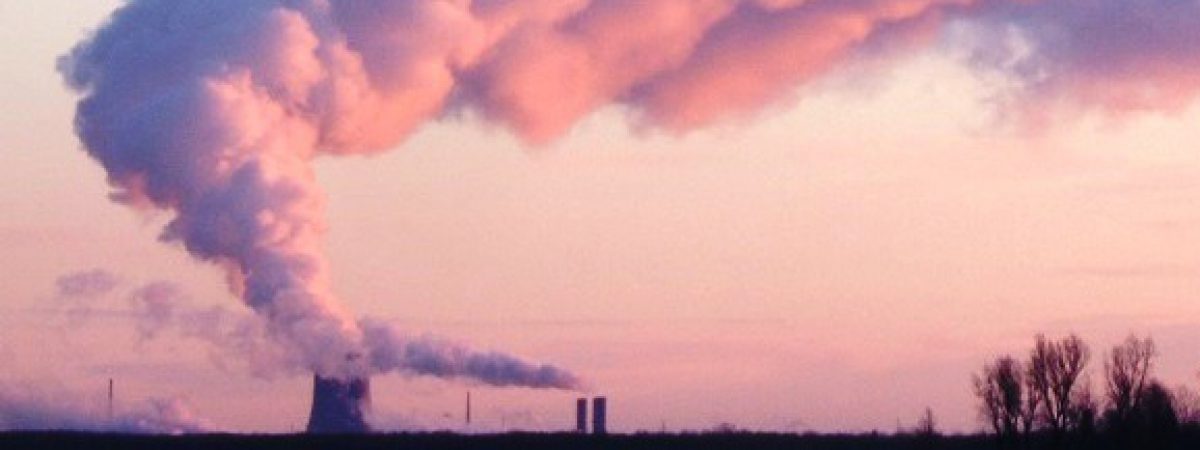
I have been an air pollution meteorologist for over 40 years and the recent wildfire smoke event is unprecedented in my career. Not surprisingly the usual suspects have claimed that there is a link to climate change. This article addresses whether this event is linked to climate change.
I have a page of other examples of weather affected by climate change claims that fail upon close examination. I have been following the rationale that uses examples like this for the Climate Leadership & Community Protection Act (Climate Act) since it was first proposed and have written over 300 articles about New York’s net-zero transition. The opinions expressed in this post do not reflect the position of any of my previous employers or any other company I have been associated with, these comments are mine alone.
June Air Pollution Episode
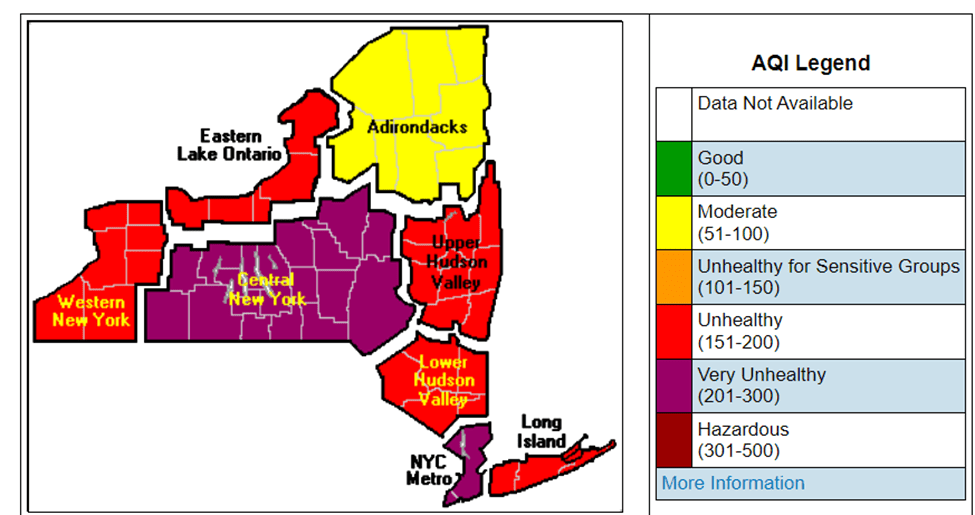
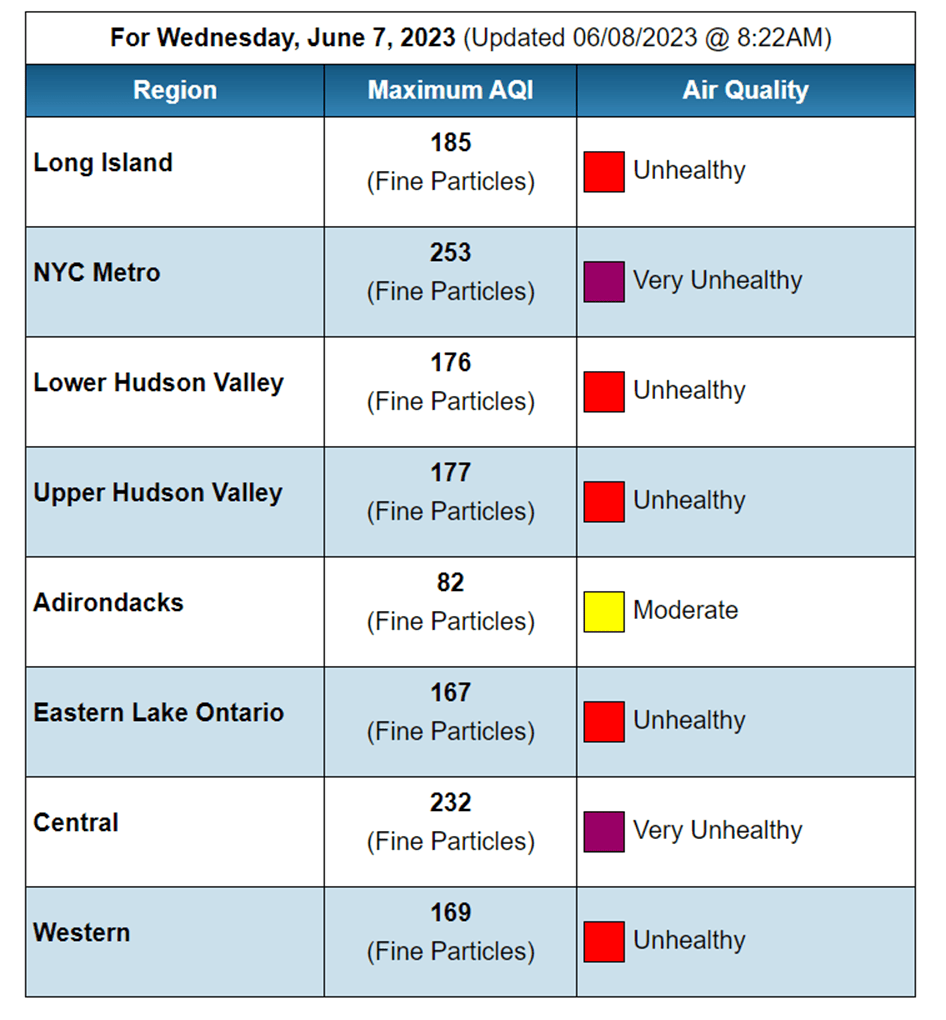
On June 7, 2023 the smoke and air quality impacts of wildfires in Quebec and Ontario were very high in New York State. I live in the Central New York region and I can attest that you could smell the smoke and taking a deep breath made me want to cough. The following information from the New York Department of Environmental Conservation summarize the air quality index observations.
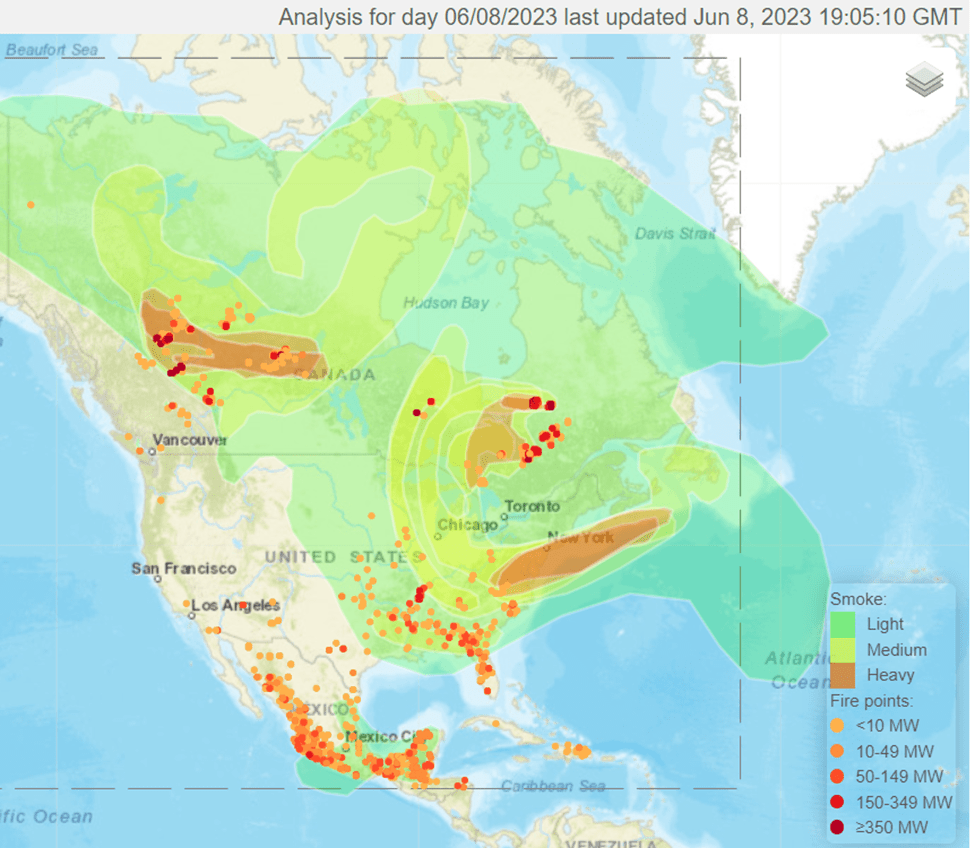
Satellite imagery shows the location of the fires. Note this is for the day after the data listed above.
Climate Change Links
Per usual whenever there is unusual weather there are claims that climate change was a factor:
The smoke was coming from Canada, where more than four hundred wildfires are currently burning. We do not know what caused many of them—a dropped cigarette, lightning, a downed electrical wire—but they are raging through the boreal forests of British Columbia, Alberta, and now Quebec. Wildfires are nothing new in these woodlands, but these are much earlier and larger than usual. And, like so many recent fires, they are directly linked to weeks of anomalous extreme heat. Climate change has created longer, hotter summers; worsened droughts; and fuelled vast bark-beetle infestations that have killed billions of trees.
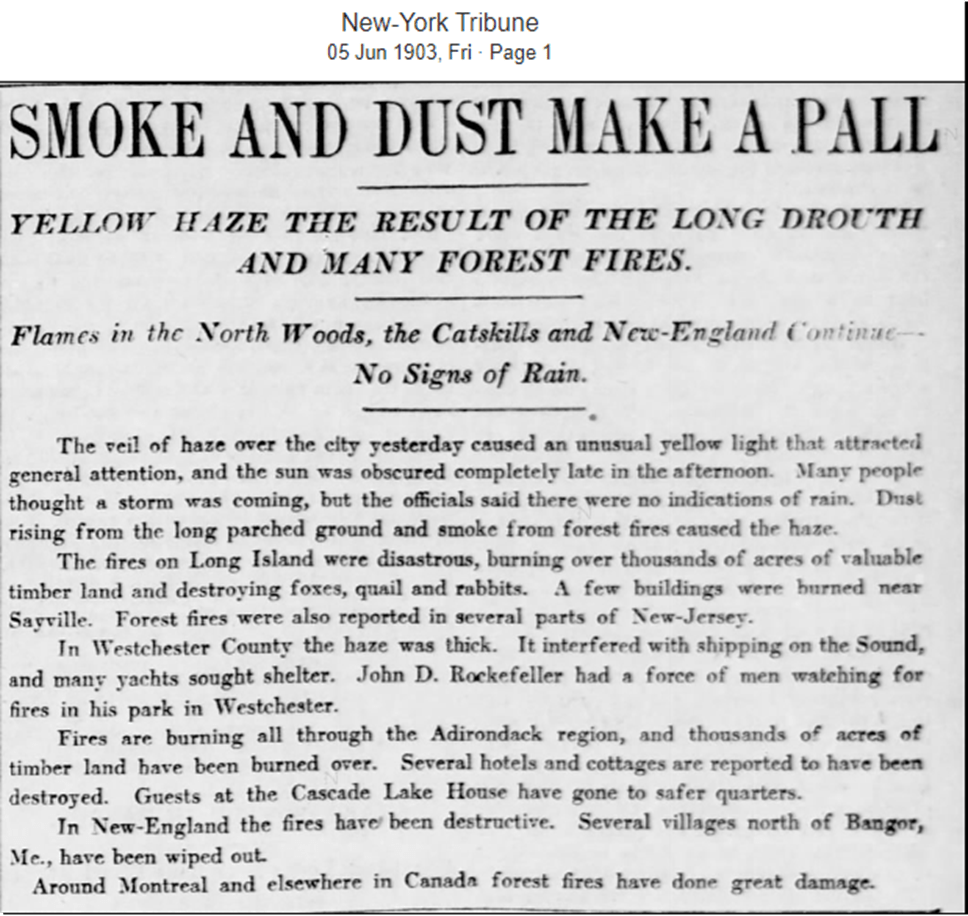
Consider the claims: wildfires are earlier and larger than usual and directly linked to weeks of extreme heat. In order to associate these with the climate change narrative then the claim that these are unusual compared to the past. Tony Heller writing at Real Climate Science does a great job combing through historical accounts of weather events. In this case he described Dark Days In New England that included the following:
05 Jun 1903, 1 – New-York Tribune at Newspapers.com
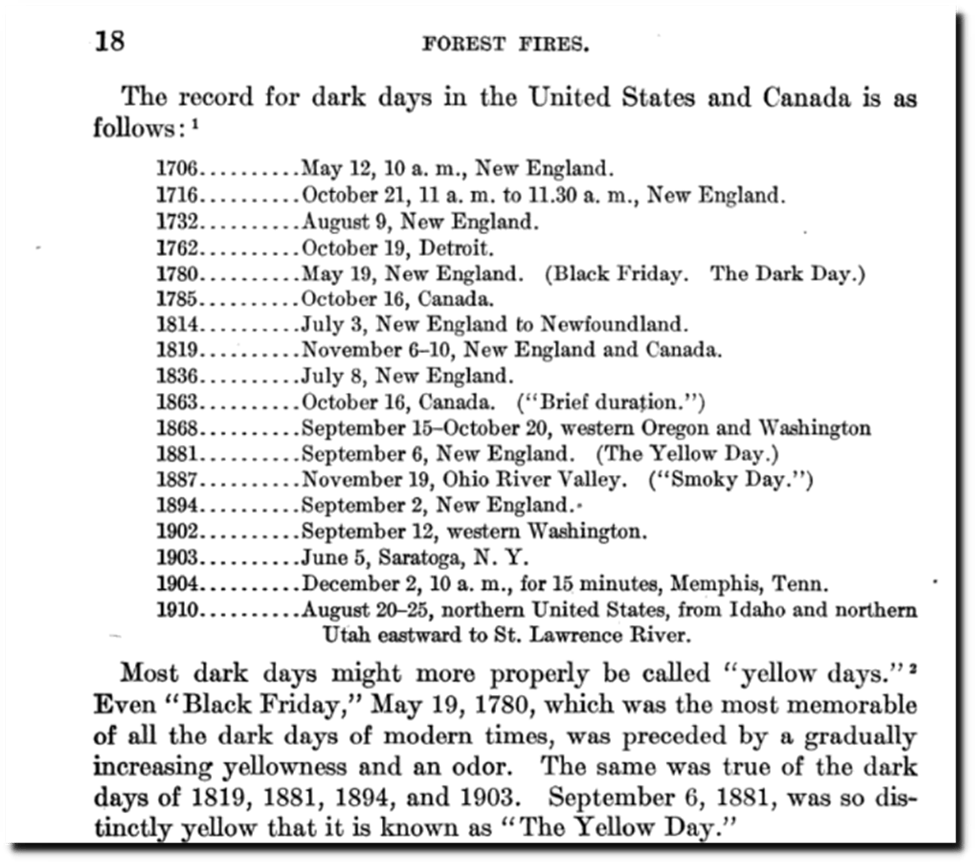
He found a list of similar historic “dark days” that affected New York and New England earlier than this event in May 1706, May 1780, and June 1903. Other similar events occurred in 1716, 1732, 1814, 1819, 1836, 1881, and 1894.
A published paper provides detail about the 1780 dark day in New England.
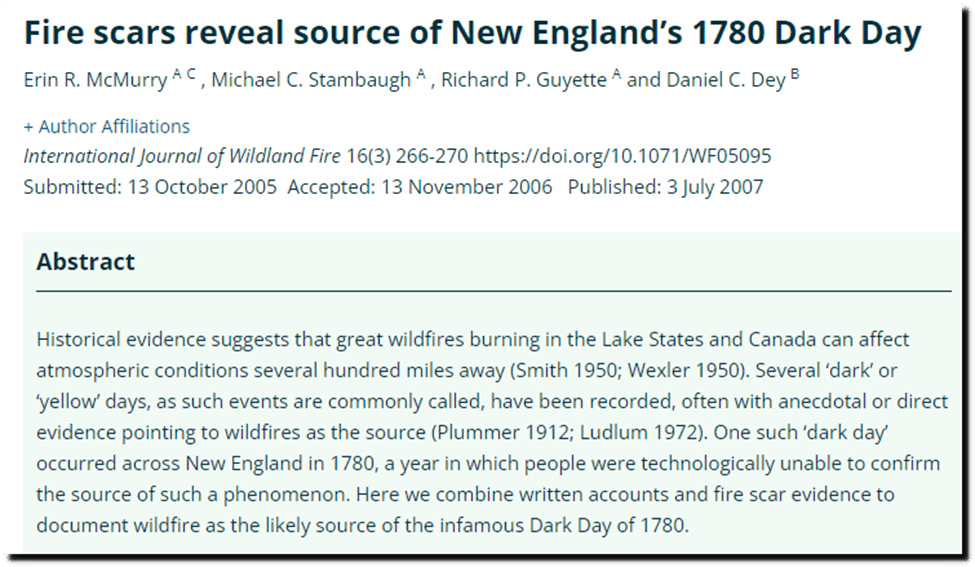
When considering the claim that climate change’s higher temperatures contribute to these wildfires that have obviously been happening in the Northeastern US for centuries is that in the 1700’s temperatures were much colder. The Little Ice Age lasted from the fourteenth century until the mid 1800’s.
Wildfires are a complex phenomenon and the media does not tell the whole story. Roger Pielke, Jr. explains discusses aspects of wildfires that he sees as missing in the public discussion. He makes the following points in his article.
The Intergovernmental Panel on Climate Change has not detected or attributed fire occurrence or area burned to human-caused climate change but does see a potential effect on fire weather in the USA:
The IPCC expresses “medium confidence” (about 50-50) that in some regions there are positive trends in conditions of “fire weather”: “There is medium confidence that weather conditions that promote wildfires (fire weather) have become more probable in southern Europe, northern Eurasia, the USA, and Australia over the last century”
Globally, emissions from wildfires has decreased globally over recent decades, as well as in many regions. He explains:
Canada — the focus of extensive fire activity this week polluting the air in the eastern U.S. and elsewhere — has not seen an increase in fire activity in recent decades, as you can see in the figure below, showing official data.
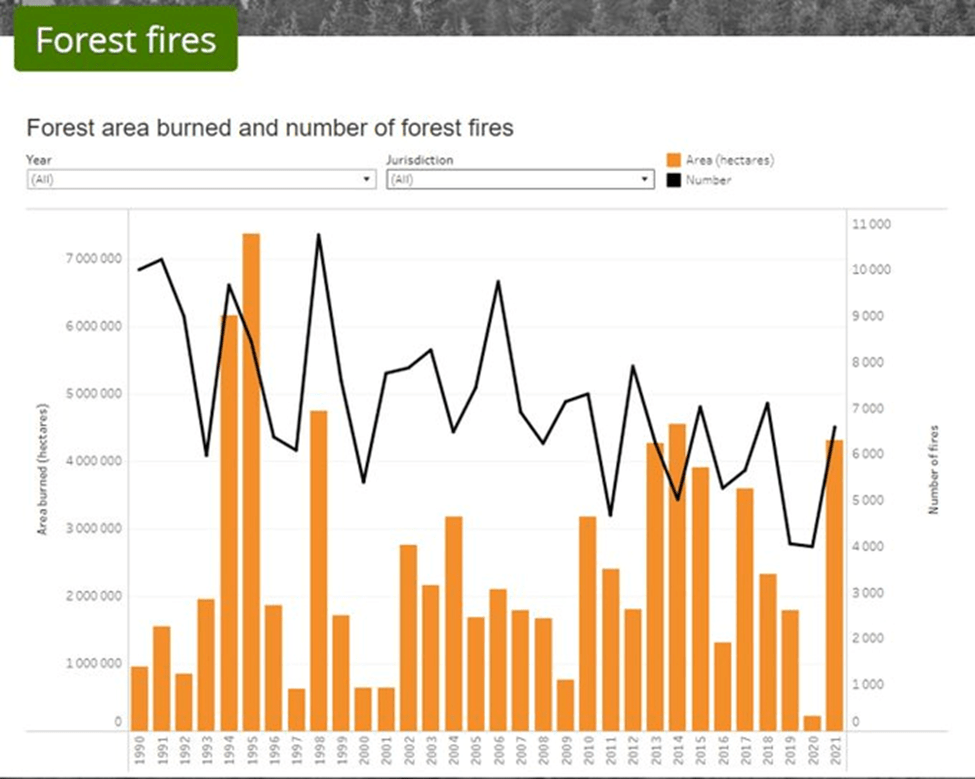
He concludes:
What you should take from it is the following:
- Wildfire globally has decreased in recent decades;
- Still, some regions have seen increases;
- Neither Canada nor Quebec have not seen such increases this century;
- Fire incidence across Canada is lower today than in centuries past.
Conclusion
Just because there is an extreme weather-related event that is unprecedented in one’s experience that does not mean that there is any evidence of climate change. In this example, as with all the similar events I have researched, there is little to no suggestion that climate change could possibly be related to the event. There were similar days of heavy smoke in the Northeastern US during the Little Ice Age which directly contradicts the narrative that the current warm period is any kind of a factor in these wild fires.

 Pragmatic Environmentalist of New York