
Upstate New York Air Source Heat Pump Experience

 “Green energy” advocates continue to lobby for the NY HEAT Act that would end “New York’s gas mandate and forced ratepayer subsidies for gas expansion”.  This is part of their irrational war on natural gas which will only be successful if they prevent the use of natural gas in the future which means a switch to heat pumps for heating.   Constantine Kontogiannis  has calculated the costs of heat pumps Upstate that complements an earlier analysis by Richard Ellenbogen for Downstate.

I am convinced that implementation of the New York Climate Leadership & Community Protection Act (Climate Act) net-zero mandates will do more harm than good if the future electric system relies only on wind, solar, and energy storage because of reliability and affordability risks.  I have followed the Climate Act since it was first proposed, submitted comments on the Climate Act implementation plan, and have written over 500 articles about New York’s net-zero transition.  The opinions expressed in this article do not reflect the position of any of my previous employers or any other organization I have been associated with, these comments are mine alone.

Background

The “NY HEAT Act that would end the gas mandate that proponents claim means that “a single home that wants to stay on the gas system can prevent an entire neighborhood from having the opportunity to receive cheaper, cleaner heating alternatives from their utility.”

I recently posted an article in collaboration with Rich Ellenbogen that detailed the excessive winter operating cost of a geothermal-source heat pump (GSHP) system at his Westchester County residence, using his secondary heating source (a high-efficiency natural gas boiler) for comparison). After it was posted I was contacted by Constantine Kontogiannis who offered to describe his experience with a heat pump.  Mr. Kontogiannis is a mechanical engineer by training with over 25 years of energy related experience.   I jumped at the opportunity for him to describe his heat pump experience.  The following is his lightly edited submittal.

Another Heat Pump Experience – Constantine Kontogiannis

If your readers are wondering how relevant Rich’s experience is to a typical participant of the NYS Clean Heat Program, I have some additional information that might be of interest.  In 2023, I installed a cold climate air-source heat pump (ccASHP) system at my residence in Albany.  According to the NYS Clean Heat 2022 Annual Report, ccASHP systems are much more common than GSHP systems in residential applications, with approximately 18,730 ccASHPs installed in New York State in 2022 (not including Long Island), compared to approximately 670 GSHPs.  That’s a ratio of about 28 to 1 in favor of ccASHP systems.

The stated goal of the NYS Clean Heat Program (which commenced in 2020) is to convert 100,000 homes to heat pumps statewide, and based on the 2022 Annual Report I would estimate that the program is nearly 75% of the way towards that objective.  The data collected so far implies that the vast majority of these heat pumps will be ccASHP systems just like the one that I recently installed.

When I was researching my various heat pump options, I was concerned about their cost effectiveness in heating mode.  So I decided to retain my existing natural gas heating system, which consists of a condensing boiler and radiant underfloor piping.  In hindsight, this proved to be a wise decision, as my 2023/24 heating costs were nearly double what they had been previously.  

For the 2024/25 heating season, I decided to switch back to using my natural gas heating system instead.  Sure enough, my heating costs dropped substantially – even though this winter seemed to be much colder.  To confirm this, I found the following comparison of Heating Degree Days (HDDs) over the past two winters:

From this table, it’s pretty clear that the winter of 2024/25 was much colder than last year.  Here in Albany, our cumulative HDD for this winter was within 3% of a “Normal” heating season, which makes it an ideal time window to calculate the respective heat pump and natural gas system heating costs over a typical winter.  That’s what I decided to do, and to get started, I compiled a summary of my most recent energy and cost data:

(If you’re wondering why my electric consumption is so high from Thanksgiving to Valentines Day, it’s our exterior Christmas lights – they’re all LED, but maybe we go a bit overboard.)

From the table above, I used 988 Therms this winter at a total cost of roughly $817.  I have low temperature (110 degF) radiant underfloor piping, so my boiler is always set to operate in fully condensing mode at the rated 96% AFUE.  If I had chosen to use my heat pumps this winter, I would have needed approximately 948.5 equivalent Therms (988 x 0.96).  This translates to 27,791 kWh at a COP of 1, which is how much energy would be needed if I was using electric resistance heat (948.5 x 100,000 / 3,413).  

The appeal of heat pumps is their vastly improved COP compared to electric resistance heat.  To determine the seasonal COP of my ccASHP system in heating mode, it’s available in the manufacturer’s product data:

My heat pump system uses ducted 3-ton units – this is a common application, particularly when heat pumps are replacing an existing natural gas furnace and air conditioner combination.  Since ducted units retain the existing heating and cooling distribution ductwork, they are significantly less costly to install and more effective in heating dominant climates when compared to the alternative of using multiple split-system terminals throughout the house (in a ducted system, there’s generally at least one supply air register in each room).  

From the table above, my heat pumps have an HSPF2 rating of 10.0 (the left “Ducted” column).  This is a typical HSPF2 value for ccASHPs installed through the NYS Clean Heat Program, which requires a higher efficiency for program participation than generally stipulated by building code.  

To calculate the seasonal COP, we take the HSPF2, divide it by 0.85 and multiply it by 0.293, which is approximately 3.4 for my system.  Here’s the calculator .   

I discovered something interesting about the HSPF2 rating – it’s based on heating performance in a warmer region – Climate Zone 4, which only includes eight downstate counties in New York from Westchester to NYC through Long Island.  See the definitions at the bottom of this webpage  and the map.  

A higher resolution climate zone map with a table of the individual NY counties in each zone was used in this analysis.  From the earlier HDD table, the upstate cities in Climate Zone 5 (Albany, Syracuse, Rochester, and Buffalo) have roughly 40% more heating degree days than NYC, which is in Climate Zone 4.  So it’s likely that since I live in Climate Zone 5, the true seasonal COP of my heat pump system is lower than the value calculated from an HSPF2 rating in Climate Zone 4.  

But let’s put that aside for now – we’ll just be conservative and utilize the seasonal COP of 3.4 derived from the HSPF2 rating.  In an earlier paragraph, I calculated the equivalent energy at a COP of 1 required to heat my home this winter at 27,791 kWh.  Dividing this by the seasonal COP of 3.4 for our ccASHP system, our estimated heating energy consumption this winter would be 8,174 kWh.  

At my current winter electric rate of $0.214/kWh, this translates to a seasonal heating bill of $1,749.  That’s more than double my $817 natural gas bill this winter, 114% more to be exact.    

To offset a portion of the installation cost, the NYS Clean Heat Program provides an average rebate of $4,600 to replace a gas furnace with a ccASHP, and a $2,000 tax credit is also applicable.  But if the system costs between $8,000 and $12,000 to install, and then adds $900 to the utility bill every year, the rebate and tax credit aren’t very helpful.  Over a 15-year equipment lifespan, the detrimental cost impact could add up to $16,000 or more.  

Caiazza Comment

Proponents of NY HEAT suggest that one advantage of the legislation is to save money.  The New York State Energy Research & Development Authority (NYSERDA) produces featured stories  that “provide insights into New York’s clean energy transition and offer practical information for New Yorkers to incorporate clean energy into their homes and businesses.”  The Experience the Comfort of Clean Heat story does not explicitly address costs.  Kontogiannis and I agree that at one time NYSERDA claimed universal savings. To their credit NYSERDA’s Heat Pump Program description does explicitly state that replacing oil, propane, or electric baseboards with air source heat pumps as your primary heating source is a more efficient way to keep your home comfortable. I recently heard an advertisement by approved contractor who did not explain that savings were unlikely for a home that burns natural gas, apparently without any pushback from the program administrator.

The five-year estimate (2017-2021) of space heating totals of occupied housing units in New York shows that there are 7,530,150 housing units and 59.6% or 4,489,695 of them use utility gas for space heating.  The two analyses that compared heat pump costs and NYSERDA agree that natural gas heating is cheaper.  Kontogiannis estimates that at least 30,000 heat pumps installed through this NYSERDA program have replaced natural gas.  He notes that according to the 2022 summary report, “very few of the installations include the decommissioning of the previous heating system”.  As a result we are skeptical of any carbon savings claims. The bottom line is that the Climate Act will make home heat more costly for more than half of the state but I have not seen any advocate admitting that fact.

My thanks to Rich Ellenbogen and onstantine Kontogiannis for their insights.

Temperature Trend Measurement Uncertainty

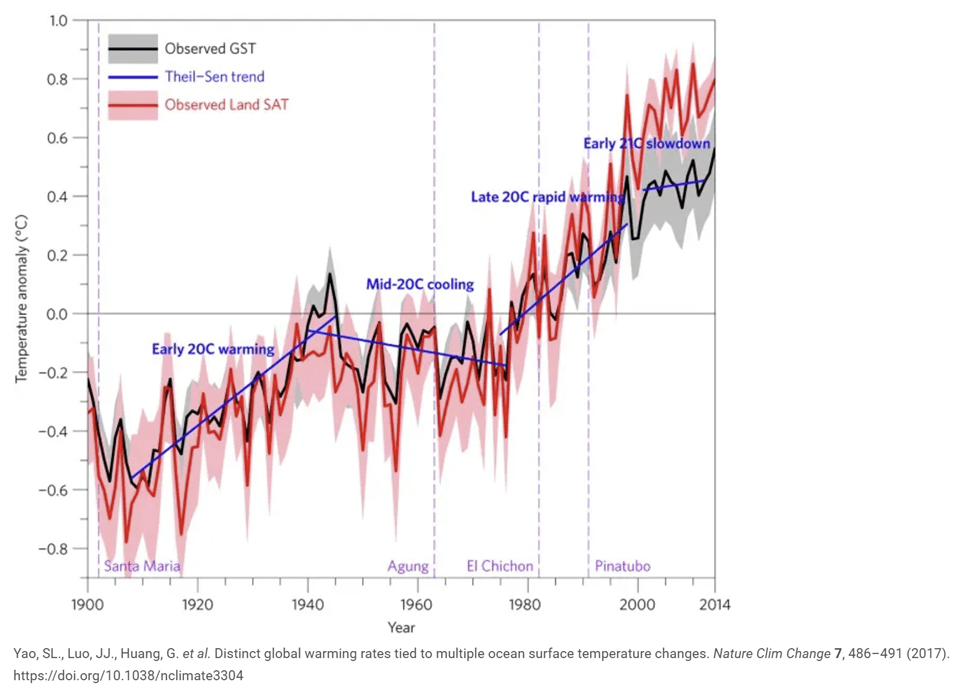
Late last year I published an article that described the difficulties involved with a fundamental aspect of the climate change debate – measuring global temperature trends.   This article describes an analysis of a data set that compares two different ways to calculate the daily temperatures used to determine global temperature trends.  Ray Sanders reproduced Stephen Connolly’s description an analysis that shows how temperature measurement techniques affect trend interpretation. 

The opinions expressed in this article do not reflect the position of any of my previous employers or any other organization I have been associated with, these comments are mine alone.

Background

My fifty-odd year career as an air pollution meteorologist in the electric utility sector has always focused on meteorological and pollution measurements.  Common measurement challenges are properly characterizing the parameter in question, measuring it in such a way that the location of the sensor does not affect the results, and, when operating a monitoring system, verifying the data and checking for trends.  On the face of it, that is easy.  In reality, it is much more difficult than commonly supposed.

I prepared the previous article to highlight recognized instrumental and observational biases in the temperature measurements.  One problem is measurement methodology.  The longest running instrumental temperature record is the Central England Temperature (CET) series that extends back to 1659.  In the United States temperature data are available back to the mid 1800’s. In both cases the equipment and observing methodology changed and that can affect the trend.  Too frequently, when observing methods change there is no period of coincident measurements that would enable an analysis of potential effects on the trends.

Only recently have computerized data acquisition systems been employed that do not rely on manual observations, and even now many locations still rely on an observer.  For locations where temperature records are still manually collected, observers note the maximum and minimum temperature recorded on an instrument that measures both values daily.  A bias can be introduced if the time of observation changes.  If observations are taken and the max-min thermometers are reset near the time of daily highs or lows, then an extreme event can affect two days and the resulting long-term averages.  Connolly’s work addresses another bias of this methodology.

Uncertainty Caused by Averaging Methodology

The issue that Stephen Connolly addressed in his work was the bias introduced when a station converts from manual measurements of maximum and minimum temperatures to a system with a data acquisition system. Typically, those data acquisiton systems make observations every second, compute and save minute averages, and then calculate and report hourly and daily averages. 

Ray Sanders explained that he came across Stephen Connolly’s analysis of temperature averages based on data from the Valentia weather station on the south west of the Republic of Ireland. He asked Stephen if he could refer to his work, to which he agreed on the condition he duly credited him. So by way of a second-hand proxy “guest post” I have reproduced Stephen’s unadulterated X post at the end of this article.  I offer my observations on key parts of his work in the following.

I highly recommend Connolly’s article because he does a very good job explaining how sampling affects averages.  He describes the history of temperature measurements in a more comprehensive way than I did in my earlier post.  He explains that the daily average temperature reported from a manual observation station calculated as the average of the maximum and minimum temperature (Taxn) is not the same as an average of equally spaced observations over a 24-hour period (Tavg).  Using a couple of examples, he illustrates the uncertainties introduced because of the sampling differences. 

Connolly goes on to explain that:

In 1944 Met Éireann did something a bit unusual, they started measuring the temperature every hour. Rain or shine, sleet or snow, the diligent staff of Met Éireann would go out to the weather station and record the temperature. Between January 1944 and April 2012 when the station was replaced with an automated station only 2 hours were missed.

The data enabled Connolly to compare the two techniques to calculate the daily average temperature.  In his first graph he plots the difference between the two techniques as blue points. Overlaid is the 1 year rolling average as a red line. He states that Tavg is greater than Taxn in Valentia on average by 0.17oC (std deviation 0.53, N=29339, min=-2.20, max=3.20).

Connolly plots the difference between the two averaging approach and notes that:

If we just look at the rolling average, you can see that the relationship is not constant, for example in the 1970’s the average temperature was on average 0.35ºC warmer than the Meteorological estimate, while in the late 1940’s, 1990’s and 2000’s there were occasions where the Meteorological estimate was slightly higher than the actual average daily temperature.

He goes on:

It’s important to highlight that this multi-year variability is both unexpected and intriguing, particularly for those examining temperature anomalies. However, putting aside the multi-year variability, by squeezing nearly 30,000 data points onto the x-axis we may have hidden a potential explanation why the blue points typically show a spread of about ±1ºC… Is the ±1°C spread seasonal variability?

The shortest day of the year in Valentia is December 21st when the day lasts for approximately 7h55m. The longest day of the year is June 21st when the day lasts for 16h57m. On the shortest day of the year there is little time for the sun to heat up and most of the time it is dark and we expect heat to be lost. So we expect the average temperature to be closer to the minimum temperature during the winter than during the summer.

I found this line of reasoning interesting:

We can check the seasonal effects in the difference between Tavg and Taxn by looking at a time dependent correlation. As not everyone will be familiar with this kind of analysis, I will start by showing you the time dependent correlation of Tavg with itself in the following graph.

The x-axis is how many days there are between measurements and the y-axis is the Pearson correlation coefficient, known as r, which measures how similar measurements are averages across all the data. A Pearson correlation coefficient of +1 means that the changes in one are exactly matched by changes in the other, a coefficient of -1 means that the changes are exactly opposite and a correlation coefficient of 0 means that the two variables have no relationship to each other.  The first point on the x-axis is for 1 day separation between the average temperature measurements.

When I was in graduate school, a half century ago weather forecasting performance was judged relative to two no-skill approaches we called persistence and climatology.  Connolly explains that persistence is assuming that “Tomorrow’s weather will be basically the same as today’s”.  This graph shows that the approach is approximately 82% accurate.

The graph also illustrates the accuracy of the second no-skill forecast – climatology.  In other words the climatology forecast for the average temperature is simply the average for the date.  At a year separation the r value of 0.67 days that 44% of today’s average temperature can be explained as seasonal for this time of year. What this means is that actually the persistence forecast is only explaining 38% better than the climatological forecast

Connolly notes that the maximum and minimum temperatures behave the same and concludes that the above graph basically tells us what to expect when something is strongly seasonal.

Connolly goes on to ask what happens when we plot the time-dependent correlation of Tavg-Taxn? He shows the results in the following graph.

The 1 day correlation is 0.19, this tells us that approximately 4% of today’s correction factor between Tavg and Taxn can be predicted if we know yesterday’s correction factor. The seasonality is even worse, the 6 month correlation coefficient is -0.02 and the 1 year correlation coefficient is +0.07.

He points out that this answers the question whether this is seasonal variability and concludes that the ±1°C spread is not seasonal variability.  The important point of this work is that this means that if we only know daily average temperature based on the average of the maximum and the minimum temperature then comparison to the average measured using a data acquisition system the two methodologies could be anywhere between ±1°C different

He provides another graph to illustrate this.

The x-axis is Tavg and the y-axis is Taxn. Now obviously when the average daily temperature is higher, the average of the minimum and maximum temperatures is also higher and so we get a straight line of slope 1, but the thickness of the line represents the uncertainty of the relationship, so if we know Taxn is say 15°C then from this graph we can say that Tavg is probably between 13.5°C and 16.5°C.

Here is the important point:

Now because most weather stations were not recording hourly until recently, most of our historical temperature data is the Taxn form and not the Tavg. That means that if Valentia is representative then the past temperature records are only good to ±1°C. If somebody tells you that the average temperature in Valentia on the 31st of May 1872 was 11.7°C, the reality is that we just do not know. It’s 95% likely to have been somewhere between 10.6ºC and 12.7ºC.

He ends his analysis with another graph

In this last graph the blue points show the average Taxn of each year at Valentia since 1873 with vertical error bars showing the 95% confidence interval. The red points show the average Tavg for each year starting from 1944 with error bars showing the annual variation. The blue poking out from under the red shows the difference, even on the scale of a yearly average between the Meteorologist’s estimate of average temperature and the actual average temperature.

Discussion

Connolly explains:

Valentia Observatory is one of the best weather stations globally. the switch to automated stations in the 1990s, we can now get precise average temperatures.  Thanks to the meticulous efforts of past and present staff of Valentia Observatory and Met Éireann, we have 80 years of data which allows comparison of the old estimation methods with actual averages.

The takeaway from Connolly’s evaluation of these data is that out “historical temperature records are far less accurate than we once believed.”

I second Sanders acknowledgements of the work done by Connolly:

I would like to thank Stephen for allowing me to refer to his excellent research. Whatever one’s views are on the validity of the historic temperature record of the UK, this evaluation has again highlighted one area of many where there are significant questions to be asked regarding long term accuracy.

Conclusion

I would like to thank Stephen for allowing the posting of this excellent research.  One fundamental truth I have divined in my long career is that observed data are always more trustworthy than any model projection.  However, there are always limitations to the observed data that become important when trying to estimate a trend. 

I think these results are important because they highlight an uncertainty that climate catastrophists ignore.  I will concede that average temperatures are likely warming but the uncertainty around how much is within the observational uncertainty.  In other words, the claims the magnitude of the observed warming is not known well.  The science is not settled on the amount of warming observed.

Commentary on Recent Articles  March 29, 2025

This is an update of articles that I have read that I want to mention but only have time to summarize briefly.  I have also included links to some other items of interest.  Previous commentaries are available here

My primary focus lately has been New York’s Climate Leadership & Community Protection Act (Climate Act).  I have been following the it since it was first proposed and most of the articles described below are related to the net-zero transition. My opinions expressed in this article do not reflect the position of any of my previous employers or any other company I have been associated with, these comments are mine alone.

As a pragmatic environmentalist I cannot over-emphasize the necessity of tradeoffs between environmental impacts and other societal benefits.  New York’s energy policies offer two examples that ignore tradeoffs in an poorly considered appeal to ill-informed but politically powerful constituents.  The first example is the premature shutdown of two nuclear power plants – the completed but never run Shoreham plant on Long Island and Indian Point, and the second is the political decision to ban fracking in New York.  In my opinion, the best energy plan approach would be to embrace both natural gas and nuclear power.

What Might Be

David Catalfamo notes that ten years ago  “New York’s leaders turned their backs on upstate communities, banning fracking in a purely political move that had nothing to do with science”.  He points out that the decision at the time was because of uncertainties.  Since then, it has been demonstrated that the water contamination and air quality risks are manageable, the technology has evolved to further mitigate concerns, and that New York’s ban on fracking resulted in a massive lost economic opportunity.  He notes that:

While Pennsylvania added 100,000+ jobs and billions in tax revenue, upstate New York withered. The wealth didn’t disappear—it just went next door.

New York State is in desperate need for revenue to rebuild roads, fund transit, and support public services.    He concludes that New York can provide funding and join the rest of the country or stay stuck in the mistakes of 2014.

Combine Natural Gas and Nuclear

Jim Willis of Marcellus Drilling News argues that the urgent need for electric energy brought on by data centers and energy-intense manufacturing proposals could be addressed by combining natural gas and nuclear in new ways.  He references a new article that suggests that using small modular reactors and a different kind of gas fired power plant (reciprocating natural gas generator) offer advantages that make them a good choice for this application.

Green Energy Makes You Poorer

Sadly New York is going down a different path that will not end well.  Ron Klutz describes a post by Matt Ridley that explains How the Green Energy Transition Makes You Poorer.  Ridley cites a United Kingdom analysis that the net-zero transition there will reduce the GDP by 10% by 2030 if it succeeds.  Giving up all the fossil fuel infrastructure strands so many assets that will be an expensive economic disaster. 

The problem is simple:

If the new technologies are more efficient than the old ones, fine. LED light bulbs use about 90% less electricity than incandescent bulbs did. So yes, it does make sense to throw out your old bulbs before they expire, stranding those assets, to save electricity and money. Is the same true of a wind farm or a heat pump? No, they are demonstrably more expensive and less reliable at producing the same electricity as the devices they are replacing. They are worse, not better.

Ridley concludes:

Electricity is not an end in itself; it is a means to an end, an essential input allowing us to do the one and only thing that does, really does, represent growth—achieving more output with less input.  Right now, the Net Zero transition is doing the very opposite

Battery Backlash

Robert Bryce has put together a Global Battery Rejection Database that “shows 52 communities from California to Australia have rejected battery projects. The fire at Vistra’s Moss Landing site will ignite even more opposition.”

Wind Farm Decision

The lawyer who successfully battled a massive Nebraska wind farm development describes the legal approach used.  A news story explains:

A federal judge has dismissed most of a lawsuit filed by North Fork Wind against Knox County, Nebraska, after the county changed its zoning regulations, effectively halting development of a proposed 600-megawatt wind farm. U.S. District Court Judge John Gerrard ruled that North Fork Wind had not proven that Knox County’s new setback requirements and other regulations had interfered with its contracts or violated its constitutional rights to due process and equal protection. However, the judge did allow the company to proceed with a Fifth Amendment claim, arguing that the county’s actions amounted to an unlawful taking of property.

New York Climate Superfund

Ed Reid explains why the Climate Change Superfund bill is lawfare.  He notes that “An appropriate topic for any discussion of lawfare, whether lawsuits alleging violation of existing laws or legislation leading to new law, is the issue of standards of evidence.“  Then he points out that alleged extreme weather of concern claims are inconsistent with the IPCC Sixth Assessment Report (AR6, Chapter 12) that “indicates no linkage between global warming and climate change and the frequency and intensity of extreme weather events with the exception of heatwaves, which are affected by increasing average temperatures.”  Not surprisingly, the law is the subject of a lawsuit filed by 22 states based on constitutional grounds.

Vermont Cap and Invest Impacts

Robert Roper describes the Treasurer’s Report on their version of a cap and invest program.  The estimated costs are shown below.  Note that the Report concludes that the only way to get to the targets is the high price scenario.

It gets worse.  The high price scenario includes the mandate for “full reinvestment”.  Roper explains:

What does “full reinvestment” mean? It means that all the money collected from this fuel tax must be spent on greenhouse gas reduction measures. No money collected can be redistributed to lower income Vermonters as a safety net to mitigate the cost impacts of the program. In other words, the GWSA screws poor, rural Vermonters. Hard. Especially and royally.

Videos

Assemblyman Stirpe and New York Cap and Invest

In a recent letter to the editor of the Syracuse Post Standard, Cicero Assemblyman Al Stirpe Jr. and Ethan Gormley from Citizen Action of New York, argued that Governor Hochul should “get moving on cap and invest.”  This post documents my response.  It is timely to revisit the New York Cap and Invest (NYCI) Program because the long promised next regulatory action is due any day now.  I believe that it is time for NYCI advocates to be held accountable for their magical solutions to a problem that New York cannot unilaterally solve.

I have followed the Climate Act since it was first proposed, submitted comments on the Climate Act implementation plan, and have written over 500 articles about New York’s net-zero transition.  I worked on every market-based program from the start that affected electric generating facilities in New York including the Acid Rain Program, Regional Greenhouse Gas Initiative (RGGI), and several Nitrogen Oxide programs. I follow and write about the RGGI and New York carbon pricing initiatives so my background is particularly suited for NYCI.   The opinions expressed in this article do not reflect the position of any of my previous employers or any other organization I have been associated with, these comments are mine alone.

Overview

The Climate Act established a New York “Net Zero” target (85% reduction in GHG emissions and 15% offset of emissions) by 2050.  The Climate Action Council (CAC) was responsible for preparing the Scoping Plan that outlined how to “achieve the State’s bold clean energy and climate agenda.” The Integration Analysis prepared by the New York State Energy Research and Development Authority (NYSERDA) and its consultants quantifies the impact of the electrification strategies.  That material was used to develop the Draft Scoping Plan outline of strategies.  After a year-long review, the Scoping Plan was finalized at the end of 2022. 

Cap-and-Invest

The CAC’s Scoping Plan recommended a market-based economywide cap-and-invest program.  NYCI is supposed to work by setting an annual cap on the amount of greenhouse gas pollution that is permitted to be emitted in New York: “The declining cap ensures annual emissions are reduced, setting the state on a trajectory to meet our greenhouse gas emission reduction requirements of 40% by 2030, and at least 85% from 1990 levels by 2050, as mandated by the Climate Act.”  The prevailing perception of NYCI is exemplified by Colin Kinniburgh’s description in New York Focus.  He describes the theory of a cap-and-invest program as a program that will kill two birds with one stone.  “It simultaneously puts a limit on the tons of pollution companies can emit — ‘cap’ — while making them pay for each ton, funding projects to help move the state away from polluting energy sources — ‘invest.'”  

In my opinion, the delays in the NYCI regulatory process suggest that the Hochul Administration is having second thoughts about the program.  I have no illusions that the concerns are related to the fundamental flaws of carbon pricing.  It is all about politics.  Kinniburgh described the last-minute decision to pull any mention of timing about NYCI from the State of the State briefing book.  Samanth Maldonado’s article Green Lawmakers Pressure Hochul to Speed up Action on Climate Act summarizes the status of NYCI last month. I also did an article about the response to the NYCI Delay. Since then, the political focus of the state has been on the budget.  Tellingly there hasn’t been much mention of NYCI.  Against that backdrop Stirpe and Gromley submitted a letter to the editor imploring Governor Hochul to get moving on cap and invest.

Letter to the Editor

The following letter to the editor of the Syracuse Post Standard was published on the electronic edition on March 18, 2025 and in the print edition on March 23, 2025.

It’s been over 50 days since Gov. Kathy Hochul’s State of the State address. That’s 50-plus days since the governor revealed that she was delaying crucial climate action in New York.

In that time, President Donald Trump has been steadily advancing the interests of oil and gas billionaires, wiping crucial climate resources from government websites and removing environmental justice workers from their positions. And that’s not all. The current situation at the federal level will have lasting, harmful impacts on our environment, frontline communities and transition to a clean, affordable, renewable energy economy.

Yet even as we see these damaging actions coming from the climate change denier in the Oval Office, Hochul continues to delay climate action by suppressing regulations for Cap and Invest.

The crucial Cap and Invest program is needed to fund New York state’s Climate Law, reduce pollution and invest in our communities. It puts corporate polluters on the hook for the amount that they pollute into the atmosphere while also reducing their emissions over time.

REVENUE WOULD HELP COMMUNITY

Perhaps just as importantly, the Cap and Invest revenue from corporate polluters has the potential to greatly benefit areas like Central New York.

Through this program, we can see new funds made available for energy affordability, which is especially important as National Grid seeks massive rate hikes across Upstate New York. Not only that, Cap and Invest has the ability to improve Central New York homes by funding projects to increase energy efficiency measures, like insulation and important home repairs, while also assisting in the transition to clean electric heat pumps to heat and cool homes without the use of polluting and harmful gas.

Had Cap and Invest been rolled out already, the state Department of Environmental Conservation (DEC) and New York State Research and Development Authority (NYSERDA) estimated that we could see somewhere between $3 billion and $5.1 billion in revenue in 2025.

At a time when federal funding is under threat, it’s imperative that we consider creative and fair sources of revenue to invest in our communities, clean our air and cut consumer costs.

Done well, the Cap and Invest program can do just that.

STOP DELAYING REGULATIONS

The Cap and Invest regulations were supposed to be released to the public last year. Those regulations would then be rightfully subject to public engagement through hearings and public comments. Unfortunately, Hochul is suppressing those regulations from the public and has proposed a much delayed timeline for their release. Organizations, businesses, faith groups and unions across the state have already spoken out urging Hochul to promptly release all the regulations.

It’s been over 50 days since we learned about the governor’s latest efforts to slow-walk Cap and Invest. Every additional day that goes by without the regulations is another day of delayed climate action, polluter accountability and much needed investment in our communities. With so much at stake at the federal level, New York needs to be a climate leader.

Gov. Hochul: Please release all the regs immediately and fund climate now. Al Stirpe Jr. Cicero, Member of Assembly, 127th District

Ethan Gormley Clay, Climate Justice Organizer, Citizen Action of New York

Response Letter

I submitted the following 250 word response on March 26, 2025:

In a recent letter to the editor, Cicero Assemblyman Al Stirpe Jr. and Ethan Gormley Citizen Action of New York, argued that Governor Hochul should get moving on cap and invest. 

The proposed New York Cap and Invest (NYCI) program is a magical solution.  In theory corporate polluters will pay for their emissions, the proceeds will be used to reduce costs while simultaneously funding emission reduction projects.  In reality, NYCI is nothing more than a regressive tax that will not live up to its promises.

NYCI will require gasoline distribution companies to pay for each ton emitted.  The authors state that we could see somewhere between $3 billion and $5.1 billion.  The latest NYCI proposal outline suggested prices that work out to an increase in gasoline prices of 21 cents per gallon in 2025, 48 cents per gallon in 2027 and 57 cents per gallon in 2030.  It is magical thinking to suggest that the companies will not simply pass those costs on.

The authors go on to say: “Through this program, we can see new funds made available for energy affordability”.  It is magical thinking to presume that the increased gasoline prices will get reimbursed in a timely fashion for those who cannot afford the increases.  Just think of the tracking logistics needed to ensure that the price paid for gas can be made affordable.

It is time for Climate Act proponents to be held accountable for their magical solutions to a problem that New York cannot unilaterally solve.

What I Really Wanted to Say

The succinct response to the Stirpe and Gormley letter is best described by Vinny Gambini.

Alas that response is in the wrong medium.  A proper response requires more description than possible in 250 words.  Alberto Brandolini explains: “The amount of energy necessary to refute BS is an order of magnitude bigger than to produce it.”   Space considerations preclude documenting all the problems in a newspaper response.  But I can do that here.

The proposed New York Cap and Invest (NYCI) program is a magical solution.  In theory corporate polluters will be put on the hook for their emissions, the proceeds will be used to reduce citizen costs while simultaneously funding emission reduction projects.  In reality, carbon pricing schemes like NYCI are nothing more than a regressive tax that will not live up to the hype.  Earlier this year I described questions about NYCI that I believe need to be resolved before proceeding.  Last year the Citizen’s Budget Commission commented on NYCI.  In this post I want to focus on the issues associated with gasoline impacts that I mentioned in my response letter.

Stirpe and Gormley insinuate that the costs of the program will be absorbed by “corporate polluters”.  With respect to gasoline prices the implication is that the oil companies will provide revenues that “has the potential to greatly benefit areas like Central New York.”

In 2023 Washington State started their version of cap and invest and their gasoline prices immediately jumped.  I published articles on what happened.  Washington State Gasoline Prices Are a Precursor to New York’s Future was a variation of an article published at Watts Up With That – Do Washington State Residents Know Why Their Gasoline Prices Are So High Now?.  I also published Washington State Gasoline Prices and Public Perceptions that consolidated responses from Washington residents in the comments from the Watts Up With That article. 

There is no official position on expected revenues for NYCI.  At the Energy Access and Equity Research webinar sponsored by the NYU Institute for Policy Integrity on May 13, 2024 Jonathan Binder stated that the New York Cap and Invest Program would generate proceeds of “between $6 and $12 billion per year” by 2030. Administration officials estimate that NYCI auctions will generate “between $6 [billion] and $12 billion per year” by 2030.

I used those estimates to project potential gasoline costs. The last NYCI proposal outline analyzed allowance prices starting at $23 per ton of CO2 in 2025 with 5% escalation for 2026, and an increase to a higher ceiling in 2027, escalating by 6% annually thereafter. According to the U.S. Energy Information Administration, 17.86 pounds of CO2 are emitted per gallon of finished motor gasoline; 112 gallons burned equals 1 ton of CO2. A price of $23 per ton of CO2 translates to an increase in gasoline prices of 21 cents per gallon in 2025, 48 cents per gallon in 2027 and 57 cents per gallon in 2030.

NYCI will require gasoline distribution companies to purchase authorizations to emit each ton of GHG pollution.  It is magical thinking to suggest that the polluting corporations will not simply pass those costs on.  Those companies cannot do anything to reduce their emissions.  As a result, it is the consumer who will end up paying for emissions.

Stirpe and Gromley go on to say: “Through this program, we can see new funds made available for energy affordability”.  Hochul’s five core principles for NYCI includes affordability: “Governor Hochul’s Consumer Climate Action Account will deliver at least 30 percent in future cap-and-invest proceeds to New Yorkers every year to mitigate consumer costs.”  These slogans are well intentioned, but the reality is that making the gasoline price increases affordable is a logistical nightmare.  Consider the following issues.

The first issue is eligibility.  To make gasoline cost increases affordable for those least able to afford the increase a program must be put in place to reimburse them.  I think that reimbursements should target the rural poor who have no other alternatives and thus are most affected by the increased cost of gasoline. 

Consider reimbursement fairness.  The most impacted are those who rely on their vehicles the most.  This means that a flat rebate is unfair and that necessitates rebates based on fuel use.  Tracking fuel use for reimbursement will be a logistical headache.  Affected New Yorkers will have to keep receipts and submit claims then wait for reimbursement.  Worse, the time lag between paying the higher price and the mitigation on consumer costs is a real hardship for those least able to afford it.

Theory and Reality

The theory of carbon pricing schemes is that the higher prices due to the price of carbon will incentivize corporate polluters to seek lower carbon and lower price alternatives.  However, the corporate gasoline distribution companies have no incentives to do either.  They will simply pass the costs on as if this were a tax. 

Proponents of these schemes argue that higher fuel prices will make people want to buy electric cars so the fuel prices are not impactful.  There are many tradeoffs for electric vehicles that make them not one for one choice, so I think this is a weak argument.  Moreover, the Governor’s affordability rebates reduce this incentive. 

The rebates also reduce the amount available for the transition.  It is appropriate to ask just how much infrastructure would be required to make electric vehicles a viable alternative.  Think of all the public charging infrastructure necessary to provide equivalent capacity to today’s cars.  Don’t forget that the electric power requirements will also need upgrades and that because electric vehicles are more expensive subsidies are needed.  Will the proceeds from NYCI be enough?

The cap and invest variant dilutes the original intent that the carbon price would trigger a free-market response.  Advocates for this feature argue that the free-market is more efficient than a government dictate but cap and invest provides revenues for the government to invest.  New York’s investment record for infrastructure projects peaked with the completion of the Erie Canal 200 years ago and has gone downhill ever since.

The book by Danny Cullenward and David Victor Making Climate Policy Work shows how the “politics of creating and maintaining market-based policies render them ineffective nearly everywhere they have been applied.”    They go on to explain that this vision has completely failed:

Many pollution markets exist, but nearly all are smokescreens that create the impression that market forces are cutting emissions when, in fact, other policies are doing most of the real work of decarbonization. Almost everywhere that market systems are in place they operate at prices that are so low as to have little impact on key decisions such as whether to invest in or deploy new technologies.

Two years ago I explained why the conclusions of this book are relevant to NYCI and later argued in my comments on the draft rules that a reassessment was necessary.  Under the Hochul Administration, state agencies consider the stakeholder process an obligation and not an opportunity to improve the rules.  There is no real attempt to consider comments received and pretty much zero acknowledgement much less action for any comments received.  There never has been a response indicating that anyone has read the book.

Conclusion

The issues described here have not been addressed so far during the discussion of NYCI.  The only noise is from advocates who argue without any evidence that the program will simultaneously raise money, ensure compliance, and be affordable.  It is long past due for proponents of the NYCI and the Climate Act like Assemblyman Stirpe to acknowledge that the transition to zero emissions has irreconcilable challenges that risk affordability and reliability.  All this is purely political so when the inevitable negative consequences occur, supporters should be held accountable.

JP Morgan Energy Study and the Climate Act

Energy Bad Boys Isaac Orr and Mitch Rolling describe nine takeaways in the JP Morgan Chase 15th Annual Energy Paper that provide more reasons why the New York net-zero transition should be paused. 

I am convinced that implementation of the New York Climate Act net-zero mandates will do more harm than good if the future electric system relies only on wind, solar, and energy storage because of reliability and affordability risks.  I have followed the Climate Act since it was first proposed, submitted comments on the Climate Act implementation plan, and have written over 500 articles about New York’s net-zero transition.  The opinions expressed in this article do not reflect the position of any of my previous employers or any other organization I have been associated with, these comments are mine alone.

Background

The Climate Leadership & Community Protection Act (Climate Act) established a New York “Net Zero” target (85% reduction in GHG emissions and 15% offset of emissions) by 2050. The Climate Action Council (CAC) was responsible for preparing the Scoping Plan that outlined how to “achieve the State’s bold clean energy and climate agenda.” The Integration Analysis prepared by the New York State Energy Research and Development Authority (NYSERDA) and its consultants quantified the impact of the electrification strategies.  After a year-long review, the Scoping Plan was finalized at the end of 2022.

Orr and Rolling introduce their post:

On March 4th, JP Morgan Chase released its 15th Annual Energy Paper (hereinafter “JPMC”). The report, written by Michael Cembalest, is a 55-page analysis with hundreds of graphs and charts on the state of the energy industry.  It spans most aspects of the energy industry, discussing costs for wind and solar, conventional fuels, electrification and heat pump adoption, a status update on the deindustrialization of Europe, and the use of green hydrogen.

I am documenting  reasons to pause the Climate Act and this article explains how the takeaways are relevant to the Climate Act implementation and why the findings are more reasons to pause the Climate Act implementation until the issues raised are resolved.

Takeaways

Wind and solar prices continue to rise. 

According to the JP Morgan Chase Report, power purchase agreement (PPAs) prices for wind have more than doubled since 2019, and solar PPAs are near $60 per megawatt hour.  Prices are rising due to US tariffs on Chinese solar panels, a tripling of insurance premiums in MISO, ERCOT, and SPP due to weather events, supply/demand gaps due to permitting delays, higher interest rates, and increased corporate demand for green power. Keep in mind that PPAs almost always show the subsidized cost of an energy source, so in reality, the cost of these resources is even higher.

The Scoping Plan was based on the Integration Analysis quantitative assessment of emission reduction strategies and cost estimates.  The Integration Analysis included projections starting in 2020.  I believe that the cost projections for wind and solar were projected to decrease and here is evidence that is not happening.  It is time to verify that the projections in the Scoping Plan are tracking with reality. 

Battery costs are coming down

Battery storage prices are falling again after a price spike in 2022. According to Energy Storage News, the main drivers of the fall are cell manufacturing overcapacity, economies of scale, low metal and component prices, a slowdown in the EV market, and increased adoption of lithium iron phosphate (LFP) batteries, which are cheaper than nickel manganese cobalt (NMC) batteries.

On the face of it this is good news.  However, the costs are still extraordinarily high.  The Scoping Plan needs to be re-assessed to determine consistency with the cost observations and whether the main drivers in the cost decreases will continue to lower prices.  Most importantly, there must be an honest assessment of the battery price point that makes battery energy storage “affordable”.

US Transmission Line Growth is far below DOE Targets

The JPMC report notes that annual additions of transmission lines are far, far below the levels envisioned by the Biden Administration’s Department of Energy, as you can see in the graph below.

I do not know where New York transmission line growth stands relative to the needs of the Climate Act.  The status of the buildout relative to the Scoping Plan needs to be assessed to determine if the Climate Act schedule is achievable.

Wind and solar do not replace reliable capacity

The JPMC report acknowledge just how ineffective wind and solar are at reducing our dependency on dispatchable generators.  The graph below from the report shows that for every megawatt of wind or solar installed in various regions, it only offsets 10 to 20 percent of gas capacity.

Making the numbers easier to understand, installing 10 MW of wind or solar in MISO would only offset the need for natural gas capacity by 2 MW. In the Southeast, adding 10 MW of wind or solar would only offset the need for 1 MW.

Adding 10 MW wind or solar in New York would only offset the need for natural gas capacity by a little over 1 MW.  I do not believe that the Integration Analysis modeling incorporates this observed effect.  There are clear implications for the Climate Act transition of this observed effect.

MISO and PJM Are Concerned About Reliability

MISO continues to see its reserve margin dwindle as its margin for error sits at just four percent. The JPMC report notes MISO’s warnings of “serious challenges to grid reliability due to increased exposure to wind/solar intermittency, having averted a capacity shortfall in 2023 only due to postponement of planned thermal capacity retirements.”

The post also includes a figure showing the risks for different regional transmission operators.

Fortunately, New York’s strong commitment to reliability means that there is a low likelihood of electricity supply shortfall assuming that the Progressive politicians keep their paws off the electric sector.  Nonetheless, the Scoping Plan presumes significant imports from outside new York and this result indicates that those imports may not be available.  This risk should be evaluated.

Fossil Fuels, Nuclear, and Hydro Power U.S. Data Centers

The JPMC report notes, “Hyperscalers will probably have to walk back green power commitments and run data centers primarily on natural gas, as they have been. The pie chart shows power consumption of US data centers based on their respective locations, their MW of maximum power consumption and the grid mix in that state.”

Projections for New York load also show increases.  The plans for the proposed Micron chip fab plant that will add load equivalent to the load of New Hampshire and Vermont call for the use of renewables.  This major source of load was not included in the Scoping Plan and needs to be considered in a reassessment.

High Electricity Prices Impede Electrification

Wind and solar advocates argue we must rapidly “electrify everything” by using electric vehicles and converting our home heating systems from natural gas, propane, or fuel oil to electric heat pumps. The problem? Doing so costs much more than using natural gas to keep warm in winter.

The JPMC report states:

“The high cost of electricity compared to natural gas (particularly in places without a carbon tax) is another impediment to electrification that is not easy to solve since this ratio reflects relative total costs of production and distribution.”

Natural gas remains much more affordable than using electricity for home heating in states throughout the country, and even heating oil and propane are more affordable than electricity on a nationwide basis.

The high cost of electricity versus natural gas is a major hinderance to converting to heat pumps.  The Scoping Plan presumption that New Yorkers would willing convert to a more expensive, less resilient, and likely less comfortable source of heating is not likely to occur.  How will this affect implementation?

Green Deindustrialization Continues Apace in Europe

The JPMC report notes: “Europe is the world leader with respect to the pace of decarbonization. However, Europe is paying a steep price for this transition. Its energy prices have risen from 2x to 4x US levels, and its residential electricity prices are now 5x-7x higher than in China and India.

The report also touched on Germany’s coming EnergieweimarDespite Deutschland’s heavy investments in wind and solar, the country has become a net importer of electricity. Long story short, installed power capacity continues to rise but actual generation is falling. The same story is unfolding in the United Kingdom.

The Scoping Plan claims that special carve outs and concessions to energy intensive and trade exposed industries will keep them viable in New York.  The results in the UK and Germany indicate otherwise.  The State needs to reassess these impacts.

Grim Realities for the Green Hydrogen Hype Train

Despite heavy subsidies and much hype, the so-called green hydrogen industry is floundering. Quarterly mentions of hydrogen project delays and cancelations are skyrocketing in the news and in company disclosures.

The report included this quote, with the caveat that it somewhat exaggerates the plight of green hydrogen:

“Electrolyzers, which do not exist, are supposed to use surplus electricity, which does not exist, to feed hydrogen into a network that does not exist in order to operate power plants that do not exist. Alternatively, the hydrogen is to be transported via ships and harbors, which do not exist, from supplier countries, which – you guessed it – also do not exist.”

According to the report:

“Hydrogen has an “original sin” problem: early estimates of lectrolier costs were too low. It started with an influential IRENA paper in 2020 estimating electrolyzer costs at $750 per kW. The European Energy Transitions Commission now concedes that costs are far higher, at least when sourced from Western manufacturers; the latest estimates for 2024 range from $2,100 to $3,200 per kW. This revised assessment had led to a 5x increase in Western 2030 electrolyzer cost projections from BNEF and the Hydrogen Council relative to initial projections.”

This quote pretty much sums up the “energy transition.” Boosters of unproven and expensive technologies assure us that their preferred energy sources are already cheaper, or will soon be much cheaper, than the reliable, affordable technologies we already use. Within a few years, the promises fail to materialize, and they move on to some other unicorn technology, and the hype cycle repeats itself.

A key reason for the problems plaguing green hydrogen is the cost. Even after assuming optimal electrolyzer utilization rates (which won’t materialize in the real world if they are, in fact, powered by wind and solar), the cost is still massive. In Texas, green hydrogen production is around $6.50 per kilogram (kg). In New York, the cost is around $7.50 per kg.

It takes approximately 7.4 kg of hydrogen to produce 1 million British thermal units (MMBtu) of energy, and it takes 10 MMBtus to produce one megawatt hour (MWh) of electricity in a combustion turbine power plant. This means the fuel cost of green hydrogen is approximately $481/MWh in Texas and $555/MWh in New York. At that price, it’s no wonder the industry is hitting hard times.

The Scoping Plan placeholder technology for the dispatchable emissions-free resource (DEFR) acknowledged as necessary is green hydrogen.  These results show that the “solution” is unlikely to be viable. The fundamental problem is that the wind, solar, and energy storage approach envisioned in the Scoping Plan will only work if DEFR is developed and deployed. In my opinion, the most promising DEFR backup technology is nuclear generation because it is the only candidate resource that is technologically ready, can be expanded as needed, and does not suffer from limitations of the Second Law of Thermodynamics. If the only viable DEFR solution is nuclear, then renewables cannot be implemented without it.  But nuclear can replace renewables, eliminating the need for a massive DEFR backup resource.  It is obviously prudent to pause renewable development until DEFR feasibility is proven because nuclear generation may be the only viable path to zero emissions

Conclusion

Orr and Rolling conclude:

There is a lot to digest in the report, but the long and short of it is that the so-called energy transition is hitting the brick wall of reality. Let’s hope policymakers come to their senses and end the subsidies for wind and solar so we can get back to rational energy policies.

I hope that the brick wall of reality reaches New York. I believe the best way to ensure that policymakers come to their senses is to pause the program and reevaluate the presumptions and projections.

Charlatan Comeuppance

I have had a continuing problem with Climate Action Council misinformation as I documented here.  Council leadership failed to call out members of the Council who were saying things that were inconsistent with the State analyses because the work conveniently supports the narrative that there is an existential threat from climate change caused by man-made greenhouse emissions and that existing technology can rapidly move away from fossil fuels and rely on wind, sun, and hydro.  It turns out that a couple of the acclaimed champions of this narrative have lost recent legal battles that I believe discredit their claims further.

I am convinced that implementation of the New York Climate Act net-zero mandates will do more harm than good if the future electric system relies only on wind, solar, and energy storage because of reliability and affordability risks.  I have followed the Climate Act since it was first proposed, submitted comments on the Climate Act implementation plan, and have written over 500 articles about New York’s net-zero transition.  The opinions expressed in this article do not reflect the position of any of my previous employers or any other organization I have been associated with, these comments are mine alone.

Background

The Climate Leadership & Community Protection Act (Climate Act) established a New York “Net Zero” target (85% reduction in GHG emissions and 15% offset of emissions) by 2050. Two targets address the electric sector: 70% of the electricity must come from renewable energy by 2030 and all electricity must be generated by “zero-emissions” resources by 2040. The Climate Action Council (CAC) was responsible for preparing the Scoping Plan that outlined how to “achieve the State’s bold clean energy and climate agenda.” The Integration Analysis prepared by the New York State Energy Research and Development Authority (NYSERDA) and its consultants quantified the impact of the electrification strategies.  After a year-long review, the Scoping Plan was finalized at the end of 2022. 

Charlatans

Wordnik defines charlatan as “A person who makes elaborate, fraudulent, and often voluble claims to skill or knowledge.”  Put another way these people pretend to have knowledge, skills, or expertise they do not possess, apparently with the “intention of deceiving others for personal gain, such as money, power, or fame.” I think that applies to two perceived champions of the climate change and green energy crusade because both of their claims to fame do not stand up to scrutiny.  Robert Bryce describes instances where each of these individuals has tried lawsuits against their critics but have failed. 

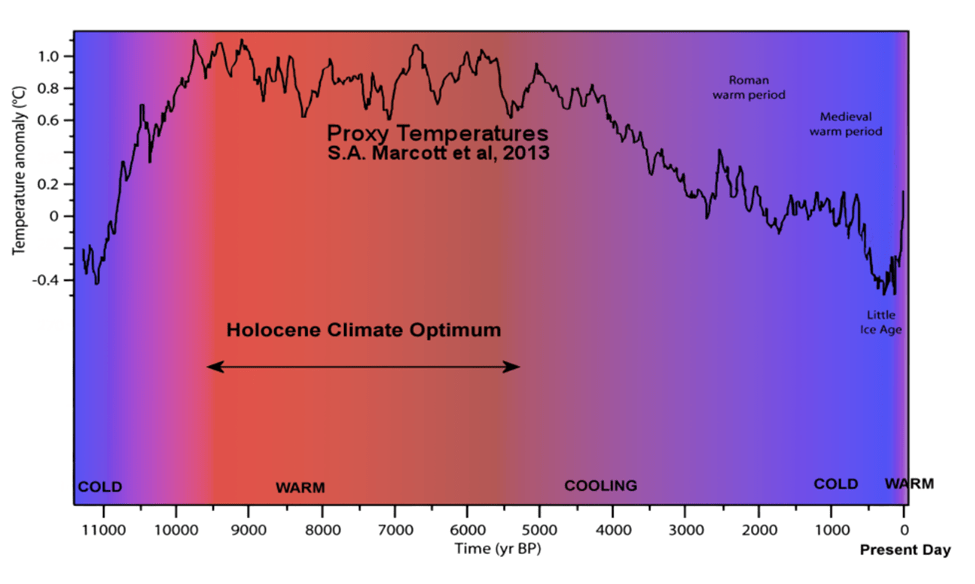
Michael Mann was the primary proponent of the Hockey Stick graph that claims that Northern Hemisphere temperatures over the last 1,000 years were relatively flat and only increased rapidly with the advent of anthropogenic GHG emissions.  His claim wiped out the widely accepted existence of the Medieval Warming Period, but this extraordinary claim was not backed by extraordinary proof.  I believe that the Hockey Stick graphic is BS on many levels and other critics said so too.  In response to his critics Michael Mann filed a lawsuit claiming that his work was proven because of peer review and that the critics had caused him to lose grant funding.  The basis of the hockey stick graph is a unique statistical approach that may have passed peer review in a climate journal but certainly could not pass peer review in a statistical journal.  

Bryce explains that that:

 In his ruling , the judge on the case, Alfred S. Irving, Jr., said that Mann and his lawyers: “Each knowingly made a false statement of fact to the Court and Dr. Mann knowingly participated in the falsehood, endeavoring to make the strongest case possible even if it required using erroneous and misleading information.

Bryce references a  report by Roger Pielke Jr. that explains that a federal court in Washington, DC, ruled that Mann and his lawyers acted in “bad faith” and “made false representations to the jury and the Court regarding damages stemming from loss of grant funding.”  Francis Menton provides more details and makes the point that Mann never tried to defend his scientific claims.

Of more interest to New York is that Mark Jacobson is the other example.  Jacobson is the co-author with Dr Robert Howarth of the paper that strongly influenced the Climate Act.  Bryce includes a concise summary of Jacobson’s shenanigans:

In 2017, as I reported in National Review, Jacobson filed a $10 million defamation lawsuit against the National Academy of Sciences and Chris Clack, the lead author of a paper the NAS published that year that had thoroughly debunked one of Jacobson’s papers. Jacobson, a thin-skinned engineering professor, had written a paper claiming the US could run entirely on alt-energy by 2050. I explained that Clack’s paper found that:

“Jacobson had overstated hydropower’s potential by a factor of ten or so. The land-use requirements for wind power were equally cartoonish. Clack determined that Jacobson’s all-renewable scheme would require covering more than 190,000 square miles with turbines — an area larger than the state of California. Given the burgeoning coast-to-coast backlash against Big Wind, such a notion is absurd on its face.”

Jacobson’s lawsuit claimed that the paper had damaged his reputation and made him and his co-authors look bad. Rather than debate the issues, Jacobson sued.

Bryce recounts what happened then:

In February 2018, Jacobson, in an apparent act of remorse, suddenly withdrew his lawsuit against NAS and Clack. But the case wasn’t forgotten. As I explained in Forbes in 2020, a federal court judge in Washington, DC, sided with NAS and Clack and ordered Jacobson to pay their legal fees.

Bryce explains that since then “Jacobson has spent years bobbing and weaving his way through the courts in an ongoing attempt to avoid paying those fees.”   It is not clear if the NAS fees were paid but Clack told Bryson that Jacobson paid what was owed to him.  Finally, Bryce notes that “In 2022, Jacobson sued Stanford. That case was apparently settled in 2023. In February 2024, according to Retraction Watch, Jacobson lost in his appeal to avoid paying the NAS’s fees.”

Howarth’s statement approving the Scoping Plan states that:

I further wish to acknowledge the incredible role that Prof. Mark Jacobson of Stanford has played in moving the entire world towards a carbon-free future, including New York State. A decade ago, Jacobson, I and others laid out a specific plan for New York (Jacobson et al. 2013). In that peer-reviewed analysis, we demonstrated that our State could rapidly move away from fossil fuels and instead be fueled completely by the power of the wind, the sun, and hydro. We further demonstrated that it could be done completely with technologies available at that time (a decade ago), that it could be cost effective, that it would be hugely beneficial for public health and energy security, and that it would stimulate a large increase in well-paying jobs.

In response to critics of his work Jacobson did not engage in open dialogue but instead took the critics to court.  In my opinion that indicates that he realized that the claims would not hold up to scrutiny.  For example, the claim that no new technology is needed runs contrary to reputable analyses of the future New York electric system that agree that new Dispatchable Emissions-Free Resource (DEFR)  technologies are necessary to keep the lights on during periods of extended low wind and solar resource availability.  Clearly Howarth’s claim based on Jacobson’s approach is incorrect.     

Discussion

It is a sad situation that the Climate Act is built upon analyses that were so weak that the authors could not resolve criticism by open dialogue.  The iconic “Hockey Stick” graph showing the purported undeniable relationship between global temperatures and greenhouse gases has been cited as proof of an existential threat.  Despite claims that it has been vindicated, it is invalid. The Scoping Plan transition plan is based on the Climate Act belief that no new technologies would be required to make a transition to an energy system relying on wind, solar, and hydro. This is also wrong.

The claim about no new technology is needed is more troublesome.  It is the basis of the aspirational schedule and has been cited as proof that the wind, solar, and energy storage approach will work.  The problem is that it will only work if DEFR is developed and deployed.  In my opinion, the most promising DEFR backup technology is nuclear generation because it is the only candidate resource that is technologically ready, can be expanded as needed, and does not suffer from limitations of the Second Law of Thermodynamics. If the only viable DEFR solution is nuclear, then renewables cannot be implemented without it.  But nuclear can replace renewables, eliminating the need for a massive DEFR backup resource.  It is obviously prudent to pause renewable development until DEFR feasibility is proven because nuclear generation may be the only viable path to zero emissions.  The Howarth/Jacobson myth has contributed to the lack of more serious consideration of nuclear.

Conclusion

This is another example of the weak rationale for the Climate Act.  I cannot see any scenario where this will end well.

Guest Post: Climate Change and Electric Utilities

One of the nice things about writing this blog has been the opportunity to meet people online.  For example, one such contact recently reached out and we discussed opportunities to collaborate.  He sent me an article that is the basis of this post. 

Background

A friend of this contact is a registered PE with several decades of design work for electric utility power plants.  He is still working and wants to remain anonymous because his views are not aligned with the his employer. His situation is similar to Russel Schussler aka “Planning Engineer” who published articles at Judith Curry’s Climate Etc. for years before his retirement.  I too have been affected by the concerns of utility management regarding my work here.  For the record, the opinions expressed in this article do not reflect the position of any of our employers or any other organization with which we have been associated.

In the following I chose to lightly edit the article I received from “Design Engineer”, added some introductory/clarifying paragraphs, and have included some personal comments in the discussion section.  I apologize if I have misconstrued anything.

The Problem

Electric utilities must deal with the competing dynamics of political pressure, responsibility to shareholders and societal accountability.  This has led to policies that are likely not in the best long-term interests of most people.

Today, regulated utility CEOs are glad to get rid of coal plants that operate 85% of the time to install windmills that operate 30% of the time and solar that operates 15% of the time.  They also must install battery storage of some kind to store the wind and solar energy because wind and solar only operate when nature allows it to operate but electric customers want power all the time. However, to have the same reliability of utilities power production, the rate base attributable to power production will have to increase by 5-10 times if coal plants are shut down. 

So why is this occurring?  Regulated utilities get earnings from the rate base.  The rate base increases when you build new plants.  The complete cost of the new plant goes into the rate base.  The new equipment then is depreciated.  The rate base decreases each year if no additional capital expenditures are made.  Most coal and nuclear plants have low values in the rate base.  So, getting rid of coal plants and installing wind, solar and battery storage increase utility earnings, and the CEOs pay.  It doesn’t matter if a regulated electric utility builds a plant that never runs.  As long as it is in the rate base it makes the company money because of rate base accounting. 

There are other financial incentives as well.  Banks and Wall Street want utilities to shut down coal plants so they can lend them money for new wind, solar and battery plants.  Bank CEOs have a vested interest in pushing climate change hysteria so they can increase earnings. Wall Street sees the potential for lower risk investments if the renewable energy spending is guaranteed a fixed rate of return by Federal and State policies.

Lost in the greed are the customers.  All the subsidized windmills, solar installations, energy storage and other electrification installations are adding to our national debt.  This cost is hidden from consumers.  Ultimately these costs go to the taxpayers and the citizens of this country. 

It gets worse.  Increasing electric costs make our industries uncompetitive on the world stage when compared to countries like China and India who do not worry about so called climate change.  In 2024 the world shut down 17,000 MW of coal plants and China built 17,000 MW of coal plants.  World CO2 levels are not decreasing.  All we are doing is sending jobs to China and decreasing our national security by not manufacturing equipment in the United States.  China is now producing four times the CO2 of the United States.  If you are worrying about dying from climate change, why would you buy anything from China. 

This is why I think climate change is all about making money.  The greedy CEOs in this country have brought the communist country China to power by transferring all of these manufacturing jobs to China and letting them grow out of the dark ages.  This has made the world much more dangerous. 

Here is a short sidebar lesson on tariffs.  The economic textbooks say free trade is good.  Every country produces the products that they are most efficient at producing and trades with other countries.  An example would be aluminum smelting which occurs where electricity is very cheap because the process of creating aluminum is very energy intensive.  This benefits all countries.  What is never mentioned is this free trade principle is based on all exogenous variables being the same.  That means regulations, environmental laws, lawyers suing people or companies, countries such as China providing cheap capital to companies.  These all have to be the same between countries for there to be real free trade.   If you think China has the same environmental laws as the US you are kidding yourself.  They also don’t have to deal with the multitude of lawsuits US companies have to deal with.  US companies don’t normally receive subsidies from the government until President Biden came along.  So, there may be some free trade in the world.  None of it is occurring in China. 

When I started working for an electric utility in the 1980s, the mantra was 1/3 customers, 1/3 employees and 1/3 shareholders.  Each of those groups was to be considered when making decisions.  This has migrated to 100% shareholders over the years.  If this old mantra was in place now electric utility executives would have fought the environmentalists because they know electric prices would rise dramatically.  My salary would also be more than double what it is now if I kept the same relationship of salary to the CEO.  And this compares a new engineer to a 40-year veteran engineer.    The point I am making is it is all about shareholders now.  And customers don’t have an alternative.  At least employees can leave. 

The Coverup

Design engineers and plant engineers in electric utilities realize renewables are a big scam.  Rates will increase dramatically, and we may have blackouts too.  Unfortunately, it is not a good career move to speak out and unscrupulous engineers go so far as to lie to stay in the graces of management. 

The only way to make a windmill markedly more efficient is to make it bigger.  In my experience, the newer windmills that are larger only have a 10-year life on land.  The older, smaller windmills have a 15-year life on land.  Windmills installed in the ocean only have a 5-year life.  Solar plants have a 15–20-year life.  Currently there is no recycling options for windmill blades.  They are also still working on recycling options for solar installations.   Where is all of this waste going to go?  

There is another wind siting concern.  As more and more sites get developed, the remaining choices may have less wind resource availability and other problems.  Some good sites left are impacted by endangered bat species.  There is now a windmill location in NE Missouri that is not operating for about 6 months a year because of endangered bat species. 

The availability difference between renewables and coal plants is stark.  Most coal plants have a 60-days coal storage pile on site.  The plants can pump electricity out for 60 days even if their coal supply is shutoff.  Midwest utilities know how to handle frozen coal problems in winter due to extreme temperatures.  Windmills have restrictions on cold weather operations to protect the blades and gearboxes.  These values have been decreasing.  Five years ago, they could not operate under 9 degrees F.  These cold spells often are characterized by light winds so just when you need the power the most, the windmill can’t provide it.  And if you get a snowstorm, ice storm or cloudy days solar isn’t much help.  Ice storms can also shut down windmills.  None of these things shut down a coal plant.  Coal plants can run at 25 below zero in the Midwest.  I have witnessed this three times in the past 35 years. 

Every windmill and solar installation that is built requires backup.  If you build a 100 MW wind installation, you need to build a 2400 MWhr battery farm to store one day’s worth of energy. This is 100 MW x 24 hours = 2400 MWhrs.   A Tesla 100 MW power wall can store 400 MWhrs of electric energy.  So you would need six 100 MW Tesla power walls to store one day’s worth of wind energy.  The cost of the power wall far exceeds the cost of the windmill or the solar installation.  Utility executives have finally realized this.  That is why they are now building natural gas power plants with abandon.  They know windmills and solar cannot provide a reliable electric grid.  They are happy to build any kind of plant because they all go into the rate base.  Shareholders are happy.  Customers are hurt badly.

All these natural gas plants being built are interruptible in winter.  That means the pipeline companies will shut off the gas flow to natural gas power plants when the weather gets cold because they must supply the natural gas to natural gas heating customers.   Electric utilities are not willing to reserve the pipeline capacity because the demand charges are so high.   You would need dedicated new pipelines to feed all these natural gas power plants.  That would increase the cost of the plants exponentially.  Instead, utilities are building 3-day oil storage on site.  They hope a 3-day cold snap could be met with oil storage.  Historically that is not a good bet.  In 1982 there was a 24-inch snowstorm with a cold snap that lasted longer than 3 days.  Also, they will be depending on the combustion turbine to be operating successfully on possibly subzero temperatures when the oil-fired part has not been used the rest of the year. 

The extra use of natural gas year-round for electric power will increase natural gas prices for gas heating customers.  So, consumers will face a double whammy:  Rising electric rates and rising gas rates. 

Consumers are also impacted by the drive to electrify home heating.  Environmentalists are pushing heat pumps.  This may be an acceptable alternative to gas heating in the south.  In the Midwest and North, it is a risky proposition.  It is notable that many utility engineers are installing backup generators to power their gas furnaces.  A small generator can power the furnace blower and controls in winter.  Whether you lose electricity due to insufficient power production or an ice storm, you can stop your house from freezing. With the preponderance of two-story houses, you can no longer drain your water piping like in the old days with ranch houses with unfinished basements.   Activists do not acknowledge that installation of heat pumps may cause many people to lose heat and suffer damage to their homes which will be expensive to repair. 

There is another ignored problem with the transition away from coal.  There are not enough pipefitters, electricians, millwrights, carpenters, iron workers, boilermakers, laborers and engineers to build all of these plants.  There are not enough line workers to build all the transmission lines to transmit the electricity from good wind locations to the population centers.  We are shutting down perfectly good coal plants with many useful years of life left.  We are basically destroying our capital base of coal plants. 

Now all the computer companies such as Google and Microsoft want to build data centers to increase their earnings.  This occurs after their efforts to eliminate coal plants for the last 20 years.  They don’t care about electric rates for the consumer.  They are just worried about increasing their profits. 

In conclusion, we should be bringing back coal plants if they haven’t already been torn down.  I believe that current policies are causing an energy crisis. 

Caiazza Discussion

I agree with “Design Engineer’s” conclusions.  I also want to make the point that every time I have talked to a different power plant expert, there always has been a new concern or two raise that I did not know anything about.  In this case, the expected lifetimes of the large windmills in the Midwest are shorter than I expected.  Some may quibble with these numbers but there simply isn’t a lot of experience with the gigantic windmills.

The biggest takeaway is that we are in the midst of a great experiment where short-sighted policies are shutting down coal plants that have a proven record as a reliable source of electricity in extreme weather.  At the same time, there is a drive to electrify home heating which puts a greater emphasis on the need for reliable electricity during extremely cold spells.  These policies will also raise consumer prices. 

I believe the transition away from coal-fired power plants will cause an energy crisis that will do more harm than good.  Consumers will pay more for less reliable power risking the potential for catastrophic blackouts.

My thanks to Design Engineer for his submittal.

Commentary on Recent Articles  March 17, 2025

This is an update of articles that I have read that I want to mention but only have time to summarize briefly.  Previous commentaries are available here

My primary focus lately has been New York’s Climate Leadership & Community Protection Act (Climate Act).  I have been following the it since it was first proposed and most of the articles described below are related to the net-zero transition. My opinions expressed in this article do not reflect the position of any of my previous employers or any other company I have been associated with, these comments are mine alone.

EPA Deregulatory Action

Alex Epstein breaks down the regulations that the Trump Administration is going to reconsider.  Despite the constant drumbeat in the media the American environment is in pretty good shape.  In my opinion all the rules mentioned represent overreach and will have larger negative impacts than positive benefits.  However, I don’t think that there will be many changes for the affected companies.  I suspect the presumption will be why make investments when another administration can just undo them all.  Absent overwhelming evidence of the impact of the overreach policies, like a catastrophic blackout, I do not know what would change public opinion enough to satisfy investors that reliable power is a necessary investment and regulators to change policies to prioritize reducing reliability risks.

Endangerment Finding was Politically Motivated

One of the deregulatory actions described by Epstein included the endangerment finding that claimed that a trace gas necessary for human life needed to be regulated.  Kevin Killough notes that the “Emails obtained through FOIA requests suggest the procedure Obama’s EPA used to come to its endangerment finding was informed by people who wanted to regulate greenhouse gases as a pollutant no matter what and came to a predetermined conclusion on behalf of a “progressive” national policy.”  For all the talk about science driving Progressive policy the reality is that the climate change transition proponents could have cared less about the science.

Reality or Waste

Collin Kinniburgh describes the tradeoffs for New York gas utilities replacing ancient natural gas pipelines against the Climate Act electrification transition.  Utilities say the spending is necessary to maintain “public safety and world class reliable service,” as well as reduce greenhouse gas emissions from the leaky pipes.  Naturally the electrification advocates who have no skin in the game if people freeze to death or go broke due to higher costs, argue that it is a waste of money because the infrastructure will be made obsolete by the Climate Act.  I hope that the companies are simply acknowledging the fact that when the costs become evident that the political winds driving the conversion will stall.  In addition, I believe that keeping natural gas infrastructure is a pragmatic tradeoff.  It is not only that an electric system dependent upon wind, solar, and short-term energy storage has not been shown to be able to provide electric power as reliably as it is today, but the State has yet to confront the consequences of a long duration blackout due to, for example, an ice storm, on an all-electric residential system.  Natural gas capabilities can save lives during those events.

Climate Fact Check

This summary serves as a fact check on the top false claims made about climate change by the media in February 2025. Debunked media claims include claims that greenhouse gases threaten public health, Atlantic Ocean losing circulation, adjusting temperature data is science, earth’s thermostat is rising, and glaciers shrinking faster than ever.  In each instance, the fact checks cite rebuttal information.

Wind Power and Eagles

David Wojick raises the important point that almost every wind project in America has a permit to kill a certain number of eagles per year. The article points out that “Estimates suggest that wind farms kill at least 150,000 birds annually in the U.S. alone”.  It goes on to explain why that is probably a low-ball estimate because scavengers quickly remove the dead birds.  Compounding the problem eagles “reproduce slowly so even a small number of deaths can have devastating impacts on populations”.  In New York the last cumulative environmental impact that should have addressed this issue was completed before the Scoping Plan was published.  The Scoping Plan projects that 16,690 MW of land-based wind will be needed in 2050.  The Alle-Catt Wind Energy Center is a proposed 340-megawatt (MW) wind power generation facility in Allegany, Cattaraugus, and Wyoming Counties targeted to begin construction in 2025 that will use 2.9 MW wind turbines. Using that size turbine means there will be 5,755 Eagle Cuisinarts built. There is no estimate how many eagles could be legally killed each year when that many are deployed but there are only 1,000 Bald Eagles in the state.  Have we lived to see Bald Eagles return to New York only to kill them off in this mad attempt to control the weather?

Oh the Calamity

This article really deserves more attention because it includes every green narrative talking point about the evils of natural gas pipelines.  I simply do not have the time or the stomach to deal with rebutting it.  Fair warning here is a link to an article from City Limit describing how critics argue that the approval of a major gas pipeline running through much of upstate New York shows how the state’s commitment to its climate goals is waning.  Vinny Gambini sums it up.

Electricity Bills are Going Up

The Journal News reports that 1.3 million New Yorkers are in utility arrears, and ratepayers, advocates and lawmakers are all recommending action amid their frustration.  What is absolutely necessary for understanding why the electricity bills are going up is a clear, transparent, and well documented description of the costs, emission reductions, realistic implementation schedules, and expected revenue streams for the strategies proposed to meet the Climate Act mandates.  The utility companies are burying many costs imposed on them by the lawmakers.

Energy Choices Review

Thomas Shepstone describes a new report out by ARC Research does a beautiful job setting out a rationale discission of energy issues against the shrill cries of climate cultists. It’s titled “The Choices We Face, Energy for the 21st Century: A Declaration of Guiding Principles.”  Authors Mike Mills and Dr. Scott Tinker argue that the transition away from fossil fuels is driven by climate policy concerns and make the point that: “Notwithstanding the certainties and uncertainties around climate issues, the principles of the physics of energy are independent of climate science.”    They go on to argue: “Because energy is foundational for civilization, as a guide for framing civil dialogue and deep thinking around the energy-environment balance, we propose herein nine energy principles, three each in three domains—Economics, Politics, and Science and Technology.”   The guiding principles are:

  • Lifting up those in poverty to alleviate suffering and promote human dignity requires more energy.
  • Human flourishing requires more energy that is less expensive and more reliable, not less energy that is more expensive and less reliable.
  • In the pursuit of flourishing, humans continually invent new products and services, all of which necessarily use energy.
  • Energy security is a top priority for global leaders, revealed in their actions, if not always their words.
  • When wealthy economies export energy production, they impose environmental impacts on less-wealthy nations.
  • Government mandates and/or excessive intrusion in markets stifles energy innovation, options, and freedoms.
  • Capturing and delivering energy to society is about inventing, building, and perfecting technologies based on what physics and engineering allow.
  • All society-scale energy systems have environmental trade-offs.
  • The energy available in nature itself is fundamentally unlimited.

This is a useful summary of what New York energy policy should be discussing instead of its monomaniacal concentration on aspirational climate change mitigation.

New York Budget Articles

I have never closely followed New York State’s budgeting process before because I never felt connected to Albany politics, and it seemed so complicated.  My obsession with the unfolding disaster of the Climate Leadership and Community Protection Act (Climate Act) net-zero transition has prompted me to take an interest in the process.  The latest New York Focus Newsletter describes budget articles that include an overview of the process and discussion of funding proposals with one article focused on funding for the ambitious climate goals.  I recommend all the stories to New York readers.

I am convinced that implementation of the New York Climate Act net-zero mandates will do more harm than good if the future electric system relies only on wind, solar, and energy storage because of reliability and affordability risks.  I have followed the Climate Act since it was first proposed, submitted comments on the Climate Act implementation plan, and have written over 500 articles about New York’s net-zero transition.  The opinions expressed in this article do not reflect the position of any of my previous employers or any other organization I have been associated with, these comments are mine alone.

Budget Overview

Sam Mellins answers questions about the state’s notoriously opaque budget process.  His article addresses the following questions:

  • What is the state budget?  It is likely to allocate over $250 billion with “biggest shares going to healthcare and education.  He makes the critical point that the budgeting legislation is also used to “enact laws that don’t involve spending money.”  Guess how the Climate Act was passed.
  • Where does the money come from?  Most of the money allocated in the budget comes from the taxes that New Yorkers pay to the state government. But a sizable portion is cash that the federal government gives New York to provide services “ranging from highways and transit to health insurance for low-income residents.”
  • What are the major steps in the budget process?  This description summarizes the process that is used to pass the budget.
  • Who are the key players?  I was aware that the budget negotiations boiled down to a few individuals. Mellins explains that “Three key parties dominate the process: the governor, the Senate majority leader, and the Assembly speaker.”
  • How does our process compare to other states?  This is a must-read section: “In a 2015 analysis by the Center for Public Integrity, New York ranked dead last among all states for accountability and transparency in its budget process.”  Not surprisingly the politicians ignore State Constitution requirements and push things through at the last minute.
  • Is the entire budget up for negotiation?   Mellins explains that most of the budget is more or less on autopilot so only “optional” items cause debate.
  • How does the public get involved?  Mellins notes that the budget process is always accompanied by a flurry of lobbying, activism, and advocacy and that “Any New Yorker can submit written testimony during budget hearings.” 

Funding the Green Transition

Colin Kinniburgh describes how the Senate, Assembly and Governor stand on funding Climate Act implementation.  As this is my primary focus, I will quote his article in its entirety with my annotated comments.  He introduces the article with this: ” If Albany is planning to rally against the Trump administration’s attack on its climate plans, it’s not showing in the budget.”

The New York Cap and Invest program is of special interest to me.  Establishing any cost on carbon like this program is no more than a hidden and regressive tax.  The slow pace of implementation may be the result of dawning realization that the costs involved may be politically inimical to its political supporters.  Kinniburgh describes the status:

In New York, the governor sets the budget agenda. That’s particularly clear on climate this year. Breaking two years of promises, Governor Kathy Hochul in January dropped the climate funding program known as “cap and invest” from her 2025 agenda. Her agencies have been writing the rules to structure the carbon pricing program, but the legislature would likely have needed to approve spending the resulting revenue — about $3 billion a year and growing — setting up what could have been a major budget fight.

Hochul effectively brushed that plan off the table, and the legislature isn’t making any big moves to bring it back.

The reality is that this is a major undertaking but despite the challenge the Department of Environmental Conservation managed to get draft rules put together.  The reason that they have not been released is solely due to politics and the inevitable need to show the costs.  No amount of gilding the pig with slogans will be able to hide the costs.  But funds are still needed if the Climate Act transition is to proceed.

In the place of the permanent program, Hochul offered a one-time, $1 billion budget line to fund a variety of climate initiatives over the next five years. The Senate and Assembly have both accepted that amount, though they want more guardrails on how it’s spent. Hochul’s proposal lists a few broad areas she wants to fund, like renewables and building retrofits, but gives little further detail.

The Senate wants to give legislative leaders a chance to review the governor’s spending plan. The Assembly has gone further, divvying the $1 billion between seven programs advancing building decarbonization and electric vehicles, particularly school buses and charging infrastructure.

“The governor and Senate have a slush fund, the Assembly makes clear allocations,” said Liz Moran, Northeast policy advocate at Earthjustice, in a text message.

In this political process the missing piece by the Governor and the legislators is the reality that they don’t have the expertise to set energy policy funding priorities.  Selective listening to supposed authoritative sources all the while ignoring the experts who have the responsibility to keep the lights on, choosing winners and losers based on lobbyist effectiveness, and setting priorities based on the whims of favored constituencies is sure to result in poor policy.

The Senate also includes a nod to cap and invest in its budget resolution, urging the governor to “immediately issue all draft regulations necessary” to implement the program. (Hochul has said her agencies need more time to complete the rules, but internal emails reported by Politico show that they were ready to go before she abruptly hit the brakes in January.) There’s little chance that the message will revive cap and invest in this year’s budget, but it adds to a growing chorus. (Green groups’ call to release the regulations may soon be backed up by a lawsuit, according to Michael Gerrard, director of the Sabin Center for Climate Change Law at Columbia University.)

This paragraph scares me.  The only thing that could foul up the proposed cap-and-invest program more than the provisions inserted in the draft regulations to comport with the Climate Act would be for politicians to get involved with implementation details.  Well maybe it would be worse if some judge decides how to do the implementation.  Kinniburgh goes on to describe other “big-ticket climate items.”

The NY HEAT Act, a top priority for green groups, once again faces an uphill battle. For the third year running, the Senate has included the bill — which would allow the state to gradually transition homes off fossil fuels — in its budget proposal. But the chamber is alone in doing so. Last year, Hochul included a version of the bill in her budget, but the Assembly blocked it in final negotiations.

There’s no sign in its budget proposal that the Assembly is warming to the HEAT Act this year. Two assembly members told New York Focus that its omission reflected the chamber’s longstanding — and inconsistently held — position that policy does not belong in the budget, but they expected it to be on the table in final talks.

I could not agree more with the admonition that policy does not belong in the budget.  What is absolutely necessary for the climate budgeting strategy is a clear, transparent, and well documented description of the costs, emission reductions, realistic implementation schedules, and expected revenue streams for the strategies proposed to meet the Climate Act mandates.  The time for only providing the slogan that the cost of inaction is more than the cost of action has long since passed.  New Yorkers deserve the details.  The total costs to implement the NY Heat Act is a prime example of this need.

There is one new climate item that the legislature has aligned on: solar tax credits. The current $5,000 credit for homeowners who install solar power took effect in 2006 and has not been updated since. The Assembly and Senate want to increase the maximum credit to $10,000 and make it easier for co-op and low-income residents to receive it.

The tweak would give a further boost to small-scale solar, the only area where New York has outpaced its climate targets. The state closed out last year with 6.6 gigawatts of rooftop and community solar, beating its 2025 goal. But research has found that the subsidies fueling that growth go disproportionately to high-income homeowners. This year’s budget legislation, with newfound support from the Assembly, aims to shift the balance.

This is a perfect example of political ambition outrunning reality.  It is accepted by all credible sources that to support a reliable New York State electric grid that depends primarily upon wind, solar, and short-term storage resources that a new dispatchable and emissions-free resource (DEFR) must be deployed.  In my opinion, the most promising DEFR technology is nuclear generation because it is the only candidate resource that is technologically ready, can be expanded as needed, and does not suffer from limitations of the Second Law of Thermodynamics. If the only viable DEFR solution is nuclear, then renewables cannot be implemented without it.  But nuclear power runs best as baseload generation so it can replace renewables, eliminating the need for a massive DEFR backup resource.  Therefore, it would be prudent to pause all actions that encourage further renewable development until DEFR feasibility is proven because nuclear generation may be the only viable path to zero emissions.

Kinniburgh concludes:

Solar boost aside, the Senate and Assembly’s proposals leave climate issues largely where Hochul did: in the margins of budget talks. Almost six years after New York passed a climate law promising to shift its economy away from fossil fuels, the state has committed no consistent funding to do so, and it looks like this year’s budget will not change that.

I would only add that six years after the law passed the Hochul Administration has still not opened the books on the expected costs.  In these budget debates those costs are absolutely necessary.

Other Articles

The newsletter included links to other articles about the budget.  There is one about budget showdown hot topics including millionaire tax hikes and inflation rebate checks. Another article dives into the proposal for a “middle-class” tax cut.  The legislature has proposed more money for child care than proposed by the Governor.  Another item raised by the legislature are changes to the school funding formula.  The legislature has proposed a boost to nonprofits and safety net programs serving New York’s neediest.  After the recent prison strikes actions on prisons and public safety policies will be debated.

Conclusion

As a New Yorker I am not sure what is the biggest embarrassment.  Is it a plan to completely transform the economy to eliminate fossil fuels without doing a feasibility analysis before implementing it?  Or is it the annual budget process back-room shenanigans described in these New York Focus articles.  The only thing I am sure of is that the impacts of both are not in the best interests of New York.

Ellenbogen: Another Reason to Pause the Climate Act – Electric Trucks

Manhattan Contrarian Francis Menton’s recent article on electric truck deployment prompted Rich Ellenbogen to write an email to his distribution list that deserves a wider distribution.  I have collaborated with both gentlemen because we all agree that the Climate Leadership and Community Protection Act (Climate Act) net-zero transition mandates are bound to fail simply because the ambition is too great.  Nowhere is this more evident than the magical thinking associated with heavy-duty trucks.

Ellenbogen is the President [BIO] Allied Converters and frequently copies me on emails that address various issues associated with the Climate Act. I have published other articles by Ellenbogen including a description of his keynote address to the Business Council of New York 2023 Renewable Energy Conference Energy titled: “Energy on Demand as the Life Blood of Business and Entrepreneurship in the State -video here:  Why NY State Must Rethink Its Energy Plan and Ten Suggestions to Help Fix the Problems” and another video presentation he developed describing problems with Climate Act implementation.   He comes to the table as an engineer who truly cares about the environment but has practical experience that forces him to conclude that New York’s plans simply will not work.

Menton on Electric Trucks

Menton’s article makes the point that so far the impossible mandates of the Climate Act have all been so far in the future that reality has not been evident.  He points out that:

In 2021 Governor Hochul sought to do the Climate Act one better by adopting a regulation called the Advanced Clean Truck Rule. This Rule requires a certain percentage of heavy duty trucks sold in New York to be “zero emissions,” i.e., all-electric. It so happens that New York copied this Rule and its percentages from California. For the 2025 model year, now under way, the relevant percentage is 7%.

He continues:

All-electric heavy duty trucks? Did anyone think this one through? Clearly not. The New York Post today reports that two upstate legislators of the Democratic Party have now introduced legislation to postpone the electric heavy-duty truck mandate until 2027. The legislators are Jeremy Coney Cooney of Rochester and Donna Lupardo of Binghamton. The two call the mandate “nearly impossible for the trucking industry to comply with.” Here is one among several noted problems: “The legislators noted that an average diesel truck can be refilled in about 10 minutes and can drive for about 2,000 miles. By comparison, an electric, zero-emission heavy-duty truck takes approximately 10 hours to charge and can run for about 500 miles. . . . “Battery charging times are . . . a challenge and will remain so until new technology emerges and is commercialized,” [Lupardo] said.

Menton argues that there is no way that these issues can be resolved in a couple of years.  There is no way the battery challenges s are going to be resolved that soon.  Throw in lack of charging infrastructure and costs (a fully-electric heavy-duty truck can be as much as triple that of a diesel competitor with comparable load capacity) and this is clearly unworkable.  He also describes the difficulties trying to enforce a mandate on electric vehicle sales quotas.  Despite the wails and gnashing of the teeth of the environmental advocates, Menton concludes that reality will win and this mandate will have to eventually be rescinded.  I recommend the entire article for additional facts and context.

Ellenbogen Trucking Challenges

The following is Ellenbogen’s lightly edited email.

The electric truck situation is even more complex than Francis mentions and more unworkable.    It’s more than the fact that the truck would cost three times as much as the Post clip said.   Physics and energy math are getting in their way again.  The truck would be so heavy that it couldn’t carry nearly the same amount of freight.  It is apparent that whoever wrote the truck rules knew nothing about EV’s, long haul trucking, or Federal highway rules.  They just didn’t like diesel fuel so they said, “Let’s make them electric” without thinking about what that would entail.  Also, the following statement about comparable load capacity defies physics: “On the cost front, it the Post reports that the price of a fully-electric heavy-duty truck can be as much as triple that of a diesel competitor with comparable load capacity.”

We load large trucks several times per week at my factory and we must be very conscious of Gross Vehicle Weight.  In the US, for an 18-wheeler with 5 axles, that is 80,000 pounds max or about 16,000 pounds per axle.  Of those 80,000 pounds, about 35,000 pounds is the tractor and trailer including about 4000 pounds of fuel when fully loaded.  We can safely load a truck with about 43,500 pounds of freight and stay below the weight limit without worrying about the fuel weight. We also must be careful to balance the load so that the weight is evenly distributed.  If a trucker hits a weigh scale and there is too much weight on one axle or if the truck is overweight, they will be subject to fines in the thousands of dollars.

My Tesla X weighs 5400 pounds and can travel about 300 miles with a 100 KWh battery.  A 100 KWh battery can weigh about 675 Kg or about 1500 pounds.   If 1500 pounds of Lithium batteries can store enough energy to move 5400 pounds for 300 miles and energy used is proportional to distance and mass, then assuming the same velocity it would take almost fifteen times as much storage to move 80,000 pounds 300 miles, or about 22,500 pounds of batteries, 18,500 pounds more than the weight of the diesel fuel.

If we subtract 18,500 pounds from the 43,500 pounds of freight to meet Federal Highway Laws, no truck could carry more than 25,000 pounds of freight for 300 miles at a time so it would need almost two EV truck trips for one diesel truck trip.  As diesel engines are about 43% energy efficient and EV’s are about 75% energy efficient, it would take 15% more energy to move the same amount of freight using an EV than with a diesel truck.  It would also take two times as much labor to just move the freight within a very small radius.   We ship truckloads across the country, and they will get there in three or four days.  Hours of Service regulations require them to drive no more than 11 hours within a 14-hour window. They must take a mandatory 30-minute break after eight hours of driving.  The EV truck couldn’t even make a round trip to Syracuse from my factory just north of New York City without stopping for charging.  Diesel truck operations are limited by Federal regulations whereas electric trucks can only drive 4 – 5 hours before charging.  As a result, about 4 hours of the 14 hours would be lost charging and the truck would lose at least 60 miles of range per day, or about 10% best case.  Also, to charge a 1500 KWh battery pack in four hours would require the capacity of four to five Tesla chargers.

An enormous amount of the energy would be expended just moving the batteries, not the freight.  It will use about 15% more energy per pound of freight, which is absolutely not “green” and it will use at least six times the amount of labor if you figure in charging stops.  If you figure in generation losses if the energy is fossil fuel based, then you can at least double the energy use of the electric truck and the 15% becomes 100% more energy per pound of freight.

UPS has ordered several electric trucks but they aren’t doing long hauling with those and their freight is less dense so they might be able to stay below the 25,000 pound limit so it may work for them.  For large, long-haul trucks, it will be logistically impossible.  Sea containers can weigh 44,000 pounds.   There isn’t a physical way to build an electric truck that could legally haul them to or from a pier.

We’re shipping 80,000 pounds of freight to Philadelphia next Tuesday on two trucks.  The total fright cost is about $1800 or about 2.25 cents per pound.  With electric trucks, the freight costs would be substantially higher.  Just the fact that it would take twice the number of loads to move the same amount of freight would double the price but then you must figure in that the truck owner is amortizing three times the cost of the equipment and lost labor during charging, so the cost would likely triple or more.

Almost everything moves by a long-haul truck.  If you want to see inflation, add that to the cost of every delivery if you could even find enough truck drivers to logistically drive all the extra loads that would be required.  The entire idea is unworkable. It sounds like another not well thought out “only a matter of political will plan” from New York State and California.

Caiazza Conclusion

Menton and Ellenbogen describe insurmountable issues with the heavy-duty truck mandates.  There is no way that the Climate Act heavy duty truck mandates can be achieved on schedule and probably not ever.  This is another reason to pause the Climate Act implementation and rethink the ambition and schedule of all the mandates.  Until the feasibility of each requirement has been proven it is utter folly to throw more money at these magical dreams.