My previous post summarized the presentation given by Zachary Smith from the New York Independent System Operator (NYISO) describing Dispatchable Emissions-Free Resources (DEFR). All credible projections for the generating resources needed for the zero emissions target in New York’s Climate Leadership & Community Protection Act (Climate Act) include this new category of generating resources called Dispatchable Emissions-Free Resources (DEFR). It is necessary to keep the lights on during periods of extended low wind and solar resource availability. This post uses the cost projections for recently awarded United Kingdom contracts for commercial scale green hydrogen production projects to estimate how much Climate Act DEFR might cost.
I have followed the Climate Act since it was first proposed, submitted comments on the Climate Act implementation plan, and have written over 380 articles about New York’s net-zero transition. The opinions expressed in this post do not reflect the position of any of my previous employers or any other organization I have been associated with, these comments are mine alone.
Overview
The Climate Act established a New York “Net Zero” target (85% reduction in GHG emissions and 15% offset of emissions) by 2050. It includes an interim 2030 reduction target of a 40% reduction by 2030 and a requirement that all electricity generated be “zero-emissions” by 2040. The Climate Action Council (CAC) is responsible for preparing the Scoping Plan that outlines how to “achieve the State’s bold clean energy and climate agenda.” In brief, that plan is to electrify everything possible using zero-emissions electricity. The Integration Analysis prepared by the New York State Energy Research and Development Authority (NYSERDA) and its consultants quantifies the impact of the electrification strategies. That material was used to develop the Draft Scoping Plan outline of strategies. After a year-long review, the Scoping Plan was finalized at the end of 2022. In 2023 the Scoping Plan recommendations were supposed to be implemented through regulation, PSC orders, and legislation. Not surprisingly, the aspirational schedule of the Climate Act has proven to be more difficult to implement than planned and many aspects of the transition are falling behind. DEFR is a particularly challenging problem. When political fantasies meet reality, reality always wins.
New York Net-Zero Transition DEFR
The presentation given by Zachary Smith summarized in my recent post gave an overview of the DEFR issue. I am not going to repeat the descriptive information again. For the purposes of this article, the Integration Analysis identified the need for a generating resource that could be dispatched as needed and did not have any emissions. The placeholder technology listed in the Integration Analysis was green hydrogen. The following table lists the projected capacity for DEFR in the NYISO the 2021-2040 System & Resource Outlook and the Integration Analysis. Note that the Resource Outlook projecta that 44,750 MW of DEFR will be needed by 2040, that the Integration Analysis Strategic Use of Low-Carbon Fuels scenario projects 17,992 MW by 2040, and that in 2019 the fossil fuel generation in the state was 26,262 MW.
The energy production projected for DEFR from the NYISO Resource Outlook and the Integration Analysis are shown in the following table. The largest difference between the two projections is that NYISO projects that DEFR will generate ten times more energy. It turns out that NYISO has DEFR generating 14% of the total energy in 2040 but Integration Analysis projects only 1%. I am very disappointed that the Hochul Administration has not reconciled the two projections.
Green Hydrogen Production
Proponents of zero emissions energy sources tout the use of “green” hydrogen. This is hydrogen that is produced using renewable energy rather than other fossil fuels or other sources. It is recognized that over-building wind and solar is a necessary part of an electric system that relies on these intermittent sources of power. One of the purported benefits of green hydrogen is that when the wind and solar availability is higher than the system load instead of curtailing excess wind and solar power that it could be used to power electrolyzers to create hydrogen. That is the theory, but the reality is that no one is producing hydrogen at commercial-scale yet.
Paul Homewood writing at the Not a Lot of People Know That blog described the recent announcement that the United Kingdom’s Department of Energy Security & Net Zero awarded contracts for green hydrogen projects. The announcement states:
Following the launch of the first hydrogen allocation round (HAR1) in July 2022, we have selected the successful projects to be offered contracts. We are pleased to announce 11 successful projects, totaling 125MW capacity.
HAR1 puts the UK in a leading position internationally: this represents the largest number of commercial scale green hydrogen production projects announced at once anywhere in Europe. This round will provide over £2 billion of revenue support from the Hydrogen Production Business Model, which will start to be paid once projects become operational. Over £90 million from the Net Zero Hydrogen Fund has been allocated to support the construction of these projects.
We have conducted a robust allocation process to ensure only deliverable projects that represent value for money are awarded contracts. The 11 projects have been agreed at a weighted average [footnote 1] strike price of £241/MWh (£175/MWh in 2012 prices). This compares well to the strike prices of other nascent technologies such as floating offshore wind and tidal stream.
The thing that caught my eye in Homewood’s article was that there were cost numbers: “The 11 projects have been agreed at a weighted average strike price of £241/MWh”. In renewable energy contracts the government agrees to a “strike price” per megawatt-hour that the renewable energy developer will receive for its delivery of electric energy produced by the renewable energy source. In this case electric energy from the green hydrogen source. The previous table lists the DEFR electric energy expected so as a first cut estimate I simply multiplied the expected MWh by the strike price. The following table shows that green hydrogen production could cost between $10.4 billion and $1.1 billion per year by 2040. This is the annual cost and does not include any construction subsidies.
Discussion
This just represents the start of the costs for the green hydrogen DEFR support. Making it is just part of the process. It has to be stored, transported to where it will be used, and, if the zealots on the Climate Action Council have their way, used in fuel cells. Each of those components adds costs. Homewood points out two other issues:
What is interesting is that the strike prices will be tied to changes in the market price of gas: “The subsidy will vary relative to changes in the reference (natural gas) price”.
The schemes all appear to be electrolyzers, and they all claim that only renewable electricity will be used, an absurd assumption! None of them say what they will do when there is not enough wind and solar power to meet demand – will they idle their plants, or will they carry on as usual taking whatever power the grid can supply?
That is not all. One of the things I have wondered about is process efficiency. When making anything the most efficient thing to do is to get the process up and running efficiently and just let it go. Depending on variable wind and solar makes that a challenge. Is New York’s plan going to include its own energy storage to make the process work well? I see no realistic scenario where this will work.
Conclusion
The Climate Action Council did not fully acknowledge the necessity or the challenge of the DEFR technology. The Department of Public Service Proceeding 15-E-0302 is intended to “identify technologies that can close the gap between the capabilities of existing renewable energy technologies and future system reliability needs, and more broadly identify the actions needed to pursue attainment of the Zero Emission by 2040 Target” directly contradicts the Council’s position. This post suggests that the placeholder DEFR option of green hydrogen could adversely affect affordability even if viable DEFR technologies can be identified.
As part of the Department of Public Service Proceeding 15-E-0302 a technical conference was held on December 11 and 12, 2023 entitled Zero Emissions by 2040. A zero-emissions electric system is a key part of New York’s Climate Leadership & Community Protection Act (Climate Act) and all credible projections for the generating resources needed for the zero emissions Climate Act target have noted that a new category of generating resources called Dispatchable Emissions-Free Resources (DEFR) is necessary to keep the lights on during periods of extended low wind and solar resource availability. This post summarizes the presentation given by Zachary Smith from the New York Independent System Operator (NYISO) describing DEFR.
I have followed the Climate Act since it was first proposed, submitted comments on the Climate Act implementation plan, and have written over 380 articles about New York’s net-zero transition. The opinions expressed in this post do not reflect the position of any of my previous employers or any other organization I have been associated with, these comments are mine alone.
Overview
The Climate Act established a New York “Net Zero” target (85% reduction in GHG emissions and 15% offset of emissions) by 2050. It includes an interim 2030 reduction target of a 40% reduction by 2030 and a requirement that all electricity generated be “zero-emissions” by 2040. The Climate Action Council (CAC) is responsible for preparing the Scoping Plan that outlines how to “achieve the State’s bold clean energy and climate agenda.” In brief, that plan is to electrify everything possible using zero-emissions electricity. The Integration Analysis prepared by the New York State Energy Research and Development Authority (NYSERDA) and its consultants quantifies the impact of the electrification strategies. That material was used to develop the Draft Scoping Plan outline of strategies. After a year-long review, the Scoping Plan was finalized at the end of 2022. In 2023 the Scoping Plan recommendations were supposed to be implemented through regulation, PSC orders, and legislation. Not surprisingly, the aspirational schedule of the Climate Act has proven to be more difficult to implement than planned and many aspects of the transition are falling behind. DEFR is a particularly challenging problem. When political fantasies meet reality, reality always wins.
Presentation
The presentation given by Zachary Smith gave an overview of the DEFR issue. In his first slide (shown below) he gave an overview of the generating resource outlook to make the point that a large amount of new generating resources needs to be developed. I believe that the estimates are from the 2021-2040 System & Resource Outlook. For context I have included a table that lists the capacity for the different resources for one of the Resource Outlook scenarios and one of the scenarios from the Integration Analysis. Of particular note, both projections estimate that DEFR capacity (MW) will be similar to the amount of current fossil capacity.
The ultimate problem for reliability in an electric system that depends on wind and solar is illustrated in the following slide from Smith’s presentation. It highlights a 7-day wind lull when the average wind capacity is 25%. The sum of the grey area under the curve during that period is the amount of energy (MWh) that must be provided by DEFR sources based on an analysis of historical weather data. If there are insufficient resources during a wind lull, then load cannot be met. The consequences of that situation would be catastrophic.
In order to meet this need for dispatchable resources Smith explained that dispatchable emission-free resources (DEFRs) must be developed and deployed throughout New York:
As resources shift from fossil generators to zero emission resources, essential grid services, such as operating reserves, ramping, regulation, voltage support, and black start, must be available to provide New Yorkers with a reliable and predictable electric system that consumers require.
DEFRs will be required to provide both energy and capacity over long durations, as well as the reliability attributes of retiring synchronous generation. The attributes do not need to be encapsulated in a singular technology, but in aggregate the system needs a sufficient collection of these services to be reliable.
The NYISO must toe the political correctness line so Smith downplays the enormity of the challenge to bring DEFR on-line in the timeframe necessary to meet the arbitrary Climate Act schedule. Smith lists the attributes needed by DEFR in his presentation. In the following I offer my comments on his list of attributes.
Smith’s first attribute for DEFR is that it must have “dependable fuel sources that are carbon free and allow these resources to be brought online when required”. Clearly intermittent wind and solar do not meet this fundamental requirement.
The second DEFR attribute is that it must be “non-energy limited and capable of providing energy for multiple hours and days regardless of weather, storage, or fuel constraints”. This is a particular concern of mine. Wind and solar resources correlate in time and space. In other words, when the wind is light at one wind farm in New York it is very likely that all the wind turbines are experiencing light winds. The seven-day wind lull example in the dispatchable resources needed figure illustrates the problem. If there are insufficient resources during that wind lull, then load cannot be met. My concern is that I think we do not know what the worst case low renewable resource availability period is. Until there has been more analysis done then I believe that the New York electric grid is risking catastrophe.
The NYISO operators balance generation with load constantly. Smith describes several attributes necessary for this requirement. DEFR must be able to “to follow instructions to increase or decrease output on a minute-to-minute basis”. There has to be “flexibility to be dispatched through a wide operating range with a low minimum output”. Finally, DEFR must be “fast ramping to inject or reduce the energy based on changes to net load which may be driven by changes to load or intermittent generation output”.
In addition to the attributes needed when units are operating, there are startup attributes. DEFR must be “quick-start to come online within 15 minutes” and capable of “multiple starts so resources can be brought online or switched off multiple times through the day as required based on changes to the generation profile and load”. Smith explains that a range or DEFR generation will likely be required so not every DEFR has to be capable of every attribute for matching load but sufficient amounts for the system requirement will be needed.
In addition to the generating requirements that cannot be supplied by wind and solar there are ancillary support services for the transmission system. Smith describes three transmission support DEFR attributes:
Inertial Response and frequency control to maintain power system stability and arrest frequency decline post-fault;
Dynamic Reactive Control to support grid voltage; and
High Short Circuit Current contribution to ensure appropriate fault detection and clearance.
Smith’s presentation lists the attributes of twelve sample technologies in the following slide. When I started working for Niagara Mohawk in 1981 utilities were responsible for providing the generation for load in their service territories. They were proud of the diversity of their generation fleet that included coal-, gas- and oil-fired fossil, hydro, pumped storage, and nuclear. The generation all had a dependable fuel source and only the pumped hydro was energy limited but that was not an issue because it was used so shave diurnal peak loads. Only nuclear was not dispatchable but that did not matter because it was used for unvarying base load. There were resources in each system to provide all the other reliability attributes. Demand response was used sparingly but was included.
Attributes of Sample DEFR Technologies
In the future grid the insistence that all fossil fired units have to be shut down means that seven technologies that meet some of the necessary attributes will be required. The added complexity of these technologies does not increase resiliency because wind, solar, battery and demand response are all energy limited. Ancillary support services will be a major consideration because wind, solar and battery do not provide those services. Just from this overview, it is clear that affordability and reliability will be challenges.
Conclusion
Smith’s presentation is an excellent overview of need, attributes, and some potential resources that meet the need for dispatchable emissions-free generation. Any suggestion that some combination of these resources are not needed is simply wrong. Unsaid is the relative difficulty trying to develop these resources to meet the Climate Act net-zero transition schedule.
There are two fundamental drivers for New York’s Climate Leadership & Community Protection Act (Climate Act – the presumption that there is an existential threat from climate change and that the transition away from greenhouse gas (GHG) emitting energy sources requires no new technology and will be cheaper because the wind and sun energy is free. I disagree with both positions. This article addresses the cost fallacy based on a new analysis at the Cato Institute.
I have followed the Climate Act since it was first proposed, submitted comments on the Climate Act implementation plan, and have written over 380 articles about New York’s net-zero transition. The opinions expressed in this post do not reflect the position of any of my previous employers or any other organization I have been associated with, these comments are mine alone.
Overview
The Climate Act established a New York “Net Zero” target (85% reduction in GHG emissions and 15% offset of emissions) by 2050. It includes an interim 2030 reduction target of a 40% reduction by 2030 and a requirement that all electricity generated be “zero-emissions” by 2040. The Climate Action Council (CAC) is responsible for preparing the Scoping Plan that outlines how to “achieve the State’s bold clean energy and climate agenda.” In brief, that plan is to electrify everything possible using zero-emissions electricity. The Integration Analysis prepared by the New York State Energy Research and Development Authority (NYSERDA) and its consultants quantifies the impact of the electrification strategies. That material was used to develop the Draft Scoping Plan outline of strategies. After a year-long review, the Scoping Plan was finalized at the end of 2022. In 2023 the Scoping Plan recommendations were supposed to be implemented through regulation, PSC orders, and legislation. Not surprisingly, the aspirational schedule of the Climate Act has proven to be more difficult to implement than planned and many aspects of the transition are falling behind. When political fantasies meet reality, reality always wins.
Cato Report
Travis Fisher described the high cost of offshore wind policy. He argues that eventually political support for offshore wind will have to confront the costs: “Recent polling suggests that just 38 percent of Americans are willing to increase their energy costs by $1 per month to address climate change.” He goes on to show that offshore wind will cost much more.
He makes a compelling case that “offshore wind mandates are bad public policy because they simply cost too much and would not be economically viable without taxpayer support”. He also points out that there are significant environmental impacts. He explained that the political targets are coming to grips with these issues:
In contrast to the ease and simplicity of issuing aspirational offshore wind plans, policymakers are now confronting the reality that offshore wind faces many obstacles. The second half of 2023 brought story after story of canceled or renegotiated contracts for offshore wind. BP and Equinor canceled their contract with the state of New York; Ørsted canceled two large projects in New Jersey; and developers in Massachusetts canceled four projects totaling 2,400 MW of offshore wind.
Unfortunately, the politicians have not adjusted their policies:
With such high electricity prices, one might expect political leaders to attempt to reduce the burden of the energy costs their constituents pay. Instead, policymakers in these states have insisted on mandating offshore wind, which will invariably increase electricity rates and impose a higher federal spending and tax burden on the country. There are several ways of looking at the cost of electricity from specific resources, such as wind off the East Coast of the United States. Unfortunately, offshore wind is expensive by every measure.
The reason for this post is Fisher’s explanation of different ways of looking at the cost of electricity.
One way to subsidize offshore wind is through Power Purchase Agreements (PPAs) and Levelized Revenue of Energy (LROE). Fisher explains:
PPA prices are a generous way to examine the cost of offshore wind. They are the price paid by the offtakers of the energy from offshore wind projects—PPAs do not explicitly show the full cost paid by retail electricity consumers and taxpayers. These contract prices are usually expressed in wholesale units of dollars per megawatt‐hour ($/MWh).
As one example, the Vineyard Wind project off the coast of Massachusetts has a levelized PPA price of about $98/MWh (escalating from a lower base price to a higher final price at the end of a twenty‐year contract). As the National Renewable Energy Laboratory explained in 2019:
“This LROE estimate for the first commercial‐scale offshore wind project in the United States appears to be within the range of LROE estimated for offshore wind projects recently tendered in Northern Europe with a start of commercial operation by the early 2020s. This suggests that the expected cost and risk premium for the initial set of US offshore wind projects might be less pronounced than anticipated by many industry observers and analysts.”
Other operational projects, like the South Fork project in New York, don’t advertise the PPA price but have stated that “the power from South Fork Wind … will cost the average ratepayer between $1.39 and $1.54 per month when it starts operating.” (Recall that fewer than 40 percent of Americans are willing to spend $1 monthly to address climate change.)
In short, PPA prices tend to put the cost of offshore wind projects in the best light.
The State of New York has not admitted that even these best-case costs “do not compare well to clearing prices in wholesale markets”. Comparison to current prices shows that the PPA costs are much higher.
The second way to look at the cost of electricity is through the Levelized Cost of Energy (LCOE). Fisher describes the parameter:
LCOE is a common measure of the cost of electricity from a given class of resources. LCOE boils down construction and operating costs into a single cost estimate (in dollars), divided by the energy output of the plant over its lifetime (in watt‐hours). Hence the familiar unit of dollars per megawatt‐hour. LCOE is a straightforward way to get a sense of the levelized (or averaged‐out) cost of a standalone power plant.
According to recent LCOE estimates from EIA, the unsubsidized cost of offshore wind exceeds $120/MWh and is among the most expensive generation resources. The consulting firm Lazard also publishes LCOE estimates that have become common reference points. In the latest Lazard research, the LCOE for offshore wind ranged between $72/MWh and $140/MWh.
Fisher notes that if the LCOE parameter is used then “offshore wind compares favorably to the highest‐cost natural gas generators ($115–221/MWh) but not to the lowest‐cost renewables ($24–75/MWh for onshore wind and $24–96/MWh for utility‐scale solar photovoltaics [PV]).” However, this parameter only considers the cost of the generating capacity.
Fisher explains that the there is a third way to look at the cost of electricity: the Full Cost of Electricity (FCOE) and Levelized Full System Cost of Electricity (LFSCOE). He notes that:
Recently, scholars have expanded the LCOE model to include spillover costs that are borne by other generators on the system. To remedy the analytical shortcomings of LCOE, the FCOE approach zooms out and considers the all‐in cost of the entire electricity system. This is the appropriate measure to use when judging society‐wide costs because the full system costs are ultimately borne by retail ratepayers (and by taxpayers when subsidies are involved, as they are today).
The most important element of FCOE that is missing from LCOE is the cost to the rest of the system of intermittent output. Intermittent or “non‐dispatchable” generation always requires backup and balancing help from controllable or “dispatchable” resources to satisfy total electricity demand; however, the cost of making other resources fluctuate their output to accommodate intermittent generation—by backing down in times of high intermittent production and ramping up in times of low intermittent production—is not captured in LCOE estimates.
A group of authors who favor using the FCOE of solar PV and onshore wind said, “LCOE is inadequate to compare intermittent forms of energy generation with dispatchable ones and when making decisions at a country or society level.”
The LFSCOE are defined as the costs of providing electricity by a given generation technology, assuming that a particular market has to be supplied solely by this source of electricity plus storage. Methodologically, the LFSCOE for intermittent or baseload technologies are the opposite extreme of the LCOE. While the latter implicitly assume that a respective source has no obligation to balance the market and meet the demand (and thus demand patterns and intermittency can be ignored), LFSCOE assume that this source has maximal balancing and supply obligations.
For our purposes what does that mean for costs? Fisher explains
Under the LFSCOE assumptions, the cost of onshore wind in Texas is approximately seven times higher than its LCOE (an LFSCOE of $291/MWh compared to an LCOE of $40/MWh). The details of applying an LFSCOE to offshore wind would only be slightly different from applying it to onshore wind. Specifically, offshore wind has a slightly higher capacity factor than onshore wind (about 43 percent versus 34 percent in 2018, according to the International Renewable Energy Agency’s 2019 “Future of Wind” report). However, offshore wind is still an intermittent resource, meaning its LFSCOE is higher than its LCOE.
Conclusion
While the focus of this analysis was on offshore wind the differences between the three ways of looking at electricity costs is applicable to onshore wind and solar too. The FCOE and LFSCOE methods of calculating electricity costs are much better approaches for estimating the total costs. When using those parameters the costs of renewables are much more expensive than current electricity prices. In addition, those parameters do not incorporate the cost of the dispatchable emission-free resource that credible New York analyses project are necessary for an electric system that eliminates fossil-fired generation.
Proponents of the net-zero transition disparage fossil fuel subsidies but the explicit and implicit subsidies for wind and solar far exceed them. The Levelized Full System Costs of Electricity calculates the implicit subsidies necessary to integrate wind and solar into the electric system. Fisher concludes:
Policymakers need to understand the full costs of their actions and come back to the shore. The American people simply don’t want to pay more for energy—not in their electricity bills and not in their tax bills.
Richard Ellenbogen recently sent an email to his distribution that highlighted an inevitable problem with New York State’s net-zero mandate of the Climate Leadership and Community Protection Act (Climate Act). The plan is to electrify everything possible using renewable energy. That brings up the problem that the local electric distribution system is not up to the task so it is likely that electric use could be limited at times in New York’s future.
Ellenbogen is the President [BIO] Allied Converters and frequently copies me on emails that address various issues associated with the Climate Act. I have published other articles by Ellenbogen and a description of his keynote address to the Business Council of New York 2023 Renewable Energy Conference Energy titled: “Energy on Demand as the Life Blood of Business and Entrepreneurship in the State -video here: Why NY State Must Rethink Its Energy Plan and Ten Suggestions to Help Fix the Problems.” I recently described his presentation on New York’s Energy Transition that is a detailed explanation why the State’s quest for zero emissions electricity generated by wind and solar is doomed to failure.
There are only a few people in New York that are trying to educate people about the risks of the Climate Act with as much passion as I am but Richard certainly fits that description. He comes at the problem as an engineer who truly cares about the environment and how best to improve the environment without unintended consequences. He has spent an enormous amount of time honing his presentation summarizing the problems he sees but most of all the environmental performance record of his business shows that he is walking the walk.
Climate Act Overview
The Climate Act established a New York “Net Zero” target (85% reduction and 15% offset of emissions) by 2050. It includes an interim 2030 reduction target of a 40% reduction by 2030 and a requirement that all electricity generated be “zero-emissions” by 2040. The Climate Action Council (CAC) is responsible for preparing the Scoping Plan that outlines how to “achieve the State’s bold clean energy and climate agenda.” In brief, that plan is to electrify everything possible using zero-emissions electricity. The Integration Analysis prepared by the New York State Energy Research and Development Authority (NYSERDA) and its consultants quantifies the impact of the electrification strategies. That material was used to develop the Draft Scoping Plan. After a year-long review, the Scoping Plan recommendations were finalized at the end of 2022. In 2023 the Scoping Plan recommendations were supposed to be implemented through regulation and legislation. Ellenbogen’s discussion describes one of the issues that was not addressed in 2023.
Record Christmas Lights
Ellenbogen described a home in Union Vale, NY where the residents set the world record for most lights in a residential Christmas display with 720,420 lights in the display. He provided links describing the the record lights from the New York Times:
I cannot get around the Times paywall so I could not see those articles but found a relevant story at Good Morning America that includes a video.
Ellenbogen writes:
Independent of any issues raised in the article, the following comment by a neighbor stands out.
Bernadette and William Burke, who love to watch the show from their hot tub, but for years could not use their washing machine or dishwasher while the lights were on. Mr. Gay said the problem was resolved when the electric company put the Gay house on its own transformer.
He estimated the power requirements:
Below is a table of power consumption of various Christmas bulbs. Using a back-of-the-napkin calculation, the display probably draws about 75 – 100 KVA. Most utility transformers in residential areas are sized between 70 KVA and 150 KVA. Below are photos from a NYSERDA report that I wrote in 2010 for the reactive power project I did for them. Note that a transformer used to support five buildings in a Garden Apartment complex had a capacity of 150 KVA and a transformer for two buildings had a capacity of 75 KVA. Both of these transformers operated near their capacity on a hot summer day and would far exceed that capacity with widespread installation of heat pumps.
Ellenbogen compared the power consumption of the display to heat pumps and car charging that are components of the Scoping Plan outline of control strategies to meet the Climate Act mandates:
The three heat pumps in my home will draw about 22 KW at peak load for 250,000 BTU of heat transfer in heating mode (1000 watts per ton COP=3.52 ). The power draw in cooling mode is about 60 % of that (600 watts per ton COP=5.86 ). We also have gas furnaces with an output of 400,000 BTU that will operate on extremely cold days or will operate if there is an issue with the heat pumps.
My car charges at a peak load of 14,000 watts. I have seen loads of 38,000 watts on the power monitor at my house when I am charging the car during the winter. When I built my house, I had a 400 amp 3phase service installed. It can deliver 144 KVA ( 144,000 watts) at peak load and the transformer across the street is 150 KVA. Most newer homes might have a 200 amp single phase service (40 KVA) and older homes will have a 100 amp or 150 amp service (20 – 30 KVA).
Discussion
Ellenbogen argues that the fact that a neighbor was impacted by a large load by a neighbor has ramifications when everyone has to increase their electrical requirements:
The point is that if the utility system can’t support a Christmas display, even a large one, and allow the neighbors to wash their clothes at the same time, how is it going to support the massive load of heat pumps and vehicle charging that is being mandated. That combination will far exceed the demand of a Christmas light display. As I have mentioned previously, every transformer in the state is going to have to be replaced or have their service upgraded as occurred at the home in the article. The problem is that there is an acute transformer shortage along with a shortage of electricians and utilities are worried about having a sufficient number of transformers to recover after a bad storm, let alone having enough to rebuild the entire system.
Also note that the GMA piece on the record light display mentioned that the owners claim that their electric bill is only $300. New York utilities are installing smart meters that will eventually enable them to charge customers different rates at different times of the day. The idea is that they will increase rates to incentivize customers to reduce use during peak load periods. In the all-electric future the peak load will be in the early evening when homeowners get home from work and turn on appliances. I would not be surprised at all if the costs for the massive display might increase so much that they would be unable to afford the costs even with LED lights.
Although the utilities claim that customers will not lose control of their electric use, I suspect that is also inevitable because of the scale of the problem. As a result, someday Scrooge will say no you cannot have a record light show.
Conclusion
Ellenbogen said he was going to send a magic wand to the Public Service Commission to help them with the Climate Act transition because they are going to need all the help that they can get. I agree with his conclusion: “Since math and science have been thrown out the window in New York State, we might as well turn to the occult.”
I wrote an article for Watts Up With That that described my New Year’s resolution: I resolve that when I hear anyone say that methane is more potent than carbon dioxide because the radiative forcing produced is greater, I will say that is only true in the laboratory on a dry molecular basis. In the atmosphere, where it counts, methane is not nearly as potent. I had hoped to get feedback and recommendations and I was not disappointed. This post provides the rationale for my resolution.
I have followed the Climate Leadership and Community Protection Act (Climate Act) since it was first proposed, submitted comments on the Climate Act implementation plan, and have written over 380 articles about New York’s net-zero transition. The opinions expressed in this post do not reflect the position of any of my previous employers or any other organization I have been associated with, these comments are mine alone.
Rationale
I have heard the methane scare story everywhere but my primary concern is New York. As part of New York’s Climate Act methane is irrationally disparaged as part of the war on natural gas. The rationale used always revolves around the potency of methane relative to CO2. I believe that the preponderance of information shows that the argument is incorrect. I have developed a page that consolidates reasons why methane should not be vilified and updated it based on comments made. The following summarizes my rationale.
Clyde Spencer explained that changes to radiation effects occur on a molecule-by-molecule basis in the atmosphere in an article titled The Misguided Crusade to Reduce Anthropogenic Methane Emissions. The Climate Act tracks emissions by weight. In the atmosphere CO2 is more than two orders of magnitude more abundant than CH4 on a molecular basis. The Climate Act uses the global warming potential that estimates the mid-range, long-term warming potential of CH4 is 32 times that of CO2. However, that equivalence is for equal weights of the two gases! Using a molecular basis (parts per million-volume mole-fraction) to account for the lighter CH4 molecule reveals that the annual contribution to warming is a fraction of that claimed for CO2. Methane emissions on a molecular basis are increasing at a rate of 0.58% of CO2 increases. Therefore, changes in methane emissions have insignificant effects.
Several commenters pointed out that that methane and water vapor affect the same area of the spectrum of outgoing radiation thus reducing the effect of any changes in methane concentrations. .Rud Istvan explained that:
Methane is a potent GHG in the lab because the lab uses a standard dry atmosphere. I”n the real world methane’s two main infrared absorption bands (at about 3.5 and 8 microns) are completely overlapped by two of the several broader and much stronger water vapor absorption bands, specifically those from about 2.5-4 and 6-9 microns. In a world averaging about 2% specific humidity, any methane effect is literally swamped by water vapor effect.
Cyan quantified the effect of the spectral overlap “Water vapor reduces the potency of methane by about 82 percent at 80%RH. At 46% RH (from the US Standard Atmosphere) the reduction is less, at 75%.”
Ralph B. Alexander describes another molecular consideration ignored in the Climate Act. Each greenhouse gas affects outgoing radiation differently across the bell-shaped radiation spectrum One of the reasons that CO2 is considered the most important greenhouse gas is that its effect coincides with the peak of the bell shape. On the other hand, the effect of CH4 is down in the tail of the bell shape. As a result, the potential effect of CH4 is on the order of only 20% of the effect of CO2.
The residence time of the two gases is different. Methane only has a lifetime of about 10-12 years in the atmosphere. The “consensus” science claim is that 80% of the anthropogenic CO2 emissions are removed within 300 years. (Note however that there are other estimates of much shorter residence times.) This means that CO2 is accumulating in the atmosphere. CH4 is converted to CO2 and is then counted in the monthly CO2 measurements as part of the CO2 flux. Because methane does not accumulate the same way as CO2 it should be handled differently. However, the Climate Act doubles down. Climate Act authors claimed it was necessary to use 20-year global warming potential (GWP) values because methane is estimated to be 28 to 36 greater than carbon dioxide for a 100-year time horizon but 84-87 greater GWP over a 20-year period.
Conclusion
The Climate Act uses explicit language to magnify the accounting for methane emissions that make the use of natural gas more expensive. Last spring I described legislation that was proposed and endorsed by the Hochul Administration that would have changed the accounting to be consistent with the Intergovernmental Panel on Climate Change, the Environmental Protection Agency, and most other jurisdictions. The climate activist community went nuts and the legislation never progressed.
The problem is that I show here that the basis for their indignation is flawed as I point out in my resolution. Methane does not have greater impacts than carbon dioxide and should not be treated as mandated by the Climate Act. My recent article about righteous risks noted that the activists who push the evil methane narrative are driven more by moral idealism than pragmatic concerns. In this instance, their demand for different treatment means that the proposed New York Cap-and-Invest program cannot join other jurisdictions because the emissions accounting will be different. New York will have to develop all the infrastructure and regulations for its program on its own.
The Regional Greenhouse Gas Initiative (RGGI) is a market-based program to reduce emissions from electric generating units. This post describes my comments on the New York State Energy Research & Development Authority (NYSERDA) Regional Greenhouse Gas Initiative (RGGI) Operating Plan Amendment (“Amendment”) for 2024.
The Amendment describes the plans to use the RGGI proceeds in the next several years. Although supporters of RGGI claim that it is a successful model to emulate, my comments explain the implications of the actual results not only to the RGGI program but also for the Climate Leadership and Community Protection Act (Climate Act). There are no substantive changes in this regard since I submitted comments on last year’s operating plan. What has changed is my tolerance for the perfunctory responsiveness of NYSERDA to stakeholder comments.
I have been involved in the RGGI program process since its inception. I blog about the details of the RGGI program because very few seem to want to provide any criticisms of the program. I submitted comments on the Climate Act implementation plan and have written over 370 articles about New York’s net-zero transition because I believe the ambitions for a zero-emissions economy embodied in the Climate Act outstrip available renewable technology such that the net-zero transition will do more harm than good. The opinions expressed in this post do not reflect the position of any of my previous employers or any other company I have been associated with, these comments are mine alone.
Background
RGGI is a market-based program to reduce greenhouse gas emissions (Factsheet). It has been a cooperative effort among the states of Connecticut, Delaware, Maine, Maryland, Massachusetts, New Hampshire, New York, Rhode Island, and Vermont to cap and reduce CO2 emissions from the power sector since 2008. New Jersey was in at the beginning, dropped out for years, and re-joined in 2020. Virginia joined in 2021 but has since withdrawn and Pennsylvania has joined but is not actively participating in auctions due to on-going litigation. According to a RGGI website: “The RGGI states issue CO2 allowances which are distributed almost entirely through regional auctions, resulting in proceeds for reinvestment in strategic energy and consumer programs. Programs funded with RGGI investments have spanned a wide range of consumers, providing benefits and improvements to private homes, local businesses, multi-family housing, industrial facilities, community buildings, retail customers, and more.”
NYSERDA Operating Plan Amendment
NYSERDA designed and implemented a process to develop and annually update an Operating Plan which summarizes and describes the initiatives to be supported by RGGI auction proceeds. On an annual basis, the Authority “engages stakeholders representing the environmental community, the electric generation community, consumer benefit organizations and interested members of the general public to assist with the development of an annual amendment to the Operating Plan.”
The draft Amendment explains that New York State invests RGGI proceeds to support comprehensive strategies that best achieve the RGGI greenhouse gas emissions reduction goals pursuant to 21 NYCRR Part 507. The programs in the portfolio of initiatives are designed to support the pursuit of the State’s greenhouse gas emissions reduction goals by:
Deploying commercially available energy efficiency and renewable energy technologies;
Building the State’s capacity for long-term carbon reduction;
Empowering New York communities to reduce carbon pollution, and transition to cleaner energy;
Stimulating entrepreneurship and growth of clean energy and carbon abatement companies in New York; and
Creating innovative financing to increase adoption of clean energy and carbon abatement in the State.
The draft Amendment notes that the initiatives described represent program activity proposed for the 2024 Operating Plan. The funding levels for each program include previously approved and the amounts proposed for FY24-25 through FY26-27.
This post summarizes the comments I submitted on the proposed Operating Plan Amendment. Given the obvious disdain that NYSERDA has for public stakeholder input I did not expend the level of effort I did last year. My comments rely heavily on last year’s analyses and are separated into two main parts. The first repeats my 2023 evaluation that described the observed New York State (NYS) emission reductions from the electric sector since 2000. The Plan needs to focus its efforts and put more emphasis on programs that directly, indirectly, or potentially reduce carbon dioxide (CO2) from the electric generating units affected by RGGI. Failure to do so will cause problems achieving the Climate Act 2030 mandates to produce 70% of electricity from renewable sources and increasing energy efficiency from 2012 levels by 23%. The second section offers my comments on the specific programs in the 2024 Amendment. Finally, I document the poor public stakeholder engagement process. To address that I copied the Board in my submittal so that I could be sure that they at least had the opportunity to see my comments.
I think the ultimate problem in the Amendment is that RGGI proceeds are used to support too many Climate Act programs outside of the electric sector. RGGI is an electric sector emissions reduction program, so it is inappropriate to use the auction proceeds for any program that will not materially decrease emissions directly or indirectly through energy efficiency reductions. There are multiple programs in the amendment that do not meet those criteria. Those mis-allocated funds should be transferred to programs that do affect emissions.
RGGI supporters claim that the RGGI funds have played a meaningful role in the observed emission reductions at RGGI sources, but that claim is exaggerated. The historical emission trends of NYS electric generating units (EGU) provide valuable insight for future emission strategies. I found that between 2000 and 2021 New York EGU emissions have dropped from 57,114,438 tons to 28,546,529 tons, a decrease of 50%. NYS EGU CO2 emissions were 35% lower in 2022 than the three-year baseline emissions before RGGI started. However, I showed that emissions have dropped primarily because coal and oil fueled generation has essentially gone to zero. Natural gas has increased to cover the generation from those fuels but because it has lower CO2 emission rates New York emissions have gone down.
According to Table 2 in Semi-Annual Status Report through December 31, 2022, the cumulative annual net greenhouse gas emission committed savings are 1,725,544 tons through the end of 2022. That is 9.5% of the observed reduction of 16,196,531 tons since the three-year baseline before the start of RGGI. I conclude that the primary reason for the observed electric sector emission reductions in New York was due to fuel switching.
These observations are relevant for the future of EGU emission reductions required for RGGI and the Climate Act. Fuel switching is no longer an option in New York. Coal is no longer used and oil emissions from the RGGI affected sources are as low as they are going to get without retirement of oil-fired sources. The average CO2 emissions reduction per year from RGGI investments has been 95,716 tons since 2013. New York Part 242 CO2 Budget Trading Program specifies an annual reduction of RGGI allowances of 880,493 per year starting in 2022 and continuing to 2030. That reduction is nearly ten times more than the reductions from RGGI auction proceed investments. The Climate Act is going to require even more emission reductions. Electric generating unit owners and operators have no options available for additional emission reductions other than reducing their operating times. It is incumbent upon NYSERDA to invest RGGI funds to incentivize and subsidize carbon-free generation and reduce energy use so that the RGGI sources can reduce operations and not jeopardize system reliability. If the sources are unable to reduce operations safely, then the Climate Act targets will be jeopardized.
In the second section of the comments, I evaluated the Amendment programs. The comments describe program investments for six categories. The first three categories cover programs that directly, indirectly or could potentially decrease RGGI-affected source emissions. Those programs total 33% of the investments. I also included a category for programs that will add load that could potentially increase RGGI source emissions which totals 24% of the investments. Programs that do not affect emissions are funded with 35% of the proceeds and administrative costs total another 8%. Because there is inadequate documentation, my categorizations are estimates. Even if those estimates were refined, I believe this represents an improper allocation of resources.
In order to address the need for strategies that can displace RGGI-affected source generation the RGGI Operating Plan Amendment needs to reevaluate priorities. NYSERDA must verify that other investments will provide the necessary reduction in RGGI-affected source emissions in order to justify spending more than half the RGGI proceeds on programs unrelated to RGGI emissions. My comments on specific amendments recommended that most of the unrelated programs not be funded.
I only had specific comments on one proposed program. The Climate Act is pushing the envelope of zero-emissions technology, so the Scoping Plan Implementation Research program is certainly appropriate. I recommend that this program fund projects for dispatchable emissions-free resource DEFR) requirements and the question of wind and solar resource availability during winter doldrums.
Stakeholder Process
I have been involved with stakeholder comments for regulatory proceedings in New York since 1981 and the NYSERDA engagement process is the least responsive. Before the turn of the century, New York agencies asked questions early in the process, were receptive to comments received, and valued input from subject matter experts no matter their affiliation. After 2000, that dynamic started to shift – agencies did not seek input from subject matter experts as much and there was less and less response to comments. Recently the comments I submit ,and comments from industry in general, are submitted knowing that a substantive response is unlikely.
I think there are two reasons for this attitude change. The first is simply the political emphasis on all decisions. Over the years I have become friends with people in the regulatory agencies and privately they admit that all decisions are ultimately made based more on politics than technical feasibility. The political appointees only hear what they want to hear from the agency technical staff. The second reason is a shift away from pragmatic science-based approaches. I recently posted an article about Righteous Risks and the Climate Act that describes the introduction to a series of articles by David Zaruk that characterizes the new approach. He defines righteous risks as the “threat of harm to societal well-being arising from a value-based approach that filters facts and data with an ethical perspective.” The problem with this approach is that “decisions are influenced by what is perceived as ethical rather than what is rational or scientific.”
There is another dynamic with respect to stakeholder comments for NYSERDA programs. New York has always had a strong commitment to research and development. Before de-regulation of the electric and gas industry utilities were required to fund R&D programs themselves with oversight from state agencies. After de-regulation the funding commitment for R&D remained but state agencies, primarily NYSERDA, gained complete control. It did not take long for the politicians to glom onto this pot of money for their own ends. The stakeholder process has become a perfunctory obligation rather than an opportunity for improvement. Without the threat of independent research by the utilities NYSERDA arrogantly assumes that they are the only subject matter experts that matter and don’t need input from anyone other than those chosen by politicians to further their aims.
The final stakeholder process dynamic is that the State uses RGGI proceeds as a slush fund. In the most egregious example, Governor Patterson diverted $90 million of the RGGI revneues for budget deficit reduction in 2009. In 2018, Environmental Advocates of New York released a report that found that the Cuomo Administration was more circumspect, they simply supplanted costs associated with existing programs that pursued the State’s greenhouse gas emissions reduction goals. Not to be outdone by the Administration, the Legislature passed the Electric Generation Facility Cessation Mitigation Program and diverted $69 million from RGGI proceeds to provide property tax relief for local governments and school districts facing a loss of revenue attributed to the closure, temporary or otherwise, of a power plant. I have no doubts whatsoever that many of the RGGI-funded programs under the Hochul Administration continue this sorry tradition in one way or another. I submitted these comments knowing that money talks and that the chance of reallocating money in the state bureaucracy has a vanishingly small chance of happening no matter how rational or scientific the arguments for change.
Similar to other programs that NYSERDA administers, stakeholder input is important to us. On an annual basis, the Authority engages stakeholders representing the environmental community, the electric generation community, consumer benefit organizations and interested members of the general public to assist with the development of an annual update to the Operating Plan. NYSERDA seeks feedback on the design and implementation of programs described in the Operating Plan to help us maximize the effectiveness of RGGI funded programs.
In reality it is apparent that NYSERDA does not take this obligation seriously. A proper stakeholder process demonstrates appreciation of the obligation by responding to the comments. There must be some indication that someone read them, considered the points made, and took the stakeholder input into account. The 2023 Operating Plan amendment process showed no sign of that.
Last year I spent a lot of time preparing detailed comments on the 2023 Operating Plan Amendment.
The NYSERDA Planning Committee approved the 2023 RGGI Operating Plan at their January 25, 2023 meeting. The proposed revisions to the Regional Greenhouse Gas Initiative Operating
Plan was presented to the Committee by John Williams, Executive Vice President for Policy and Regulatory Affairs. His opening statement reflects the perfunctory nature of the approval and includes the only acknowledgement and response to stakeholder comments:
Thank you Shere and everybody. We’ll move this one along pretty quickly. We’re here with our
annual routine RGGI approval process. So the, the Members have received both the three year
plan that we’re proposing as well as a memo of summarizing all that. Just some high points here
for awareness. You know, we did engage our annual process to come up with our proposal and
present that to stakeholders. And on December 12th we held a webinar for receipt of stakeholder input on that. So some participation there and some exchange of thoughts happening at that December 12th webinar. The proposal was also open for written public comments through January 6th, and we did receive a couple of comments there. The proposal you have was you know, does take those public feedback into account.
It is very easy to say the proposal takes public feedback into account but there is no available documentation explaining what feedback was included, what feedback recommendations were excluded, or why those decisions were made. In fact, there is no indication of how feedback was addressed. If they were serious, NYSERDA staff would prepare a report that lists all the points made in the comments with recommendations on how they should be handled for management review and approval. Williams’s response mentions a memo but there is no indication of what it included, and it is not available as part of the record. I think that it should be part of the record and that it should contain the summary of stakeholder comments and the NYSERDA responses.
This year’s stakeholder process actively discouraged public involvement. The Amendment and meeting announcement were posted on December 1. The Operating Plan Stakeholder Meeting was held on December 8, 2023. The opportunity to join the meeting by phone or webinar required the use of a password that was not provided. There is no indication in the meeting recording that any participant figured out that nobody outside of NYSERDA joined the webinar. The video of the 12/8/23 meeting was not put online until December 15, 2023. To NYSERDA’s credit a separate webinar to offer the public an opportunity to ask questions on December 20. However, they only allocated a half an hour. I submitted questions before the webinar and time ran out before they responded to all of them. The video recording of the Q&A meeting was provided on 12/27/23. Comments were due by the close of business on December 29, 2023. Expecting meaningful comments two weeks after the posting of the video with the Christmas holiday in between is not realistic. In fact, it seems to be a deliberate attempt to squelch input.
Given the lack of responsiveness to those comments and the dismissive approach taken to the stakeholder process this year I saw no value in spending as much time on this operating amendment as I did last year. I did not update all the analyses to use the most current data. In order to be sure that the NYSERDA Board members had at least had the opportunity to see my comments I copied them in my submittal.
Conclusion
The State of New York has consistently allocated RGGI auction proceeds inconsistent with the stated goals of the program. As long as emissions were going down then this impropriety had no impact on RGGI program goals. The emission reduction low-hanging fruit are gone and now cost-effective and efficient emission reductions are needed. The failure of the 2024 RGGI operating plan to recognize this need could very well mean that the Climate Act emission reduction targets will not be achieved. It gets worse because the New York Cap-and-Invest (NYCI) program that is supposed to be developed in 2024 will include compliance limits. If state investments do not produce emission reductions consistent with the NYCI limits then the only compliance option could be to stop emitting to produce electricity. In other words, the stakes have been raised and NYSERDA has not caught on.
The regulatory review stakeholder process is a game. In my retirement it has become a hobby of mine to continue my involvement with the Climate Act regulatory proceedings. Given the change in attitudes at state agencies I respond to requests for comments knowing full well that if I am lucky, I will get some indication that someone read the comments, but I expect nothing else. I persevere because I consider my submitted comments a marker. When this inevitably all blows up the record will show that they had been warned. Unfortunately, the odds are that the ideologues pushing these policies will have moved on to a new grift so they will never be held accountable.
I recently wrote about the reality disconnect between climate activists and the need for new technology to meet the net-zero ambitions of New York’s Climate Leadership & Community Protection Act (Climate Act). I mentioned a few possible reasons why climate advocates ignore anything that does not fit their narrative that climate change is an existential threat and the energy transition away from fossil fuels will be painless, save money, and solve the threat of climate change. David Zaruk, writing at the Risk Monger blog, has started a series of articles that offers great insight into an overarching motive for supporters of the Climate Act. This post describes his introduction with Climate Act examples.
I have followed the Climate Act since it was first proposed, submitted comments on the Climate Act implementation plan, and have written over 380 articles about New York’s net-zero transition. The opinions expressed in this post do not reflect the position of any of my previous employers or any other organization I have been associated with, these comments are mine alone.
Overview
The Climate Act established a New York “Net Zero” target (85% reduction in GHG emissions and 15% offset of emissions) by 2050. It includes an interim 2030 reduction target of a 40% reduction by 2030 and a requirement that all electricity generated be “zero-emissions” by 2040. The Climate Action Council (CAC) is responsible for preparing the Scoping Plan that outlines how to “achieve the State’s bold clean energy and climate agenda.” In brief, that plan is to electrify everything possible using zero-emissions electricity. The Integration Analysis prepared by the New York State Energy Research and Development Authority (NYSERDA) and its consultants quantifies the impact of the electrification strategies. That material was used to develop the Draft Scoping Plan outline of strategies. After a year-long review, the Scoping Plan was finalized at the end of 2022. In 2023 the Scoping Plan recommendations are supposed to be implemented through regulation, PSC orders, and legislation.
David Zaruk writes at the Risk Monger, a blog “meant to challenge simplistic solutions to hard problems on environmental-health risks”. He is an EU risk and science communications specialist since 2000, active in European Union (EU) policy events and science in society questions of the use of the Precautionary Principle. He is a professor at Odisee University College where he lectures on Communications, Marketing, EU Lobbying and Public Relations. In my opinion, he clearly explains the complexities of risk management and I recommend his work highly.
I recently described the reality disconnect between climate activists and the need for new technology to meet the net-zero ambitions of the Climate Act. I wondered what would it take for them to change their minds given that their belief that no new technology is only possible if you don’t read the Integration Analysis details, you believe that the New York Independent System Operator (NYISO) is a shill for fossil fuel interests, so their reports are biased, and think that the New York Public Service Commission does not understand the electric system. Instead, they believe a couple of academics. I postulated that when the problems described by NYISO cause a blackout that the activists would get it. Zaruk’s description of righteous risks suggests that facts do not matter when the cause is morally and emotionally justified.
A righteous risk is a threat of harm to societal well-being that arises when decisions are based solely on widely-shared moral perceptions, social virtues and ethical ideals. This value-based policy approach does not consider facts or data in a consistent manner with certain actors, reinforced by social media tribes, imposing their ideals upon others. Righteous zealots (particularly environmental activists, naturopaths and food puritans) are more intensively forcing their moral dogma upon the policy process. Such value-based regulations are righteous risks that have become a growing threat to entrepreneurs and researchers whose innovations may challenge their traditional ethical norms. In attacking agricultural practices, food choices, energy use, nicotine alternatives and transportation choices, when the righteous feel they have virtue on their side, their reasoning and decision-making become hazardous to others.
He writes that this series will “look at case studies where righteous risks were (or were not) managed, the consequences and the lessons learnt.” I strongly recommend reading the post in its entirety. In the meantime, I will provide some examples of these risks that are evident in New York.
The Virtue of Environmentalism
The introductory post expands on his description of righteous risks. He explains the peril of “making decisions solely on some ethical dogma, an unwavering virtuous self-appreciation or a fear of some stakeholder moral condemnation” is that policies lead to “irrational regulations that do little but harm.” He writes:
The values that guide decision-makers, or the widely expressed social values that decision-makers feel they need to reflect, do not take into account the complexities of policymaking or the compromises that must be made. Politics is a pragmatic profession, but today we seem to have lost the art of Realpolitik, replaced by a “governance by moral aspiration” approach.
Zaruk is primarily concerned with policies within the European Union. He describes how the Green Deal for the climate has recently been a primary driver of policies to transition to zero emissions:
The word “transition” started to be repeated in any official EU Green Deal speech. When we make a transition, we turn away from the bad and toward the good. The need for an energy transition, mobility transition or a food system transition became synonymous with fighting climate change. But this “transition towards…” strategy, as a righteous crusade, became curious as the Green Deal strategies were presented as virtuous solutions. Renewables, organic food, EVs, non-synthetic chemicals … were promoted within a moral framework, under the virtue of sustainability. Whoever would suggest advancing innovations in carbon capture and storage of fossil fuel emissions instead of more subsidies for renewables had crossed over to the dark side and would soon be ostracised by the community of influencers. When you speak in terms of good v evil in the moral imperative to stop climate change (to right the evils of past generations of unenlightened polluters), the Green Deal becomes a mission of the noble and the virtuous.
The Climate Act is a prime example of environmental virtuism. One of the impacts touted on the Climate Act webpage is “Protecting our environment”:
Fresh mountain air. Crystal clear waters. Your favorite tree in the neighborhood. It’s hard to describe the feeling of experiencing these natural resources. It’s even harder to picture a New York without them.
We are rising to the occasion to protect our environment — for today and tomorrow. Because we don’t want that feeling of catching a fish, skiing through fresh powdered snow, or simply enjoying a walk in the park to ever go away.
Clearly, anyone who objects to these plans is evil. I maintain that every aspect of the Climate Act is more complicated than it appears at first glance, and it has been my experience that looking into issues exposes problems with the State’s narrative. For example, the claim that “our renewable energy projects have minimal impact” ignores the fact that there are no constraints on utility-scale solar development to mandate that tracking solar panels be used consistent with the Scoping Plan, that the prime farmland protections in Department of Agriculture and Markets guidelines are followed, and that responsible solar siting agrivoltaics are required. Meanwhile, I estimate that permitted projects have covered 8,365 acres of New York’s most productive farmland.
A Redefinition of Leadership
His introductory article argues that this “injection of ethical rectitude into policy strategies is redefining Western leadership.” His description that “Policies are cloaked in values and expressed with hyperbole and categorically” sums up New York’s net-zero transition ambitions. The problem is that zero is impossible and leaders are unwilling to admit that and “make decisions based on prescribed values rather than insight or intelligence.”
This righteous risk is front and center in the Hochul Administration’s rollout of every aspect of Climate Act transition. For example, the most recent press release on the Climate Act webpage describes additional funding for disadvantagedl communities:
Governor Kathy Hochul today announced $25 million in additional funding is now available under the State’s Clean Energy Communities Program for local municipalities to drive high-impact clean energy actions and reduce greenhouse gas emissions. The program, which recognizes local clean energy leadership and provides implementation grants, helps reduce municipal energy use, lower costs, and offers additional support for projects located in disadvantaged communities. This announcement supports the State’s Climate Leadership and Community Protection Act goal to reduce greenhouse gas emissions 85 percent by 2050.
“Advancing our climate and clean energy goals is a top priority as we experience the increasingly damaging impacts of climate change and extreme weather,” Governor Hochul said. “This initiative provides critical support to municipalities leading by example with investments in cleaner, more efficient solutions that lower energy costs while ensuring a clear path to building community-wide resiliency and a more inclusive green economy for everyone, especially for those historically underserved.”
Outrage Optics
Zaruk also describes a driver of policy that I see constantly in New York. Politicians have always developed policy based on optics and today it is fashionable to use policy development in a process of engagement, stakeholder dialogue, and participation. He coins the term outrage optics to describe the ideologues whose moral outrage is a primary driver during the stakeholder engagement process. This is inflamed because “social media has brought high-volume ethical disgust into the policy optics game with very little tolerance for compromise.” He points out that to develop rational policies:
Leaders need to harden up. Just because some former Reuters journalist in Kansas calls a regulator names for standing by the scientific evidence on, say, glyphosate, does not mean he or she should abandon basic facts and science to be better judged by this little storm in a teacup.
The Climate Act includes a commitment to address equity for “communities within New York that have been historically overburdened by environmental pollution”. Ensuring equity and inclusion in our climate actions means “New York will ensure that all communities, but especially populations within disadvantaged communities (opens in new window), will benefit from the State’s investments and opportunities, including reducing pollution and creating new jobs and economic opportunities.” One of the prime examples of this environmental burden is peaking power plants. Outrage optics drives the environmental justice advocate claims that these power plants drive health impacts in adjoining neighborhoods. However, I have shown that claims that peaking power plants are a source of egregious harm to disadvantaged communities is based on selective choice of metrics, poor understanding of air quality health impacts, unsubstantiated health impact analysis, and ignorance of air quality trends.
The following description is entirely apropos to New York’s Climate Act proponents:
The zealot influencer is the most dangerous lobbyist in the field, excelling at generating outrage optics within a small tribe of loud activists. They use a sociopathic preacher zeal to push policymakers into a moral quagmire. Support this legislation and you are supporting industry, wilfully spreading cancer on innocent children and destroying the environment. The argument is not about evidence or scientific advice, but on whether you, as a leader, are a good person. Outrage optics campaigns work on the idea that people will forget a policy choice in weeks but will never forget an irresponsible leader in the pocket of evil industry. When this emotional quagmire is too difficult and the moral outrage too insufferable, the precautionary principle is introduced as a mea culpa.
New York’s perfect example of a zealot influencer is Raya Salter. She is the founder of Energy Justice Law & Policy Center and is a member of the Climate Action Council. In an article I wrote about the tradeoffs between reliability and peaking power plants I noted that she never misses an opportunity to emphasize her belief that these facilities are a root cause of air quality health impacts in New York City disadvantaged communities. In a recent Equity and Climate Justice Roundtable session, she argued that the New York Cap-and-Invest program should make shutting down the peaking units a priority. She believes that equity is only achieved when fossil plant emissions are zero saying that “Anything less than shutting down power plants is a distraction from the goals of the Climate Act”. However, she also says getting to zero must be done “in a way that prioritizes emissions and co-pollutant reductions in front line communities and does not disproportionately burden disadvantaged communities”.
Developing a Righteous Risk Management Strategy
The final section of the introductory post offers some thoughts on developing a righteous risk management strategy:
Is it wrong to be critical of stronger moral values guiding public officials? Not at all. But when all policies are driven merely by ethical values and unbending zealots; when activists frame every policy debate in simplistic, good vs evil poles; when policymakers are inconsistent in their regulatory implementations according to perceived normative interests; and when the public is persuaded to consider capitalism, innovation and entrepreneurship as moral deficiencies; then righteous risks become a threat to rational policies, democracies and the public. I’m afraid that’s where we are today but it is where we go tomorrow that interests me.
All of these policy drivers are evident in the Climate Act implementation process.
Conclusion
I encourage readers to check out the introduction and Part 2. I did not discuss all the points made and there are many more excellent concerns described. The arguments are entirely relevant for New York’s Climate Act transition and Zaruk’s provides good examples of the risks of this approach.
I concur with Zaruk’s argument that righteous risks are becoming a threat to rational policies, democracies and the public good. Tradeoffs between Climate Act absolutism, i.e., demanding nothing less than zero, and the extra costs, reliability risks, and unintended environmental impacts are not even on the table for discussion. Given that New York GHG emissions are less than one half of one percent of global emissions and global emissions have been increasing on average by more than one half of one percent per year since 1990 it is clear that New York’s Climate Act cannot affect climate change. I think that there is no rational reason not to discuss pragmatic solutions. I am not saying that New York should not do something, but clearly, we have time to make sure that the actions taken do not do more harm than good. Arguing otherwise is not in the best interests of New York.
As part of the Department of Public Service Proceeding 15-E-0302 a technical conference was held on December 11 and 12, 2023 entitled Zero Emissions by 2040. The conference focused on characterization of the potential “gap” discussed in the May 14, 2023 Order. The gap is expected because “renewable energy resources may not be capable of meeting the full range of electric system reliability needs that will arise as fossil generation is replaced.” The conference included panel discussions on potential technologies to fill the gap. The topics at the conference directly relate to my concerns associated with the reliability implications of New York’s Climate Leadership & Community Protection Act (Climate Act) so I watched the webinar and will be developing comments for submittal. This article offers my first impression of the disconnect of those who deny the gap and reality.
I have followed the Climate Act since it was first proposed, submitted comments on the Climate Act implementation plan, and have written over 380 articles about New York’s net-zero transition. The opinions expressed in this post do not reflect the position of any of my previous employers or any other organization I have been associated with, these comments are mine alone.
Overview
The Climate Act established a New York “Net Zero” target (85% reduction in GHG emissions and 15% offset of emissions) by 2050. It includes an interim 2030 reduction target of a 40% reduction by 2030 and a requirement that all electricity generated be “zero-emissions” by 2040. The Climate Action Council (CAC) is responsible for preparing the Scoping Plan that outlines how to “achieve the State’s bold clean energy and climate agenda.” In brief, that plan is to electrify everything possible using zero-emissions electricity. The Integration Analysis prepared by the New York State Energy Research and Development Authority (NYSERDA) and its consultants quantifies the impact of the electrification strategies. That material was used to develop the Draft Scoping Plan outline of strategies. After a year-long review, the Scoping Plan was finalized at the end of 2022. In 2023 the Scoping Plan recommendations are supposed to be implemented through regulation, PSC orders, and legislation.
Gap Proceeding
In May 2023, the New York Public Service Commission (PSC) initiated a process to “identify technologies that can close the gap between the capabilities of existing renewable energy technologies and future system reliability needs, and more broadly identify the actions needed to pursue attainment of the Zero Emission by 2040 Target” for New York electric generating sources intended to address that need. I discussed that in a post last May. The May 14, 2023 Order included a requirement for a technical conference to focus on characterization of the potential “gap” and technologies that could shrink or fill that gap.
The pathway established by the Clean Energy Standard (CES) Modification Order focuses on options for procuring sufficient renewable energy resources to meet CLCPA requirements. However, several studies indicate that renewable energy resources may not be capable of meeting the full range of electric system reliability needs that will arise as fossil generation is replaced. These studies suggest that there is a gap between the capabilities of existing renewable energy technology and expected future system reliability requirements. The Independent Power Producers of New York, Inc., New York State Building and Construction Trades Council, and New York State AFL-CIO (Petitioners) also raised this issue in a petition filed in this proceeding on August 18, 2021 (Zero Emissions Petition or Petition).
This Order responds to the Petition and initiates a process to identify technologies that can close the gap between the capabilities of existing renewable energy technologies and future system reliability needs, and more broadly identify the actions needed to pursue attainment of the Zero Emission by 2040 Target. As a first step, rather than adopting a new CES tier as requested in the Zero Emissions Petition, this Order seeks input from stakeholders on options for addressing that gap. In particular, the Commission welcomes responses to the questions posed in the body of this Order and directs the Department of Public Service staff (Staff), in consultation with the New York State Energy Research and Development Authority (NYSERDA), to convene a technical conference that addresses the same list of questions.
I will prepare another post on the Zero Emissions by 2040 Conference itself with more details when the webinar recordings are available. This post is only going to address the disconnect between climate activists who deny the gap and reality.
The Gap
There is an important point to keep in mind. The experts who are responsible for reliability on the electric grid plan for the worst-case scenario to minimize outages. I think the fatal flaw in all the “clean and green” energy technologies touted for the future is that they don’t work all the time. Unfortunately, they don’t work when needed most, i.e., the coldest periods when loads are highest.
The gap is caused by the correlation in time and space of renewable resource availability. There is perfect correlation of all solar resources at night when the solar panels all go to zero. Weather systems affect wind and solar resource availability, and the size of those systems means that there is strong correlation between the conditions that cause high and low resource availability. Most large-scale weather systems exceed the size of New York so there are frequent periods when all the in-state wind and solar resources are low across the state. As a result, over-building wind and solar cannot solve the gap.
I have addressed the ramifications of this in the past using the work of Michel at the Trust, yet Verify blog. Most recently he graphed solar and wind electricity generation as a percentage of daily demand for the Belgian electric system. Over the last nine years solar and wind capacity (MW) in Belgium has increased significantly so the maximum daily share of wind and solar has increased. However, the minimum share has not changed much reflecting the correlation of wind and solar across Belgium. When it is calm at one wind turbine most of the other wind turbines have light winds too. It does not matter how many turbines there are if they all go calm at the same time.
New York is larger than Belgium but there is no expectation that there would be a different observation. The New York and Belgium problems are exacerbated because weather systems can be so large that they affect large portions of the continent. As a result, if other electric operating regions adjacent to New York become reliant on wind and solar importing electricity from outside New York will be affected.
When I submit comments to this proceeding, I am going to emphasize the point that we will not know how to design resources to fill the gap until we understand the magnitude, duration, and scale of low wind and solar resource availability conditions across the Eastern Interconnect that provides imported power to New York. I recently looked at the potential to solve this problem using the wind that is “always blowing somewhere”. The ultimate problem is that dedicated resources are needed to supply energy to New York in the worst-case scenario and that would mean dedicated 1,000 mile transmission lines and a large number of wind turbines devoted to that purpose. It is simply not cost-effective. This result leads to the need for the new resources discussed at the Zero Emissions by 2040 Conference.
Disconnected Activists
I copied the chat log from the webinar display during the conference because there was information that I wanted to preserve. For example, Anshul Gupta, NYCP at 11:39 AM on 12/11/2023 asked: “NYCP documented National Fuel Gas’ disinformation campaign that Clarke mentioned in comments on NFG’s long-term gas plan”. He wrote an op-ed for lohud.com The gas industry is trying to sway critical NY climate policy. Here’s why that epitomizes the impression I have that climate activists are disconnected from the reality of the gap.
In the op-ed he claims that scaremongering claims described below are false:
As we get close to finally implementing the CLCPA, New Yorkers are being subject to incessant scaremongering on how their energy reliability and affordability is threatened by the law, particularly by its building decarbonization goals. The grid can’t handle the electric heat pumps’ load, we are told. That our energy bills will skyrocket, that we’ll be forced to spend $20,000 to upgrade our homes, or that fossil gas can be replaced by renewable natural gas and hydrogen.
He describes himself as a “research scientist and a Steering Committee member of the New York Chapters Coalition of the Climate Reality Project, an international organization founded and led by former Vice President Al Gore”. For my part I am pretty comfortable saying that most of what thinks is not true is closer to fact. However, my bigger concern is the suggestion that saying energy reliability and affordability is threatened by the law is scaremongering. The whole reason for the PSC Zero Emissions by 2040 Conference is concerns about reliability. Apparently, he thinks that the PSC is scaremongering.
On the second day 10:30 AM Valdi Weiderpass (Chair Susquehanna Group, Atlantic Chapter, Sierra Club) recommended ‘No Miracles Needed’ by Mark Jacobsen because it says we can transition to renewables without exotic means. Unfortunately the Climate Act is based on the flawed work of Jacobson and Howarth. That wind, water, and solar” analysis ignores correlation issues and claims that no new technology is needed. The fact that experts in the Integration Analysis itself, the New York Independent System Operator (NYISO) in every recent report on resource adequacy, and this proceeding all say “renewable energy resources may not be capable of meeting the full range of electric system reliability needs that will arise as fossil generation is replaced” does not dissuade Weiderpass from his belief in the work of Jacobson.
Wind, Water, and Solar Has Been Refuted
In order to address the flawed wind, water, and solar work I think the following description from a year-old post is appropriate to repeat here. It is not only the agencies responsible for reliability that are saying new technology is needed and wind, water, and solar are insufficient. Supporters of this argument must ignore that Jacobson’s arguments have been refuted.
When the Climate Action Council voted on the Scoping Plan last year the statement of Robert W. Howarth, Ph.D., the David R. Atkinson Professor of Ecology & Environmental Biology at Cornell University exposed the basis of the “no new technology is needed” argument in the Climate Act:
I further wish to acknowledge the incredible role that Prof. Mark Jacobson of Stanford has played in moving the entire world towards a carbon-free future, including New York State. A decade ago, Jacobson, I and others laid out a specific plan for New York (Jacobson et al. 2013). In that peer-reviewed analysis, we demonstrated that our State could rapidly move away from fossil fuels and instead be fueled completely by the power of the wind, the sun, and hydro. We further demonstrated that it could be done completely with technologies available at that time (a decade ago), that it could be cost effective, that it would be hugely beneficial for public health and energy security, and that it would stimulate a large increase in well-paying jobs. I have seen nothing in the past decade that would dissuade me from pushing for the same path forward. The economic arguments have only grown stronger, the climate crisis more severe. The fundamental arguments remain the same.
I believe that this is the fundamental basis for the Climate Act’s aggressive schedule because it suggests there are no implementation issues, only a matter of political will. The Jacobson analysis approach unfortunately is pretty much the same as the Integration Analysis modeling approach for the Scoping Plan. Both modeling efforts project future load requirements, then list a bunch of control strategies, estimate the energy they could produce, and presume everything will work together if we cross our fingers. Neither does feasibility analysis that considers reliability, affordability, or cumulative environmental impacts. Note, however, the Integration Analysis does conclude that a new zero-emissions dispatchable resource is needed.
Howarth appeals to the authority of peer-reviewed science to provide credibility to the Jacobson analysis. However, science is a continuous process where hypotheses are constantly challenged and confirmed. In this instance Howarth neglects to mention the analyses that discredit the Jacobson work.
The Jacobson analysis cited was a continuation of previous work. For example, in a widely publicized November 2009 Scientific American article, Mark Jacobson and Mark Delucchi, suggested all electrical generation and ground transportation internationally could be supplied by wind, water and solar resources as early as 2030. However, other contemporary projections were less optimistic. Two examples: the 2015 MIT Energy and Climate Outlook has low carbon sources worldwide as only 25% of primary energy by 2050, and renewables only 16% and the International Energy Agency’s two-degree scenario has renewables, including biomass, as less than 50%.
Howarth’s statement cites a specific plan for New York (Jacobson et al. 2013) that he and Jacobson laid out a decade ago. He says that “In that peer- reviewed analysis, we demonstrated that our State could rapidly move away from fossil fuels and instead be fueled completely by the power of the wind, the sun, and hydro.” Table 2 from that report follows. This analysis includes power from exotic resources such as waves, geothermal, tidal turbines, and concentrated solar power but no energy storage. It is significantly different than the projections in the Integration Analysis and the New York Independent System Operator (NYISO) 2021-2040 System & Resource Outlook that exclude all the exotic renewable generating capacity, contain significant amounts of energy storage, and include a new dispatchable, emissions-free resource for a set of resources that they think is necessary to provide sufficient electrical power for the future. In my opinion, any analysis that suggests that concentrated solar power is a viable source of energy in New York is simply not credible because that resource would never work in New York. It is too cloudy to operate enough to cover costs and the environmental impacts would be too great. Furthermore, Jacobson and Howarth claim that end-use power demand can be decreased by 37%. I question whether we can electrify all other energy uses and decrease end-use power demand.
There was a formal rebuttal paper to this analysis. The rebuttal paper argued that:
The feasibility analysis performed by Jacobson et al. (2013) is incomplete and scientifically questionable from both the technical and economic perspectives, and it implicitly assumes, without sufficient justification, that social criterion would not produce even larger feasibility barriers.
Jacobson et al. responded to that rebuttal claiming that “The main limitations are social and political, not technical or economic.” Given the significant differences between that analysis and the most recent projections by the organization responsible for keeping the lights on, I agree with the rebuttal conclusion cited above. I do not believe that the 2013 analysis includes a defensible feasibility analysis.
Using Jacobson as the basis for the Climate Act transition has an even larger credibility problem. Unmentioned by Dr. Howarth is that in a 2015 article for a different iteration of the wind, water, and solar roadmap Clack et al, 2017 discredited the Jacobson approach:
In this paper, we evaluate that study and find significant shortcomings in the analysis. In particular, we point out that this work used invalid modeling tools, contained modeling errors, and made implausible and inadequately supported assumptions. Policy makers should treat with caution any visions of a rapid, reliable, and low-cost transition to entire energy systems that relies almost exclusively on wind, solar, and hydroelectric power.
In the scientific process, when issues with your work are noted, the proper response is to provide more evidence supporting your modeling tools, explain why the claimed errors are not errors, and defend your assumptions. Instead, Jacobson filed a lawsuit, demanding $10 million in damages, against the peer-reviewed scientific journal Proceedings of the National Academy of Sciences and the authors for their study showing that Jacobson made improper assumptions in order to make his claims that he (and by extension Howarth) had demonstrated U.S. energy could be provided exclusively by renewable energy, primarily wind, water, and solar. In my opinion this is an appalling attack on free speech and scientific inquiry but want to emphasize that the bad actions by Jacobson in no way should be attributed to Howarth.
In my opinion Jacobson’s attempted lawsuit was because his work could not stand on its own. Therefore, it is unsettling that it is claimed to be the basis of the Climate Act. Howarth’s statement explicitly lays out his position for the Jacobson analysis:
We further demonstrated that it could be done completely with technologies available at that time (a decade ago), that it could be cost effective, that it would be hugely beneficial for public health and energy security, and that it would stimulate a large increase in well-paying jobs.
Unfortunately, Howarth’s technology demonstration is not supportable. Nonetheless, it forms the basis for the Climate Act schedule and zero-emission electric system by 2040 mandate. The Climate Action Council has embraced it despite the conflicting projections in the Integration Analysis and the NYISO Resource Outlook that reject it. This PSC proceeding is the final reason to disregard the claim that existing technology is sufficient for the transition.
Discussion
I have asked myself many times why climate advocates ignore anything that does not fit their narrative that climate change is an existential threat and the energy transition away from fossil fuels will be painless, save money, and solve the threat of climate change. Francis Menton recently addressed this in a post entitled Climate Advocacy: Incompetence or Intentional Fraud? He describes an article about the electricity system on one of Spain’s Canary Islands, El Hierro, that claims “it ran its electricity system entirely on wind and water power for 28 consecutive days.” Menton has advocated for a real-world test of the claims that an electric grid can be run solely on today’s renewable energy systems. He explains that this system is the closest thing we have to such a field study: “The El Hierro system has wind turbines and energy storage from a pumped hydro system with nameplate capacity seemingly well in excess of peak electricity usage on the island.” It turns out that it is not working out:
And yet, despite having such a rare near-perfect site for a large pumped hydro storage facility, the El Hierro system does not have nearly the energy storage needed to provide full-time electricity from the wind/storage system. It would need to multiply its storage capacity by at least an order of magnitude to come close to 100% electricity from this system. Meanwhile, most of its electricity comes from a backup diesel generator.
Menton addresses the disconnect of advocates in his conclusion:
So, is the piece mere incompetence, or intentional fraud? Several factors would seem to give strong support to the inference of intentional fraud — failure to mention the diesel backup at all; failure to mention the number of hours in each recent year where the diesel backup had to be called into activity to keep the lights on, and whether that number of hours was trending up or down; failure even to consider how much energy storage would be needed to enable the system to operate full time without the diesel backup, and whether there are any plans to provide that amount of storage or at what cost. Is it possible that someone could write a piece on this subject without even being aware of these issues? You be the judge!
I think the comments by Gupta and Weiderpass should be judged similarly. Is it possible that any climate activist who is so involved in an advocacy organization would not be aware of the reliability and affordability issues. I will be generous and say there is a third possibility. If they remain in their insular world where anything contrary to their beliefs is labeled as disinformation, then they may not know any better.
The question is what would it take for them to change their minds? Given that the belief that no new technology is only possible if you don’t read the Integration Analysis details, you believe that the NYISO is a shill for fossil fuel interests, so their reports are biased, and think that the PSC does not understand the electric system. Instead, they believe in a couple of academics. I have long thought that when the problems described by NYISO cause a blackout that the activists would get it. Now I think the climate advocacy bubble will blame something else and the true believers will continue to deny reality.
Conclusion
It is disappointing that those who claim to support the “science” and denigrate anything inconsistent have it exactly wrong. The Climate Act dependency on the work of Jacobson and Howarth is flawed and the experts who are responsible for the electric system have it right. There is no question that technology that is not commercially available is needed unless New York comes to its senses and embraces nuclear power. Anyone who argues we can transition to renewables without exotic means is wrong and is distracting from the real issues at hand.
There is an important ramification of the Scoping Plan’s implicit endorsement of the no new technology paradigm. Because all the technology was assumed to be available, the Climate Act implementation schedule is overly optimistic. The risks of forging ahead to meet the “zero emissions” by 2040 goal without knowing the potential costs of technology that is not commercially available and even whether some of the technologies will work as assumed is assumed are extraordinarily high.
Climate activists constantly urge action without delay because of the climate crisis. Those arguments never address the impact of New York GHG emissions on global warming. New York GHG emissions are less than one half of one percent of global emissions and global emissions have been increasing on average by more than one half of one percent per year since 1990. As a result, the elimination of New York emissions will be replaced by increases elsewhere in less than a year. Weighing the risks to reliability and affordability against the negligible risks on climate change posed by New York emissions clearly destroys the myth that urgent action is required. That is not to say that New York should not do something, but it clearly argues that we have time to make sure that the actions taken do not do more harm than good.
Washington state resident Paul Fundingsland has provided information for posts describing local experience with the implementation of Washington’s version of New York’s Climate Leadership & Community Protection Act (Climate Act). In this update, he describes his thoughts related to a petition to repeal the Washington Climate Commitment Act.
Paul describes himself as “An Obsessive Climate Change Generalist”. Although he is a retired professor, he says he has no scientific or other degrees specific to these kinds of issues that can be cited as offering personal official expertise or credibility. What he does have is a two decades old avid, enthusiastic, obsession with all things Climate Change related.
I have followed the Climate Act since it was first proposed, submitted comments on the Climate Act implementation plan, and have written over 380 articles about New York’s net-zero transition. The opinions expressed in this post do not reflect the position of any of my previous employers or any other organization I have been associated with, these opinions are mine alone.
Overview
The Climate Act established a New York “Net Zero” target (85% reduction and 15% offset of emissions) by 2050. It includes an interim 2030 reduction target of a 40% reduction by 2030 and a requirement that all electricity generated be “zero-emissions” by 2040. The Climate Action Council (CAC) is responsible for preparing the Scoping Plan that outlines how to “achieve the State’s bold clean energy and climate agenda.” In brief, that plan is to electrify everything possible using zero-emissions electricity. The Integration Analysis prepared by the New York State Energy Research and Development Authority (NYSERDA) and its consultants quantifies the impact of the electrification strategies. That material was used to develop the Draft Scoping Plan. After a year-long review, the Scoping Plan recommendations were finalized at the end of 2022. In 2023 the Scoping Plan recommendations are supposed to be implemented through regulation, PSC orders, and legislation.
Washington’s Climate Commitment Act appears to be even more aspirational than New York. The Washington Department of Ecology (“Ecology”) web page explains:
The Climate Commitment Act (CCA) caps and reduces greenhouse gas (GHG) emissions from Washington’s largest emitting sources and industries, allowing businesses to find the most efficient path to lower carbon emissions. This powerful program works alongside other critical climate policies to help Washington achieve its commitment to reducing GHG emissions by 95% by 2050.
The state plans in Washington and New York aim for net-zero emissions where greenhouse gas (GHG) emissions are equal to the amount of GHG that are removed. Washington’s emission reduction target is 95% by 2050. New York’s target is 85% by 2050. In addition to the target levels and dates there are differences in what GHG emissions are included, how the mass quantities are calculated, and which sectors of the economy must comply. Nonetheless, I am sure a case can be made that Washington is more aspirational than New York.
Both New York and Washington plan to use a cap-and-invest program as part of the net-zero transition. These programs set an annual cap on the amount of greenhouse gas pollution that is permitted to be emitted and offer allowances to emit in an auction. The declining cap ensures annual emissions are reduced and the proceeds of the auction are supposed to be invested in funding emission reduction programs and reducing adverse impacts of the regressive energy tax. The Washington State Department of Ecology cap-and-invest program held their first auction in February 2023 and there was an immediate jump in energy prices. The New York cap-and-invest program is still in the development phase. It is supposed to be implemented in 2025 but progress has been slow.
Repeal Petition
I contacted Fundingsland for his thoughts about the petition to repeal the state’s cap-and-dividend program. Not surprisingly the increase in costs has sparked a response. According to the Columbian:
Advocacy organization Let’s Go Washington is gathering signatures on a petition to ask the Washington Legislature to repeal the state’s new carbon pricing system.
Conservatives are saying the new program is causing Washington to have the highest gasoline prices in the nation. Oil companies with refineries in Washington must buy carbon allowances to keep emitting carbon dioxide. They appear to be passing those costs onto customers at the gas pump.
The new carbon pricing program went into effect on Jan. 1, 2023. Washington posted the highest gas prices in the nation in June and July.
“It’s such a scam. It’s a hidden tax,” said Brian Heywood, head of Let’s Go Washington, at a Republican candidates festival in Redmond on July 29.
Heywood says Gov. Jay Inslee and Democratic lawmakers downplayed the potential impact on Washington’s carbon auctions on gas prices. Inslee and his administration predicted in 2021, when the Legislature passed the program, that gasoline prices would rise only a few pennies. “He lied to begin with,” Heywood said.
It amuses me when writers act surprised that the companies who have to pay for the allowances pass those costs on to consumers. In my decades-long experience affected companies just treat these programs as a tax and, in order to stay in business, pass those costs along.
The Seattle Times explains that backers of the petition had to get signatures:
They submitted more than 400,000 signatures for Initiative 2117, which would repeal the climate law, they said. The initiative will require 324,516 valid signatures to make it to the ballot and the signatures must be verified by the Secretary of State’s Office.
Thoughts on the Petition
I asked Fundingsland what was going on and for his thoughts. He responded:
As far as I can tell, if there are enough (324,516) valid registered voter signatures on the repeal petition, the legislature has to either adopt it as law or put it on the ballot. The legislature isn’t about to adopt it and most probably the last thing they want to see, given what has happened to our gas prices, is to have it before the general public on the ballot. They also don’t want their proposed changes to include Quebec and California in the Climate Commitment Act to be voted on by the general public either.
From my point of view, there is just way too much money (1.5 billion and counting) coming into the state through the CCA-Cap & Invest scheme and this repeal petition creates way too many unwanted adverse circumstances to let it get before the legislature or allowing the general public to make a determination.
The simple key to making this sticky problem go away is to find or manufacture a way to invalidate or somehow sidetrack the repeal petition keeping it from getting before the legislature.
So I’m betting on the Secretary of State’s Office creatively finding ways to prove there are not enough valid signatures or finding some other magical legal or semi-legal way of derailing the repeal petition. This makes the issue disappear, at least for the meantime. It keeps the Climate Commitment Act intact while continuing the flow of monies into the state coffers and allows for the Legislature to make changes to include Quebec and California into the scheme without a public vote.
Maybe this issue will play out somewhat like this, maybe not. I will be very surprised to see the petition end up on the 2024 ballot. If it does, that will make for a very interesting vote.
As for amending our CCA to include Quebec and California in the “Cap & Invest” (Tax & Reallocate) scheme, it looks to be our version of your RGGI.
I find the claim that making the changes to Washington’s CCA to include a foreign province and a dysfunctional US state of 30 million people that is currently facing a 68 billion dollar deficit and who lost 800,000 residents since 2020 is going to reduce prices for Washington consumers and businesses, as highly suspect.
Not surprisingly it is all about the money. When politicians and money mix, citizens suffer.
Other Thoughts
Paul included some other thoughts about what is going on. He said he thought that Richard Ellenbogen’s presentation detailing his concerns with the Climate Act was “illuminating”. Based on his work he concluded that the Climate Act was a “convoluted dysfunctional quagmire.” The rest of his description is too good not to share.
A few overall issues stood out to me. One is the universal extreme disconnect between politicians making decisions and creating mandates in a vacuum without regard to researching any practical expertise or input from the entities that will ultimately be tasked with implementing them nor paying attention to the kinds of problems other states or countries who are further down the line have or are running into.
The most glaring example of disconnect on the international scale would be the current defective, hypocritical neo-colonialist climate clown show of 80,000 attendees at COP 28 making it the largest emissions conference in their history. This includes our own Climate Envoy (John Kerry) making the emphatic statement at this venue that “no coal plants should be permitted anywhere in the world”.
He’s completely disregarding what is occurring with the massive build out of coal plants on the international scene in the developing countries being led by China and India. And because these plants have a life span of 40-60 years, he seems to be totally clueless, dismissive or just plain oblivious as to how that will play out for CO2 emissions going forward.
I find Kerry’s and other’s strident and condescending efforts immoral in attempting to prevent developing countries, especially in Africa, from obtaining the necessary financing they need for their grid and other infrastructure developments, forcing them instead to use expensive, unreliable intermittent sources they are told they must use. These countries have every right to develop and use their own same affordable, reliable, secure energy sources the developed countries have been using since the 1850s.
Other disconnect issues would be the complete lack of any kind of cost/benefit research or the building of a demonstration renewable only energy project of any size to verify concept, effectiveness and cost.
And then there’s “the settled science” issue. Never mind that is not how science works. Examples are the work of AMO physicists Will Happer and William van Wijngaarden proving both mathematically and with a replicable experiment that there is no “climate crisis” or “emergency” because the atmosphere is already saturated with CO2 and a doubling will add at most 0.7 degrees C. Or Nobel laureate physicist John Clauser pointing out the IPCC’s disregarding of the primary role clouds play in affecting the temperature of the planet.
In a realistic energy world the findings of these physicists and others (Koonin, Lindzen, Hayden, Giaever to name a few) would be big, important scientific news to consider. But sadly, in the developed countries we are not living in a scientifically realistic energy news world.
Except maybe for Norway whose premier governmental agency (Statistisk Sentralbyrå) published their own incredibly thorough research finding “the effect of man-made emissions does not appear to be strong enough to cause systematic changes in the temperature fluctuations during the last 200 years”.
As a goodly number of astute people like yourself, Ellenbogen and numerous others have pointed out, itis becoming starkly apparent that politicians and bureaucrats pushing the sorts of rushed dysfunctional plans like Climate Act here and abroad did not and are not seeking, possessing, obtaining or understanding the technical knowledge needed for functional energy policies. Instead, they blindly push these sorts of disorderly rushed unworkable plans containing a high probability for failure which can ultimately result in some sort of major blackout catastrophe precipitating a significant loss of life.
In the US it looks like it’s a race between CA, NY, (and maybe TX) or one of the other East Coast cities/states to set this horrid example. Abroad it looks like it’s either Germany or the UK.
Given the current politically fanatical push to eliminate all fossil fuels from our grid despite the serious warnings from NERC and FERC that such a pathway has a very serious chance of causing a major catastrophic grid failure, I’m guessing such an event has a good chance of occurring sooner rather than later.
I’m not hoping for a significant loss of life energy grid failure but perhaps this is what it will take to snap the US out of its hysterical myopic “climate crisis” stampede towards Net Zero. Such an event could affect a reassessment towards a more measured, rational, practical, user friendly reliable energy strategy.
Perhaps such an event could even precipitate an enlightened reappraisal of the role of atmospheric CO2 and humanity’s additions to it.
Naw, that’s probably not going to happen (except in Norway). It’s just my overly optimistic wishful thinking side revealing itself.
Maybe a national political administrative change in the US would elicit a reassessment and create a more rational, sensible energy policy pathway going forward.
Naw, that’s probably just more overly optimistic wishful thinking on my part.
Conclusion
I concur with everything that Paul said. It is not a question if these aspirational virtue-signaling plans will end disastrously but when.
Sometimes I just don’t have time to put together an article about specific posts I have read about the net-zero transition and climate change that I think are relevant. This is a summary of posts that I think would be of interest to my readers.
I have been following the Climate Leadership & Community Protection Act (Climate Act) since it was first proposed and most of the articles described are related to it. I have devoted a lot of time to the Climate Act because I believe the ambitions for a zero-emissions economy embodied in the Climate Act outstrip available renewable technology such that the net-zero transition will do more harm than good. The opinions expressed in this article do not reflect the position of any of my previous employers or any other company I have been associated with, these comments are mine alone.
Another Wind and Solar Risk to Reliability
The Climate Act mandates zero emissions electric generation by 2040 and proposes to use wind and solar. I have no doubts that wind and solar pose risks to reliability, but it is difficult to convey all of the reasons why. Obviously, both wind and solar need energy storage for the periods when they are unavailable. It is clear that because wind and solar energy is diffuse you need to collect the energy away from load centers so providing enough transmission to get it where it is needed is going to mean that there will be more transmission lines that are subject to weather disruptions. There are other factors that are difficult to describe.
Ed Ireland describes some other issues that affect reliability. The very nature of the energy produced by wind and solar is a reliability concern because it is different than existing generating resources. Ireland describes the history of electric generation and the implications of the alternating current frequency of 60 Hz produced by generators running at 60 revolutions per second. Today “the critical factor underlying the integrity of electricity grids is maintaining a frequency of 60 Hz. If the frequency of the electricity moves outside the range of plus or minus 0.25 Hz, immediate countermeasures are taken to restore 60 Hz”. The built-in inertia of mechanical rotation form existing generating plants is a necessary component for reliability.. “Inertia refers to the kinetic energy stored in large rotating generators in conventional generators that help stabilize the electrical system.”
The problem is that the wind, solar, and energy storage systems are asynchronous. Ireland explains:
The electrical current they produce is direct current, which must be converted to alternating current by inverters, referred to as inverter-based resources, or IBRs, before the electricity is transferred to power grids. Inverters have had a history of tripping offline randomly, creating havoc on power grids. FERC has been monitoring IBR for the last few years and finally decided to enact regulations.
The article also describes other issues associated with wind and solar that are a significant problem for all US power grids.
Not Zero is Pragmatic.
Terry Etam writing at the BOE report has a way with words and story telling that I admire. He recently described a training program open to those who have left prison and wish to be trained as automotive technicians. He describes the program that has potential to help multiple groups of people in multiple ways, and not through handouts and then provides a lesson applicable to the plans to reduce GHG emissions:
Take what works and add to it what we can. EVs work extremely well in certain functions and particularly in urban areas. Focus on building those networks and maintaining the system that works so well in other parts of the country where EVs don’t. Try forcing a singular solution – which is a meagre post-2035 buy-electric or buy-nothing – is insanity, and it won’t work. It just won’t.
Other examples abound and they all come to the same point. For example, the insistence on a “zero-emissions” electric grid without using nuclear means that a dispatchable emissions-free resource needs to be created, developed, and deployed that must be on the same order of size as the existing fossil-fired generating capacity but will only be used a fraction of the time. If you calculate the emissions from fossil-fired units that only are used for the rare cases that this new technology is needed, they are small and could be reduced if new capacity were built. It would be expensive but cheaper than an entirely new technology and we know it would work. Not going to zero emissions is a pragmatic approach.
Climate Change Virtue Signaling
This is a funny take on the clueless activists. Alex Berenson writes “The New York Times somehow casts a Massachusetts couple who spent $7 million on building an oceanfront (second) home as environmental activists. Can’t make it up.”
Conference of Parties – 28
Climate Discussion Nexus on the COP28 meeting in Dubai. This would be the meeting for 70,000 being held in new facilities built with oil money.
The conference thus perfectly symbolizes the entire modern climate movement: wealthy out-of-touch busybodies wandering about in a miraculous world made possible by affordable fossil energy feasting on fine food and wine while they discuss how everyone else should be forced to do without. And then wondering why no one is listening.
COP 28 is a really big fossil fuel trade show by David Wojick. He writes “What was supposed to be a big deal climate treaty negotiation has morphed into an enormous trade fair. Even funnier the focus is on fossil fuel production which the UN treaty is supposed to curb.” The article describes the meeting:
COP 28 has an astounding number of attendees, with over 100,000 official registrants, more than twice the previous record. Meanwhile the number of actual climate treaty negotiators is somewhere in the hundreds, so maybe 1% at most. The negotiations area is small and walled of, while the general attendees area is huge. What do the other 99% (or 99,000 people) do as the two week session rolls slowly by? They talk to each other and a lot of that talk is apparently business related because a lot of the attendees are reportedly corporate or trade professionals doing deals.
Lessons to Be Learned from Ontario
Parker Gallant has written three parts of a series of articles about the transition. The articles describe happenings around the world where members of the Church of Climate Change Cult (CCCC) are starting to question their beliefs. According to his contact link “Parker’s retirement allows him to spend time researching the energy sector and apply his banker’s common sense to analyzing the sector’s approach to the production, transmission and distribution of electricity to Ontario’s consumers.”
Part 1 pointed out that the momentum to end fossil fuel use for electricity consumption is slowing as one town council chose a natural gas plant over wind, solar and potential imported hydro. He also addressed current trends of the electric vehicle transition rollout.
Part 2 dug deeper into electric vehicles issues. Electric buses in Edmonton appear to be a $41.5 million failure. To much fanfare an electric truck and school bus manufacturer Lion Electric received $100 million in 2021 and received another $50 million that was not announced. Even though Lion Electric’s school buses are almost 67% more expensive then fossil fueled buses they are still losing money as their September 30, 2023 quarterly report noted. Gallant makes the cogent observation that “it appears obvious we should never trust elected politicians to pick industrial winners.”
In Part 3, he looks into the latest resource outlooks by the Ontario version of the New York Independent System Operator (NYISO) the Independent Electricity System Operator (IESO). Similar to the NYISO’s Comprehensive Reliability Plan, IESO is projecting increases in load at the same time generating resources are in a state of change. He points out the difficulties that renewable resource developers are having trying to stay solvent and the resulting impact on renewable energy stocks. He concludes that “The market drop of renewable energy stocks will inevitably cause those companies to ask the various politicians in power to increase their rates for the power they supply but we consumers and taxpayers should hope we have recently elected smarter politicians, and they simply say NO!”
Temperature Trend Data
Tony Heller has spent a lot of time evaluating the temperature data archived at climate centers across the world. He specializes in comparing raw data to the data reported by those centers for public consumption that invariably produce imaginary warming trends. Recently he described a Climatic Research Unit (CRU) at the University of East Anglia (UEA) data availability report that states: “Data storage availability in the 1980s meant that we were not able to keep the multiple sources for some sites, only the station series after adjustment for homogeneity issues. We, therefore, do not hold the original raw data but only the value-added (i.e. quality controlled and homogenized) data.” I commented that this is infuriating. Original data should be preserved is a cornerstone for transparency and trust. We need to be able to compare the raw data against any modifications that are done for many valid reasons. The issue is that those modifications are subject to the biases of the researcher.


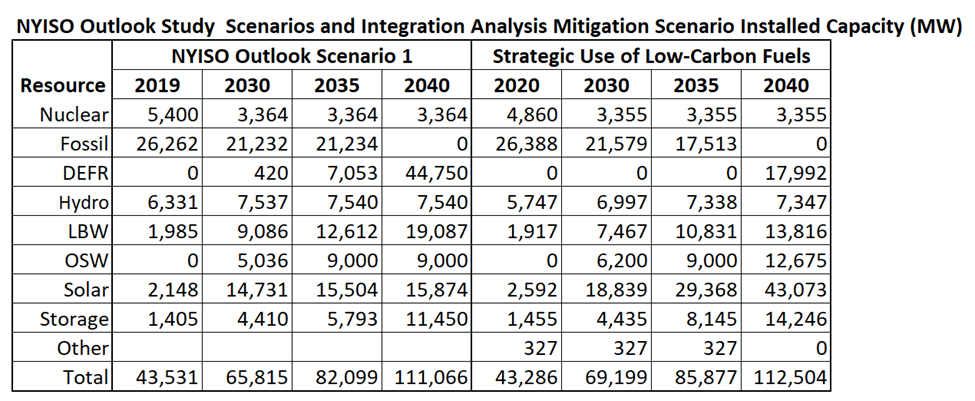


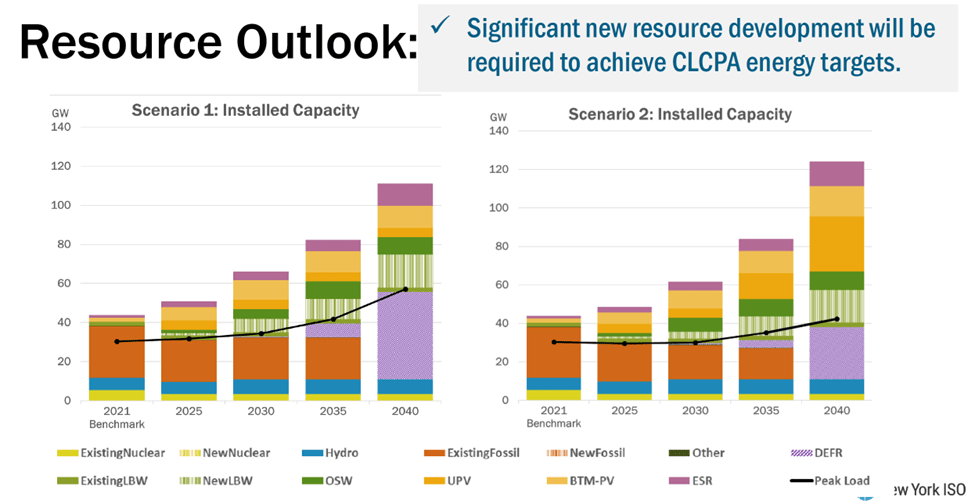
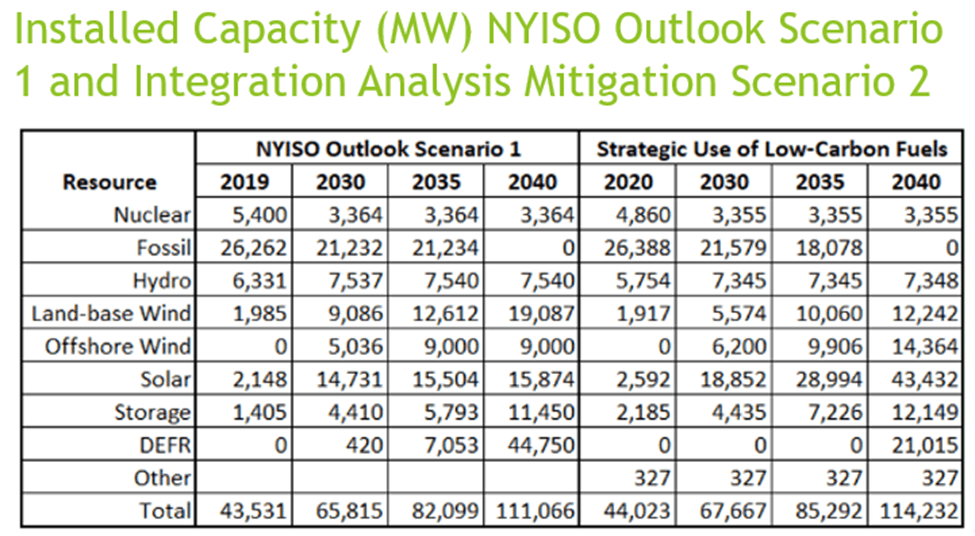
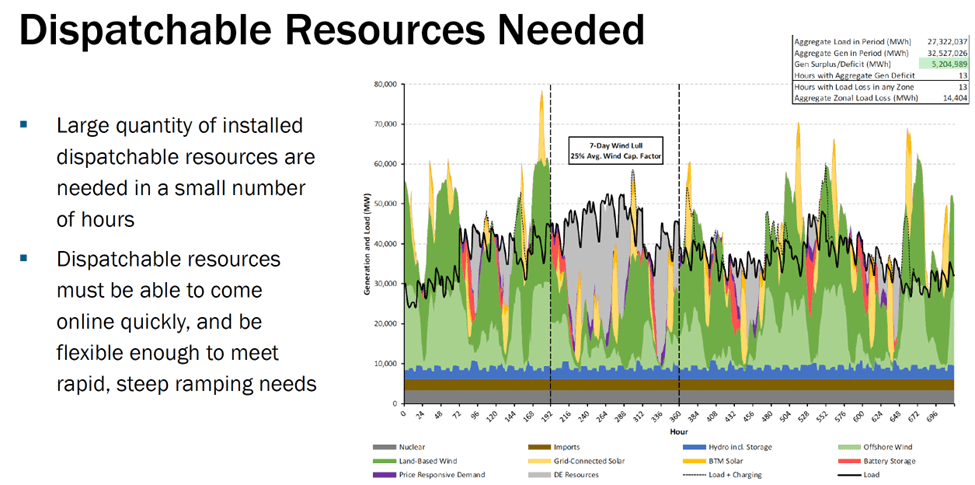





 Pragmatic Environmentalist of New York