New York’s Climate Leadership & Community Protection Act (Climate Act) is now driving every major energy and climate decision in the state. I’ve grown increasingly concerned that the transition plan built around this law is not affordable, is risky for reliability, and will not deliver the environmental benefits people assume. This post provides an overview of my concerns.
As a retired air‑pollution meteorologist who has spent a career worrying about both the air people breathe and whether the lights stay on, I am convinced that implementation of the Climate Act net-zero mandates will do more harm than good if the future electric system relies only on wind, solar, and energy storage. I have followed the Climate Act since it was first proposed, submitted comments on the Climate Act implementation plan, and have written over 650 articles about New York’s net-zero transition. The opinions expressed in this article do not reflect the position of any of my previous employers or any other organization I have been associated with, these comments are mine alone. I acknowledge the use of Perplexity AI to generate summaries and references included in this document.
Climate Act Requirements
The Climate Act is often described in broad, aspirational terms, but its mandates are very specific. Public Service Law Section 66‑p requires the Public Service Commission, by June 30, 2021, to establish a program ensuring that at least 70% of statewide electric generation secured by jurisdictional load-serving entities in 2030 comes from “renewable energy systems” and that by 2040 the statewide electrical demand system is zero emissions. These statutory “targets” are the Climate Act’s headline electric-sector mandates translated into binding obligations on utilities and other load-serving entities, rather than being left as generalized policy goals. On top of that, it sets a net‑zero statewide emissions target by mid‑century and directs a large share of climate and energy spending to “disadvantaged communities.”
To push enough wind, solar, and transmission projects through the pipeline to meet those dates, the state created new fast‑track siting regimes: first the Office of Renewable Energy Siting (ORES), and more recently the Renewable Action through Project Interconnection and Deployment (RAPID) Act, which folds big renewables and major transmission lines into a single accelerated process. In short, the law is not just a statement of long‑term goals; it has spawned a whole machinery of timelines, mandates, and permitting shortcuts to force the system in one direction.
My over-riding concern is that the Climate Act set very aggressive goals without a realistic, step-by-step plan to get there. We don’t have a plan; we have a wish list. The law sets big targets for cutting emissions, but there’s no practical roadmap that says who builds what, by when, and how we keep the lights on and bills affordable along the way. This is declaring we’ll rebuild the whole electric system in 15 years without a construction schedule or budget.”
The law assumes everything will work out—technology, costs, and reliability—without proving it. No conditions have been defined. There are no clear affordability limits, no defined reliability safeguards, and no trigger points where the state must slow down or change course if things start to go wrong. I’m used to testing assumptions. Here, the assumptions are treated as facts.
The law ignores permitting reality. We make it harder and slower to permit both existing plants and new infrastructure, while at the same time assuming we can build massive amounts of renewables, storage, and transmission on a tight deadline. The timelines and the permitting system just don’t match. It can take many years to permit a single transmission line. The law acts as if we can permit and build dozens on a political timetable.
Affordability: what it looks like at the household level
From the beginning, the Climate Act’s architects asserted that the transition would be cost‑effective and could be done using technologies available a decade ago. In practice, when I look at the numbers through the lens of a typical upstate household, that claim is hard to square with the evidence.[
NYSERDA’s modeling and public messaging emphasize long‑term fuel and operating savings from electrification, but I believe they understate or obscure the full capital and retrofit costs that real people will face. A gas‑heated home in upstate New York is not starting from a blank slate; to electrify heat it may need a heat pump, electric panel upgrades, new wiring, backup systems, and often building shell improvements. When those costs are levelized over realistic lifetimes and added to electric bills that must also carry the cost of massive new generation, storage, and transmission, NYSERDA’s own calculations show annual costs rising by thousands of dollars compared to staying on gas.
That’s before we talk about vehicle electrification and the additional load that puts on both household budgets and local distribution systems. For low‑ and middle‑income families, especially in older housing stock, the up‑front burden is steep, and the promised payback periods are long and uncertain. The latest budget language envisions a cap‑and‑invest system that would raise revenue and then “share” proceeds with New Yorkers to offset bills, but that still means raising the underlying cost of energy to generate those funds in the first place.
Previous energy transitions, for example, from coal town gas to natural gas, or from inefficient oil burners to modern gas boilers, succeeded because they saved consumers money and improved convenience. The Climate Act’s transition is different: it is enforced by law and regulation rather than emerging organically from better economics, and that is why I keep coming back to affordability as a core concern.
Reliability: weather‑dependent supply on a tight grid
My second major concern is reliability. The New York Independent System Operator (NYISO) prepares an annual report on “forces shaping the electric grid and wholesale electricity markets.” NYISO’s Power Trends 2026 is a notable document because it acknowledges that Climate Act related initiatives such as electrification, retirement of conventional resources, and weather-dependent generation combined with large new energy-intensive loads are making the system more uncertain and more fragile. It also says reliability margins are shrinking and that winter conditions are becoming a defining challenge.
The Climate Act’s targets effectively assume that New York can completely revamp the electric system to run largely on wind, solar, and storage, with something called “Dispatchable Emissions‑Free Resources” (DEFRs) appearing down the road to back them up. In the Scoping Plan and State Energy Plan, those DEFRs are more of a placeholder than a commercially available option today.
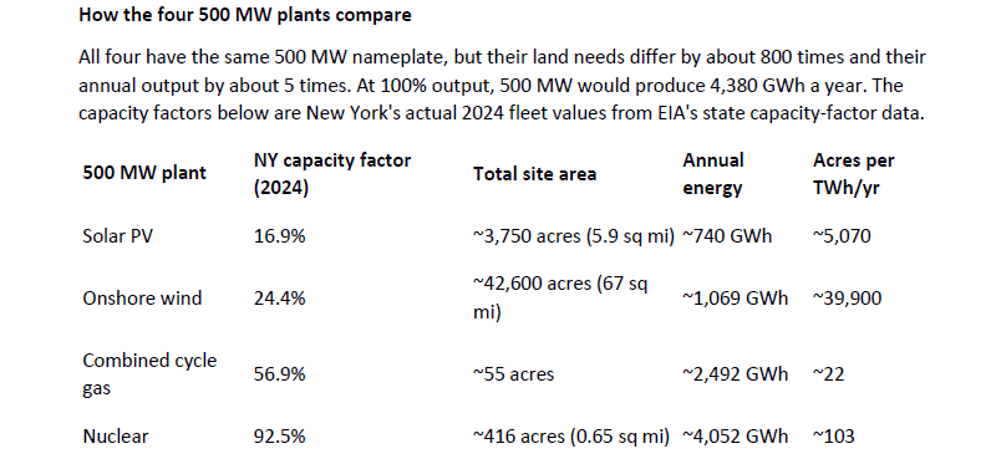
As a meteorologist, I am very aware that wind and solar are controlled by the weather, not by grid operators. They are intermittent, they don’t work all the time; they are diffuse, they require large land areas and new transmission to deliver the same energy as a single conventional plant; and their output is correlated over large regions due to large‑scale weather systems. That means a cold, calm high‑pressure system can reduce wind output over the whole Northeast just when electric heating demand is highest, and clouds can reduce solar output across a broad swath of the state at the same time. The Scoping Plan and State Energy Plan acknowledge that DEFR is necessary for this situation but there is no proposal how to address this requirement.
Batteries are valuable for smoothing and short‑duration balancing, but they become very expensive very quickly if you try to size them to cover multi‑day or seasonal shortfalls. Studies that look at the cost of backing up long, widespread wind lulls strictly with storage point to staggering cost numbers and large amounts of capacity that would sit idle much of the time. Despite repeated warnings from the New York Independent System Operator (NYISO) about resource adequacy and the risks of retiring fossil capacity faster than firm replacements are available, I don’t see those concerns fully reflected in the state’s official transition roadmap.
My worry is that we are treating weather‑dependent megawatt‑hours as if they are interchangeable with firm capacity on peak and in worst‑case conditions and filling the gap with optimistic assumptions about future technologies. That may look fine in a model, but on a winter evening with a regional cold snap and limited imports, the real‑world consequences of getting it wrong would be very serious.
Environmental impact and local siting
People understandably assume that a climate law must be environmentally beneficial. My view, informed by decades of air‑quality work, is that the answer depends on how we define and measure “benefit,” and on the local impacts of the projects required to meet statewide targets.
On the accounting side, the statute originally used 20‑year global warming potentials (GWP20) and included out‑of‑state, upstream emissions from fossil fuel production in New York’s inventory. That approach gave very high weight to methane and made New York’s near‑term targets particularly difficult to meet compared to jurisdictions using 100‑year GWPs and more conventional boundaries. I have long argued that this approach magnified the appearance of urgency without changing global physics and raised the risk that New York would push expensive policies for relatively modest climate impact while encouraging emissions to “leak” to other regions.
The 2026 budget revisions change that accounting. They move to 100‑year GWPs, drop out‑of‑state upstream emissions, and exclude biogenic CO₂. Those moves align New York’s bookkeeping more closely with federal and international practice and immediately reduce reported statewide emissions—without any physical change in the atmosphere. The new law also softens the near‑term target, replacing the 40 percent‑below‑1990 mandate for 2030 with a 60 percent reduction by 2040, qualified by “to the maximum extent feasible and cost effective,” and pushes the deadline for DEC regulations out to the end of 2028. The changes simply push the inevitable reckoning down the road.
At the same time, ORES and the RAPID Act change how projects are sited on the ground. These frameworks centralize permitting for large renewables and major transmission in Albany, set tight timelines, and include “deemed complete” and “deemed approved” provisions if agencies miss deadlines. Town associations, landowners, and even some developers have flagged that combination as a problem: local governments lose leverage, procedural timelines are very tight, and the opportunity to raise and adjudicate substantive issues is narrow.
From an environmental perspective, I worry that we are trading thorough site‑specific review and local consent for speed, especially in rural upstate communities being asked to host industrial‑scale projects for benefits that are mostly diffuse and global. That doesn’t mean every project is harmful or that renewables have no place, but it does mean we should be honest about the trade‑offs and the cumulative impacts of covering large areas of the landscape with energy infrastructure.
In my opinion, the biggest flaw with ORES and the RAPID Act is that they do not include specific conditions for developers. Because there are no specific limitations for prime farmland protections, wildlife habitat, noise, or technology constraints, projects are being approved that will have long lasting adverse environmental impacts, health effects, and will require even more development. For example, utility-scale solar development should use tilting axis panels that maximize solar collection and should not be sited in areas severely affected by lake-effect snow.
The 2026 “Reset”
One reason I am skeptical that these trade‑offs are being weighed objectively is the way the Climate Action Council and Energy Planning Board were put together. A clear majority of Climate Action Council members were appointed by the Governor and legislative leaders, and only a minority have deep energy‑sector experience, particularly in utility operations and reliability. The Energy Planning Board had one non-voting industry expert. Given the obvious affordability problems, the 2026 budget revisions included a “blue-ribbon” commission on affordability that will have the same makeup. I think the most probable outcome is a final report that acknowledges bills are too high, recommends more rebates and cost‑shifting to taxpayers, proposes tougher oversight of utilities, and treats NYISO reliability concerns as justification for even more spending on renewables, storage, and transmission—not as a warning sign about the Climate Act transition.
In my comments and blog posts, I’ve argued that this structure makes it unlikely that the Council would squarely confront feasibility and cost issues raised by NYISO and others. Instead, the Scoping Plan tends to assume that technologies and projects will appear when needed, and that equity goals can be layered on top of mitigation without exploding costs.
The 2026 budget changes are, in a sense, an indirect admission that the original timelines and accounting structure were not realistic. They soften near‑term targets, adjust the emissions inventory in ways that make the numbers easier to hit, and give regulators several more years before binding rules must be in place. To me, that looks less like a fundamental reexamination of the transition plan and more like a political‑relief valve designed to avoid an imminent collision between statutory deadlines, litigation, and physical reality.
Discussion
I think we are at a crucial crossroads for New York energy policy. Advocates have demanded that the future energy system reduce GHG emissions to zero citing major co-benefits from improved air quality. Over my career I have seen enormous improvements in air quality, but there have not been corresponding health benefits that are consistent with the co-benefit claims in the Scoping Plan and State Energy Plan from the small incremental improvements from further reductions .
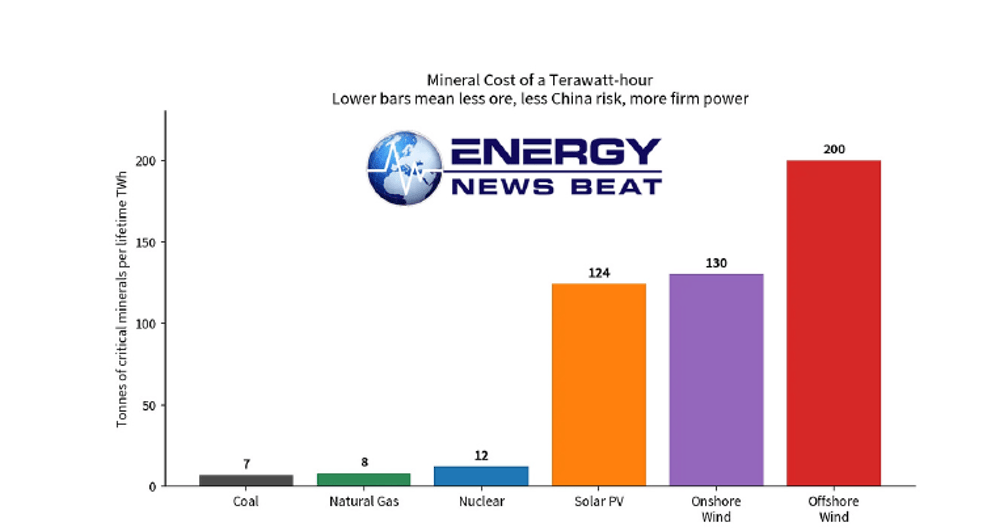
What I want from New York’s energy policy is something more pragmatic: a plan that starts from reliability and affordability constraints, acknowledges technology and permitting limits, and is transparent about both costs and benefits. That would mean putting independent technical experts, especially from NYISO and utility engineers—at the center of planning, not at the margins. It would mean evaluating wind, solar, storage, nuclear, and cleaner fossil technologies on a level playing field based on reliability contribution and life‑cycle cost, rather than committing in advance to a narrow renewable energy portfolio. And it would mean being honest with the public about what this transition will cost households, businesses, and communities, rather than leading with best‑case scenarios and hidden caveats.
Conclusion
The existing transition plan built around the Climate Act is not affordable, is risky for reliability, and will not deliver the environmental benefits people assume. I’m not saying, ‘do nothing.’ I’m saying: be honest with people. We need a realistic, engineering‑grade plan that respects reliability, affordability, and permitting realities, instead of pretending they’ll take care of themselves. We must concede that we are not ready to rely completely on zero-emission renewable resources today. We must act now to develop natural gas infrastructure to ensure that we have a reliable electric system that can be used as a bridge to the future. When full system costs and infrastructure life expectancy are considered I expect that nuclear power should be used as the backbone of the electric system.