Fort Edward Solar Filings

On October 27, 2025, Fort Edward Solar responded to the Issues Statement, Party Status Request, and Public Comments on a Draft Permit. Simultaneously, the Office of Renewable Energy Siting (ORES) staff filed a responsive brief to the Petition for Full Party Status submitted by the Grassland Bird Trust for this project.  I previously described this project and published Gary Abraham’s explanation why ORES ignores local stakeholders.  In conjunction with Gary Abraham, this post describes the ORES responses and confirms my worst-case fears.

Gary Abraham is a lawyer who has been more deeply involved in the renewable energy siting process than I have. He represented a citizen group under State Environmental Quality Review Act (SEQRA) before Article 10 in the Everpower case (Town of Allegany). He represented municipalities or citizen groups in Article 10 proceedings in the cases of Cassadaga (the first Article 10 proceeding), Lighthouse Wind, and Alle-Catt and the Horseshoe Solar matter (Town of Rush) until it transferred to Office of Renewable Energy Siting under Exec. L. 94-c.

Overview

The Climate Leadership & Community Protection Act (Climate Act) established a New York “Net Zero” target (85% reduction in GHG emissions and 15% offset of emissions) by 2050.  The Climate Action Council (CAC) was responsible for preparing the Scoping Plan that outlined how to “achieve the State’s bold clean energy and climate agenda.”  After a year-long review, the Scoping Plan was finalized at the end of 2022.  Since then, the State has been trying to implement the Scoping Plan recommendations through regulations, proceedings, and legislation.  However, this does not mean that there is a feasible plan that includes milestones, acceptability criteria for targets or boundary conditions that must be met to continue. 

I think the crux of the problem is that the State never bothered to develop siting acceptability criteria to guide permitting decisions.  Combined with the ORES monomaniacal focus on permitting renewable projects without consideration of local concerns, environmental protections developed over years are routinely ignored.

Fort Edward Solar Filings

In my previous posts on this topic I have argued that the Fort Edward, Washington Co., PSC No. 23-03023 project is a travesty of ORES environmental siting considerations.  On October 27, 2025, Fort Edward Solar responded to the Issues Statement, Party Status Request, and Public Comments on Draft Permit.  Filings included the Fort Edward Solar cover letter with a memorandum prepared by WSP USA, an engineering and professional services consultant responding to avian issues; a facility location map, their response to public comments, response to issue statements, and a couple of conservation easement documents.  On the same day, ORES staff filed their Responsive Brief and Filing Letter.

Bird Habitats

The main issue with Fort Edward Solar is its location relative to grassland bird habitats.  In my opinion, responsible solar siting would focus first on land that has the least ecological or agricultural value.  As Abraham explains this is not the case:

The grassland bird habitat map (Figure 1) was submitted by my colleague Ben Wisniewski, representing the Grassland Bird Trust, Inc., showing that “the Project is proposed to inhabit a unique area of extreme importance to birds. The 1,828-acre project site (the ‘Project Site’) lies within the New York State Department of Environmental Conservation (‘NYSDEC’) Washington County Grassland Bird Conservation Center (‘GBCC’). In addition, within the Washington County GBCC, the Washington County Grassland Wildlife Management Area (‘WMA’) serves as an anchor field for grassland birds.”

Figure 1: Attachment B Grassland Wildlife Conservation Areas near Fort Edward Solar Project

“The proposed Project Site surrounds the WMA and is situated within a recognized ecological area of critical importance for grassland birds . . .” Specifically, the WMA anchors the adjacent Audubon-designated Fort Edward Grasslands Important Bird Area (IBA), the NYNHP Raptor Winter Concentration Area, Grassland Bird Trust (GBT) properties, NYSDEC Grassland Wildlife Management Area, all areas known to be occupied by threatened and endangered bird species.

That’s why these areas are protected locally. The map, submitted with the party application, shows that the proposed solar project surrounds these areas, sharing their property lines. That is, as Ben showed, the project location is “inconsistent with the numerous special conservation designations and initiatives already applicable to the Facility Site.” ORES Staff now says none of that matters.

Avian Memorandum

WSP USA prepared an analysis that addressed the issues raised by Grassland Bird Trust (GBT).  The analysis addresses the following issues presented in the Fort Edward Solar Avian Impact and Mitigation Assessment prepared by GBT:

  • Value of Proposed Project Site for Grassland Birds
  • Impacts of Proposed Project on Grassland Birds
  • No Proof that Proposed Mitigation Provides a Net Conservation Benefit
  • Default Permit Conditions are Insufficient to Mitigate Impacts to Grassland birds in theWildlife Management Area (WMA)

I am not a biologist so I cannot opine upon the quality of the analysis.  However, I am familiar with the process.  Site surveys to determine which birds are in the area to be disturbed must be conducted.  As far as I can tell there is agreement about the species in the area.  Site surveys to determine current and future land use are also necessary and this is the controversial bit.  There isn’t agreement about the value of agricultural fields used as pasture lands or hay production relative to the quality of native forests, shrubland, and wetlands when “analyzed on a terrestrial habitat quality level.”

Another aspect of the process is that developers can mitigate impacts within the areas disturbed by their project by  obtaining protecting land nearby that has the habitat characteristics desired.  GBT argued that Fort Edward Solar would need to conserve substantially more land in order to provide a net conservation benefit.  The WAP USA analysis cited ORES regulation § 1100-6.4(o)(3)(ix) that reads as follows:

If the permittee proposes a NCBP [net conservation benefit plan] involving permittee-implemented grassland bird habitat conservation in lieu of payment of a mitigation fee pursuant to subparagraph (viii) of this paragraph, the required mitigation ratio shall be 0.4 acres of mitigation for every acre of occupied grassland bird breeding habitat determined to be taken and 0.2 acres of mitigation for every acre of occupied grassland bird wintering habitat determined to be taken.

The wetlands offset ratios specified by New York Department of Environmental Conservation (DEC) guidelines are typically 2:1 or 3:1 or much greater than the ORES regulation.  At the risk of stepping outside my expertise, it seems to me that the ecological values of wetlands are greater than grasslands so the mitigation offset ratio should be higher not lower.

Gary Abraham has extensive experience with environmental permitting.  He points out that in DEC permitting processes these tradeoffs would be addressed in the permitting process.  ORES simply ignores the tradeoffs and does not give parties a chance to present their side of the issue.  Abraham explains the differences.

The potential for adverse impacts on protected birds (a “significant” issue) is clearly proven by this map (making it a “substantive” issue, i.e., “a reasonable person would require further inquiry”, 16 NYCRR § 1100-8.3(c)(2)). 

In its response to Ben’s petition for party status on behalf of GBT, ORES Staff issued a brief concluding that there is no reasonable basis to inquire further, and recommending that ORES reject GBT’s issue (which it will undoubtedly do).

I want to reiterate my belief that ORES has shortchanged DEC and other agency recommendations because ORES does not address tradeoffs. The politicians who wrote the law implementing ORES (the RAPID Act) did not write the regulations that are being applied here. The RAPID Act purpose is plainly to “ensur[e] the protection of the environment”. PSL Art. VIII, § 136. ORES simply failed to do that here.  Abraham explains how this works.

Among other things, Staff says that the “NYSDEC Strategy for Grassland Bird Habitat Management and Conservation 2022-2027”, while in conflict with siting the project here, is not a required regulation, but rather a voluntary program. The Strategy (undoubtedly part of the state’s environmental policies) is thus magically not inconsistent with siting the project here (Staff says nothing in the Strategy “speaks to siting of the Facility in the proposed location”). The brief goes on to dismiss factual assertions that the project will adversely impact the other protected bird areas, including an Audubon’s Important Bird Area, despite the fact (acknowledged by Staff) that the project covers “15 percent of the IBA”. There is, according to Staff, no “authority that prohibits or limits siting of the Facility in this designated area.” But that’s because ORES does not site renewable energy facilities. Developers do that and are not required to consider alternative sites. ORES simply permits sites that developers select. It is a misnomer to say ORES sites projects. It does not. –Staff adds that the intervenor party has not “demonstrated that impacts have not been sufficiently identified” in the application. But that’s not the standard. The standard focuses on the potential for adverse impacts on the environment and whether, based on that potential, a reasonable person would want to know more about the impacts, not on legal prohibitions to renewable energy siting (which do not exist) which (as Staff argues) ought to preclude any further inquiry.

ORES Staff says it will be sufficient if the applicant makes a payment to the Endangered and Threatened Species Mitigation Bank Fund. See 19 NYCRR § 900-10.2(f)(1). But the ORES regulations require Staff to consider impacts on “Audubon Important Bird Areas”. NYCRR § 900-10.2(g)(3).

ORES says, for example, that a designated raptor wintering area, protecting endangered Short-Eared Owl and the threatened Northern Harrier, also located within the project area, is identified in the application which already acknowledges that the “wintering occupied habitat will be impacted”, but “the Office’s [ORES’s] Take Determination quantifies the impacts and therefore requires an NCBP [net conservation benefit plan]”, which in turn allows the applicant obtain a taking permit by doing no more than making a payment to the state’s E&T Species Mitigation Bank Fund.

Thus, because impacts on protected bird species are addressed in the application, there can be no significant issue. Therefore, there is no point to considering substantive proof on adverse impacts to the environment.

This is how ORES circumvents the “substantive” and “significant” standard for adjudicating issues that it inherited from NYSDEC (where it was an opportunity for public participation).

Public Comment Response

One of the filings on October 27 was a response to public comments.  I want to note just one example of the hypocrisy of the Fort Edward Solar developers.  The first comment from Janice Teft stated:

I am writing with respect to the plan by Fort Edward Solar to build a more than 1,828 acre solar Facility in Ft. Edward NY.

This project will cause great harm to grassland birds and endangered threatened raptors. It is the worst possible place for a solar facility. It’s time to stop taking land away from Wildlife in general.

I enjoy going there, especially in the Winter, to see the Snowy Owls. It’s an Audubon designated Important bird area.

The thought that this is even a possibly is so disturbing in so many ways.

All conserved land should be located in the important bird area, not some random place in NY.

And, the developer should work with the Grassland Bird Trust which has worked for over 15 years to protect this area.

Thank you for consideration of my comments

Janice Tefft

Here is the response of the developer:

The Applicant shares your commitment to environmental stewardship and has actively engaged with the appropriate regulatory agencies throughout the development of the project. Specifically, the Applicant has conducted consultations with the New York State Office of Renewable Energy Siting (ORES), the New York State Department of Environmental Conservation (DEC), the U.S. Fish and Wildlife Service (USFWS), and the U.S. Army Corps of Engineers (USACE). All documentation related to these consultations has been submitted and is publicly available within the official ORES docket for the Fort Edward Solar Project (Matter No. 23-03023).

The Applicant has been diligent in following the permitting process outlined by the State of New York, including comprehensive environmental assessments, coordination with regulatory agencies, and the development of mitigation strategies to address potential impacts to protected species and habitats. In support of this effort, the Applicant continues to work closely with qualified consultants to ensure thorough evaluation of all project components and the application of best practices.

The Applicant recognizes the ecological significance of the Fort Edward grasslands and understand the concerns regarding habitat loss and its potential effects on declining grassland bird populations. As such, the Applicant is committed to continue working with regulatory agencies, ORES, and stakeholders to develop mitigation measures that reflect the importance of this habitat.

This response has no substance; it simply reiterates that the developer followed the regulations and shows the environmental poverty of regulations. If Fort Edward Solar shared her commitment to environmental stewardship, then they would not have applied to build a solar facility on recognized ecological areas of critical importance.  Presuming that there was no other place in the state for their development then they would have proposed to mitigate their impacts by protecting more critical habitat than the ORES minimum.

Discussion

I believe that the Climate Act net-zero transition plan will do more harm than good because of impacts on affordability, reliability and environment impacts. In my opinion, the Andrew Cuomo and Kathy Hochul Administrations have politicized all the New York agencies.  Speed in approving developers’ sites has eclipsed the purpose of siting, to balance the need for renewable energy sites with the serious environmental degradation they often cause. Ultimately the problem is that the  Hochul Administration has never defined acceptability criteria for such sites.   The Climate Act and its progeny, the RAPID Act, have probably caused greater environmental degradation than it avoided.  As shown here, because ORES is the final arbiter the DEC charged with protecting the environment has little leverage in the siting decisions.

In my opinion, responsible solar siting would focus development in areas that do not affect ecological areas of critical importance period.  The WSP USA analysis incorporates every trick to minimize mitigation ratios.  Because grasslands are an interim successional stage, they argue that were it not for their commitment to maintain the grasslands, then the land would be dominated by woody vegetation.  So why doesn’t the developer build on land that is dominated by woody vegetation?

Conclusion

The ORES process ensures that renewable energy development causes more harm than good.  It is long past time to reconsider a process that prioritizes building as much renewable energy capacity as possible as fast as possible without any siting criteria.

Ellenbogen Tries to Talk Sense to an Irate Ratepayer

The ongoing Consolidated Edison Company (Con Ed) rate case is going to raise rates. Unsurprisingly, ratepayers are upset.  This post describes an email that was sent to the distribution list for the parties in the case by an individual who I think lives in New York City. She argues that the cost increases are unacceptable because “Hard working New Yorkers shouldn’t have to decide between a doctor’s visit or keeping the lights on.”  She goes on to say this problem is made worse by climate change and claims “Con Ed continues to perpetuate our state’s dependence on fossil fuels by advocating for infrastructure like gas pipelines that would increase the cost burden on New York consumers and fail to adequately address the peak energy demands of our state and city.”

Unfortunately, she hasn’t made the connection that the Climate Leadership & Community Protection Act is part of the reason for the higher rates.  Richard Ellenbogen and I share the same frustration that people like this fail to connect the dots.  This post publishes his response to her email.

Ellenbogen Background

Richard Ellenbogen has been speaking to NY State policy makers and regulators since 2019 regarding the deficiencies inherent in NY State Energy policy.  He has a proven record implementing carbon reduction programs at his own manufacturing business in Westchester County where it has reduced its electric utility load by 80% while reducing its carbon footprint by 30% – 40% below that of the downstate system.  I have previously published other articles by Ellenbogen including a summary description of his issues with the Climate Act.  In addition, he and I have submitted several joint filings in different venues.

STOP STOP HIKING RATES

On 10/28/2025 12:10 PM, Annie Pahlow sent an email about the Consolidated Edison rate case.

To whom it may concern New York electric and gas bills are already some of the highest in the country. It is absolutely inexcusable to approve a rate hike that would increase the cost burden on New Yorkers across the state when the company already makes billions in revenue. The monopoly Con Ed has on New York City delivery upcharges consumers while hundreds of thousands of New Yorkers struggle to pay their bills or even have their utilities shut off as a result. Energy is a human right and an absolute necessity. Hard working New Yorkers shouldn’t have to decide between a doctor’s visit or keeping the lights on.

With the worsening effects of climate change, summer heatwaves are becoming worse and more frequent, making summertime cooling essential for vulnerable populations. Due to the high cost of energy nearly 20% of New Yorkers who own air conditioners can’t afford to run them because of the financial burden to do so.

In the face of the climate crisis, Con Ed continues to perpetuate our state’s dependence on fossil fuels by advocating for infrastructure like gas pipelines that would increase the cost burden on New York consumers and fail to adequately address the peak energy demands of our state and city. They might claim this hike would fund clean energy investments but these are in bad faith as they continue to advocate for additional pipeline infrastructure that is unwarranted and unnecessary. It is abhorrent that Con Ed would dare to request a rate hike when failing to commit to transitioning away from fossil fuels completely, in accordance with our own state’s goals of being net zero by 2030.

30% of New Yorkers struggle to pay their energy bill and these rate hikes would only increase the cost for folks to stay cool in the summer, and warm in the winter. The proposed rate hikes for electric and gas would cost New Yorkers $30-$50 more per month and has drawn widespread criticism from elected officials across the board. That is why the New York Public Service Commission should outright reject the proposed rate hikes for electric and gas from Con Ed.

Ellenbogen Response

On October 28, 2025 2:34 PM Ellenbogen sent the following response:

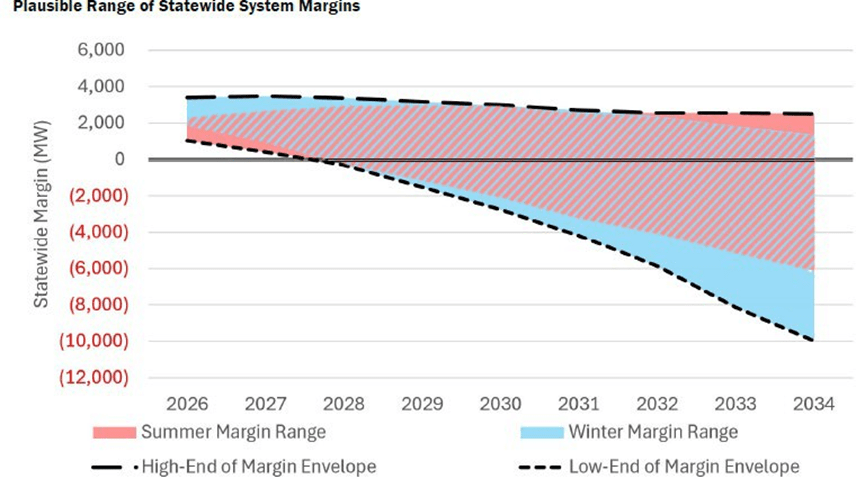
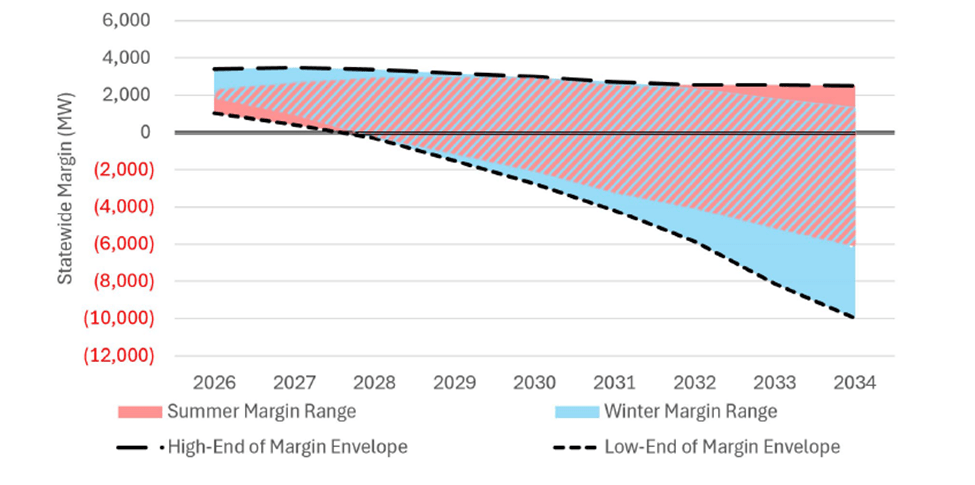
You should get out of your ideological bubble and look at the math.  The rates in the downstate region are too high but your proposals will raise them faster.  I suggest that you read the New York Independent System Operator (NYISO) 2025-2034 Comprehensive Reliability Plan.  It would be great to transition away from fossil fuels except the electricity doesn’t exist to do so and won’t exist for decades.  Figure 16 from that report is included below.  Everything below the black lines at “0” is a power failure and the margins will soon be supported by generation that is well past its usable life.  Good luck running a heat pump with no electricity. 

Source NYISO 2025-2034 Comprehensive Reliability Plan

Further, the downstate region is only 5% renewable.  That can be seen in the following pie chart from page 8 of the same document.  Con Ed’s reliability analysis stopped at their borders but what happens when the electricity isn’t there for Con Ed to supply?  The NYISO isn’t lying or exaggerating.   I was called anti-electrification by someone on this email distribution list but the reality is that you can’t electrify without having enough electricity.  This is quickly becoming a crisis that will result in loss of life.   What I am against is killing people to support a policy that won’t have any environmental benefits.

The next graph is one I did for engineers at NYSERDA in 2019 and updated in 2023.   Their engineers confirmed the numbers and the underlying math.   I haven’t recalculated the rates for 2025, but electricity costs have been rising faster than gas making the disparity even higher, so if you really want to bankrupt ratepayers have them install electric heat.  That’s why certain parties have been trying to get a special utility rate for heat pumps as part of this tariff hearing but those rates have to be subsidized by other ratepayers.  Once everyone is on the special rate, who will subsidize it?  And what about the rising costs for other ratepayers that have to pay the subsidies for a heating technology that doubles costs?  If you want to replace oil combustion with heat pumps, that will lower people’s bills and you wouldn’t even need subsidies, but replacing locations with gas will not lower bills or emissions.  

Another aspect of the New York transition is ignoring results elsewhere.  Ellenbogen explains the problem:

If your answer is to install more solar and wind to increase electrical output, Germany has been trying that for 35 years since 1990 and has reached 34% renewable generation with electric rates 2 – 3 times higher than France next door despite spending hundreds of billions of dollars attempting it.  They claim 42% but the last 8% is wood combustion with a higher carbon footprint than coal and far higher particulate emissions that cause respiratory diseases.   The same time frame of 35 years would take New York State to 2061 with still no viable solution installed.  If Germany is an example, the rates would be much higher than they are now.  I could explain why that is the case, but it would take another full email. 

The renewable technologies can help to lower CO2 emissions, but they don’t have the energy density or the reliability to fully support a modern society.  Germany has added gas generation recently because the renewables can’t generate enough electricity.  Further, the areas of NY State where there is room to install renewables are cloudy for a significant portion of the year and there is no existing storage technology that will carry energy for 6 months to heating season.  Even if it could be built, the cost would be trillions of dollars (Yes, Trillions).  The cost to install that storage technology would raise rates beyond anything we have seen to date.  The money must come from somewhere so the people of New York State will either pay it through their utility rates or their taxes.  Either way, it will make New York State less affordable.

There is another unacknowledged challenge for New York.  Our renewable energy resources are less than other jurisdictions.

Extreme cold kills a lot more people every year than extreme heat but ideology promoting solutions that won’t work is going to waste time and resources that could be applied to fixing things.  It will also raise utility rates with no climate benefit.  You can’t compare New York State to California, Australia, Texas, or the Iberian Peninsula.  Those are all warmer climates with a far superior renewable profile when compared to New York State so they have more efficient renewables and they don’t have nearly as large of a heating issue and in some cases, they have no heating issue which greatly reduces energy requirements.

Ellenbogen explains the basis for his claims.

And before someone tells me that I am inflammatory and unprofessional, keep in mind that I own two solar arrays, both installed in 2007, a home with the most efficient geo-thermal heat pump system in New York State,  and my factory recycles 99% of its waste byproducts and generates 80% of its electrical energy onsite with a carbon footprint 30% – 40% lower than the Con Ed system.  I have also driven a Tesla since 2017.  I have 47 years of experience with energy systems, and I have written papers for the Public Service Commission, one of which was used to initiate a utility conference on line loss.  As a result of that experience and training, I understand what works and what doesn’t because I understand the math and physics underlying the systems.  My factory’s utility bills in the Con Ed Service Area have gone down by 4% over the past two years while everyone else has had theirs increase by about 14% because I have applied that knowledge to implement solutions that will work.  Between October 2022 and October 2023, the factory’s utility bills were $69,999 and over the past twelve months through October 2025, they were $67,265.  That amounts to $1.20 per square foot for the 55,000 square foot facility or about one-third the energy costs of the average commercial/industrial facility in NY State.  Those are total energy costs for the facility and include both electricity and gas.

Ellenbogen concludes:

Ideology cannot supersede math, physics, or thermodynamics.  In the end, reality will always rear its ugly head because it doesn’t care what anyone has to say about the issue.  A failure to recognize that fact will reduce reliability and raise costs which is already happening across the state.

Final Comment

As shown in his response, Ellenbogen has the background and experience to build a low carbon system that works and knows what will not work.  He has shown that the current New York plan will not work.  I seriously doubt that people like Annie Pahlow will listen to his expertise until the blackouts he expects occur.  I give him an E for effort.

Differences Between Article 10 and ORES Shortchange Local Concerns

A recent post, New York Solar Siting Travesty, explained why I think  the deployment of solar resources exemplifies the poor planning inherent in the Climate Leadership & Community Protection Act (Climate Act) net-zero transition plan.  I asked members of the Stop Energy Sprawl coalition for any thoughts on the post and Gary Abraham provided corrections and clarifications that are too good not to share.  In fact, he provided enough information for two posts.  This post describes how the Office of Renewable Energy Siting (ORES) ignores local stakeholders.

Gary Abraham is a lawyer who has been more deeply involved in the renewable energy siting process than I have. He represented a citizen group under State Environmental Quality Review Act (SEQRA) before Article 10 in the Everpower case (Town of Allegany). He represented municipalities or citizen groups in Article 10 proceedings in the cases of Cassadaga (the first Article 10 proceeding), Lighthouse Wind, and Alle-Catt and the Horseshoe Solar matter (Town of Rush) until it transferred to Office of Renewable Energy Siting under Exec. L. 94-c.

Overview

The Climate Act established a New York “Net Zero” target (85% reduction in GHG emissions and 15% offset of emissions) by 2050.  The Climate Action Council (CAC) was responsible for preparing the Scoping Plan that outlined how to “achieve the State’s bold clean energy and climate agenda.”  After a year-long review, the Scoping Plan was finalized at the end of 2022.  Since then, the State has been trying to implement the Scoping Plan recommendations through regulations, proceedings, and legislation.  However, this does not mean that there is a feasible plan that includes milestones, acceptability criteria for targets or boundary conditions that must be met to continue.  Climate Act implementation under the Scoping Plan consists of building as many renewable energy resources as possible, as fast as possible without regard to the wishes of those people affected by those resources all the while hoping that it will all work out.

Gary Abraham provided corrections and clarifications to my description of the ongoing solar siting debacle that I described recently.  My post explained that the Department of Agriculture & Markets and Department of Environmental Conservation land protection guidance has been ignored by the ORES when making permit decisions.  Gary offered his insight into the process.

Public Participation for Renewable Projects

My post noted that ORES was put in place because the existing permitting process was slow.  Based on my industry experience I said the process was slow and burdensome because there are extensive public participation requirements.  Gary corrected my perception saying, “That’s not only incomplete, as a standalone assertion, it’s not true.”  He explained:

Renewables developers are slow and can be burdensome NOT because there are extensive public participation requirements, but because developers commonly submit sloppy applications that require multiple rounds of agency comments identifying items that make the application incomplete, not ready for agency review. Agencies don’t want to and will not do developers’ work for them. Renewable energy developers (alone among industrial developers) think that New York’s generous policies will carry their applications through, even if deficient. They frequently don’t have enough money to do a professional job of planning and designing their projects, because they don’t get lucrative payments from government sources until after operations commence.

Gary described public participation in previous power plant permitting programs, Article X and the unimaginatively named successor Article 10.  I spent a lot of time preparing the analyses for permit applications under those programs but never became involved in the subsequent process.  Gary explains:

Public participation requirements have been gutted by ORES. Article 10 carried over the public participation requirements for power plants from its predecessor; Article X. Article 10 basically just added renewables and a few procedures tailored to renewables but treated large-scale wind and solar projects as power plants. Articles X and 10 both give local stakeholders intervenor party status as a right and the right to apply for intervenor funds. Article 10 also required the state Siting Board to consider the same range and depth of potential adverse impacts as would be considered under the State Environmental Quality Review Act (SEQRA), making its legal preemption of SEQRA reasonable. ORES has denied party status to all municipalities, even those seeking to defend the reasonability of their local land use laws, as well as most local stakeholders.

The crux of the problem for me is that ORES ignores local stakeholders. Abraham lays out this problem.

The ORES framework represents a fundamental recalibration of state-local power dynamics for renewable energy siting. Municipalities and other local stakeholders no longer have the right to participate in a permit proceeding.

Article 10 requires the applicant to reach out to the local community with activities “designed to encourage participation by stakeholders”. Article 10’s public participation mandate is presumed to require funding for experts and legal counsel both to identify and present stakeholders’ issues, and to prove the issues are real in the hearing. The permitting agency staff generally raise issues too.

 Article 10 provides that intervenor funds are available in two rounds.  In the pre-application phase where the applicant’s proposal is confronted with issues identified by local stakeholders, and the application phase where a complete application is on the table.  In the first phase the applicant, agency and intervenor issues are adjudicated, and applicants must provide $350 per megawatt of design capacity.  In the second round the required funding for intervenors is $1,000 per MW. For a 300 MW large-scale renewable project, that’s $105,000 and $300,000 for the two phases of review. Half of those funds must be provided for municipalities, the remainder for non-municipal stakeholders.

Under the ORES regime, stakeholders’ issues now must be supported by evidence and legal argument showing the issues are “substantive” and “significant”, a standard adopted from NYSDEC regulations. I represented municipalities and local stakeholders in NYSDEC permit proceedings and never had a problem meeting this standard for noise, odor and community character impacts. It’s a threshold test for whether to bring issues to an evidentiary hearing, where testimony from experts is heard. A “substantive” issue is one that, if proven, could require additional permit conditions or agency denial of a permit. A “significant” issue is one that is backed by an adequate offer of proof, generally supported by the proposed testimony of an expert about facts that could lead to the same result. An issue is “significant” if, based on the offer of proof, a reasonable person would want to inquire further. Thus, a hearing officer examines issues to decide whether a hearing to test the evidence offered by an intervenor party is warranted.

But there is no pre-application funding under ORES, and issues are consistently rejected in the application phase. As a result, stakeholders are almost always denied party status, and never given an opportunity to prove their issues have legs.

In denying party status, ORES has refused to apply the “reasonable person” standard required by its own regulations. Instead, no matter how much evidence the public provides in support of legitimate concerns, ORES routinely denies there are any issues because the Applicant and ORES Staff have their own experts with different conclusions. In any other litigation, barring opposing parties from putting on their case would be a fundamental denial of due process.

Examples

Abraham gave some examples and explained how ORES ignores local interests:

For example, in a recent case in Montgomery County, ORES held a site-specific visual impact report prepared by an independent consulting firm at a cost of nearly $60,000 did not raise a single issue warranting further review. In another case 650-foot-tall wind turbines visible from Cayuga, Otisco, and Skaneateles Lakes were proposed, ORES held that actual measurements by a town’s retained engineer demonstrating non-compliance with applicable standards were “speculative”, “conclusory”, and “mere opinion”. And even when expert input isn’t required, such as when a local stakeholder group recently demonstrated a developer was unable to obtain an interest in multiple parcels of land necessary for construction of the project, ORES refused to hold a hearing because landowner affirmations are not “expert reports”.

There is no hearing and a “general permit” (unknown under Article 10 or NYSDEC permitting practice) is granted, occasionally (but not always) accompanied by a few site-specific conditions. Applicants engage in the bare minimum of community outreach in advance of submitting an application, and therefore host municipalities and residents often find out about the project proposal too late to adequately present their issues. Even when municipalities attempt in good faith to raise issues before an application is due, developers are empowered by ORES to simply ignore local concerns. This contrasts with Article 10, where outreach plans are required, and often go through multiple rounds of comments from DPS Staff before accepted.

Perhaps the most egregious example of ORES’s over-reliance on “uniform standard conditions” (the general permit) is an ongoing case in Washington County. There, ORES recently issued a Draft Permit holding the “standard” mitigation requirement for impacts to grassland birds is appropriate. However, the project is not proposed to be sited in a standard location. The project surrounds a New York State DEC owned Wildlife Management Area for grassland birds.  Furthermore, it is in the center of the New York State designated Washington County Grassland Bird Concentration Area, an Audubon designated Important Bird Area, and Raptor Winter Concentration Area (“RWCA”) designated under the New York Natural Heritage Program. A local conservation group raised concerns that the “standard” mitigation provisions are not appropriate here and sought the assignment of a mediation judge. To date, ORES has failed to respond in any way. This sequence of events would never have occurred under Article 10, as the now-abandoned mandatory preapplication scoping would have prevented an agency from failing to appreciate such exceptional and unique local circumstances.

Both Article 10 and the ORES regime require a final decision within 12 months of receiving a complete application. But under Article 10 (and under NYSDEC permitting practice for industrial facilities), completing the application is a process subject to public participation. The application must comply with the regulatory requirements for applications. Under ORES, completing the application is a process shrouded in mystery, controlled by the agency outside the public’s eye.  

Going Forward

Abraham also has a recommendation for arguing for changes in these policies.

It won’t do to just identify the consequences of New York’s energy policy on farmland. The basis for the policy must be questioned. The Intergovernmental Panel on Climate Change (IPCC) recent sixth Assessment Report (see Work Group 1, chapter 12, Table 12.12) concludes that evidence with reasonable confidence does not exist that global warming (which has occurred: about 1.5ᴼF since ~1850) has caused any change in the frequency or intensity of most extreme weather events. Only heat waves and milder winters can be shown to have increased–with a net benefit to humanity, since more people die of cold than of heat.

IPCC has also said the extreme future scenario that powers the modeling of global temperature change out to 2100 in previous ARs (RCP8.5) is now implausible, not just unlikely. IPCC now says that the most likely future will see temperatures reach 2-3ᴼC over 1850 levels in the second half of this century and begin to decline by 2100. But NYSDEC’s sea level rise guidance (and most its projections for the future) is based on RCP8.5 projections.

We can implement measures to protect people and property from extreme weather (which isn’t new), but it is highly uncertain that we can change the climate. Nothing humanity has done so far (including substantial decarbonization in the last 50 years as new efficiencies have been adopted across the economy) has had any effect.

Climate alarmists in and out government need to be confronted with IPCC’s report on the state of the science, as well as the energy engineers who say “climate policy” is taking our electric systems off a cliff.

I often argue that New York’s emissions are only a half a percent of global emissions and global emissions are rising by more than that every year as proof we are on the wrong track.  Abraham’s rationale is more comprehensive and eviscerates all the counter arguments.  Very well said!

Conclusion

Although my experience with environmental permitting is extensive, it also is incomplete because it was limited to air quality assessments, and I was the specialist responsible for just that component.  Air quality permitting is like a cookbook where every input, analytical step, and result is consistent with well-established guidelines and checked by the Department of Environmental Conservation.  The results are compared against specific standards and acceptability is based on quantitative results.  In that world, public participation is mostly explanation of the process and results.  If the standards are met, then local communities have little say in the outcome.

On the other hand, wind and solar permitting projects deal almost exclusively in qualitative terms.  It is extremely frustrating to me that the few quantitative limits developed by state agency staff have been cast aside by ORES.  For example, in the Alle-Catt case, the NYS Department of Health testified that the 45-decibel limit on wind turbine noise now found in the ORES standard permit would put the public health in the host communities at risk. That’s five towns across three counties. Based on the best research available, the Health Department recommended a limit that is 6 decibels lower.   When ORES excludes all community input then the process is out of control and must be changed.

NYISO Short-Term Assessment of Reliability October 2025 – Overview

On October 13, 2025 the New York Independent System Operator (NYISO) released its quarterly assessment of reliability of the bulk electric system.  The analysis found a deficit in reliability margins for the New York City area and Long Island beginning in summer 2026. As a result, something must be done or there will be unacceptable risks to reliability that could cause power outages.  This post provides an overview of these findings.  If you want a good non-technical summary of this report, then I recommend Brendan Lyons article: NY’s electric grid operator warns of looming ‘reliability shortfalls’

I am convinced that implementation of the Climate Act net-zero mandates will do more harm than good because of reliability and affordability risks.  I have followed the Climate Act since it was first proposed, submitted comments on the Climate Act implementation plan, and have written nearly 600 articles about New York’s net-zero transition.  The opinions expressed in this article do not reflect the position of any of my previous employers or any other organization I have been associated with, these comments are mine alone.

STAR Report

NYISO describes the report as follows:

This report sets forth the 2025 Quarter 3 Short-Term Assessment of Reliability (“STAR”) findings for the five-year study period of July 15, 2025, through July 15, 2030, considering forecasts of peak power demand, planned upgrades to the transmission system, and changes to the generation mix over the next five years.

The risk of deficiencies beyond the needs identified in this STAR is even greater when considering a range of plausible futures with combined risks, such as the statistical likelihood of further generator retirements or failures. New York’s generation fleet is among the oldest in the country, and as these generators age, they are experiencing more frequent and longer outages. The 2025-2034 Comprehensive Reliability Plan, to be issued by the end of 2025, will provide further information regarding reliability risks over the next ten years.

New York City

Environmental Justice organizations have made peaking power plants in New York City into an overblown issue, insisting that all peaking power plants must be shut down as soon as possible.  Even though the presumption of egregious harm from these plants is based on selective choice of metrics, poor understanding of air quality health impacts,  and ignorance of air quality trends, pressure by this special interest constituency resulted in the Build Public Renewables Act of 2023 that mandates shutdown of New York Power Authority peaking power plants by 2030.  The Draft Energy Plan found that reliability considerations will prevent the shutdown of any of the peaking power plants for the foreseeable future. 

There are two old, inefficient, and high emitting peaking turbine facilities that were supposed to be retired earlier based on a Department of Environmental Conservation (DEC) rule if the shutdown did not threaten reliability.   The STAR report explains:

In this 2025 Quarter 3 STAR, the Gowanus Gas Turbine 2-1 through 2-8, Gowanus Gas Turbine 3-1 through 3-8, Narrows Gas Turbine 1-1 through 1-8 and Narrows Gas Turbine 2-1 through 2-8 units (collectively “Gowanus and Narrows”) have completed their generator deactivation notices and are now all Initiating Generators, requiring the NYISO and Con Edison to evaluate in this STAR if there are any Generator Deactivation Reliability Needs.

In the 2023 Quarter 2 STAR, the NYISO identified a short-term reliability need beginning in summer 2025 within New York City primarily driven by a combination of forecasted increases in peak demand and the assumed unavailability of certain generation in New York City affected by the DEC regulation to limit emissions of nitrogen oxides, known as the “DEC Peaker Rule”.

In accordance with the DEC Peaker Rule, the Gowanus and Narrows generators may extend operation for up to an additional two years (until May 1, 2029) if the NYISO or Con Edison determine that the reliability need still exists and a permanent solution has been identified and is in the process of construction but not yet online. The DEC Peaker Rule, however, does not provide for peaker generators to continue operating after this date without meeting the emissions requirements.

This STAR concluded these facilities are needed until Bulk Power Transmission Facilities (BPTF) can replace them.  A BPTF is basically all the components of the transmission system (lines, transformers, and control systems) needed to move large amounts of electricity from generating stations to where it is needed.

Consistent with the findings in 2023, this STAR continues to find that the New York City locality (Zone J) would be deficient in the summer through the entire five-year horizon without the completion and energization of future planned projects. This includes deficiencies on the BPTF and non-BPTF within Zone J. The future planned projects include:

Gowanus-Greenwood 345/138 kV feeder – May 2026

Champlain Hudson Power Express, 1,250 MW HVDC – May 2026

Empire Wind, 816 MW offshore wind – July 2027

Propel NY Public Policy Transmission Project – May 2030

The STAR goes on to explain that the NYISO analysis could address the identified reliability needs. Note however that there is a caveat that these projects must demonstrate their planned power capabilities before the Gowanus and Narrows generating stations can be retired.  Even then there are potential issues:

The range in the demand forecast for expected weather is driven by key assumptions, such as

population and economic growth, energy efficiency, the installation of behind-the-meter renewable energy resources, and electric vehicle adoption and charging patterns.

Once CHPE, Empire Wind, and the Propel NY Public Policy Transmission Project enter service and demonstrate their planned power capabilities, the margins improve substantially assuming all existing generators remain available, but gradually erode as forecasted demand for electricity grows. Even with the future planned projects delivering power according to schedule, there remains a risk of a Zone J deficiency in summer 2029, following the deactivation of Gowanus and Narrows, assuming all other generators in Zone J are available. Specifically, Zone J may be deficient by 68 MW over 5 hours (871 MWh) in 2029, which grows to 148 MW over 6 hours (1,249 MWh) in 2030. Beyond 2030, these deficiencies are further exacerbated with increasing demand for electricity and the planned deactivation of the NYPA small plants.

Clearly, there are timing issues associated with retiring the peaking units, demonstrating that the planned power capabilities work, and nagging issues associated with increasing load and the potential that other generators may retire or break down.

In accordance with the DEC Peaker Rule, the Gowanus and Narrows generators may extend operation for up to an additional two years (until May 1, 2029) if the NYISO or Con Edison determine that the reliability need still exists and a permanent solution has been identified and is in the process of construction but not yet online. The DEC Peaker Rule, however, does not provide for peaker generators to continue operating after this date without meeting the emissions requirements.

In my opinion,I think it is unlikely that in-kind replacements will be available by the May 1, 2029 deadline.  Eventually another NYISO STAR report will make a similar finding and NYISO will recommend extending the operation of these units. 

These are not the only NYC issues identified.  The closure of these units would also affect the Lower Hudson Valley.  The STAR also notes longer term concerns:

Once CHPE, Empire Wind, and the Propel NY Public Policy Transmission Project enter service and demonstrate their planned power capabilities, the margins improve substantially assuming all existing generators remain available, but gradually erode as forecasted demand for electricity grows. Even with the future planned projects delivering power according to schedule, there remains a risk of a Zone J deficiency in summer 2029, following the deactivation of Gowanus and Narrows, assuming all other generators in Zone J are available. Specifically, Zone J may be deficient by 68 MW over 5 hours (871 MWh) in 2029, which grows to 148 MW over 6 hours (1,249 MWh) in 2030. Beyond 2030, these deficiencies are further exacerbated with increasing demand for electricity and the planned deactivation of the NYPA small plants.

The NYPA small peaking plants are state of the art, highly efficient, extremely low emissions, and only 27 years old.  In my opinion shutting them down is not only virtue signaling but dangerous because of the reliability issues. 

Will the political appointees who run DEC allow revisions to the DEC Peaker Rule?  Will the politicians who passed Build Public Renewables Act of 2023 come to their senses when the deadline for those units comes up.   Stay tuned.

Long Island

In this 2025 Quarter 3 STAR NYISO also described similar issues for generators on Long Island.  The Pinelawn Power 1 (“Pinelawn”) and Far Rockaway Gas Turbine 1 and 2 (“Far Rockaway GTs”) completed their generator deactivation notices requiring the NYISO and LIPA determine if there are any generator deactivation reliability needs.  The bulk system deficiencies are driven by the deactivation of Far Rockaway and Pinelawn generators (203 MW nameplate total) in combination with the same factors that affected the New York City units.  NYISO explained:

This STAR finds that the BPTF in the Long Island locality (Zone K) is deficient, beginning in summer 2027 and continuing through the remaining five-year horizon, primarily driven by the deactivation of Pinelawn (82 MW nameplate) and the Far Rockaway GTs (121 MW nameplate total). In addition to the BPTF deficiency, LIPA also identified non-BPTF system deficiencies on the 69 kV system through the entire five-year horizon.

Once Sunrise Wind is delivering power as planned, the margins improve in summer 2028, followed by dramatic improvement in 2030 with the planned energization of the Propel NY project such that margins remain positive throughout the remainder of the planning horizon.

Like New York City the NYISO found:

In accordance with filed compliance plans for the DEC Peaker Rule, the Glenwood GT 3 and Shoreham 1 generators are assumed available until May 1, 2027 and unavailable thereafter. Additionally, the assumed capacity purchases from ISO New England into Zone K have been adjusted to account for a LIPA import of 288 MW from ISO-NE until April 2027, with zero flow scheduled thereafter. If these additional resources are available through the five-year horizon, the observed reliability need on the BTPF would be eliminated.

Discussion

This report deserves the attention that it has received but its results were treated differently by stakeholders. The American Public Power Association description exemplified industry takes on the results that simply expressed support for the highlights like I did here.  In a statement, the New York State Building Congress called it a “wakeup call” and called for urgent action that “means building, not delaying, critical projects such as the Northeast Supply Enhancement project, expanding transmission, adding storage, and modernizing our generation fleet.” 

On the other hand, Earth Justice ignored the conclusions saying that “Governor Hochul must accelerate transmission and battery storage to save New Yorkers money, not prop up expensive, polluting gas plants.”  They claimed without evidence that “new battery storage can supply most or all the identified need, and more electric transmission (particularly into New York City) can solve longer-term issues.” Their press release blamed cancellation of transmission projects and stalled projects in the interconnection queue that “would have supplied New York with abundant, affordable, clean energy.”

I mention these differing thoughts about the STAR because I am uncomfortable about some aspects of the recommendations.  I will follow up with another post that describes the unique reliability rules for New York City that I think were not fully addressed.  I also want to look at the solutions and the underlying problem because I think there is a disconnect.  Stay tuned.

Conclusion

If you ever wanted evidence that environmental organizations will never be happy and that they ignore experts when their results don’t fit their preconceived notions look no further than the Earth Justice response.  The NYISO is responsible for keeping the lights on.  Thomas Sowell has been quoted as saying: “It is hard to imagine a more stupid or more dangerous way of making decisions than by putting those decisions in the hands of people who pay no price for being wrong”.  In this instance, there is nothing more stupid or dangerous than ignoring the people who will pay the price if there are problems with the electric system.

Assembly Hearing Protecting Residential Ratepayers from Certain Increased Energy Costs

As electric energy prices increase substantially the blame game starts.  On October 23, 2025 the New York State Assembly Standing Committee on Energy had a public hearing “Protecting Residential Ratepayers from Certain Increased Energy Costs”.   This article explains why I think this heating misses the point of the affordability crisis affecting New Yorkers.

I am convinced that implementation of the New York Climate Leadership & Community Protection Act (Climate Act) net-zero mandates will do more harm than good if the future electric system relies only on wind, solar, and energy storage because of reliability and affordability risks.  I have followed the Climate Act since it was first proposed, submitted comments on the Climate Act implementation plan, and have written nearly 600 articles about New York’s net-zero transition.  The opinions expressed in this article do not reflect the position of any of my previous employers or any other organization I have been associated with, these comments are mine alone. 

Hearing Announcement

The hearing announcement states:

The United States Energy Information Administration’s April 2025 “Annual Energy Outlook” estimates that electricity consumption in the United States will increase to record highs in 2026, from 4,097 billion Kilowatt Hours (kWh) in 2024, to 4,283 billion kWh by 2026, driven primarily by large energy users such as computing services. The New York Independent System Operator’s (NYISO) “2025 Power Trends Report” confirms that this trend will likely also occur in New York, estimating that an additional 1,600 megawatts of power could be needed by 2030, driven primarily by these large energy users.

This increased energy demand, along with the accompanying need for infrastructure and generation, is expected to lead to higher utility bills for consumers in the coming years. This phenomenon has been seen in other states, such as in Illinois where data has shown that Commonwealth Edison’s existing customers paid over 91% of the costs associated with new large energy users. However, some states, such as Georgia and Oregon, have taken action to protect residential customers from such rate increases. The purpose of this hearing is to examine measures that may be effective in protecting residential ratepayers against increased energy costs associated with the integration of new large energy users.

I think this hearing is part of an effort by supporters of the fossil fuel transition to net-zero is deflect concerns about costs away from the Climate Act.  They argue that infrastructure costs associated with increased load driven primarily by large energy users such as computing services is driving the utility rate increases. 

The hearing announcement references the New York Independent System Operator’s (NYISO) “2025 Power Trends Report” estimates that an additional 1,600 megawatts of power could be needed by 2030, “driven primarily by these large energy users”.  Climate Act proponents are deflecting net-zero transition costs by blaming load growth due to energy centers and semiconductor manufacturing plants.  There is no question that this load growth impacts electric bills in New York, but context is important.  While those costs are substantial, they are dwarfed by the infrastructure support needed for electric grid transition to wind, solar, and energy storage displacement of fossil fuels.

Impact of New Large Loads on Electric Bills

I acknowledge the use of Perplexity AI to generate this summary of potential impacts on electric bills. The proposed Clay, NY Micron chip fabrication plant could use 16,000 gigawatt-hours annually which is more than the energy used by Vermont and New Hampshire and works out to be about 11% of New York’s total usage. ​ Loudoun County, Virginia—specifically the “Data Center Alley” area around Ashburn and Sterling—hosts the world’s highest concentration of data centers, with approximately 199 operational facilities as of 2025 and 40GW of contracted capacity. The higher demand from these sources leads to increased wholesale electricity prices.  In addition utilities must also invest in infrastructure upgrades for these large loads, resulting in higher delivery charges that are typically socialized across all ratepayers.

New York Assemblyman Jonathan Jackobson has proposed legislation that aims to prevent the transfer of infrastructure costs from large users to everyday consumers, targeting costs specifically to data centers and chip fabs. Meanwhile, discussions are ongoing about special contracts that would require major users to cover their infrastructure costs and reduce load during peak times, but these measures are not yet widespread. ​

On the other hand, increased electricity sales could help spread fixed costs, potentially lowering per-kWh delivery rates.  Sadly, this effect is usually less than the impact of new loads. ​There is the potential for demand response agreements with large users that could enhance system reliability and mitigate severe price spikes. ​

New York Future Loads

​I looked at load projections for New York.  The NYISO 2025 Load & Capacity Data Report (Gold Book) includes two spreadsheets: 2025 Gold Book Higher Demand Scenario Tables and the 2025 Lower Demand Scenario Tables that report future energy usage (GWh).  I used these tables to extract the expected sources of future load growth.  Unfortunately, the Gold Book does not break out the energy capacity (MW) for the same categories as the NYISO Power Trends report which makes comparison to the hearing announcement projection difficult.  Because ratepayers pay for energy and not capacity, I think the better metric is energy.

 In the following table I combined Gold Book projected annual energy load forecast (GWh) tables I-15a: and I-16a.  I extracted the NYISO projected future load for five different load categories: storage net energy consumption, electric vehicles, building electrification, large load projects and electrolysis.  Table 1 compares the large load projects energy relative to GHG reduction programs.  The GHG reduction programs are the sum of the other four categories that, were it not for efforts to reduce GHG emissions by the Climate Act, legacy New York programs and Federal policies, would not exist.  According to the NYISO Gold Book projections, in 2025 1.2% expected energy use is due to the GHG reduction programs and 2.4% is due to large load projects for the lower demand forecast and 1.4% due to the GHG reduction programs and 2.4% for large load projects for the higher demand forecast. 

Table 1: Gold Book Projected Annual Energy Load Lower and Higher Demand Forecasts – GWh

Assembly Bill A9064 presumes that prohibiting utilities from passing along the “costs of capital expenditures or maintenance of infrastructure resulting from the building or operation of a data center or semiconductor fabrication plant” will substantively reduce ratepayer costs.  While true it ignores the fact that GHG emission reduction load increase will be more than double the energy load increase expected for the large load projects.

Discussion

The ideologues who insist that the net-zero transition must proceed on the arbitrary schedule of the Climate Act do not generally support development of data centers and semiconductor fabrication plants.  I think continuing operations of crypto mining are also on their hit list.  In all three instances, they argue that they require a lot of energy and water and are responsible for electricity price increases. 

In my opinion, the analyses supporting their arguments were contrived to support the concept that they increase electricity prices.  Another characteristic of the analyses is that they ignore any potential positive impacts.  Vilifying chip fab plans ignores the tremendous economic benefits of hundreds of jobs, for example.  Ideologues tend to ignore any tradeoffs and that does not make for rational policy.

Conclusion

There is an energy affordability crisis.  The scramble to find excuses for higher electric prices to cover the costs of decarbonizing the energy system is on.  It is long past time for Climate Act supporters to define acceptable affordability, track where we stand relative to their metric, and commit to stop the insanity when costs inevitably exceed their limit.  Blaming data centers and chip fabrication plants is misdirection.

Ellenbogen on Recent NYISO Reliability Concerns

On October 13, 2025 the New York Independent System Operator (NYISO) released its quarterly assessment of reliability of the bulk electric system.  The analysis found a deficit in reliability margins for the New York City area beginning in summer 2026. NYISO also released the draft  2025-2034 Comprehensive Reliability Plan (CRP), that provides a plan to maintain a reliable electric grid over a ten-year planning period.  This post presents Richard Ellenbogen’s take on the issues raised.

Ellenbogen Background

Richard Ellenbogen has been speaking to NY State policy makers and regulators since 2019 regarding the deficiencies inherent in NY State Energy policy.  He has a proven record implementing carbon reduction programs at his own manufacturing business in Westchester County where it has reduced its electric utility load by 80% while reducing its carbon footprint by 30% – 40% below that of the downstate system.  I have previously published other articles by Ellenbogen including a summary description of his issues with the Climate Act.  In addition, he and I have submitted several joint filings in different venues.

This post is based on an Ellenbogen email. In his introduction he note that he has been warning about this situation since the gas moratorium commenced in 2019.  When he started looking at the issue it took him about 8 hours total across two evenings to realize that the state’s plan didn’t have “A snowballs chance in Hell” of working.  He joined the PSC Case 15-E-0302 in July, 2023 because he was so concerned about this situation.  His August 2023 filing lists all of the problems with the current plan that he had been addressing with state legislators, NYSERDA, and the PSC since 2019.  Keep in mind that many of the solutions that have been proposed are from parties that have a monetary stake in the various outcomes, or from climate activists or biologists that have absolutely no idea how the system works.  Ellenbogen hasn’t taken a penny from anyone for any of the thousands of hours of work that he has put into this.  He just wants to see the lights stay on and to not have anyone die in a power failure.  He states: “This is entirely about protecting the state’s energy system in general and the downstate system in particular because that is at a far higher risk of failure.”  

Alternative Approach

In my opinion, the biggest reason to pay attention to his work is that he walks the walk.  He has reduced GHG emissions at his home and factory.  In addition, his home was powered though the entirety of a week-long power outage after Sandy and his factory can operate at 50% capacity during a power failure.  He is working on bringing that up to 100% within a year. As a result, his recommendations are based on experience and not theory.  The following quotes are from his email but include clarifying references.

Despite the mess that we are currently in, there is a viable solution to the problems described by the NYISO.  The equipment could be here by 2028-2029 and installed by 2030-2032.  However, it will require a sea change in the group think about natural gas. This will need to be done quickly as the rapid increase in data center construction is going to increase the lead times for this equipment.  The lead time for new gas turbines from GE Vernova is now out to 2028 when I checked recently.

Retooling the three Long Island Power Plants, Port Jefferson, E F Barret, and Northport could increase their energy output and reduce their carbon emissions by about 50%.  LILCO/LIPA wanted to do this in 2015 but was rebuffed by state planners that insisted on offshore wind, however that was never going to work, even before Trump.  The wind bids in 2023 came in at $155/MWh, over twice that of other energy costs in the state.  That is because of the Jones Act driving up installation costs or making them almost impossible to install entirely.  As a comparison, offshore wind costs in the UK bid at that time, came in at $75 – $80/MWh showing the effect of the Jones Act on costs.  Wind costs in Texas are at $25/MWh which is why they are having such a rapid expansion of the technology there.  Additionally, wind speeds during the summer off the coast of Long Island are slower and would not support the summer peak electric demand even had the wind farms been installed. 

The reason that such large CO2 reductions are possible with the new plants is that they are combined cycle.  The three plants that I mentioned are steam plants, date to the 1960’s and 1970’s, and are 30% to 33% efficient in turning fuel into electricity.  67% -70% of the energy goes up the chimney.  A combined cycle plant uses a gas turbine on the front end to make electricity at about a 33% efficiency but then captures the heat exhaust and uses that to make steam which is then fed to a steam turbine.  The combined efficiency of the entire plant is about 60% – 65% plus the newer plants have better technology for reducing NOx, SOx and particulate emissions (PM2.5, PM5, and PM 10).  NOx has a carbon footprint 100 times that of CO2.  The emissions profiles of the three plants mentioned plus the Caithness plant are shown on the graph from the report.  Caithness is combined cycle and they wanted to build Caitness 2 but that was rebuffed because the plant was so efficient that it would have rendered the other plants worthless and there was a legal agreement signed when National Grid took them over from LILCO.  You can see the radical difference in emissions in Figure 1.

Figure 1: Emissions from Long Island Power Plants (Survey of National Grid Generation Formerly Owned By LILCO)

The higher efficiency reduces the energy costs and will cut the gas use nearly in half for each plant, freeing up capacity for Caithness 2 or to install larger generators at each location so that the peaker plants in NY City could be shut down if local transmission issues are resolved.  Further, because there are already generating plants at the locations, the transmission infrastructure and fuel infrastructure already exists so there will be a minimal cost to bring it up to modern standards or if the capacities are increased making it a much less expensive option than the current plans.

I wrote a paper for the PSC in February that showed how NY State could combine the newer plants with carbon capture technology and achieve a 90% carbon reduction.  The equipment exists but the generating plants would have to be increased in size by about 25% to net the same power output because that much energy would be needed to liquefy the CO2 and pump it two miles underneath the ocean floor.  They would still use 25% less fuel for the same amount of usable energy but would be 90% carbon free.  Babcock and Wilcox has that technology available now as do some other companies.  Even without the carbon capture, the combined cycle plants are extremely worthwhile and could be retrofitted with the Carbon Capture technology later as long as they were oversized now to generate sufficient energy to supply the utility loads and liquefy the CO2.

Natural Gas

Ellenbogen and I agree that the state’s position on natural gas is a problem.

Regarding the natural gas issue that has proved to be such an albatross around the state’s neck, the idea originated at Stanford with Professor Jacobsen in about 2012 and was adopted by  Professor Howarth at Cornell.  I offered to debate Howarth at Cornell but he declined.  I told him in 2019 that his ideas were misguided, and recent studies have proven him wrong.  Howarth sat on the Climate Action Council and infected it with his thinking.  They stated that the rapid rise of methane in the atmosphere was due to fracking and leaking pipes in the streets.  However, a study from 2022 that scooped methane out of the atmosphere found that atmospheric methane has the wrong carbon isotope to be from fossil fuels.  Instead, it is primarily from organic decay so NY State reducing gas usage will have almost no effect on methane emissions but it will leave us with no electricity.  The Gas Stove study from the Rocky Mountain Institute that claimed that gas stoves caused childhood asthma was equally misguided. 

Another solution that could be implemented even more quickly is to replace all of the older train cars on the MTA system.  I joined three other independent intervenors in the Con Ed rate case tried to have that included, to no avail.  Presently, only about 25% of the MTA subway cars have regeneration.  By replacing the other 75% of the older cars with newer ones that have regeneration, we could reduce the peak load on the downstate system by about 500 Megawatts and save hundreds of Gigawatt-hours of energy annually.  Now, when the cars slow down their brakes get hot requiring more maintenance.  By adding regeneration, cars that slow down would put electric energy back into the system where other trains could use it to operate without needing additional generation.  As rush hour coincides with peak utility usage between 4 PM and 10 PM, the maximum energy savings would be occurring exactly when it was needed.  The energy savings and the reduced brake maintenance would decrease the costs of operating the system.  The 500 Megawatts is also more than the capacity of the oil fired peaker plants around the city.  As more lower- and middle-class people use mass transit, that is actual climate justice.  We have spoken to people at the MTA and they agree that this would work.

All of the above expenditures will yield monetary savings and provide the region with sufficient energy while also greatly reducing carbon emissions.   Additionally, load increases from building electrification should be curtailed until we have enough generation to support it.  If they want to engage in energy efficiency and carbon reduction, they can do the following which will reduce energy and electric use while also saving the ratepayers money:

  • Have people eliminate oil combustion which has 50% higher emissions than gas and also has higher particulate emissions.  Switch them to either gas or electric heat pumps.  Oil is also much more expensive than either alternative.
  • Subsidize homeowners that have electric radiant heat and get them to switch to heat pumps.  It will cut their bills and their energy usage by about 60%.  That technology is more prevalent upstate.
  • Wrap all heating pipes with insulation to reduce heating loss and improve building envelopes (windows and insulation)
  • Encourage large energy users to install CHP Systems.  It’s the technology that I use in my factory and I have saved about $1 million in utility bills over the past 14-16 years while also reducing our carbon emissions by about 30% – 40%.  Large apartment buildings in close proximity could also Siamese their heating systems and cooling systems and install CHP systems to run them with a great benefit.
  • Add rooftop solar.  As it doesn’t need transmission infrastructure it is relatively inexpensive to install and it not only reduces energy use but it also reduces transmission line losses which average to 7% over the course of the year and up to 11% during the summer when the solar arrays make most of their power.
  • Get rid of NY Steam and use the steam from that plant to generate electricity.  Convert NY Steam users to alternative electric heating and cooling.  That will provide additional electric energy and NY Steam is a technology that has outlived its usefulness in the modern era.  All of those steam puffs rising out of the streets are lost energy, the system needs a huge amount of maintenance, and because a large portion of it is “open loop”, huge amounts of hot condensate are dumped into the sewers every year putting more strain on that system and greatly increasing fresh water usage.  Disposing of all of that hot water is also energy loss.  They could still use the steam system for the closed loop portion of the system that is located near the steam plant.  This will anger Con Ed because NY Steam is a Cash Cow for them but is being operated to the detriment of NY State residents and to the environment.

Conclusion

I am in complete agreement with Ellenbogen’s concluding remarks:

One of the reasons that Roger Caiazza and I filed the article 78 against the PSC and the state energy policy is not because I am against carbon reductions or energy efficiency but instead because the present plan is unworkable and based upon an unattainable fantasy.  If the legislature doesn’t fix the mess that it has created by revising these policies, for lack of a better term, we are all screwed.  The PSC is stuck trying to adhere to a state policy that isn’t going to work.  I said as much when I addressed the NY Senate Energy and Telecommunications committee this past March.

That fantasy is now running headlong into reality and maybe now, people will finally understand what I have been warning about for six years.

If someone wants to install solar or wind and it is cost effective, then fine but we need sources of firm generation now.

New York Solar Siting Travesty

UPDATE 10/18/2025 – In response to a comment the Fort Edward Solar Site Map compared to Washington County Grasslands Wildlife Management Area has been added

In my opinion, the deployment of solar resources exemplifies the poor planning inherent in the Climate Leadership & Community Protection Act (Climate Act) net-zero transition plan.  One of my concerns is that the state process is not emphasizing responsible solar siting because facilities have been built on prime farmland.  I recently found out about a project that is going to be built adjacent to Department of Environmental Conservation (DEC) protected grasslands.  This is another “you have to be kidding me” solar siting travesty and indicates a bigger underlying issue.

I acknowledge the use of Perplexity AI to generate summaries and references included in this document.  Ethics-wise I also acknowledge that I am pushing the bounds of plagiarism simply because I don’t have time to re-write everything to dispel all claims of plagiarism.  I will, however, provide links to the Perplexity source material.  Note that my Perplexity queries are made through my account.  The AI program apparently keeps track of my queries and background so they include disconcerting, to me anyway, references to myself.

I am convinced that implementation of the Climate Act net-zero mandates will do more harm than good because of reliability and affordability risks.  I have followed the Climate Act since it was first proposed, submitted comments on the Climate Act implementation plan, and have written nearly 600 articles about New York’s net-zero transition.  The opinions expressed in this article do not reflect the position of any of my previous employers or any other organization I have been associated with, these comments are mine alone.

Overview

The Climate Act established a New York “Net Zero” target (85% reduction in GHG emissions and 15% offset of emissions) by 2050.  The Climate Action Council (CAC) was responsible for preparing the Scoping Plan that outlined how to “achieve the State’s bold clean energy and climate agenda.”  After a year-long review, the Scoping Plan was finalized at the end of 2022.  Since then, the State has been trying to implement the Scoping Plan recommendations through regulations, proceedings, and legislation.  However, this does not mean that there is a plan that includes milestones, acceptability criteria for targets or boundary conditions that must be met to continue.  As far as I am concerned, Climate Act implementation consists of building as many renewable energy resources as possible, as fast as possible without regard to the wishes of those people affected by those resources and hoping that it will all work out.

Renewable Permitting

Early in the process Climate Act proponents found that the New York State permitting process was slow.  I am familiar with those processes because I was involved with many projects over my career and I admit that they are slow and can be burdensome because there are extensive public participation requirements.  To make progress against those who just don’t want anything in their backyards, responsible State agencies developed extensive siting requirements.  If the proposed facility met all those requirements, then the public participation process incorporated them and worked with the public, so everyone understood what was necessary and made sure the proposal was consistent.

However, that takes time, and the Climate Act has an ambitious schedule.  Climate Act proponents successfully convinced the Legislature that a new siting process was necessary, and the Office of Renewable Energy Siting (ORES) was established.  My Perplexity research explains:

ORES, established under Executive Law Section 94-c through the 2020 Accelerated Renewable Energy Growth and Community Benefit Act, has authority to override local zoning and land use laws for major renewable energy facilities—those 25 megawatts or larger (with projects 20-25 MW able to opt in). This creates a two-tiered system where large solar farms fall under state jurisdiction while smaller projects remain subject to local control.​

The enabling statute explicitly grants ORES power to “elect not to apply, in whole or in part, any local law or ordinance” if it finds such laws “unreasonably burdensome in view of the CLCPA targets and the environmental benefits of the proposed facility”. This waiver authority operates on a case-by-case basis rather than creating blanket preemption.

I have been tracking solar permitting and its impact on prime farmland.  It is extremely disappointing that ORES has ignored guidance from other state agencies.  My latest article provides background on solar mandates   I also have a solar siting issues page that documents my concerns. 

Farmland Protection

The New York Department of Agriculture and Markets has guidelines for solar siting.  New York Department of Agriculture and Markets testimony notes that “The Department’s goal is for projects to limit the conversion of agricultural areas within the Project Areas, to no more than 10% of soils classified by the Department’s NYS Agricultural Land Classification mineral soil groups 1-4, generally Prime Farmland soils, which represent the State’s most productive farmland.”  That seems reasonable to me because they are the Agency responsible for supporting New York agriculture.

I keep track of the status of projects with this guideline with a Prime Farmland Scorecard.  In May 2025 only 12 of the 25 facilities with data available at the Office of Renewable Energy Permit Applications site meet those guidelines.  Two facilities had no impacts on prime farmland.  If they can do it, why can’t others.

In my last article on the status of prime farmland, I noted that it is extremely frustrating to me that the Department of Ag and Markets recommendation was not adopted as a matter of course for solar development permitting.  Instead, the New York State Energy Research & Development Authority (NYSERDA) is studying the issue.

Last May I noted that I did not see any sign of urgency to finalize and implement farmland protections using the NYSERDA  scorecard.  The Smart Siting Scorecard Specialist Committee had three meetings early in this year but according to the website there hasn’t been any meetings since then.  Worse it does not appear that a solar development can get a failing grade for not doing smart siting.  In my opinion, this is lip service to the issue.

DEC Protected Land

I recently came across another example of ORES ignoring other state agency land use priorities.  In this case the Washington County Grasslands Wildlife Management Area (WMA) is threatened by the development of the Boralex Fort Edward Solar project.  My first Perplexity query produced this description of the WMA:

The Washington County Grasslands Wildlife Management Area (WMA) encompasses 478 acres of protected former agricultural lands in the town of Fort Edward, Washington County. The primary purposes are for wildlife management, wildlife habitat management, and wildlife-dependent recreation. The New York State Department of Environmental Conservation acquired these lands through multiple purchases:​

When I asked Perplexity AI how close the WMA was to the Boralex Fort Edward Solar Farm I got this response: “The Boralex Fort Edward Solar project is not merely “close to” the DEC-protected grasslands—the project is located directly on top of and within these protected areas, creating an unprecedented conflict between renewable energy development and established conservation designations.” 

Source: https://houseofgreen.substack.com/p/no-your-eyes-arent-deceiving-you

Alexandra Fasulo writing at the House of Green Substack has described this situation   She posed the obvious question:   

So how could it be that a New York State DEC Grassland Wildlife Management Area could play host to a solar corporation that plans to clear the vegetation and anchor solar panels deep into the earth’s soil?

I called the DEC to ask them this very question. Their answer was discouraging. The DEC told me that since ORES (Office of Renewable Energy Siting) was created in 2020 to “streamline the environmental review process” and circumvent local town laws/pushback that are deemed “burdensome,” the DEC has been largely shut out of all environmental conversations related to solar and wind “farms.”

The individual at the DEC shared in my exasperation and then told me he had not heard of this Fort Edward Solar project. I said to him, “This is a massive solar project that’s going in on top of DEC-protected and fragile habitat! How could this be?”

Again, he shared in my frustration and told me that the future of this land rests with ORES.

Discussion

I have allied myself with the Stop Energy Sprawl coalition because of our shared concerns.  In fact, this post was prompted by Fasulo’s presentation at a recent meeting.  We all share the same vision of a clean environmental legacy but are convinced that New York State’s implementation of the Climate Act is causing significant and irreparable harm to rural communities.  Everyone in the coalition shares the same frustration with ORES. My Perplexity research condenses our local community concern:

In practice, ORES’s authority creates what amounts to state preemption of home rule for large-scale solar development, though with important procedural protection. The statutory framework acknowledges this by requiring ORES to apply local laws unless they’re found unreasonably burdensome—establishing a presumption in favor of local requirements that must be overcome through specific findings.​

However, the “unreasonably burdensome” standard is evaluated explicitly in relation to statewide CLCPA mandates. This inherently weights the analysis toward state energy policy goals over local land use preferences.

It is not only the home rule implications.  I am positive that staff in the state agencies responsible for prime farmland protection and wildlife management areas share the frustration that their guidance is being ignored as illustrated by the responses to Fasulo.  I believe that all this is the consequence of the failure to plan the transition to Net-zero.  The blame for that can be placed squarely on the Climate Action Council who approved the Scoping Plan without including provisions for the development of a feasible transition consistent with existing environmental guidance and recommendations. 

The failure to plan has had negative consequences.  The decision to not require developers to meet the Department of Ag & Markets prime farmland protection guideline has led to the destruction of 6,650 acres of prime farmland.  Renewable developers have blown off Agency comments by saying that their guidance is only a recommendation.  If Boralex is allowed to destroy rare grassland habitat, then this will be a sad day for the environment of New York.

This was all preventable.  The claim that these programs had to be implemented as fast as possible because of the existential threat of climate change is no excuse.  If New York were able to eliminate all its GHG emissions, the effect of global emission increases elsewhere would supplant our efforts in one year.  New York GHG emissions are less than one half of one percent of global emissions and global emissions have been increasing on average by more than one half of one percent per year since 1990.  It is long past time to pause this process until safeguards consistent with State Agency guidance are incorporated into the ORES permitting decisions.  I also think that the public should be aware of the destruction of home rule actions by ORES.

Conclusion

This finding is a great example why I believe the Climate Act implementation can only do more harm than good.  It is time to hold the politicians who were responsible for this debacle accountable for their actions.  Revisions to the laws are necessary to prevent further harm.

Update 10/18/2025 in response to comment

Fort Edward Solar Site Map

Washington County Grasslands Wildlife Management Area

Overlay Two Maps – Approximate Fit- However, the point is that the Boralex Fort Edward Solar panels will be close to the WMA and will impact similar land use types that the DEC is trying to protect. Given all the possible locations for solar projects, why does ORES allow development on this kind of land?

Renewable Reliability Risk Reasons to Pause

The implementation plans for the New York Climate Leadership & Community Protection Act (Climate Act) net zero transition relies on inverter-based resources like wind, solar, and energy storage.  This article highlights a couple of recent documents that describe the reliability challenges introduced by these resources.  These reports are another reason we need to pause implementation because I think they make an argument that these problems are unreconcilable.   

I am convinced that implementation of the Climate Act net-zero mandates will do more harm than good because the energy density of wind and solar energy is too low and the resource intermittency too variable to ever support a reliable electric system relying on those resources. I have followed the Climate Act since it was first proposed, submitted comments on the Climate Act implementation plan, and have written nearly 600 articles about New York’s net-zero transition.  The opinions expressed in this article do not reflect the position of any of my previous employers or any other organization I have been associated with, these comments are mine alone.

Inverter-Based Resources

I acknowledge the use of Perplexity AI to generate this summary of inverter-based resources (IBR).  The Perplexity description of issues notes:

While renewable energy sources such as wind, solar photovoltaic systems, and battery storage are essential for achieving sustainability goals, their fundamental differences from traditional synchronous generators create unprecedented challenges for grid stability and reliability. Unlike conventional power plants that rely on massive rotating machinery to provide inherent system support services, IBRs interface with the grid through power electronic converters that lack the natural physical characteristics essential for traditional grid stability mechanisms

I described a Watt-Logic article in September that gives an overview explanation of the “importance of voltage control and reactive power” that were the root cause of the Spanish blackout.  In short, the existing system depends upon synchronous generators that convert mechanical energy (spinning turbines) into electrical energy, producing alternating current that matches the frequency of the electric grid.  These generators inherently provide important electric grid functions that are difficult to replicate with inverter-based resources like wind, solar, and energy storage.  The problem is that not only do inverter-based resources not perform many of these functions, but they can also de-stabilize the grid in certain, poorly understood circumstances.

NYISO Draft Energy Plan Comments

I have written a couple of articles that described  comments submitted by the New York Independent System Operator (NYISO) on the New York Draft State Energy Plan.  One article summarized the NYISO comments and the other described their recommendations,  This article will highlight a couple of points made that were not covered in those two articles.

NYISO Technology Comments

The NYISO Comments on Emerging Technologies and Other Resource Development describes the resources needed:

The resources the electric system will require must include sufficient reliable, dispatchable, and dependable supply resources to maintain the level of service New Yorkers expect. The electric generation fleet must collectively maintain a balance of the attributes listed below:

  1. Zero-emission/carbon free (i.e., the qualification criteria for the Zero-Emissions by 2040 Target);
  2. Dependable Fuel Sources that allow these resources to be brought online when required and to operate based on system needs;
  3. Non-Energy Limited and capable of providing energy for multiple hours and days regardless of weather, storage, or fuel constraints;
  4. Dispatchable to follow instructions to increase or decrease output on a minute-to-minute basis;
  5. Quick-Start to come online within 15 minutes;
  6. Flexibility to be dispatched through a wide operating range with a low minimum output;
  7. Fast Ramping to increase or reduce energy injections based on changes to net load which may be driven by changes to load or intermittent generation output;
  8. Multiple starts so resources can be brought online or switched off multiple times through the day as required based on changes to the generation profile and load;
  9. Inertial Response and frequency control to maintain power system stability and arrest frequency decline post-fault;
  10. Dynamic Reactive Control to support grid voltage; and
  11. High Short Circuit Current contribution to ensure appropriate fault detection and clearance.

My concern is that these resources do not presently exist.  More importantly, there are no commercially available technologies for some of these resources and grid operators will eventually have to learn how to employ them to prevent blackouts caused by IBRs and intermittency of wind and solar resources.

NYISO Reliability Metrics

I want to highlight the NYISO recommendations for reliability metrics that were discussed in the Electricity Chapter of the Draft Plan:

Consider whether the current reliability-related metrics should be supplemented given the evolving nature of the grid and increased risks of high-impact reliability events. New York should consider whether the current reliability-related metrics (i.e. loss of load expectation) should be supplemented given the evolving nature of the grid and the increased risks of high-impact reliability events. Establishing criteria for metrics like expected unserved energy (EUE) may help supplement traditional LOLE-based criteria by providing information about risks of long-duration outages. As fuel availability will be incorporated into the NYISO’s capacity accreditation framework, additional consideration should be given to whether this adjustment to capacity accreditation provides sufficient incentives and compensation to resources for attributes needed to ensure energy adequacy and resilience to extreme weather events from both a planning and operational perspective (e.g. compensation for fuel storage capabilities).

This is important.  In my opinion, the biggest unresolved reliability risk associated with Climate Act implementation is addressed in Case 15-E-0302 – Proceeding on Motion of the Commission to Implement a Large-Scale Renewable Program and Clean Energy Standard.  Responsible New York agencies all agree that new Dispatchable Emissions-Free Resource (DEFR) technologies are needed to make a solar and wind-reliant electric energy system viable during extended periods of low wind and solar resource availability.  In early August I submitted a filing that I prepared with Richard Ellenbogen, Constatine Kontogiannis, and Francis Menton to New York Public Service Commission Case 22-M-0149 – Proceeding on Motion of the Commission Assessing implementation of and Compliance with the Requirements and Targets of the Climate Leadership and Community Protection.  Exhibit 4 – Resource Gap Characterization describes the challenges of defining the frequency, duration, and intensity of low wind and solar resource availability (known as dark doldrums) events.  I do not believe that policy makers understand the ramifications associated with a fundamental planning component of this resource – how much is needed.  The reliability metric for this question is unresolved.

Exhibit 4 describes the issues associated with the resource planning objective for dark doldrum episodes.  Comparison of results from different evaluation periods indicates that the longer the evaluation period the more likely that the worst-case event will be discovered.  New York has not done an analysis using the longest possible data set.   I believe the goal of an evaluation over the longer period would be to define a probabilistic range of return periods for dark doldrum events similar to 100-year floods that could be used for electric system planning.  The unresolved issue is how long should the evaluation period be for the metric used to determine how much DEFR is needed.

A fundamental observation is that there is no expectation that the failure of conventional power plants will be correlated.  We do not expect that many will fail at the same time.  That in turn means that even if we decided to set the reliability metric based on, for example, a one in thirty-year probability instead of one in ten-year probability, there would not be much of an increase in the installed reserve margin.  The under-appreciated problem is that the wind and solar resources go to low values over large areas at the same time.  This means that the installed reserve margin or any other reliability metric in a wind and solar dependent electric system will increase significantly to cover the worst case.  That is a significant challenge because of the tradeoff between the enormous costs of this necessary but infrequently used resource and the risks if insufficient electric energy is available when the de-carbonized energy system is completely electrified.  This economic and safety tradeoff is much less of an issue in the existing system.

Until now, my concerns about the wind and solar dependent system have focused on supply during low resource periods.  The Iberian Peninsula blackout was caused by IBR operations issue.

April 2025 Iberian Peninsula Blackout

The second document describes what can happen when the existing grid becomes overly reliant upon inverter-based resources without providing sufficient backup resource development.  “On April 28, 2025, at 12:33:24 CET, a blackout encompassed Spain, Portugal, and parts of southwest France, leaving over 50 million people without power. The loss of electricity cost Spain an estimated $1.82 billion in economic output and damages.”  Deric Tilson writing at the Ecomodernist delves into the minute-by-minute description of exactly what caused the blackout.  He includes an excellent description of the technical reasons behind the blackout.

The article also poses the question whether a similar blackout could hit the American grid.  He explains:

A month after the blackout, the North American Electric Reliability Corporation (NERC) gave a presentation to the Federal Energy Regulatory Commission in which several potential areas of concern were identified:

  • Insufficient voltage regulation to handle large oscillations
  • Unreliable voltage regulation to prevent a system collapse
  • Poor tolerance of inverter-based resources to handle voltage oscillations
  • Potential gaps in operations planning

The key lesson learned by US grid operators and NERC was that if increased voltage leads to generators tripping, which then results in a lowering of frequency, load shedding measures meant to protect the grid will cause voltages to increase further if there is not enough spinning generation. 

Tilson presents some reasons why he thinks that the US grid is more resilient than Spain.  He argues that:

As technologies have developed and been introduced to energy systems, the grid has grown in its complexity. Intermittent resources and renewables added an extra layer of complexity to what is already a complex system. The structures and institutions that govern the grid were made when all the generation was made up of large fossil fuel plants and hydroelectric turbines; the specific cascading failure seen in Spain would have been unlikely in a more conventional grid. These institutions need to evolve with the technology; if they don’t, the grid will become increasingly unreliable.

He concludes:

Some are waiting expectantly for the results of official investigations into what caused the Iberian blackout; they want some person, policy, or technology to blame. But, electrical systems are not so simple as to care about your pet policies. We need a wide variety of generation sources and types: stable baseload power to always be on and provide generation in all hours of the day; quick, responsive power for when demand is changing rapidly; and emergency power for when there are outages. Grids are more reliable when there is diversity. Nuclear, natural gas, wind, hydroelectric dams, diesel, geothermal, and coal can all contribute to a resilient system.

Conclusion

It is encouraging that the NYISO comments highlighted agreement with points made in the Draft Energy Plan.  That suggests that the New York State Energy Research & Development Authority (NYSERDA) is getting the message about reliability issues.  Of course, the proof will be if the Final State Energy Plan includes the recommendations based on the points NYISO highlighted. 

I think these are two more reasons to pause the Climate Act net-zero transition because the need for “a wide variety of generation sources and types” is recognized but not defined. Adding wind and solar without sufficient support services risks blackouts but necessary support services have not been defined.  Should the inverter-based resources have limits on production?  How should the limits vary as additional support services are deployed?  The electric grid is too complex, and the impacts of a blackout are too severe to risk changing the electric system without a plan committed to reliability. 

There is intense pressure to meet an arbitrary decarbonization schedule determined by the naïve authors of the Climate Act.  The implementation should be paused until a feasibility analysis determines what is needed, when it can be deployed, and whether we can afford to build those resources.  In my opinion it is possible that such an analysis could conclude that the reliability risks of wind and solar- dependent electric systems are too great and that a system based on nuclear power is better.

New York Independent System Operator Draft Energy Plan Comments Recommendations

My last post described  comments submitted by the New York Independent System Operator (NYISO) on the New York Draft State Energy Plan prepared by the New York State Energy Research & Development Authority (NYSERDA).  This post summarizes the NYISO recommendations.

Net-Zero Aspirations

The Climate Leadership & Community Protection Act (Climate Act) established a New York “Net Zero” target (85% reduction in GHG emissions and 15% offset of emissions) by 2050 and has two electric sector targets: 70% of the electricity must come from renewable energy by 2030 and all electricity must be generated by “zero-emissions” resources by 2040.

According to the New York State Energy Plan website: “The State Energy Plan is a comprehensive roadmap to build a clean, resilient, and affordable energy system for all New Yorkers.”  This is the first update of the Energy Plan since the Climate Act was passed in 2019, so it will incorporate the net-zero mandates.  I have provided more background information and a list of previous articles on the Energy Plan on a page dedicated to the process. 

NYISO Overview of System Trends

The NYISO comments point out that there are three “structural trends” that create significant uncertainty about the future electric system:

The New York grid is at an inflection point, driven by the convergence of three structural trends: the aging of the existing generation fleet, the rapid growth of large loads, and the increasing difficulty of developing new dispatchable resources. These trends are not isolated, they are compounding. Generators in New York are among the oldest in the country. Large energy-intensive economic development projects, such as semiconductor manufacturing plants and data centers, are driving up demand for electricity significantly after relatively flat demand trends over the last decade. Collectively, all these elements create uncertain conditions today, in the near term, and in the longer term, and each uncertainty has the real potential to cause major impacts on electric system reliability. All electric industry stakeholders, including the state agencies involved, must be aware of and factor these concerns into their planning and strategy.

The NYISO comments describe the electric grid inflection point driven by several structural trends.  I believe their comments and recommendations also represent a Climate Act inflection point.  The NYISO comments and the Draft Energy Plan include statements that contradict the heretofore sacrosanct underlying assumptions of the authors of the law.  The majority of the Climate Action Council supported  Dr. Robert Howarth who believed that the transition away from fossil fuels would require no new technology, could be done quickly, could “be fueled completely by the power of the wind, the sun, and hydro”, that it would “be cost effective, that it would be hugely beneficial for public health and energy security, and that it would stimulate a large increase in well-paying jobs.”  I have argued that none of these beliefs are supportable but state organizations have not forcefully agreed with my comments.

It is encouraging that five NYISO concerns described in their comments contradict those fundamental presumptions:

  1. Electric Grid Concerns Exist Today
  2. Repowering Existing Generation and Introducing New Generation Will Prove Critical to Maintaining Electric System Reliability
  3. Existing Nuclear Generation is Critical to Meeting the Demands of New Yorkers
  4. Emerging Technologies and Other Resource Development
  5. Key Risk Factors Shaping the Grid

Furthermore, there are six extensive quotations from the Draft Energy Plan that NYISO supports.  I have included those quotes in an addendum to this article.  They represent previously unacknowledged NYSERDA departures from the Climate Act ambition and schedule:

  1. The State will need to be strategic about the pace of combustion unit retirements and/or replacement
  2. Combustion generating units will remain essential parts of electric grid reliability and affordability. Retirement of these units will not be able to occur until resources that provide the same grid reliability attributes are put in place.
  3. A primary challenge for New York’s energy system is its advancing age, which creates unique risks for reliability.
  4. The State will need to be strategic in identifying and integrating clean firm technologies that have the attributes necessary to support the achievement of a zero emissions electric grid by 2040.
  5. For the electricity system, continue to incorporate the impacts of climate change into future reliability planning scenarios.
  6. Consider whether the current reliability-related metrics should be supplemented given the evolving nature of the grid and increased risks of high-impact reliability events

This article describes NYISO recommendations associated with their concerns and these quotes.  These admissions suggest that the NYSERDA Draft Energy Plan offers hope that reality is finally filtering through to New York energy policy. 

Recommendations

This section describes the recommendations from NYISO.  I believe they support my hope that we are at an inflection point regarding Climate Act implementation.

To this point the political belief that building as much renewable energy as possible as fast as possible would mean that fossil-fired generating units could quickly be retired.  NYISO recommends otherwise:

The final State Energy Plan must include a recommendation consistent with the Draft Plan observations that combustion generating units “remain essential parts of electric grid reliability and affordability, and retirement of these units will not be able to occur until resources that provide the same grid reliability attributes are put in to place.”

Soon after the passage of the Climate Act, the New York State Department of Environmental Conservation, undoubtedly at the direction of the Hochul Administration and cheered on by all the environmental organizations in the state, denied permits for new natural gas-fired power plants at Danskhammer and Astoria (including my thought) because they were inconsistent with the Climate Act.  The NYISO suggests that this was a fatal conceit because there were no plans to maintain reliability, just the presumption that the transition was only a matter of political will.  Frankly, it was disappointing that the NYISO did not comment during the permitting process and say it would be premature to reject the applications until all the ramifications were considered.  Now NYISO says:

The electric system needs all existing generation resources and needs new generation resources before the current fleet suffers a catastrophic failure that jeopardizes the health, safety, and welfare of New Yorkers. The final State Energy Plan must include a recommendation removing barriers to new resources to address the age of the generation resources that are critical to maintaining electric system reliability.

Better late than never but in my opinion, NYISO could have submitted the following comment as part of the permitting process for the proposed facilities that were rejected:

The age of the existing generation fleet and the lack of viable alternative technologies require steps to use the best technology currently available.  The final State Energy Plan must include a recommendation to facilitate development of natural gas-fired combustion generation to immediately support electric system reliability and be available until new, dispatchable, emission-free generating technologies are commercially available to support electric system reliability, e.g., hydrogen and advanced nuclear.

Anyone who understands the electric system understands that nuclear resources must be part of a lower carbon electric system.  Ideological zealots do not accept that and still demand no nuclear power in the future.  I agree with NYISO’s recommendation to keep existing nuclear facilities in operation:

The reliability attributes and overall energy production that nuclear resources provide to

the electric system unquestionably demonstrate the need for these resources to remain available in New York. The final State Energy Plan must include the recommendation from the Draft Plan to complete the ZEC program “evaluation prior to any federal relicensing application deadlines, to ensure the continued operation of the existing nuclear fleet to contribute to climate goals and help maintain fuel diversity and fuel security.

The NYISO made a pragmatic recommendation for emerging technologies and noted that continued investments in current technologies are needed:

Given the significant need for resources demonstrated by the Outlook and contemplated in the Draft Plan, the final State Energy Plan should explore all emerging technologies, while focusing on promising technologies that will be readily available sooner and continuing to invest in current technologies including repowering fossil-fuel-fired generation to support fuel diversity and overall electric system reliability

The Recommendations section in the NYISO comments makes suggestions for inclusion in the Final State Energy Plan:

The NYISO applauds the Draft Plan’s efforts to holistically consider the multiple goals and long-range planning objectives around New York’s energy systems. The NYISO maintains that a reliable electric system supported by competitive wholesale markets must serve as the cornerstone to meet New Yorkers’ daily needs and advance broader economic objectives. The final State Energy Plan must focus on energy system reliability and acknowledge that both the near- and long-term future of the electric system are subject to numerous uncertainties. These uncertainties must be continually reevaluated through impactful, independent analysis, and planning processes like the NYISO’s Reliability Planning Process.

Schedule Inconsistencies

Problems associated with the Hochul Administration’s blind adherence to the Climate Act law are occurring today.  The NYISO comments stated:

During the summer of 2025, the NYISO was forced to declare several energy emergencies due to tight supply conditions as heat waves affected much of the Eastern Interconnection and real-time demand approached the seasonal 90/10 forecasts.

Reliability studies have shown that current and future electric system reliability in New York is, in part, dependent on scheduled imports and emergency assistance from neighboring control areas. New York’s eroding statewide reliability margins assume that all firm scheduled imports from neighboring systems are available when needed.  However, these neighbors are experiencing tighter margins for many of the same reasons as New York and may not be able to deliver power to New York due to their own system needs.

The NYISO comments point out that the implementation schedule is falling behind and that it is unlikely to get better anytime soon.

Supply chain issues are currently driving long lead times for the delivery of equipment needed to construct energy infrastructure and delays in receiving necessary permits to build projects increase risk for planned projects to meet their proposed in-service dates. Projects facing these uncertainties could include key transmission projects like Champlain Hudson Power Express (“CHPE”) and Propel NY Alternate Solution, which are expected to be necessary to improve and maintain overall electric system reliability.

The NYISO’s Reliability Planning Process currently assumes that more than 4,400 MW of new resources will be in service by the end of 2028, a majority of which are comprised of solar resources and offshore wind resources. Recent actions taken by the federal government have drastically impacted the prospective development and construction of offshore wind and other renewable resources.

Potential delays for these types of projects have become more likely since the Draft Plan was prepared and issued. Any delay or cancellation of these resources coming into service will have adverse effects on system reliability.

Discussion

I think there are indications that the realistic approach recommended in the NYISO comments are being considered as illustrated by some NYSERDA statements in the Draft Energy Plan.  Unfortunately, the ideological environmental organizations who take credit for the passage of the Climate Act vociferously argue that the Climate Act law requires that the Act’s mandates must be met.  However, they do not acknowledge New York Public Service Law § 66-p (PSL 66-P) “Establishment of a renewable energy program” that includes safety valve conditions for affordability and reliability. 

In my opinion, the Hochul Administration has excuses that they can use to deflect the maniac response.  In early August I co-authored a filing to New York Public Service Commission (PSC) Case 22-M-0149 – Proceeding on Motion of the Commission Assessing implementation of and Compliance with the Requirements and Targets of the Climate Leadership and Community Protection.  The filing argued that there are sufficient circumstances to warrant the PSC commencing a hearing process to consider modification and extension of New York Renewable Energy Program timelines consistent with PSL 66-P.  If the PSC were to act on our filing, then they could pause implementation.

Given that the entire process has always been about politics the more likely excuse is to blame the Trump Administration. Draft Energy Plan Section 1 of the Summary for Policymakers at p. 3 provides a draft rationale for this approach.  It states:

The federal administration’s energy and unpredictable tariff policies bring additional political and regulatory uncertainty, which threatens critical federal support for clean energy development and creates barriers to private investment. This includes the rollback of tax credits provided under the Inflation Reduction Act, planned denial of permits for wind generation, and attempts to remove state-based clean car and clean truck rules.

I believe that resolving these constraints is going to come to a head by the end of the year.  If the Final Energy Plan incorporates the NYISO recommendations, then it acknowledges that the Climate Act mandates cannot be achieved on schedule.  The meltdown of the proponent constituency will be enormous.

Conclusion

I cannot over emphasize how much I agree with the NYISO description of the importance of the electric system:

Progress towards the Climate Act goals, other public policies, and supplying the electricity that New Yorkers demand requires the State Energy Plan to support a well-functioning, reliable electric power sector. Reliable electric power is the foundation of the State’s plans to electrify other aspects of the economy and to reduce emissions. The NYISO urges the Board and NYSERDA to consider these comments and prioritize electric system reliability in the final State Energy Plan.

If the State continues the implementation approach embedded in the Scoping Plan I have no doubts that there will be a blackout.   The negative impacts will not be model predictions or value-laden possible societal costs.  Instead, there will be real deaths, enormous costs, and unnecessary time and effort fixing the problems identified by the NYISO. 

Given that New York cannot solve global warming on its own, it is time for politicians to modify the schedule of the Climate Act and define acceptability limits for affordability, reliability, and environmental impacts.   It is also time for the Hochul Administration to grow a spine and incorporate all the NYISO recommendations in the Final State Energy Plan despite the inevitable environmental community backlash.  Will the political calculus cater to a constituency that does not understand the electric system and will never be happy or will they move to keep the lights on?

Addendum: NYISO Draft Energy Plan Quotes

This addendum lists the NYISO comments that reference sections of the Draft Energy Plan that are consistent with their concerns.

In the discussion of eroding reliability margins NYISO quotes the Draft Plan saying it “accurately points out” that:

The State will need to be strategic about the pace of combustion unit retirements and/or replacements as it works towards its clean energy goals and to meet reliability needs as quickly and cost-effectively as possible. Combustion generating units will remain essential parts of electric grid reliability and affordability, and retirement of these units will not be able to occur until resources that provide the same grid reliability attributes are put in place. New York will seek to carefully manage the retirement of existing assets and evaluate whether there is a need for new generation that is compatible with long-term policy targets.

NYISO goes on to note that “This theme continues in the Electricity chapter of the Draft Plan.”

Combustion generating units will remain essential parts of electric grid reliability and affordability. Retirement of these units will not be able to occur until resources that provide the same grid reliability attributes are put in place. Additionally, there are specific considerations with respect to the small clean power plants, or “peaking units”, owned and operated by NYPA. By 2030, NYPA will cease production of electricity at its peaking units unless the closure of any specific facility would result in increased emissions in a DAC or the facility is needed for reliability. With these strategic and statutory considerations, New York will seek to carefully manage the retirement of existing assets and evaluate whether there is need for new generation that is compatible with long-term policy targets.

In the section describing the age of the generation fleet NYISO states that it “supports and emphasizes the Draft Plan’s observations around aging generation”:

A primary challenge for New York’s energy system is its advancing age, which creates unique risks for reliability. The NYISO has reported, for example, that by 2028 a quarter of the state’s combustion generators (by capacity) will reach an age at which most such facilities are retired. For several utilities serving the Hudson Valley and Upstate New York, 60 percent to over 95 percent of transmission structures are 70 years old or older. The oldest still operational natural gas pipeline in New York dates to the Centennial, turning 150 years old next year. This aging infrastructure is more prone to failure, requiring more costly repairs, and results in a greater environmental impact than newer technologies.

The discussion of emerging technologies states “The Draft Plan accurately recognizes that”:

The State will need to be strategic in identifying and integrating clean firm technologies that have the attributes necessary to support the achievement of a zero emissions electric grid by 2040. Results from the study described in Section 4.3 will be leveraged to identify and propose pathways for the deployment of those technologies that have the greatest potential to solve the reliability needs expected to arise with the energy transition. The State will also pursue continued support for innovation and demonstration projects, as appropriate. These efforts will be critical, as many of the technologies under consideration to meet system needs for firm, dispatchable capacity (e.g., combustion of alternative fuels, nuclear, long-duration energy storage, etc.) are not commercially available at scale today.

NYISO comments describe key risk factors shaping the grid.  Included in the discussion of weather risks is support for the following Draft Plan recommendation:

For the electricity system, continue to incorporate the impacts of climate change into future reliability planning scenarios. Further consider whether the current reliability-related metrics should be supplemented given the evolving nature of the grid and the increased risks of high-impact reliability events. Establishing criteria for metrics like effective unserved energy (EUE) may help supplement traditional criteria based on loss of load expectation (LOLE) by providing information about risks of long-duration outages

Later in the same section NYISO states “The final State Energy Plan should include the related recommendations discussed in the Electricity Chapter of the Draft Plan”:

Consider whether the current reliability-related metrics should be supplemented given the evolving nature of the grid and increased risks of high-impact reliability events. New York should consider whether the current reliability-related metrics (i.e. loss of load expectation) should be supplemented given the evolving nature of the grid and the increased risks of high-impact reliability events. Establishing criteria for metrics like expected unserved energy (EUE) may help supplement traditional LOLE-based criteria by providing information about risks of long-duration outages. As fuel availability will be incorporated into the NYISO’s capacity accreditation framework, additional consideration should be given to whether this adjustment to capacity accreditation provides sufficient incentives and compensation to resources for attributes needed to ensure energy adequacy and resilience to extreme weather events from both a planning and operational perspective (e.g. compensation for fuel storage capabilities).

Draft Energy Plan Comments Made by the New York Independent System Operator

The New York Draft State Energy Plan prepared by the New York State Energy Research & Development Authority (NYSERDA) comment period closed on October 6.    This post summarizes the comments submitted by the New York Independent System Operator (NYISO).  It turned out that there was so much information that I am going to do a follow up post describing their recommendations.
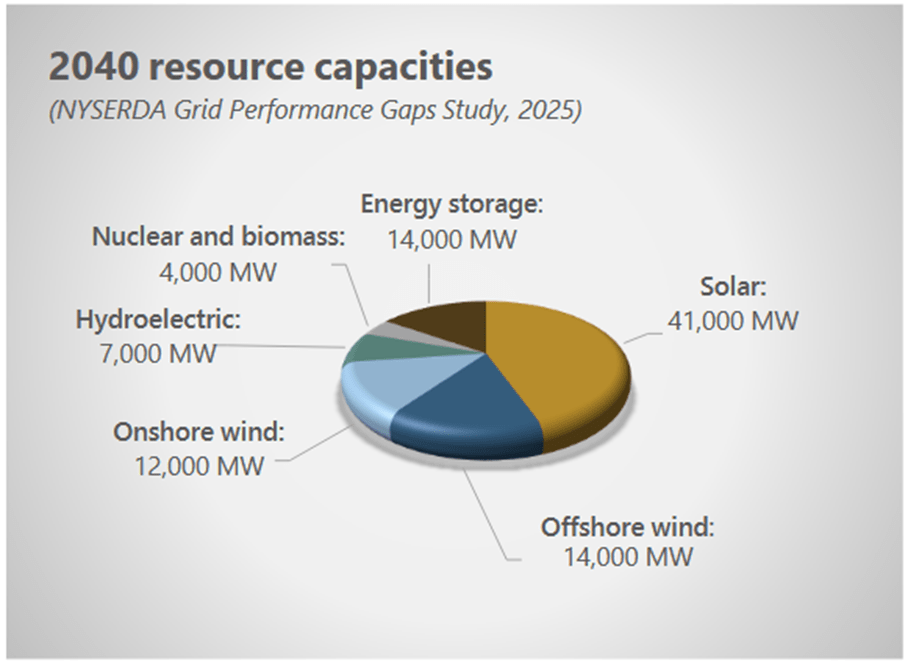
Net-Zero Aspirations

The Climate Leadership & Community Protection Act (Climate Act) established a New York “Net Zero” target (85% reduction in GHG emissions and 15% offset of emissions) by 2050 and has two electric sector targets: 70% of the electricity must come from renewable energy by 2030 and all electricity must be generated by “zero-emissions” resources by 2040.

According to the New York State Energy Plan website: “The State Energy Plan is a comprehensive roadmap to build a clean, resilient, and affordable energy system for all New Yorkers.”  This is the first update of the Energy Plan since the Climate Act was passed in 2019, so it is being revised to incorporate the net-zero mandates.  I have provided more background information and a list of previous articles on my Energy Plan page

NYISO Overview of System Trends

The NYISO comments point out that there are three “structural trends” that create significant uncertainty about the future electric system:

The New York grid is at an inflection point, driven by the convergence of three structural trends: the aging of the existing generation fleet, the rapid growth of large loads, and the increasing difficulty of developing new dispatchable resources. These trends are not isolated, they are compounding. Generators in New York are among the oldest in the country. Large energy-intensive economic development projects, such as semiconductor manufacturing plants and data centers, are driving up demand for electricity significantly after relatively flat demand trends over the last decade. Collectively, all these elements create uncertain conditions today, in the near term, and in the longer term, and each uncertainty has the real potential to cause major impacts on electric system reliability. All electric industry stakeholders, including the state agencies involved, must be aware of and factor these concerns into their planning and strategy.

The comments describe five concerns associated with these trends:

  1. Electric Grid Concerns Exist Today
  2. Repowering Existing Generation and Introducing New Generation Will Prove Critical to Maintaining Electric System Reliability
  3. Existing Nuclear Generation is Critical to Meeting the Demands of New Yorkers
  4. Emerging Technologies and Other Resource Development
  5. Key Risk Factors Shaping the Grid

I will summarize each of these concerns

Today’s Electric Grid Concerns

The discussion of the current electric grid concerns addressed two of the structural concerns. The first discussion addressed the fact that reliability margins are eroding.  Simply put more generation resources are retiring than being brought online: “As of June 2025, 4,315 MW have left the system while only 2,274 MW have been added since the passage of the Climate Act.”. 

I submitted comments that explained that I believe that NYSERDA was only paying lip service to the stakeholder process.  In the absence of a commitment to provide written documentation responding to all comments submitted that I decided not to try to review the Draft Energy Plan in any detail.  Due to the press of other commitments, I only provided comments on the Health Benefits Analysis Chapter.  I did not even read the other chapters.  As a result, I was pleasantly surprised that the NYISO comments noted that the Electricity chapter of the Draft Plan “accurately points out” that:

Combustion generating units will remain essential parts of electric grid reliability and affordability. Retirement of these units will not be able to occur until resources that provide the same grid reliability attributes are put in place. Additionally, there are specific considerations with respect to the small clean power plants, or “peaking units”, owned and operated by NYPA. By 2030, NYPA will cease production of electricity at its peaking units unless the closure of any specific facility would result in increased emissions in a DAC or the facility is needed for reliability.

I agree that these are accurate statements.  I provided a comment that pointed out that the Climate Act dismissal of natural gas attributes was irrational and that the arguments about problems with peaking units were wrong.  The continued operation of these facilities will have no discernable impact on local neighborhood air quality and shutting them down is solely political virtue-signaling

The NYISO comments also noted that New York’s generators are among the oldest generators in the nation.  I knew they were old but I was surprised that “New York’s statewide fleet of fossil-fuel-based generation includes more than 10,000 MW that has been in operation for more than 50 years.”  Also, NYISO “supports and emphasizes” the Draft Energy Plan’s comment on the transmission system: “For several utilities serving the Hudson Valley and Upstate New York, 60 percent to over 95 percent of transmission structures are 70 years old or older.”  In a rational world this problem would affect recommendations in the State Energy Plan.

The other structural concern address the fact that energy intensive development is driving up demand for electricity.  Now, development projects, “such as microchip fabrication, bitcoin mining, and data centers, are projected to be major drivers of load growth, in addition to the electrification of the building and transportation sectors”.  Their comments note that:

Large load projects can also be added to the system at a much faster pace than the new generation projects required to serve them. In the short term, this i) increases the pace required for constructing new renewable generation projects and ii) increases the reliance on existing fossil-fuel-fired generators, which thereby increases CO2 emissions. The coordination of new large load additions, new generation capacity, and retention of existing generators is very important to support economic development, maintain adequate generation capacity, and protect electric system reliability.

While I agree with most of the NYISO comments I am not optimistic about the potential that “Some large load projects also present opportunities to the electric grid with expected flexibility in the amount and timing of their demand for electricity from the grid.”  The only new load that applies to is bit coin mining.  I do not believe that semi-conductor manufacturing and data centers will cut back their operations for demand response programs.

The NYISO comments point out that “Access to renewable generation resources, sufficiency of overall generation available, and a robust transmission network should increasingly be an integral part of the consideration of where to locate large load projects.”  I do not disagree but wish they had recommended co-generation as an alternative approach for these new sources.

Repowering and New Generation

I support the pragmatic suggestions that “Repowering existing generation can offer a bridge between old and new, the past and the future” and “Integrating new efficient fossil-fuel-based generation (which may be capable of operating with lower- or zero-emissions fuels in the future) will immediately improve electric system reliability and reduce total emissions”.  The following sums up:

Using natural gas as the basis for combustion units for the foreseeable future necessitates improving and upgrading the aging generation fleet.  Upgrading the existing fleet not only can help with a stepped approach to emissions reductions by replacing older, higher emitting turbines with new, low-emissions cutting-edge technology, it also holds the potential for avoiding future generator failures and improves generating flexibility that allows for more renewable energy generation, therefore bolstering grid reliability and further reducing emissions.

The NYISO comments addressed the need for replacing existing fossil fuel resources.  While I wholeheartedly agree I also know that this is a line in the sand for many environmental organizations.  The suggestion to repower existing generation and build new generators will ignite a passionate demand to kibosh that plan despite the argument that “new generation will prove critical to maintaining electric system reliability”.   Thomas Sowell’s observation that “It is hard to imagine a more stupid or more dangerous way of making decisions than by putting those decisions in the hands of people who pay no price for being wrong” is apropos but it will come at a political cost for the ideological constituency that thinks that anyone who disagrees is evil.

Nuclear Generation

Similarly, the NYISO recommendation that “existing nuclear generation is critical to meeting the demands of New Yorkers” is certain to upset a vocal minority.  They will still demand shutdowns even when the organization responsible for keeping the lights on says the existing nuclear facilities are needed because “Without the dynamic voltage support services of these key resources the electric system could not transmit power generated by emission-free resources in Western NY to serve load statewide.”  Stay tuned to see how the final State Energy Plan resolves this.

Emerging Technologies

The NYISO comments discussed the importance of emerging technologies and other resource development:

As noted in the Draft Plan, many of the technologies necessary to meet system needs for firm, dispatchable capacity are not yet commercially available at scale. The development of these technologies must start now as these technologies need to be proven and deployed to the electric grid before the resources that currently supply the energy that consumers demand and the reliability attributes needed to support the grid can be retired.

There are vocal organizations that believe this is not true and that it is only a matter of “political will”.  Again, we need to watch the resolution of this closely.  It is long past time that New York energy policy return to those who are responsible for keeping the lights on and not the loudest voices in the room.

Key Risk Factors

The final technical discussion of concerns addressed key risk factors shaping the grid.  NYISO stated that

Given the significant need for resources demonstrated by the Outlook and contemplated in the Draft Plan, the final State Energy Plan should explore all emerging technologies, while focusing on promising technologies that will be readily available sooner and continuing to invest in current technologies including repowering fossil-fuel-fired generation to support fuel diversity and overall electric system reliability.

This is a pragmatic approach.  I hope this makes it into the final State Energy Plan.

Discussion

The conclusion of the NYISO comments stated that:

Strategic coordination between market design, planning, and policy will be essential to address emerging risks and maintain a reliable electric system. A reliable electric system is the only way to protect our health, safety, and welfare, and to meet the demands of societal preferences and public policies driving greater electricity usage. Reliable, dispatchable, and dependable electric generation is critical to every aspect of New Yorkers’ daily lives and is vital to the state’s economy.

I think these should be prime considerations in the Draft Energy Plan.  The NYISO comments describe elements that “create uncertain conditions today, in the near term, and in the longer term, and each uncertainty has the real potential to cause major impacts on electric system reliability.”  As much as I admire NYISO staff and analytic capabilities I think the massive changes associated with relying on inverter-based resources to the most complex machine ever created will inevitably cause reliability issues unless the schedule is made contingent upon feasibility analyses and methodical testing.

It is also disappointing that the affordability component of the electrical system transition has never been addressed by NYISO.  The NYISO resource modeling analysis includes cost information necessary to develop future projections of resource distributions.  I suspect that their cost projections are significantly higher than the NYSERDA work so release of that information would be politically embarrassing.  While I sympathize with the need to get along with politicians, I believe it is not in the best interests of the citizens of New York who have never been provided with transparent cost estimates.

Conclusion

The description of the uncertainties associated with three structural trends in the New York grid should be a wakeup call to New York politicians because they explicitly say the plan cannot work on the current schedule.  The final State Energy Plan will ultimately be consistent with some political narrative and not necessarily what the experts are saying.   Milton Friedman noted: “One of the great mistakes is to judge policies and programs by their intentions rather than their results”.  The NYISO comments clearly state the results are inconsistent with the aspirational intentions of the Climate Act.  It is time for the politicians to concede that we need to pause implementation and reassess what is possible with current technology.