Balancing the risks and benefits of environmental initiatives
Author: rogercaiazza
I am a meteorologist (BS and MS degrees), was certified as a consulting meteorologist and have worked in the air quality industry for over 40 years. I author two blogs. Environmental staff in any industry have to be pragmatic balancing risks and benefits and (https://pragmaticenvironmentalistofnewyork.blog/) reflects that outlook. The second blog addresses the New York State Reforming the Energy Vision initiative (https://reformingtheenergyvisioninconvenienttruths.wordpress.com). Any of my comments on the web or posts on my blogs are my opinion only. In no way do they reflect the position of any of my past employers or any company I was associated with.
This is a guest post by Mark Stevens, a regular reader at this blog. Mark is a retired science and technology teacher. When he sent an email with this I asked if I could post it and he agreed.
Cut Greenhouse gasses! Save The Planet! A better vehicle! Really?
I didn’t know EVs (electric vehicles) are about 1000 lbs. heavier than their petroleum equivalents and therefore have higher brake wear (increased particulates), tire wear (increased nano particles), and require more charging energy.
I didn’t know EVs’ batteries lose power in the cold and reduce their range, and the batteries need replacing after several years approaching half the cost of the vehicle.
I didn’t know the rare elements needed in EVs like lithium, cobalt, copper, nickel are mined in third world countries where child slave labor is used to mine the metals and the metals obtained are refined resulting in mass poisoning of the land and water and massive greenhouse gas emissions are emitted in the refining.
I didn’t know the grid doesn’t have the capacity to charge EVs on a massive scale which will lead to rolling blackouts like California, North Carolina and Texas when many families are charging at the same time.
I didn’t know that electricity providers will boost rates significantly higher to charge EVs at home resulting in cost-of-operation higher than a gasoline car.
I didn’t know the total greenhouse gas emissions in EV cars from obtaining rare earths to fabrication to end-of-life disposal is greater than that of conventional cars.
I didn’t know that if EVs were really viable they wouldn’t need thousands of dollars of taxpayer subsidies.
I didn’t know EV batteries can suddenly explode in an unstoppable fire that emits toxic gasses. This results in ordinances requiring EVs to NOT park in garages.
I didn’t know the EVs’ components are not easily recyclable and end-of-life disposition is a major problem for landfills, recyclers and incinerators.
I didn’t know Connecticut’s fleet of electric busses were withdrawn due to several catastrophic fires.
I didn’t know a home charger costs thousands of dollars.
I didn’t know a 500 mile trip would require hours of recharging on the way.
I didn’t know I would have to detour and spend time finding a street charger.
I didn’t know low and middle-income Americans will find using and affording a new or used electric car will be unaffordable.
I didn’t know the tax on your gasoline to keep our roads maintained will soon be replaced by a special tax on your electric vehicle registration as make-up.
I have written enough articles on solar siting issues that I have setup a page that summarizes them all. The original intent of this blog post was to announce the addition of a scorecard documenting the loss of prime farmland allowed by the Hochul Administration’s solar siting policies. However, one of the latest solar project approvals was for a project that proposes to build on marginal farmland proving that it can be done so I have added a description of that project.
New York’s Climate Leadership and Community Protection Act (Climate Act) Act establishes a “Net Zero” target (85% reduction and 15% offset of emissions) by 2050. I have written extensively on implementation of the Climate Act. Everyone wants to do right by the environment to the extent that efforts will make a positive impact at an affordable level but the current implementation policies are doing more harm than good. The opinions expressed in this post do not reflect the position of any of my previous employers or any other company I have been associated with, these comments are mine alone.
Solar Siting Issues
I became aware of the particular issues of utility-scale solar development on agriculture after I had a couple of people contact me describing issues that they had and suggested that I look into the issue. The problems that they raised are real, solutions to mitigate problems are available, but in the rush to develop as many renewable resources as quickly as possible the State of New York has dropped the ball on responsible utility-scale solar development. Given the massive amount of projected utility-scale solar generation capacity required to meet Climate Act goals the rush to develop solar projects could easily lead to the permanent loss of significant amounts of prime farmland that will hurt farming communities and endanger Climate Act strategies to sequester carbon in soil.
The New York State Department of Agriculture and Markets (DAM) has guidelines for solar developments. In prepared testimony Michael Saviola explained: “The Department’s goal is for projects to limit the conversion of agricultural areas within the Project Areas, to no more than 10% of soils classified by the Department’s NYS Agricultural Land Classification mineral soil groups 1-4, generally Prime Farmland soils, which represent the State’s most productive farmland.”
Solar Siting Farmland Scorecard
In order to document the State’s irresponsible solar siting policies, I have developed a scorecard to track of the loss of prime farmland. I used Exhibit 15: Agricultural Resources in the solar project permit applications for the data. A list of applications is available at the New York State Office of Renewable Energy Siting that references the docket for each permit. I have tried to accurately represent the project area, project footprint, and the area of prime farmland in each permit application but the applications do not use the same terminology so my interpretations might be inconsistent.
The following scorecard table lists the project names and the permitting authority. The original power sector permits were handled by the Department of Public Service Article 10 process but now the state rams over-rides any local concerns with the New York Office of Renewable Energy Siting (ORES). The table lists photovoltaic capacity (MW) for each project. My interpretation of the project area is that it represents the land under contract to the project developer for locations being evaluated for placement of project facilities, including the proposed collection substation and interconnection facilities. I interpret the Project Footprint as only the area of the project components. All the applications are required to include an exhibit for agricultural resources that specifies how much of the project area and footprint are soil types that are defined as prime farmland. Mineral Soil Groups 1 through 4 are considered to be highly productive soils by DAM. I calculated the Percentage Prime column as the sum of the prime farmland soil categories divided by the Project Area to compare with the DAM goal for projects to limit the conversion of agricultural areas within the Project Areas, to no more than 10% of soils classified as Prime Farmland soils.
Update: The latest Update of the Scorecard is available here.
At this time, there are seven approved projects that have accessible Agricultural Resources exhibits (Homer Solar’s exhibit is unavailable). Six of the seven projects exceed the DAM goal for limited conversion. I should also note the DAM has made the point that once this land is converted to industrial solar panels that is unlikely that it will be converted back to farmland simply because the need for solar power will never go away as the Climate Act net-zero goals are implemented. The developers piously claim that the most of the project footprint can be converted back but I side with DAM that this is a transparent excuse of no value.
The solar development scorecard lists a total of seven applications that have been approved for a total of 1,339 MW. The total project areas cover 17,430 acres and the project footprints total 7,912 acres. Despite the best efforts of Department of Agriculture and Market staff to prevent the loss of Prime Farmland, these projects were approved and the prime area lost for farming in these projects totals 4,216 acres or 24% of the combined project areas.
Discussion
In early January Governor Hochul announced approval of siting permits for three major solar energy centers including Tracy and Riverside. Frankly I was wondering if any industrial solar development would propose to develop land that met the DAM 10% goal so I was pleased to see the Tracy application. It is possible to develop solar facilities on marginal farmland.
I think the Agricultural Resources exhibit descriptions of the Riverside Solar and Tracy Solar projects are instructive.
The Riverside Solar application states:
The Applicant has worked with participating landowners to site Facility components in order to minimize impacts and allow for continued agricultural use on land adjacent to the Facility Site. The Facility will be constructed in accordance with the NYSAGM guidance document “Guidelines for Solar Energy Projects – Construction Mitigation for Agricultural Lands”, dated October of 2019 (NYSAGM Guidelines), which is discussed further below in Section 15(c). During the construction and operational life of the Facility 1,012 acres of land within the Facility fence line will be taken out of agricultural production and will be utilized for solar energy components. Additionally, the Facility Site includes approximately 366 acres of land located in areas of MSG 2-4. There are no occurrences of MSG 1 soils at the Facility as is indicated in Table 15-4 below. Areas not within MSG 1-4 were evaluated for the feasibility of siting Facility components as practicable. However, for various reasons such as landowner preferences, presence of wetlands and streams, and efficient siting of Facility components to reduce fragmentation and appropriately consolidate the Facility and minimize the overall footprint, the Applicant was unable to further consolidate or arrange the Facility layout to significantly reduce the use of land in MSG 2-4 areas. Following the decommissioning of the Facility the land can be restored to its agricultural use. While in operation, the Facility will utilize agricultural land for solar energy production. This will ensure that parcels remain intact during the life of the Facility, rather than being sold or subdivided for other purposes that may not allow the land to be reverted to agricultural use. The Facility will allow for continued agricultural use on parcels excluded from the Facility and will protect the viable agricultural land being utilized by the Facility for future use following decommissioning at the end of the Facility’s useful life.
In the absence of a state policy for responsible solar siting, out-of-state developer AES can come in with these lame excuses and take another 292 acres of prime farmland out of production. The referenced Table 15-4 is nearly six pages of individual soil types without a summary listing. I interpret the obfuscation relative to the relevant prime farmland statistics to mean that they know full well just how inappropriate this application is.
The Facility footprint consists of 864 acres, defined as the area within the limits of disturbance (LOD). Within the Facility footprint, 816 acres are active agriculture, based on the active agriculture analysis described in Section 15.9.1. Table 15.8-1 summarizes the agricultural areas of the Facility footprint affected by construction and operation. Construction will result in temporary impacts where it will not be feasible to continue farming due to construction laydown areas and temporary workspaces. Operation will remove active agricultural land from farming for the life of the Facility.
Figure 15-8 in Appendix 15-A depicts mineral soil groups present within the Facility Site. Table 15.9-1 identifies the mineral soil coverage within the Facility Site and Facility footprint. Soil groups identified by NYSDAM as Mineral Soil Groups 1 through 4 are considered to be highly productive soils (NYSDAM 2021). Mineral Soil Groups 3, 5, 6, 7, and 8 are present within the Facility Site.
It is apparent that the Tracy Solar project has proposed to install solar panels on marginal farmland. Surely this is an example that should be the standard for all future development.
Conclusion
The implications of these two projects does not reflect well on the New York State solar siting requirements. The Tracy Solar projects shows that marginal farmland can be used for solar panels. As it stands now solar developers are free to come into the state and put up as many solar panels as they want on as much prime farmland as they want in direct contravention of DAM goals. In addition, there are no solar capability standards so developers are free to install fixed panel racking systems that cost less but do not meet the capacity expectations of the Scoping Plan. The state has not updated its cumulative environmental impact assessment for the larger renewable energy capacities in the mitigation scenarios so the full consequences of the necessary 40,000 MW of solar development are unknown. I submitted a comment to the Council in March calling for a moratorium on utility-scale solar siting in March that was ignored. The most frustrating part to me is that the State has instituted responsible solar siting guidelines in the policy option roadmap for the proposed 10 GW of distributed solar development. The failure to simply require those requirements for utility scale solar developments is baffling.
Until the Hochul Administration institutes responsible utility-scale solar siting guidelines similar to the roadmap for distributed solar development there will be significant and irreplaceable loss of Prime Farmland and damage to farming communities across the state.
Everyone wants to do right by the environment to the extent that they can afford to and not be unduly burdened by the effects of environmental policies. I submitted comments on the Climate Act implementation plan and have written over 275 articles about New York’s net-zero transition because I believe the ambitions for a zero-emissions economy embodied in the Climate Act outstrip available renewable technology such that the net-zero transition will do more harm than good. The opinions expressed in this post do not reflect the position of any of my previous employers or any other company I have been associated with, these comments are mine alone.
Climate Act Background
The Climate Leadership and Community Protection Act (Climate Act) established a “Net Zero” target (85% reduction and 15% offset of emissions) by 2050. The Climate Action Council is responsible for the Scoping Plan that outlines how to “achieve the State’s bold clean energy and climate agenda.” In brief, that plan is to electrify everything possible and power the electric gride with zero-emissions generating resources by 2040. The Integration Analysis prepared by the New York State Energy Research and Development Authority (NYSERDA) and its consultants quantifies the impact of the electrification strategies. That material was used to write a Draft Scoping Plan that was revised during 2022. The Final Scoping Plan was approved on December 19, 2022. Unfortunately, the revisions only addressed the language of the draft plan and not the substance of the numbers used from the Integration Analysis.
The Post Standard published three letters to the editors related to the Knauss article. Two of the articles expressed concern about the dangers of heat pumps and the resulting lack of heat during periods when electricity blackouts occur. Hanah Ehrenreich argued that we should know better than to question the Scoping Plan.
Recent letters to the editor by Roger Caiazza and David Seeley (”Dangers and possibilities of NY’s all-electric future,” Jan. 4, 2023) argue electrification as a substitution for gas heat would intensify dangers, with the Buffalo storm as the example. If they had read Tim Knauss’ well-informed and straightforward reporting on New York’s implementation strategy for the 2019 Climate Leadership and Community Protection Act, they would know better.
Two years have been spent in a detailed implementation development process including scientists, representatives of the fossil fuel industry and utility companies, labor leaders, environmentalists, and many months of public input.
The description of the Scoping Plan as a detailed implementation development process is naïve. The Scoping Plan has been described as a “true masterpiece in how to hide what is important under an avalanche of words designed to make people never want to read it.” I suspect that because all these experts worked for two years and there was public input, then the public perception is that means the Scoping Plan included a feasibility analysis. The fact is that the plan did not determine whether all the aspects could work as proposed to maintain current standards of reliability, prevent significant risks to affordability, and would not cause significant adverse environmental impacts. Also, as I said in my letter, the state plan does not address “what if” questions.
Ehrenreich goes on to say:
Buffalo residents — old and young — died in their natural gas-heated homes. Gas heat does not operate without electricity. Those gas-heated homes that lost power were 30 degrees indoors. Meanwhile, homes in Buffalo that maintained electricity still had heat, which saved lives.
I have a couple of problems with this paragraph. The first point is that while it is true that gas heat does not operate without electricity, gas stoves can be lighted with a match providing some heat and hot food which is impossible in an all-electric home. More importantly, a fossil fueled generator can be used to provide the power necessary for gas furnaces to operate. One of the “what if” questions so far unanswered is what happens to all the people who have invested in emergency generators. Even if the State allows them in the future, where is the fuel going to come from when all other uses are outlawed? The second point is the line “homes in Buffalo that maintained electricity still had heat, which saved lives”. Home in Buffalo that had electricity could run their gas furnaces and that saved lives too. People who died in homes with gas furnaces would have died in electric homes too.
There could be another interpretation of this paragraph. My letter to the editor made the point that at some point there will always be insufficient energy for a heat pump to create heat inside a home. I think that Ehrenreich might have interpreted that to mean that I was saying that they don’t work at all. The technology has improved so that an advanced heat pump can provide heat to a lower temperature but if the temperature is below 15o F no heat pump will work well.
Ehrenreich states:
Ductless mini-split heat pumps in my 1920 home provide consistent heat (air conditioning in the summer) without the astronomical cost of retrofitting the original furnace and vents. A National Grid comparison ranked my home as high efficiency, with fall 2022 as overall lowest electricity costs.
The point that I tried to make is that the impression that replacing an existing fossil-fired furnace with a heat pump is all that needs to be done for all the weather conditions that we can expect in Upstate New York is not likely to be true. In addition to properly sizing the heat pumps and making sure the right type is purchased, there are issues with the building shell, ventilation, and the distribution system within the house that have to be addressed for a successful conversion. It might work most of the time but if it does not work all the times that a gas furnace does then there will inevitably be a crisis.
Ehrenreich says:
Meanwhile, gas heat dependency is forcing friends in the United Kingdom and Germany to cook with wood and dress indoors as if they were going skiing.
The same energy crisis that is causing problems with gas heat dependency are also affecting electricity prices which have the same effects. The gas dependency issue is ultimately a lack of supply because the United Kingdom and Germany have failed to develop their own sources of fossil fuels. Oh wait, that is exactly what New York is doing with the ban on natural gas development and I maintain that ultimately this will lead to problems that could have been avoided.
Ehrenreich concludes:
The climate is in crisis and the stunted natural gas industry is dragging homes and families into a state of emergency. New York state has stepped into the national forefront by taking essential legislative action. We need to do everything possible to welcome and speed this implementation.
New York’s greenhouse emissions are less than one half of one percent of global emissions and global emissions have been increasing by more than one half of one percent per year. The fact that anything we do to reduce emissions will be offset in a year does not mean that we should not do something but it does mean we should take the time to do it right. Folks like Ehrenreich are convinced that we have to act immediately because they have been brainwashed by the incessant propaganda from activists and the media. A Critical Examination of the Six Pillars of Climate Change Despair does a good job explaining why the rationale that there is a crisis is wrong.
Conclusion
I despair that so many people have such entrenched opinions about the problem of climate change and the alleged simple and inexpensive solution that they have closed their minds to reality. Anyone who claims to have an open mind should consider the following. Steven Koonin’s book What Climate Science Tells Us, What It Doesn’t, and Why It Matters does an excellent job critiquing the science behind the concerns about climate change but it is pretty technical so this video is a good overview. Frankly I am more concerned that New York is going down a path that requires dependency upon renewable energy because I am convinced that current renewable technology won’t work.
In 2023 the State is going to be developing regulations and proposing regulations to implement the outline of the net-zero transition described in the Scoping Plan. I encourage all New Yorkers to get involved and demand a feasibility analysis to determine whether the arbitrary greenhouse gas emissions targets in the Climate Act can be met reliably, affordably, and with acceptable environmental impacts. Before passing any legislation or endorsing a regulatory approach for any component of the Climate Act, the Hochul Administration must be held accountable for feasibility analyses and explanations how New Yorkers will survive when there is an ice storm after everything is converted to electricity. Anything less is a dangerous abrogation of the public’s right to safe and affordable energy.
I submitted comments on the Climate Act implementation plan and have written over 270 articles about New York’s net-zero transition because I believe the ambitions for a zero-emissions economy embodied in the Climate Act outstrip available renewable technology such that the net-zero transition will do more harm than good. I also follow and write about the Regional Greenhouse Gas Initiative (RGGI) market-based CO2 pollution control program for electric generating units in the NE United States. I have extensive experience with air pollution control theory, implementation, and evaluation having worked on every cap-and-trade program affecting electric generating facilities in New York including the Acid Rain Program, RGGI, and several Nitrogen Oxide programs. The opinions expressed in this post do not reflect the position of any of my previous employers or any other company I have been associated with, these comments are mine alone.
Climate Act Background
The Climate Act established a “Net Zero” target (85% reduction and 15% offset of emissions) by 2050. The Climate Action Council is responsible for the Scoping Plan that outlines how to “achieve the State’s bold clean energy and climate agenda.” In brief, that plan is to electrify everything possible and power the electric gride with zero-emissions generating resources by 2040. The Integration Analysis prepared by the New York State Energy Research and Development Authority (NYSERDA) and its consultants quantifies the impact of the electrification strategies. That material was used to write a Draft Scoping Plan that was revised in 2022 and the Final Scoping Plan was approved on December 19, 2022. Unfortunately, the revisions only addressed the language of the draft plan and not the substance of the numbers used from the Integration Analysis.
Investment Projection
My initial impression of the New York cap and invest program post calculated a revenue projection for the proposed cap and invest program. From 2025 to 2030 I estimate that emissions will have to go down 14.76 million tons per year to meet the 2030 GHG emissions target. New York’s investments in the Regional Greenhouse Gas Initiative yield an expected cost per ton reduced of $537 for a total of $7.9 billion. Governor Hochul proposed “legislation to create a universal Climate Action Rebate that, subject to a stakeholder and rulemaking process, is expected to drive more than $1 billion in annual cap-and-invest proceeds to New Yorkers”. If the $1 billion is added then the total revenues would be $9 billion per year.
Scoping Plan Cost Projection
The primary documentation for the numbers presented in the Scoping Plan is the Tech Supplement Annex 2. Key Drivers Outputs spreadsheet. The Scoping Plan has been described as a “true masterpiece in how to hide what is important under an avalanche of words designed to make people never want to read it.” The spreadsheet is worse. Not only is the information provided buried in a massive spreadsheet but the authors of the Integration Analysis presented misleading, inaccurate, and biased data to support the narrative that the costs of inaction are more than the costs of action. I have extracted the relevant tabs from the massive reference spreadsheet into my analysis spreadsheet to address the first concern.
The data in the Integration Analysis that is used in the Scoping Plan is misleading. On one hand as many numbers are possible are only provided relative to a Reference Case instead of a status quo or business-as-usual case that represents the full costs of the control strategies necessary to meet the net-zero by 2050 Climate Act goal. I maintain that the true cost of New York’s net-zero transition by 2050 should include all costs associated with all programs designed to reduce GHG emissions. The authors of the Integration Analysis and Scoping Plan excluded decarbonization costs that I believe should be included and provided insufficient documentation to enable anyone to determine what is in or out of the Reference Case. For example, consider the supporting data for Figure 48 (Fig 48 tab in my spreadsheet).
Note the transportation investments in the Reference Case total $1.056 trillion but that the cost for the Low-Carbon Fuels scenario is only $3.4 billion more. That means most of the costs associated with capital and operating expenses for light-duty vehicles, medium- and heavy-duty vehicles, and buses as well as charging infrastructure costs are buried in the Reference Case because these costs are a lot more than $3.4 billion.
The cost data in the Integration Analysis that is used in the Scoping Plan is inaccurate. For example, in the calculations for the new wind, solar, and energy storage resources needed to replace existing fossil-fired resources it is assumed that none of the existing or newly developed resources reach their effective life expectancy. Wind, solar, and energy storage resources all have expected lifetime less than 25 years and it is more than 25 years to 2050 so this inaccurately underestimates the cost of electric generation.
The data in the Integration Analysis that is used in the Scoping Plan is biased. Wind and solar resources are intermittent so the assumption of the amount of energy produced affects the projected capacity of resources needed. Without exception the future amount of energy from wind and solar resources is biased high relative to the New York Independent System Operator projections. As a result, the costs projected are unreasonably low. Based on my evaluation the Integration Analysis biased every choice to make the zero-emissions replacement resources cheaper.
I emphasize that the annual revenue numbers that I believe should be clearly listed in the Integration Analysis and Scoping Plan are not provided so I can only make an estimate. Given all the limitations described above, the revenue values in the final row in the Figure 48 table shown above should be used cautiously. The annual expenditure values listed are the difference between the mitigation scenarios and the Reference Case divided by the number of investment years (27) from 2024 to 2050. The values range between $10 and $11 billion.
Other Cost Projections
I have heard other numbers tossed around so I did a bit of research to find other values.
In testimony regarding the environmental provisions of Governor Cuomo’s Executive Budget Proposal for SFY 2020-2021, Peter Iwanowicz, Executive Director, Environmental Advocates of NY, January 27, 2020 stated:
The costs of inaction are enormous. Based on the widely accepted social cost of carbon pollution of $50 per ton, New York has $10.2 billion dollars in costs per year attributed to the pollution we emit that is fueling climate change. This is a staggering blow to our health, our environment, our communities, and our economy.
Back calculating this projection assumes 204 million tons which is about the total CO2 emissions for 2017. The problem is that social cost of carbon parameter can only be applied once because it represents all the impacts from the time of the reduction to 2300. Counting them more than once is the same as claiming that because I lost ten pounds five years ago that I lost 50 pounds.
The Bond Act is a good start—but it’s not enough. It’s been three years since New York passed our landmark climate law, the Climate Leadership and Community Protection Act (CLCPA), and we’re far from achieving the law’s mandate of largely decarbonizing the state economy by 2040. The state’s own analysis shows that we’ll need to invest roughly $15 billion a year by 2030, and $45 billion a year by 2050.
The Integration Analysis does include annual projections for net direct costs of between $10.4 and $12.2 billion for 2030 and between $41.0 and $41.3 billion in 2050.
Among NY Renews’ key goals for the upcoming legislative session is the creation of a $10 billion Climate and Community Protection Fund, modeled after the state’s Environmental Protection Fund. It’s an amount in line with the Climate Action Council’s estimates of what meeting the goals in the climate plan will cost: $10 to 15 billion a year, whether the costs are paid by the state, the federal government, industry, ordinary New Yorkers, or a mix of all of the above.
There are enough options for guessing what the Council estimates as costs that these numbers are consistent.
I found a couple of independent estimates of the total costs to meet the net-zero target by 2050: An article by Ken Gregory critiques a report by Thomas Tanton “Cost of Electrification: A State-by-State Analysis and Results”. In Tanton’s analysis the estimated total installed cost (overnight) is approximately for New York is $1.465 trillion or $54.3 billion per year. Gregory’s total national capital cost of electrification is $433 trillion and New York’s proportional share based on Tanton is $22.2 trillion. Overbuilding solar and wind by 21% reduces New York overall costs to $18.2 trillion. Allowing fossil fuels with carbon capture and storage to provide 50% of the electricity demand reduces New York’s estimated costs to $1.2 trillion or $44.4 billion per year.
Conclusion
The New York Senate held a public hearing to examine legislative and budgetary actions necessary to implement the Climate Act Scoping Plan on January 19, 2023. One of the primary concerns of the legislative and budgetary actions has to be how much money is required. I modified the draft of this post to submit as a comment. The main point I wanted to make is that it is very important that the Legislature understand that the numbers presented in the Scoping Plan are inappropriate for any future legislative actions. Those actions must be based on the total costs of implementation and not just the costs relative to a Reference Case. Beyond that I offered no substantive recommendation for revenues needed because of the inadequate documentation in the Scoping Plan.
I determined the emissions reduction trajectory needed to meet the 2040 GHG emissions target, calculated the control cost per ton removed based on the RGGI auction proceed investments, and found that a total of $7.9 billion per year is needed. That is the low-end cost of the projections. At the upper end three projections exceed $45 billion a year. All these estimates will impose extraordinary cost burdens on New Yorkers. No one in the Hochul Administration has owned up to these costs. When will this news become public knowledge?
Finally, all the cost per ton reduced estimates in these projections exceed the New York State Value of Carbon guidance. The Frequently Asked Questions guidance states:
The term value of carbon is any representation of monetary cost applied to a unit of greenhouse gas emissions, expressed in terms of the net cost of societal damages (i.e., the “social cost of carbon”), marginal greenhouse gas abatement cost, or using another approach. DEC recommends that State agencies use a damages-based value of carbon for cost-benefit analysis, for describing societal benefits, and evaluating other types of decisions, such as state procurement, contracts, grants, or permitting.
This means that all these projected costs exceed the cost-benefit analysis for describing societal benefits. New York’s greenhouse emissions are less than one half of one percent of global emissions and global emissions have been increasing by more than one half of one percent per year. The facts that the expected investments exceed the societal benefits values and that all New York emission reductions will be replaced by emissions from elsewhere in a year does not mean that we should not do something, but it does mean we should take the time to do it right.
On January 10, 2023 New York Governor Kathy Hochul delivered her 2022 State of the State Address. This post describes my initial impressions of the announced plan to use a market-based program to raise funds for the Climate Leadership & Community Protection Act (Climate Act) implementation. I believe that this will be a future textbook example of how perverting the previously successful concept of a market-based pollution control program to fit the ideological purposes of a political agenda inevitably leads to failure.
I submitted comments on the Climate Act implementation plan and have written over 270 articles about New York’s net-zero transition because I believe the ambitions for a zero-emissions economy embodied in the Climate Act outstrip available renewable technology such that the net-zero transition will do more harm than good. I also follow and write about the Regional Greenhouse Gas Initiative (RGGI) market-based CO2 pollution control program for electric generating units in the NE United States. I have extensive experience with air pollution control theory, implementation, and evaluation having worked on every cap-and-trade program affecting electric generating facilities in New York including the Acid Rain Program, RGGI, and several Nitrogen Oxide programs. The opinions expressed in this post do not reflect the position of any of my previous employers or any other company I have been associated with, these comments are mine alone.
Climate Act Background
The Climate Act established a “Net Zero” target (85% reduction and 15% offset of emissions) by 2050. The Climate Action Council is responsible for the Scoping Plan that outlines how to “achieve the State’s bold clean energy and climate agenda.” In brief, that plan is to electrify everything possible and power the electric gride with zero-emissions generating resources by 2040. The Integration Analysis prepared by the New York State Energy Research and Development Authority (NYSERDA) and its consultants quantifies the impact of the electrification strategies. That material was used to write a Draft Scoping Plan that was released for public comment at the end of 2021 and approved on December 19, 2022.
The Climate Action Council (Council) has identified the need for a comprehensive policy that supports the achievement of the requirements and goals of the Climate Act, including ensuring that the Climate Act’s emission limits are met . A well-designed policy would support clean technology market development and send a consistent market signal across all economic sectors that yields the necessary emission reductions as individuals and businesses make decisions that reduce their emissions. It would provide an additional source of funding, alongside federal programs, and other funding sources, to implement policies identified in this Scoping Plan, particularly policies that require State investment or State funding of incentive programs, including investments to benefit Disadvantaged Communities. Equity should be integrated into the design of any economywide strategy, prioritizing air quality improvement in Disadvantaged Communities and accounting for costs realized by low- and moderate income (LMI) New Yorkers. Pursuant to the Climate Act, a policy would be designed to mitigate emissions leakage. Finally, an economywide strategy would be implemented as a complement to, not as a replacement for, other strategies in the Scoping Plan. A well-designed economywide program will bring about change in the market and promote equity in a way that does not unduly burden New Yorkers or with the global economy.
It is no surprise that the Scoping Plan recommends a market-based program. New York was a primary driver for RGGI and has consistently touted its success. However, the reality is that RGGI is not as successful as they claim. I will explain why the experiences of RGGI should be warning signs for this program. If you are interested in a good overview of Hochul’s cap and invest program I recommend James Hanley’s article: Cap and Invest or Cap and Divest.
Comments on the Draft Scoping Plan Economy-Wide Strategy
I submitted comments on the Draft Scoping Plan chapter on a market-based approach to provide an additional source of funding for policies that “require State investment or State funding of incentive programs, including investments to benefit Disadvantaged Communities”. I will summarize some of my overarching concerns in this section.
My comments described general issues for a carbon pricing market-based approach. One major difference between controlling CO2 and other pollutants is that there are no cost-effective control technologies that can be added to existing sources to reduce emissions. Combine that with the fact that CO2 emissions are directly related to energy production, the result is that the primary way to reduce emissions is to reduce operations. Consequently, CO2 emission reductions require replacement energy production that can displace existing production. This necessarily increases costs to consumers and is why I believe carbon pricing will always be a regressive tax.
There are other practical reasons that carbon pricing will not work as theorized. Leakage is an insurmountable problem. Pollution leakage refers to the situation where a pollution reduction policy simply moves the pollution around geographically rather than reducing it. Ideally the carbon price should apply to all sectors across the globe so that leakage cannot occur. Preventing leakage in an area as small as New York is impossible because, for example, car owners on the border will simply cross the border to purchase fuel. A fundamental problem with all carbon pricing schemes is that funds decrease over time as carbon emissions decrease unless the carbon price is adjusted significantly upwards over time. The Regulatory Analysis Project (RAP) recently completed a relevant study: Economic Benefits and Energy Savings through Low-Cost Carbon Management for Vermont that concludes “carbon pricing alone will be a weak tool to deal with the realities of consumer behavior, our historic buildings infrastructure, rural settlement patterns, and the many barriers that working families and businesses face in choosing to invest in energy efficiency or other low-carbon options”. Based on investment results for RGGI proceeds, the programs funded are not cost-effectively reducing emissions. The Climate Act mandate for funding in Disadvantaged Communities will exacerbate that issue because cost-effectiveness will not be a primary consideration.
In addition to my practical concerns “A Practical Guide to the Economics of Carbon Pricing by Ross McKitrick defines how carbon pricing is supposed to work in theory. His guide is at odds with the Final Scoping Plan for every point. He explains that “First and foremost, carbon pricing only works in the absence of any other emission regulations”, but the cap and invest program proposed by Hochul is in addition to the emission regulations of the Climate Act itself. The Guide goes to note “another important rule for creating a proper carbon-pricing system is to be as careful as possible in estimating the social cost of carbon”. He argues that “whatever the social cost of carbon is determined to be, the carbon price must be discounted below it by the marginal cost of public funds (MCPF) — that is, the economic cost of the government raising an additional dollar of tax, on top of what is already being raised”. The Scoping Plan does not even recognize the importance of this aspect of carbon pricing. He concludes: “There may be many reasons to recommend carbon pricing as climate policy, but if it is implemented without diligently abiding by the principles that make it work, it will not work as planned, and the harm to the Canadian economy could well outweigh the benefits created by reducing our country’s already negligible level of global CO2 emissions.” Substitute New York for Canada and I believe this describes this Hochul’s cap and invest program.
Results of the Existing Cap and Invest Program
New York fossil-fired electric generating stations are already in a cap and invest program. I previously mentioned that I have evaluated the RGGI program. This section describes the results of that work especially as they relate to the proposed program.
The costs per ton reduced exceed any estimates of the societal value of carbon reductions. Since 2009 when the RGGI program started, I found that the cost per ton removed of the investment proceeds from RGGI auctions is $818 per ton for the entire RGGI region. According to the latest NYSERDA RGGI funding status report the projected costs of the current programs are $776.1 million, the net greenhouse gas emission savings are 1,656,198 tons and that works out to emission cost per ton removed of $469. If all the RGGI administrative and operating costs are included another $113 million is added to the total and the emissions cost per ton removed is $537 per ton. It is not clear to me how much of this funding meets the criteria for disadvantaged community investments.
I evaluated current emissions relative to the 2030 Climate Act target of a 40% reduction by 2030. The following table lists the trajectory of observed, projected, and interpolated emissions consistent with the 2030 requirements. New York State has released the official GHG emissions for New York State for 2018 and 2019 and they are highlighted in gold. I estimated emissions for 2020 and 2021 based on observed RGGI emission levels. Note that they increase due to the shutdown of the Indian Point nuclear generating facility. The 2030 levels are fixed and are highlighted in rose. There are four columns that list the emissions trajectory necessary to get from the observed emissions to the target. The annual reduction in the trajectory is the difference between the observed emissions and the 2030 target divided by the number of years. For example, the estimated GHG emissions in 2021 were 378.69 million metric tons. If the emissions are reduced by 14.76 million tons per year, then in 2030 the emissions will meet the target of 245.87 million metric tons.
The emissions reduction trajectory of 14.76 million tons per year is going to be a challenge. The following table (the link is to the full table because I cannot figure out how to make tables in the text get bigger when a reader clicks on it) lists the New York State GHG emissions (MMT CO2e AR5 20 yr) by sector from the DEC emissions inventory . There have been years when the annual reductions have exceeded that trajectory but there have also been years when it went up by that much. RGGI has a three-year compliance period intended to smooth out the inter-annual variation. Whether the compliance period for the Climate Act program will do something similar is one of those details that remains to be worked out.
I think the fundamental cap-and-invest program issues that New York energy users and suppliers will have to deal with this year is the disconnect between the theory of cap and trade with what is proposed, the practical considerations necessary to make it work, and the preconceived notions of the environmental community.
There are two fundamental issues. The theory of market incentives is that raising the cost of carbon will let the market innovate to produce the least cost approach to provide carbon reductions. That takes time and that makes the schedule problematic. It may not be possible for the innovation necessary to replace a system that took decades to build to coincide with the 27-year arbitrary schedule of the Climate Act net-zero by 2050 target. The other fundamental theoretical issue looms huge. The state is going to “invest” the proceeds. Government investments pick winners and losers and governments don’t have a good record in that regard.
The second overall concern is the practical considerations necessary to make any market-based program work. At the top of that list is emissions monitoring. In the RGGI cap-and-invest program there were minor monitoring implementation issues because all the affected sources were already providing the data necessary to run the program. Hochul’s cap-and-auction program affects distributors of heating and transportation fuels and large-scale emitters of greenhouse gasses outside the electric utility industry that are not in similar programs so they have to create a new reporting system. The program is going to have to determine how to define compliance and establish penalties for failure to comply. Every sector has the issue of weather-related variations in energy use. The RGGI program addressed that with a three-year compliance period.
The biggest practical concern is the revenue target. The New York State value of carbon guidance cost ranges between $121 per ton in 2020 and $137 per ton in 2030. That could be used as the auction allowance price target. Presumably the auction will use the same features as in RGGI that establish boundary limits to keep the price near the target. The potential revenues using the emissions trajectory and the New York value of carbon yields a little over $40 billion in 2024 and $34 billion in 2030. According to the Citizen’s Budget Commission New York State’s personal income tax revenues were $47.1 billion in state fiscal year 2015-2016. I cannot imagine that the DEC and NYSERDA will use regulations to propose a cap-and-invest revenue scheme that is on the order of the leading source of tax revenue. One alternative possibility is to calculate the money needed to get the 14.76 million tons per year reductions required by multiplying it by the observed $537 per ton reduction cost from RGGI investments. That total of $7.9 billion divided by the 2025 emissions, 320 million tons, yields a target allowance cost of $24.76. That is a more reasonable value that may enable the Hochul Administration to avoid legislation for the program.
There are other practical considerations that mostly add funding and effort. All affected entities must provide consistent emissions data and the State has to develop a new system to track that information. There is a significant logistical effort for entities to participate in the auctions that must include another tracking system. It is necessary to setup a market monitoring presence so someone is making sure that there isn’t market manipulation going on.
The last practical considerations are more of a problem. New York’s Climate Act mandates that upstream emissions must be considered. How is a fuel distributor supposed to keep track of where and how his fuel is coming from? Hochul’s speech claims that New York wants to get other states involved but New York’s unique emissions requirements would require other states to adopt them too.
The final concern is the response of environmental advocates to market-based programs. As far as I can see, they oppose these programs because evil industry is not punished enough. In order to push their notion that zero-risk pollution control approaches are the only consideration and there are no tradeoffs, they have a list of market program talking points. Emission trading programs create hot spots because some locations don’t decrease their emissions as much as others. There is a persistent suspicion that somehow industry cheats on the emissions monitoring. Finally, they think that industry is getting windfall profits from these programs. As a result, more and more limitations are added to the program making is less and less efficient.
Hochul’s announcement specifically included environmental justice complications. Offsets are not allowed because sources would not make reductions near some disadvantaged community. Recall that CO2 emission reductions require replacement energy production that can displace existing production. If New York State investments do not provide sufficient displacement results then there will be a scarcity of allowances and the price of allowances will go up. In the RGGI program there was a feature that released extra allowances if the price exceeded an acceptability threshold. I suspect that the environmental advocates will oppose adding allowances to the system because it threatens the response to the “existential crisis.” The problem is that if allowances are not available then the only compliance option left is to not operate which could threaten reliability. I have seen no sign the environmental advocates recognize this threat.
Another issue is the requirement to invest at least 35 percent with a goal of 40 percent, so they directly benefit disadvantaged communities. I fear that this means that program funding is going to be more based on consistency with this mandate and not cost-effectiveness. There are 15 programs listed in the latest NYSERDA RGGI funding status report that have cost and GHG emission savings estimates. As noted above, the sum of the costs divided by the tons reduced is $537 per ton, but the cost per ton reduced for the 15 programs ranges from $61 to $2,515 with a standard deviation of $681. If programs are chosen in the upper end of the costs per ton reduced to favor politically connected constituencies then it will be more difficult to meet the aggressive schedule and ambitious annual reduction targets of the 40% reduction in GHG emissions by 2030 mandate.
The final environmental justice issue is that Governor Hochul will “propose legislation to create a universal Climate Action Rebate that, subject to a stakeholder and rulemaking process, is expected to drive more than $1 billion in annual cap-and-invest proceeds to New Yorkers”. I previously estimated that the cost of the investments to meet the necessary reduction trajectory would be $7.9 billion. Presumably we must increase that cost by more than $1 billion to cover the cost of the Climate Action Rebate so I choose the cost to be $9 divided by the 2025 emissions, 320 million tons, which yields a target allowance cost of $28.13. I guess that is still a reasonable value that may enable the Hochul Administration to avoid legislation for the program.
Conclusion
The Final Scoping Plan states that “A well-designed policy would support clean technology market development and send a consistent market signal across all economic sectors that yields the necessary emission reductions as individuals and businesses make decisions that reduce their emissions”. I conclude that the conditions noted in the Hochul speech preclude such a “well-designed” policy.
The Scoping Plan states that “Equity should be integrated into the design of any economywide strategy, prioritizing air quality improvement in Disadvantaged Communities and accounting for costs realized by low- and moderate income (LMI) New Yorkers”. It is not clear how they propose to prioritize air quality improvements in any particular location in a statewide emissions market. You can say it but that does not mean you can do it. The costs for LMI New Yorkers are addressed with a Climate Action Rebate that simply passes costs along to everybody else.
The Scoping Plan notes that “Pursuant to the Climate Act, a policy would be designed to mitigate emissions leakage.” Again, it is easy to say that it will mitigate leakage but how can it possibly be tracked, much less be prevented. James Hanley addresses this issue well in his critique.
The plan goes on to say that “an economywide strategy would be implemented as a complement to, not as a replacement for, other strategies in the Scoping Plan” and that “A well-designed economywide program will bring about change in the market and promote equity in a way that does not unduly burden New Yorkers or with the global economy.” The theory is fine but the theory is raise the price of carbon, return all the proceeds to the consumers, and let the market evolve over time to the least-cost emission reduction solutions. That is not what is proposed.
Hochul’s address stated that “New York’s Cap-and-Invest Program will draw from the experience of similar, successful programs across the country and worldwide that have yielded sizable emissions reductions while catalyzing the clean energy economy.” Hochul’s cap-and-invest proposal will proscribe a certain cost for permits to operate, control all the revenues, and determine how they are spent. In my opinion that is exactly like a tax and nothing like similar market-based programs. The proposed cap-and-invest program is a carbon tax with complicating factors that make it more likely to fail to provide the claimed benefits. I conclude that it will not end well.
On December 28, 2022, the New York State Energy Research & Development Authority (NYSERDA) and the New York State Department of Public Service (DPS) filed New York’s 6 GW Energy Storage Roadmap (Roadmap) to the Public Service Commission (PSC) for consideration. I previously gave an overview of the Roadmap and looked at the way the costs were projected. In this post I give my estimate of the costs.
Everyone wants to do right by the environment to the extent that they can afford to and not be unduly burdened by the effects of environmental policies. I submitted comments on the Climate Act implementation plan and have written over 270 articles about New York’s net-zero transition because I believe the ambitions for a zero-emissions economy embodied in the Climate Act outstrip available renewable technology such that the net-zero transition will do more harm than good. The opinions expressed in this post do not reflect the position of any of my previous employers or any other company I have been associated with, these comments are mine alone.
In 2019, New York passed the nation-leading Climate Leadership and Community Protection Act (Climate Act), which codified some of the most aggressive energy and climate goals in the country.
6,000 MW of Solar by 2025
70% Renewable Energy by 2030
9,000 MW of Offshore Wind by 2035
100% Carbon-free Electricity by 2040
85% Reduction in GHG Emissions from 1990 levels by 2050
3,000 MW of Energy Storage by 2030, further increased to 6,000 MW of Energy Storage by 2030 by Governor Kathy Hochul
In my previous post I pointed out that the press release for the Roadmap claimed that “the roadmap will support a buildout of storage deployments estimated to reduce projected future statewide electric system costs by nearly $2 billion”. The state’s modeling predicts that it will cost $0.46 per month per electricity bill and the trade press has jumped on that cost as less than the cost of a slice of pizza.
I showed that Roadmap costs are misleadingly presented relative to incremental revenues: “For the proposed bulk storage procurement program, program costs are calculated as the incremental revenue, on top of revenue that storage assets can realize through commercial operation in the existing energy markets, that would allow such assets to reach their cost of capital.” If the state were to be open and transparent, the total expected capital costs, the revenue costs, and how they expect energy storage to get paid would be presented so that readers could understand the incremental revenue. I have come to believe that the obfuscation of the actual costs is deliberate because the numbers are so large that the public backlash would be immense.
Cost Estimates
I have written in the past that every aspect of the net-zero transition that I have evaluated has turned out to be more complicated, uncertain, and nuanced than has been portrayed by the proponents of net-zero transitions. This calculation is no different. On the face of it you just figure out the capacity (MW) needed or the energy generation (MWh) needed and the multiply those values by a published cost estimate.
I am not going to discuss all the ambiguities I tried to reconcile but will give an example of one. In order to estimate the electric resources needed to power the zero-emissions electric grid in 2040 sophisticated modeling is required. The New York State Energy Research & Development Authority (NYSERDA) and its consultant provided that evaluation for the Scoping Plan for the net-zero transition plan required by New York’s Climate Leadership and Community Protection Act (Climate Act). The New York Independent System Operator did modeling for its 2021-2040 System & Resource Outlook evaluation. I looked at five of the scenarios they modeled: NYISO Outlook Scenario 1: Industry data and forecasts, NYISO Outlook Scenario 2: Assumptions aligned with Integration Analysis, Integration Analysis Scenario 2: Strategic Use of Low-Carbon Fuels, Integration Analysis Scenario 3: Accelerated Transition from Combustion, Integration Analysis Scenario 4: Beyond 85% Reduction
There are substantial differences in the methodology used for the energy storage estimates between the two approaches. Table 1 lists the capacity (MW) and generation (GWhr) projections for the present and 2040 for the five scenarios. Note that the storage capacity estimates are roughly the same but the generation estimates are different. The NYISO generation is at least 13,414 GWhr in 2040 but the Integration Analsis generation is negative, so the methodologies are different. Energy storage generation can represent two different things: the amount of electricity stored say over a year or the amount of electricity that can be stored all at once, the storage capacity.
Table 1: NYISO Outlook Study Scenarios and Integration Analysis Mitigation Scenarios
I believe that both analyses use total stored electricity for their energy storage estimates. David Wojick recently used the storage capacity approach to estimate energy storage costs. His approach simply takes:
a reasonable period of no wind and solar, say 3 days or 72 hours, and
a reasonable average demand on renewables over that period, say 35,000 MW, and
multiply them to get 2,520,000 MWh of required storage
which at $700,000 per MWh equals $1,764,000,000,000
Given the issues with the energy storage generation different interpretation, I chose to use Energy Information Administration overnight capital costs (2021$/kW) in the comments I submitted on the Draft Scoping Plan to make a cost estimate. This approach does not include operating and maintenance (O&M) costs, the expected lifetime of the energy storage devices, and how the lifetime would vary depending on how it is used. My estimate of the overnight cost to develop the resources needed to transition to a zero-emissions electric system in 2040 are generally consistent with the Scoping Plan Appendix G Figure 48 net present value of system expenditures. Table 2 lists those costs for all five scenarios. This approach estimates a cost three orders of magnitude less than the costs projected by Wojick. The big difference is that both NYISO and NYSERDA include a zero-carbon firm resource or dispatchable emissions-free resource (DEFR) that can satisfy the need for extended periods of high load and low renewable energy resource availability thereby reducing the energy storage needed.
The NYISO 2021-2040 System Resource Outlook explained that to achieve a zero-emissions grid, DEFRs must be developed and deployed throughout New York. The following Figure 38 from the Roadmap illustrates the problem. The difference between cost estimates emphasizes why this resource is needed. The ultimate problem of any electric system that relies on intermittent wind and solar is that there are periods when they are not available. It turns out that the weather systems that cause light winds are large and affect all of New York at the same time and solar resources are lower in the winter when days are short and the sun is lower in the sky. In other words, all the renewable resources in the state can go very low at the same time. Just figuring out what the worst case of renewable resource availability is a major problem and both modeling groups agree that something besides batteries is needed. The Outlook noted that “While essential to the grid of the future, such DEFR technologies are not commercially viable today” and went on to point that research and development efforts are needed to identify the most efficient and cost-effective technologies that can be deployed. Needless to say, it is risky to depend on a resource that is not currently commercially viable that makes such a difference between costs.
Discussion
The Hochul Administration claims that “the roadmap will support a buildout of storage deployments estimated to reduce projected future statewide electric system costs by nearly $2 billion”. The key point is that nowhere does the Roadmap document total costs. The fair question is what are the projected future statewide electric system costs? Moreover, I showed previously that Roadmap costs are presented relative to incremental revenues: “For the proposed bulk storage procurement program, program costs are calculated as the incremental revenue, on top of revenue that storage assets can realize through commercial operation in the existing energy markets, that would allow such assets to reach their cost of capital.” It is impossible to check the validity of that statement without full disclosure of all these cost components.
This analysis compares future statewide electric system costs for energy storage. The simplest approach estimates that energy storage necessary to provide electricity when wind and solar resources are unavailable could be as much as $1.7 trillion. NYISO and NYSERDA used more sophisticated analyses to refine how much backup was needed. The overnight capital costs for the batteries, and only the batteries, for five different scenarios ranges from $13 to $15 billion. There are a host of other factors that could raise those estimates. The approach used by NYSERDA and NYISO relies on DEFR technologies that increase the cost to provide backup when wind and solar resources are unavailable totals between billion $187 and $349 billion but provide massive savings relative to any approach that does not include that kind of resource. It is clear that whatever approach is used, that the Hochul Administration claim of “savings” of $2 billion is insignificant relative to the total costs which are at least two orders of magnitude larger.
Conclusion
The Roadmap has been presented to the Citizens of New York as a sales spiel. The public heard that the costs of energy storage were only $2 billion and that the cost to ratepayers would be less than the cost of a slice of pizza. The costs that ratepayers will ultimately pay is much, much higher. The shell game manipulation of costs demonstrates that the Hochul Administration goal is hide the expenditure of hundreds of billions of dollars under so many different programs and subsidies to make it intentionally impossible to capture the total costs to consumers. The true “Total Cost” of the Climate Act will be hidden forever from the public by design.
My thanks to David Wojick for his review and comments. Any errors in this analysis are my responsibility.
Late last year the editor of the Green Car Journal contacted me after he came across my Pragmatic Environmental Principles while doing research on pragmatic environmentalism. He said that he realized we share similar ideas and asked if I would like to share my perspective on GreenCarJournal.com. This post provides documentation for my perspective.
Everyone wants to do right by the environment to the extent that they can afford to and not be unduly burdened by the effects of environmental policies. Pragmatic environmentalism is necessary to balance environmental impacts and public policy. This means that evidence-based environmental risks and benefits (both environmental and otherwise) of issues need to be considered. The opinions expressed in this post do not reflect the position of any of my previous employers or any other company I have been associated with, these comments are mine alone.
What Happened to Bridge Technology?
This section provides context and documentation to the quoted sections in the article.
I usurped the concept of a bridge fuel to describe the need of technology that provides demonstrable air quality and CO2 reductions while a “zero-emissions” technology is developed.
Not so long ago, it was generally accepted that plug-in hybrid electric vehicles (PHEVs) and compressed natural gas (CNG) vehicles could be used as bridge technologies until ‘zero-emissions’ vehicles could perform like existing vehicles, at similar cost. Unfortunately, politics in New York and elsewhere demand net-zero by 2050 with policies that preclude their use.
I have spent a lot of time the last three years evaluating New York’s net-zero by 2050 target mandated by the Climate Leadership and Community Protection Act (Climate Act) from a pragmatic point of view. Pragmatic environmentalism is all about balancing the risks and benefits of both sides of issues. Most troubling in the quest for net zero is the lack of consideration for tradeoffs.
I recently wrote that the Climate Act and the transition plan embodied in the Draft Scoping Plan is full of examples where the perceived risks of fossil fuels are comprehensively addressed but none of the risks of the proposed alternatives are addressed. The most glaring Climate Act example is the requirement that the full life cycle and upstream emissions associated with fossil fuels must be considered. The same consideration of the life-cycle issues with battery electric or hydrogen fuel-cell vehicles is not considered.
In New York the mandated technology is ‘zero-emissions,’ either battery electric or hydrogen fuel cells. PHEV and CNG vehicles have direct emissions and so will be banned. The Climate Act fossil fuel accounting requirements inflate the global warming effects as compared to all other jurisdictions and mandate that upstream and life-cycle emissions also be considered. On the other hand, the life-cycle emissions and impacts of the ‘zero-emissions’ technologies are ignored.
I submitted Climate Act Draft Scoping Plan comments on the electric vehicle transition schedule. The analysis presumes an unprecedented adoption rate for light-duty electric vehicles. The biggest problem in the analysis is that the device costs for zero-emissions charging technology and the vehicles themselves is presumed to decrease significantly over time. Home EV chargers and battery electric vehicles both are claimed to go down 18% between 2020 and 2030. The overall cost decreases are so large that the total costs for the zero-emissions vehicles adoption is cheaper than using existing technology which I believe is a major reason that they think the transition will be so fast to a technology that is so inconvenient.
The Climate Act’s net-zero by 2050 transition is extraordinarily ambitious. The Scoping Plan that outlines the framework to implement this transition projects that in order to meet the net-zero schedule, over 30 percent of all light-duty vehicles sold will either be battery-electric vehicles (BEVs) or hydrogen fuel cell vehicles (HFCVs) in 2025, and 100 percent by 2035. For medium- and heavy-duty truck sales, the Scoping Plan projects that at least 10 percent sold will either be BEVs or FCEVs in 2025, and 64 percent by 2035.
It’s wishful thinking to presume that large percentages of people will choose BEVs and HFCVs, forgoing the flexibility of a personal car that has much greater range in all seasons, can be refueled quickly on long trips, and does not require expensive charging equipment at home. PHEV technology eliminates range anxiety, refueling, and home equipment concerns. It also reduces fuel use and air pollution emissions significantly and uses a smaller battery pack than a BEV, which reduces the environmental impacts of rare earth mineral supplies and disposal that the Climate Act ignores.
There are two options in the Climate Act Scoping Plan for personal transportation: hydrogen fuel cells and battery electric vehicles. Hydrogen fuel cell vehicles have two overcome two technological hurdles: the fuel cells themselves and providing the hydrogen necessary as fuel. I have never bothered to research the feasibility of fuel cells because I think that a hydrogen economy is a fantasy. There so many obvious issues with battery electric vehicles that just thinking that the State presumes that they can all be overcome because they say so, makes me ill.
When all the physical, cost, and logistical issues associated with hydrogen use are considered, it will not play a major role in the future. BEV technology doesn’t appeal to a majority of car owners because of nuisance constraints, but the technology could work. The same cannot be said for battery electric heavy-duty vehicles since range, refueling, and charging infrastructure constraints are deal breakers that prevent heavy-duty trucks from meeting the 2050 net-zero target.
While there is no question that reduced levels of air pollution have benefits, I believe that there are thresholds to those impacts where further reductions have little beneficial value. Nonetheless, air quality health benefits are touted as one of the primary benefits of the net-zero transition, especially related to disadvantaged communities. One example of those impacts is related to the Hunts Point Food Distribution Center in South Bronx, New York that is the largest food distribution center in the country. Diesel exhaust emissions are primarily inhalable particulates that are targeted as a primary air pollution health factor so eliminating diesel truck emissions is an activist priority. Compressed natural gas trucks greatly reduce particulate emissions and lower the pollutants that create ozone. However, instead of advocating for the CNG technology that has proven to work in heavy duty trucks, the activists want to use zero-emissions technology that might work sometime in the future.
There are serious inhalable particulate air pollution issues associated with diesel truck emissions at freight terminals in New York City. The Scoping Plan claims that replacing these trucks with zero-emission alternatives provides significant benefits. However, the plan’s zero-emissions aspirations ignore technological tradeoffs and the reality that CNG heavy-duty trucks are a viable alternative that would markedly reduce inhalable particulate emissions. The problem with CNG is not technology since we know it works, but a problem with the development of fueling infrastructure and vehicle fleet turnover. It is not pragmatic to insist that heavy-duty trucks use unproven battery electric technology over other alternatives that can markedly reduce the air quality issues.
The pragmatic response is obvious.
The use of PHEV and CNG vehicles for personal and freight transport offers the opportunity for significant air quality benefits, at a cheaper societal cost, with less impacts on personal choice, and sooner than the ‘zero-emissions’ alternatives. Failing to consider those benefits while insisting upon a riskier technological approach is not good social policy. Someday, there may be a better alternative, but in the meantime bridge technologies that provide most of the benefits are the more appropriate policy approach.
Conclusion
In the transportation sector, there are two choices: technology that gets significant emission reductions with the associated benefits, at a lower cost, has fewer implementation downsides, and has proven results or technology that has limitations in every respect but has “zero-emissions” if it can be deployed someday. From a pragmatic standpoint the rational approach is use what makes an improvement, continue research and development for “zero-emissions” technology, and deploy that only when we know it will work as advertised. Unfortunately, that option has been pulled off the table. A friend describes the situation well: these morons are apparently fully at ease with the equivalent of jumping out of a perfectly good airplane without an upgraded parachute assuming that an even better parachute will be developed, proven technically and economically feasible and delivered to the imbecile that jumped out of the airplane in time to provide a soft landing.
On December 28, 2022, the New York State Energy Research & Development Authority (NYSERDA) and the New York State Department of Public Service (DPS) filed New York’s 6 GW Energy Storage Roadmap to the Public Service Commission (PSC) for consideration. This post gives an overview of the roadmap and an initial assessment of the cost assessment methodology.
Everyone wants to do right by the environment to the extent that they can afford to and not be unduly burdened by the effects of environmental policies. I submitted comments on the Climate Act implementation plan and have written over 250 articles about New York’s net-zero transition because I believe the ambitions for a zero-emissions economy embodied in the Climate Act outstrip available renewable technology such that the net-zero transition will do more harm than good. The opinions expressed in this post do not reflect the position of any of my previous employers or any other company I have been associated with, these comments are mine alone.
In 2019, New York passed the nation-leading Climate Leadership and Community Protection Act (Climate Act), which codified some of the most aggressive energy and climate goals in the country.
6,000 MW of Solar by 2025
70% Renewable Energy by 2030
9,000 MW of Offshore Wind by 2035
100% Carbon-free Electricity by 2040
85% Reduction in GHG Emissions from 1990 levels by 2050
3,000 MW of Energy Storage by 2030, further increased to 6,000 MW of Energy Storage by 2030 by Governor Kathy Hochul
Energy storage will play a crucial role in meeting our State’s ambitious goals. Storage will help to integrate clean energy into the grid, reduce costs associated with meeting peak electric demands, and increase efficiency. Additionally, energy storage can stabilize supply during peak electric usage and help keep critical systems online during an outage.
The Roadmap proposes a comprehensive set of recommendations to expand New York’s energy storage programs to cost-effectively unlock the rapid growth of renewable energy across the State and bolster grid reliability and customer resilience. If approved, the Roadmap will support a buildout of storage deployments estimated to reduce projected future statewide electric system costs by nearly $2 billion, in addition to further benefits in the form of improved public health as a result of reduced exposure to harmful fossil fuel pollutants.
The Roadmap proposes the implementation of NYSERDA-led programs towards procuring an additional 4.7 GW of new storage projects across the bulk (large-scale), retail (community, commercial and industrial), and residential energy storage sectors in New York State. These future procurements, combined with the existing energy storage already under contract with the State and moving towards commercial operation, will allow the State to achieve the 6 GW goal by 2030.
Keep in mind that New York’s net-zero by 2050 plan is and always has been a political initiative developed by a small group and foisted upon the state by the emotion-driven innumerates of the New York Legislature. Accordingly, the release of the Energy Storage roadmap warranted a press release from the Governor:
Governor Kathy Hochul today announced a new framework for the State to achieve a nation-leading six gigawatts of energy storage by 2030, which represents at least 20 percent of the peak electricity load of New York State. The roadmap, submitted by the New York State Energy Research and Development Authority and the New York State Department of Public Service to the Public Service Commission for consideration, proposes a comprehensive set of recommendations to expand New York’s energy storage programs to cost-effectively unlock the rapid growth of renewable energy across the state and bolster grid reliability and customer resilience. If approved, the roadmap will support a buildout of storage deployments estimated to reduce projected future statewide electric system costs by nearly $2 billion, in addition to further benefits in the form of improved public health because of reduced exposure to harmful fossil fuel pollutants. Today’s announcement supports the Climate Leadership and Community Protection Act goals to generate 70 percent of the state’s electricity from renewable sources by 2030 and 100 percent zero-emission electricity by 2040.
One phrase in this paragraph is the reason I wrote this post. It says “the roadmap will support a buildout of storage deployments estimated to reduce projected future statewide electric system costs by nearly $2 billion”. I will show that what it really means is that we think we can claim that the costs will be nearly $2 billion dollars less than the astronomical total cost that we don’t admit to the public because it won’t reflect well on the narrative of the state’s Climate Act.
Chapter 3: Role of Storage Targets
New York’s 6 GW Energy Storage Roadmap (Roadmap) explains that “energy storage has the potential to play a critical role in supporting a deeply decarbonized New York electricity grid, through its ability to integrate large quantities of variable renewable energy and provide reliable capacity to meet growing peak demand”.
The document describes the role of energy storage. Note that the emphasis is on short-term storage for intra-day requirements for the 6 GW by 2030 target.
Figure 5 illustrates the role of energy storage in shifting generation to meet load, based on Roadmap analysis of the New York electricity system under portfolios consistent with the Climate Act. On days with excess solar, the modeled battery storage system charges from excess solar power concentrated in the middle of the day. Battery storage then helps the system to maintain reliability in events when load is high, and overnight when wind generation is low. Alternately, on low renewable output days, storage can charge from other resources, including imports, and reduce the need for more expensive firm resources.
Figure 5. Energy Value: Storage Dispatch in Modeled Analysis of the New York Electric System in 2040
The Roadmap document claims that it is appropriate to increase the energy storage deployment target of 3 GW by 2030 to 6 GW. It states:
The analysis performed for this Roadmap (see Section A.1 in Appendix A) estimates that deployment of 6 GW of storage by 2030 will yield an estimated $1.94 billion (net present value) in net societal benefits to New York, due to increased delivery of renewable energy and reduced reliance on other more expensive firm capacity resources. These benefits reflect the value of avoided electricity system expenditures. Further societal benefits, not quantified here, would include improved air quality in communities impacted by fossil generation.
Furthermore, the analysis highlights the opportunity to leverage federal incentives to build out most of the expected 2040 storage deployments earlier, given that these credits could phase down as early as 2032. This Roadmap analysis finds that nearly all the 12 GW of storage chosen in the modeling is deployed by 2035, to meet system needs and maximize cost-effectiveness by capturing the federal Investment Tax Credit. Figure 6 illustrates these analytical findings, indicating that the projected 2040 quantity of 12 GW could be fully deployed as early as 2035 in order to maximize this opportunity. This context underscores the importance of an increased 2030 target of 6 GW in order to position New York to pursue such an accelerated opportunity.
Figure 6. Statewide Battery Storage Capacity Targets and Storage Deployment to Meet System Needs
Appendix A Storage Capacity Expansion Analysis
Appendix A documents the analysis conducted for the Roadmap. It turns out that the analysis is basically the 2022 updated Integration Analysis for the revisions to the Scoping Plan. The Appendix summarizes the approach but often refers to the Appendix G Scoping Plan documentation for specifics. My experience with that reference information is that it is not nearly as comprehensive as implied by this document.
NYSERDA relies on Energy and Environmental Economics (E3) for the modeling analyses that provide the basis for the Roadmap. E3 has a capacity expansion model, RESOLVE, and loss of load probability model, RECAP. RESOLVE “optimizes long-term generation and transmission investments subject to reliability, technical, and policy constraints.” RECAP performs “loss-of-load probability simulations to determine the reliability of resource portfolios and the contribution from each resource within it.” The models “develop least-cost electricity generation portfolios that achieved New York’s Climate Act goals with the new 6 GW storage by 2030 target and meet New York’s long term energy needs.” However, note that these models simplify the New York generating system so they do not do as good a job projecting the future system as the New York Independent System Operator (NYISO) models.
The E3 modeling for the Integration Analysis was used to estimate loads and costs starting in 2020. That means that it is possible to check the model predictions against observations. The Roadmap states: “Current costs are about 10% higher than those assumed in the 2018 Storage Roadmap and about 40% higher than that assumed in the 2021 Integration Analysis”. In my opinion a 40% difference in cost over a few years does not lend any credibility to costs out to 2050.
The Roadmap notes reasons for the energy storage cost projection differences:
Over the past year, supply chain constraints, material price increases, and increased competition for battery cells have driven up the cost of energy storage technologies, particularly lithium-ion batteries. Many of the drivers of cost increases are expected to persist until at least 2025. These cost increases may impact the cost of any new programs designed to procure storage to be installed by 2030. In addition to cost increases, difficulties in the timely completion of interconnection processes, high interconnection costs, and downward pressure on capacity revenue create a challenging environment through the development and operational lifecycle of a storage project. Financial support will therefore be crucial for the state to achieve the 3 GW and 6 GW deployment goals.
One of my major concerns with the Scoping Plan projections was the overly optimistic projections of energy cost reductions which I believe were used to claim lower costs of the net-zero transition. Despite the failure to project current costs in the 2021 Integration Analysis, the Roadmap doubles down saying that “Cost declines are assumed to begin in 2025 as manufacturing capacity expands, and benefits of scale and innovation are realized”. The document does not explain why the concerns noted above are going to turn around so quickly or, for that matter, why given global competition for the same rare earth metals necessary for the energy storage won’t see those conditions persist for many years.
Appendix B: Storage Program Cost Analysis
This Appendix “summarizes the inputs, assumptions, and analysis methodology underpinning the estimates of incremental program costs associated with achieving the proposed 2030 target of 6 GW of short-duration storage”. The Roadmap states:
The total cost of these proposed procurement programs is estimated at between $1.0 billion and $1.7 billion. This equates to an estimated increase in customer electric bills of 0.32% – 0.54% (or $0.34 – $0.58 per month for the average residential customer) on average across New York for the 22-year period during which these programs would make payments to awarded projects. The range of these projections reflects future uncertainties, most notably those associated with energy and capacity prices.
The way this is written it suggests that the energy storage costs will be manageable because it will only be at most $0.58 per month. However, Appendix B states:
For the proposed bulk storage procurement program, program costs are calculated as the incremental revenue, on top of revenue that storage assets can realize through commercial operation in the existing energy markets, that would allow such assets to reach their cost of capital. This methodology is broadly consistent with that applied to cost studies under the Clean Energy Standard.66 Key assumptions and inputs include the costs of storage projects, the estimates of market revenue available to them, available federal incentives and the cost of capital.
This approach is disingenuous at best. They are not providing all the program costs only the costs above what they think an energy storage owner will have above the expected “incremental” revenue. That incremental revenue has to be paid by someone and that someone is the ratepayers of the state. As I understand it the “incremental revenues” are composed of at least the subsidies that are being proposed for energy storage that are like renewable energy credits. Those subsidies are not paid for in the NYISO’s wholesale energy market but are buried in utility rate cases. Moreover, it is not clear if the Roadmap includes energy storage specific wholesale energy market payments as other “incremental” revenue. In any event, the insinuation that the energy storage cost is only going to be “between $1.0 billion and $1.7 billion” is clearly misleading and inaccurate.
Conclusion
There is a lot to unpack in the Roadmap and I will follow up with future posts. Even at first glance there are issues. Not only does the study rely on the poorly documented Integration Analysis as its basis but it also replicates its shell game con for hiding the true costs. In the Scoping Plan costs are compared to a Reference Case that includes already “incremented programs” and in this Roadmap costs are presented relative to “incremental revenues”. In both instances the result is a deceptive cost estimate that does not include all the costs for the citizens of New York.
It gets worse. The continued increase in subsidized resources in the NYISO’s wholesale energy market will on average suppress market prices which will result in the need for larger subsidies to make renewable developments viable. Gresham’s Law of Green Energy is named after Sir Thomas Gresham, a 16th-century British financier who observed that “bad money drives out the good.”. In this context subsidized renewable resources will drive out competitive generators, lead to higher electric prices, reduce economic growth, and likely lead to the need to subsidize competitive generators who provide critical resources but are no longer viable. Finally, keep in mind that almost all project development costs are funded through NYSERDA non-recourse loans. In open capital markets that is the most expensive money there is to finance.
The Roadmap claims “the roadmap will support a buildout of storage deployments estimated to reduce projected future statewide electric system costs by nearly $2 billion”. The only reductions are relative to very high projected costs. It appears that the Hochul Administration goal is hide the expenditure of hundreds of billions of dollars under hundreds of programs and subsidies making it intentionally impossible to capture the total costs to consumers. The true “Total Cost” of the Climate Act will be hidden forever from the public by design.
I recently published a summary of the Regional Greenhouse Gas Initiative (RGGI) Investments of Proceeds annual report and followed that up with a post on the New York-only report. This post describes my comments on the New York State Energy Research & Development Authority (NYSERDA) Regional Greenhouse Gas Initiative (RGGI) Operating Plan Amendment (“Amendment”) for 2023. This document describes the plans to use the RGGI proceeds in the next several years. There are implications not only to the RGGI program but also for the Climate Leadership and Community Protection Act (Climate Act). Although supporters of RGGI claim that it is a successful model to emulate my analyses show that it is not nearly as successful as claimed.
I have been involved in the RGGI program process since its inception. I blog about the details of the RGGI program because very few seem to want to provide any criticisms of the program. I submitted comments on the Climate Act implementation plan and have written over 270 articles about New York’s net-zero transition because I believe the ambitions for a zero-emissions economy embodied in the Climate Act outstrip available renewable technology such that the net-zero transition will do more harm than good. The opinions expressed in this post do not reflect the position of any of my previous employers or any other company I have been associated with, these comments are mine alone.
Background
RGGI is a market-based program to reduce greenhouse gas emissions (Factsheet). It has been a cooperative effort among the states of Connecticut, Delaware, Maine, Maryland, Massachusetts, New Hampshire, New York, Rhode Island, and Vermont to cap and reduce CO2 emissions from the power sector since 2008. New Jersey was in at the beginning, dropped out for years, and re-joined in 2020. Virginia joined in 2021 and Pennsylvania has joined but is not actively participating in auctions due to on-going litigation. According to a RGGI website: “The RGGI states issue CO2 allowances which are distributed almost entirely through regional auctions, resulting in proceeds for reinvestment in strategic energy and consumer programs. Programs funded with RGGI investments have spanned a wide range of consumers, providing benefits and improvements to private homes, local businesses, multi-family housing, industrial facilities, community buildings, retail customers, and more.”
NYSERDA Operating Plan Amendment
NYSERDA designed and implemented a process to develop and annually update an Operating Plan which summarizes and describes the initiatives to be supported by RGGI auction proceeds. On an annual basis, the Authority “engages stakeholders representing the environmental community, the electric generation community, consumer benefit organizations and interested members of the general public to assist with the development of an annual amendment to the Operating Plan.”
The draft Amendment explains that New York State invests RGGI proceeds to support comprehensive strategies that best achieve the RGGI greenhouse gas emissions reduction goals pursuant to 21 NYCRR Part 507. The programs in the portfolio of initiatives are designed to support the pursuit of the State’s greenhouse gas emissions reduction goals by:
Deploying commercially available energy efficiency and renewable energy technologies;
Building the State’s capacity for long-term carbon reduction;
Empowering New York communities to reduce carbon pollution, and transition to cleaner energy;
Stimulating entrepreneurship and growth of clean energy and carbon abatement companies in New York; and
Creating innovative financing to increase adoption of clean energy and carbon abatement in the State.
The draft Amendment notes that the initiatives described represent program activity proposed for the 2023 Operating Plan. The funding levels for each program include previously approved and the amounts proposed for FY23-24 through FY25-26. The annual RGGI Operating Plan Stakeholder Meeting was held on December 12, 2022 to review the proposed Operating Plan Amendment.
This post summarizes the comments I submitted on the proposed Operating Plan Amendment. My comments were separated into two main parts. The first described the observed New York State (NYS) emission reductions from the electric sector since 2000 and the lessons that should be learned. Those results and implications were discussed in my previous post. The second section offered my comments on the specific programs in the Amendment.
NYSERDA Operating Plan Amendment Comments – Emission Trend Implications
The first section showed that between 2000 and 2021 New York EGU emissions have dropped from 57,114,438 tons to 28,546,529 tons, a decrease of 50%. NYS EGU CO2 emissions were 39% lower in 2021 than the three-year baseline emissions before RGGI started. However, I showed that emissions have dropped primarily because coal and oil fueled generation has essentially gone to zero. Natural gas has increased to cover the generation from those fuels but because it has lower CO2 emission rates New York emissions have gone down.
My evaluation discovered issues associated with the NYSERDA RGGI Funding Status reports related to the observed CO2 reductions compared to estimates of direct CO2 savings and projections using heat input (mmBtu) and generation (MWhr) projected savings. Consequently, the best estimate of observed emission reductions that can be attributed to RGGI are from the only two programs that claim direct CO2 reduction savings: NY-Sun Initiative and NYSERDA Solar Electric. Over the years 2013 to 2021, the total investment for those programs is $565 million and the claimed savings are 1,684,616 MWh and 861,442 tons of CO2e with a calculated cost benefit of 565 $/ton. The observed emissions decrease between 2013 and 2021 is 5,397,135 tons so the only CO2 reductions that can conclusively be claimed from RGGI investments account for 16% of the observed emission reduction. Because observed coal CO2 emissions went from 5,463,637 tons in 2013 to zero in 2021 and oil CO2 emissions went from 3,871,162 tons to 313,115 tons, I conclude that the primary reason for the observed electric sector emission reductions in New York was due to fuel switching.
These observations are relevant for the future of EGU emission reductions required for RGGI and the Climate Act. Coal and oil emissions from the RGGI affected sources are as low as they are going to get without retirement of oil-fired sources. The average CO2 emissions reduction per year from RGGI investments has been 95,716 tons since 2013. New York Part 242 CO2 Budget Trading Program specifies an annual reduction of RGGI allowances of 880,493 per year starting in 2022 and continuing to 2030. That reduction is nearly ten times more than the reductions from RGGI auction proceed investments. The Climate Act is going to require even more emission reductions. Electric generating unit owners and operators have no options available for additional emission reductions other than reducing their operating times. It is incumbent upon the state to incentivize and subsidize carbon-free generation so that the RGGI sources can reduce operations and not jeopardize system reliability. It is not clear where those reductions will come from given the poor record of RGGI-funded program investments and the lack of RGGI focus on direct emissions reduction programs.
NYSERDA Operating Plan Amendment Comments – Operating Plan Amendments
In the second section of my comments, I evaluated the programs in the Operating Amendment relative to their value for future EGU emission reductions. The comments included descriptions of all the programs in the FY23-26 Amendment. I commented briefly on each proposed program and classified each program relative to six categories of potential RGGI source emission reductions. The first three categories cover programs that directly, indirectly or could potentially decrease RGGI-affected source emissions. Those programs total 45% of the investments. I also included a category for programs that will add load that could potentially increase RGGI source emissions which totals 27% of the investments. Programs that do not affect emissions are funded with 21% of the proceeds and administrative costs total another 7%.
I evaluated potential emissions for five Integration Analysis and New York Independent System Operator (NYISO) scenario projections of load through 2030. They all agree that fossil generating resource loads will increase or remain nearly constant until 2026 when large amounts of renewable resources are expected to come on line. On the other hand, RGGI allowance allocations decrease so that NY emissions are projected to exceed the annual RGGI allocations. This problem peaks in 2025 but in that year NYISO Resource Outlook scenario 1 projects EGU emissions are 10% higher than the RGGI allocation.
In order to address the need for strategies that can displace RGGI-affected source generation the RGGI Operating Plan amendment needs to reevaluate priorities. I argued that NYSERDA must verify that other investments will provide the necessary reduction in RGGI-affected source emissions in order to justify spending more than half the RGGI proceeds on programs unrelated to RGGI emissions. My comments on specific amendments recommended that most of the unrelated programs not be funded.
I only had specific comments on one proposed program. The Climate Act is pushing the envelope of zero-emissions technology so the Scoping Plan Implementation Research program is certainly appropriate. I recommended that this program fund projects for dispatchable emissions-free resource DEFR) requirements and the question of wind and solar resource availability during winter doldrums.
Conclusion
The draft Amendment explains that the programs in the portfolio of initiatives are designed to “support the pursuit of the State’s greenhouse gas emissions reduction goals”. Of the five goals only one addresses emission reductions. The others are vague cover language to justify the use of RGGI auction proceeds as a slush fund for hiding administrative expenses and costs related to Climate Act implementation at the expense of programs that affect CO2 emissions from RGGI affected sources. To date this has not been an issue because fuel switching has provided the necessary emission reductions. However, there could be a problem in the next several years because no more fuel switching reductions are available at the same time that RGGI allowance allocations continue to decrease. In the worst case, affected units may not be able to come on line because they don’t have sufficient allowances to cover operations.
Everyone wants to do right by the environment to the extent that they can afford to and not be unduly burdened by the effects of environmental policies. I submitted comments on the Climate Act implementation plan and have written over 250 articles about New York’s net-zero transition because I believe the ambitions for a zero-emissions economy embodied in the Climate Act outstrip available renewable technology such that the net-zero transition will do more harm than good. The opinions expressed in this post do not reflect the position of any of my previous employers or any other company I have been associated with, these comments are mine alone.
Climate Act Background
The Climate Act established a “Net Zero” target (85% reduction and 15% offset of emissions) by 2050. The Climate Action Council is responsible for preparing the Scoping Plan that outlines how to “achieve the State’s bold clean energy and climate agenda.” In brief, that plan is to electrify everything possible and power the electric gride with zero-emissions generating resources by 2040. The Integration Analysis prepared by the New York State Energy Research and Development Authority (NYSERDA) and its consultants quantifies the impact of the electrification strategies. That material was used to write a Draft Scoping Plan that was released for public comment at the end of 2021 and approved on December 19, 2022.
Children’s Stories
I believe that two children’s fables illustrate the false presumptions of the Climate Act. According to Wikipedia, the Pied Piper of Hamelin is a Middle Ages tale from the town of Hamelin, Germany. The pied piper, dressed in multicolored (“pied”) clothing, was a rat catcher hired by the town to lure rats away with his magic pipe. When the citizens refuse to pay for this service as promised, he retaliated by using his instrument’s magical power on their children, leading them away as he had the rats. The phrase “pied piper” has become a metaphor for a person who attracts a following through charisma or false promises. The other fable is the Emperor’s New Clothes. This Danish fairy tale written by Hans Christian Andersen was first published in 1837. In this story, swindlers convince the emperor, who spends lavishly on clothing at the expense of state matters, that they can provide magnificent clothes that are invisible to those who are stupid or incompetent. The emperor and his court don’t see any clothes but pretend otherwise to avoid being thought a fool. When the emperor marches through the city to show off his new clothes the townsfolk uncomfortably go along with the pretense, not wanting to appear inept or stupid, until a child blurts out that the emperor is wearing nothing at all. The people then realize that everyone has been fooled. The phrase “The Emperor Has No Clothes” is often used in political and social
contexts for any obvious truth denied by the majority despite the evidence of their eyes, especially when proclaimed by the government.
The Pied Pipers of the Climate Act
The statement of Robert W. Howarth, Ph.D., the David R. Atkinson Professor of Ecology & Environmental Biology at Cornell University was very illuminating relative to the motives of the Climate Act authors. He reiterated his claim that he played a key role in the drafting of the Climate Act, developed the irrational methane requirements, and credited one politician for getting the Act passed:
Assembly Person Steven Englebright was hugely instrumental in the passage of the Climate Leadership & Community Protection Act that established the Climate Action Council. I thank him for his leadership on this, and particularly for his support of the progressive approach on greenhouse gas emissions that is a central part of the CLCPA. I originally proposed this to Assembly Person Englebright in 2016, and he enthusiastically endorsed and supported it through multiple versions of the bill that finally led to passage of the CLCPA in 2019. In this accounting for greenhouse gases, a major government for the first time ever fully endorsed the science demonstrating that methane emissions are a major contributor to global climate change and disruption. Further, in passing the CLCPA New York recognized that consumption of fossil fuels (and not simply geographic boundaries) is what matters in addressing the climate crisis. New York wisely banned the use of high-volume hydraulic fracturing (“fracking”) to develop shale gas in our State. But since the time of that ban, the use of fossil natural gas has risen faster in our State than any other in the Union. Methane emissions from this use of shale gas are high, but much of that occurs outside of our boundaries in the nearby states of Pennsylvania, West Virginia, and Ohio. Through the CLCPA, the citizens of New York are taking responsibility for these out-of-state emission caused by our use of fossil fuels, particularly for fossil natural gas. The way to reduce these emissions is to rapidly reduce our use of fracked shale gas.
Based on the work of David Zaruk I recently wrote an article describing his analysis of the motives of people like Englebright and Howarth who insist on reducing their perceived priority risks to zero. One of Zaruk’s articles explained that the use of definite articles is “abused by activists needing definite truths to win policy debates on complex problems.” Dr. Howarth’s monomaniacal vilification of natural gas is well described by that statement. During the discussions at the Climate Action Council meetings, he constantly referred to the science and his background as a scientist. Zaruk writes:
In declaring: “This is the science on XYZ” an activist is attempting to own the issue and shut down any discussion or analysis. In a policy framework where there may be uncertainty or grey areas, imposing a “the” provides a wedge between others’ false opinions and “the” truth.
With all due respect to Dr. Howarth, it is appropriate to consider why a “Professor of Ecology & Environmental Biology” is qualified to be an expert on methane emissions from fracking. In my opinion, scientists getting paid to deliver a specific result from trust fund philanthropic organizations, no matter how noble the perceived motive, is the same as the much vilified “tobacco industry” scientists. The funding stream ends when the results don’t match the funder’s requirements so their arguments are biased. They may be right but the arguments must be considered in that context and debated.
As a member of the Climate Action Council, Howarth was considered a saint and most unquestioningly accepted whatever he said as gospel. This deference to his concerns is also apparent in the Integration Analysis and Scoping Plan. However, his views are not universally accepted. For example, the Climate Act requires New York to account for upstream emissions from fossil fuel used in the state because Howarth has claimed in a 2020 paper that “Some evidence indicates that shale-gas development in North America may have contributed one-third of the total global increase in methane emissions from all sources over the past decade (Howarth 2019).” This paper and other similar papers claim that “methane emissions can contribute significantly to the GHG footprint of natural gas, including shale gas” and form the rationale of the Climate Act vilification of natural gas.
Despite the Climate Act mandate to provide a “detailed explanation of any changes in methodology or analysis, adjustments made to prior estimates, as needed, and any other information necessary to establish a scientifically credible account of change” any contradictory information has been ignored. No comments on the Integration Analysis numbers that formed the basis for the Scoping Plan were mentioned at any of the Climate Action Council meetings. For example, I noted that there is a high quality, long-term monitoring network that measures methane (Lan et al., 2019) over the period when Pennsylvania shale-gas production increased tremendously. According to the plain language summary for the report:
In the past decade, natural gas production in the United States has increased by ~46%. Methane emissions associated with oil and natural gas productions have raised concerns since methane is a potent greenhouse gas with the second largest influence on global warming. Recent studies show conflicting results regarding whether methane emissions from oil and gas operations have been increased in the United States. Based on long‐term and well‐calibrated measurements, we find that (i) there is no large increase of total methane emissions in the United States in the past decade; (ii) there is a modest increase in oil and gas methane emissions, but this increase is much lower than some previous studies suggest; and (iii) the assumption of a time‐constant relationship between methane and ethane emissions has resulted in major overestimation of an oil and gas emissions trend in some previous studies.
The fact that the relevant high quality, long-term monitoring network does not show a trend consistent with the work of Howarth is a fatal flaw in his claims. In addition, those measurements unequivocally support another contradictory analysis by Lewan that concludes his ideas, perspectives, and calculations on methane emissions from shale gas are invalid. The bottom line is that two pied pipers are responsible for the Climate Act’s irrational war on natural gas. The Climate Act’s elimination of natural gas is based on the false promises of one biased individual supported by one charismatic motivated politician. These pied pipers are going to lead New York over an energy cliff.
The Climate Act Has No Clothes
Howarth’s statement went on to claim that the Scoping Plan development process ”brought in a large number of experts and key stakeholders who worked diligently to advise the Council on our Scoping Plan”. After extolling the success of the stakeholder process and the staff members who contributed, he explained why everything will work out:
I further wish to acknowledge the incredible role that Prof. Mark Jacobson of Stanford has played in moving the entire world towards a carbon-free future, including New York State. A decade ago, Jacobson, I and others laid out a specific plan for New York (Jacobson et al. 2013). In that peer-reviewed analysis, we demonstrated that our State could rapidly move away from fossil fuels and instead be fueled completely by the power of the wind, the sun, and hydro. We further demonstrated that it could be done completely with technologies available at that time (a decade ago), that it could be cost effective, that it would be hugely beneficial for public health and energy security, and that it would stimulate a large increase in well-paying jobs. I have seen nothing in the past decade that would dissuade me from pushing for the same path forward. The economic arguments have only grown stronger, the climate crisis more severe. The fundamental arguments remain the same.
I believe that this is the fundamental basis for the Climate Act’s aggressive schedule. The Jacobson analysis approach unfortunately is pretty much the same as the Integration Analysis modeling approach for the Scoping Plan. Both modeling efforts project future load requirements, then list a bunch of control strategies, estimate the energy they could produce, and presume everything will work together if we cross our fingers. Neither includes a feasibility analysis that considers reliability, affordability, or cumulative environmental impacts.
Howarth appeals to the authority of peer-reviewed science to provide credibility to the Jacobson analysis. However, science is a continuous process where hypotheses are constantly challenged and confirmed. In this instance Howarth neglects to mention the analyses that discredit the Jacobson work.
The Jacobson analysis cited was a continuation of previous work. For example, in a widely publicized November 2009 Scientific American article, Mark Jacobson and Mark Delucchi, suggested all electrical generation and ground transportation internationally could be supplied by wind, water and solar resources as early as 2030. However, other contemporary projections were less optimistic. Two examples: the2015 MIT Energy and Climate Outlook has low carbon sources worldwide as only 25% of primary energy by 2050, and renewables only 16% and the International Energy Agency’s two-degree scenario has renewables, including biomass, as less than 50%.
Howarth’s statement cites a specific plan for New York (Jacobson et al. 2013) that he and Jacobson laid out a decade ago. He says that “In that peer- reviewed analysis, we demonstrated that our State could rapidly move away from fossil fuels and instead be fueled completely by the power of the wind, the sun, and hydro.” Table 2 from that report follows. This analysis includes power from exotic resources such as waves, geothermal, tidal turbines, and concentrated solar power but no energy storage. It is significantly different than the projections in the Integration Analysis and the New York Independent System Operator (NYISO) 2021-2040 System & Resource Outlook that exclude all the exotic renewable generating capacity, contain significant amounts of energy storage, and include a new dispatchable, emissions-free resource for a set of resources that they think can provide sufficient electrical power for the future. Furthermore, it claims that end-use power demand can be decreased by 37%. In my opinion, any analysis that suggests that concentrated solar power is a viable source of energy in New York is simply not credible because that resource would never work in New York. It is too cloudy to operate enough to cover costs and the environmental impacts would be too great.
There was a formal rebuttal paper to this analysis. The rebuttal paper argued that:
The feasibility analysis performed by Jacobson et al. (2013) is incomplete and scientifically questionable from both the technical and economic perspectives, and it implicitly assumes, without sufficient justification, that social criterion would not produce even larger feasibility barriers.
Jacobson et al. responded to that rebuttal claiming that “The main limitations are social and political, not technical or economic.” Given the significant differences between that analysis and the most recent projections by the organization responsible for keeping the lights on, I agree with the conclusion cited above. I do not believe that the 2013 analysis includes a defensible feasibility analysis.
Using Jacobson as the basis for the Climate Act transition gets worse. Unmentioned by Dr. Howarth is that in a 2015 article for a different iteration of the wind, water, and solar roadmap Clack et al, 2017 discredited the Jacobson approach:
In this paper, we evaluate that study and find significant shortcomings in the analysis. In particular, we point out that this work used invalid modeling tools, contained modeling errors, and made implausible and inadequately supported assumptions. Policy makers should treat with caution any visions of a rapid, reliable, and low-cost transition to entire energy systems that relies almost exclusively on wind, solar, and hydroelectric power.
In the scientific process, when issues with your work are noted, the proper response is to provide more evidence supporting your modeling tools, explain why the claimed errors are not errors, and defend your assumptions. Instead, Jacobson filed a lawsuit, demanding $10 million in damages, against the peer-reviewed scientific journal Proceedings of the National Academy of Sciences and the authors for their study showing that Jacobson made improper assumptions in order to make his claims that he (and by extension Howarth) had demonstrated U.S. energy could be provided exclusively by renewable energy, primarily wind, water, and solar. In my opinion this is an appalling attack on free speech and scientific inquiry but want to emphasize that the bad actions by Jacobson in no way should be attributed to Howarth.
In my opinion Jacobson’s attempted lawsuit was because his work could not stand on its own. Therefore, it is unsettling that it is claimed to be the basis of the Climate Act. Howarth’s statement explicitly lays out his position for the Jacobson analysis:
We further demonstrated that it could be done completely with technologies available at that time (a decade ago), that it could be cost effective, that it would be hugely beneficial for public health and energy security, and that it would stimulate a large increase in well-paying jobs.
Unfortunately, Howarth’s technology demonstration is not supportable. Nonetheless, it forms the basis for the Climate Act schedule and zero-emission electric system by 2040 mandate. The Climate Action Council has embraced it despite the projections in the Integration Analysis and the NYISO Resource Outlook that reject it. The Council is denying the majority opinion despite the evidence presented in their own analysis. The Climate Act has no clothes.
Conclusion
Pied piper Dr. Robert Howarth stated that “Our final Scoping Plan from the Climate Action implicitly endorses the vision of the Jacobson et al. paper and is quite clear: we can meet the goals of the CLCPA and we can and will do so in way that is affordable and that will benefit all New Yorkers.” Unfortunately, that vision has no clothes. The implementing regulations and additional legislation necessary to implement this vision must include independent, unbiased feasibility analyses to determine if the proposed plans can maintain current standards of reliability, will preserve the affordability of energy, and not create environmental impacts to New York State that are greater than the alleged impacts of climate change. Failure to do so will ensure that the state ends up as badly as the children’s stories.
Update 1/5/2023
I highly recommend the post by Russel Schussler Academics and the Grid because it does a good job explaining why academic studies of the energy system (like the work of Jacobson and Howarth) need to be considered carefully. It concludes:
Academic research that promotes improvements to the power greed needs to be evaluated carefully with the understanding that the grid is a complex system full of interactions. Changes to the grid involve numerous hurdles. Language is often imprecise. For instance, when readers see a statement stating “Solar and wind could attain penetration levels of X”. What the statement really means is “Based on the factors I looked at and ignoring a vast number of critical requirements I have not looked at, solar and wind may be able to replace fossil resources at a level of X. But probably not.” Unfortunately, the statement is often interpreted as “Solar and wind can attain penetration levels of X with no significant concerns.”


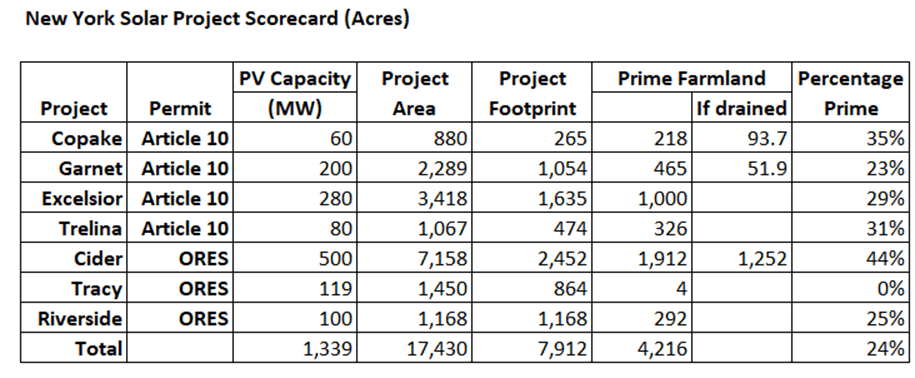
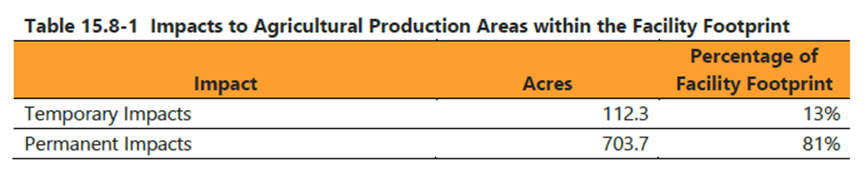
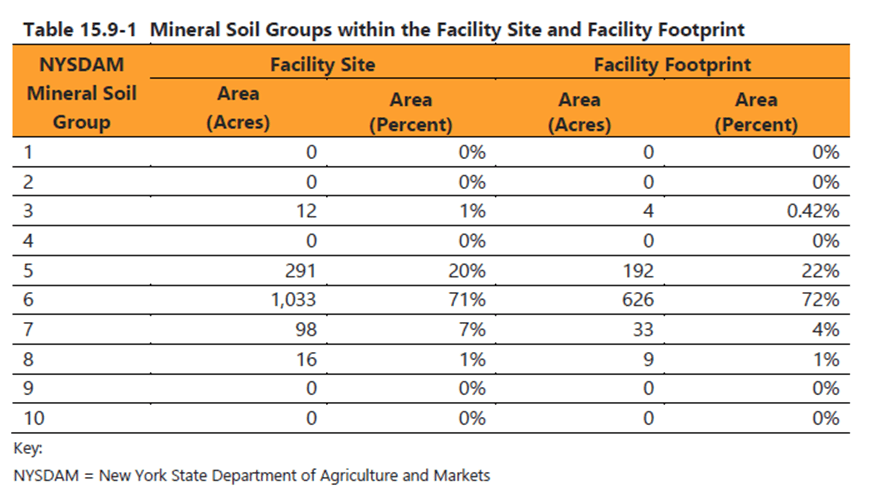

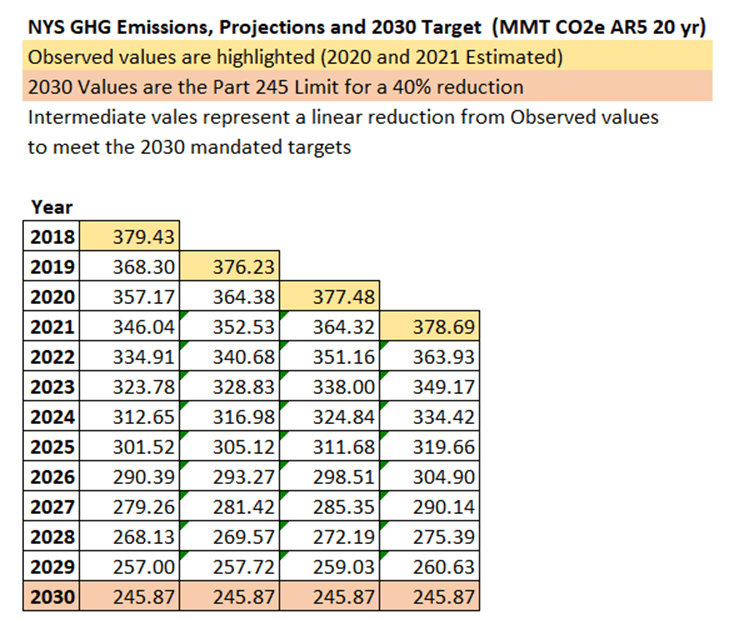

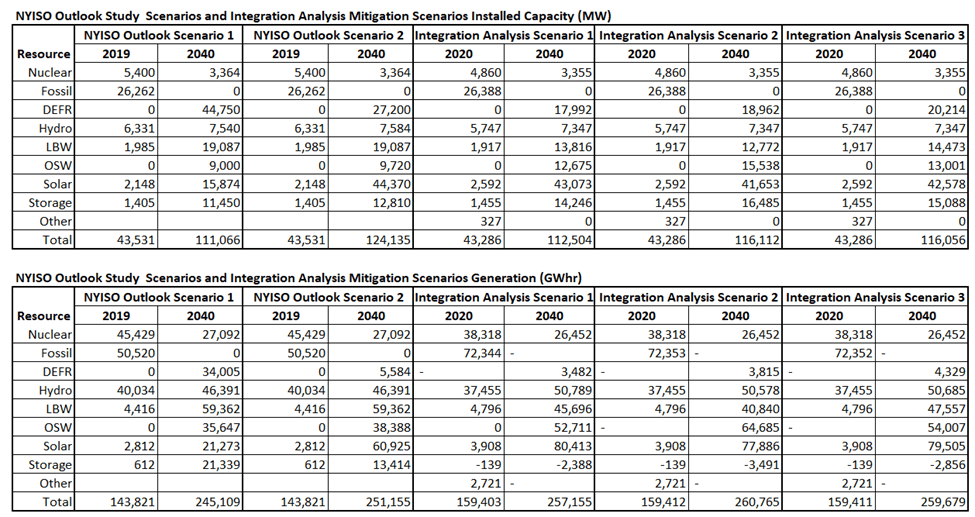
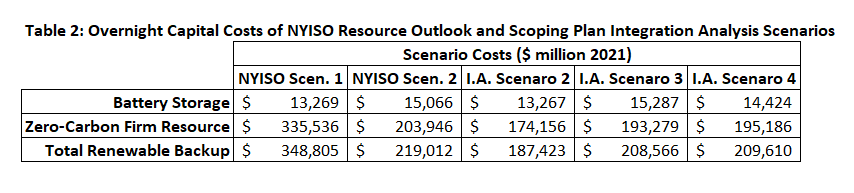
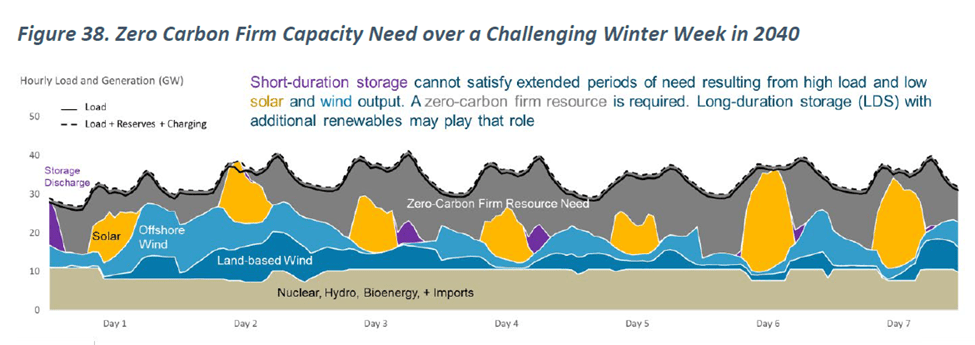


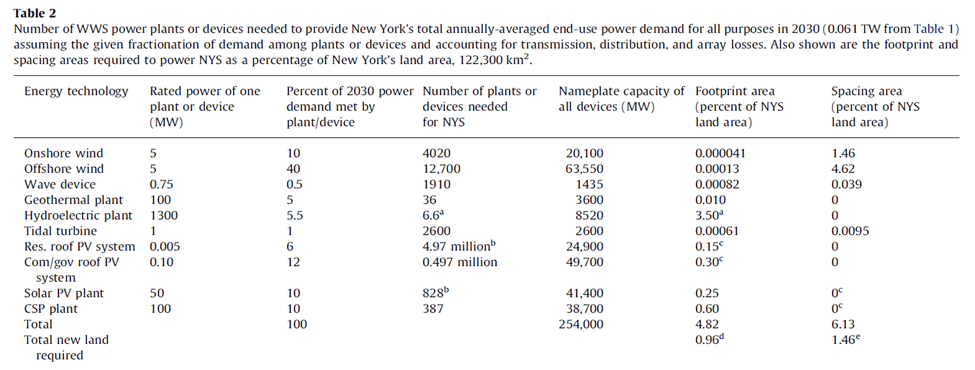
 Pragmatic Environmentalist of New York