The Climate Leadership and Community Protection Act (Climate Act) has a legal mandate for New York State greenhouse gas emissions to meet the ambitious net-zero goal by 2050. I have previously noted that there are members of the Climate Action Council who deny the challenge of the electric grid transition from existing sources to one dependent upon wind and solar resources. This article describes a couple of recent articles that highlight transition issues.
Everyone wants to do right by the environment to the extent that they can afford to and not be unduly burdened by the effects of environmental policies. I submitted comments on the Plan and have written extensively on implementation of New York’s response to that risk because I believe the ambitions for a zero-emissions economy embodied in the Climate Act outstrip available renewable technology such that this supposed cure will be worse than the disease. The opinions expressed in this post do not reflect the position of any of my previous employers or any other company I have been associated with, these comments are mine alone.
Climate Act Background
The Climate Act establishes a “Net Zero” target (85% reduction and 15% offset of emissions) by 2050. The Climate Action Council is responsible for preparing the Scoping Plan that will “achieve the State’s bold clean energy and climate agenda”. They were assisted by Advisory Panels who developed and presented strategies to the meet the goals to the Council. Those strategies were used to develop the integration analysis prepared by the New York State Energy Research and Development Authority (NYSERDA) and its consultants that tried to quantify the impact of the strategies. That material was used to write a Draft Scoping Plan that was released for public comment at the end of 2021. The Climate Action Council states that it will revise the Draft Scoping Plan based on comments and other expert input in 2022 with the goal to finalize the Scoping Plan by the end of the year.
In my comments on the Draft Scoping Plan I noted that the Plan and the Climate Action Council have downplayed the reliability risks of the Climate Act transition to renewables. Equally troubling there are vocal members of the Climate Action Council that deny the existence of any implementation issues associated with a renewable energy resource dependent electric system. At the May 26, 2022 Climate Action Council meeting, Paul Shepson Dean, School of Marine and Atmospheric Sciences at Stony Brook University claimed that the conversion cannot be unreliable at 23:39 of the recording. Robert Howarth, Professor, Ecology and Environmental Biology at Cornell (starting at 32:52 of the recording) said: “Clearly one can run a 100% renewable grid with reliability”. In this article, I describe a couple of recent articles that highlight some of the issues associated with this conversion that the academics overlook.
Renewable Energy Systems
I have prepared a page that documents the work of various authors that describe the complexities of the energy system and problems associated with over-reliance on intermittent wind and solar generating resources. One of the resources is a series of posts at Climate Etc by Planning Engineer who posts under the pseudonym because he wanted to frankly share his personal views and not have them tied directly to his current employer. Recently he posted an article entitled Will California “learn” to avoid Peak Rolling Blackouts? that provides a good overview of upcoming reliability issues.
The article presents a graph that shows recorded peaks and the projected 2022 value that caused issues earlier in September. Then he explains that:
The most basic planning criteria is that a system should be able to survive the loss of the largest generating resource and the most critical transmission element during a peak load with no loss of load and no severe voltage declines or undamped system oscillations. Looking at the variability in load levels here, no particular challenges to planners are apparent. If “green” resources were capable of replacing traditional resources with minor adjustments, we would not see the problems we are seeing.
He goes on to explain why there was a problem.
Why is California challenged now and why might it continue to see challenges in the future? Primarily because the focus on green energy is increasing the percentage of “green” intermittent resources. “Green” resources are not as dependable as traditional rotating machinery nor do they support the system as well. It is likely that these resources have been credited with more ability to provide capacity than is warranted, and when the rubber meets the road, they don’t perform as “expected”. Intermittent resources cause problems on both the generation side and the load side. Intermittent solar on the residential side serves to reduce load as seen by the Cal ISO. When solar is not performing well available load which is not displaced by solar on the residential side increases concurrent with solar reduction on the supply side.
If California were more honest about the capabilities of “green” intermittent resources planning would be enhanced. However, being honest about the capabilities of “green” resources would have consequences that some would find unacceptable. There has been a big push to make “green” options appear much more economic and capable than they are so that they will be more competitive. Subsidization of “green” resources by traditional uses occurs in many ways. In addition to crediting “green” resources above their dependable capability, others subsidies include directing costs associated with such additions to others. Being honest makes the “green” dream a much harder sell. Assuming that “green” resources work well saves other investment in the grid. This subterfuge tends to limit the cost increase that should be imposed by these resources, but does so at the cost of reliability. This tradeoff takes a while to see as we have built the electric grids to have very high levels of reliability at the bulk level. In the short term it looks like you are getting a cleaner, equally reliable system at a moderate cost increase. But as penetration levels increase, cost get higher and reliability gets much worse.
He points out that California policy makers are responsible for resource investment, resource allocations and how and when grid improvements are made to enhance reliability. Earlier in September there were reliability issues and extreme weather was blamed. Obviously, the planning failed to account for weather but proper reliability planning has to account for the effects of extreme weather. Planning Engineer points out that if “there truly was something unusual about the weather as driven by climate change, shouldn’t this have been anticipated by those responsible?”
Ramping Up Renewables Can’t Provide Enough Heat Energy in Winter
Gail Tverberg writing at Our Finite World explains that one of the unappreciated benefits of fossil fuels is their ability to store energy that can be used to provide heat in the winter. She notes that:
In some ways, the lack of availability of fuels for winter is a canary in the coal mine regarding future energy shortages. People have been concerned about oil shortages, but winter fuel shortages are, in many ways, just as bad. They can result in people “freezing in the dark.”
The article goes on to describe eight issues involved with winter energy use. She points out that “batteries are suitable for fine-tuning the precise time during a 24-hour period solar electricity is used” but they cannot be scaled up to store solar energy from summer to winter. There is no long duration energy storage resource available.
The article addresses hydro and wind energy resources in this context. She argues that “ramping up hydro is not a solution to our problem of inadequate energy for heat in winter” and that “wind energy is not greatly better than hydro and solar, in terms of variability and poor timing of supply”.
She also lists five specific reasons that “when wind and solar are added to the grid, the challenges and costs become increasingly great”. All of these concerns are concerning by themselves and the combination of problems directly contradicts the Climate Act narrative that there are no serious challenges to reliability. Two deserve attention. The inherent variability of wind and solar generation creates power transients and those fluctuations need to be addressed. The problem is that the magnitude of this problem is new and it is likely that learning how to address it is difficult to anticipate so corrections will be reactions to problems. Supporters of the Climate Act transition seem to think that existing wind, solar and energy storage resources only need to be scaled up to the quantity needed. What they miss is that the more resources built the less those resources will be used. Tverberg points out that low-capacity factors hurts energy return on investment payback. All of these issues should be considered but have not been addressed in the Scoping Plan.
Tverberg also point that the word “sustainable” has created unrealistic expectations with respect to intermittent wind and solar electricity. She illustrates this issue as follows:
A person in the wind turbine repair industry once told me, “Wind turbines run on a steady supply of replacement parts.” Individual parts may be made to last 20-years, or even longer, but there are so many parts that some are likely to need replacement long before that time. An article in Windpower Engineering says, “Turbine gearboxes are typically given a design life of 20 years, but few make it past the 10-year mark.”
She notes that “energy modeling has led to unrealistic expectations for wind and solar”. This is evident in the Integration Analysis projections. It should be obvious that the Scoping Plan projections for future generating resources have to be reconciled with the work of the New York Independent System Operator but, so far, no plan has been announced to do that.
Finally, Tverberg argues that current pricing plans that enable the growth of wind and solar electricity have consequences. They are displacing existing dispatchable resources such that those resources are no longer viable. The result is “pushing a number of areas in the world toward a “freezing-in-the-dark” problem”. She concludes: “The world is a very long way from producing enough wind and solar to solve its energy problems, especially its need for heat in winter.”
Conclusion
I cannot improve on Planning Engineer’s conclusion. Substitute New York for California and his conclusion sums up the issue that the Climate Action Council should address in the Scoping Plan:
Will California learn to avoid peak rolling blackouts? If reliability were a primary concern, this situation shouldn’t bubble up again in a few years. California should be able to properly credit the ability of its power resources and match them to projected weather ensuring adequate power. If other priorities prevent responsible steps to ensure reliability, then those priorities, not the weather, should claim responsibility for the consequences. If California wants to continue as they have, they should be honest and make statements such as the following:
This is the end of affordable, reliable electric service as we understood it for most of the last 50 years. We are choosing to go with “green “technology to deal with the climate crisis. Keeping past reliability levels will raise your costs tremendously. As we try to put on limit on costs this will decrease your reliability. At times the power will not be there. We’ve all got help each other out.
This is a follow up to my article published at Watts Up With That Resources for the Future: Retail Electricity Rates Under the Inflation Reduction Act of 2022 and re-published here. The article addressed the Resources for the Future (RFF) Issues Brief titled Retail Electricity Rates Under the Inflation Reduction Act of 2022 claim that the legislation, will “save typical American households up to $220 per year over the next decade and substantially reduce electricity price volatility.” I got a comment here that raised two flaws in my arguments. I used data from the United States Energy Information Administration (EIA) Electricity Data Browser for Texas to test the hypothesis that increased renewable energy resources would lower electricity costs. This article addresses the flaws raised.
When I follow your directions for your chart using the EIA data you describe, I get a very different picture. Avg residential power prices in Texas peak in mid 2008, then fall for several years before coming up more recently. Your chart is showing something other than what you describe.
Further, inflation adjusted power prices have been falling over the 2001-2022 period. Using CPI data with January 2022 = 100, average real price in early 2001 was about 12.5 cents then jumped up to 18.5 cents in mid 2008 before falling back to about 12.5 cents in 2022.
I hypothesized that if I used the United States Energy Information Administration (EIA) Electricity Data Browser tool I could find data that showed that prices would go up in states where renewable energy development has increased the fraction of renewable energy generated and I used Texas an example. I downloaded the monthly total net generation (GWh) and the net generation from just renewable resources so I could calculate the percentage of renewable generation energy. Then I downloaded the average monthly residential average price of electricity.
I went back and reviewed my work and have to apologize to everyone because I mistakenly used the wrong monthly residential cost data. Dr. Giberson used the correct data as shown below. The Texas data do not illustrate any relationship between the percentage of monthly renewable energy generated per month (left axis) and the monthly residential electric price (right axis). What it does show is that the observed variability of the monthly prices is large in Texas.
Importantly, this result invalidates my hypothesis that these two parameters could be used to show that when the Texas electric system added more renewable energy the costs went up. Obviously, these data do not confirm that hypothesis. Upon further review in order to pick out a trend in the cost data I should have adjusted for inflation as Dr. Giberson suggested. The variation in the data before the renewable energy production kicked in also suggests that picking out a trend is more complicated than I thought it would be.
An alternative hypothesis is that this is an issue with just the Texas data so I did the same thing with California data. The results shown below are significantly different than Texas. There is less cost variability and the increase after 2005 is not as pronounced. It does appear that costs go up and renewable penetration goes up but I did not adjust for inflation to test that theory.
The axes in the Texas and California charts are different so inter-comparison is difficult. When combined the results are messy but there are a couple of interesting things. Texas residential electric costs are significantly lower (89% in 2021) and the spread has increased over time. However, during the years 2005 to 2009 the Texas energy costs were less than 20% lower apparently because something happened to the Texas market in that time. Dr. Giberson notes that the inflation adjusted real price in early 2001 was about 12.5 cents then jumped up to 18.5 cents in mid-2008 before falling back to about 12.5 cents in 2022. The other interesting point is that as the percentage of renewable generation increases the spread between the monthly values increases which I think reflects seasonal variations in resource availability.
I also extracted data for the United States as a whole. Note that US residential electric costs increased at the same time Texas rates increased after 2005. The same volatility increase as additional renewable power is added is apparent. It is notable that historically there has been a clear annual cycle of costs peaking in the summer and troughing out in the winter. With regards to the RFF cost projection, I don’t think there is much evidence that increasing renewable penetration has increased cost but the annual cycle appears to be becoming less pronounced. Of course, trying to analyze a trend when there was a pandemic is likely to end up with massive uncertainty.
As noted, there is one aspect that is consistent for all the renewable penetration data. As the percentage of renewable energy production increases the volatility of the monthly production increases. Wind resources are generally higher when there is a greater contrast in air masses in the spring and fall. Obviously solar resources are lower in the winter when days are shorter. I believe that there is an important outcome of that finding. The RFF brief claims that adding more renewable resources will “substantially reduce electricity price volatility”. I believe that the argument is that the price of fossil fuels is subject to many extraneous factors that affect price but those factors are smaller for renewable resources. I think these data suggest that the inherent variability in a weather-dependent source of power generation could increase electric price volatility as the system becomes more dependent upon those resources.
The following figure lists cost data for Texas. California, and the country as a whole. What interests me are the outliers. For example, in March 2014 the monthly residential price of electricity in California was 15.86 cents. It dropped to 10.12 cents in April then rebounded to 16.46 cents in May. Subsequent outliers are all either in October or April for the next five years. This might represent increased wind availability but it is not clear why it is not as pronounced before or after this period if that is the case.
More important are the high outliers. In California, the monthly price was 15.17 cents in June 2005, jumped to 16.65 cents in July, and then dropped to 14.89 cents in August. In Texas, the monthly price was 11.4 cents in January 2021, jumped to 12.74 cents in February, and then went down to 11.5 cents in March. The Texas blackout was the cause for the energy price spike in February 2021 but I don’t know of any specific problem in California in July 2005. I suspect that these events will become more common as renewable penetration increases but the data do not show that yet.
Conclusion
Obviously, I need to double check my data analyses before publishing. I found that using the correct data leads to an analysis that is consistent with every other aspect of the net-zero transition that I have looked at. Everything is more complicated than it appears at first glance and any conclusions drawn are more uncertain. Any claims about conclusive evidence should be regarded cynically.
The RFF Retail Electricity Rates Under the Inflation Reduction Act of 2022 issues brief claims that the legislation, will “save typical American households up to $220 per year over the next decade and substantially reduce electricity price volatility.” My original conclusion was that the Texas cost and renewable generation data showed that it was unlikely that there would be cost savings due to increased renewable energy but I used incorrect data. Using the correct data, I could argue that the Texas results did not show a decrease which is contrary to the RFF projection, but it is also reasonable to argue that were it not for the renewable generation that costs would have increased more than they did. At first glance and without adjusting for inflation, California data suggested that increased penetration of renewable resources increases costs but there are clear uncertainties that make this a tenuous conclusion.
Despite the problems with my analysis, I remain convinced that the RFF projection is unlikely. The models used for this kind of analysis do not do future changes to the electric system well. For example in the comments on my original post, Rud Istvan explained why wind renewables cannot reduce electricity prices. He showed that EIA LCOE estimates do not accurately project future costs for renewable energy development because they don’t include the costs to make the energy generated available when and where it is needed. Francis Menton recently made a persuasive argument that all projections for future electric systems overbuild the wind and solar resources resulting in higher costs. Worse, you still need a backup dispatchable resource and someone also has to provide ancillary services to maintain the grid’s ability to move power around. I believe that the modeling down by RFF and others does not adequately take those factors into account and if it did it would not show reduced costs.
One final point about the data. There is a real trend in the renewable energy generation data that needs to be watched in the future. All the data show that as the percentage of renewable energy production increases the volatility of the monthly production increases. The RFF brief claims that adding more renewable resources will “substantially reduce electricity price volatility”. While there is no apparent impact in retail costs due to this observed volatility in these data, I suspect that will change in the future.
This article first appeared at Watts Up With That. I slightly modified the first paragraph but the rest is the same. This represents my opinion and not the opinion of any of my previous employers or any other company with which I have been associated.
Based on the Time Magazine opinion piece, “What Comes After the Coming Climate Anarchy?”, we may have reached a point where no facts have to be included in a climate fear porn editorial. This is just a short introduction to the piece and the author. I encourage you to read it yourself. After my post was published David Middleton wrote another article about the opinion piece covering much the same ground. His version has much better graphics.
The author is Parag Khanna who Time describes as a founder of Future Map and author of the new book MOVE: The Forces Uprooting Us. According to Khanna’s long bio, he is a “leading global strategy advisor, world traveler, and best-selling author”. He is Founder & CEO of Climate Alpha, an AI-powered analytics platform that forecasts asset values because “the next real estate boom will be in climate resilient regions”. He also is Founder & Managing Partner of FutureMap, a data and scenario based strategic advisory firm that “navigates the dynamics of globalization”. Dr. Khanna “holds a PhD in international relations from the London School of Economics, and Bachelors and Masters degrees from the School of Foreign Service at Georgetown University”. A quick look at the School of Foreign Service Georgetown core curriculum offers no suggestion of any scientific requirements that could provide a basis for Dr. Khanna’s climate beliefs.
The opinion piece starts out with correlation causation fallacy endemic to the scientifically illiterate and climate innumerate crisis mongers. He notes that in 2021, “global carbon dioxide emissions reached 36.3 billion tons, the highest volume ever recorded” and that this year “the number of international refugees will cross 30 million, also the highest figure ever”. Then he explains the basis for his climate anarchy belief: “As sea levels and temperatures rise and geopolitical tensions flare, it’s hard to avoid the conclusion that humanity is veering towards systemic breakdown”.
This is just a windup to:
Today it’s fashionable to speak of civilizational collapse. The U.N. Food and Agriculture Organization’s (FAO) states that just a 1.5 degree Celsius rise will prove devastating to the world’s food systems by 2025. Meanwhile, the most recent IPCC report warns that we must reverse emissions by 2025 or face an irreversible accelerating breakdown in critical ecosystems, and that even if the Paris agreement goals are implemented, a 2.4 degree Celsius rise is all but inevitable. In other words, the “worst case” RCP 8.5 scenario used in many climate models is actually a baseline. The large but banal numbers you read—$2 trillion in annual economic damage, 10-15% lower global GDP, etc.—are themselves likely massively understated. The climate bill just passed by the Senate is barely a consolation prize in this drama: a welcome measure, but also too little to bring rains back to drought-stricken regions in America or worldwide.
Then there is this:
Let’s assume that we are indeed hurtling towards the worst-case scenario by 2050: Hundreds of millions of people perish in heatwaves and forest fires, earthquakes and tsunamis, droughts and floods, state failures and protracted wars. Henry Gee, editor of the magazine Nature, wrote in an essay in Scientific American in late 2021 that even absent the hazards of climate change and nuclear war, humankind was heading towards extinction due to declining genetic variety and sperm quality.
He goes on to predict that even in the most plausibly dire scenarios billions of people will survive. He says that current population stands at eight billion but claims as a result of these dire scenarios “the world population would likely still stand at 6 billion people by 2050”. As you read on this opinion piece is simply an infomercial for Climate Alpha and FutureMap. He believes that climate migrations will be necessary for the survivors. His future vision is pockets of reliable agricultural output and relative climate resilience that may become havens for climate refugees.
He concludes:
What these surviving societies and communities will have in common is that they are able to unwind the complexity that has felled our predecessors. They rely less on far-flung global supply chains by locally growing their own food, generating energy from renewable resources, and utilizing additive manufacturing. A combination of prepping and nomadism, high-tech and simple, are the ingredients for species-level survival.
These demographic, geographic, and technological shifts are evidence that we are already doing things differently now rather than waiting for an inevitable “collapse” or mass extinction event. They also suggest the embrace of a new model of civilization that is both more mobile and more sustainable than our present sedentary and industrial one. The collapse of civilizations is a feature of history, but Civilization with a big ‘C’ carries on, absorbing useful technologies and values from the past before it is buried. Today’s innovations will be tomorrow’s platforms. Indeed, the faster we embrace these artifacts of our next Civilization, the more likely we are to avoid the collapse of our present one. Humanity will come together again—whether or not it falls apart first.
Comments
In my opinion there are several major flaws in his arguments. Apparently, his projections are based on the RCP 8.5 scenario because he thinks it is “actually a baseline”. Roger Pielke, Jr. has noted that the misuse of RCP8.5 is pervasive. Larry Kummer writing at Climate Etc. explains that it is a useful worst-case scenario, but not “business as usual”. For crying out loud even the BBC understands that the scenario is “exceedingly unlikely”. Relying on that scenario invalidates his projections.
Khanna’s worst-case scenario statement “Hundreds of millions of people perish in heatwaves and forest fires, earthquakes and tsunamis, droughts and floods, state failures and protracted wars” is absurd. He has to address the many examples that show that weather-related impacts have been going down as global temperatures have increased such as those described by Willis Eschenbach in “Where Is The “Climate Emergency?”. The theme of his opinion is climate anarchy so why are earthquakes and tsunamis included? I concede that his flawed climate projections could stress states and prolong wars but I am not convinced that climate is a major driver.
Finally, his argument that climate is a major driver is contradicted by his dependence on the Sustainable Development Index, a “ranking of countries that meet their people’s needs with low per capita resource consumption”. He states that the best performers are “Costa Rica, Albania, Georgia, and other less populated countries around middle-income status”. The fact that Costa Rica is in a tropical region and thus much warmer than mid-latitude Albania and Georgia suggests that warm climates are not a limiting factor for sustainable development.
Khanna may be a leading global strategy advisor, world traveler, and best-selling author but his lack of understanding of the uncertainties associated with climate change are evident in this editorial. Not unlike many of those advocates for climate change action, upon close review it appears that following the money is his motivation.
Resources for the Future (RFF) has published an Issues Brief titled Retail Electricity Rates Under the Inflation Reduction Act of 2022. According to the report the Inflation Reduction Act (IRA) legislation, will “save typical American households up to $220 per year over the next decade and substantially reduce electricity price volatility.” This setoff my BS detector so I got some data from Texas to see if the state with the most total renewable energy production has seen reduced costs from their wind and solar development.
The Climate Act establishes a “Net Zero” target (85% reduction and 15% offset of emissions) by 2050. I have written extensively on implementation of the Climate Act. Everyone wants to do right by the environment to the extent that efforts will make a positive impact at an affordable level. Based on my analysis of the Climate Act I don’t think that will be the case. I believe that the ambitions for a zero-emissions economy outstrip available renewable technology such that the transition to an electric system relying on wind and solar will do more harm than good. The opinions expressed in this post do not reflect the position of any of my previous employers or any other company I have been associated with, these comments are mine alone.
I am not going to address the IRA provisions directly. The Institute for Energy Research described the huge renewable tax incentives and subsidies earlier this week. Anthony Watts applauded the Wall Street Journal and Bjorn Lomborg for showing how useless the IRA is at tackling climate. H. Sterling Burnett explained that the claims made about its effects on greenhouse gas emissions are “pure fantasy”. The RFF report was one of the analyses that alleged that the IRA would benefit consumers and I will focus solely on that. This analysis is of particular interest to New Yorkers because this type of study was used in the Integration Analysis and I expect the drawbacks described below are present in that work as well.
RFF analyzed the effects on the crucial electricity sector using their in-house Haiku Electricity Market Model to “project electricity retail rates for a range of potential scenarios that account for variability in future fuel prices, capital and technology costs, and uptake of specific provisions of the legislation. The analysis found that if the legislation is passed:
Retail costs of electricity are expected to decline 5.2-6.7 percent over the next decade, saving electricity consumers $209-278 billion, given expected natural gas prices.
The average household will experience approximately $170-$220 in annual savings from smaller electricity bills and reductions in the costs of goods and services over the next decade.
Ratepayers are insulated from volatility in natural gas prices, with electricity rates projected to decrease even under a high natural gas price scenario.
2030 electricity sector emissions are projected to drop to 69.8 percent to 74.9 percent below 2005 levels, compared to 48.5 percent below 2005 levels without the policy.
The RFF Haiku model analyzes regional electricity markets and interregional electricity trade in the continental United States. It is all the rage for consulting companies to develop an in-house model suitable for projecting future electric system resources. RFF claims that:
“The model accounts for capacity planning, investment, and retirement over a multi-year horizon in a perfect foresight framework, and for system operation over seasons of the year and times of day. Market structure is represented by cost-of-service (average cost) pricing and market-based (marginal cost) pricing in various regions. The model includes detailed representation of state-level policies including state and regional environmental markets for renewable energy and carbon emissions and frequently has been used to advise state and regional planning.”
I have had to deal with these electric production and costs models for over 40 years. I cannot over emphasize that even the most sophisticated of these models have difficulties dealing with the generation capacity needed for peak loads and the intricacies of the transmission grid. The Haiku Electricity Market Model documentation shows that the model is so simplified that I don’t think it can get reasonable projections correct. For example, the model simulates the contiguous United States with 21 regions and calculates the transmission between those regions in order to estimate capacity requirements. New York alone has eleven control areas and the transmission constraints for those areas and adjoining regions are needed to accurately estimate generating resource needs. All the little constraints that are averaged out in the RFF model mask a major portion of the capacity requirements and energy needs that under-estimate costs. This is a particular problem as more and more wind and solar energy resources are added to systems. The RFF model and others like it have consistently under-estimated the emission reductions from fuel switching from coal and oil to natural gas electricity production and I think they are under estimating the difficulty replacing natural gas generation with wind and solar. Moreover, somebody, somewhere has to account for the intermittent nature and lack of ancillary services from wind and solar. I don’t think a simple model can capture those costs.
On the other hand, if adding renewable resources in certain jurisdictions has led to lower costs then my reservations are wrong. According to a recent US News and World Report article Texas produces produce the most total renewable energy (millions of megawatt-hours), according to the U.S. Energy Information Administration. That article notes that: “In the first quarter of 2022, Texas led all states in overall renewable energy production, accounting for over 14% of the country’s totals, due in large part to the state’s prolific wind energy program”.
The United States Energy Information Administration (EIA) Electricity Data Browser enables a user to access electricity generation and consumption data as well as electricity sales information. The data can be filtered as needed. I filtered the data to look only at Texas data. I downloaded the monthly total net generation (GWh) and the net generation from just renewable resources so I could calculate the percentage of renewable generation energy. Then I downloaded the average monthly residential average price of electricity. The following graph shows the results. The residential cost of electricity has been increasing steadily since 2001. The percentage of renewable energy has increased from almost nothing in 2001 to recent months over 30%. I am not seeing that the deployment of renewable resources produced a reduction in costs.
In conclusion, the Texas data do not show that renewable energy deployment reduces costs. The RFF projections that the IRA will reduce costs due to renewable development are very unlikely because the overly simplified model cannot reproduce the features of the electric system that lead to higher prices from intermittent wind and solar resources.
If anyone, anywhere can find any jurisdiction where the development of massive amounts of wind and solar reduced prices please let me know. In the meantime, I call your attention to the comments of Rud Istvan at the Watts Up with That article who explains that:
The EIA LCOE has since at least 2015 claimed on shore wind was at parity with CCGT. This is simply false, based on deliberately bad underlying assumptions. The worst is that EIA explicitly assumes both have useful capital lives of 30 years. That is at best gross negligence, at worst deliberate prevarication. The modern on shore big wind turbines (~2-3 MW each) have at best 20 year lives. The problem is inherent in the uneven axial bearing loading since wind at the top has a higher velocity than wind at the bottom. Axial bearing failure is sudden death, and for an older turbine not worth a very expensive repair. CCGT has at worst a 40 year life (GE warranty). And in practice 45-50.
Some years ago (2016 IIRC) over at Judith’s I posted ‘True cost of wind’ illustrating then fixing the basic obvious EIA errors. The result was CCGT LCOE about $58/MWh, while wind (based on the Texas ERCOT grid at then about 10% penetration) was $146/MWh.
No amount of IRA incentivizing or Biden pontificating can fix the basic problem that wind is MUCH more expensive. And this is also easily demonstrated for Europe without EIA LCOE annuity calculations by simply graphing wind penetration versus retail electrify rates by country. A very strong positive linear correlation. Higher penetration always means higher rates.
In the process of preparing an article about the New York State Reliability Council (NYSRC) Executive Committee approval of the Extreme Conditions Whitepaper on July 8, 2022, I found a reference to a very nice report Resource Adequacy Modeling for a High Renewable Future. The report provides important background information necessary to understand the NYSRC whitepaper so my first thought was to include a summary of the report in the NYSRC post. It made the article too long so this post focuses exclusively on the background paper.
Everyone wants to do right by the environment to the extent that efforts will make a positive impact at an affordable level. I have written extensively on implementation of New York’s Climate Leadership and Community Protection Act (Climate Act) because I believe the ambitions for a zero-emissions economy embodied in the Climate Act outstrip available renewable technology such that it will do more harm than good. This post also addresses the mis-conception of many on the Climate Action Council that an electric system with zero-emissions is without risk. The opinions expressed in this post are based on my extensive meteorological education and background and do not reflect the position of any of my previous employers or any other company I have been associated with, these comments are mine alone.
Resource Adequacy Modeling for a High Renewable Future
The National Regulatory Research Institute (NRRI) is the research arm of the National
Association of Regulatory Utility Commissioners (NARUC). NRRI provides research, training, and technical support to State Public Utility Commissions. The June 2022 report “Resource Adequacy Modeling for a High Renewable Future “gives an excellent overview of electric resource adequacy planning as performed today and describes what they think will be needed in the future.
Traditional Resource Adequacy Planning
The report describes traditional resource adequacy planning:
Electric utilities have used the resource planning process for decades to develop long-term, least-cost generation supply plans to serve expected customer demand. Resource adequacy planning ensures that a system has enough energy generation throughout the year to serve demand with an acceptably low chance of shortfalls. Resource adequacy is measured by the metrics described in Figure 1. Reliability metrics provide an indication of the probability of a shortfall of generation to meet load (LOLP), the frequency of shortfalls (LOLE and LOLH), and the severity of the shortfalls (EUE and MW Short).
The industry has traditionally framed resource adequacy in terms of procuring enough resources (primarily generation) to meet the seasonal peak load forecast, plus some contingency reserves to address generation and transmission failures and/or derates in the system. This approach and the metric used to define it is called the “reserve margin.” Planners establish a reserve margin target based on load forecast uncertainty and the probability of generation outages. Required reserve margins vary by system and jurisdiction, but planners frequently target a reserve margin of 15 percent to 18 percent to maintain resource adequacy. Figure 2 shows the standard conceptualization of a load duration curve, rank ordering the level of a power system’s load for each hour of the year from highest to lowest on an average or median basis in a typical weather year. The installed reserve margin is a margin of safety to cover higher than expected load and/or unexpected losses in generation capacity due to outages.
Pechman, C. Whither the FERC, National Regulatory Research Institute. January 2021, available at http://pubs.naruc.org/ pub/46E267C1-155D-0A36-3108-22A019AB30F6.
New York resource planning analyses use the “one day in ten years,” criteria (LOLE), meaning that load does not exceed supply more than 24 hours in a 10-year period, or its equivalent metric of 2.4 hours loss of load hours (LOLH) per year. This analysis is performed at the “balancing authority” (BA) level. In the past New York BAs were vertically integrated utilities with defined service territories. After deregulation this responsibility passed to the state’s independent system operator (ISO). The region covered now includes many utility service territories. More importantly the New York Independent System Operator (NYISO) has to develop market or compliance-based rules to maintain sufficient system capacity which adds another layer of complexity. BA’s typically conduct resource adequacy analysis based on their own load and resources. The NYISO does their resource adequacy planning using resources within its geographic region or have firm transmission deliverability into the New York Control Area (NYCA). There is another complication in the state. New York City has limited transmission connectivity so there are specific reliability requirements for the amount of in-city generation that has to be operating and other rules to prevent blackouts.
The report goes on to note:
The standard metrics shown in Figure 1are generally reported as mean values of simulated power system outcomes over a range of potential future states, but planners also need to understand and plan for the worst-case outcomes and associated probability of such outcomes. Figure 3shows the mean and percentile values for loss of load hours for a power system over a three-year period.
In Figure 3,on average, the power system is resource adequate, remaining below the target of 2.4 hours per year. However, if the power system planner were more risk averse, she might want to bring a higher percentile line under the 2.4-hour target. She would need to add more firm capacity, adding to customer cost. The 95th percentile is the worst-case outcome, providing additional information on the upper bound risk of outages for a given portfolio. Only power systems with no recourse to import energy in a shortage, such as an island, would consider planning to the 95th percentile due to its high cost.
The report’s traditional planning section concludes with this:
Resource adequacy planning is fundamentally concerned with low probability events and planning for average outcomes; although a common practice, this planning is not sufficient and increasingly risky with more uncertain supply, such as renewables. In the past, planners only needed to worry about unusually high loads or high forced outages. Now, they must worry about unusually high loads during periods of unusually low renewable output and limited storage duration. Adding supply uncertainty and, as we discuss later, more extreme weather, compounds risks and thus requires a fundamental rethinking of planning for low probability, high impact tail events.
Problems with Traditional Resource Planning with a High-Renewable System
Despite the fact that the NYISO and the consultants for the Integration Analysis that provides the framework for the Climate Act Draft Scoping Plan have identified a serious resource adequacy problem, there are vocal members of the Climate Action Council who claim there are no reliability concerns for the future 100% zero-emissions New York electric grid. However, analyses have shown otherwise. E3 in their presentation to the Power Generation Advisory Panel on September 16, 2020 noted that firm capacity is needed to meet multi-day periods of low wind and solar output. The NYISO Climate Change Phase II Study also noted that those wind lull period would be problematic in the future.
The NRRI report opens the discussion of the new problems that have to be addressed:
With weather emerging as a fundamental driver of power system conditions, planning for resource adequacy with high renewables and storage becomes an exercise in quantifying and managing increasing uncertainty on both the supply and demand side of the equation. On the load side, building electrification, electric vehicle adoption, and expected growth in customer-sited solar and storage are likely to have pronounced effects on future electric consumption. Uncertain load growth and changing daily consumption patterns increase the challenge of making sure that future resources can serve load around the clock. Simply modeling future load based on past load with added noise does not characterize uncertainty from demand side changes.
The report goes on to explain that supply-side changes create a need for new modeling approaches. In particular, the traditional system consists mostly of dispatchable resources that operators can control as necessary to keep the generation matched with the load. In the future the system will be comprised mostly of resources with limited or no dispatchability. Table 1 compares past approaches with current needs. Note that weather impacts need to be “Incorporated as a structural variable driving system demand, renewable generation, and available thermal capacity”.
There is another fundamental change. In the past the resource adequacy modeling could use average annual generation profiles to meet expected loads. In the future, there will have to be: “multiple renewable generation simulations using historical generation and weather data”. The modeling scenarios will need to meet future expected resource development and maintain the correlation
between renewable availability and load. In particular, the highest and lowest temperatures and thus the expected high loads are typically associated with large high-pressure systems that have low wind speeds and thus low wind resource availability.
The NRRI report shows an approach that addresses these concerns in Figure 5. The report notes:
Weather, primarily in the form of temperature, but potentially including insolation, humidity, wind speed, etc., drives simulations of renewable generation and customer load. Generation outage simulations can be modeled as random (the traditional approach) or as correlated with extreme heat or cold events. Once the simulations are in place, models can compute multiple future paths on an hour-by-hour basis to determine when load cannot be fully served with the available resources. For every hour of the model time horizon, there are independent simulations of load, renewables, and forced outages to determine if load shedding must occur. If a particular model contains 100 simulations and four show a lack of resources to serve load for a particular hour, the hour in question would have a loss of load probability of 0.04 (4/100).
In my opinion, the weather drivers have to be carefully considered. In my Comment on Renewable Energy Resource Availability on the Draft Scoping Plan, I explained why an accurate and detailed evaluation of renewable energy resource availability is crucial to determine the generation and energy storage requirements of the future New York electrical system. I showed that there is a viable approach using over 70 years of data that could robustly quantify the worst-case renewable energy resources and provide the information necessary for adequate planning.
The problem however is what will be the worst case? The NRRI report brings up the issue of energy storage:
Energy storage presents a unique challenge in resource adequacy models. Unlike traditional resources, storage devices such as batteries, compressed air, or pumped-hydro act as both load and generation depending on whether they are charging or discharging. Modern resource adequacy models need to simulate this behavior when determining the capability of energy storage to serve load during periods of resource scarcity. What state of charge should we expect for energy storage at times when the storage is truly needed? Are batteries likely to be fully charged at 6:00 PM on a weekday in August? What about grid charging versus closed systems where batteries must charge from a renewable resource? At the high end of renewable penetration, how much storage would be required to cover Dunkelflaute, the “dark doldrums,” that occur in the winter when wind ceases to blow for several days. Questions surrounding the effective load-carrying capability of energy storage significantly increase the complexity in modeling resource adequacy.
The worst-case meteorology has to consider the energy storage resource. The worst-case may not be the lowest amount of wind and solar resources over a few days. Instead, it could be an extended period of conditions that prevent battery re-charging. I suspect that the long-term historical records will be used to identify potential problems and then a set of scenarios based on different meteorological regimes will be developed that can be used to address the questions raised in the previous paragraph.
The NRRI report explains how this might work:
Figure 6 provides an illustration of modeling the use of batteries in resource adequacy. The figure shows battery storage in blue, load in orange, and the available thermal generation in grey. When load exceeds thermal generation, the system is forced to rely on battery discharge for capacity. If the event lasts long enough to fully discharge the battery, the green line (generation minus load) will turn negative, indicating a load shed event.
The report goes on to explain how the modeling analysis is done. It notes that:
Simulations of random variables fit Monte Carlo methods by creating multiple future time series of the random variables, while maintaining correlation across time within variables (if wind is high in hour 1, it will likely be high in hour 2) and correlations between the variables, such as the strong relationship between temperature and load. If wind tends to be higher in the spring and fall, the simulations will exhibit that trend. Monte Carlo applications differ dramatically between resource adequacy models, with some models using a sequential approach that solves the model in hourly steps whereas others use techniques that solve the models quickly without stepping through each hour. Accurate representation of energy storage in resource adequacy models necessitates sequential solution techniques to account for the time dependencies for storage state of charge inherent in models.
I believe it is necessary to use the worst-case meteorological scenarios as the primary driver of these simulations. In other words, the Monte Carlo weather parameter adjustments should be small increments on top of the observed values. The report is talking primarily about correlations in time but spatial correlations are a critical wind resource availability consideration too.
The NRRI report addresses my concerns.
When using the Monte Carlo approach with weather as a fundamental driver, individual simulations represent independent futures for weather, load, and renewables. Realistic simulations maintain the statistical properties of the underlying resource and correlation between resources and load. For example, if historic data show no correlation between load and wind generation, the simulations should maintain this relationship unless a reasonable expectation exists for correlations to change in the future
However, they use simple examples of the load and resource correlations. There are those that believe that because the wind is always blowing somewhere that transmission upgrades will ensure reliability. However, if during the worst-case conditions New York has to rely on wind resources in Iowa because the high-pressure system is huge, that may not be practical. I cannot over-emphasize the need for an analysis that simulates wind and solar resource availability over wide areas. As the report notes analyses that fail to replicate the proper correlation between wind, solar, and load for the electric grid can underestimate the risk of load shedding.
The report goes on to explain other adjustments to traditional resource planning that will be necessary to address a high renewable future. That discussion is beyond the scope of my concern. The report concludes:
The electric grid is transitioning quickly from a system of large, dispatchable generators to a system reliant on high levels of variable renewable energy, energy storage, and bi-directional flow. Against this backdrop, analytical tools used for decision making regarding resource adequacy are more important than ever and those tools need to evolve to meet the modern grid challenges outlined in this paper. Models based in realistic weather-driven simulations more accurately capture the risk of load shedding due to inadequate generation. Simulations derived from historical data ensure models include load and generation patterns as well as correlations among resources and the ability to adjust to future climate conditions. Models that do not account for these factors may lead to decisions that underinvest in resources or invest in the wrong resources. Recent events in California and Texas indicate the importance of getting these projections right to keep the grid reliable.
To model resource adequacy in future power systems with high penetration of renewables, we recommend several enhancements in modeling tools and techniques. Modeling tools should simulate key structural variables and allow for validation of the simulations by benchmarking against the historical data used to create the simulations. While maintaining statistical properties derived from historical data, simulations should also include future expectations of load growth along with changes in seasonal and daily load shapes. Generation-forced outage simulations should include the possibility of correlated outages from extreme weather. Finally, climate change will drive more weather events in the power system and this risk should be accounted for in the models, at least in the form of sensitivity cases or stress tests.
Conclusion
I found this report to be a very useful description of the particulars of electric grid reliability analysis now and in the future. It is clear that the transition to a high renewable future introduces issues that could cause problems.
Finally, this report and other similar studies always claim that climate change should be considered in future analyses. As I will explain in my future article on the NYSRC Extreme Conditions Whitepaper I believe that the most important future weather concern is that changing the resource mix to one relying upon weather-dependent wind and solar generation is the critical vulnerability that has to be addressed. I think that the trend of extreme weather events due to greenhouse gas concentrations in the atmosphere is much smaller than natural variability. Therefore, using a long record of data for evaluation will cover most of the potential future variability. Unfortunately, recent major blackouts due to extreme weather suggest that we haven’t even been able to plan for the past. So far New York has avoided such a blackout either due to more stringent standards and better policy development or luck.
The Climate Leadership and Community Protection Act (Climate Act) has a legal mandate for New York State greenhouse gas emissions to meet the ambitious net-zero goal by 2050. Long-duration, dispatchable, and emission-free resources will be necessary to maintain reliability and meet the objectives of the Climate Act. This article describes my comments on the plans to use hydrogen to fulfill this requirement in the Draft Scoping Plan.
Everyone wants to do right by the environment to the extent that they can afford to and not be unduly burdened by the effects of environmental policies. I have written extensively on implementation of New York’s response to that risk because I believe the ambitions for a zero-emissions economy embodied in the Climate Act outstrip available renewable technology such that it will adversely affect reliability, impact affordability, risk safety, affect lifestyles, and will have worse impacts on the environment than the purported effects of climate change in New York. New York’s Greenhouse Gas (GHG) emissions are less than one half one percent of global emissions and since 1990 global GHG emissions have increased by more than one half a percent per year. Moreover, the reductions cannot measurably affect global warming when implemented. This page documents all the comments that I submitted as part of the Climate Leadership and Community Protection Act implementation process. The opinions expressed in this post do not reflect the position of any of my previous employers or any other company I have been associated with, these comments are mine alone.
Climate Act Background
The Climate Act establishes a “Net Zero” target (85% reduction and 15% offset of emissions) by 2050. The Climate Action Council is responsible for preparing the Scoping Plan that will “achieve the State’s bold clean energy and climate agenda”. They were assisted by Advisory Panels who developed and presented strategies to the meet the goals to the Council. Those strategies were used to develop the integration analysis prepared by the New York State Energy Research and Development Authority (NYSERDA) and its consultants that quantified the impact of the strategies. That material was used to write Draft Scoping Plan that was released for public comment at the end of 2021. The Climate Action Council will revise the Draft Scoping Plan based on comments and other expert input in 2022 with the goal to finalize the Scoping Plan by the end of the year.
Comments
My comment addresses the use of hydrogen in some form or other as the Draft Scoping Plan placeholder technology for the Zero-Carbon Firm Resource or Dispatchable Emissions-Free Resource (DEFR) generally accepted as a complementary requirement when intermittent resources like wind and solar make up a significant portion of the electric grid resource mix. Energy storage is required for intermittent resources but the cost for exclusive reliance on batteries is unacceptably high. These resources are included to maintain reliability when the wind does not blow and the sun does not shine for long periods. I concluded that the Final Scoping Plan has to do a much better job documenting the use of hydrogen for this resource to be considered credible.
My comments summarize background information in the Draft Scoping Plan and from the New York Independent System Operator (NYISO). I describe the Integration Analysis description of the Carbon-Free Electric Supply and the hydrogen costs provided in an Integration Analysis spreadsheet. I also describe the on-going NYISO update to their System and Resource Outlook that addresses DEFR. I used Francis Menton’s article, Hydrogen Is Unlikely Ever To Be A Viable Solution To The Energy Storage Conundrum, as the outline for the comments. Mr. Menton graciously gave me permission to use his material freely, aka plagiarize his language.
The NYISO Power Trends 2022 report sums up the challenge: “Long-duration, dispatchable, and emission-free resources will be necessary to maintain reliability and meet the objectives of the CLCPA. Resources with this combination of attributes are not commercially available at this time but will be critical to future grid reliability.” The Draft Scoping plan speculates without sufficient justification that the “zero-carbon firm resource” projections for the future can be met using hydrogen in one form or another. My concern is that the Plan does not provide enough reliable documentation to support the speculated use of hydrogen as the technology for this critical resource. The comments describe specific issues that need to be explicitly addressed in the Final Scoping Plan if the Climate Action Council is to make a compelling argument that this technology will keep the lights and heat on when needed most.
The Draft Scoping Plan calls for the use of so-called “green hydrogen” whereby hydrogen is produced by a carbon-free process of electrolysis from water. The first probem is that the costs for hydrogen produced using this technology are entirely speculative and by any reasonable basis of estimation will be extraordinaly high. Compared to the cost of production using natural gas natural gas to produce hydrogen, “green” hydrogen will be more than five times more expensive.
I used a Seeking Alpha analysis to estimate the hydrogen needed if it was combusted to make electricity or used to power fuel cells. For the NYISO and Integration Analysis scenarios I found that between 73 and 155 turbines sized at 288 MW would have to be dedicated for this resource application. At this time the world’s largest hydrogen fuel cell is only 79 MW so between 266 and 566 fuels cells of that size would be required.
My analysis calculated the generation energy needed for electrolysis to support DEFR projections. Scoping Plan Scenaro 2 requires 3,342 GWh of energy for DEFR and 12,812 GWh for electrolysis to produce the hydrogen to cover that requirementwhich is about half the projected imported wind total in 2040. The Draft Scoping Plan emphasizes the use of solar over wind and it appears that the electrolysis requirements are covered by the solar generation projections. Importantly, the NYISO draft Outlook Study projected DEFR requirements are an order of magnitude higher than the mitigation scenarios. As a result, the energy needed for the hydrogen to cover that need (130,353 GWh) is more than the projected total solar, land-based wind, and wind import energy (121,875 GWh) in 2040. The Climate Action Council must reconcile the differences between these two estimates because of the ramifications on the energy needed for DEFR using green hydrogen.
The difference in projections also exacerbates the problem associated with the critical winter-time wind lull DEFR condition problem. The mitigation scenarios call for much more solar capacity (43,432 MW) than the combined land-based wind, imported wind, and offshore wind (26,606 MW) capacity. The Final Scoping Plan must ensure that an adequate amount of hydrogen is stored before the winter because the solar resource is so poor in the winter that it is unlikely that much, if any, replenishment during the winter can be expected. It is also critically important that the worst-case wind lull is defined correctly because it if is not then there will not be sufficient hydrogen available to cover the DEFR resources and blackouts will occur. The Climate Action Council must ensure the Final Scoping Plan addresses both of these issues to ensure a reliable electric system when it is needed the most.
There is a clear need for a feasibility analysis for the use of hydrogen as the DEFR. For example, where will all the combustion turbines, electrolyzers, and fuel cells be located? I suspect that there will be significant permitting issues with all the resources needed. The capacity factors for this resource in the Draft Scoping Plan are 2% for all mitigation scenarios so there will be implentation issues. In the exisitng system the generating sources designed for peaking power for this reliability requirement used the cheapest technology available (simple-cycle gas turbines) and a significant portion of the backup capacity is met by residual oil burning power plants. Meeting this requirement in the future using the hydrogen DEFR resource will be using the most expensive generating technology available.
There are numerous technical concerns that were not addressed in the Draft Scoping Plan. It is not clear whether the Draft Scoping Plan addressed the complex and energy intesive process of compressing and liquifying hydrogen for storage and transport. That will require large amounts of additional energy which may be additional cost not yet figured into the calculations. I could not determine if the Draft Scoping Plan proposed to use the existing natural gas network in all or part. Metal embrittlement caused by exposure to hydrogen will no doubt require major modifications and replacements for the existing infrastructure. These costs must be clearly identified and included in the Draft Scoping Plan.
Conclusion
There are members of the Climate Action Council that believe “the word reliability is very intentionally presented as a way of expressing the improper idea that renewable energy will not be reliable.” The worst-case renewable availability period is expected to occur in the winter because solar resource availability is low because of the season, Great Lakes induced cloudiness, and the potential for snow on solar panels when there is a wind lull reducing that resource availability. This is the particular period when the zero-carbon firm resource will be needed most. The problem is exacerbated because those conditions are typically associated with the coldest weather of the year. When the state’s heating and transportation systems convert to electricity the expectation is that maximum loads will occur during those periods. These comments describe many implementation issues associated with using hydrogen for the zero-carbon firm resource not the least of which is using mostly solar PV as a dedicated source of the electrolyzer power. I conclude that a feasibility analysis that address the questions raised is necessary. Even better would be a demonstration project at large scale to show how a hydrogen-based power system would work and how much it would cost after including all of the extras and current unknowns not just for producing it but also for transporting it and handling it safely.
I don’t know how much extra our energy would cost if we forcibly got rid of all hydrocarbons and shifted to wind and solar backed up by “green” hydrogen — and neither does anybody else. An educated guess would be that the all-in cost of energy would get multiplied by something in the range of five to ten. Yes, that would probably be a big improvement over trying to accomplish the same thing with batteries. But it would still be an enormous impoverishment of the New Yorkers in the pointless quest to possibly shave a few hundredths of a degree off world average temperatures a hundred years from now.
Not so long ago the idea that natural gas could be used a bridge fuel until these aspirational dispatchable emission-free resources could be tested at the scale needed, perform like a natural gas fired generating unit, and provide power at a similar cost, was generally accepted as a rational approach. The analogy for skipping the need for a bridge fuel is that the Climate Action Council wants to jump out of a perfectly good airplane without a parachute because they assume that the concept of a parachute will be developed, proven technically and economically feasible, and then delivered in time to provide a soft landing. That cannot end well and this won’t either.
New York’s Climate Leadership and Community Protection Act (Climate Act) has a legal mandate for the state’s greenhouse gas emissions to meet the ambitious net-zero goal by 2050. I have written a couple of recent posts (here and here) that described issues that have been raised by New York’s electrical grid experts but, as far as I can tell, are not being considered by the Climate Action Council. I think part of the reason for this inaction is that the New York Independent System Operator (NYISO) has not come out in public explaining the issues that could affect reliability. Gordon van Welie, the president and CEO of Independent System Operator of New England (ISO-NE), recently gave an interview that succinctly describes those issues.
I have written extensively on implementation of New York’s Climate Act because I believe the ambitions for a zero-emissions economy embodied in the Climate Act outstrip available renewable technology such that it will adversely affect reliability, impact affordability, risk safety, affect lifestyles, and will have worse impacts on the environment than the purported effects of climate change in New York. New York’s Greenhouse Gas (GHG) emissions are less than one half one percent of global emissions and since 1990 global GHG emissions have increased by more than one half a percent per year. Moreover, the reductions cannot measurably affect global warming when implemented. The opinions expressed in this post do not reflect the position of any of my previous employers or any other company I have been associated with, these comments are mine alone.
Climate Act Background
As shown in the following overview summary. the Climate Act establishes a “Net Zero” target by 2050, various renewable energy mandates, a social equity component, and, of particular concern to me, a requirement for zero-carbon electricity by 2040. The Climate Action Council is responsible for preparing the Scoping Plan that will “achieve the State’s bold clean energy and climate agenda”. They were assisted by Advisory Panels who developed and presented strategies to meet the goals to the Council. Those strategies were used to develop the integration analysis prepared by the New York State Energy Research and Development Authority (NYSERDA) and its consultants that quantified the impact of the strategies. That analysis was used to develop the Draft Scoping Plan that describes the strategies to achieve the mandates. It was released for public comment on December 30, 2021, and comments on the draft can be submitted until June 10, 2022.
The Problem
In my opinion, the most pressing problem is the 100% zero-carbon electricity by 2040 mandate. As described in my aforementioned posts, NYISO staff experts have generated analyses that are very concerning. They have determined that on the order of three times the current total generating capacity will have to be built in the next 19 years. Of that total, Dispatchable Emissions-Free Resources (DEFR) will be needed equal to around the total current capacity. That is problematic because there is no resource available that generate power with the required characteristics. During working meetings, those findings have been described as “stunning” and the question whether anyone is listening was asked.
Reliability and affordability must not be compromised by the Climate Act. I think the NYISO has to step up and publicly confront the Climate Action Council about their lack of apparent concern about these reliability issues. Furthermore, it is laughable that the Draft Scoping Plan claims that the benefits out-weigh the costs when their implementation plan relies on some unknown and untested technology that cannot possibly be budgeted.
The Air Traffic Controller of Electricity
Commonwealth magazine published an article about the ISO-NE role operating the electric grid entitled “The Air Traffic Controller of Electricity”. It describes an interview with Gordon van Welie, the president and CEO of ISO-NE that addresses the issues associated with the transition to an electric grid that relies on wind and solar generating resources.
Gordon van Welie, the president and CEO of ISO-NE), says there are four pillars that support the regional power grid his organization oversees, and all four are showing signs of stress.
Pillar number one is renewable energy. With clean electricity the key to decarbonizing the transportation and heating sectors, van Welie says New England needs to produce or procure a lot more renewable energy. “It’s clear we’re not going fast enough,” he said on The Codcast.
Clearly if you want to decarbonize the energy, sector then wind and solar resources are needed. Note that he makes the point that New England needs to both procure and produce more renewable energy. It is a little-known fact and something that has not been incorporated into the New York Climate Act numbers that there are wind farms in New York that have contracts with New England generators for their “zero-emissions” credits. If those generators are used to also provide credits for the Climate Act, then there is double-counting. As noted before, the Draft Scoping Plan calls for enormous quantities of wind and solar must be developed.
Pillar number two is transmission, the ability to move electricity from where it is produced to where it is needed. Van Welie said transmission is adequate at the moment. But with power generation needing to double or triple over the next few decades to electrify the economy and deal with climate change, transmission is looming as a major hurdle. The decision by Maine voters to scrap a transmission line carrying hydro-electricity from Quebec into New England is a sign of the emerging problem
The same issues will undoubtedly arise in New York. There is another transmission issue associated with an electric grid that relies on wind and solar. Generating sources that produce electricity by spinning turbines provide ancillary services needed to maintain synchronous transmission grid stability. Wind and solar generators are asynchronous so another resource has to be included to provide those services.
Pillar number three is the need for balancing resources, electricity that can be called on as backup when the sun isn’t shining or the wind isn’t blowing. “The problem in New England is we don’t have a very predictable input source into the electric grid, particularly in the winter time when the gas pipelines are constrained,” he said. “I really see [natural] gas the only option for balancing the system at the moment.”
Van Welie says other options for balancing fuels could be pursued, including clean hydrogen. But he sees little effort to seek out alternatives. “I don’t see any focus on that problem in the region,” he said. “We’re just relying on essentially season by season spot purchases of imported fuels and eventually we’re going to come up short with that strategy. “
The NYISO requirement for DEFR addresses this need for balancing resources. The Climate Act does not allow natural gas to be used for balancing the system. The Draft Scoping Plan placeholder resource for DEFR is hydrogen. I agree that there is no regional focus, including New York, on that problem.
The final pillar is energy adequacy. When it gets cold, and the gas pipelines coming into the region reach their limit, New England can run short of the key fuel needed to run the region’s power plants. Even when it’s not that cold, the high price of natural gas can affect the regional market.
This winter, for example, the war in Ukraine sent fossil fuel prices soaring on world markets. The higher prices for natural gas prompted New England’s electricity generators to shift to relatively lower-priced oil and even coal for fuel, both of which drove up greenhouse gas emissions. All that happened even as the winter was relatively mild.
“It’s the second most expensive winter in our history of the wholesale markets, surpassed only by the winter of 2013-14, when we had a polar vortex,” van Welie said.
Energy adequacy in New York will be an issue when the state relies on wind and solar resources for the majority of its needs. Until such time that an analysis of wind and solar resource availability over at least 70 years is completed New York won’t even know the worst case resource availability . If that is not known then it will be impossible to adequately plan for energy adequacy.
Van Welie likens ISO-New England to the air traffic controllers who keep planes flying safely. Like air traffic controllers, ISO-New England doesn’t own what it oversees — the region’s electricity generating plants or transmission lines. Yet through management of the grid and oversight of various wholesale markets the grid operator is charged with getting power to where it needs to go and keeping the lights on.
This is also a good description of NYISO responsibilities in New York.
Van Welie said it’s his responsibility to draw attention to problems as they arise, even if his warnings are not welcomed by environmental advocates who want to dispense with the use of fossil fuels immediately.
“I certainly do feel like I’m under fire and the organization as a whole is under fire,” he said. His big fear is that demand for electricity will one day outstrip supply and force the grid operator to bring demand and supply back into balance by shutting off power to customers on a rolling basis.
“We want people to know that’s a real risk,” van Welie said. “When we do that, it’s not going to feel like reliability. It’s going to feel like someone is turning your lights off.”
In New York the Climate Act is a state law to dispense with the use of fossil fuels as soon as possible. Note, however, that the law did not include a feasibility analysis. The Climate Action Council does not want to hear there are issues. Nonetheless, the NYISO has an obligation to keep the lights on and eliminating fossil fuels on the mandated schedule may not be compatible with current standards of reliability. Thomas Sowell said “It is hard to imagine a more stupid or more dangerous way of making decisions than by putting those decisions in the hands of people who pay no price for being wrong” and that is exactly what we will be doing if the Council does not listen to the experts.
Conclusion
The reliability oblivious Draft Scoping Plan is not addressing the four pillars described by van Welie. I have previously described this approach as similar to wanting to jump out of a perfectly good airplane without a parachute assuming that the concept of a parachute will be developed, proven technically and economically feasible, and then delivered in time to provide a soft landing. The president and CEO of ISO-NE has described four parachutes that should packed before jumping out of an airplane. He sees the future clearly and is willing to speak the truth about the missing parachutes.
I wonder if the NYISO will forcefully comment on these issues on the Draft Scoping Plan document. I have just about given up hope that they will make these comments in a public forum. My only hope is that these issues are being discussed in private with the Climate Action Council. Unfortunately, there are no hints that is happening.
The Climate Leadership and Community Protection Act (Climate Act) has a legal mandate for New York State greenhouse gas emissions to meet the ambitious net-zero goal by 2050. On April 1, 2022 the Department of Environmental Conservation’s Strategic Communications Director for Climate sent an email to the mailing list of people who have signed up to learn about climate news and developments. On the same day I ran across a superb summary entitled Inconvenient Truths About Energy. This post summarizes the Denver Gazette perspective piece by Chris Wright in the context of the Climate Act.
I have written extensively on implementation of the Climate Act because I believe the ambitions for a zero-emissions economy outstrip available renewable technology such that it will adversely affect reliability and affordability, risk safety, affect lifestyles, and will have worse impacts on the environment than the purported effects of climate change in New York. New York’s Greenhouse Gas (GHG) emissions are less than one half one percent of global emissions and since 1990 global GHG emissions have increased by more than one half a percent per year. Moreover, the reductions cannot measurably affect global warming when implemented. The opinions expressed in this post do not reflect the position of any of my previous employers or any other company I have been associated with, these comments are mine alone.
Climate Act Background
The Climate Act establishes a “Net Zero” target by 2050. The Climate Action Council is responsible for preparing the Scoping Plan that will “achieve the State’s bold clean energy and climate agenda”. They were assisted by Advisory Panels who developed and presented strategies to the meet the goals to the Council. Those strategies were used to develop the integration analysis prepared by the New York State Energy Research and Development Authority (NYSERDA) and its consultants that quantified the impact of the strategies. That analysis was used to develop the Draft Scoping Plan that was released for public comment on December 30, 2021.
Climate Action Council Draft Scoping Plan Comments and Toolkit
In 2022, the Climate Action Council is required to finalize the Scoping Plan. At the first Climate Action Council meeting on March 3, 2022 (recording here) the activity plan overview shown below mentioned a plan to rollout communications and educational materials. The email sent on April 1 under the title “Climate Action Council Draft Scoping Plan Comments and Toolkit” is part of the rollout of those materials.
I agree with the letter’s point that encouraging all New Yorkers to review the Draft Scoping Plan and share comments by June 10, 2022 is important and necessary. According to the text:
This email serves as a resource and toolkit on how you can comment and be involved in the process, and to help the Council spread the word and encourage others to weigh in on the Draft Scoping Plan. An overview of the plan for your review and use can be found here. Additional overview slide decks specific to each sector are forthcoming. There are several ways to provide public comments, with oral and written comments receiving equal weight.
1. The Council will be holding 10 public hearings, eight in-person and two virtual, in April and May. Additional information on the public hearings and the option to pre-register for hearings can be found here.
3. Comments can also be sent via U.S. Mail to Attention: Draft Scoping Plan Comments, NYSERDA, 17 Columbia Circle, Albany, NY 12203-6399.
I believe that one of the problems with the Climate Action Council is that they do not recognize the complexity, uncertainty, and ambiguity of the existing knowledge about climate change and naively believe that transitioning to zero-emissions solutions will be simple. In no small part that has been reinforced by the ignoring anyone who does not subscribe to that narrative. I think that the rollout of these communications and educational materials will continue to disregard any inconvenient issues.
The email also notes:
If you would like to request a presentation on the Draft Scoping Plan for your group or organization, please email ClimateAct@dec.ny.gov. Requests will be accommodated based on staffing and scheduling.
If you would like to be more involved in the process and help in our efforts to increase awareness about the Scoping Plan and the state’s overall climate efforts, please see the social media toolkit below, or email haley.viccaro@dec.ny.gov with additional opportunities and/or questions. Spreading the word about this opportunity and increasing awareness of the Climate Act is crucial to the successful implementation of the law.
Unfortunately, there is every indication that the public comment process is intended to simply fulfill the requirement to have a public comment period and not develop information to improve the transition plan. Soliciting help to increase awareness and “spreading the word about this opportunity” suggests that a primary purpose for the communications rollout is propaganda. I doubt very much that the Strategic Communications Director for Climate intends this public awareness campaign to address risks to reliability and affordability.
My Citizens Guide to the Climate Act is intended to be a layman summary of the net-zero transition. I developed it to try to highlight transition risks. I have posted articles recommending books that do a much better job than I have done to explain the problems here and here. Unfortunately reading a book is a big commitment and I have been looking for a more concise description problems with the net-zero transition. I am happy to point out that Inconvenient Truths About Energy describes most of the issues that worry me.
Chris Wright is chairman and CEO of Liberty Energy, a Denver-based hydraulic fracturing company. Much of the material in this is also included in his company’s 2020 ESG report. If the article described here interests you then I recommend that report as well. There is a wealth of more detailed information supporting his assertions there.
The energy transition is not happening. Or not nearly at the pace that everyone believes or wishes. At current rates the “transition” is set to finish in the mid-2600s. The U.N. Rio Convention and subsequent Kyoto Protocol launched the energy transition drive in 1992. Global energy consumption from hydrocarbons has grown massively since then, with market share only declining by four percentage points over the last 30 years from 87% in 1992 to 83% today. I am not celebrating this fact as I have spent years working on energy transition technologies.
Using the latest available data for New York, hydrocarbon market share has decreased from 82% to 71% over the last 30 years.
The energy transition isn’t failing for lack of earnest effort. It is failing because energy is hard, and 3 billion people living in energy poverty are desperate for reliable and scalable energy sources. Meanwhile, 1 billion energy-rich people are resistant to diminishing their standard of living with higher cost and an increasingly unreliable energy diet.
That the energy transition is hard is not recognized by most members of the Climate Action Council.
There is no “climate crisis” either. If there is a term more at odds with the exhaustive literature surveys of the Intergovernmental Panel on Climate Change (IPCC) than “climate crisis,” I have not heard it.
Climate change is a real global challenge that is extensively studied. Unfortunately, the facts and rational dialogue about the myriad tradeoffs aren’t reaching policy makers, the media, or activist groups. Or are they are simply ignoring these inconvenient truths?
For example, we hear endlessly about the rise in frequency and intensity of extreme weather. This narrative is highly effective at scaring people and driving political action. It is also false. The reality is detailed in countless publications and summarized in the IPCC reports. Deaths from extreme weather have plunged over the last century, reaching new all-time lows last year, an outcome to be celebrated. This is not because extreme weather has declined. In fact, extreme weather shows no meaningful trend at all. Deaths from extreme weather events have declined because highly energized, wealthier societies are much better prepared to survive nature’s wrath.
I completely endorse this summary. The 2020 ESG report documents these facts.
Recognizing reality
You are not supposed to say out loud that there is no climate crisis or that the energy transition is proceeding at a glacial pace. These are unfashionable and, to many, offensive facts. But let’s be honest. Energy transition ambitions must recognize reality. Otherwise, poor investment decisions and regulatory frameworks will lead to surging global-energy and food prices. This is exactly what is happening. We are here today in large part because energy transition efforts that previously encompassed solely aggressive support of alternative energy policies, economics be damned, have recently supplemented this strategy with growing efforts to obstruct fossil fuel development. Fossil fuels make the modern world possible.
The real crisis today is an energy crisis. It began to reveal itself last fall with a severe shortage in globally traded Liquified Natural Gas (LNG). The LNG crisis has not abated and it gives Russia’s Vladimir Putin tremendous leverage over Europe. Without Russian gas, the lights in Europe go out. Amid war, public outrage, and intense sanctions, Russian gas flows to Europe remain unchanged. Russian oil exports have continued with minimal interruption. The world can talk tough about sanctioning Russian energy exports, but those exports are vitally needed; hence they continue. Energy security equals national security.
The world energy system, critical to human wellbeing, requires meaningful spare capacity to handle inevitable bumps in the road. In the electricity sector, which represents only 20% of global energy but 40% in wealthy countries, this is called reserve capacity. In the oil market, spare production capacity today is shrinking and concentrated in OPEC nations like Saudi Arabia and the United Arab Emirates. Also, there is a massive global storage network in both surface tanks and underground caverns. In natural gas markets, there are both extensive underground storage reservoirs and typically spare export capacity through pipelines and large industrial LNG export and import facilities.
The last several years have seen this spare capacity whittled away due partly to lower commodity prices and poor corporate returns shrinking the appetite to invest. Excess capacity has also shrunk due to regulatory blockage of critical energy infrastructure like pipelines and export terminals. Roadblocks for well permitting and leasing on federal lands, together with a mass public miseducation campaign on energy and climate alarmism, are also stymieing hydrocarbon development. Investment capital is further constrained by a corporate Environment, Social and Governance (ESG) movement, and divestment campaigns. These factors are shrinking hydrocarbon investment below what it otherwise would be in response to price signals and outlook for supply and demand. The net result is a constrained supply of oil, natural gas, and coal, which means higher prices and greater risk of market dislocations like the one unfolding today.
High energy and food price inflation is the cruelest form of tax on the poor. After a few specific examples, I’ll return to what we should do now to reverse these damaging and deeply inequitable trends.
The Scoping Plan strategies will inevitably impact affordability and reliability and those least able to respond will be affected the most.
In denial about demand
Why does the world today suffer from a severe shortage of LNG? Demand for natural gas has been growing strongly for decades. It provides a much cleaner substitute for coal in electricity production, home heating, and a myriad of industrial and petrochemical uses. Rising displacement of coal by natural gas has been the largest source of GHG emission reductions. Unfortunately, the aforementioned factors have prevented supply from keeping pace with rising demand. Energy shortages drive rapid prices rises and have cascading impacts on everything else. Energy is foundational to everything humans do. Everything.
Perhaps the most critical use of natural gas is nitrogen fertilizer production. Roughly a century ago, two German chemists, both subsequently awarded Nobel Prizes, developed a process to produce nitrogen fertilizer on an industrial scale. Before the Haber-Bosch process innovation, nitrogen content in soil was a major constraint on crop productivity. Existing nitrogen sources from bird guano, manure, and rotating cultivation of pea crops were limited. Today, elimination of natural gas-synthesized nitrogen fertilizer would cut global food production in half.
The now six-months-long LNG crisis translates into a worldwide food crisis as skyrocketing fertilizer prices are cascading into much higher food prices. Wheat prices are already at a record high and will likely head higher as spring plantings suffer from under fertilization.
Global LNG markets are tight because rising demand has outrun the growth in LNG export capacity in the United States, now the largest LNG exporter. We have an abundance of natural gas in the United States. Unfortunately, we have a shortage of pipelines to transport this gas and LNG export terminals, preventing us from relieving the energy crisis in Europe and around the world. These pipeline and export terminal shortages are due in large part to regulatory blockage. The result is that natural gas prices in the United States and Canada are five to ten times lower than in Asia and Europe. This deeply disadvantages consumers and factories (like fertilizer factories) in Europe and Asia that rely on LNG imports to fulfill their needs.
Failed energy policies
Russia’s invasion of Ukraine did not cause today’s energy crisis. Quite the reverse. Today’s energy crisis is likely an important factor in why Russia chose to invade Ukraine now. Europe’s energy situation is both tenuous and highly dependent on Russian imports. Russia is the second-largest oil and natural gas producer after the United States. Russia is the largest exporter of natural gas, supplying over 40% of Europe’s total demand. Additionally, Russia is the largest source of imported oil and coal to Europe. Europe put itself in this unenviable position by pursuing unrealistic, politically-driven policies attempting to rapidly transition its energy sources to combat climate change. Europe’s energy pivot has been a massive failure on all fronts: higher energy costs, grave energy insecurity, and negligible climate impacts.
New York’s unrealistic, politically-driven Climate Act policies attempting to rapidly transition our energy sources to combat climate change will inevitably follow Europe’s massive failure on all fronts: higher energy costs, grave energy insecurity, and negligible climate impacts
Germany is the poster child of this failure. In 2000, Germany set out to decarbonize its energy system, spending hundreds of billions of dollars on this effort over the last 20 years. Germany only marginally reduced its dependence on hydrocarbons from 84% in 2000 to 78% today. The United States matched this 6% decline in hydrocarbon market share from 86% in 2000 to 80% today. Unlike in the US, Germany more than doubled its electricity prices — before the recent massive additional price increases — by creating a second electric grid. This second grid is comprised of massive wind and solar electric generating sources that only deliver 20% of nameplate capacity on average, and often less than 5% for days at a time. The sun doesn’t always shine and the wind doesn’t always blow. Hence, Germany could only shrink legacy coal, gas and nuclear capacity by 15%. It now must pay to maintain both grids. The legacy grid must always be flexing up and down in a wildly inefficient manner to keep the lights on, hospitals functioning, homes heated, and factories powered. Outside of the electricity sector, Germany’s energy system is largely unchanged. It has long had high taxes on gasoline and diesel for transportation, and lower energy taxes on industry. Germany subsidizes industrial energy prices attempting to avoid the near-complete deindustrialization that the UK has suffered due to expensive energy policies across the board.
If the Climate Action Council ignores the requirements for reliable and affordable in Public Service Chapter 48, Article 4 § 66-p. Establishment of a renewable energy program then the result will be same here.
Over the last 20 years, the United States has seen two shale revolutions, first in natural gas and then in oil. The net result has been the U.S. producing greater total energy than consumed in 2019 and 2020 for the first time since the 1950s. The U.S. went from the largest importer of natural gas to the second-largest exporter in less than fifteen years, all with private capital and innovation. The shale revolution lowered domestic and global energy prices due to surging growth in U.S. production. Surging US propane exports are reducing the cost and raising the availability of clean cooking and heating fuels for those in dire energy poverty still burning wood, dung, and agricultural waste to cook their daily meals. U.S. GHG emissions also plunged to the lowest level on a per capita basis since 1960. Imagine the world’s energy situation today with the American shale revolution.
We are starting to hamstring and squander the enormous benefits of the shale revolution. The same misinformed anti-hydrocarbon crusade that impoverished Europe and made it heavily dependent on Russia is now sweeping the US. California and New England had already adopted European-style energy policies driving up electricity prices, reducing grid reliability, and driving manufacturing and other energy-intensive, blue-collar jobs out of their states. Colorado is not far behind.
This article ignores New York but the Liberty ESG 2020 report calls out New York’s irrational war on hydrocarbons.
California, a state with a plentitude of blessings, managed to create the highest adjusted poverty rate in the nation with an expensive, unstable power grid increasingly reliant on coal-powered electricity imports from Nevada and Utah.
New England’s proximity to Pennsylvania’s clean low-cost natural gas resources was a stroke of luck. But it refused to expand the natural gas pipelines running from Pennsylvania, leaving it chronically short of natural gas, its largest source of electricity and cleanest option for home heating. Instead, it remains heavily reliant on fuel oil for home heating and occasionally imports LNG from Russia to keep the lights on. Last winter New England burned copious amounts of fuel oil to produce electricity which went out of fashion in the 1970s elsewhere in the US.
New York’s pipeline policies have also contributed to this absurd situation.
Texas has not been immune from energy illiteracy and collateral damage. Texas’ poorly designed electric grid, structured to encourage investment in renewables, led to hundreds dying last year in the Uri cold spell. No one would pay the same price for an Uber that showed up whenever convenient for the driver and dropped you off wherever they desired. But that is what Texas does with electricity: paying the same price for reliable electricity that balances the grid as they do for unreliable, unpredictable electricity. No wonder the reliability of the Texas grid has declined and is headed for more trouble.
Misplaced faith
The common thread in these cases is unrealistic beliefs in how rapidly new energy systems can replace demand for hydrocarbons, currently at all-time highs. Political intervention and miscalculation have led to over-investment in unreliable energy sources and, far worse, under-investment in reliable energy sources and infrastructure. The full costs of this colossal malinvestment have been somewhat hidden from view as spare capacity in the global energy network has mostly kept the train on the tracks. Now that excess capacity has shrunk to a critically low level, more impacts are hitting home.
New York’s environmental community fully subscribes to the naïve belief that today’s wind, solar, and energy storage technologies are capable of rapidly replacing hydrocarbons and are advocating for legislation to accelerate the transition requirements in the Climate Act.
Like the disease itself, the cure takes years to run its course. But that longer time frame is no excuse not to act now in a thoughtful fashion to begin rectifying historical blunders. Steel, cement, plastics and fertilizer are the four building blocks of the modern world and all are highly reliant on hydrocarbons.
Most critically this means removing the growing myriad obstacles to hydrocarbon development, justified in the name of fighting climate change. This is nonsense. Overly cumbersome hurdles to hydrocarbon development in the U.S. do nothing to change oil and gas demand. They simply displace U.S. production overseas where production practices are less stringent and less ethical. Resulting in increased GHG emissions and other air pollutants, reduced economic opportunities for Americans, and increased geopolitical leverage of Russia and OPEC — see the invasion of Ukraine.
Climate change is a long-term problem best addressed with technologies cost-effective today like natural gas, energy efficiency, and nuclear. The solution requires combining today’s commercial low-carbon energy sources with research and technology development in carbon sequestration, next-generation geothermal, and economical energy storage to make solar and wind more viable.
New York’s policies that prematurely eliminate nuclear and natural gas technologies that have markedly reduced air pollution and environmental impacts for unproven solar, wind, and energy storage technologies is analogous to jumping out of a perfectly good airplane without a parachute hoping that the concept of a parachute will be developed, proven technically and economically feasible, and then delivered in time to provide a soft landing.
Today the price mechanism must destroy energy demand to bring it in line with short-term supply. This reduces the quality of living, especially for low-income families. The price mechanism will also incent new supply to the extent possible in the face of growing regulatory hurdles, infrastructure shortages, and capital starvation. A revaluation of all three of these factors is urgently needed. Is the overarching goal “energy transition” at all costs? Or is it humane policies that better human lives and expand opportunities for all? We need to replace the former mindset with the latter.
New York has the lowest per capita energy usage in the US so the low-hanging fruit for energy demand reductions are gone. New York’s ban on hydraulic fracking ensures that we cannot control the price of new supply. The inevitable result will be higher costs for low-income families.
Conclusion
Unfortunately, the belief that climate change is an existential threat has become a matter of religious dogma for many and no rational arguments can dissuade them from that belief. I fear that the unrelenting propaganda that we can ban hydrocarbons and get an energy system that is greener and cheaper is leading to a similar dogmatic position. Those emotional beliefs have brought us to the precipice of the Climate Act where costs will skyrocket and dangerous impacts to reliability are likely. However, all the evidence suggests that the supporters of net-zero transition programs haven’t thought they would have to pay much for it, or alter their own lifestyles. An honest communications rollout would explain that lifestyle changes are needed and that there are affordability and reliability risks. It would also quantify the expected effect of the Climate Act on climate change so that New York’s citizens could have the opportunity to provide comments based on all information.
I am not optimistic that will happen. Stay tuned to this space because I am working on my own overview presentation of the Climate Act’s risks to reliability and affordability. Needless to say it will very likely differ in tone and content from the State’s version.




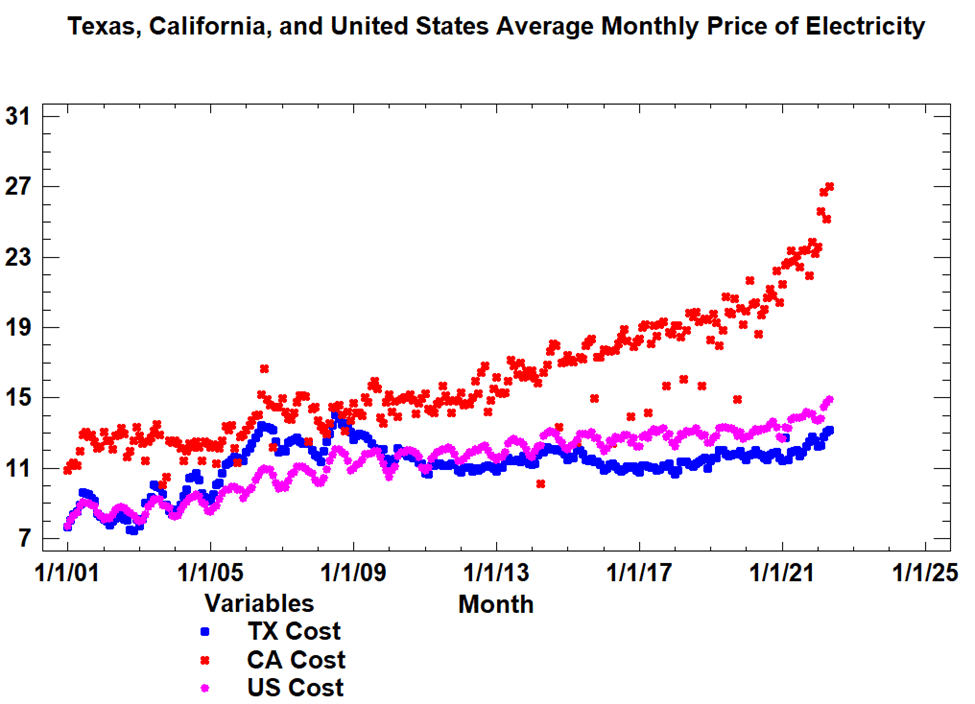


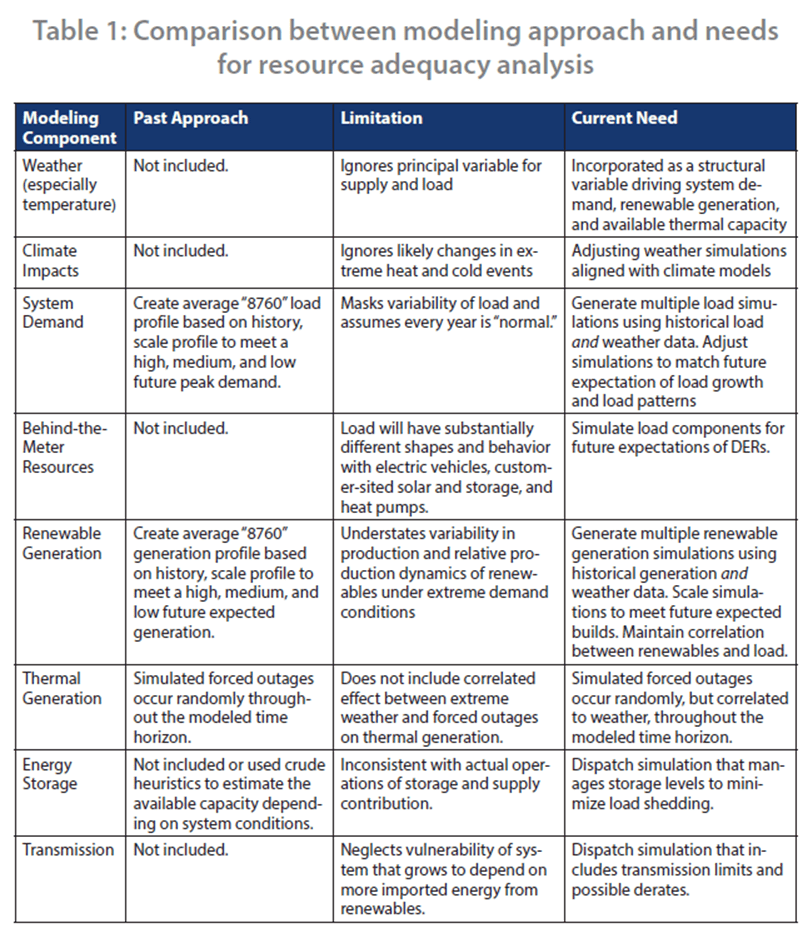

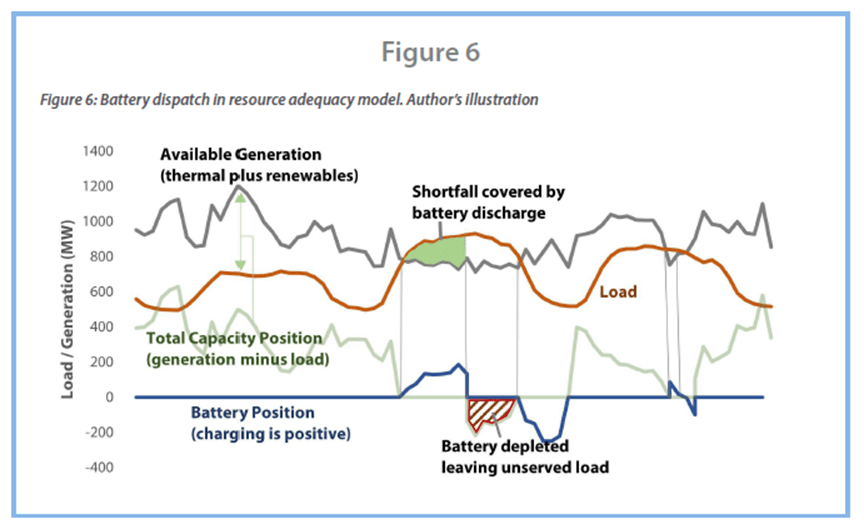

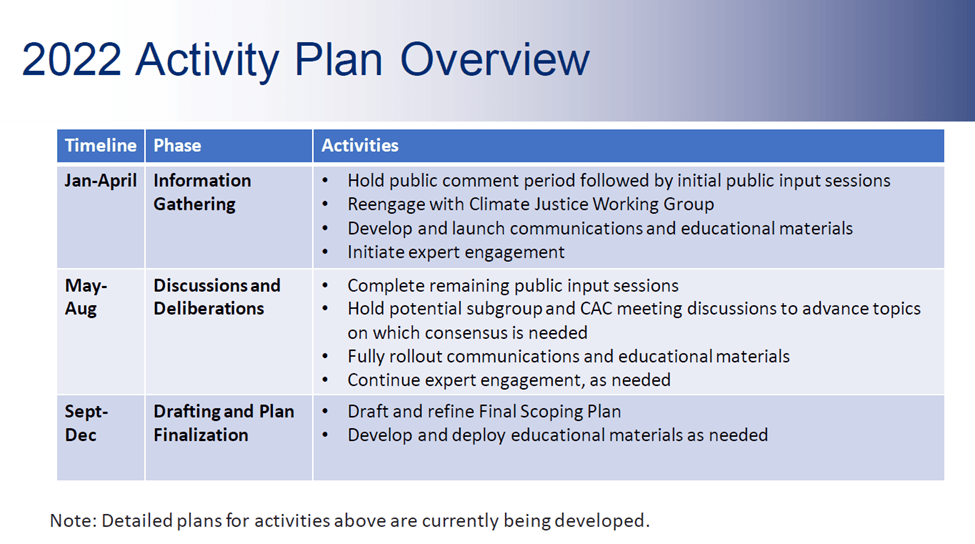
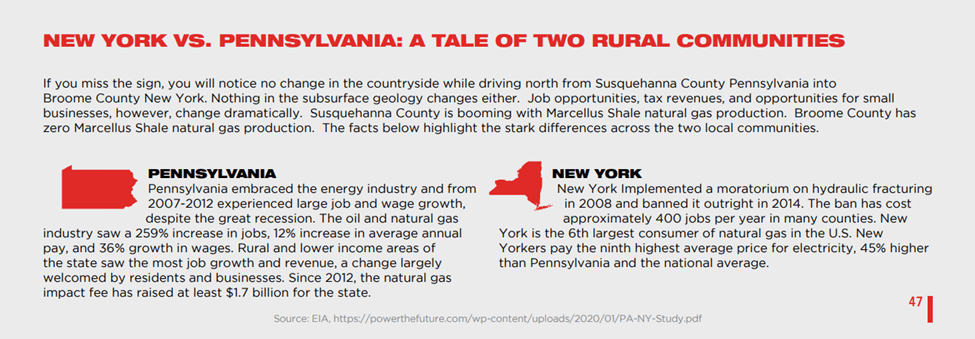
 Pragmatic Environmentalist of New York