

The 2023-24 Enacted State Budget authorized and directed the New York Power Authority (NYPA) to advance renewable energy and support other state priorities. Last month NYPA published its Draft Renewables Strategic Plan (Dreft Plan) which describes how NYPA will “operationalize our renewables work, along with our continued and critical obligations to our existing generation, transmission, customer, and community commitments.” This article describes my comments on the Draft Plan. I encourage New Yorkers to also submit comments.
I am convinced that implementation of the New York Climate Leadership & Community Protection Act (Climate Act) net-zero mandates will do more harm than good if the electric system transition relies on wind, solar, and energy storage. I have followed the Climate Act since it was first proposed, submitted comments on the Climate Act implementation plan, and have written over 480 articles about New York’s net-zero transition. The opinions expressed in this article do not reflect the position of any of my previous employers or any other organization I have been associated with, these comments are mine alone.
Overview
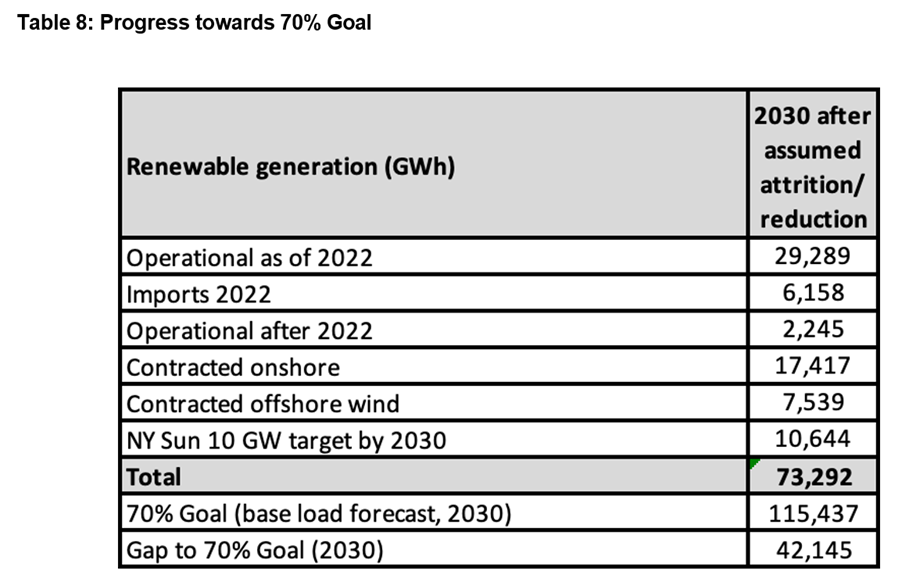
The Climate Act established a New York “Net Zero” target (85% reduction in GHG emissions and 15% offset of emissions) by 2050. It includes an interim 2030 reduction target of a 40% GHG reduction by 2030. Two targets address the electric sector: 70% of the electricity must come from renewable energy by 2030 and all electricity must be generated by “zero-emissions” resources by 2040. The Climate Action Council (CAC) was responsible for preparing the Scoping Plan that outlined how to “achieve the State’s bold clean energy and climate agenda.” The Integration Analysis prepared by the New York State Energy Research and Development Authority (NYSERDA) and its consultants quantified the impact of the electrification strategies. That material was used to develop the Draft Scoping Plan outline of strategies. After a year-long review, the Scoping Plan was finalized at the end of 2022. Since then, the State has been trying to implement the Scoping Plan recommendations through regulations, proceedings, and legislation. The Build Public Renewables Act (BPRA) is an legislation example.
Draft Renewables Strategic Plan
The Executive Summary states:
The Power Authority of the State of New York (“NYPA” or the “Power Authority”) is pleased to publish for public comment and hearings its inaugural draft Strategic Plan for developing new renewable energy generation projects to supply New Yorkers with affordable, reliable, and emissions-free electricity.
The main point in my comments is that there is no evidence that renewable energy generation projects can provide affordable and reliable electricity so that presumption must be addressed first.
The 2023-24 Enacted State Budget authorized and directed the Power Authority to engage in the largest expansion of our responsibilities in decades to advance renewable energy and support other state priorities. This expanded authority will enable NYPA to accelerate the development of renewable energy, support workforce training for jobs in the renewable energy sector, and to establish the Renewable Energy Access and Community Help (REACH) program to provide bill credits for low- and moderate-income ratepayers in disadvantaged communities served by New York’s investor-owned utilities.
The Climate Act is a Progressive “Green New Deal”. Addressing climate change is just a front to achieve other social aims like job creation, economic growth, and environmental justice.
In the time since Governor Kathy Hochul signed the State Budget into law on May 3, 2023, NYPA has made major progress toward the development of new renewables. This progress includes establishing the business structures, filling key personnel roles, and garnering other necessary resources to carry out our new missions, all while advancing the first tranche of projects.
Like any bureaucracy, NYPA’s primary business goal is to get bigger, and this is a golden opportunity for growth. However, when the costs to comply with the Climate Act goals are totaled, I guarantee that the bureaucratic expenses for these resources will never be included.
With the opportunity to become a leader in responsible development of new renewables, NYPA aims to expeditiously build affordable projects, staying grounded in our commitment to the communities in which we operate now and, in the future, all while ensuring fair and family-sustaining worker wages.
One of the worst outcomes of the Climate Act implementation has been the destruction of “home rule” whereby local governments have “the ability to craft ordinances and make decisions based on local needs, rather than having to follow a one-size-fits-all state code that’s decided by state legislators.” State generation permitting rules and transmission siting rules have been modified specifically to enable a faster buildout of renewable energy facilities short circuiting the ability of affected towns to object. This law adds to that problem because now projects that are not privately feasible will be pushed ahead by NYPA.
We are proud to present this inaugural NYPA Renewables Strategic Plan, which describes how the Power Authority will operationalize our new renewables work, along with our continued and critical obligations to our existing generation, transmission, customer, and community commitments.
My Comments on the plan also raise three points all related to the inanity of politicians thinking they should dictate energy policy. The overarching problem is the feasibility of a renewables-based electric system was the first concern addressed. I responded to one of the specific political components in the BPRA the mandate to shut down NYPA’s peaking power plants in New York City. Finally, state officials have a way of overlooking inconvenient aspects of their programs which I addressed with respect to solar siting.
Feasibility
This has been a recurrent theme at this blog since the beginning but the last few months the necessity of a pause in implementation to determine whether New York should be planning to rely on wind, solar, and energy storage has become clear. As a result, I have been saying the same thing repeatedly which must bore regular readers. Bear with me in this section.
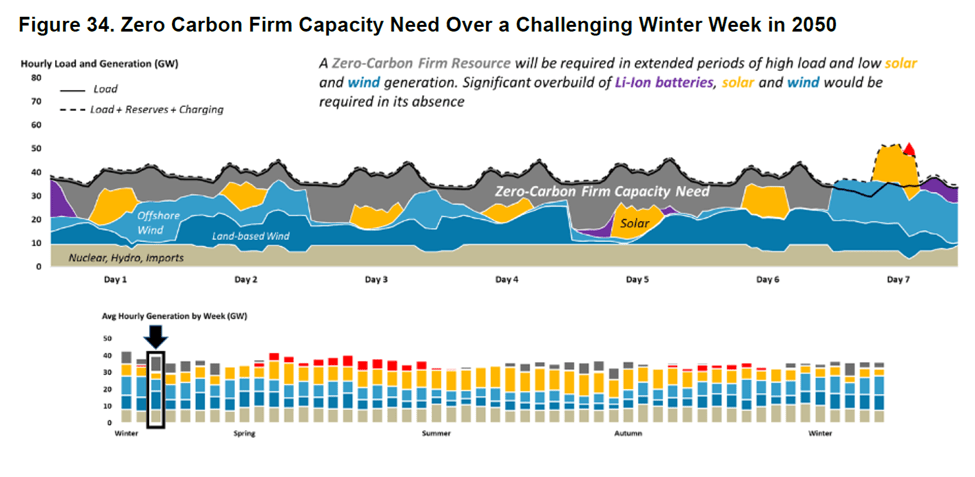
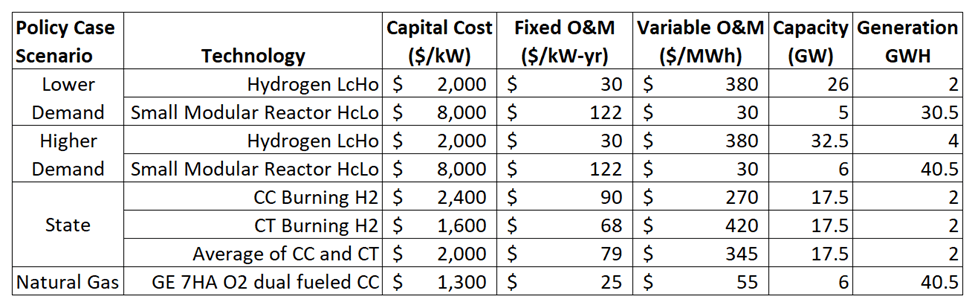
The authors of the Climate Act believed that no new technologies are needed to implement their aspirational electric system mandates. That is wrong. The experts responsible for electric reliability planning in New York and independent experts capable of refined analyses of the electric grid agree that during periods of extended low wind and solar resource availability a new category of generating resources called Dispatchable Emissions-Free Resources (DEFR) is required. The problem is that there is no commercially available DEFR technology that can be expanded as needed to support projected wind and solar resources necessary to comply with the 2040 “zero-emissions” mandate. I maintain a feasibility study to address this requirement is necessary.
In my opinion, the most promising DEFR backup technology is nuclear generation because it is the only candidate resource that is technologically ready, can be expanded as needed, and does not suffer from limitations of the Second Law of Thermodynamics. If the only viable DEFR solution is nuclear, then renewables cannot be implemented without it. But nuclear can replace renewables, eliminating the need for a huge DEFR backup resource and even more massive buildout of wind turbines and solar panels sprawling over the state’s lands and water. Therefore, it would be prudent to pause renewable development until a proven DEFR technology is proven feasible because nuclear generation may be the only viable path to zero emissions. That would make any further renewable investments a bad choice.
Peaking Power Plants
The authors of the enabling legislation for the NYPA renewables responsibilities also included a specific mandate for New York City peaking power plants owned by NYPA. Environmental justice advocates like the Peak Coalition, have convinced state officials that New York City peaking power plants are “perhaps the most egregious energy-related example of what environmental injustice means today.” The enacting law for the Draft Plan specifically directed NYPA to publish a plan by May 3, 2025, to end generating electricity with fossil fuel at its 11 small natural gas power plant (SNGPP) units located at seven sites in New York City and on Long Island by the end of 2030 if reliability and environmental requirements are met. I have documented that the presumption of egregious harm is based on selective choice of metrics, poor understanding of air quality health impacts, and ignorance of air quality trends. In brief, the continued operation of these facilities will have no discernable impact on local neighborhood air quality and shutting them down is solely political virtue-signaling. On the other hand, these facilities serve specific reliability needs that are not easily replaced.
Someday, someone in the Hochul Administration is going to have to confront the advocacy organizations and explain that tradeoffs are often required to balance different societal needs. In this instance it is the tradeoff between the desire for zero pollutant impacts against the need to keep the lights on. At least in this instance the law does mandate that a feasibility analysis is necessary before the plants get shut down because the law states they can only be shut down “if reliability and environmental requirements are met.”
Solar Development
It is very frustrating to me that New York utility-scale solar development has no requirement to protect prime farmland. In my draft Scoping Plan comments I called for a moratorium on solar development because the Hochul Administration has not required solar developers to adhere to all the NYS Department of Agriculture and Markets (NYSDAM) guidelines protecting prime farmland. As of November 25, 2024, my Solar Project Scorecard shows that 3,414 MW of solar projects have been permitted on project areas of 46,981 acres. These projects will take 7,588 acres of prime farmland out of production. Of the 21 solar projects permitted only 8 meet the NYSDAM guidelines. NYPA solar projects should meet the NYSDAM guidelines.
There are two other solar deployment issues that the Draft Plan should address. The Integration Analysis projections for solar capacity presume that the facilities use tilting axis solar panels to maximize production. However, the Hochul Administration has not made that a requirement so there are facilities being subsidized that will produce less energy than expected. This means that the Scoping Plan projections for capacity and costs are underestimated. NYPA solar projects should use tilting-axis panels. Finally, a simple constraint to maximize availability when needed the most should be included. Specifically, subsidizing solar panels that lay flat on rooftops should not be supported by NYPA because they could be covered by snow when temperatures are lowest and loads highest.
Discussion
New York State residents who read this can comment on the Draft Plan until December 8.
The New York Power Authority welcomes your views on how we can most effectively and equitably build new renewable resources to support the State’s efforts to advance its ambitious renewable energy goals. If you have feedback or comments, please contact us using the form here.
I suggest that you make the following points:
- No jurisdiction has successfully built an electric system that relies primarily on wind, solar, and energy storage without fossil fuel backup.
- The agencies that are responsible for electric system reliability agree that a new resource is required for periods of prolonged poor wind and solar availability.
- Therefore, an analysis to identify technologies that can maintain current standards of affordability and reliability must be completed before NYPA provides funding to support renewable projects.
Conclusion
In my opinion, experts who understand the electric system agree that the wind, solar, and energy storage system envisioned by the authors of the Climate Act needs a new technology. I believe experts agree with me that the only feasible DEFR technology is nuclear power and that cannot be deployed fast enough to meet the aspirational schedule of the Climate Act. There is tremendous pressure for agency experts and responsible organizations to not speak out against the politically correct façade that renewables are the solution for decarbonizing New York’s electric system. I understand why they do not speak out but it is frustrating. I only hope that in private conversations with responsible public officials the experts are recommending a feasibility study.
The more people who say “Please provide evidence that the enormous changes to the existing system proposed in the Climate Act can work” the better. Climate Act proponents have never provided well-documented cost estimates to reach net-zero from a base case where decarbonization is not considered. The requirement to develop, test, and deploy sufficient wind, solar, energy storage, and DEFR by 2040 is a tremendous challenge to reliability. It is also fair to ask for an environmental assessment of the cumulative impacts of all the resources needed for the wind, solar and energy storage system proposed. All those concerns should be considered against the backdrop that the climate change issue is a global problem and our contributions are negligible.




 Pragmatic Environmentalist of New York