On February 26, 2026 the Hochul Administration “leaked” a New York Energy Research & Development Authority (NYSERDA) memo that said that “full compliance with New York’s 2019 Climate Leadership and Community Protection Act (Climate Act) could cost upstate households more than $4,000 a year – on top of what they are already paying today”. On March 5, 2026, a group of 29 New York Democratic state senators responded with a letter (“Democratic Letter”) to Governor Hochul saying they “categorically oppose any effort to roll back New York’s nation leading climate law” and urging Hochul to “stand strong in the face of misinformation” about affordability. I wrote an article arguing that the senators missed the point but think that Richard Ellenobogen’s response also deserved to be published here.
I am convinced that implementation of the Climate Act net-zero mandates will do more harm than good if the future electric system relies only on wind, solar, and energy storage because of reliability and affordability risks. I have followed the Climate Act since it was first proposed, submitted comments on the Climate Act implementation plan, and have written over 600 articles about New York’s net-zero transition. The opinions expressed in this article do not reflect the position of any of my previous employers or any other organization I have been associated with, these comments are mine alone.
Richard Ellenbogen has been speaking to NY State policy makers and regulators since 2019 regarding the deficiencies inherent in NY State Energy policy. He has a proven record implementing carbon reduction programs at his own manufacturing business in Westchester County where it has reduced its electric utility load by 80% while reducing its carbon footprint by 30% – 40% below that of the downstate system. I have previously published other articles by Ellenbogen including a summary description of his issues with the Climate Act.
The following is a lightly edited copy of his document responding to the Democratic Letter.
Introduction
The 29 State Senators who wrote the Democratic Letter to Governor Hochul regarding NYSERDA’s recent memo apparently have no understanding of physics, math, economics or current events and have their heads in the sand. Unfortunately, this is a bad way to govern. Denial of current events doesn’t make them go away, it just makes the denier appear ignorant and results in letters like the one sent to Governor Hochul.
They make several claims in the letter, but nowhere do they explain the basis for those claims. They say that their letter is science based but if they are correct, I may request that Cornell refund my tuition because the science , math, economics, and engineering that I was taught at Cornell can’t even remotely reconcile the claims that they are making.
Letter Claims
Let’s examine the claims they make in the letter because those claims are not rooted in reality. Unlike their letter, I will provide math and statistics to explain why their letter is devoid of reality.
First, there is the following statement in their letter:
In reality, rolling back the CLCPA will not save our constituents money because it is not the cause of increasing costs. It is the fossil fuel status quo that has created the affordability crisis New Yorkers are now suffering from, and it is bold action to deliver renewable energy and energy efficiency that will give them relief, saving money for individuals in the immediate-term and for all utility customers in the medium- and long-term. When it comes to energy generation capacity, renewables can be deployed cheaply and quickly to meet our needs. And over the last year, through heat waves and polar vortexes, renewables have proven that they add much-needed reliability to the grid, reducing price spikes in the process, like those driven by wars in Europe and the Middle East.
They claim that renewables can be installed cheaply and quickly.
Regarding “cheaply”
The offshore wind bids that New York State (NYS) received came in at $150 per Megawatt-hour (MWh), about double the existing wholesale cost of electricity in NY State. Clean Path, the renewable transmission line from Central NY State to New York City (NYC) was cancelled due to excessive costs. These projects were heavily subsidized. Numerous solar projects were canceled when tax credits were eliminated, and the renewables will not support energy systems without enormous amounts of storage. That cost has not been factored into the existing structural issues in NY State. While everyone loves to state that solar is “cheap”, $40 – $60 per MWh, it will not provide the same functionality as our existing generation without storage and grid inertia systems. If the storage costs are added, the cost rises to $110 – $150 per MWh, 50% to 70% more than the existing cost of electricity in NY State. Synchronous condensers that would be needed to stabilize the system would cost billions of dollars beyond that.
Fossil Prices Cause Unaffordability
The claim that “Fossil Fuel prices” are the root cause is belied by the fact that other states are reliant on fossil fuels, and their costs haven’t risen nearly as much as those in NYS. The same legislators have supported blocking pipelines but when you restrict gas capacity, you force the dual fuel generators to burn oil on cold days so that people that use gas can still heat their homes. Oil combustion is both more expensive and raises the carbon footprints of the generating plants by about 50%. Telling people to switch to heat pumps on NY State’s generating system will only add more load to those generating plants and raise emissions even higher. Restricted pipeline capacity also forces trucks laden with compressed natural gas (CNG) or liquified natural gas (LNG) onto the highways where they burn large amounts of diesel fuel and release about 7 pounds of CO2 for every mile driven. As the trucks can’t backhaul any other freight, a trip as short as 160 miles will add an extra metric ton of CO2 into the atmosphere that would not happen with a pipeline. Further, the process of liquifying natural gas or compressing it to the high pressures needed for transportation are far more energy intensive than the compression needed for pipelines. An AI analysis of pipeline versus truck transport of natural gas shows a 10% – 60% higher carbon footprint depending on truck types and distances. All of these factors raise costs.
The renewables may avoid fuel price spikes but that is only because the electricity generated from them is so expensive to begin with. Germany, a country that started this process over thirty years ago and is 34% wind and solar, has electric rates twice those of France next door which is 70% nuclear. When you start from a high-cost basis, price increase percentages are lower. Furthermore, while near-zero marginal-cost wind and solar suppress prices in “easy” hours, prices spike when demand is high and wind/solar underperform, because the system must lean on higher-cost dispatchable units during those tight hours. The inevitable result is more price spikes.
While certain efforts at energy efficiency would help, the heat pumps prescribed by the climate act as energy efficiency will double heating bills when used on the NYS system. As a result more homes upstate are now burning wood on cold days because of the high energy costs. That releases enormous amounts of PM2.5, PM5 and PM10 into the atmosphere along with 2.5 times the amount of CO2 per therm of natural gas. They will use more energy at the generating plants than they save at the homes or businesses. The burning of wood and increasing fossil fuel usage IS NOT energy efficient.
Quick Renewable Deployment
The claim that renewables can be deployed quickly is contradicted if someone actually reads the Scoping Plan for the Climate Act, something that these senators have apparently not done. The Plan documents that NYS would need about 60 Gigawatts (GW) of solar arrays, 23 Gigawatts of wind turbines, 21 Gigawatts of Batteries, and 20 Gigawatts of Zero Carbon Resources to meet its goals by 2050. Those are Scoping Plan numbers, not mine. I think they are an extreme underestimation of the resources needed (About 100,000 Gigawatt hours of energy short based upon actual loads and 15 – 17 GW of Zero Carbon Resources short according to the NYISO and the Anderson Lab at Cornell)
Consider the reality of installation rates. Between 2019 and 2024, NYS installed about 6 GW of solar. At that pace, it would require 50 years ( 2076 – 26 years after the 2050 deadline) to reach 60 GW except the arrays only have a lifespan of 25 years so more than twice that amount would have to be installed to meet the goals plus replace aging arrays. As a result of that, the state will never be able to install enough to meet its needs by 2050 unless it quadruples installation rates but there is not enough labor, material, or money to do that.
Additionally, no one has figured out what the 20 Gigawatts of Dispatchable Emission Free Resources (DEFR) will be. Nuclear is a potential resource but nuclear isn’t ideal for being a dispatchable resource that can ramp up and down with varying loads so it isn’t truly dispatchable. Further, if the state were going to build 20 Gigawatts of nuclear to support renewables, they could just build fewer nuclear plants and not install the renewables at all and wait until the nukes were nearly complete to build a viable storage system using a storage technology that won’t contaminate the environment as the current technology will. Beyond that, 20 GW of nuclear power would take decades to install and that is not “quick”. Construction of 2 Gigawatts, 10% of NY State’s “needs”, recently required fourteen years to complete in Georgia. People that have obviously never built anything in their lives, like the Senators that wrote that letter, seem to believe that they can blink and create a carbon free generating plant, interconnected solar array or wind farm. They apparently watched too much “I Dream of Jeannie” as children.
Reliability Claims
As far as the “reliability” claims in their letter, several studies have shown that exceeding 25% – 40% renewables on a system puts the system at extreme risk of encountering stability issues. A paper that I wrote for Con Ed and the Public Service Commission in 2008 predicted this based upon measurements that I made at my factory. Spain and Portugal experienced this firsthand when their system, powered by about 80% renewables (solar and wind), collapsed because the inverters couldn’t handle perturbations on the system and shut down over the course of a few minutes. The renewables don’t provide the necessary grid inertia. Even worse, Spain and Portugal could not even restart their renewable based system with their own generators. They needed the high inertia nuclear generation from France to restart the system after the blackout. How is that the definition of “Reliable”? Texas which has installed 25 Gigawatts of wind in the West Texas region is having extreme reliability issues because of similar problems to those experienced in Spain and Portugal and is now installing $800 million worth of equipment to try and solve the problem. Denmark, which had wanted a fully renewable system, is now backing away from that because of these issues. It is only NY State politicians that seem to be determined to drive the state into an energy ditch.
They argue that the Climate Act is reducing pollution and is “science based”. They also claim that it will protect a “livable climate”.
At a time when the Trump Administration is doing everything possible to tear down decades of progress in the fight against climate change, it is incumbent on states like New York to reject this new wave of climate denial and put forward bold policies that will save New Yorkers money, reduce pollution, and protect a livable climate for our constituents and our children and grandchildren.
The reality is that NY State’s attempt to legislate physics and defy physical reality is squandering resources and preventing them from being used on actual “science based” solutions. Nothing that could be done in NYS to reduce carbon emissions will impact global climate and their claims that it can is the definition of hubris. According to Statista, a statistics database, global emissions of CO2 in 2019 when the CLCPA was passed were 35.3 Gigatons (Gt or billion metric tons). That is 185 times NY States 190 million metric tons. Global emissions are projected to rise to 43.08 Gt by 2050. That will be an increase of 7.74 GT. The CO2 increase by 2050, the year that the CLCPA was supposed to be fully implemented, will be 40 times NYS’s total controllable CO2 emissions.
Their demand for heat pumps will result in higher emissions at the generating plants than could be achieved with far less expensive solutions at the building level. The cost of operating the heat pumps results in them not being used and increased wood burning as does restricting pipeline capacity. The costs of trying to implement their policies prevents funding of workable solutions that could actually reduce carbon emissions. I write this as someone that has a factory with carbon emissions 30% – 40% lower than the Con Ed utility system the building is attached to and the utility bills there went down by 3.4% last year while gas and electric costs went up between 5% and 18% because we have actually applied “Science based solutions” to the problem. The building operates with energy costs one-third that of comparable facilities in NYS. As someone that understands “Science Based Solutions”, I can definitively say that their solutions are not science based and the fact that their policies are driving utility rates sky-high are clear evidence of that.
“Climate Progress”Conclusion
There is no climate progress because emissions elsewhere are rising faster that NY State’s entire CO2 output and even NY State’s electric system emissions are projected to increase by 2% by 2030 according to the State reports.
Between us we carry significant legislation on a broad number of policies large and small that will reduce New Yorkers’ costs and move us toward our science-based climate targets. We stand ready to work with you and your administration to implement comprehensive climate policies that truly meet the needs of this moment – but we cannot support abandoning our commitment to climate progress.
What the politicians and the environmental movement fail to recognize is that the demand for fossil fuels is inelastic. This link explains “inelastic demand” and the policy makers in NY State should read it.
The current war in Iran and the closure of the Straits of Hormuz is showing what happens when access to fossil fuels is restricted because portions of the world economy are currently grinding to a halt. After only two weeks, fuel prices are climbing rapidly. I have received price increase letters for numerous products at my business over the past two weeks as have many other manufacturers and those increases will be showing up in the near future throughout the entire economy. Beyond the fact that NY State’s policies being promoted by the senators are doing nothing because of the reasons listed above, NY State’s efforts to restrict fossil fuels over the past several years, and even more so through “Cap and Invest”, is a microcosm of the energy shortages caused by the current war. The New York politician’s claims that their policies are not causing higher costs for energy related commodities would be laughable if it wasn’t so tragic.
This post describes a recently completed white paper by Richard Ellenbogen M.E.E. titled The Intrinsic Danger of Siting Utility Scale Lithium Based Energy Storage Systems In Densely Populated Areas. Ellenbogen and I collaborated on an article about the potential impacts of a fire like the Moss Battery Plant fire if it were to occur in New York City. This report finds that the local conditions at the proposed large Battery Energy Storage System (BESS) facility at 220 Rabro Drive, Hauppauge, NY would magnify the impacts of a BESS fire in Nassau and Suffolk counties. The following two sections are lightly edited direct quotes from the report.
Executive Summary
This report was written at the request of the Hauppauge Fire Department because of their concerns about a proposed large Battery Energy Storage System (BESS) facility at 111 Rabro Drive. This would be located within 3500 feet of an elementary school, a much less than ideal siting for such a volatile and potentially dangerous facility.
Research on that issue revealed, in addition, that the proposed location is close to streams and has a high water table. In a location with these characteristics, a lithium-ion battery fire, of the type that frequently has occurred at BESS facilities, could produce long-term, catastrophic environmental damage. This is in addition to the more immediate, very serious threat to people and structures at the school and in nearby neighborhoods from heat and toxic gases in the event of a fire. The body of this report explains these threats in detail and also provides background that shows why the occurrence of fire at a BESS facility, like the one proposed, presents such a high level of risk. The readers should be aware in reading this report, that the author received no compensation or payment in kind for the research and writing, but willingly invested the hundreds of hours of work required for its preparation strictly as a result of his great concern for the Hauppauge community, Nassau and Suffolk Counties, the downstate region, and the State of New York in general, inspired by the high level of threat and risk arising from the proposed BESS facility. The report is designed to be read on a network connected device and is arranged with hyperlinks providing backup documentation for each issue should readers wish to learn more about the statements made within.
Introduction
Utility scale electrical energy storage has been a recognized need in the New York Metropolitan Area for over sixty years. For example, Con Ed first proposed the StormKing Mountain Pumped Storage facility in the early 1960’s to address this. However, that facility was never built because of potentially negative environmental impacts and community opposition. However, the need for energy storage has not gone away and has recently been exacerbated by a growing trend toward electrification to reduce carbon emissions, along with several years of state energy policies that have left the New York state critically short of electric generation.
The New York Independent System Operator (NYISO) recently released their 2025 –2034 Reliability Study that determined that electric generation capacity margins could go below zero as early as 2027 with the risk increasing even more each year through 2034. Figure 1 from page 10 of that document clearly shows the problem.
This crisis has resulted from state policies, many associated with New York’s Climate Leadership & Community Protection Act (CLCPA), that have blocked the construction or retooling of new gas generation plants for the past seven years, while simultaneously closing a 2 Gigawatt nuclear plant without having a viable operating alternative to replace the lost energy. As a result, NY State officials are moving hastily to find solutions to bridge the gaps. Among these hasty measures, the consequences of which do not seem to have been carefully thought out, is the proposed development and addition to its electrical grid of a number of lithium-ion-battery-based electrical energy storage facilities. To expedite this process, these officials have been attempting to override local zoning laws and their own Department of Environmental Conservation, via the six-year-old Office of Renewable Energy Siting (ORES).
One of these hastily conceived and poorly thought through BESS facilities is proposed for Long Island, within the town of Islip, in Suffolk County. This siting of an intrinsically dangerous BESS facility, in such a densely populated and environmentally sensitive area, having a high water table and close proximity to many streams and the ocean, would seem to defy logic. This is especially true given the very recent catastrophic history of a similar BESS siting at Moss Landing, near Monterey Bay in California.
Figure 1: Plausible Range of Statewide System Generation Margins 2025 – 2034. Source: NYISO 11/2025
Whatever help a BESS facility in Islip might promise for the NY state electrical grid is certainly offset by the risks of such a move and the likelihood of accidents with long-term very negative consequences that would impact millions of people and large geographic areas of the state and its waters. These risks follow from three categories of intrinsic dangerous characteristics of lithium ion batteries and the large number of them housed within a BESS facility. These categories of risks are as follows:
Lithium metal, when brought into contact with any water, creates an exothermic reaction that generates a great deal of heat which can drive the batteries into a state of thermal runaway. So Li-ion batteries and BESS facilities that contain them are very subject to fires, especially if they are located near large bodies of water and exposed to significant humidity or moisture. Lithium Batteries can also burst into flame if they overheat and enter thermal runaway under heavy load.
Li-ion battery fires are very hot and damaging. They burn at temperatures between 2600 – 5000 degrees-F making these fires, even small ones, very difficult and costly to put out, even if a fire department is well-prepared, which most are not. These fires spread rapidly within a BESS facility, quickly resulting in a conflagration. In addition to the great heat from them, there is release of toxic gases during the fires.
In the aftermath of large-scale Li-ion battery fires, there is significant, nearly impossible to remediate environmental pollution of land and water with heavy metals and other toxins. This will be particularly damaging in areas with surface water or a high water table, and particularly on Long Island which has a history of water issues and highly permeable soil..
Sections of this report explain in detail, with reference to each of these risk categories, why siting utility-scale lithium battery facilities in densely populated areas, like Nassau and Suffolk Counties, is a problem, in general. Also, it will be detailed why this is made especially problematic in coastal areas because of the hydrology and soil composition in this part of Long Island, as well as its proximity to the ocean.
Report Sections
The report has four sections: The issues with lithium storage, the aftermath of Moss Landing, negative impacts of ingesting heavy metals, and groundwater leaching issues on Long Island. I summarized Ellenbogen’s main points below and refer you to the report for more details.
There are substantive issues associated with lithium energy storage systems. It is necessary to keep water away from the batteries because lithium is volatile in the presence of water. Water causes lithium batteries to overheat and enter thermal runaway and catch fire. These fires are not unusual. Appendix 1 has a list of the fires, locations, and dates along with a link to the EPRI Battery Storage Fire Database. Once started the fires are so difficult to extinguish that they must left to burn out but during a fire there is release of toxic gases. To reduce the spread of the fire water is used to cool nearby batteries. As a result, in the aftermath of Li-ion battery fires, there is significant heavy metal and other toxin pollution of land and water from the smoke and water used to control the fire.
In another section Ellenbogen describes the aftermath of a BESS fire at Moss Landing California. On January 16, 2025, the Moss Landing 300 Megawatt – 1200 Megawatt-Hour Vistra BESS facility caught fire. A description of the fire and its aftermath is provided in Appendix 2. He explains that researchers from San Jose State had been working in the marshes around Moss Landing since 2018 and had measurements of the levels of certain chemicals in the ground and water around the BESS Site for at least two years prior to the battery fire. Their research on the effects of the fire on the ground and marshes around the BESS Site appear in the document Coastal wetland deposition of cathode metals from the world’s largest lithium-ion battery fire. It is also attached as Appendix 3. Ellenbogen includes the following quote from the paper:
The 2025 fire at the Moss Landing, California, battery energy storage system (BESS)—the world’s largest—released approximately 55,000 pounds (25 metric tons) of toxic cathode metals (nickel, manganese, cobalt) into surrounding Elkhorn Slough coastal wetlands. This airborne particulate matter formed a thin, widespread layer (<<5 mm) in surface soils, creating a “fingerprint” of the NMC-type batteries.
• Environmental Impact: The metals, particularly cobalt and manganese, are toxic to aquatic and terrestrial organisms. They pose risks to the ecosystem by potentially bioaccumulating through the food chain, from small invertebrates to shellfish, crabs, and top predators like sea otters.
• Fate of Contaminants: While initially settling in the soil, heavy metals have been mobilized into the estuary through tidal action and rain, spreading the risk beyond the initial deposition zone.
• Detection and Monitoring: Researchers from San Jose State University’s Moss Landing Marine Laboratories utilized field-portable X-ray fluorescence (FpXRF) to map the contamination.
• Long-Term Concerns: The long-term impacts on the restored tidal marsh ecosystem are under investigation, as the contaminants may cause lasting, subtle damage to the food web.
Ellenbogen also included a section describing the negative impacts of ingesting heavy metals contained in Lithium-Ion batteries. He used an AI search to ask which health effects are linked to nickel, manganese, and cobalt exposure in soil and water from BESS fire runoff over extremely porous soil with a shallow aquifer. The response explained: that exposure to nickel, manganese, and cobalt from battery fire runoff in porous soil and shallow aquifers heightens risks due to rapid leaching into groundwater, amplifying ingestion and dermal contact pathways. These metals, common in lithium-ion batteries, can contaminate drinking water and crops, leading to bioaccumulation in the food chain. Health agencies like Agency for Toxic Substances and Disease Registry note that such scenarios mirror industrial pollution patterns where soil pH and redox conditions accelerate mobility.
In his final section Ellenbogen describes the particular issues of local conditions at the proposed large Battery Energy Storage System (BESS) facility on Long Island, NY. Long Island is a terminal moraine formed during from the melting of the Laurentide ice sheet, specifically the Wisconsin Glacier, around 60,000 years ago. Ellenbogen explains that Long Island has a long history of water quality issues due to the resulting porous soils and its shallow aquifer which is used to provide its drinking water. A history of Long Island environmental advocacy, initiated by water quality concerns, appears here. There are numerous instances of specialized treatment being given to Long Island regarding chemicals that can leach into the aquifer. A history of chemical bans on Long Island can be found in Appendix 4. His report includes maps of aquifer depths that show that if a fire occurred at the proposed location that it would cause problems from the heavy metals.
Conclusion
Ellenbogen’s conclusion notes that he has no monetary interest either way in Lithium Storage technologies. He views the issue entirely from a perspective of, “Would he want one of these facilities near him based upon what he knows, and if not, why not?” his analysis leads him to clearly believe that he would not want one located near him.
He believes that if you combine the hazardous emissions and the potential environmental damage, it becomes apparent that the suitable locations for these types of systems have to be restricted to areas where there are very few people and no surface water or ground water. Anything less than that will lead to a high probability of increased public health issues.
Ellenbogen Background
Richard Ellenbogen is the President [BIO] of Allied Converters and frequently copies me on emails that address various issues associated with the New York Climate Leadership and Community Protection Act (Climate Act). I have published other articles by Ellenbogen including a description of his keynote address to the Business Council of New York 2023 Renewable Energy Conference Energy titled: “Energy on Demand as the Life Blood of Business and Entrepreneurship in the State -video here: Why NY State Must Rethink Its Energy Plan and Ten Suggestions to Help Fix the Problems”. He comes to the table as an engineer who truly cares about the environment and as an early adopter of renewable technologies at both his home and business two decades ago.
Richard Ellenbogen has a proven record implementing carbon reduction programs at his own manufacturing business in Westchester County. His factory has reduced its electric utility load by 80% while reducing its carbon footprint by 30% – 40% below that of the downstate system. This post describes his recent report: “An Economic Justification for Installing Rooftop Solar Arrays in The Con Ed Service Area – Even Without The Investment Tax Credit” (“Economic Justification”).
Richard Ellenbogen has been speaking to NY State policy makers and regulators since 2019 regarding the deficiencies inherent in NY State Energy policy. I have previously published other articles by Ellenbogen. He has no financial interest in any solar fabrication or installation company, so has no monetary interest in the results.
Caveat: I acknowledge that the following article includes section plagiarized from the Economic Justification document.
Overview
Richard Ellenbogen is President of Allied Converters, a plastic packaging converter that manufactures flexible plastic bags, sheets, rolls, and related film products, primarily for food and gift packaging markets. Allied installed one of the first commercial solar arrays in the downstate region in 2007 with a 50-Kilowatt (KW) DC rated array being activated on September 29, 2007. When the system was installed, he added monitoring and data collection systems so that he has 18 years of operational data.
Based on that information he has prepared a comprehensive Economic Justification showing how installing rooftop solar arrays on medium and large buildings operated in New York City and Long Island will be cost effective, even after the recent cancellation of the investment tax credit for solar arrays. He shows that “Returns on Investment (ROI) comparable to the 10% – 12% ROI promised by Bernie Madoff are achievable, except it is legal.” He explains that the justification works for customers in downstate New York because the rate increases
have been so egregious over the past 18 years.
The analysis is based on a few assumptions. The analysis assumes a $3.00 per watt installed cost for the array, minimal shading of the solar array, and the ability to use all the energy within the location where it is generated or have solar net metering so retail cost is applied to all electric energy generated. The calculations also are based upon no government monetary support for the installation beyond solar net metering and a tax rate of 30% to calculate depreciation of the asset. However, the numbers show that the installations will be cost effective even for entities that cannot depreciate the assets.
The document includes a twelve page economic justification description and four appendices.
Appendix 1 provides the depreciation schedule for a $150,000 solar array for a business with a 30% tax rate. Appendix 2 explains Line Loss. Appendix 3 – documents the 2008 Allied Converter Solar Net Metering Tariff Petition for a Declaratory Ruling on the administration of solar net metering provisions at locations where multiple (hybrid) energy efficient generation technologies are installed. Finally, Appendix 4 provides the data for Figure 8
Allied Solar Array
Allied Converters is in New Rochelle, NY in the Consolidate Edison (Con Ed) service area, about 17 miles from Times Square. It is a 55,000 square foot building with a 23,000 Square foot upper roof. Allied installed a 50 KW DC rated array in 2007 (Figure 1). Ellenbogen explains:
When the solar array was installed, the cost ($10/watt) made the total array cost $500,000 before rebates and tax credits. NYSERDA (NY State Energy Research and Development Authority) rebates at that time were very generous as were Federal and State Tax Credits. If they hadn’t been, no one would have installed an array and NYSERDA wanted data on the arrays. 18 years ago, NYSERDA actually did cutting edge energy research, as its name implies, and did not do science devoid energy proselytizing. The net cost of arrays installed on commercial facilities can be depreciated, after subtracting the tax credits and rebates. The depreciated cost of the 50 KW array at the factory was approximately $180,000.
Figure 1: Allied Factory and Solar Array
As a business owner Ellenbogen recognized that installing the array was not a good business decision but as an engineer he was curious about capability of the technology. Under normal circumstances, the investment would not have been a positive investment until this year 18 years after it was installed. However, Ellenbogen took advantage of a Washington D.C. Solar Renewable Energy Credit (SREC) program for out of District solar arrays. He applied as soon as the offer opened and became one of five out of District arrays with access to the SREC payments. Even though this source of income is no longer available the situation has changed. Array costs have decreased by 70% and utility costs per KWh in the Con Ed service area have increased by 66% since 2007 from 14.9 cents to 24.75 cents for commercial entities.
The analysis described below is based on data recorded since the installation of the array. This is not a theoretical assessment because it uses data that reflects weather conditions and maintenance issues.
Responsible Solar Development
I am publicizing this report because I think it represents responsible solar development. Ellenbogen describes several advantages of this type of development. Rooftop solar arrays on medium and large buildings use the energy where it is generated which eliminates line loss. Line loss occurs because wires are not perfect conductors. As is the case with many aspects of the energy transition, line loss becomes more of a problem when energy is needed most because when wire gets hotter the resistance that causes line loss increases. Appendix 2 in the Economic Justification explains line loss in detail. He points out that summer peak loads occur when temperatures are highest making on-site generation more advantageous.
He describes three other advantages. There is no need to build additional transmission infrastructure. Medium and large buildings can use all the power produced so there is no need for storage to provide usable energy. Finally, using rooftops means that there is no loss of farmland or environmentally sensitive land for solar development.
I would add another advantage. In areas with a lot of solar generation, output at peak times is frequently large enough that it stresses grid operations, can force renewable curtailment at midday, and complicates economics for dispatchable plants needed when solar is unavailable. These installations will typically not cause negative net-metering impacts because they use the power generated and displace load from the grid.
Array Degradation and Utility Costs
Ellenbogen’s justification is based on his observed solar array data and utility costs. I found the solar array data interesting:
It is well known that solar arrays lose their effectiveness as they age. During its first year of operation in 2008, the array produced 60,000 KWh. This past year, 18 years after it was installed, the annual output has dropped to 46,500 KWh. That is an average decrease of 1.5% per year, or 760 KWh/year. The graph in Figure 3 shows the 365-day output over time. It starts in September 2008, 365 days after the array was turned on. Each data point is the sum of the prior 365 days of solar output. The steep vertical lines are either snow on the array, a period of high cloud cover (falling), or the effect of normal array operation a year later with no snow or cloud cover (rising).
Ellenbogen provides detailed utility cost information. In brief, he notes:
Just the opposite of falling solar array output has been the increase in utility costs over the same period. Commercial utility bills have two components. There is a “Demand” charge that reflects the maximum Kilowatt Usage over two 15-minute periods during the billing month. Then there is a “Usage” charge that is based upon how many Kilowatt-Hours (KWh) are used in a given month. Many of the surcharges are based upon KWh usage also. Because solar arrays are intermittent, they do not affect the demand charge. They only reduce the KWh usage. In 2009, subtracting the demand charge from the total electric bill yielded a KWh cost of $0,149 per KWh, including surcharges and related taxes. Doing the same calculation in 2025 resulted in a per KWh cost of $0.2475. That is an average increase in the KWh cost of 3% annually each year for the past 17 years. Because the array output is dropping by 1.5% annually and the utility rates are increasing by 3% annually, the dollar energy savings per year from the array’s output is actually increasing.
Solar Array Cost Justification
I am not going to discuss the details of the economic justification. I don’t have the appropriate economic background to provide any insight, but the numbers seem to speak for themselves. I will note that he mentions that his original intent was only to demonstrate the analysis for taxable corporations but later determined that the utility rate increases have been so high that the deploying solar arrays will be “cost effective for anyone in the downstate area that can use the full energy output of their solar array or benefit from solar net metering and can install the array for $3.00/watt.”
Discussion
Ellenbogen found that “Over a period of 28 years, a 13% annual return on investment is possible in the Con Ed Service Area from installing rooftop solar and if energy costs increase as they have for the past five years, higher returns than that will be likely. “ His analysis assumed no Investment Tax Credit and no government financial assistance of any kind beyond solar net metering.
There are couple of implications of this conclusion. I am not a fan of solar net metering because of its negative effects on the grid and the fact that ratepayers who do not have their own arrays subsidize the resources necessary to keep the grid operating. Buildings with sufficient load will typically not cause negative net-metering impacts because they use the power generated. They save money by displacing the energy that they would have had to purchase from the utility equivalent to the net-metering price.
The second implication is that it is no longer necessary to provide installation subsidies in Downstate New York. Ellenbogen’s justification is based on actual data. The calculations err on the conservative side based upon a higher rate of array degradation than is likely to occur with a new array. The results clearly show that “without government assistance of any kind, those that can install a rooftop solar array under conditions near those used for the model will see a significant annual return on investment.” I must emphasize the point that this works for “conditions near those used for the model”. I can assure you that solar availability is significantly better than anywhere Upstate that is influenced by lake-effect clouds and snow. I doubt that same cost-effectiveness results in the lake-effect cloud belt.
Ellenbogen makes the case for solar deployment as investments. He explains:
Past performance is no guarantee of future results; however NY State policy makers have proven to be reliably bad in this regard which will likely guarantee the higher utility rates. As a comparison, the S&P has returned 10% – 10.5% over the past 30 years and the Dow Jones has had an ROI of between 9.3% and 10.4% over that time frame. NY State’s predictability at implementing policies that will increase energy costs makes the solar arrays a more risk-free investment than the financial markets for anyone that has a shade free roof.
Conclusion
On one hand rooftop solar proponents could be encouraged that the Economic Justification demonstrates a strong case for deploying rooftop solar on large Downstate roofs that are not shaded. This helps the electric grid because these installations will shave peak loads because these facilities will require last energy. On the other hand, the primary driver of cost effectiveness is what I think are unsustainable electric rates now and increasing in the future. Ellenbogen’s concludes: “The models should also be a warning to state policy makers to show how their regulations are driving utility rates to a point where they will be entirely unaffordable within two decades.”
Over the last six months I have been working with several colleagues to intervene in New York rate cases in an attempt to get someone to listen to us regarding the futility of the Climate Leadership & Community Protection Act (Climate Act) net-zero transition. In our current effort we intervened in the Consolidated Edison of New York (Con Ed) rate case. Francis Menton recently described our latest objection that provides an overview of this effort. This article reproduces Richard Ellenbogen’s long and detailed explanation of why the system is broken.
Richard Ellenbogen has been speaking to NY State policy makers and regulators since 2019 regarding the deficiencies inherent in NY State Energy policy. He has a proven record implementing carbon reduction programs at his own manufacturing business in Westchester County where it has reduced its electric utility load by 80% while reducing its carbon footprint by 30% – 40% below that of the downstate system. I have previously published other articles by Ellenbogen including a summary description of his issues with the Climate Act.
The following is a lightly edited copy of an email Ellenbogen sent on 15 December 2025.
Overview
I have just spent the past six months as a party to the Con Ed rate case (25-E-0072 and 25-G-0073) as part of a group called the Independent Intervenors that also includes Roger Caiazza and Francis Menton. It is six months of my life that I will never get back.
I say that because the system is fatally flawed and skewed against the rate payer and towards special interests. The DPS (Department of Public Services) is supposed to protect the interests of the rate payer but from what I saw, their primary goal was expediency and trying to avoid angering special interest groups to avoid political blowback.
Four months during the middle of the rate case is done in forced confidentiality. All the parties get into a “room” in forced secrecy to negotiate except no one was negotiating on behalf of the rate payers despite claims to the contrary. I compare this period to an incident that occurred when I was nine and playing ball inside the house. I chipped a glass lampshade. To keep from having to explain what happened, I turned the chipped part towards the wall and hoped that my mother wouldn’t see it. That is no different than what occurred during this rate case. Just as I did with the lampshade, they are hiding things from the rate payers and hoping that they won’t notice except the ramifications of this are far more impactful than a broken lamp. They are deluding themselves because just as I told state officials regarding the Climate Act almost seven years ago, the political pork serving no engineering purpose built into this case is going to negatively impact the ratepayers of both NY City and Westchester. It is tangentially related to the Real Estate Board of New York (REBNY) analysis which I will address later in this document. It highlights only one negative aspect of the hearings and state and city policy but the impact on city residents will be crippling.
The result of the negotiations is called the Joint Proposal (JP) and parties either accept it or reject it and those objections can be resolved at a Post Settlement Hearing which occurred on Wednesday December 3. The Joint Proposal runs 379 pages.
Our Objections
We chose to object to the settlement and were offered the opportunity to question witnesses from DPS and Con Ed. Part of me thinks that if I had been a better litigator, I might have accomplished more during the hearing but part of me realizes that the sole purpose of the accepting parties was to object to every document that we submitted. References to the documents are included. I take no issue with the judges as they did their jobs according to the limits of court procedure, however the reality of the process does not work in the ratepayer’s favor for several reasons. I only took issue with two statements made by the judges, but I bit my tongue to avoid drawing their ire. I will elaborate on those two incidents below.
First, despite the judges being there, the hearing is controlled by attorneys and staff that clearly have absolutely no understanding about how the utility system works. I learned that in 2008 when I beat up Con Ed’s lawyers during a tariff hearing before the DPS. Things have not improved over the past 17 years. Their sole purpose in these hearings, along with NY City’s Lawyers, EDF’s (Environmental Defense Fund) lawyers, and DPS lawyers, was to try to disallow anything that might contradict the accepted JP. The attorneys may understand the law but they don’t understand energy distribution systems, nor do they apparently care to. Further, using the term, “Environmental Defense”, anywhere near this rate case is an oxymoron. This JP is an affront to the environment along with being an affront to ratepayers. The impact of math and physics on energy systems, the acknowledgement of which was so lacking in this settlement process, dictated that.
Second, we were allowed to ask questions of the DPS and Con Ed staff, but I quickly learned that all they had to say was that they were unfamiliar with any document that we presented and then they didn’t have to answer any questions about the document. Several of these were state documents published by the New York Independent System Operator (NYISO) and New York State Energy Research & Development Authority (NYSERDA) that we would hope that people responsible for the utility system would be aware of. Their ignorance or willful ignorance of critical aspects of utility system operations and published reports don’t bode well and goes a long way to explaining the rapidly rising utility rates and impending energy shortages that the NYISO has stated will impact the downstate region within the next few years. This highlights one issue that I had with a judge’s statement where he said, “Staff can’t be expected to know everything.” Except they are being paid to know things. Why was it that three unpaid volunteers knew more about what was wrong with this than people that are being paid to run the system?
Third, Con Ed staff could not pass Electrical Engineering 101, which is a problem for a company that is operating the electric utility system for nine million people. That was highlighted by a judge’s statement after we asked about Local Law 97. The judge stated that (paraphrased) “Local Law 97 is the law and it wasn’t a matter for discussion.” I almost stood up and said, “But there is a higher law, and it can’t be negotiated with.” But I didn’t feel that would have had any effect despite being true. The problem with all of NY State energy policy is that it defies the physics and math of “Natural Law” and those don’t care about the Climate Act, Local Law 97, or this Joint Proposal. These people seem to believe that if they state their positions loudly enough and shut down dissent, they will prevail. As I said to Roger Caiazza on the phone the other day, we will eventually prevail because physical law says that we have to. It’s only a question of how much damage will be done by these laws and to NY residents in the process. NY State is learning that firsthand as they have now realized that their precious Climate Act is driving up utility rates to a level where it is breaking the backs of rate payers and that they can’t hit their emission targets. That is something that was obvious seven years ago and they were told that this would happen.
As Roger Caiazza noted recently, the State Energy Plan analysis of total monthly energy costs expects the cost of capital to install replacement appliances and vehicles that can meet the Climate Act zero-emissions mandate is nearly $600 a month more than replacement with conventional household appliances and vehicles even after the savings of more efficient equipment are factored in. Beyond the high rates, the state’s renewable percentage relative to load is projected to drop by 2% over the next 5 years. A document that we tried to present during the December 3 hearing clearly showing that, based upon an analysis of a state report, was objected to by the attorneys in the room and was disallowed as irrelevant.
Our issues with state policy in general and this rate case in particular can be explained by the following analogy. As you may or may not remember from high school physics, the acceleration due to earth’s gravity is 9.8 meters/second2. Imagine if Boeing or Airbus arbitrarily declared that the acceleration due to gravity was not 9.8 meters/second2 but was instead 47% lower than that at 5.2 meters/second2 and then invested hundreds of millions of dollars designing planes to that standard. It would allow them to build planes with smaller engines, reducing their costs, and also declare that their planes had a much longer range reducing fuel costs for the airlines. However, if they ever built a plane to those specifications and tried to fly it, it would drop like a stone because as I mentioned previously, the laws of physics are not negotiable. Additionally, all the money spent engineering, developing, and building the planes to the false metric would be wasted. NY City has essentially done the same thing to the generation metrics in its Local Law 97 as was shown in the prior analogy and the system is going to drop like a stone if they try to implement it. The Con Ed JP is working to support this policy that defies natural law and ratepayers are going to suffer as a result, left holding the bag with enormous amounts of money being wasted on a futile effort.
Our position in this case was simple. Don’t spend money on unnecessary electrical equipment that won’t help the ratepayer during the three year period covered by this case. That seemed to be too difficult of a concept for DPS staff, Con Ed staff, and all of the lawyers in the room to comprehend. Keep in mind that if parties to the case push their pet projects, even though the math says that they won’t work, if those projects are in the JP, then Con Ed gets to build more stuff and make their percentage profit on it. There is about $838 million worth of construction projects (New Business Capital) in the JP. We wanted to present a fully accurate figure of how much of that is related to unnecessary projects to support building electrification in support of Local Law 97 that the state has now started to roll back elsewhere because the process will be crippling to rate payers. However, Con Ed stated that they couldn’t break out those figures although NY State was able to do that for the state system. By our estimate, about one third of that $838 million could be eliminated, or about $270 million – $300 million. However, removing that would reduce Con Ed’s profits by $27 – $30 million and NY City would lose the property taxes imposed on that $270 million – $300 million of infrastructure. For those in Westchester that think that this doesn’t impact them, electrification costs across the entire Con Ed system are distributed proportionally across all Con Ed ratepayers. So even though no one in Westchester voted for the City Council that passed Local Law 97, residents of Westchester will be paying for both the additional electrification and the NY City taxes applied to it. About 250 years ago, a bunch of tea was thrown into a harbor regarding a similar situation.
Beyond replacing aging infrastructure, there is one project in particular that would greatly improve the downstate energy system and that is to replace 75% of the train cars in the NY City Subway system that don’t currently have regenerative braking systems. Calculations indicate that peak system load could be reduced by 500 Megawatts of peak load and thousands of Gigawatt-hours of energy use annually simply by buying new train cars. That would also greatly decrease emissions and reduce car maintenance. However, we were told that this was outside the scope of the rates case even though it is the fastest, simplest, and least expensive way to harden the downstate energy system. It would also help to reduce transit costs.
Objection Rationale Facts
The balance of this email will include a detailed discussion of why the JP is not in the interests of the rate payers using documents and math that we tried to introduce during the hearing, but which were objected to, or the staff plead ignorance so we couldn’t question them on it. Understanding the documents requires nothing more than a knowledge of simple arithmetic and the following facts.
A BTU is a British Thermal Unit. A KBtu is 1000 BTU’s. A Therm (Unit of gas billing done by the utility) is 100,000 BTU’s or 100 KBTU’s.
A Kilowatt-Hour (KWh) equates to the energy used by a load of 1000 watts for one hour or alternatively that of a 100 watt light bulb for 10 hours. The utility bills for KWh used during a one month period.
There are 29.3 KWh in a Therm (100,000 BTU). That is an energy equivalence.
Carbon Emissions are measured in Metric Tons ( t or mt in the documents) which are 2204 pounds in Imperial units.
Power (P) = Current (I) x Voltage (V). P=I xV. As the system voltage is constant, as loads increase, power demand increases and current increases proportionally. This is taught in high school physics and Electrical Engineering 101 but is part of what was objected to by the parties in the case.
Wires are not perfect conductors. They have a resistance (R) and the energy losses are measured in watts (W). Losses on the wires equal I2 xR. So as the power demands increase, the current increases and the line loss increases. Line loss appears as heat in the wires and components of the utility system, such as transformers. If the load doubles, P doubles, I doubles and the line loss increases by a factor of four. Line loss costs are paid for by the ratepayers as part of the “Delivery” portion of the bill.
As wires get hotter, their resistance increases. One of the documents shows the equation for this but simply put, for every 18 degree increase in temperature above 70 degrees-F, the resistance of aluminum or copper (the primary conductors used on the utility system) will increase by 4% and line loss for those components will increase by 4%. When I received a grant from the state in 2010 to analyze line losses and mitigate them, Con Ed mounted power monitors I built onto their poles that measured the before and after of the process. However, these monitors also measured the temperature of the transformers that they were connected to. On a 90-degree summer day, the metal shell of the transformers reached over 140 degrees-F, indicating at least a 16% increase of resistance. If the exterior of the transformer in the open air was 140 degrees, the interior was likely substantially hotter.
A July 2008 presentation by Con Ed at a DPS session on line losses (Case 08-E-0751) that was initiated based upon a paper I wrote showed that the average line loss over the course of a year was 7%. That included an average of 3% losses during the winter when loads are lower and wires and equipment are cooler and 11% losses during the summer when loads are higher and wires and equipment are hotter. I tried to use a slide from their presentation, but they objected to their own documents because they said that it was 17 years old and not applicable. The following will show how ridiculous that objection was. Con Ed has not publicly released line loss data since 2008 but it can be clearly shown that the 7% is the low end of line loss and it is going to get worse, not better. The NYISO has predicted that loads are going to increase and if state policies are followed, NY State’s loads will peak during the winter by 2033 instead of during the summer as they do now. As a result, winter line losses will approach the 11% of summer line losses and the average line loss will increase from 7% to 11%.. Despite the colder winter temperatures, the even higher pending winter loads will raise the losses to near those encountered during the summer. Further, Con Ed has not replaced a lot of the equipment on the system since 2007 so there is no reason to believe that line loss has decreased. The image below is from the project that I did in 2010 and both of those transformers were not new then and are still in use 15 years later. The small grey electrical boxes below the transformers are the power monitors I built and if you look at the Monitor 11 photo, you will see a small beige patch with a wire connected to the power monitor halfway up the transformer. That is the temperature sensor. There were four monitors located on transformers in various locations in New Rochelle and they communicated via Zigbee and ethernet to a computer in my home that collected data every few seconds.
If someone needs to wonder about how old the infrastructure in the Con Ed system is, EIOP 23441915 Ed Koch Queensboro Bridge 13kV Riser Replacement in the JP is to replace an extremely old transmission cable on one of the East River bridges. We didn’t object to that as it is a necessary expense, and it is those types of projects that need to be executed. Throughout the list of EIOP’s are statements saying that equipment shortages may complicate their ability to be executed. That raises the question, “Why are we building unnecessary projects that are very likely to compromise supply chains and the ability to build necessary projects?” I copied the first two pages of an article from the IEEE Spectrum Magazine, February, 2025 (Institute of Electrical and Electronic Engineers) that documents the acute transformer shortage facing the entire world. It is a large document and it is behind a firewall so if anyone wants the full copy, feel free to ask me for it. Transformer shortages are affecting energy projects everywhere.
Another example of the age of the downstate system is made clearly evident by this caption copied from page 30 of the NYISO 2025-2034 Reliability Analysis documenting the age of NY City’s generation fleet. The rest of the downstate system isn’t much newer. The caption speaks for itself.
New York’s generation fleet is among the oldest in the country. Compared to generation in other Independent System Operator (ISO)/Regional Transmission Operator (RTO) regions in the United States, NYCA generation ranks among the oldest or second oldest in each of the natural gas steam turbine, combustion turbine, and combined cycle technology types. This is particularly apparent in New York City where the average age of a steam turbine is 65 years.
Objection Rationale
With knowledge of the facts listed and the associated information, the balance of the discussion will be understandable.
Why is line loss important in a discussion about electric heat? Emissions data for on-site gas combustion is based upon emissions at the building level. However, emissions data for the generators is based upon looking at the source which is the generating plant. But heat pumps use the electrical energy at the building level so energy lost on the wires adds to their carbon footprint unless the system is 100% renewable or carbon free. The heating caused by line loss also contributes to wear and tear on the system components leading to earlier failures. The recent NYISO 2025 – 2034 reliability study clearly showed that the downstate system is only 5% carbon free and 95% fossil fuel supported. This means that every heat pump is going to eventually be 10% more carbon intensive than what they are calculating. Complicating that fact is the state’s inability to build sufficient renewables reflected in the cancellation of the CleanPath renewable project and the cancellation of several offshore wind bids over a year prior to Trump taking office. All of that was due to excessive costs so expecting that the system will get less carbon intensive is not realistic. Exhibit 14 is a copy of the state’s 2024 draft biennial review. It has since been finalized. Exhibit 12 is an analysis of data in the review done by Roger Caiazza that clearly shows that the state’s carbon free generation relative to load is going to DECREASE by 2% by 2030 so despite the Climate Act being in effect for 11 years by that time, emissions are increasing. The baseline was done after the closure of Indian Point, so the loss of that carbon free energy is not a factor in the calculations.
Why is Local Law 97 such an albatross? It is an ideological document that is designed to remove gas combustion from the city and electrify all onsite heating. It is going to impose penalties on every building that can’t meet certain emission metrics. The problem is that the math to support that concept doesn’t work so the city embedded fake metrics into the law to support the concept so that it would look like it is working. There are several issues with that and documents that we tried to introduce into the case to document these issues were objected to by the attorneys as irrelevant even though they clearly showed why the JP would be wasting taxpayer and ratepayer money. To get around the fact that the numbers didn’t support their policies, the city arbitrarily decreased the emissions metric for downstate generation to 630 pounds per Megawatt-Hour (MWh). They will begin fining buildings based upon that in the near future. But a document published by the US EPA states that the downstate NY emissions are 865 pounds per MWh. If line loss is figured in, the energy to run building electrification will emit 930 pounds per MWh, 47% higher. Then they state that in 2030, the emissions will magically be reduced to 315 pounds per Megawatt-Hour, 50% of the fake 2025 value despite NY State documenting a 2% increase in emissions by 2030. All of this is being done to make their policies look feasible and environmentally friendly. They are as feasible as the airplanes designed to the wrong gravity constant. The line loss calculations are in Exhibit 13 and the Local Law 97 information is in Exhibit 10. The analysis of why heat pumps run less efficiently than gas boilers on the Con Ed system and will cost more is in Exhibit 9. That fact is confirmed by a NYSERDA report released in 2019. In the Abstract of the document on page ii, it states the following. Note the text in bold font.
This Report describes NYSERDA’s analysis of the costs, benefits, and adoption opportunities for small-scale residential heat pumps in New York State over the period to 2025. The Report concludes that, based on a conservative application of constraint assumptions, heat pumps could serve approximately half of the thermal energy load in the small residential sector, with potential to increase this estimate as barriers such as landlord-tenant constraints or availability of hydronic heat pump systems are overcome. Achievable adoption potential for small-scale residential heat pumps is assessed to be around 7.5 TBtu of incremental site energy savings from oil and resistance heating replacements by 2025.
It was not promoting gas heat replacements, just oil and resistance heat replacements. Tables within the document clearly show higher costs for ASHP’s when compared to gas combustion. The reason for that appears in the two charts below that were shown to NYSERDA in May of 2019 and they agreed that the numbers matched theirs. Notice that the air source heat pumps have higher emissions on the downstate system than gas but they have lower emissions than oil and radiant heat.
DPS Staff and Con Ed staff said that they were unaware of the NYSERDA document so we weren’t allowed to question them on it. However, that fact didn’t stop NY City or Con Ed from misrepresenting the conclusions of the NYSERDA document and attempting to replace gas units to the detriment of NY City and Westchester residents. The costs were originally presented to NYSERDA in 2019 as well. They were updated in 2023. The analysis in Exhibit 9 clearly shows that dependent on the outdoor winter temperature, it will cost 40% more to heat with an air source heat pump at 30 degrees-F and 118% more at 5 degrees-F (2.18 times the cost) based upon utility rates this past February when gas costs were highest. It was objected to by the parties because they couldn’t establish provenance, although I took ownership in a sworn document presented to the judges. We even offered to have me testify to explain the documents but that was objected to at a pre-trial conference. I was one of the last people that they wanted to have testify. DPS asked me to go to Albany in 2008 for the 08-E-0751 conference to “embarrass the utilities” because they should have been providing the information to DPS that I provided but they failed to. While they may not be aware of that event, they are aware of my writings. During the confidential portion of the hearing I was called “Inflammatory, Unprofessional, and anti-electrification” because I mentioned that some of the parties should go back and take high school physics and math. They ignored the fact that I was one of the earliest adopters of renewable and geo-thermal technologies in the state over twenty years ago. I am not against electrification. I am against electrification that math and physics dictates will not work and will simultaneously cause more environmental damage in the process.
As a gift to certain parties, Con Ed is offering a new/modified tariff rate SC1-IV for heat pump users. It will give them a special rate for a period of one year if they switch to electric heating. After the year is up, the heat pump user may end up back on the regular SC-1 rate that will have the costs mentioned previously and the special tariff rate is being subsidized by the non-heat pump users on the regular rate (SC-1) because the money has to come from somewhere. On Page 54 of the JP (page 63 of the JP pdf) it specifically states the following:
The Company will make the following modifications to special provision (H) of SC 1 in the tariff. First, a customer who takes service under Rate III or Rate IV of SC 1 for the first time during the term of the rate plan in Case 25-E-0072 may be eligible to receive a price guarantee for one year. This represents an extension of the existing price guarantee for Rate IV and adds Rate III to the list of eligible rate classes for which the price guarantee applies.
Second, the Company will remove the language that limits the number of customers eligible for the price guarantee to no more than 500 ground source heat pump customers and no more than 500 air source heat pump customers during the term of the rate plan. The price guarantee will now be available to all new or existing residential customers operating air source heat pumps or ground source heat pumps commencing billing for the first time under SC 1 Rate III or Rate IV during the term of the rate plan.
Finally, a customer that leaves SC1 Rate III or Rate IV prior to the conclusion of the first twelve-month period will receive a credit, if applicable, based on the period during which the customer took service under SC1 Rate III or Rate IV.
It does not document what happens to those customers after the twelve month period expires. It’s great for Con Ed because they will be charging the poor fools that switched to ASHP’s double to heat their homes after a year. If anyone is on the SC-1 electric rate, you will be paying for people to switch to heat pumps, raising their rates and yours, while also raising carbon emissions in the name of Environmental Defense.
Beyond the costs of operating the equipment is the cost of the conversion which was highlighted by the $600 additional per month for the state plan. Exhibit H is attached which is an article about a Brooklyn co-op that converted from oil heat to electrification at a cost of $50,000 per unit ($40,000 after rebate but the rebate money will quickly run out). Also attached is a snapshot of a Loan Calculation for what a $50,000 mortgage would cost at 6% amortized over 30 years. It is $300 additional per month that a resident will have to pay every month for the next 30 years and $50,000 is the low end of electrification conversions. Estimates for Co-Op City’s cost of compliance for Local Law 97 have approached $2 billion for its 15,732 units in 35 buildings. That averages out to $130,000 per apartment and would add $780 per month to the carrying cost of every unit in the complex. These are the concerns highlighted in the REBNY report, attached. There is absolutely no way to make these policies work because they defy natural law.
Adding to the issues, there is a NYSERDA PowerPoint from August 2022. The slide from page 19 of the report is shown below. Note that it says that the Energy Use Intensity for an Air Source Heat Pump (ASHP) is almost 10 times higher in heating mode than in cooling mode. Except our utility system has difficulties now on a hot day in the summer. This past June, the NYISO declared an emergency during a heat wave. How is that going to translate to a heating technology that could magnify that figure by a factor of TEN on a very cold day during the winter?
The additional carrying costs mentioned previously and the 40% – 118% higher operational costs don’t include Con Ed’s costs for upgrading their system to deliver the higher energy load needed to run the ASHP’s. This rate case with its $270 million additional is the tip of the iceberg. This is going to be the norm for decades to come.
They are also promoting these policies while the NYISO is stating that NY State’s generation margins are critically low so what is going to power the heat pump use intensity. The following graph, copied from page 30 of the NYISO 2025-2034 Reliability Document, shows the declining generation margins on the NY State System with potential for blackouts starting in 2027. This will be weather dependent.
Concluding Remarks
I could present another ten pages of arguments that would just show more of the inane policies that NY State and NY City are proposing with several more pages of documentation, but after a while it just gets redundant.
The bottom line is that they are not looking out for the ratepayer. Special interests have overlaid an ideology devoid of reality onto the utility system either because they drank the Kool-Aid or they are exploiting those that did to make a buck from it and we are all going to pay for it. The policy is inevitably going to fail but how much damage will be done to the ratepayers in the process?
The Independent intervenors have done what we can. It is now up to anyone reading this to stand up and protest against what is about to happen to your utility costs and the utility system. If people don’t, they will get what they deserve along with a high probability of not having any electricity at all. Feel free to forward this. I finish with the following observation.
In May 2025, the designer of the Hydrogen Bomb, Richard Garwin, died. He spent the last 70 years of his life arguing against the use of the device he designed and he advised several Presidents. In his obituary, he was quoted as having said, “I don’t go after stupidity in general, just stupidity that is expensive or dangerous.” NY State’s Energy plans and Con Ed’s JP in support of it are exactly what he would have argued against. Stupid because it tries to defy natural law and as a result it is both Expensive and Dangerous.
Postscript After I completed this post Rich sent a note.
The timing of this release is interesting. We may be having an impact even if it isn’t everything that we want. We forced the NYISO document into their record and mentioning people dying in their rate case transcript may have tied their hands and forced them to act.
On October 27, 2025, Fort Edward Solar responded to the Issues Statement, Party Status Request, and Public Comments on a Draft Permit. Simultaneously, the Office of Renewable Energy Siting (ORES) staff filed a responsive brief to the Petition for Full Party Status submitted by the Grassland Bird Trust for this project. I previously described this project and published Gary Abraham’s explanation why ORES ignores local stakeholders. In conjunction with Gary Abraham, this post describes the ORES responses and confirms my worst-case fears.
Gary Abraham is a lawyer who has been more deeply involved in the renewable energy siting process than I have. He represented a citizen group under State Environmental Quality Review Act (SEQRA) before Article 10 in the Everpower case (Town of Allegany). He represented municipalities or citizen groups in Article 10 proceedings in the cases of Cassadaga (the first Article 10 proceeding), Lighthouse Wind, and Alle-Catt and the Horseshoe Solar matter (Town of Rush) until it transferred to Office of Renewable Energy Siting under Exec. L. 94-c.
Overview
The Climate Leadership & Community Protection Act (Climate Act) established a New York “Net Zero” target (85% reduction in GHG emissions and 15% offset of emissions) by 2050. The Climate Action Council (CAC) was responsible for preparing the Scoping Plan that outlined how to “achieve the State’s bold clean energy and climate agenda.” After a year-long review, the Scoping Plan was finalized at the end of 2022. Since then, the State has been trying to implement the Scoping Plan recommendations through regulations, proceedings, and legislation. However, this does not mean that there is a feasible plan that includes milestones, acceptability criteria for targets or boundary conditions that must be met to continue.
I think the crux of the problem is that the State never bothered to develop siting acceptability criteria to guide permitting decisions. Combined with the ORES monomaniacal focus on permitting renewable projects without consideration of local concerns, environmental protections developed over years are routinely ignored.
Fort Edward Solar Filings
In my previous posts on this topic I have argued that the Fort Edward, Washington Co., PSC No. 23-03023 project is a travesty of ORES environmental siting considerations. On October 27, 2025, Fort Edward Solar responded to the Issues Statement, Party Status Request, and Public Comments on Draft Permit. Filings included the Fort Edward Solar cover letter with a memorandum prepared by WSP USA, an engineering and professional services consultant responding to avian issues; a facility location map, their response to public comments, response to issue statements, and a couple of conservation easement documents. On the same day, ORES staff filed their Responsive Brief and Filing Letter.
Bird Habitats
The main issue with Fort Edward Solar is its location relative to grassland bird habitats. In my opinion, responsible solar siting would focus first on land that has the least ecological or agricultural value. As Abraham explains this is not the case:
The grassland bird habitat map (Figure 1) was submitted by my colleague Ben Wisniewski, representing the Grassland Bird Trust, Inc., showing that “the Project is proposed to inhabit a unique area of extreme importance to birds. The 1,828-acre project site (the ‘Project Site’) lies within the New York State Department of Environmental Conservation (‘NYSDEC’) Washington County Grassland Bird Conservation Center (‘GBCC’). In addition, within the Washington County GBCC, the Washington County Grassland Wildlife Management Area (‘WMA’) serves as an anchor field for grassland birds.”
Figure 1: Attachment B Grassland Wildlife Conservation Areas near Fort Edward Solar Project
“The proposed Project Site surrounds the WMA and is situated within a recognized ecological area of critical importance for grassland birds . . .” Specifically, the WMA anchors the adjacent Audubon-designated Fort Edward Grasslands Important Bird Area (IBA), the NYNHP Raptor Winter Concentration Area, Grassland Bird Trust (GBT) properties, NYSDEC Grassland Wildlife Management Area, all areas known to be occupied by threatened and endangered bird species.
That’s why these areas are protected locally. The map, submitted with the party application, shows that the proposed solar project surrounds these areas, sharing their property lines. That is, as Ben showed, the project location is “inconsistent with the numerous special conservation designations and initiatives already applicable to the Facility Site.” ORES Staff now says none of that matters.
Avian Memorandum
WSP USA prepared an analysis that addressed the issues raised by Grassland Bird Trust (GBT). The analysis addresses the following issues presented in the Fort Edward Solar Avian Impact and Mitigation Assessment prepared by GBT:
Value of Proposed Project Site for Grassland Birds
Impacts of Proposed Project on Grassland Birds
No Proof that Proposed Mitigation Provides a Net Conservation Benefit
Default Permit Conditions are Insufficient to Mitigate Impacts to Grassland birds in theWildlife Management Area (WMA)
I am not a biologist so I cannot opine upon the quality of the analysis. However, I am familiar with the process. Site surveys to determine which birds are in the area to be disturbed must be conducted. As far as I can tell there is agreement about the species in the area. Site surveys to determine current and future land use are also necessary and this is the controversial bit. There isn’t agreement about the value of agricultural fields used as pasture lands or hay production relative to the quality of native forests, shrubland, and wetlands when “analyzed on a terrestrial habitat quality level.”
Another aspect of the process is that developers can mitigate impacts within the areas disturbed by their project by obtaining protecting land nearby that has the habitat characteristics desired. GBT argued that Fort Edward Solar would need to conserve substantially more land in order to provide a net conservation benefit. The WAP USA analysis cited ORES regulation § 1100-6.4(o)(3)(ix) that reads as follows:
If the permittee proposes a NCBP [net conservation benefit plan] involving permittee-implemented grassland bird habitat conservation in lieu of payment of a mitigation fee pursuant to subparagraph (viii) of this paragraph, the required mitigation ratio shall be 0.4 acres of mitigation for every acre of occupied grassland bird breeding habitat determined to be taken and 0.2 acres of mitigation for every acre of occupied grassland bird wintering habitat determined to be taken.
The wetlands offset ratios specified by New York Department of Environmental Conservation (DEC) guidelines are typically 2:1 or 3:1 or much greater than the ORES regulation. At the risk of stepping outside my expertise, it seems to me that the ecological values of wetlands are greater than grasslands so the mitigation offset ratio should be higher not lower.
Gary Abraham has extensive experience with environmental permitting. He points out that in DEC permitting processes these tradeoffs would be addressed in the permitting process. ORES simply ignores the tradeoffs and does not give parties a chance to present their side of the issue. Abraham explains the differences.
The potential for adverse impacts on protected birds (a “significant” issue) is clearly proven by this map (making it a “substantive” issue, i.e., “a reasonable person would require further inquiry”, 16 NYCRR § 1100-8.3(c)(2)).
In its response to Ben’s petition for party status on behalf of GBT, ORES Staff issued a brief concluding that there is no reasonable basis to inquire further, and recommending that ORES reject GBT’s issue (which it will undoubtedly do).
I want to reiterate my belief that ORES has shortchanged DEC and other agency recommendations because ORES does not address tradeoffs. The politicians who wrote the law implementing ORES (the RAPID Act) did not write the regulations that are being applied here. The RAPID Act purpose is plainly to “ensur[e] the protection of the environment”. PSL Art. VIII, § 136. ORES simply failed to do that here. Abraham explains how this works.
Among other things, Staff says that the “NYSDEC Strategy for Grassland Bird Habitat Management and Conservation 2022-2027”, while in conflict with siting the project here, is not a required regulation, but rather a voluntary program. The Strategy (undoubtedly part of the state’s environmental policies) is thus magically not inconsistent with siting the project here (Staff says nothing in the Strategy “speaks to siting of the Facility in the proposed location”). The brief goes on to dismiss factual assertions that the project will adversely impact the other protected bird areas, including an Audubon’s Important Bird Area, despite the fact (acknowledged by Staff) that the project covers “15 percent of the IBA”. There is, according to Staff, no “authority that prohibits or limits siting of the Facility in this designated area.” But that’s because ORES does not site renewable energy facilities. Developers do that and are not required to consider alternative sites. ORES simply permits sites that developers select. It is a misnomer to say ORES sites projects. It does not. –Staff adds that the intervenor party has not “demonstrated that impacts have not been sufficiently identified” in the application. But that’s not the standard. The standard focuses on the potential for adverse impacts on the environment and whether, based on that potential, a reasonable person would want to know more about the impacts, not on legal prohibitions to renewable energy siting (which do not exist) which (as Staff argues) ought to preclude any further inquiry.
ORES Staff says it will be sufficient if the applicant makes a payment to the Endangered and Threatened Species Mitigation Bank Fund. See 19 NYCRR § 900-10.2(f)(1). But the ORES regulations require Staff to consider impacts on “Audubon Important Bird Areas”. NYCRR § 900-10.2(g)(3).
ORES says, for example, that a designated raptor wintering area, protecting endangered Short-Eared Owl and the threatened Northern Harrier, also located within the project area, is identified in the application which already acknowledges that the “wintering occupied habitat will be impacted”, but “the Office’s [ORES’s] Take Determination quantifies the impacts and therefore requires an NCBP [net conservation benefit plan]”, which in turn allows the applicant obtain a taking permit by doing no more than making a payment to the state’s E&T Species Mitigation Bank Fund.
Thus, because impacts on protected bird species are addressed in the application, there can be no significant issue. Therefore, there is no point to considering substantive proof on adverse impacts to the environment.
This is how ORES circumvents the “substantive” and “significant” standard for adjudicating issues that it inherited from NYSDEC (where it was an opportunity for public participation).
Public Comment Response
One of the filings on October 27 was a response to public comments. I want to note just one example of the hypocrisy of the Fort Edward Solar developers. The first comment from Janice Teft stated:
I am writing with respect to the plan by Fort Edward Solar to build a more than 1,828 acre solar Facility in Ft. Edward NY.
This project will cause great harm to grassland birds and endangered threatened raptors. It is the worst possible place for a solar facility. It’s time to stop taking land away from Wildlife in general.
I enjoy going there, especially in the Winter, to see the Snowy Owls. It’s an Audubon designated Important bird area.
The thought that this is even a possibly is so disturbing in so many ways.
All conserved land should be located in the important bird area, not some random place in NY.
And, the developer should work with the Grassland Bird Trust which has worked for over 15 years to protect this area.
Thank you for consideration of my comments
Janice Tefft
Here is the response of the developer:
The Applicant shares your commitment to environmental stewardship and has actively engaged with the appropriate regulatory agencies throughout the development of the project. Specifically, the Applicant has conducted consultations with the New York State Office of Renewable Energy Siting (ORES), the New York State Department of Environmental Conservation (DEC), the U.S. Fish and Wildlife Service (USFWS), and the U.S. Army Corps of Engineers (USACE). All documentation related to these consultations has been submitted and is publicly available within the official ORES docket for the Fort Edward Solar Project (Matter No. 23-03023).
The Applicant has been diligent in following the permitting process outlined by the State of New York, including comprehensive environmental assessments, coordination with regulatory agencies, and the development of mitigation strategies to address potential impacts to protected species and habitats. In support of this effort, the Applicant continues to work closely with qualified consultants to ensure thorough evaluation of all project components and the application of best practices.
The Applicant recognizes the ecological significance of the Fort Edward grasslands and understand the concerns regarding habitat loss and its potential effects on declining grassland bird populations. As such, the Applicant is committed to continue working with regulatory agencies, ORES, and stakeholders to develop mitigation measures that reflect the importance of this habitat.
This response has no substance; it simply reiterates that the developer followed the regulations and shows the environmental poverty of regulations. If Fort Edward Solar shared her commitment to environmental stewardship, then they would not have applied to build a solar facility on recognized ecological areas of critical importance. Presuming that there was no other place in the state for their development then they would have proposed to mitigate their impacts by protecting more critical habitat than the ORES minimum.
Discussion
I believe that the Climate Act net-zero transition plan will do more harm than good because of impacts on affordability, reliability and environment impacts. In my opinion, the Andrew Cuomo and Kathy Hochul Administrations have politicized all the New York agencies. Speed in approving developers’ sites has eclipsed the purpose of siting, to balance the need for renewable energy sites with the serious environmental degradation they often cause. Ultimately the problem is that the Hochul Administration has never defined acceptability criteria for such sites. The Climate Act and its progeny, the RAPID Act, have probably caused greater environmental degradation than it avoided. As shown here, because ORES is the final arbiter the DEC charged with protecting the environment has little leverage in the siting decisions.
In my opinion, responsible solar siting would focus development in areas that do not affect ecological areas of critical importance period. The WSP USA analysis incorporates every trick to minimize mitigation ratios. Because grasslands are an interim successional stage, they argue that were it not for their commitment to maintain the grasslands, then the land would be dominated by woody vegetation. So why doesn’t the developer build on land that is dominated by woody vegetation?
Conclusion
The ORES process ensures that renewable energy development causes more harm than good. It is long past time to reconsider a process that prioritizes building as much renewable energy capacity as possible as fast as possible without any siting criteria.
The ongoing Consolidated Edison Company (Con Ed) rate case is going to raise rates. Unsurprisingly, ratepayers are upset. This post describes an email that was sent to the distribution list for the parties in the case by an individual who I think lives in New York City. She argues that the cost increases are unacceptable because “Hard working New Yorkers shouldn’t have to decide between a doctor’s visit or keeping the lights on.” She goes on to say this problem is made worse by climate change and claims “Con Ed continues to perpetuate our state’s dependence on fossil fuels by advocating for infrastructure like gas pipelines that would increase the cost burden on New York consumers and fail to adequately address the peak energy demands of our state and city.”
Unfortunately, she hasn’t made the connection that the Climate Leadership & Community Protection Act is part of the reason for the higher rates. Richard Ellenbogen and I share the same frustration that people like this fail to connect the dots. This post publishes his response to her email.
Ellenbogen Background
Richard Ellenbogen has been speaking to NY State policy makers and regulators since 2019 regarding the deficiencies inherent in NY State Energy policy. He has a proven record implementing carbon reduction programs at his own manufacturing business in Westchester County where it has reduced its electric utility load by 80% while reducing its carbon footprint by 30% – 40% below that of the downstate system. I have previously published other articles by Ellenbogen including a summary description of his issues with the Climate Act. In addition, he and I have submitted several joint filings in different venues.
To whom it may concern New York electric and gas bills are already some of the highest in the country. It is absolutely inexcusable to approve a rate hike that would increase the cost burden on New Yorkers across the state when the company already makes billions in revenue. The monopoly Con Ed has on New York City delivery upcharges consumers while hundreds of thousands of New Yorkers struggle to pay their bills or even have their utilities shut off as a result. Energy is a human right and an absolute necessity. Hard working New Yorkers shouldn’t have to decide between a doctor’s visit or keeping the lights on.
With the worsening effects of climate change, summer heatwaves are becoming worse and more frequent, making summertime cooling essential for vulnerable populations. Due to the high cost of energy nearly 20% of New Yorkers who own air conditioners can’t afford to run them because of the financial burden to do so.
In the face of the climate crisis, Con Ed continues to perpetuate our state’s dependence on fossil fuels by advocating for infrastructure like gas pipelines that would increase the cost burden on New York consumers and fail to adequately address the peak energy demands of our state and city. They might claim this hike would fund clean energy investments but these are in bad faith as they continue to advocate for additional pipeline infrastructure that is unwarranted and unnecessary. It is abhorrent that Con Ed would dare to request a rate hike when failing to commit to transitioning away from fossil fuels completely, in accordance with our own state’s goals of being net zero by 2030.
30% of New Yorkers struggle to pay their energy bill and these rate hikes would only increase the cost for folks to stay cool in the summer, and warm in the winter. The proposed rate hikes for electric and gas would cost New Yorkers $30-$50 more per month and has drawn widespread criticism from elected officials across the board. That is why the New York Public Service Commission should outright reject the proposed rate hikes for electric and gas from Con Ed.
Ellenbogen Response
On October 28, 2025 2:34 PM Ellenbogen sent the following response:
You should get out of your ideological bubble and look at the math. The rates in the downstate region are too high but your proposals will raise them faster. I suggest that you read the New York Independent System Operator (NYISO) 2025-2034 Comprehensive Reliability Plan. It would be great to transition away from fossil fuels except the electricity doesn’t exist to do so and won’t exist for decades. Figure 16 from that report is included below. Everything below the black lines at “0” is a power failure and the margins will soon be supported by generation that is well past its usable life. Good luck running a heat pump with no electricity.
Further, the downstate region is only 5% renewable. That can be seen in the following pie chart from page 8 of the same document. Con Ed’s reliability analysis stopped at their borders but what happens when the electricity isn’t there for Con Ed to supply? The NYISO isn’t lying or exaggerating. I was called anti-electrification by someone on this email distribution list but the reality is that you can’t electrify without having enough electricity. This is quickly becoming a crisis that will result in loss of life. What I am against is killing people to support a policy that won’t have any environmental benefits.
The next graph is one I did for engineers at NYSERDA in 2019 and updated in 2023. Their engineers confirmed the numbers and the underlying math. I haven’t recalculated the rates for 2025, but electricity costs have been rising faster than gas making the disparity even higher, so if you really want to bankrupt ratepayers have them install electric heat. That’s why certain parties have been trying to get a special utility rate for heat pumps as part of this tariff hearing but those rates have to be subsidized by other ratepayers. Once everyone is on the special rate, who will subsidize it? And what about the rising costs for other ratepayers that have to pay the subsidies for a heating technology that doubles costs? If you want to replace oil combustion with heat pumps, that will lower people’s bills and you wouldn’t even need subsidies, but replacing locations with gas will not lower bills or emissions.
Another aspect of the New York transition is ignoring results elsewhere. Ellenbogen explains the problem:
If your answer is to install more solar and wind to increase electrical output, Germany has been trying that for 35 years since 1990 and has reached 34% renewable generation with electric rates 2 – 3 times higher than France next door despite spending hundreds of billions of dollars attempting it. They claim 42% but the last 8% is wood combustion with a higher carbon footprint than coal and far higher particulate emissions that cause respiratory diseases. The same time frame of 35 years would take New York State to 2061 with still no viable solution installed. If Germany is an example, the rates would be much higher than they are now. I could explain why that is the case, but it would take another full email.
The renewable technologies can help to lower CO2 emissions, but they don’t have the energy density or the reliability to fully support a modern society. Germany has added gas generation recently because the renewables can’t generate enough electricity. Further, the areas of NY State where there is room to install renewables are cloudy for a significant portion of the year and there is no existing storage technology that will carry energy for 6 months to heating season. Even if it could be built, the cost would be trillions of dollars (Yes, Trillions). The cost to install that storage technology would raise rates beyond anything we have seen to date. The money must come from somewhere so the people of New York State will either pay it through their utility rates or their taxes. Either way, it will make New York State less affordable.
There is another unacknowledged challenge for New York. Our renewable energy resources are less than other jurisdictions.
Extreme cold kills a lot more people every year than extreme heat but ideology promoting solutions that won’t work is going to waste time and resources that could be applied to fixing things. It will also raise utility rates with no climate benefit. You can’t compare New York State to California, Australia, Texas, or the Iberian Peninsula. Those are all warmer climates with a far superior renewable profile when compared to New York State so they have more efficient renewables and they don’t have nearly as large of a heating issue and in some cases, they have no heating issue which greatly reduces energy requirements.
Ellenbogen explains the basis for his claims.
And before someone tells me that I am inflammatory and unprofessional, keep in mind that I own two solar arrays, both installed in 2007, a home with the most efficient geo-thermal heat pump system in New York State, and my factory recycles 99% of its waste byproducts and generates 80% of its electrical energy onsite with a carbon footprint 30% – 40% lower than the Con Ed system. I have also driven a Tesla since 2017. I have 47 years of experience with energy systems, and I have written papers for the Public Service Commission, one of which was used to initiate a utility conference on line loss. As a result of that experience and training, I understand what works and what doesn’t because I understand the math and physics underlying the systems. My factory’s utility bills in the Con Ed Service Area have gone down by 4% over the past two years while everyone else has had theirs increase by about 14% because I have applied that knowledge to implement solutions that will work. Between October 2022 and October 2023, the factory’s utility bills were $69,999 and over the past twelve months through October 2025, they were $67,265. That amounts to $1.20 per square foot for the 55,000 square foot facility or about one-third the energy costs of the average commercial/industrial facility in NY State. Those are total energy costs for the facility and include both electricity and gas.
Ellenbogen concludes:
Ideology cannot supersede math, physics, or thermodynamics. In the end, reality will always rear its ugly head because it doesn’t care what anyone has to say about the issue. A failure to recognize that fact will reduce reliability and raise costs which is already happening across the state.
Final Comment
As shown in his response, Ellenbogen has the background and experience to build a low carbon system that works and knows what will not work. He has shown that the current New York plan will not work. I seriously doubt that people like Annie Pahlow will listen to his expertise until the blackouts he expects occur. I give him an E for effort.
Richard Ellenbogen has been speaking to NY State policy makers and regulators since 2019 regarding the deficiencies inherent in NY State Energy policy. He has a proven record implementing carbon reduction programs at his own manufacturing business in Westchester County where it has reduced its electric utility load by 80% while reducing its carbon footprint by 30% – 40% below that of the downstate system. I have previously published other articles by Ellenbogen including a summary description of his issues with the Climate Act. In addition, he and I have submitted several joint filings in different venues.
This post is based on an Ellenbogen email. In his introduction he note that he has been warning about this situation since the gas moratorium commenced in 2019. When he started looking at the issue it took him about 8 hours total across two evenings to realize that the state’s plan didn’t have “A snowballs chance in Hell” of working. He joined the PSC Case 15-E-0302 in July, 2023 because he was so concerned about this situation. His August 2023 filing lists all of the problems with the current plan that he had been addressing with state legislators, NYSERDA, and the PSC since 2019. Keep in mind that many of the solutions that have been proposed are from parties that have a monetary stake in the various outcomes, or from climate activists or biologists that have absolutely no idea how the system works. Ellenbogen hasn’t taken a penny from anyone for any of the thousands of hours of work that he has put into this. He just wants to see the lights stay on and to not have anyone die in a power failure. He states: “This is entirely about protecting the state’s energy system in general and the downstate system in particular because that is at a far higher risk of failure.”
Alternative Approach
In my opinion, the biggest reason to pay attention to his work is that he walks the walk. He has reduced GHG emissions at his home and factory. In addition, his home was powered though the entirety of a week-long power outage after Sandy and his factory can operate at 50% capacity during a power failure. He is working on bringing that up to 100% within a year. As a result, his recommendations are based on experience and not theory. The following quotes are from his email but include clarifying references.
Despite the mess that we are currently in, there is a viable solution to the problems described by the NYISO. The equipment could be here by 2028-2029 and installed by 2030-2032. However, it will require a sea change in the group think about natural gas. This will need to be done quickly as the rapid increase in data center construction is going to increase the lead times for this equipment. The lead time for new gas turbines from GE Vernova is now out to 2028 when I checked recently.
Retooling the three Long Island Power Plants, Port Jefferson, E F Barret, and Northport could increase their energy output and reduce their carbon emissions by about 50%. LILCO/LIPA wanted to do this in 2015 but was rebuffed by state planners that insisted on offshore wind, however that was never going to work, even before Trump. The wind bids in 2023 came in at $155/MWh, over twice that of other energy costs in the state. That is because of the Jones Act driving up installation costs or making them almost impossible to install entirely. As a comparison, offshore wind costs in the UK bid at that time, came in at $75 – $80/MWh showing the effect of the Jones Act on costs. Wind costs in Texas are at $25/MWh which is why they are having such a rapid expansion of the technology there. Additionally, wind speeds during the summer off the coast of Long Island are slower and would not support the summer peak electric demand even had the wind farms been installed.
The reason that such large CO2 reductions are possible with the new plants is that they are combined cycle. The three plants that I mentioned are steam plants, date to the 1960’s and 1970’s, and are 30% to 33% efficient in turning fuel into electricity. 67% -70% of the energy goes up the chimney. A combined cycle plant uses a gas turbine on the front end to make electricity at about a 33% efficiency but then captures the heat exhaust and uses that to make steam which is then fed to a steam turbine. The combined efficiency of the entire plant is about 60% – 65% plus the newer plants have better technology for reducing NOx, SOx and particulate emissions (PM2.5, PM5, and PM 10). NOx has a carbon footprint 100 times that of CO2. The emissions profiles of the three plants mentioned plus the Caithness plant are shown on the graph from the report. Caithness is combined cycle and they wanted to build Caitness 2 but that was rebuffed because the plant was so efficient that it would have rendered the other plants worthless and there was a legal agreement signed when National Grid took them over from LILCO. You can see the radical difference in emissions in Figure 1.
The higher efficiency reduces the energy costs and will cut the gas use nearly in half for each plant, freeing up capacity for Caithness 2 or to install larger generators at each location so that the peaker plants in NY City could be shut down if local transmission issues are resolved. Further, because there are already generating plants at the locations, the transmission infrastructure and fuel infrastructure already exists so there will be a minimal cost to bring it up to modern standards or if the capacities are increased making it a much less expensive option than the current plans.
I wrote a paper for the PSC in February that showed how NY State could combine the newer plants with carbon capture technology and achieve a 90% carbon reduction. The equipment exists but the generating plants would have to be increased in size by about 25% to net the same power output because that much energy would be needed to liquefy the CO2 and pump it two miles underneath the ocean floor. They would still use 25% less fuel for the same amount of usable energy but would be 90% carbon free. Babcock and Wilcox has that technology available now as do some other companies. Even without the carbon capture, the combined cycle plants are extremely worthwhile and could be retrofitted with the Carbon Capture technology later as long as they were oversized now to generate sufficient energy to supply the utility loads and liquefy the CO2.
Natural Gas
Ellenbogen and I agree that the state’s position on natural gas is a problem.
Regarding the natural gas issue that has proved to be such an albatross around the state’s neck, the idea originated at Stanford with Professor Jacobsen in about 2012 and was adopted by Professor Howarth at Cornell. I offered to debate Howarth at Cornell but he declined. I told him in 2019 that his ideas were misguided, and recent studies have proven him wrong. Howarth sat on the Climate Action Council and infected it with his thinking. They stated that the rapid rise of methane in the atmosphere was due to fracking and leaking pipes in the streets. However, a study from 2022 that scooped methane out of the atmosphere found that atmospheric methane has the wrong carbon isotope to be from fossil fuels. Instead, it is primarily from organic decay so NY State reducing gas usage will have almost no effect on methane emissions but it will leave us with no electricity. The Gas Stove study from the Rocky Mountain Institute that claimed that gas stoves caused childhood asthma was equally misguided.
Another solution that could be implemented even more quickly is to replace all of the older train cars on the MTA system. I joined three other independent intervenors in the Con Ed rate case tried to have that included, to no avail. Presently, only about 25% of the MTA subway cars have regeneration. By replacing the other 75% of the older cars with newer ones that have regeneration, we could reduce the peak load on the downstate system by about 500 Megawatts and save hundreds of Gigawatt-hours of energy annually. Now, when the cars slow down their brakes get hot requiring more maintenance. By adding regeneration, cars that slow down would put electric energy back into the system where other trains could use it to operate without needing additional generation. As rush hour coincides with peak utility usage between 4 PM and 10 PM, the maximum energy savings would be occurring exactly when it was needed. The energy savings and the reduced brake maintenance would decrease the costs of operating the system. The 500 Megawatts is also more than the capacity of the oil fired peaker plants around the city. As more lower- and middle-class people use mass transit, that is actual climate justice. We have spoken to people at the MTA and they agree that this would work.
All of the above expenditures will yield monetary savings and provide the region with sufficient energy while also greatly reducing carbon emissions. Additionally, load increases from building electrification should be curtailed until we have enough generation to support it. If they want to engage in energy efficiency and carbon reduction, they can do the following which will reduce energy and electric use while also saving the ratepayers money:
Have people eliminate oil combustion which has 50% higher emissions than gas and also has higher particulate emissions. Switch them to either gas or electric heat pumps. Oil is also much more expensive than either alternative.
Subsidize homeowners that have electric radiant heat and get them to switch to heat pumps. It will cut their bills and their energy usage by about 60%. That technology is more prevalent upstate.
Wrap all heating pipes with insulation to reduce heating loss and improve building envelopes (windows and insulation)
Encourage large energy users to install CHP Systems. It’s the technology that I use in my factory and I have saved about $1 million in utility bills over the past 14-16 years while also reducing our carbon emissions by about 30% – 40%. Large apartment buildings in close proximity could also Siamese their heating systems and cooling systems and install CHP systems to run them with a great benefit.
Add rooftop solar. As it doesn’t need transmission infrastructure it is relatively inexpensive to install and it not only reduces energy use but it also reduces transmission line losses which average to 7% over the course of the year and up to 11% during the summer when the solar arrays make most of their power.
Get rid of NY Steam and use the steam from that plant to generate electricity. Convert NY Steam users to alternative electric heating and cooling. That will provide additional electric energy and NY Steam is a technology that has outlived its usefulness in the modern era. All of those steam puffs rising out of the streets are lost energy, the system needs a huge amount of maintenance, and because a large portion of it is “open loop”, huge amounts of hot condensate are dumped into the sewers every year putting more strain on that system and greatly increasing fresh water usage. Disposing of all of that hot water is also energy loss. They could still use the steam system for the closed loop portion of the system that is located near the steam plant. This will anger Con Ed because NY Steam is a Cash Cow for them but is being operated to the detriment of NY State residents and to the environment.
Conclusion
I am in complete agreement with Ellenbogen’s concluding remarks:
One of the reasons that Roger Caiazza and I filed the article 78 against the PSC and the state energy policy is not because I am against carbon reductions or energy efficiency but instead because the present plan is unworkable and based upon an unattainable fantasy. If the legislature doesn’t fix the mess that it has created by revising these policies, for lack of a better term, we are all screwed. The PSC is stuck trying to adhere to a state policy that isn’t going to work. I said as much when I addressed the NY Senate Energy and Telecommunications committee this past March.
That fantasy is now running headlong into reality and maybe now, people will finally understand what I have been warning about for six years.
If someone wants to install solar or wind and it is cost effective, then fine but we need sources of firm generation now.
One of the nice things about writing this blog has been the opportunity to meet people online. For example, one such contact recently reached out and we discussed opportunities to collaborate. He sent me an article that is the basis of this post.
Background
A friend of this contact is a registered PE with several decades of design work for electric utility power plants. He is still working and wants to remain anonymous because his views are not aligned with the his employer. His situation is similar to Russel Schussler aka “Planning Engineer” who published articles at Judith Curry’s Climate Etc. for years before his retirement. I too have been affected by the concerns of utility management regarding my work here. For the record, the opinions expressed in this article do not reflect the position of any of our employers or any other organization with which we have been associated.
In the following I chose to lightly edit the article I received from “Design Engineer”, added some introductory/clarifying paragraphs, and have included some personal comments in the discussion section. I apologize if I have misconstrued anything.
The Problem
Electric utilities must deal with the competing dynamics of political pressure, responsibility to shareholders and societal accountability. This has led to policies that are likely not in the best long-term interests of most people.
Today, regulated utility CEOs are glad to get rid of coal plants that operate 85% of the time to install windmills that operate 30% of the time and solar that operates 15% of the time. They also must install battery storage of some kind to store the wind and solar energy because wind and solar only operate when nature allows it to operate but electric customers want power all the time. However, to have the same reliability of utilities power production, the rate base attributable to power production will have to increase by 5-10 times if coal plants are shut down.
So why is this occurring? Regulated utilities get earnings from the rate base. The rate base increases when you build new plants. The complete cost of the new plant goes into the rate base. The new equipment then is depreciated. The rate base decreases each year if no additional capital expenditures are made. Most coal and nuclear plants have low values in the rate base. So, getting rid of coal plants and installing wind, solar and battery storage increase utility earnings, and the CEOs pay. It doesn’t matter if a regulated electric utility builds a plant that never runs. As long as it is in the rate base it makes the company money because of rate base accounting.
There are other financial incentives as well. Banks and Wall Street want utilities to shut down coal plants so they can lend them money for new wind, solar and battery plants. Bank CEOs have a vested interest in pushing climate change hysteria so they can increase earnings. Wall Street sees the potential for lower risk investments if the renewable energy spending is guaranteed a fixed rate of return by Federal and State policies.
Lost in the greed are the customers. All the subsidized windmills, solar installations, energy storage and other electrification installations are adding to our national debt. This cost is hidden from consumers. Ultimately these costs go to the taxpayers and the citizens of this country.
It gets worse. Increasing electric costs make our industries uncompetitive on the world stage when compared to countries like China and India who do not worry about so called climate change. In 2024 the world shut down 17,000 MW of coal plants and China built 17,000 MW of coal plants. World CO2 levels are not decreasing. All we are doing is sending jobs to China and decreasing our national security by not manufacturing equipment in the United States. China is now producing four times the CO2 of the United States. If you are worrying about dying from climate change, why would you buy anything from China.
This is why I think climate change is all about making money. The greedy CEOs in this country have brought the communist country China to power by transferring all of these manufacturing jobs to China and letting them grow out of the dark ages. This has made the world much more dangerous.
Here is a short sidebar lesson on tariffs. The economic textbooks say free trade is good. Every country produces the products that they are most efficient at producing and trades with other countries. An example would be aluminum smelting which occurs where electricity is very cheap because the process of creating aluminum is very energy intensive. This benefits all countries. What is never mentioned is this free trade principle is based on all exogenous variables being the same. That means regulations, environmental laws, lawyers suing people or companies, countries such as China providing cheap capital to companies. These all have to be the same between countries for there to be real free trade. If you think China has the same environmental laws as the US you are kidding yourself. They also don’t have to deal with the multitude of lawsuits US companies have to deal with. US companies don’t normally receive subsidies from the government until President Biden came along. So, there may be some free trade in the world. None of it is occurring in China.
When I started working for an electric utility in the 1980s, the mantra was 1/3 customers, 1/3 employees and 1/3 shareholders. Each of those groups was to be considered when making decisions. This has migrated to 100% shareholders over the years. If this old mantra was in place now electric utility executives would have fought the environmentalists because they know electric prices would rise dramatically. My salary would also be more than double what it is now if I kept the same relationship of salary to the CEO. And this compares a new engineer to a 40-year veteran engineer. The point I am making is it is all about shareholders now. And customers don’t have an alternative. At least employees can leave.
The Coverup
Design engineers and plant engineers in electric utilities realize renewables are a big scam. Rates will increase dramatically, and we may have blackouts too. Unfortunately, it is not a good career move to speak out and unscrupulous engineers go so far as to lie to stay in the graces of management.
The only way to make a windmill markedly more efficient is to make it bigger. In my experience, the newer windmills that are larger only have a 10-year life on land. The older, smaller windmills have a 15-year life on land. Windmills installed in the ocean only have a 5-year life. Solar plants have a 15–20-year life. Currently there is no recycling options for windmill blades. They are also still working on recycling options for solar installations. Where is all of this waste going to go?
There is another wind siting concern. As more and more sites get developed, the remaining choices may have less wind resource availability and other problems. Some good sites left are impacted by endangered bat species. There is now a windmill location in NE Missouri that is not operating for about 6 months a year because of endangered bat species.
The availability difference between renewables and coal plants is stark. Most coal plants have a 60-days coal storage pile on site. The plants can pump electricity out for 60 days even if their coal supply is shutoff. Midwest utilities know how to handle frozen coal problems in winter due to extreme temperatures. Windmills have restrictions on cold weather operations to protect the blades and gearboxes. These values have been decreasing. Five years ago, they could not operate under 9 degrees F. These cold spells often are characterized by light winds so just when you need the power the most, the windmill can’t provide it. And if you get a snowstorm, ice storm or cloudy days solar isn’t much help. Ice storms can also shut down windmills. None of these things shut down a coal plant. Coal plants can run at 25 below zero in the Midwest. I have witnessed this three times in the past 35 years.
Every windmill and solar installation that is built requires backup. If you build a 100 MW wind installation, you need to build a 2400 MWhr battery farm to store one day’s worth of energy. This is 100 MW x 24 hours = 2400 MWhrs. A Tesla 100 MW power wall can store 400 MWhrs of electric energy. So you would need six 100 MW Tesla power walls to store one day’s worth of wind energy. The cost of the power wall far exceeds the cost of the windmill or the solar installation. Utility executives have finally realized this. That is why they are now building natural gas power plants with abandon. They know windmills and solar cannot provide a reliable electric grid. They are happy to build any kind of plant because they all go into the rate base. Shareholders are happy. Customers are hurt badly.
All these natural gas plants being built are interruptible in winter. That means the pipeline companies will shut off the gas flow to natural gas power plants when the weather gets cold because they must supply the natural gas to natural gas heating customers. Electric utilities are not willing to reserve the pipeline capacity because the demand charges are so high. You would need dedicated new pipelines to feed all these natural gas power plants. That would increase the cost of the plants exponentially. Instead, utilities are building 3-day oil storage on site. They hope a 3-day cold snap could be met with oil storage. Historically that is not a good bet. In 1982 there was a 24-inch snowstorm with a cold snap that lasted longer than 3 days. Also, they will be depending on the combustion turbine to be operating successfully on possibly subzero temperatures when the oil-fired part has not been used the rest of the year.
The extra use of natural gas year-round for electric power will increase natural gas prices for gas heating customers. So, consumers will face a double whammy: Rising electric rates and rising gas rates.
Consumers are also impacted by the drive to electrify home heating. Environmentalists are pushing heat pumps. This may be an acceptable alternative to gas heating in the south. In the Midwest and North, it is a risky proposition. It is notable that many utility engineers are installing backup generators to power their gas furnaces. A small generator can power the furnace blower and controls in winter. Whether you lose electricity due to insufficient power production or an ice storm, you can stop your house from freezing. With the preponderance of two-story houses, you can no longer drain your water piping like in the old days with ranch houses with unfinished basements. Activists do not acknowledge that installation of heat pumps may cause many people to lose heat and suffer damage to their homes which will be expensive to repair.
There is another ignored problem with the transition away from coal. There are not enough pipefitters, electricians, millwrights, carpenters, iron workers, boilermakers, laborers and engineers to build all of these plants. There are not enough line workers to build all the transmission lines to transmit the electricity from good wind locations to the population centers. We are shutting down perfectly good coal plants with many useful years of life left. We are basically destroying our capital base of coal plants.
Now all the computer companies such as Google and Microsoft want to build data centers to increase their earnings. This occurs after their efforts to eliminate coal plants for the last 20 years. They don’t care about electric rates for the consumer. They are just worried about increasing their profits.
In conclusion, we should be bringing back coal plants if they haven’t already been torn down. I believe that current policies are causing an energy crisis.
Caiazza Discussion
I agree with “Design Engineer’s” conclusions. I also want to make the point that every time I have talked to a different power plant expert, there always has been a new concern or two raise that I did not know anything about. In this case, the expected lifetimes of the large windmills in the Midwest are shorter than I expected. Some may quibble with these numbers but there simply isn’t a lot of experience with the gigantic windmills.
The biggest takeaway is that we are in the midst of a great experiment where short-sighted policies are shutting down coal plants that have a proven record as a reliable source of electricity in extreme weather. At the same time, there is a drive to electrify home heating which puts a greater emphasis on the need for reliable electricity during extremely cold spells. These policies will also raise consumer prices.
I believe the transition away from coal-fired power plants will cause an energy crisis that will do more harm than good. Consumers will pay more for less reliable power risking the potential for catastrophic blackouts.
One of the things that makes my blogging obsession worthwhile is meeting people across the world in connection with my posts. It varies from people who comment on my work in the comments section of posts to people who have corresponded directly. The direct contacts have provided insights into their own experiences that are helpful to me. There also are a few who write with material that I use for guest posts. Paul Fundingsland is one of the latter who has provided information for posts about his experiences in Washington State with their net-zero plan. This post annotates the article (Washington State Goes One for Three on the Pragmatic Climate Scale…Maybe) that I edited for him to post at Watts Up With That.
Paul describes himself as a “Free Lance writer with a two decade long obsession with all things climate change.” Although he is a retired professor, he has no scientific or other degrees specific to these kinds of issues that can be cited as offering personal official expertise or credibility. What he does have is a two-decade-old avid, enthusiastic, obsession with all things Climate Change related.
In this article he described three climate related initiatives that were decided in Washington recently. Initiative 2066 was a referendum to repeal laws and regulations that discourage natural gas use and would require current natural gas customers to switch to electric heating. Initiative 2117 was another referendum to repeal the state’s commitment to reduce greenhouse gas emissions by 95% by 2050 in the Climate Commitment Act. Finally, the Horse Haven Wind, Solar and Battery Complex permit was approved.
Initiative 2066
I am envious that Washington State has a way for citizens to demand a referendum to put a law up for a vote of the people. This was one of two recall referendums.
The bright spot was the successful passage of Initiative 2066 which ensures access to natural gas in homes and other buildings and repeals a state law requiring plans to transition from the use of natural gas to electricity. The final tally was 52% yes, 48% no.
Washington is basically a one-party blue state – Kamala Harris won by a lopsided 58% of the presidential vote. Even though only a third of the residents rely on natural gas with the bulk of the populace (58%) using electricity, the “yes” vote prevailed in a surprising outcome given the political demographics.
I think there were several reasons for the outcome. The main issue that resonated with all the gas users was the extreme cost of a switch over from gas appliances to all electric they would be expected to finance almost entirely by themselves. Since Washingtonians have been using gas with no significant identifiable adverse effects for decades, it was hard to convince them that demonizing the use of gas was now all of a sudden, a threat to their health and wellbeing. There also may have been a fair number of the electric heat users who preferred using gas for cooking and in their fireplaces.
The “vote no” people took the main tack that using gas was a pollutant, a health hazard and would prevent the State from achieving its Climate Commitment Act goals.
It is only a matter of time until a similar law is passed in New York that forbids natural gas use because the Climate Leadership & Community Protection Act (Climate Act) mandates building emission limits that can only be met if natural gas is prohibited. The New York Home Energy Affordable Transition Act (NY HEAT) puts some limits on natural gas use but stops short of the Washington law I think. Fundingsland goes on to point out that litigation of the referendum result is still possible.
Despite the result there still is a maybe part of the passage of this initiative. The “no vote campaign” intends to take this issue to the State Supreme Court. They are claiming it should be voided because it violates the State rule that an initiative should not embrace more than one subject. They have deep pockets to fight this vote of the people. The sore losers include the Sierra Club, Statewide Poverty Action Network, Front and Centered, plus “unnamed” renewable energy groups (no surprise there).
The “yes” campaign claims the initiative was written very carefully expecting successful passage to be challenged in court. The “no” campaign started putting their challenge together months before the final vote just in case it passed.
It will be interesting to see if passage of I-2066 by the voters is brought before the State Supreme Court. Voiding the obvious majority of the people on some sort of technicality could prove problematic in coming elections by raising rational voter ire. That might give the “no” campaign second thoughts as to how this may play out in the long run if they pursue this avenue of opposition.
Initiative 2117
The referendum on the funding approach for the Washington version of the Climate Act is timely vis-à-vis New York. The Hochul Administration is supposed to propose rules for the New York Cap-and-Invest program that will put a cost on carbon emissions. That regulation is late, undoubtedly because of political fears that the costs are too high. I was disappointed that a state that has seen a sharp increase in gasoline costs voted down repealing the Washington version.
On the losing side of the “one for three” pragmatic climate issues was voting down Initiative 2117 which would have essentially ended funding for the State’s Climate Commitment Act (CCA) resulting in lower gas prices at the pump. It really did not have a chance of passage once the big money came rolling in advertising against it.
The five biggest donors against passage were all essentially billionaires. They included Steve and Connie Ballmer, Bill Gates, Microsoft (the company) and the 4-billion-dollar Nature Conservancy. Their media ads were very slick, very professional and appeared all over the TV channels at all times of the day and night but especially during the evening news, sports (football, soccer etc.). They were even on the Fox Business News channel.
It really didn’t matter what time of day or what channel you were watching, there would be an ad to defeat this measure that would show up. The amount of money spent to defeat this measure must have been eye-popping.
The main selling point was that voting for I-2117 would cause unclean air, unclean water, worse wildfires, a dirtier environment with worse roads and transportation. Voting it down would mean cleaner air, cleaner water, better wildfire management, a cleaner environment, and even better roads and transportation. There was, of course, no mention of just how much less global warming would result from a no vote.
One of the ads featured individuals wearing their respective professional garbs advocating voting no (doctor, fireman, construction worker, forest ranger, Tribal member, etc.) An observation was that these are the very same special interest groups who have recently been getting money from the CCA fund so of course they don’t want to see those funds go away.
One of the ads accused the promoter of this measure (and three of the other measures) of being just a greedy millionaire out for himself. Never mind the billionaires who funded the campaign against it and how or whether they might benefit somehow from it being defeated.
It was obvious the campaign for passage of I-2117 did not have the requisite funding to successfully get their message across with the necessary effective media advertising. The ads were spread too thinly between several issues. The ads were somewhat rudimentary, lacking a professional look, and they appeared sparsely. They just didn’t have the money and the focus to get their message across.
My personal opinion is that had the “yes” ads concentrated on the fact that no matter how much you were paying for a gallon of gas (whether a high price or low one) $10 would be going to the state for every 20 gallons of gas they bought. I think that would have made a much bigger impact on the voters by helping them understand just how much they were sending to the State every time they filled up.
Sadly the billionaires won this one.
There still is hope because the costs, due to the law will only increase over time.
There is a chance this issue could be brought up for a statewide vote again at a later date, perhaps when Washington surpasses California for the cost of gas at the pump which may not be all that far off. If it is brought up again, the people behind it now know what they are up against and will have to adjust accordingly, being a lot more clever with their focus and their financing.
Horse Haven Wind, Solar, and Battery Complex
The other initiative was the approval of a massive renewable energy complex. Nobody has proposed a single project this big in New York yet.
The other one of the three climate-related issues is our Governor’s final approval of the “Horse Haven Wind, Solar and Battery Complex” in Eastern Washington. It’s a huge complex stretching 24 scenic miles long and 8 miles wide covering 72,000 acres with 5,000 of those farmland acres surfaced with solar panels. The final proposal is to have either 172 five-hundred-foot towers or 113 six hundred seventy foot tall towers. The battery complex is yet to be determined as to size and placement.
A valiant opposition movement (here) of Benton County residences, tribal members and wildlife advocates has been so far unsuccessful in stopping this monstrosity from happening. The Energy Facility Site Evaluation Council confirmed the Governor’s approval in a 4-3 vote. There is now only one more avenue to pause or stop the building of this grotesque complex…the court system.
And that is exactly what has just happened. Benton county has filed suit against the state over this project.
One other long shot outside possibility that might stop this atrocious wind project from being built could be when the new national administration takes office in January. Indications are that the new administration intends to terminate subsidies for wind and solar projects. If that does happen, it is likely the Horse Haven Wind Farm may become unprofitable to build.
Washington prides itself on being an enlightened, leading energy progressive state. This wind/solar/battery complex is anything but progressive. It is an exorbitantly expensive energy system at $1.7 billion (2021 estimate and counting) for the amount of intermittent power it can produce. It regressively degrades and seriously threatens the reliability of the existing electric grid by providing only non-dispatchable erratic weather dependent electricity.
Nuclear Power
I am convinced that the wind, solar, and energy storage approach epitomized by the kind of project will do more harm than good. I also believe that the only rational way to decarbonize the New York electric system is to deploy nuclear resources. Fundingsland agrees as shown in the following.
A leading enlightened progressive State would be planning on installing a small modular nuclear system such as NuScale’s Voygr-12 module complex of SMRs. The NuScale SMR system was developed in Oregon and is the only one so far to receive design approval by the Nuclear Regulatory Commission. Or the State could support the expansion or duplication of Amazon and Energy Northwest’s planned Central Washington installation of X-energy’s 12 module system.
Ironically, Energy Northwest is headquartered in Richland Washington. Their potential SMR site is a mere 50 miles from the planned wind farm next to the Columbia Nuclear Generating station (Washington’s only functioning nuclear plant). This gives their planned site close, easy access to the electrical grid.
Both SMR systems can deliver dispatchable electricity under all weather conditions 24/7365. They are CO2 free and can generate approximately 924 actual nameplate MWe where as the wind system will be lucky to generate 40% of its nameplate. And that energy will be erratic and intermittent grid destabilizing energy that requires storage. Their respective footprints use only a miserly 0.06 square miles of land in contrast to the wind farm’s approximately 100 square miles. Their environmental footprint is small, scenically unobtrusive, and non-threatening to birds of prey.
Both SMR products have a passive safety system so they cannot melt down or blow up. Each one of the 12 SMRs composing either company’s modular complex are built in a factory and can be delivered by truck, rail or barge in three sections.
There is a serious disconnect between the “Energy Magical Thinking” flowing from the Capitol in Olympia versus pragmatic, modern, non-invasive solutions available. This is especially disconcerting considering Portland Oregon (the headquarters of NuScale) is only 114 miles away from the capitol building in Olympia.
“Eight states are developing economic development plans focused on advanced nuclear energy deployment with the help from Idaho National Laboratory’s (INL) Frontiers Initiative.
Frontiers was established in 2021 to help stakeholders identify and capitalize on key economic opportunities afforded by early adoption of advanced nuclear energy. The initiative also helps stakeholders leverage advanced nuclear to capture emerging global market opportunities in low-emission industries.
The 2024 Frontiers Initiative Impacts Report, released today, (Oct. 24) highlights the initiative’s impacts on first-mover states identified as actively pursuing advanced nuclear energy to encourage economic development.
We have strengthened our partnerships with stakeholders in first-mover states – Idaho, Utah, Wyoming and Alaska – while adding engagements where increasing interest in advanced
Nuclear energy intersects industry needs, including in Louisiana, Montana, North Dakota and South Carolina,” said Steven Aumeier, senior advisor at INL.”
One of the advantages of publishing at Watts Up With That is that there is much wider exposure than at this blog. As a result of the wider exposure there are more comments. Sometimes that is not so good but more often there are valuable insights. For example, in the comments to his article Beta Blocker provided links to several presentations and reports published in recent months concerning energy reliability in the US Northwest and described a hypothetical wind and solar expansion. There is an enormous amount of useful information in those two comments.
Fundingsland also recommended a movie is called “Nuclear Now”.
It is by Oliver Stone and was released just last year (2023). It is an extremely thorough movie about the development of nuclear power from the very beginnings to the present day. It basically covers all the various aspects of nuclear. This includes the past massive demonstrations against its use in the 60s-70s as well as the three scary nuclear power plant accidents and why those issues mislead and continue to color the modern deployment of nuclear power. It ends with a fairly thorough review of the modern nuclear systems, which countries are developing them (Russia, China, US) and how far along they are. And then it mostly concludes focusing a lot on SMRs.
Discussion
Fundingsland’s article argued that Washington is more talk than action. Given that I think nuclear is the rational approach I would argue that New York should be trying to emulate Tennessee rather than California.
transition, shamefully Washington State is not among these “first-mover states”.
If Washington was serious about being a modern enlightened energy progressive state, they also might want to look at what is happening in Tennessee. Their General Assembly created a $60 million fund (The Tennessee Nuclear Energy Fund) that has attracted four projects in the last six months headed by Orono USA, a company specializing in: “Uranium. Mining/conversion/enrichment, used nuclear fuel management and recycling, decommissioning shutdown nuclear energy facilities, federal site cleanup and closure and developing nuclear medicines to fight cancer”
Oak Ridge is determined to become “the place the nation is looking for to lead the next nuclear race”. Oak Ridge and Knoxville are now home to some 154 nuclear companies.
Oregon, Idaho and Tennessee have blown past Washington in the enlightened pragmatic electric energy transition. It leaves our state in the dustbin of yesterday’s expensive, environmentally invasive, dysfunctional grid threatening Wind/Solar/Battery energy systems.
Fundingsland concluded
The jury is still out on whether Washington residents can hold on to their current right to use the energy of their choice for heating/cooking. And whether an out-of-date, environmentally destructive dysfunctional grid threatening Wind/Solar/Battery system gets installed against the wishes of the impacted citizens.
The state seems most focused on keeping money from it’s CCA (Climate Commitment Act) flowing from the hike in gas prices at the pump this act has caused. The state needs the money given that it was just announced it is currently around $10 billion in debt. My cynical side wonders just how much of that CCA money is going to end up being diverted towards reducing that debt rather than “fighting “Climate Change” as it was advertised to be used for.
Washington state has many enlightened social programs to be proud of. There is a rational, pragmatic program supporting parents (both wife and husband) of newborns with a generous paid leave time so they can tend to their new child. A State sponsored long term care program has just been enacted designed for those elderly who do not have such means helping them towards the end off their days.
But when it comes to the State’s energy policy, it’s a whole different story. “Magical Thinking” prevails forcing rationality and pragmatism to go right out through the ozone hole.
So much for Washington leading the nation with a modern, clean, reliable, environmentally friendly electrical energy transition path. It’s much more enlightening to watch what states like Idaho and Tennessee are doing to find out where the future of rational, pragmatic energy systems are going.
I expect that New York’s experience with Climate Act implementation will be the same as Washington State’s experience. Thanks to Paul Fundingsland for sharing his experiences. Now we just need to wake up the citizenry to stop the nonsense.
Ronald Stein’s Energy Literacy Newsletter is an excellent resource. This post reproduces his latest article. He says:
As the United States follows Germany’s green deal, YOU should anticipate uncontrollable electricity prices. If you think your electricity prices are high now, brace yourself for what’s coming!
I have followed the Climate Leadership & Community Protection Act (Climate Act) since it was first proposed, submitted comments on the Climate Act implementation plan, and have written over 400 articles about New York’s net-zero transition. Proponents of the Climate Act refer to Germany’s transition as an example to emulate but show no sign of understanding all the issues. The opinions expressed in this post do not reflect the position of any of my previous employers or any other organization I have been associated with, these comments are mine alone.
Ron Stein Overview
Stein’s newsletter provides an overview of his primary concerns:
My books have a common theme as they address the elephant in the room that the ruling class and the media refuse to talk about, i.e., the lack of products in the future, and the lack of fuels for planes, ships, militaries, and space programs, manufactured from the fossil fuels that built the world from 1 to 8 billion people in less than 200 years.
Without a planned replacement for crude oil to make those same products, limiting the supply of the products and fuels manufactured from crude oil will inflict shortages and inflation in perpetuity on current lifestyles.
Energy literacy starts with the knowledge that Crude oil is the basis of our materialistic society… All the components and equipment for the generation of electricity by wind, solar, coal, natural gas, nuclear, and hydro are all made from the oil derivatives manufactured from crude oil !
For the 8 billion on this planet that are quite dependent on food and medications, those wind turbines and solar panels cannot manufacture any of the fuels for 50,000 ships, 50,000 planes, militaries, and space programs, nor can they make the 6,000 products in our daily lives. Enhancing ones energy literacy will empower individuals to have conversations on energy at the dinner table with friends and co-workers.
Net-Zero Transition Lesson from Germany Uncontrollable Electricity Prices
The remainer of this post reproduces his latest newsletter article:
Germany was the first country to go “green”. Today, Germany now has some of the highest prices for electricity in the world and the number of Germany’s corporate insolvencies in March 2024 reached the highest level on record as the Great Green Electricity economic debacle continues.
The push to “green” electricity from wind and solar, and away from conventional sources, began in earnest under the government led by Germany’s Angela Merkel and her CDU center right party. The latest Socialist-Green coalition government, led by Olaf Scholz and Robert Habeck, have since pushed further draconian policies that have only exacerbated Germany’s economic and electricity woes.
In addition, high electricity prices in Germany and inflation are sapping consumers’ purchasing power, which further aggravates the economic situation. Currently, Germany is resorting to restarting several mothballed coal plants to keep the lights on as their wind industry continued its long record of failure to live up to promised performance and cost levels.
Shockingly, most of America and the Western Countries are following the German green movement, and are forging ahead with shuttering their generators of reliable, continuous, and uninterruptible electricity generation, that may be dispatched at short order as required by the network load, and adding more weather-dependent variable renewable electricity with almost no regard to electricity reliability or affordability to support hospitals, airports, offices, manufacturing, military sites, data centers, the general consumer public and telemetry, that all need continuous uninterruptable supplies of electricity.
Of the six electrical generation methods, occasional generated electricity from wind and solar cannot compete with reliable, continuous, and uninterruptable electricity from hydro, nuclear, coal, or natural gas:
Wind and solar generate occasional electricity, due to the time of day and the inherent vagaries of weather.
Hydro, nuclear, coal, and natural gas generate continuous uninterruptible electricity.
Solar and wind generators, as currently widely employed by the dreamers in Germany, America, Australia, and the UK, are inherently unreliable and cannot ever provide the continuous, uninterruptable, and reliable electric power as is generated by coal, oil, nuclear and hydro systems. Their use, under mandatory policies of governments, is forcing the consumer to subsidize net-negative dreams of intermittent electric power from breezes and sunshine. Such speculative ventures should not be funded by the taxpayer, they should be required to obtain funding from commercial entities and independent investors.
It is incomprehensible that twenty-three states in America have adopted goals to move to 100 percent “clean” ELECTRICTY by 2050. The elephant in the room that no policymaker understands nor wants to discuss is that:
The nameplate generation capacity of both solar and wind equipment is a total farce. Time of day solarization and the vagaries of weather determine the power output of both systems, this has no relationship whatsoever with the nameplate capacity value. As these systems also exhibit frequent mechanical failures due to wear and damage from weather conditions, they should be subject to penalties for periods of inactivity. Further, they should be subject to additional penalties for failure to provide adequate back-up generation during periods when there is no sun illumination, or the wind speed level is inadequate.
Occasional electricity generated from wind and solar CANNOT ever support hospitals, airports, offices, manufacturing, military sites, data centers, computers, and telemetry, that all need continuous uninterruptable supplies of electric power.
Wind and solar CANNOT manufacture anything as neither the occasional electricity from wind turbines nor solar panels, can replace the supply chain of products from crude oil that are the foundation of our materialistic society demanded by the 8 billion on this planet.
Practically every wind turbine or solar panel requires a backup from coal, natural gas, or nuclear, thus understanding electricity generation’s true cost is paramount to choosing and prioritizing our future electricity generating systems.
Politicians and policymakers in the few wealthy countries are pursuing the most expensive ways to generate intermittent electricity. Electricity poverty is among the most crippling but least talked-about crises of the 21st century. We should not take electricity for granted. Wealthy countries may be able to bear the cost of expensive electricity and fuels, but those that live under conditions of “electricity poverty” cannot do so.
Germany was the first country to go “green”. Most Germans used to be enthusiastic supporters of the country’s Energiewende (transition to renewable electricity from wind and solar), especially in the early days when they were brazenly misled about the endeavor’s humungous costs and technical limitations. Those days are gone. Finland, France, China, Japan, and others are not following the lead of Germany that now has the highest cost for their electricity, and that electricity generation is occasional as it depends on breezes and sunshine.
Finland already gets about a third of its electricity from nuclear generation and has joined France, UK, China, Japan, and others as they pursue dependable, reliable, affordable, and zero emission electricity by ramping up their nuclear power generations capabilities. The Finnish government has announced that the first order of business is expanding Finland’s nuclear power generation capacity as soon as humanly possible.
Solar and wind power are specified by the state government to be critical to meeting California’s ambitious requirementto switch to 90% carbon-free electricity generation by 2035 and to 100% by 2045. This policy has resulted in the state continuously shutting down coal, natural gas, and nuclear generating stations that provide continuous uninterruptible electricity in favor of occasionally generated electricity from renewables However, in spite of the policy and renewable stations built, California now imports more electric power than any other US state, more than twice the amount in Virginia, the USA’s second largest importer of electric power. California typically receives between one-fifth and one-third of its electricity supply from outside of the state.
Most experts argue that the government hasn’t been fixing problems, rather it has been making them far worse. It simply refuses to acknowledge the reality and participate in conversations regarding the real verifiable science of the world’s climate changes.
A situation is developing in the US where personal debt and homelessness numbers are increasing at an alarming rate. The average debt in this country is greater than $100,000 per person (across credit cards, mortgages, auto loans and student loans), and with more than half of Americans living paycheck-to-paycheck, society is facing an unsustainable problem where those “financially challenged” will never pay off their continuously increasing debt.
Further, the loss of employment resulting from failed businesses, the failure of which is mostly caused by impossible increases in power costs, has forced many more people into a homeless situation. It is not possible to forecast the rate of rise of homelessness, but it will increase substantially as power prices continue to escalate under a failed renewable electricity policy.
The question that must be answered is how the electric power process can be brought back to sustainable levels to halt the failure of businesses and the resultant increases in poverty and homelessness.
Wind turbines and solar panels are recipients of free breezes and free sunshine, plus humongous government subsidies, so the question needs to be asked of those in charge of electricity policy in the governments of the USA why are ELECTRICITY PRICES ESCALATING AT AN ALARMING RATES?
Conclusion
Everything in Stein’s article is applicable to New York’s Climate Act. It cannot end well.
If you like this article sign up for Ron’s newsletter here.
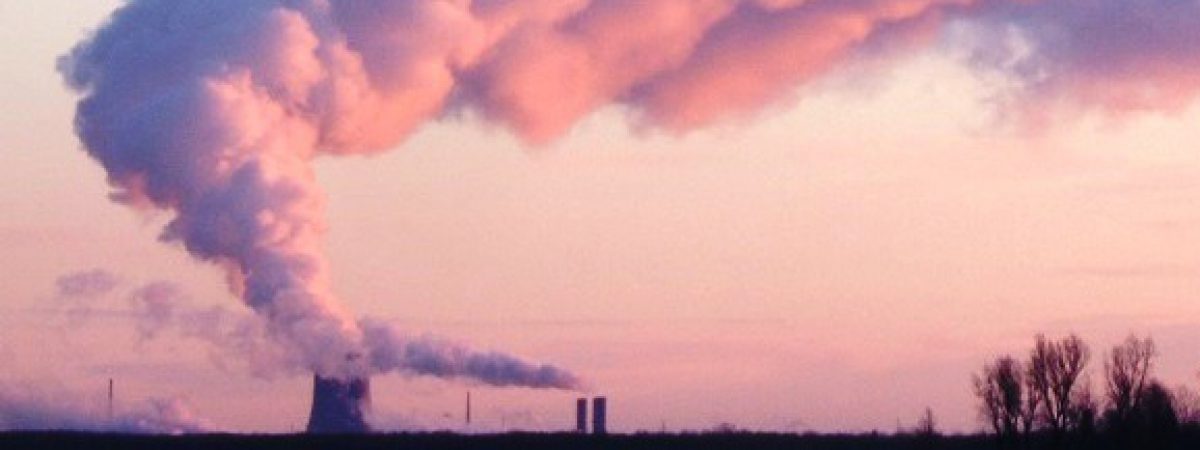
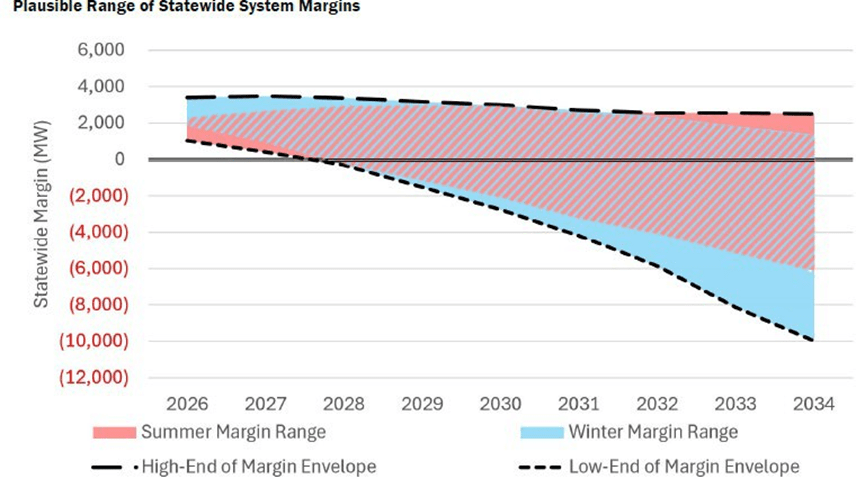
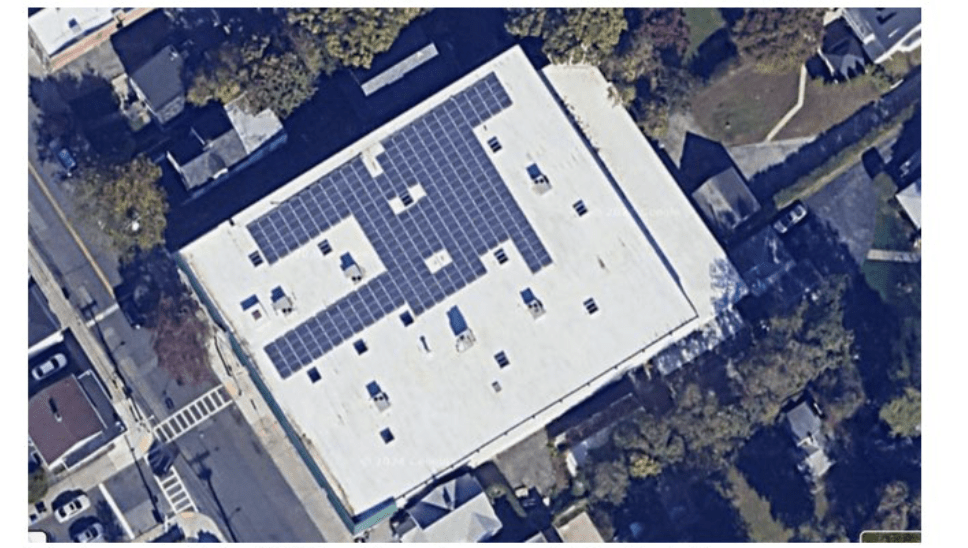
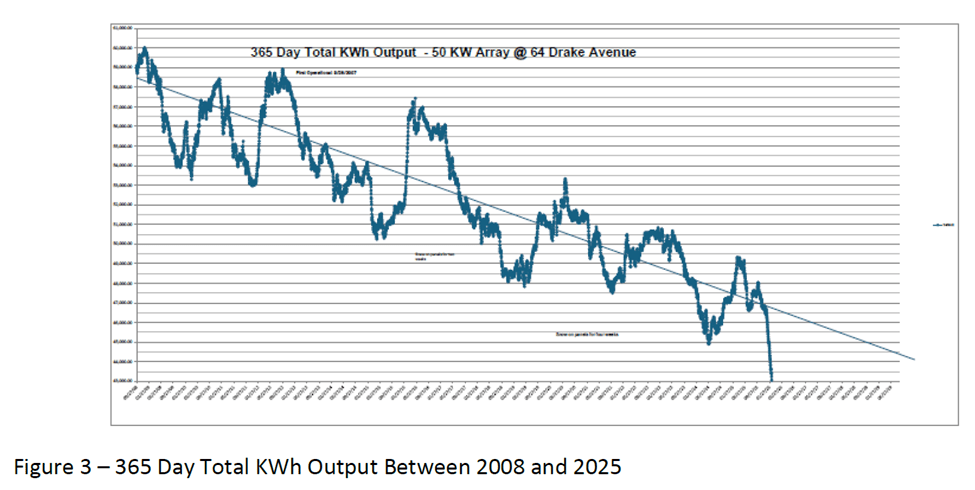

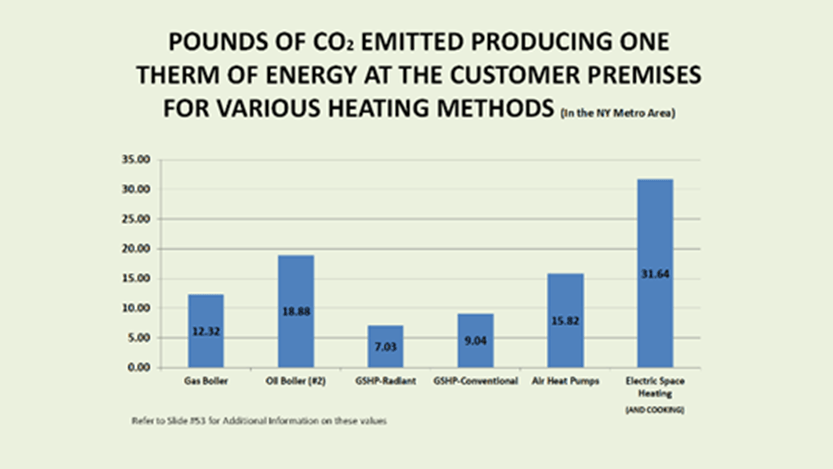
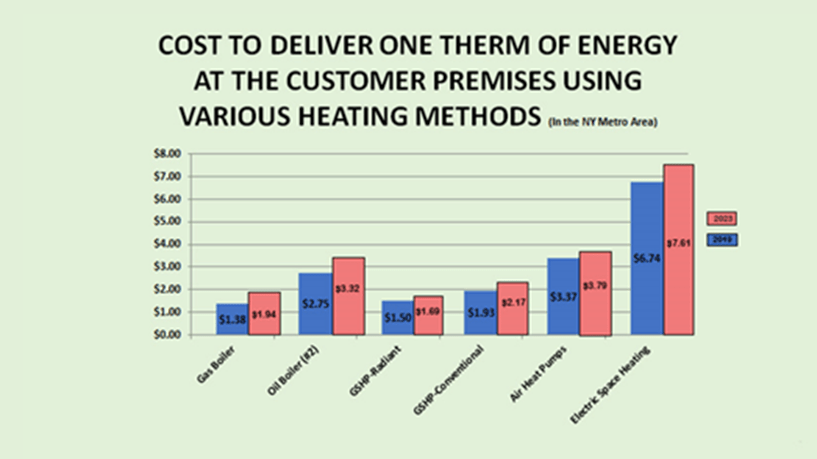

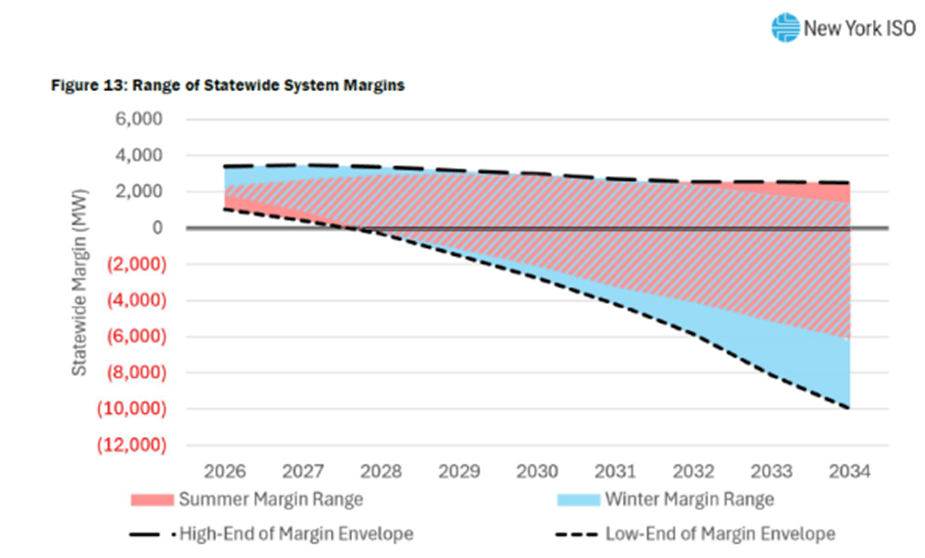
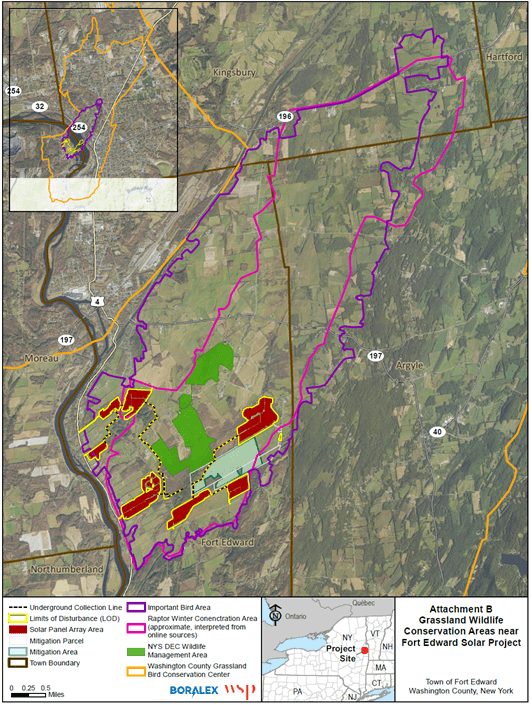
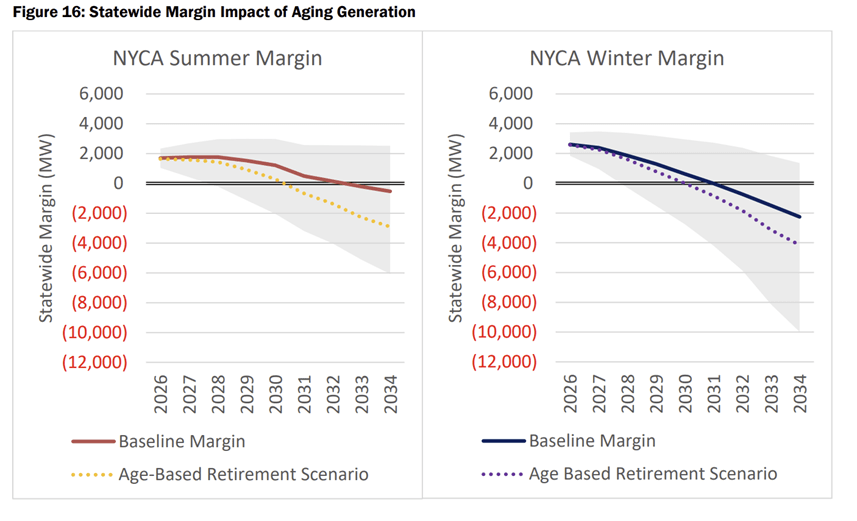
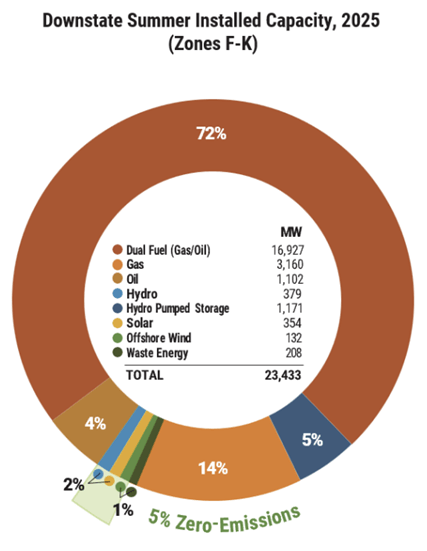
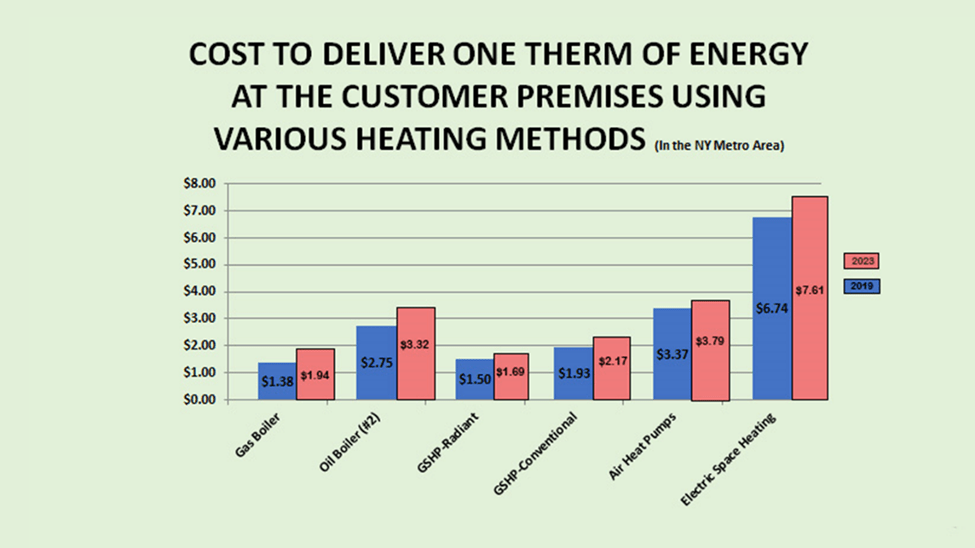
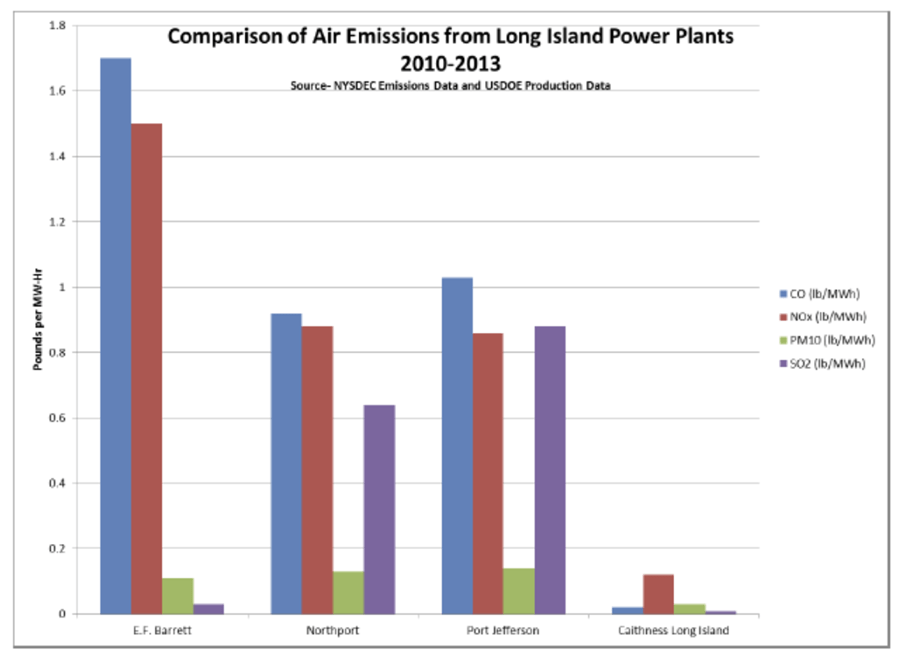
 Pragmatic Environmentalist of New York