The New York Power Authority (NYPA) recently published for public comment the draft first update to its inaugural Strategic Plan for “developing new renewable energy generation projects to supply New Yorkers with affordable, reliable, and emissions-free electricity.” This post describes my comments on the draft.
I am convinced that implementation of the New York Climate Leadership & Community Protection Act (Climate Act) net-zero mandates will do more harm than good if the future electric system relies only on wind, solar, and energy storage because of reliability and affordability risks. I have followed the Climate Act since it was first proposed, submitted comments on the Climate Act implementation plan, and have written over 550 articles about New York’s net-zero transition. The opinions expressed in this article do not reflect the position of any of my previous employers or any other organization I have been associated with, these comments are mine alone.
Net-Zero Aspirations
The Climate Act established a New York “Net Zero” target (85% reduction in GHG emissions and 15% offset of emissions) by 2050 and has two electric sector targets: 70% of the electricity must come from renewable energy by 2030 and all electricity must be generated by “zero-emissions” resources by 2040. The electric sector mandates are implemented in Public Service Law (PSL) Section 66-P, Establishment of a renewable energy program. PSL 66-P also includes often overlooked safety valve provisions. The PSC is empowered by this statute to temporarily suspend or modify these obligations if, after conducting an appropriate hearing, it finds that the PSL 66-P impedes the provision of safe and adequate electric service. Despite my best efforts, there has been no response to this requirement.
NYPA Strategic Plan
I described how NYPA was saddled with a renewable development responsibility in an earlier post describing comments submitted by Dennis Higgins. In short legislation forced NYPA to develop a strategic plan to deploy more renewable energy. They describe this update as follows:
NYPA published a draft of its Updated Strategic Plan on July 29, 2025, which details NYPA’s efforts to develop, own and operate renewable generation and energy storage projects to improve the reliability and resiliency of New York’s grid. The draft Updated Strategic Plan includes 20 new renewable generation projects and four energy storage projects. The plan also includes three new project portfolios that contain 152 storage systems. The new projects are located in every region throughout the state and represent a combined capacity of more than 3.8 gigawatts (GW). Including the first tranche of projects identified in the inaugural strategic plan—approved by the NYPA Board of Trustees in January—NYPA’s draft Updated Strategic Plan includes 64 projects and portfolios representing nearly seven gigawatts of capacity—enough electricity to power nearly seven million homes.
My Comments
My comments argue that the NYPA Draft Plan must develop its own affordability and reliability boundary conditions to ensure that its plans ensure adequate and reliable electric supply consistent with the requirements in PSL 66-P. Technical staff at NYPA understand the impacts of renewable energy on the electric system whereas the legislators that promulgated the law requiring NYPA to advance renewable energy do not. Establishing constraints based on a comprehensive understanding of the electric system is a commonsense safeguard.
I argued that there have been two things since NY politicians expanded NYPA’s renewable energy responsibilities that should be reflected in the 2025 Draft Plan. It has become clear that the costs to implement the Climate Act are significantly more than expected. There was a blackout on the Iberian Peninsula that was associated with solar generation. The Draft Plan should address both.
My overarching concern with Climate Act implementation is affordability. Since the last update to the NYPA strategic renewable energy plan even Governor Hochul has acknowledged this problem. This is relevant for the Draft Plan because the Governor recognizes the goal of “affordable, reliable, emission-free electricity”. Posts on this blog have repeatedly made the point that affordable and reliable electricity goals are meaningless unless those terms are defined. My comments said the Draft Plan must acknowledge the PSL 66-P boundary conditions and recognize that the definitions are imprecise and need to be to be refined to properly protect New Yorkers. The fact that there is insufficient guidance should not mean that NYPA does not have the responsibility to address this problem. NYPA has the technical expertise to define its own criteria for affordable, reliable electricity that should be incorporated into the Draft Plan.
Affordability will likely be the primary driver for changes in the current energy policies because the impacts are directly observable. Reliability concerns are more complex and have not been observed yet in New York. As a result, the problem is not as well recognized. On April 28, 2025, a problem at a photovoltaic plant in Spain triggered a blackout over the Iberian Peninsula. Without a course correction similar issues are inevitable here. The Draft Plan must address the ramifications of this blackout that I described in a recent post where I described several recent articles that explained why increased reliance on renewables threaten reliability.
The first article looked at the physics of power grids and the general behavior of both synchronous generation (gas, hydro and nuclear) and inverter-based generation (wind, solar and batteries). Inverter-based resources like wind, solar, and energy storage do not inherently provide transmission support such as voltage control and reactive power services as the spinning turbine generators relied on today. The overarching problem is that not only do inverter-based resources not provide necessary support functions, but they can also de-stabilize the grid in certain, poorly understood circumstances.
The second post explained that the Spanish blackout “demonstrated the importance of voltage control and reactive power, and how a weak grid, with poor controls, was brought down by a single faulty solar inverter.” The basis of the blog post was a report produced by Red Eléctrica de España (“REE”), the Spanish Transmission System Operator (“TSO”). The key messages in the REE report are:
The blackout was triggered by a solar photo voltaic inverter–induced voltage oscillation
Inappropriate disconnections of wind and solar generation, and widespread failure of reactive power support, escalated the disturbance
The collapse exposes systemic risks in low-inertia grids with high levels of inverter-based resources (“IBRs”) and inadequate voltage control
I think the findings in third article should be should be considered in the Draft Plan because Spanish blackout shows that “the true cost of solar can no longer be hidden from the public.” It explained that:
Last week, an expansive article in Bloomberg Green—confessionally titled “The Fix For Solar Blackouts Is Already Here”—captured this sentiment. It lamented that the penetration of solar and wind has outpaced the buildout of stabilization technologies such as synchronous condensers and grid-forming inverters. In other words, the renewables worked as designed, but the infrastructure to integrate them safely at such high percentages of supply lagged far behind:
“The result is huge spending on new wind and solar capacity, but not enough on grids. The 27 members of the European Union and the UK invest on average $0.7 in grids for every dollar spent on renewables, according to BloombergNEF. Spain ranks the lowest, with only $0.3 spent for every dollar.
Blackouts are causing political backlashes against renewables that politicians cannot afford right now. ‘Here’s the problem: Investments in the right infrastructure are not keeping up,’ said António Guterres, head of the United Nations, in a July speech. ‘That ratio should be one to one.’”
With respect to the NYPA Draft Plan this means that simply building renewable capacity is a flawed policy that will lead to similar problems. The lesson from Europe is that investments in the renewable capacity must be accompanied by investments to maintain reliability in an electric system dependent upon inverter-based resources. If renewable energy capacity is expanded beyond the ability of the transmission system to use it, then blackouts are inevitable.
Other Comments
One lesson learned about this process is that environmental organizers can rally their supporters to submit comments. My comments noted that NYPA needs to confront the emotion-driven rhetoric of clean energy advocates when their claims do not meet technical standards necessary for policy decisions. Many of the numeous comments submitted begin with the demand that NYPA must double its efforts and build the 15GW that New York needs “to comply with the Climate Act, lower electricity bills, create 25,000 green union jobs, and end our fossil fuel dependence.” My comments responded to these claims.
The comments that demand that NYPA “must build 15 GW of public renewable energy by 2030” ignore reality. Numerous implementation issues have delayed deployments to the point where the Clean Energy Standard Biennial Review admits that the 70% renewable energy by 2030 target could be delayed. For the same reasons, there should be no expectation that NYPA can accelerate its deployment substantially.
The myth that wind and solar will lower electricity bills is evaporating as described in the section addressing the Spanish blackout. There are two relevant implications for the NYPA Draft Plan. It is not enough to just build renewable energy. Investment in transmission upgrades cited by the head of the United Nations must be included. Secondly NYPA must include the grid infrastructure investments and necessary energy storage required to back up the intermittent wind and solar deployed to meet legislative requirements.
Commenters claimed without any evidence that building 15 GW of renewables would “create 25,000 green union jobs”. Too often New York’s energy policies have ignored experiences in other jurisdictions are further down the net-zero transition path. David Turver has described the cost of green energy jobs in the United Kingdom. One of the points he makes is that number of green jobs means that the energy sector is becoming less productive. Most of these jobs are utterly dependent upon subsidies which adds another inefficiency. Based on his projections the average subsidy across all three sectors is over $259,000 per job. This leads to the question that the Draft Plan must address. Who is going to pay for those subsidies?
The claim that deploying more renewables will “end our fossil fuel dependence” ignores society’s broader dependency on fossil fuels. Ronald Stien has made the point that “the world’s 8 billion are dependent on more than 6,000 products made from the oil derivatives manufactured from crude oil”. Furthermore, until dispatchable, emissions-free resources are deployed New York’s electric grid has to rely on dispatchable fossil fuel generators. Deploying excess renewable energy affects the economic viability of the backup fossil fuel generators and will likely lead to subsidies to maintain that necessary support.
Discussion
NYPA has the technical expertise to define criteria for reliability standards necessary to address the observed problems that led to the Spanish blackout. My comments assert that the Draft Plan must define safety valve criteria for affordability and reliability metrics. If the safety valve criteria are exceeded, then the Draft Plan should be paused until alternatives that will not adversely affect affordability and reliability are identified and proved feasible in a demonstration project. This approach is the only way to ensure that the Draft Plan programs do not cause unaffordable and unreliable energy.
Conclusion
I think that mixing energy policy and politics is a recipe for disaster. The hubris of the politicians who enabled this legislation knows no bounds. It is not only that their legislation mandates the impossible, but they also hamstring organizations in the state responsible for providing affordable, clean, and reliable electricity. Upset that the deployment of renewable energy was not progressing fast enough to save the planet, the legislation forced NYPA to develop a strategic plan to deploy more renewable energy without any consideration of the consequences.
The New York Power Authority (NYPA) recently published for public comment the draft first update to its inaugural Strategic Plan for “developing new renewable energy generation projects to supply New Yorkers with affordable, reliable, and emissions-free electricity.” Dennis Higgins graciously agreed to let me publicize his comments on the draft.
Dennis Higgins passes on his commentaries associated with New York’s Climate Leadership and Community Protection Act (Climate Act) to me. He taught for just a few years at St Lawrence and Scranton University, but spent most of his career at SUNY Oneonta, teaching Mathematics and Computer Science. He retired early, several years ago, in order to devote more time to home-schooling his four daughters. Dennis and his wife run a farm with large vegetable gardens where they keep horses and raise chickens, goats, and beef. He has been involved in environmental and energy issues for a decade or more. Although he did work extensively with the ‘Big Greens’ in efforts to stop gas infrastructure, his views on what needs to happen, and his opinions of Big Green advocacy, have forced him to part ways with their renewable energy agenda.
NYPA Strategic Plan
The New York political process and its one party rule uses the threat of shutting down state agencies to hijack annual budget vote to also include major policy legislation like the Climate Act. Recently it seems that every budget bill includes another New York energy policy mandate. The NYPA renewables responsibilities is an example:
The 2023-24 Enacted State Budget significantly expanded the New York Power Authority’s role in the renewable energy sector. Specifically, the new authority allows NYPA to plan, design, develop, finance, construct, own, operate, maintain and improve renewable energy generation projects to maintain an adequate and reliable supply of electric power and energy and support New York State’s renewable energy goals established in the Climate Leadership and Community Protection Act.
I think that mixing energy policy and politics is a recipe for disaster. The hubris of the supporters of energy policy knows no bounds. It is not only that their legislation mandates the impossible, but they also hamstring organizations in the state responsible for providing affordable, clean, and reliable electricity. Upset that the deployment of renewable energy was not progressing fast enough to save the planet, the legislation forced NYPA to develop a strategic plan to deploy more renewable energy.
NYPA published a draft of its Updated Strategic Plan on July 29, 2025, which details NYPA’s efforts to develop, own and operate renewable generation and energy storage projects to improve the reliability and resiliency of New York’s grid. The draft Updated Strategic Plan includes 20 new renewable generation projects and four energy storage projects. The plan also includes three new project portfolios that contain 152 storage systems. The new projects are located in every region throughout the state and represent a combined capacity of more than 3.8 gigawatts (GW). Including the first tranche of projects identified in the inaugural strategic plan—approved by the NYPA Board of Trustees in January—NYPA’s draft Updated Strategic Plan includes 64 projects and portfolios representing nearly seven gigawatts of capacity—enough electricity to power nearly seven million homes.
Cult Comments
Submitted comments on the 2025 NYPA Renewables Draft Updated Strategic Plan can be viewed. To give you a flavor of the political constituency that advocated for NYPA to have a role in renewables development I extracted the most common scripted comment. Gary Abernathy perfectly describes the people who submitted the scripted comments as “Worshipers at the altar of climate calamity”.
The worshipers have no concept of energy reality. There are multiple reasons that deployment is slower than envisioned by the authors of the Climate Act. They demand that NYPA double down on the number of public renewables going from the proposed 7 GW to 15 GW by 2030 because we need to “comply with the Climate Act, lower electricity bills, create 25,000 green union jobs, and end our fossil fuel dependence.” The reason is “we face life-threatening heat waves, flash floods, skyrocketing energy bills, and an attack on climate action from the federal government.” All emotion and no substantive justification. In the real world wishing hard will not overcome the supply chain issues, permitting concerns, financing problems with higher interest rates, and skilled tradesmen shortages problems that have delayed deployment.
Higgins Comments
Higgins prepared extensive comments that questioned whether any energy plan “reliant upon low-capacity factor, land hungry assets will prove reliable or affordable.” He also raises an important consideration for Upstate New Yorkers: will requiring the upstate region to forfeit land in what will prove a failed effort to power metro New York pass the ‘environmental justice’ litmus test.
His comments cover six points:
NERC on the NY plan
Neither academic nor empirical evidence indicate the state plan will succeed
NERC warning — IBRs undermine grid reliability
Capacity markets hammered by intermittent resources increasing energy costs and undermining reliability
Intermittent resources will not prove economical or reliable according to Sweden and others
NYISO has repeatedly warned of reliability issues
The first point addresses interconnection issues with neighboring jurisdictions. He notes that the New York plan “assumes markets will be available for our excess wind and solar energy” so that we can sell excess when it is not needed. He also points out that we will also be dependent upon our neighbors when New York wind and solar resources are not enough to support our needs. Higgins explains that the North American Energy Reliability Corporation (NERC) has highlighted risks to the bulk power system from wind and solar deployments that require the massive transmission upgrades needed for those energy transfers.
Higgins second point is one I constantly reiterate. Academic studies and empirical evidence do not support New York’s renewable push. He references the following National Renewable Energy Laboratory (NREL) chart that he says “shows the asymptotic costs of a system as penetration of renewables increases. Expensive battery energy storage can somewhat solve the “short term” variability of intermittent resource generation. But there is no day-night or seasonal solution.” I would add that the chart should also include the long duration dark doldrum event problem in the upper right portion of the curve. New York organizations responsible for the electric system all agree that a new dispatchable emission-free resource (DEFR) is needed. I believe that including it would extend the graph exponentially higher.
In his third argument Higgins points out that NERC has also warned that inverter-based resources undermine grid reliability. He quotes a NERC report:
Since 2016, NERC has analyzed numerous major events totaling more than 15,000 MW of unexpected generation reduction. These major events were not predicted through current planning processes. Furthermore, NERC studies were not able to replicate the system and resource behavior that occurred during the events, indicating systemic deficiencies in industry’s ability to accurately represent the performance of IBRs and study the effects of IBR on the bulk power system (BPS).
The fourth problem is that capacity markets are hammered by intermittent resources that increase energy costs and undermine reliability. The necessity to have firm dispatchable resources needed to back up intermittent wind and solar means that in jurisdictions that are further down the renewable deployment path there is an increased need for peaker power plants that burn natural gas. He describes the perverse economics that result. This will exacerbate New York’s energy affordability crisis
Higgins makes another point that I often raise. Evidence from other jurisdictions shows that intermittent resources will not prove economical or reliable. He cites results that show that
Controlling for country fixed effects and the rich dynamics of renewable energy capacity, we show that, all other things equal, a 1% percent increase in the share of fast reacting fossil technologies is associated with a 0.88% percent increase in renewable generation capacity in the long term.
Translated that means that for every MW of installed renewable capacity fast reacting dispatchable resources are necessary. The only available resource is fossil-fired generators. New York’s fossil fleet is aging. Consequently, we are going to have to replace all the fossil plants in the long term or rely on more expensive battery storage and DEFR. How can anyone claim that wind and solar are cheaper when they need one for one capacity backup is a mystery to me.
The final point that Higgins makes is that the New York Independent System Operator (NYISO has repeatedly warned of reliability issues. He quotes the latest Power Trends report:
As traditional fossil-fueled generation deactivates in response to decarbonization goals and tighter emissions regulations, reliability margins on the grid are eroding. Further, the remaining fossil-fueled generation fleet, which provides many of the essential reliability services to the grid, is increasingly made up of aging resources, raising further concerns about grid reliability. Strong reliability margins enable the grid to meet peak demand, respond to sudden disturbances, and avoid outages. They also support the grid’s ability to respond to risks associated with extreme weather conditions. As these margins narrow, consumers face greater risk of outages if the resources needed for reliability are unavailable due to policy mandates or failures associated with aging equipment.
Higgins raises substantive issues that could derail the net-zero transition. The political mandate to force NYPA to build as much renewable capacity as possible as quickly as possible ignores the very real possibility that the unresolved need for DEFR may mean that the renewable approach is a false solution. Obviously, New York needs to pause implementation and consider the schedule and ambition of the Climate Act.
Request
Please consider submitting comments for the proceeding. Written comments on the NYPA Renewables Strategic Plan can be submitted through Sept 12th here: https://publiccomments.nypa.gov/. Explain that you are worried about costs and reliability and suggest that the strategic plan should take those factors into account.
State agencies tend to count the number of comments that support their positions to justify going ahead with their plans. Even if you submit a comment that only says you agree with Vincent Gambini’s response to the scripted comments that say NYPA should build 15 GW of renewables by 2030, it would be useful. For once, I would like to see comments from those of us outside the cult of climate catastrophes outnumber those zealots.
Conclusion
This process is yet another component of the Climate Act net-zero transition. Even thought the costs are beginning to impact New York utility bills. the impacts of the Climate Act still are flying under the radar of most people. It is just getting started and it would be better to stop it now than wait. Contact your elected officials and demand accountability.
I recently wrote an article about the claim that renewable energy can reduce costs in the presentation by Jeff Freedman from the Atmospheric Sciences Research Center, University at Albany at theEnergy Planning Board on March 3, 2025. I concluded that the claim is based on hope not evidence. Dr. Freedman’s presentation also included slides that support the Hochul Administration narrative that Greenhouse Gases (GHG) are the cause of the observed increases in global temperature and that the impacts of that warming are evident today. This article explains why I disagree with those claims in Freedman’s presentation.
I am convinced that implementation of the New York Climate Leadership & Community Protection Act (Climate Act) net-zero mandates will do more harm than good if the future electric system relies only on wind, solar, and energy storage because of reliability and affordability risks. I have followed the Climate Act since it was first proposed, submitted comments on the Climate Act implementation plan, and have written over 500 articles about New York’s net-zero transition. The opinions expressed in this article do not reflect the position of any of my previous employers or any other organization I have been associated with, these comments are mine alone.
The State Energy Plan is a comprehensive roadmap to build a clean, resilient, and affordable energy system for all New Yorkers. The Plan provides broad program and policy development direction to guide energy-related decision-making in the public and private sectors within New York State.
The current Plan was initially published in 2015, and updated in 2020, when it was amended to align with the objectives of the 2019 Climate Leadership and Community Protection Act (Climate Act). Since the last update, the Climate Action Council produced its Scoping Plan, examining many of the energy issues that contribute to climate change and offering recommendations that are currently being implemented by the State.
On September 9, 2024, the Hochul Administration initiated the State Energy Plan process to update the Plan consistent with the Climate Act. The goal of the planning process is to “map the state’s energy future by showing how the state can ensure adequate supplies of power, reduce demand through new technologies and energy efficiency, preserve the environment, reduce dependence on imported gas and oil, stimulate economic growth, and preserve the individual welfare of New York citizens and energy users.” The major question that must be addressed is whether the Hochul Administration will use the energy planning process as an opportunity to consider the advice of stakeholders in its stakeholder process or just an obligation with no attempt to meaningfully engage with any comments inconsistent with the narrative.
If the March 3 meeting is any indication, then the Energy Plan will be another political show extolling the virtues of the Climate Act and ignoring anything inconsistent with the political narrative. In other words, it looks just like the Scoping Plan process. Many of the appointees to the Climate Action Council chosen to approve the Scoping Plan were chosen because of their position within the Hochul Administration or political connections and not their technical expertise. One feature of the Scoping Plan process was the New York State Energy Research & Development Authority (NYSERDA) strict adherence to the political narrative rather than full disclosure of inconsistent issues. This article addresses several arguments made in the NYSERDA presentation by Freedman that misled the Energy Planning Board members.
Action undertaken by New York to reduce greenhouse emissions will have an impact on global greenhouse gas emissions and the rate of climate change. In addition, such action will encourage other jurisdictions to implement complementary greenhouse gas reduction strategies and provide an example of how such strategies can be implemented. It will also advance the development of green technologies and sustainable practices within the private sector, which can have far-reaching impacts such as a reduction in the cost of renewable energy components, and the creation of jobs and tax revenues in New York.
The presentation slides for the March 3 meeting included Freedman’s Key Findings slide that support this narrative. The first finding says that “Climate change is already constraining some sources of energy supply and stressing transmission and distribution infrastructure through extreme heat, changes in precipitation, and increasing storm intensity”. The implication is that reducing GHG emissions in New York will affect the rate of climate change which they claim has already become evident. The second finding that “Patterns of energy demand are shifting due to climate change and are expected to continue evolving over the coming decades” explicitly states that impacts are observable.
These findings were presented to the Energy Planning Boad as unequivocal statements of fact. In reality, there is significant uncertainty that should be considered in the draft Energy Plan.
Comparison of CO2 and Global Temperature
The common basis of the threat of climate change caused by human emissions of GHG is the graph comparing the concentration of CO2 and global temperatures that was included in Freedman’s presentation. There is no question that increasing the concentration of GHG in the atmosphere will reduce the out-going long wave radiation which will warm the atmosphere, and the graph shows a correlation. However, the conclusion that reducing New York’s GHG will affect global temperatures and the alleged weather impacts given the small contribution to the global concentration is unwarranted.
Esteemed climate scientist Richard Lindzen describes the energy budget in context:
The energy budget of this system involves the absorption and re-emission of about 200 watts per square meter. Doubling CO2 involves a 2% perturbation to this budget. So do minor changes in clouds and other features, and such changes are common. In this complex multifactor system, what is the likelihood of the climate (which, itself, consists in many variables and not just globally averaged temperature anomaly) is controlled by this 2% perturbation in a single variable?
Lindzen points out that believing this is “pretty close to believing in magic”. Nonetheless, Freedman presents the graph of CO2 concentration and global temperature without any mention of the shortcomings and complexities of the climate system.
My point is that this is not as obvious a relationship as claimed. Sabine Hossenfelder produces You Tube videos on science and technology. Her climate change-related videos generally adhere to the narrative, but she has shown signs of waking up to reality. Peter Ridd commented on her awakening noting that she does not quite get there. I call your attention to Ridd’s commentary where he talks about uncertainties about how the earth’s weather system works. Especially relevant to Freedman’s graphic is Ridd’s explanation of temperature and CO2 concentrations going further back in time than Freedman’s graph. Ridd points out in the following graph that temperatures were higher many times in the last 10,000 years at the same time that CO2 concentrations were lower. That directly contradicts the notion that global temperature is primarily driven by anthropogenic CO2 concentrations.
Climate vs. Weather
Freedman perpetuates the Climate Act myth that climate change is increasing extreme heat, changes in precipitation, and increasing storm intensity with a graph that shows increasing storm events in New York from 2001 to 2024. In general, climate is what you expect, and weather is what you get. To determine what you expect from climate, meteorologists use a 30-year climatological average. Therefore, to have a climate trend you need to look at the difference between two 30-year averages at a minimum. Freedman’s graph is a weather average trend unsuitable for making any climate trends claims.
After I drafted this article Anthony Watts summed up my problems with claims that climate change is an existential threat in a post entitled “Is Climate Change Real? Short Answer: Yes — But It’s Complicated.” I published an article that quoted the article with my annotated comments relating the points he made to the Climate Act. I highly recommend reading that aartilce.
Basis for Narrative Claims
Expert presentations designed to promote the Climate Act narrative to an audience such as the Energy Planning Board often cite the results of modeling. In this instance there is a slide that describes the “effects of climate change on renewable energy distribution in New York State” based on “results from high-resolution dynamic downscaling”. Sounds very scientific and above reproach.
The grid size for CMIP5 (Coupled Model Intercomparison Project Phase 5) climate models typically ranges between 125 km to 300 km. This is too coarse for predicting the impacts of climate change on New York so higher-resolution regional models have been used in projects sponsored by NYSERDA to project impacts. This process is called dynamical downscaling. Unmentioned are the errors and inherited biases in the process from the Global Climate Models (GCM) for the following:
Temperature trends: Persistent warm/cold biases in coastal and inland regions, exacerbated by future GCM projections exceeding historical maxima.
Precipitation patterns: Systematic underestimation of seasonal rainfall in regions like the Caribbean and Southern Africa.
Extreme events: Misrepresentation of high-frequency, low-intensity rainfall (“drizzle problem”) due to GCM limitations.
I think that those issues underestimate the problems because the fact is the GCM projections do not include the physics of clouds. The problem is that coarse grid size cannot incorporate precipitation or extreme events. This is not to say that the models don’t predict storms, just keep in mind that they are little more than guesses strongly influenced by the biases of the modelers.
There are structural RCM limitations that introduce their own errors despite higher grid size resolution:
Simplified physics: Inadequate representation of convective processes and local interactions (e.g., lake effects).
Scale mismatches: Difficulty resolving sub-grid features even at 10–50 km resolutions.
Computational constraints: Limited ability to run multiple GCM-RCM combinations, reducing uncertainty sampling.
Those limitations are relevant to the purported New York results. For five months of the year much of Upstate weather is strongly influenced by the Great Lakes. Convective processes and local interactions like lake effect are erroneous in the RCM because the scale of the lake effects is smaller than the resolution of the models. I have been working with weather models and Upstate mesoscale weather regimes for decades and I am positive that the model projections are poor at best. Combined with the fact that the projections use a totally unrealistic estimate of future emissions (the RCP 8.5 scenario), I do not believe the results presented have any value.
Discussion
NYSERDA scripted the presentation to the Energy Board so that it was completely consistent with the narrative that climate change impacts are occurring today. I recently showed that the uncertainty of the historical temperature measurements is similar to the alleged temperature increase due to GHG emissions. This post explains that the claimed trend in storm events is not a climatic trend because the time range is too short, and that the model projections of weather have limited value. As a result, the Energy Planning Board came away from the meeting erroneously believing that the effects of climate change are occurring now and that reducing New York GHG emissions will reduce those impacts.
This is not in the best interests of New York. The New York energy plan is supposed to be a roadmap for a “clean, resilient, and affordable energy system for all New Yorkers.” There are conflicting priorities and challenges for those three goals. The State Energy Planning Board should be given all the information so that they can “focus on strategies to meet future energy needs and advance economy-wide decarbonization, while balancing reliability, affordability, environmental and public health impacts and economic growth.” The presentation did not give any of the qualifying information about uncertainties, so it gave the Board a false basis for evaluating the Climate Act approach and schedule.
The basic strategy for decarbonizing the economy is electrification of all sectors. Authors of the Climate Act believed that no new technology was needed for the transition of the electric sector to “zero emissions” using wind, solar, and hydro. All the organizations responsible for electric system reliability agree that a new dispatchable, emissions-free resource is necessary for extended periods of low wind and solar resource availability so that presumption is wrong. That means that the schedule must be adjusted to account for the necessity to develop, test, and deploy this new technology.
A primary driver for the Climate Act schedule was the perceived necessity to do something immediately because the effects of climate change are evident now. As shown here, that argument is not supported when temperature trend uncertainty is considered, long-term trends of weather events are evaluated, and the weaknesses of global climate models are acknowledged. Those results do not necessarily mean that it is inappropriate to do something, but the results do mean that the claims we must act immediately are unwarranted. We have time to do this right. I think that is a primary concept that should be incorporated into the Energy Plan.
Conclusion
I am disappointed that NYSERDA has become so politicized. The NYSERDA presentation by Dr. Freedman gave the Energy Planning Board misleading information about the threat of climate change and the need to act immediately. It is becoming increasingly evident that there are so many unanticipated issues associated with the Climate Act implementation that a pause to re-evaluate the schedule and goals is in order. If NYSERDA documentation had not been politicized the Scoping Plan could have included caveats and achievement milestones to provide an off-ramp to a Plan B that is clearly necessary. As it stands now, admitting delays and unavailable technologies will be a political embarrassment. However, it is necessary to ensure that reliability, affordability, environmental and public health impacts, and economic growth goals can be achieved.
New York City Local Law 97 (LL97) mandates that “most buildings over 25,000 square feet are required to meet new energy efficiency and greenhouse gas emissions limits as of 2024, with stricter limits coming into effect in 2030.” Rich Ellenbogen explains that the numbers underpinning Local Law 97 underestimate electric grid emissions by between 39% and 47% and uses incorrect emissions numbers to calculate the penalties and as a basis for electric grid efficiency.
Ellenbogen is the President [BIO] Allied Converters and frequently copies me on emails that address various issues associated with the Climate Leadership and Community Protection Act (Climate Act). I have published other articles by Ellenbogen including a description of his keynote address to the Business Council of New York 2023 Renewable Energy Conference Energy titled: “Energy on Demand as the Life Blood of Business and Entrepreneurship in the State -video here: Why NY State Must Rethink Its Energy Plan and Ten Suggestions to Help Fix the Problems” and another video presentation he developed describing problems with Climate Act implementation. He comes to the table as an engineer who truly cares about the environment and as an early adopter of renewable technologies going back to the 1990’s at both his home and business two decades ago.
Local Law 97
The goal of LL97 is to reduce the emissions produced by the city’s largest buildings 40 percent by 2030 and net zero by 2050. Like New York’s Climate Leadership and Community Protection Act (Climate Act) this is political theater without regard to practicality. Last July I published an article here that described an evaluation by Ellenbogen, Francis Menton, and myself that the supporting documentation for LL97 falls far short of what is needed to provide New York City (NYC) residents in affected buildings with any assurance that the LL97 mandates can be met at the same time the Climate Act is transforming the electric energy system with massive deployments of wind, solar, and energy storage and unproven generating resources. This means extraordinary risks for keeping the heat on in the winter in NYC. Ellenbogen documents specific instances where their numbers are wrong in this post.
Problems
In this section I am going to document Ellenbogen’s criticisms re-formatted from an email to a blog post.
LL97 uses false metrics to calculate carbon emissions. Contrary to what they claim, it increases the amount of energy required to run a building. The city’s electricity is 91% fossil fuel generated. For the foreseeable future, all electric heat will operate from the least efficient fossil fuel plants operating with about a 33% efficiency. After about a 7% line loss, that is 30% efficient delivered to the building. Some of the remote generation will be oil fired with a 50% higher GHG footprint than natural gas and higher NOx, SOx, and PM2.5 emissions. Even if the heat pumps are 280% efficient, that leaves a holistic efficiency of 84%, which is at least 5% – 10% lower than just installing a new high efficiency onsite gas combustion that will operate with a net efficiency of between 90% – 95%. Do they think that remote carbon emissions away from NYC buildings won’t affect climate change?
The numbers underpinning Local Law 97 are underestimating electric grid emissions by between 39% and 47%. By making the electric utility system look “greener” they are providing a false basis for the entire law.
If you look at the image below, taken from page 36 (link), you will see in clause 1 that they are using 0.000288962 tCO2e per KWh (metric tons/Kwh). Note that the document at the link cannot be downloaded which makes it very difficult for people to challenge the contents. That value equals 0.288962 tCO2e per Megawatt Hour (MWh) which can be converted (0.288962 x 2203 pounds per metric ton) to 636.5 pounds per MWh that is used as the basis for utility system emissions in LL97.
However, if you look at the table below from the US EPA, highlighted in yellow are the actual emissions that are between 886.6 pounds per MWH and 973 pounds per MWh in NY City and Westchester. So the actual utility emissions are between 39% and 47% higher than what the city is using to calculate their policy values and the associated penalties.
The numbers used for future emissions are also a problem. The 636.5 pounds per MWh used in the LL97 document drops to 319 pounds/MWh in 2030 – 2034 (converted from 0.000145 value listed in the excerpt below) which is half of the 2024 value. There is no explanation of how they expect to achieve that when it is common knowledge that all of the renewable installation numbers are being pushed back. They are starting from numbers that err in their favor by over 40% and it just gets worse from there.
The numbers used to calculate the district steam emissions relative to the gas emissions in the document are just as big of a fantasy. New York City has an extensive steam system with over 100 miles of pipe that bring steam from central plants to buildings in Manhattan. The unacknowledged problem in LL97 is that there are extensive energy losses in the steam system. Because of the age and size of the system they are dumping the hot water at the end of the loop, the pipes leak (as exemplified by the iconic steam puffs coming out of manholes), and they have miles of high temperature steam lines dissipating energy before it ever gets delivered so there are significant losses. Nevertheless, LL97 calculations claim district steam with a 15% lower GHG footprint than 90% – 95% efficient on-site gas combustion. LL97 uses the following assumptions for building emissions taken from §28-320.3.1.1 Greenhouse gas coefficient of energy consumption page 36:
2) Gas 0.00005311 tCO2e per KWh or 399 lb. CO2e per MWh
5) Steam 0.00004493 tCO2e per KWh or 338 lb. CO2e per MWh
They are doing everything in their power to make gas look bad.
Even more comical is the clause in section 28-320.6.3 which is also copied below regarding false statements which is meant to pertain to buildings misreporting their emissions. What they are saying is that it is okay for the city to outright lie on their policies but they will fine you up to $500,000 and put you in jail for 30 days if you do it.
On occasion Rich and I talk to each other when we discover something so absurd that it beggars the imagination. When Rich dug into the numbers and discovered these results we talked. Basically, whoever wrote this document is just pulling numbers out of thin air. It is a total fabrication. When you can easily find such flagrant errors in major parts of the document, nothing that is contained in it can be trusted. Everything has been skewed to justify someone’s worldview and policy desires.
Because of these false numbers, buildings in NY City are going be saddled with technologies that don’t produce emission savings and will simultaneously result in far higher operating costs, besides having huge upfront capital installation costs. It provides further rationale why I believe that facilities affected by LL97 should not even try to meet the law.
For those of us who have been analyzing this and understand the numbers, it has been apparent for years that the entire policies, both in LL97 and the Climate Leadership & Community Protection Act were fabrications. These numbers just prove it.
Update 8/11/2024: A colleague of mine who is much more aware of New York grid governance contacted me. He said that the New York State Reliability Council should have been cited earlier in the article. Our New York reliability rules are more stringent than other Regional Transmission Organizations. and the Council is addressing all of the technical issues that this book highlights as concerns.
My background in the electric sector has always been associated with power plant operations. However, the relationship between power plants and the electric grid was something that I really did not bother to understand because it was mostly irrelevant to my responsibilities. In recent years I started to try to understand more about how the plants are dispatched and became increasingly uncomfortable with what seemed to be happening. Meredith Angwin’s book Shorting the Grid – The Hidden Fragility of Our Electric Grid has been a revelation. It is an easy-to-understand description of the arcane world of current electric grid operations, and it explained why some of the things I see happening are leading to a more fragile electric grid.
New York’s Climate Leadership & Community Protection Act (Climate Act) mandates a massive change to the electric system which is complicated by New York’s electric grid structure. I have followed the Climate Act since it was first proposed, submitted comments on the Climate Act implementation plan, and have written over 400 articles about New York’s net-zero transition. The opinions expressed in this article do not reflect the position of any of my previous employers or any other organization that I have been associated with, these comments are mine alone.
Overview
The Climate Act established a New York “Net Zero” target (85% reduction in GHG emissions and 15% offset of emissions) by 2050. It includes an interim 2030 reduction target of a 40% GHG reduction by 2030, a 70% electric system renewable energy mandate by 2030, and a requirement that all electricity generated be “zero-emissions” resources by 2040. The Climate Action Council (CAC) was responsible for preparing the Scoping Plan that outlined how to “achieve the State’s bold clean energy and climate agenda.” The Integration Analysis prepared by the New York State Energy Research and Development Authority (NYSERDA) and its consultants quantifies the impact of the electrification strategies used to reduce greenhouse gas emissions. That material was used to develop the Draft Scoping Plan outline of strategies. After a year-long review, the Scoping Plan was finalized and approved by the CAC at the end of 2022. Since then, the State has been trying to implement the Scoping Plan recommendations through regulations, Public Service Commission orders, and legislation.
However, recent reports have raised problems with the implementation process. The New York Independent System Operator (NYISO) recently released the 2023-2042 System & Resource Outlook notes that there are complications that the proposed New York electric system must address related to reliance on weather-dependent wind and solar resources. My particular concern is that the NYISO planning process must not only identify technological solutions but also devise market mechanisms consistent with New York’s electric energy market.
Meredith Angwin describes herself in the book:
As a working chemist, Meredith Angwin headed projects that lowered pollution and increased reliability on the electric grid. Her work included pollution control for nitrogen oxides in gas-fired combustion turbines, and corrosion control in geothermal and nuclear systems.
She was one of the first women to be a project manager at the Electric Power Research Institute. She led projects in renew- able and nuclear energy.
In the past ten years, she began to study and take part in grid oversight and governance. For four years, she served on the Coordinating Committee for the Consumer Liaison Group associated with ISO-NE, her local grid operator. She teaches courses and presents workshops on the electric grid. She is also an advocate for nuclear energy. Finally, she is the author of the Electric Grandma blog.
Angwin’s book describes how the electric grid works and current problems facing the system. It concludes with a discussion of what kind of grid we should strive to have. I thought that her framing of grid goals was very good. She said that we need to ask ourselves two practical and moral questions.
Do we deserve to have electricity available at all times? Or is an intermittent, fragile grid good enough?
How important are the various aspects of our electric supply? That is, what are the values we assign to things like reliability, cost, low environmental impact, and low carbon dioxide releases?
I am going to review the book with respect to those questions in the context of the Climate Act and New York energy policy. The chapters are grouped into five sections.
Angelic Miracles and Easy Problems
The first section encompasses ten chapters of the book that describe the shift in electric grid governance over the last few decades. When I started work at Niagara Mohawk Power Corporation (NMPC) in 1981 the electric grid was operated by vertically integrated utilities. After the 1965 blackout in the Northeast the utilities realized that they needed a state-wide transmission operator, and the New York Power Pool was formed. The state’s utility companies owned and operated generating assets and the Power Pool dispatched the plants. The NYS Public Service Commission and the utilities emphasized reliability. When I joined NMPC, management was very proud that they had coal, oil, hydro, and nuclear generating stations (at the time natural gas was too expensive to use for power production). Not only that, the coal and oil plants had alternate ways to supply fuel to the plants. The result was a robust and stable generating system and grid.
A summary of how electric deregulation occurred in New York describes the transition away from vertically integrated utilities in New York. New York’s legislature thinks they know how to deal with energy policy and they passed legislation that had the goal of a competitive wholesale market by 1997 and a competitive retail market by 1998. As part of this legislation all utility companies were required to restructure to enable these changes. Angwin describes how regional transmission organizations (RTOs) like the New York Independent System Operator (NYISO) replaced bodies like the New York Power Pool as part of this deregulation process.
A key difference between the old approach and the new de-regulated approach is that “no group or agency has the responsibility for grid reliability”. The NYISO and the Public Service Commission determine what they think is necessary and solicit developers to build those resources. If those resources do not get built because nobody bids, the developers realize that they cannot make money and cancel commitments, there are delays in deployment, or for any other reason, there is nobody on the hook.
This section of the book describes how the electric system works. That is a very difficult challenge, but she does a good job – the glossary of acronyms and jargon is worth the price of the book. She fills in details of the differences between the vertically integrated utilities and the regional transmission operators. The last chapter describes a specific event that illustrates the challenges of the new approach that has made reliable electricity more difficult to provide.
Policy, Markets, and Fuel Security
The next 15 chapters delve into the world of de-regulated electricity markets. The impetus for de-regulated electric grids was the presumption that monopolies were inextricably linked to higher prices and poorer outcomes. Successful deregulation of the phone companies and airlines drove the de-regulation bandwagon. Angwin argues that electric deregulation has not been a success because consumers do not have much choice in providers, there is minimal transparency within the market, and accountability for the system has been spread across different players.
The complexity of the system, the vested interests of generating companies, transmission owners, and the system operators coupled with a lack of accountability to the public has led to gaming the system for financial gain. Trying to adjust the rules when the games are discovered leads to complexity, unintended consequences, and more opportunities to game the system. Angwin points out that:
Market manipulation was successful in California because there was nobody responsible for making the system work. In an RTO area, the buck never stops anywhere. Not even today.
The rest of the chapters in this section provide details of the de-regulated system and how they have made the electric system more fragile and costly. Electric markets that were supposed to provide flexibility and innovation have become complex systems with “new regulations constantly tweaking and trying to improve regulations.” Angwin sums it up:
It’s Orwellian. RTOs are “deregulated” only if “deregulated” actually means “lots more regulation.”
Renewables on the Grid
The electric systems in the de-regulated states would be problematic even if there was no overarching initiative to decarbonize the electric sector. The drive to reduce emissions using renewable energy adds another enormous level of difficulty to electric system planning. The nine chapters in this section describe the issues associated with renewable energy deployment.
In an ideal deregulated electric system, policies would be fuel neutral but state and federal decarbonization policies override that goal. Angwin explains how renewables affect the operation of the grid. She aptly argues that all renewable electric systems “could” work but because of intermittency the grid has to work around them. That is not a recipe for a robust and secure system.
As an aside Angwin and New York are concerned primarily with wind and solar renewables. All the other potential renewable resources are not viable sources that can provide the amount of energy needed to replace fossil fuels because of geographical limitations (hydro), ideological considerations (e.g. biomass), or unproven technology (tidal). Hence the emphasis on wind and solar.
Angwin describes three issues with renewables: “spikiness”, reliability, and their effect on power supply itself. To provide electricity when needed grid operators must constantly match generating resources to the load. The intermittency or ‘spikiness” of wind and solar complicates that balancing challenge. To provide reliable power, alternative sources are needed to backup wind and solar. The backup could come from fast reacting fossil fired generation but that is not an option in New York. Instead, energy storage is needed. The problem with that is there are multiple scales of storage required. On a daily basis, solar needs backup for night backup but changes in the length of days means there also is a seasonal component. Finally, Angwin points out that quality of electricity is important and wind, solar, and batteries adversely affect electric quality. She also points out that there are potential solutions for many of these data quality problems, but the issue is who pays for them.
The remainder of this section delves into the details of certain aspects of the proposed renewable -dependent electric grids of the future. One chapter addresses renewable policies that affect consumer prices. There is a chapter that discusses renewable energy credits or RECs and how they are being used to support preferred generating resources. She concludes that games with RECs and complex policies “do not lead to a reliable grid”.
The chapter titled “The Purpose of Renewables” addresses the reasons why renewables are attractive. She argues that a primary attraction is that they have “zero” emissions. This raises the question why nuclear is not generally promoted given that there are no emissions, and it has none of the shortcomings of wind and solar. She describes zero emission credits (ZECs) which are being used to support existing nuclear facilities and uses a New York example.
The RTO and the Customer
The next six chapters summarize the negative consequences of the RTO electric grid to customers.
In the first chapter Angwin explains that the American electric grid is considered the largest machine on earth and that means the interdependence of so many different and diverse components make planning very difficult but also a necessity. Before deregulation many utilities had to file integrated resource plans that explained how expected load would be met in the next 20 years. She writes that the scope of planning diminished with the rise of RTOs. However, this has led to an unacknowledged critical problem that she describes:
In the RTO areas, without any real oversight of requirements, renewable resources are overbuilt, and they lock the grid into gas-turbine backup. It’s like building a car without a blueprint but taking the lowest bid for someone who can supply “part of a car.” You may be able to procure wheels and tires, but transmissions will be way too expensive to buy. Buying tires may be inexpensive, but building a car needs a blueprint, and a car needs a transmission.
In other words, I am not against renewables per se. When I started working in the utility field, I aimed at expanding the role of renewables.
However, I am against greenwashing. “Come to our restaurant. It uses 100% renewable electricity. And the RECs were pretty cheap.” I am against the no-planning idea that all types of generation are equivalent: that inexpensive, reliable baseload power is unimportant, because every part of the modern grid will be optimized to be “flexible.”
The largest machine in the world is the North American grid. Not all parts on the grid are interchangeable. Not all types of plants have the same optimizations. With just a “market” for tires, a car won’t be built. With a “market” that treats all sources of electricity as equivalent, despite differences in availability and other parameters the grid becomes more fragile.
The grid will fail in RTO areas. New types of auction carveouts will not prevent rolling blackouts.
When that happens, in an RTO area, the buck will stop …. nowhere.
Fortunately, the NYISO recognized the importance of planning on this scale and has added a System and Resource Outlook to their reliability planning process. The latest Outlook covers 2023-2042 and necessarily addresses the Climate Act policies that promote renewables. it is encouraging for New York that planning is considering this problem there is still a missing piece. Unless state energy policy becomes less dogmatic and more consistent with New York’s electric energy planning experts rolling blackouts are inevitable.
Two chapters in this section addressed specific aspects of renewable development: overinvesting in renewables and distributed generation. The lack of accountability in many RTOs leads to overinvestment in renewables that has led to physical and financial problems. Renewable advocates hope that the world will move away from the current system with large generators and extensive transmission systems. Their solution is distributed generation which uses smaller units located close to their customers. The problem with this approach is that there is still a need for backup power and that makes them impractical for widespread use.
Angwin describes personal responsibility issues. She gives an example where a sincere concerned person argued that if she took actions to reduce her emissions and use of electricity that it would make a difference for climate goals. Angwin gives several examples that show individual actions will not make a difference and that the only way to meaningfully change emissions is for big changes. Despite the fact that individual actions have little effect, utilities are trying to control consumer demand. They offer time of use pricing that gives breaks for shifting electric use to off-peak times. To provide that incentive utilities are installing smart meters that can track time of use. Angwin points out that it is a small step from a voluntary program to an involuntary program once smart meters are installed.
The final chapter in this section looks at the actions of generating companies in RTOs. Given that the independent generators no longer have an obligation to serve when operators decide that the market rules don’t provide sufficient incentives to remain competitive, they shut down or sell the assets. Selling assets may buy some time but when the financial outlook does not improve, they will be shut down. Angwin explains how this is affecting the resiliency of the grid in a bad way.
Is There a Way Forward?
In the last six chapters Angwin sums up her concerns and makes suggestions for improving the existing situation. In the introduction I mentioned two philosophical questions she posed:
Do we deserve to have electricity available at all times? Or is an intermittent, fragile grid good enough?
How important are the various aspects of our electric supply? That is, what are the values we assign to things like reliability, cost, low environmental impact, and low carbon dioxide releases?
In the first chapter of this section she explains why she thinks we deserve to have electricity available when we want it. When prosperity increases energy use increases and that is a good thing because it means people can escape energy poverty. Lack of electricity hurts people because the alternatives are invariably more dangerous. In the third world the advantages are obvious but even in New York lack of electricity is dangerous and must be avoided.
Angwin’s description of a high-quality electric grid is important. Her criteria are:
The grid should work very reliably for all customers. Everyone should have access to energy, every hour of every day.
The power plants on the grid should be as clean as reasonably possible.
Similarly, safety concerns for nuclear energy have to be balanced with the positive benefits of the technology.
Electricity prices should be as low as reasonably possible. In particular, no residential customer should pay an increased bill in order to provide lower prices for another residential customer. Low-carbon, non-fossil sources of electricity should be encouraged, as much as reasonably possible.
We should be ready to use more electricity, not less. If we want to reduce pollution from the heating sector and the transportation sector, we will have to use electricity in those sectors. While there is much excitement about microgrids, solar power, and so forth, the grid design should acknowledge that only a small portion of electricity users will be prosumers.
The main message in the book is that current policies in RTO areas is that the grid is being moved inexorably to a strong reliance on renewable energy coupled with an equally strong reliance on just-in-time natural gas delivery as backup. In New York the shift to a reliance on natural gas has already occurred. The only exceptions are oil-fired units used to back up the gas plants when demand is very high or there are interruptions to natural gas delivery. Renewable energy from wind and solar is not much of a factor yet but the Climate Act plan ensures that they will be a factor soon.
There are credible scenarios for this type of grid to collapse so she offers suggestions to ensure that the gird meets the high-quality criteria mentioned. She advocates for a return to the older vertically integrated utility model because the current approach has the following issues:
Excessive tariffs and complex regulation.
Excessive deference to stakeholders/insiders.
Nobody has responsibility for keeping the grid operational.
A grid that becomes more fragile with increased reliance on just-in-time gas without new pipelines to bring more gas.
Extra consumer costs introduced by the RTOs because nobody claims that the RTO areas save money for the customers.
States can make rules while assuming that some other state in the RTO area will bear the cost.
The final chapter includes recommendations for what can be done. Many of the recommendations are for RTOs that cover multiple states and thus are inapplicable to New York. Even though New York is in one state system I am concerned because there are disconnects between the long-term planning by the NYISO and the Climate Act Scoping Plan. Those differences need to be reconciled and there is no apparent process to do that.
Angwin argues that grassroot advocacy is the best approach for change to try to address these problems. She offers some suggestions on how to do that.
She also persuasively argues that over-reliance on natural gas will lead to problems. In the absence of new technology natural gas will be the preferred backup resource. If reducing emissions is a primary concern, then she argues that nuclear energy has many advantages.
She concludes that we need to pay attention to these issues for a number of reasons:
There are systematic problems with grid governance in the RTO areas. The grid is becoming more single-fuel, more vulnerable, and more expensive. Insiders make the rules, and the public cannot participate in a meaningful way.
In trying to talk about the grid problems, I have found that most people have deep opinions on power plants. They hate coal or nuclear, or they hate wind turbines, or whatever. They are often completely unaware of how the ratepayer-serfs are getting robbed by the insiders in an RTO area. Grid governance just isn’t on most people’s radar.
I hope you will pay attention to grid governance and take part in the debates. Ratepayers are not usually “allowed” to take part in the debates, but we have to try.
If we are not concerned with the grid, we will not have a safe and happy country to leave to our children.
I can’t say it any more starkly than that. We must take the grid away from the insiders, or our children may be outsiders, in some very unpleasant ways.
Discussion
Tom Shepstone has written a much shorter and more readable review of the book. I recommend reading both his summary and the book itself. Angwin makes a persuasive case that the present path will lead to rolling blackouts based on how the RTOs operate.
One of the big issues mentioned is that individual states policies have unintended consequences in multi-state RTOs. New York has the advantage that the NYISO only must worry about New York policies. New York also has the New York State Reliability Council “whose mission is to promote and preserve the reliability of electric service on the New York State Power System by developing, maintaining, and, from time-to-time, updating the Reliability Rules which shall be complied with by the New York Independent System Operator (“NYISO”) and all entities engaging in electric transmission, ancillary services, energy and power transactions on the New York State Power System.” I know that they have addressed many of the issues raised by Angwin. I do not know if there are similar organizations in other RTOs.
Nonetheless, I think that New York’s grid is in danger. The problem is that New York’s Climate Act has imposed an arbitrary schedule on the NYISO and PSC to convert from the present system. The ambition and schedule did not consider feasibility. Furthermore, Angwin makes the pragmatic recommendation that policies like the Climate Act should look at what has actually worked to decarbonize grids in other jurisdictions. Given that no jurisdiction has transitioned away from fossil fuels using wind and solar this means New York’s plans to rely on wind and solar are likely doomed.
Conclusion
I learned a lot about New York’s deregulated market from this book. The Climate Act electric system transition to “zero” emissions by 2040 has two challenges. New technology is going to be required and it is not clear whether any technology can provide everything that is needed to maintain current standards of reliability. The book confirmed my suspicion that the RTO model for grid governance is going to have a huge challenge developing the market mechanism to ensure that the new technology will be available when and where needed in sufficient quantities to keep the lights on. Finally, the grid governance policies to address this overarching issue will not have customer priorities very high in their decision process.
Recently the New York Independent System Operator (NYISO) released the latest edition of Power Trends 2024. This is the NYISO’s annual analysis of factors influencing New York State’s power grid and wholesale electricity markets. This post highlights some of the key points made.
I have followed the Climate Leadership & Community Protection Act (Climate Act)since it was first proposed, submitted comments on the Climate Act implementation plan, and have written over 400 articles about New York’s net-zero transition. The opinions expressed in this article do not reflect the position of any of my previous employers or any other company I have been associated with, these comments are mine alone.
Overview
The Climate Act established a New York “Net Zero” target (85% reduction in GHG emissions and 15% offset of emissions) by 2050. It includes an interim 2030 reduction target of a 40% reduction by 2030 and a requirement that all electricity generated be “zero-emissions” by 2040. The Climate Action Council (CAC) was responsible for preparing the Scoping Plan that outlined how to “achieve the State’s bold clean energy and climate agenda.” The Integration Analysis prepared by the New York State Energy Research and Development Authority (NYSERDA) and its consultants quantifies the impact of the electrification strategies. That material was used to develop the Draft Scoping Plan outline of strategies. After a year-long review, the Scoping Plan was finalized at the end of 2022. Since then, State agencies and the legislature have been attempting to implement the plans.
Power Trends includes a letter from the NYISO CEO Rich Dewey. He highlights concerns about the Climate Act and grid:
New York’s public policies are increasingly prioritizing clean energy production and a rapid transition away from fossil fuels. It is imperative that during this time of rapid change we maintain adequate supply necessary to meet growing consumer demand for electricity. Power Trends shows that achieving this balance will be the central industry challenge over the next decade.
The shift from fossil fuel-based generation to clean energy resources is advancing with a quickening pace. At the same time, consumer demand for electricity is increasing as state policies decarbonize the building and transportation sectors and attract large economic development projects to New York. The successful transition of the electric grid depends on the careful balance of reliable energy supply with the forecasted increase in demand.
NYISO planning must address public policies intended to drive rapid change in the electric system in the state, impacting how electricity is produced, transmitted, and consumed. There are two Climate Act direct drivers for the electric system. In addition to the requirement that all electricity generated be “zero-emissions” by 2040 there is a mandate that the electric grid be 70% renewable energy by 2030.
This article highlights the following challenges raised in the report: status of the system, electrification challenges, Climate Act schedule, the interconnection process, the technology required, and the electric market.
Status
Power Trends included a discussion of the present status of the electric systems. It concludes that “electricity supplies are adequate to meet expected summer demand under normal conditions, but extreme weather and other factors pose reliability risks.” In a recent post about the June heatwave I quoted the following from the Summer 2024 reliability outlook:
For summer 2024, the NYISO expects 34,913 MW of resources available to meet 31,541 MW of forecasted demand under normal conditions. Under extreme summer weather conditions, however, forecasted reliability margins could potentially be deficient without reliance on emergency operating procedures. For example, if the state experiences a heatwave with an average daily temperature of 95 degrees lasting three or more days, demand is forecasted to rise to 33,301 MW, while predicted supply levels are reduced to 34,502 MW. When accounting for the required 2,620 MW of operating reserves that must be maintained, this scenario results in a forecasted reliability margin of -1,419 MW. That reliability margin declines further to -3,093 MW under an extreme heatwave with an average daily temperature of 98 degrees. Under these more extreme summer weather conditions, the NYISO forecasts an available supply of 34,317 MW to meet the required 2,620 MW of operating reserve requirements, plus a forecasted demand of 34,790 MW.
The Climate Act strategy to reduce building emissions through electrification will eventually shift the peak loads to winter. In the meantime, there are potential issues. The report notes that “On the coldest days, the availability of natural gas for power generation may be limited and significant interruptions to natural gas supply can disrupt reliable operations.” In addition, electric planners across the country as well as New York are dealing with “evolving challenges and considerations for ensuring power system reliability under extreme winter conditions.” The increased reliance on natural gas is a problem when there is intense cold weather because it stresses gas networks and electricity grids across the nation. An unintended consequence of the shift from coal to natural gas is the loss of electricity generated by facilities with on-site storage. Now there is reliance on the gas network and something else that can go wrong. New York addresses this with dual-fueled units that can burn oil stored on-site.
The last Power Trends status issue is declining reliability margins as illustrated in the following figure. As noted, this is mostly because fossil units are retiring faster than the zero emissions replacements are coming on-line. In addition, the New York Department of Environmental Conservation (DEC) is pressuring existing power plants to reduce emissions or shut down and they have rejected several applications to replace existing old generators with modern new facilities because of the Climate Act. Unfortunately, there is no direct link between the proposed facilities and a particular reliability issue. As a result, the permit decisions were considered in isolation and the permits were rejected exacerbating the declining reliability margin.
Electrification Control Strategy
The Power Trends report addresses the trend for higher electric loads. The primary Climate Act emissions reduction strategy is to electrify everything possible using zero-emissions electricity. In addition, economic development initiatives are driving projected demand higher. The following graphic describes the proposed energy-intensive projects. Not included is the potential for new data centers needed to power the artificial intelligence applications coming out.
As shown below, the New York statewide grid is projected to become a winter-peaking system in the 2030s, primarily driven by electrification of space heating and transportation. This means that the focus on future generating sources will have to change. In particular, the value of solar resources is lower during the shorter days of winter and reduced solar intensity due to lower sun angles. Moreover, there is the potential for even more reductions if solar panels are covered in snow.
Schedule
The Climate Act was promulgated without consideration of feasibility. Nowhere is this more impactful than with respect to the schedule. A rational New York energy plan would implement the zero-emission resources before retiring existing generating resources. New York is not rational. Despite the obvious delays in construction of new supply and transmission due to a whole host is issues the Hochul Administration has not broached the possibility of postponing any Climate Act targets.
The Power Trends report includes a description of their reliability planning process. Four reports are included:
Short-Term Assessment of Reliability (STAR): Conducted every quarter to assess reliability needs within a five-year horizon to determine whether the grid will be able to supply enough power to meet demand.
Reliability Needs Assessment (RNA): Evaluates the reliability of the New York bulk electric system considering forecasts of peak power demand, planned upgrades to the transmission system, and changes to the generation mix over the next ten years.
Comprehensive Reliability Plan (CRP): integrates STAR reports and the most recent RNA, resolves any identified reliability needs and develops a ten-year reliability plan.
System and Resource Outlook (Outlook): The Outlook will provide a comprehensive overview of system resources and transmission constraints throughout New York, highlighting opportunities for transmission investment driven by economics and public policy over a 20 year period.
Implementing the resources necessary to meet the Climate Act is not just a matter of building as many zero-emissions resources as possible as soon as possible. These reliability planning reports indirectly affect the implementation schedule. The process identifies specific issues which triggers a procedure to address them. All that takes time. The bigger issue is NYISO’s interconnection process. Before any generator can be added to the electric grid NYISO has to evaluate its impact. This process is so important that it was highlighted.
Improving the interconnection process
The Power Trends report notes that “NYISO’s interconnection processes continue to evolve to balance developer flexibility with the need to manage the process to more stringent timeframes.” NYISO is trying to speed up the turnaround time and make the process more efficient while protecting grid reliability. The report notes:
Driven by state and federal policies, an unprecedented number of renewable and clean energy projects are entering our interconnection queue. In 2019, there were 275 projects in the queue. Today, more than 500 projects are under consideration. Recent enhancements to our processes, interconnection team, and technology have led to measurable improvements.
There is another complication. Wind and solar project electric out has different characteristics than fossil-fired units. The Federal Energy Regulatory Commission’s Order 2023 addresses those differences and NYISO is incorporating that order into their processes. They hope that “Those reforms will further shorten the total study period while maintaining a focus on system reliability.”
Despite these improvements it takes years from the time a company starts to develop a wind or solar project until it gets online.
DEFR
The Power Trends report describes a major technological issue:
Renewable energy generation, subject to sudden changes in weather, also provides new challenges to grid operators that must balance supply and demand in real time. These variables highlight the need for new generation technologies that can fill in when weather-dependent resources are unavailable. Such new technologies, collectively referred to as Dispatchable Emission Free Resources (DEFRs), must be dispatchable, emissions free, and able to respond quickly to changing grid conditions. Such technologies do not exist yet on a commercial scale.
The NYISO described this resource in the last System and Resource Outlook:
DEFRs are a classification of emission- free resources that provide the reliability attributes of synchronous generation and can be dispatched to provide both energy and capacity over long durations. DEFRs must be developed and added to the system at scale to reliably serve demand when intermittent generation is unavailable. The lead time necessary for research, development, permitting, and construction of DEFR supply will require action well in advance of 2040 if state policy mandates under the CLCPA are to be achieved.
Both descriptions closed with the caveat that these resources do not exist. I described other DEFR issues raised at a Department of Public Service technical conference last December. The report statement that research and development are required before permitting and construction can begin underscores the scheduling challenge that this resource entails.
Markets
When the New York electric system was de-regulated the NYISO was formed to operate the electric system. To transition the electric markets to meet the Climate Act mandates the NYISO must attract necessary investments. The report explains:
Managing wholesale electric markets is a core responsibility for the NYISO. We are committed to administering and overseeing the competitive electricity markets as the most cost-effective way to attract and retain new resources to meet our reliability needs as we transition to a decarbonized grid.
For 25 years, competitive electricity markets have provided New Yorkers with reliable, least- cost power. Since 2000, the carbon dioxide emissions rate in the power sector decreased by 45%. Competitive markets produce real-time price signals that allow power suppliers to respond to the grid’s changing needs. With ever-increasing intermittency, extreme weather, and demand from electrification and economic development, the balancing force of markets is essential.
Our market design team is hard at work developing new tools and programs to encourage investment in resources that are fast-ramping, flexible, dispatchable, and emissions-free ― resource characteristics that are becoming increasingly important for grid reliability.
It is not surprising that NYISO places great faith in markets given that they are the reason for its existence. However, even market advocates must admit that developing the market for DEFR and all the other components of the grid needed for the transition adds another layer of complexity. It is not only that a new resource has to be developed but now the NYISO has to develop some sort of market mechanism to ensure that it is available when it is needed. Given the likely high costs for this new technology and the expected low utilization rate that is a serious challenge.
Discussion
The Power Trends report explains that Climate Act mandates on the electric system will drive electric system planning and development efforts through 2040. It notes that “The successful transition of the electric grid depends on the careful balance of reliable energy supply with the forecasted increase in demand.” The NYISO reliability planning analyses are based on decades of experience with dispatchable resources. Balancing demand with weather-dependent resources is an extraordinary test for the Climate Act schedule.
In its review of the status of the system NYISO notes important reliability caveats. An extended heatwave or limits on natural gas in winter could cause problems today and New York energy policies are reducing options to address those concerns. New York energy policy eliminated coal-fired generation and environmental requirements have reduced the number of facilities that provide peaking power. State policy has also restricted the development of more natural gas pipelines that directly contributes to increasing risk for the problems noted.
The report also describes potential scheduling issues but does not explicitly compare the real scheduling issues with the aspirational schedule. Other NYISO reports have projected that the number of new resources needed to meet the Climate Act mandates is unprecedented. Despite obvious delays in deployments today for reasons (e.g., supply chain issues, lack of trade personnel, and inflation) that show no sign of abating, the NYISO has not broached the idea that delays should be considered. This report describes interconnection issues and the requirement for a new resource that must be developed from scratch that exacerbate the problem.
Finally, market mechanisms must be developed to encourage the investments necessary to deploy all these resources. Despite the optimism of NYISO I suspect that investors are going to be reluctant to jump into the New York market without guarantees. All that uncertainty adds to potential costs and time to deploy resources.
There is an overarching issue unrecognized by the State and not addressed in this report. The NYISO resource adequacy planning process is based on decades of experience with independently operating generators. Probabilistic estimates of their performance are used to evaluate reliability standards. There is no expectation that many of the facilities will not be available at the same time. The proposed Climate Act transition to wind and solar resources changes that paradigm. Weather-dependent resources are highly correlated in space and time, and this is the reason DEFR is needed. The unresolved issue is that the worst-case wind and solar resource lull is very rare. Deploying sufficient DEFR to provide adequate resources based on the historical worst-case is likely impractical. However, if society does not develop those resources, then when those weather conditions inevitably reoccur in the future, there will be a catastrophic blackout.
Conclusion
The Power Trends 2024 report provides an excellent overview of New York State’s power grid and wholesale electricity markets. Unfortunately, NYISO does not consolidate all the warning signs about Climate Act implementation, nor does it call out state policies that are exacerbating problems.
Ultimately the problem is that New York has no comprehensive energy plan. The Scoping Plan is just a list of technologies that describe an electric system that is zero-emissions. However, there is no feasibility study that shows how it will work nor has the Hochul Administration reconciled the differences between the Integration Analysis and NYISO resource outlooks. As it stands now the apparent Administration plan is to build as many wind and solar facilities as possible and hope someone works out how they are supposed to be integrated into the electric system. When that does not work, I predict the NYISO will be fall guy.
The only way to ensure the safety of New Yorkers is to do a demonstration project that proves that an electric system that relies on wind and solar will work. A poor second choice would be a comprehensive feasibility analysis that reconciles the Integration Analysis and NYISO analyses. Failing to do either is planning to fail.
Bud’s Offshore Energy blog highlighted a new national energy report card that is of interest to readers here. According to the Mackinac Center press release the report ranks energy sources by ranking eight key energy resource types “based on their ability to meet growing demand for affordable, reliable, and clean energy generation”. The report concludes that “natural gas and nuclear power lead the rest of the class in generating clean and affordable energy”.
Unfortunately, the impractical Climate Leadership & Community Protection Act (Climate Act) mandates a transition to an electric system with zero greenhouse gas emissions heavily reliant on wind and solar. The report card gives wind and solar failing grades so this report is relevant. I have followed the Climate Act since it was first proposed, submitted comments on the Climate Act implementation plan, and have written over 400 articles about New York’s net-zero transition. The opinions expressed in this post do not reflect the position of any of my previous employers or any other organization I have been associated with, these comments are mine alone.
Bottom Line Up Front: Each ranking area graded the energy resource on a scale of 1 to 10. If an energy source performed poorly, it received a 1, if it performed well, it received a 10.
The scores in each section were totaled and broken down from 1 to 50. The energy source was given a final letter grade of A to F based on its score out of 50. The grading system results in a comparative ranking that describes the energy resource as excellent (90-100 /A-range), very good (80-89/B-range), average (70-79/C-range), poor (60-69/D-range), and Failure (59 or below/F). This methodology is roughly based on the American Society of Civil Engineers’ methodology described in the annual “A Comprehensive Assessment of American’s Infrastructure: 2021 Report Card for America’s Infrastructure” document.
The score card evaluated each energy source for five ranking areas:
Capacity and Reliability: We estimated the capability of this energy source to produce sufficient energy to meet demand. We also considered how plans to maintain existing (or build new) infrastructure and capacity will meet growing energy demand.
Environmental/Human Impact: We asked what are the environmental impacts, the human rights, or other labor issues associated with using this energy source.
Cost: We asked how the energy source competes with other energy sources in terms of pricing.
Technology and Innovation: We asked what technologies are used and what new technologies are being developed for this energy source.
Market feasibility: We considered whether the energy source relies on free-market forces to supply energy to the public. To what extent do subsidies and/or government mandates drive its adoption and use?
The report includes recommendations for policies that could be implemented to improve this sector’s performance.
Energy Sector Rankings
The report card, ranked by the final grades, puts natural gas and nuclear at the top of the class.
The Executive Summary of the report includes a summary for each energy sector that describes the ranking rationale.
Natural gas tops the energy sectors because it not only provides electric energy but also provides the ancillary support services necessary for the transmission system at a relatively low cost. Aside from the irrational obsession with over hyped greenhouse gas effects it also has a low, albeit not zero pollution impacts. I agree with the concern that reliability would be improved with on-site storage.
Natural gas: 94 % (A)
Natural gas is at a unique position in our energy supply.
The nation has experienced rapid growth in energy demand for a range of activities: electricity generation, home heating, transportation, manufacturing, etc.
As governments around the nation attempt to impose a transition from traditional energy resources to energy sources often referred to as renewables, natural gas is the energy source that is best suited to integrate with the intermittency inherent in the use of wind and solar. Gas provides a reliable, affordable, and increasingly clean source of energy in both traditional and “carbon-constrained” applications.
Gas faces headwinds in the form of increasingly extreme net zero energy policies that will constrict supplies if implemented as proposed. Gas could also improve overall reliability if onsite storage was prioritized to help avoid supply disruptions that can occur in just-in-time pipeline deliveries during periods of extreme weather and demand.
The second highest energy sector was nuclear. The report card recognizes its zero emissions, that it provides electric energy and ancillary support services necessary for the transmission system, and that it is mature technology with the potential for extensive deployment. Were it not for high development costs and market feasibility issues it would undoubtedly be the highest rated.
Nuclear: 88% (B+)
Nuclear energy represents a best-of-all-worlds energy resource for the United States. Given its history as the nation’s safest and most reliable electricity source and its ability to produce near endless amounts of completely reliable and emission-free electricity, nuclear is an obvious choice, especially given the nation’s current hyper-focus on net zero carbon dioxide emissions.
Nuclear’s primary challenges lie in two areas: initial costs and concerns over safety related to fuel storage or the potential release of radioactive materials.
First, while initial costs to build can be high, they can be amortized over a 60- to 100-year expected life cycle. Additionally, costs can be addressed by reigning in the overactive nature of the Nuclear Regulatory Commission. Second, the industry’s record demonstrates it is the nation’s safest source of electricity.
Perhaps no better example of this technology’s safety, reliability, and usefulness exists than the nation’s fleet of nuclear-powered aircraft carriers, submarines, and cruisers. Building on Admiral Rickover’s innovations, the U.S. Navy has reliably and safely powered a significant portion of its fleet with nuclear power for decades. As we have done in many other areas, it is possible to use the knowledge gained in this area in the civilian nuclear fleet.
Given the safety and reliability of both our military and civilian nuclear, concerns over meltdowns or having the fuel used to build nuclear weapons are more in the realm of science fiction than reality. The United States was once the world leader in developing safe, reliable nuclear technologies. We should focus on rebuilding that status.
Coal and hydroelectric are ranked next with the same with a total of 40 points. I think that ranking by electric system characteristics and not weighing environmental impacts is the reason.
Coal is a mature technology that provides electric energy and ancillary support services necessary for the transmission system and has the potential for extensive deployment. I would have ranked the capacity reliability a point higher because coal can be stored on-site and that I think is an important characteristic too often overlooked.
Coal: 80% (B-)
Despite its low cost, abundant domestic supply, and reliability, Western nations—USA, Canada, UK, and across Europe—have targeted coal for closure largely due to climate change concerns. While most pollution concerns associated with coal use can be addressed with widely available emissions reduction technologies, coal does emit more pollutants and CO2 than natural gas.
Due to growing regulatory pressure and effective competition from low-priced, domestic natural gas, coal use is declining in North America, as well as Europe. However, coal use worldwide— especially China and India—continues to grow rapidly. Across Asia, coal use is growing so rapidly that attempts to cease its use in the West as a climate change mitigation measure are being wholly eclipsed.
The primary challenges faced by the coal industry are 1) a long-term campaign on the part of government and green special interests to stop its use, and 2) very effective competition from low-cost fracked natural gas, which is displacing coal as a primary baseload generation option.
The grading for conventional hydroelectric recognized this is another mature technology that provides electric energy and ancillary support services necessary for the transmission system. Unfortunately, there is little potential for further deployment and the current plans to destroy hydro dams are inconsistent with the supposed need to fight the “existential threat” of climate change. In my opinion that is almost as stupid as shutting down nuclear plants prematurely.
Conventional hydroelectric: 80% (B-)
Hydroelectric is the one form of renewable generation that is completely dispatchable and has no emissions associated with its operations (compared with biomass).
While hydroelectric would seem to meet most of the tests of the environmental movement, it is often targeted for removal because it requires a great deal of bulk material in its construction and interrupts or changes natural river flows and floods riparian zones (displacing wildlife and human inhabitants). Given the expansive nature of large hydroelectric facilities, it is unlikely that any new developments could be permitted in North America.
In my opinion petroleum fuels were a bit under-rated. This is another mature technology that provides electric energy and ancillary support services necessary for the transmission system. Admittedly it is important in limited areas but provides critical support in those markets. However, I agree the potential for any further development is very low.
Petroleum fuels: 70% (C-)
Petroleum products play a very small role in the production of U.S. electricity. They are almost a rounding error and are used primarily in older or geographically limited areas (like t
the Hawaiian Islands or Northeastern markets because of historical use).
I probably would have rated geothermal closer to petroleum fuels. As noted, it suffers from the same lack of potential development.
Geothermal: 66% (D+)
Geothermal plays a limited role in the production of U.S. electricity. Much like petroleum products, geothermal is almost a rounding error and is used primarily in geographically limited areas (like the Western states and the Hawaiian Islands)
Wind and solar receive failing grades. Both are rated lowest for similar reasons. When they are compared to the capability of the other energy sources to provide sufficient energy to meet demand the need for energy storage and supporting ancillary services, they are appropriately ranked lowest. Even though they are zero-emissions resources there are “numerous other grid reliability, environmental, economic (or cost), and social issues associated with its use that are often overlooked”. The Climate Act explicitly mandates that every conceivable impact associated with fossil fuels are considered but does not require consideration of these issues. When human rights impacts are included, they should be rated lower than the other sources. Wind and solar are only relatively cheaper if the costs to provide reliable energy and transmission system ancillary services are ignored. I think this ranking correctly scores this category. The technology/innovation category recognized that there are limited opportunities to improve the energy output. The market feasibility scoring considered “whether the energy source relies on free-market forces to supply energy to the public.” I do not believe that wind and solar could survive without massive subsidies so believe this scoring is appropriate.
Wind: 56% (F)
Wind is one of two so-called renewable energy generation sources widely promoted for its claimed ability to reduce the environmental impacts of electricity generation. Wind is marketed as being able to reduce carbon dioxide emissions, protect the environment, reduce electric rates, and improve grid reliability.
While it is true that wind does not produce carbon dioxide as it produces electricity, there are numerous other grid reliability, environmental, economic (or cost), and social issues associated with its use that are often overlooked.
Given that society increasingly relies on a steady and reliable supply of affordable energy, government policies that mandate and heavily subsidize a transition to wind generation represent a growing threat to human health and well-being.
Solar: 58% (F)
Solar is the second of two so-called renewable energy generation sources (wind is the first) widely promoted for its claimed ability to reduce the environmental impacts of electricity generation. Like wind, solar is marketed as being able to reduce carbon dioxide emissions, protect the environment, reduce electric rates, and improve grid reliability.
Like wind, solar does not produce carbon dioxide as it produces electricity. However, there are numerous other grid reliability, environmental, economic, social, and human rights issues associated with its use that are often overlooked.
Given that society increasingly relies on a steady and reliable supply of affordable energy, government policies that mandate and heavily subsidize a transition to solar generation also represent a growing threat to human health and well-being.
This summary of the report is only an overview. The report is comprehensive with 107 pages of text. There is extensive documentation with 297 references. As a result, the rationale for the scoring is extensive.
Conclusion
The conclusion of the report states:
Demands for a hurried transition from conventional, reliable energy sources to unreliable and expensive renewable alternatives are threatening the reliability of the North American electric grid. Pushing for increased efficiency and improved environmental performance is a laudable (and achievable) goal. However, we cannot allow misplaced environmental zeal to obscure electricity’s pivotal role in promoting human health and well-being and powering our society.
Advocates for wind and solar hold them up as essential to environmental and climate health. However, rushing a systemwide transition to these untested and unreliable energy options puts human lives and the North American economy at risk. Their inherent intermittency will strain the ability of the grid to meet growing energy demands and the ability of ratepayers to cover the high costs they impose on the grid. In contrast, the reliability and affordability of fossil and nuclear fuels cannot be ignored. Admonitions from grid managers warning about the dangers of rushing to close reliable sources of electricity generation only serve to highlight the risks associated with the premature rush to transition to wind and solar.
This research demonstrates the high environmental and economic costs of hurrying the grid transition. While fossil and nuclear fuels do have environmental costs, we also have the technological capacity to address those costs as we continue to trust their unparalleled reliability for essential energy services.
Wind and solar energy have been marketed as a means of having our energy and environmental cake and eating it, too. We are told they are clean, cheap, and reliable. However, a closer look at their real costs, growing environmental impacts, and questionable human rights records leads to serious questions about their ability to serve as a realistic energy option.
Transitioning a service as important as the nation’s electric grid cannot be rushed. It requires a far more careful and pragmatic approach than we see from elected officials and utilities nationwide. The rushed transition is neither reasonable nor prudent and must be reconsidered.
I agree with these conclusions. The point about wind and solar that “rushing a systemwide transition to these untested and unreliable energy options puts human lives and the North American economy at risk” is particularly relevant. New York’s electric system has unique features that are incompatible with the intermittent sources of power except at extraordinary costs for backup resources for worst case conditions.
In 2022, Micron announced its plans to build the largest semiconductor fabrication facility in the history of the United States. Micron intends to invest up to $100 billion over the next 20-plus years to construct a new chip fab plant in Clay, New York. My most recent article on this project documented my suggestion that the facility consider co-generation to supply the energy needs of the facility based on the energy density of wind and solar resources. I made the same recommendation in a comment on the Draft Scope of Work for the State Environmental Quality Review Act requirement to address the environmental impacts of the facility. This post describes the response to my comment.
I am following developments at Micron because the facility is going to be built within five miles of my home. I also follow the Climate Leadership & Community Protection Act (Climate Act) because of its impacts on New York. The opinions expressed in this post do not reflect the position of any of my previous employers or any other organization I have been associated with, these comments are mine alone.
Micron intends to invest approximately $100 billion over the next 20 years to build a leading-edge semiconductor manufacturing campus in the Town of Clay on the approximately 1,400-acre White Pine Commerce Park. Micron intends to acquire the White Pine Commerce Park from the Onondaga County Industrial Development Agency (OCIDA) and construct a campus for four (4) memory fabrication plants (also known as Fabs) on the site. Each Fab, and their related facilities, would take approximately three to five years to construct. Interior fit-out of each Fab would continue after the building is complete, resulting in continuous site activity over approximately 20 years. It is anticipated that the first two (2) Fabs would be complete within approximately 10 years, and the second two (2) Fabs would be complete approximately 10 years thereafter. Skilled trade labor will be employed throughout the 20-year period. Each Fab would occupy approximately 1.2 million square feet (sf) of land and contain approx. 600,000 sf of cleanroom space, 290,000 sf of clean room support space, and 250,000 sf of administrative space. Each set of two fabs would be supported by approx. 360,000 sf of central utility buildings, 200,000 sf of warehouse space, and 200,000 sf of product testing space housed in separate buildings.
In August I prepared an article that described the reaction of Richard Ellenbogen to the massive amount of energy needed by the facility. I correspond with him regularly because he has spent a lot of time evaluating the Climate Act net-zero transition. I recently described his comprehensive presentation on the transition. When I let him know that the original projection for energy use that would be the same as the state of Vermont has been expanded to be the same as Vermont and New Hampshire he responded with the following:
I have been using the Micron facility as an example of how the Climate Act is actually going to increase NY State’s carbon footprint because transmitting all of that energy to the Micron site, as much as is used by the state of Vermont, over long distances was going to result in an amount of lost energy on the wires that could operate 1-3/4 Cornell Universities. One of my readers sent me an update of energy use because now it is projected that the Clay complex will consume 16 billion kilowatt-hours of electricity per year, as much as Vermont and New Hampshire combined, or 16,000 Gigawatt Hours annually (16 Tera-watt hours). That is double the original projections and the idea that this could be supported with renewable generation is laughable. 16,000 GWh is an 11% increase in NY State electric usage just related to the one facility. The line loss will also double to consume the output of about a 100 megawatt fossil fuel plant under continuous operation.
To put the Micron facility’s usage into perspective, in its last full year of operation the 2 Gigawatt Indian Point nuclear plant generated 16.3 Tera-watt hours so the Micron facility will need to be supported by a 2 Gigawatt fossil fuel or nuclear plant on site or 2.1 Gigawatts of generation off site, 5% more. NY State’s policy makes absolutely no sense. To run the Micron facility would require using about 4 GW of the projected 9 GW of offshore wind to support the plant or 16 GW of solar arrays covering 128,000 acres (80 acres per 10 MW) or 200 Square miles. NY State has 7 million acres of farmland so solar arrays to support the Micron facility would use almost 2% of the farmland in the state and would also require an enormous amount of battery storage, the cost of which would greatly exceed the cost of a nuclear plant on site. A combined cycle generating plant on site would be about 75% less than the cost of the nuclear plant. Both the combined cycle gas plant and the nuclear plant on-site offer the option of recovering the waste heat and using it in the plant to make Micron even more energy efficient. With regard to the solar and wind, NY State is having major difficulties getting all of their renewable projects finished because of cost issues and interconnection issues, let alone adding this gigantic lead weight to the Camel’s back.
Draft Scoping Plan Comments
The Onondaga County Office of Economic Development is the lead agency for permitting the project. The agency with the office charged with the program is the Onondaga County Industrial Development Agency (OCIDA) whose mission is to “stimulate economic development, growth, and general prosperity for the people of Onondaga County by using available incentives, rights, and powers in an efficient and cooperative manner.” Needless to say, this massive project is quire a feather in the cap for Onondaga County.
Assigning OCIDA as the lead agency makes sense from the implementation standpoint because governmental agencies have an easier time getting permits. However, there is a disconnect between the agency and Micron. Both Richard Ellenbogen and I submitted comments on the draft scoping plan suggesting that the environmental impact assessment include a co-generation option. I would not be surprised in the least that Micron is not aware of our recommendation.
The OCIDA final response to comments document basically blew off our recommendation. The following represents the entire response. The responses were listed by number: Ellenbogen (24) and Caiazza (25) comments:
Comment 3: Commenters suggest that the Draft Environmental Impact Statement should include an alternative to add a Combined Cycle generating plant on the Micron Property. (24, 25)
Response: See Response to NYSDEC Comment 5.
NYSDEC Comment 5: The DEIS should include a discussion of potential alternatives and mitigation that could reduce energy and fuel demands during construction and the long-term operation of the facility, including renewable energy sources.
Response: The Scope has been revised to indicate that the DEIS will include a summary of other alternatives previously considered but determined not to be feasible, including an alternative that relies exclusively on alternative sources of energy (beyond use of renewable energy for purchased electricity). The DEIS will also assess the proposed use and conservation of energy (including provisions for renewable energy sources). The DEIS will include an evaluation of energy impacts from construction and long-term operation of the facility, along with potential mitigation of those impacts.
Unfortunately, there is no mention of a combined cycle generating plant in the Final Scope of Work. I guess that Micron could include the option for a co-generation plant in the future, but it would certainly affect the permitting schedule. If they do recognize the value, I believe their best approach would be to do the permitting separately. I guess there is still hope.
Discussion
The Micron facility could be a tremendous boon to Central New York. I hope it goes forward but the reality is that New York energy prices are high now and will increase significantly when the Climate Act transition to zero emissions generating resources proceeds. The cogeneration proposal offers the most likely way to keep energy costs low enough so that Micron can compete with global chip manufacturers.
I previously wrote that the development of Micron within the Climate Act framework will be a good test of pragmatic environmentalism. The tradeoff between Climate Act absolutism, i.e., demanding nothing less than zero, with the extra costs associated with that approach versus the need to keep the Micron facility in New York competitive with the global chip market by accepting non-zero emissions is an important substantive issue.
I am not entirely discouraged by the decision not to include co-generation in the Final Scoping Plan for Micron. It is more important to get the permits in place now so that construction can begin on schedule. Adding the co-generation scenario would distract from that goal.
Make no mistake, if Micron comes to the same conclusion as Ellenbogen and I that the advantages of co-generation are so indisputable and proposes such an approach the feces will become entangled with the impeller. The zero emissions ideologues will scream very loudly and invoke every emotional argument they can. The same politicians that are claiming success for getting Micron to commit are, in many cases also Climate Act supporters. There will be tremendous pressure on those politicians demanding zero-emissions generation while at the same time making it clear that nuclear is unacceptable even if it is the only zero-emissions generation that we know will work. What the ideologues cannot do is argue on the basis of the numbers and the science. Reality is not on their side.
In 2022, Micron announced its plans to build the largest semiconductor fabrication facility in the history of the United States. Micron intends to invest up to $100 billion over the next 20-plus years to construct a new chip fab plant in Clay, New York. A recent letter to the Editor of the Syracuse Post-Standard posed the questions: I wonder why the citizens of our state must be the sole providers of electricity to Micron? Shouldn’t Micron at least share in producing electrical power? The author went on to make recommendations that are inconsistent with the energy density of wind and solar that relate to the viability of the venture. This post documents the response I submitted to that letter.
I am following developments at Micron because the facility is going to be built within five miles of my home. I also follow the Climate Leadership & Community Protection Act (Climate Act) because of its impacts on New York. The letter relates to both interests. The opinions expressed in this post do not reflect the position of any of my previous employers or any other organization I have been associated with, these comments are mine alone.
Overview
The Climate Act established a New York “Net Zero” target (85% reduction and 15% offset of emissions) by 2050. It includes an interim 2030 reduction target of a 40% reduction by 2030 and a requirement that all electricity generated be “zero-emissions” by 2040. The Climate Action Council (CAC) is responsible for preparing the Scoping Plan that outlines how to “achieve the State’s bold clean energy and climate agenda.” In brief, that plan is to electrify everything possible using zero-emissions electricity. The Integration Analysis prepared by the New York State Energy Research and Development Authority (NYSERDA) and its consultants quantifies the impact of the electrification strategies. That material was used to develop the Draft Scoping Plan. After a year-long review, the Scoping Plan recommendations were finalized at the end of 2022. In 2023 the Scoping Plan recommendations are supposed to be implemented through regulation, PSC orders, and legislation. Environmental permitting is part of these implementation concerns.
Micron Chip Fab Faciliity
The description in the Environmental Assessment Form states:
Micron intends to invest approximately $100 billion over the next 20 years to build a leading-edge semiconductor manufacturing campus in the Town of Clay on the approximately 1,400-acre White Pine Commerce Park. Micron intends to acquire the White Pine Commerce Park from the Onondaga County Industrial Development Agency (OCIDA) and construct a campus for four (4) memory fabrication plants (also known as Fabs) on the site. Each Fab, and their related facilities, would take approximately three to five years to construct. Interior fit-out of each Fab would continue after the building is complete, resulting in continuous site activity over approximately 20 years. It is anticipated that the first two (2) Fabs would be complete within approximately 10 years, and the second two (2) Fabs would be complete approximately 10 years thereafter. Skilled trade labor will be employed throughout the 20-year period. Each Fab would occupy approximately 1.2 million square feet (sf) of land and contain approx. 600,000 sf of cleanroom space, 290,000 sf of clean room support space, and 250,000 sf of administrative space. Each set of two fabs would be supported by approx. 360,000 sf of central utility buildings, 200,000 sf of warehouse space, and 200,000 sf of product testing space housed in separate buildings.
Micron should share in producing power for its chip fab letter
Scott Love from Jamesville, NY sent a letter to the editor proposing several actions for the power needs of the facility.
After reading the article “Leaders: Grid must grow for Micron, others” in the Dec. 3, 2023, Business section of The Post-Standard, I wonder why the citizens of our state must be the sole providers of electricity to Micron? Shouldn’t Micron at least share in producing electrical power? The acreage covered by the Micron facility roofs should be used for producing solar power. In addition, hydro generators should be considered for the almost 40 miles of pipeline to and from Lake Ontario. On-site wind power should also be considered.
If Micron is to be considered a leader to the future of our community, then it is time for them to be forward-thinking in their planning.
There are several points raised that are ripe for comment in this letter. The paper published the following in response:
Scott Love recently suggested that Micron should share the responsibility to provide the electricity necessary for the facility. I agree with the idea but not his suggested approach.
He suggested that the facility use rooftop solar, think about on-site wind power, and consider hydro in the pipeline from Lake Ontario. That won’t work. The energy density of solar and wind is low. Even if the entire Micron footprint of 1,400 acres was covered with solar panels, panels would provide less than 1% of the power needs. Wind requires even more space so would provide less of the energy needed. Lake Ontario is lower than the Micron site so the water must be pumped up to the facility.
I believe a co-generation facility using natural gas or nuclear power is appropriate. For starters, it would eliminate the need for energy storage when the wind is not blowing or sun not shining. On-site generation makes sense because it reduces line loss and waste heat produced can be used for heating and manufacturing processes. Small modular nuclear reactors are not yet commercially available, but the facility could be designed to use that technology in the future. In the meantime, a combined-cycle gas turbine facility could be built. Carbon dioxide could be minimized by using it in on-site greenhouses that convert it to food.
If Micron is going to be a part of our community, it is time for everyone to be forward thinking and pragmatic about how best to make them competitive.
The remainder of this article summarizes the overall issue of Micron energy requirements and specific concerns with the letter.
Micron Energy Use
In August I prepared an article that described the reaction of Richard Ellenbogen to the massive amount of energy needed by the facility. I correspond with him regularly because he has spent a lot of time evaluating the Climate Act net-zero transition. I recently described his comprehensive presentation on the transition. When I let him know that the original projection for energy use that would be the same as the state of Vermont has been expanded to be the same as Vermont and New Hampshire he responded with the following:
I have been using the Micron facility as an example of how the Climate Act is actually going to increase NY State’s carbon footprint because transmitting all of that energy to the Micron site, as much as is used by the state of Vermont, over long distances was going to result in an amount of lost energy on the wires that could operate 1-3/4 Cornell Universities. One of my readers sent me an update of energy use because now it is projected that the Clay complex will consume 16 billion kilowatt-hours of electricity per year, as much as Vermont and New Hampshire combined, or 16,000 Gigawatt Hours annually (16 Tera-watt hours). That is double the original projections and the idea that this could be supported with renewable generation is laughable. 16,000 GWh is an 11% increase in NY State electric usage just related to the one facility. The line loss will also double to consume the output of about a 100 megawatt fossil fuel plant under continuous operation.
To put the Micron facility’s usage into perspective, in its last full year of operation the 2 Gigawatt Indian Point nuclear plant generated 16.3 Tera-watt hours so the Micron facility will need to be supported by a 2 Gigawatt fossil fuel or nuclear plant on site or 2.1 Gigawatts of generation off site, 5% more. NY State’s policy makes absolutely no sense. To run the Micron facility would require using about 4 GW of the projected 9 GW of offshore wind to support the plant or 16 GW of solar arrays covering 128,000 acres (80 acres per 10 MW) or 200 Square miles. NY State has 7 million acres of farmland so solar arrays to support the Micron facility would use almost 2% of the farmland in the state and would also require an enormous amount of battery storage, the cost of which would greatly exceed the cost of a nuclear plant on site. A combined cycle generating plant on site would be about 75% less than the cost of the nuclear plant. Both the combined cycle gas plant and the nuclear plant on-site offer the option of recovering the waste heat and using it in the plant to make Micron even more energy efficient. With regard to the solar and wind, NY State is having major difficulties getting all of their renewable projects finished because of cost issues and interconnection issues, let alone adding this gigantic lead weight to the Camel’s back.
Micron Sustainability
The fact sheet for the proposed plan describes sustainability initiatives planned:
Achieve 100% water reuse, recycling and restoration.
Use 100% renewable electricity at the new facility.
Use green infrastructure and sustainable building attributes for the construction of the new fab to attain Leadership in Energy and Environmental Design (LEED) Gold status.
Mitigate and control greenhouse gas emissions (GHG) for the new facility.
Incorporate energy efficiency measures.
Utilize green hydrogen – hydrogen formed through electrolysis powered by renewable electricity, without GHG emissions – to the extent feasible to displace/replace natural gas and gray hydrogen consumption.
Adopt measures to reduce and avoid waste generation and achieve zero hazardous waste to landfill.
I have been asked whether I think this facility will ever get built out as proposed. While I hope that it works out my skepticism increases in direct proportion to the number of commitments to politically correct narratives. This sustainability fact sheet is worrisome in that regard. The viability of this facility hinges on its ability to provide cost-competitive chips that require an energy intensive process. The Climate Act is going to raise energy prices and affect that metric. Consider those pledges relative to competitive viability.
This chip fab plant will use enormous amounts of water. Last summer it was disclosed that the environmental assessment expected that when the plant is fully fitted out that 40 million gallons of water per day would be needed. This would require a new 54” pipeline from Lake Ontario to the facility. It is not clear how that is consistent with the 100% water reuse, recycling, and restoration pledge unless the presumption that discharging to the Oneida River that ends up in Lake Ontario where it comes back to the plan is the 100% recycling mechanism. For my part I am fine with that.
The 100% renewable electricity pledge is a competitiveness problem, however. Ellenbogen’s response shown above addresses many of the issues. In his recent presentation he pointed out that as part of the commitment NYPA has committed to allocating 140 MW of hydro generation to Micron. The problem with that is that it does not represent new hydro. That is just re-labelling the “zero-emissions” attribute from somebody else to Micron for that power.
I have reservations about the remaining pledges. Ultimately, pledging to meet virtue signaling sustainability goals could increase energy costs which I worry could affect the viability of the facility. I have to believe that behind the scenes Micron and the State are going to have to address the tradeoffs of added costs for these pledges.
The pledge to use green hydrogen formed through electrolysis powered by renewable electricity, without GHG emissions caters directly to the Climate Action Council. This one could have major financial effects. Note that the caveat “to the extent feasible to displace/replace natural gas and gray hydrogen consumption”, is the only instance in their sustainability fact sheet where there is any hint that these aspirational goals may not be feasible.
The pledge to use green infrastructure and sustainable building attributes for the construction of the new fab to attain Leadership in Energy and Environmental Design (LEED) Gold status is pandering s well. As long as these efforts reduce energy consumption this virtue signal will not impact the competitiveness of the facility.
Offering to mitigate and control greenhouse gas emissions (GHG) for the new facility is fine but there are regulations that are going to require than anyway.
Incorporating energy efficiency measures is another pledge. As long as these efforts reduce energy consumption that will reduce costs and is common sense approach to adding to viability.
The final pledge to “adopt measures to reduce and avoid waste generation and achieve zero hazardous waste to landfill” probably makes sense financially and adds viability value.
Documentation for my Letter
Love proposed that the facility use rooftop solar, think about on-site wind power, and consider hydro in the pipeline from Lake Ontario. He does not understand the scale of energy required or the concept of energy density. The energy density of solar and wind is low. Using the aforementioned analysis by Ellenbogen I calculated that even if the entire Micron footprint of 1,400 acres was covered with solar panels, they would provide less than 1% of the power needs because it takes a lot of space to gather energy from the sun. It might be counter intuitive but Ellenbogen and I both found references from federal agencies that said wind facilities require even more space to generate the same amount of energy. Due to space considerations, I could not point out that solar and wind resources at the facility site are unlikely to be particularly strong relative to other sites in New York because the site is in the lake-effect cloud belt and the area is flat. I expect that the facility footprint would likely produce even less of the energy needs than projected using state averages. Another point I could not make is that on-site production would need to provide energy storage to be useful.
The proposal to put hydro in the pipeline from Lake Ontario is laughable. Lake Ontario is lower than the Micron site so the water must be pumped up to the facility. That approach is an example of a perpetual motion machine. Ellenbogen also pointed out that even if it was downhill, do they really think that a 54″ diameter water pipe could put a dent in the energy needed? Micron’s 16.2 TWh will use the equivalent to 60% of all of the Hydro in the state or 26.8 TWh. Micron is supposed to use 10 million gallons per day after recycling with a 54″ pipe. That corresponds to 7000 gallons per minute. The Robert Moses / Lewiston Pumping Station uses 750,000 gallons per second or 45 million gallons per minute. That would be 6500 times as much.
Ellenbogen and I independently decided that co-generation would be the most appropriate on-site energy source. We believe a co-generation facility using natural gas or nuclear power is appropriate. The Ellenbogen presentation proposed allowing Micron Technologies to build a 2 GW combined cycle plant on their property. He points out that with generation on-site, the thermal energy could be used at the plant and the 500 GWh of annual line loss will be eliminated.
There are two choices for generation. Small modular nuclear reactors are not yet commercially available, but the facility could be designed to use that technology in the future. In the meantime, a combined-cycle gas turbine facility could be built. The downside of a natural gas co-generation plant is that it will emit CO2. One of the unresolved Climate Action Council questions is whether such a gas-fired turbine that includes carbon capture and sequestration would be allowed. According to the zealots, there still would be emissions and the law says zero emissions. Ellenbogen suggested using greenhouses to reduce CO2 emissions. Using the CO2 in them to enhance growth captures carbon in the plants and waste heat from turbines to warm them would tick off the locally sourced produce target and I am sure creative accounting comparing local produce to the produce shipped from overseas could claim GHG emission reductions. .
Conclusion
The development of Micron within the Climate Act framework will be a good test of pragmatic environmentalism. The tradeoff between Climate Act absolutism, i.e., demanding nothing less than zero, with the extra costs associated with that approach versus the need to keep the Micron facility in New York competitive with the global chip market is an important substantive issue. However, much of the Climate Act is style over substance. The press releases to date talk a stylish game about being green but the approach to making them look “green” is a simply shuffling attributes from existing sources. Ellenbogen and I believe that we should let them be green in reality with high efficiency generation that lowers energy costs to make them more competitive without faking it. For all the talk of jobs associated with the energy transition if the energy transition makes the Micron facility unable to compete on the world market then there will be an enormous hit on jobs.
Energy density is the reason that on-site wind and solar generation would only be virtue signaling. The area simply cannot generate enough electricity to be meaningful. I have no doubt that environmental activists will be upset that I recommend energy dense natural gas or nuclear cogeneration that could be installed on the footprint. However, if Micron is going to be a part of our community, it is time for everyone to be forward thinking and pragmatic about how best to make them competitive.
On July 14, 2023 the New York Independent System Operator (NYISO) released its quarterly assessment of reliability of the bulk electric system. The analysis found a deficit in reliability margins for the New York City area beginning in summer 2025. As a result, something must be done or there will be unacceptable risks to reliability that could cause power outages. Unfortunately, it is difficult to understand the reasons for this finding because of the complexity of the subject. This post includes a detailed explanation of the report and its implications. If you want a good non-technical summary, then I recommend James Hanley’s post Get Ready for the New York City Blackout of 2025.
I have been following the Climate Leadership & Community Protection Act (Climate Act) since it was first proposed. I submitted comments on the Climate Act implementation plan and have written over 300 articles about New York’s net-zero transition. I have devoted a lot of time to the Climate Act and New York’s energy planning because I believe the ambitions for a zero-emissions economy embodied in the Climate Act outstrip available renewable technology such that the net-zero transition will do more harm than good. Unfortunately, trying to explain the risks and issues associated with the transition is difficult because of the complexity of the problems and the fact that expert reports are dense and filled with jargon. The opinions expressed in this article do not reflect the position any of my previous employers or any other company I have been associated with, these comments are mine alone.
Resource Adequacy Assessments
The NYISO is responsible power system reliability and competitive markets for New York. As part of that mission NYISO determines whether generating resources and the transmission system can adequately meet expected load. They describe the resource adequacy analyses as follows:
Resource adequacy is the ability of the electric system to supply the aggregate electrical demand and energy requirements of the firm load at all times, considering scheduled and reasonably expected unscheduled outages of system elements. The NYISO performs resource adequacy assessments on a probabilistic basis to capture the random nature of system element outages. If a system has sufficient transmission and generation, the probability of an unplanned disconnection of firm load is equal to or less than the system’s standard, which is expressed as a loss of load expectation (LOLE). Consistent with the Northeast Power Coordinating Council and New York State Reliability Council criterion, the New York State bulk power system is planned to meet an LOLE that, at any given point in time, is less than or equal to an involuntary firm load disconnection that is not more frequent than once in every 10 years, or 0.1 event days per year.
So what does that mean? The first point is that the electric system is very complicated. I summarized my skepticism of the net-zero transition earlier this year in an article that included an overview of the electric system. Incredibly all the fossil, hydro, and nuclear generating stations in the Eastern Interconnection shown below work together. In order to provide electricity, the generating turbines are synchronized to turn at 1800 revolutions per minute. Operators keeps the voltages as constant as possible in the entire area but rely on those turbines to provide inertia as well as voltage control and that can be dispatched as necessary to match load. The NYISO operates the New York State control area within the Interconnection. In addition to the day-to-day operation, they plan for resource adequacy to ensure that the operators have generating resources available so that they can constantly match load.
The NYISO resource adequacy assessments rely on decades of observed characteristics of generating resources, the transmission system, and system load to develop the likelihood of system element outages. If a system has sufficient transmission and generation, then when a problem occurs (say lightning hits a transmission line) the system can respond without an extended outage. The NYISO has a well-established process to identify reliability needs. The analyses consider how the system can react to various combinations of issues based on historical observations of the existing system to determine the loss of load expectation (LOLE). The organizations overseeing New York reliability, the Northeast Power Coordinating Council and New York State Reliability Council, mandate that the New York State bulk power system is planned to meet the LOLE standard that any involuntary firm load disconnection is not more frequent than once in every 10 years, or 0.1 event days per year.
Annotated Executive Summary
This section quotes the Executive Summary in the report and explains the contents. As part of an on-going reliability assessment process the NYISO analyzes any expected changes to the generation and transmission system:
This report sets forth the 2023 Quarter 2 Short-Term Assessment of Reliability (“STAR”) findings for the five-year study period of April 15, 2023, through April 15, 2028, considering forecasts of peak power demand, planned upgrades to the transmission system, and changes to the generation mix over the next five years.
The analysis finds that there are issues associated with peaking power plants in New York City. I have been involved with this problem and these facilities since 2000. This topic has been the subject of multiple articles on this blog and I have summarized my articles as on overview that I can reference when the issue resurfaces. The Executive Summary notes:
This assessment finds a reliability need beginning in summer 2025 within New York City primarily driven by a combination of forecasted increases in peak demand and the assumed unavailability of certain generation in New York City affected by the “Peaker Rule.” In 2019, the New York State Department of Environmental Conservation adopted a regulation to limit nitrogen oxides (NOx) emissions from simple-cycle combustion turbines, referred to as the “Peaker Rule” (https://www.dec.ny.gov/regulations/116131.html)
The Peaker Rule culminated a decade-long process whereby the New York State Department of Environmental Conservation (DEC) instituted a framework to retire or control the “peakers”. The DEC, NYISO, facility owners and Consolidate Edison, the load serving entity for New York City, all worked together to ensure that the retirement would not endanger reliability. This latest analysis suggests that there are still issues to be resolved:
Combustion turbines known as “peakers” typically operate to maintain bulk power system reliability during the most stressful operating conditions, such as periods of peak electricity demand. As of May 1, 2023, 1,027 MW of affected peakers have deactivated or limited their operation. An additional 590 MW of peakers are expected to become unavailable beginning May 1, 2025, all of which are in New York City. With the additional peakers unavailable, the bulk power transmission system will not be able to securely and reliably serve the forecasted demand in New York City (Zone J). Specifically, the New York City zone is deficient by as much as 446 MW for a duration of nine hours on the peak day during expected weather conditions when accounting for forecasted economic growth and policy-driven increases in demand.
The following paragraph explains that the reliability need is expected because the latest projections of generation, load, and transmission availability have changed over time:
The reliability need is based on a deficient transmission security margin that accounts for expected generator availability, transmission limitations, and updated demand forecasts using data published in the 2023 Load & Capacity Data Report (“Gold Book”). The transmission security margin represents the balance between demand for electricity and the power supply available from generation and transmission to serve that demand. This assessment recognizes that there is uncertainty in the demand forecast due to uncertainties in key assumptions including population and economic growth, the proliferation of energy efficiency, the installation of behind-the-meter renewable energy resources, and electric vehicle adoption and charging patterns. These risks are accounted for in the transmission security margin calculations by incorporating the lower and higher bounds as a range of forecasted conditions during expected weather, specified in the Gold Book as the policy scenario forecasts. The lower and higher demand policy scenario forecasts reflect achievement of policy targets through alternative pathways and assume the same weather factors as the baseline demand forecast.
The Gold Book is the standard for electric data in New York. The following figure shows the range of the demand forecasts for New York City. I want to point out one thing. The emphasis is on providing generation for the peak load. This is a significantly more difficult problem than estimating the generation necessary for an average year. There are more short-term constraints that could affect generation and load that can be ignored on average.
I have some experience with the resource modeling projections and cannot over-emphasize the complexity of all the factors incorporated in the models. Unfortunately, there is a lot of uncertainty associated with projecting all those factors. That is why the NYISO is constantly re-evaluating the model inputs and projections. In addition, they are always looking to refine the model itself. Based on their latest estimates:
Under the baseline forecast for coincident summer peak demand, the New York City transmission security margin would be deficient by 306 MW in 2025 for a duration of 7 hours. However, accounting for uncertainties in key demand forecast assumptions, the higher bound of expected demand under baseline weather conditions (95 degrees Fahrenheit) in 2025 results in a deficiency of 446 MW over 9 hours. The deficiency would be significantly greater if New York City experiences a heatwave (98 degrees Fahrenheit) or an extreme heatwave (102 degrees Fahrenheit).
The NYISO is banking on one project to address this problem after 2025.
Overall, the New York City transmission security margin is expected to improve in 2026 if the Champlain Hudson Power Express (CHPE) connection from Hydro Quebec to New York City enters service on schedule in spring 2026, but the margin gradually erodes through time thereafter as expected demand for electricity grows. Beyond 2025, the forecasted reliability margins within New York City may not be sufficient if (i) the CHPE project experiences a significant delay, (ii) additional power plants become unavailable, or (iii) demand significantly exceeds current forecasts. Without the CHPE project in service or other offsetting changes or solutions, the reliability margins continue to be deficient for the ten-year planning horizon. In addition, while CHPE is expected to contribute to reliability in the summer, the facility is not expected to provide any capacity in the winter.
I am uncomfortable that there is this much reliance on a single project to address the problems identified. I discussed the start of construction late last year for the Champlain Hudson Power Express (CHPE) project. It is a 339-mile underground transmission line capable of bringing 1,250 MW from the Province of Quebec to Astoria Queens in New York City. I explained that I was worried about the schedule and costs of the project. The NYISO Resource Adequacy analyses must necessarily rely on the developer’s prediction for completion. Richard Ellenbogen and I share the timeliness concern. Richard noted that the project was proposed in 2011 and the PSC authorized it on 4/18/13. It has been 11.5 years since it was proposed, 9.5 years since it was authorized, and construction started a year after the funding contract was signed. In addition, it has recently come out that landowners on sections of the right-of-way that are on land have just been informed that they will be impacted. The likelihood of additional delays seems high. Given that other renewable projects are being re-evaluated because of price increases due to inflation and increased cost of materials it seems that this project will also have the same problems. Given its importance to New York City reliability, I cannot conceive of any scenario in which the State will not grant any cost overruns requested by the developers. This project is already expensive equating to an estimated increase in customer electric bills of 2.1 – 4.1% (or $2.08 – $4.08 per month for the average residential customer. I am confident that at the end of the day the final costs will be much higher.
The STAR quarterly report did not limit its analysis to just New York City.
In addition to New York City, this assessment also evaluated the transmission security margins for the statewide system as well as Lower Hudson Valley and Long Island localities. For these localities, the planned Bulk Power Transmission Facilities (“BPTF”) through the study period are within applicable reliability criteria based on the baseline summer coincident peak demand forecast with expected weather and with the planned projects meeting their proposed in-service dates. The NYISO assessed the resource adequacy of the overall system and found no resource adequacy reliability needs.
The NYISO is a product of the de-regulated New York electric system. As such they are ardent supporters of “market” solutions. This adds a layer of uncertainty because NYISO must develop some sort of incentive for a developer to provide the necessary resources. If it was an attractive investment, then I would expect that someone would already be developing the necessary resources. In addition, Con Ed must also determine if local transmission upgrades can resolve the problem.
The short-term need observed in 2025 is a Near-Term Reliability Need. As a result, solutions will be solicited, evaluated, and addressed in accordance with the NYISO Short-Term Reliability Process. The need arises within the Con Edison Transmission District; therefore, Con Edison is the Responsible Transmission Owner for developing a regulated solution.(Reference NYISO’s Open Access Transmission Tariff Section 38.3.6)
The report identifies another particular issue that illustrates why regular STAR analyses are required and why this issue is coming up now. Although all the affected parties may know that there will be changes to the system and have reasonable expectations what they will be, the NYISO cannot officially act until certain filings are made.
Central Hudson identified transmission security issues in its transmission district on its non-BPTF system. These are primarily driven by the assumed unavailability of certain generation in its district affected by the Peaker Rule. Given that those generators have not yet provided complete Generator Deactivation Notices to the NYISO, the local non-BPTF criteria violations identified by Central Hudson are being provided for information but were not assessed to identify possible Generator Deactivation Reliability Needs at this time.
The report also describes an upcoming issue that will be considered officially in a subsequent report. The “informational scenario” considers interconnecting large loads: the Micron New York semiconductor manufacturing (530 MW in 2030), the Air Products and Chemicals (Q#1446), and other load changes that increase load another 694 MW.
As an informational scenario, this STAR includes an evaluation of the impact of additional large load interconnection projects primarily in western and central New York. The anticipated increases to the demand forecast due to these large loads in 2025 is 764 MW which results in a corresponding reduction to the available margin, such that in 2025 the statewide system margin is projected to be deficient of 145MW. By 2033, additional large loads increase the demand by 1,224 MW which results in a corresponding deficient margin of 104 MW. If CHPE does not begin operation, the state wide system margin is projected to be deficient for all years 2025 through 2033 when considering the additional large loads. The 2023 Quarter 3 STAR will include these load projects and the associated system margin impacts. The solution to the New York City reliability need identified in this STAR may also address the state wide system margin concern.
The Executive Summary summarizes their approach:
The wholesale electricity markets administered by the NYISO are an important tool to help mitigate these risks. The markets are designed, and continue to evolve and adapt, to send appropriate price signals for new market entry and the retention of resources that assist in maintaining reliability. The potential risks and resource needs identified in the NYISO’s analyses may be resolved by new capacity resources coming into service, construction of additional transmission facilities, and/or increased energy efficiency and integration of demand-side resources. The NYISO is tracking the progression of many projects that may contribute to grid reliability, including numerous offshore wind facilities that have not yet met the inclusion rules for reliability assessments. The NYISO will continue to monitor these resources and other developments to determine whether changing system resources and conditions could impact the reliability of the New York bulk electric grid.
Note that there are three ways the problem identified can be resolved: building new capacity resources, construction of additional transmission facilities, and/or reducing load expectations with increased energy efficiency and integration of demand-side resources. Even if the Hochul Administration came to its senses and decided to facilitate the construction of dependable generating capacity, that is to say, fossil-fired generators, there is no way that any generating resource to support reliability could get built in this timeframe. My rule of thumb for just getting permits in New York City is a minimum of three years. The summer of 2025 is only two years away. Of course, the possibility of any new fossil infrastructure is very unlikely anyway. Designing, permitting, and building additional transmission facilities may not take quite as long but I cannot imagine this solution could be available in two years. There already are great expectations for reducing load so I cannot imagine any scenario that could reduce additional load on the order necessary to meet the identified load shortfall.
The final paragraph in the Executive Summary describes the specific filings that will trigger further STAR revisions.
As generators that are subject to the DEC’s Peaker Rule submit their Generator Deactivation Notices, the NYISO and the responsible Transmission Owners will continue to evaluate in future STARs whether Generator Deactivation Reliability Needs arise from the deactivation of Initiating Generators. (Reference NYISO’s Open Access Transmission Tariff Section 38.1 state that an “Initiating Generator” is “a Generator with a nameplate rating that exceeds 1 MW that submits a Generator Deactivation Notice for purposes of becoming Retire or entering into a Mothball Outage or that has entered into an Installed Capacity (ICAP) Ineligible Forced Outage pursuant to Section 5.18.2.1 of the ISO Services Tariff which action is being evaluated by the ISO in accordance with its Short-Term Reliability Process requirements in this Section 38 of the ISO Open Access Transmission Tariff.
Discussion
The Findings section expands the description of the problem found. Without changes to existing load pattern the summer peak load demand in New York City would be “deficient by 306 MW in 2025 for a duration of 7 hours”. There are uncertainties in the load demand forecasts. Assuming the upper bound of “demand under baseline weather conditions (95 degrees Fahrenheit) in 2025 results in a deficiency of 446 MW over 9 hours.” If the weather is hotter or lasts for an extended period the “deficiency would be significantly greater.” This exemplifies the tradeoffs the NYISO and NYSRC must make when assessing resource adequacy and reliability standards. If the deficiency is “significantly greater” then it will be impossible to manage the load without rolling blackouts.
The NYISO writes: “The deficient margin is primarily due to the increased demand forecasts within New York City combined with the planned unavailability of simple-cycle combustion turbines to comply with the DEC’s Peaker Rule in 2025”. Apparently, it is not politically correct to point out that Hochul Administration’s policy that finalized the shutdown of 2,000 MW of nuclear power and the disapproval of a plan to build a 1,040 MW, eventually reduced to 437 MW, combined cycle facility exacerbated this problem and that if those resources were available there would not be a problem.
As it stands now, I expect that the solution will be an extension of the operating permits for the peaking turbines because there is no other viable solution to maintain reliability.
The NYISO describes the process and explains how it will be resolved in the following figure. They have identified the reliability need. They will ask Consolidated Edison if the problem can be resolved with transmission system revisions in Step 2. At the same time in Step 3, NYISO will solicit market-based solutions from other developers. In the next step NYISO reviews the proposed solutions “to determine if they are viable and sufficient to address the identified need.” The NYISO description of the last step notes:
Timing is an essential component of the NYISO’s evaluation. If proposed solutions are not viable or sufficient to meet the identified reliability need, interim solutions must be in place to keep the grid reliable. One potential outcome could include relying on generators that are subject to the DEC’s Peaker Rule to remain in operation until a permanent solution is in place. The DEC’s Peaker Rule anticipated this scenario when it authorized the NYISO to designate certain units to remain in operation beyond 2025 on an as-needed basis for reliability. Based on findings from its Short-Term Reliability Process, the NYISO may designate certain units, in sufficient quantity, to remain in operation for an additional two years (until May 1, 2027) with the potential of an additional two-year extension (to May 1, 2029) if a permanent solution that is needed to maintain reliability has been selected but is not yet online. The NYISO would only temporarily retain peakers as a last-step approach if it does not expect solutions to be in place when the identified reliability need is expected in 2025.
Reaction
Utility Dive described the report. Their article quotes Zach Smith, vice president of system and resource planning for the NYISO as saying the assessment “reflects the extraordinary challenges of the grid in transition.” It also notes that the report acknowledges “uncertainty” in the demand forecast surrounding assumptions including population and economic growth, the proliferation of energy efficiency, the installation of behind-the-meter renewable energy resources, and EV adoption and charging patterns.
The reaction of parties in New York State was predictable. Marie French writing at Politico solicited comments from the Hochul Administration:
“To be clear: The reliability of our grid is not in question,” Hochul spokesperson Katy Zielinski said in a statement. “We are committed to ensuring New Yorkers have a reliable and affordable power supply — and we can do this while accomplishing our nation-leading climate goals. Governor Hochul remains fully committed to rapidly decreasing emissions and setting an example for how clean energy and reliability can go hand-in-hand.”
French said that Zielinski cited the planned Canadian hydropower line, the Clean Path line and offshore wind projects as ways to bring more renewables into New York City. There is a fundamental issue with these projects because they all rely heavily on distant transmission that is overly vulnerable to outages One of the New York City blackouts occurred because a transmission line into the city went down and in-city generation could not be brought up fast enough to react to the loss of energy supply. There are specific reliability rules in place that mandate a minimum capability of in-city generation when storms threaten transmission lines into the City. I am not sure how this will be addressed in the future. The Canadian hydropower line may not be affected by storms but still could go down unexpectedly for other reasons. The Clean Path project is “is comprised of more than 20 renewable energy generation projects and an approximate 175-mile, underground transmission line. I am guessing that the argument is that an underground line can provide power that is not subject to storm outages so is exempt from the transmission line reliability rule. However, even if they are much less likely to go out, when they do have problems fixing them is much more difficult. Counting on offshore wind as a viable replacement in the City is very risky unless it is coupled with sufficient energy storage to cover the energy needs for an entire heat wave because the meteorological conditions that cause extreme heat are associated with high-pressure systems that also have light winds.
The Peak Coalition has been the primary mover for peaking power plant environmental justice. French mentioned their statement that notes:
PEAK Coalition is gravely concerned with the impact that the reliability deficit estimated in the Short-Term Assessment of Reliability (STAR) report for Q2 of 2023 released by the New York Independent Systems Operator (NYISO) will have on communities that live near power plants. We encourage all stakeholders involved in the energy planning process to take concrete action to prevent delaying the closure of fossil fuel peaker plants in 2025 and beyond. These plants harm the communities that surround them every hour that they operate. PEAK refuses to accept a scenario in which environmental justice communities must suffer further harm to guarantee further profligate summertime energy consumption in commercial buildings and wealthy communities.
I have evaluated the EJ claims. The PEAK coalition has stated that “Fossil peaker plants in New York City are perhaps the most egregious energy-related example of what environmental injustice means today.” The influence of this position on current New York State environmental policy has led to this issue finding its way into multiple environmental initiatives. However, the presumption of egregious harm is based on selective choice of metrics, poor understanding of air quality health impacts, and ignorance of air quality trends.
As noted previously the NYISO is invested in market solutions. French also got a statement from the NYISO that is completely consistent with that approach:
“We’ve identified the reliability need, so we’re confident that’s present for summer 2025,” said NYISO spokesman Kevin Lanahan. “We’re also confident that we can solve the reliability [need]. That’s the nature of our planning process, to identify those issues with enough time to solve the problems so we’re confident we can find the solution and keep the system reliable.”
French also got a statement from Gavin Donohue at the Independent Power Producers:
“The pace of play is not keeping up with pace of promises, and this report makes that clear,” said Independent Power Producers of New York president and CEO Gavin Donohue, who represents the state’s existing nuclear, renewable and predominantly fossil fuel power plants. “This report should draw attention from state officials in shaping realistic public policies. I encourage the NYISO to identify solutions that are market-based so we can set ourselves on the pathway to a cleaner energy future, while maintaining the reliability of our grid at affordable rates.”
The mistake New York has made is not its goal to eventually reduce NOx emissions but its rush to shut down the peakers — and Indian Point — before developing reliable replacement sources of power. Notably, the Department of Environmental Conservation rejected proposals by NRG Energy to update nearly 1,000 megawatts of electricity production in the city to newer, cleaner-burning, and NOx-standard compliant combined-cycle power plants, claiming that NRG “failed to demonstrate the need or justification for the proposed project.”
This “shutdown first, replace later” model was a major cause of rolling blackouts on the West Coast, but New York authorities didn’t bother to learn from California’s experience. Simple common sense would indicate that the wise approach would be to find assured sources of reliable and dispatchable electricity production before taking critical power plants offline. Sadly, common sense was the first victim of New York energy policy. Even more sadly, it won’t be the last.
Conclusion
Despite assurances from Hochul spokesperson Katy Zielinski, the reliability of the New York City grid is in question. The plans rely on resources that are new to New York and that increases uncertainty. Presuming that proposed projects will replace operational facilities on the schedule proposed is very risky.
There is another dynamic here that will be interesting to watch. Peaker power plants are a primary scapegoat for the New York City EJ community. The PEAK Coalition has already gone on record stating that “If NYISO is forced to issue reliability-must-run orders, New Yorkers will know that electric utilities and state governments willingly failed to act to protect communities most impacted by fossil fuel emissions and climate change”. The electric utilities and state government have failed to explain the potential impacts to the disadvantaged communities if fossil-fired peaking units are not replaced with proven technology. The risks to those communities imposed by the presence of such resources are not nearly as large as the risks to those communities from blackouts. Keeping the lights on is the better social choice.
Thanks to Russell Schussler for review and helpful comments. Any technical errors are mine.

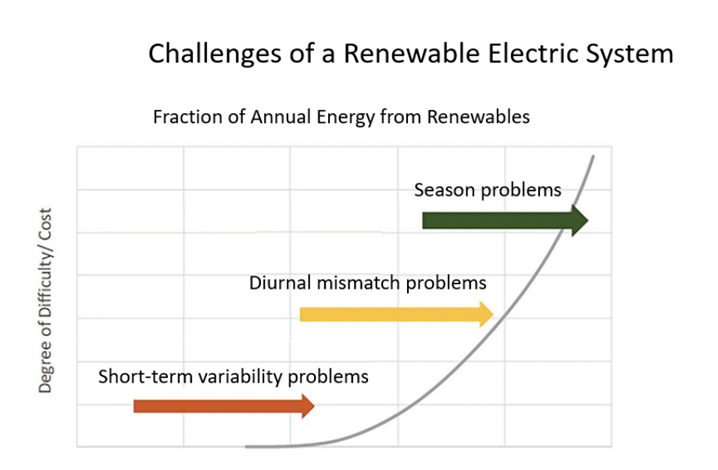
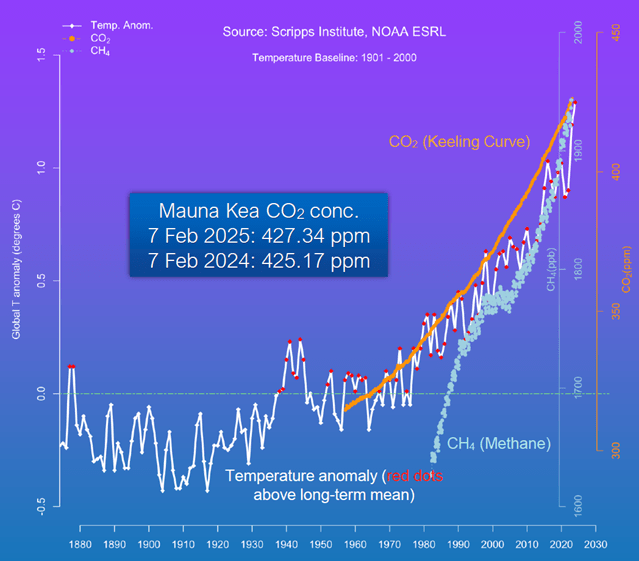
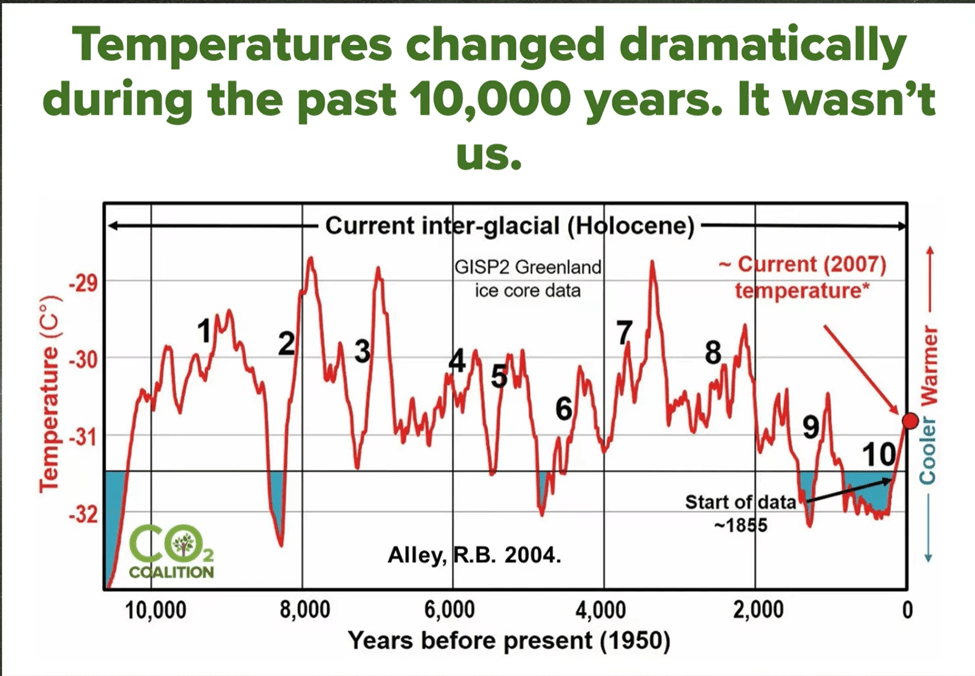
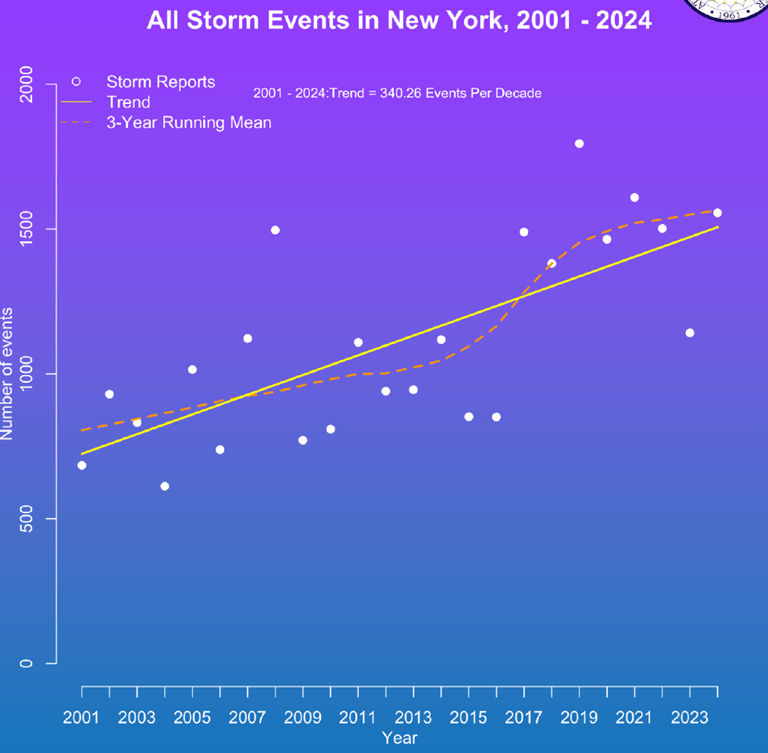
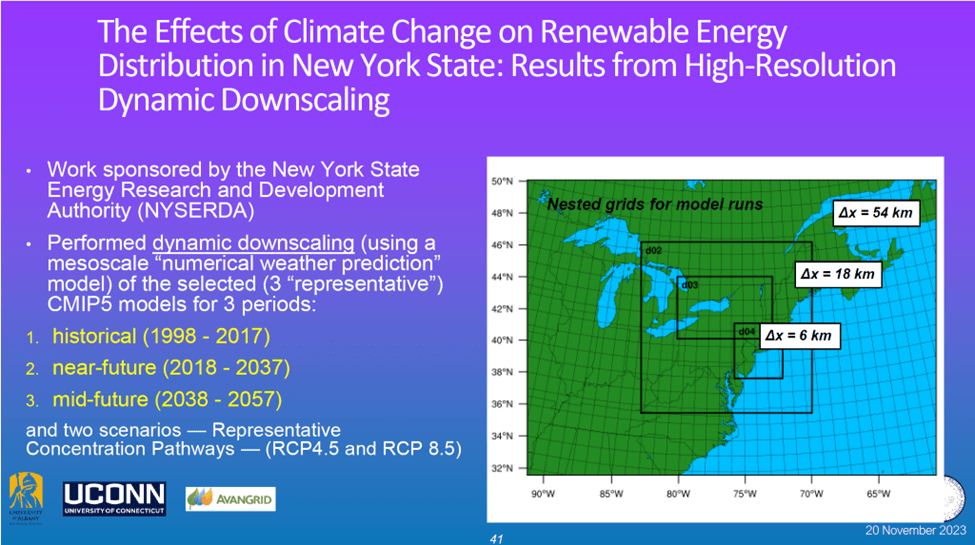
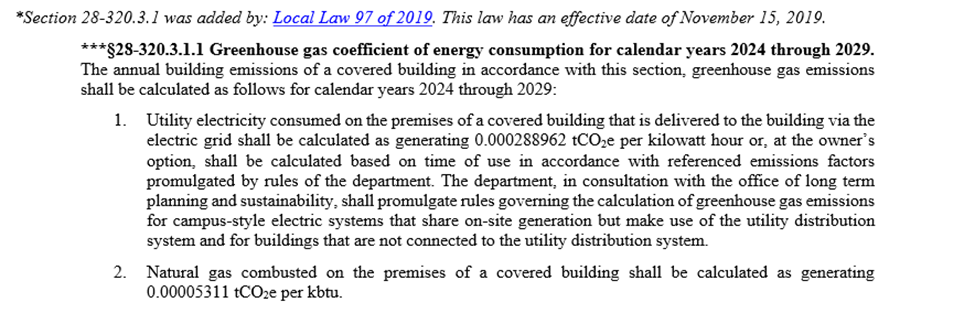
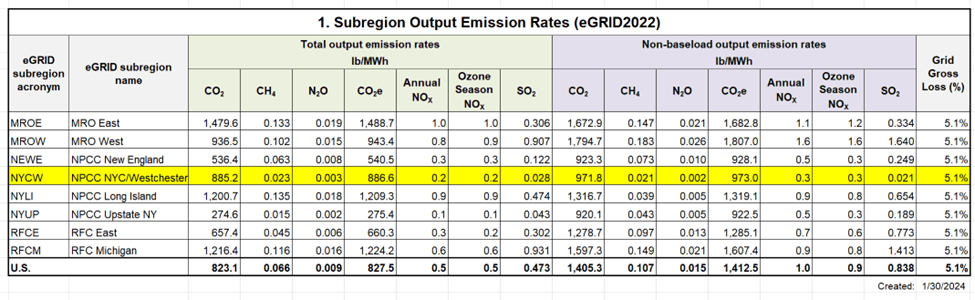
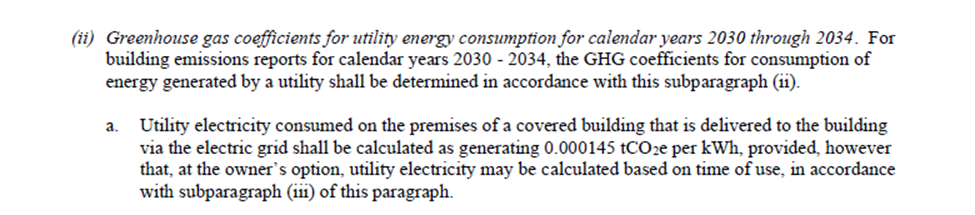
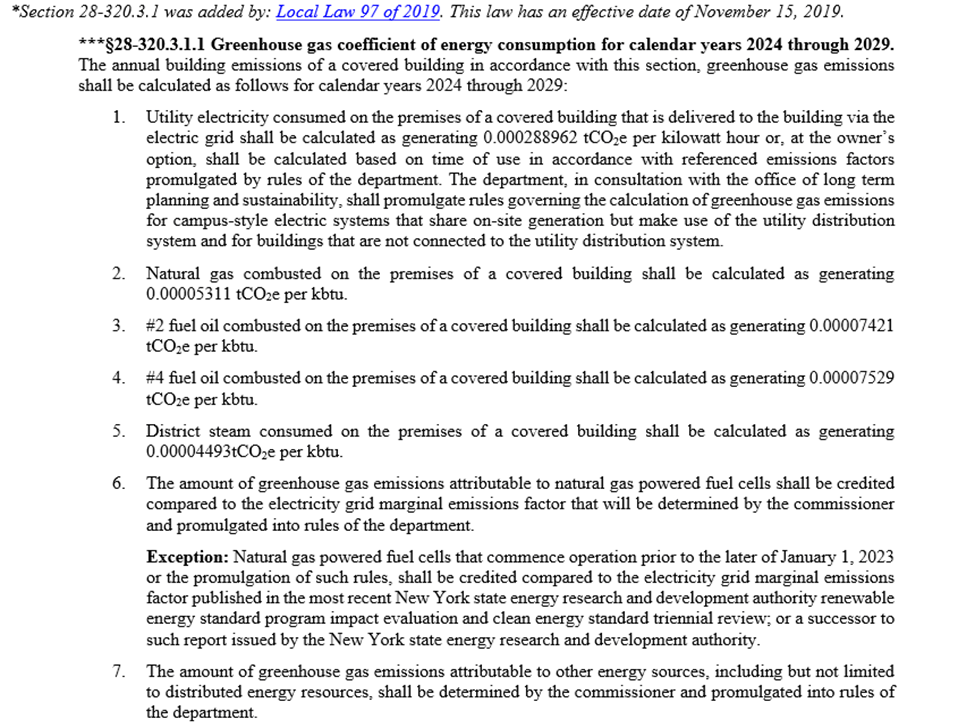
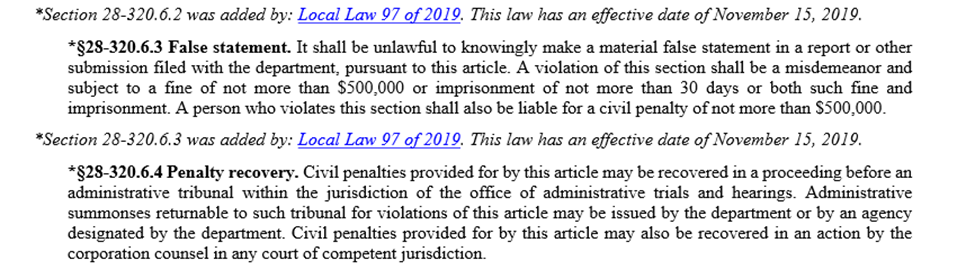


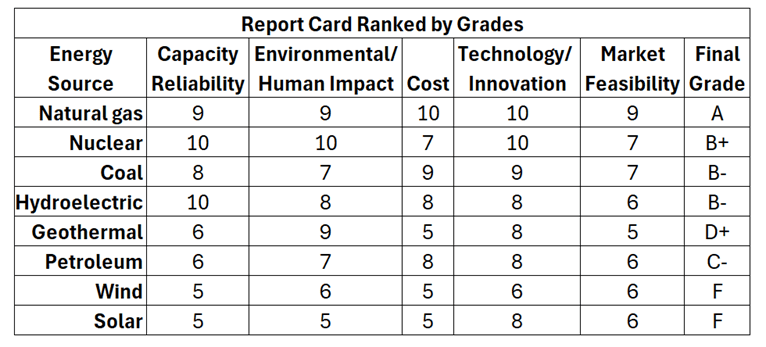
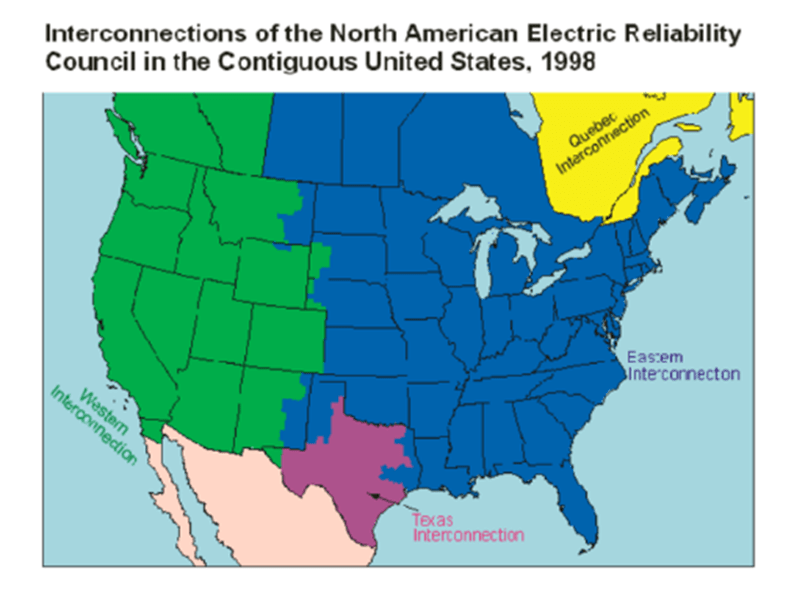
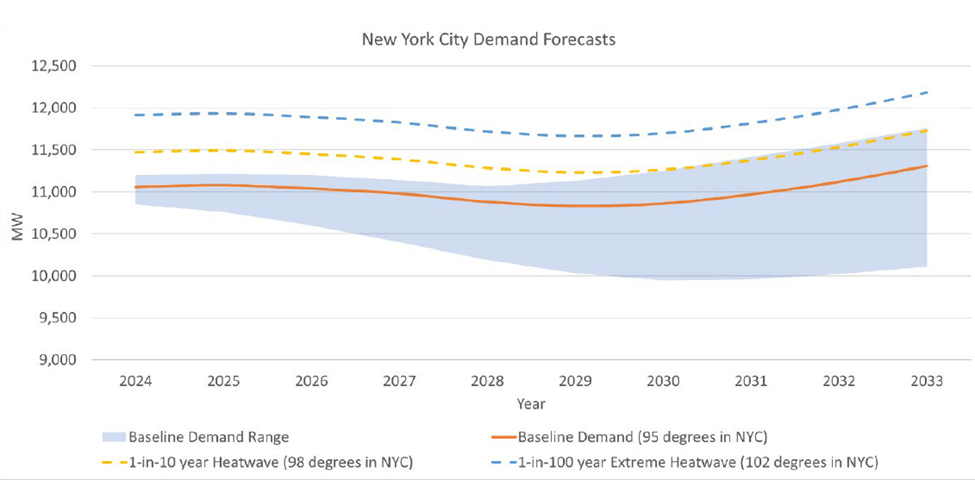
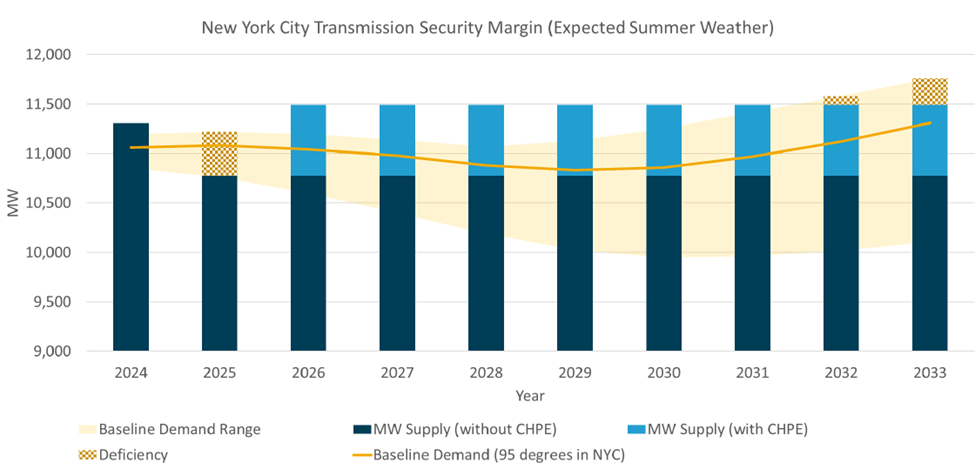
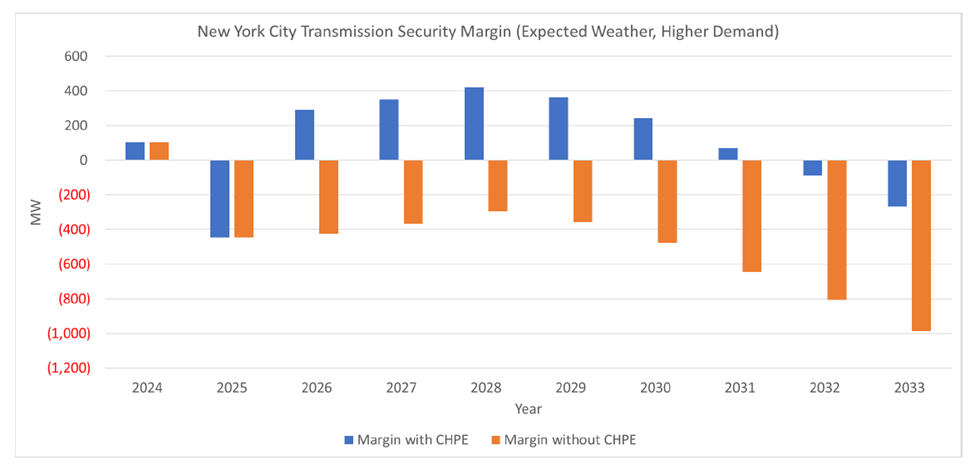
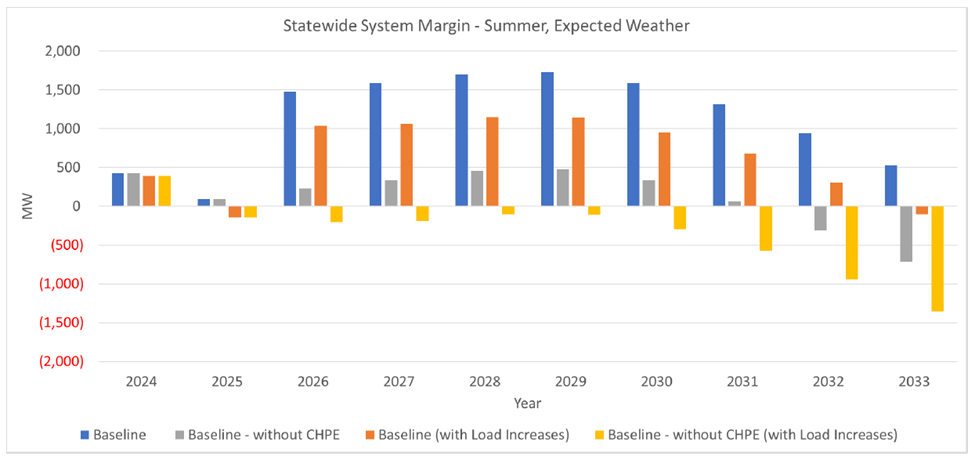
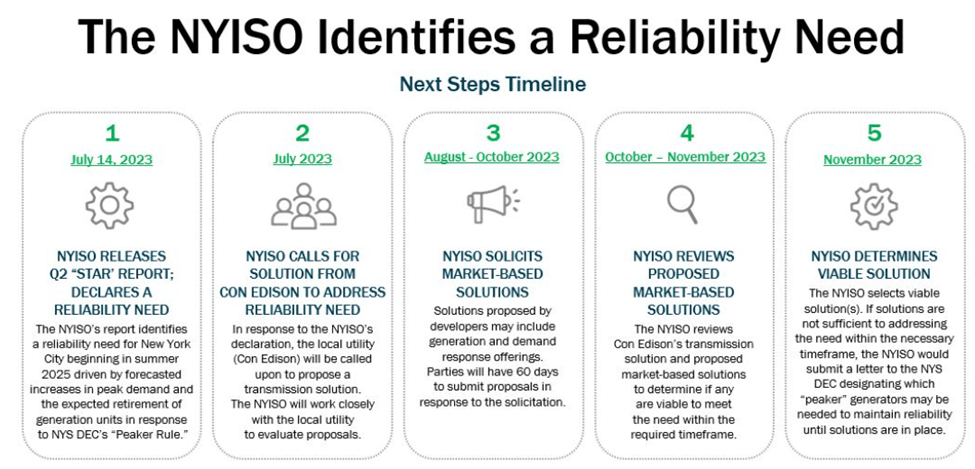
 Pragmatic Environmentalist of New York