On December 30, 2021 New York State released for public comment its Draft Scoping Plan that defines how to “achieve the State’s bold clean energy and climate agenda”. This kicks off the opportunity for the public to comment on what they have planned. Given the intrusive changes to lifestyles, risks to a reliable electric system, substantial cost increases, serious environmental impacts of the necessary wind, solar and storage technologies, and the lack of any direct global warming benefits it is imperative all New Yorkers get involved with the comment process.
The Climate Leadership and Community Protection Act (Climate Act) was passed in 2019 and became effective on 1/1/2020. Climate Action Council has been working since then to develop plans to implement the Act. Starting in the fall of 2020 seven advisory panels developed recommended policies to meet the targets that were presented to the Climate Action Council in the spring of 2021. Over the summer of 2021 the New York State Energy Research & Development Authority (NYSERDA) and its consultant Energy + Environmental Economics (E3) prepared an Integration Analysis to “estimate the economy-wide benefits, costs, and GHG emissions reductions associated with pathways that achieve the Climate Act GHG emission limits and carbon neutrality goal”. The Integration Analysis implementation strategies were incorporated into the Scoping Plan over the past couple of months and at the December 20, 2021 Climate Action Council meeting they voted to release the Scoping Plan for public comment. The comment period will be at least 120 days long but there were suggestions that it should be extended. When finalized the Plan will be used to revise the New York Energy Plan and rulemaking to implement its provisions will begin.
New York Plan
In brief the plan to achieve net-zero by 2050 requires New Yorkers to electrify everything and rely on wind and solar to produce that electricity. Risky emission reduction strategies from all sectors will be required and personal choices limited. All residences will have to be completely electrified and be “grid-interactive” despite the risks to safety in the event of an ice storm. In the transportation sector electric vehicles will be required with vehicle miles traveled limits and zoning changes to discourage the use of personal vehicles.
The New York electric gird is a complex system that has evolved over many years. It is a highly reliable system using proven hardware and procedures. Reliance on unprecedented levels of wind and solar has not been proven on the scale necessary. The energy storage system technology to account for intermittent wind and solar has not been tested for the proposed use. The critical reliability resource for winter-time wind lulls does not exist. These make it an ill-conceived plan that will likely end in a reliability crisis.
The greenhouse gas emission target in the Climate Act were not determined or based on cost feasibility.The net direct societal costs range between $310 and $290 billion but no estimates of the costs to consumers have been announced. The Scoping Plan claims that societal benefits outweigh the costs; however, societal benefits do not lower the direct costs to consumers.
When the Climate Act eliminates New York’s greenhouse gas emissions the effect on global warming will not be measurable. The expected impact on global warming of eliminating New York emissions is only 0.01°C by the year 2100. More importantly, New York’s emissions will be negated in a matter of months by countries in the developing world building their energy systems with reliable and affordable fossil fuels. To deny those countries the benefits of plentiful electricity using those fuels is immoral.
The Climate Act only accounts for fossil fuel life-cycle costs and environmental impacts while ignoring the life-cycle impacts of wind, solar, and energy storage technologies. Those “zero-emissions” resources may not have emissions when generating electricity but the volume of materials needed to access dilute wind and solar energy and the rare earth elements necessary for those technologies certainly have environmental impacts when mined and processed. The large number of wind turbines and solar panels will also create massive amounts of waste when they are retired. Furthermore, the cumulative environmental impacts of thousands of wind turbines and square miles of solar panels has not been compared to the environmental impacts of current fossil fuel technology. Solar energy is being developed now without any limits on the loss of prime farmland. Finally, it is unreasonable to expect that there will be any changes to environmental impacts due to climate change because the New York effect on global warming is too small to measure.
Response
Most New Yorkers are unaware that the Climate Act exists. Given the constant biased coverage of imminent and catastrophic climate change impacts many may agree that something needs to be done. Unfortunately, the bottom line is that we don’t have the technology today to meet the ambitions and schedule of the Climate Act and maintain current reliability standards and affordability. Given the issues outlined above I think New Yorkers will agree with me that the State should reconsider the targets and schedule of the law.
According to the press release:
“The release of the Draft Scoping Plan, available at the New York State Climate Act website (leaves DEC website), kicks off a 120-day public comment period beginning Jan. 1, 2022. New Yorkers are encouraged to submit comments via the online public comment form, via email at scopingplan@nyserda.ny.gov, and via U.S. mail to Attention: Draft Scoping Plan Comments, NYSERDA, 17 Columbia Circle, Albany, NY 12203-6399. The public comment period will also include at least six public hearings across the State. Details and information about how to participate in the public hearings will be announced in early 2022.”
In order to raise awareness please alert any New Yorkers you know that the public comment process has started. The other side of the story is available at Citizens Guide to the Climate Act.
At the December 20, 2021 meeting of New York’s Climate Leadership and Community Protection Act (CLCPA) Climate Action Council the Council voted to release the Scoping Plan for public comment later this year. One of the controversial issues on the Council was the lack of any estimates of consumer cost impacts. This article compares residential cost impacts of the recently announced New York State Energy Research and Development Authority (NYSERDA) contracts with Clean Path New York LLC for its Clean Path NY (CPNY) project and H.Q. Energy Services (U.S.) Inc. (HQUS) for its Champlain Hudson Power Express (CHPE) with the energy needed as part of the Scoping Plan.
The Climate Action Council is responsible for preparing the Scoping Plan that will “achieve the State’s bold clean energy and climate agenda”. Starting in the fall of 2020 seven advisory panels developed recommended policies to meet the targets that were presented to the Climate Action Council in the spring of 2021. Over the summer of 2021 the New York State Energy Research & Development Authority (NYSERDA) and its consultant Energy + Environmental Economics (E3) prepared an integration analysis to “estimate the economy-wide benefits, costs, and GHG emissions reductions associated with pathways that achieve the Climate Act GHG emission limits and carbon neutrality goal”. The integration analysis implementation strategies have been incorporated into the draft Scoping Plan. On December 20, 2021 the Climate Action Council voted to release the Scoping Plan for public comment on December 30, 2021.
The Public Service Commission’s October 15, 2020 Order [PDF]establishes a new Tier 4 within the Clean Energy Standard (CES) in response to NYSERDA’s CES White Paper. The new Tier 4 will increase the penetration of renewable energy into New York City (NYISO Zone J), which is particularly dependent on polluting fossil fuel-fired generation. NYSERDA’s CES White Paper found that without displacing a substantial portion of the fossil fuel-fired generation that New York City currently relies upon, the statewide 70 by 30 Target would be difficult to achieve. Through Tier 4, the State will procure the unbundled environmental attributes (in the form of Tier 4 RECs) associated with renewable generation delivered into Zone J. These environmental attributes include the avoidance of GHG emissions, as well as the avoidance of local pollutants such as NOx, SOx, and fine particulate matter.
On November 30, 2021 New York Governor Kathy Hochul announced that finalized contracts for two projects to meet this solicitation had been awarded. In order to complete this process NYSERDA and the Department of Public Service (DPS) submitted “a petition for approval this Petition and two contracts for renewable energy credits (RECs) entered into under Tier 4 of the Clean Energy Standard (CES)”. These documents are available on the DPS website for this matter. For the reader’s information and because trying to access the DPS website is a challenge I have posts the petition, press release, cost analysis, and the contracts on this website. According to the petition:
Tier 4 was established by the Public Service Commission (Commission) in October 2020 to overcome the challenge of New York City’s reliance on fossil fuels and to help accelerate achievement of New York’s target of 70% renewable energy by 2030. To this end, the Commission instructed NYSERDA to proceed with a Tier 4 solicitation that will increase the penetration of renewable energy into New York City (Zone J). NYSERDA issued its solicitation in January 2021 and received a highly competitive response with seven projects submitting proposals.
Following a robust and comprehensive evaluation process, which considered bid prices, viability and economic benefits, in September of 2021, the selection of two projects was announced: (1) the Clean Path New York (CPNY) project; and (2) the Champlain Hudson Power Express (CHPE) project. Contract negotiations have now concluded, and in accordance with the Commission’s instructions, NYSERDA and Staff are submitting the signed contracts for the Commission’s consideration and approval. The selected projects are expected to deliver 18 million megawatt-hours of renewable energy per year to Zone J, more than a third of New York City’s annual electric consumption, from a diverse generation portfolio including onshore wind, solar and hydroelectric power from Upstate New York and Québec.
The bid evaluation document describes the two projects. The CPNY proposal has three main components:
New Tier 4 renewable generation to be built in New York (CPNY Resources), located largely upstate,
A new 1,300 MW HVDC controllable link from upstate to New York City, and
The use of the New York Power Authority owned Blenheim Gilboa pump storage facility to store energy produced by the CPNY resources that is generated in excess of the Tier 4 transmission capacity.
The CHPE project is an underground transmission line from Quebec to New York City that will deliver 1,250 MW of hydro generation from Hydro Quebec. Both projects terminate in New York City so that it can be considered “in-city” generation.
The intent of this article is to discuss the cost aspects but I have to comment on the CPNY shell game. The following table shows the capacity (MW), expected energy (GWh) and the capacity factors. I call your attention to the CPNY capacity factor for the new Tier 4 renewable generation. The only way that high a capacity factor for renewable generation is possible is if there is substantial energy storage and the project plan is to use the Blenheim Gilboa pump storage facility. Here’s the thing, Blenheim Gilboa was built in 1973. It has been in daily use storing energy when prices are low and producing energy when prices are high. It does not represent anything new even if the plan is to use it differently. The capacity factor of the new renewables will be much less than 74.9% however this is packaged to fulfill the contract. It shows the degree of desperation of the State that they are trying to sell this renewable resource as contracted.
CHPE
CPNY
Combined
Capacity (MW)
1,250
1,300
2,550
Energy (GWh)
10,000
8,527
18,527
Capacity Factor (%)
91.3%
74.9%
82.9%
Cost Estimates
The petition includes the following cost estimates:
The costs of program payments for the purchase of Tier 4 RECs from the projects are projected as $5.9 – $11.6 billion, equating to an estimated increase in customer electric bills of 2.1 – 4.1% (or $2.08 – $4.08 per month for the average residential customer) on average across the State for the 25-year period of the Tier 4 contracts. The range of these projections reflects future uncertainties including energy and capacity prices and includes the benefits to ratepayers from the expected purchase of Tier 4 RECs by the City, which reduces the ratepayer impact by $0.8-$1.7 billion. Additional cost reductions could occur as a result of federal transmission tax credits, which could reduce the remaining costs of Tier 4 to ratepayers to 1.8 – 3.8%. Voluntary purchase of Tier 4 RECs by New York City organizations with interest in switching to renewable energy could reduce ratepayer impact even further.
Program costs will be borne by ratepayers based on electric load. For instance, ConEdison customers with 40% of the State’s load will contribute 40% of the cost, and National Grid customers 23%, reflecting their load. However, because upstate customers tend to have lower electricity bills to start with, the percentage bill impacts tend to be higher upstate than downstate, with National Grid customers experiencing around twice the percentage bill increase as that of ConEdison customers. This underscores the importance of voluntary Tier 4 REC purchases by the City, as described above, in order to manage these upstate impacts.
I have prepared the Expected Annual Increase in Residential Sector Annual Costs Using the Tier 4 Cost Impacts table to summarize these costs. The petition states that the projected increase in customer electric bills will be 2.1 – 4.1% (or $2.08 – $4.08 per month for the average residential customer. The Tier 4 Petition row lists the values converted to annual numbers between $24.96 to $48.96. My Tier 4 calculated numbers are slightly different. I used the September 2021 average residential electricity price as the starting point, calculated that the average residential electricity use is 6,870 kWh and estimated that the annual average residential energy bill is $1,408. The 2.1% and 4.1% increase from that baseline equates to annual increases of between $29.57 and $57.74 per year.
NYSERDA and DPS has set a precedent for future renewable energy subsidies with this petition. The purchase of Tier 4 Renewable Energy Credits (RECs) from the projects are projected to cost between $5.9 – $11.6 billion (equating to an estimated increase in customer electric bills of 2.1 – 4.1%) for 18,527 GWh of renewable electricity energy. Assuming that new hydro imports, onshore wind, wind imports, and offshore wind projects were comparable to these two projects, we can make an order of magnitude estimate of their cost if the same subsidy approach is used simply by pro-rating these Tier 4 contact costs by the total additional energy divided by the Tier 4 energy. For Scenario 2 of the Integration Analysis the annual cost range is $168 to $327, Scenario 3 is $184 to $359, and Scenario 4 is $179 to $349 additional.
Note that there are other programs that could contribute to the subsidies such that residential electricity prices would be reduced. The costs remain the same so it is just how they get paid for that change.
Discussion
On October 26,2021, the AP-NORC Center and the Energy Policy Institute at the University of Chicago (EPIC) released the results of a survey that claimed that a majority of Americans regard climate change as a problem of “high importance”. It also included survey questions asking whether respondents would support, oppose, or neither support or oppose a law that imposed “a fee on carbon to combat climate change”. The survey question asked “If the law passed, it would increase the average amount your household pays each month for energy, including electricity, heating gas, and gasoline or diesel for your car by a total of X dollars per month” where respondents were randomly assigned a $1, $10, $20, $40, $75, or $100 cost increase. For a $1 per month increase, 45% would support, 30% would oppose, and 25% would neither support or oppose. For a $20 per month increase, 37% would support, 41% would oppose, and 21% would neither support or oppose. For a $100 per month increase, 20% would support, 62% would oppose, and 18% would neither support or oppose. In other words, these cost estimates are right about at the point where more people oppose the cost increase than support them.
Of course, this is just a fraction of the expected residential rate increase. New York also has to find a way to subsidize the expected solar energy, energy storage, and zero-carbon firm resource capacity needed. There are also all sorts of less obvious costs to the electric consumers. Someone also has to pay to upgrade the local distribution systems to handle all electric homes that have electric vehicles, install interactive meters, and pay for all the hidden costs that New York has foisted upon the electricity providers like public chargers for electric vehicles. Don’t forget that consumers also have to absorb the added costs for electrifying their homes and transport too.
Conclusion
Ratepayer cost impacts are not included in the Integration Analysis documentation provided to date. Based on a recent survey, the projected ratepayer costs for a fraction of the expected consumer cost in this analysis is just about at the level where more respondents oppose those costs than support them. It is difficult to estimate more of the costs because the documentation provided to date does not even provide the values used in the graphs for costs provided. There are some costs that could be broken out on a per household basis without a lot of work in the Integration Analysis. In my opinion, the Climate Action Council has a vested interest in not showing even that level of detail because the costs are unsupportable.
New York’s Tier 4 contracts are good examples of one of the ways that the implementation costs for the Climate Act could be paid. It is not clear why ratepayers have to subsidize renewable energy development if those resources are, in fact, cheaper than other energy resources. The transparent manipulation of the Clean Path New York contract to provide more reliable energy using existing pumped storage energy resources demonstrates the State is desperate to fund these projects by any means, fair or foul.
At the December 20, 2021 meeting of New York’s Climate Leadership and Community Protection Act (CLCPA) Climate Action Council the Council voted to release the Scoping Plan for public comment. The Scoping Plan and the presentations on the Integration Analysis that forms the technical basis of the Plan claim that the societal benefits of the Greenhouse Gas (GHG) emission reductions are greater than the societal costs. This article expands upon my first impression of costs and benefits especially regarding the alleged benefits of reductions on avoided economic damages caused by climate change.
The Climate Action Council is responsible for preparing the Scoping Plan that will “achieve the State’s bold clean energy and climate agenda”. Starting in the fall of 2020 seven advisory panels developed recommended policies to meet the targets that were presented to the Climate Action Council in the spring of 2021. Over the summer of 2021 the New York State Energy Research & Development Authority (NYSERDA) and its consultant Energy + Environmental Economics (E3) prepared an integration analysis to “estimate the economy-wide benefits, costs, and GHG emissions reductions associated with pathways that achieve the Climate Act GHG emission limits and carbon neutrality goal”. The integration analysis implementation strategies have been incorporated into the draft Scoping Plan. On December 20, 2021 the Climate Action Council voted to release the Scoping Plan for public comment on December 30, 2021.
The presentation on December 20, 2021 revised previous projections. Those projections were not documented the same as the November 18, 2021 update of key results, drivers, and assumptions that were posted on the Climate Act resources page. In the absence of updated resource information I was forced to use information from these documents in the this article:
The costs and benefits provided in the Integration Analysis and the draft Scoping Plan are societal values. In the Inputs Summary E3 explained that their methodology “produces economy wide resource costs for the various mitigation scenarios relative to a reference scenario”. They produce output on an “annual time scale for the state of New York, with granularity by sector” including “Annualized capital, operations, and maintenance cost for infrastructure (e.g., devices, equipment, generation assets, T&D)” and “Annual fuel expenses by sector and fuel (conventional or low carbon fuels, depending on scenario definitions)”. However, it “does not natively produce detailed locational or customer class analysis”. Consequently, the information needed to determine direct consumer costs will be “developed through subsequent implementation processes”. They also note that the value of avoided GHG emissions calculated is based on guidance developed by DEC.
The following Sectoral Coverage for Cost figure describes the costs included in the Integration Analysis for each sector. The costs listed are direct costs. For example, incremental capital and operating transportation investments cover the direct cost but not the transactional costs such as the additional interest cost for a more expensive electric vehicle loan. In addition, there are analytical choices that could affect costs such as the number of each type of electric vehicle charging systems. Also note that there are cost estimates for technology that has not been deployed at the scale necessary to maintain reliability and for technology that is still under development. Without complete transparency for the calculation estimates it is not possible to evaluate the validity of these cost estimates.
The presentation for the December 20, 2021 Climate Action Council meeting updated the Benefit Cost assessment slides. All three mitigation scenarios are listed now and the values in Scenarios 2 and 3 have changed. A prime message is that the “mitigation cases show positive net benefits ($90-$120 billion) when considering the value of avoided greenhouse gas emissions and health co-benefits, in addition to cost savings from reduced fuel use”. The remainder of this article will discuss the meaning of avoided future climate damage benefits because that is the largest source of the alleged benefits.
We need to have a clear idea about what global warming will cost the world. so that we can make sure that we respond commensurately. If it’s a vast cost, it makes sense to throw everything we can at reducing it. If it’s smaller, we need to make sure that the cure isn’t worse than the disease.
Professor William Nordhaus of Yale University was the first (and so far, only) climate economist to be awarded the Nobel Prize in economics in 2018. He wrote one of the first ever papers on the costs of climate change in 1991 and has spent much of his career studying the issue. His studies have helped to inspire what is now a vast body of research.
How do economists like Professor Nordhaus go about estimating the costs of future climate change impacts? They collate all the scientific evidence from a wide range of areas, to estimate the most important and expensive impacts from climate change, including those on agriculture, energy, and forestry, as well as sea-level rises. They input this economic information into computer models; the models are then used to estimate the cost of climate change at different levels of carbon dioxide emissions, temperature, economic development, and adaptation. These models have been tested and peer reviewed over decades to hone their cost estimates.
Many of the models also include the impacts of climate change on water resources, storms, biodiversity, cardiovascular and respiratory diseases, vector-borne diseases (like malaria), diarrhea, and migration. Some even try to include potential catastrophic costs such as those resulting from the Greenland ice sheet melting rapidly. All of which is to say that while any model of the future will be imperfect, these models are very comprehensive.
When we look at the full range of studies addressing this issue, what we find is that the cost of climate change is significant but moderate, in terms of overall global GDP.
Figure 5.1 shows all the relevant climate damage estimates from the latest UN Climate Panel report, updated with the latest studies. On the horizontal axis, we can see a range of temperature increases. Down the vertical axis, we see the impact put into monetary terms: the net effect of all impacts from global warming translated into percentage of global GDP. The impact is typically negative, meaning that global warming will overall be a cost or a problem.
FIGURE 5.1 Impact of temperature rise. Total impact as percentage of global GDP of a given temperature rise, based on thirty-nine published estimates in the literature. Larger circles are better studies. This is an update of the UN’s overview (IPCC 2014a,690, SM10-4) Size of circles shows the weight of the individual studies (larger circles for latest estimates, using independent and appropriate methods; smaller circles for earlier estimates, secondhand studies, or less appropriate methods). The black dashed line is Nordhaus’s best estimate, based on median quadratic weighted regression.
Right now, the planet has experienced a bit less than 2°F global temperature increase since the industrial revolution. This graph shows us that it is not yet clear whether the net global impact from a 2°F change is positive or negative; there are three studies that show a slight negative impact, and one showing a rather large benefit. As the temperature increase grows larger, the impact becomes ever more negative. The dashed line going through the data is Nordhaus’s best estimate of the reduction in global GDP for any given temperature rise.
We should focus on the temperature rise of just above 7°F, because that is likely to be what we will see at the end of the century, without any additional climate policies beyond those to which governments have already committed. At 7.2°F in 2100, climate change would cause negative impacts equivalent to a 2.9 percent loss to global GDP.
Remember, of course, that the world will be getting much richer over die course of the century. And that will still be true with climate change -we will still be much richer, but slightly less so than we would have been without global warming.
In summary, models are used to project the benefits of reducing GHG emissions on future global warming impacts including those on agriculture, energy, and forestry, as well as sea-level rises, water resources, storms, biodiversity, cardiovascular and respiratory diseases, and vector-borne diseases (like malaria), and diarrhea. Richard Tol describes the value of greenhouse gas emission reductions thusly: “In sum, the causal chain from carbon dioxide emission to social cost of carbon is long, complex and contingent on human decisions that are at least partly unrelated to climate policy. The social cost of carbon is, at least in part, also the social cost of underinvestment in infectious disease, the social cost of institutional failure in coastal countries, and so on.”
There are some important caveats in this approach. For example, Lomborg does not mention the fact that the models estimate those impacts out to the year 2300 and that the largest impacts are predicted to occur at the end of the modeling period. All of these economic models simplify the relationship between emissions and potential global warming impacts and they all presume a high sensitivity to those impacts from greenhouse gases which is entirely consistent with the Climate Act’s presumed impacts. Finally, keep in mind that there is no attempt to consider advantages of greenhouse gases much less balance them in their projected benefit costs.
New York’s Flawed Avoided Cost Methodology
There is a fundamental flaw in the claim that the Integration Analysis mitigation cases show positive net benefits when considering the value of avoided greenhouse gas emissions. Although I have described these problems with the DEC Value of Avoided Carbon Guidance previously it bears repeating. In my first post I noted that the Guidance includes a recommendation how to estimate emission reduction benefits for a plan or goal. I believe that the guidance approach is wrong because it applies the social cost multiple times for each ton reduced. I maintain that it is inappropriate to claim the benefits of an annual reduction of a ton of greenhouse gas over any lifetime or to compare it with avoided emissions. The social cost calculation that is the basis of their carbon valuation sums projects benefits for every year subsequent to the year the reductions are made out to the year 2300. The annual value of carbon for that year is based on all the damages that occur from that ton over all those years. Clearly, using cumulative values for this parameter is incorrect because it counts those values over and over. I contacted social cost of carbon expert Dr. Richard Tol about my interpretation of the use of lifetime savings and he confirmed that “The SCC should not be compared to life-time savings or life-time costs (unless the project life is one year)”.
In the second post I described how I submitted comments on this topic to DEC and NYSERDA in February and followed up in June. They eventually responded: “We ultimately decided to stay with the recommendation of applying the Value of Carbon as described in the guidance as that is consistent with how it is applied in benefit-cost analyses at the state and federal level.”
There are other problems with their approach. I asked Dr. Tol another question about using the social cost of methane and he pointed out that “the social cost of carbon is an efficiency concept” so it is inappropriate to use social costs in the way that New York is doing. He said that “If a cap is set, you should not use the social cost of carbon. A cap violates efficiency.” I am not an economist and honestly cannot claim to understand this argument but it is pretty clear that New York is pushing the envelope in its use of the social cost of carbon.
The Integration Analysis claims reducing GHG emissions will provided societal benefits of avoided economic damages of between $235 and $250 billion. The more appropriate value is much less. According to §496.4 Statewide Greenhouse Gas Emission Limits (a) “For the purposes of this Part, the estimated level of statewide greenhouse gas emissions in 1990 is 409.78 million metric tons of carbon dioxide equivalent, using a GWP20 as provided in Section 496.5 of this Part”. The DEC Value of Avoided Carbon Guidance recommends a social cost of $121 in 2020 and $172 in 2050. If New York had magically eliminated all of the 409.78 million tons of GHG in 2020, the societal benefit of those reductions would have only been $49.6 billion. If all the reductions occurred in 2050 the societal benefit would be $70.5 billion.
Discussion
I used the 2050 societal benefit $70.5 billion estimate to show that Climate Act guidance incorrectly applies the metric by applying the value of an emission reduction multiple times to make the claim that the mitigation scenarios show positive net benefits. The Strategic Use of Low Carbon Fuels scenario is estimated to have $310 billion in net direct costs, avoided carbon damage benefits of $235 billion, and health co-benefits of $165 billion so that the net benefit is $90 billion. However, when the over-counting error is corrected, the avoided carbon damage benefit is only $70.5 billion so there is a negative net benefit is $74.5 billion. The Accelerated Transition Away from Combustion scenario ends up with a negative net benefit of $49.5 billion and the Beyond 85% Reductions scenario has a negative net benefit of $64.5 billion.
The State of New York has never quantified the effect on potential global warming for any of their climate change regulations. In the absence of an “official” number I have adapted the calculations in Analysis of US and State-By-State Carbon Dioxide Emissions and Potential “Savings” In Future Global Temperature and Global Sea Level Rise to estimate the potential effect. This analysis of U.S. and state by state carbon dioxide 2010 emissions relative to global emissions quantifies the relative numbers and the potential “savings” in future global temperature and global sea level rise. These estimates are based on MAGICC: Model for the Assessment of Greenhouse-gas Induced Climate Change so they represent projected changes based on the Intergovernmental Panel on Climate Change estimates. All I did in my calculation was to pro-rate the United States impacts by the ratio of different New York inventory emissions divided by United States emissions to determine the effects of a complete cessation of all New York’s emissions. My calculations showed that for the CLCPA Part 496 inventories there would be a reduction, or a “savings,” of between approximately 0.0097°C and 0.0081°C by the year 2100. This savings on global warming from the maximum possible New York emission reductions will be too small to measure. More importantly, New York’s emissions will be negated in a matter of months by greenhouse gas emission increases in countries in the developing world building their energy systems with reliable and affordable fossil fuels.
Advocates for the Climate Act often say we need to act on climate change for our children and grandchildren. However, if a generation is 25 years long, then the avoided cost of carbon societal benefit is applied to 11 generations out to 2300. One of the points that Lomborg makes in False Alarm is that the costs of global warming will only reach 2.6% of GDP by 2100 but that global GDP will be so much higher at that time that this number is insignificant.
New Yorkers also need to be aware that benefits mostly accrue to those jurisdictions outside of New York. To this point they are more vulnerable because there is under-investment in resilient agriculture, energy, and forestry; their society is not rich enough to address sea-level rises like Holland has done for centuries; adaptation for water resources, storms, and biodiversity is not a priority because of poverty; and where underfunding for cardiovascular and respiratory diseases, vector-borne diseases (like malaria), and diarrhea makes the impacts of those diseases worse than in New York.
Importantly, if total global greenhouse gas emissions continue to rise as countries improve their resiliency to weather events and health care system using fossil fuels then there will not be any actual societal benefits from New York’s emission reductions. The benefits argument devolves into claiming that the value of New York’s avoided greenhouse gas emissions reductions is that impacts would have been even worse without them. New York’s share of global GHG emissions is 0.45% in 2016, the last year when state-wide emissions consistent with the methodology used elsewhere are available, so they can only claim only less than half a percent worse because that is New York’s share of total emissions today.
Conclusion
When the Scoping Plan is rolled out to the public at the end of the year, one of the major talking points will be that the costs of inaction outweigh the costs of implementing the Climate Act. That claim is false because New York State policy guidance incorrectly calculates the Value of Carbon “benefits”. New York’s emission reduction impacts on global warming should only be counted once.
In addition, the cost and benefit numbers are societal values. It is not clear what the actual costs will be after transaction and implementation cost adders are included and it is impossible, at this time, to determine something as important as ratepayer cost increases. The primary purpose of this article was to describe the societal benefit of avoided emissions on global warming impacts. It is clear that the value of carbon societal benefits accrues to generations far in the future and mostly affect jurisdictions outside of New York.
The societal social benefit benefits are imaginary but the societal direct costs, however they are apportioned to New York consumers, will be real. In my opinion, it is inappropriate for the Integration Analysis to claim that the contrived societal benefits outweigh the societal costs without fully explaining who gets the benefits and when they get the benefits. The other missing explanation is that New York’s actions won’t actually affect global warming because we are such a small fraction of the total global emissions. The Climate Act boils down to a virtue signaling symbolic gesture based on contrived benefits that impose real costs on all New Yorkers, including those least able to afford them.
New York’s Climate Leadership and Community Protection Act (Climate Act) has a legal mandate for New York State greenhouse gas emissions to meet the lofty net-zero by 2050 goal. In order to meet the goal all energy sectors will have to be electrified as much as possible but that approach will adversely affect energy sector affordability. Unfortunately, most New Yorkers are unaware of the law and only a handful understand the implications. This article discusses the assumptions made for conversion costs for electrified residential heating and provides a table that can be used to estimate conversion costs.
The Climate Action Council is responsible for preparing the Scoping Plan that will “achieve the State’s bold clean energy and climate agenda”. Starting in the fall of 2020 seven advisory panels developed recommended policies to meet the targets that were presented to the Climate Action Council in the spring of 2021. Over the summer of 2021 the New York State Energy Research & Development Authority (NYSERDA) and its consultant Energy + Environmental Economics (E3) prepared an integration analysis to “estimate the economy-wide benefits, costs, and GHG emissions reductions associated with pathways that achieve the Climate Act GHG emission limits and carbon neutrality goal”. The integration analysis implementation strategies have been incorporated into the draft Scoping Plan. Next year the Scoping Plan will be released for public comment.
On November 18, 2021 updated key results, drivers, and assumptions were posted on the Climate Act resources page:
Unfortunately, those documents are the only documentation provided by New York State on the Climate Act webpage and it is insufficient to fully evaluate the Scoping Plan numbers. The Inputs Summary document is a set of slides that only outlines the assumptions. The Inputs Workbook and Key Drivers spreadsheets are large, complicated and do not include explanations of the contents sufficient to decipher how the direct net costs of residential home heating were derived. The Inputs Workbook spreadsheet has 49 tabs with data and the Key Drivers spreadsheet has 68 tabs with data. Many of the results listed in the presentations are documented in tables in these spreadsheets but there isn’t a summary table that totals all the component costs. Furthermore, I have been unable to find a description of the general methodology much less a detailed flow description explaining how the numbers were derived in the presentation documentation tabs.
The remainder of this article discusses assumptions necessary to derive costs of electrified residential heating. I also calculate the costs to convert existing residences to all electric heating using numbers in this documentation.
Electric Home Heating Considerations
The Integration Analysis estimates that the buildings sector is the largest source of GHG emissions. In all the future scenarios building emissions reductions are driven by rapid electrification, increased energy efficiency, and improved building shells. For home heating electrification means conversion to heat pumps and improvements to building shells to minimize the energy needed to heat homes.
How Stuff Works explains that “heat pumps use a small amount of energy to move heat from one location to another”. There are two kinds of heat pumps: air source that extract energy in the atmosphere and ground source that extract energy from underground. The advantage of ground source heat pumps is that below ground energy stays relatively constant throughout the year whereas atmospheric energy available in New York winters is so low that a backup heat source is required. Ground source heat pumps are more expensive and need space for the installation so air source is the preferred retrofit alternative. The Key Drivers spreadsheet lists the expected sales of each type of residential heating equipment over every year from 2020 to 2050 but does not provide documentation how the authors decided to apportion air source and ground source installations.
The Integration Analysis lists three types of building shell improvements (basic, deep and reference) but the description refining what they mean by those types is unavailable. Because heat pumps are the preferred heating technology, I suspect that “deep” building shell improvements are equivalent to the international standard for passive buildings. It includes the following measures:
Efficient heat generation (which in this case means heat pumps.
Note, however, that even the passive house website notes that “Not all buildings can be renovated to the Passive House Standard without great difficulty and cost”. If a house cannot be renovated to meet those standards then are they condemned to using electric resistance heat which is not energy efficient?
Heating Climate Considerations
The Integration Analysis admits that a backup heat source will be required because of the New York climate. In my opinion the more important consideration is how the climate will affect building shell implementation. As far as I can tell the Integration Analysis specifies New York’s climate zones using the International Energy Conservation Code. As shown below there are only three climate zones.
In my opinion, there is a better, more detailed climate zone map for building zone upgrades. The United States Department of Agriculture plant hardiness map has nine zones for New York. It uses the average annual extreme minimum temperature for its classification which is a pretty good indicator for building shell standards when using heat pumps. Note that the average minimum is above zero for only two of the nine zones, corresponding roughly to Integration Analysis climate zone 3. It appears that New York Climate zone 5 should correspond to NYSDA zones 6a and 6b. It appears to me that too many counties are in zone 5 and that they should be classified as New York Climate Zone 6. If the average annual extreme minimum temperature is less than equal to -10oF (USFDA zones 3b, 4a, 4b, 6a, and 6b) then I believe the deep shell upgrades are necessary for safety and comfort of residences that convert to heat pumps.
Home Heating Electrification Costs
This estimate of electrification conversion costs for an individual home is based on data in the Inputs Workbook spreadsheet, Tab: Bldg_Res Device Cost. The Electrified Home Heating Integration Analysis Device Cost Assumptions table lists device costs for three categories of residential households: large multi-family, small multi-family and single family. Costs are listed for the three types of building shell upgrades and for air source heat pumps, electric resistance backup heat, and ground source heat pumps. The Integration Analysis Inputs Assumptions Workbook Residential Home Heating Electrification Costs table looks at the resulting combination of costs per household, building shell type, and type of existing heating system. I assumed in the table that ground source heat pumps would not require backup heat but if you disagree simply add that cost. There is a lot of information on this table so I will explain how to determine potential costs for my situation below.
I live in a single-family residence heated with an efficient natural gas furnace. In my opinion one of the disadvantages of heat pump technology is that the output heat is relatively low compared to a combustion sourced furnace. The temperature at the register for a heat pump system is around 90oF whereas in my house the temperature is around 120oF. However there some cold rooms in my house even when the furnace if providing hot air despite my best attempts to adequately insulate and reduce air infiltration. My house is in plant hardiness zone 5b so I believe that in order to maintain safety and comfort throughout the entire winter my house would need improved thermal insulation, spots where there are thermal bridges would have to be fixed, airtightness improved, my double-glazed windows replaced with triple glazed windows, a heat recovery exchange system would have to be installed and that means a deep shell installation. I live in a suburb where I don’t believe that a ground source heat pump has enough yard space for installation so the Climate Act option is an air source heat pump.
According to the Integration Analysis the cost per device to replace my existing efficient gas-fired furnace is $3,085. In order to provide backup heat, the cost of electric resistance heat also has to be added to the cost of the air source heat pump. The cost differential is in the deep shell, single family, ASHP column on the efficient gas furnace row. The expected cost to replace my natural gas furnace with an air source heat pump would be $57,869. Note that for a “basic shell” upgrade the cost is “only” $19,142, $38,727 less.
Discussion
For this article I am only going to list a couple of examples where the documentation has to be improved in order to provide meaningful comments on the integration analysis home heating electrification costs.
The cost estimate for an individual house conversion is relatively simple but there still are questions because of the inadequate documentation. The replacement cost for an existing efficient gas-fired furnace is $3,085 but my last replacement furnace was significantly higher than that so it is likely that does not include the cost of installation. Over the years my house has had upgraded insulation in the attic and walls, upgraded windows, and vinyl siding to replace the original cedar shake siding. It is not clear from the documentation how existing houses would be upgraded. Is the existing insulation ripped out, what level of existing window performance has to be replaced, are basements insulated, and how do you retrofit heat recovery system are all questions that spring to mind. Without documentation for those points and many other issues it is impossible to verify the example $45,136 individual single family deep shell device cost.
The cost estimates for the entire state are much more complicated. In the Key-Drivers spreadsheet there are tabs with building shell metrics. Scenarios 2-4 note that in 2020 there were a total of 8,301,996 buildings with 48,551 basic shell residences, 37,699 deep shell residences, and 8,215,747 reference shell residences. For scenario 2 (tab S2_Building Shells) in 2050, the integration analysis projects 8,684,001 residences, with 5,714,918 basic shell residences, 2,285,000 deep shell residences and only 684,080 reference shell residences. On the other hand, according to the Inputs Workbook spreadsheet, Tab: Bldg_Housing Unit Summary there are 3,384,880 housing units in zones 5 and 6 that I believe all need to have deep shell upgrades. Documentation explaining the rationale for basic and deep shell upgrade numbers is needed.
In order to calculate total state home heating electrification costs the existing building stocks for each type of heating source and type of building shell is needed. Some sort of an implementation curve for converting home furnaces and building shells must be determined. The big driver for costs is how many need a basic shell and how many need a deep shell. The spreadsheets contain some of those numbers but the justification for the choices is lacking.
Finally, there is one especially troubling data issue. There isn’t a spreadsheet table available that lists the net present value of net direct costs shown in the following slide. While the graphics in many of the presentation slides are backed up with spreadsheet tables this, arguably one of the most important sets of numbers, has no spreadsheet table for documentation.
Conclusion
This article provides a table with the Integration Analysis costs for heating and building shell technology that can be used to estimate the cost for an individual home heating electrification upgrade. In my circumstance the replacement of my existing natural gas-fired furnace with an upgraded building shell, air source heat pump, and backup electric resistance heater would be between $19,142 and $57,869 depending on the building shell upgrade. Using The Integration Analysis Inputs Assumptions Workbook Residential Home Heating Electrification Costs table and the Initial residential stock parameters in the Input Workbook spreadsheet and assuming that 70% of the heat pumps are air source and 70% of the building shells are basic I estimate that the total cost for residential electrification is on the order of $155 billion.
One of the controversial issues at the recent Climate Action Council meeting discussing the draft scoping document was consumer affordability and home heating costs were front and center in that discussion. The authors of the Integration Analysis claimed that they could not provide direct costs to the consumer because more information is required to apportion the costs. That does not excuse the fact that the existing documentation for the net direct societal costs described in the presentations to the Climate Action Council is incomplete. If that information were available and documented then stakeholders could start to estimate potential costs. The net present value of net direct costs for Scenario 2 is $340 billion. All of the assumptions and calculations for that number should be fully documented in the Scoping Plan. There have been hints at the Climate Action Council meeting that there would be stakeholder sessions for specific components of the Scoping Plan. Because of the importance of affordability, I strongly recommend that sessions on each of the components be considered. Sessions exclusively on the costs for buildings, electric generation, and transportation should be included and a mechanism for technical questions and answers be implemented.
New York’s Climate Leadership and Community Protection Act (Climate Act) includes a legal mandate for New York State to meet the lofty net-zero by 2050 goal to reduce greenhouse gas (GHG) emissions 85% and offset any remaining emissions by sequestering carbon. This article explains why the Climate Act is a hollow virtue-signaling gesture. It shows that New York’s emissions are less than half a percent of total global emissions and any decreases in emissions will be replaced by increased emissions from the developing countries trying to provide their citizens the same opportunities provided by fossil-fired electricity that we enjoy.
I have written extensively on implementation of the Climate Act because I believe the ambitions for a zero-emissions economy outstrip available technology such that it will adversely affect reliability and affordability, risk safety, affect lifestyles, will have worse impacts on the environment than the purported effects of climate change in New York, and cannot measurably affect global warming when implemented. The opinions expressed in this post do not reflect the position of any of my previous employers or any other company I have been associated with, these comments are mine alone.
New York Background
Climate Act advocates frequently make the point that New York needs to take action because our economy is large. The 2020 Gross State Product (GSP) ranks ninth if compared to the Gross Domestic Product (GDP) of countries in the world. However, when New York’s GHG 2016 emissions are compared to emissions from other countries, New York ranks 35th. More importantly, a country’s emissions divided by its GDP is a measure of GHG emission efficiency. New York ranks third in this category only trailing Switzerland and Sweden.
There is no question that New York is rich but is not a major player in global GHG emissions. In fact, New York’s share of global GHG emissions is 0.45% in 2016, the last year when state-wide emissions consistent with the methodology used elsewhere are available. In 1990 New York’s share of global GHG emissions was 0.77% so the state’s programs to reduce emissions have been working. Importantly, New York has benefited from over a hundred and fifty years of energy development using fossil fuels and has achieved universal, affordable, and reliable electrification of its society.
Energy Access
Providing universal access to energy should be a moral obligation of the developed countries of the world. The International Energy Agency (IEA) definition of energy access is “a household having reliable and affordable access to both clean cooking facilities and to electricity, which is enough to supply a basic bundle of energy services initially, and then an increasing level of electricity over time to reach the regional average”. The IEA definition of electricity access “entails a household having initial access to sufficient electricity to power a basic bundle of energy services – at a minimum, several lightbulbs, phone charging, a radio and potentially a fan or television entails more than just the delivery to the household.” IEA goes on to say that in their projections: “the average household who has gained access has enough electricity to power four lightbulbs operating at five hours per day, one refrigerator, a fan operating 6 hours per day, a mobile phone charger and a television operating 4 hours per day, which equates to an annual electricity consumption of 1,250 kWh per household with standard appliances, and 420 kWh with efficient appliances.” Clearly this is a minimal level of electricity use. The average annual residential use in New York is 6,971 kWh, over five times as much per household with standard appliances.
Using this definition 940 million people (13% of the world) do not have any access to electricity. Electricity is crucial for poverty alleviation, economic growth, and improved living standards. In 1990, around 71% of the world’s population had access to electricity but this has increased to 87% in 2016. In no small part this is linked to increased use of fossil fuels for electricity generation.
IEA energy access also stresses the importance of “Household access to safer and more sustainable (i.e. minimum harmful effects on health and the environment as possible) cooking and heating fuels and stoves.” The IEA clean cooking access database refers to “households that rely primarily on fuels other than biomass (such as fuelwood, charcoal, tree leaves, crop residues and animal dung), coal or kerosene for cooking”. Using that definition, three billion people (40% of the world) don’t have access to clean fuels for cooking. Close to four million people die prematurely from illness attributable to household air pollution from inefficient cooking practices. Sadly, the “total number of people globally without clean cooking fuels has changed very little since 2000 – only falling from 3.1 to 3.03 billion since the turn of the century”. In order to address these inequities and resolve a preventable health crisis it is not surprising that developing countries are turning to fossil fuels.
Duggan Flanakin recently noted that China and India both announced that their priority is economic development and if it takes oil, coal, and natural gas to do that then they will develop those fuels. Flanakin explained:
India is projected to lead world oil demand growth, thanks to a five-fold increase in per capita [mostly fossil fuel powered] car ownership. The nation, already the world’s fourth largest energy consumer (behind China, the U.S., and the EU), is now the fastest-growing market for natural gas. India is on a path toward rises in demand of 75 percent for oil, 30 percent for coal, and 50 percent overall in the next decade or two.
NJ Ayuk, Executive Chairman of the Africa Energy Chamber, spoke for much of Africa when he noted, that:
The threat of climate change is real, and the goal of lessening it is noble, but what is often forgotten in these discussions are the repercussions of a rapid shift from fossil fuels, particularly in developing nations like those in Africa. Countries that have enjoyed over a century of energy development and near-universal electrification did so first by exploiting their own natural resources to the fullest extent possible — a right not everyone has been able to exercise equally. While the developed world can afford to take risks and think about sloughing off old industries, large parts of Africa are still struggling to provide their people with reliable electricity. As a result, industrialization and economic stability have remained out of reach for large swaths of the continent. Education, already a challenge in impoverished communities, is even harder. So is the provision of health care.
He concluded that these are “some of the reasons the African Energy Chamber has become an outspoken advocate for continued natural gas production”. It also explains why increased GHG emissions from the developing countries will continue to increase and why that is a good thing.
Conclusion
When the Climate Act eliminates New York’s greenhouse gas emissions the effect on global warming will not be measurable. The expected impact on global warming is only 0.01°C by the year 2100 so the effect of New York’s reductions on global warming will be too small to measure, More importantly, New York’s emissions will be negated in a matter of months by countries in the developing world building their energy systems with reliable and affordable fossil fuels. As shown here to deny those countries the benefits of poverty alleviation, economic growth, and improved living standards provided by fossil-fueled electricity is immoral. The Climate Act is a hollow virtue-signaling gesture.
I have recently posted several articles about the Climate Leadership and Community Protection Act (CLCPA) and the unintended consequence of industrial solar development impacts on agriculture. This article describes a solar development supporter meeting that looks at solar development and agriculture.
I have written extensively on implementation of the CLCPA because I believe the solutions proposed will adversely affect reliability and affordability, will have worse impacts on the environment than the purported effects of climate change, and cannot measurably affect global warming when implemented. The opinions expressed in this post do not reflect the position of any of my previous employers or any other company I have been associated with, these comments are mine alone.
Background
On December 7, 2021 New Yorkers for Clean Power (NYCP) and Alliance for Clean Energy NY (ACENY) co-hosted their Workshop #7 “What’s the Deal with Renewable Energy & Agriculture?” to discuss the compatibility of renewable energy and agriculture in New York State. New Yorkers for Clean Power is a ”statewide collaborative campaign to rapidly shift to a clean energy economy”. The mission of the Alliance for Clean Energy is to “promote the use of clean, renewable electricity technologies and energy efficiency in New York State, in order to increase energy diversity and security, boost economic development, improve public health, and reduce air pollution”.
The seminar had speaker presentations and then a chance for questions and answers. The four speakers were:
Jen Metzger, former NYS Senator on the Agriculture Subcommittee & NYCP Senior Policy Advisor
Ethan Winter, Northeast Solar Specialist from American Farmland Trust
Cullen Howe, Senior Attorney & Renewable Energy Advocate from the Natural Resources Defense Council, and
Giuseppina Agovino from Friends of Flint Mine Solar.
Jen Metzger (starting at 1:45 of the video) talked about the need to site clean energy resources smartly and admitted that renewable resources take up more land. She said that it is important to keep farmers farming and suggested that part of the solution is the New York State Energy Research & Development Authority Agricultural Technical Working Group. She is a member and explained that they are helping to “develop a Smart Solar Siting scorecard to encourage responsible siting of renewables on agricultural land. Her presentation slides noted that the scorecard lists five area to avoid:
Avoid prime agricultural soils
Farmland in active cultivation
Forested land
Wetlands
Grass lands
Ethan Winter (starting at 15:55 of the video) from American Farmland Trust said that his organization wants to protect farmland and promote compact growth because farmlands are under threat. They believe it is necessary to expand smart solar siting and the first priority should be development on built land then on marginal lands. The following screen capture summarizes their concerns.
Cullen Howe (starting at 31:44 of the video) from the Natural Resources Defense Council did not have any slides. His presentation is a good summary of the overall position of renewable energy advocates. He said that “The good news is that we know how to de-carbonize the electric sector and the better is news is that we have the technology to do that and the technology is getting cheaper every day”. He went on to say that now the challenge is to how quickly we can scale up these technologies to meet the Climate Act targets. He noted that the new solar siting rules require projects to get permitted in one year.
According to him NRDC’s position is that distributed solar should be sited wherever it is cost-effective to do so including residential home roofs and available locations in urban areas. He admitted that most of the solar will have to sited elsewhere. According to a Department of Energy study the land needed for the latest national solar development is only one half of one percent of the total area of the country equivalent to the area taken up by golf courses. With respect to agricultural lands NRDC advocates agri-voltaic practices that allow crops and grazing animals to share space with solar panels. He highlighted §900-2.16 Exhibit 15: Agricultural Resources in the NY Office of Renewable Energy Siting (ORES) regulations because it includes an Agricultural Plan. The plan is supposed to be consistent with the New York State Department of Agriculture and Markets Guidelines to the maximum extent practicable, to “avoid, minimize, and mitigate agricultural impacts to active agricultural lands (i.e., land in active agriculture production defined as active three (3) of the last five (5) years) within NYS Agricultural Land Classified Mineral Soil Groups 1 through 4.”
Giuseppina Agovino (starting at 41:43 of the video) from Friends of Flint Mine Solar described her experiences advocating for a solar facility near her home. She explained that even though the project was sited entirely on marginal agricultural land there still was a lot of opposition.
Discussion
In my opinion, all the speakers were advocating responsible solar development that minimizes the use of the best agricultural farmland soils. Whatever your position is with respect to the industrial solar development that to me is a key requirement. If a project meets all the New York State Department of Agriculture and Markets (Ag and Markets) guidelines and the ORES requirements then, given the current state law mandating massive buildouts of solar energy, the application should be approved.
However, note that the ORES regulation has limitations for “active” agricultural lands, whereas, as far as I can tell, the Ag and Markets regulations don’t include that criterion. In a recent post I described the Ag and Markets testimony on the recently approved Trelina Solar Project which noted the following:
The Department discourages the conversion of farmland to a non-agricultural use. This effort is in accordance with Section 4 of Article 14 of the 2018 New York State Constitution, which provides for the conservation of agricultural lands, as well as NYS Agriculture and Markets Law (AML), Article 25-AA, §300, which more specifically states:
“It is, therefore, the declared policy of the state to conserve, protect and encourage the development and improvement of its agricultural land for production of food and other agricultural products. It is also the declared policy of the state to conserve and protect agricultural lands as valued natural and ecological resources which provide needed open spaces for clean air sheds, as well as for aesthetic purposes.”.
The testimony goes on to note:
Prior to large-scale solar development, the Department has not been associated with PSL Article 10 cases which convert large acreages of agricultural lands to non-agricultural uses. Commercial wind generating facilities generally allow for farming activity to continue once the project is in-service. In comparison, the solar industry arguably eliminates the ability to perform normal viable agricultural operations within, and potentially immediately surrounding the facility. This constitutes a permanent conversion to a non-agricultural use. Due to increasing NYS energy goals encouraging renewable energy development, we see no reason facilities will not be upgraded and re-leased to maintain the growing or static renewable energy demand, in this case, 35 years from energization. The Department further asserts that as long as NYS incentives for the development of renewable energy exists, the complete decommissioning of solar electric energy generation, and full resumption to agricultural use is not likely to occur.
The most damning testimony relative to agricultural farmland disturbance for the approved project came in response to the question whether the facility layout follows the Department’s Solar Guidelines and does it align with the Department’s siting policy (My emphasis added below):
In general, access roads should follow field edges and the solar arrays should not be sited in a manner in which agricultural areas become orphaned as described in my testimony above. Additionally, the Department finds the Applications proposed siting is not consistent with the Department’s siting policy because it will occur on more that 10% of active farmland classified as Prime Farmland (Generally, Mineral Soil Groups 1-4) within the proposed limits of disturbance. The Department estimates that greater than 68% of the of the limits of disturbance includes the conversion of farmland classified as Prime Farmland Soil (Mineral Soil Groups 1-4). The Application states that solar panels will cover 325 acres, however areas located outside of fenced areas will likely become fallow or orphaned as a result of screening requirements and setbacks. This will eliminate crop production on much more than 325 acres of agriculture lands for a minimum of 30 years -worth of crop yields from some of the most productive farmland soils in the State. While the Applicant describes the impact to agricultural land and farming, in general, as temporary, a 30-year loss of the production of crops, livestock and livestock products constitutes a permanent conversion to a nonagricultural use. Although a decommissioning plan has been prepared, there is virtually no reasonable assurance that the project will be decommissioned and that the full resumption back to agricultural use will be reestablished.
Therein lies the contradiction between the admirable theory and actual practice in New York at this time. I agree with the Ag and Markets goal that projects should limit the conversion of agricultural areas within the Project Areas, to no more than 10% of soils classified by the Department’s NYS Agricultural Land Classification mineral soil groups 1-4, generally Prime Farmland soils, which represent the State’s most productive farmland. Furthermore, I agree with their observation that given the need for solar energy in the future that full resumption to agricultural use is not likely to occur. Based on what I heard on the call I think that all the speakers would be in general agreement. Although they might disagree on the allowable percentage, I doubt that they would support 68% disturbance of prime farmland for a project. Although I tried to ask whether they agreed with those points during the seminar they ran out of time before my question could be posed.
I have previously described unintended consequences of the Climate Act solar development land rush on agriculture (here and here). As described above, the Trelina Solar Project has violated Ag and Markets guidelines for prime farmland conversion. In another post I argued that the Garnet Energy Center, a proposed 200-megawatt solar project located in the town of Conquest in Cayuga County, N.Y., will not be a boon to local agriculture. According to the July 2021 Proposed Array Layout the project area is 2,288 acres and the facility area (area within in project fence line) is 1,054 acres. I have been unable to find a table listing the amount of prime farmland that will be disturbed but I did figure out that 57% of the project area is either prime farmland or soils of statewide importance. I believe it is unlikely that this project will meet the Ag and Markets guidance.
Conclusion
In my opinion, the problem is that there is no master plan for the Climate Act. There is no responsible siting guidance and the scoping plan will present policies but provide no overall strategy to balance all the requirements of the Climate Act. Soil sequestration is one of the necessary policies but it will be much more difficult if prime farmland is being covered with solar panels. Shouldn’t there be specific guidance on prime farmland conversion so that developers know that they cannot get an approval if they don’t meet that requirement? Without that guidance I don’t think that this will work out in the best interests of the state, affected communities, or neighbors to the projects.
While I am encouraged that the seminar speakers all appear to support responsible industrial solar development, the problem is that is not what is happening today. I wonder whether the speakers and the supporters on the call know that the current land rush for solar development is ignoring all their plans for responsible development. Given that current development is not consistent with their recommendations would they support a moratorium on solar development until specific guidelines consistent with them are put in place?
New York’s Climate Leadership and Community Protection Act (Climate Act) is a legal mandate for New York State greenhouse gas emissions to meet the lofty net-zero by 2050 goal. It is very likely that implementation of the technology necessary to meet that goal will adversely affect energy sector affordability and risk current reliability standards. Unfortunately, most New Yorkers are unaware of it and only a handful understand the implications. While the Climate Act has been a frequent subject for articles on this website, many of those articles are overly technical for the general public. In order to address the need for a concise resource of the potential impacts of the Climate Act I have developed the Citizens Guide to the Climate Act.
Everyone wants to do right by the environment to the extent that they can afford to and not be unduly burdened by the effects of environmental policies. I have written extensively on implementation of New York’s response to that risk because I believe the ambitions for a zero-emissions economy embodied in the Climate Act outstrip available renewable technology such that it will adversely affect reliability, impact affordability, risk safety, affect lifestyles, and will have worse impacts on the environment than the purported effects of climate change in New York. New York’s Greenhouse Gas (GHG) emissions are less than one half one percent of global emissions and since 1990 global GHG emissions have increased by more than one half a percent per year. Moreover, the reductions cannot measurably affect global warming when implemented. The opinions expressed in this post do not reflect the position of any of my previous employers or any other company I have been associated with, these comments are mine alone.
Background
The Climate Act became effective on January 1, 2020. It mandates that the Climate Action Council prepare the Scoping Plan that outlines how to meet its targets. Starting in the fall of 2020 seven advisory panels developed recommended strategies to meet the targets that were presented to the Climate Action Council in the spring of 2021. Those recommendations were translated into specific policy options in an integration analysis by the New York State Energy Research and Development Authority (NYSERDA) and its consultants. That analysis was used to develop the Draft Scoping Plan that was released for public comment on December 30, 2021. On December 19, 2022 the Final Scoping Plan was approved
The Citizen Guide is intended to provide an introduction to the Climate Act and potential ramifications. A one-page summary has been prepared that can be printed out. There is an annotated summary reproduced below that includes links to more detailed information on particular topics. The Guide is a work in progress so feedback is encouraged.
The Climate Act is an ambitious attempt to reduce New York State greenhouse gas emissions to meet the currently fashionable net-zero by 2050 goal. The implementation plan boils down to electrify everything and rely on wind and solar to provide the electricity needed. In order to reach the aspirational goals changes to personal choice are needed, significant risks to reliability are likely, substantial energy costs increases will occur, but there will be no measurable effect on global warming itself and significant environmental impacts from the massive wind and solar deployments. New York’s greenhouse emissions are less than one half of one percent of global emissions and global emissions have been increasing by more than one half of one percent per year. This fact does not mean that we should not do something but it does mean we should take the time to do it right. The bottom line is that we don’t have the technology today to meet the ambitions of the Climate Act and maintain current reliability standards and affordability. Until we do, we should reconsider the targets and schedule of the law.
The actual name of the Climate Act is the Climate Leadership and Community Protection Act. It was signed on July 18, 2019 and establishes targets for decreasing greenhouse gas emissions, increasing renewable electricity production, and improving energy efficiency. The Climate Action Council is responsible for preparing the Scoping Plan that will “achieve the State’s bold clean energy and climate agenda”. Starting in the fall of 2020 seven advisory panels developed recommended policies to meet the targets that were presented to the Climate Action Council in the spring of 2021. Their strategies were converted into specific strategies by the New York State Energy Research & Development Authority over the summer of 2021. The integration analysis implementation strategies was used to develop the Draft Scoping Plan that was released for public comment on December 30, 2021.
In order to meet the net-zero goal of the Climate Act, risky emission reduction strategies from all sectors will be required and personal choices limited. All residences will have to be completely electrified despite the risks to safety in the event of an ice storm. In the transportation sector electric vehicles will be required and zoning changes to discourage the use of personal vehicles implemented.
The New York electric gird is a complex system that has evolved over many years. It is highly reliable using proven hardware and procedures. Relying on unprecedented levels of wind and solar that are not proven on the scale necessary and energy storage system technology to account for intermittent wind and solar that has not been tested for the proposed use is an ill-conceived plan that will likely end in a reliability crisis.
The Climate Act did not determine the greenhouse gas emission targets based on a feasibility analysis. The scoping plan claims that “The cost of inaction exceeds the cost of action by more than $90 billion”. That statement is inaccurate and misleading. The claimed benefits are all societal and do not directly offset consumer costs. The plan claims $235 billion societal benefits for avoided greenhouse gas emissions, but I estimate those benefits should only be $60 billion. The Scoping Plan gets the higher benefit by counting benefits multiple times. If I lost 10 pounds five years ago, I cannot say I lost 50 pounds but that is what the plan says.
The cost estimates are poorly documented but I have figured out that the costs of action used for the claim misleadingly exclude the costs in the transportation investments category needed to make the necessary reductions. The semantic justification is that the program is already implemented. Adding $700 billion for that and using the correct avoided cost of carbon means that costs are at least $760 billion more than the benefits.
When the Climate Act eliminates New York’s greenhouse gas emissions the effect on global warming will not be measurable. The expected impact on global warming is only 0.001°C by the year 2100. More importantly, New York emissions are less than one half of one percent of total global emissions while global emissions have been increasing on average by more than one half of one percent per year. Consequently, anything we do will be displaced in a year by countries in the developing world building their energy systems with reliable and affordable fossil fuels. To deny those countries the benefits of plentiful electricity is immoral.
The Climate Act only accounts for fossil fuel life-cycle costs and environmental impacts while ignoring the life-cycle impacts of wind, solar, and energy storage technologies. These “zero-emissions” resources may not have emissions when generating electricity but the volume of materials needed to access dilute wind and solar energy and the rare earth elements necessary for those technologies certainly have environmental impacts when mined and processed. The large number of wind turbines and solar panels will also create massive amounts of waste when they are retired. Furthermore, the cumulative environmental impacts of thousands of wind turbines and square miles of solar panels has not been compared to the environmental impacts of current fossil fuel technology. Finally, it is unreasonable to expect that there will be any changes to environmental impacts due to climate change because the New York effect on global warming is too small to measure.
The Final Scoping Plan was released at the end of the 2022. In 2023 the Climate Act requires DEC to complete a public comment and consultation process before it can promulgate the implementing regulations. At least two public hearings and a 120-day public comment period must be provided before the Department of Environmental Conservation can propose implementing regulations. At the same time the Legislature will consider new laws to implement other recommendations in the Scoping Plan. I encourage everyone to comment on the proposed regulations and laws in 2023. I have listed all the comments here that I submitted for your information.
The official New York State Climate Act webpage describes New York State climate news and developments. Links to articles on the Climate Act at the Pragmatic Environmentalist of New York website, implementation overviews, background technology references and background information are provided in the references.
Conclusion
My colleagues in industry and I all agree on a few things. We believe that most New Yorkers are unaware of the potential impacts of the Climate Act. We are convinced that the costs will be eye-watering. We don’t think that technology is available to maintain current reliability standards and replace fossil fuel sources of energy. The goal of the Citizens Guide is to educate New Yorkers on the law, the costs, and the risks. Any feedback on this attempt to responds to that goal is encouraged at nypragmaticenvironmentalist@gmail.com.
According to the Climate Leadership and Community Protection Act (Climate Plan) the Scoping Plan will define how to “achieve the State’s bold clean energy and climate agenda”. At the November 30, 2021 meeting (recording here), Climate Action Council feedback on the draft Scoping Plan was discussed but it was not completed so a follow up meeting December 6 (recording here) addressed items that were not resolved. This post addresses the discussion related to the resolution of consumer affordability resolution.
I have written extensively on implementation of the Climate Act because I believe the ambitions for a zero-emissions economy outstrip available technology such that it will adversely affect reliability and affordability, risk safety, affect lifestyles, will have worse impacts on the environment than the purported effects of climate change in New York, and cannot measurably affect global warming when implemented. The opinions expressed in this post do not reflect the position of any of my previous employers or any other company I have been associated with, these comments are mine alone.
Background
The Climate Action Council is responsible for preparing the Scoping Plan. Starting in the fall of 2020 seven advisory panels developed recommended strategies to meet the targets that were presented to the Climate Action Council in the spring of 2021. Those recommendations were translated into specific policy options in an integration analysis by the New York State Energy Research and Development Authority (NYSERDA) and its consultants. An overview of the results of this integration analysis were presented to the Climate Action Council at the two October meetings and has since been updated. A draft Scoping Plan has been prepared and distributed to the Climate Action Council but not to the public.
The Climate Action Council’s November 30, 2021 meeting discussed resolution of feedback from the Council on the draft scoping plan. This was necessary to prepare for the meeting scheduled for December 20 when there will be a formal vote on the release of draft Scoping Plan for public comment. I did three posts on the presentation at that meeting. The presentation included a summary overview of each chapter that I consolidated to provide an overview of the Scoping Plan. I documented all the unresolved issues that need to be reconciled before the draft plan can be released and discussed the controversial unresolved issues.
On December 6, 2021 there was a follow up meeting to complete the Council discussion of draft Scoping Plan feedback not covered in the first meeting. The agenda items were discussed at (5:15 in the recording):
The topic of leaving analysis of consumer rate impacts to subsequent implementation processes
Adding a gender lens to climate justice
The use of moratoria in the Land Use Chapter
Local government chapter
Transportation chapter
This article will document the response to the following feedback item from the following slide: “Need analysis on energy affordability and impacts to consumer pricing as part of the scoping plan scenarios” and the proposed resolution: “The integration analysis does not make any assumptions about “who pays,” which will depend forthcoming funding and policy mechanisms. For ratepayer cost impact, we anticipate that any analysis would be developed as part of subsequent implementation processes.” I have included my indented and italicized comments after each speaker’s description.
Consumer Impacts Comments
Sarah Osgood introduced the topic at 8:32 in the recording. She explained that the prices shown are economy wide costs of the strategies but don’t include or model ratepayer impacts. The reason that they cannot show ratepayer impacts in the draft Scoping Plan is because the level of detail needed for that kind of analysis must come from a specific implementation policy which is beyond the purview of the Scoping Plan. They propose to provide that information part of the subsequent implementation process.
I have always maintained that the biggest problem with the Climate Act is that it set its targets and schedule without the benefit of an engineering feasibility analysis. In my opinion, one of the key feasibility constraints is affordability and costs information is only possible after a thorough engineering analysis. I believe this feedback addresses that concern. Unfortunately, the Scoping Plan is not a feasibility analysis. It is simply sets of strategies in different scenarios that claim to meet the Climate Act targets and schedule. Until such time that the organizations responsible for electric system reliability have confirmed that the strategies will work it is not “feasible”. In addition, now it appears that the Climate Act implementation process won’t provide the true costs to consumers as opposed to societal costs until regulations implementing the strategies are proposed after 2022.
Both industry representatives raised issues with waiting to provide consumer rather than societal cost impacts. Donna DeCarolis at 11:09 in the recording said she was concerned that waiting until implementation to analyze the cost impact seems too late. She suggested that some scenario analysis be done in early 2022 for a variety of scenarios for each of the customer classes. Gavin Donohue at 12:20 supported Donna’s comments and went to say that there are a lot of recommendations in this report, some more impactful than other. He argued that there are data out there that could be used for some of those more impactful recommendations but not included in the Scoping Plan. He concluded that where we know costs they should be articulated in the draft. Raya Salter at 13:32 (representing disadvantaged communities) agreed with DeCarolis and Donohue arguing that the we need the costs to determine impacts on disadvantaged communities.
Even though I have not seen the draft Scoping Plan, it is already apparent that there is a missing piece in the documentation. For example, Donohue said that the costs of heat pumps were not included in the draft. However, there are estimates in the heating device costs in the Integration Analysis – Inputs and Assumptions Summary and Integration Analysis – Inputs and Assumptions Workbook available in the resources section of the Climate Act webpage. It is not surprising that any Council members would be unaware of that information (it came out on 11/18/21) while they were reviewing the 300+ page draft. However, it does appear that the draft Scoping Plan does not adequately link the text to this documentation. Moreover, the summary document is a series of slides and does not include documentation describing the graphics. There isn’t any specific documentation associated with the contents of the workbook either.
Doreen Harris, the NYSERDA Co-Chair of the Council, responded to these comments at 16:22 of the recording. She said that the analysis has not yet resolved the question of who would ultimately pay for some of these initiatives and or policies. Summing up she said that the fact is that this isn’t all going to fall on ratepayers or NYS taxpayers. Ultimately there will be “private market involvement at scale that’s part of our goal of course and the reality we’re seeing”. She continued saying that “federal involvement is increasingly critical for us to gain from as a state”. She concluded that “we not only have to analyze the costs themselves, but also the question who is paying to respond to the request”.
The leader of the Integration Analysis effort at NYSERDA is Carl Mas. At 17:45 of the recording he explained that they were able to analyze for the technologies and the system changes in the scenarios to determine incremental cost to society.
In order to determine the actual costs to society you need to have specificity to distribute those costs. Is it going to be a ratepayer program? It is going to be a tax credit or incentive? How much is the Federal government going to weigh in to help buy down some of the cost. Without those types of programmatic specifics, we can’t actually analyze how much individual parts of our society should pay.
He went on to claim that: “It is really important to have articulated what the incremental costs would be and what the benefit cost analysis is, which is that we’ve done.” He concluded at 18:37 that:
I hope people don’t walk away thinking that waiting for implementation means that somehow there is kind of a done deal at that point. I mean, at that point is when we see the specific policy proposals that flow from a scoping plan. That’s when we can continue to debate and discuss how we implement these proposals.
If you agree that societal costs and assurances that the proposed plans will actually deliver what is promised are the two key feasibility metrics, then the Scoping Plan is probably going to disappoint you. Contrary to Mas, waiting to argue cost issues until the implementation plan does create a “done” deal. When the agencies promulgate the regulations necessary to implement the Scoping Plan scenarios, I don’t expect that cost-effectiveness will be on the table for discussion.
Anne Reynolds (Alliance for Clean Energy New York) made a suggestion for something in the middle at 19:22 in the recording:
We have done a societal cost impact because that’s what we can do now. The Council recommends that when the recommendations reach the point of a specific proposal, like the ZEV mandate, once it’s going from a recommendation to a regulation that we recommend that there has to be a specific ratepayer assessment at that time.
It is not clear to me when the regulation development process will begin. If the regulatory development process begins in parallel with the finalization of the Scoping Plan in 2022, it seems to me that it short circuits the Scoping Plan. So when there will be a thorough cost evaluation? The question is when does the regulatory drafting begin relative to the scoping plan becoming final?
Donna DeCarolis responded at 21:04 saying:
I think what’s missing is the true consumer potential cost impact. The policies haven’t been yet determined so we don’t know who’s going to pay, but there could be consumers paying for some of these very specific recommendations around electrifying heat dates certain included. I don’t think that is a part that you can just wait to see what will happen. The cost to consumer needs more focused analysis
Sarah Osgood at 22:25 tried to summarize and conclude the discussion. She suggested that the revised staff proposal is to make it clear that any as kind of the policies get more well formed that every policy should have an assessment of ratepayer or of consumer impacts as early as possible. Over the next year we will try to include more material for the final Scoping Plan that helps get at some of the cost items through cost studies.
Starting at 25:45 Paul Shepson, Dean, School of Marine and Atmospheric Sciences at Stony Brook University; Peter Iwanowicz, Executive Director, Environmental Advocates NY; Thomas Falcone, CEO, Long Island Power Authority; and Robert Howarth, Professor, Ecology and Environmental Biology at Cornell chimed in. They argued that there are economic benefits to the consumers that should be included in the discussion along with the cost of the increased reliability risk. They demanded that the Scoping Plan include a “balanced analysis of benefits and costs”. “If the policy descriptions strictly focus on ratepayer costs that introduces a bias in the document for those members of the public who are reading it”. Falcone argued that there were direct consumer benefits that could be included. There was no further discussion at the conclusion of their comments.
The draft Scoping Plan provided both societal costs and benefits. I agree with these commenters that the Scoping Plan should provided a balanced analysis of benefits and costs but distinctions have to be made relative to societal and direct values. Clearly additional information on cost to consumers is needed but it has to be accompanied by a discussion of direct consumer benefits.
Discussion
Clearly this process is more about fulfilling the Climate Act legal mandates than trying to develop an affordable future energy system. The Integration Analysis and, presumably the Scoping Plan when released, argue that the analysis for the technologies and the system changes in the scenarios to meet the Climate Act mandates include the incremental cost to society and that their societal benefit estimates out-weigh those costs. In the first place, the New York Independent System Operator (NYISO) notes that the Scoping Plan lacks appropriate resources: “Dispatchable resources that are emissions-free, and on the scale needed, are not yet available or currently in the NYISO interconnection Queue” so it is unlikely they can estimate those costs. In addition, there are problems with the societal cost and benefit estimates that are the focus of this article.
Societal cost estimates represent the minimum cost of the technology needed for emission reduction strategies. Mas explained that in order to convert societal costs to direct costs to consumers that you have to determine how to distribute those costs through, for example: ratepayer program, State tax credit or incentives or the Federal government support. No matter how the costs are distributed, each approach adds other programmatic costs. In addition, programs like a carbon tax don’t always fund the direct costs needed for the technology and, instead, fritter away money on things like job programs to train people for the transition technology implementation. Without a detailed cost breakdown, the public won’t know if those costs are included in the Integration Analysis cost projection.
Societal benefit estimates are pretty abstract and not well understood. The largest Integration Analysis benefit is from the Social Cost of Greenhouse Gases. These values are claimed to measure the dollar damage done by the global warming impacts over the next 300 years caused by a ton of today’s emissions. The value has been described[1] as “long, complex and contingent on human decisions that are at least partly unrelated to climate policy”. The social cost of carbon is, at least in part, also “the social cost of underinvestment in infectious disease, the social cost of institutional failure in coastal countries, and so on.” Assume a generation is 25 years then we are talking benefits out 11 generations to 2300 and the benefits mostly accrue to those jurisdictions outside of New York where they have under invested in infectious disease prevention and developing resiliency to extreme weather. Obviously, this societal benefit has very little value to a New Yorker trying to pay for the Climate Act programs.
Conclusion
Similar to what is happening in Great Britain, the Net Zero implementation process continues unabated despite gaping holes in the analysis. The Scoping Plan relies on unproven technology to maintain reliability. The societal cost and benefits in the Scoping Plan do not represent the actual costs and direct benefits to the consumer. At some point New Yorkers have to confront the fact that the Scoping Plan inadequately addresses the true risks and costs of the Climate Act. In my opinion this reckoning should come sooner rather than later.
According to the Climate Leadership and Community Protection Act (Climate Act) the Scoping Plan will “achieve the State’s bold clean energy and climate agenda” and meet a “net-zero” goal of greenhouse gas emissions by 2050. At the November 30, 2021 meeting (recording here), Climate Action Council feedback on the draft Scoping Plan was discussed. The discussion of most of the chapters included a summary overview. That information is useful of people who have not looked at this material before so this post consolidates all the overviews.
I have written extensively on implementation of the Climate Act because I believe the ambitions for a zero-emissions economy outstrip available technology such that it will adversely affect reliability and affordability, risk safety, affect lifestyles, will have worse impacts on the environment than the purported effects of climate change in New York, and cannot measurably affect global warming when implemented. The opinions expressed in this post do not reflect the position of any of my previous employers or any other company I have been associated with, these comments are mine alone.
Background
The Climate Action Council is responsible for preparing the Scoping Plan. Starting in the fall of 2020 seven advisory panels developed recommended strategies to meet the targets that were presented to the Climate Action Council in the spring of 2021. Those recommendations were translated into specific policy options in an integration analysis by the New York State Energy Research and Development Authority (NYSERDA) and its consultants. An overview of the results of this integration analysis were presented to the Climate Action Council at the two October meetings and has since been updated. A draft scoping plan has been prepared and distributed to the Climate Action Council but not to the public.
The November 30, 2021 meeting devoted much time to a description of the feedback received from the Council on the draft scoping plan. I discussed the unresolved issues brought up and, in another post, the issues that I thought were controversial. After publishing those and linking the Citizens Guide to them I realized that the background overviews would be a useful summary for people who are just getting introduced to the contents of the Climate Act. If any of the chapter discussions piques your interest then I suggest you refer back to the two other posts.
Gas System Transition Chapter
The presentation (1:17:09 of the recording) noted that the natural gas system has to change to meet the targets: “A well-planned transition of the system is needed to ensure the transition is equitable and cost effective without compromising reliability and safety”. They also noted that the issue was addressed by multiple advisory panels but none covered all the considerations. Advisory panels provided the recommendations show on the following slide for the gas system transition. This is a controversial topic primarily because the speed and scope of the transition mandated by the law does not necessarily square with the feasibility of the transition.
Electricity Chapter
The overview of this chapter (1:22:05) noted that by 2030 the 70% of the electricity used will come from renewable sources, that 10 GW behind-the-meter solar and 3 GW energy storage will be installed.
Buildings Chapter
The overview of this chapter (1:26:24) noted that by 2030 heat pumps be used for the majority of new purchases for space and water heating, 1-2 million households will be electrified with heat pumps, and heat pumps provide space heating and cooling for 10-20% of commercial space.
Transportation Chapter
The transportation discussion started at 1:34:56. The overview noted that by 2030 zero-emission vehicle (ZEV) sales of ~100% for light-duty and 40% or more for medium-and heavy-duty vehicles are expected and that personal transportation in urbanized areas will shift to public transportation or other low-carbon modes.
Industry Chapter
The industry chapter discussion started at 1:39:00. The 2030 overview says there will be continued energy efficiency investments, switches to low carbon resources, including electrification to a limited extent, and that the heterogeneity of the sector calls for customized solutions to meet needs. Heterogeneity means there are so many different industries and so many challenges to reducing emissions from all of them that they cannot say much.
Agriculture & Forestry Chapter The discussion of this chapter starts at 1:46:55. The overview for 2030 states the plan is to reduce methane and nitrous oxide emissions in the agricultural sector from livestock operations and cropland management and increase carbon storage and sequestration in agricultural and forestry products through the avoided conversion of farm and forest lands, afforestation and reforestation, improved forest management practices, cropland management practices and harvested wood products
Economy-Wide Strategies Chapter
This discussion starts at 1:55:52. The State did not provide the Council with a draft of this chapter so the discussion only provided a summary of what will be included. The overview states the obvious that compliance of with Statewide GHG emission limits requires DEC regulations that shall “[e]nsurethat the aggregate emissions of greenhouse gases from greenhouse gas emission sources will not exceed the statewide greenhouse gas emissions limits.” The issue of funding has to be a major consideration and the overview states that it is necessary to “establish a source of funding to implement other policies identified in this plan, particularly policies that require state investment or state funding of incentive programs, after accounting for other funding streams”. It goes on to mention the need to provide a market signal that will yield additional emission reductions as individuals.
Land Use Chapter
The land use chapter discussion starts at 1:55:48. The overview points out that this is a cross cutting topic with recommendations from Agriculture and Forestry, Transportation, and Land Use and Local Government Panels. It notes that land use decisions affect the state’s carbon emissions, sequestration, and storage, and that it is necessary to balance the protection and restoration of natural and working lands, development, and clean energy siting. There will be issues related to the plans to “arrange and design development and conservation” to meet the following:
Dense and targeted development patterns
Strategic open space conservation
Maximize natural and working lands
Aligned with transportation and infrastructure investments
Local Government Chapter
This chapter discussion starts at 2:01:39. The overview lists actions that local governments are expected to do: taking significant action and contributing directly to meeting Climate Act goals; develop partnerships between the State and local governments to help drive rapid adoption, widespread participation, and big impact, lead by example to help increase the priority of clean energy and sustainability for residents, businesses, and institutions and become increasingly engaged in providing education and training, outreach, and technical assistance.
Waste Chapter
The waste chapter discussion starts at 2:05:33. The overview stated that in 2030 there would be significant increase in organics diversion from landfills, existing landfill emission will be reduced through capping, emissions monitoring and leak reduction, and waste reduction, reuse, and recycling initiatives will be put in place.
Climate Justice Chapter
The discussion of this chapter started at 2:08:10. In parallel to the development of the Scoping Plan the Climate Justice Working Group has been working on plans to define disadvantaged communities, how best to direct benefits to disadvantaged communities, and set up community air monitoring programs. All these are legal mandates of the Climate Act.
Just Transition Chapter
The Just Transition workgroup (starting at 2:10:55) is supposed to advise the Council on issues and opportunities for workforce development and training related to energy efficiency measures, renewable energy and other clean energy technologies, with specific focus on training and workforce opportunities for disadvantaged communities, and segments of the population that may be underrepresented in the clean energy workforce such as veterans, women and formerly incarcerated persons. principles –10 principles in support of a fair and equitable transition.
Health Chapter
The health chapter discussion starts at 2:14:42. The State’s health improvement plan is supposed to improve health outcomes, enable well-being, and promote equity across lifespans.
Adaptation and Resilience Chapter
This discussion started at 2:18:42. This chapter will discuss preparations for the “impacts of present and future climate change”.
Conclusion
The purpose of this post was simply to provide a general overview of the chapters of the forthcoming scooping plan. The “transparent and open” Climate Act implementation process did not share the initial drafts to the public. As a result, there is not much I can say about the scoping plan chapters at this time.
The Climate Leadership and Community Protection Act (Climate Act) codifies a New York approach to achieving net-zero emissions by 2050. The October 14, 2021 Climate Action Council meeting briefly discussed the Scoping Plan that will “achieve the State’s bold clean energy and climate agenda”. This post describes the organization of the initial draft of the scoping plan as presented at the October 14 Climate Action Council meeting.
I have written extensively on implementation of the Climate Act because I believe the solutions proposed will adversely affect reliability and affordability, will have worse impacts on the environment than the purported effects of climate change, and cannot measurably affect global warming when implemented. The opinions expressed in this post do not reflect the position of any of my previous employers or any other company I have been associated with, these comments are mine alone.
Climate Act Implementation
The Climate Action Council is responsible for preparing the Scoping Plan that will “achieve the State’s bold clean energy and climate agenda”. Starting in the fall of 2020 seven advisory panels developed recommended strategies to meet the targets that were presented to the Climate Action Council in the spring of 2021. Both the Council and the advisory panels are composed of political appointees chosen more for their direct involvement in the energy and climate agenda than their expertise in the energy sector so the strategies proposed were more aspirational than practical.
Developing a plan to transform the energy sector of the State of New York is an enormous challenge so the New York State Energy Research and Development Authority (NYSERDA) and its consultants are providing technical support to translate the recommended strategies into specific policy options in an integration analysis. An overview of the results of this integration analysis were presented to the Climate Action Council at the two October meetings and has since been updated. In mid-November documentation consisting of slide decks and spreadsheets was made available for the analysis but the lack of supporting descriptions makes interpretation of the slides difficult.
The integration analysis models the complete New York energy sector. The modeling includes a reference case that projects how the economy and energy sector will evolve out to 2050 in the absence of any Climate Act policies or mandates. Also included are four mitigation scenarios (shown below) that are compared to the reference case. This analysis forms the basis for the contents of the scoping plan that will be released in early 2022.
Scoping Plan
The video recording of the October 14, 2021 Climate Action Council provided the first look at the scoping plan. It included an initial draft Scoping Plan walkthrough starting at 3:48:04 of the recording. Note, however, that it was near the end of the session so it was only a cursory discussion. There is a one slide outline of the organization of the Scoping Plan that is discussed at 3:48:47. Not shown in the outline, but mentioned, was that there would be technical appendices included in the scoping plan document.
The presentation skipped the following three pillars discussions. I have not spent much time on the climate justice working group (CJWG) effort discussed in the next two slides. When they get around to making their recommendations to the Climate Action Council, I will post a summary. Note that DAC is a dis-advantaged community.
The health pillar is a key factor in their benefit-cost claims. The largest health benefit is from a reduction in inhalable particulates. I have explained previously that I cannot accept their health benefit modeling methodology and results until they demonstrate that the observed state-wide reduction of inhalable particulate concentrations from 2000 to 2020 has produced health benefits on the order of 15 times greater than the integration analysis predicted health benefits due to Climate Act inhalable particulate concentration reductions.
The presentation skipped (at 3:51:50 in the recording) to the map of greenhouse gas emission categories, the advisory panels and the chapters in the scoping plan. The slide just shows how the panel recommendations were incorporated into the scoping plan.
The next seven slides in the presentation highlight various sector strategies. Starting at 3:52:52 in the recording there was an explanation of the format of the strategy slides. Each contains an overview sector and vision including current status and vision for 2030 and 2050 and summary of the mitigating sector strategies on the left. On the right there is more detailed strategy information by theme. For your information, I list links for the presentations by each panel to the Climate Action Council and provide my impression of the initial summaries here.
In the following I highlight some of the strategies that will be included in the scoping plan when it is released next year. For the transportation sector note that the they have pushed the date for 100% light-duty zero-emission vehicles up to 2030 as opposed to the current legally mandated date of 2035. In addition, they somehow believe that it is possible to get 40% or more zero-emission sales for medium- and heavy-duty vehicles by 2030. They also presume that a “substantial portion” of personal transportation in urbanized areas will be shifted to public transportation or other low-carbon modes. By 2050 all vehicles have to be zero emissions. Note that “Some segments of hard-to-electrify sectors (aviation, freight rail) will rely on hydrogen and renewable biofuels, as needed”.
The buildings highlights presume that by 2030 heat pumps will become the majority of new purchases for space and water heating and that 1-2 million households will be electrified with heat pumps. In 2050 they expect that 85% of homes and commercial building space statewide will have electrified with heat pumps.
The electricity sector highlights slide is deeply concerning to me. The only difference between the overview and the mandated Climate Act targets is that they expect more behind-the-meter solar to be installed by 2030 than the 2025 Climate Act target. The following slide for the Industrial sector includes a statement that says “Requires research, development, and demonstration to prove technologies at scale”. The power sector strategies have the same constraint but there is no recognition of that fact. In this slide reliability is mentioned in the eighth of ten strategies. All this despite a reliability planning speaker session that warned that “it will not be enough to depend on today’s technology to develop a reliable electric system with net-zero emissions”. At the time I wrote that the ultimate question is whether the Climate Action Council will address the issues raised by the professionals or cater to the naïve dreams of the politically chosen members of the Power Generation Advisory Panel. Based on this presentation I fear they are catering to magical solutions touted by the uninformed.
The industry slide is unchanged from the advisory panel recommendations. Kudos to the fact that their strategies recognize the technological challenges faced by a transition to low-carbon processes.
The agriculture and forestry sectors also seem to be very similar to the advisory panel recommendations. I worry that their plan to “increase carbon storage and sequestration in agricultural and forestry products through the avoided conversion of farm and forest lands, afforestation and reforestation, improved forest management practices, cropland management practices and harvested wood products” will fail. Currently solar developers are rushing to develop as much as they can, as fast as they can, and as easily as they can, and that means plopping down hundreds of acres of solar panels on prime farmland. There is no plan or avenue to address this issue at this time.
I think one can argue that the waste sector has a lot of wishful thinking in their strategies. It basically boils down to planning on waste reduction, reuse, and recycling initiatives that are so effective that landfills are “only used sparingly for specific waste streams”. That has been a goal of the state for decades but has never panned out. It is not clear why the climate action plan will fare differently.
The final slide lists state-wide and cross sector strategies. For the economy-wide policies it says that the scoping plan will seek “input on options for economywide policies that price carbon emissions”. Climate action activists want to put a price on carbon but no one dares to let the public know what that will entail and what it will cost. The gas system transition recommendations to reduce emissions from the natural gas system through “an orderly transition that is equitable, cost-effective, and maintains system safety and reliability” is another strategy that avoids the inevitable public pushback when the time comes to say you cannot use natural gas in your home. The other recommendations sound appealing but won’t have major impacts on emissions.
Conclusion
It is terrifying to me that the Climate Act Scoping Plan that is intended to drive the next energy plan for New York State appears to overlook the importance of electric system reliability. The organization slide for the plan does not mention reliability and the power generation sector strategies mention reliability only in passing. It is important to note that the ideologues who have been allowed to shape the scoping plan strategies apparently do not recognize that the zero-emissions dispatchable resource necessary to keep the lights on does not exist. When the strategies are reviewed by the organizations charged with electric system reliability next year it will be time to decide if the transition is really only a matter of political will or if the risks are too great with today’s technology.
Emissions are best reduced gradually. The prevailing narrative that we must immediately undertake massive actions to eliminate global emissions by mid-century is not supported by the science. A crash elimination of emissions from our energy systems would be extraordinarily disruptive, raising energy costs and degrading reliability, stranding assets, and displacing workers. Those systems are slow to change, in part because they must be highly reliable and require large capital investments. While a zero-emissions electrical grid is central to decarbonization strategies, we don’t yet have the technology to create a grid that is also reliable and affordable. The recent EU electricity crisis, caused in large part by relying upon intermittent wind energy without adequate back up, illustrates the critical importance of reliability.


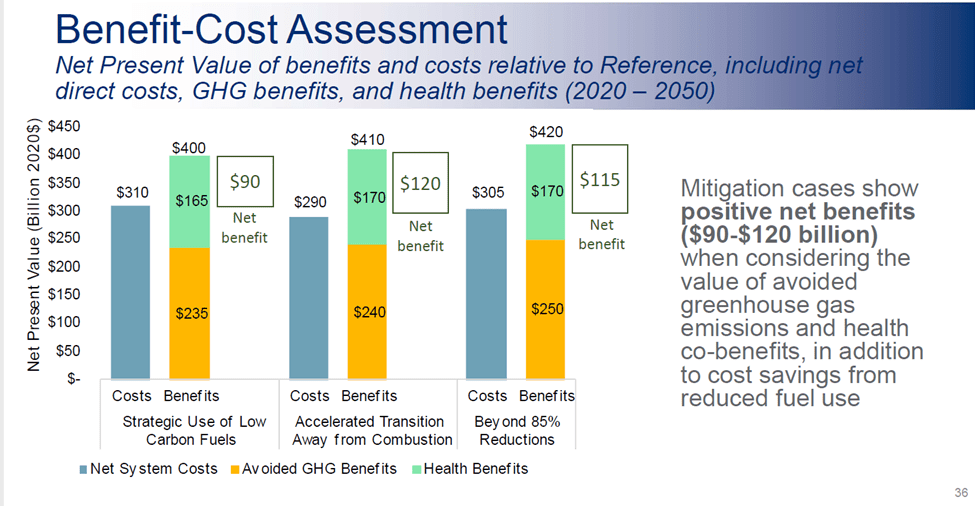
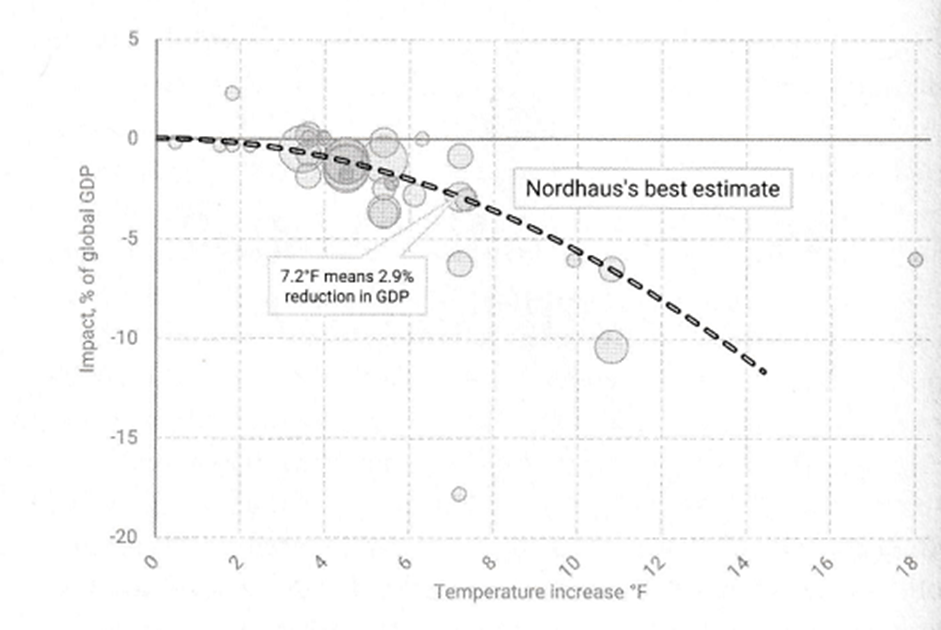

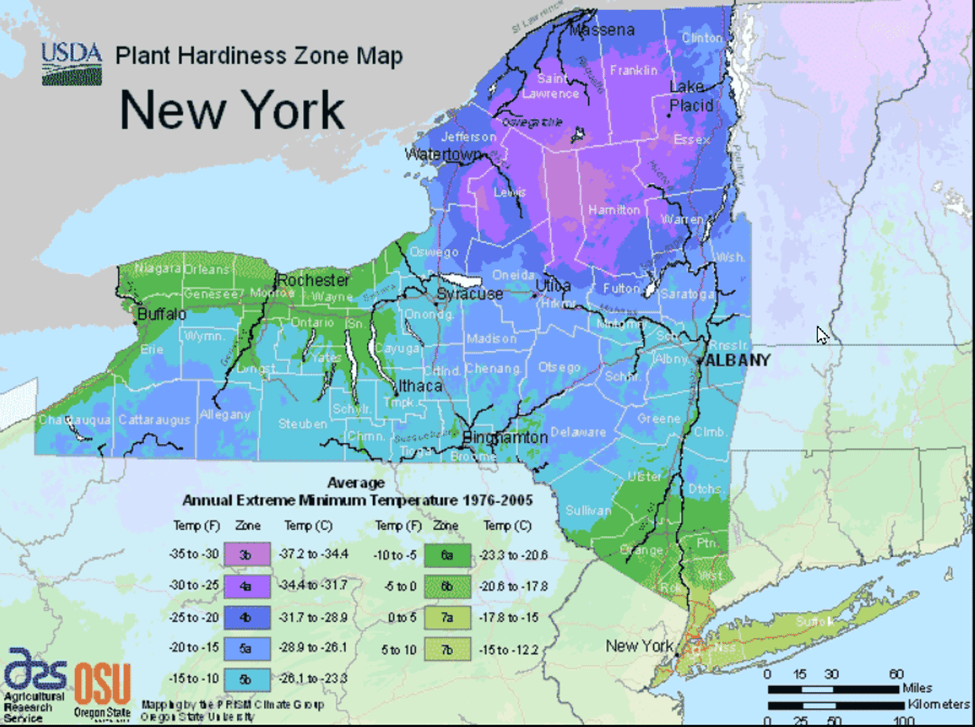




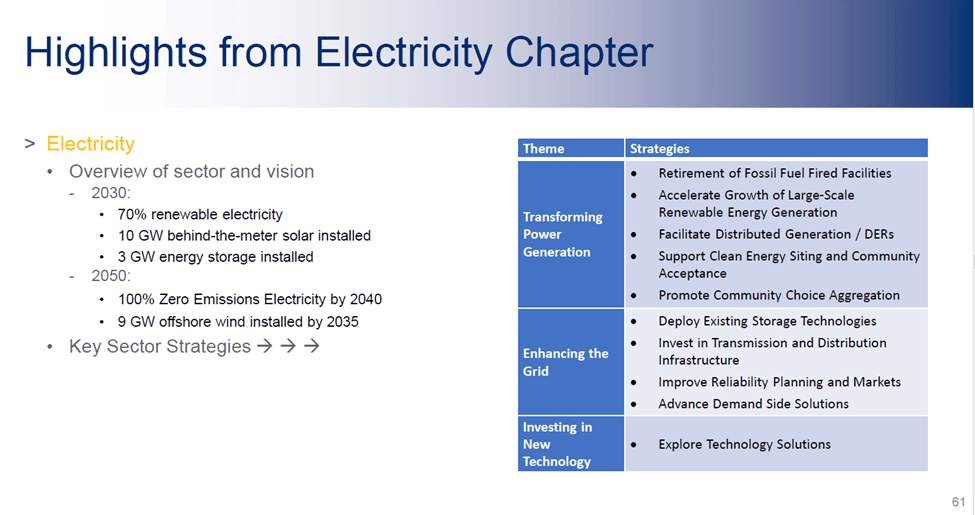

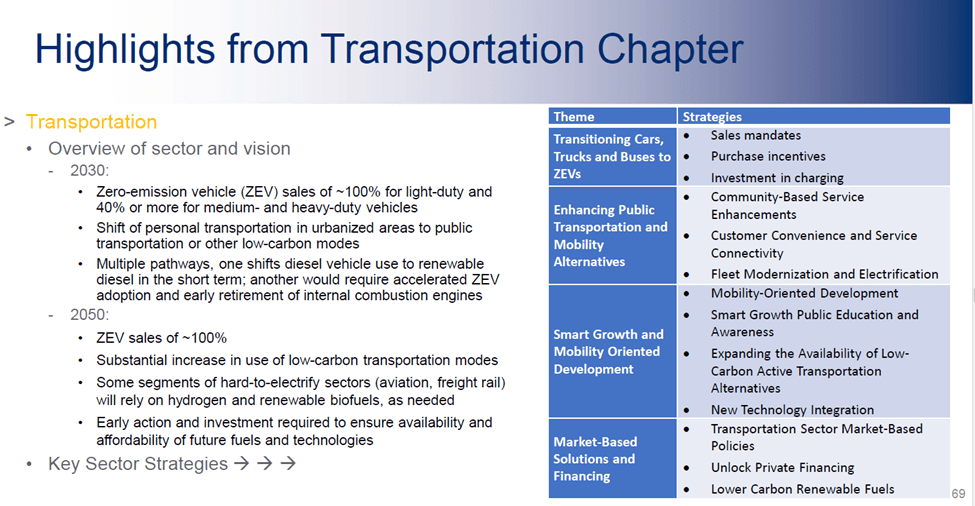
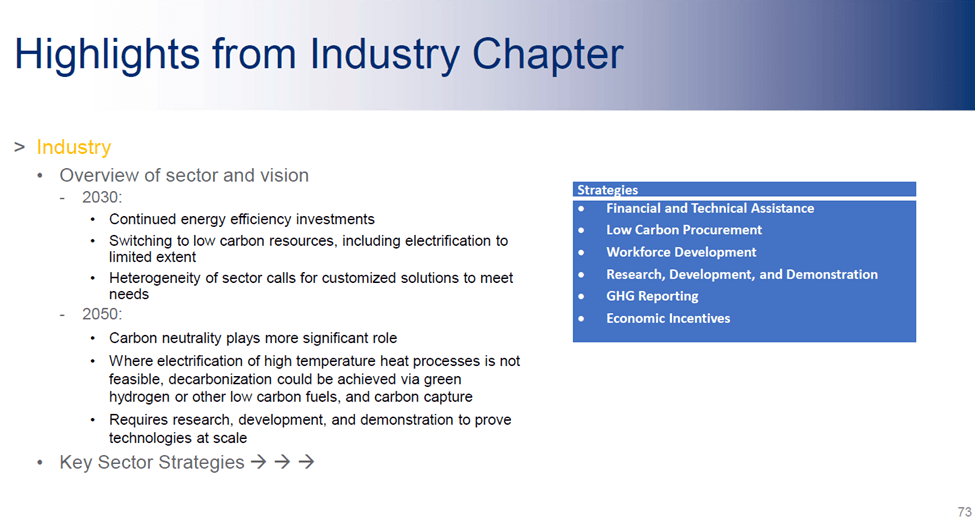
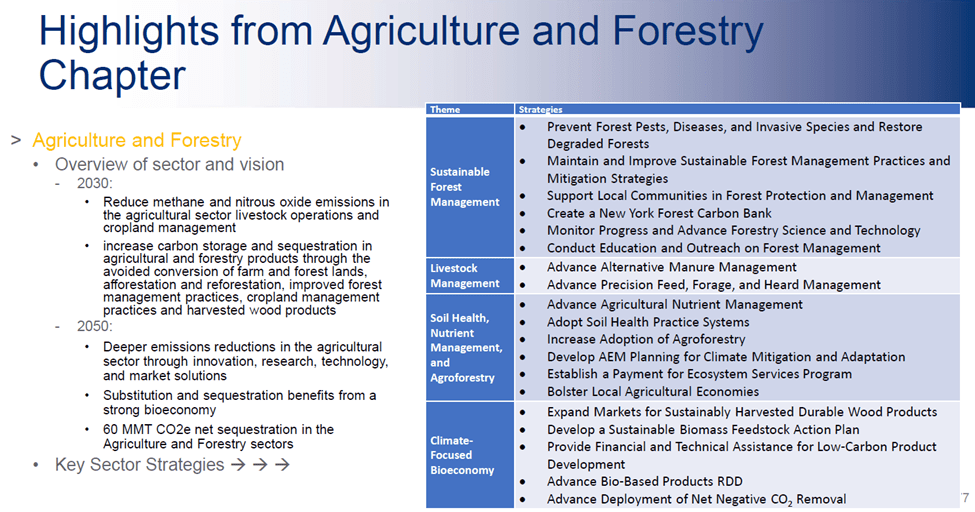

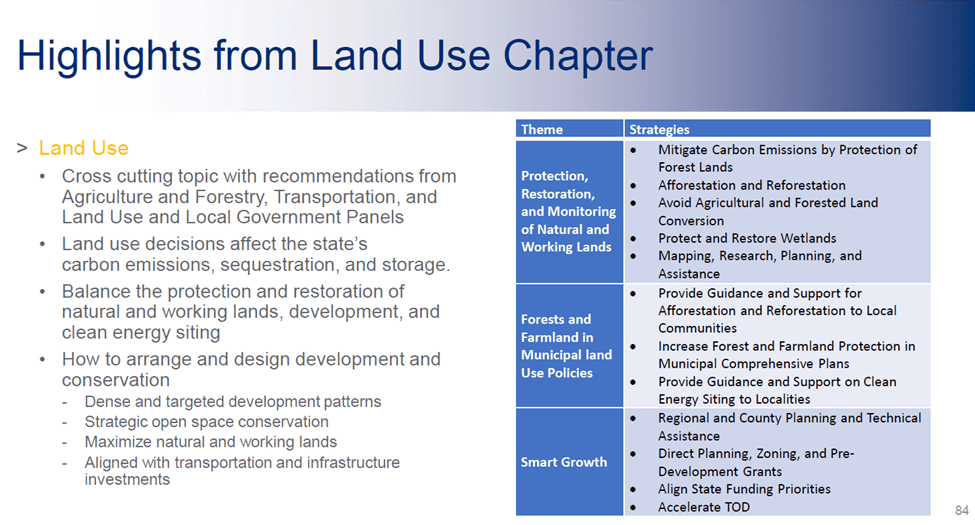


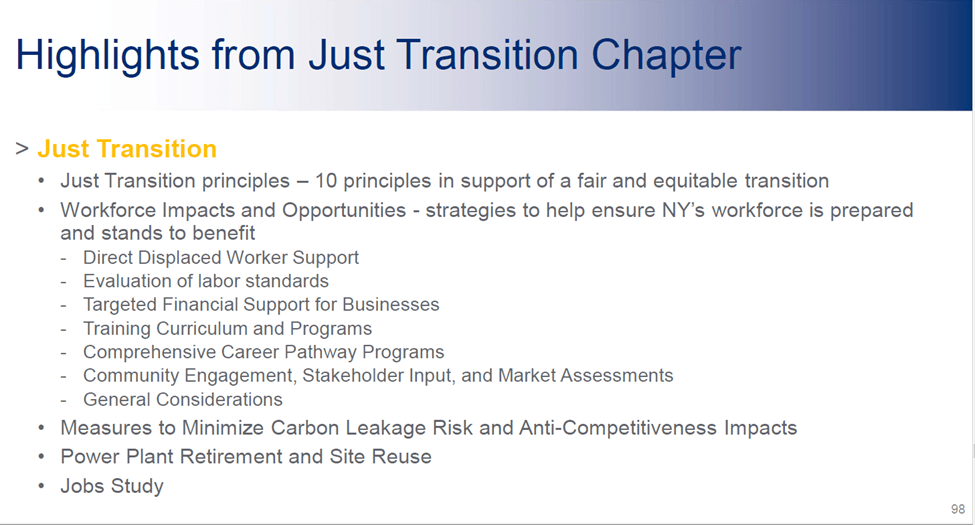


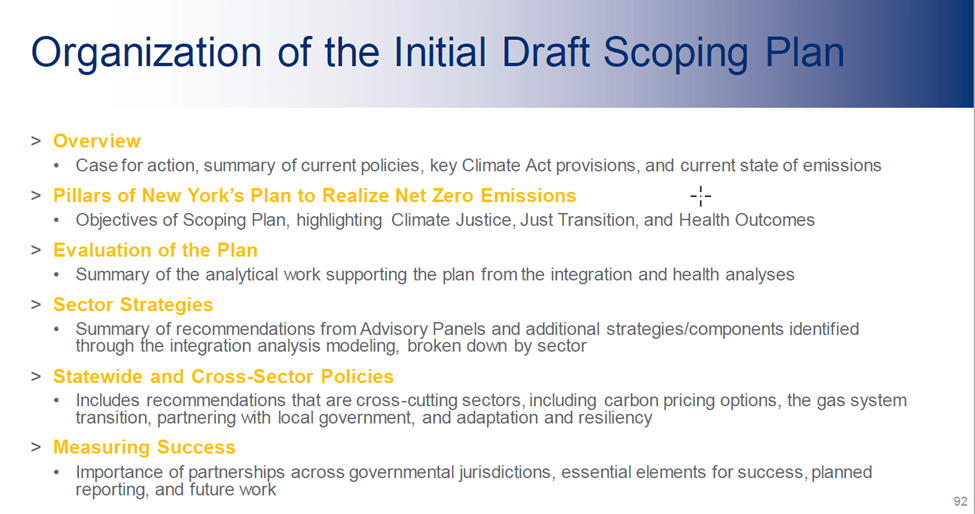


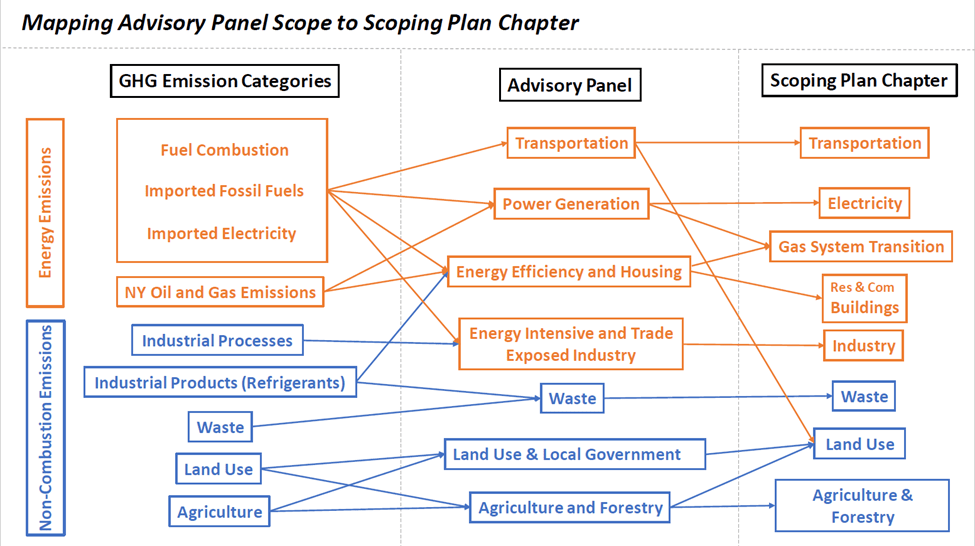


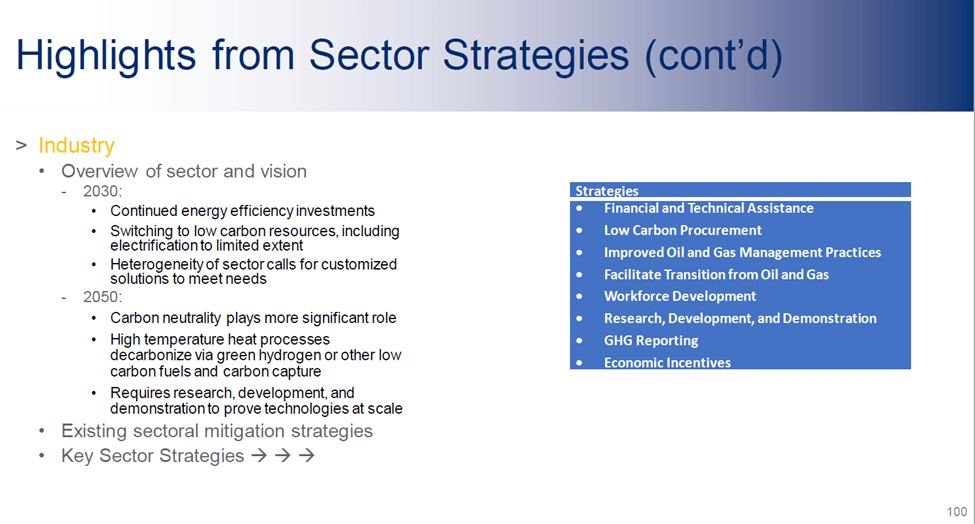

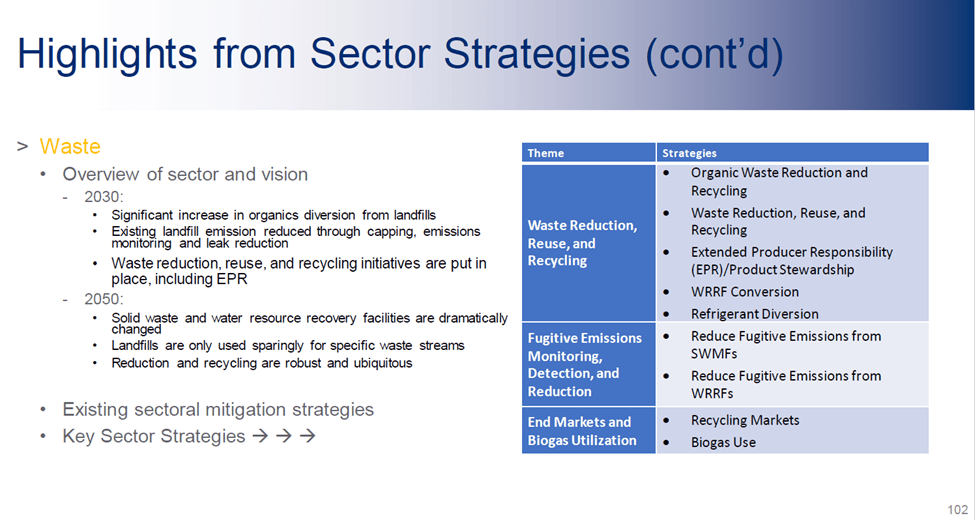

 Pragmatic Environmentalist of New York
