Yesterday, I published an article that summarizes comments I submitted to the New York Department of Environmental Conservation (DEC) in response to a request for feedback. After I published the article, I received an answer to a question I asked EPA about the calculation methodology used by DEC and that inspired me to reiterate my contention that New York’s application of the societal benefits of greenhouse gas emission reductions results in misinformation.
I have followed the Climate Leadership & Community Protection Act (Climate Act)since it was first proposed, submitted comments on the Climate Act implementation plan, and have written over 400 articles about New York’s net-zero transitionThe opinions expressed in this article do not reflect the position of any of my previous employers or any other company I have been associated with, these comments are mine alone.
Overview
The Climate Act established a New York “Net Zero” target (85% reduction in GHG emissions and 15% offset of emissions) by 2050. It includes an interim 2030 reduction target of a 40% reduction by 2030 and a requirement that all electricity generated be “zero-emissions” by 2040. The Climate Action Council (CAC) was responsible for preparing the Scoping Plan that outlined how to “achieve the State’s bold clean energy and climate agenda.” In brief, that plan is to electrify everything possible using zero-emissions electricity. The Integration Analysis prepared by the New York State Energy Research and Development Authority (NYSERDA) and its consultants quantifies the impact of the electrification strategies. That material was used to develop the Draft Scoping Plan outline of strategies. After a year-long review, the Scoping Plan was finalized at the end of 2022. Since then, there have been regulatory and legislative initiatives to implement the recommendations, but progress has been slow.
Yesterday’s post included extensive documentation for the New York Value of Carbon so I will not repeat it here. For this article the key point is that the DEC Climate Change Guidance Documents webpage notes that it was established for use by State entities to “aid decision-making and for the State to demonstrate the global societal value of actions to reduce greenhouse gas emissions in line with the requirements of the Climate Leadership and Community Protection Act.”
Methodology Comment
Yesterday’s article described my submitted comment on the Value of Carbon methodology. In short, I am convinced that the State calculation methodology is incorrect. I believe that the guidance methodology is wrong because it applies the social cost multiple times for each ton reduced.
Last weekend I reviewed the EPA webpage description of the ““Report on the Social Cost of Greenhouse Gases: Estimates Incorporating Recent Scientific Advances”. That page includes links to the following information:
I reviewed the Final Report and thought that their description of the proper benefit calculation methodology supported my arguments. That webpage also includes a “Contact Us” form for questions. To confirm my interpretation I submitted the following to EPA.
I have a question about the first two sentences in the first paragraph in Section 4.2 of the Final Report.
The sentences say: “The Social Cost of Greenhouse Gases (SC-GHG) reflects the future stream of damages associated with an additional ton of emissions discounted back to the year of the emissions. Several steps are necessary when using the SC-GHG estimates in an analysis that includes GHG emissions changes in multiple future years in addition to other benefits and costs.”
I interpret that to mean that the SC-GHG benefit value is applied for an additional ton of emission reductions once. If you are looking at changes over multiple years, the first-year reductions are not applied cumulatively in multiple future years.
Is that the correct interpretation?
I received the following response from Elizabeth Kopits, PhD, Economist, National Center for Environmental Economics, Office of Policy, U.S. EPA:
Thank you for reaching out to our office with your question regarding EPA’s SC-GHG estimates.
The sentences you refer to are just intending to say that if you are analyzing a policy that is expected to result in emission reductions (or increases) in multiple years, then there are several steps to estimating the present value of the full stream of climate benefits (or disbenefits) that are expected from the emissions changes.
If I’m understanding your question correctly then I think the answer is yes.
For example, suppose it has been estimated that a policy will reduce CO2 emissions by 100 tons in 2025, 105 tons in 2026, and 110 tons in 2027, and the analyst is interested in calculating the total climate benefits from these emission reductions and comparing it to the estimated costs and other benefits of the policy. First, one would calculate the climate benefits in each year.
That is, the climate benefits in 2025 from the emission reductions expected in 2025 = 100 tons multiplied by the SC-CO2 for 2025 ($/t). (Recall this SC-CO2 value reflects the present value of the future stream of avoided damages from a one-ton reduction in 2025, so there is nothing more to calculate in 2026 and later related to the emission reductions that occurred in 2025.) Similarly, the climate benefits in 2026 from the emission reductions expected in 2026 = 105 x SC-CO2 in 2026, and the climate benefits in 2027 from the emission reductions expected in 2027 = 110 x SC-CO2 in 2027.
Finally, one can calculate the present value of the benefits resulting from the full stream of emission changes from the perspective of the base year of analysis (e.g., 2024) by discounting the 3 numbers back to 2024 and summing.
I hope this helps to clarify a bit. The SC-GHG workbook available on our webpage (https://www.epa.gov/environmental-economics/scghg) contains detailed instructions and example tabs that may be more helpful than my simple example above. If you continue to have questions, please feel free to reach out any time.
I believe that the key is the “SC-CO2 value reflects the present value of the future stream of avoided damages from a one-ton reduction in 2025, so there is nothing more to calculate in 2026 and later related to the emission reductions that occurred in 2025”. If the intent is to determine “the present value of the full stream of climate benefits (or disbenefits) that are expected from the emissions changes, then lifetime calculations are inappropriate. I want to know the value of the climate benefits for New York to reach an 85% reduction of GHG emissions by 2050.
Discussion
The New York Value of Carbon regulatory policy enables the State to “demonstrate the global societal value of actions to reduce greenhouse gas emissions”. New York’s climate policy making is nearly all political theater. To justify the costs of the Climate Act, the political slogan is “the costs of inaction are more than the costs of action”. To make that claim NYSERDA twisted the interpretation of the analyses to minimize the overall costs, biased costs low and benefits high, and, I have no doubt, influenced the Value of Carbon methodology to maximize benefits.
Yesterday’s post also included related correspondence with DEC staff responding to my interpretation. It stated that “We ultimately decided to stay with the recommendation of applying the Value of Carbon as described in the guidance as that is consistent with how it is applied in benefit-cost analyses at the state and federal level.” Dr Kopits response letter flatly contradicts the claim relative to the Federal level. To give the benefit of doubt to DEC staff I will concede that the interpretation of what is appropriate for this benefit-cost analysis may be different. However, I think that New Yorkers deserve clarification and ultimately get the total costs for the Climate Act mandated reductions.
The DEC response went on to say that “When applying the Value of Carbon, we are not looking at the lifetime benefits rather, we are looking at it in the context of the time frame for a proposed policy in comparison to a baseline.” Finally, it noted that “The integration analysis will apply the Value of Carbon in a similar manner as it compares the policies under consideration in comparison with a baseline of no-action.” This is where the interpretation of the policies under consideration were twisted. In brief, the Hochul narrative that the costs of inaction are more than the costs of action only applies to Climate Act policies and not the total costs to achieve the Climate Act mandates. The baseline of “no-action” described in the Scoping Plan as “Business as usual plus implemented policies” includes the following programs:
Growth in housing units, population, commercial square footage, and GDP
Federal appliance standards
Economic fuel switching
New York State bioheat mandate
Estimate of New Efficiency, New York Energy Efficiency achieved by funded programs: HCR+NYPA, DPS (IOUs), LIPA, NYSERDA CEF (assumes market transformation maintains level of efficiency and electrification post-2025)
Funded building electrification (4% HP stock share by 2030)
Corporate Average Fuel Economy (CAFE) standards
Zero-emission vehicle mandate (8% LDV ZEV stock share by 2030)
Clean Energy Standard (70×30), including technology carveouts: (6 GW of behind-the-meter solar by 2025, 3 GW of battery storage by 2030, 9 GW of offshore wind by 2035, 1.25 GW of Tier 4 renewables by 2030)
That means that the costs of all these programs that are required to meet the Climate Act mandate of an 85% reduction in emissions by 2050 are not included in the evaluation. Due to the lack of transparent cost and benefit estimates I cannot determine if the NYSERDA Integration Analysis excluded the benefits associated with those programs. However, it would be another way to achieve the goal of a sound bite justification of benefits and costs.
Conclusion
New York’s climate policy making is nearly all political theater. The shenanigans that the Scoping Plan authors used to make sure they could claim benefits were greater than costs and hiding their methodology and results is a long, disappointing story. The Value of Carbon methodology is dictated by the desire to prove a point rather than provide any rigor in establishing its definition and level. Given the necessity to maximize benefits to “prove” the costs of inaction are more than the cost of action and the lack of accountability to meaningfully respond to all stakeholders, ignoring my comments is a simply expedient.
I believe the ultimate question is “What are the benefits of New York’s 85% emission reductions mandated by the Climate Act?” To answer that the value of carbon or social cost of carbon benefits should use the EPA methodology. I believe that benefit is what all New Yorkers want to know and the Hochul Administration is deliberately covering up those numbers because it runs contrary to their narrative.
Syracuse Post Standard reporter Tim Knauss recently wrote two articles that expose the disconnect between the executives in the electric industry and their customers. The Climate Leadership & Community Protection Act (Climate Act) will cost enormous amounts of money at the same time it increases reliability risks. The politicians supporting it and the leadership of the utility companies all have not admitted just how much it will cost ratepayers. This post uses National Grid’s “Net-Zero Overhaul” as an example.
I have followed the Climate Act since it was first proposed, submitted comments on the Climate Act implementation plan, and have written over 400 articles about New York’s net-zero transition. The opinions expressed in this post do not reflect the position of any of my previous employers or any other organization I have been associated with, these comments are mine alone.
Overview
The Climate Act established a New York “Net Zero” target (85% reduction in GHG emissions and 15% offset of emissions) by 2050. It includes an interim 2030 reduction target of a 40% reduction by 2030 and a requirement that all electricity generated be “zero-emissions” by 2040. The Climate Action Council (CAC) was responsible for preparing the Scoping Plan that outlined how to “achieve the State’s bold clean energy and climate agenda.” In brief, that plan is to electrify everything possible using zero-emissions electricity. The Integration Analysis prepared by the New York State Energy Research and Development Authority (NYSERDA) and its consultants quantifies the impact of the electrification strategies. That material was used to develop the Draft Scoping Plan outline of strategies. After a year-long review, the Scoping Plan was finalized at the end of 2022. In 2023 the Scoping Plan recommendations were supposed to be implemented through regulation, PSC orders, and legislation. That process is falling behind as the enormity of the challenge becomes clearer.
National Grid Net Zero Overhaul
I live in Upstate New York and National Grid is my electric utility. National Grid is the electricity system operator for Great Britain. In 2000 National Grid started purchasing utilities in the United States and now is “an electricity, natural gas, and clean energy delivery company serving more than 20 million people through our networks in New York and Massachusetts.” They tout plans for National Grid for “a smarter, stronger, cleaner energy future — transforming our networks with more reliable and resilient energy solutions to meet state climate goals and reduce greenhouse gas emissions.”
Someday I may return to this topic and focus on the “more reliable and resilient solutions” claim. For the time being I will content myself with just saying this is codswallop. I don’t think it will ever be possible for New York to meet its state climate goals as presently outlined without a catastrophic blackout because the energy storage and dispatchable emissions free resources necessary to meet the worst-case low wind and solar resource drought are impractical. Utility executives know that this is an issue but play along with the plans for their own self-interest not the interests of their customers.
This article will address the proposed plan for the “cleaner energy future”. In particular, Nation Grid recently announced plans for a £60bn Net Zero overhaul of National Grid. That total is for all the National Grid companies. The US National Grid press release included the following quote:
Group CEO of National Grid John Pettigrew said: “Today’s announcement is a clear illustration that National Grid is committed to playing our part in achieving the ambitious decarbonization targets that New York and Massachusetts governments have set. The increased investment we’re announcing today follows positive engagement with our regulators in these states, reflecting a willingness to upgrade electricity networks to provide long term affordable energy to all, and reduce emissions across our gas networks.”
The $16 billion plan represents a 60% increase over what National Grid has spent during the past five years. It includes a $4 billion project under way to improve 1,000 miles of transmission lines, which National Grid calls the “Upstate Upgrade.” Other projects have not yet been identified.
Knauss also quoted spokesperson Jared Paventi: ““Will there be an impact for the customer? Yes, but I believe that it’s going to be negligible based on the time period that we’ll be recovering those costs,” Paventi said.” While the quote suggests that this is his personal opinion, I have no doubts that is the story he was charged to say.
Rate Case Proposal
The press release for the upcoming New York rate case gives the highlights:
Critical investments to ensure the reliability and safe operation of the company’s energy delivery system that serves 2.3 million upstate New York residential and business customers.
Enhanced system resiliency and reliability measures to manage and reduce the impact of frequent and severe weather and enable continued strong storm response.
Integrated energy planning to consider interactions between gas, electric and customer energy systems to achieve long-term climate goals in a safe and affordable way.
Infrastructure investments to support economic development, connect clean energy, and enhance security.
Targeted programs and dedicated teams to better serve residential, commercial and industrial customers.
Enhanced energy affordability programs and services, and programs to enable clean energy and energy efficiency benefits for disadvantaged communities.
In 2020 National Grid asked for a $142 million increase in annual electric and gas delivery revenues. This year, the utility is asking for $673 million. If the Public Service Commission goes along, that would raise National Grid’s electric delivery revenues by 20% and its gas revenues by 28%. A typical household would pay $440 a year more for electricity and gas.
National Grid describes the reasons for the increase as a catchup from the last rate case when “the company and regulators put a top priority on holding down an increase” and “Inflation and supply-chain constraints have raised the cost of transformers, poles, cables and other equipment” Knauss writes that they also admit that: “the power grid requires significant new investments to make way for more electric vehicles, electric-heat buildings, and other elements of New York’s planned transition away from fossil fuels.” I doubt that the attribution of costs to these reasons will be readily available.
Discussion
The impetus for this article was spokesperson Jared Paventi’s claim that the costs for the investments will be “negligible”. Knauss provides the data that suggests otherwise. He points out that “In an order issued last year to approve $4.4 billion in new transmission lines planned by several utilities, the state Public Service Commission estimated the work could increase residential bills by about $3.50 a month, decreasing over time.” The New York Net Zero Overhaul estimate is $16 billion. That will cause residential bills to increase an additional $12.73 per month. I don’t call that negligible and that is only a small portion of the total increases proposed in the rate case.
The other thing that caught my eye was the comment by Group CEO of National Grid John Pettigrew that the New Zero Overhaul announcement “follows positive engagement with our regulators in these states”. Cynic that I am, this sounds like the executives got an audience with the Hochul Administration and promised to follow their script for Climate Act implementation right before the rate case was released. Maybe it is just a coincidence, but it smells like a backroom deal to me that has corporate and political interests at its heart with the welfare of the ratepayers ignored. Hochul recently nominated three environmental ideologues to the Public Service Commission. I have no doubts where their biases lie and believe that any costs for the great net-zero transition will be approved by those three.
Conclusion
I do not think that there is any question that electric utilities have determined that implementation of net-zero transition plans will be risky and costly for their customers. However, I believe they have also determined that implementation is in their financial best interest. Similarly, the regulatory agencies certainly have technical experts who understand the risks but the political appointees in charge ignore their counsel because their handlers are catering to a specific constituency. This does not portend well for everybody else.
There is a glimmer of hope. It is only a matter of time until the cost blowback begins on these rate cases. On June 5, 2024 Hochul indefinitely paused implementation of the New York City congestion pricing plan. The rate cases will cause the costs of energy to increase for more people and the Climate Act is a big part of the increase. Hochul said, “it’s not the right time” for congestion pricing as “New Yorkers face a cost-of-living crisis”. Hopefully this will be draft language for a walk back on the aspirational Climate Act implementation plan when the true costs become clear.
The lead to the Natural Resources Defense Council (NRDC) blog post Separating Fact from Fiction: Setting the Record Straight on New York’s Climate Law states “Don’t be fooled by the fossil-fueled campaigns to delay climate progress. The Climate Leadership and Community Protection Act is New York State’s chance for a cleaner, healthier future.” It goes on to refute four claims allegedly pushed by fossil fuel industry. I am only going to respond to one of the responses.
I have followed the Climate Leadership & Community Protection Act (CLCPA) since it was first proposed, submitted comments on the CLCPA implementation plan, and have written over 400 articles about New York’s net-zero transition. I am convinced that the CLCPA will adversely affect affordability, reliability, and that the environmental impacts of the proposed transition are greater than the possible impacts of climate change. The opinions expressed in this post do not reflect the position of any of my previous employers or any other organization I have been associated with, these comments are mine alone.
Overview
The CLCPA established a New York “Net Zero” target (85% reduction in GHG emissions and 15% offset of emissions) by 2050. It includes an interim 2030 reduction target of a 40% reduction by 2030 and a requirement that all electricity generated be “zero-emissions” by 2040. The CLCPAion Council (CAC) was responsible for preparing the Scoping Plan that outlines how to “achieve the State’s bold clean energy and climate agenda.” In brief, that plan is to electrify everything possible using zero-emissions electricity. The Integration Analysis prepared by the New York State Energy Research and Development Authority (NYSERDA) and its consultants quantifies the impact of the electrification strategies. That material was used to develop the Draft Scoping Plan outline of strategies. After a year-long review, the Scoping Plan was finalized at the end of 2022. In 2023 the Scoping Plan recommendations were supposed to be implemented through regulation, PSC orders, and legislation.
The NRDC blog post describes the Scoping Plan framework as “pathways for a planned and orderly transition to a clean, resilient energy future.” The Scoping Plan is just a list of potential control strategies that when combined are supposed to meet the CLCPA mandates. A feasibility analysis has never been completed to show that the list of strategies is practical. Furthermore, transparent accounting for the costs of the transition have not been provided and the Cumulative Environmental Impact Assessment has not been updated to account for the Scoping Plan estimates of the wind, solar, and energy storage resources needed.
The CLCPA will result in higher energy costs for ratepayers because it is costly to implement.
The CLCPA will reduce the reliability of energy delivered to homes and businesses.
Your gas stove is going to be taken away from you.
There will be an adverse impact on the state’s overall economic climate that will discourage new investments and job growth.
I am only going to address the response to the second claim that the CLCPA will “reduce reliability of energy delivered to homes and businesses”. The response to that claim states:
The framework outlined by the CLCPA-mandated Scoping Plan provides pathways for a planned and orderly transition to a clean, resilient energy future. The idea of a regenerative rather than an extractive economy strikes fear in the fossil fuel industry, which has been making record profits from recent price fluctuations and market volatility; in reality, reliability failures are often due to fossil-fueled superstorms and the historical lack of investment in our nation’s aging infrastructure. By contrast, homegrown renewable energy can and will be more resilient, more plentiful, and more cost-effective than finite oil and gas resources.
I will address each of these statements. The first sentence states “The framework outlined by the CLCPA-mandated Scoping Plan provides pathways for a planned and orderly transition to a clean, resilient energy future.” As noted previously there has never been a feasibility analysis to determine if the components of the Scoping Plan are practical. The Climate Action Council never resolved the discrepancy between the Council faction that believed that no new technology is needed for the transition and the experts responsible for the system that argued otherwise. A recent technical conference showed that the work of Prof. C. Lindsay Anderson, Chair of Department of Biological and Environmental Engineering Cornell; Zach Smith, VP System Resource Planning, New York Independent System Operator; and Kevin Steinberger, Director, Energy and Environmental Economics all found that a new resource that can be dispatched when needed, is firmly available, and has no emissions is needed. Technologies to meet this requirement are not commercially available at this time. Moreover, no jurisdiction anywhere has been able to convert their electric system to one that relies on wind, solar, and energy storage. Given the myriad technical issues that must be overcome to provide electricity when it is needed most, I think the most prudent course of action would be a demonstration project because the transition to the energy system mandated by the CLCPA would be unprecedented.
The second sentence unnecessarily questions the motivations of those who worry about reliability “The idea of a regenerative rather than an extractive economy strikes fear in the fossil fuel industry, which has been making record profits from recent price fluctuations and market volatility; in reality, reliability failures are often due to fossil-fueled superstorms and the historical lack of investment in our nation’s aging infrastructure.” The concern about profiting from price fluctuations and market volatility is naïve. When the electricity market is dominated by weather dependent generating resources the variability of wind and solar output will increase price fluctuations. The New York Independent System Operator will have to modify the electric market to address this volatility as they learn how this new aspect of the system affects prices. I have been involved with the weather-related impacts on the electric system for over 40 years and it has always been true that extreme weather has the greatest impact on system outages. A common theme throughout this blog post is that all weather events are necessarily related to climate change without acknowledging that extreme weather events exactly like those before the climate change would still have major impacts. Any increase in severity due to climate change is just a tweak and not the primary driver.
The final sentence got my attention: “By contrast, homegrown renewable energy can and will be more resilient, more plentiful, and more cost-effective than finite oil and gas resources.” I wondered how the author managed to claim that extreme weather will have more of an effect on today’s generators in weather proof buildings than the exposed wind turbines and solar panels. The more resilient reference was to the Babcock Ranch a Florida “solar town” that fared well during recent hurricanes. The article claims the town came out of Hurricane Ian “almost unscathed and notes that one resident says they survived ‘by design.’ Florida Power and Light is proud of the Babcock Ranch solar system:
Babcock Ranch’s clean energy efforts were taken to the next level when FPL created the largest solar-plus-storage system operating in the U.S. today. Each of the ten large gray steel battery storage units at the FPL Babcock Ranch Solar Energy Center can store 1 megawatt of power and discharge for 4 hours. The adjacent 440 acres with 330,000 solar panels can generate up to 74.5 megawatts of power. Currently the solar installation generates more power than the town needs, so the surplus goes into the electric power grid. The new battery storage system ensures a steady output of power even on partly cloudy days.
There are two resiliency features that matter: Babcock Ranch was built 30 feet above sea level and all power lines are buried underground to keep them safe from strong winds. New York’s net zero transition does not include buried power lines. The Babcock Ranch website refutes the claim that “homegrown renewable energy can and will be more resilient”:
Electric power always flows from the nearest generation, so during the day the town will use energy from the FPL Babcock Ranch Solar Energy Center. When the sun goes down and the solar plant is not generating energy, Babcock Ranch will pull electricity off the grid from the closest FPL natural-gas power plant.
Babcock Ranch is not clean energy self-sufficient as the Climate Act envisions the entire state will be. The NRDC response also claims that renewable energy is more plentiful and more cost-effective than finite oil and gas resources. It may be true that solar and wind energy is free but harvesting those resources, storing them for when they will be needed during an extended period of light winds in the winter when solar resources are low is an extraordinary challenge that requires the new resource described above. Like all the Green Energy solutions advocated by the NRDC, wind and solar may work well most of the time but when you really need them, they don’t work at all. The concern about finite oil and gas resources ignores the value of their storable concentrated energy and whether running out is a concern in the foreseeable future.
Conclusion
I believe I have shown that the NRDC fact-check claims that the CLCPA energy transition does not threaten reliability are invalid. Ignoring the mounting evidence that this may be an insurmountable challenge is not in the best interest of New Yorkers. At a minimum, CLCPA implementation should be delayed until we are sure that we can afford the CLCPA mandates, prove that the transition will not adversely affect reliability, and understand all the cumulative environmental impacts.
As is typical, whenever someone is screaming about misinformation it usually means that they are guilty of that charge. In addition, trying to respond to this tripe takes an order of magnitude more work to respond. Finally, whenever I make the effort to check the numbers I find the alarmists have their thumbs on the scale and are peddling a narrative to support their livelihoods. I only wish that they could be held accountable when reality slaps their aspirational net-zero transition dreams back to earth.
Offshore wind (OSW) is a key component of the Climate Leadership & Community Protection Act (Climate Act). This article highlights material on costs and the leasing process that suggests it is not going to end well. Affordability is a major concern of mine and the costs for offshore wind are extraordinarily high. David Stevenson prepared a summary of costs that deserves wider distribution. Bud’s Offshore Energy blog argued that unrealistic power generation deadlines should not be the focus of the Bureau of Ocean Energy Management (BOEM) leasing policy.
I have followed the Climate Act since it was first proposed, submitted comments on the Climate Act implementation plan, and have written over 400 articles about New York’s net-zero transition. The opinions expressed in this post do not reflect the position of any of my previous employers or any other organization I have been associated with, these comments are mine alone.
Overview
The Climate Act established a New York “Net Zero” target (85% reduction in GHG emissions and 15% offset of emissions) by 2050. It includes an interim 2030 reduction target of a 40% reduction by 2030 and a requirement that all electricity generated be “zero-emissions” by 2040. Because nothing says sound energy policy like one designed politicians, the Climate Act also includes a requirement for 9 GW of offshore wind by 2035. The Climate Action Council (CAC) is responsible for preparing the Scoping Plan that outlines how to “achieve the State’s bold clean energy and climate agenda.” In brief, that plan is to electrify everything possible using zero-emissions electricity. The Integration Analysis prepared by the New York State Energy Research and Development Authority (NYSERDA) and its consultants quantifies the impact of the electrification strategies. That material was used to develop the Draft Scoping Plan outline of strategies. After a year-long review, the Scoping Plan was finalized at the end of 2022. In 2023 the Scoping Plan recommendations were supposed to be implemented through regulation, PSC orders, and legislation. Not surprisingly, the aspirational schedule of the Climate Act has proven to be more difficult to implement than planned and many aspects of the transition are falling behind.
Offshore Wind Costs
Richard Ellenbogen recently submitted comments that compared nuclear costs to other proposed dispatchable emissions-free resources which I cover in another post. His analysis included an assessment of OSW, but he was unable to come up with good cost numbers. David Stevenson has some numbers available which are shown below. David has spent the last twelve years as the Director of the Center for Energy & Environment for the Caesar Rodney Institute, a bipartisan free market think tank. He has published over 150 analytic studies including major studies on the Regional Greenhouse Gas Initiative, the EPA Clean Power Plan, electric grid reliability, the public policy drivers of energy cost, offshore wind, electric vehicles, carbon capture, nuclear energy, and climate change.
But this recent growth in the offshore wind industry does not necessarily reflect its long-term health. Two substantial headwinds threaten to make projects uneconomical. One is the recent high inflation, which raised the costs of materials and labor across all industries, and the other is bottlenecked supply chains that are causing a bidding-up of the prices of materials and components needed for building wind turbines.
Hanley explained the ramifications to the OSW projects in New York and linked to the request for increases:
Stevenson produced this summary of the costs associated with these requests for more money.
At issue was a request in June by ACE NY, as well as Empire Offshore Wind LLC, Beacon Wind LLC, and Sunrise Wind LLC, which are putting up the offshore wind tower farms.
All told, the request, which was in the form of a filing before the PSC, represented four offshore wind projects totaling 4.2 gigawatts of power, five land-based wind farms worth 7.5 gigawatts and 81 large solar arrays.
All of these projects are underway but not completed. They have already been selected and are under contract with the New York State Energy Research and Development Authority, or NYSERDA, to help New York transition to a clean power grid, as called for in the Climate Leadership and Community Protection Act, approved by the state Legislature and signed into law in 2019.
Developer response suggests that “a number of planned projects will now be canceled, and their developers will try to rebid for a higher price at a later date — which will lead to delays in ushering in an era of green energy in New York”. Karlin also quotes Fred Zalcman, director of the New York Offshore Wind Alliance: “Today’s PSC decision denying relief to the portfolio of contracted offshore wind projects puts these projects in serious jeopardy,”
Later in October new projects were approved by NYSERDA with an average nominal cost/ MWh of $145.07 which compares to $167.07 in the table above. Stevenson explains that the table prices were requested in December 2023 while the new projects bids were probably made in early 2023 and may not reflect the true cost needed to obtain financing today. The original four projects cancelled most likely would have started construction in 2025 while the new projects are slated to start in 2030.
Here is what NYSERDA reported about the recent projects that include Attentive Energy One at 1,404 MW, Community Offshore Wind at 1,314 MW, and Excelsior Wind at 1,314 MW:
“The weighted average strike price of the awarded offshore wind projects over the (25 year) life of the contracts is $96.72 per megawatt hour in 2023 (real) dollars, which equates to a nominal weighted average strike price of $145.07 per megawatt hour. The strike prices comprising the weighted average cited above are subject to certain adjustments in accordance with the terms of the awarded contracts, including, in some cases, adjustments based on certain price indices, interconnection costs and/or receipt of qualifying federal support.”
Stevenson said “it looks to me that the award allows prices to increase 3% a year”. The strike price is the guaranteed price. The premium payment to the wind developer will be reduced by any revenue they receive from selling the wholesale power and any capacity value which might total about $60/MWh over the life of the projects so the net premium price might be about $85/MWh. In addition, there may be other inflation adders based on NYSERDA’s wording.
Soon after the Public Service Commission refused to approve the higher costs for four contracts last October, the Hochul Administration announced that expedited offshore wind solicitations for the state will be held early in 2024.
Projects that previously petitioned the New York State Public Service Commission for financial relief can choose to participate, though the solicitation will also emphasize competition between these and other projects, ensuring the integrity of the process and best value for New York electricity consumers, according to the press release.
The solicitations were announced in January and the deadline for submittals recently passed. The results will be announced soon.
Stevenson also provided cost estimated for two new projects have been approved in New Jersey that he expects will be similar to the expedited New York solicitations. The 2,400 MW Invenergy project will average $152.91/MWh, and the 1,342 MW Attentive One will average $187.83 over their twenty-year life considering their 2.5% and 3% per year allowed price increases. In addition, each of the 2032 startups expect 30% federal Investment Tax Credits, and New Jersey is allowing up to 15% additional inflation adjusters that could bring average costs to $175.84 and $216.01/MWh. The New York projects may have a similar inflator.
He notes that Attentive Wind One is projecting a ridiculously high 56% capacity factor. Most projects estimate capacity factors of 42% to 44%, like actual results from the five turbine Block Island and two turbine Coastal Virginia projects. Two factors suggest much lower capacity factors for larger projects. Below is the annual production curve for six years at Block Island. Notice the highest generation occurs in the spring and fall when electric demand is lowest. The Virginia turbines show a similar pattern. With many large projects all doing the same the regional grids will not be able to take all the power produced so turbines will have to be shut down, or curtailed. PJM expects average capacity factors will be 37% because of this curtailment.
European studies of offshore wind show a second impact known as the “Wake Effect”. The first row of turbines absorb wing power leaving succeeding rows with less wind energy. The impact could be to drop electric generation another 5% to 10%. Lower generation means higher guaranteed prices will be needed. We will most likely see future nominal strike prices routinely above $200/MWh.
Deadlines and Wind Deployment
Bud’s Offshore Energy blog points out that unrealistic power generation deadlines should not be the focus of the Bureau of Ocean Energy Management (BOEM) leasing policy. This argument also applies to the Climate Act’s arbitrary offshore wind deployment requirements. In reference to wind leasing issues in Oregon he explained:
As concerns about wind leasing mount, it is becoming increasingly apparent that the rush to hold auctions may not be in the best long-term interest of the wind program. The primary objective should be cost-effective and responsible development, not gigawatt deadlines.The administration’s vision for wind energy capacity, particularly the 15 GW goal for floating turbines by 2035, is unlikely to be achieved and rushing the process is not helpful.
The Confederated Tribes of Coos, Lower Umpqua and Siuslaw tribal council unanimously passed a resolution opposing offshore wind energy development off the Oregon coast.
“The federal government states that it has ‘engaged’ with the Tribe, but that engagement has amounted to listening to the Tribe’s concerns and ignoring them and providing promises that they may be dealt with at some later stage of the process. The Tribe will not stand by while a project is developed that causes it more harm than good – this is simply green colonialism.”
These two perspectives address my concerns about affordability and reliability. The Climate Action Council got bogged down in its Scoping Plan review with ideological discussions. For example, an inordinate amount of time was spent arguing whether natural gas should instead be called fossil gas in the Scoping Plan.. As a result, the Council never established criteria for affordability and reliability presuming that because the Integration Analysis projections supported their narrative that those issues would not arise.
I believe that the issues are rapidly approaching the fan of reality and they will hit soon. Soon the reality that the aspirational schedule is untenable, the costs are higher than admitted, and there are ramifications to reliability because no new fossil power are being built to replace the irreplaceable aging fossil plants before the magical resources are developed. There is a safety valve that can be used by the Public Service Commission that gives me hope that this mess can be averted. New York Public Service Law § 66-p (4). “Establishment of a renewable energy program” includes safety valve conditions for affordability and reliability. § 66-p (4) states: “The commission may temporarily suspend or modify the obligations under such program provided that the commission, after conducting a hearing as provided in section twenty of this chapter, makes a finding that the program impedes the provision of safe and adequate electric service; the program is likely to impair existing obligations and agreements; and/or that there is a significant increase in arrears or service disconnections that the commission determines is related to the program”. The political ramifications of employing this would be enormous but the impacts of the failure to pause this absurd energy plan would be much worse. I believe that the Public Service Commission should assure that New Yorkers can continue to have access to reliable and affordable electricity by defining standards for those affordability and reliability criteria.
Conclusion
I cannot over-emphasize how much I agree that the primary objective of offshore wind development “should be cost-effective and responsible development, not gigawatt deadlines”. With the addition of evolving development costs as supply chain and infrastructure support requirements become clear, it is not in the interests of New York to continue the mad rush to try to meet arbitrary gigawatt deadlines. This also applies to the development of ll solar and wind. Legitimate affordability, reliability, and environmental concerns are being ignored in the rush to build as much as possible as soon as possible.
On February 15, 2024 Governor Hochul announced $200 million in utility bill relief for 8 million New Yorkers. The press release quoted her as saying “Energy affordability continues to be a top priority in my clean energy agenda and this utility bill credit is just one of many actions New York is taking to reduce costs for our most vulnerable New Yorkers.” This post shows how some of the numbers given can be used to put implementation costs for the Climate Leadership & Community Protection Act (Climate Act) into context.
I have followed the Climate Act since it was first proposed, submitted comments on the Climate Act implementation plan, and have written over 400 articles about New York’s net-zero transition. The opinions expressed in this post do not reflect the position of any of my previous employers or any other organization I have been associated with, these comments are mine alone.
Overview
The Climate Act established a New York “Net Zero” target (85% reduction in GHG emissions and 15% offset of emissions) by 2050. It includes an interim 2030 reduction target of a 40% reduction by 2030 and a requirement that all electricity generated be “zero-emissions” by 2040. The Climate Action Council (CAC) is responsible for preparing the Scoping Plan that outlines how to “achieve the State’s bold clean energy and climate agenda.” In brief, that plan is to electrify everything possible using zero-emissions electricity. The Integration Analysis prepared by the New York State Energy Research and Development Authority (NYSERDA) and its consultants quantifies the impact of the electrification strategies. That material was used to develop the Draft Scoping Plan outline of strategies. After a year-long review, the Scoping Plan was finalized at the end of 2022. In 2023 the Scoping Plan recommendations were supposed to be implemented through regulation, PSC orders, and legislation. Not surprisingly, the aspirational schedule of the Climate Act has proven to be more difficult to implement than planned and many aspects of the transition are falling behind. In addition, the magnitude of the necessary costs is coming into focus despite efforts to hide them. A political reckoning is inevitable in my opinion.
Press Release
This section quotes the press release and includes my comments.
The introduction outlines the rebate plan:
Governor Kathy Hochul today announced that the New York State Public Service Commission adopted a $200 million New York State energy bill credit to be administered by the large electric and gas utilities on behalf of their customers. The energy bill credit is a one-time credit using State-appropriated funds to provide energy bill relief to more than 8 million directly metered electric and gas customers. With today’s action, more than $1.4 billion has been or will be made available to New York consumers to help offset energy costs in 2024.
The rebate totals $200 million and gives a one-time credit to 8 million directly metered electric and gas customers. Ry Rivard in the February 16 edition of Politico Pro NY & NJ Energy notes that “The money, which will be spread across eight million electric and gas customers, amounts to roughly a one-time bill credit of about $24.”
Hochul provides the rationale for the rebate:
“Every New Yorker deserves affordable and clean energy, which is why I fought to secure additional funds to provide financial relief for hardworking families,” Governor Hochul said. “Energy affordability continues to be a top priority in my clean energy agenda and this utility bill credit is just one of many actions New York is taking to reduce costs for our most vulnerable New Yorkers.”
In Albany there are always working groups, advisory councils, and other committees set up to deflect blame and/or claim benefits. In this instance the Energy Affordability Policy working group, “a group of stakeholders that included the most prominent consumer advocacy groups in the state” made the recommendations. The press release states:
The program, proposed by the Energy Affordability Policy working group, provides that the $200 million appropriation included in the FY24 State Budget will be allocated to customer accounts through a one-time credit within roughly 45 days of the utilities receiving budget funds. This utility bill relief builds on several other key energy affordability programs administered by New York State, including $380 million in energy assistance program (EAP) funding for consumers through utilities, $360 million in Home Energy Assistance Program (HEAP) funding, $200 million in EmPower+ funding through the State Budget, over $200 million in ratepayer funding to provide access to energy efficiency and clean energy solutions for low-to -moderate income (LMI) New Yorkers through the Statewide LMI portfolio and NY Sun, and more than $70 million annually through the Weatherization Assistance Program (WAP).
The Department of Public Service (DPS), in consultation with the Energy Affordability Policy working group, was tasked with designing a utility bill relief program related to the costs of utility affordability programs in recognition of energy commodity cost increases and the costs of utilities’ delivery rate increases. The working group considered multiple proposals over several months to effectuate the desired relief. The majority of the working group agreed to the staff proposal after several key modifications and recommended the PSC implement a one-time energy bill credit that would primarily benefit residential and small business electric and gas customers.
The Energy Affordability Policy working group is made up of leading consumer groups and advocates, municipalities, relevant state agencies, and utilities in New York.
Ry Rivard explains that the PSC was asked to divvy up the money in a few different ways:
New York City, for instance, urged the commission to provide different credits to gas customers depending on whether they used gas to heat their homes or just for cooking. And AARP, among others, argued the bill credits should be targeted to people who need the help most.
Ultimately, the PSC went with a simple, rough and ready way that gets money out the door quickly and just in time to help reduce winter heating bills: divide the money available by the number of customers.
A large section of the press release was devoted to congratulatory statements and descriptions of other ways the Hochul Administration wants to help:
PSC Chair Rory M. Christian said, “We applaud Governor Hochul for continuing to address the high cost of utility bills in New York State head on. While global commodity price volatility and utility delivery rate requests for increases, the Governor’s new and innovative energy affordability initiatives are coming at exactly the right time.”
Public Utility Law Project (PULP) Executive Director and Counsel Laurie Wheelock said, “PULP extends our sincere gratitude to Governor Hochul and the State Legislature for the allocation of a historic $200 million in the FY 2023-24 State Budget to address energy affordability. PULP and other stakeholders, including the Department of Public Service, Joint Utilities, and fellow consumer advocates, worked together to put forward a proposal that would provide relief to customers. The Commission’s decision today underscores a shared commitment to find ways to aid all New Yorkers, including our most vulnerable households, facing rising utility costs and volatile electric and natural gas prices. As we celebrate this milestone, PULP remains committed to identifying and advocating for additional measures to ensure energy is affordable in 2024 and beyond.”
In addition to the energy bill credit funds and EmPower+, New York State programs offer funding and technical assistance that can assist homeowners, renters, and businesses manage their energy needs. This includes:
Apply for HEAP: As of November 1, applications were being accepted for the Home Energy Assistance Program (HEAP) which can provide up to $976 to eligible homeowners and renters depending on income, household size and how they heat their home (e.g., family of four with a maximum monthly gross income of $5,838 can qualify). For more information visit NYS HEAP.
Energy Affordability Program/Low Income Bill Discount Program: This program provides income-eligible consumers with a discount on their monthly electric and/or gas bills, as well as other benefits, depending on the characteristics of the particular utility’s program. New Yorkers can be enrolled automatically if they receive benefits from a government assistance program. For more information, they should visit their utility website or links can be found at DPS Winter Preparedness.
Community-based Service Programs: Service organizations and local community agencies provide financial aid, counseling services and assistance with utility emergencies. New Yorkers can contact organizations like the American Red Cross (800-733-2767), Salvation Army (800-728-7825), and United Way (2-1-1 or 888-774-7633) to learn more.
Receive a customized list of energy-related assistance in the State: New York Energy Advisor can help income-eligible New Yorkers locate programs that help them spend less on energy and create healthier and more comfortable spaces. With New York Energy Advisor, consumers answer simple questions and get connected with energy-saving offers in New York State. Sponsored by NYSERDA and utilities, qualified New Yorkers can get help paying utility bills, receive special offers on heating assistance, and more.
EmPower+: Income-eligible households can receive a home energy assessment and no-cost energy efficiency upgrades through the EmPower+ program, administered by NYSERDA. Get more information about the program, including information on how to apply at https://www.nyserda.ny.gov/All-Programs/EmPower-New-York-Program.
Weatherization Assistance Program (WAP): Administered by New York State Homes and Community Renewal, WAP provides income-eligible households with no-cost weatherization services. Rental properties can also be served, though there are additional requirements for owners of rental properties. For more information on WAP, including how to apply, visit https://hcr.ny.gov/weatherization-applicants.
The press release ends with a bragging reference to the Climate Act. Not mentioned here is how the Climate Act initiative will affect consumer costs. It is the same oft-repeated drivel seen before so I will not comment here.
New York State’s Nation-Leading Climate Plan
New York State’s nation-leading climate agenda calls for an orderly and just transition that creates family-sustaining jobs, continues to foster a green economy across all sectors and ensures that at least 35 percent, with a goal of 40 percent, of the benefits of clean energy investments are directed to disadvantaged communities. Guided by some of the nation’s most aggressive climate and clean energy initiatives, New York is on a path to achieving a zero-emission electricity sector by 2040, including 70 percent renewable energy generation by 2030, and economywide carbon neutrality by mid-century. A cornerstone of this transition is New York’s unprecedented clean energy investments, including more than $40 billion in 64 large-scale renewable and transmission projects across the state, $6.8 billion to reduce building emissions, $3.3 billion to scale up solar, nearly $3 billion for clean transportation initiatives, and over $2 billion in NY Green Bank commitments. These and other investments are supporting more than 170,000 jobs in New York’s clean energy sector as of 2022 and over 3,000 percent growth in the distributed solar sector since 2011. To reduce greenhouse gas emissions and improve air quality, New York also adopted zero-emission vehicle regulations, including requiring all new passenger cars and light-duty trucks sold in the State be zero emission by 2035. Partnerships are continuing to advance New York’s climate action with 400 registered and more than 100 certified Climate Smart Communities, nearly 500 Clean Energy Communities, and the State’s largest community air monitoring initiative in 10 disadvantaged communities across the State to help target air pollution and combat climate change.
Discussion
In this section I will put some context around these numbers: rebate totals $200 million and gives a one-time credit to 8 million directly metered electric and gas customers which “amounts to roughly a one-time bill credit of about $24.” In my opinion it is disappointing that this rebate apparently is being given to everyone and not limited to those who can least afford high energy costs. I calculated the rebate as function of the number of household percentiles. Using 7.5 million households as the state total and dividing by the $200 million rebate gives $26.67 per household. If only half the households are eligible for the rebate the $200 million is divided by 3,375,000 the rebate goes up to $53.33. The numbers quoted earlier are different simply because a different number of households was used.
Last year legislation mandated that auction funds from the New York Cap-and-Invest (NYCI) program be allocated to the Consumer Climate Action Account (CCAA) as part of the overarching investment framework established for the New York Cap-and-Invest (NYCI) program A recent webinar on plans for NYCI noted that the first 37% of revenue generated by NYCI auctions is “set aside for the affordability accounts, the Consumer Climate Action Account, the industrial small business climate action account and administrative expenses.” The Consumer Climate Action Account itself is supposed to get 30% of the revenues. Recall that 2030 total revenue is “estimated to be between $6 and $12 billion per year” so the Consumer Climate Action Account should get between $3.3 and $1.5 billion in 2030.
The amount of CCAA rebates to individual households is a function of the set-aside and the number of households eligible for the rebate. I previously found an overview of New York household income at Statistical Atlas that I used to estimate income percentiles and number of households at different levels in the following table. Note that the total number of households from this source is slightly different than what was used before. The NYCI webinar presentation stated that there will be no benefit for households in the top 20% which according to the table corresponds to an income exceeding $126,900. There are six million households under that threshold which means that around 1.5 million households in the top 20% of income will get no benefit. Low-income households are those below $35,000 and there are 2.3 million households in that category. There are 2.1 million households above $35,000 but below $75,000. Middle income is identified as the income band that contains the median annual household income in NYS, i.e., $50-75,000 for the purpose of the NYCI analysis. That leaves 1.6 million households with income between $75,000 and $126,900.
The following table lists the CCAA rebates for the four income categories described above. I assumed that the rebates would be assigned across the income categories included for the two NYCI revenue categories ($6 to $12 billion). If the auction revenues are distributed only to low-income households with incomes less than $35K, then each household will get between $774 and $1547 per year. At the other end of the range where every household with incomes less than the 80th percentile gets an equal share then the CCAA rebate will be between $300 and $600. I think it is more equitable to focus benefits on the lower brackets. The lower table apportions the rebates so that the upper bracket gets 20% while the lower two brackets each get 40%. In this example, rebates range from $225 to $619 per year.
Hochul’s press release noted “Energy affordability continues to be a top priority in my clean energy agenda and this utility bill credit is just one of many actions New York is taking to reduce costs for our most vulnerable New Yorkers.” This program is a $200 million appropriation coming from some never mentioned pot of money in the 2024 budget. This utility bill relief builds on several other key energy affordability programs administered by New York State: $380 million in energy assistance program (EAP); $360 million in Home Energy Assistance Program (HEAP) funding; $200 million in EmPower+ funding through the State Budget; over $200 million in ratepayer funding for energy efficiency and clean energy solutions for low-to -moderate income (LMI) New Yorkers; and more than $70 million annually through the Weatherization Assistance Program (WAP).
The hypocrisy of this press release is astonishing. It claims a total of $1.41 billion for programs that help with energy affordability. Today energy affordability is affected by the energy policy of the Hochul Administration and in the future those costs will increase much more. The Administration has never quantified how these investments will affect global GHG emissions. My analysis has shown that while there is interannual variation, the five-year annual average increase in global GHG emissions has always been greater than 0.79% until the COVID year of 2020. I also found that New York’s share of global GHG emissions is 0.42% in 2019 so this means that global annual increases in GHG emissions are greater than New York’s total contribution to global emissions. Anything we do will be supplanted by emissions elsewhere in less than a year. In that context, it is appropriate to ask whether the Climate Act transition plan is appropriate because it is forcing over a billion dollars to help reduce the cost impacts of the transition. Eventually all this money must come out of the pockets of New Yorkers for no quantifiable benefit to global emissions.
Conclusion
The Hochul Administration has never admitted how much households can expect to pay to implement the Climate Act net-zero transition plan. The plan is to electrify as much energy use as possible. That means we will be required to electrify home heating, cooking, and hot water as well as moving to electric vehicles. Recent electric rate cases have included double digit increases needed so support the Climate Act transition. I have no doubt that the costs of the transition for households will far exceed these rebates described in the press release. I urge all New Yorkers to demand an open and transparent accounting of the costs so we can all decide if we are willing to foot the enormous bills coming our way. There is no way the State can rebate its way to prevent those who can least afford the regressive increases in energy prices to not be adversely affected.
To her credit Susan Arbetter, the host of Spectrum News Capital Tonight program, has tried to expose viewers to issues related to the Climate Leadership & Community Protection Act (Climate Act). Unfortunately, she allows speakers from the Hochul Administration to constantly conflate extreme weather with climate change and misleadingly claim that the costs of inaction are more than the costs of action. In this post I comment on her February 12 interview with Basil Seggos on the climate transition.
I have followed the Climate Act since it was first proposed, submitted comments on the Climate Act implementation plan, and have written over 400 articles about New York’s net-zero transition. The opinions expressed in this post do not reflect the position of any of my previous employers or any other organization I have been associated with, these comments are mine alone.
Overview
The Climate Act established a New York “Net Zero” target (85% reduction in GHG emissions and 15% offset of emissions) by 2050. It includes an interim 2030 reduction target of a 40% reduction by 2030 and a requirement that all electricity generated be “zero-emissions” by 2040. The Climate Action Council (CAC) is responsible for preparing the Scoping Plan that outlines how to “achieve the State’s bold clean energy and climate agenda.” In brief, that plan is to electrify everything possible using zero-emissions electricity. The Integration Analysis prepared by the New York State Energy Research and Development Authority (NYSERDA) and its consultants quantifies the impact of the electrification strategies. That material was used to develop the Draft Scoping Plan outline of strategies. After a year-long review, the Scoping Plan was finalized at the end of 2022. In 2023 the Scoping Plan recommendations were supposed to be implemented through regulation, PSC orders, and legislation. Not surprisingly, the aspirational schedule of the Climate Act has proven to be more difficult to implement than planned and many aspects of the transition are falling behind. In addition, the magnitude of the necessary costs is coming into focus despite efforts to hide them. A political reckoning is inevitable in my opinion.
Seggos Interview: Climate transition will be ‘the toughest thing we ever do’
The video of the interview is available but I am going to concentrate on two paragraphs from the cover story on the Capital Tonight webpage:
The cost of the doing nothing on climate will far outweigh the cost of a climate transition for New York, according to state Department of Environmental Conservation (DEC) Commissioner Basil Seggos, who addressed concerns on Capital Tonight.
“I just want to make sure viewers are clear. People are already paying for the impacts of climate change. That is a certainty. We spent $36 billion to recover from Superstorm Sandy,” Seggos said. “We see a $55 billion bill, potentially, if we don’t do the right things in New York, just on adaptation over the next 10 years.”
The political slogan “the cost of the doing nothing on climate will far outweigh the cost of a climate transition” is repeated as often as possible by representatives of the Hochul Administration. It is a deeply flawed argument for multiple reasons.
It is misleading because it refers to the costs in the Scoping Plan that do not include the costs of “already implemented” programs that exist solely to reduce GHG emissions. In other words, it does not include all the costs to reach net zero Climate Act targets only the costs of programs started after the Climate Act itself. The two biggest programs not included in the cost side of the slogan are the Zero-emission vehicle mandate (8% LDV ZEV stock share by 2030) and the Clean Energy Standard (70×30), including technology carveouts: (6 GW of behind-the-meter solar by 2025, 3 GW of battery storage by 2030, 9 GW of offshore wind by 2035, 1.25 GW of Tier 4 renewables by 2030). These programs, among others, are listed in Section 5.3: Scenario Assumptions in New York State Climate Action Council Scoping Plan Appendix G: Integration Analysis Technical Supplement Section I page 130.
The ”cost of doing nothing” does not include benefits of GHG emission reductions. The basis for the benefits are described in the Scoping Plan Costs and Benefits white paper documents. The actual numbers in that document have been updated since its release. The Plan describes health benefits due to improvements in air quality but observed improvements in recent years are 16 times greater than those projected for the Climate Act. If the State can show that the health benefits projected have been observed comparable to those observed then these benefits are supportable but there has never been any attempt to validate the estimates.
The benefits include a couple of tenuous estimates. The first is for “active transportation”. The active transportation health theory claims that as people are forced out of their personal vehicles some will switch to walking and biking. Those activities are healthier so there is a benefit. The increased active transportation benefit of $39.5 billion is based on a first-order approximation based on state-wide numbers but the benefits will likely only occur in certain areas. As a result, the benefit estimate is far too high. The second is for energy efficiency interventions benefits in low- and middle-income homes. The majority of the health benefits claimed are the result of “non-energy interventions”. The Climate Act intends to transform the energy sector so it is disingenuous to claim health benefits not directly related to energy efficiency programs themselves. Of the $8.7 billion in benefits claimed $3 billion is due to reduction in asthma-related incidents resulting from better ventilation not directly due to energy efficiency. The $2.4 billion in benefits from reduced trip or fall injuries and reduced carbon monoxide poisoning benefits are non-energy interventions and should not be claimed as benefits for GHG emission reduction programs.
The final reason that the slogan is flawed is the biggest. There are issues with the benefits for the societal avoided cost of GHG emissions known as the social cost of carbon or value of carbon. The values used are determined by a wide range of value judgements and economic projections. The Climate Act manipulates emissions to increase benefits and uses a lower discount rate than current Federal guidance resulting in societal benefits of GHG emission reductions that are 4.5 times higher for 1990 emissions and 5.4 times higher for 2019 emissions than other jurisdictions. The largest manipulation of these benefits is caused by incorrect guidance for calculating benefits. In particular, the benefits of reductions are counted multiple times. If only that error is corrected the total benefits do not outweigh the projected costs.
Another Climate Act narrative tactic is to claim that people are already paying for the impacts of climate change. Seggos said “We spent $36 billion to recover from Superstorm Sandy” implying that climate change was responsible for those costs. The difference between weather and climate is constantly misunderstood by Climate Act proponents that make this simplistic argument.
According to the National Oceanic and Atmospheric Administration’s National Ocean Service “Weather reflects short-term conditions of the atmosphere while climate is the average daily weather for an extended period of time at a certain location.” The referenced article goes on to explain “Climate is what you expect, weather is what you get.” Seggos consistently claims that extreme weather is proof of climate change but the interview showed he has no meteorological expertise whatsoever. More than once when described implementation challenges he stated that the state is facing trade winds but the appropriate term is head winds.
If, in fact, Superstorm Sandy was connected to climate change then the weather over extended periods of time should show increased hurricane activity and there should be a trend in disaster losses. Roger A. Pielke, Jr, specializes in tracking these parameters so I checked his work.
He posted information in June 2022 on hurricane trends on Atlantic hurricane activity. He noted that:
1. The Intergovernmental Panel on Climate Change, in its latest report, concluded that there remains “no consensus” on the relative role of human influences on Atlantic hurricane activity.
Here is what the IPCC says exactly:
“[T]here is still no consensus on the relative magnitude of human and natural influences on past changes in Atlantic hurricane activity, and particularly on which factor has dominated the observed increase (Ting et al., 2015) and it remains uncertain whether past changes in Atlantic TC activity are outside the range of natural variability.”
One reason for the inability to unambiguously attribute causality to Atlantic hurricane activity is the large interannual and interdecadal variability.
Pielke, Jr. argues that in order to assess disaster loss trends ”it is necessary to normalize disaster losses by taking into account changes in exposure and vulnerability.” He explains that:
The UN Sendai Framework recommends looking at disaster losses as a proportion of GDP as a method of normalization.
Since 1990, the toll of disasters as a proportion of the global economy has gone down from about 0.25% of GDP to less than 0.20%. That is good news and indicates progress with respect to the goals of the Sendai Framework.
Some quick questions and answers.
Can we conclude from this data that climate change is making disasters more frequent or costly? No
Can we conclude from this trend that climate change signals are not detectable in trends in various extreme events? No
What can we say about climate change by looking at this graph? Nothing
What about those journalists and campaigners who claim that economic losses from disasters indicate the detection and attribution of trends in extreme weather? They are wrong
How would we know if disasters are becoming more costly due to climate change? Follow this methodology
Needless to say the Scoping Plan ignored these recommendations and observations when it justified the Climate Act. It is also obvious that these inconvenient results are routinely ignored by apologists for the Climate Act.
There is one final aspect of the slogan “the cost of the doing nothing on climate will far outweigh the cost of a climate transition” that needs to be considered. The implication is that New York’s investments for the climate transition will make a difference. I recently updated my post Climate Act Emission Reductions in Context that documented how New York GHG relate to global emission increases. I found CO2 and GHG emissions data for the world’s countries and consolidated the data in a spreadsheet. There is interannual variation, but the five-year annual average has always been greater than 0.79% until the COVID year of 2020. The Statewide GHG emissions inventory came out in December but the comparable GWP-100 data that I used from Open Data NY through 2021 are not available. This analysis relies on last year’s data. New York’s share of global GHG emissions is 0.42% in 2019 so this means that global annual increases in GHG emissions are greater than New York’s total contribution to global emissions. Our actions will have no effects on the next superstorm because the increase in annual global emissions are greater than our total emissions. Implying other wise is disingenuous.
With all due respect to Commissioner Seggos, his cost benefit rationale for the Climate Act transition or his claim that climate change is affecting costs now do not stand up to scrutiny. Consider that the largest benefit claimed is based on counting benefits multiple times. If I managed to lose five pounds and keep it off for five years I cannot claim that I lost 25 pounds but that is what the basis for the slogan is doing. The IPCC science directly contradicts the insinuation that hurricane trends are outside the range of normal variability.
Conclusion
Seggos claimed that the climate transition will be ‘the toughest thing we ever do’. I think it might be the worst thing we ever do. The Climate Act transition plan is poorly documented, results are obfuscated, and there are no transparent cost estimates. As a result, I do not believe that the Hochul Administration has made a persuasive case that the transition is feasible with regards to affordability and reliability. I am disappointed that the media does not call them out on this.
In January 2023 I wrote an article describing Dr. Robert Howarth’s statement supporting his vote to approve the Climate Leadership and Community Protection Act (Climate Act) Scoping Plan. Roger Pielke, Jr. recently did an interesting piece on the Biden Administration decision to halt the permitting of the continued expansion of U.S. liquified natural gas (LNG) export capacity that featured a link to Howarth and his position on methane. It provides more evidence that a “Professor of Ecology & Environmental Biology” is unqualified to be considered an expert on methane emissions. His misleading guidance adversely impacts the New York Cap-and-Invest program.
I have followed the Climate Act since it was first proposed, submitted comments on the Climate Act implementation plan, and have written over 400 articles about New York’s net-zero transition. The opinions expressed in this post do not reflect the position of any of my previous employers or any other organization I have been associated with, these comments are mine alone.
Overview
The Climate Act established a New York “Net Zero” target (85% reduction in GHG emissions and 15% offset of emissions) by 2050. It includes an interim 2030 reduction target of a 40% reduction by 2030 and a requirement that all electricity generated be “zero-emissions” by 2040. The Climate Action Council (CAC) is responsible for preparing the Scoping Plan that outlines how to “achieve the State’s bold clean energy and climate agenda.” In brief, that plan is to electrify everything possible using zero-emissions electricity. The Integration Analysis prepared by the New York State Energy Research and Development Authority (NYSERDA) and its consultants quantifies the impact of the electrification strategies. That material was used to develop the Draft Scoping Plan outline of strategies. After a year-long review, the Scoping Plan was finalized at the end of 2022. In 2023 the Scoping Plan recommendations were supposed to be implemented through regulation, PSC orders, and legislation. Not surprisingly, the aspirational schedule of the Climate Act has proven to be more difficult to implement than planned and many aspects of the transition are falling behind, and the magnitude of the necessary costs is coming into focus.
Howarth and the Climate Act
Howarth takes pride in his role in the Climate Act. I previously explained that the statement of Robert W. Howarth, Ph.D., the David R. Atkinson Professor of Ecology & Environmental Biology at Cornell University was very illuminating relative to the motives of the Climate Act authors. He reiterated his claim that he played a key role in the drafting of the Climate Act, developed the methane requirements, and credited one politician for getting the Act passed:
Assembly Person Steven Englebright was hugely instrumental in the passage of the Climate Leadership & Community Protection Act that established the Climate Action Council. I thank him for his leadership on this, and particularly for his support of the progressive approach on greenhouse gas emissions that is a central part of the CLCPA. I originally proposed this to Assembly Person Englebright in 2016, and he enthusiastically endorsed and supported it through multiple versions of the bill that finally led to passage of the CLCPA in 2019. In this accounting for greenhouse gases, a major government for the first time ever fully endorsed the science demonstrating that methane emissions are a major contributor to global climate change and disruption. Further, in passing the CLCPA New York recognized that consumption of fossil fuels (and not simply geographic boundaries) is what matters in addressing the climate crisis. New York wisely banned the use of high-volume hydraulic fracturing (“fracking”) to develop shale gas in our State. But since the time of that ban, the use of fossil natural gas has risen faster in our State than any other in the Union. Methane emissions from this use of shale gas are high, but much of that occurs outside of our boundaries in the nearby states of Pennsylvania, West Virginia, and Ohio. Through the CLCPA, the citizens of New York are taking responsibility for these out-of-state emission caused by our use of fossil fuels, particularly for fossil natural gas. The way to reduce these emissions is to rapidly reduce our use of fracked shale gas.
Unfortunately, Howarth’s influence on Climate Act implementation also extended into the Climate Action Council. As a member of the Climate Action Council, Howarth was considered a subject matter expert and most members unquestioningly accepted whatever he said. This deference to his concerns is also apparent in the Integration Analysis and Scoping Plan. In my previous article I explained why many of his claims were not supportable.
Methane
At the time the Climate Act was written it incorporated unique emissions accounting requirements that elevate the importance of methane to Climate Act compliance. In particular, the Climate Act specifies that the global warming potential (GWP) must be calculated over a 20-year time horizon. The Inter-governmental Panel on Climate Change (IPCC) describing time horizons and the GWP[1] notes:
“The GWP has become the default metric for transferring emissions of different gases to a common scale; often called ‘CO2 equivalent emissions’ (e.g., Shine, 2009). It has usually been integrated over 20, 100 or 500 years consistent with Houghton et al. (1990). Note, however that Houghton et al. presented these time horizons as ‘candidates for discussion [that] should not be considered as having any special significance’. The GWP for a time horizon of 100 years was later adopted as a metric to implement the multi-gas approach embedded in the United Nations Framework Convention on Climate Change (UNFCCC) and made operational in the 1997 Kyoto Protocol. The choice of time horizon has a strong effect on the GWP values — and thus also on the calculated contributions of CO2 equivalent emissions by component, sector or nation. There is no scientific argument for selecting 100 years compared with other choices (Fuglestvedt et al., 2003; Shine, 2009). The choice of time horizon is a value judgement because it depends on the relative weight assigned to effects at different times.”
Howarth and others argued that it was necessary for the Climate Act to use 20-year global warming potential (GWP) values because methane is estimated to be 28 to 36 greater than carbon dioxide for a 100-year time horizon but 84-87 GWP over a 20-year period. Because of these high potentials they assumed that meant that the effect of methane on expected warming would be significant.
I have noted that this irrational obsession with methane that is incorporated in the Climate Act is inappropriate. The fundamental flaw with the basis for vilifying methane is that it is based on selective choice of the science and ignores inconvenient aspects of radiation physics which indicate that the laboratory measurements of global warming potential do not translate to the atmosphere where it counts.
LNG Export Terminal Pause
I originally was going to include this link in my fortnightly “Articles of Note” post but decided to elevate it into a focused post because of a reference to Howarth. Roger Pielke, Jr did an interesting piece on the Biden Administration decision to halt the permitting of the continued expansion of U.S. liquified natural gas (LNG) export capacity. He describes the activist rationale for the LNG export expansion halt “included in a letter to President Biden from a group of activists, including the University of Pennsylvania’s Michael Mann and Stanford’s Mark Jacobson”:
Taken together, if all U.S. projects in the permitting pipeline are approved, they could lead to 3.9 billion tons of greenhouse gas emissions annually, which is larger than the entire annual emissions of the European Union. A forthcoming study by Cornell University climate scientist Robert Howarth shows that, even in the best-case scenarios, LNG is at least 24 percent worse for the climate than coal. Increasing LNG exports will mean increased extraction of fossil fuels and climate pollution and directs us away from a renewable energy future.
[1] Reference: Myhre, G., D. Shindell, F.-M. Bréon, W. Collins, J. Fuglestvedt, J. Huang, D. Koch, J.-F. Lamarque, D. Lee, B. Mendoza, T. Nakajima, A. Robock, G. Stephens, T. Takemura and H. Zhang, 2013: Anthropogenic and Natural Radiative Forcing. In: Climate Change 2013: The Physical Science Basis. Contribution of Working Group I to the Fifth Assessment Report of the Intergovernmental Panel on Climate Change [Stocker, T.F., D. Qin, G.-K. Plattner, M. Tignor, S.K. Allen, J. Boschung, A. Nauels, Y. Xia, V. Bex and P.M. Midgley (eds.)]. Cambridge University Press, Cambridge, United Kingdom and New York, NY, USA.
Pielke, Jr. writes that this policy decision raises three concerns.
“The Biden Administration made a decision before producing the evidence on which such a decision is supposed to be based.
The Biden Administration decision ignores the “geopolitical and security implications of the decision”.
Finally, there appears to be no consideration of the economic impacts of the decision.
I recommend reading the article in its entirety.
The reason I turned this into a focused post is because Pielke, Jr. included a previously unknown to me reference regarding Howarth. His quote from the activist letter mentions a forthcoming study by Howarth which Pielke, Jr. described as follows:
The study referenced above suggesting that LNG is worse than coal in terms of greenhouse gas emissions is by Robert Howarth of Cornell University, and is both contrary to a broad scientific consensus on this issue and a lone outlier.
Of particular interest is the footnote associated with the “lone outlier” label. Pielke, Jt. states:
The story behind the new Howarth study is for another day. I’ll just note here that in 2012 Howarth told a reporter that he was performing anti-fracking research for hire — The reporter explained: “In an interview, Howarth told me his goal was to make the anti-fracking movement mainstream and fashionable. He said he met with the Ithaca-based [Park] foundation two years ago, agreeing to produce a study challenging the conventional wisdom that shale gas is comparatively clean…Howarth hired an aggressive PR firm, the Hastings Group, to promote his politicized viewpoint.”
This is smoking gun evidence that New York’s unique characterization of methane and Climate Act policy requirements is based on the politicized and financially advantageous work of a for hire scientist.
Discussion
On January 23, 2024, the New York State Department of Environmental Conservation (DEC) and the New York Energy Research & Development Authority (NYSERDA) hosted the first webinar of this year’s New York Cap-and-Invest (NYCI) Program stakeholder engagement process. One of the points made in the first webinar was that under Governor Hochul’s direction, New York’s cap & invest program will incorporate these guiding principles:
Affordability. Craft a program to deliver money back to New Yorkers to ensure energy affordability
Climate Leadership: Catalyze other states to join New York, and allows linkage to other jurisdictions
Creating Jobs and Preserving Competitiveness: Protect existing jobs and support new and existing industries in New York
Investing in Disadvantaged Communities: Ensure 35%+ of investments benefit Disadvantaged Communities
Funding a Sustainable Future: Support ambitious clean energy investment
There are ramifications of the reliance on Howarth’s work for the first two principles: affordability and climate leadership links to other jurisdictions.
Last spring I described a Climate Act Revisions Kerfuffle when the Hochul Administration floated the suggestion to revise the emissions accounting methodology to use the Global Warming Potential over 100 years instead of 20 years because of a concern with cost. Climate Action Council co-chairs Doreen Harris and Basil Seggos argued that:
“First and foremost, the governor is trying to maintain New York’s leadership on climate. It’s a core principle that she brought into office and we have been carrying that out for several years,” said Seggos.
But Gov. Hochul instructed both the DEC and NYSERDA to look at the affordability of Cap & Invest.
“We began running the numbers on that, based on some of the metrics being used by Washington state and some of our own, and revealed some…potentially extraordinary costs affiliated with the program,” Seggos explained. “So that’s really what this is. It isn’t a focus necessarily on methane itself, or any particular pollutant. It is how do we implement the CLCPA in a way that doesn’t put extraordinary costs on the pockets of New Yorkers.”
The climate activist organizations went ballistic and the Administration bowed to the pressue. Activists claimed:
“When Governor Hochul tried to sneak in a fossil-fueled methane accounting method that would gut New York State’s Climate Act during the final push of budget negotiations, New York’s climate and environmental justice movement responded swiftly and powerfully. NY Renews is proud to stand with a movement that stopped—for now—changes to New York’s progressive 20-year methane accounting method as written in law.”
When considering emission sources only within New York State and using a GWP100, CO2 is a much greater component of total emissions (Figure 3). The main difference is the CLCPA’s focus on shorter-lived methane and HFCs, which appear much larger using the 20-year GWP, although the actual mass of these emissions has not changed. The other key difference between the accounting frameworks is out-of-state emissions. Over time, New York State has imported more natural gas and has exported more waste. Methane is a major source of emissions for both the natural gas system and waste management.
In 2021 total GHG emissions were 367.87 million metric tonnes of CO2 equivalent using the Climate format (GWP-20) and to the best of my review of the data (it does not appear to match Figure 3) the GWP-100 total is 214.4 million metric tonnes of CO2 equivalent. If the allowance costs per ton for NYCI remain the same, then costs to the state will be 72% higher using the Howarth inspired accounting.
The second Hochul principle is “climate leadership” which is described as “catalyze other states to join New York and allow linkage to other jurisdictions”. I think it is a heavy lift to catalyze other states to join New York if most of the rest of the world is using a different accounting system, particularly when the rationale for that approach does not stand up to scrutiny. I know that it will likely be impossible for New York to link to the California/Quebec and Washington cap-and-invest programs. The different accounting methodology is a high hurdle and when combined with the upstream emissions accounting with the potential for double counting, it just won’t happen.
Conclusion
With all due respect to Dr. Howarth, it is appropriate to consider why a “Professor of Ecology & Environmental Biology” is qualified to be an expert on methane emissions. Combined with the revelation that he set out to “make the anti-fracking movement mainstream and fashionable” in conjunction with the Park Foundation, the motives for his methane obsession suggest his analyses are biased to get a particular answer. The State of New York has failed to rein him in so reconciling the inconsistencies with his pseudo-science and Hochul’s principles is a problem of their own making. It matters to all New Yorkers because it will increase costs directly and indirectly because links to other jurisdictions could make the allowance market stronger and cheaper.
On January 26, 2024 the New York State Department of Environmental Conservation (DEC) and the New York Energy Research & Development Authority (NYSERDA) hosted the third webinar (slides and recording) of this year’s New York Cap-and-Invest (NYCI) Program stakeholder engagement process. I described the first webinar “The Role of Cap and Invest” in an earlier post. This post presents my initial impressions of the third webinar of the series, “Preliminary Scenario Analyses”, with particular emphasis on the projected costs.
I have followed the Climate Leadership & Community Protection Act (Climate Act) since it was first proposed, submitted comments on the Climate Act implementation plan, and have written over 380 articles about New York’s net-zero transition. The opinions expressed in this post do not reflect the position of any of my previous employers or any other organization I have been associated with, these comments are mine alone.
Overview
The Climate Act established a New York “Net Zero” target (85% reduction in GHG emissions and 15% offset of emissions) by 2050. It includes an interim 2030 reduction target of a 40% reduction by 2030 and a requirement that all electricity generated be “zero-emissions” by 2040. The Climate Action Council (CAC) is responsible for preparing the Scoping Plan that outlines how to “achieve the State’s bold clean energy and climate agenda.” In brief, that plan is to electrify everything possible using zero-emissions electricity. The Integration Analysis prepared by the New York State Energy Research and Development Authority (NYSERDA) and its consultants quantifies the impact of the electrification strategies. That material was used to develop the Draft Scoping Plan outline of strategies. After a year-long review, the Scoping Plan was finalized at the end of 2022. In 2023 the Scoping Plan recommendations were supposed to be implemented through regulation, PSC orders, and legislation. Not surprisingly, the aspirational schedule of the Climate Act has proven to be more difficult to implement than planned. Many aspects of the transition are falling behind, and the magnitude of the necessary costs is coming into focus. When political fantasies meet reality, reality always wins.
Cap-and-Invest
The Climate Action Council’s Scoping Plan recommended a market-based economywide cap-and-invest program. The program works by setting an annual cap on the amount of greenhouse gas pollution that is permitted to be emitted in New York: “The declining cap ensures annual emissions are reduced, setting the state on a trajectory to meet our greenhouse gas emission reduction requirements of 40% by 2030, and at least 85% from 1990 levels by 2050, as mandated by the Climate Leadership & Community Protection Act (Climate Act).” In addition to the declining cap, it is supposed to limit potential costs to New Yorkers, invest proceeds in programs that drive emission reductions in an equitable manner, and maintain the competitiveness of New York businesses and industries. The stakeholder engagement process will refine the proposal over the next several months, DEC will and NYSERDA will propose regulations by summer, and the final rules are supposed to be in place by the end of the year.
The reality is different particularly because the proposal changes components that have worked in other jurisdictions and environmental activists want to remove certain components that have made similar programs work in the past. The proposed regulations keep many of the necessary features but still make changes that threaten viability. Further background information is available at my carbon pricing initiative page.
Preliminary Scenario Analysis Webinar
The slides and recording for the webinar are available. Note that in the following text there are links to sections of the webinar recording corresponding to specific topics.
The entire webinar was scripted. Each presenter read their remarks and it even appeared that the responses to questions were vetted. Vlad Gutman-Britten (NYSERDA) read the script that gave an overview of the webinar outline. The goal of this webinar was to describe the preliminary scenario analysis that projects how the NYCI allowance market will operate, present expected costs to households, and describe potential benefits of associated emission reductions. I focus on the costs to households in this post.
NYCI Modeling
The preliminary scenarios analysis relies on econometric models. The presentation was pretty vague on exactly which models were used and who did the work. It appears that it relies heavily on the analyses done for the Scoping Plan. If that is true then note that there was no suggestion that those analyses had been updated since they were done in 2022.
To give context for the cost results I briefly describe the modeling. The analyses must project allowance supply and demand. Gutman-Britten described the following slide that gives an overview of the analysis approach.
Allowance supply is based on the statewide greenhouse gas emissions cap:
The cap was defined by interpolating between 2025 starting point emissions (described subsequently) and the 2030 emissions limit, and then interpolating between 2030 and 2050 limits. The modeling employs non-linear interpolation, with gradual reductions at first followed by acceleration to the target year. The cap is economywide covering all sectors. The State would retire allowances for all non-obligated emissions.
In general, the allowance budget represents the allowable number of tons for each year of the emissions cap. However, the NYCI proposal treats different sectors of the economy differently to address distinctions between the sectors. To appease particular political constituencies, specific exemptions to all or part of sector allowance requirements have been incorporated into the proposed plan.
The modeling analysis balances the cap with expected emissions to estimate allowance demand for each sector. All the obligated entities will be required to “surrender emissions allowances following a three-year compliance period, the first one being 2025-2027.” For each ton emitted they must submit one allowance. The modeling estimates the expected emissions based on “technology pathways”. I think this technological jargon hides the fact that feasibility is not incorporated into these modeling results.
The final aspect of this modeling is financial sector participation: “The model assumes that “the financial sector participates in the market freely by arbitraging on changes in the price of allowances.” This is an aspect of the modeling where I think theory is not fully aligned with what actually happens in a market-based pollution control program.
The point I wanted to make in this summary of the modeling is that all these projections are subject to enormous uncertainty. There are many aspects of each energy sector transition that are subject to interpretation and the biases of the modelers. As a result, it is easy to get results that coincide with the pre-determined outcomes consistent with the political narrative.
At this time, the modeling analyses for the auction project that 2030 total revenue is “estimated to be between $6 and $12 billion per year ($4-8 billion available for investments).” Sparse details for this calculation were provided and I was not able to reproduce those numbers.
Household Costs
The projected costs from the modeling analysis are included for three scenarios described by Gutman-Britten in the following slide. The analysis modeled three different price ceiling trajectories. The price ceiling value represents the allowance price that triggers a safety valve that would make additional allowances available “for buyers until demand is fully met limited to actual emissions.” The scenarios “follow similar paths but have different price levels for each one.” No explanation was provided justifying the initial price ceiling for each scenario or the timing of the jump step in allowance prices in 2027.
I have always maintained that the primary concern of the general public is Climate Act costs. This presentation does not provide comprehensive cost estimates. In the following table I list the ceiling prices by year for the different scenarios and the corresponding gasoline cost adder as an example of potential costs. According to the US Energy Information Administration, 17.86 lbs of CO2 are emitted per gallon of finished motor gasoline which means that 112 gallons burned equals one ton.
At first glance the 2025 gasoline price adder is not that large. However, the market price for allowances has always been noticeably higher at the start of all allowance trading programs. The uncertainty of a new program lead to higher prices that typically fall back as the program matures. I think the actual price adder at the start of the program will be higher. The other notable feature is the step change increase in 2027. The values listed in 2027 are comparable to the California/Quebec and Washington program allowance prices so I think those prices are more reasonable for eventual New York prices. I suspect there is a connection between the proposed low ceiling prices through 2026 and the 2026 gubernatorial election year that explains the timing of the step change in 2027.
Last year legislation mandated that funds be allocated to the Consumer Climate Action Account (CCAA) as part of the overarching investment framework established for NYCI. As noted in the following slide and explained by Guttman-Britten the first 37% of revenue generated by NYCI auctions is “set aside for the affordability accounts, the Consumer Climate Action Account, the industrial small business climate action account and administrative expenses.” The Consumer Climate Action Account itself is supposed to get 30% of the revenues. Recall that 2030 total revenue is “estimated to be between $6 and $12 billion per year” so the Consumer Climate Action Account should get between $3.3 and $1.5 billion in 2030.
In the summary of the modeling overview Gutman-Britten read the script claiming that NYCI has the ability to effectively manage total costs:
Initial analysis shows that millions of households would break even after NYCI, especially lower income and low energy use households.
Although some households, especially high fossil fuel users, are likely to have residual costs after benefits, total cost impacts may be managed for a very large percentage of households.
In addition to driving emission reductions, NYCI investments are an essential affordability strategy. The program’s support for EV, heat pump, transit, and other related incentives and programs reduces cost exposure for households across New York, with a growing share receiving more benefits than costs.
The analysis relies on the 30% of revenues allocated to the CCAA to offset much of the cost. Insufficient detail was provided in the webinar to evaluate those claims and if the past is any guide there will never be sufficient documentation to verify them. In my opinion this modeling was designed to get specific answers consistent with the Hochul Administration narrative.
Household Impacts
James Wilcox read the script for the Household Impacts discussion. His presentation emphasized the point that these estimates were illustrative examples and not a formal proposal. The following slide is an overview and makes the point that these results are “focused on the impact of NYCI on affordability for low and middle- income households”. Those households are defined as follows:
Low income is identified as all income bands entirely below 60% of state median annual household income, i.e., below $35,000 for the purpose of this analysis.
Middle income is identified as the income band that contains the median annual household income in NYS, i.e., $50-75,000 for the purpose of this analysis.
The illustrative benefit design flow chart from the key assumptions slide deserves more discussion especially because if you are like me these numbers have no context. I found an overview of New York household income at Statistical Atlas that included two graphs. I combined data from the income percentiles and webinar income distribution graphs in the following table. The webinar assumes that there will be no benefit for households in the top 20% which according to the table corresponds to an income exceeding $126,900. There are six million households under that threshold which means that 1.5 million households in the top 20% of income will get no benefit. Low-income households are those below $35,000 and there are 2.3 million households in that category. There are 2.1 million households above $35,000 but below $75,000. Middle income is identified as the income band that contains the median annual household income in NYS, i.e., $50-75,000 for the purpose of the NYCI analysis. That leaves 1.6 million households with income between $75,000 and $126,900. No information for expected benefits was provided for this last category. Left unsaid was how the CCAA funds are distributed across these categories.
I have not been able to find a reference for the expected CCAA monthly distribution. The household numbers can be used to guess at the distribution. Previously I noted that the CCAA should get between $3.3 and $1.5 billion in 2030. According to this table about six million households are eligible for a CCAA distribution so if every eligible household gets the same share, then the monthly distributions will range between $45 and $21 per month.
The script for the household impacts by type, location, and income slide described the monthly program net impacts for the first year of the program. The title “monthly program net impact” says that the values are netted out from something, but it is not clear what. It is likely that these are net relative to the costs less the CCAA benefit. It is also possible that the values are relative to the Reference Case. However, the Reference Case includes the costs of New York City Local Law 97 and the advanced clean car rule among other things. It is not clear how those could be separated out in the analysis. The net impact costs table is excerpted below.
This is a busy slide that describes the monthly net cost impacts. The rows list the regions (NYC, Downstate, and Upstate) including the low- and middle-income household categories. There are four categories of columns. The first column covers households that use gasoline vehicles and heat with fossil fuels. The second column covers households that use gasoline vehicles but use “green” electric heating. One of the unexplained details is whether using electricity for heating was limited to heat pumps or includes resistance heating. The third column is households that do not use gasoline vehicles but use fossil heating. Another detail is whether hybrid vehicles that are not zero-emissions vehicles are considered green. The fourth column is for the small number of households that do not use gasoline vehicles or fossil heat. Within each of those four columns the results for the three allowance scenarios are shown.
The script explanation for the first column stated that:
Depending on the household income level and the part of the state, the cost may range. From as little as $12 a year to up to $180 with net impacts lower under Upstate scenarios B and C.
Infuriatingly, the script description describes annual benefits, but the graph lists monthly values. For example, the Scenario A monthly net cost impact ranges from $1 per month ($12 a year) for Downstate, Low Income to $15 per month ($180 per month) for Upstate, Middle Income. Inconsistent nomenclature makes it difficult to figure out exactly what is proposed.
The script narrative is that as people transition away from fossil fuels people will be financially better off. In the rightmost column for both green alternatives the Scenario A monthly benefits range from $11 to $28 per month or $132 to $336 per year. Presumably this represents an incentive to convert but it is left unsaid whether converting to an EV and a heat pump will cost less than this program benefit.
The script for this concludes that “It’s essential to remember that NYCI investments will be designed to move state households from the right column to the left column.” This appears to be a mis-statement because the left column is all fossil and the right column is all “zero-emissions” so the goal should be opposite direction. The narrative also argues that revenues raised will provide support for households to electrify their homes and cars and the CCAA rebates will be an additional incentive.
Wilcox provides a couple of more slides that break out the household impacts. The following is the second slide that describes the Upstate “middle-income household journey” to decarbonized nirvana as envisioned by this modeling. For a household with two internal combustion vehicles and a home that is not weatherized and uses gas heating the slide describes two decarbonization scenarios: moderate and increased decarbonization. The graphs list the NYCI program impact per month (Real $ 2022) for the net program impact faced by household; increases cost due to NYCI; the surplus benefit; decreased cost for efficient appliances, weatherization, switching one of two cars to an electric vehicle and switching to a heat pump; and program impact covered by differentiated distribution.
I cannot say that I can fully explain these household impacts values. The script states:
This household sees an initial net cost. The consumer climate action account offsets approximately two thirds of the total NYCI impact.
The increase in NYCI price is $78 which I assume is the total NYCI impact. The sum of the net program impact faced by household ($15) and program impact covered by differentiated distribution ($28) is $43 and that is about two thirds of the total NYCI impact. But the graph states that the net program impact is $15. I cannot figure out what the program impact covered by differentiated distribution represents. Recall that if every eligible household gets the same share the monthly distributions will range between $45 and $21 per month in 2030 but the 2025 estimated revenues were not provided.
The graphic and the script describe the household journey:
However, under a moderate decarbonization journey where this household installs efficient appliances, weatherizes their home, and switches one of the 2 cars to an EV.
They nearly break even. Facing a small net cost of $2 after receiving an illustrative consumer climate action account benefit.
The graphic claims that efficient appliances save $7 a month, weatherizing the home saves $10, and switching one of the 2 cars to an EV saves $36 for a total of $53 in savings per month. In 2030 the sum of the net program impact faced by household ($2) and program impact covered by differentiated distribution ($66) is $68. In this instance the differentiated distribution is described as the “illustrative consumer climate action account benefit” but that estimate is at odds with my calculated CCAA benefits of around $45 per month. This is another inconsistency that I cannot explain.
The script goes on to say:
Again, in addition to NYCI offering direct support for energy affordability, program revenue can be used to reduce the cost to households of investments like residential heat pumps and EVs.
This is an addition, and this applies to both slides to support from federal programs to the Inflation Reduction Act.
While others will see some costs that the consumer climate action count helps to manage. However, taking even moderate steps to decarbonize by 2030 leads to surplus benefits in nearly every region and income level analyzed, while taking increased measures leads to significant surplus benefits across all regions and income levels analyzed.
I have not been able to reproduce these claims. Note that the claim that there are “surplus benefits in nearly every region and income level analyzed” ignores the fact that the 1.6 million households with incomes lower than the no-benefit threshold and above the middle-income $75K threshold are not addressed in their presentation of results.
Wilcox summarized the cost impact results in the following slide. The script says that this “illustrative distribution of the Consumer Climate Action Account shows that millions of households break even due to NYCI, especially low-income households and those that rely on clean energy like EVs, transit, and heat pumps.” These are average values. The distribution of impacts that would describe costs for those households that do not have the option for EVs, transit, and heat pumps is not available. The summary claims that the “Consumer Climate Action Account has the potential to manage impacts for a very large percentage of households in New York” but does not quantify that percentage. The modeling analysis notes that the building and transportation sector modeling was custom built. Optimistic implementation assumptions can easily be used to torture the data into the result desired. Without complete documentation I do not think that the results are credible, so I am reserving judgement on these claims.
Discussion
I have always maintained that the primary concern of the general public is Climate Act costs. As far as I can tell the Hochul Administration deliberately hid those costs in the Scoping Plan and that politically motivated approach is apparent in this webinar.
The Energy Policy Institute at the University of Chicago did a poll in early 2023 poll with “the Associated Press–NORC Center for Public Affairs Research” explored Americans’ attitudes on climate change, their views on key climate and energy policies, and how they feel about electric vehicles and the policies to encourage them. The following chart from that report shows that 38% would be willing to pay an additional $1 a month for a fee to combat change and only 21% would be willing to pay $100 a month.
This webinar talked about a single component of the total cost of the net-zero transition. When NYCI starts auctioning allowances the price of energy is guaranteed to go up. The Upstate “middle-income household journey” states that households in that category will pay at least $73 a month before the rebates are applied. The rebates are subject to the whim of Albany politicians, so the rebate amounts are not guaranteed. In addition, the electric bill supply costs are not included in these modeled costs. I recently discussed the Central Hudson revisions to its double-digit gas and electric delivery rate increases. The public outcry has been intense and the costs described here are in addition to the rate case costs. There is insufficient documentation available to determine exactly what costs were included in the heat pump and electric vehicle examples given.
The Energy Policy Institute poll described above found that less than a third of respondents were willing to pay even $10 a month. The willingness to pay at other levels in the poll shows that less than a third are willing to pay as little as $10 a month for a carbon fee. Little wonder that the true costs are a closely guarded secret.
The Climate Action Council’s Scoping Plan has been described as a “true masterpiece in how to hide what is important under an avalanche of words designed to make people never want to read it.” Similarly, the modeling analysis portrayal in this webinar uses an avalanche of technical jargon and impressive sounding phrases to suggest credibility and discourage questions. In reality, all the modeling relies on guessing how society will react to incentives and regulations using parameters that can lead to wildly different results depending upon the biases of the model developer. John von Neumann allegedly summed up the problem with parameters stating that “With four parameters I can fit an elephant, and with five I can make him wiggle his trunk”[1]. In other words, he could develop a mathematical model that described an elephant simply by fudging the parameters. In this instance the model parameters produce the politically correct result that people will, for example, switch to electric vehicles in response to the incentives but don’t account for the many people who have weighed the pros and cons of an electric vehicle and decided never.
Conclusion
“A goal without a plan is just a wish.”, Antoine de St. Exupery. The Scoping Plan should properly be called the Scoping Goals because there is no plan. There has been no accountability for proving that the control strategies proposed are feasible on the schedule mandated by the Climate Act and that the costs of all the components of the energy system that must be changed to achieve the net-zero transition will maintain current standards of affordability. It is just wishing.
One of my readers sent me some documents related to the implementation of New York’s Climate Leadership & Community Protection Act (Climate Act) from the Central Hudson rate case, CASE 23-E-0418. I asked if I could credit him for providing the material for this post but he prefers to be anonymous: “I don’t need the re-education task force tracking me down.” This post highlights some commonsense issues related to the effects of Climate Act implementation on a utility rate case.
I have followed the Climate Act since it was first proposed, submitted comments on the Climate Act implementation plan, and have written over 380 articles about New York’s net-zero transition. The opinions expressed in this post do not reflect the position of any of my previous employers or any other organization I have been associated with, these comments are mine alone.
Overview
The Climate Act established a New York “Net Zero” target (85% reduction in GHG emissions and 15% offset of emissions) by 2050. It includes an interim 2030 reduction target of a 40% reduction by 2030 and a requirement that all electricity generated be “zero-emissions” by 2040. The Climate Action Council (CAC) is responsible for preparing the Scoping Plan that outlines how to “achieve the State’s bold clean energy and climate agenda.” In brief, that plan is to electrify everything possible using zero-emissions electricity. The Integration Analysis prepared by the New York State Energy Research and Development Authority (NYSERDA) and its consultants quantifies the impact of the electrification strategies. That material was used to develop the Draft Scoping Plan outline of strategies. After a year-long review, the Scoping Plan was finalized at the end of 2022. In 2023 the Scoping Plan recommendations were supposed to be implemented through regulation, PSC orders, and legislation. Not surprisingly, the aspirational schedule of the Climate Act has proven to be more difficult to implement than planned and many aspects of the transition are falling behind, and the magnitude of the necessary costs is coming into focus. When political fantasies meet reality, reality always wins.
Central Hudson Rate Case
Central Hudson Gas & Electric Corporation (Central Hudson) is a “regulated transmission and distribution utility serving approximately 315,000 electric customers and 90,000 natural gas customers in a defined service territory of New York State’s Mid-Hudson River Valley”. On July 31, 2023 Central Hudson submitted revisions to its electric and gas rates (“Rate Case”). It includes double-digit gas and electric delivery rate increases and the public outcry has been intense. In this post I highlight some of the issues that affect costs that are imposed by the Climate Act.
There is a dynamic at work for all New York corporations relative to the Climate Act. All companies know it is going to cost a lot of money, threaten reliability and will not make much of a difference to global warming. However, not unlike the Star Trek line used by “the Borg in the series, who assimilate various cultures into their own and warn the encountered species, that ‘resistance is futile’”, companies have few options opposing the Climate Act. If they publicly oppose the Climate Act well organized environmental organizations will claim that they are against solving the existential threat of climate change. Recent administrations in New York have an outsized and weaponized influence on regulatory actions. As a result, criticizing a political policy will adversely affect doing business with state agencies and very likely impact the outcome of rate cases. There are no upsides to opposition in my opinion.
Central Hudson has done about as much as they could to educate their customers. Their Energy in Transition webpage addressed the question: “How quickly can we transition to an energy system that protects the environment without compromising highly consistent and reliable service at a reasonable cost?”. It describes the Climate Act, outlines Central Hudson’s position, and includes examples of what people are saying about the risks of the net-zero transition. Also included are videos on implementation of the Climate Act and New York Independent System Operator (NYISO) videos that help New Yorkers understand the important changes and challenges ahead. All this is accompanied by the following:
Residents and businesses should be aware of the changes that are coming and help shape the transition by contacting your state legislator or contacting the Governor’s office if you have thoughts about how these changes may affect you.
On the other hand, the balance between trying to appease politicians and providing customers with electric and gas service upon demand at a reasonable price is a challenge. The primary point in the comments described below is that Central Hudson went too far trying to appease the State at the expense of its customers.
Climate Leadership and Sustainability Panel
In the initial submittal Central Hudson included the Direct Testimony of its Climate Leadership and Sustainability Panel (CLSP) along with exhibits. The stated purpose of the Panel’s testimony in the Rate Case says:
Central Hudson has made substantial efforts and investments to facilitate and support New York State’s decarbonization and environmental justice objectives as established within New York State’s Climate Leadership and Community Protection Act (“CLCPA”). The Panel will first outline the requirements of the CLCPA itself, as well as the outcomes of the Company’s facilitation and support of the CLCPA goals. The Panel will explain the need for a deferral mechanism for costs that are incurred in support of CLCPA compliance. The Panel will also present the Company’s completed, ongoing, and planned activities that are consistent with the CLCPA, including the Company’s Sustainability Strategy and Efforts; Climate-Driven Planning, Studies, and Reporting; Gas Initiatives; Electric Vehicle (“EV”) Make Ready Programs (“MRP”), Supplemental EV programs; Electrification of Central Hudson’s fleet; and the Company’s Onsite Solar Proposal. The Panel will explicitly identify the Company’s proposed CLCPA-aligned initiatives and associated recovery mechanisms within this proceeding.
Rate Cases and the Climate Act
This post highlights the Direct Testimony of Allan R. Page on behalf of Dutchess County New York: “The primary purpose of his testimony is to “express the concerns of Dutchess County as the concerns relate to how climate is being addressed in these rate cases.” He founded A. Page & Associates after a 32-year career with Central Hudson. His testimony focused on Central Hudson’s proposed expenditures to meet the requirements of the Climate Act.
In the testimony, Dutchess County gave reasons why “Central Hudson should not pursue any emissions reduction initiatives beyond what is required by state regulation” as proposed by its Climate Leadership and Sustainability Panel. The testimony expressed “concern about the overall cost of achieving state clean energy policy objectives and the impact such costs will have on customers”, stated that “emissions reduction efforts within New York State will have little impact on the global climate and that New Yorkers, including those residing in disadvantaged communities (“DACs”), may not directly benefit. For these reasons”.
The Dutchess County Testimony describes Panel proposals that will increase costs with minimal benefits to customers. For example, it notes that Central Hudson’s is “taking ‘significant steps’ ‘to enhance corporate focus on sustainability and incorporate climate change considerations into its operations’ while building upon ‘understanding stakeholder interests” but points that the focus “does not
come free of change” nor does it provide tangible benefits to its customers.
The Rebuttal Testimony comment summarizes the Dutchess County concerns with clean energy investments:
The Panel acknowledges Dutchess County’s concerns regarding the overall cost of achieving the CLCPA emissions reduction and clean energy goals. The future costs, as well as responsibility for those costs, are not fully understood at this time. The Company supports a balance, one where safety, reliability, and just and reasonable rates are core elements of the Company’s utility planning and operations, while the incorporation of clean energy initiatives provides support for the achievement of New York’s CLCPA targets. As Dutchess County indicates in its testimony, “Through PSC regulation and orders, balance is defined.” The Company’s clean energy investments are consistent with those included in recent Public Service Commission (“PSC” or “Commission”) orders approving utility rate plans.
The statement that “future costs, as well as responsibility for those costs, are not fully understood at this time” is absolutely true. To the defense of Central Hudson, the Scoping Plan is no more than an outline of control strategies with incomplete cost documentation. There has never been a feasibility analysis to determine how the strategies might work and how the costs might be assigned. Dutchess County Testimony correctly points out that the ratepayers will be the losers as a result.
The Rebuttal Testimony responds to an estimate of total costs where they claim “Dutchess County’s testimony is inconsistent with a Company interrogatory response relating to the cost of carbon reduction”:
Dutchess County seems to have inadvertently mixed and matched parts of the Company’s response. First, the net present value of $300 billion was identified in the response as a modeling estimate in the January 2022 Climate Action Council Scoping Plan, noting that the predicted costs through 2050 that underlay that net present value calculation ranged from $594 billion to $627 billion, in 2020 dollars.
Second, our response also stated that these costs are relative to (i.e., net of) the Climate Action Council Scoping Plan Reference Case costs of $4.269 trillion, in 2020 dollars, through 2050 but we did not describe what the Reference Case includes. Absent clear definitions in the Scoping Plan documentation, we do know with certainty what comprises the Reference Case. As a result, Central Hudson neither stated nor implied that the costs in New York related to the reduction of carbon are around $4.6 trillion.
Both testimonies miss a complicating factor in the interpretation of the Reference Case results. Contrary to usual practice the Scoping Plan baseline was a case that included “already implemented” programs. In other words, there are some programs incorporated into the Reference Case that only exist to reduce GHG emissions. As a result, I agree it is impossible for anyone to determine the total Climate Act costs. Again Central Hudson ratepayers are the losers.
Supplemental Electric Vehicle Programs
Dutchess County recommended the removal of funding for the Company’s Supplemental Electric Vehicle (“EV”) Programs. The Dutchess County Testimonial stated:
Fifth on the list of Panel proposals, deals with electrifying the Central Hudson fleet of vehicles. Certainly, as vehicles are retired and a competitive EV market exists for the replacement of similar in-kind vehicles, EV’s should be purchased. However, to prematurely replace existing functional vehicles to advance climate goals in other market sectors unfairly burdens electric customers with addressing the emission needs of other sectors of the New York State economy. The transportation sector should be pulling its fair share to address climate change. The Panel’s position that it desires to lead by example is misplaced. The example that customers desire most from Central Hudson is a high quality, reliable energy product at the lowest reasonable price.
In a victory for commonsense Central Hudson agreed to remove these programs from this proceeding. The company and the PSC Staff agreed that sufficient funding was available within its authorized EV Make-Ready programs to conduct the additionally proposed activities.
Central Hudson Onsite Solar Proposal
The CLSP proposed the installation of solar arrays on Central Hudson offices in Catskill, Kingston. Eltings Corners, and Poughkeepsie. Dutchess County Testimony note that “Justification for the installations is that Central Hudson desires to be a “role model and leader in promoting local and carbon-free technologies.” Some quotes from the arguments:
Central Hudson customers have been exposed to significant amounts of leadership distribution in the State of New York. If there is one area in New York State where the State can claim a significant amount of leadership distribution it is in the area addressing climate change. Electric customers are or will be on the hook for contributing billions of dollars of personal fonds to meet the State’s leadership initiatives.
……
From the current day to 2050 the State measures success through partnerships, outreach and education. and workforce and economic development. implementing the Plan produces no measurements of electric or natural gas customer cost savings, or reducing climate change threats, or reducing carbon in the atmosphere in Dutchess County.
……
To reiterate. Central Hudson’s desire to “support the state’s ambitious solar generation goals” increasing customer costs to Dutchess County customers. in order to promote partnerships, education, and development, provides no tangible Dutchess County customer benefits.
The Rebuttal Testimony responds to the question whether Central Hudson agrees with Dutchess County’s characterization of the Company’s Onsite Solar proposal as increasing customer costs without providing tangible benefits?
No. The Onsite Solar proposal benefits customers in that it contributes to CLCPA emissions reductions targets and by setting an example, the project could encourage customers to participate in distributed generation projects, which lower their energy costs.
They did not respond to the reasons provided in the Dutchess County Testimony. Probably because there is no reasonable response. In my opinion, this Central Hudson program is transparent pandering to the State’s narrative.
It is also possible that the company has looked at the long-term and thinks an energy future where everything is electrified might be good business. That is disappointing because I believe there are plenty of technical people at the company that know that the Climate Act net-zero transition plan is impossible on the mandated schedule and very unlikely in any event. There are too many untested components necessary for reliability and too many upgrades to infrastructure to keep it affordable.
Conclusion
I believe that low cost and reliability are overarching concerns for electric and gas ratepayers. The Hochul Administration has been hiding the total costs of the transition throughout the process. The other missing piece is an energy plan feasibility study that would enable Central Hudson to determine what aspects of the transition they will be expected to implement. This uncertainty and the desire to placate the political aspirations of the Administration to improve the chances for a favorable rate case outcome ultimately impacts ratepayers negatively. The double-digit rate increases for this Central Hudson rate case will become the norm until New Yorke voters demand the politicians back off.
There are many good points in the Dutchess County Testimony relevant to the Climate Act net-zero transition. The following example sums up the problem:
The purpose of Dutchess County government is to serve the citizens of the County and to fulfill its fiduciary responsibilities to provide a safe clean environment promoting fulfilling life styles. In commenting on the Draft Scoping Plan, the County points out the economic pain being imposed on individuals and businesses and the extreme societal risk created by replacement of reliable, secure energy infrastructure with intermittent renewables. While affirming its support for solar and wind power the County notes that the feasibility of meeting arbitrary timing mandates is slim to none but in the process of attempting to meet those mandates the State will require that residents help fund trillions of dollars of unproven energy systems. CO2 emissions are a world-wide phenomenon and for all the pain, sacrifice, and cost the State’s contribution to the reduction in world wide emissions is miniscule. The transition required under the Plan for transportation, buildings, residences, is massive and to avoid catastrophic New York State economy collapse a modified plan is imperative.
My previous post summarized the presentation given by Zachary Smith from the New York Independent System Operator (NYISO) describing Dispatchable Emissions-Free Resources (DEFR). All credible projections for the generating resources needed for the zero emissions target in New York’s Climate Leadership & Community Protection Act (Climate Act) include this new category of generating resources called Dispatchable Emissions-Free Resources (DEFR). It is necessary to keep the lights on during periods of extended low wind and solar resource availability. This post uses the cost projections for recently awarded United Kingdom contracts for commercial scale green hydrogen production projects to estimate how much Climate Act DEFR might cost.
I have followed the Climate Act since it was first proposed, submitted comments on the Climate Act implementation plan, and have written over 380 articles about New York’s net-zero transition. The opinions expressed in this post do not reflect the position of any of my previous employers or any other organization I have been associated with, these comments are mine alone.
Overview
The Climate Act established a New York “Net Zero” target (85% reduction in GHG emissions and 15% offset of emissions) by 2050. It includes an interim 2030 reduction target of a 40% reduction by 2030 and a requirement that all electricity generated be “zero-emissions” by 2040. The Climate Action Council (CAC) is responsible for preparing the Scoping Plan that outlines how to “achieve the State’s bold clean energy and climate agenda.” In brief, that plan is to electrify everything possible using zero-emissions electricity. The Integration Analysis prepared by the New York State Energy Research and Development Authority (NYSERDA) and its consultants quantifies the impact of the electrification strategies. That material was used to develop the Draft Scoping Plan outline of strategies. After a year-long review, the Scoping Plan was finalized at the end of 2022. In 2023 the Scoping Plan recommendations were supposed to be implemented through regulation, PSC orders, and legislation. Not surprisingly, the aspirational schedule of the Climate Act has proven to be more difficult to implement than planned and many aspects of the transition are falling behind. DEFR is a particularly challenging problem. When political fantasies meet reality, reality always wins.
New York Net-Zero Transition DEFR
The presentation given by Zachary Smith summarized in my recent post gave an overview of the DEFR issue. I am not going to repeat the descriptive information again. For the purposes of this article, the Integration Analysis identified the need for a generating resource that could be dispatched as needed and did not have any emissions. The placeholder technology listed in the Integration Analysis was green hydrogen. The following table lists the projected capacity for DEFR in the NYISO the 2021-2040 System & Resource Outlook and the Integration Analysis. Note that the Resource Outlook projecta that 44,750 MW of DEFR will be needed by 2040, that the Integration Analysis Strategic Use of Low-Carbon Fuels scenario projects 17,992 MW by 2040, and that in 2019 the fossil fuel generation in the state was 26,262 MW.
The energy production projected for DEFR from the NYISO Resource Outlook and the Integration Analysis are shown in the following table. The largest difference between the two projections is that NYISO projects that DEFR will generate ten times more energy. It turns out that NYISO has DEFR generating 14% of the total energy in 2040 but Integration Analysis projects only 1%. I am very disappointed that the Hochul Administration has not reconciled the two projections.
Green Hydrogen Production
Proponents of zero emissions energy sources tout the use of “green” hydrogen. This is hydrogen that is produced using renewable energy rather than other fossil fuels or other sources. It is recognized that over-building wind and solar is a necessary part of an electric system that relies on these intermittent sources of power. One of the purported benefits of green hydrogen is that when the wind and solar availability is higher than the system load instead of curtailing excess wind and solar power that it could be used to power electrolyzers to create hydrogen. That is the theory, but the reality is that no one is producing hydrogen at commercial-scale yet.
Paul Homewood writing at the Not a Lot of People Know That blog described the recent announcement that the United Kingdom’s Department of Energy Security & Net Zero awarded contracts for green hydrogen projects. The announcement states:
Following the launch of the first hydrogen allocation round (HAR1) in July 2022, we have selected the successful projects to be offered contracts. We are pleased to announce 11 successful projects, totaling 125MW capacity.
HAR1 puts the UK in a leading position internationally: this represents the largest number of commercial scale green hydrogen production projects announced at once anywhere in Europe. This round will provide over £2 billion of revenue support from the Hydrogen Production Business Model, which will start to be paid once projects become operational. Over £90 million from the Net Zero Hydrogen Fund has been allocated to support the construction of these projects.
We have conducted a robust allocation process to ensure only deliverable projects that represent value for money are awarded contracts. The 11 projects have been agreed at a weighted average [footnote 1] strike price of £241/MWh (£175/MWh in 2012 prices). This compares well to the strike prices of other nascent technologies such as floating offshore wind and tidal stream.
The thing that caught my eye in Homewood’s article was that there were cost numbers: “The 11 projects have been agreed at a weighted average strike price of £241/MWh”. In renewable energy contracts the government agrees to a “strike price” per megawatt-hour that the renewable energy developer will receive for its delivery of electric energy produced by the renewable energy source. In this case electric energy from the green hydrogen source. The previous table lists the DEFR electric energy expected so as a first cut estimate I simply multiplied the expected MWh by the strike price. The following table shows that green hydrogen production could cost between $10.4 billion and $1.1 billion per year by 2040. This is the annual cost and does not include any construction subsidies.
Discussion
This just represents the start of the costs for the green hydrogen DEFR support. Making it is just part of the process. It has to be stored, transported to where it will be used, and, if the zealots on the Climate Action Council have their way, used in fuel cells. Each of those components adds costs. Homewood points out two other issues:
What is interesting is that the strike prices will be tied to changes in the market price of gas: “The subsidy will vary relative to changes in the reference (natural gas) price”.
The schemes all appear to be electrolyzers, and they all claim that only renewable electricity will be used, an absurd assumption! None of them say what they will do when there is not enough wind and solar power to meet demand – will they idle their plants, or will they carry on as usual taking whatever power the grid can supply?
That is not all. One of the things I have wondered about is process efficiency. When making anything the most efficient thing to do is to get the process up and running efficiently and just let it go. Depending on variable wind and solar makes that a challenge. Is New York’s plan going to include its own energy storage to make the process work well? I see no realistic scenario where this will work.
Conclusion
The Climate Action Council did not fully acknowledge the necessity or the challenge of the DEFR technology. The Department of Public Service Proceeding 15-E-0302 is intended to “identify technologies that can close the gap between the capabilities of existing renewable energy technologies and future system reliability needs, and more broadly identify the actions needed to pursue attainment of the Zero Emission by 2040 Target” directly contradicts the Council’s position. This post suggests that the placeholder DEFR option of green hydrogen could adversely affect affordability even if viable DEFR technologies can be identified.



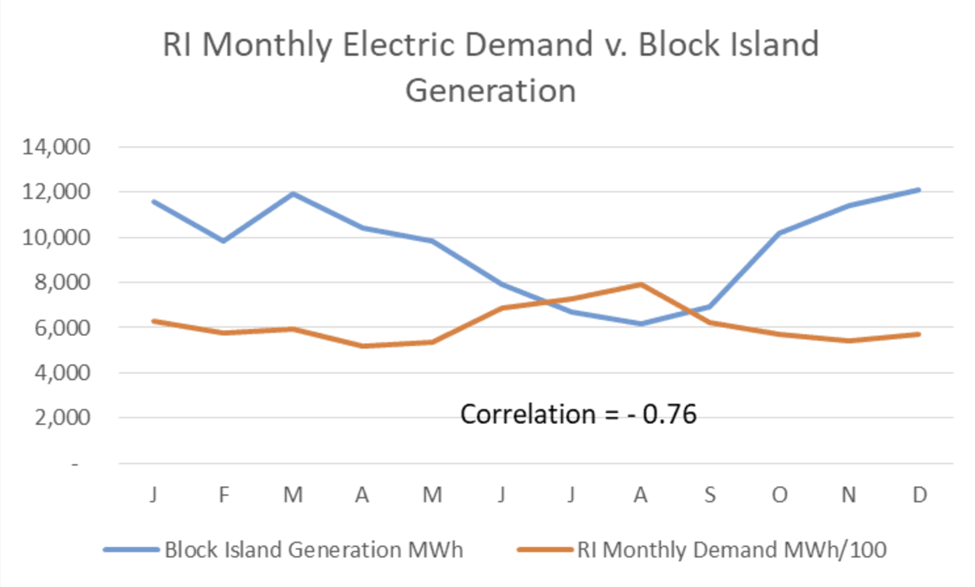
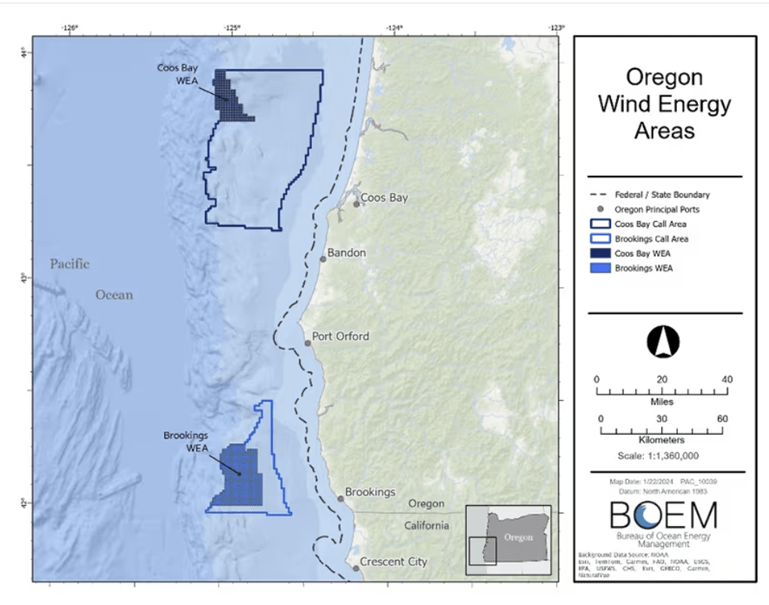
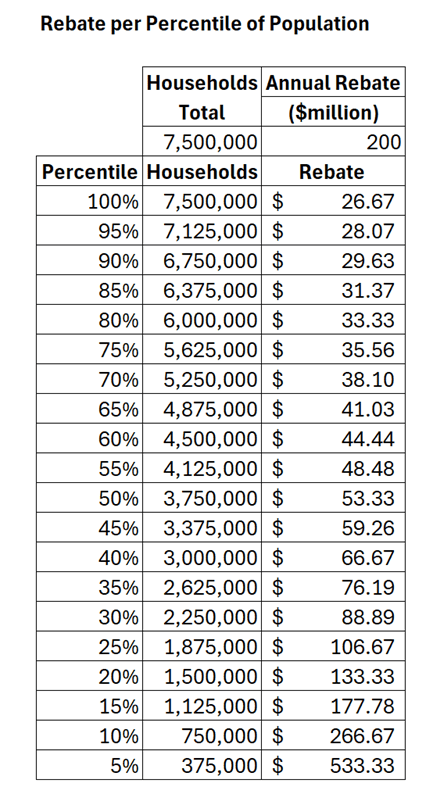


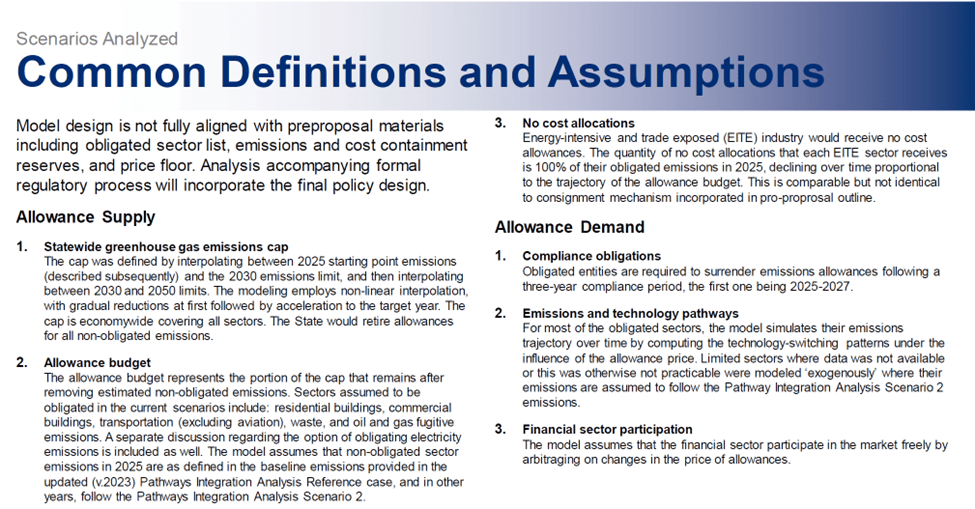
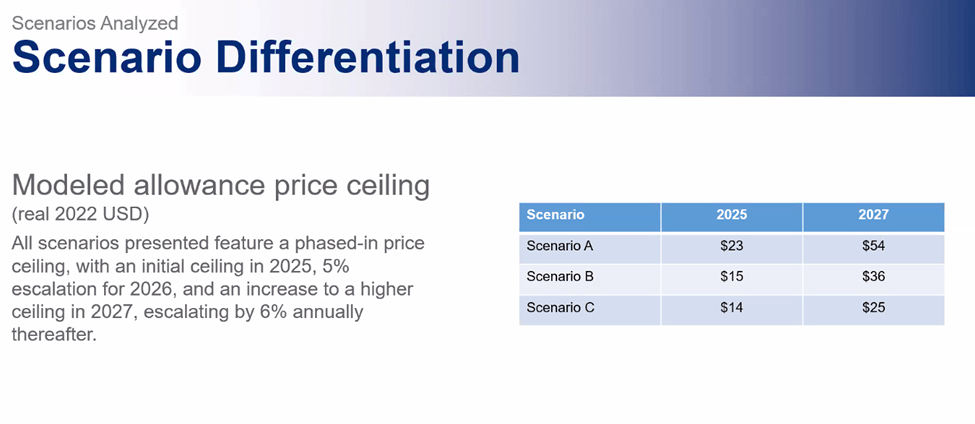
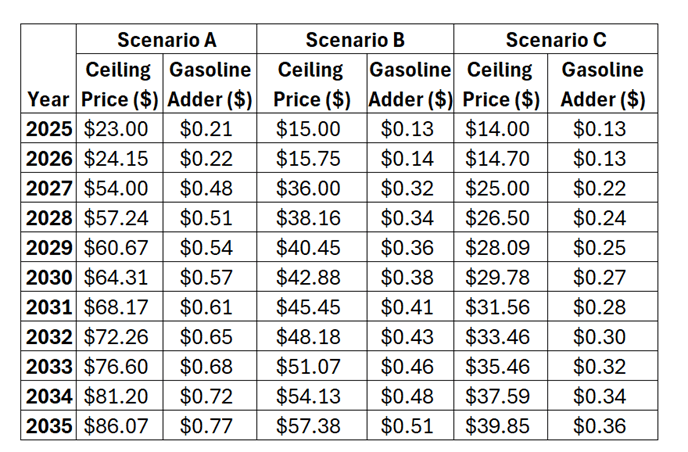
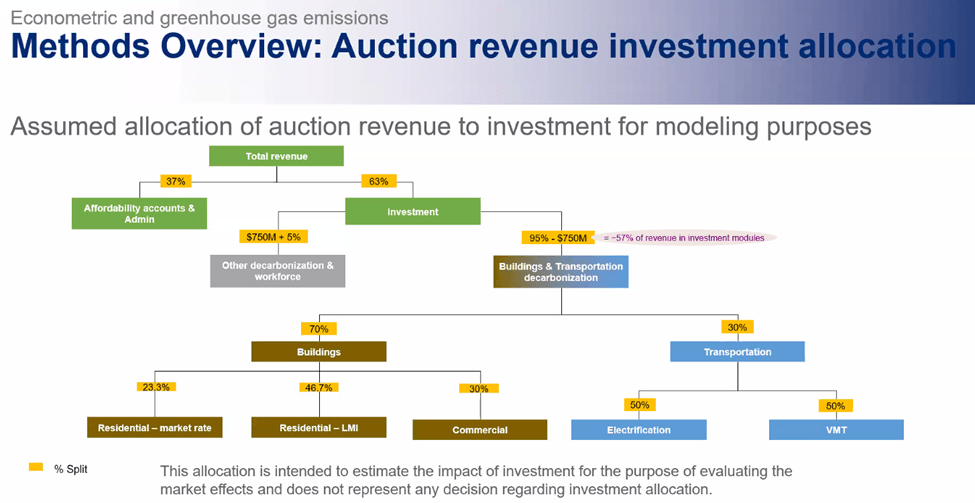
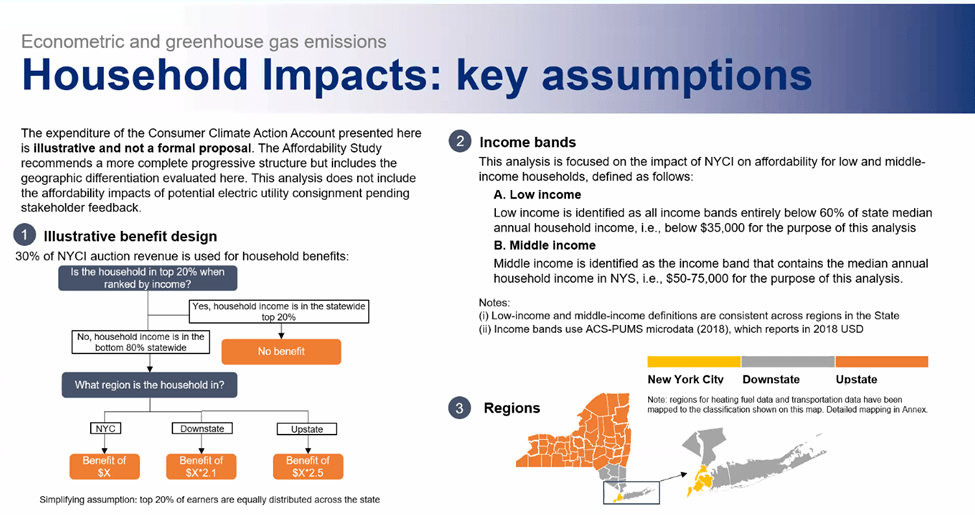
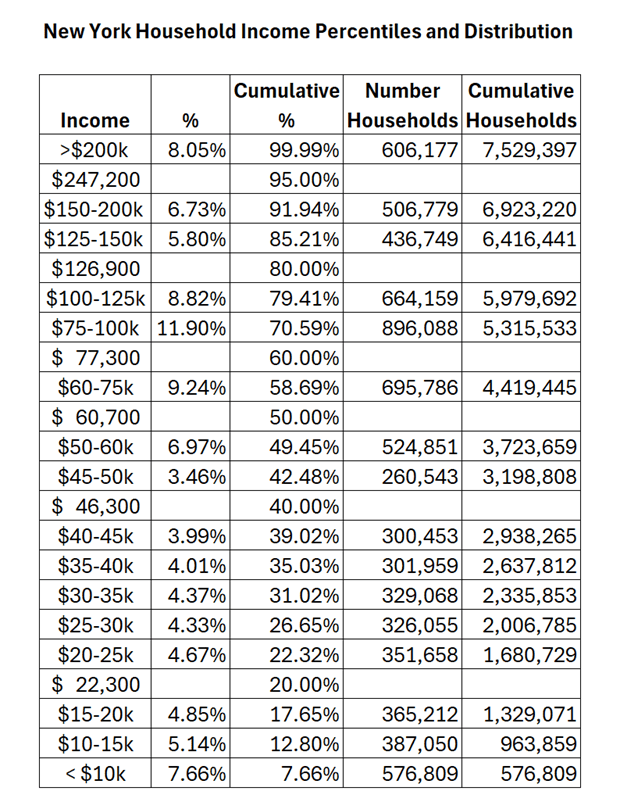
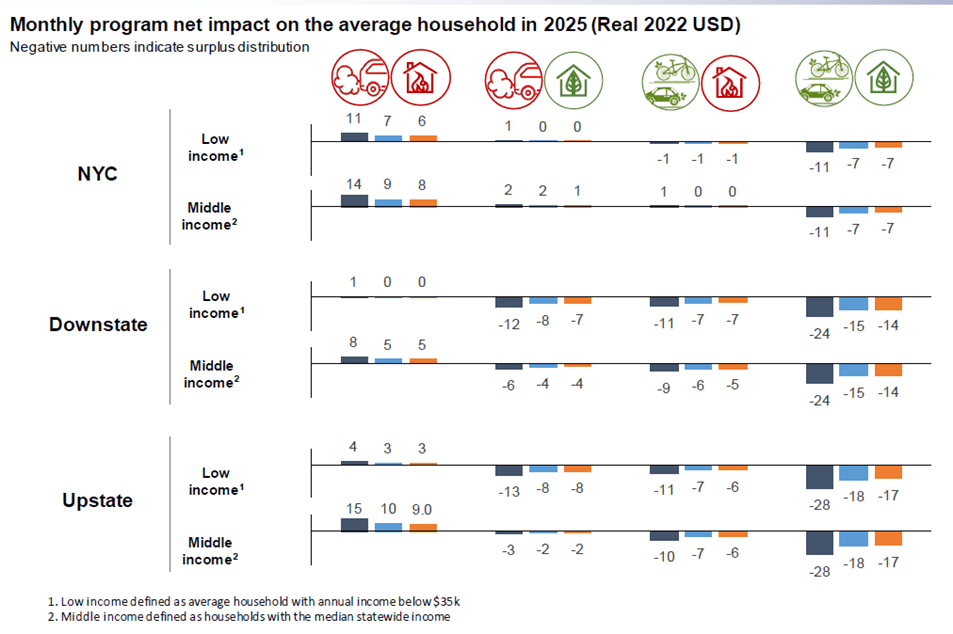
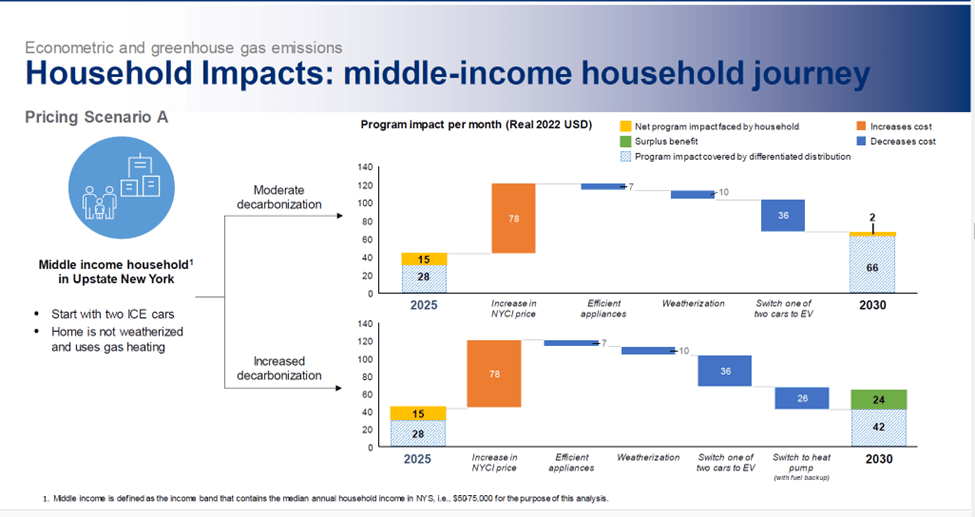
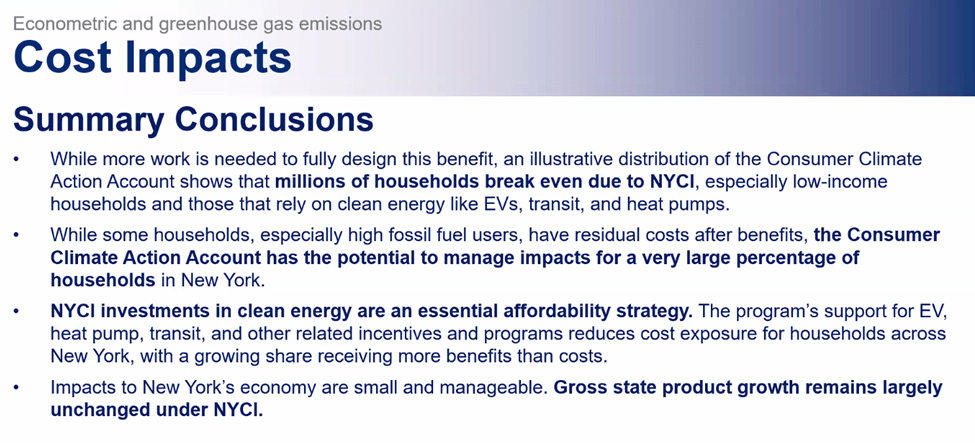
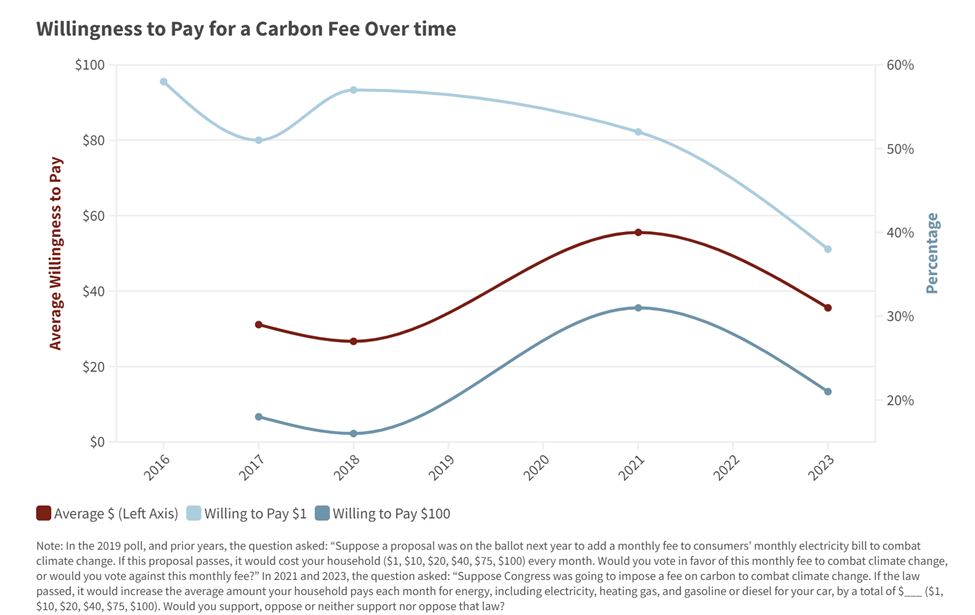
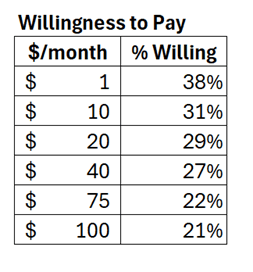
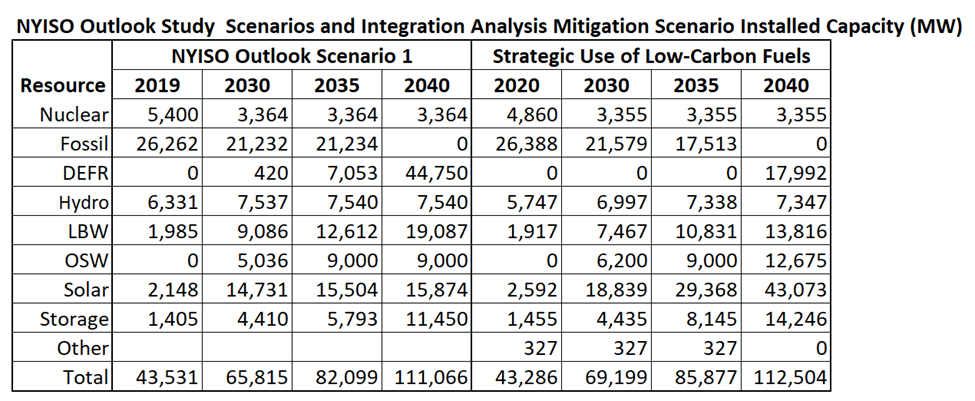


 Pragmatic Environmentalist of New York