In order to meet the Climate Leadership & Community Protection Act (Climate Act) the Hochul Administration has proposed the New York Cap-and-Invest (NYCI) program. The regulatory process to set up this market-based emissions trading program is underway. Not content to let the that process play out Assemblyperson Anna Kelles has introduced a bill to “amend the environmental conservation law and the public authorities law, in relation to establishing an economy-wide cap and invest program to support greenhouse gas emissions reductions in the state”. Unfortunately, the basis for this legislation is flawed because its authors do not understand what makes market-based emission reduction programs work.
I have followed the Climate Act since it was first proposed, submitted comments on the Climate Act implementation plan, and have written over 400 articles about New York’s net-zero transition. I have worked on every emissions trading program affecting electric generating facilities in New York since 1990 including the Acid Rain Program, Regional Greenhouse Gas Initiative (RGGI), and several Nitrogen Oxide programs since the inception of those programs. I also participated in RGGI Auction 41 and successfully won allowances which I held for several years. I follow and write about the RGGI cap and invest CO2 pollution control program and New York carbon pricing initiatives so my background is particularly suited for evaluating the NYCI proposal and this proposed legislation. The opinions expressed in this post do not reflect the position of any of my previous employers or any other organization I have been associated with, these comments are mine alone.
Overview
The Climate Act established a New York “Net Zero” target (85% reduction in GHG emissions and 15% offset of emissions) by 2050. It includes an interim 2030 reduction target of a 40% reduction by 2030 and a requirement that all electricity generated be “zero-emissions” by 2040. The Climate Action Council (CAC) was responsible for preparing the Scoping Plan that outlined how to “achieve the State’s bold clean energy and climate agenda.” In brief, that plan is to electrify everything possible using zero-emissions electricity. The Integration Analysis prepared by the New York State Energy Research and Development Authority (NYSERDA) and its consultants quantifies the impact of the electrification strategies. That material was used to develop the Draft Scoping Plan outline of strategies. After a year-long review, the Scoping Plan was finalized at the end of 2022. In 2023 the Scoping Plan recommendations were supposed to be implemented through regulation, PSC orders, and legislation. Not surprisingly, the aspirational schedule of the Climate Act has proven to be more difficult to implement than planned and many aspects of the transition are falling behind. NYCI is an example of a program that is taking longer to develop than is consistent with the mandates.
Capital Tonight Interview with Kelles
Susan Arbetter interviewed Kelles about her legislation on Capital Tonight. The description of the interview stated:
New York state Assemblymember Anna Kelles has introduced legislation that serves as an alternative to the state’s emerging cap and trade system.
Cap and trade is a program used to help meet climate goals by capping pollution and then authorizing tradable allowances between companies, creating a new market.
New York is currently creating a cap and trade system under its 2019 climate law.
Assemblymember Kelles is carrying legislation that would transform this system into what she’s calling a “cap and invest” system. She joined Capital Tonight’s Susan Arbetter to discuss her bill.
The video for the interview is embedded in the description. Arbetter introduced the interview with a slide “Cap and Trade” that made the following points:
Caps emissions in New York
Emissions credits for sale
Companies can sell emissions credits for profit
Proposal would reinvest revenues of credit sales in climate projects
Arbetter claims that the Kelles legislative proposal would make the market-based system a cap and invest program. There is disconnect here. The NYCI proposal is a cap-and-invest program as I have described previously. The program will cap emissions in New York. The permits to emit a ton of GHG emissions, known as allowances, will be distributed primarily though auctions. The proceeds will be used to invest in projects that reduce GHG emissions and prioritize investments in “frontline disadvantaged communities”. Arbetter’ s statement that companies can sell the allowances for profit is technically true, but the reality is that the affected companies buy what they need for their own compliance and do not purchase allowances at the auctions to play the market for profit. On the other hand, there are no limits to participation in the proposed NYCI design so traders can purchase allowances and try to make profits.
Arbetter asked Kelles what she was not happy with in the proposed NYCI design. The first reason she gave was that “instead of what we agreed to in last year’s budget to create a cap-and-invest program this is instead a cap-and-trade program”. As noted previously, the state plan is a cap-and-invest program. I think her mis-conception is that NYCI allows trading of the allowances, so it is “cap-and-trade”. NYCI also allows entities to bank or carry over unused allowances between compliance periods.
The Kelles legislation includes the following that upends the approach used in all previous market-based emission reduction systems:
§ 75-0123. Use of allowances.
1. Allowances must be submitted to the department for the full amount of greenhouse gas emissions emitted during a given compliance period. If greenhouse gas emissions emitted during a given compliance period exceed allowances submitted for such compliance period, such shortfall shall be penalized pursuant to section 75-0129 of this article.
2. Any allowances not submitted at the end of the compliance period in which they are issued by the authority shall automatically expire one hundred eighty days after the end of such compliance period if not submitted prior to such date of expiration.
3. Allowances shall not be tradable, sellable, exchangeable, or otherwise transferable.
In addition to these limitations in NYCI there is a three-year compliance period and in the Kelles legislation there is a one-year compliance period. These differences destroy the flexibility that has made market-based emissions control program successful. All programs include penalties if an affected source is unable to surrender an allowance for each ton emitted. The limitations that allowances not used expire and that allowances “shall not be tradable, sellable, exchangeable, or otherwise transferable” are incompatible with previous programs and would be unfair to market participants.
The NYCI proposal builds on the experience of RGGI which New York State claims has been successful and has worked for market participants. NYCI offers the allowances in quarterly auctions and compliance is for a three-year period. Participants in the program will develop a bidding strategy to purchase the number of allowances that they expect to use during the compliance period. Experience in the RGGI cap-and-invest program showed that a three-year compliance period enabled affected sources to effectively match their allowance needs with their emissions. Because GHG emissions are closely tied to energy use, emissions vary with weather conditions with more emissions and allowances needed in hot or cold years and less in average conditions. The ability to bank and trade allowances enables entities to correct their projections and account for inter-annual variation.
In the Kelles proposal if each individual source did not match their allowances purchases based on projected operations to their actual emissions, then they would be stuck with excess allowances that they cannot sell or trade and will expire. That is an unfair approach. In the first place, allowances are purchased in lots of 1,000. The odds of any source emissions being in multiples of 1,000 is nearly zero and many sources total emissions are less than 1,000. As it stands now, a company with multiple sources purchases allowances for them all and allocates them to individual accounts for compliance. This practice would be outlawed by the prohibition on trading. Many participants rely on emission marketers who purchase allowances at auction for resale or facilitate trades between those companies that have excess allowances and those that need them. Small companies rely on these marketers for their allowances because they don’t have the expertise to participate in the auctions. The RGGI cap-and-invest approach enables flexibility that makes compliance cost-effective.
Another issue that Kelles said she was not happy with is that NYCI “creates an extensive secondary market”. One example she gave was that the limit on the number of allowances purchased is 25% so you “could have a situation potentially where only four entities own all the allowances” and they could exert market control and sell them for profit. This has been an on-going concern with RGGI, but they included a market monitoring component expressly to address the concern. RGGI started in 2009 and the problem has not come up. NYCI proposes to use the same mechanism.
Kelles also said that her legislation would shift the emphasis to investments rather than profits which she wants to see. When you look at a market-based emissions system from the outside, the activist community that is providing information to Kelles only see dollar signs and believe that somehow industry is profiting from the program at the expense of consumers. I also think that academics have contributed to this perception because they believe that the allowances are treated as marketable commodities by the compliance entities. In reality, entities affected by these emissions trading programs prioritize compliance above all and rarely treat the allowances as a source of profit. It is simply wrong to think of these programs as evil because there are some profits involved. Those profits incentivize the flexibility that in the big picture reduces overall costs.
The activists who are influencing Kelles rank protections to disadvantaged communities very high. There are very few examples where emissions market programs have adversely affected those communities and most studies disagree. The bigger problem with this concern is that market-based emissions programs are not designed to address local issues. Kelles said that emitters are predominantly in disadvantaged communities, and it is “necessary to reduce the GHG emissions that are negatively impacting those communities”. Greenhouse gases do not have direct health-based air quality impacts so activists use co-pollutants for the adverse impacts claims. That ignores the fact that there are programs in place designed to address co-pollutants emitted by sources in disadvantaged communities. Clearly the reason we are reducing GHG emissions is to influence global climate change so claiming negative local impacts is a stretch. Moreover, it is necessary to put what we can do to affect climate change impacts in context. In 2021 CO2 emissions in the Chinese energy sector increased by 400 million tons. Total New York GHG emissions for all greenhouse gases and all sectors in 2021 were 268 million tons so eliminating New York emissions Anything we do will be completely replace by emissions elsewhere in less than a year.
Kelles also stated that she was not happy that NYCI is considering not obligating the electricity sector to participate in NYCI. She suggested that because there are power plants in disadvantaged communities that not including them eliminates the ability to protect residents there. I believe that the decision to exclude the electricity sector at the start is a practicality issue. They already are covered in RGGI and the agencies do not have sufficient resources to include them and everything else at the same time. My impression was that the electricity sector will be added later. With respect to her concern about the power plants in disadvantaged communities that whole issue is a contrived artifact of environmental justice activists. The presumption of egregious harm from power plants in disadvantaged communities is based on selective choice of metrics, poor understanding of air quality health impacts, and ignorance of air quality trends.
There also was a discussion of the emissions intensive and trade exposed industries provisions. These are industries that will be put to disadvantage when they try to compete against companies outside New York that do not have the NYCI costs. Kelles claims that her plan is to encourage them to transition to renewable energy infrastructure without acknowledging the competitive implications of that transition. I frankly have not followed the particulars of this aspect because I think it is hopeless. There will be inevitable increased costs and, at some point, industries will not be able to compete. The Business Council of New York memo in opposition to the legislation addresses these concerns.
Discussion
I am going to limit this article to the issues raised in the Arbetter interview. There are some other examples where the poor understanding of components of these programs that led to the success of previous programs will be hampered or destroyed by this legislation. The examples included are sufficient to show the legislation is flawed because its authors do not understand what makes market-based emission reduction programs work.
First, and foremost, market-based emission reduction programs are trading programs. The ability to buy, sell, or trade allowances and bank them for later use enables the flexibility that makes these programs a cost-effective solution. Eliminate them and there is no assurance that they will work like previous programs.
NYCI is called a cap-and-dividend program because the primary way that allowances will be distributed is through an auction. The proceeds from the auction are the dividends that will be invested to reduce emissions and minimize impacts to disadvantaged communities of the inarguably regressive energy costs necessary to implement the zero-emissions by 2040 Climate Act mandate.
In my opinion, the guardrails around the allowance costs are so inflexible that NYCI is basically a carbon tax. The Kelles legislation would remove any pretense that the program is anything but a tax. There are some advantages to that and some disadvantages too but I think that if there is any legislation is passed it should be to set a carbon tax because that is the responsibility of the legislature.
There is no question that disadvantaged communities have had disproportionate historical impacts. However, cap-and-invest programs are not the appropriate tool to protect them and reduce their environmental impacts because cap-and-invest programs are designed for regional and global pollutant reductions. There are regulations in place that address local impacts and the Department of Environmental Conservation is implementing additional regulations to strengthen and enhance those safeguards. The demands of environmental justice activists that have influenced this legislation unfortunately demand zero impacts without any consideration of pragmatic tradeoffs. For example, the focus on peaking power plants ignores the vital role those facilities play to keep the lights on despite results that show that the alleged impacts are over-stated.
Conclusion
The fundamental flaw in the Climate Act is the presumption by its authors that getting to net-zero emissions was only a matter of political will. There never has been an open and transparent feasibility analysis to clearly account for the necessary costs and threats to system reliability but all indications are that this cannot work as outlined in the Scoping Plan.
On the other hand, the NYCI proposal builds on the existing RGGI model. That program has shown how a cap-and-invest program can ensure compliance and raise money for investments fairly. The Kelles legislation ignores the factors that made RGGI work and eliminates them. That will ensure that the program does not provide any pretense of cost-effective reductions.
The presumption of the Hochul Administration and the Kelles legislation is that a cap-and-dividend program will work as well as previous programs. I think the real debate should be whether that is a justified position because I think the differences between the ambition of this program and previous programs is far greater. When the results of previous programs are considered the odds that NYCI will work as hoped are not very good.
NYCI is a primary tool for the Climate Leadership & Community Protection Act (Climate Act or CLCPA) net zero transition mandate. This report does an excellent job describing the basics of cap-and-invest programs, issues that need to be considered during NYCI implementation, and makes recommendations that I believe should be incorporated. My comments on this report support their work and provide context that shows that their concerns are warranted.
I have followed the Climate Act since it was first proposed, submitted comments on the Climate Act implementation plan, and have written over 380 articles about New York’s net-zero transition including a number on various New York cap-and-invest proposals. In addition, I have been associated with every cap and trade control program affecting the electric generating sector in New York including the Regional Greenhouse Gas Initiative (RGGI) which is frequently touted as a successful prototype for NYCI. I have written about the details of the RGGI program because very few seem to want to provide any criticisms of the program. I think that background enables me to provide some added value to the CBC report. The opinions expressed in this post do not reflect the position of any of my previous employers or any other organization I have been associated with, these comments are mine alone.
Overview
The Climate Act established a New York “Net Zero” target (85% reduction and 15% offset of emissions) by 2050. It includes an interim 2030 reduction target of a 40% reduction by 2030 and a requirement that all electricity generated be “zero-emissions” by 2040. The Climate Action Council (CAC) is responsible for preparing the Scoping Plan that outlines how to “achieve the State’s bold clean energy and climate agenda.” In brief, that plan is to electrify everything possible using zero-emissions electricity. The Integration Analysis prepared by the New York State Energy Research and Development Authority (NYSERDA) and its consultants quantifies the impact of the electrification strategies. That material was used to develop the Draft Scoping Plan. After a year-long review, the Scoping Plan recommendations were finalized at the end of 2022. In 2023 the Scoping Plan recommendations are supposed to be implemented through regulation, PSC orders, and legislation. NYCI is one of these components.
The Keys Report describes the status of NYCI:
New York is currently developing the rules and regulations for NYCI. Very few details are known; almost all programmatic details of NYCI will be determined by forthcoming regulations developed by the Department of Environmental Conservation (DEC), as directed by the CLCPA. The Final Scoping Plan (FSP) provides some insight into potential design parameters. The FSP envisioned a program that would cover all major sectoral emissions sources that can feasibly be regulated and an emissions cap designed to be consistent with CLCPA emissions limits. Furthermore, the New York State Fiscal Year 2024 Enacted Budget established three distinct accounts within a newly created special revenue fund into which any proceeds raised by NYCI would be transferred.
The Keys Report addresses key aspects of NYVI and “provides guidance on how to design and evaluate the effectiveness of NYCI by:
Providing context and background on the development of cap-and-invest programs;
Explaining major risks to cap-and-invest programs;
Identifying the goals that should be used to guide NYCI design choices;
Describing the design choices that need to be made; and
Recommending specific design choices and features.”
This article supplants that guidance with additional context. Note that I emphasize the issues associated with the electric sector but similar issues will occur in all sectors. I highlight their main points and provide my insights below.
The Basics of Cap-and-Invest
The overview in the Keys Report does a good job describing the fundamental aspects of market based emission reduction programs. It notes:
The theory behind cap-and-invest is relatively simple: the State sets a cap on allowable emissions, distributes allowances—the permits that allow firms to generate a specified amount of emissions—to large-scale emitters via auction, and uses the proceeds of the auction (and penalties for non-compliance) to invest in programs to reduce emissions. Companies that can reduce their marginal emissions at a lower cost than purchasing allowances will be incentivized to do so, while emitters that cannot reduce their emissions as easily will opt to purchase allowances to cover all of their emissions.
There are three things that should be kept in mind about the theory relative to NYCI. The Keys Report states: “Companies that can reduce their marginal emissions at a lower cost than purchasing allowances will be incentivized to do so.” In the Environmental Protection Agency trading programs for sulfur dioxide (SO2) and nitrogen oxides (NOx), the allowances are allocated for free but that does not mean that affected companies don’t have to pay anything. A company can invest in pollution control equipment to reduce their emissions and if they believe that allowances might not be available or could be more expensive than investing in control equipment, then their compliance strategy would be to install control equipment. If a company does not have a cost-effective control option, then they can decide to purchase allowances as their compliance strategy. There are some caveats. This only works if the companies that can install control equipment can create reductions beyond their compliance requirements so that they can sell to those who don’t have that option. If the compliance obligation or emissions cap is too tight, then too few sources can over-comply and there will not be enough allowances available. There also are technological considerations to cap limits that must be considered.
The second nuance is that in the proposed cap-and-invest program the allowances must be purchased. There is no direct incentive to over-control and sell allowances to fund the installation of additional control equipment. You can argue that installing controls to exceed the limits will affect the market price of allowances that will incentivize over-control but that is an indirect effect. In my opinion, that makes the business case more difficult to justify added expenses for over-control. The requirement to purchase allowances in cap-and-invest programs adds a complication to the economics of compliance strategies.
The final and most important issue that must be kept in mind is that CO2 compliance strategies are different than SO2 and NOx. There are no cost-effective add-on control systems for CO2 so affected sources have fewer options to comply. It boils down to operate less or retire. In the electric sector, that is only appropriate if an alternative source of electricity is available. The Scoping Plan proposes to use the revenues from the cap-and-invest program to fund the infrastructure to produce “zero-emissions” generation or reduce the electric load so not as much generation is needed. If the investments in wind and solar resources are insufficient to deploy the necessary resources, then it is impossible to shut down or reduce operations at electric facilities by limiting allowances. If existing fossil-fired units cannot run because they don’t have allowances then there will be an artificial energy shortage and a real blackout.
Emissions Leakage and Related Adverse Economic Impacts Can Threaten Effectiveness of Cap-and-Invest Programs
The Keys Report explains the problem of leakage:
Cap-and-invest programs impose new direct or indirect costs on businesses and individuals. In response, those businesses or individuals may seek to avoid costs by looking beyond the borders of the cap-and-invest program. This is called leakage; economic activity continues elsewhere but avoids emissions reduction policies. When leakage occurs, it appears that emissions reductions have taken place, but they have simply been exported outside the borders of the program.
In my opinion, this is an insurmountable flaw to NYCI. Because of the limited opportunity to reduce GHG emissions, New York companies will simply treat the allowance requirement as a tax and raise their prices to account for the increased cost of doing business. If the cost of the allowances is sufficient to fund the emissions reductions, then everything I have observed indicates that the costs will be so high that economic activity will be forced to leave in order to stay competitive with jurisdictions that don’t have this tax.
As noted in my introduction I have spent a lot of time analyzing RGGI. I do not agree with all the discussion of RGGI leakage:
Leakage can affect all emissions trading schemes to some degree, but it is a pronounced threat to the effectiveness of RGGI due to its confinement to the electricity generation sector. Given the interconnected nature of electricity grids, power generated in non-member states can replace generation in member states when their relative costs change. It is difficult to measure leakage, but clearly some occurs. For example, one analysis estimated that between 43 percent and 86 percent of emissions reductions benefits within the RGGI region were offset by increased emissions in neighboring states.
I disagree with the cited analysis that claims emission reductions benefits were largely offset by leakage. If that were true, then there should be a substantive increase in generation imports displacing RGGI sources. In late November RGGI released CO2 Emissions from Electricity Generation and Imports in the Regional Greenhouse Gas Initiative: 2020 Monitoring Report. According to this report: “Annual average net imports into the nine-state RGGI region from 2018 to 2020 increased by 19.4 million MWh, or 34.7 percent, compared to the average for 2006 to 2008.” However, import levels have not changed over the last seven reporting periods. The report also notes that: “Changes in these data over time may point to potential CO2 emissions leakage as a result of states implementing the CO2 Budget Trading Program, or a lack thereof, but may also be the result of wholesale electricity market and fuel market dynamics unrelated to the implementation of the CO2 Budget Trading Program, or a combination of these factors.”
Furthermore, my analysis of RGGI emissions over time directly contradicts the referenced paper and shows that the primary reason for RGGI emission reductions has been fuel switching from coal and residual oil to natural gas. Most of the load reductions at the coal and oil plants was offset by increases from in-state natural gas production. Consequently, I believe that while leakage may be occurring its effect on emissions is small relative to wholesale electricity market and fuel market dynamics unrelated to RGGI.
Program Goals to Guide the Design of a Successful Cap-and-Invest Program The Keys Report states that:
NYCI’s primary objective is to reduce greenhouse gas emissions by increasing costs to emit GHGs and spending the proceeds to facilitate further emissions reductions. These higher costs are spread across the economy, and the program must be designed well to prevent possible unintended adverse effects.
I agree that the program must be designed well to prevent adverse effects but think the problem is even more difficult than described because of the differences between a CO2 allowance trading program and other pollutant programs described previously. NYCI is a blunt pollution control approach.
The report describes five critical goals should be considered when assessing the design choices and proposed NYCI program.
Maximize GHG emissions reduction: Cap-and-Invest is likely to be the primary regulatory vehicle for accelerating GHG emissions reduction in New York. The success of the program will largely hinge on how effectively it incentivizes the mitigation of emissions that can feasibly be reduced. However, there are practical limits to what can be achieved, especially in the near-term, due to technological constraints and the availability of low-emissions energy.
This is an excellent summation of the problem. Unfortunately, the practical limitations may be insurmountable on the mandated schedule.
Minimize the financial cost to businesses and households: Regulators should consider how much the program will cost businesses and households, to avoid putting New York’s economic competitiveness and affordability at risk. Pushing to achieve overly aggressive environmental goals would result in substantial and unproductive direct financial costs. Emissions reductions should be brought on by the lowest-cost decarbonization, energy efficiency, and conservation strategies, rather than being the result of declines in economic activity or population.
I completely agree with this recommendation. In order to implement the recommendation, the Hochul Administration should set affordability standards now and incorporate a feature to modify the auction if the standard is exceeded.
Prevent emissions leakage: NYCI’s environmental benefits and cost-effectiveness could be undermined if emissions leakage is not adequately limited. If the emissions reduction targets are set too aggressively, economic activity, jobs, and emissions could be pushed out of the state to neighboring regions with less stringent regulation.
I do not think that emissions leakage can be prevented in any cap-and-dividend program in a small jurisdiction if the allowance prices are high enough to reduce emissions.
Minimize adverse economic impacts: Beyond the direct financial costs, wider economic disruptions such as reduced employment or instability in emission-intensive industries must also be considered. The program should aim to prevent these adverse effects to ensure that the energy transition does not come at the cost of economic vitality.
I agree. The problem is that the prevention program should lay out a plan to prevent the adverse effects which is easier said than done.
Maximize benefits to disadvantaged communities: Low-income households spend a greater share of their income on energy, making them more vulnerable to the costs imposed by a cap-and-invest program. At the same time, disadvantaged communities are likely to feel more of the effects of emissions. NYCI should (and is required to) minimize the burden imposed on the communities that are most sensitive to increased costs of necessities, like home heating and transportation, and maximize economic and environmental benefits within those communities.
There will be a balancing act relative to disadvantaged community funding. In the first place NYCI necessarily will increase energy costs that will affect those least able to afford those increases the most. Therefore, there is a moral imperative to reduce those affordability impacts as much as possible. The tradeoff is that funding for low- and middle-income citizens is not a particularly effective way to reduce emissions. Consequently, there might not be enough funding available to make the reductions necessary to meet the Climate Act mandated schedule. If the allowance auctions follow the schedule and not the actual emission reduction trajectory, then there might not be enough allowances available which could lead to an artificial energy shortage that will cause blackouts. Blackouts disproportionately impact the disadvantaged communities so the balancing act must consider this interaction.
Design Parameters
The Keys Report program identified seven program design parameters that will be critical to NYCI’s success. I agree that these parameters are important. However, there are aspects of these parameters that run contrary to the climate activist constituency that appear to be driving the Climate Act implementation bus. It will be fascinating to see how the Hochul Administration resolves the differences between activist demands and the reality of a functioning cap-and-invest program.
Sectoral and Geographic Scope
NYCI will be designed to cover a range of economic sectors, and its rules will determine whether it can be expanded geographically. The geographic and sectoral scope of a cap-and-invest program significantly affects both its emissions reduction potential and imposed costs. An emissions-trading system with broad coverage will be able to tap into a wider array of emissions reduction opportunities that can be achieved at a lower cost, because the tools available to reduce emissions vary across economic sectors or across regions. Including more jurisdictions can also help to reduce the risk of emissions leakage, which arises when regulatory conditions differ among regions. Including more sectors is preferable, as it spreads the cost of emissions reduction, minimizing the financial burden on any single sector.
The reality is that there are advantages to a New York program that is included with programs in other jurisdictions. In addition to the reasons mentioned, if New York could join the California program, then it would not be necessary to develop a reporting system, an auction system, or a compliance tracking system. The time, effort, and expense for those three components is significant.
GHG Emissions Accounting and Linkage
New York’s CLCPA employs a unique method for GHG emissions accounting, utilizing a Global Warming Potential (GWP) over a 20-year horizon (GWP-20) and including emissions from electricity imported from other states, exported waste management services, and from biogenic sources. The GWP-20 accounting method emphasizes the short-term impacts of greenhouse gases and is particularly sensitive to gases like methane that have a higher warming potential but shorter atmospheric lifespan.
This is a significant reality slap for NYCI. New York’s unique GHG emission reporting requirements are incompatible with other jurisdictions so we cannot take advantage of increasing the geographical scope. I believe that it would be impossible to incorporate New York’s reporting approach into any other cap-and-invest program. As proof note that last spring the Department of Environmental Conservation floated the idea of changing the GWP approach and the usual suspects melted down. If this idea is suggested again, the outcry will be the same.
Emissions Cap Setting
The level of the initial emissions cap and its trajectory over time will play a large role in shaping the price of allowances and the cost of compliance with NYCI. To incentivize investment in emissions reduction, the cap must decline over time. A steeper decline increases the rate of emissions reduction, but also likely leads to a higher price of emissions allowances in auctions and in trade, increasing the financial cost imposed on businesses complying with the program.
This is another reality tradeoff has already been addressed. Clean energy resources need to be deployed to displace existing sources of GHG emissions. There are a whole host of reasons that those resources may not be deployed on the schedule necessary to meet the Climate Act legal mandates. If the emission cap reduction trajectory blindly follows the legal mandate with no provision to account for deployment delays, then there will be insufficient allowances necessary to meet energy demand. The resulting shortfall would result in consequences more severe than the alleged problems the Climate Act is supposed to mitigate.
Allowance Allocation Method
NYCI regulations must determine how the program will allocate allowances. While that is almost certain to include an auction, it could also include various methods of free allocation. Early cap-and-invest programs, including the European Union ETS, primarily allocated allowances for free to regulated businesses. Over time this has changed; most existing emissions trading systems now utilize auctions to allocate most emissions allowances, while distributing a portion for free to alleviate leakage risk or consumer costs. The benefits of allocation by auction from the perspective of governments is obvious: cap-and-invest can generate substantial revenue. Since it began operating in 2013, California’s system has generated more than $38 billion.
I think this description addresses the issues associated with allowance allocations correctly.
Price Stability Mechanisms
NYCI’s design can also affect the volatility of allowance prices in the market. Cap-and-invest gives the government some certainty over the level of emissions within the scope of the program, but the price of allowances will be variable. Allowance price volatility is a concern because it adds risk to the decision to invest in technologies that could reduce emissions—especially investments that have high upfront fixed costs. Extreme allowance prices on the high end raise the costs imposed on businesses and households. While businesses may be primarily concerned with high allowance prices, sudden price swings may discourage them from making investments if they expect the cost of compliance in the long-run to change. An excessively low allowance price indicates that the supply of allowances (the emissions cap) may closely mirror, or exceed, market demand for allowances, meaning there’s a weak incentive to invest in emissions reduction. Mechanisms to rein in excessive auction volatility and price extremes can mitigate these risks.
Price stability is important and this description accurately points out why. However, controversy is inevitable for this mechanism. It appears that NYCI is being modeled after the California cap-and-trade program with many of the same features mentioned for potential inclusion. California incorporates automatic allowance adjustments to address cost volatility that may be incompatible with the Climate Act and are certainly at odds with an allowance distribution that meets the Climate Act schedule. The article CA Carbon Cap it not really a cap explains:
You see, the so-called emissions “cap” in the program automatically adjusts so that it is actually very unlikely to set a hard limit on emissions. If the state’s greenhouse gas (GHG) emissions are lower than the emissions cap, the program puts a floor on the price of the tradable emissions allowances, essentially shrinking the cap to soak up extra allowances at the floor price. And if emissions are high, it automatically expands the cap by selling all allowances demanded at a pre-determined ceiling price.
California’s CO2 market has the most sophisticated, and arguably most successful, system of emissions price-collars of any cap-and-trade market. The price-collars are designed to regulate the CO2 price so that it doesn’t reach economically – or politically – unacceptable extremes by making the cap elastic. If the price is too low, the system automatically withholds additional CO2 allowances to tighten supply. If the price is too high, it supplies more of them. This means, as Severin Borenstein and I have laid out in the past, that California’s CO2 “cap” is more accurately thought of as a progressive carbon tax, where the price of CO2 goes up at higher levels of statewide CO2 emissions.
I think these features may be incompatible with the Climate Act law if the Climate Action Council interpretation is followed.
Emitter Compliance Flexibility
Providing emitters with various ways to achieve compliance can improve the overall cost-effectiveness of NYCI without compromising its objective of emissions reduction. Allowance trading, carbon offsets and allowance banking can help to lower compliance costs and enhance the efficiency of the program. These flexibility mechanisms allow the artificial market created by the cap-and-invest program to emulate real market behavior. This can help to ensure that sudden changes in the market don’t lead to extreme price volatility, making the program more predictable and manageable for participating businesses. This adaptability has been key to the success of existing emissions trading systems.
This is another inevitable reality confrontation. These are absolutely necessary components of any cap-and-invest program but they are opposed by New York’s climate activist constituency. It is unclear how the Hochul Administration can continue to cater to those folks when they demand to remove the tools that make market trading programs work.
One of the demands by this constituency is to forbid the use of offsets as noted in the Keys Report description. I think this is flawed. The Climate Act is net-zero which is defined as an 85% reduction in GHG emissions with the remaining 15% of emissions counterbalanced by offsetting emissions. I guess they want to limit offsets to particular sectors, but the following description explains all the benefits that prohibiting offsets will prevent:
Carbon offsets can also be a valuable flexibility tool in a cap-and-invest program. Offsets allow regulated entities to meet a portion of their compliance obligation by investing in or purchasing emission-reduction credits from projects outside of the capped sectors. These might include forestry projects or agricultural practices that sequester carbon, or methane capture from landfills. If the agriculture and waste sectors are not required to comply with NYCI, creating a secondary market for offsets could incentivize these sectors to improve their efficiency. Offsets can provide an affordable alternative for compliance, but they have been the subject of frequent scrutiny due to concerns that the emission benefits they generate would have occurred regardless of investment in the credited activity.40 Research on offsets does indicate establishing equivalency of offset projects to more direct emissions reduction is a challenge. Despite their imperfection, offsets can provide a real value, especially in the near term when strategies to reduce emissions are more limited. The CLCPA addresses these concerns by requiring that DEC verify that any emissions offsets used to comply with environmental regulation are, “real, additional, verifiable, enforceable, and permanent.”
Tradeoffs from Limiting Flexibility
The possibility of including a trading mechanism in NYCI, rather than setting facility-specific caps in the program, has drawn scrutiny. This is largely out of concerns that polluters in or near Disadvantaged Communities (DAC) would be able to continue polluting, and instead simply buy allowances and maintain their current emissions levels. Historically, these communities have often been disproportionately exposed to air and water pollution, giving reasonable rise to this concern.
Another reality is that allowance market programs are trading programs. The idea that there should be limits on trading is inimical to the very concept of a trading program. This is a GHG emissions trading program that is appropriate to use for pollutants that influence global warming. The location within New York State for the GHG emissions does not matter. In order to curry favor with more political constituencies, the Climate Act includes provisions to address disadvantaged communities. This includes the idea from members of the Climate Action Council who had no trading program experience to somehow include site-specific limits on trading. I personally see no practical way to implement such a scheme. As noted below there are other regulations in place that ensure that all regions in the state meet air and water quality standards that protect health and welfare so the idea that GHG emissions trading should also address local effects is counter-productive and unnecessary.
Revenue Management and Use
Ensuring the transparent, accountable, and efficient use of the revenue generated is critical to the success and legitimacy of a cap-and-invest system. If auction prices are similar to those in the state-level cap-and-invest systems in California and Washington, NYCI could generate billions of dollars annually.
I have no doubt that NYCI will generate billions of dollars. Unfortunately, New York’s record of RGGI investment proceeds has been dismal. According to the New York State Regional Greenhouse Gas
Initiative-Funded Programs report, since the inception of the program, total investments from New York’s RGGI auction proceeds programs is $825 million and the claimed savings are 1,731,823 tons of CO2e with a calculated cost per ton reduced of $476/ton. At that rate, investments to provide the reductions necessary will be unaffordable.
Monitoring, Evaluation, and Modification
All existing GHG emissions trading systems began operating in the last two decades, and significant changes have been made to all of their structures since being implemented. While evidence supports many of the design parameters discussed in previous sections, it is limited by the short time these policies have been in operation and the unique environmental and economic characteristics within each region. It is crucial that robust monitoring and evaluation mechanisms be incorporated with cap-and-invest to assess the program’s performance over time and inform any adjustments to the program as necessary.
I agree with these comments.
Recommendations
The Keys Report includes recommended cap-and-invest design features. The following paragraph sums up the issues I believe must be addressed.
While the Cap-and-Invest program proposed by the State could reduce emissions more cost-effectively than other regulatory approaches, its success will depend greatly on its design. Efforts to make the program more stringent by limiting trading of allowances, or imposing source-specific emissions limits, while well intentioned, would ultimately increase the costs imposed on New Yorkers and may exacerbate emissions leakage and economic competitiveness risks.
It is important to also recognize NYCI would not exist in a vacuum. NYCI is a central component of New York’s efforts to reduce emissions, but alone, is unlikely to ensure CLCPA goals are met. If additional regulations are pursued that include facility-specific limits or energy standards, the interaction with cap-and-invest could render it less cost-effective. Traditional regulatory standards could require some firms to reduce their emissions beyond what they otherwise would have under only cap-and-invest. This would reduce demand in the allowance market, pushing down prices and undermining the incentive for businesses only covered by cap-and-invest to reduce their emissions. Facility-specific regulations may still be appropriate if there are local health impacts or other negative externalities not adequately covered by the emissions market.
I want to make one point about the final sentence. The Climate Action Council health impact arguments ignore the fact that there already are regulations in place to address local impacts. Every facility in New York has had to prove that its emissions do not cause exceedances of the National Ambient Air Quality Standards. This condition is ignored in these arguments. The Department of Environmental Conservation is developing regulations and guidance to deal with these concerns and this has to be considered as NYCI is implemented.
The CBC recommends the State follow these approaches when designing the Cap-and-Invest program:
Allow and pursue linkage with other emissions trading programs. While a national cap-and-invest program that covers all economy-wide emissions is optimal, broadening the scope of Cap-and-Invest beyond the boundaries of New York, by linking with other programs, would enhance the program’s cost-effectiveness by providing a larger pool of emissions reduction opportunities. The State should ensure that NYCI regulations are designed to be consistent with emissions trading systems in other states to enable future linkage.
I agree with this recommendation.
Keep sectoral coverage as broad as possible. NYCI should cover emissions from as many sectors as is feasible. Exceptions should only be made if inclusion is exceedingly difficult or expensive to administer. Excluding certain sectors could shift the entire burden of reducing economy-wide emissions onto sectors with a compliance obligation. Sectors that face a greater emissions leakage risk could instead be given a share of allowances for free to alleviate this risk, but they should still have an obligation to comply with the program.
I agree with this recommendation.
Maintain flexibility in compliance through trading, banking, and verifiable offsets. An efficient Cap-and-Invest program should provide businesses with multiple options for compliance to accommodate the differences in their conditions. Trading should not be restricted; limiting this critical component of cap-and-invest would add uncertainty to the market, and potentially drive up the price of allowances without increasing the environmental benefits of the program. Permitting banking of allowances can encourage early emission reductions and help companies smooth out their compliance costs over time. Allowing the use of verifiable offsets to meet a portion of firms’ compliance obligation can reduce the cost of compliance and incentivize emissions reduction in non-regulated sectors.
I agree with this recommendation, If these are not accepted, this is no longer a market trading program and none of the observed benefits of previous successful programs should be expected.
Allocate revenue on budget, but free from capture. Revenues generated through NYCI should be included and appropriated within the State’s regular budget process, as other taxes and fees are within the financial plan, to promote transparency and accountability and ensure that funds are not spent wastefully. Furthermore, this revenue should be allocated to costs related to administering and evaluating the program, and investments that further the goals of the program, such as energy efficiency programs, development of low-carbon energy infrastructure, and incentives for the adoption of clean technologies. These investments can accelerate the transition towards a low-carbon economy, reduce the burden of compliance costs, and deliver additional environmental and economic benefits. The revenue generated by NYCI should be free from capture and diversion to short-sighted spending endeavors and unrelated political priorities.
I also agree with this recommendation. I did not mention that New York has diverted the RGGI allowance proceeds in the past. In addition, to the overt diversion to the general fund, the Agencies continue to use RGGI revenue as a slush fund to cover costs more appropriately covered by other programs. Importantly this means less money for the stated purpose of the program.
Regularly monitor, publicly report, and evaluate program data and modify the program based on evidence. Effective monitoring and evaluation are key to the success of the Cap-and-Invest program. Regularly reporting on the program outcomes, including emissions reduction progress, the functioning of the allowance auction and secondary market, and the use of auction revenues, can ensure transparency, accountability, and inform adjustments to improve NYCI. Data collected from auctions and programs receiving revenue should be publicized to allow for adequate public scrutiny.
I agree with this recommendation.
Align the program with other regulations implemented in accordance with the CLCPA. Any additional climate policies that may be pursued to meet CLCPA goals should be considered holistically when designing Cap-and-Invest to minimize overlapping regulatory costs and improve overall policy effectiveness. This approach can help ensure that the program complements rather than conflicts with, or inappropriately compounds the costs of, other measures.
I think this recommendation makes sense.
Finalize clear and comprehensive rules and give adequate time for businesses to prepare. Predictability and certainty are necessary for businesses to plan their compliance and emissions reduction investments. Finalizing clear and comprehensive rules in a timely manner can reduce uncertainty and facilitate a smooth transition for the carbon market. The State should finalize regulations well in advance of the first compliance period.
This is a common sense recommendation but I fear the desire to get something up and running as soon as possible will mean that implementation will be rushed.
Conclusion
The Keys Report is an excellent summation of NYCI and I recommend reading the original document. I know how much work went into this report because have tried to describe the issues covered in this report myself. I find it encouraging that a non-partisan organization with no preconceived notions on the benefits and risks of the cap-and-invest programs is in close agreement with my concerns. My comments on this report support their work and provide context that shows that their concerns are warranted. If anything, their concerns are understated. However, because there are significant differences between their recommendations and the Hochul Administration narrative I am not optimistic that their recommendations will be considered and implemented.
Personally, I think NYCI is not going to work as its supporters think. I agree with Danny Cullenward and David Victor’s book Making Climate Policy Work that the politics of creating and maintaining market-based policies for GHG emissions “render them ineffective nearly everywhere they have been applied”. I have no reason to believe that NYCI will be any different even if all the recommendations suggested by the Keys Report are implemented. Because I think that political considerations will preclude those recommendations, I think that NYCI will cause a dramatic increase in New York energy costs, fritter the revenues away on politically convenient projects, and fail to support renewable energy resource development sufficient to meet the mandated goals of the Climate Act. I expect no good outcomes.
One of my pragmatic interests is market-based pollution control programs. As part of New York’s budget process Governor Kathy Hochul announced a plan to use a market-based program to raise funds for Climate Leadership & Community Protection Act (Climate Act) implementation. It has been touted as a solution for funding and compliance requirements because other market-based programs have been successful. Even though it has drawn widespread support I think the faith in the mechanism is mis-placed because the numbers do not add up.
This article was also published at Watts Up with That. I submitted comments on the Climate Act implementation plan and have written over 290 articles about New York’s net-zero transition because I believe the ambitions for a zero-emissions economy embodied in the Climate Act outstrip available renewable technology such that the net-zero transition will do more harm than good. I also follow and write about the Regional Greenhouse Gas Initiative (RGGI) market-based CO2 pollution control program for electric generating units in the NE United States. I have extensive experience with air pollution control theory, implementation, and evaluation having worked on every cap-and-trade program affecting electric generating facilities in New York including the Acid Rain Program, RGGI, and several Nitrogen Oxide programs. The opinions expressed in this post do not reflect the position of any of my previous employers or any other company I have been associated with, these comments are mine alone.
Climate Act Background
The Climate Act established a New York “Net Zero” target (85% reduction and 15% offset of emissions) by 2050. The Climate Action Council is responsible for preparing the Scoping Plan that outlines how to “achieve the State’s bold clean energy and climate agenda.” In brief, that plan is to electrify everything possible and power the electric gride with zero-emissions generating resources by 2040. The Integration Analysis prepared by the New York State Energy Research and Development Authority (NYSERDA) and its consultants quantifies the impact of the electrification strategies. That material was used to write a Draft Scoping Plan that was released for public comment at the end of 2021 and approved on December 19, 2022.
The Climate Action Council (Council) has identified the need for a comprehensive policy that supports the achievement of the requirements and goals of the Climate Act, including ensuring that the Climate Act’s emission limits are met . A well-designed policy would support clean technology market development and send a consistent market signal across all economic sectors that yields the necessary emission reductions as individuals and businesses make decisions that reduce their emissions. It would provide an additional source of funding, alongside federal programs, and other funding sources, to implement policies identified in this Scoping Plan, particularly policies that require State investment or State funding of incentive programs, including investments to benefit Disadvantaged Communities. Equity should be integrated into the design of any economywide strategy, prioritizing air quality improvement in Disadvantaged Communities and accounting for costs realized by low- and moderate income (LMI) New Yorkers. Pursuant to the Climate Act, a policy would be designed to mitigate emissions leakage. Finally, an economywide strategy would be implemented as a complement to, not as a replacement for, other strategies in the Scoping Plan. A well-designed economywide program will bring about change in the market and promote equity in a way that does not unduly burden New Yorkers or with the global economy.
Hochul’s address stated that “New York’s Cap-and-Invest Program will draw from the experience of similar, successful programs across the country and worldwide that have yielded sizable emissions reductions while catalyzing the clean energy economy.” Subsequently other legislators have jumped on the bandwagon and offered legislation to modify the Hochul proposal. My problem is that the perception that these programs have yielded sizable emission reductions while providing funds needed for the transition are misplaced.
Emissions Market Program Background
The concept of emission markets is relatively simple. EPA explains that:
Emissions trading programs have two key components: a limit (or cap) on pollution, and tradable allowances equal to the limit that authorize allowance holders to emit a specific quantity (e.g., one ton) of the pollutant. This limit ensures that the environmental goal is met and the tradable allowances provide flexibility for individual emissions sources to set their own compliance path. Because allowances can be bought and sold in an allowance market, these programs are often referred to as “market-based”.
This is a fine overview but the details are what is important for New York’s plan. I have been following these programs since 1993 because I was responsible for submitting compliance reports from that point until my retirement in 2010. New York State has embraced this approach and I was involved in the stakeholder process associated with multiple rule-makings. Finally I have been tracking the performance of the Regional Greenhouse Gas Initiative (RGGI). All of my findings are based on observations of the inner workings of these programs.
For decades, the world’s governments have struggled to move from talk to action on climate. Many now hope that growing public concern will lead to greater policy ambition, but the most widely promoted strategy to address the climate crisis – the use of market-based programs – hasn’t been working and isn’t ready to scale.
Danny Cullenward and David Victor show how the politics of creating and maintaining market-based policies render them ineffective nearly everywhere they have been applied. Reforms can help around the margins, but markets’ problems are structural and won’t disappear with increasing demand for climate solutions. Facing that reality requires relying more heavily on smart regulation and industrial policy – government-led strategies – to catalyze the transformation that markets promise, but rarely deliver.
The authors recognize the enormity of the challenge to transform industry and energy use on the scale necessary for deep decarbonization. They write that the “requirements for profound industrial change are difficult to initiate, sustain, and run to completion.” Because this is hard, they call for “realism about solutions.” Cullenward and Victor recommend clear thinking and strategy as opposed to “Efforts spent tilting at ephemeral, magical policy solutions waste scarce resources that should instead be invested in things that work.” The goal of their book is to explain how market-oriented climate policies have fallen far short and how they might be modified so that they work. If you are interested in more information about emission markets I recommend this book.
General Market-Based Program Concerns
I submitted comments on the Draft Scoping Plan chapter on a market-based approach for the transition plan based on my observations of similar programs. The EPA Acid Rain Program was a cap-and-trade control program that enabled affected sources to meet their compliance options efficiently. Affected sources could purchase allowances from a facility that had more cost-efficient control options to meet the overall cap. EPA notes that the program “has helped deliver annual SO2 reductions of over 93% and annual NOX emissions reductions of over 87%” since the start of the program. The costs have been far lower than expected in no small part because the affected sources figured out how to use fuel switching to coal with lower sulfur content. The success of the Acid Rain program led to similar programs for NOx both nationally, regionally, and limited to just New York State.
Despite the fact that these programs provided significant emission reductions at a lower cost to the affected sources the environmental community felt it was somehow unfair that some facilities made money selling allowances that had been given to them for free. That ignores the fact that those facilities selling the allowances made investments to get lower emissions. The idea that the polluters had to be made to pay led to cap-and-invest programs where the allowances are mostly available through an auction. The Regional Greenhouse Gas Initiative (RGGI) is a good example of that approach.
On the face of it, RGGI appears to provide emission reductions while also raising revenues so that model appeals to legislators. However, my observations of RGGI indicate that the theory of this approach is not matched by reality. Even though the CO2 emissions in the RGGI states have gone down substantially that was mostly because the effected sources switched from coal and residual oil to natural gas with lower CO2 emissions. The investments made with the auction proceeds that were supposed to fund emission reductions were only responsible for ~15% of the observed reductions. The accumulated total of the annual reductions from RGGI investments is 3,658,696 tons through December 31, 2020. The sum of the RGGI investments is $2,991,215,917 over that time frame. The cost per ton reduced $818 exceeds the societal cost of carbon so they are not justified by those societal benefits. Emission reductions in the future are going to have to rely on investments of the RGGI auction proceeds but at those high cost per ton reduced rates the costs may be too high for public acceptance.
One major difference between controlling CO2 and other pollutants is that there are no cost-effective control technologies that can be added to existing sources to reduce emissions. Combine that with the fact that CO2 emissions are directly related to energy production, the result is that after fuel switching the primary way to reduce emissions is to reduce operations. Consequently, CO2 emission reductions require replacement energy production that can displace existing production. If existing generation is not displaced with zero-emissions resources then energy production must be capped.
New York Numbers
The first numbers consideration is the cap itself. EPA explains that “The cap is intended to protect public health and the environment and to sustain that protection into the future, regardless of growth in the sector.” For the Acid Rain Program the cap was originally intended to reduce emissions by 50% but later was tightened down. In the NOx cap and trade programs the caps were set based on a technological evaluation of the control technology available to affected sources. The industry – agency issues with those caps centered on whether the agency estimates for additional control levels were reasonable. Importantly, the SO2 and NOx caps were based on the feasibility of affected source characteristics and were not binding in and of themselves.
On the other hand the CO2 cap in RGGI and the New York cap-and-invest caps are not based on feasibility. I define a binding cap as one chosen arbitrarily without any feasibility evaluation. In 2030 New York GHG emissions must be 40% lower than the 1990 baseline but this is an arbitrary target mandated by the Climate Act. The state’s Scoping Plan for this transition did not include an analysis to see if this target was feasible so I think this will be risky.
The following graph lists NY GHG emissions by sector from 1990 to 2030. The data from 1990 to 2020 is from the New York 2022 GHG emission inventory. Electric sector emissions are available through 2022 and I used those with estimates based on recent averages to project emissions for the other sectors in 2021 and 2022. The emissions shown for 2023-2030 simply represent the straight-line interpolation between the 2022 emissions and the 2030 emission limits consistent with the state’s Climate Act mandate that 2030 emissions must be 40% less than the 1990 baseline emissions.
I estimate that meeting the 2030 emissions limit will require a 4.5% annual decrease from each sector from 2023 to 2030. That is an unprecedented reduction trajectory. Those percentages translate to annual reductions of 2.73 million metric tons of CO2e (MMT) for the electricity sector, 0.97 MMT for agriculture, 5.32 MMT for buildings, 1.59 MMT for industry, 4.89 MMT for transportation, and 1.88 MMT for the waste sector.
The Climate Act has exemptions for certain sectors. All components in the agriculture sector are not required to meet the 40% mandate and energy-intensive and trade exposed industries also get some sort of a pass. Even a cursory examination of the data in the graph suggests that the presumption that a binding cap will necessarily ensure compliance is magical thinking. The historical trend in electricity sector emission reductions appear similar to the trend necessary to meet the 2030 target but the historical trend was caused by fuel switching and there are no more reductions to be had in that regard. In order to reduce electricity sector emissions the energy output will have to be displaced with wind and solar. Waste sector emissions have been more or less constant since 1990. An entirely new technology has to be implemented in the next seven years to get a 4.5% per year reduction in emissions. Transportation can only reduce emissions if the transition to zero-emissions vehicles accelerates a lot. When I point out that there has been no feasibility analysis I am concerned because the Scoping Plan did not analyze whether the necessary technologies are likely to be available and deployed as needed and there was no consideration of what if questions. At the top of that list is “what if the technology rollout is delayed?”
It is beyond the scope of this analysis to consider potential control strategies for every sector. I did investigate one proposed strategy for the building sector transition that was included in Hochul’s proposal. Part VI-B:, Decarbonize New York’s Buildings states:
Building electrification and related upgrades improve interior comfort, reduce exposure to air pollution, and support local jobs. But right now, only about 20,000 New York homes install modern heat pumps for heating and cooling each year. While New York is making progress through programs like NYS Clean Heat, more must be done to cut emissions in our buildings.
To accelerate green buildings in New York, Governor Hochul is setting an unprecedented commitment of a minimum 1 million electrified homes and up to 1 million electrification-ready homes by 2030, and ensuring that more than 800,000 of these homes will be low- to moderate-income households. This target will be anchored by a robust legislative and policy agenda, including: raising the current rate of electrification of approximately 20,000 homes per year more than tenfold by the end of the decade.
I evaluated this component of the plan and the emissions reductions that could be expected for comparison to the annual 5.32 million metric ton of CO2e reduction required to meet the binding cap. Instead of using the confusing and poorly documented Scoping Plan estimates of residential energy use I used the New York State Energy Research & Development Authority Patterns and Trends document. Appendix B, Table B-1 lists the average household consumption by fuel type. I calculated the GHG emissions (CO2, CH4, and N2O) for direct emissions and New York’s required upstream emissions for each fuel type to get an estimate of residential electrification impacts on emissions.
I assumed that the two million homes initiative would convert 250,000 homes per year (two million divided by eight years). I apportioned the type of fuels used by the observed number of residences using each fuel type in the Scoping Plan. In other words, for this analysis, I maximized the potential emission reductions by eliminating the average fuel use in Table B-1 to zero. I found that these conversions would reduce GHG emissions by 1.3 million metric tons of CO2e per year. The Building sector has to reduce emissions 5.32 million metric tons of CO2e per year so the two million home initiative will only reduce emissions 25% of the amount needed when it gets cranked up from 20,000 homes to 250,000 homes per year.
I also took a shot at the costs. I assumed that the two million homes would be converted over to electricity for heating, cooking, hot water, and clothes dryers. I calculated the differential cost between replacement of existing fossil-fired technology with heat pumps and included $6,500 for upgrades to the electric service. Following the Scoping Plan recommendations, I also accounted for improved building shells. I estimate that the average cost to electrify a single residence is $42,777 all in. Multiplying that cost by 250,000 homes per year gives $10.7 billion per year in residential electrification costs for one quarter of the reductions needed. If the building shell is not upgraded the average price increase drops to $24,750 and the total annual cost drops to $6.2 billion per year. Even if you assume that my cost estimate is 25% high and the building shell is not included the costs are $4.6 billion per year.
Another thing to consider is the costs per ton for emission reductions in the buildings sector. In the best case, not including building shells and 25% below my estimates, the cost is $3,500 per ton reduced. That is on the order of 28 times higher than the New York value of carbon which is $126 per ton in 2023.
Discussion
One of the talking points of the Scoping Plan was that emissions from the Buildings Sector was the largest source of emissions in New York. However, the difficulty getting reductions from the sector was not discussed. There are two ramifications of that overlooked challenge.
In the first place the cap and invest binding cap has set an ambitious emissions reduction trajectory of 4.5% reductions per year to ensure compliance with the 2030 Climate Act mandated cap equivalent to a 40% GHG emission reduction from the 1990 baseline. That equates to 5.3 million metric tons per year. I estimate that electrifying 250,000 homes per year that are currently burning fossil fuels will only reduce emissions 1.3 million metric tons per year or one quarter of the amount needed.
Where are the rest of the building sector emission reductions going to come from? The lack of specificity in the Scoping Plan documentation precludes an easy response to that question. There is another aspect of this even if there is some sort of technology available for the remaining reductions required. The current NY rate of electrification is 20,000 homes per year and Hochul’s two million homes per year program will increase that by more than ten times someday. The trained labor and supporting infrastructure necessary is simply not available at this time. Providing training for staff takes time and money and companies have to invest more time and money in the infrastructure to do the work. It is impossible to go from 20,000 to 250,000 homes per year overnight.
The theory of a market-based carbon emissions reduction program is that the higher cost of the fossil fuels with the allowance adder will incentivize innovation to get the most cost efficient solution. Even if someone were to develop a magical solution that dropped the costs to electrify an order of magnitude, there just are not that many emissions from an individual residence available. As a result, the cost per ton reduced will still be well in excess of the New York Value of Carbon, $471 per ton reduced vs. $126 per ton in 2023. If the costs to make these reductions exceed the societal benefit of the reductions then the reductions are not cost-effective.
The second ramification is equally troubling. It is not clear at this time exactly how the program will be rolled out. The state will put allowances up for auction annually equal to the reduction trajectory amounts needed to meet the 2030 emission limits. I am guessing that the providers who supply fossil fuel to the building sectors will be responsible for building sector compliance. They will purchase allowances for each quantity of fuel purchased. If they purchase fuel and have insufficient allowances to cover that energy then they cannot sell the fuel.
I don’t think the advocates for a binding CO2 cap really understand that limiting the number of allowances also places a limit on fuel use. In theory scarcity will drive the prices up incentivizing innovation for lower carbon solutions but the ultimate compliance strategy is to simply not burn fossil fuels. If the emission reduction control strategies are developed slower than the arbitrary compliance trajectory then there will be an inevitable artificial shortage of fuel. If a power plant has insufficient allowances, it cannot run and provide energy when needed. When the fuel providers don’t have enough allowances, then they will have to limit how much fuel aka energy they can provide to homes and other users. Given that the trajectory is so ambitious and the options to make reductions appear to be so limited I don’t see any way this will not result in artificial fuel shortages.
Even if there are sufficient allowances the artificial scarcity will drive up prices. One of the great unknowns of the Hochul proposal is the revenue target. A feature of most cap and invest programs are limits to constrain the auction price. However, the market price has no such limits. The impacts of a binding cap on costs is another unknown with likely bad consequences.
Conclusion
New York policy makers have glommed on to Cap and Invest because they think it is a solution that will easily provide revenues and compliance certainty. Unfortunately, that presumption is based on poor understanding of market-based emissions programs. The reality is that successful programs used emissions reduction strategies that are not available in the quantity or quality necessary for New York. Presuming that past performance would be indicative of future reduction success and establishing an arbitrary emissions target that is incompatible with realistic emission reduction trajectories is not going to end well because the numbers simply do not add up.
The popular narrative is greenhouse gas emission reductions are necessary to prevent climate change impacts. In order to justify the monetary costs and loss of personal choices necessary to make those reductions a parameter was developed to “put the effects of climate change into economic terms to help policymakers and other decisionmakers understand the economic impacts of decisions that would increase or decrease emissions.” At the January 19, 2021 Climate Action Council meeting there was a discussion of New York’s version of this parameter and it has become clear that the Council intends to use it to claim that the costs imposed on New Yorkers are “cost-effective”. The problem is that they will be comparing real costs today against contrived value-driven estimates of speculative impacts occurring in the far future elsewhere. In this post I explain the methodology used to value greenhouse gas emission reductions and how assumptions and value judgements radically change the estimated benefits.
The CLCPA requires that the Department of Environmental Conservation (DEC), in consultation with the New York State Energy Research and Development Authority (NYSERDA), establish a value of carbon for use by State agencies. This value of carbon represents the present-day value of projected future net damages from emitting a ton of CO2 today. A draft document was issued for comments in October 2020 and in December the Value of Carbon Guidance (“Guidance”), an appendix with values for carbon dioxide, methane, and nitrous oxide, and a supporting memo were released for use by State agencies along with recommended guidelines for the use of these and other values by State entities.
The Guidance has prepared estimates, in dollars, of the economic damages that would result from emitting one additional ton of greenhouse gases into the atmosphere to justify the costs of mitigating strategies. Resources for the Future (RFF) prepared an overview summary of the process used to calculate these values and described how the values are used in policy analysis. Note that Guidance supporting memo was prepared by the New York State Energy Research & Development Authority (NYSERDA) and RFF and includes much of the same information. The Guidance recommends using the damages approach to valuing carbon. RFF refers to the value of carbon using that approach as the Social Cost of Carbon (SCC) and I will use the value of carbon and SCC interchangeably in this post. According to RFF:
The point of this post is that there many choices that affect the value of the SCC. The emissions, climate response and economic calculations are based on research and expertise from many different fields, such as climate science, demography, and economics. While proponents of this approach give the impression that the input presumptions are based on the “science”, the reality is that assumptions made by model developers play as much of a role as “science” on the results. Inevitably the assumption decisions are subject to value judgements and the biases of the researchers. RFF also notes that “the modeling must incorporate information that is inherently uncertain, such as projections of future economic growth.”
The Guidance document makes a recommendation for the value of the SCC to use: “The Department specifically recommends that State entities provide an assessment using a central value that is estimated at the 2 percent discount rate as the primary value for decision-making, while also reporting the impacts at 1 and 3 percent to provide a comprehensive analysis.” For CO2 this translates into a 2020 value of carbon dioxide of $53-421 per ton, with a central value of $125 per ton. The full set of values for 2020-2050 is provided in the separate Appendix tables.
Discussion
All evidence suggests that the Climate Action Council responsible for developing a plan to implement the law intends to estimate monetary benefits by multiplying the values of carbon in the Guidance document and the observed emission reductions to claim that the costs of their strategies to reduce emissions are outweighed by those benefits. Using their recommended values and the official 1990 baseline emissions for all the greenhouse gases included in the CLCPA the total benefits total $668 billion:
Table 1: Recommended Value of Carbon Guidance 1990 Reduction Benefits (millions)
CO2
CH4
N2O
PFCs
HFCs
SF6
NF3
Total
$33,100
$373,317
$260,758
$113
$6
$501
$0
$667,795
In my detailed post I documented different factors that affect the benefits calculations. In this post I will qualitatively describe the value judgements used to, in my opinion, maximize the CLCPA narrative that there is value in the proposed emission reductions. One example of narrative-driven value judgement is the global warming potential (GWP) time horizon. This parameter weighs the radiative forcing of a gas against that of carbon dioxide over a specified time frame. Most jurisdictions use a 100-year GWP time horizon but the CLCPA law mandates the use of the 20-year GWP that increases methane (CH4) reductions associated with natural gas. Note that in Table 1 methane benefits are three times higher than the benefits of CO2. If the 100-year GWP values were used then reduction benefits would drop 34%
The biggest driver of social costs from greenhouse gases is the discount value which is used to estimate how much money invested today would be worth in the future so that we can link today’s costs to the future. It is accepted that there is no consensus or uniform scientific basis for the selection of a discount rate. The CLCPA implementation process claims to follow the “science” but it appears that is only when it is consistent with their narrative to maximize the benefits of reductions. For example, the Obama Administration Integrated Working Group (IWG) chose a central value 3% and only published results down to 2.5% but New York chose to use 2% as the central value which results in social costs over two times larger. Combining the GWP and discount value judgements, if New York followed the IWG recommendations the benefits would be 70% lower.
There are other parameters that affect the social benefits of emission reductions. Part of the argument for using a lower discount rate is that it helps protect our children and grandchildren but the Guidance calculates future net damages out 300 years, far future many generations away. No one could have imagined the technology available in today’s society one hundred years ago so it is an act of extreme hubris to claim that any projection of how the world will operate in 100 years, much less 300 years, should be used to guide current actions. In testimony before the U.S. House of Representatives Subcommittee on Environment Committee on Oversight and Reform on September 24, 2020, by Kevin D. Dayaratna determined that if economic impacts are only considered out 150 years the social benefits are reduced 14%.
The entire rationale for the CLCPA is that there is a climate emergency threat to society because of climate change due to greenhouse gas emissions. The process does not recognize that the climate models used to predict this future are speculative. One way to minimize modeling uncertainty is to use historical data to estimate climate sensitivity to greenhouse gases. Dayaratna showed that an empirical approach reduced benefits 48%.
New York chose to calculate world-wide benefits of reductions because “climate change is a global problem”. It is a fact that climate change impacts will be felt most by countries that are too poor to be resilient. However, I believe that anyone having trouble paying energy bills today would be hard pressed to accept the higher costs imposed by the CLCPA if they know that their descendants will derive little benefit from today’s sacrifices because most of the benefits will accrue elsewhere. Considering only benefits that would accrue to the United States from reductions instead of global benefits reduces the benefits 86%.
Conclusion
To sum up, greenhouse gas emission reductions under the CLCPA using the recommended assumptions are supposed to provide benefits of $668 billion. Using the Obama Administration recommended assumptions the benefits go down to $201 billion. Using different value-driven estimates, reducing speculation by using observations rather than models, estimates that go out “only” 150 years instead of 300 years, and counting only benefits that occur in the United States instead of the globe results in benefits that are reduced to $12.5 billion.
Ultimately, the value of carbon methodology relies on a complex causal chain from carbon dioxide emissions to social impacts that are alleged to result from those emissions. Richard Tol testified that these connections are “long, complex and contingent on human decisions that are at least partly unrelated to climate policy. The social cost of carbon is, at least in part, also the social cost of underinvestment in infectious disease, the social cost of institutional failure in coastal countries, and so on.” The fact is that this process focuses exclusively on negative externalities and completely ignores the benefits of fossil fuels. I believe these facts make this a contrived process.
One final point. After all these machinations, the social cost values chosen when applied to the 1990 baseline emissions indicate that reducing those emissions will result in $668 billion in benefits. The Climate Action Council is charged with developing an implementation plan that should include costs. What happens if those costs are greater than these benefits?
At the January 19, 2021 Climate Action Council meeting there was a discussion of New York’s value of carbon guidance document and it has become clear that the Council intends to use the value of carbon to claim that the costs imposed on New Yorkers are “cost-effective”. The problem is that they will be comparing real costs today against contrived value-driven estimates of speculative impacts occurring in the far future elsewhere. This extensive post provides context for their numbers that maximize the costs and addresses explanations of the value of carbon guidance provided at the meeting.
In this post I tried to simplify the discussion as much as possible but still ended up with a post that was too long. In order to address this, I rearranged the order of the sections. I provide background information first followed by a synopsis that presents the key findings and conclusions. If you want to learn where the numbers come from a simplified description of the methodology used to calculate the key findings comes next. Finally, I present a more detailed description of the CO2 societal cost analysis to provide even more details for anyone interested. Because I have not figured out how to format tables and show them in the text each table has a link to a formatted version. Stay tuned for an even simpler version if this one gets too wonky.
Background
The CLCPA requires that the Department of Environmental Conservation (DEC), in consultation with the New York State Energy Research and Development Authority (NYSERDA), establish a value of carbon for use by State agencies. This value of carbon represents the present-day value of projected future net damages from emitting a ton of CO2 today. A draft document was issued for comments in October 2020 and in December the Value of Carbon Guidance (“Guidance”), an appendix with values for carbon dioxide, methane, and nitrous oxide, and a supporting memo were released for use by State agencies along with recommended guidelines for the use of these and other values by State entities.
I followed the development of this guidance throughout the process and if you want to get into the weeds then check out my previous posts. I described the background of the value of carbon after the initial stakeholder webinar, documented the comments I submitted on the draft document, and described the DEC response to my comments. Be forewarned however, these posts are wonky. In this post I attempted to show how differences in purported reduction benefits vary as a function of different assumptions.
The Guidance has prepared estimates, in dollars, of the economic damages that would result from emitting one additional ton of greenhouse gases into the atmosphere to justify the costs of mitigating strategies. Resources for the Future (RFF) prepared an overview summary of the process used to calculate these values and described how the values are used in policy analysis. Note that Guidance supporting memo was prepared by the New York State Energy Research & Development Authority (NYSERDA) and RFF and includes much of the same information. The Guidance recommends using the damages approach to valuing carbon. RFF refers to the value of carbon using that approach as the Social Cost of Carbon (SCC) and I will use the value of carbon and SCC interchangeably in this post. According to RFF:
The point of this post is that there many choices that affect the value of the SCC. The emissions, climate response and economic calculations are based on research and expertise from many different fields, such as climate science, demography, and economics. While proponents of this approach give the impression that the input presumptions are based on the “science”, the reality is that assumptions made by model developers play as much of a role as “science” on the results. Inevitably the assumption decisions are subject to value judgements and the biases of the researchers. RFF also notes that “the modeling must incorporate information that is inherently uncertain, such as projections of future economic growth.”
The Guidance document makes a recommendation for the value of the SCC to use: “The Department specifically recommends that State entities provide an assessment using a central value that is estimated at the 2 percent discount rate as the primary value for decision-making, while also reporting the impacts at 1 and 3 percent to provide a comprehensive analysis.” For CO2 this translates into a 2020 value of carbon dioxide of $53-421 per ton, with a central value of $125 per ton. The full set of values for 2020-2050 is provided in the separate Appendix tables.
Synopsis
All evidence suggests that the Climate Action Council responsible for developing a plan to implement the law intends to use the monetary benefits derived by multiplying the values of carbon in the Guidance document and the observed emissions to claim that the costs of their strategies to reduce emissions are outweighed by those benefits. The problem is that they will be comparing real costs today against contrived value-driven estimates of speculative impacts occurring in the far future elsewhere as I show in this post. Table 1 lists the monetary benefits for seven assumption scenarios that result in a benefits range of $668 billion to 12.6 $billion.
Table 1: Alternative New York 1990 Value of GHG Reduction Benefits ($millions)
1) CLCPA Value of Carbon Guidance 2% Discount & GWP-20
CO2
CH4
N2O
PFCs
HFCs
SF6
NF3
Total
$33,100
$373,317
$260,758
$113
$6
$501
$0
$667,795
2) CLCPA Value of Carbon Guidance 2% Discount Rate & GWP-100
CO2
CH4
N2O
PFCs
HFCs
SF6
NF3
Total
$33,100
$111,113
$294,751
$170
$3
$653
$0
$439,789
3) IWG 3% Discount Rate Using GWP-100
CO2
CH4
N2O
PFCs
HFCs
SF6
NF3
Total
$14,034
$60,988
$125,764
$72
$1
$277
$0
$201,136
4) Dayaratna 300 year horizon, 3% Discount Rate Using GWP-100
CO2
CH4
N2O
PFCs
HFCs
SF6
NF3
Total
$10,007
$33,592
$89,109
$51
$1
$197
$0
$132,957
5) Dayaratna 150 year horizon, 3% Discount Rate Using GWP-100 (-14.3%)
CO2
CH4
N2O
PFCs
HFCs
SF6
NF3
Total
$12,025
$52,257
$107,759
$62
$1
$237
$0
$172,342
6) Dayaratna empirical ECS, 150 year horizon, 3% Discount Rate Using GWP-100 (-48%)
CO2
CH4
N2O
PFCs
HFCs
SF6
NF3
Total
$6,256
$27,187
$56,061
$32
$0
$123
$0
$89,660
7) Domestic benefits, empirical ECS, 150 yr horizon, 3% Rate Using GWP-100 (-86%)
CO2
CH4
N2O
PFCs
HFCs
SF6
NF3
Total
$876
$3,806
$7,849
$4
$0
$17
$0
$12,552
Section 1 lists the benefits (2020 social cost times 1990 emissions for each greenhouse gas. One example of narrative-driven value judgement is the global warming potential (GWP) time horizon. This parameter weighs the radiative forcing of a gas against that of carbon dioxide over a specified time frame. Most jurisdictions use a 100-year GWP time horizon but the CLCPA law mandates the use of the 20-year GWP. As a result, methane reductions associated with natural gas are valued three times higher as shown in Section 2.
The biggest driver of social costs from greenhouse gases is the discount value which is used to estimate how much money invested today would be worth in the future so that we can link today’s costs to the future. It is accepted that there is no consensus or uniform scientific basis for the selection of a discount rate. The CLCPA implementation process claims to follow the “science” but it appears that is only when it is consistent with their narrative to maximize the benefits of reductions. For example, the Obama Administration Integrated Working Group (IWG) chose a central value 3% and only published results down to 2.5% but New York chose to use 2% as the central value which results in social costs over two times larger (Section 3).
In order to consider the effect of other parameters, I calculated social benefits values based on different assumptions derived from testimony before the U.S. House of Representatives Subcommittee on Environment Committee on Oversight and Reform by Kevin D. Dayaratna. Section 4 lists his estimated benefits using the same assumptions as the IWG. I calculated the % reduction between Section 4 and each of the different assumptions and applied the resulting percentage reductions cumulatively to the Section 3 benefits.
Part of the argument for using a lower discount rate is that it helps protect our children and grandchildren but the Guidance calculates future net damages out 300 years, many generations away. Moreover, it is an act of extreme hubris to claim that any projection of how the world will operate in 100 years, much less 300 years, should be used to guide current actions simply because no one could have imagined the technology available in today’s society one hundred years ago. If the economic impacts are only considered out 150 years the social costs are reduced 14%. (Section 3 benefits times (1- 14%))
The entire rationale for the CLCPA is that there is a climate emergency threat to society because of climate change due to greenhouse gas emissions. The process does not recognize that the climate models used to predict this future are not without shortcomings. One way to minimize modeling uncertainty is to use historical data to estimate climate sensitivity to greenhouse gases and, as shown here, that can reduce impacts 48%.
New York chose to calculate world-wide benefits of reductions because climate change is a global problem. It is a fact that climate change impacts will be felt most by countries that are too poor to be resilient. However, I believe that anyone having trouble paying energy bills today would be hard pressed to accept the higher costs imposed by the CLCPA if they know that their descendants will derive little benefit from today’s sacrifices. Considering only benefits that would accrue to the United States from reductions instead of global benefits reduces the value of carbon 86%.
To sum up, greenhouse gas emission reductions under the CLCPA using the recommended assumptions are supposed to provide benefits of $668 billion. Using the Obama Administration recommended assumptions the benefits go down to $201 billion. At the extreme end of value and scientific judgements the benefits are as low as $12.5 billion.
Ultimately, the value of carbon methodology relies on a complex causal chain from carbon dioxide emissions to social impacts that are alleged to result from those emissions. Richard Tol testified that these connections are “long, complex and contingent on human decisions that are at least partly unrelated to climate policy. The social cost of carbon is, at least in part, also the social cost of underinvestment in infectious disease, the social cost of institutional failure in coastal countries, and so on.” The fact is that this process focuses exclusively on negative externalities and completely ignores the benefits of fossil fuels. I believe these facts make this a contrived process.
One final point. After all these machinations, the social cost values chosen when applied to the 1990 baseline emissions indicate that reducing those emissions will result in $668 billion in benefits. The Climate Action Council is charged with developing an implementation plan that should include costs. What happens if those costs are greater than these benefits?
Greenhouse Gas Reduction Benefits Estimates
This section describes the methodology used to calculate the values shown in Table 1.
The Climate Action Council plans to multiply the values of CO2 in the Guidance document by CO2 emissions to come up with “benefits”. Table 2, NY Social Cost of CO2 Value of Reductions ($millions), lists the recommended 2020 values for CO2, the DEC Part 496 CLCPA baseline emissions, and the total benefits for completely eliminating 1990 emissions (multiplies the Guidance values by the emissions). It shows how differences in the assumptions changes the potential benefit costs for CO2 for three different discount rates. In the absence of a recent estimate of New York CO2 emissions I used the DEC official baseline 1990 value of 264.8 million metric tons of CO2 to estimate the potential benefits. Using the 2020 value of carbon dioxide of $53-421 per ton, with a central value of $125 per ton and the 1990 emissions the benefits of eliminating those emissions ranges between $111.5 billion and $14.0 billion with a central value of $33.1 billion.
1990 Statewide Greenhouse Gas Emissions (million metric tonnes)
GWP
CO2
CH4
N2O
PFCs
HFCs
SF6
NF3
GWP20
264.8
134.19
5.83
0.9
0.05
4.01
0
GWP100
264.8
39.94
6.59
1.36
0.02
5.22
0
Recommended Value of Carbon Benefits (millions)
Discount
CO2
CH4
N2O
PFCs
HFCs
SF6
NF3
Total
2%
$33,100
$373,317
$260,758
$113
$6
$501
$0
$667,795
The first, and arguably, the biggest judgement that has to be made when the values are developed is the economic discount rate. According to the Guidance document “Discounting is a common and useful aspect of economic analyses that allows for the balancing of present versus future value and it has been widely discussed in the literature, particularly in its application to the federal social cost of carbon. However, the selection of the discount rate has a large effect on the estimate of the value of carbon, and there is no consensus or uniform scientific basis for the selection of a discount rate.” I emphasized the key point that there is no consensus for selecting the discount rate chosen. The discount price chosen boils down to value judgements on the part of the State and the model developers.
During the January 19, 2021 Climate Action Council meeting, Jared Snyder, New York Department of Environmental Conservation Deputy Commissioner for Air Resources, Climate Change, & Energy, described the NY Value of Carbon Guidance and talked about the discount rate choices. I tried to transcribe his comments but did edit out superfluous wording. He stated that: “We proposed central values of 2 or 2.5% for public comment. The Obama Administration did use 3% but a number of economists have indicated their views that 3% is somewhat too high and recommended looking at and establishing a value of carbon based on lower values.” A key point is that the Integrated Working Group did a more thorough analysis of the discount rates and chose a central value that was not even proposed for comment. The Guidance 2% value is $72 more per ton and results in increased benefits of over $19 billion compared to the IWG 3% value. In my opinion the Guidance did not adequately justify their choice to deviate from the IWG expert analysis.
Snyder went on to say that based on information from various economists, “we moved towards the 2% range based on a view that impacts that occur significantly in the future that impact our children, grandchildren and the like, are still important and we did not want to discount those too much.” He concluded “Informed by the economists and that value judgement we decided that 2% is an appropriate value”. Snyder states that the discount rate values “impacts in the future versus impacts now”. An alternative explanation is that the discount rate is used to estimate how much money invested today would be worth in the future so that we can link today’s costs to the future. Snyder’s response is disingenuous because while it may be appropriate to value impacts today similar to impacts tomorrow for our children and grandchildren, the SCC valuation process considers impacts out to 2300. According to the internet there are 25.2 years in a generation which means that benefits are being calculated for twelve generations, not exactly our children and grand-children.
There are two other aspects of the CLCPA law that directly affect the social costs. In addition to CO2, the CLCPA mandates that other greenhouse gases should also be addressed: methane (CH4), nitrous oxide (N2O), hydrofluorocarbons, perfluorocarbons, sulfur hexafluoride (SF6). According to the Guidance document, Global Warming Potential (GWP) weighs the radiative forcing of a gas against that of carbon dioxide over a specified time frame. Contrary to every other jurisdiction the CLCPA mandates that the specified time frame is 20 years, while everyone else uses 100 years. EPA notes in Understanding Global Warming Potentials that the ”20-year GWP prioritizes gases with shorter lifetimes, because it does not consider impacts that happen more than 20 years after the emissions occur”.
In order to consider the impacts of other greenhouse gases relative to CO2, the concept of equivalency is used. Carbon dioxide equivalence is “a simple way to normalize all these greenhouse gases and other climate influences in standard units based on the radiative forcing of a unit of carbon dioxide over a specified timeframe (generally set at 100 years)”. The Guidance document found sufficient information to develop social cost values for methane and nitrous oxides so those numbers are used directly. The CO2 equivalents are used in the subsequent analysis for hydrofluorocarbons, perfluorocarbons, sulfur hexafluoride (SF6), and nitrogen trifluoride (NF3), which was included in the Part 496 inventory despite the fact that the numbers are listed as zeros.
Table 3 lists the values of carbon that New York included in the Guidance document, GWP-20 and GWP-100 for 1%, 2% and 3% discount rates. The recommended central value benefits are $668 billion and the range of benefits goes from $201 billion to $1.86 trillion for all the greenhouse gases in the CLCPA. Note that methane benefits are more than half of the total and an order of magnitude greater than the CO2 benefits. Using the 20-year GWP increases the benefits three times the 100-year GWP benefits. Nitrous oxide benefits are over seven times greater than carbon dioxide benefits.
CLCPA Social Cost Requirements – Value of Carbon Guidance Recommendations
2020 Value of Greenhouse Gas Reductions
Discount
CO2
CH4
N2O
PFCs
HFCs
SF6
NF3
1%
$421
$6,578
$140,766
$421
$421
$421
$421
2%
$125
$2,782
$44,727
$125
$125
$125
$125
3%
$53
$1,527
$19,084
$53
$53
$53
$53
1990 Statewide Greenhouse Gas Emissions (million metric tonnes)
GWP
CO2
CH4
N2O
PFCs
HFCs
SF6
NF3
GWP20
264.8
134.19
5.83
0.9
0.05
4.01
0
GWP100
264.8
39.94
6.59
1.36
0.02
5.22
0
D.R.
GWP
CO2
CH4
N2O
PFCs
HFCs
SF6
NF3
Total
1%
GWP20
$111,481
$882,702
$820,666
$379
$21
$1,688
$0
$1,816,937
2%
GWP20
$33,100
$373,317
$260,758
$113
$6
$501
$0
$667,795
3%
GWP20
$14,034
$204,908
$111,260
$48
$3
$213
$0
$330,465
1%
GWP100
$111,481
$262,725
$927,648
$573
$8
$2,198
$0
$1,304,633
2%
GWP100
$33,100
$111,113
$294,751
$170
$3
$653
$0
$439,789
3%
GWP100
$14,034
$60,988
$125,764
$72
$1
$277
$0
$201,136
Table 1, Alternative New York 1990 Value of GHG Reduction Benefits ($millions), lists seven scenarios that compare the reduction benefits as a function of different assumptions and value judgements. The first section, CLCPA Value of Carbon Guidance 2% Discount & GWP-20, reproduces the recommended benefits from Table 2. The second section, CLCPA Value of Carbon Guidance 2% Discount Rate & GWP-100, compares the differences in benefits when using the 100-year GWP commonly used. Total benefits drop from $668 billion to $440 billion. Using the IWG approach, 3% discount rate and 100-year GWP, the total benefits drop to $201 billion. The only values I have for the IWG approach are for CO2. To calculate the remaining gases, I made the crude assumption that their social costs would be proportional to the change in social costs of CO2 using values from the second section.
In the remaining analyses I calculate social benefits values based on different assumptions derived from testimony before the U.S. House of Representatives Subcommittee on Environment Committee on Oversight and Reform on September 24, 2020, by Kevin D. Dayaratna. He used one of the primary integrated assessment models (DICE) used by the IWG to calculate SC-CO2 to calculate the social costs for different scenarios. My derived values are rough estimates and I applied the reductions in each analysis to accumulate the impacts. In order to refine the numbers, it is necessary to run multiple models thousands of times and that is way beyond my capabilities.
In the section of Table 1 labeled Dayaratna 300 year horizon, 3% Discount Rate Using GWP-100 (-70%) I list the his values for comparison to the IWG values in the third section. There is the same issue for the other gases as described for the IWG section and I applied the same approach.
Recall that Snyder justified the 2% discount rate “based on a view that impacts that occur significantly in the future that impact our children, grandchildren and the like, are still important and we did not want to discount those too much.” Note however, that the economic modeling calculates cost impacts 300 years out. But because the impacts of climate change will become more evident further in the future the benefits of reductions today will be much more of a factor closer to 2300. Dayaratna estimated the effect of the time horizon calculating the social costs out 150 years instead of the 300-year time horizon and found that assumption reduces societal benefits by 14%.
The effect of greenhouse gases on climate is a fundamental driver of the impacts and is another factor affecting the social cost estimates. Equilibrium climate sensitivity (ECS) is the expected change in temperature when the atmospheric CO2 concentration doubles. The IWG analysis depended upon outdated, model-derived ECS values. In his testimony before the Environment Committee on Oversight and Reform on September 24, 2020, Dayaratna also estimated the effect of the ECS on the SC-CO2. In section 6, he used an ECS estimate based on observed data and found that the benefits would be reduced 48%.
By using different value judgements and a different ECS value the $668 billion in societal benefits from greenhouse gas reductions under the CLCPA are reduced to $12.5 billion in benefits.
CO2 Methodology
For the summary analysis I considered all the greenhouse gases but that necessitates the crude assumption that their social costs would be proportional to the change in social costs of CO2. This section provides a more-detailed description of my CO2 calculation methodology and the discussion of value of carbon cost effectiveness at the January 19, 2021 Climate Action Council meeting. I suggest that this section is best used as a stand-alone reference to the previous text.
The Climate Action Council plans to multiply the values of carbon in the Guidance document by the greenhouse gas emissions to come up with “benefits”. Table 4, NY Climate Social Cost of CO2 Value of Reductions ($millions), shows how differences in the assumptions changes the negative externality costs for CO2. In the absence of a recent estimate of New York CO2 emissions I will use the DEC official baseline 1990 value of 264.8 million metric tons of CO2 to estimate the potential benefits. The benefits are simply the 1990 emissions multiplied by the values of CO2.
According to the Guidance document “Discounting is a common and useful aspect of economic analyses that allows for the balancing of present versus future value and it has been widely discussed in the literature, particularly in its application to the federal social cost of carbon. However, the selection of the discount rate has a large effect on the estimate of the value of carbon, and there is no consensus or uniform scientific basis for the selection of a discount rate.” I emphasized the key point that there is no consensus for selecting the discount rate chosen. The price chosen boils down to value judgements on the part of the State.
During the January 19, 2021 Climate Action Council meeting, at 1:23:30 in the video of the meeting Jared Snyder, New York Department of Environmental Conservation Deputy Commissioner for Air Resources, Climate Change, & Energy, described the NY Value of Carbon Guidance. Snyder explained that “one of the key issues in establishing the value of carbon is establishing a discount rate”. He went on to say that refers to: ”How do you value impacts in the future versus impacts now?”. He claimed that if you value impacts now the same as impacts in the future you would apply a discount rate of zero. He noted that in the past experts have looked at discounts in a range of 2% to 5% which values current impacts more than future impacts. He explained that the Guidance considered a range of discount rates, including zero. It recommends a central value of 2% ($125 per ton of CO2 in 2020 dollars) with an evaluation range of 1% to 3% ($421 –$53 per ton of CO2 in 2020. As shown in Table 1 that translates into total benefits due to New York CO2 reductions of $33.1 billion at the central value with an evaluation range of $111.5 billion to $14.0 billion.
After Snyder’s presentation, Council member Bob Howarth asked for the justification of the choice of the discount value especially because the CLCPA mandates evaluation of a zero discount rate. I tried to transcribe the response made by Snyder to this question but did edit out superfluous wording. He stated that: “We proposed central values of 2 or 2.5% for public comment. The Obama Administration did use 3% but a number of economists have indicated their views that 3% is somewhat too high and recommended looking at and establishing a value of carbon based on lower values.” He went on to say that based on information from various economists, “we moved towards the 2% range based on a view that impacts that occur significantly in the future that impact our children, grandchildren and the like, are still important and we did not want to discount those too much.” He concluded “Informed by the economists and that value judgement we decided that 2% is an appropriate value”.
Snyder’s response does not give all the details. Snyder states that the discount rate values “impacts in the future versus impacts now”. An alternative explanation is that the discount rate is used to estimate how much money invested today would be worth in the future so that we can link today’s costs to the future. Snyder states that the Obama Administration recommended a central value estimate of 3%. The Guidance and supporting Memo discuss the discount rate and address some of the controversies associated with choosing a value. The Guidance notes that “The federal IWG’s central value applies a 3 percent discount rate that is consistent with the economics literature and in the federal government’s Circular A-4 guidance for the consumption rate of interest” Neither mention that Circular A-4 guidelines state that all cost/benefit analyses are to be scored using both a 3% and a 7% discount rate. Both the IWG and the Guidance document used their values to choose the rates used.
There are two other aspects of the CLCPA law that directly affect the social costs. In addition to CO2, the CLCPA mandates that other greenhouse gases should also be addressed: methane (CH4), nitrous oxide (N2O), hydrofluorocarbons, perfluorocarbons, sulfur hexafluoride (SF6). According to the Guidance document, Global Warming Potential (GWP) weighs the radiative forcing of a gas against that of carbon dioxide over a specified time frame. Contrary to every other jurisdiction the CLCPA mandates that the specified time frame is 20 years, while everyone else uses 100 years.
In order to consider the impacts of other greenhouse gases relative to CO2, the concept of equivalency is used. Carbon dioxide equivalence is “a simple way to normalize all these greenhouse gases and other climate influences in standard units based on the radiative forcing of a unit of carbon dioxide over a specified timeframe (generally set at 100 years)”. The Guidance document found sufficient information to develop social cost values for methane and nitrous oxides so those numbers are used directly. The CO2 equivalents are used in the subsequent analysis for hydrofluorocarbons, perfluorocarbons, sulfur hexafluoride (SF6), and nitrogen trifluoride (NF3) which was included in the Part 496 inventory despite the fact that the numbers are listed as zeros. In testimony before the U.S. House of Representatives Subcommittee on Environment Committee on Oversight and Reform on September 24, 2020, Kevin D. Dayaratna estimated the effect of a wider range of discount rates. He used one of the primary integrated assessment models (DICE) used by the IWG to calculate SC-CO2 to calculate the social costs for different scenarios. As shown in Table 5 the range of total benefits based on different discount rates ranges by an order of magnitude from $1.5 billion to $15 billion.
Snyder said that based on information from various economists, “we moved towards the 2% range based on a view that impacts that occur significantly in the future that impact our children, grandchildren and the like, are still important and we did not want to discount those too much.” The fact is that the in order to justify using a low discount rate people have to know that the Guidance methodology calculated cost impacts 300 years out and according to the internet there are 25.2 years in a generation which means that benefits are being calculated for twelve generations, not exactly our children and grand-children. Proponents argue that because most of the warming caused by carbon dioxide emissions persists for many years, changes in carbon dioxide emissions today may affect economic outcomes for centuries to come. This is described as leaving the world a better place for our grand-children. But because the impacts of climate change will become more evident further in the future the benefits of reductions today will not be a factor until further in the future. Dayaratna estimated the effect of the time horizon calculating the social costs out 150 years instead of the 300-year time horizon. Table 6 compares the time horizons using the same discount rates and shows that he found that using a 2.5% discount rate the 150 year time horizon total benefits would drop by 22% but at a 7% discount rate they only drop 0.3%.
Snyder’s presentation also noted that the benefits were calculated on a global basis because it is a global problem. This is a value judgement and in the interest of full disclosure the effects should be noted. In 2017, President Trump signed Executive Order 13783 which, among other actions, disbanded the IWG and stated that the estimates generated by the Interagency Working Group were not representative of government policy. Federal projects used social cost estimates based on the same approach as the IWG but differed in two aspects: the only damages that were considered were those in the United States and different values were used to convert to present costs. A recent GAO report show that changing just those two variables results in very different damage estimates. As shown in Table 7, at the common 3% discount rate, the prior federal estimate a was $50 but the current federal estimate is only $7. The value of the reductions goes down from $13.2 billion to $1.9 billion.
The effect of greenhouse gases on climate is a fundamental driver of the impacts and is another factor affecting the social cost estimates. Equilibrium climate sensitivity (ECS) is the expected change in temperature when the atmospheric CO2 concentration doubles. The IWG analysis depended upon outdated, model-derived ECS values. In his testimony before the Environment Committee on Oversight and Reform on September 24, 2020, Dayaratna also estimated the effect of the ECS on the SC-CO2. Table 8 shows using the Lewis and Curry 2015 ECS values (based on monitoring and not modeling) that in 2020 for a discount rate of 2.5%, the SC-CO2 is reduced 49% using a 300-year time horizon and that the reduction decreases for future estimates. Using those values, the benefits of the reductions goes from $15.1 billion down to $7.7 billion at the 2.5% discount rate.
The Climate Leadership and Community Protection Act (CLCPA) mandates that the state establish a value of carbon for use in the implementation of the law. On December 30, 2020 New York’s Department of Environmental Conservation (DEC) announced finalization of this guidance. This post summarizes the final guidance and describes the response to comments on the draft guidance document. In general, the guidance document and the responses all are consistent with the CLCPA narrative that climate change is an imminent, inevitable disaster that can only be averted by reducing greenhouse gas emissions.
I submitted comments because this law will affect the affordability and reliability of New York’s energy. I am a retired electric generation utility meteorologist with nearly 40-years of experience analyzing the effects of environmental regulations on electric and gas operations. I have written a series of posts on the feasibility, implications and consequences of this aspect of the law and another series of posts on carbon pricing initiatives. The opinions expressed in this post do not reflect the position of any of my previous employers or any other company I have been associated with, these comments are mine alone.
Background
On July 18, 2019 New York Governor Andrew Cuomo signed CLCPA, which establishes targets for decreasing greenhouse gas emissions, increasing renewable electricity production, and improving energy efficiency. It was described as the most ambitious and comprehensive climate and clean energy legislation in the country when Cuomo signed the legislation. I have summarized the schedule, implementation components, and provide links to the legislation itself at CLCPA Summary Implementation Requirements.
“The guidance is different than a regulation and does not propose a carbon price, fee, or compliance obligation. It is a metric that will be broadly applicable to all State agencies and authorities to demonstrate the global societal value of actions to reduce greenhouse gas emissions. The guidance establishes a value of carbon focused on the federal social cost of carbon and incorporates public comments DEC received when the draft guidance was proposed earlier this year, including recommending a lower central discount rate of two percent, which should be reported alongside a one and three percent discount rate for informational purposes. In some decision-making contexts, particularly those that have a history of valuing carbon, such as the New York electric industry, the guidance suggests that alternative approaches to valuing carbon may be more appropriate for both resource valuation and benefit-cost analyses. Use of the lower central discount rate translates into a 2020 central value of carbon dioxide of $125 per ton; methane of $2,782 per ton; and nitrous oxide of $44,727 per ton.”
The Value of Carbon Guidance provides values for carbon dioxide, methane, and nitrous oxide for use by State agencies along with recommended guidelines for the use of these and other values by State entities. Four documents were made available:
In section §75-0113, Value of Carbon the CLCPA states that the “social cost of carbon shall serve as a monetary estimate of the value of not emitting a ton of greenhouse gas emissions” and that “As determined by the department, the social cost of carbon may be based on marginal greenhouse gas abatement costs or on the global economic, environmental, and social impacts of emitting a marginal ton of greenhouse gas emissions into the atmosphere, utilizing a range of appropriate discount rates, including a rate of zero.” The law states that DEC “shall consider prior or existing estimates of the social cost of carbon issued or adopted by the federal government, appropriate international bodies, or other appropriate and reputable scientific organizations.”
Response to Comments
In general, a major point in my comments was that I believe the focus of the guidance is wrong. According to the document:
“The purpose of this guidance is to aid State entities in decision making by establishing a monetary value of greenhouse gas emission reductions or increases that reflects global societal impacts. This guidance does not itself establish a price or fee on emissions, and the value of carbon presented here is not the only value that may be used by the State. Alternative methods for establishing a value of carbon may be used by State entities, including the Department, as needed to achieve the goals and requirements of the CLCPA as well as other State goals, such as to protect public safety, welfare, and the environment.”
The guidance does not recognize that the CLCPA has specific targets so the proper way to address social costs is through a cost efficiency approach. The damages approach recommended in the guidance is an efficiency concept inappropriate when developing control measures. The emphasis of the guidance is on state agency use and not for supporting the Climate Action Council scoping plan mandate.
DEC’s responses to comments are listed below with my italicized reply below each paragraph.
“The Department received comments from individuals, elected officials, municipal officials, environmental advocacy groups, community groups, academic and other nonprofit research institutions, and private businesses particularly those related to the electricity sector. Most commenters responded to DEC’s specific request for input on the selection of a central discount rate or commented on three other areas: the use of a range of discount rates, the application of other approaches such as marginal abatement, or technical details of the damages-based or marginal abatement approaches. As discussed in the Guidance, DEC is providing guidelines regarding the use of the damages-based approach to enable New York State agencies to use this tool, where needed. DEC is not seeking to develop guidelines for the use of other approaches, such as marginal abatement, at this time.”
My comments explained that there are other metrics that describe ‘equivalences’ between climate-changing species used to determine contributions to climate impacts. Tol et al (2012) present a unifying framework that clarifies the relationships among four metrics establishing ‘equivalences’ among emissions of various species. Importantly, the framework distinguishes between cost benefits and cost effectiveness. This paper explains that once a cap is set, you should not use the social cost of carbon. The social cost of carbon is an efficiency concept. Establishing a price incentivizes society to develop the most efficient response to that price but does not guarantee specific emission levels. Once a specific target is established in a cap that violates the efficiency principle inherent in the social cost of carbon. Instead, the cap requires that emissions are valued to the shadow price of the cap. There was no response to this argument.
“The majority of commenters who responded to DEC’s request for feedback on the selection of a central discount rate support the lower of the two suggested values, i.e., 2% rather than the 2.5% that was previously established as the lower bound of discount rates by the federal government. Some of these commenters suggested that the central rate should be no higher than 2%. Other commenters requested a rate that is lower, such as zero or 1%, or suggested that the DEC should adopt higher rates that would be consistent with that previously used by other New York State agencies and the federal government.”
A lower discount rate produces higher values which supports the narrative of the CLCPA and likely the majority of the commenters who have a vested interest in climate change catastrophes. My argument that on a global basis using lower discount rates memorializes the status quo for the world’s poor was ignored.
“While DEC maintains that the public is best informed by reporting a range of discount rates, given the responses received, DEC has revised the Guidance to apply a central 2% discount rate. However, as many commenters pointed out, the damages-based approach is continually refined and improved and DEC will continue to consider incorporating new research. DEC will also consider additional ways to address uncertainty and intergenerational equity issues raised by the commenters, such as through a declining discount rate or the incorporation of a 95th percentile on the central discount rate, as the research continues to improve. While not specifically raised in the public comments, one issue with applying a non-standard discount rate, such as 2%, is that this affects the applicability of published analyses, because the analyses are unlikely to apply the same discount rate.”
I raised problems with damages-based approaches in my comments but one would not know that from this response.
“Several commenters took issue with the use of a range of discount rates and stated a preference that DEC require all State entities to use one discount rate. DEC has revised the Guidance to clarify the initial intent of the Guidance. Namely, DEC’s guidance follows the federal government’s approach to using the damages-based value of carbon, under which agencies use the central rate, but also report the results for a higher and lower rate. DEC did not intend to suggest that State entities use any discount rate within the range. Instead, DEC suggests that, if State agencies apply a damages-based value of carbon as a part of their decision-making, they should use the 2% discount rate to estimate the value (as opposed to the federal government’s central rate of 3%) and also report the values estimated using the 1% and 3% discount rates. This enables the public to see the effect of the discount rate and, in the case of the 3% rate, compare their assessment to federal actions and previous State policies.”
I agree with the DEC response that the public should be able to see the effect of the discount rate. The suggestion in my comments that the public should also be able to see the effect of the time horizon, the location of impacts, and equilibrium climate sensitivity was ignored. I also argued that the one reference used to justify using a lower discount rate was inadequate and that additional justification was needed. There were no changes to the document to respond to that.
“The remaining comments covered a diverse set of topics, including topics beyond the scope of the Guidance. DEC will use all relevant feedback in refining the Guidance and in developing future guidance. An example is to provide additional guidance on how to consider public health impacts and the social costs for co-pollutants. The CLCPA specifically refers to the social cost of emitting greenhouse gases into the atmosphere, but the Guidance does discuss how the damages-based approach can be used to assess other impacts and other pollutants. The Guidance is a complement to other, more standard methods used.”
Topics beyond the scope of the Guidance are ignored if they don’t fit the narrative. I raised fundamental issues raised about the mis-use of the value of carbon when emission targets have been chosen and no response. Instead, they highlight comments that claim the values are too low. Honestly, if they want to provide New York’s citizens information rather than just propaganda they should describe both sides of the valuation issues, explain why they chose what that chose, and explain why only the negative externalities of fossil fuels are considered without any consideration of the benefits.
Conclusion
Because it appears that a primary goal of this process is to memorialize a value of carbon to justify agency actions, the public deserves to know how the real costs are balanced against the theorized cost benefits. When CLCPA strategies are announced and cost savings are claimed the public deserves to know that the savings are based on global not New York benefits, savings out to 2300, do not represent the latest climate sensitivity science, and that no consensus exists on what approach or rate to use for discounting uncertain climate impacts over long time horizons. Instead, the basis is buried in a technical document that does not even acknowledge that there are uncertainties and issues with basis for cost savings based on these values of carbon.
Furthermore, there are fundamental technical considerations overlooked or ignored by the guidance and response to comments. New York State CLCPA implementation is trying to choose between many expensive policy options while at the same time attempting to understand which one (or what mix) will be the least expensive and have the fewest negative impacts on the existing system. If good picks are made then state ratepayers will spend the least amount of a lot of money, but if they are wrong, we will be left with lots of negative outcomes and even higher costs for a long time. A value of carbon approach that addressed that concern as its primary goal would be great support to address this problem.
I am a retired electric generation utility meteorologist with nearly 40-years of experience analyzing the effects of environmental regulations on electric and gas operations. I have written a series of posts on the feasibility, implications and consequences of this aspect of the law and another series of posts on carbon pricing initiatives. The opinions expressed in this post do not reflect the position of any of my previous employers or any other company I have been associated with, these comments are mine alone.
Background
On July 18, 2019 New York Governor Andrew Cuomo signed CLCPA, which establishes targets for decreasing greenhouse gas emissions, increasing renewable electricity production, and improving energy efficiency. It was described as the most ambitious and comprehensive climate and clean energy legislation in the country when Cuomo signed the legislation. I have summarized the schedule, implementation components, and provide links to the legislation itself at CLCPA Summary Implementation Requirements.
The CLCPA requires the New York State Department of Environmental Conservation (DEC), in consultation with the New York State Energy Research and Development Authority (NYSERDA), to establish a value of carbon for use by State agencies. The Draft Value of Carbon Guidance provides values for carbon dioxide, methane, and nitrous oxide for use by State agencies along with recommended guidelines for the use of these and other values by State entities. Three documents were made available:
In section §75-0113, Value of Carbon the CLCPA states that the “social cost of carbon shall serve as a monetary estimate of the value of not emitting a ton of greenhouse gas emissions” and that “As determined by the department, the social cost of carbon may be based on marginal greenhouse gas abatement costs or on the global economic, environmental, and social impacts of emitting a marginal ton of greenhouse gas emissions into the atmosphere, utilizing a range of appropriate discount rates, including a rate of zero.” The law states that DEC “shall consider prior or existing estimates of the social cost of carbon issued or adopted by the federal government, appropriate international bodies, or other appropriate and reputable scientific organizations.”
My comments explain why I think the focus of the guidance is wrong. The guidance does not recognize that when the CLCPA chose specific targets that the proper way to address social costs is through a cost efficiency approach. The damages approach recommended in the guidance is an efficiency concept. DEC emphasized use of their proposed values “that can be used by State entities to aid decision- making and used as a tool for the State to demonstrate the global societal value of actions to reduce greenhouse gas emissions.” The emphasis was clearly on state agency use and not for meeting the CLCPA targets and less on providing guidelines for state agencies.
The first slide is titled “Value of Carbon Reduction” and notes that the “CLCPA requires DEC, in coordination with NYSERDA, to establish a Value of Carbon as an evaluation tool for agency decision making”. The lists the following requirements:
Describe damages and marginal abatement cost approaches
Consider a range of discount rates, including zero
Consider the social cost of carbon in other jurisdictions
Provide values for non-C02 greenhouse gases
I think the guidance ultimately provides cost effectiveness justification for the CLCPA. As a result, I believe that the document should explain the concept of the social cost approach targeted for the general public. Blastland et al. (2020) describe an approach for evidence communication that I suggested would be an appropriate template for the public primer. The authors suggest that communications should offer “balance, not false balance”. I argued that this is a major short-coming in the guidance and supporting memo documents because the full range of opinions on social cost methodologies was not included.
My comments addressed technical aspects of the damages and marginal abatement cost approaches. The biggest problem with their description and the recommendation to use the damages approach is that they ignored the concept that once a cap is set, you should not use the damages approach exemplified by the social cost of carbon. The social cost of carbon is an efficiency concept. Establishing a price incentivizes society to develop the most efficient response to that price but does not guarantee specific emission levels. Once a specific target is established in a cap that violates the efficiency principle inherent in the social cost of carbon. I pointed out that in its recent review of the federal IWG social cost of carbon, the U.S. Government Accountability Office referred to the marginal abatement cost approach as a type of “target-consistent approach” to valuing emissions, which reflects the fact that this approach establishes a value that depends in part on the relevant emission reduction target.
Also included in the first slide was the target timeline of milestones to meet CLCPA deadline
Milestone
Date
Stakeholder conference
July 2020
Public comment period ends
November 27, 2020
Final released (CLCPA requirement)
January 1,2021
I pointed out that the time between the end of the public comment period and the final release date was very short given the importance of the document. Importantly the implication that the document was required by the CLCPA is based on a mis-reading of the law that states it was supposed to be released “No later than one year after the effective date of this article”. The law was signed in July 2019 so this should have been released back in July 2020. Because the date has been missed delaying release long enough for full evaluation and response is appropriate.
The second slide, “Draft Value of Carbon Guidance” stated that the proposed guidance:
Provides background on different ways to value greenhouse gas emissions reductions
Damages approach and marginal abatement cost
Recommends the U.S. Interagency Working Group’s (IWG) damages-based value of carbon, also referred to as the social cost of carbon, as appropriate for most agency decision making
Considers a range of discount rates, including zero
Recommends 1%-3% ($421-$53per ton of C02 in 2020 dollars)
Seeking comment on central value of 2% or 2.5% ($125 or $79 per ton of CO2 in 2020 dollars)
Discusses how to value non-CO2 greenhouse gases
Values are provided for CO2, N02 and CH4, as per IWG
Values for other gases will be added as the research evolves
CLCPA20-yr GWP does not change these values
Details specific considerations for State agencies on how to use a damages-based approach
I think part of the rationale is that the IWG damages-based value of carbon is a more established concept and that more information would have to be developed to use the marginal abatement approach. The guidance touts the IWG as the best approach but then goes on to ignore the recommendations of the IWG when it comes to the choice of the discount value. I argued that they did not provide sufficient justification to recommend the changes proposed.
The guidance document recommends that the non-CO2 greenhouse gases be valued individually. I agree with that approach but I pointed out that there are ramifications to that relative to methane. Carbon dioxide is long-lived and accumulates over time because it stays in the atmosphere. Methane is a short-lived (10 to 12 years) pollutant that lasts in the atmosphere less. Because the CLCPA targets set a hard cap on methane emissions twelve years after the cap limit is reached the impact of methane on warming is done. It stands to reason that the economic impact on aspects of the economy, such as energy use, health, and agriculture, projected from these climatic changes is also done. I suggested that the social cost impacts needed to be revised to reflect that reality.
There is a basic problem with the way the guidance document is framed. While it is valuable that State agencies have guidance on how to use a damages approach, it is even more important to provide support for the CLCPA implementation process. The use of the damages approach over the marginal abatement cost approach handicaps CLCPA implementation of the most cost-effective strategies.
The second slide also stated that “This guidance is not a regulation and does not set a carbon price nor impose any fees.” This caveat has been included in every DEC document on the value of carbon but the reality is that the guidance will be used to set a carbon price for the imposition of fees if the New York Independent System Operator Carbon Price proposal is implemented. I would expect that it would be also used if New York joins the Transportation Climate Initiative.
The third slide, DEC Draft Value of Carbon Guidance, basically repeated all the points made in previous slides. Two points do need to be addressed:
State agencies may utilize the Value of Carbon to aid many forms of decision-making related to permitting, environmental review, rulemakings, funding, procurement, etc.
Guidance does not create a price, fee, or compliance obligation.
It is not clear that if the value of carbon is used in decision-making related to permitting how that cannot be considered a compliance obligation. Maybe it is just intended to “prove” that the actions can be justified because the costs may be less than the social costs calculated using the recommended values. That may also explain why the IWG recommended values which yield lower social costs are not recommended.
I specifically suggested that the guidance document incorporate the Blastland et al., (2020) simple tip to display information in a table rather than stating them in the text to address the implications of the assumptions used to develop the recommended values of carbon. I suggested that a table be included that lists the effects of assumptions on the social cost values. My comments addressed the effects of location of benefits (guidance benefits are primarily global and not New York specific), time horizon (the benefits extend out to 2300), the sensitivity of the climate to greenhouse gases (IWG estimates do not use the most recent modeled estimates of the sensitivity), and the discount rate. Of those parameters only the differences in discount rates were discussed. However, the underlying ramifications of the discount rate choice were not explained.
Finally, I recommended that the evaluation of carbon pricing policies in Canada by McKitrick (2016) be considered. He explains that “there may be many reasons to recommend carbon pricing as climate policy, but if it is implemented without diligently abiding by the principles that make it work, it will not work as planned, and the harm to the Canadian economy could well outweigh the benefits created by reducing our country’s already negligible level of global CO2 emissions”. Clearly this is entirely relevant to New York. Importantly he notes:
“However, a beneficial outcome is not guaranteed: certain rules must be observed in order for carbon pricing to have its intended effect of achieving the optimal balance between emission reduction and economic growth. First and foremost, carbon pricing only works in the absence of any other emission regulations. If pricing is layered on top of an emission-regulating regime already in place (such as emission caps or feed-in-tariff programs), it will not only fail to produce the desired effects in terms of emission rationing, it will have distortionary effects that cause disproportionate damage in the economy. Carbon taxes are meant to replace all other climate-related regulation, while the revenue from the taxes should not be funnelled into substitute goods, like renewable power (pricing lets the market decide which of those substitutes are worth funding) but returned directly to taxpayers.”
Conclusion
Because it appears that a primary goal of this process is to memorialize a value of carbon to justify agency actions, the public deserves to know how the real costs are balanced against the theorized cost benefits. When CLCPA strategies are announced and cost savings are claimed the public deserves to know that the savings are based on global not New York benefits, savings out to 2300, and do not represent the latest climate sensitivity science. If the total costs are close to the purported benefits this may be acceptable but I have no doubt that the total costs per ton will far exceed even these conjured values.
Furthermore, there are fundamental technical considerations overlooked or ignored by the guidance. New York State CLCPA implementation is trying to choose between many expensive policy options while at the same time attempting to understand which one (or what mix) will be the least expensive and have the fewest negative impacts on the existing system. If good picks are made then state ratepayers will spend the least amount of a lot of money, but if they are wrong, we will be left with lots of negative outcomes and even higher costs for a long time. Picking the correct value of carbon metric and values is critical to doing this right. A comprehensive response to comments justifying the choices made is an integral part of doing this right.
The post on the policy statement mentioned that I intended to personally comment on the concerns I raised in my personal blog post on the FERC technical conference. I submitted comments as a private citizen. The technical conference convinced FERC commissioners that carbon-pricing was an “efficient” market-based tool but nobody asked and no one proved that they work. In my opinion the first rule of efficient policy is that it works. I believe that those who support carbon pricing on theoretical economic grounds are overlooking or are unaware of practical issues I have raised. Cynic that I am, I think the primary value to FERC and the RTO/ISO operators is that the carbon price makes their lives easier. That it will have significant impacts on consumers and not do anything for the climate is somebody else’s problem.
In order to determine whether any carbon pricing proposal will affect the justness and reasonableness of rates I argued that the Commission must consider whether the proposal will reduce carbon dioxide emissions at a cost below some standard of reasonableness. There is a cost where the abatement costs exceed any estimates of the cost impacts of CO2 on the climate. Despite its flaws the Social Cost of Carbon (SCC), the present-day value of projected future net damages from emitting a ton of CO2 today, is a widely used metric to establish a reasonable value. Because my primary concern is New York’s Climate Leadership and Community Protection Act (CLCPA) I proposed using New York’s proposal to use the Interagency Working Group 2016 estimates that translate into a 2020 value of carbon dioxide of $53-421 per ton, with a central value of $79-125 per ton”.
The FERC notice of the proposed policy statement on Carbon Pricing in Organized Wholesale Electric Markets states that “We agree that proposals to incorporate a state-determined carbon price in RTO/ISO markets could, if properly designed and implemented, significantly improve the efficiency of those markets”. I argued that there are practical reasons why it is impossible to properly design and implement a carbon pricing scheme that will affect efficiency of those markets in the best interests of the public.
Carbon pricing is a climate policy approach that charges sources for the tons of carbon dioxide that they emit. A Resources for the Future (RFF) summary lists several attributes that they claim makes carbon pricing more attractive than other potential policies to reduce carbon dioxide emissions:
Carbon pricing allows emitters to choose the most efficient method to reduce emissions.
An economy-wide carbon price applies a uniform price on CO₂ emissions regardless of the source.
A carbon price encourages individuals and businesses to reduce their carbon emissions more than conventional regulations.
A carbon price creates a new revenue stream that can be used in a number of ways.
I compared those attributes to the real-world of carbon pricing.
RFF states that “carbon pricing allows emitters to choose the most efficient method to reduce emissions”. In the context of power plants under FERC jurisdiction this is mostly irrelevant. In the first place, there are no cost-effective add-on controls for CO2 reductions, so fossil-fired electrical generators only have limited options. For an individual power plant operator, the only effective approach is to switch to a lower emitting fuel. Power plants can also be replaced in whole or part by alternative generation, but the business model of most de-regulated generating companies precludes the option to develop replacement generation. I have shown that in RGGI the market participants don’t behave as expected by economic market theory so the markets don’t necessarily behave as the economists think they should. As a result, all the modeling and laboratory testing economic results “proving” market efficiency should be viewed cynically. I believe that even though carbon pricing advocates have convinced themselves that somehow carbon pricing is different than a tax, the reality is that because of the limited options for compliance any carbon price is treated just like a tax by electric generating operators. Because energy taxes are inherently regressive, the carbon price result is not in the best interest of low-income ratepayers.
There is another aspect to carbon emissions reductions that is relevant to FERC. In order to replace firm, dispatchable fossil-fired capacity the total costs to make in-kind replacement with renewable wind and solar have to be included. No one at the technical conference addressed how a carbon price signal for generators would lead to the development of the transmission and ancillary grid support services necessary to support intermittent and diffuse wind and solar generation. An electric system carbon price requires any generator that emits CO2 to include a carbon price in their bid which serves to provide the non-emitting generators with more revenue. However, solar and wind generators are not paying the full cost to get the power from the generator to consumers when and where it is needed. Because solar and wind are intermittent, as renewables become a larger share of electric production energy storage or energy now provided by traditional generating sources will be needed but there is no carbon price revenue stream for energy storage. Because solar and wind are diffuse, transmission resources are needed but solar and wind do not directly provide grid services like traditional electric generating stations. Energy storage systems could provide that support but they are not subsidized by the increased cost to emitting generators. When the carbon pricing proposal simply increases the cost of the energy generated, I think that approach will lead to cost shifting where the total costs of fossil fuel alternatives have to be directly or indirectly subsidized by the public.
RFF and the economists at the FERC Technical Conference all agree that an economy-wide carbon price that applies a uniform price on CO₂ emissions, regardless of the source, is the ideal solution. On the other hand, speakers at the conference admitted that this ideal implementation was unlikely. Pollution leakage refers to the situation where a pollution reduction policy simply moves the pollution around the globe rather than actually reducing it. Economic leakage is a problem where the increased costs inside the control area leads to business leaving for non-affected areas. There also is an economic leakage effect in electric systems where a carbon policy in one jurisdiction may affect the dispatch order and increase costs to consumers in another jurisdiction. As a result, work arounds are necessary to address leakage which complicates the implementation and may lead to unintended consequences.
RFF’s third attribute stated that ‘A carbon price encourages individuals and businesses to reduce their carbon emissions more than conventional regulations”. There are several problems with this ideal. In a situation where there is a specific target like New York’s CLCPA 2040 target for zero emissions from the electric sector, it is necessary to consider the total costs and then the necessary carbon price. In order for a carbon price to effectuate this change the carbon price has to equal the cost of the conversion divided by the total tons emitted over the implementation period. I conservatively estimated the cost for New York to meet the state’s goal of a zero-emissions electric sector by 2040 as $620 per ton. The cost for converting the country by 2035 as has been proposed would be much higher because the number of years in the implementation period is shorter and the reduction costs themselves would be higher because New York’s starting point for emissions is relatively lower. Recall that the highest social cost of carbon value that New York is considering is no more than $421 per ton.
The second problem is that individuals and businesses also have limited opportunities to reduce carbon emissions. One commentator points out that “The only logical reason for a carbon tax is to reduce emissions. Such a tax might help to reduce energy consumption, but only at punitive levels, because energy demand is so inelastic. Therefore, the real intention is to make fossil fuels so expensive that renewables can eventually become competitive, along with carbon capture and sequestration, hydrogen heating etc.”
In order for a carbon price to be more effective than conventional regulation the funds received will have to be spent effectively. I have evaluated the results of the investments made by regulatory agencies to date in RGGI measured as the cost per ton reduced. The RGGI states have been investing investments of RGGI proceeds since 2008 but their investments to date are only directly responsible for less than 5% of the total observed reductions. Furthermore, from the start of the program in 2009 through 2017, RGGI has invested $2,527,635,414 and reduced annual CO2 emissions 2,818,775 tons. The resulting cost efficiency, $897 per ton reduced, far exceeds the range of SCC values representing the value of reducing CO2 today to prevent damages in the future.
Theory says that the carbon price alone can incentivize lower emitting energy production and that the market choices will be more efficient than government-mandated choices. Ultimately the market signal question is whether the SCC value is sufficient to incentivize the market to invest in zero GHG emitting generation resources. There is no sign that RGGI motivated the market to act and it is not clear that the carbon pricing schemes proposed under the purview of FERC will provide enough incentive either.
The final RFF attribute stated that “A carbon price creates a new revenue stream that can be used in a number of ways.” This attribute is more of a concern on the value of the approach than a direct impact on the electric generation sector. The revenue stream from a carbon pricing stream could be very large. In the classical theory of carbon pricing those revenues are re-distributed to offset other taxes so that the consumers come out whole. In practice all or part of the revenues have usually been diverted away from direct consumer rebates to fund carbon reduction programs. If carbon reduction programs are dependent upon a continuing revenue stream there is a fundamental problem. As CO2 is reduced revenues decrease and eventually either the carbon price has to increase to a very high level or the revenues used to fund mitigation programs will be insufficient to make further reductions.
Conclusion
In order to convince me that carbon pricing has a hope of working in the US electricity market I would need to see an estimate of the cost to convert the nation’s electric system to zero emissions and combine that with recent emissions to develop a cost per ton for the transition. I believe that the cost for converting the country by 2035 would be much higher than any estimate of the social cost of carbon.
If the estimated emissions reduction cost per ton is higher than the social cost of carbon, then the costs to mitigate climate change effects are greater than the alleged impacts. A rational alternative response would be to invest in research and development to produce cheaper zero emissions electric generating resources and finance adaptation measures until such time that cost-effective zero-emission resources are available. I asked if FERC does not hold the States to this just and reasonable standard then who will?
I concluded that RTO/ISO market rules that incorporate a state-determined carbon price in RTO/ISO markets cannot be just and reasonable for the rate payers whatever the value to the RTO/ISO market operators. I note that among the advocates for carbon pricing at the Technical Conference were RTO/ISO operators who apparently believe that carbon pricing will make their regulatory responsibilities easier. However, a carbon price will have significant impacts on consumers and not cost effectively reduce CO2 emissions.
On October 5 Anthony posted my article on the Federal Energy Regulatory Commission (FERC) technical conference regarding Carbon Pricing in Organized Wholesale Electricity Markets held on September 30, 2020. On October 15, 2020 FERC proposed a policy statement to “clarify that it has jurisdiction over organized wholesale electric market rules that incorporate a state-determined carbon price in those markets. The proposed policy statement also seeks to encourage regional electric market operators to explore and consider the benefits of establishing such rules.” This post alerts WUWT readers to the opportunity to provide comments on that policy statement.
Policy Statement Comments
According to the FERC press release:
The proposed policy statement follows the September 30, 2020, technical conference at which participants identified a diverse range of potential benefits from proposals to integrate state-determined carbon pricing into the regional markets. Those benefits include the development of technology-neutral, transparent price signals within the markets and providing market certainty to support investment.
States are taking the lead in efforts to address climate change by adopting policies to reduce their GHG emissions. Currently, 11 states impose some version of carbon pricing, and other entities, including the regional markets, are examining this approach. Participants at the technical conference said carbon pricing is an example of an efficient market-based tool to incorporate state public policies into regional markets without diminishing state authority.
Today’s proposal finds that regional market rules incorporating a state-determined carbon price can fall within the Commission’s jurisdiction over wholesale rates. However, determining whether the rules proposed in any particular Federal Power Act (FPA) section 205 filing do fall under FERC jurisdiction will be based on the specific facts and circumstances. The Commission is seeking comment on the appropriate information to consider when reviewing such a filing, including:
How do the relevant market design considerations change depending on the manner in which the state or states determine the carbon price? How will that price be updated?
How does the FPA section 205 proposal ensure price transparency and enhance price formation?
How will the carbon price or prices be reflected in locational marginal pricing?
How will the incorporation of the state-determined carbon price into the regional market affect dispatch? Will the state-determined carbon price affect how the regional market co-optimizes energy and ancillary services?
Does the proposal result in economic or environmental “leakage,” in which production may shift to more costly generators in other states, without regard to their carbon emissions? How does the proposal address any such leakage?
The Commission invites comments on this Proposed Policy Statement by November 16, 2020 and reply comments by December 1, 2020. Comments must refer to Docket No. AD20-14-000, and must include the commenter’s name, the organization they represent, if applicable, and their address in their comments.
Comments, identified by docket number [AD20-14-000], may be filed electronically at http://www.ferc.gov in acceptable native applications and print-to-PDF, but not in scanned or picture format. For those unable to file electronically, comments may be filed by mail or hand-delivery to: Federal Energy Regulatory Commission, Secretary of the Commission, 888 First Street, NE, Washington, DC 20426.
Policy Statement
If you want to participate in a process where your comments could affect policy I encourage you to read the policy statement itself. I will summarize its contents below.
The policy statement starts with a background section. It notes that states are currently leading the charge to address climate change by adopting policies to reduce their greenhouse gas emissions (GHG) and frequently focus on the electric sector. It notes that:
Carbon pricing has emerged as an important, market-based tool in state efforts to reduce GHG emissions, including efforts to reduce GHG emissions from the electricity sector. In this proposed policy statement, we use the term “carbon pricing” to include both “price-based” methods adopted by states that directly establish a price on GHG emissions as well as “quantity-based” approaches adopted by states that do so indirectly through, for example, a cap-and-trade system.
The policy statement notes that even though the “Commission is not an environmental regulator” they still have to address proposals that incorporate a state-determined carbon price into Regional Transmission Operators (RTO) or Independent System Operators (ISO) markets. They conclude that carbon pricing is not unlike other filings that they address so this should be no different.
In the discussion section they “clarify that the Commission has the jurisdiction over RTO/ISO market rules that incorporate a state-determined carbon price in those markets.” Then they go on to argue that “it is the policy of this Commission to encourage efforts to incorporate a state-determined carbon price in RTO/ISO markets”. I am not going to try to interpret their legal arguments justifying this policy.
In the sub-section titled “Commission Encouragement of Efforts to Incorporate a State-Determined Carbon Price into RTO/ISO Markets” the policy statement says:
As noted, on September 30, 2020, the Commission held a technical conference on the integration of state-determined carbon pricing in RTO/ISO markets. Participants at the conference identified a diverse range of potential benefits that could arise from such a proposal. Those benefits include the development of technology-neutral, transparent price signals within RTO/ISO markets and providing market certainty to support investment. In addition, participants explained that carbon pricing is an example of an efficient market-based tool that incorporates state public policies into RTO/ISO markets, without in any way diminishing state authority.
We agree that proposals to incorporate a state-determined carbon price in RTO/ISO markets could, if properly designed and implemented, significantly improve the efficiency of those markets. Accordingly, we propose to make it the policy of this Commission to encourage efforts by RTOs/ISOs and their stakeholders—including States, market participants, and consumers—to explore establishing wholesale market rules that incorporate state-determined carbon prices in RTO/ISO markets.
The discussion concludes that:
The Commission will review any FPA section 205 filing that proposes to establish wholesale market rules that incorporate a state-determined carbon price in RTO/ISO markets based on the particular facts and circumstances presented in that proceeding. Nevertheless, certain questions and issues are likely to arise in any such filing.
They specifically ask for comment on the questions listed in the press release quotation above that are the “appropriate information and considerations the Commission should take into account or whether different or additional considerations may be or must be taken into account” to “determine whether an RTO/ISO’s market rules that incorporate a state-determined carbon price in RTO/ISO markets are just, reasonable and not unduly discriminatory or preferential.”
Conclusion
For the denizens of this blog this is your opportunity to comment on something that could affect policy. I suggest that those who are skeptical of the value of GHG emission reduction policies concentrate on whether a state-determined carbon price in RTO/ISO markets can be just, reasonable and not unduly discriminatory or preferential.
I intend to personally comment on the concerns I raised in my personal blog post on the FERC technical conference. The technical conference convinced FERC commissioners that carbon-pricing was an “efficient” market-based tool but nobody asked and no one proved that they work. In my opinion the first rule of efficient policy is that it works. I believe that those who support carbon pricing on theoretical economic grounds are overlooking or are unaware of practical issues I have raised. Cynic that I am, I think the primary value to FERC and the RTO/ISO operators is that the carbon price makes their lives easier. That it will have significant impacts on consumers and not do anything for the climate is somebody else’s problem.
Roger Caiazza blogs on New York energy and environmental issues at Pragmatic Environmentalist of New York. This represents his opinion and not the opinion of any of his previous employers or any other company with which he has been associated.
I first became involved with pollution trading programs nearly 30 years ago and have been involved in the Regional Greenhouse Gas Initiative (RGGI) carbon pricing program since it was being developed in 2003. I have been following the New York carbon pricing initiative since that began. I understand the basis of the rationale for a carbon price and understand some of the complexities associated with implementing such a program. I write about the issues related to the energy and environmental interface from the viewpoint of staff people who have to deal with implementing these programs. This represents my opinion and not the opinion of any of my previous employers or any other company I have been associated with.
Background
Carbon pricing is a climate policy approach that charges sources for the tons of carbon dioxide that they emit. A Resources for the Future summary lists several attributes that they claim makes carbon pricing more attractive than other potential policies to reduce carbon dioxide emissions:
Carbon pricing allows emitters to choose the most efficient method to reduce emissions.
An economy-wide carbon price applies a uniform price on CO₂ emissions regardless of the source.
A carbon price encourages individuals and businesses to reduce their carbon emissions more than conventional regulations.
A carbon price creates a new revenue stream that can be used in a number of ways.
The problem is that there is a large gap between the elegant theory of carbon pricing and real world carbon pricing. In theory applying a carbon price across the globe on all sectors could work as advertised but the reality of a carbon price for one sector in one limited area is that it is a regressive tax and a prescription for potential leakage and misapplied price signals.
Proponents have convinced themselves that somehow this is different than a tax but, in my experience working with affected sources, any carbon price is treated just like a tax and very rarely is it used to offset other taxes. It is paid by all who consume electricity including those who can least afford it so it is a regressive tax.
Pollution leakage refers to the situation where a pollution reduction policy simply moves the pollution around the globe rather than actually reducing it. Similarly, economic leakage is a problem where the increased costs inside the control area leads to business leaving for non-affected areas. There also is an economic leakage effect in electric systems where a carbon policy in one jurisdiction may affect the dispatch order and increase costs to consumers in another jurisdiction.
The revenue stream from a carbon pricing stream could be very large. In the classical theory those revenues are re-distributed to offset other taxes so that the consumers come out whole. In practice all or part of the revenues have usually been diverted away from direct consumer rebates to fund carbon reduction programs.
If a carbon price is being used to fund reduction programs there is a fundamental problem. As CO2 is reduced revenues decrease and eventually either the carbon price has to increase to a very high level or the revenues used to fund reduction programs will insufficient.
The carbon price signal is inefficient. I think that the full cost for CO2 reduction options exceed the negative externality costs that are the rationale for the carbon price.
The carbon price signal is indirect. Because there are no cost-effective add-on controls for CO2 reductions, affected sources need to switch to a lower emitting fuel or be replaced in whole or part by alternative generation.
In order to replace firm, dispatchable capacity the total costs to make in-kind replacement with renewable wind and solar are high and often not included in carbon price planning.
Often overlooked are the daunting problems of the implementation logistics of a pricing program.
Finally, a real-world study by the Regulatory Analysis Project, Economic Benefits and Energy Savings through Low-Cost Carbon Management, raises additional relevant concerns about carbon pricing implementation. They basically conclude that if you want to reduce carbon emissions it is more effective to target your financing to get the biggest reduction bang for the buck than to set a carbon price.
The September conference was held in response to requests for a technical conference to address this topic. According to FERC:
“The purpose of this conference is to discuss considerations related to state-adoption of mechanisms to price carbon dioxide emissions, commonly referred to as carbon pricing, in regions with Commission-jurisdictional organized wholesale electricity markets (i.e., regions with regional transmission organizations/independent system operators, or RTOs/ISOs). This conference will focus on carbon pricing approaches where a state (or group of states) sets an explicit carbon price, whether through a price-based or quantity-based approach, and how that carbon price intersects with RTO/ISO-administered markets, addressing both legal and technical issues.”
My other post described the three panel discussions at the conference:
Legal Considerations for State-Adopted Carbon Pricing and RTO/ISO Markets,
Overview of Carbon Pricing Mechanisms and Interactions with RTO/ISO Markets, and
Considerations for Market Design.
Experts were invited to submit comments to FERC before the conference (available in the event details). During the conference each expert gave an opening statement and then FERC Commissioners posed questions to the panelists. There is an audio recording of the conference available and I added the approximate times of each speaker to a copy of the agenda here.
New York Participation
There were three panelists from New York. Two panelists from the New York Independent System Operator (NYISO) participated. Richard Dewey, President & CEO, was a panelist on the Overview of Carbon Pricing Mechanisms and Interactions with RTO/ISO Markets panel and Rana Mukerji, Senior Vice President, Market Structures, was on the Considerations for Market Design panel. If you recall the NYISO carbon pricing proposal it is not surprising that both their submittals and comments were more or less advertisements for their proposal and arguments supporting it. Michael Mager, counsel to Multiple Intervenors, an association of approximately 60 of New York’s largest industrial, commercial, and institutional energy consumers, also participated in the Considerations for Market Design panel.
According to Dewey: “The NYISO firmly believes that its Carbon Pricing Proposal is the best option to maintain efficient competitive wholesale electricity market outcomes and to provide New York State with a powerful tool to achieve the CLCPA requirements. Carbon pricing in the NYISO’s wholesale markets has the strong advantage of signaling where new resources should locate for the highest value to the system and consumers. Internalizing a state-determined social cost of carbon dioxide emissions in the NYISO’s energy market pricing would send a meaningful financial investment signal to developers that identifies efficient ways to address State-mandated carbon emission reductions while more efficiently incenting resources to locate and perform according to the needs of the system.”
Mukerji said “In June 2019, the NYISO presented a complete Carbon Pricing Proposal to its stakeholders after nearly two years of stakeholder discussion and design effort. Reflecting a meaningful state/regional-determined price of carbon dioxide emissions in our wholesale electricity markets will allow the co-optimization of energy and ancillary services to develop least-cost solutions that maintain competitive markets and reliable operation of the electric system, while more fully considering the direct economic implications of state and regional initiatives to promote efficient market outcomes.”
Mager was unique amongst the panelists in that he represented electric consumers. He has been immersed in the NYISO carbon policy development process and noted that “the development of a draft carbon pricing proposal within the NYISO stakeholder process revealed a number of areas of concern for large energy consumers that warrant consideration”. He brought up four concerns:
The appropriate scope of a carbon pricing program, specifically the concern that NYISO’s single-sector, single regional transmission organization proposal would cause leakage;
How the carbon price would be calculated and updated;
How the carbon revenues would be treated; and
Whether carbon pricing can be implemented in a manner that protects consumers from double payments.
The first three concerns were addressed above. The fourth concern is an implementation issue related to the fact that consumers are already paying for programs to reduce carbon emissions and it is a concern that adding an electric system carbon price will mean consumers pay for that and the old programs too.
Carbon Pricing Theory
The comments submitted by Joseph Bowring, independent market monitor for PJM, represented the majority opinion of the participants: “a market approach to carbon is preferred to an inefficient technology or unit specific subsidy approach or inconsistent RPS rules that in some cases subsidize carbon emitting resources”. While I don’t disagree with the sentiment, I want to point out that it also represents a bias of most of the participants who work with electric markets. Namely, a carbon price simplifies their lives because they only have to deal with one carbon policy and not a whole host of rules and subsidies that often have unintended consequences to the electric system.
Nearly every panelist who participated recognized that the theory of a carbon price works best across all sectors and, in this case, across all jurisdictions covered by FERC. One thing that was missing in the conference was a discussion of the cutoff point the between the likelihood of success for a national carbon price across all sectors and the reduced possibility of success for the much more likely single-sector price in limited jurisdictions.
I do want to call out one carbon theory comment. Dr. Matthew White, Chief Economist (ISO New England), noted during his comments (starting at the 3:25:55 mark of the audio) that as an economist he supported carbon pricing because “it can be simple, transparent and cost effective”. He went on to claim that the experience with the Acid Rain Program supported carbon pricing: “To see this you don’t have to rely on economic theory you can look no further than our nation’s experience with the sulfur dioxide market and how that priced emissions over the last three decades. That program has effectively curbed our region’s acid rain problem as it did throughout much of the United States. It has done so at far lower cost than policy makers anticipated and it presented no impediments to the nation’s electricity markets nor to my knowledge the system’s reliability.”
Unfortunately, Dr. White picked a poor example of a market-based program as a comparison to carbon pricing. While there is no doubt that the Acid Rain Program (ARP) was responsible for massive reductions and did so at much lower than anticipated costs the key question is why did that occur. There are cost-effective add on controls for SO2 and many facilities installed those controls but there aren’t any similar options for CO2. One of the biggest unanticipated results of the ARP was fuel switching to coal with lower sulfur contents. That was cost-effective because the railroads were de-regulated and it became economical to ship coal from Wyoming’s Power River Basin all over the country. While fuel switching is a viable control option for CO2 the fact is that nearly all the coal and most of the residual oil generation in New York and New England has already switched so future reduction potential from fuel switching is small. The supposition that the success of the ARP means that a carbon pricing scheme will be successful is not supported by the observed reasons for the ARP reductions.
Wolak Comments
I also want to highlight the comments submitted by Frank A. Wolak, Director, Program on Energy and Sustainable Development, at Stanford University as they relate to carbon pricing theory and New York policy. He makes three points:
“First, carbon pricing is the “least cost” way to reduce the carbon content of an electricity sector, and of a national or global economy. Second, it is impossible to measure the carbon content of electricity imported into a regional wholesale electricity market from a neighboring control area. This fact has important implications for policies aimed at limiting GHG emissions leakage. Third, in an uncertain economic environment there is a difference between a carbon tax and a cap-and-trade market. This fact is increasingly relevant to regions with significant intermittent wind and solar generation resources.”
Wolak makes an interesting argument for the effectiveness of carbon pricing: “subsidizing green is a much more expensive way to reduce GHG emissions than taxing brown.” He explains that the subsidies used to build clean, green facilities ensure that they get built but does not guarantee emission reductions. He points out that “the process of raising these revenues destroys economic value. Less of the product or service providing the subsidy is produced and consumed. The larger the subsidies paid, the greater the amount of economic value that must be destroyed to finance them.” On the other hand, taxing emissions or “brown” makes it more expensive to produce GHG emissions. “The resulting higher price of goods and services that contain GHG emissions provides strong incentives to find the cheapest, least greenhouse-gas-emitting replacement.” He claims that “The case for carbon pricing is clear relative to policies that subsidize less GHG-emissions-intensive energy sources. In fact, many studies even find that these subsidy policies increase national or global GHG emissions.”
His second point is especially important relative to the NYISO carbon pricing proposal. He uses the current situation in the California market to argue that it is impossible to estimate out-of-jurisdiction carbon emissions. He explains: “Measuring the carbon content of electricity produced in California is straightforward. The GHG emissions of all in-state generation units are measured in real-time. By contrast, with electricity imports, only the flows of energy into the state can be measured, not what color the electrons are—green, brown, or other shades in between.” It turns out that trying to handle this has been “a source of never-ending debate among stakeholders”. He concludes “The only definitive conclusion from this debate is that there is no right answer, except to have the geographic footprint of the carbon market be at least as large as the geographic footprint of the wholesale electricity market.” From what I have seen of the NYISO proposal for a New York only carbon price, it will engender the same amount of debate and lack of a right answer.
His third point concludes that carbon pricing is the least cost path to reduce GHG emissions and that “a carbon tax rather than a cap and trade market is likely to do this at a lower cost to consumers and less administrative burden in both the short and long term”. In this context I agree but not for the underlying reasons he gives. For the affected sources the reality is that carbon cap and trade markets are treated like a tax so all the administrative burdens just add to the cost. From what I have seen many economists don’t realize that fossil-fired generators in de-regulated markets have very short-term outlooks and purchase allowances from a cap and trade program merely as a cost of doing business. The future cost of carbon is not as important to their plans as economic theory would suggest and nobody is buying allowances as an investment strategy.
Conclusion
My ultimate problem with carbon pricing, in general, and the NYISO carbon pricing proposal, in particular, is that the reality of any carbon pricing scheme that can get implemented is nowhere near the global, all sector ideal. Sadly no one at the conference offered a suggestion for a cutoff point that would ensure success in the range between the two extremes. As shown, there are a whole host of practical problems that have to be overcome for a carbon price to successfully reduce CO2 emissions, maintain affordability and preserve current reliability levels. To date, NYISO has given short shrift to the practical concerns raised by Mr. Mager and myself.
There are vocal advocates for carbon pricing and their views were well represented at this conference. I believe that those who support carbon pricing on theoretical economic grounds are overlooking or are unaware of the practical issues I have raised. Most of the other supporters clearly have vested interests. The electric system operators are simply looking for an easier way to deal with the admittedly ineffective and potentially dangerous to reliability policies currently in use. Others smell a revenue stream and want to glom onto that money for their own interests. As I have shown for NY that may not necessarily be the best thing for electric system consumers.
Mike Mager’s comments sums up the situation well: “In conclusion, the debate about the pros and cons of carbon pricing cannot be divorced from the numerous underlying, implementation-type issues, the resolution of which may have significant impacts on consumers.”



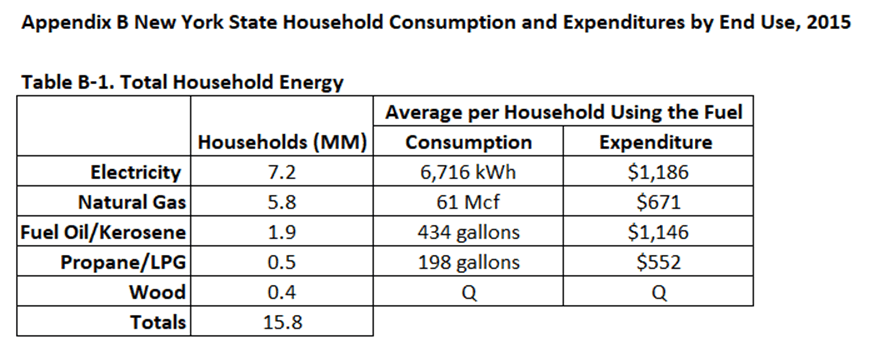
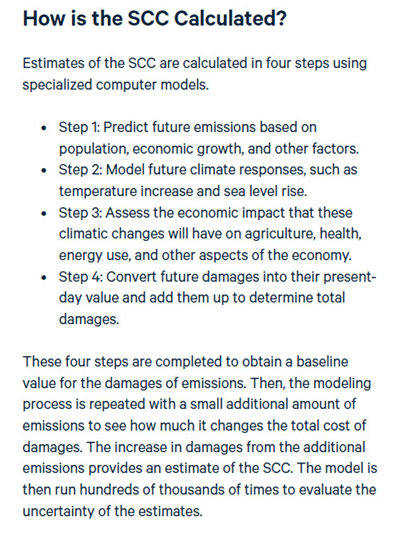
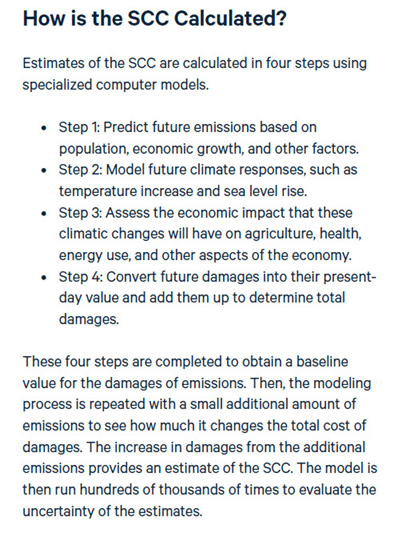
 Pragmatic Environmentalist of New York