Sometimes I just don’t have time to put together an article about specific posts I have read about the net-zero transition and climate change that I think are relevant. This is a summary of posts that I think would be of interest to my readers.
I have been following the Climate Leadership & Community Protection Act (Climate Act) since it was first proposed and most of the articles described are related to it. I have devoted a lot of time to the Climate Act because I believe the ambitions for a zero-emissions economy embodied in the Climate Act outstrip available renewable technology such that the net-zero transition will do more harm than good. The opinions expressed in this article do not reflect the position of any of my previous employers or any other company I have been associated with, these comments are mine alone.
Andrew Follett writes in the National Review that We’ve Had Six Years Left to Save the World for the Past 50 Years. Follett describes numerous examples of failed predictions of the apocalypse such as “Harvard biologist George Wald warning shortly before the first Earth Day in 1970 that civilization would end within 15 to 30 years ‘unless immediate action is taken against problems facing mankind’.” He concludes:
The Washington Post may not remember the drumbeat of failed predictions made by environmentalists over the course of the past half century, but apocalyptic rhetoric is nothing new in the cultlike echo chamber of eco-activists and extremist environmental-science scholars. Countless predictions that the end is nigh have been around for the past several decades. Don’t give away all your savings just yet.
What Will it Take?
A frequent topic of conversation I have with people who understand the electric system is when will the madness of this deeply flawed reckless transformation of the electric system fall apart. Francis Menton at the Manhattan Contrarian has been writing about the inevitable collision of zero-emissions dreams with reality for a couple of years. His latest article points out that elections in Argentina and Holland featured wins by politicians who do not subscribe to the insanity. Neither has enough support to ensure a reversal but it is an encouraging sign. The other notable event is that investors are not investing in sustainable stocks and funds as they once did. It is turning out that even with government subsidies that wind and solar projects are not making profits. He concludes:
The best thing to end the wind/solar craziness will be to have one or two jurisdictions fail spectacularly as a lesson to everyone else. I wouldn’t have wanted my own New York to volunteer for that role, but that may be what’s happening.
If Renewables are so Cheap?
Kevin Roche explains the problem. If renewable energy is so supposedly cheap, why does it take such huge subsidies to produce it? For the record I don’t think the subsidies shown in include the costs for energy storage required when the wind is not blowing and the sun is not shining, the magical dispatchable emissions-free resource needed when there are extended periods of low renewable resource availability, and all the ancillary transmission support services not provided by wind and solar generation.
State Differences In Energy Costs
In addition to infeasibility the energy transition will certainly raise costs. This article documents the difference between states that have green energy mandates and those that do not. Seven of the top eight continental states (including New York} in terms of highest average retail electricity prices in 2023 have some sort of green energy mandates. “The differences in electricity costs are stark, with the costs of a kilowatt hour in California, Massachusetts, Rhode Island and Connecticut more than doubling the costs of the same unit in states like Idaho, Wyoming, Utah and Oklahoma” that do not have mandates.
The Manhattan Contrarian offers a skeptical look at America’s new “Fifth National Climate Assessment” produced by a bureaucratic hydra consisting of 14 major agencies all united in believing that humanity is setting the sky on fire and the only way to stop it is for all 14 of them to get a whole lot more money. But while the problem of asking bureaucracies whose existence depends on there being a climate crisis to investigate whether there is a climate crisis is obvious enough, an even deeper problem is what happens when those bureaucracies turn to known zealots to do the writing. After all, if the corruption were merely mercenary we could, in principle, bribe them to dismiss the alarm as a hoax, in the unlikely event skeptics could ever raise the necessary funds. But at its core this crowd isn’t interested in money or, for that matter, science. As Roger Pielke Jr. exclaimed in irritation “How did Project Drawdown, The Nature Conservancy and Stripe get to write the overview chapter on climate for the US NCA?” Everyone would object, he notes, if people from known skeptical organizations were put in charge of the writing process. Yet when employees of climate advocacy organizations are handed control over the writing process we are supposed to pretend the result will be anything other than propaganda.
Making Sense of the Politics of Extreme Climate Projections
Roger Pielke Jr. describes the dynamics behind climate policy analyses in an article related to the previous one. He describes recent work that you will not hear in the mainstream media because it indicates that the worst-case projections relied on as rationale for the Climate Act are less likely. This does not mean that we should not do something, but it reinforces my belief that we have time to make sure that the net-zero transition policies will not do more harm than good.
Yet Another issue with Offshore Wind
In order to build the offshore wind facilities necessary for the Climate Act transition, an entire industry has to be developed. It is not just making the turbine blades and the supporting structures but also the construction equipment to install everything. To complicate things more, the Jones Act requires that the equipment shipped out of US ports be transported on ships built, owned, and operated by US citizens and that complicates offshore wind construction. This article explains that the “arms race” among manufacturers to build ever bigger offshore wind turbines means that the ship builders have issues. They build for one size and somebody wants to install an even bigger one by the time the ship starts work. “We will get to a certain point where there is a limit,” he said, “purely due to practicality.”
I believe that single biggest flaw in the Climate Leadership & Community Protection Act (Climate Act) net zero transition is the failure to include a feasibility analysis. I agree with Francis Menton, the Manhattan Contrarian, that the ultimate test would be a demonstration project to determine the feasibility of a fully wind/solar/battery electric generation system. This post describes a series of articles by Ed A. Reid, Jr. at the Right Insight blog describing what he believes should be included in a grid-scale demonstration project.
I have followed the Climate Act since it was first proposed, submitted comments on the Climate Act implementation plan, and have written over 350 articles about New York’s net-zero transition. I have devoted a lot of time to the Climate Act because I believe the ambitions for a zero-emissions economy embodied in the Climate Act outstrip available renewable technology such that the net-zero transition will do more harm than good by increasing costs unacceptably, threatening electric system reliability, and causing significant unintended environmental impacts. The opinions expressed in this post do not reflect the position of any of my previous employers or any other organization I have been associated with, these comments are mine alone.
Overview
The Climate Act established a New York “Net Zero” target (85% reduction and 15% offset of emissions) by 2050. It includes an interim 2030 reduction target of a 40% reduction by 2030 and a requirement that all electricity generated be “zero-emissions” by 2040. The Climate Action Council (CAC) is responsible for preparing the Scoping Plan that outlines how to “achieve the State’s bold clean energy and climate agenda.” In brief, that plan is to electrify everything possible using zero-emissions electricity. The Integration Analysis prepared by the New York State Energy Research and Development Authority (NYSERDA) and its consultants quantifies the impact of the electrification strategies. That material was used to develop the Draft Scoping Plan. After a year-long review, the Scoping Plan recommendations were finalized at the end of 2022. In 2023 the Scoping Plan recommendations are supposed to be implemented through regulation, PSC orders, and legislation.
The NYISO is responsible for keeping the lights on in New York. They have a very sophisticated resource adequacy modeling process and are required to provide regular reliability assessments. There are staff dedicated to addressing those requirements and I have a lot of respect for their skill and body of knowledge. They have been analyzing the electric system for many years and have a great understanding of the current electric system. However, I have enough modeling experience and background to still be skeptical that the existing resource adequacy process will be able to address all the inter-related components and unintended consequences of the transition to an electric system that relies on weather-dependent and inverter-based resources. As a result, I worry that some combination of circumstances will occur that causes unexpected reactions that will result in blackouts despite their best efforts. We know that an electric grid that relies on nuclear and hydro “zero-emissions” resources will work. What is needed is a demonstration project that can be used to test whether wind, solar, and energy storage resources can work and refine the resource adequacy modeling to address those resources.
Reid’s Renewable Demonstration
Ed Reid agrees with this need and writes “I believe it is essential that at least one large scale demonstration of a completely freestanding renewable plus storage powered grid be conducted under carefully controlled conditions.” Even if such a project was implemented, he points out an important caveat: the long duration storage or alternative “zero-carbon firm resource” cannot be tested because neither resource is currently commercially available.
He proposes a demonstration for a selected zone within the grid. His proposal would only consider sources within the zone isolated from external sources of power and incorporate storage initially using “pseudo-storage” by tracking exports from the isolated zone and what is needed from outside the isolated zone. He suggests an iterative development process whereby:
The demonstration managers would be able to import electricity from external sources if required to avoid demonstration grid failure but would then be required to install additional generation capacity or contract for more pseudo-storage to avoid a repeat of the imminent grid failure condition. The demonstration managers should not be permitted to deliver electricity outside the demonstration zone, other than to pseudo-storage.
His first demonstration project article concludes:
It might be ideal to site the demonstration zone in the metropolitan Washington, DC area to assist agencies of the federal government and federal legislators to understand the various issues with a renewable plus storage grid in real time and work to resolve them in a timely fashion.
In the next article Reid argues that transparency should be a key component of the demonstration. He proposes that the first step be complete documentation describing the generation and energy storage resources within the demonstration zone. He goes on to explain:
The next step in the process would be the initial design of the renewable plus storage system to replace the existing conventional, dispatchable fossil generation resources. This would include designation of the types and capacities of the wind and solar generators, plus designation of the capacities and delivery rates of short, intermediate and long duration storage to be installed or simulated by pseudo-storage.
After a period of testing, the wind, solar, and energy storage resources “would be used to meet the contemporaneous demand of the grid and to charge both actual and pseudo-storage”. The reporting system would track all the generation and energy usage. He suggests that in order to address the affordability component that “all renewable generation and storage resources installed in the demonstration zone be capitalized at their full cost, with no federal or state incentives of any kind”.
Market costs also must be tracked.
He concludes the second article:
These approaches to the demonstration should assure that the demonstration zone facilities would be designed to be a reliable and flexible renewable electric system and that the electricity costs in the demonstration zone would representative of a renewable plus storage grid on a national scale.
The third article suggests a reporting format for the renewable plus storage demonstration proposed. If you are interested in those details, I refer you to the article.
The fourth article raises an important point about the ultimate viability of renewable energy plus storage electric system. Climate Act accounting requirements mandate that fossil-fired generating resources include upstream emissions. Reid points out that a true “zero-emissions” electric system should also eliminate emissions in the supply chain. He argues:
The supply chain begins with the use of electric mining equipment to mine the raw materials required to fabricate the wind, solar and storage components of the renewable plus storage grid in US mines and the use of electric transportation to move these raw materials to the manufacturing facilities at which the components of the system would be fabricated. The fabrication of the components would occur in US plants using electric processing equipment.
The steel and cement required for installation of the system components would also be produced in US plants. In the case of the calcining of limestone to produce cement, carbon capture and storage (CCS) systems would be required to capture the CO2 released from the limestone.
Preparation of the installation sites for the wind and solar generators and the storage systems would be performed by US manufactured electric earthmoving equipment. The system components would be transported to the installation sites by US manufactured electric trucks or electrified trains and erected using US manufactured electric cranes.
Considering supply chain emissions introduces much more complexity. He argues that all the claims about clean energy job creation ignore the current reality that the “current supply chains for wind turbines, solar collectors and storage batteries, all of which currently require mining and processing of minerals in Asia and Africa and frequently rely on foreign manufacture, particularly of solar collectors and wind turbines” has many jobs outside of the United States. My concern is that it is not only the jobs but also there are lower environmental and safety considerations. Finally, there is a moral aspect because the “mining and processing jobs in Asia and Africa and the manufacturing jobs in Asia reputedly rely on child, forced and prison labor”.
Conclusion
I think there is a clear need for a feasibility demonstration project. Attempting to convert the current electric system that has evolved over decades to a system relying on significantly different resources by 2040 is such an enormous challenge that I think it is inappropriate to rely on modeling to check feasibility. Reid describes a feasibility demonstration on a utility-scale. Menton has argued for a smaller project:
Before embarking on “net zero” for a billion people, how about trying it out in a place with, say, 10,000, or 50,000, or 100,000 people. See if it can actually work, and how much it will cost. Then, if it works at reasonable cost, start expanding it.
While there are some large jurisdictions that have achieved very low-carbon grids, they did not do so by relying on underperforming intermittent wind and solar generation. Instead, they achieved low emissions by using high-capacity-factor firm resources—namely hydropower and nuclear. To my knowledge no jurisdiction has demonstrated the ability to achieve “zero-emissions” using wind, solar, and energy storage. Ideally a large-scale test such as the one proposed by Reid should be done before New York goes any further. However, I think that even the small-scale demonstration proposed by Menton would show that the Climate Act “zero-emissions” electric system is infeasible on reliability and affordability grounds.
I believe that the fatal flaw of all “green” technologies is that they do not work all the time. “On average”, “in general”, or for “many people”, it may be possible to argue that electric vehicles, heat pumps, or renewable generation technologies are feasible. However, when the criteria are raised to include 24-7, 365 reliability and overall affordability with all the hidden costs included, then these technologies fail to deliver. The only way I will be convinced otherwise is if there is a demonstration project that proves otherwise.
On October 24, 2023, Governor Kathy Hochul announced “the largest state investment in renewable energy in United States history” including three offshore wind and 22 land-based renewable energy projects “totaling 6.4 gigawatts of clean energy, enough to power 2.6 million New York homes and deliver approximately 12 percent of New York’s electricity needs once completed.” These projections are needed to implement the New York Climate Leadership & Community Protection Act (Climate Act). This post looks behind the hype and what it really means.
I have followed the Climate Act since it was first proposed, submitted comments on the Climate Act implementation plan, and have written over 350 articles about New York’s net-zero transition. I have devoted a lot of time to the Climate Act because I believe the ambitions for a zero-emissions economy embodied in the Climate Act outstrip available renewable technology such that the net-zero transition will do more harm than good by increasing costs unacceptably, threatening electric system reliability, and causing significant unintended environmental impacts. The opinions expressed in this post do not reflect the position of any of my previous employers or any other organization I have been associated with, these comments are mine alone.
Overview
The Climate Act established a New York “Net Zero” target (85% reduction and 15% offset of emissions) by 2050. It includes an interim 2030 reduction target of a 40% reduction by 2030 and a requirement that all electricity generated be “zero-emissions” by 2040. The Climate Action Council (CAC) is responsible for preparing the Scoping Plan that outlines how to “achieve the State’s bold clean energy and climate agenda.” In brief, that plan is to electrify everything possible using zero-emissions electricity. The Integration Analysis prepared by the New York State Energy Research and Development Authority (NYSERDA) and its consultants quantifies the impact of the electrification strategies. That material was used to develop the Draft Scoping Plan. After a year-long review, the Scoping Plan recommendations were finalized at the end of 2022. In 2023 the Scoping Plan recommendations are supposed to be implemented through regulation and legislation. In addition, New York must contract with developers to provide the enormous wind and solar resources necessary for a zero-emission grid.
If it’s failing, double down
One of the rules Irina Slav argues that the net-zero transition leadership climate crusaders follow is “If it’s failing, double down”. New York’s transition has not reached the point where we have performance data that shows that renewables cannot deliver the promises of Climate Act advocates. However, Hochul’s announcement for more new contracted projects when existing projects under development have begged for renegotiation is a perfect example of this rule.
In mid-October the Public Service Commission denied requests by European energy firms Orsted, Equinor, BP and other renewable developers to charge customers billions of dollars more under future power sale contracts for four offshore wind and 86 land-based renewable projects. “These projects must be financially sustainable to proceed,” Molly Morris, president of Equinor Renewables Americas, told Reuters, noting Equinor and BP will “assess the impact of the state’s decision on these projects.” Soon thereafter Governor Hochul announced a “10-Point Action Plan to Expand the Renewable Energy Industry and Support High-Quality Clean Jobs in New York State”. A couple of weeks later New York State Energy Research & Development Authority (NYSERDA) described what was included in the doubling down “largest-ever investment in renewable energy”. According to the announcement, “Three offshore wind and 22 land-based renewable energy projects totaling 6.4 gigawatts will power 2.6 million New York homes and deliver 12% of New York’s electricity needs in 2030”. This post unpacks these claims and looks at the projects themselves.
NYSERDA provisionally awarded three projects totaling 4,032 MW, enough to power 2 million homes: Attentive Energy One (developed by TotalEnergies, Rise Light & Power, and Corio Generation), Community Offshore Wind (developed by RWE Offshore Renewables and National Grid Ventures), and Excelsior Wind (developed by Vineyard Offshore).
There is no question that this project award is a key component of the net-zero transition. One of the legal mandates of the Climate Act is 9,000 MW of offshore wind by 2035. The Scoping Plan Integration Analysis projects offshore wind capacity of 6,200 MW by 2030 and 9,000 MW by 2035. The capacity in these projects is 45% of the mandate. NYSERDA claims these projects are supposed to provide about ten percent of New York’s electricity load, but I estimate that the energy produced is closer to 9% in 2030.
Generate enough renewable, locally-produced energy to power more than 2 million homes, or approximately 10 percent of New York’s electricity load.
Deliver $3.4 billion in commitments to Disadvantaged Communities, in alignment with New York’s Climate Act goals.
Contribute more than $85 million to support wildlife and fisheries research, mitigation, and enhancement.
Deliver over $100 million to training New York’s workforce to build and service offshore wind projects.
Commit nearly $300 million to Minority and Women Owned Business Enterprises (MWBEs) and Service-Disabled Veteran Owned Businesses (SDVOBs).
Reduce greenhouse gas emissions by 7 million metric tons annually, the equivalent of taking over 1.6 million cars off the road every year.
Provide billions of dollars in public health benefits resulting from reduced exposure to harmful pollutants—including fewer episodes of illness and premature death, fewer days of school or work missed, less disruption of business, and lower health care costs.
Commit to purchase more than $500 million in U.S. iron and steel and to include Project Labor Agreements, labor peace agreements, and prevailing wages.
The expectations for these projects cover a wide range of benefits to favored constituencies. The Climate Act mandates that at least 35% of the investments support Disadvantaged Communities but just how that is calculated is unresolved. I worry that funding the transition is going to be expensive enough without diluting the efficiency with this type of mandate. I wish I could say that the $85 million to support wildlife and fisheries research will cover the costs to monitor the effect of construction on whales but I am not optimistic that will be the case. There is no question that the trades workforce has to be expanded for all the construction projects, but I am not sure throwing money at it is going to create incentives for people to choose those careers. The money towards specific businesses is transparent pandering to a political constituency and increases the difficulties of the transition. NYSERDA claims 7 million metric tons of reductions per year, but I estimate 3.9 million metric tons. The claim for billions of public health benefits does not stand up to scrutiny. The final $500 million commitment is another transparent appeal to a political constituency, this time organized labor.
All three projects are anticipated to enter commercial operation by 2030. The average bill impact for customers over the life of the projects will be approximately 2.73 percent, or about $2.93 per month. The weighted average strike price of the awarded offshore wind projects over the life of the contracts is $96.72 per megawatt hour in 2023 (real) dollars, which equates to a nominal weighted average strike price of $145.07 per megawatt hour. The strike prices comprising the weighted average cited above are subject to certain adjustments in accordance with the terms of the awarded contracts, including, in some cases, adjustments based on certain price indices, interconnection costs and/or receipt of qualifying federal support.
The offshore wind industry is new and requires development of infrastructure and supply chain support. The announcement also includes this:
Delivering on Governor Hochul’s commitment to make New York State a hub for the U.S. offshore wind supply chain, this procurement includes continued support for offshore wind turbine manufacturing, which leverages over $2 in privately committed capital for every $1 of New York public funding.
NYSERDA is also awarding $300 million in state investment to enable the development of two supply chain facilities including nacelle manufacturing and assembly by GE Vernova, along with blade manufacturing developed by LM Wind Power Blades USA, both planned for New York’s Capital Region. This investment has the capacity to supply almost one-third of the total regional demand for offshore wind by 2035, which will unlock $968 million in public and private funding, create 1,700 direct and indirect jobs backed by prevailing wage and project labor agreements, and result in over $3 billion in direct spending in the State. Additionally, these projects also align with available federal tax credits, enabling future savings to New York’s ratepayers.
This is another buried cost of the Climate Act transition. They brag that they are leveraging over $2 in privately committed capital for every $1 of New York public funding. I see that as a 33% subsidy. The rest of the discussion is another example of political pandering.
New York’s Land-Based Renewable Energy Procurement
The NYSERDA announcement also described other projects included in the procurement:
In addition, New York also announced its latest round of conditional land-based large-scale renewable awards, which are comprised of 14 new solar projects, six wind repowering projects, one new wind project, and one return-to-service hydroelectric project, totaling a combined 2,410 megawatts – enough new renewable generation to power over 560,000 New York homes annually for at least 20 years. These projects are expected to spur over $4 billion in direct investments and create over 4,100 good-paying short- and long-term jobs across New York State.
As shown in the following table there are four sets of projects in the procurement. There are 14 solar projects totaling 1,495 MW, six wind project repowering projects totaling 612 MW, a new 298 MW wind project, and a 5 MW hydropower project.
NYSERDA awarded 22 large-scale renewable energy projects from the 2022 Renewable Energy Standard solicitation. The awarded projects are located throughout New York, including one paired with a utility-scale energy storage facility. Planned to be operational by 2028, these projects are expected to spur over $4 billion of direct investment and will create more than 4,100 short- and long-term jobs in development, construction, and operations and maintenance. Payments under these awards will not commence until projects have begun commercial operation after having obtained all required permits and local approvals.
The description of these projects leaves out some relevant points. These awards do not guarantee the projects will be built because not all the projects have completed applications and given the volatility of the supply chains and inflation the developers may decide not to proceed if they think they cannot make money. All these are intermittent sources and require energy storage to guarantee that the energy can be used when it is needed. Of the total of 2,410 MW proposed the only energy storage facility included is only for 20 MW capacity and I could not find out how much energy (MW-hours) were planned. Somebody else is going to have to subsidize these projects for the energy storage necessary to keep the lights on. The description talks about the direct investments and job creation but neglects to point out that the largest solar project is not in New York State so the job creation does not accrue to New York.
The Solicitation summary goes on to claim:
As these projects proceed, NYSERDA will continue to work with their developers, other State agencies, and stakeholders to preserve and protect New York’s valuable agricultural and environmental resources as part of the project development process. Once operational, these projects will add 2,410 megawatts of new renewable capacity and are expected to generate enough clean energy to power more than 560,000 homes each year and reduce carbon emissions by more than 2 million metric tons annually, the equivalent to taking over 440,000 cars off the road every year.
The claim that NYSERDA will work with the developers to “preserve and protect New York’s valuable agricultural and environmental resources as part of the project development process is a hollow gesture. As I have said many times there is no implementation plan that formally protects those resources and until a plan that explicitly protects farmland and cumulative environmental resources is implemented this is all just talk. My estimate of the carbon dioxide reduction is consistent with the 2 million metric ton projection. Finally, note that these projects will provide 3.1% of the expected load in 2030.
Finally, the cost impacts are described:
The average bill impact for customers over the life of the projects will be approximately 0.31 percent, or about $0.32 per month. The weighted average strike price of the awarded projects over the life of the contracts is $60.93 per megawatt hour in 2023 (real) dollars, which equates to a nominal weighted average strike price of $80.96 per megawatt hour. The strike prices comprising the weighted averages cited above are subject to certain adjustments in accordance with the terms of the awarded contracts based on certain price indices
There is a ramification of the six wind repowering projects that affect 612 MW of capacity. All six projects came online in 2008. I found a description that said:
Operational since 2009, Altona Wind is a project to which AES is excited to bring new life. The repowering of the wind park will incorporate significant component and control systems replacement with design improvements, resulting in greater energy production and improved energy reliability and availability. Repowering will ensure continued, significant economic benefits to the local community via HCA (Host Community Agreements) and PILOT (Payments in Lieu of Taxes) agreements.
This is notable because the Integration Analysis did not retire any of the existing wind resources in its projections. It appears that the total costs out to 2050 should include repowering costs every 15 to 20 years. The failure to incorporate that nuance means that the cost projections that NYSERDA claims show that benefits outweigh the costs are biased low.
Conclusion
The political theater associated with the “largest state investment in renewable energy in United States history” hides real problems. My experience with every aspect of the Climate Act is that detailed examination uncovers more uncertainty related to reliability. A key consideration renewable resources is energy storage but only one of the 22 projects included any energy storage (20 MW of storage to 2,410 MW of generating capacity with no estimate of energy ,MWh, storage capability). There is no feasibility analysis that demonstrates that the current approach will work. Instead, the only plan appears to be contract for as many resources as possible and hope it all works. Coupled with the aspects of the transition plan that are designed to appeal to particular political constituencies regardless of their effectiveness relative to the transition, this approach is doomed.
My other concern is costs. To their credit the announcements did include an expected cost to consumers totaling $3.25 per month for 12% of the energy needs in 2030. Assuming the costs for the remaining energy needs are the same, the increase in costs jumps to over $27 per month just for energy supply. The Hochul Administration has never provided all the costs to consumers for the Climate Act or provided details of the costs and expected emission reductions associated with the Scoping Plan control strategies. I have found that the Integration Analysis used to develop the Scoping Plan assumed that renewable development costs would decrease over time. Recent events have shown that is not happening. In addition, the fact that a renewable developer has a contract to repower wind turbines demonstrates that the Integration Analysis presumption that replacements out to 2050 were not needed is wrong. Therefore, the costs will be much higher than claimed.
Despite the lack of a feasibility analysis and the flawed cost estimates the Hochul Administration is racing ahead doubling down that someday the reliability issues will be resolved and the costs will fall. I think the New York electric system is headed to a reliability and affordability crisis.
The only reason for the Summit is the Climate Leadership & Community Protection Act (Climate Act). I have followed the Climate Act since it was first proposed, submitted comments on the Climate Act implementation plan, and have written over 350 articles about New York’s net-zero transition. I have devoted a lot of time to the Climate Act because I believe the ambitions for a zero-emissions economy embodied in the Climate Act outstrip available renewable technology such that the net-zero transition will do more harm than good by increasing costs unacceptably, threatening electric system reliability, and causing significant unintended environmental impacts. The opinions expressed in this post do not reflect the position of any of my previous employers or any other organization I have been associated with, these comments are mine alone.
Overview
The Climate Act established a New York “Net Zero” target (85% reduction and 15% offset of emissions) by 2050. It includes an interim 2030 reduction target of a 40% reduction by 2030 and a requirement that all electricity generated be “zero-emissions” by 2040. The Climate Action Council (CAC) is responsible for preparing the Scoping Plan that outlines how to “achieve the State’s bold clean energy and climate agenda.” In brief, that plan is to electrify everything possible using zero-emissions electricity. The Integration Analysis prepared by the New York State Energy Research and Development Authority (NYSERDA) and its consultants quantifies the impact of the electrification strategies. That material was used to develop the Draft Scoping Plan. After a year-long review, the Scoping Plan recommendations were finalized at the end of 2022. In 2023 the Scoping Plan recommendations are supposed to be implemented through regulation, PSC orders, and legislation.
According to their webpage, “City & State is the premier media organization dedicated to covering New York’s local and state politics and policy. Our in-depth, non-partisan coverage serves New York’s leaders every day as a trusted guide to the issues impacting New York.” The Summit was billed as: their “first ever Clean Energy in NY Summit to discuss opportunities that NY’s ambitious energy strategy created for new investment.” The description went on: “Panels will focus on large-scale renewable projects; the future of large-scale renewable procurement activity both onshore and offshore; the financial incentives to develop resources in vulnerable communities; as well as the emerging activity in hydrogen hubs, transportation decarbonization, and the state’s very active storage procurement market.” In my opinion “non-partisan” coverage would make a concerted attempt to balance the enthusiasm of proponents of the new investment with some recognition of the challenges of the proposed transition but there were very few of that type of questions for the panelists.
I characterize this as a pep rally for the true believers and climate grifter industry. The slick booklet containing the program for the Summit outlined the program, included speaker biographies, and included advertising blurbs for the sponsors. A comparison of the sponsors and participant panelists, moderators, and remarks made by sponsors confirms that participants were chosen mostly based on sponsorship. Ony the New York State Laborers Union, Anbaric transmission developers, and the New York renewable trade group Alliance for Clean Energy Solutions New York sponsors did not participate in the Summit. The remaining participants were from New York State agencies, New York City agencies, other renewable developers, media representatives, or politicians.
The meeting program had a keynote address and five panels. The panels included “New York’s Path to Achieve its Clean Energy Goals”, Leading the Way in Offshore Wind”, “Achieving Climate Smart Communities”, “New York’s Energy: Impact, Economic Development + Workforce”, and “Protecting New York from Climate Threats and Reducing Carbon Emissions”. There were four opportunities for “remarks” that gave the sponsors an opportunity to give their spiels and an inordinate amount of time was spent going over the panelist backgrounds. As as a result there was little meat in the panel discussions.
The City & State description of the meeting gives a good flavor of the meeting. The article states:
Clint Plummer, the CEO of Rise Light & Power, led off the discussion on the city’s clean energy transition efforts by addressing Gov. Kathy Hochul’s 10-point action plan to tackle inflationary pressures on project implementation. “The administration of Gov. Kathy Hochul implemented a 10-point plan in which they are delivering on New York’s transition with major new clean energy projects and investments in the supply chain,” he said. “So we not only are able to deliver projects today, but we do it with jobs that are based right here in New York state. And we do it in a way that mitigates against the volatility of the global supply chain.”
A truly non-partisan summit would have raised questions about these claims. There was very little discussion of the magnitude of the issues mentioned. For example, the Rise Light & Power business model is to offer everything that superficially meets the net-zero transition resource development narrative that fits its business model and ignore all the other resources necessary for a reliable electric grid as somebody else’s problem. His comments check all the boxes for the Hochul Administration narrative but did little else.
When he introduced Doreen Harris, he said there is “nobody I trust more” to lead the transition. After watching the net-zero transition roll out over the last several years, I have the exact opposite view. She claimed that there is a plan for implementation, but the Scoping Plan is only a list of control strategies with no demonstration of feasibility. She also referenced the 10-point plan saying: “Talk about a major commitment to clean energy that was made at a moment in which we need to demonstrate that commitment to action.” She went on:
With investments in renewable infrastructure rising, Harris also addressed concerns over existing contracts. “The elephant in the room is what is going to happen with the existing contracts that we have,” she said. “I want you to know, very soon, you will see some next steps we’ll be taking to address the ultimate challenges that they face. The Public Service Commission’s denial of the industry petitions is one that we obviously reacted very quickly to, knowing that we need these projects to move forward, not only in an affordable way, but in a competitive way.”
Her reference to doing something very soon was the announcement later that day that the existing contracts would be put out to be re-bid. I described this in a recent post concluding that allowing the contact costs to be revised guarantees that the costs will be increased substantially. The primary reason I distrust Harris is her claim to be concerned about affordability because under her oversight of the Scoping Plan, there has not been a full accounting of costs, no admission of expected consumer costs, and no documentation of the current status of energy poverty in New York. The only affordability response by Harris has been that the costs of inaction are more than the costs of action, which I have repeatedly shown is a misleading and inaccurate claim both in Scoping Plan comments that were never addressed and in articles on my blog.
Manhattan Contrarian Description
Francis Menton did not pull any punches describing his thoughts on the Summit. I encourage everyone to read his account. He correctly points out that none of the substantive issues associated with the net-zero transition were mentioned, much less considered. He says it was “essentially all mindless happy talk.”
Menton highlights the happy talk slogans that were used frequently by all the speakers. He provided some quotes by Gregory Lampman, the Director of Offshore Wind at NYSERDA. (“We’re the leader. . . . We have a bias toward action. . . . long term sustainability . . . something we can be proud of”). My notes include the following from John O’Leary of the Governor’s Office: “laboratory for democracy”, “pivotal moment in time”, and “confidence in ability to move forward”. These kinds of comments were the rule and not the exception.
My Observations
One aspect of the keynote presentation by Harris annoyed me but also led to the only positive aspect of any the panelist’s remarks. NYSERDA has a whole department dedicated to public presentations and press releases all of which must be approved by the Hochul Administration. The keynote presentation threw in the line “Who doesn’t love heat pumps” which drew applause and, to his ever-lasting credit, boos from Francis Menton. I was encouraged later in the program when Carrie Woerner, an assemblywoman from Glens Falls, managed to respond to the implication that heat pumps are a universal solution with no down sides. She basically quoted material from the James Hanley heat pump article about costs and the likelihood that people will switch to resistance furnaces instead of heat pumps because of the cost.
I took a bunch of notes, but it would be a waste of time to bother to document all the biased comments, inaccurate arguments, and appeals to the preferred political constituencies during the day. They far outweighed any mentions of potential concerns. This was not an opportunity for the developers and affected entities to discuss possible problems and how they could be resolved.
Conclusion
Menton and I agree that this was nothing more than a revival meeting for the camp followers of the “clean energy miracle solution for the climate change threat” cult. I don’t think many outside the cult understand how immense the political support for this cult is and how the amount of money involved surely keeps the whole scam going.
Menton concludes that:
It is completely clear that the people running New York’s supposed energy transition do not have the slightest hint of competence. I suppose that’s for the better, because people who were actually competent could keep the charade going for a much longer time. With this crowd, the collapse will come sooner, although not nearly soon enough.
I agree that this eventually has to collapse with or without competent advocates. Unfortunately, I fear that it will be so far in the future that the damages from the inane energy policy will cause irreparable harm to New York.
On October 6, 2023 the New York State Public Service Commission (PSC) turned down the request by renewable energy developers to renegotiate their contracts and there was a fleeting hope that New York State was coming to grips that there was a realization that the costs associated with the Climate Leadership & Community Protection Act (Climate Act) net zero transition could be prohibitive. However, that hope was tempered on October 12, 2023 when Governor Hochul announced “the release of a new 10-Point Action Plan to expand and support the growing large-scale renewable energy industry in New York.” On November 16, 2023, Hochul announced that the contracts for offshore wind and land-based renewable energy projects would be re-opened for adjustments on an expedited basis and any hope that affordability would actually be a consideration evaporated. This post explains my concerns.
I have followed the Climate Act since it was first proposed, submitted comments on the Climate Act implementation plan, and have written over 350 articles about New York’s net-zero transition. I have devoted a lot of time to the Climate Act because I believe the ambitions for a zero-emissions economy embodied in the Climate Act outstrip available renewable technology such that the net-zero transition will do more harm than good by increasing costs unacceptably, threatening electric system reliability, and causing significant unintended environmental impacts. The opinions expressed in this post do not reflect the position of any of my previous employers or any other organization I have been associated with, these comments are mine alone.
Overview
The Climate Act established a New York “Net Zero” target (85% reduction and 15% offset of emissions) by 2050. It includes an interim 2030 reduction target of a 40% reduction by 2030 and a requirement that all electricity generated be “zero-emissions” by 2040. The Climate Action Council (CAC) is responsible for preparing the Scoping Plan that outlines how to “achieve the State’s bold clean energy and climate agenda.” In brief, that plan is to electrify everything possible using zero-emissions electricity. The Integration Analysis prepared by the New York State Energy Research and Development Authority (NYSERDA) and its consultants quantifies the impact of the electrification strategies. That material was used to develop the Draft Scoping Plan. After a year-long review, the Scoping Plan recommendations were finalized at the end of 2022. In 2023 the Scoping Plan recommendations are supposed to be implemented through regulation, PSC orders, and legislation. The comments described follow a recent decision by the PSC to deny petitions seeking to amend contracts with renewable energy projects.
My major concern with this issue is the impact on consumer prices. Consumer electric prices are too complicated to fully explain here but there are two things to keep in mind. In New York electric bills are separated into two components: ““supply” and “delivery”. When the renewable energy costs are increased it will affect the supply component of utility bills. The New York Independent System Operator (NYSISO) explains that “Household electricity bills include supply, transmission, distribution, and other charges approved by New York State. ‘Supply’ charges in a typical retail electric consumer bill reflect procurement costs that vary by utility and are influenced by the wholesale cost of producing electricity.” The wholesale price is made up of multiple components and electricity costs will be directly affected by the renegotiation of renewable energy contracts but note that this price varies by region. According to the Potomac Economics 2022 State of the Market Report for the New York ISO Markets, the average wholesale all-in price in 2022 averaged ~$70/MWh in Western and Central New York, ~$55/MWh in Northern New York, ~$110/MWh in the Capital region, ~$105/MWh in the Lower Hudson Valley and New York City, and ~$125/MWh on Long Island.
Request for Renewable Energy Contract Renegotiation
In June 2023 a group of offshore wind developers and a state renewable energy trade association sought to renegotiate their contracts requesting billions of dollars in additional funding from consumers for four proposed offshore wind projects and 86 land-based renewable projects. The developers claimed that “unexpected and unforeseeable rise in inflation and supply chain costs and constraints associated with, among other things, the COVID-19 pandemic and the Russian invasion of Ukraine.” They also stated that the increased costs have eroded internal rates of return and have therefore caused many in-development projects with NYSERDA awards to no longer be economically viable under existing contract pricing terms.
On October 12, 2023 the Public Service Commission (PSC) turned down the request to address the cost issues explaining that they “opted to preserve the robust competitive bidding process that provides critically needed renewable energy resources to New York in the fairest and most cost-effective manner that protects consumers.” Times Union writer Rick Karlin summarized:
At issue was a request in June by ACE NY, as well as Empire Offshore Wind LLC, Beacon Wind LLC, and Sunrise Wind LLC, which are putting up the offshore wind tower farms.
All told, the request, which was in the form of a filing before the PSC, represented four offshore wind projects totaling 4.2 gigawatts of power, five land-based wind farms worth 7.5 gigawatts and 81 large solar arrays.
All of these projects are underway but not completed. They have already been selected and are under contract with the New York State Energy Research and Development Authority, or NYSERDA, to help New York transition to a clean power grid, as called for in the Climate Leadership and Community Protection Act, approved by the state Legislature and signed into law in 2019.
Developer response to the PSC decision suggested that “a number of planned projects will now be canceled, and their developers will try to rebid for a higher price at a later date — which will lead to delays in ushering in an era of green energy in New York”. Karlin also quotes Fred Zalcman, director of the New York Offshore Wind Alliance: “Today’s PSC decision denying relief to the portfolio of contracted offshore wind projects puts these projects in serious jeopardy.”
In my opinion, New York ratepayers dodged a bullet when these requests were turned down. The Supplemental Comments of Multiple Intervenors and the Municipal Electric Utilities Association of New York State on the developer request for renegotiation found that “Using the changes in strike price presented in NYSERDA’s comments together with public information available in the OSW Petitioners’ respective OREC Agreements, it now appears that the OSW Petitioners collectively are requesting an additional $37.7 billion of customer funding above and beyond the value of their existing contracts (and excluding the relief requested in the petitions filed by ACENY, Clean Path NY, and CHPE)”. I excerpted estimates from Table 1. Estimated Cost Impact of Offshore Wind Petitions below.
Table 1. Estimated Cost Impact of Offshore Wind Petitions Excerpt
Original
Adjusted
Total
Strike Price
Strike Price
Incremental
($/MWh)
($/MWh)
Cost ($)
Empire Wind 1
$118.38
$159.64
$6,195,189,000
Empire Wind 2
$107.50
$177.84
$13,382,065,422
Beacon Wind
$118.00
$190.82
$14,461,855,386
Sunrise Wind
$110.37
$139.99
$3,600,148,090
Note that the PSC decision to reject the requests was based on concerns related to the competitive bidding process and not the expected $37.7 billion increase in costs described here.
October Announcement
On October 24, 2023, Governor Hochul announced the results of NYSERDA’s third competitive renewable energy solicitation:
The conditional awards include three offshore wind and 22 land-based renewable energy projects totaling 6.4 gigawatts of clean energy, enough to power 2.6 million New York homes and deliver approximately 12 percent of New York’s electricity needs once completed. When coupled with two marquee offshore wind blade and nacelle manufacturing facilities, this portfolio of newly announced projects is expected to create approximately 8,300 family-sustaining jobs and spur $20 billion in economic development investments statewide, including developer-committed investments to support disadvantaged communities.
For the offshore wind resources, NYSERDA provisionally awarded three projects totaling 4,032 MW, enough to power 2 million homes: Attentive Energy One (developed by Total Energies, Rise Light & Power, and Corio Generation), Community Offshore Wind (developed by RWE Offshore Renewables and National Grid Ventures), and Excelsior Wind (developed by Vineyard Offshore). I found the following description of the expected bill impacts:
All three projects are anticipated to enter commercial operation by 2030. The average bill impact for customers over the life of the projects will be approximately 2.73 percent, or about $2.93 per month. The weighted average strike price of the awarded offshore wind projects over the life of the contracts is $96.72 per megawatt hour in 2023 (real) dollars, which equates to a nominal weighted average strike price of $145.07 per megawatt hour. The strike prices comprising the weighted average cited above are subject to certain adjustments in accordance with the terms of the awarded contracts, including, in some cases, adjustments based on certain price indices, interconnection costs and/or receipt of qualifying federal support.
Ten Point Plan
Within a week of the PSC decision to reject contract renegotiation, the Hochul Administration responded with a 10-Point Renewable Energy Action Plan to “expand the renewable energy industry and support high-quality jobs clean jobs in New York State”. It included two actions directly related to the potential that these renewable projects could get cancelled. The first action said that the New York State Research & Development Authority (NYSERDA) will “address the directives issued in the October 2023 Public Service Commission (PSC) Order and will assess the impacts on its large-scale renewables contracted portfolio in an expedited manner.” The second action announced that:
NYSERDA will launch an accelerated renewable energy procurement process for both offshore and onshore renewable energy projects, aiming to backfill any contracted projects which are terminated. The process will be guided by core principles, including prioritizing competition, simplifying bid requirements, incorporating inflation indexing, applying critical labor protections, and collaborating with industry to optimize the accelerated procurement timing, all while coordinating with ongoing transmission planning initiatives.
Consistent with the ten point plan announcement, on November 16, 2023 Governor Kathy Hochul announced that “expedited offshore wind and land-based renewable energy solicitations as part of New York’s 10-Point Action Plan to bolster its growing large-scale renewable industry.” The new requests for proposals will be released on November 30, 2023, with bids due in January 2024. The new solicitation will be open to all bidders, including those with existing contracts. This would allow the companies to re-offer their planned projects at higher prices and exit their old contracts. In my opinion, I believe every developer will go back out seeking a contract that increases their payouts so we may not have dodged the bullet.
United Kingdom Offshore Wind
In the United Kingdom there is annual auction for companies hoping to build big offshore windfarms which awards contracts to generate renewable electricity for 15 years at a set price. The starting price for this year’s auction was set at £44 per MWh ($54.81 per MWh) but no one submitted bids. According to the Guardian:
The companies had warned ministers repeatedly that the auction price was set too low for offshore windfarms to take part after costs in the sector soared by about 40% because of inflation across their supply chains.
The UK Government recently increased the strike price for the next auction to £73 per MWh ($90.93), up 66%. Energy Security Secretary Claire Coutinho said:
The UK is home to the world’s five largest offshore wind farms projects. Today we have started the process of our latest Contracts for Difference auction for renewables, opening in March next year. We recognise that there have been global challenges in this sector and our new annual auction allows us to reflect this. This is a vital part of our plan to have enough homegrown clean energy, bringing bills down for families and strengthening our energy independence.
I think there are two points to consider from this The first is that there is no assurance that the 67% increase is enough to get developers to bid. The second is that New York developers are under the same pressures so the projected offshore wind cost decreases included in the Climate Action Plan are unlikely.
Discussion
I recognize that the Climate Act mandates the net-zero transition, but I do not believe that means that the transition is unconditional. I am very disappointed that the Hochul Administration has not made the expected net-zero transition costs transparent and established affordability thresholds. In the absence of that guidance, the PSC should define their expectations for rates that are just and reasonable. The PSC Order Denying Petitions Seeking to Amend Contracts with Renewable Energy Projects suggested that there are affordability conditions that must be considered. On page 39 of this order, it states:
We recognize that PSL §66-p(2) adds the pursuit of the 70 by 2030 and Zero Emissions by 2040 Targets to the Commission’s obligations but do not read the provisions of the more recent statute as superseding the Commission’s longstanding mandate to ensure that rates are just and reasonable. There is no indication in the statutory language or history that the legislature intended such a result, which could have the undesirable effect of driving ratepayer costs so high as to put the entire program at risk. To the contrary, the legislature provided the Commission with significant discretion under PSL §66-p(2) regarding how to establish the program to implement the 70 by 2030 and Zero Emissions by 2040 Targets by authorizing the Commission to “address impacts of the program on safe and adequate electric service in the state under reasonably foreseeable conditions,” as well as to “modify the obligations of jurisdictional load serving entities and/or the targets” based on consideration of such factors.
In addition, I believe that another provision of New York Public Service Law § 66-p. “Establishment of a renewable energy program” includes safety valve conditions. Section §66-p (4) states “The commission may temporarily suspend or modify the obligations under such program provided that the commission, after conducting a hearing as provided in section twenty of this chapter, makes a finding that the program impedes the provision of safe and adequate electric service; the program is likely to impair existing obligations and agreements; and/or that there is a significant increase in arrears or service disconnections that the commission determines is related to the program”. The reference to a significant increase in arrears or service disconnections clearly is an implied affordability requirement.
Conclusion
The most recent information on the cost of offshore wind raises legitimate cost concerns. Offshore wind is expected to provide 9% of the generating capacity and 14% of the electric energy produced by 2030 but at what cost? The average bill impact for the recently announced offshore wind projects is $2.93 per month. I project that when the original four offshore wind projects get new contracts it will add another $3.60 to consumer bills. The $6.53 for the offshore wind resources needed for the net-zero transition does not include the costs for the onshore wind resources, solar energy resources, the energy storage resources, and the dispatchable emissions-free resources that make up the supply component of future electric bills. It also does not include the delivery component costs of future electric bills that will be needed to pay for the transmission and distribution electric system upgrades. The Propel NY transmission line recently approved to get 3,000 MW of offshore wind into the New York grid is expected to cost $3.28 billion. That is just the start of those costs. In addition, consumers will be expected to pay to electrify their home heating, cooking, and hot water systems and purchase electric vehicles.
Governor Hochul recently said. “We remain committed in powering our state with affordable, zero-emission and reliable electricity.” Her Administration has yet to document the expected costs of the net-zero transition to consumers or detail the total expected costs. In order for New Yorkers to test her commitment for affordable electricity, I think it is well past time that the numbers are provided so that we can decide whether the costs are in fact affordable ourselves. I have no doubt that her idea of “affordable” and mine are not the same.
My fleeting hope that the Hochul Administration had realized that the costs of the net-zero transition are going to be unsustainable when the PSC refused to renegotiate renewable energy contracts has been dashed. Last week’s announcement that the contracts would be re-opened so that the contact costs can be revised guarantees that the costs will be increased substantially.
A coalition of community-based environmental groups and a few individuals, including me, recently filed comments with the New York Public Service Commission (PSC). Our comments called for reconsideration of the PSC’s plan for reducing power plant emissions principally with large-scale renewables to meet the mandates in the New York Climate Leadership & Community Protection Act (Climate Act). This post describes the submitted comments.
I have followed the Climate Act since it was first proposed, submitted comments on the Climate Act implementation plan, and have written over 350 articles about New York’s net-zero transition. I have devoted a lot of time to the Climate Act because I believe the ambitions for a zero-emissions economy embodied in the Climate Act outstrip available renewable technology such that the net-zero transition will do more harm than good by increasing costs unacceptably, threatening electric system reliability, and causing significant unintended environmental impacts. The opinions expressed in this post do not reflect the position of any of my previous employers or any other organization I have been associated with, these comments are mine alone.
Overview
The Climate Act established a New York “Net Zero” target (85% reduction and 15% offset of emissions) by 2050. It includes an interim 2030 reduction target of a 40% reduction by 2030 and a requirement that all electricity generated be “zero-emissions” by 2040. The Climate Action Council (CAC) is responsible for preparing the Scoping Plan that outlines how to “achieve the State’s bold clean energy and climate agenda.” In brief, that plan is to electrify everything possible using zero-emissions electricity. The Integration Analysis prepared by the New York State Energy Research and Development Authority (NYSERDA) and its consultants quantifies the impact of the electrification strategies. That material was used to develop the Draft Scoping Plan. After a year-long review, the Scoping Plan recommendations were finalized at the end of 2022. In 2023 the Scoping Plan recommendations are supposed to be implemented through regulation, PSC orders, and legislation. The comments described follow a recent decision by the PSC to deny petitions seeking to amend contracts with renewable energy projects.
Coalition Calls for Rethinking of Energy Plan
All Otsego recently described the comments submitted by an ad hoc coalition. The submittal was filed to the Proceeding on Motion of the Commission to Implement a Large-Scale Renewable Program and a Clean Energy Standard, Case Number:15-E-0302. The following listed parties submitted the comments: Glen Families Allied for the Responsible Management of Land (GlenFARMLand), Protect Columbia, Farmersville United, Freedom United, Litchfield United, Flyway Defense, No Big Wind, Centerville’s Concerned Citizens, Concerned Citizens of Rushford, Save Sauquoit Valley Views, StopCricketValley, Protect Orange County, Cattaraugus County Legislator Ginger D. Schroder, Esq, Gary Abraham, Esq., Roger Caiazza, David Sunderwith, and Greg Woodrich.
TOWN OF COLUMBIA—A coalition of community-based environmental groups around the state filed comments with the New York Public Service Commission last week, calling for a reconsideration of the PSC’s plan for reducing power plant emissions principally with large-scale renewables.
According to the press release, the coalition is comprised of environmentally-minded people participating in the review of large-scale renewable energy projects around the state. The coalition points to physical constraints on the ability of wind and solar to contribute to carbon emission reductions and energy analysts who project that the electric grid will become less reliable as more intermittent renewables are connected. Backup power plants to ensure grid reliability and extensive infrastructure changes are needed to utilize wind and solar energy, coalition members contend, saying these are not warranted given the environmental damage renewables cause, along with potential health and safety hazards associated with the projects, including their battery storage systems.
“Large-scale renewables are being sited on prime agricultural land and are clearing thousands of acres of forests,” according to Ginger Schroder, a Cattaraugus County legislator and member of the coalition.
Schroder pointed to the 100-square-mile project area needed for the proposed Alle-Catt wind farm in western New York.
“Renewables require massive amounts of land, not only for sprawling solar and wind projects, but also for all of the additional transmission, storage, and backup generation needed. These are destroying communities,” Schroder said.
Steve Helmin with GlenFARMLand in the Town of Glen said, “Small rural communities across New York are being targeted as a result of poor planning and over-zealous expectations. The commission needs to step back and review what can work to meet our climate goals.”
Coalition member Nathan Seamon, with Protect Columbia in the Town of Columbia, added, “Since the passage of the Climate Leadership and Community Protection Act, New York State has moved from a 60 percent carbon-free grid in 2019 to one that is only 50 percent carbon-free today. Meanwhile, energy costs—for both natural gas and electricity—continue to rise.
“Upstate communities have been robbed of robust environmental review and fair tax revenue from underperforming industrial solar and wind projects which they are forced to host. How this makes any sense should be baffling to anyone who has paid attention to this over the past several years,” Seamon said.
The group is calling on the PSC to support a jobs and cost analysis of an energy transition that uses a diverse set of technologies, including nuclear and expanded hydropower, compared to one that relies on intermittent, unreliable, and environmentally unsound wind and solar.
“The Public Service Commission needs to put the words ‘leadership’ and ‘community’ back into the Climate Leadership and Community Protection Act,” coalition members insist. “Real climate leadership requires solutions that work in the real world and that do not destroy communities in the process.”
The 22-page document filed with the PSC on November 2 concludes: “…by respecting communities and embracing a balanced energy plan that supports the expansion of all carbon-free resources—including those capable of generating reliable electricity within an energy-dense footprint—the state can meet its climate goals, protect the environment and natural beauty of New York, and meet the needs of a vibrant economy. We urge the Commission to exercise its authority to help New York chart a course that accomplishes the latter.”
Can the State Respond?
Advocates for the Climate Act and the renewable energy developers argue that the energy transition must proceed no matter what because the Climate Act law says so. However the recent PSC Order Denying Petitions Seeking to Amend Contracts with Renewable Energy Projects suggested that there are conditions that must be considered. On page 39 of this order, it states:
We recognize that PSL §66-p(2) adds the pursuit of the 70 by 2030 and Zero Emissions by 2040 Targets to the Commission’s obligations but do not read the provisions of the more recent statute as superseding the Commission’s longstanding mandate to ensure that rates are just and reasonable. There is no indication in the statutory language or history that the legislature intended such a result, which could have the undesirable effect of driving ratepayer costs so high as to put the entire program at risk. To the contrary, the legislature provided the Commission with significant discretion under PSL §66-p(2) regarding how to establish the program to implement the 70 by 2030 and Zero Emissions by 2040 Targets by authorizing the Commission to “address impacts of the program on safe and adequate electric service in the state under reasonably foreseeable conditions,” as well as to “modify the obligations of jurisdictional load serving entities and/or the targets” based on consideration of such factors.
I believe that another provision of New York Public Service Law § 66-p. “Establishment of a renewable energy program” includes safety valve conditions. Section §66-p (4) states “The commission may temporarily suspend or modify the obligations under such program provided that the commission, after conducting a hearing as provided in section twenty of this chapter, makes a finding that the program impedes the provision of safe and adequate electric service; the program is likely to impair existing obligations and agreements; and/or that there is a significant increase in arrears or service disconnections that the commission determines is related to the program”.
The PSC has a longstanding mandate to provide safe and adequate electric service. The comments submitted describe many of the problems with the plan to use intermittent wind and solar resources that I believe will inevitably lead to unsafe and inadequate electric service. I think that there are mechanisms that can be used to respond to the comments. However, it is an open question whether the Hochul Administration will risk the wrath of the environmentalist constituency in the progressive left wing of her party and admit that implementation of the Climate Act may not be affordable and has unacceptable risks to reliability.
Discussion
I was asked to join the coalition late in the game so did not have a chance to provide comments to modify anything in the text. Had I had a voice in the development of the text I would have pointed out that the claim that the New York State Department of Environmental Conservation (DEC) has not provided a Generic Environmental Impact Statement solar and wind development is incorrect. They have done that evaluation, but it was completed in 2019 and does not consider the much larger number of wind turbines and solar panels that the Scoping Plan projects are necessary for the net-zero transition. The cumulative ecological impact of the current plan due to its extremely low energy density and permanence of extensive infrastructure still needs to be evaluated.
My only other quibble is the implication that fossil fuels should not be considered in the future. Reliance on weather dependent wind and solar resources must address extreme variability in resource availability. If that constraint is handled incorrectly, then electric energy will run out at the worst possible time. The challenge of developing a dispatchable emissions-free resource to handle this possibility is immense. The worst part, in my opinion, is that any long-duration storage option must push the physics envelope so this technology may be impossible. Even if that challenge is overcome, the comments point out that the projected resources are on the order of the existing fossil fuel system resources and the expectation is that they will be used infrequently. For example, if the future system is designed to provide support for a once in twenty-year event, then some portion of this resource will only be used every twenty years. I cannot see any way to overcome the economics needed to pay the huge costs for this entirely new and untested resource such that it would be viable. In order to address the problem, I think that retaining fossil fired resources for this rare but impactful event makes sense. Even if the State came to its senses and developed nuclear resources as proposed in the comments, some share of reliable fossil resources probably makes economic sense. The incremental global warming impact of those rarely fossil-fired resources would be insignificant.
Conclusion
The comments urge the PSC to “exercise its authority to avoid this tragedy by conducting substantive engineering, economic, and logistical analyses that should have occurred long before now.” Obvious problems in other jurisdictions should be addressed now rather than wished away. New York should also learn from places that successfully decarbonized. Throughout the world, “large economies that have achieved very low-carbon grids did so not by relying on underperforming intermittent generation, but instead by using high-capacity-factor firm resources—namely hydropower and nuclear—which are capable of producing abundant, reliable energy.”
In September Resources for the Future released Prioritizing Justice in New York State Climate Policy: Cleaner Air for Disadvantaged Communities which is described as an investigation of local air quality impacts on disadvantaged communities from implementation of the New York Climate Leadership & Community Protection Act (Climate Act). I submitted it to the wider audience at Watts Up With That because the topic is relevant for other jurisdictions as well as New York for two reasons. Firstly, environmental justice is a component of the Climate Act and many other current GHG emissions reduction initiatives, and this document explains the rationale behind its inclusion. Secondly, it is a disturbing example of the machinations and cherry picking associated with the scientific justification of the demands of environmental justice advocates.
I have followed the Climate Act since it was first proposed, submitted comments on the Climate Act implementation plan, and have written over 350 articles about New York’s net-zero transition. I have devoted a lot of time to the Climate Act because I believe the ambitions for a zero-emissions economy embodied in the Climate Act outstrip available renewable technology such that the net-zero transition will do more harm than good by increasing costs unacceptably, threatening electric system reliability, and causing significant unintended environmental impacts. The opinions expressed in this post do not reflect the position of any of my previous employers or any other organization I have been associated with, these comments are mine alone.
Overview
The Climate Act established a New York “Net Zero” target (85% reduction and 15% offset of emissions) by 2050. It includes an interim 2030 reduction target of a 40% reduction by 2030 and a requirement that all electricity generated be “zero-emissions” by 2040. The Climate Action Council (CAC) is responsible for preparing the Scoping Plan that outlines how to “achieve the State’s bold clean energy and climate agenda.” In brief, that plan is to electrify everything possible using zero-emissions electricity. The Integration Analysis prepared by the New York State Energy Research and Development Authority (NYSERDA) and its consultants quantifies the impact of the electrification strategies. That material was used to develop the Draft Scoping Plan. After a year-long review, the Scoping Plan recommendations were finalized at the end of 2022. In 2023 the Scoping Plan recommendations are supposed to be implemented through regulation and legislation. Environmental Justice advocates are providing input to the development of the regulations and legislation.
The report was prepared by Resources for the Future (RFF). They are an independent, nonprofit research institution in Washington, DC. The mission for Resources for the Future is to “improve environmental, energy, and natural resource decisions through impartial economic research and policy engagement.” They claim to be committed to being the “most widely trusted source of research insights and policy solutions leading to a healthy environment and a thriving economy.” RFF is a 501(c) non-profit organization and has to file a Form 990 Return of Organization Exempt fFrom Income Tax report. According to the 2021 report, they employed 98 people, had a total revenue of $13 million, had a payroll of $10.7 million, and had fundraising expenses totaling $1.2 million in fiscal year 2021.
Our country and New York State (NYS) in particular are striving to meet the interrelated challenges of decarbonization and environmental justice. Historically unjust systems and policies have led to a disproportional air pollution burden on low-income communities and communities of color. As a result, the federal and NYS governments have resolved to meet their climate goals while improving air quality conditions in disadvantaged communities.
Bringing together leading environmental justice advocates, economic researchers, public health scientists, and air quality modelers, Resources for the Future (RFF) and the New York City Environmental Justice Alliance (NYC-EJA) along with researchers at Yale, UC Davis, and Northeastern University have partnered to investigate local air quality impacts on disadvantaged communities from implementation of the NY Climate Leadership and Community Protection Act (CLCPA). Specifically, we compare two sets of policies, both in line with the statutory requirements of the law but differing in their ambition and the degree to which they focus on aiding disadvantaged communities, with a business-as-usual (control) case in 2030. One policy case (inspired by recommendations of the Climate Action Council, CAC) models what the New York State government may implement, which includes policies discussed in other jurisdictions and proposed by New York policymakers. The other case (representing what many stakeholders recommend) was crafted by a team led by NYC-EJA and included many environmental and climate justice advocates in New York, who prioritized community protection and directing benefits to marginalized communities. We modeled the impact of policies on the electric power, on-road transportation, ports, and residential building sectors; the effects these policies have on emissions of direct fine particulate matter (PM2.5) and its precursors nitrogen oxides, sulfur dioxide, and volatile organic compounds (NOx, SO2, and VOCs); and the resulting PM2.5 concentrations experienced by disadvantaged communities and nondisadvantaged communities alike.
Environmental Justice
In the last few years environmental justice considerations have been incorporated into many proposed environmental policies. Addressing the alleged existential threat of climate change is embroiled in politics and proponents for political net-zero transition legislation incorporate components designed to appeal to specific constituencies. For example, every press release associated with the Climate Act touts all the well-paying jobs created to appeal to trade unions. New York’s Climate Act included the environmental justice component to cater to its advocacy constituency. The Section 1 introduction to the report explains:
One of the most prominent examples of justice-oriented climate policy is New York State’s recent climate law, the Climate Leadership and Community Protection Act (CLCPA). As the state moves to implement this groundbreaking law, rigorous research and analysis are needed to shed light on policy design options that can achieve the dual goals of cutting GHG emissions and improving air quality and other public health outcomes for “disadvantaged communities,” as defined by the state. This requirement is the motivation for this study.
The Introduction to the report lays out the environmental justice problem:
As a result of historically unjust systems and policies, the neighborhoods where low-income communities and communities of color live, work, learn, and play are often sites for or affected by polluting infrastructure, vehicle congestion, and other environmental hazards. Racist systems and policies along with economic discrimination continue to diminish the health and quality of life of communities of color and low-income communities and make them more at risk to other hazards like climate change (Peña-Parr 2020; Donaghy et al. 2023). As fossil fuel consumption and pollution have increased exponentially over the past century, not only has the climate change outlook worsened, but vulnerable communities have also disproportionally suffered injury, disease, death, displacement, and loss of property because of these same trends (Resnik 2022).
I do not dispute that disadvantaged communities have suffered historically disproportionate impacts of environmental pollution. I agree that something should be done about it, but I worry that the only thing that will placate the most vocal of the environmental justice advocates is zero impacts without any consideration of tradeoffs. The last sentence exemplifies my concern. Conflating fossil fuel consumption and pollution increases with vulnerable community impacts ignores all the health and quality of life improvements that accompanied the increased use of fossil fuels over the last century. There is no acknowledgement of the tremendous improvements in environmental quality over the last 50 years nor are there any reservations that the “zero-emissions” solutions bandied about simply move the emissions elsewhere and that those impacts could be much worse than the impacts described in this report. Unfortunately, I think this is normal for environmental justice advocacy so similar arguments will eventually influence environmental policy elsewhere.
New York Climate Policy and Environmental Justice Landscape
Section 2 of the document notes that the Climate Act “explicitly sets goals for environmental and climate justice— addressing the disinvestment and disproportionate environmental burdens that communities of color and low-income communities have experienced.” The preamble to the Act states that “actions undertaken by New York State to mitigate GHG emissions should prioritize the safety and health of disadvantaged communities, control potential regressive impacts of future climate change mitigation and adaptation policies on these communities and prioritize the allocation of public investments in these areas.”
Importantly the Climate Act requires reductions in greenhouse gas emissions (GHG) but also refers to co-pollutants. It specifically directs the New York State Department of Environmental Conservation (DEC) to “ensure that activities undertaken to comply with the regulations do not result in a net increase in co-pollutant emissions or otherwise disproportionately burden disadvantaged communities”. Advocates claim that this requires state regulations to prioritize air quality in disadvantaged communities. Environmental burdens are not supposed to be shifted from wealthier communities to lower-income, minority communities. The Act also established the Climate Justice Working Group (CJWG) that was tasked with establishing criteria for identifying disadvantaged communities and representing environmental justice priorities throughout the various stages of CLCPA implementation. Finally, there is a stipulation that 35 to 40 percent of the benefits and investments go to disadvantaged communities.
The EJ sub-section notes:
Historically, low-income communities and communities of color have been systematically disinvested from, with racist policies and practices such as redlining used to value certain neighborhoods and residents above others (Hoffman et al. 2020). These policies and systems have caused wealth and resource gaps that endure to this day, investing in quality-of-life improvements in wealthier areas while pushing polluting industries into lower-income communities (Hoffman et al. 2020; Nardone et al. 2020; Schell et al. 2020). We see these disparities reflected in the location of power plants, transportation depots, and city parks. The impacts of this unequal investment are clear in public health data, with environmentally driven poor health outcomes like asthma most prevalent in EJ communities (New York City Department of Health and Mental Hygiene 2020).
I have concerns with this summary. On the face of it, it appears that the solution for these policies is to shut down the power plants and transportation depots and replace them with parks. Needless to say, space is at a tremendous premium in New York City. It is easy to say shut down the power plants and transportation depots, but they serve critical support functions. There are no viable replacement technologies available that do not require space so it is not clear how this can be accomplished to comply with this.
The primary analysis in this report is related to air quality health outcomes with an emphasis on asthma and other respiratory problems. The presumption is that the poor health outcomes are driven by outdoor environmental burdens. However, there are so many confounding factors associated with asthma and respiratory illnesses (e.g. smoking) that this is a weak presumption. Nonetheless, EJ stakeholders are demanding that the climate change solutions be done in “a way that centers racial and economic justice, addressing this history of abuse” and are focusing on air pollution.
RFF Research
The RFF research “seeks to inform” the policies that phase out behaviors and technologies that generate GHG emissions. Their analysis analyzed the GHG and air pollution impacts of three policy cases:
A business-as-usual (BAU) case, meant to represent what would happen to emissions and air quality without the actions contemplated in the two policy cases;
The stakeholder policy case (SPC), meant to reflect EJ policy priorities; and
The Climate Action Council-inspired policy case (CPC), meant to reflect a plausible set of policies coming out of the state’s scoping plan process, which defines the policy goals and tools that ought to be used to meet the legal requirements of the Climate Act.
The RFF analysis evaluates policy outcome differences between disadvantaged communities and non disadvantaged communities. They calculated a metric they call the climate health and vulnerability index and compare that to a map of EJ impacts. The primary air quality metric used is Particulate Matter with diameters that are 2.5 microns or smaller (PM2.5) also known as inhalable particulates.
RFF summarizes the approach: “Using this EJ screen and map, we track the effects of changing PM2.5 concentrations on disadvantaged and other communities.” They go on to claim:
Several characteristics of our research set it apart from other research efforts. Our contribution to examining the outcomes of decarbonization policies on EJ communities at a state level is unique. Additionally, we use a combination of behavioral models and one of the most sophisticated air quality models to assess and trace the consequences of the two policy cases for disadvantaged communities (DACs) and non-DACs. Further, mapping these results visually at the 4km2 scale gives readers an unprecedented ability to assess and understand the geographic distribution of results.
Figure 1 from the document outlines the evaluation process. I noted that this document is a disturbing example of the machinations and malfeasance associated with the scientific justification for the environmental justice impacts advocates are using to justify their demands. Each one of these components has flaws that make the results questionable at best.
Policy Cases
My primary concern with machinations is related to the assumptions and biases of the modelers used to differentiate between the policy cases described before. Each of the policy cases includes numerous control strategy policies. The report notes:
Not all these policies are explicitly mentioned in the scoping plan. Our modeling work is based on behavioral responses to economic policies, so we had to add detail and specificity to policies where none existed. The CAC-Inspired Policy Case represents one reasonable interpretation of how the priorities in the scoping plan may be executed. The details were established using a mix of New York policy proposals, examples from other state and federal climate policy proposals, and feedback from New York policy experts.
There are concerns with this description because there are so many opportunities to tailor the results to the desired outcome. The modeling is based on “behavioral responses” which boils down to someone saying, for example, there is a fuel price increase that will make public transit attractive to commuters. The choice of that price point and the number of affected commuters is pure speculation. Even the choice of policies makes a difference and adding policies not explicitly addressed in the scoping plan is problematic. The scoping plan policies were developed over a couple of years, so it is unlikely that the scooping plan missed any viable options. Finally, the stakeholder policy case includes policies that appeal to the advocates but have little connection to reality. For example, “more ambitious ZEV goals for 2030 in the medium and heavy-duty vehicle sector” sound nice but converting trucks is so difficult that doing it faster is unlikely.
Model Emission Changes
The RFF analysis addressed the emissions projections with three analyses. The report describes the: Economic Modeling Results, which describes estimated changes in energy demand and technology adoption across our modeled sectors; Greenhouse Gas, PM2.5, and Precursor Emissions Results, which describes estimated emissions changes in our modeled sectors; and Location of Emissions Changes, which describes the location of estimated changes in PM2.5 emissions. If projected emissions are wrong. then the air quality impacts cannot be correct. Developing an inventory of emissions for the modeling domain is an enormous effort and there are many opportunities to tailor results to a desired outcome.
The economic modeling results illustrate how behavior presumptions affect the results:
Compared with the BAU, the policy cases also increase the average fuel economy of on-road vehicles by about 15 percent. The largest difference between the policy cases is in fuel consumption, which is driven by the different prices on carbon emissions. Fuel consumption is about 6 percent lower in the CPC and 12 percent lower in the SPC compared with the BAU. The SPC reduces fuel consumption more than the CPC because of its higher carbon price.
This another example of model assumption bias affecting the results. The elasticity of fuel consumption relative to higher carbon price is certainly open to a wide range of interpretations.
Another opportunity for biased reasoning comes when emission rates are chosen for GHG emissions. The report addresses carbon dioxide and methane GHG emissions not only within the state but also upstream. The document states “This methane leakage rate for natural gas implies that approximately 2.4 percent of natural gas leaks.” That quote references a study from 2013, and then claims that the number has stood up well considering other (more recent) reports. That number is typically of emissions reported by the Environmental Defense Fund from research they did in the Permian Basin, which is the leakiest of all the basins because the main output of the wells is liquid, and the gas is just an annoying byproduct that gets (poorly) flared. The Appalachian shales like the Utica and the Marcellus have much lower leakage rates, and the National Energy Technology Lab (NETL) estimates that 88% of the natural gas burned in the Northeast U.S, comes from those two shale plays. NETL shows Appalachian leak rates for the entire value chain at about 0.5%. Furthermore, ONE Future companies collect and report data that shows that total value chain numbers are also less than 0.5%. This means that RFF air quality projections associated with methane are 3.8 times higher than projections using the appropriate values for New York.
To its credit, the report emphasizes the difference between emissions and air quality impacts. EJ advocates frequently overlook the distinction. The report explains:
To get at this geography of pollution (and related disparities in pollution exposure), we begin by studying where emissions occur—emissions from burning fossil fuels (and some waste and biomass) to generate electricity, heat homes, and power heavy trucks and passenger vehicles on New York roads. Identifying the location of emissions is a prerequisite for determining where pollution ultimately settles (after being mixed and morphed in the atmosphere), which is how we determine the geography of air quality and associated public health implications, discussed below. It is important for the reader to make a clear distinction between emissions and air quality—a distinction we will continue to discuss.
Model Air Quality
Even though the report appropriately describes the difference between emissions and air quality impacts, I have problems with the analysis. The purpose of the analysis is to determine impacts to disadvantaged communities, but the spatial scale used for the inventory and modeling analysis is too coarse to accurately represent what is happening at the neighborhood level. The report admits that this is a problem:
We also acknowledge that important boundaries to our research may influence the interpretation of the results. For example, our air quality modeling is at a 4km2 grid resolution, which in some cases is larger than a DAC boundary. We use one of the most advanced air quality models for our estimates, which incorporates detailed representations of atmospheric science and chemical processes. We have selected a spatial resolution that preserves the accuracy of that model. To aid in the interpretation of our work, we describe the limitations and caveat for our analysis in Appendix G, including a small error in the transportation emissions used as an input in the air quality model.
The authors can brag all they want about the capabilities of the model and its detailed representation, but the fact is that it is not suited to projecting what is happening on a neighborhood level. The model they use predicts regional air quality impacts at a 32 km2 grid cell resolution, they interpolated those observations down to a 4km2 grid, and claim to be able to reasonably predict down to a disadvantaged community neighborhood. Also note that they are only predicting annual averages. For the reasons mentioned and many others, I do not accept that this only affects interpretation of the results. Based on decades of air quality modeling experience I think the analysis uses an invalid methodology so I am not even going to present the results.
Discussion
Here is the thing, the report admits as much. Appendix G. Research Limitations and Caveats in the report admits that there are limitations to the analysis. It notes that “When modeling community exposure to air pollution, it is ideal to have the most geographically granular analysis possible, given that actual pollution exposure may vary at a level as granular as a city block. Nonetheless, they present results.
The level of effort necessary to accurately estimate representative air quality burdens in disadvantaged community neighborhoods is immense. The air quality model used by RFF is appropriate for regional analyses but that is just one component of localized air quality burdens. At the neighborhood level, emissions and air quality impacts must be broken down to small spatial and temporal scales. When predicting emissions at the community level details that cannot be incorporated into regional models for particulates must be included. For example, on a regional level the emissions from a char-grilling restaurant do not matter but in the neighborhood they might. Because of the justified importance of this issue this is an area of active research. I am confident that there will be surprises coming for the advocacy community when improved source attribution results are incorporated into policy making. Spoiler alert – it is not the peaking power plants so vilified by the advocates. Unless the problem sources are correctly identified, the problem cannot be solved.
Conclusion
I published this here because it foreshadows what I believe will be used to justify EJ demands elsewhere. The RFF report explains the rationale behind the inclusion of EJ considerations. While I acknowledge that it is appropriate to minimize impacts to disadvantaged communities that have disproportionate impacts, I suspect that resolution is going to be more about emotional arguments than air quality impact science. As a result, trying to get any new source permitted or renewing existing source permits is going to be more difficult.
I also wanted to highlight the machinations needed to justify the proposed responses. I described a few of the issues with the modeling approach used but could have provided many more. RFF all but admits that their modeling approach is inappropriate, but the caveats will not be mentioned when the results are used by the EJ advocate audience. In addition, there is an inordinate opportunity for modeling assumptions to tailor the results to the preconceived answer desired including cherry picking input references. As a result, I think the results have no value and did not describe them. Nevertheless, this report will be referenced and used as justification for onerous permit requirements for any facility that might affect EJ communities.
I have been following the Climate Leadership & Community Protection Act (Climate Act) since it was first proposed and most of the articles described are related to it. I have devoted a lot of time to the Climate Act because I believe the ambitions for a zero-emissions economy embodied in the Climate Act outstrip available renewable technology such that the net-zero transition will do more harm than good. The opinions expressed in this article do not reflect the position of any of my previous employers or any other company I have been associated with, these comments are mine alone.
Videos
Turbine graveyards sprawled across Texas Independent journalist Ron Kendall Jr warns of “turbine graveyards” which have been popping up over the US state of Texas as turbine blades reach their useable life. Texas is home to more than 15,000 wind turbines and has been dubbed a “clean energy powerhouse”. In a documentary produced by Yucca Films, Mr Kendall Jr investigates the lifespan of the turbines and where they go once used. Transcript here.
Misplaced faith in private sector solutions delays the redistribution of trillions from developed countries and multilateral institutions.
In response to the looming trillion-dollar global climate finance shortfall, a broad array of policymakers, international bureaucrats, environmentalists, and financial institutions have called for the urgent scaling up of private climate investments.
The logic of private finance mobilisation starts by recognising that developing countries will need climate finance “amounting to US$5.8–5.9 trillion up until 2030”. In the face of such eye-watering sums, private finance offers an enticing solution. By leveraging comparatively small government financing into substantial private investments, governments and international organisations can turn “billions into trillions”, sidestepping the problem facing developed countries of how to justify domestically the global redistribution of trillions of dollars.
Alternatively, developing countries have advocated for a suite of multilateral measures, including sovereign debt cancellation, the redistribution of IMF-issued Special Drawing Rights (SDRs), increased concessional development financing, and even global carbon taxes. These proposals are often perceived to be concerned with global justice and equity, as opposed to efficacy. However, this distinction becomes blurred when the US$5.8–5.9 trillion climate finance needs of developing countries are interrogated more closely.
…
Private finance is clearly no panacea for the climate crisis. It is no wonder that the developing countries have long called for far more drastic levels of public and multilateral financing. Rather than seeking to pursue global economic justice alone, developing countries have been acutely aware that trillions of developed country government dollars need to be put on the table. If developing country financing asks are honoured, US$5.8–5.9 trillion would be well within reach. But the challenge remains getting developed countries on board. Proposals such as political economist Dani Rodrik’s “bridging compact” hold some promise, although any equivalent global consensus could only emerge following the recognition that a private finance-centred approach doesn’t provide a workable alternative.
Worral points out that the rushed removal of $5.8-5.9 trillion from the economies of wealthy nations would have major impacts to schools, hospitals, roads, policing. These are all the things that matter to ordinary people and surely would cause enormous public reaction. He believes that “the fake climate crisis movement is on the verge of collapsing under the weight of its own absurdity.” I only hope that is true.
Setting Utility Rates
Kevin Kilty does a great job describing how utilities are setting rates as the generating resources used on the grid change. Whenever Kevin publishes an article I learn something. I have been involved in the electric utility industry for decades and have never really paid much attention to the details of the rate case process and I learned a lot about the process. He explained his motivation for the article:
My principal goal is this. Many of us are pretty certain that pouring more renewable energy into a network makes delivered energy more expensive and less reliable. We often point to a graph that shows costs rising with percent renewable contributions to generating capacity. Yet, our antagonists claim that adding energy from renewables should, and in fact does, reduce utility costs. They have data, too. We strengthen our case by demonstrating specific reasons, or lack thereof, for rising utility bills. The rate setting process ought to make those reasons visible.
I also suspect most people know little about rate setting and are unaware about its complexity. It’s important to understand this bit of the order of battle.
Kilty makes the reasonable observation that the rate setting process should make the rationale for increases visible but admits that this is a challenge because the issues are so complex. He explains how the shift to weather-dependent wind and solar resources complicates this process bur explains the obvious problems. In New York the politics of the ruling party’s preference for this transition and the Climate Act make it easy for the utility companies to go with the flow and ignore the politically inconvenient facts associated with the transition. I do not think there is any incentive for these companies to fight for what they know is right.
Kilty concludes that the happy talk about wind energy saving customers money will never substitute for reliable operation. Whining about thermal assets being inflexible and preventing full adoption of wind and solar is simply public relations blather. The intermittency of wind and solar combined with the steady decline of coal-fired resources are major problems that must be addressed for a reliable system but are being ignored in the rate case he is following.
Electrify Everything Means Higher Energy Costs
Robert Bryce uses Federal data to show why residential electrification means higher prices, he Energy Information Administration released its Winter Fuels Outlook for 2023-24 shows that “an average U.S. homeowner who uses electricity to heat their home will pay about $462 more this winter than ones who use natural gas.” That means heating with electricity costs about 77% more than heating with natural gas.
In addition to the fuel costs Bryce raises two issues. He quotes Glenn Ducat’s new book, Blue Oasis No More: Why We’re Not Going to “Beat” Global Warming and What We Need To Do About It, who says burning natural gas directly “is at least twice as efficient and emits about half as much CO2 as processes that use electricity produced from fossil fuels. Converting process-heat applications to electricity before the electricity grid is completely carbon-free will increase CO2 emissions.”
His second point is that electrify everything push is terrible for energy security:
The first rule of energy security is to have diversity of supply. It makes no sense — none — to put all of our eggs in one energy basket. Yet, that’s precisely what the electrify everything crowd wants to do. Even worse, they want to do it when our electric grid is cracking under existing demand, and regulators and market watchers, including the Federal Energy Regulatory Commission and North American Electric Reliability Corporation, are warning of reliability problems on our electric grid.
I agree with his conclusion that “The goals of policymakers should be to ensure that energy is affordable, reliable, and resilient. Trying to electrify everything will achieve the opposite.”
I worry that the implementation of New York’s Climate Leadership & Community Protection Act (Climate Act) is going to increase the cost of energy to those least able to afford it. New York State does not have a clearly defined affordability threshold for the Climate Act nor does it track energy burden metrics. The only metric referenced in the Climate Act Scoping Plan is a Public Service Commission target energy burden set at or below 6 percent of household income for all low-income households in New York State. This post addresses that metric.
I have followed the Climate Act since it was first proposed, submitted comments on the Climate Act implementation plan, and have written over 350 articles about New York’s net-zero transition. I have devoted a lot of time to the Climate Act because I believe the ambitions for a zero-emissions economy embodied in the Climate Act outstrip available renewable technology such that the net-zero transition will do more harm than good by increasing costs unacceptably, threatening electric system reliability, and causing significant unintended environmental impacts. The opinions expressed in this post do not reflect the position of any of my previous employers or any other organization I have been associated with, these comments are mine alone.
Climate Act Background
The Climate Act established a New York “Net Zero” target (85% reduction and 15% offset of emissions) by 2050. It includes an interim 2030 reduction target of a 40% reduction by 2030 and a requirement that all electricity generated be “zero-emissions” by 2040. The Climate Action Council is responsible for preparing the Scoping Plan that outlines how to “achieve the State’s bold clean energy and climate agenda.” In brief, that plan is to electrify everything possible using zero-emissions electricity. The Integration Analysis prepared by the New York State Energy Research and Development Authority (NYSERDA) and its consultants quantifies the impact of the electrification strategies. That material was used to develop the Draft Scoping Plan. After a year-long review, the Scoping Plan recommendations were finalized at the end of 2022. In 2023 the Scoping Plan recommendations are supposed to be implemented through regulation and legislation.
Renewable Energy Program Affordability Concerns
Proponents of the Climate Act don’t acknowledge that there is a affordability safety valve. New York Public Service Law § 66-p (4). “Establishment of a renewable energy program” includes constraints for affordability and reliability that could be used to limit the damage of Climate Act implementation. § 66-p (4) states: “The commission may temporarily suspend or modify the obligations under such program provided that the commission, after conducting a hearing as provided in section twenty of this chapter, makes a finding that the program impedes the provision of safe and adequate electric service; the program is likely to impair existing obligations and agreements; and/or that there is a significant increase in arrears or service disconnections that the commission determines is related to the program”.
There are affordability considerations regarding the constraint “significant increase in arrears or service disconnections”. I believe that the Hochul Administration’s Climate Action Council should define what that means. For example, Addressing Energy Poverty in the US offers possible criteria:
According to the U.S. Department of Energy, the average energy burden for low-income households is 8.6%. That is three times higher than for non-low income households, which is about 3%. And according to the Kleinman Center for Energy Policy at University of Pennsylvania, more than one-third of US households are experiencing “energy poverty,” having difficulty affording the energy they need to keep the lights on and heat and cool their home.
I think that New York should define its energy poverty targets and track them. Once the standard is defined, the status of the standard in New York should be monitored and made publicly available, and a threshold for acceptability established. For example, if the New York state low-income standard is 8.6% and the baseline energy burden level is 9%, then if the average energy burden increases to 10% provisions to temporarily suspend or modify the obligations should be triggered.
In order to implement my recommendation, the first task would be to establish the energy burden standard. As far as I can determine there is only one existing candidate. The Public Service Commission has a target energy burden set at or below 6 percent of household income for all low-income households in New York State. Reviewing it raises questions about its suitability for this purpose.
Order Adopting Low Income Program Modifications and Directing Utility Filings
The six percent target was included as part of Public Service Commission (PSC) Case Number: 14-M-0565, the Proceeding on Motion of the Commission to Examine Programs to Address Energy Affordability for Low Income Utility Customers. According to the PSC: “The primary purposes of the proceeding are to standardize utility low-income programs to reflect best practices where appropriate, streamline the regulatory process, and ensure consistency with the Commission’s statutory and policy objectives.” On May 20, 2016 the Order Adopting Low Income Program Modifications and Directing Utility Findings adopted “a policy that an energy burden at or below 6% of household income shall be the target level for all 2.3 million low income households in New York.”
The order notes that:
There is no universal measure of energy affordability; however, a widely accepted principle is that total shelter costs should not exceed 30% of income. For example, this percentage is often used by lenders to determine affordability of mortgage payments. It is further reasonable to expect that utility costs should not exceed 20% of shelter costs, leading to the conclusion that an affordable energy burden should be at or below 6% of household income (20% x 30% = 6%). A 6% energy burden is the target energy burden used for affordability programs in several states (e.g., New Jersey and Ohio), and thus appears to be reasonable. It also corresponds to what U.S. Energy Information Administration data reflects is the upper end of middle- and upper-income customer household energy burdens (generally in the range of 1 to 5%). The Commission therefore adopts a policy that an energy burden at or below 6% of household income shall be the target level for all low-income customers. The policy applies to customers who heat with electricity or natural gas.
The energy burden statistics cited in the Staff Report suggest a significant energy divide exists for low-income households. About 2.3 million households are at or below 200% of FPL, with an energy affordability “gap,” i.e., an average annual energy burden above the 6% level. Approximately 1.4 million of these households receive a HEAP benefit; however, for the 2013-2014 program year, only about 316,000 of those households received a benefit for utility service.
The Order notes that reducing this energy burden will be a challenge:
Closing such a wide gap for 2.3 million low-income households is a non-trivial pursuit, and will require a comprehensive effort that involves all of the tools at the state’s disposal, including, but not limited to, utility ratepayer-funded programs. A central role in achieving energy affordability for low income customers is played by the financial assistance programs administered by the Office of Temporary and Disability Assistance (OTDA), including the Home Energy Assistance Program (HEAP). Another important role is played by low income energy efficiency programs such as the Weatherization Assistance Program administered by New York State Homes and Community Renewal (HCR) and the ratepayer–funded EmPower-NY program administered by the New York State Energy Research and Development Authority (NYSERDA). Utility ratepayer funded programs also include the rate discount programs under discussion here, as well as investments designed to create opportunities for low income households to benefit from the cost savings offered by Distributed Energy Resources.
The Order goes on to offer suggestions to close the gap. It argues that a holistic approach among many state agencies is needed. For that to work there must be better coordination “among the various governmental and private agencies” that address this issue. The Order suggests that “achieving an optimal design will require building new partnerships and new mechanisms for identifying and enrolling eligible households”.
The most tangible aspect of the Order to address the energy burden problem was to establish low-income bill discount programs for each of the major electric and gas utilities. This included standardization of utility energy affordability programs statewide to “reflect best practices where appropriate, streamlining of rate cases, and greater consistency between the programs and the Commission’s statutory and policy objectives.”
On Augst 13, 2021 a press release describing the expansion of the low-income affordability program noted:
To reach the target of no more than a 6 percent energy burden for low-income New Yorkers, it would be necessary to coordinate and leverage all available resources at the State’s disposal, including multiple sources of financial assistance to lower customers’ bills, energy efficiency measures to reduce usage, and access to clean energy sources to lower the cost of the energy itself. As part of the Commission’s decision, Commission staff will work closely with other entities, including OTDA and the utilities, to ensure that low-income customers receive the assistance they need.
The utility companies submit quarterly reports documenting the number of low-income customers receiving discounts and the amount of money distributed. However, I have been unable to find any documentation describing how many customers meet the 6% energy burden criteria, much less any information on how those numbers are changing. The biggest problem with this energy burden program is that it only applies to electric and gas utility customers. Citizens who heat with fuel oil, propane, or wood are not covered.
Sc=oping Plan Energy Burden
The only reference in the Scoping Plan to the PSC low-income energy burden target of 6% was in Appendix A, the Enabling Initiative #7 slide in the Power Generation Advisory Panel Considerations. The relevant sentence states a potential barrier to success is “The State’s ability to project how much financial support will be adequate while assuring that low-income customers will not surpass the 6% energy burden during the transition to electrification”. As noted previously, this ignores citizens who do not heat with electricity or natural gas.
I am aware of only one other suggestion for an affordability metric. In the 2021-2022 legislative session there was a proposal that included a requirement for state agencies to identify policies to ensure affordable housing and affordable electricity using an “affordability of electricity” metric that was defined as “electricity does not cost more than six percent of a residential customer’s income.”
I don’t think either is the appropriate metric for the Climate Act transition. The legislative proposal only addresses electricity and the PSC energy burden target only addresses only utility bills. This fails to address the concerns of citizens who heat their homes with fuels not provided by a utility such as heating oil or propane. The Climate Action Council has proposed a cap-and-invest program that will put a price on gasoline and diesel fuels. Those should also be considered part of the energy burden.
Reality Disconnect
The Order Adopting Low Income Program Modifications narrative on the clean energy transition is inconsistent with the experience of every jurisdiction that has tried to replace existing sources of electrical generation with wind, solar, and storage. The total costs to integrate intermittent and diffuse wind and solar inevitably increase costs. The argument in the Order claims:
In addition, the best solution for all customers, including low income, lies in facilitating opportunities to invest in clean energy and the means to reduce energy costs. Greater access and support for low income and underserved communities to Distributed Energy Resources is the best way to narrow the affordability gap that needs to be filled with direct financial assistance for customers with low incomes. Greater access to advanced energy management products to increase efficiency for low-income customers will empower those for whom these savings may have the greatest value, as well as allowing the most disadvantaged customers more choice in how they manage and consume energy.
There are two aspects to the claim that clean energy will reduce energy costs that are problems. The first problem is the cost of new generating capacity in general. The New York State Energy Research & Development Authority recently announced that investments in three offshore wind and 22 land-based renewable energy projects totaling 6.4 gigawatts. For the offshore wind projects “the average bill impact for customers over the life of the projects will be approximately 2.73 percent, or about $2.93 per month.” For the other projects the average bill impact for customers over the life of the projects will be approximately 0.31 percent, or about $0.32 per month. If future projects somehow stay at the same price despite the costs of inflation, supply chain issues, and all the other reasons that developers for existing projects recently argued when calling for renegotiation of their project contracts, then the average monthly bill impacts will be $16.40 per month for the projected offshore wind, onshore wind, and solar capacity needed in 2030. That is just the cost of additional generating capacity and does not include the energy storage needed to address intermittency or transmission upgrades needed to address diffusivity. The Order’s claim that clean energy will reduce energy costs is unsupportable.
The second problem is that those additional costs necessitate changes to low-income customer support. In order to maintain the same relative level of energy burden more money will be required for these higher costs. Furthermore, the higher costs will mean more people will qualify for energy burden support. That additional money must be covered by the remaining ratepayers, driving their costs higher, and increasing the number of people that quality for energy burden support. At some point this spiral of costs will become unsustainable.
Conclusion
Increased energy costs are regressive taxes and impact those least able to afford them the most. I believe that the net-zero transition will inevitably increase energy costs. Surely there is a point when the costs are unaffordable overall or the impacts to low-income ratepayers are unacceptable.
I believe it is necessary to establish a energy burden standard. The first step to address this problem is to develop a transparent metric for energy burden. The Public Service Commission target energy burden of 6 percent of household income only applies to utility costs. A metric that considers all energy costs including transportation has to be developed. The second step would be to establish energy burden acceptability criteria that could be used to comply with the New York Public Service Law § 66-p (4) affordability considerations associate with the constraint “significant increase in arrears or service disconnections”. Finally, a transparent and readily available tracking system needs to be established.
Clearly there is a reluctance by any of the politicians supporting the clean energy transition to be accountable for costs. There is an existing energy burden metric but the status of ratepayers relative to the 6 percent metric is not documented. It is almost as if the State does not want us to know where we stand. As such, the possibility of properly tracking energy poverty is unlikely. I think that is to the great shame of the proponents of the clean energy transition.
For over three years one of my particular concerns associated with the New York State Climate Leadership & Community Protection Act (Climate Act) net zero transition is residential electrification with an emphasis on home heating. I have been meaning to do an update on this topic but have had other priorities. Empire Center fellow James Hanley has prepared a new study that provides a great update: Cold Reality: The Cost and Challenge of Compulsory Home Electrification in New York (“Cold Reality”). This post summarizes the study and my impressions of the analysis.
I have followed the Climate Act since it was first proposed, submitted comments on the Climate Act implementation plan, and have written over 350 articles about New York’s net-zero transition. I have devoted a lot of time to the Climate Act because I believe the ambitions for a zero-emissions economy embodied in the Climate Act outstrip available renewable technology such that the net-zero transition will do more harm than good by increasing costs unacceptably, threatening electric system reliability, and causing significant cumulative environmental impacts. The opinions expressed in this post do not reflect the position of any of my previous employers or any other organization I have been associated with, these comments are mine alone.
Climate Act Background
The Climate Act established a New York “Net Zero” target (85% reduction and 15% offset of emissions) by 2050. It includes an interim 2030 reduction target of a 40% reduction by 2030 and a requirement that all electricity generated be “zero-emissions” by 2040. The Climate Action Council is responsible for preparing the Scoping Plan that outlines how to “achieve the State’s bold clean energy and climate agenda.” In brief, that plan is to electrify everything possible using zero-emissions electricity. The Integration Analysis prepared by the New York State Energy Research and Development Authority (NYSERDA) and its consultants quantifies the impact of the electrification strategies. That material was used to develop the Draft Scoping Plan. After a year-long review, the Scoping Plan recommendations were finalized at the end of 2022. In 2023 the Scoping Plan recommendations are supposed to be implemented through regulation, utility rate cases, and legislation.
I have written extensively about residential home heating strategies in the Scoping Plan. In Climate Act Draft Scoping Plan Building Sector Scenarios I compared the Draft Scoping Plan residential heating scenarios and concluded a feasibility study is needed to determine whether any of the recommendations can be implemented. I submitted comments on the costs of residential heating electrification in the Draft Scoping Plan. My comments showed that the Plan did not provide sufficient information to assess the potential costs of the electrification strategies proposed. One of the key factors affecting cost and feasibility is the need to upgrade the building shell to ensure comfort during the coldest weather when using heat pumps. I also did a post that documented the results of my home energy audit that consolidated all my concerns with heat pumps. If you are interested in more home heating background information, an article describing my interview with Susan Arbetter at Capital Tonight gave an overview of heat pump technology and described building shells. Like every other aspect of the Climate Act transition heating electrification is more complex and costly than the Scoping Plan admits.
NY’s Electric-Heat Push Faces Cold Reality
James Hanley’s Cold Reality is described as follows:
New York’s plan to steer homeowners and landlords toward electric heat could backfire due to high costs and practical concerns, according to a new study from the Empire Center for Public Policy.
In Cold Reality: The Cost and Challenge of Compulsory Home Electrification in New York, Empire Center fellow James Hanley looks at the state’s plan to prohibit homeowners from replacing gas and oil furnaces after 2029 and for them to instead install heat pumps. Homeowners, he explains, face both higher equipment costs and potentially high weatherization costs to accommodate heat pumps, which can operate at lower monthly costs but require better insulation.
Even with extensive state and federal subsidies, Hanley warns, the upfront price-tag of heat pumps and weatherization will likely push homeowners to instead buy low-cost but energy-hungry electric furnaces that will put considerably greater stress on the electric grid—making the state’s overall electrification goals harder to reach.
“This is the fundamental problem at the heart of New York’s command-and-control attempt to restructure its economy to make what amount to barely detectable reductions in global emissions,” said Hanley. “Albany can ban things, but it can’t control how people replace them.”
Hanley notes that the impact of this policy will be felt most in rural New York, where the median household income of owner-occupied homes is the lowest, and points out that the state could instead reduce emissions by setting clean fuel standards that encourage the use of biofuels.
Annotated Executive Summary
I n this section I quote the Executive Summary and offer my comments.
The Scoping Plan recommends that the State pass legislation that prohibits fuel-fired home heating but has not addressed all the consequences:
In 2030, New York may begin a policy of forcing New York families to use electricity for home heating instead of fuels like heating oil, propane and natural gas. Homeowners whose furnaces fail in midwinter will face a choice between spending tens of thousands of dollars on heat pumps while waiting for weeks or more to have their homes weatherized or buying inexpensive but energy-hungry electric furnaces. Their choices have significant implications for household budgets, utility companies providing electricity, and policymakers who need to ensure a sufficient amount of electricity production to meet the public’s needs.
Hanley does a good job explaining some of the nuances to the electrification that are not addressed in the Scoping Plan. For example, he points out that if a furnace breaks down in the winter, that there are limited options for replacement. You might be able put in a replacement heat pump quickly but the insulation and weatherization required to make heat pumps work in the coldest weather take longer to install.
The Climate Act is a political construct. The goals set were never evaluated with respect to feasibility. The Climate Action Council did not address the consequences of the schedule proposed:
New York’s 2019 Climate Leadership and Community Protection Act (CLCPA) calls for reducing statewide greenhouse gas emissions by 85 percent by 2050 (from a 1990 baseline). The Climate Action Council has proposed meeting that goal in part by electrifying 85 percent of the state’s buildings. But it also has recommended a prohibition on the replacement of fuel-burning furnaces as of 2030, which would push the mandate closer to 100 percent electrification as units reach their normal end of life.
Hanley breaks down residential building energy production:
Over six million residential units in New York use fuels for heating, with over five million also using them for hot-water heating, and over four million using them for cooking. While most of those homes use natural gas, more than 1.7 million New Yorkers use propane, heating oil or kerosene1 for heat, with over a million using those fuels for hot water as well.
The Scoping Plan did not address these differences. There are reasons that each fuel is being used and there are ramifications that may make a one size fits all electrification mandate problematic. The analysis addresses some of the complications of the electrification mandate. While the Scoping Plan admits that there should be exceptions to the mandate, it is not clear how those would be incorporated. As Hanley points out, heat pumps have issues:
The state’s compulsory electrification program— forcing consumers to replace end-of-life fuel-fired appliances with electric appliances—recommends that building owners, including homeowners, install heat pumps. Because heat pumps do not warm the air as much as fuel-fired furnaces, heat pump installation involves additional costs for home weatherization. In cold climate regions, air-source heat pump users may also need to pay for a supplemental heat source, and due to the risk of power outages, risk-averse electric heat users may also need to purchase backup power generators.
Cold Reality does a good job in the report explaining how the plan will disproportionately affect the rural poor. He describes other issues as well:
The costs of heat pump installation and building shell weatherization are high and will place a substantial economic burden on many homeowners, even with state and federal subsidies, as shown by the following numbers:
The cost of installing a heat pump and weatherizing a home: $14,600 – $46,200;
Heat pump and weatherization’s share of the median household income of owner-occupied homes in lower-income counties: 20 percent to 70 percent; and
How long it will take homeowners to recover costs through energy savings: 8 years to 19 years.
The Climate Act Scoping Plan emphasizes the climate justice aspect of implementation by focusing on Disadvantaged Communities. I worry that emphasis will overlook the rural poor who will be disproportionately impacted by the electrification of heating costs described because rural poor may not be in a Disadvantaged Community. If there is no hope that the electrification costs can be recovered by energy savings, then this is a serious problem. Hanley points out that there are ramifications on the implementation strategy too:
State policy will likely drive homeowners to instead buy more energy-intensive electric resistance furnaces that have lower upfront costs but cost more to operate. Even with higher annual energy costs, it will take 18 to 60 years for total costs to equal the cost of a heat pump installation plus home weatherization.
I agree that the consequences of this choice have enormous implications:
Widespread adoption of electric resistance furnaces would further increase electricity demand, challenging utilities as they rebuild the state’s electric grid to deliver higher electric loads and policymakers as they struggle to close a sizable future gap in winter electricity production.
Whether homeowners choose heat pumps or electric resistance heaters, the future of oil and propane distribution firms appears dire. Based on their respective expected operational lives, propane furnaces may be eliminated between 2047 and 2050, while oil furnaces would be eliminated between 2056 and 2063.
One point not mentioned by Hanley is that propane is used more often for mobile homes. Those residences cannot be insulated enough to enable the use of heat pumps so I expect that this would be another long-term use of propane in addition to those he describes:
Because there are a variety of out-of-home uses of propane, the propane industry will not completely disappear in New York, although it will dwindle and need to consolidate. With fewer alternative uses for heating oil, the heating oil delivery industry may be eliminated entirely.
Hanley correctly points out that the expected reductions in greenhouse gas emissions are inconsequential relative to global emissions. However his description does not mention that the increase of global greenhouse gas emissions elsewhere means that the reductions will be supplanted by those increases in a matter of days:
The global effect of the costly compulsory electrification will be a reduction in greenhouse gas emissions of less than 5/100 of one percent. In choosing this approach, New York has closed the door on a more affordable means of reducing greenhouse gas emissions, clean fuel standards that promote biodiesel and renewable propane.
In that context, it is insane to not consider the affordable alternatives he describes.
Discussion
Cold Reality does an excellent job explaining issues associated with heat pumps in New York. I want to make the point that Hanley addressed the major problems but could not address all the issues. There are other problems that don’t have as much of an impact and are down in the weeds so far that trying to include them would detract from the report.
My post that documented the results of my home energy audit with a knowledgeable and experienced auditor raised some of the other issues. I do not dispute that heat pump technology can work in New York State. However, it is not simply a matter of swapping out a fossil-fired furnace for a heat pump because it is not just the furnace that has to be replaced. Hanley explained that because the temperature of the air from a heat pump is lower than a fuel-fired furnace, the building shell needs to be upgraded to improve insulation and reduce air infiltration. He did not point out that it may be necessary to change the duct work because a greater volume of air is needed to provide the necessary heat and that a heat exchanger might have to be added too. Hanley described the trained tradesmen problem but I think it is not just a matter of installation workers it is also a matter of designers. There simply will not be enough trained and experienced auditor/designers available because of the learning curve. As a result, I fear many heat pump systems will not be designed properly. That will exacerbate the load problems described in Cold Reality because the solution will be to add space heaters to stay warm.
Conclusion
There are many components of the Climate Act transition but very few will have as big an impact on individuals as the home heating electrification mandate. Hanley’s Cold Reality is a great overview of the problems associated with the heat pump “solution” that have not been addressed by the Hochul Administration. He offers a solution to reduce impacts that I think makes sense.
In my opinion, however, there are even more problems than the problems Hanley describes in his conclusion:
New York’s proposed program of compulsory electrification could impose enormous costs on homeowners while making nearly unmeasurable gains in reducing global greenhouse gas emissions. As of 2030, homeowners will be faced with the choice of committing up to 70 percent of their annual incomes toward the purchase of heat pumps and upgrading their home’s shells or buying electric resistance heaters at just 3 percent to 10 percent of that cost.
The low rate of electric heating in many of the state’s more rural and lower-income counties means much of the choice will fall on homeowners who can least afford it.
And those who have unexpected equipment failures in midwinter may not be able to arrange contractors for their necessary shell upgrades in time to ensure comfort for the remainder of the season.
While the state’s Climate Action Council recommends heat pumps because they use less energy, the cost advantage of electric resistance heaters could lead to large numbers of homeowners choosing them. This would increase the energy demands of the state beyond what has been predicted, challenging utilities as they rebuild the grid to deliver higher electric loads and challenging policymakers to close a predicted, and potentially growing, shortfall in future wintertime electricity production.

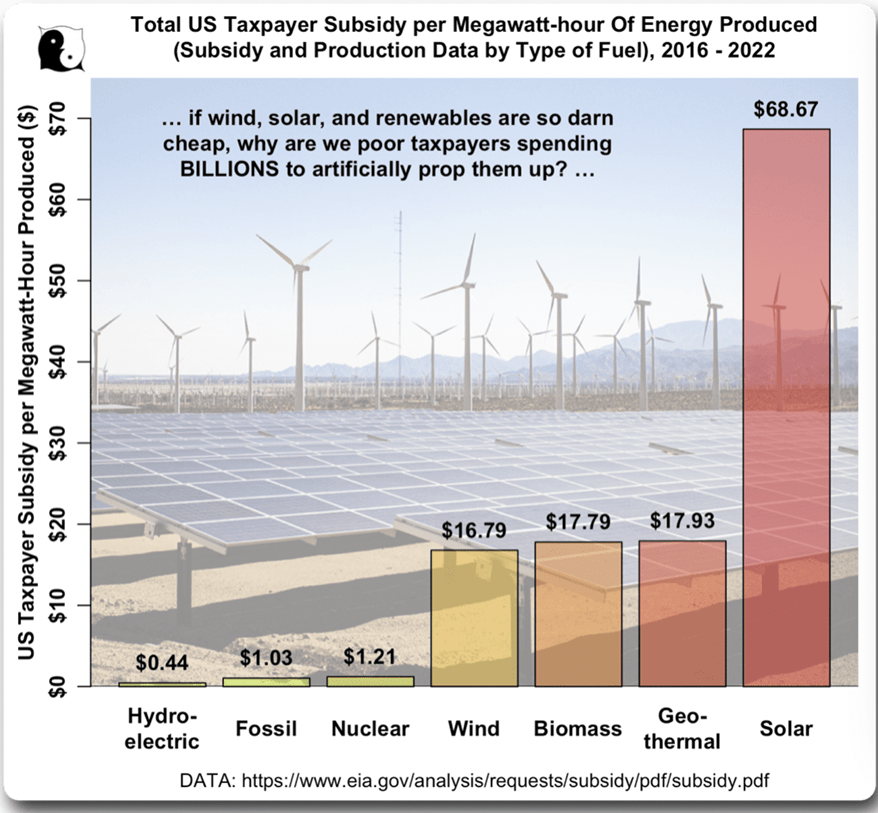

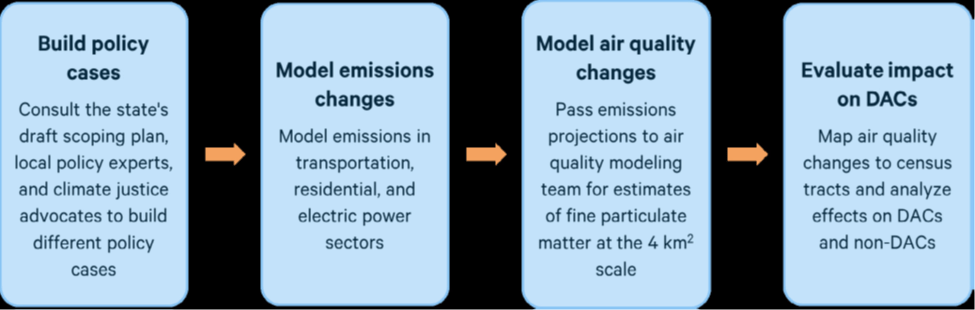
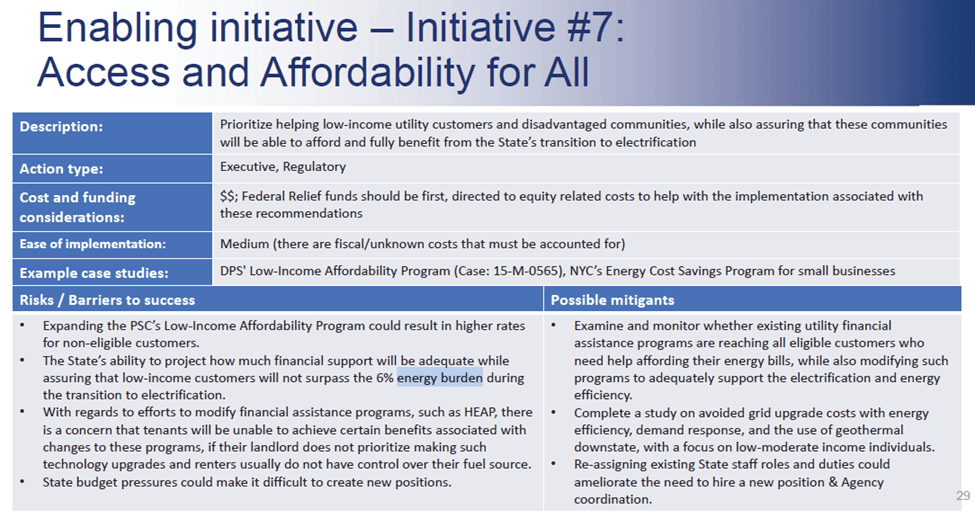
 Pragmatic Environmentalist of New York