On January 6, 2026 the Coalition for Safe and Reliable Energy filed a petition with the Public Service Commission (PSC) requesting that “the Commission act expeditiously to hold a hearing pursuant to Public Service Law § 66-p (4) to evaluate whether to temporarily suspend or modify the obligations under the Renewable Energy Program established as part of the Climate Leadership and Community Protection Act.” Last August I described a filing and supporting documentation that I prepared with Richard Ellenbogen, Constatine Kontogiannis, and Francis Menton (Independent Intervenors) submitted to the same PSC Proceeding (Case 22-M-0149). Our filing made a similar argument. This article compares the filings.
I am convinced that implementation of the New York Climate Leadership & Community Protection Act (Climate Act or CLCPA) net-zero mandates will do more harm than good if the future electric system relies only on wind, solar, and energy storage because of reliability and affordability risks. I have followed the Climate Act since it was first proposed, submitted comments on the Climate Act implementation plan, and have written over 600 articles about New York’s net-zero transition. The opinions expressed in this article do not reflect the position of any of my previous employers or any other organization I have been associated with, these comments are mine alone.
Background
The Climate Act established a New York “Net Zero” target (85% reduction in GHG emissions and 15% offset of emissions) by 2050 and has two electric sector targets: 70% of the electricity must come from renewable energy by 2030 and all electricity must be generated by “zero-emissions” resources by 2040.
There is a fundamental Climate Act implementation issue. Clearly there are bounds on what New York State ratepayers can afford and there are limits related to reliability risks for a system reliant on weather-dependent resources. The problem is that there are no criteria for acceptable bounds and New York energy policy has not openly reassessed where we stand relative to acceptable affordability and reliability risk.
Coalition for Safe and Reliable Energy
According to their petition the Coalition for Safe and Reliable Energy (Coalition) is “a diverse coalition consisting generally of associations, chambers of commerce and other groups representing various businesses, industries, manufacturers and constituencies from across the state, as well as two members of the state’s Climate Action Council”. Clearly, they have a vested interest in affordability because it affects their competitiveness. Coalition members include:
Buffalo Niagara Builders Association
Buffalo Niagara Manufacturing Alliance
Buffalo Niagara Partnership
Builders Exchange of the Southern Tier
Business Council of Westchester
Capitol Region Chamber of Commerce
Center for Economic Growth
Commercial Real Estate Development Association – Upstate Chapter
Construction Exchange of Buffalo and Western New York
Engineers Labor Employer Cooperative 825
Greater Binghamton Chamber of Commerce
Greater Rochester Association of REALTORS
Greater Rochester Chamber of Commerce
Manufacturers Alliance of New York
Manufacturers Association of Central New York
Manufacturers Association of the Southern Tier
Multiple Intervenors – An unincorporated association of approximately 55 large industrial, commercial, and institutional energy consumers with manufacturing and other facilities located throughout New York State
National Federation of Independent Businesses
New York State Association of Plumbing, Heating and Cooling Contractors
New York State Builders Association
New York State Economic Development Council
Niagara USA Chamber of Commerce
North Country Chamber of Commerce
Northeastern Retail Lumber Association
Northeast Hearth, Patio and Barbecue Association
Power for Economic Prosperity – An active coalition of manufacturing companies that depend on low-cost hydropower from the New York Power Authority in order to maintain their operations in the Buffalo/Niagara Region.
Rochester Technology and Manufacturing Association
The Business Council of New York State – The leading business organization in New York State, representing the interests of large and small firms throughout the state. Its membership is made up of approximately 3,500 member companies, local chambers of commerce and professional and trade associations.
The Council of Industry, Manufacturers Association of the Hudson Valley
The Manufacturers Alliance of New York
Western New York Association of Plumbing and Mechanical Contractors
Also included in the Coalition are Donna L. DeCarolis and Dennis W. Elsenbeck, both members of the state’s Climate Action Council established by the CLCPA.
The Coalition petition provides a description of each of its members
Independent Intervenor Filing
For comparison purposes I will describe the Independent Intervenor filing submitted on August 12, 2025, first. My first post described our main argument and the second post described the supporting exhibits. In brief, Public Service Law (PSL) § 66-p (4) states: “The commission may temporarily suspend or modify the obligations under such program provided that the commission, after conducting a hearing as provided in section twenty of this chapter, makes a finding that the program impedes the provision of safe and adequate electric service; the program is likely to impair existing obligations and agreements; and/or that there is a significant increase in arrears or service disconnections that the commission determines is related to the program”. We argued the hearing was necessary because of the significant increase in arrears threshold has been exceeded.
Independent Intervenors – Affordability
Exhibit 3 – Affordability-Focused Recommendations documents references to affordability and reliability recommendations in the New York Department of Public Service (DPS) Document and Matter Management (DMM) System. Rather than wading through the system I acknowledge the use of Perplexity (https://www.perplexity.ai/) to generate summaries and references included in the document.
Since 2022, at least six concrete safeguards have been proposed in the New York Department of Public Service (DPS) record to keep the Climate Leadership & Community Protection Act affordable for households and businesses. They call for (1) rigorous public cost reporting, (2) objective “safety-valve” triggers under Public Service Law §66-p(4), (3) systematic pursuit of alternative funding, (4) expansion of low-income bill-protection programs, (5) transparent data dashboards, and (6) stricter benefit-cost and rate-design standards.
In my opinion, these safeguards haven’t been implemented well enough to ensure affordability. There has been no DPS staff response to any of the calls to develop affordability triggers.
Independent Intervenors – Reliability
The biggest unresolved reliability risk associated with Climate Act implementation is addressed in Case 15-E-0302 – Proceeding on Motion of the Commission to Implement a Large-Scale Renewable Program and Clean Energy Standard. Responsible New York agencies all agree that new Dispatchable Emissions-Free Resource (DEFR) technologies are needed to make a solar and wind-reliant electric energy system viable during extended periods of low wind and solar resource availability.
Two exhibits addressed these reliability concerns. To adequately address the amount of DEFR required it is necessary to determine how much is needed. Exhibit 4 – Resource Gap Characterization describes the challenges of defining the frequency, duration, and intensity of low wind and solar resource availability (known as dark doldrums) events. One fundamental flaw in the Climate Act is the mistaken belief by the authors of the law that existing wind, solar, and energy storage resources would be sufficient and that no new technology would be required. Exhibit 5 – Dispatchable Emissions-Free Resources explains that this presumption is not correct. There is a need for a resource that is not currently commercially available. This reliance on unknown solutions risks investments in false solutions and poses significant reliability risks.
The Coalition for Safe and Reliable Energy, a diverse coalition consisting generally of associations, chambers of commerce and other groups representing various businesses, industries, manufacturers and constituencies from across the state, as well as two members of the state’s Climate Action Council (hereinafter referred to as the “Coalition”), hereby petitions the New York State Public Service Commission to hold a hearing pursuant to Public Service Law § 66-p (4) to evaluate whether to temporarily suspend or modify the obligations under the Renewable Energy Program established as part of the Climate Leadership and Community Protection Act.
The preceding statement includes a footnote referencing the Independent Intervenor filing and another regulatory action that argued a heating was appropriate. The Coalition lays out the basic argument:
This Petition seeks Commission action authorized by the CLCPA. Recent evidence suggests that the Renewable Energy Program, and its associated renewable energy targets, may impede the provision of safe and adequate electric service and upset the necessary balance of reliable, economic and sustainable energy in New York State. This evidence justifies commencement of the hearing process in PSL § 66-p (4), which will allow the Commission to determine whether the temporary suspension or modification of the Renewable Energy Program obligations is necessary to ensure the continued provision of safe and adequate electric service. Further, the Coalition believes that any hearing held pursuant to PSL § 66-p (4) should examine the relationship between Renewable Energy Program costs and customer arrears.
The Executive Summary provides an excellent overview of the status of Climate Act implementation.
The CLCPA set extraordinarily ambitious targets for renewable energy generation in New York State, requiring that by 2030, 70% of statewide electricity generation be from renewable energy systems and that by 2040, the electric grid be zero emissions. Recent data from the Commission demonstrates that New York will not achieve – or even come close to achieving – the 70% target by 2030. In addition, recent developments at the federal level impacting clean energy are likely to have a negative impact on renewable energy in the near term. With respect to the target of zero emissions by 2040, the necessary emission-free generation resources are not currently available at commercial scale. The inability of New York to develop the amount of renewable energy generation necessary to meet the 70% target by 2030, the increasing retirement of aging fossil-fuel generators due to the CLCPA, and the uncertainty surrounding the development of resources necessary to meet the zero emissions target by 2040, presents a reliability concern.
This concern is exacerbated by the fact that it may take more than two times the amount of certain forms of renewable generation to make up for the loss of one megawatt of fossil-fuel generation, and by expected increases in electric demand driven by the combination of new large loads and electrification.
Pursuant to the PSL, the Commission is required to ensure the provision of “safe and adequate” electric service. Renewable energy development has not kept pace with generator retirements, which has resulted in declining reliability margins across New York, jeopardizing electric reliability and safe and adequate service. In recognition that the Renewable Energy Program might negatively impact electric reliability, the CLCPA includes a safeguard that allows the Commission to temporarily suspend or modify the obligations of the program, after a hearing, if it makes a finding that the program impedes the provision of safe and adequate electric service. Given recent evidence regarding delayed renewable energy generation and risks to reliability, the Commission should hold a hearing pursuant to PSL § 66-p (4) to determine whether safe and adequate electric service in New York is impeded by the Renewable Energy Program and, if so, to appropriately modify or suspend the program’s obligations.
Discussion
Both filings argue that the PSC should convene a hearing to determine whether it is appropriate to temporarily suspend or modify the obligations of the Climate Act. The Independent Intervenors argued that there was an explicit requirement for the hearing because the customers in arrears threshold has been exceeded. The Coalition makes a persuasive argument that there are sufficient observed threats to reliability that a hearing is necessary to ensure safe and adequate service.
The other difference is that the Independent Intervenors represent the views of four individuals whose credibility lies in our technical expertise. The Coalition consists primarily of associations, chambers of commerce and other groups representing various businesses, industries, manufacturers and constituencies from across the state whose credibility is based on its political and economic clout.
Hopefully, the Coalition filing for a hearing will engender a response from the PSC. There has been no hint of a response to the Independent Intervenor filing. Perhaps the Coalition represents too big a constituency to ignore.
Some may say that the Coalition position is economically self-interested and therefore should be discounted. They could also argue that the Independent Intervenors are not qualified to speak. I think I can speak for both parties when I say we believe our concerns have never been openly discussed and addressed by the Hochul Administration. All we want is the chance to make our case for the need to define affordability and reliability metrics that ensure safe, affordable, and adequate service.
Conclusion
I am encouraged that there is another group making similar arguments that the time has come to convene a hearing. All my attempts have failed but maybe the Coalition will succeed in getting the PSC to convene a hearing.
Dealing with the RGGI regulatory and political landscapes is challenging enough that affected entities seldom see value in speaking out about fundamental issues associated with the program. I have been involved in the RGGI program process since its inception and have no such restrictions when writing about the details of the RGGI program. I have worked on every cap-and-trade program affecting electric generating facilities in New York including RGGI, the Acid Rain Program, and several Nitrogen Oxide programs, since the inception of those programs. I also participated in RGGI Auction 41 successfully winning allowances and holding them for several years. The opinions expressed in this post do not reflect the position of any of my previous employers or any other organization I have been associated
Background
RGGI is a market-based program to reduce greenhouse gas emissions (GHG) (Factsheet). It has been a cooperative effort among the states of Connecticut, Delaware, Maine, Maryland, Massachusetts, New Hampshire, New York, Rhode Island, and Vermont to cap and reduce CO2 emissions from the power sector since 2008. New Jersey was in at the beginning, dropped out for years, and re-joined in 2020. Virginia joined in 2021 but has since withdrawn, and Pennsylvania recently decided not to join. According to a RGGI website:
The RGGI states issue CO2 allowances that are distributed almost entirely through regional auctions, resulting in proceeds for reinvestment in strategic energy and consumer programs.
Proceeds were invested in programs including energy efficiency, clean and renewable energy, beneficial electrification, greenhouse gas abatement and climate change adaptation, and direct bill assistance. Energy efficiency continued to receive the largest share of investments.
NYSERDA Operating Plan
The New York State Energy Research & Development Authority (NYSERDA) designed and implemented a process to develop and annually update an Operating Plan which summarizes and describes the initiatives to be supported by RGGI auction proceeds. The latest Draft RGGI Operating Plan Amendment explains that
New York State uses RGGI proceeds to promote and implement programs for energy efficiency, renewable or non-carbon emitting technologies, and innovative carbon emissions abatement technologies with significant carbon reduction potential, in accordance with 21 NYCRR Part 507 and in compliance with the Climate Leadership and Community Protection Act (CLCPA).
This year, consistent with authorized RGGI uses, and to highlight the link between RGGI programmatic investments and core state priorities, we have organized our RGGI programmatic investments in terms of four themes, which are the following:
Affordability: The programmatic investments under this theme focus on creating affordable, efficient, healthy, and comfortable homes and workplaces by deploying commercially available energy efficiency, building electrification, and renewable energy technologies.
Energy abundance, diversity, and reliability: The programmatic investments under this theme focus on understanding and building out diverse energy options, including responsible renewable generation and storage, as well as modernizing energy system infrastructure, planning, and markets.
Energy innovation and economic development: The programmatic investments under this theme focus on supporting economic growth and competitiveness, including enabling job, tax revenue, and supply chain growth; stimulating entrepreneurship and company growth in New York; and expanding public-private partnerships and investments.
Thriving communities and environments: The programmatic investments under this theme focus on helping New Yorkers equitably participate and share in the benefits of the clean energy future; ensuring the energy transition provides meaningful benefits to local communities and disadvantaged communities; and improving climate resiliency and adaptation and public and environmental health.
Investment Priorities and RGGI Compliance
As far as I can tell I have submitted comments on six amendments to the Operating Plan. Given my decades-long emission and allowance reporting responsibilities in the electric sector, it is not surprising that the primary concern in all my comments has been related to compliance obligations. In my opinion, NYSERDA ignores the fact that RGGI is not just a pot of money to exploit but is at its core a pollution control program that includes compliance obligations for electric generating units in the program. This year is particularly important because of the more stringent RGGI caps proposed in the 6 NYCRR Part 242 CO2 Budget Trading Program amendments that I discussed recently.
The compliance challenge is illustrated in Figure 1. Relative to the three baseline years before RGGI started New York RGGI emission are down 33%. The primary reason for the observed reduction is due to fuel switching from coal and oil to natural gas. I believe that the fuel price differential for natural gas use was much greater than the added cost of RGGI allowances, so the main driver of the observed reductions was economic fuel switching. Also note that this option is not available anymore.
This report is prepared pursuant to the State’s RGGI Investment Plan (2024 Operating Plan) and provides an update on the progress of programs through the quarter ending December 31, 2024. It contains an accounting of program spending; an estimate of program benefits; and a summary description of program activities, implementation, and evaluation. An amendment providing updated program descriptions and funding levels for the 2024 version of the Operating Plan was approved by NYSERDA’s Board in January 2025.
Table 1 is a copy of Table 1 in the latest full-year Semi-Annual Status Report. It summarizes the effectiveness of the NYSERDA investments and lists expected cumulative portfolio benefits including emissions savings.
Table 1. Summary of Expected Cumulative Portfolio Benefits through December 31, 2024
Comparison of NYSERDA Cumulative Emissions Savings to Observed Emission Reductions
Table 2 presents the relevant data to compare the observed reductions and NYSERDA RGGI investment emission savings. I list the last five years of data starting in 2019 when the emissions went up because of the closure of Indian Point. Reductions from the 2006-2008 average baseline are listed. The emissions savings listed are cumulative annual emissions. If the RGGI proceeds were invested, then the total emissions would be higher by the amount of the savings. The total cumulative annual emission savings through the end of 2023 is only 1,976,101 tons and that represents a reduction of 4.2% from the pre-RGGI baseline. Emission reductions by fuel type clearly show that fuel switching is the primary cause of reductions.
Table 2: NY Electric Generating Unit Emissions, NYSERDA GHG Emission Savings from RGGI Investments, and Emissions by Fuel Type
New York RGGI Program Investment Reductions
Another finding that has been ignored or possibly covered up by NYSERDA is the poor emission reduction cost effectiveness of NYSERDA investments. Table 3 lists data from Semi-Annual Status Report through December 2024 Table 2. The report presents “expected quantifiable benefits related to carbon dioxide equivalent (CO2e) reductions, energy savings, and participant energy bill savings with expended and encumbered funds” but I only considered the CO2e reductions. Note that the emission savings evaluated in the report include carbon dioxide, methane, and nitrous oxide that are not included in RGGI. I did not use “lifetime” savings data because I am trying to compare the RGGI program benefits emission savings reductions to the RGGI compliance metric of an annual emission cap. Lifetime reductions are clearly irrelevant. The observed cost per ton of emissions savings is $583.
Table 3: RGGI Funding Status Report Table 2: Summary of Total Expected Cumulative Annual Program Benefits
Program Benefit Impacts on RGGI
I categorized programs relative to RGGI compliance obligation support based on the Semi-Annual Status Report through December 2024. The table breaks down the program allocations and expected annualized CO2 savings for three categories: direct reductions to RGGI sources, indirect reductions, and those programs that will increase electric generating emissions. An example of a program that increases RGGI emissions is NYSERDA’s Clean Transportation Program that “has been pursuing five strategies to promote EV adoption by consumers and fleets across New York”. The emission reductions claimed are from decreased internal combustion engine vehicles, so the reductions do not reflect reductions in RGGI electric generating units. In addition, increased electricity for charging will require RGGI facilities to operate more thus increasing their emissions.
The results in the Funding Status reports summarized in Table 4 show that since the start of the program NYSERDA has allocated $101.6 million to programs that directly reduce utility emissions achieving emission savings of 202,422 tons, $1,007.6 million for programs that indirectly reduce utility emissions savings by 1,634,000 tons, and $178.5 million for programs that will increase utility emissions by 395,152 tons. When emissions savings from non-RGGI sources are removed, total savings are 1,827,575 tons instead of 2,221,757.
Table 4: Summary of Expected Cumulative Annualized Program Benefits through 31 December 2024 for Programs that Directly, Indirectly, or Do Not Affect RGGI CO2 Emissions
The results are in Table 5. The first three categories cover programs that directly, indirectly, or could potentially decrease RGGI-affected source emissions and account for 53% of investments which is up sharply from the 2025 Amendment which only allotted 31% of the investments. This positive development occurred because Empower+ funding doubled and the Retrofit Challenges Programs funding increased sharply. Programs that will add load that could potentially increase RGGI source emissions and whose emissions savings are unrelated to the electric sector total 20% of the investments. Programs that do not affect emissions are funded with 18% of the proceeds and administrative costs total another 9%. The increased preference for funding that could reduce RGGI emissions is a good development. On the other hand, Administration costs are 8.8% of the total and programs that have nothing to do with emissions total 18%. In my opinion, those are programs that should be funded from other sources.
Table 5: Potential for RGGI Reductions for Funding Allocations for 2025 Operating Plan Amendments
RGGI Compliance Summary
Figure 1 shows that no further fuel switching emission reductions are available. Affected sources have no remaining options to comply with RGGI mandates other than limiting operations. Future emission reductions are only possible if zero-emission resources displace the generation of RGGI-affected sources. However, there is a complicating factor that makes emphasis on reducing RGGI-affected emissions more important. The New York State Department of Environmental Conservation (DEC) recently announced revisions to 6 NYCRR Part 242 – CO2 Budget Trading Program the regulation that sets the New York RGGI allowance cap.
Comparison of the revised cap starting in 2027 with the New York State Energy Plan shows that in 2029 projected emissions are double the RGGI cap. Table 10 lists projections starting in 2027 that range from 49.3 to 40.3 MMT. The 2023 observed emissions from RGGI sources was 28.7 MMT. Table 6 lists the proposed RGGI cap or limit on tons of CO2 permitted. There is a big difference between the Pathways Analysis projection and the RGGI cap. There are some mitigating factors because of the Climate Act accounting methodology, but I believe that the Pathways Analysis emissions are well more than the cap.
Table 6: Comparison of RGGI Proposed Part 242 Cap and State Energy Plan Pathways Analysis Electric Power Scenario Projections
Discussion
My primary concern is that RGGI is an electric sector emissions reduction program. I have shown that the observed electric sector emission trends indicate that the observed reductions occurred because of fuel switching from coal and oil to natural gas and that there are no more fuel switching opportunities. Therefore, programs that materially decrease electric sector emissions directly or indirectly through energy use reductions should be a priority because affected sources have no other compliance options. There are programs in the amendment that do not meet these criteria. It is only appropriate to fund the non-priority programs if sufficient funding has been allocated to make the emission reductions necessary to meet RGGI compliance mandates.
These results should be used to determine funding priorities. There are significant differences in the expected emission reductions for different programs and that should also be considered when allocating revenues. While the fraction of funding allocations that could potentially decrease RGGI source emissions has gone up I think that more emphasis is needed to assure compliance and avert compliance problems.
Conclusion
NYSERDA has treated RGGI allowance auction revenues as a convenient slush fund totaling 18% of total funding for whatever politically connected program needs money. As a result, investments that reduce emissions and support those most impacted by increased costs received less funding.
Richard Ellenbogen has a proven record implementing carbon reduction programs at his own manufacturing business in Westchester County. His factory has reduced its electric utility load by 80% while reducing its carbon footprint by 30% – 40% below that of the downstate system. This post describes his recent report: “An Economic Justification for Installing Rooftop Solar Arrays in The Con Ed Service Area – Even Without The Investment Tax Credit” (“Economic Justification”).
Richard Ellenbogen has been speaking to NY State policy makers and regulators since 2019 regarding the deficiencies inherent in NY State Energy policy. I have previously published other articles by Ellenbogen. He has no financial interest in any solar fabrication or installation company, so has no monetary interest in the results.
Caveat: I acknowledge that the following article includes section plagiarized from the Economic Justification document.
Overview
Richard Ellenbogen is President of Allied Converters, a plastic packaging converter that manufactures flexible plastic bags, sheets, rolls, and related film products, primarily for food and gift packaging markets. Allied installed one of the first commercial solar arrays in the downstate region in 2007 with a 50-Kilowatt (KW) DC rated array being activated on September 29, 2007. When the system was installed, he added monitoring and data collection systems so that he has 18 years of operational data.
Based on that information he has prepared a comprehensive Economic Justification showing how installing rooftop solar arrays on medium and large buildings operated in New York City and Long Island will be cost effective, even after the recent cancellation of the investment tax credit for solar arrays. He shows that “Returns on Investment (ROI) comparable to the 10% – 12% ROI promised by Bernie Madoff are achievable, except it is legal.” He explains that the justification works for customers in downstate New York because the rate increases
have been so egregious over the past 18 years.
The analysis is based on a few assumptions. The analysis assumes a $3.00 per watt installed cost for the array, minimal shading of the solar array, and the ability to use all the energy within the location where it is generated or have solar net metering so retail cost is applied to all electric energy generated. The calculations also are based upon no government monetary support for the installation beyond solar net metering and a tax rate of 30% to calculate depreciation of the asset. However, the numbers show that the installations will be cost effective even for entities that cannot depreciate the assets.
The document includes a twelve page economic justification description and four appendices.
Appendix 1 provides the depreciation schedule for a $150,000 solar array for a business with a 30% tax rate. Appendix 2 explains Line Loss. Appendix 3 – documents the 2008 Allied Converter Solar Net Metering Tariff Petition for a Declaratory Ruling on the administration of solar net metering provisions at locations where multiple (hybrid) energy efficient generation technologies are installed. Finally, Appendix 4 provides the data for Figure 8
Allied Solar Array
Allied Converters is in New Rochelle, NY in the Consolidate Edison (Con Ed) service area, about 17 miles from Times Square. It is a 55,000 square foot building with a 23,000 Square foot upper roof. Allied installed a 50 KW DC rated array in 2007 (Figure 1). Ellenbogen explains:
When the solar array was installed, the cost ($10/watt) made the total array cost $500,000 before rebates and tax credits. NYSERDA (NY State Energy Research and Development Authority) rebates at that time were very generous as were Federal and State Tax Credits. If they hadn’t been, no one would have installed an array and NYSERDA wanted data on the arrays. 18 years ago, NYSERDA actually did cutting edge energy research, as its name implies, and did not do science devoid energy proselytizing. The net cost of arrays installed on commercial facilities can be depreciated, after subtracting the tax credits and rebates. The depreciated cost of the 50 KW array at the factory was approximately $180,000.
Figure 1: Allied Factory and Solar Array
As a business owner Ellenbogen recognized that installing the array was not a good business decision but as an engineer he was curious about capability of the technology. Under normal circumstances, the investment would not have been a positive investment until this year 18 years after it was installed. However, Ellenbogen took advantage of a Washington D.C. Solar Renewable Energy Credit (SREC) program for out of District solar arrays. He applied as soon as the offer opened and became one of five out of District arrays with access to the SREC payments. Even though this source of income is no longer available the situation has changed. Array costs have decreased by 70% and utility costs per KWh in the Con Ed service area have increased by 66% since 2007 from 14.9 cents to 24.75 cents for commercial entities.
The analysis described below is based on data recorded since the installation of the array. This is not a theoretical assessment because it uses data that reflects weather conditions and maintenance issues.
Responsible Solar Development
I am publicizing this report because I think it represents responsible solar development. Ellenbogen describes several advantages of this type of development. Rooftop solar arrays on medium and large buildings use the energy where it is generated which eliminates line loss. Line loss occurs because wires are not perfect conductors. As is the case with many aspects of the energy transition, line loss becomes more of a problem when energy is needed most because when wire gets hotter the resistance that causes line loss increases. Appendix 2 in the Economic Justification explains line loss in detail. He points out that summer peak loads occur when temperatures are highest making on-site generation more advantageous.
He describes three other advantages. There is no need to build additional transmission infrastructure. Medium and large buildings can use all the power produced so there is no need for storage to provide usable energy. Finally, using rooftops means that there is no loss of farmland or environmentally sensitive land for solar development.
I would add another advantage. In areas with a lot of solar generation, output at peak times is frequently large enough that it stresses grid operations, can force renewable curtailment at midday, and complicates economics for dispatchable plants needed when solar is unavailable. These installations will typically not cause negative net-metering impacts because they use the power generated and displace load from the grid.
Array Degradation and Utility Costs
Ellenbogen’s justification is based on his observed solar array data and utility costs. I found the solar array data interesting:
It is well known that solar arrays lose their effectiveness as they age. During its first year of operation in 2008, the array produced 60,000 KWh. This past year, 18 years after it was installed, the annual output has dropped to 46,500 KWh. That is an average decrease of 1.5% per year, or 760 KWh/year. The graph in Figure 3 shows the 365-day output over time. It starts in September 2008, 365 days after the array was turned on. Each data point is the sum of the prior 365 days of solar output. The steep vertical lines are either snow on the array, a period of high cloud cover (falling), or the effect of normal array operation a year later with no snow or cloud cover (rising).
Ellenbogen provides detailed utility cost information. In brief, he notes:
Just the opposite of falling solar array output has been the increase in utility costs over the same period. Commercial utility bills have two components. There is a “Demand” charge that reflects the maximum Kilowatt Usage over two 15-minute periods during the billing month. Then there is a “Usage” charge that is based upon how many Kilowatt-Hours (KWh) are used in a given month. Many of the surcharges are based upon KWh usage also. Because solar arrays are intermittent, they do not affect the demand charge. They only reduce the KWh usage. In 2009, subtracting the demand charge from the total electric bill yielded a KWh cost of $0,149 per KWh, including surcharges and related taxes. Doing the same calculation in 2025 resulted in a per KWh cost of $0.2475. That is an average increase in the KWh cost of 3% annually each year for the past 17 years. Because the array output is dropping by 1.5% annually and the utility rates are increasing by 3% annually, the dollar energy savings per year from the array’s output is actually increasing.
Solar Array Cost Justification
I am not going to discuss the details of the economic justification. I don’t have the appropriate economic background to provide any insight, but the numbers seem to speak for themselves. I will note that he mentions that his original intent was only to demonstrate the analysis for taxable corporations but later determined that the utility rate increases have been so high that the deploying solar arrays will be “cost effective for anyone in the downstate area that can use the full energy output of their solar array or benefit from solar net metering and can install the array for $3.00/watt.”
Discussion
Ellenbogen found that “Over a period of 28 years, a 13% annual return on investment is possible in the Con Ed Service Area from installing rooftop solar and if energy costs increase as they have for the past five years, higher returns than that will be likely. “ His analysis assumed no Investment Tax Credit and no government financial assistance of any kind beyond solar net metering.
There are couple of implications of this conclusion. I am not a fan of solar net metering because of its negative effects on the grid and the fact that ratepayers who do not have their own arrays subsidize the resources necessary to keep the grid operating. Buildings with sufficient load will typically not cause negative net-metering impacts because they use the power generated. They save money by displacing the energy that they would have had to purchase from the utility equivalent to the net-metering price.
The second implication is that it is no longer necessary to provide installation subsidies in Downstate New York. Ellenbogen’s justification is based on actual data. The calculations err on the conservative side based upon a higher rate of array degradation than is likely to occur with a new array. The results clearly show that “without government assistance of any kind, those that can install a rooftop solar array under conditions near those used for the model will see a significant annual return on investment.” I must emphasize the point that this works for “conditions near those used for the model”. I can assure you that solar availability is significantly better than anywhere Upstate that is influenced by lake-effect clouds and snow. I doubt that same cost-effectiveness results in the lake-effect cloud belt.
Ellenbogen makes the case for solar deployment as investments. He explains:
Past performance is no guarantee of future results; however NY State policy makers have proven to be reliably bad in this regard which will likely guarantee the higher utility rates. As a comparison, the S&P has returned 10% – 10.5% over the past 30 years and the Dow Jones has had an ROI of between 9.3% and 10.4% over that time frame. NY State’s predictability at implementing policies that will increase energy costs makes the solar arrays a more risk-free investment than the financial markets for anyone that has a shade free roof.
Conclusion
On one hand rooftop solar proponents could be encouraged that the Economic Justification demonstrates a strong case for deploying rooftop solar on large Downstate roofs that are not shaded. This helps the electric grid because these installations will shave peak loads because these facilities will require last energy. On the other hand, the primary driver of cost effectiveness is what I think are unsustainable electric rates now and increasing in the future. Ellenbogen’s concludes: “The models should also be a warning to state policy makers to show how their regulations are driving utility rates to a point where they will be entirely unaffordable within two decades.”
The Regional Greenhouse Gas Initiative (RGGI) is a market-based program to reduce CO2 emissions from electric generating units. On July 3, 2025, RGGI announced that results of the Third Program Review. On December 10, 2025 the New York State Department of Environmental Conservation (DEC) announced amendments to their CO2 Budget Trading Program that would change the rules to be consistent with the RGGI Third Program Review. This post describes two shortcomings of New York’s GHG emission reduction regulations for the electric sector.
Dealing with the RGGI regulatory and political landscapes is challenging enough that affected entities seldom see value in speaking out about fundamental issues associated with the program. I have been involved in the RGGI program process since its inception and have no such restrictions when writing about the details of the RGGI program. I have worked on every cap-and-trade program affecting electric generating facilities in New York including RGGI, the Acid Rain Program, and several Nitrogen Oxide programs, since the inception of those programs. I also participated in RGGI Auction 41 successfully winning allowances and holding them for several years. The opinions expressed in this post do not reflect the position of any of my previous employers or any other organization I have been associated with, these comments are mine alone.
The proposed amendments to 6 NYCRR Part 242 CO2 Budget Trading Program would reduce the annual budget of CO2 allowances through 2037, add a second tier of Cost Containment allowances, remove the emissions containment reserve, remove offset projects, remove eligible biomass provisions, increase the minimum reserve price, reduce the number of allowances set-aside for long term contracts and voluntary renewable energy purchases while still maintaining enough allowances to accommodate anticipated demand, and make other improvements and clarifications to the program. The Department is also proposing complementary amendments to listings of related reference material in 6 NYCRR Part 200 General Provisions. Additionally, New York State Energy Research and Development Authority is proposing to amend 21 NYCRR Part 507 CO2 Allowance Auction Program to align with the proposed amendments to 6 NYCRR Part 242. Comments on these proposed revisions must be received by February 17, 2026.
This web page also includes the following links to elements of the regulatory package:
Part 242 Express Terms (PDF) – CO2 Budget Trading Program, Underlines indicate new material: bracket indicate deleted material.
Part 200 Express Terms (PDF) – General Provisions, Underlines indicate new material: bracket indicate deleted material.
Part 507 Express Terms (PDF) (NYSERDA Regulation) – CO2 Allowance Auction Program, Underlines indicate new material: bracket indicate deleted material.
I am only going to address emissions contradictions and the proposed reduction in the annual budget of CO2 allowances through 2037 in this post. Eventually I will describe my comments on the proposed amendments.
NYS Electric Utility Emissions
In a recent post I described the emission reduction performance of RGGI. In that post I compared New York’s electric generating unit emissions during RGGI to historical information using data from the Clean Air Markets Program Data (CAMPD) database. For consistency across the entire period, I used the CO2 emissions from all programs in CAMPD. Table 1 shows that there is an inconsequential difference between that total and emissions from just units affected by RGGI. RGGI does not include some units that are report for NOx Budget programs and RGGI has a size limitation that excluded small units over much of the program.
Table 1: Comparison of New York State EPA CAMPD CO2 Emissions (Short Tons) for All Programs and RGGI Program
Climate Act Emissions
One point that I want to make in this post is that the Climate Leadership & Community Protection Act (Climate Act or CLCPA) emissions accounting methodology complicates assessment of the RGGI emission cap and appears to be biased. A recent post described the latest New York State (NYS) GHG emission inventory report based on Climate Act methodology. The Climate Act authors mandated that emissions must use a Global Warming Potential (GWP) accounting over 20 years instead of the 100 year accounting used in RGGI.
For this analysis, Table 2 extracts relevant information for the IPCC Electric Energy Sector from Table ES.2. The table compares the CLCPA emissions that use GWP-20, includes other GHG gases, and adds non-RGGI stack emissions as well as three additional sources: imported electricity, transmission & distribution, and upstream fuel extraction. There are two columns added that compare UNFCCC and CLCPA emission. In 2023, the UNFCC emissions were 26.1 million metric tons (MMT) and the CLCPA emissions were 49.02 MMT. The table clearly shows that increased emissions were the result of adding CH4 and N2O (0.18 MMT), Electricity T&D (0.12 MMT) and Imported Electricity (9.54 MMT). The table does not explicitly address upstream fuel extraction emissions, but I estimated that they were 13.09 MMT. That is approximately half the direct emissions total.
Table 2: ES.2: 2023 New York State GHG Energy Sector Emissions (mmtCO2e GWP20), by IPCC Sector with Comparison of CLCPA and UNFCCC Electric Power Emissions
In my opinion, the claim that fuel extraction emissions are around 50% of the direct stack emissions is extraordinary. Table ES.2 does not explicitly list the fuel extraction component of electric power emissions. I assumed that it would be equal to the percentage of electric power emissions to the total fuel combustion emissions. That seems like a reasonable assumption, but the result is unrealistic.
Projected Emissions and the RGGI Proposed Cap
The New York State Energy Plan provides the “official” emissions projections for the electric sector. I have provided background information on my Energy Plan page. For our purposes the thing to remember is that the Plan projects emissions for five different scenarios. Table 3 lists projections starting in 2027 that range from 49.3 to 40.3 MMT. The 2023 observed emissions from RGGI sources was 28.7 MMT. Table 3 lists the proposed RGGI cap or limit on tons of CO2 permitted. There is a big difference between the Pathways Analysis projection and the RGGI numbers. I believe that those differences are explained by the factors affecting emissions in Table 2.
Table 3: Comparison of RGGI Proposed Part 242 Cap and State Energy Plan Pathways Analysis Electric Power Scenario Projections
In my review of the RGGI Third Program Review I explained that the RGGI states determined the proposed cap levels based on state laws like the Climate Act that mandate zero emissions by 2040. The observed reduction trajectory simply is an extrapolation to zero. On the other hand, the State Energy Plan modeling represents a fundamental change in official New York projection methodology. Previously, projections assumed that emissions would get to zero no matter what. The State Energy Plan is consistent with the estimates of the New York independent System Operator (NYISO) that do not assume zero emissions by 2040. These estimates clearly show that the RGGI emission caps are unrealistic.
Discussion
This post describes two shortcomings of this component of New York’s GHG emission reduction regulations for the electric sector. The emissions estimates using the Climate Act accounting fails a common-sense plausibility check. There is simply no way that New York electric generating units affected by RGGI will be able to achieve the proposed revisions to Part 242.
I do not think that the emissions estimates for the electric sector are credible. These are indirect estimates of emissions using emission factors that project emissions based on fuel use and activity factors. Emission factor estimates are fundamentally mass balance calculations. I do not think it is reasonable to assume that extracting natural gas and oil would produce emissions equal to half the direct emissions. Note that CH4 is the largest component pollutant and, given New York’s irrational obsession with it, that makes me suspect the emission factors used for methane are biased high.
The 2025 GHG Energy Sectoral Report notes that “DEC has conducted a recalculation of upstream, out-of-state emissions from natural gas imports using a recently released updated methodology” which suggests that they recognize that there is an issue. The report also states that “DEC continues to welcome feedback on this and any part of the current analysis.” Given that they blew off my comments about the methane methodology that I submitted in October 2020, I believe that it this is only a gesture and while comments are welcomed making changes based on comments is not on the table.
The second issue discussed is the gap between the RGGI allowance cap trajectory and the State Energy Plan. It is just not reasonable to think that electric generating unit emissions will be able to achieve those caps in that timeframe. The RGGI cap on emissions essentially rations energy use because if there are insufficient permits to emit (aka allowances) affected generating units have no other options to reduce emissions so they can only shutdown to comply with the law. If replacement zero emissions generating resources are unavailable, then the electric grid would be placed in an artificial energy shortage that would lead to blackouts. This point will be emphasized when I comment on the DEC Part 242 amendments.
Conclusion
This is my first post of 2026. Sadly, there is nothing new here. New York State agencies generate analyses and propose regulations that comply with the Climate Act narrative without considering the real world. Reality bats last. Is 2026 the last inning?
The Regional Greenhouse Gas Initiative (RGGI) is a market-based program to reduce emissions from electric generating units. On December 18, 2025, New York State Energy Research & Development Authority (NYSERDA) hosted a meeting (agenda, recording) to present proposed changes to the RGGI Operating Plan Amendment (“Amendment”) for 2026. This post describes the trend of New York’s RGGI emissions that I will use as part of my comments on the draft Amendment.
I have been involved in the RGGI program process since it was first proposed prior to 2008. I blog about the details of the RGGI program because very few provide any criticisms of the program. There is no upside for companies affected by RGGI to disparage the program because it has become a sacred cow initiative that is treated as beyond criticism by agencies and activists. I have extensive experience with market-based programs because I have worked on analysis, implementation, and evaluation of every program affecting electric generating facilities in New York including RGGI and several Nitrogen Oxide programs. The opinions expressed in these comments do not reflect the position of any of my previous employers or any other organization I have been associated with, these comments are mine alone.
Background
RGGI is a market-based program to reduce greenhouse gas emissions (GHG) (Factsheet). It has been a cooperative effort among the states of Connecticut, Delaware, Maine, Maryland, Massachusetts, New Hampshire, New York, Rhode Island, and Vermont to cap and reduce CO2 emissions from the power sector since 2008. New Jersey was in at the beginning, dropped out for years, and re-joined in 2020. Virginia joined in 2021 but has since withdrawn and Pennsylvania recently withdrew completely.
The RGGI states issue CO2 allowances that are distributed almost entirely through regional auctions, resulting in proceeds for reinvestment in strategic energy and consumer programs.
Proceeds were invested in programs including energy efficiency, clean and renewable energy, beneficial electrification, greenhouse gas abatement and climate change adaptation, and direct bill assistance. Energy efficiency continued to receive the largest share of investments.
Proponents of RGGI claim the program has “successfully lowered CO2 emissions intensity and absolute emissions”. This post will show that this conclusion is not reflected in the New York emissions trends. In a subsequent post I will explain that ignoring the lessons of the observed reductions is leading to investment strategy decisions in the NY RGGI Operating Plan that will eventually cause serious problems. Proposed investment descriptions include beneficial electrification, climate change adaptation, and direct bill assistance that do not reduce electric sector emissions.
New York RGGI Emissions
This analysis of annual New York CO2 emissions from electric generating units uses data from the EPA Clean Air Markets Program Data (CAMPD) database. I downloaded unit-level data for all pollution control programs so that I can compare emissions from the start of RGGI in 2009 to a baseline before the program started. The data include a record describing the primary fuel type These records are not standardized and include more categories than I need so I consolidated the labels as shown in Table 1.
Table 1: Consolidated Primary Fuel Type Labels
Table 2 lists the annual emissions since 2000 through 2024. Claims that the program has “successfully lowered CO2 emissions intensity and absolute emissions” are debunked in the following table and figure. This table lists mass CO2 emissions by fuel type along with the emission rate or intensity. Both absolute and emissions intensity do go down.
Table 2: New York Clean Air Markets Program Data Emissions Data for All Regulatory Programs
Figure 1 clearly shows the role of fuel switching away from coal and oil and the increasing use of natural gas. I believe that the fuel price differential for natural gas use was much greater than the added cost of RGGI allowances and thus the main driver of the observed reductions is economic fuel switching. This figure labels the 2006 to 2008 period that I use as the baseline for “before RGGI”, the start of RGGI, and when the possibility of additional fuel switching became impossible. If RGGI were the primary driver of emission reductions, then emission reductions would have continued to decrease after the lowest emissions in 2019, and they certainly would not have been increasing since then. The other big takeaway from this is that 2019 was the year that the inane premature retirement of the Indian Point nuclear station began. New York has not managed to replace generation from this zero emissions resource as emissions continue to rise.
Figure 1: New York Clean Air Markets Program Data Emissions Trend by Fuel Type
Table 3 lists the emissions reductions since the start of the RGGI program. I included this because it shows that in 2024 CO2 emissions since the start of RGGI are 33% lower. Also note that in 2019 emissions were 47% lower. I included the gross load to show that gross load also decreased. In theory this could represent displacement of fossil fired units because of RGGI investments. In my next post I will update last year’s analysis of the effect of RGGI investments that shows that is not the reason. NYSERDA program funding status reports estimate the emission savings from their program investments. Last year I showed that the total cumulative annual emission savings due to NYSERDA program investments through the end of 2023 that directly or indirectly affect electric generating source emissions is 1,405,513 tons. That means that emissions from RGGI sources in New York would have been only 3% higher if the NYSERDA program investments did not occur. I do not expect that this will change using the 2024 data.
Table 3: New York RGGI Emissions and Gross Load Reductions Since Start of RGGI
Discussion
I have two overarching concerns about the implications of RGGI emission reduction performance. Firstly, the RGGI cap on emissions essentially rations energy use because if there are insufficient permits to emit (aka allowances) affected generating units have no other options to reduce emissions so they can only shutdown to comply with the law. If replacement zero emissions generating resources are unavailable, then the electric grid would be placed in an artificial energy shortage that would lead to blackouts. Therefore, in my comments on the NYSERDA operating plan I will argue that programs that lead to emission reductions should be prioritized to prevent energy rationing.
My second concern is that idolatry of the RGGI as a program that should be replicated because of its success was a primary driver of the Climate Leadership & Community Protection Act’s Scoping Plan recommendation for an economy wide cap-and-invest program. In my last update on the New York Cap-and-Invest (NYCI) program I explained that there is potential for a judge to order that NYCI be implemented. These data show that this magical solution will not work as advertised.
Finally, I want to put the historical and projected generating load in perspective relative to RGGI and NYCI. The New York Independent System Operator(NYISO) annual load and capacity data report universally known as the “Gold Book” provides input for a couple of relevant graphs in NYISO 2025 Gold Book Forecast Graphs.
Figure 2 lists historical and weather normalized annual loads from 2015 to 2024. These observed loads closely track the RGGI electric generating unit loads. The scary issue is that NYISO is projecting significant increases in load going forward without the addition of large load facilities. The load increases are associated with electrification strategies associated with the Climate Act.
Figure 2: NYISO Historical New York Control Area (NYCA) Annual Energy and 10-Year Forecasts (GWh)
Figure 3 also lists historical and weather normalized annual loads from 2015 to 2024 but includes “additional load growth from large loads”. This increases the 2035 baseline around 17,000 GWh or another 10%. This would make it all the more difficult to provide sufficient zero-emission generating resources to comply with the Climate Act mandate to have a 100% zero-emission electric grid by 2040.
Figure 3:NYISO Historical New York Control Area (NYCA) Annual Energy and 10-Year Forecasts (GWh)
Conclusion
This analysis clearly shows that the primary driver of observed emission reductions from RGGI electric generating units was fuel switching. These results are consistent with similar analyses that I have prepared regarding RGGI emission reductions. I will incorporate these findings in my comments on the 2026 RGGI Operating Plan Amendment stating that this observations should be reflected in the Operating Plan just like I have for the last several years. I fully expect that NYSERDA will ignore my comments again and will continue to make investments to appease political constituencies. Political interference in energy policy will eventually fail, it is only a matter of time.
I have been meaning to write this post for a long time because I think there is an important distinction about climate change that could potentially be affected by reducing GHG emissions that is not generally recognized. I have postponed this article because I did not want to try to explain the driving factor for my concern – ocean and atmospheric oscillations. Andy May is a petrophysicist who has a climate blog that recently published 14 articles about atmospheric oscillations that I have used in this post.
I am convinced that implementation of the New York Climate Leadership & Community Protection Act (Climate Act) net-zero mandates will do more harm than good if the future electric system relies only on wind, solar, and energy storage because of reliability and affordability risks. Moreover, I take the heretical position that our understanding of the causes of climate change are not understood well enough to support the idea that reducing GHG emissions represents sound policy. I have been a practicing meteorologist for nearly 50 years, was a Certified Consulting Meteorologist, and have B.S. and M.S. degrees in meteorology. The opinions expressed in this post do not reflect the position of any of my previous employers or any other organization I have been associated with, these comments are mine alone.
Background
Weather and climate are often confused. According to the National Oceanic and Atmospheric Administration’s National Ocean Service “Weather reflects short-term conditions of the atmosphere while climate is the average daily weather for an extended period of time at a certain location.” They go on to say: “Climate is what you expect, weather is what you get.”
The standard climatological average is 30 years. It is important to understand that programs like the Climate Act’s GHG emission reduction targets are intended to reduce global warming over longer time scales than 30 years. Statements suggesting that even if aggressive mitigation reduces greenhouse gases that temperature will still increase for 20-30 years due to inertia in the climate system are based on the premise that CO2 is the control knob for the climate.
I often hear and have noticed myself that “winters aren’t what they used to be” and that leaves are turning color later than the past. The goal of this article is to show that there are climatic oscillations with time periods greater than 30 years that are likely causing these perceived examples of climate change. However, I will show there is no connection between those observations and the value of the Climate Act as a potential reason to reduce GHG emissions in hopes of changing those observations.
Climate Oscillation Analysis
Earlier this year Andy May published 14 articles about climate oscillations in the oceans and atmosphere. I think his analysis is notable because it is data driven. The basis of his analysis is articles describing observed oceanic and atmospheric changes, not modeled simulations. Given the complexity of the interactions between oceans and the atmosphere and the poor understanding of their relationships, assuming that modeled simulations are credible is not reasonable.
His articles provide compelling evidence that each of the 14 oscillations is natural. I believe his work provides sufficient evidence proving that “each oscillation is natural and has been around since the pre-industrial period, or even earlier, and thus is natural and not random variability.” This is important relative to claims that reducing the GHG emissions will affect global temperatures.
May’s work consists of a statistical regression analysis of observed features in the oceans and atmospheres that have occurred over many years. He uses the HadCRUT5 global average temperature data set used by the Intergovernmental Panel on Climate Change (IPCC) to track global warming in his analyses. May offers the following caveat about his work.
Finally, this is a regression analysis to predict HadCRUT5 with climate oscillations to try and detect the climate oscillations that best correlate to “global warming.” This is not a climate model, it is not an attempt to make a climate model, it is only a statistical exercise. Statistics and statistical analysis are not proof of anything, it isn’t even scientific analysis, they are just useful tools to sort through datasets. Just as AI is not intelligent, statistics is not science, both are useful tools.
In Climate Oscillations 1: The Regression May provides the following table that lists the oceanic and atmospheric oscillations considered in his series of articles. For each of these oscillations he did a statistical regression analysis. The first seven of the oscillations correlated with the GMST measured using HadCRUT5. May points out that “HadCRUT5 is not representative of global climate, it is just an average temperature”. Nonetheless, it is the primary climate change parameter. The rationale for the Climate Act uses climate change and global warming interchangeably.
May Table 1. A list of the climate oscillations discussed and analyzed in this series. The first eight oscillations are listed in order of importance in modeling HadCRUT5, the remaining six did not add to the model. The links in this table will not work, to see the list in a spreadsheet with working links, download it here.
I am not going to review each post in this article but will describe several of the oscillations. If you want to review the articles and are content with a summary using Perplexity AI I did get a review of his work. It notes:
The series begins with a foundational regression analysis that ranks fourteen major climate oscillations by their statistical correlation with HadCRUT5 global surface temperature. May’s analysis reveals that the top three oscillations—the Atlantic Multidecadal Oscillation (AMO), Western Hemisphere Warm Pool (WHWP) area, and Southern Annular Mode (SAM)—together explain 77% of HadCRUT5 variability since 1950. This finding directly contradicts the IPCC’s characterization of these oscillations as unpredictable “internal variability” with minimal influence beyond a few years.
The Atlantic Multidecadal Oscillation (AMO) has the most significant relationship with global mean surface temperature (GMST). There are several definitions based on different measurements. For example, Gray, et al. use detrended raw tree-ring measurements to demonstrate “a strong and regular 60-100 year variability in basin-wide (0-70°N) North Atlantic sea surface temperatures (SSTs) that has been persistent for the past five centuries.”
The general approach used by May is simple. Figure 4 plots GMST using the HadCRUT 5 data and the AMO parameter using the HadSST 4.1 data. It is obvious that the two parameters track well. May used regression analysis to show the strength of the relationship. Note the variation in global temperature since 1850 shown in this graph. The first challenge for proponents of the idea that CO2 is the driver of climate change is that it is acknowledged that it is only since 1950 that CO2 has affected global warming. So, what happened in the past to cause the observed variations? I do not think it is reasonable to claim that all the natural drivers that caused variations before 1950 stopped and global warming became entirely dependent upon CO2 since, but that is the argument used by Climate Act proponents.
May Figure 4. HadSST and HadCRUT detrended temperature anomalies plotted together. Both anomalies are from 1961-1990 originally but are from their respective linear least squares trends. This is updated from figure 2 in (May & Crok, 2024).
The reason for the AMO SST 60-70-year pattern is unknown, but according to Gray et al. it extends back to 1567AD, so it is a natural oscillation of some kind. Some have speculated that it is a result of the thermohaline circulation in the North Atlantic or a “combination of natural and anthropogenic forcing during the historical era.” (Mann, Steinman, & Miller, 2020). But while interesting these ideas are speculative. Further if the oscillation has existed since 1567, it seems unlikely that it is caused by human CO2 and aerosol emissions.
The AMO has the best correlation with GMST in all the statistical analyses. Combined with two other oscillations – Western Hemisphere Warm Pool (WHWP) area, and Southern Annular Mode (SAM) these three explain 77% of HadCRUT5 variability since 1950.
The Western Hemisphere Warm Pool Area (WHWP) is an area of abnormally warm ocean that extends from the eastern North Pacific (west of Mexico, Central America, and Columbia) to the Gulf of Mexico, the Caribbean, and well into the Atlantic during the WHWP peak in August and September. Because this area is important to hurricane formation, the strength and extent of the warm pool is important. May points out that the WHWP combined with the Antarctic Oscillation or Southern Annular Mode and the AMO predict GMST well. He concludes that “This suggests that The North Atlantic and the Southern Hemisphere circulation patterns correlate very well with global climate trends, CO2 may fit in there somewhere, but it must share the spotlight with these natural oscillations.”
The Southern Annular Mode/Antarctic Oscillation (AAO) is defined as the difference between the zonal (meaning east-west or circumpolar) sea level air pressure between 40°S and 65°S. This parameter has a powerful influence on global climate and can affect weather in the Northern Hemisphere (Lin, Yu, & Hall, 2025), in particular the Warm Arctic-Cold Eurasian weather pattern that causes a lot of extreme winter weather. The AAO also affects the Indian summer monsoon and other eastern Asia weather phenomena.
Synthesis
The final article in the series, Climate Oscillations 12: The Causes & Significance, addressed the claim by proponents of the Climate Act that “ocean and atmospheric oscillations are random internal variability, except for volcanic eruptions and human emissions, at climatic time scales.” May explains:
This is a claim made by the IPCC when they renamed the Atlantic Multidecadal Oscillation (AMO) to the Atlantic Multidecadal Variability (AMV) and the PDO to PDV, and so on. AR6 (IPCC, 2021) explicitly states that the AMO (or AMV) and PDO (or PDV) are “unpredictable on time scales longer than a few years” (IPCC, 2021, p. 197). Their main reason for stating this and concluding that these oscillations are not influenced by external “forcings,” other than a small influence from humans and volcanic eruptions, is that they cannot model these oscillations, with the possible exceptions of the NAM and SAM (IPCC, 2021, pp. 113-115). This is, of course, a circular argument since the IPCC models have never been validated by predicting future climate accurately, and they also make some fundamental assumptions that simply aren’t true.
This is a good point to remind readers that little fluctuations in incoming radiation have big impacts on the climate. The Milankovitch theory is the most widely accepted cause of glaciation. It states that variations in earth’s orbit and tilt cause changes in the amount of sunlight that cause climate fluctuations strong enough to trigger continental glaciers.
May’s analysis finds relationships between similarly small external variations that correlate with global surface temperatures. Note however that proponents of CO2 as the control knob disregard all climate drivers but the greenhouse effect. May explains:
Finally, oscillations are inconsistent with anthropogenic greenhouse gas emissions as a dominant forcing of climate change. Greenhouse gas emissions do not oscillate; recently they have only increased with time. So, we will examine the relationship between solar and orbital cycles and the climate oscillations. As Scafetta and Bianchini (2022) have noted, there are some very interesting correlations between solar activity and planetary orbits, and climate changes on Earth.
May’s final article describes multiple observed oscillations including a period of about ~64 years, ±5 years (Wyatt, et al., 2012), Nathan Mantua and colleagues (Mantua, et al., 1997) identified 20th century “climate shifts” which results in a major multidecadal climate oscillation of 22 to 30 years and there are shorter 2-, 5-, 5-, and 9-year observed oscillations. Note that there also are other cycles that are longer than these.
The ~64 year oscillation is of particular interest. Marcia Wyatt’s “stadium wave” hypothesis shows that a suite of global and regional climate indicators vary over roughly the same 64-year period. Wyatt explains:
“Stadium wave” is an allusive term for a hypothesis of multidecadal climate variability. Sequential propagation of an “audience wave” from one section of sports fans to another in a sports arena – i.e. a “stadium wave” – is analogous to the premise of the climate stadium-wave hypothesis. It, too, involves sequential propagation of a signal. In the case of the climate stadium wave, propagation proceeds sequentially through ocean, ice, and atmospheric systems. Key to signal propagation is network, or collective behavior – a feature ubiquitous throughout natural and man-made systems, a product of time and self-organization.
I think of climate as a product primarily of the climate stadium wave cycle plus contributions from other oscillations. May explains:
If we define “global climate change” as the observed changes in HadCRUT5 or BEST global mean surface temperature (GMST) as the IPCC does, then the oscillations that correlate best are the AMO and the global mean sea surface temperature (SST) as shown in figure 2. None of the other oscillations correlate well with GMST.
In figure 2, the gray curve is a 64-year cosine function. It fits the 20th century data but departs significantly around 2005 and before 1878. The early departure could be due to poor data, the 19th century temperature data is very bad, see figure 11 in (Kennedy, et al., 2011b & 2011). Data quality problems still exist today, but are much less of a factor and the departure after 2005 is likely real and could be caused by any combination of the of the two following factors:
Human-emitted greenhouse gases.
The full AMO/world SST/GMST period is longer and/or more complex than we can see with only 170 years of data.
It is probably a combination of the two. As discussed by Scafetta and Stefani, climate, orbital, and solar cycles are known to exist that are longer than 170 years. The fact that I had to detrend all the records shown in figure 2 testifies to that. It is also noteworthy that the ENSO ONI trend since 2005 is trending down; as shown in the last post. So is the current PDO trend. All the notable oscillations are not synchronized, teleconnections or not, climate change is not simple. The trends in figure 2 result from complex combinations of gravitational forces and teleconnections (Scafetta, 2010), (Ghil, et al., 2002), and (Stefani, et al., 2021).
Discussion
May gives a concise summary of the potential human influence that has never been considered by the State of New York:
Whether global warming is a problem or not is in dispute, but it is a fact that the world is warming, and some are concerned about it. What is the cause of the warming? Is it natural warming after the cold winters of the Little Ice Age? Is it caused by human emissions of CO2? Most of the natural ocean and atmospheric circulation oscillations examined in this post are not modeled properly (some say not modeled at all) in current global climate models (Eade, et al., 2022). The IPCC AR6 report admits that the AMO (they call it the “AMV”) signal in the CMIP6 climate models is very weak, specifically on page 506:
“However, there is low confidence in the estimated magnitude of the human influence. The limited level of confidence is primarily explained by difficulties in accurately evaluating model performance in simulating AMV.” (IPCC, 2021, p. 504)
In other words, the models that predict gloom and doom that are used as the rationale that we must reduce New York GHG emissions don’t accurately predict the oscillation that correlates best with global temperatures. If you cannot model this relationship, then the likelihood that future temperature projections are accurate is zero.
In addition, NYSERDA presentations at meetings consistently attribute the latest extreme weather events to climate change. Maybe someday I will explain why I think that is completely divorced from reality and only serves to support the narrative that there is an existential threat. In the meantime Roger Pielke, Jr. recently eviscerated this line of reasoning and those that continually use it. He points out that this approach is “counter to the terminology, frameworks, and assessments of the IPCC and the broad base of research on which the work of the IPCC is based upon.” I strongly recommend his article as definitive proof that the Hochul Administration picks and chooses the “science” to fit their narrative.
Conclusion
The intent of this article was to explain why anecdotal “evidence” of climate change is no more than recognition that there are weather pattern cycles that currently show warming. It does not mean that there is conclusive evidence that continued GHG emissions will inevitably increase global temperatures. There is overwhelming evidence that the current warming cycle will eventually reverse. This does not mean that GHG emissions are not a factor but does mean they are a tweak not the primary driver. This combined with the fact that New York GHG emissions are so small relative to global emissions that we cannot meaningfully affect global emissions means that GHG emission reductions for the sake of the climate is a useless endeavor.
Over the last six months I have been working with several colleagues to intervene in New York rate cases in an attempt to get someone to listen to us regarding the futility of the Climate Leadership & Community Protection Act (Climate Act) net-zero transition. In our current effort we intervened in the Consolidated Edison of New York (Con Ed) rate case. Francis Menton recently described our latest objection that provides an overview of this effort. This article reproduces Richard Ellenbogen’s long and detailed explanation of why the system is broken.
Richard Ellenbogen has been speaking to NY State policy makers and regulators since 2019 regarding the deficiencies inherent in NY State Energy policy. He has a proven record implementing carbon reduction programs at his own manufacturing business in Westchester County where it has reduced its electric utility load by 80% while reducing its carbon footprint by 30% – 40% below that of the downstate system. I have previously published other articles by Ellenbogen including a summary description of his issues with the Climate Act.
The following is a lightly edited copy of an email Ellenbogen sent on 15 December 2025.
Overview
I have just spent the past six months as a party to the Con Ed rate case (25-E-0072 and 25-G-0073) as part of a group called the Independent Intervenors that also includes Roger Caiazza and Francis Menton. It is six months of my life that I will never get back.
I say that because the system is fatally flawed and skewed against the rate payer and towards special interests. The DPS (Department of Public Services) is supposed to protect the interests of the rate payer but from what I saw, their primary goal was expediency and trying to avoid angering special interest groups to avoid political blowback.
Four months during the middle of the rate case is done in forced confidentiality. All the parties get into a “room” in forced secrecy to negotiate except no one was negotiating on behalf of the rate payers despite claims to the contrary. I compare this period to an incident that occurred when I was nine and playing ball inside the house. I chipped a glass lampshade. To keep from having to explain what happened, I turned the chipped part towards the wall and hoped that my mother wouldn’t see it. That is no different than what occurred during this rate case. Just as I did with the lampshade, they are hiding things from the rate payers and hoping that they won’t notice except the ramifications of this are far more impactful than a broken lamp. They are deluding themselves because just as I told state officials regarding the Climate Act almost seven years ago, the political pork serving no engineering purpose built into this case is going to negatively impact the ratepayers of both NY City and Westchester. It is tangentially related to the Real Estate Board of New York (REBNY) analysis which I will address later in this document. It highlights only one negative aspect of the hearings and state and city policy but the impact on city residents will be crippling.
The result of the negotiations is called the Joint Proposal (JP) and parties either accept it or reject it and those objections can be resolved at a Post Settlement Hearing which occurred on Wednesday December 3. The Joint Proposal runs 379 pages.
Our Objections
We chose to object to the settlement and were offered the opportunity to question witnesses from DPS and Con Ed. Part of me thinks that if I had been a better litigator, I might have accomplished more during the hearing but part of me realizes that the sole purpose of the accepting parties was to object to every document that we submitted. References to the documents are included. I take no issue with the judges as they did their jobs according to the limits of court procedure, however the reality of the process does not work in the ratepayer’s favor for several reasons. I only took issue with two statements made by the judges, but I bit my tongue to avoid drawing their ire. I will elaborate on those two incidents below.
First, despite the judges being there, the hearing is controlled by attorneys and staff that clearly have absolutely no understanding about how the utility system works. I learned that in 2008 when I beat up Con Ed’s lawyers during a tariff hearing before the DPS. Things have not improved over the past 17 years. Their sole purpose in these hearings, along with NY City’s Lawyers, EDF’s (Environmental Defense Fund) lawyers, and DPS lawyers, was to try to disallow anything that might contradict the accepted JP. The attorneys may understand the law but they don’t understand energy distribution systems, nor do they apparently care to. Further, using the term, “Environmental Defense”, anywhere near this rate case is an oxymoron. This JP is an affront to the environment along with being an affront to ratepayers. The impact of math and physics on energy systems, the acknowledgement of which was so lacking in this settlement process, dictated that.
Second, we were allowed to ask questions of the DPS and Con Ed staff, but I quickly learned that all they had to say was that they were unfamiliar with any document that we presented and then they didn’t have to answer any questions about the document. Several of these were state documents published by the New York Independent System Operator (NYISO) and New York State Energy Research & Development Authority (NYSERDA) that we would hope that people responsible for the utility system would be aware of. Their ignorance or willful ignorance of critical aspects of utility system operations and published reports don’t bode well and goes a long way to explaining the rapidly rising utility rates and impending energy shortages that the NYISO has stated will impact the downstate region within the next few years. This highlights one issue that I had with a judge’s statement where he said, “Staff can’t be expected to know everything.” Except they are being paid to know things. Why was it that three unpaid volunteers knew more about what was wrong with this than people that are being paid to run the system?
Third, Con Ed staff could not pass Electrical Engineering 101, which is a problem for a company that is operating the electric utility system for nine million people. That was highlighted by a judge’s statement after we asked about Local Law 97. The judge stated that (paraphrased) “Local Law 97 is the law and it wasn’t a matter for discussion.” I almost stood up and said, “But there is a higher law, and it can’t be negotiated with.” But I didn’t feel that would have had any effect despite being true. The problem with all of NY State energy policy is that it defies the physics and math of “Natural Law” and those don’t care about the Climate Act, Local Law 97, or this Joint Proposal. These people seem to believe that if they state their positions loudly enough and shut down dissent, they will prevail. As I said to Roger Caiazza on the phone the other day, we will eventually prevail because physical law says that we have to. It’s only a question of how much damage will be done by these laws and to NY residents in the process. NY State is learning that firsthand as they have now realized that their precious Climate Act is driving up utility rates to a level where it is breaking the backs of rate payers and that they can’t hit their emission targets. That is something that was obvious seven years ago and they were told that this would happen.
As Roger Caiazza noted recently, the State Energy Plan analysis of total monthly energy costs expects the cost of capital to install replacement appliances and vehicles that can meet the Climate Act zero-emissions mandate is nearly $600 a month more than replacement with conventional household appliances and vehicles even after the savings of more efficient equipment are factored in. Beyond the high rates, the state’s renewable percentage relative to load is projected to drop by 2% over the next 5 years. A document that we tried to present during the December 3 hearing clearly showing that, based upon an analysis of a state report, was objected to by the attorneys in the room and was disallowed as irrelevant.
Our issues with state policy in general and this rate case in particular can be explained by the following analogy. As you may or may not remember from high school physics, the acceleration due to earth’s gravity is 9.8 meters/second2. Imagine if Boeing or Airbus arbitrarily declared that the acceleration due to gravity was not 9.8 meters/second2 but was instead 47% lower than that at 5.2 meters/second2 and then invested hundreds of millions of dollars designing planes to that standard. It would allow them to build planes with smaller engines, reducing their costs, and also declare that their planes had a much longer range reducing fuel costs for the airlines. However, if they ever built a plane to those specifications and tried to fly it, it would drop like a stone because as I mentioned previously, the laws of physics are not negotiable. Additionally, all the money spent engineering, developing, and building the planes to the false metric would be wasted. NY City has essentially done the same thing to the generation metrics in its Local Law 97 as was shown in the prior analogy and the system is going to drop like a stone if they try to implement it. The Con Ed JP is working to support this policy that defies natural law and ratepayers are going to suffer as a result, left holding the bag with enormous amounts of money being wasted on a futile effort.
Our position in this case was simple. Don’t spend money on unnecessary electrical equipment that won’t help the ratepayer during the three year period covered by this case. That seemed to be too difficult of a concept for DPS staff, Con Ed staff, and all of the lawyers in the room to comprehend. Keep in mind that if parties to the case push their pet projects, even though the math says that they won’t work, if those projects are in the JP, then Con Ed gets to build more stuff and make their percentage profit on it. There is about $838 million worth of construction projects (New Business Capital) in the JP. We wanted to present a fully accurate figure of how much of that is related to unnecessary projects to support building electrification in support of Local Law 97 that the state has now started to roll back elsewhere because the process will be crippling to rate payers. However, Con Ed stated that they couldn’t break out those figures although NY State was able to do that for the state system. By our estimate, about one third of that $838 million could be eliminated, or about $270 million – $300 million. However, removing that would reduce Con Ed’s profits by $27 – $30 million and NY City would lose the property taxes imposed on that $270 million – $300 million of infrastructure. For those in Westchester that think that this doesn’t impact them, electrification costs across the entire Con Ed system are distributed proportionally across all Con Ed ratepayers. So even though no one in Westchester voted for the City Council that passed Local Law 97, residents of Westchester will be paying for both the additional electrification and the NY City taxes applied to it. About 250 years ago, a bunch of tea was thrown into a harbor regarding a similar situation.
Beyond replacing aging infrastructure, there is one project in particular that would greatly improve the downstate energy system and that is to replace 75% of the train cars in the NY City Subway system that don’t currently have regenerative braking systems. Calculations indicate that peak system load could be reduced by 500 Megawatts of peak load and thousands of Gigawatt-hours of energy use annually simply by buying new train cars. That would also greatly decrease emissions and reduce car maintenance. However, we were told that this was outside the scope of the rates case even though it is the fastest, simplest, and least expensive way to harden the downstate energy system. It would also help to reduce transit costs.
Objection Rationale Facts
The balance of this email will include a detailed discussion of why the JP is not in the interests of the rate payers using documents and math that we tried to introduce during the hearing, but which were objected to, or the staff plead ignorance so we couldn’t question them on it. Understanding the documents requires nothing more than a knowledge of simple arithmetic and the following facts.
A BTU is a British Thermal Unit. A KBtu is 1000 BTU’s. A Therm (Unit of gas billing done by the utility) is 100,000 BTU’s or 100 KBTU’s.
A Kilowatt-Hour (KWh) equates to the energy used by a load of 1000 watts for one hour or alternatively that of a 100 watt light bulb for 10 hours. The utility bills for KWh used during a one month period.
There are 29.3 KWh in a Therm (100,000 BTU). That is an energy equivalence.
Carbon Emissions are measured in Metric Tons ( t or mt in the documents) which are 2204 pounds in Imperial units.
Power (P) = Current (I) x Voltage (V). P=I xV. As the system voltage is constant, as loads increase, power demand increases and current increases proportionally. This is taught in high school physics and Electrical Engineering 101 but is part of what was objected to by the parties in the case.
Wires are not perfect conductors. They have a resistance (R) and the energy losses are measured in watts (W). Losses on the wires equal I2 xR. So as the power demands increase, the current increases and the line loss increases. Line loss appears as heat in the wires and components of the utility system, such as transformers. If the load doubles, P doubles, I doubles and the line loss increases by a factor of four. Line loss costs are paid for by the ratepayers as part of the “Delivery” portion of the bill.
As wires get hotter, their resistance increases. One of the documents shows the equation for this but simply put, for every 18 degree increase in temperature above 70 degrees-F, the resistance of aluminum or copper (the primary conductors used on the utility system) will increase by 4% and line loss for those components will increase by 4%. When I received a grant from the state in 2010 to analyze line losses and mitigate them, Con Ed mounted power monitors I built onto their poles that measured the before and after of the process. However, these monitors also measured the temperature of the transformers that they were connected to. On a 90-degree summer day, the metal shell of the transformers reached over 140 degrees-F, indicating at least a 16% increase of resistance. If the exterior of the transformer in the open air was 140 degrees, the interior was likely substantially hotter.
A July 2008 presentation by Con Ed at a DPS session on line losses (Case 08-E-0751) that was initiated based upon a paper I wrote showed that the average line loss over the course of a year was 7%. That included an average of 3% losses during the winter when loads are lower and wires and equipment are cooler and 11% losses during the summer when loads are higher and wires and equipment are hotter. I tried to use a slide from their presentation, but they objected to their own documents because they said that it was 17 years old and not applicable. The following will show how ridiculous that objection was. Con Ed has not publicly released line loss data since 2008 but it can be clearly shown that the 7% is the low end of line loss and it is going to get worse, not better. The NYISO has predicted that loads are going to increase and if state policies are followed, NY State’s loads will peak during the winter by 2033 instead of during the summer as they do now. As a result, winter line losses will approach the 11% of summer line losses and the average line loss will increase from 7% to 11%.. Despite the colder winter temperatures, the even higher pending winter loads will raise the losses to near those encountered during the summer. Further, Con Ed has not replaced a lot of the equipment on the system since 2007 so there is no reason to believe that line loss has decreased. The image below is from the project that I did in 2010 and both of those transformers were not new then and are still in use 15 years later. The small grey electrical boxes below the transformers are the power monitors I built and if you look at the Monitor 11 photo, you will see a small beige patch with a wire connected to the power monitor halfway up the transformer. That is the temperature sensor. There were four monitors located on transformers in various locations in New Rochelle and they communicated via Zigbee and ethernet to a computer in my home that collected data every few seconds.
If someone needs to wonder about how old the infrastructure in the Con Ed system is, EIOP 23441915 Ed Koch Queensboro Bridge 13kV Riser Replacement in the JP is to replace an extremely old transmission cable on one of the East River bridges. We didn’t object to that as it is a necessary expense, and it is those types of projects that need to be executed. Throughout the list of EIOP’s are statements saying that equipment shortages may complicate their ability to be executed. That raises the question, “Why are we building unnecessary projects that are very likely to compromise supply chains and the ability to build necessary projects?” I copied the first two pages of an article from the IEEE Spectrum Magazine, February, 2025 (Institute of Electrical and Electronic Engineers) that documents the acute transformer shortage facing the entire world. It is a large document and it is behind a firewall so if anyone wants the full copy, feel free to ask me for it. Transformer shortages are affecting energy projects everywhere.
Another example of the age of the downstate system is made clearly evident by this caption copied from page 30 of the NYISO 2025-2034 Reliability Analysis documenting the age of NY City’s generation fleet. The rest of the downstate system isn’t much newer. The caption speaks for itself.
New York’s generation fleet is among the oldest in the country. Compared to generation in other Independent System Operator (ISO)/Regional Transmission Operator (RTO) regions in the United States, NYCA generation ranks among the oldest or second oldest in each of the natural gas steam turbine, combustion turbine, and combined cycle technology types. This is particularly apparent in New York City where the average age of a steam turbine is 65 years.
Objection Rationale
With knowledge of the facts listed and the associated information, the balance of the discussion will be understandable.
Why is line loss important in a discussion about electric heat? Emissions data for on-site gas combustion is based upon emissions at the building level. However, emissions data for the generators is based upon looking at the source which is the generating plant. But heat pumps use the electrical energy at the building level so energy lost on the wires adds to their carbon footprint unless the system is 100% renewable or carbon free. The heating caused by line loss also contributes to wear and tear on the system components leading to earlier failures. The recent NYISO 2025 – 2034 reliability study clearly showed that the downstate system is only 5% carbon free and 95% fossil fuel supported. This means that every heat pump is going to eventually be 10% more carbon intensive than what they are calculating. Complicating that fact is the state’s inability to build sufficient renewables reflected in the cancellation of the CleanPath renewable project and the cancellation of several offshore wind bids over a year prior to Trump taking office. All of that was due to excessive costs so expecting that the system will get less carbon intensive is not realistic. Exhibit 14 is a copy of the state’s 2024 draft biennial review. It has since been finalized. Exhibit 12 is an analysis of data in the review done by Roger Caiazza that clearly shows that the state’s carbon free generation relative to load is going to DECREASE by 2% by 2030 so despite the Climate Act being in effect for 11 years by that time, emissions are increasing. The baseline was done after the closure of Indian Point, so the loss of that carbon free energy is not a factor in the calculations.
Why is Local Law 97 such an albatross? It is an ideological document that is designed to remove gas combustion from the city and electrify all onsite heating. It is going to impose penalties on every building that can’t meet certain emission metrics. The problem is that the math to support that concept doesn’t work so the city embedded fake metrics into the law to support the concept so that it would look like it is working. There are several issues with that and documents that we tried to introduce into the case to document these issues were objected to by the attorneys as irrelevant even though they clearly showed why the JP would be wasting taxpayer and ratepayer money. To get around the fact that the numbers didn’t support their policies, the city arbitrarily decreased the emissions metric for downstate generation to 630 pounds per Megawatt-Hour (MWh). They will begin fining buildings based upon that in the near future. But a document published by the US EPA states that the downstate NY emissions are 865 pounds per MWh. If line loss is figured in, the energy to run building electrification will emit 930 pounds per MWh, 47% higher. Then they state that in 2030, the emissions will magically be reduced to 315 pounds per Megawatt-Hour, 50% of the fake 2025 value despite NY State documenting a 2% increase in emissions by 2030. All of this is being done to make their policies look feasible and environmentally friendly. They are as feasible as the airplanes designed to the wrong gravity constant. The line loss calculations are in Exhibit 13 and the Local Law 97 information is in Exhibit 10. The analysis of why heat pumps run less efficiently than gas boilers on the Con Ed system and will cost more is in Exhibit 9. That fact is confirmed by a NYSERDA report released in 2019. In the Abstract of the document on page ii, it states the following. Note the text in bold font.
This Report describes NYSERDA’s analysis of the costs, benefits, and adoption opportunities for small-scale residential heat pumps in New York State over the period to 2025. The Report concludes that, based on a conservative application of constraint assumptions, heat pumps could serve approximately half of the thermal energy load in the small residential sector, with potential to increase this estimate as barriers such as landlord-tenant constraints or availability of hydronic heat pump systems are overcome. Achievable adoption potential for small-scale residential heat pumps is assessed to be around 7.5 TBtu of incremental site energy savings from oil and resistance heating replacements by 2025.
It was not promoting gas heat replacements, just oil and resistance heat replacements. Tables within the document clearly show higher costs for ASHP’s when compared to gas combustion. The reason for that appears in the two charts below that were shown to NYSERDA in May of 2019 and they agreed that the numbers matched theirs. Notice that the air source heat pumps have higher emissions on the downstate system than gas but they have lower emissions than oil and radiant heat.
DPS Staff and Con Ed staff said that they were unaware of the NYSERDA document so we weren’t allowed to question them on it. However, that fact didn’t stop NY City or Con Ed from misrepresenting the conclusions of the NYSERDA document and attempting to replace gas units to the detriment of NY City and Westchester residents. The costs were originally presented to NYSERDA in 2019 as well. They were updated in 2023. The analysis in Exhibit 9 clearly shows that dependent on the outdoor winter temperature, it will cost 40% more to heat with an air source heat pump at 30 degrees-F and 118% more at 5 degrees-F (2.18 times the cost) based upon utility rates this past February when gas costs were highest. It was objected to by the parties because they couldn’t establish provenance, although I took ownership in a sworn document presented to the judges. We even offered to have me testify to explain the documents but that was objected to at a pre-trial conference. I was one of the last people that they wanted to have testify. DPS asked me to go to Albany in 2008 for the 08-E-0751 conference to “embarrass the utilities” because they should have been providing the information to DPS that I provided but they failed to. While they may not be aware of that event, they are aware of my writings. During the confidential portion of the hearing I was called “Inflammatory, Unprofessional, and anti-electrification” because I mentioned that some of the parties should go back and take high school physics and math. They ignored the fact that I was one of the earliest adopters of renewable and geo-thermal technologies in the state over twenty years ago. I am not against electrification. I am against electrification that math and physics dictates will not work and will simultaneously cause more environmental damage in the process.
As a gift to certain parties, Con Ed is offering a new/modified tariff rate SC1-IV for heat pump users. It will give them a special rate for a period of one year if they switch to electric heating. After the year is up, the heat pump user may end up back on the regular SC-1 rate that will have the costs mentioned previously and the special tariff rate is being subsidized by the non-heat pump users on the regular rate (SC-1) because the money has to come from somewhere. On Page 54 of the JP (page 63 of the JP pdf) it specifically states the following:
The Company will make the following modifications to special provision (H) of SC 1 in the tariff. First, a customer who takes service under Rate III or Rate IV of SC 1 for the first time during the term of the rate plan in Case 25-E-0072 may be eligible to receive a price guarantee for one year. This represents an extension of the existing price guarantee for Rate IV and adds Rate III to the list of eligible rate classes for which the price guarantee applies.
Second, the Company will remove the language that limits the number of customers eligible for the price guarantee to no more than 500 ground source heat pump customers and no more than 500 air source heat pump customers during the term of the rate plan. The price guarantee will now be available to all new or existing residential customers operating air source heat pumps or ground source heat pumps commencing billing for the first time under SC 1 Rate III or Rate IV during the term of the rate plan.
Finally, a customer that leaves SC1 Rate III or Rate IV prior to the conclusion of the first twelve-month period will receive a credit, if applicable, based on the period during which the customer took service under SC1 Rate III or Rate IV.
It does not document what happens to those customers after the twelve month period expires. It’s great for Con Ed because they will be charging the poor fools that switched to ASHP’s double to heat their homes after a year. If anyone is on the SC-1 electric rate, you will be paying for people to switch to heat pumps, raising their rates and yours, while also raising carbon emissions in the name of Environmental Defense.
Beyond the costs of operating the equipment is the cost of the conversion which was highlighted by the $600 additional per month for the state plan. Exhibit H is attached which is an article about a Brooklyn co-op that converted from oil heat to electrification at a cost of $50,000 per unit ($40,000 after rebate but the rebate money will quickly run out). Also attached is a snapshot of a Loan Calculation for what a $50,000 mortgage would cost at 6% amortized over 30 years. It is $300 additional per month that a resident will have to pay every month for the next 30 years and $50,000 is the low end of electrification conversions. Estimates for Co-Op City’s cost of compliance for Local Law 97 have approached $2 billion for its 15,732 units in 35 buildings. That averages out to $130,000 per apartment and would add $780 per month to the carrying cost of every unit in the complex. These are the concerns highlighted in the REBNY report, attached. There is absolutely no way to make these policies work because they defy natural law.
Adding to the issues, there is a NYSERDA PowerPoint from August 2022. The slide from page 19 of the report is shown below. Note that it says that the Energy Use Intensity for an Air Source Heat Pump (ASHP) is almost 10 times higher in heating mode than in cooling mode. Except our utility system has difficulties now on a hot day in the summer. This past June, the NYISO declared an emergency during a heat wave. How is that going to translate to a heating technology that could magnify that figure by a factor of TEN on a very cold day during the winter?
The additional carrying costs mentioned previously and the 40% – 118% higher operational costs don’t include Con Ed’s costs for upgrading their system to deliver the higher energy load needed to run the ASHP’s. This rate case with its $270 million additional is the tip of the iceberg. This is going to be the norm for decades to come.
They are also promoting these policies while the NYISO is stating that NY State’s generation margins are critically low so what is going to power the heat pump use intensity. The following graph, copied from page 30 of the NYISO 2025-2034 Reliability Document, shows the declining generation margins on the NY State System with potential for blackouts starting in 2027. This will be weather dependent.
Concluding Remarks
I could present another ten pages of arguments that would just show more of the inane policies that NY State and NY City are proposing with several more pages of documentation, but after a while it just gets redundant.
The bottom line is that they are not looking out for the ratepayer. Special interests have overlaid an ideology devoid of reality onto the utility system either because they drank the Kool-Aid or they are exploiting those that did to make a buck from it and we are all going to pay for it. The policy is inevitably going to fail but how much damage will be done to the ratepayers in the process?
The Independent intervenors have done what we can. It is now up to anyone reading this to stand up and protest against what is about to happen to your utility costs and the utility system. If people don’t, they will get what they deserve along with a high probability of not having any electricity at all. Feel free to forward this. I finish with the following observation.
In May 2025, the designer of the Hydrogen Bomb, Richard Garwin, died. He spent the last 70 years of his life arguing against the use of the device he designed and he advised several Presidents. In his obituary, he was quoted as having said, “I don’t go after stupidity in general, just stupidity that is expensive or dangerous.” NY State’s Energy plans and Con Ed’s JP in support of it are exactly what he would have argued against. Stupid because it tries to defy natural law and as a result it is both Expensive and Dangerous.
Postscript After I completed this post Rich sent a note.
The timing of this release is interesting. We may be having an impact even if it isn’t everything that we want. We forced the NYISO document into their record and mentioning people dying in their rate case transcript may have tied their hands and forced them to act.
On December 16, 2025 the Energy Planning Board approved the State Energy Plan. Despite all the talk about public participation the fact is that the stakeholder process was a failure. It has no credibility because it did not publicly address all stakeholder comments. At the start of the Draft Energy Plan comment period I published an article expressing my fear that this process would replicate the perfunctory treatment of stakeholder comments in the development of the Scoping Plan. All my fears came true.
I am convinced that implementation of the New York Climate Leadership & Community Protection Act (Climate Act or CLCPA) net-zero mandates will do more harm than good if the future electric system relies only on wind, solar, and energy storage because of reliability and affordability risks. I have followed the Climate Act since it was first proposed, submitted comments on the Climate Act implementation plan, and have written over 600 articles about New York’s net-zero transition. The opinions expressed in this article do not reflect the position of any of my previous employers or any other organization I have been associated with, these comments are mine alone.
Energy Plan
The New York State Energy Plan is billed as a “comprehensive roadmap to build a clean, resilient, and affordable energy system for all New Yorkers”. According to the Energy Plan Process webpage:
I have provided background information and a list of relevant articles including summaries of recent meetings on my Energy Plan page.
State Energy Plan Stakeholder Process
This description of the process is based on the Summary for Policy Makers Public Input, Section 1.2. In July 2025, the Energy Planning Board approved the release of the Draft Plan for public comment. The public comment period ran from July 23, 2025, to October 6, 2025. Nearly 15,000 written comments on the Draft Plan were submitted, with over 250 from organizations and the balance from individuals (80% of which were through 13 comment campaigns). A “thematic summary of public comments” was discussed at the November 2025 meeting of the Energy Planning Board. On December 16, 2025, the Board summarily approved the State Energy Plan.
The process is playacting. The outcome was never in doubt. Despite claims about the value of public engagement and input to inform the development of the State Energy Plan there is no record showing that all the input was considered. On October 7th the Energy Plan comment website promised that “All comments will be posted on the State Energy Plan website as soon as practicable” but they were only posted immediately after the 16 December Planning Board meeting where the Plan was approved. During the State Energy Planning Board meeting presentation on November 13 Karl Maas stated: “This presentation and its appendix, which includes comments on each plan chapter, will be posted after this meeting.” I used Perplexity AI to search for the appendix and confirmed that my search of the Energy Plan website had not missed that this was posted. Perplexity concluded: “The State Energy Planning Board failed to follow through on its commitment to publicly release the detailed comments appendix, despite the explicit promise made during the meeting. This lack of transparency undermines the credibility of the public comment process for the Draft State Energy Plan.” The only record of the comments received was a list of comments searchable by “comment text, commenter name, group name, etc.”
The bottom line is that the Energy Planning Board members were never given a comprehensive summary of all the comments. I believe that they were never told anything that negatively reflected on the Administration’s narrative that the Energy Plan represented a comprehensive roadmap to “build a clean, resilient, and affordable energy system for all New Yorkers”.
My Stakeholder Process Concerns
In early August I published an article stating that I was worried that the Hochul Administration would just go through the motions of using stakeholder input. My primary concern was the need for a transparent and comprehensive stakeholder process. I included two examples of issues that I had highlighted as problems in the Scoping Plan that were also present in the Energy Plan.
I argued that a credible stakeholder process needs two components. The first is interactive meetings. In this process NYSERDA read their findings from scripts and gave the Energy Planning Board the opportunity to ask questions but never took questions from the public. During the public comment meetings, people were given two minutes to speak, no opportunity to ask questions, and NYSERDA staff at the meeting never asked questions. If the State was serious about considering public input for the energy plan, then they would hold a series of meetings to cover specific technical topics that includes interactive sessions.
The second component of a credible process is a public response to all the substantive comments submitted. Documentation describing specific comments, responses to the issues raised by comments and the recommendation for resolution in the final Energy Plan should be provided to the Energy Planning Board, the Public Service Commission and the public. If the State is to have any credibility regarding their Energy plan stakeholder process, then they must provide documentation showing that all the comments were considered and addressed. To be trustworthy the authors of the documents at the New York State Energy Research & Development Authority should explain why issues raised in comments don’t need to be addressed. Importantly, this information was especially necessary for the Energy Planning Board to consider when they voted on accepting the Energy Plan.
Reaction to Stakeholder Process
I searched through the transcript of the statements made at the Energy Planning Board meeting to see how Board members referenced the stakeholder process. Eight members mentioned the stakeholder process. Consdider two examples. Chair Harris claimed, “In the last four months alone, our draft, we have delivered significant ground in terms of updating our draft plan to incorporate thousands of public comments”. NYSERDA’s Karl Maas said the Energy Plan “represents the work conducted by dozens of State Energy staff and technical experts informed by stakeholders and public commenters and ultimately shaped by members of this Board.”
In reality, the incorporation of comments by stakeholders and public commenters was incomplete. I will show examples where my comments were not acknowledged but had bearing on material presented in the Final Energy Plan and presumably could have influenced votes to approve the Plan.
One of the emphasized points in descriptions of the Plan was that “Implementing New York’s State Energy Plan is projected to improve air quality, resulting in public health benefits for all communities throughout the State, with the greatest benefits realized in disadvantaged communities.” This point warranted its own Public Health Impacts Fact Sheet. However, I submitted comments explaining that there were issues with the numbers in the following table from the Fact Sheet.
All these health benefits are based on air quality impacts estimated using a methodology that is based on the premise that air quality improvements associated with reductions in GHG emissions are the driver for these health effects. My comments raised issue with that presumption.
NYSERDA tried to determine community-scale impacts with the resolution required to predict impacts to disadvantaged communities. This is an enormous challenge given the number of emission sources and receptor locations, the characteristics of the pollutants considered, and difficulty projecting future emissions for all of society. As a result, a “newly developed air quality and health impacts modeling framework—the NY Community-Scale Health and Air Pollution Policy Analysis (NY-CHAPPA) model —rather than using the Environmental Protection Agency’s (EPA’s) CO-Benefits Risk Assessment Health Impacts Screening and Mapping Tool (COBRA)” was used. My comments showed that this new model over-simplified the relationship between sources and receptors. The most important factor affecting pollution impacts is wind direction. NYSERDA modeling only used four wind directions whereas COBRA uses 16. They also only used one year of observed data instead of the five typically used. Using one year of data weakens the estimates but using only four wind directions invalidates the projected estimates. NYSERDA evaluated model performance to justify using their new model by comparing observed historical concentrations against future predicted concentrations. That approach is laughably inappropriate. I do not deny that reductions in most of the pollutants will improve air quality but assigning quantitative values to the improvements is inappropriate because the modeled numbers are so imprecise.
I also demonstrated that the asthma exacerbation metric was invalid. This metric claims a reduction in emergency room visits due to asthma is related to reductions in inhalable particulate concentrations. I demonstrated the the approach used is wrong. I showed that there are environmental, socio-economic, healthcare access, clinical, comorbidity, behavioral, clinical management and psychosocial confounder factors affecting asthma. Claiming that any one of the factors affecting emergency room visits is the unique cause of observed changes in asthma rates is not likely to represent what is happening. My comments also documented that the claim that there would 1300 avoided emergency room visits due to reductions in inhalable particulate concentrations were invalid. I compared the observed inhalable particulate concentrations with the observed emergency room visits and found no correlation. Correlation does not prove causation, but no correlation means that there cannot be causation.
Discussion
Everyone associated with the Energy Plan process brags about how there is a “robust” stakeholder process that “informed” the process. This article debunks those claims.
This article gives two examples of impactful issues that I identified in my comments that were not acknowledged, much less addressed. With all due respect, no one at NYSERDA has the air pollution meteorology experience that I do. The failure to act on expert input that impacts the analysis and results means that New York’s energy plan is not as good as it could be.
NYSERDA notes that “Nearly 15,000 written comments on the Draft Plan were submitted, with over 250 from organizations and the balance from individuals (80% of which were through 13 comment campaigns).” I acknowledge that sifting through the volume of comments is a challenge. However, most of the comments from organizations and campaigns are similar so the number of unique comments is much less. Moreover, comments like that are typically thinly veiled lobbying submittals supporting their vested, and probably, financial interests, instead of comments addressing particular technical issues.. Those comments can be addressed simply an would reduce the total response to muc less than the number of comments submitted.
I believe that NYSERDA must develop a stakeholder comment process that raises substantive issues to another level of consideration. For example, there could be technical issue workshops where a dialogue between NYSERDA and stakeholders is encouraged and a resolution to the problem developed. For example, such a workshop would recommend that in the next edition of Energy Plan that the NY-CHAPPA model be modified to use more wind directions.
The stakeholder process associated with regulations proposed by the Department of Environmental Conservation (DEC) require the agency to respond to all comments. That addresses one of my recommendations, but DEC also cannot interact with anyone once the regulation has been formally proposed. That means that my second recommendation that interactive meetings are necessary is not possible. NYSERDA has no such restriction but refuses to respond to comments in any way.
Finally, there are two other ramifications. First, I gave two examples of many that I found in my evaluation but could have provided many more. There is no doubt that others raised many other technical issues associated with the Draft Energy Plan that were similarly impactful and not addressed. The second issue is that this information is especially necessary for the Energy Planning Board to consider when they voted on accepting the Energy Plan. That they voted with incomplete information is another example of why the New York stakeholder process is simply political theater.
Conclusion
The State Energy Plan is too important for it to be a politicized process. The flaws in the stakeholder process of the recently approved Energy Plan prove that the process is undeniably politicized. Selective treatment of stakeholder input does not further the goals of the Hochul Administration to provide a “comprehensive roadmap to build a clean, resilient, and affordable energy system for all New Yorkers”.
I am very frustrated with the New York Climate Leadership & Community Protection Act (Climate Act) net zero transition because the reality is that there are so many issues coming up with the schedule and ambition of the Climate Act that it is obvious that we need to pause implementation and figure out how best to amend the law I believe that there are three general reasons to amend the Climate Act: affordability, reliability, and environmental impacts. This post highlights recent articles in each category that provide additional reasons to pause.
I am convinced that implementation of the Climate Act net-zero mandates will do more harm than good because the energy density of wind and solar energy is too low and the resource intermittency too variable to ever support a reliable electric system relying on those resources. I have followed the Climate Act since it was first proposed, submitted comments on the Climate Act implementation plan, and have written over 600 articles about New York’s net-zero transition. The opinions expressed in this article do not reflect the position of any of my previous employers or any other organization I have been associated with, these comments are mine alone.
Affordability
Governor Hochul’s letter announcing the approval of the State Energy Plan states: “If any state can show the nation that a clean energy transition can be reliable, affordable, and achievable, it’s New York.” Gaslighting involves repeatedly denying, distorting, or contradicting what the target knows or observes so that they begin to question their reality and judgment. The Hochul Administration is gaslighting us to cover up the fact that the recently approved State Energy Plan analysis shows the clean energy transition costs are anything but affordable. The analysis of energy affordability with a sensitivity for equipment costs analysis shows that when the levelized costs of the appliances and vehicles necessary to meet the Climate Act household zero-emissions goals are included energy costs increase $593 month for a moderate Upstate household that uses natural gas and has two gasoline vehicles. Insufficient information to calculate similar costs for other household profiles was provided.
This is a common feature of all states that have similar ambitions. Energy Bad Boys Isaac Orr and Mitch Rolling released a report this week entitled Blue States, High Rates that Always On Energy Research coauthored with the Institute for Energy Research. You can access the entire report here.
The report includes the following section describing New York:
Federal data show New York’s electricity prices were 58% higher than the national average and 62% higher than Florida’s, based on the average all-sectors rate from January 2025 to August 2025.
Furthermore, a study from the left-leaning Progressive Policy Institute (PPI) found New York has experienced some of the fastest increases in electricity prices in the country. Retail electricity prices for residential customers increased by 36% between 2019 and 2024, nearly three times faster than the national average and the second-fastest increase in the country during this period, after California.
PPI determined that electricity is expensive in New York due to a wide range of factors, but the report clearly explains: “The convergence of shrinking supply and rising demand inevitably leads to upward price pressures for consumers. These costs are compounded by the immense capital investment required to transform the grid and specific policy choices that increase the cost of energy production [emphasis added].”
For example, New York’s Climate Leadership and Community Protection Act (CLCPA) constitutes a massive renewable energy mandate, requiring the state to produce 70%of its electricity from renewable sources by 2030 and 100% by 2040, which will require substantial capital investments financed by ratepayers.
At the same time, the state’s firm capacity is being diminished by the premature closure of the Indian Point nuclear power plant, the state’s decision to deny the expansion of needed natural gas pipelines, and the state Department of Environmental Conservation’s decision to block a number of necessary upgrades for natural gas power plants, which the New York Independent System Operator (NYISO) warns could cause an increased risk of power shortages over the next five years.
Prices are also rising in response to state policies mandating the electrification of buildings and transportation, which are straining New York’s already overburdened grid and necessitating additional infrastructure buildouts. The state also suffers from natural gas supply issues due to its decision to ban hydraulic fracturing. In addition, ratepayers effectively pay a tax on carbon dioxide emissions as part of the Regional Greenhouse Gas Initiative.
The expenses associated with these policies are projected to be so large that New York Governor Kathy Hochul delayed implementing the state’s cap-and-tax mandates under the 2019 climate law. The state claimed the regulations would be “infeasible” because they would impose “extraordinary and damaging costs upon New Yorkers.” The Governor has approved two natural gas pipelines as part of a rumored deal with the Trump Administration to approve offshore wind facilities.
New York’s attempts to show the nation that a clean energy transition can be reliable, affordable, and achievable will never succeed.
Reliability
Rafe Champion recently described the work of Anton Lang, widely known in the Australian energy discourse by his pseudonym “TonyfromOz. ” For over five years he has updated his weekly series of posts that documents data collection and recording for wind power generation in Australia.
His work highlights a reliability issue that in my opinion, has not been adequately addressed In New York despite my attempts to get the issue considered since September 2020. Responsible New York agencies all agree that new Dispatchable Emissions-Free Resource (DEFR) technologies are needed to make a solar and wind-reliant electric energy system viable during extended periods of low wind and solar resource availability. Case 15-E-0302 – Proceeding on Motion of the Commission to Implement a Large-Scale Renewable Program and Clean Energy Standard addresses the fact that there is no commercially available technology for this resource.
Lang’s analysis addressed my ultimate reliability concern. How much DEFR will be required to keep the lights on when needed most? Lang documents “wind droughts”. Champion notes:
Through his analysis of Australian Energy Market Operator records, Lang has identified numerous instances where wind generation across the entire National Electric Market (spanning Queensland, New South Wales, Victoria, South Australia, and Tasmania) has fallen to less than 5% of its installed capacity. He points out that these droughts often coincide with high-pressure systems during winter or summer peaks when demand is at its highest. Lang’s work poses a fundamental challenge to the “the wind is always blowing somewhere” mantra, showing that when a large high-pressure cell sits over the Great Australian Bight, the entire fleet of thousands of turbines can fall silent simultaneously.
These droughts are a global phenomenon and occur in New York. In my opinion, New York should evaluate data going back to 1950 to determine the worst-case drought. If those results were available, we could discuss what to do about the likely result. I suspect that deploying DEFR capacity sufficient to prevent the worst-case blackout will be extremely expensive and will need to use resources with expected lifetimes less than the return period of the worst case. I believe this is a strong reliability case against relying on weather-dependent resources to the point that DEFR is required. New York has not determined this renewable capacity decision point.
Syracuse.Com recently published an opinion piece submitted by residents living near the planned Liberty Renewables wind farm in the town of Fenner, Madison County. These people live near 20 250-foot wind turbines that came online in December 2001. This is the kind of wind resource modeled in the 2020 cumulative analysis and the opinion piece describes the cooperative process that characterized siting those turbines. That has changed:
Liberty Renewables, representing an international energy company, came to Fenner, Nelson, Smithfield and Eaton; secured leases from some small, and often struggling farms and residents; and developed a large-scale project of 24 700-feet-tall wind turbines. Twelve of these would be sited in Fenner and in the middle of our thriving neighborhood of 230 homes and farms. Liberty Renewable’s tactics in securing leases and in dealing with our objections have been questionable.
They go on to point out that the cooperative siting process is broken:
At one time, state laws gave municipalities a say if New York state had approved hydrofracking. Now these state laws have been set aside, undermining our local town councils. Our town supervisors have been diligent in investigating, attending public hearings and keeping the citizens informed, but have not had a seat at the table and the town’s investigations have been ignored. This is immoral, unethical and cruel. Our state should be protecting its citizens and supporting its local democracies, not punishing us in our very own neighborhoods. We are furious and broken-hearted that, in the name of saving our climate, we would be treated with such disrespect and forced to live with such a massive industrial project.
I conclude that in addition to their concerns, the cumulative impacts of these monstrous wind turbines have not been considered. To meet the generating capacity needed to fulfill the projections in the State Energy Plan, I expect that all land-based wind facilities will use these turbines that are twice the size of the current 20 turbines and twice the height of the State Tower Building in downtown Syracuse.
Conclusion
We cannot afford the Climate Act, the proposed reliance on weather-dependent resources is dangerous, and the environmental impacts being shoved down rural areas is unconscionable. Please contact your legislators and demand accountability.
The last several weeks I have written multiple articles about the State Energy Plan and the Energy Planning Board. This post describes a letter I sent to the members of the Energy Planning Board that said that it was premature to approve the Plan at this time. I wrote this post to document the fact that Board was told that there were issues before they voted to approve the Energy Plan because someday it will be obvious that approving the plan was a mistake.
In short, implementing New York’s net-zero dreams are unaffordable. The State Energy Plan analysis of total monthly household energy costs estimates that the capital costs to install replacement appliances and vehicles that can meet the Climate Act zero-emissions mandate is nearly $600 a month more than replacement with conventional household appliances and vehicles even when the savings of more efficient equipment are considered.
I am convinced that implementation of the New York Climate Leadership & Community Protection Act (Climate Act or CLCPA) net-zero mandates will do more harm than good if the future electric system relies only on wind, solar, and energy storage because of reliability and affordability risks. I have followed the Climate Act since it was first proposed, submitted comments on the Climate Act implementation plan, and have written over 600 articles about New York’s net-zero transition. The opinions expressed in this article do not reflect the position of any of my previous employers or any other organization I have been associated with, these comments are mine alone.
Energy Plan
The New York State Energy Plan is billed as a “comprehensive roadmap to build a clean, resilient, and affordable energy system for all New Yorkers”. I have provided background information and a list of relevant articles including summaries of recent meetings on my Energy Plan page. My latest article discussed presentations of findings from analyses completed since last summer (presentation and recording) at the December 1 meeting.
NYSERDA presentations and documentation are carefully curated to amplify the political messaging of the Hochul Administration, so it is necessary to read between the lines and carefully check all the statements that are made. The most important finding in the presentation on December 1 is what I think is a clear admission of expected unaffordable costs necessary for New York households to achieve the Climate Act mandates for zero emissions. I have explained how I derived the $600 a monthcost estimates in multiple posts and in a summary description of the Equipment Cost Sensitivity slide in the NYSERDA energy affordability presentation.
This information is not explicitly mentioned in the Energy Affordability Fact Sheet (Fact Sheet). I recognize that this is an extraordinary claim, so I prepared two articles focusing just on the calculation of that estimate. The Energy Affordability Initial Thoughts at SEP Board Meeting on 12/1/2025 article was my first attempt to document this finding. My latest article specifically addressed the claims in the Fact Sheet but also documented the location of every value in the Energy Affordability Data Annex spreadsheet published on 4 December 2025 after my first article on this topic.
State Energy Plan Process
This description of the process is based on the Summary for Policy Makers Public Input, Section 1.2, . On September 9, 2024 the Hochul Administration initiated the development of the State Energy Plan announcing the release of a draft scope of the plan. The Board solicited written public comment on the Draft Scope from September 9, 2024 to December 16, 2024. Comments were reviewed and incorporated into the final Scope, which was adopted by the Board in March 2025. In July 2025, the Board approved the release of the Draft Plan for public comment. The public comment period ran from July 23, 2025 to October 6, 2025. Nearly 15,000 written comments on the Draft Plan were submitted, with over 250 from organizations and the balance from individuals (80% of which were through 13 comment campaigns). A “thematic summary of public comments” was discussed at the November 2025 meeting of the Energy Planning Board. On December 16, 2025, the final act in the process will occur when the Board summarily approves the State Energy Plan.
The process is playacting. The outcome was never in doubt. Despite claims about the value of public engagement and input to inform the development of the State Energy Plan there is no record that all the input was considered. On October 7th the Energy Plan comment website promised that “All comments will be posted on the State Energy Plan website as soon as practicable” but they still are not posted. During the State Energy Planning Board meeting presentation on November 13 Karl Maas stated: “This presentation and its appendix, which includes comments on each plan chapter, will be posted after this meeting.” I used Perplexity AI to search for the appendix and confirmed that my search of the Energy Plan website had not missed that this was posted. Perplexity concluded: “The State Energy Planning Board appears to have failed to follow through on its commitment to publicly release the detailed comments appendix, despite the explicit promise made during the meeting. This lack of transparency undermines the credibility of the public comment process for the Draft State Energy Plan.”
The bottom line is that the Energy Planning Board was never told anything that negatively reflected on the Administration’s narrative that the Energy Plan implementation meeting the Climate Act mandates would Be a comprehensive roadmap to “build a clean, resilient, and affordable energy system for all New Yorkers”.
My Letter
My final effort to reach the Energy Planning Board to reconsider rubber stamping the Administration’s overly optimistic Energy Plan was to send the following letter to the Board.
I am writing to the members of the State Energy Planning Board to argue that it is premature to consider and act upon a resolution to adopt the State Energy Plan at the Board meeting scheduled for December 16, 2025. The Energy Plan is supposed to be a “comprehensive roadmap to build a clean, resilient, and affordable energy system for all New Yorkers”. The draft documents labeled “pending board decision” show that there are untenable upfront costs that New Yorkers would face if the State follows the existing State Energy Plan roadmap to achieve the Legislature’s aspirational 2030 deadlines.
The State Energy Plan will have no energy affordability credibility if the Energy Planning Board adopts a plan that its analyses show is unaffordable. The 2025 Energy Plan Data Annex spreadsheet titled Energy Affordability Outputs and Input Data contains unacceptable affordability information. In the Equipment Cost Sensitivity slide there are monthly total energy costs including levelized equipment costs for a single household profile. As documented here, the projections for a moderate-income household in Upstate New York that uses natural gas found the difference between replacement of conventional existing equipment and the highly efficient electrification equipment necessary for Climate Leadership & Community Protection Act (CLCPA) compliance increases monthly average energy expenditures $594 when capital costs are considered. Only the wealthy could consider that affordable.
The Attorney General’s Office agrees that there are the “insurmountable upfront costs” if the Energy Plan is consistent with the CLCPA as it stands. Earlier this year there was a court case considering whether the Department of Environmental Conservation had to issue final regulations establishing economy-wide greenhouse gas emission (GHG) limits. During the case, the Attorney General submitted a letter that addressed “two categories of new developments: (1) the publication of the 2025 Draft New York State Energy Plan by the New York State Energy Planning Board on July 23, 2025 and (2) additional actions by the federal government that impede New York’s efforts to achieve the CLCPA.” The letter argued that it was inappropriate to implement regulations that would ensure compliance with the 2030 40% reduction in GHG emissions CLCPA mandate because meeting the target is “currently infeasible”.
Ordering achievement of the 2030 target would equate to even higher costs than the net zero scenarios and would affect consumers even sooner. Undoubtedly, greenhouse-gas reducing policies can lead to longer-term benefits such as health improvements. This does not, however, offset the insurmountable upfront costs that New Yorkers would face if DEC were forced to try to achieve the Legislature’s aspirational emissions reductions by the 2030 deadline rather than proceeding at an ambitious but sustainable pace.
There is no obvious record of what insurmountable State Energy Plan upfront costs led to that statement in the Attorney General letter, but the statement is consistent with the Equipment Cost Sensitivity analysis. I find it troubling that this finding received so little attention in the NYSERDA presentations to the Board. This information is not explicitly mentioned in the Energy Affordability Fact Sheet, in the Volume I: Summary for Policymakers or in the Energy Affordability Impacts Analysis chapter. The findings were mentioned in a 41 second segment of the December 1 Energy Affordability presentation (Page 8 in the annotated transcript): “What we can take away is that the net costs for efficient electrification journeys could be thirty five to forty percent higher than conventional replacement when accounting for equipment, reinforcing the importance of action to address upfront equipment costs so that households are able to access the benefits of these systems.”
In addition, the Pathways Analysis shows that meeting the 2030 CLCPA 40% GHG emission reduction target and electric system 70% renewable energy mandates are impossible. Those results are consistent with other State agency findings. I believe that these conclusions and the affordability results clearly show that it is time to amend the CLCPA consistent with the Ulster County New York Supreme Court decision ordering the Department of Environmental Conservation to issue final regulations establishing economy-wide greenhouse gas emission (GHG) limits on or before Feb. 6, 2026 or go to the Legislature and get the Climate Act 2030 GHG reduction mandate schedule changed. The Hochul Administration and DEC appealed the decision on November 25, 2025 claiming that “it is impossible for the Department to simultaneously comply with both the Court’s order and its substantive statutory obligations.”
The State Energy Plan for approval on December 16, 2025, does not recognize these findings. Ignoring them to meet an arbitrary schedule means the Plan will be immediately obsolete. The Plan must explicitly state that the CLCPA mandates cannot be achieved and are unaffordable so must be amended for a State Energy Plan that ensures a clean, resilient, and affordable energy system for all New Yorkers. Failure to do so would be a serious disservice to New Yorkers.
Discussion
I do not expect that there will ever be any acknowledgment of the letter. This post documents that the State Energy Planning Board was told that total monthly household energy costs estimates for the capital costs to install replacement appliances and vehicles that can meet the Climate Act zero-emissions mandate are nearly $600 a month more than replacement with conventional household appliances and vehicles even when the savings of more efficient equipment are considered. Only the wealthy could consider that affordable. The Energy Plan is supposed to consider affordability so ignoring this finding destroys the credibility of the document.
Conclusion
My hobby of fighting the Climate Act mandates certainly keeps me busy but certainly does not have any effect on New York energy policy. I hope that someday I will be able to say I told you so.


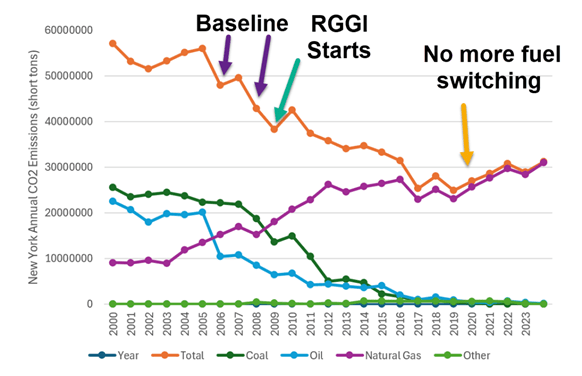
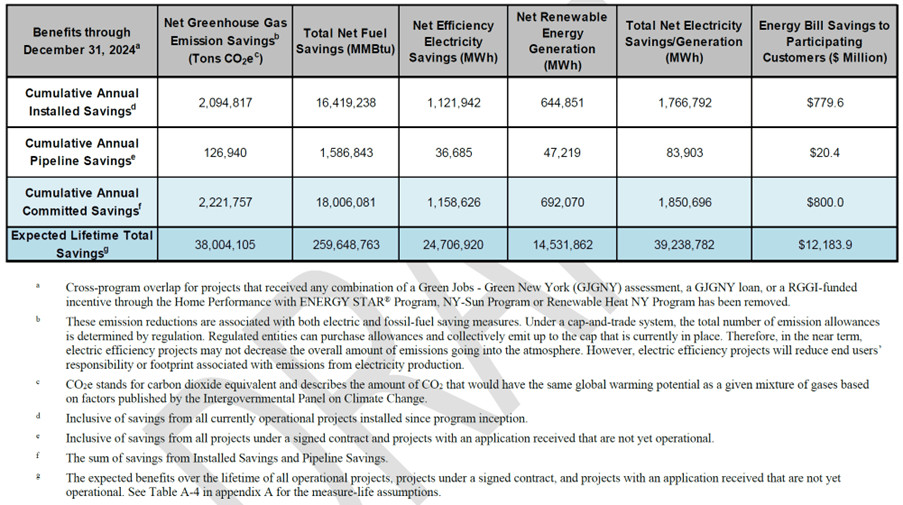
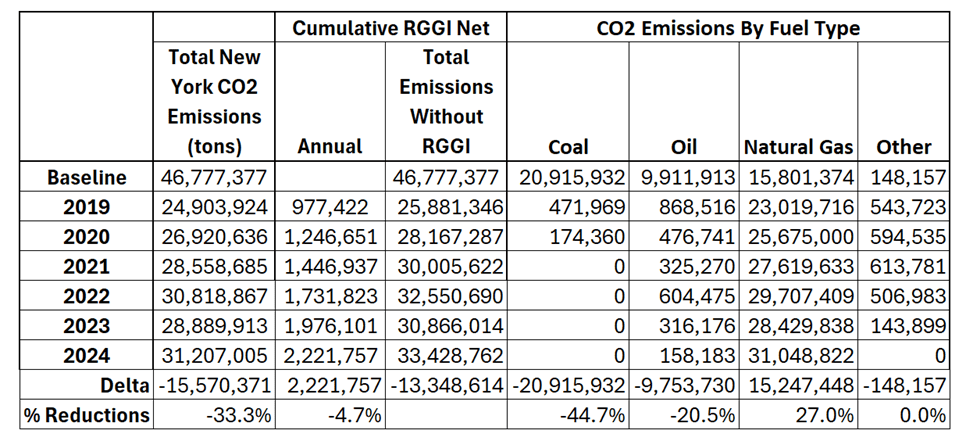

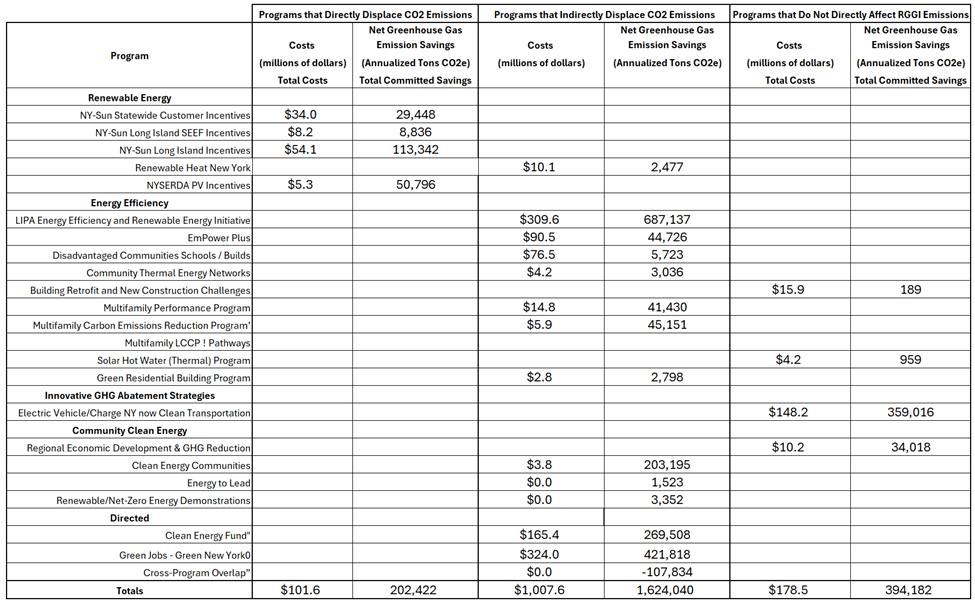
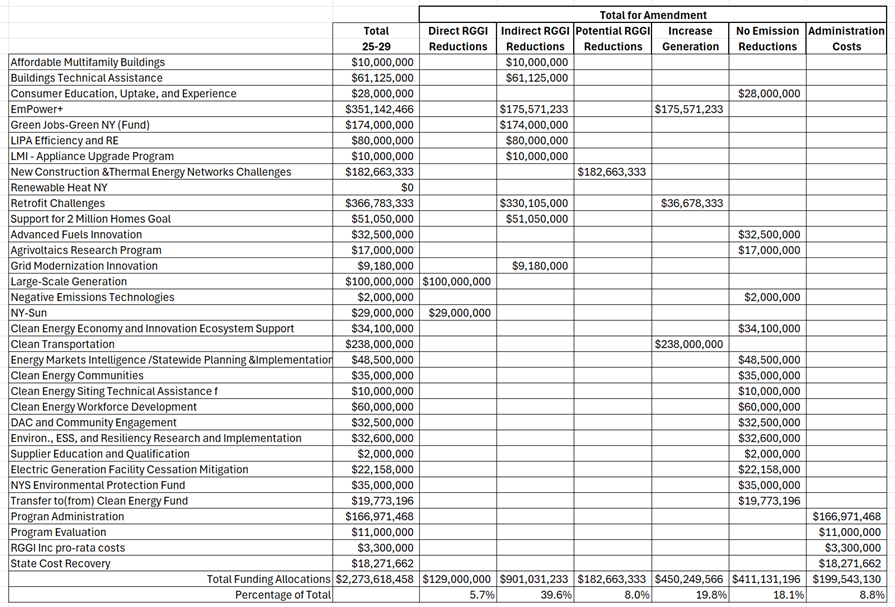

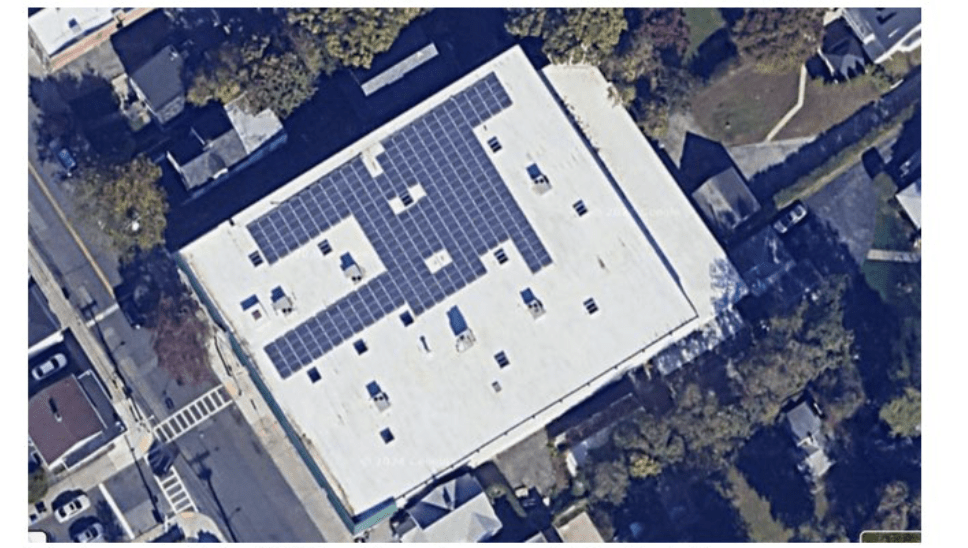
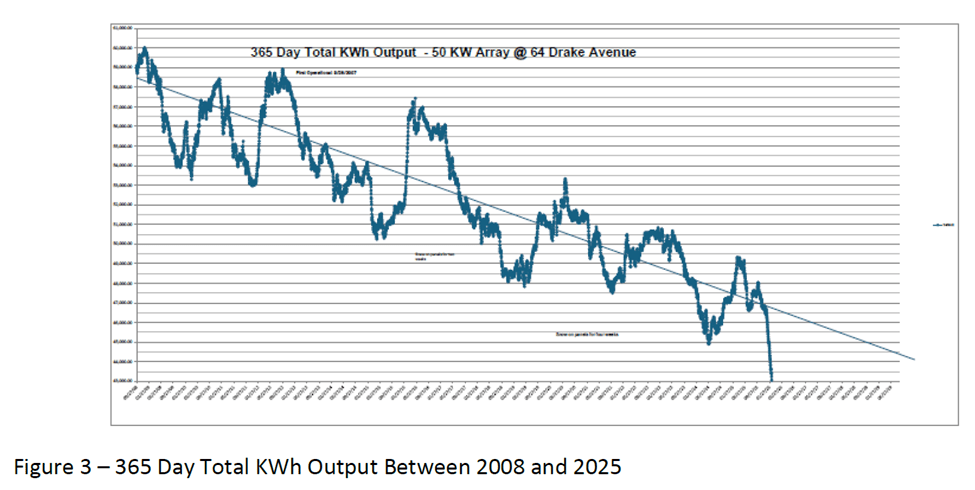
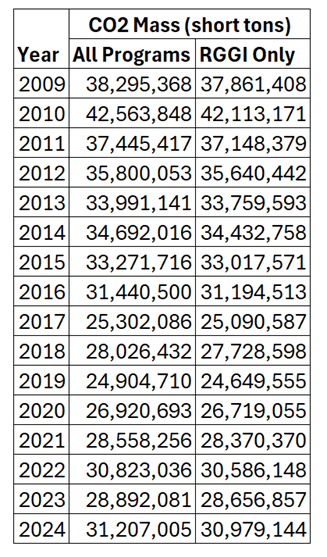
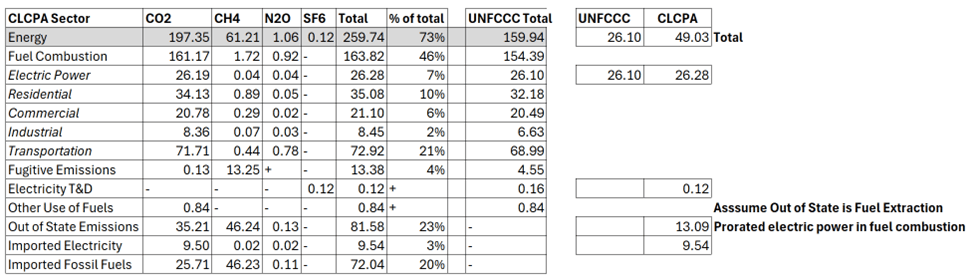
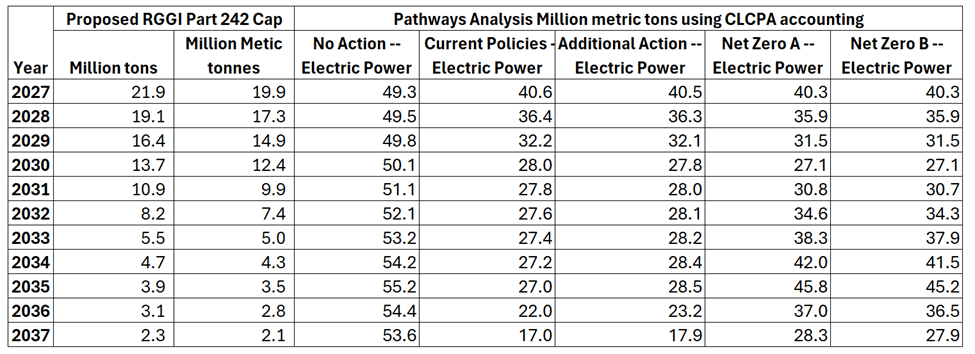
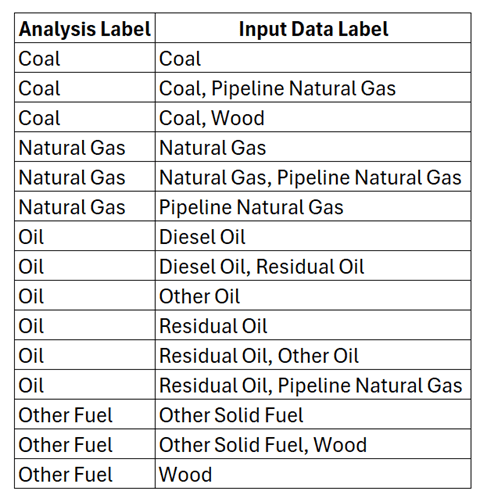
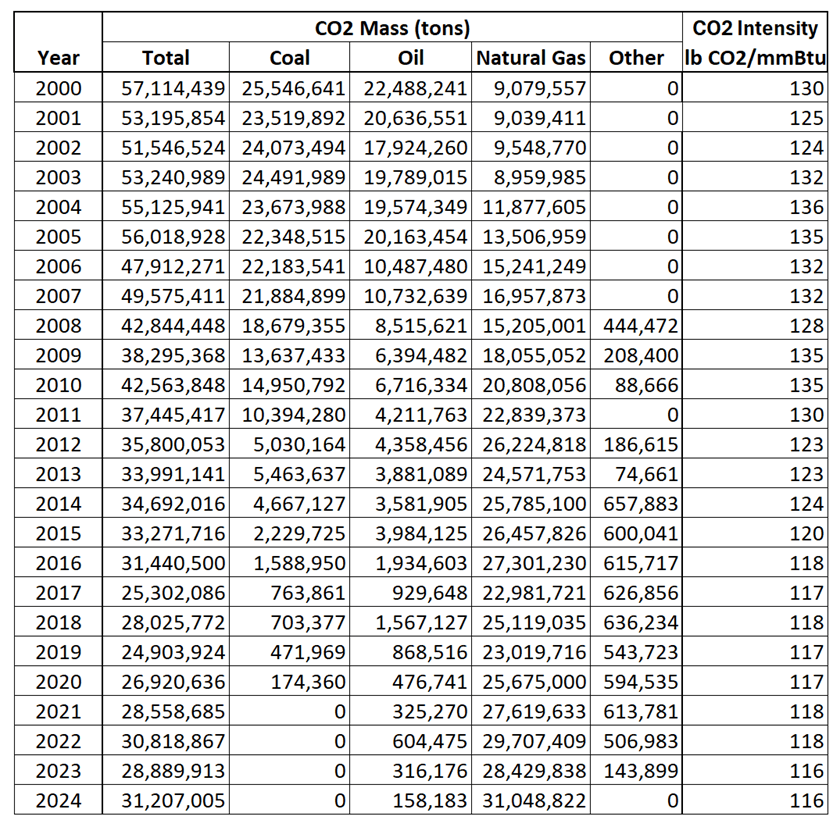
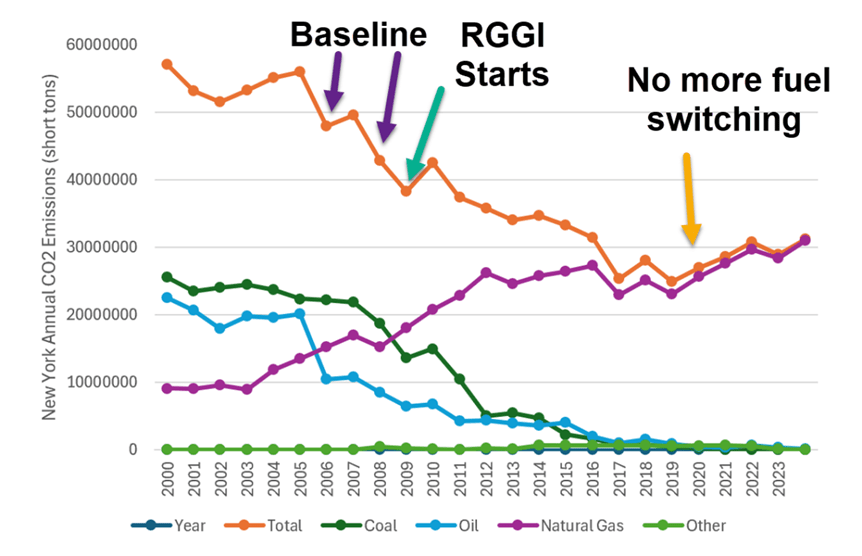
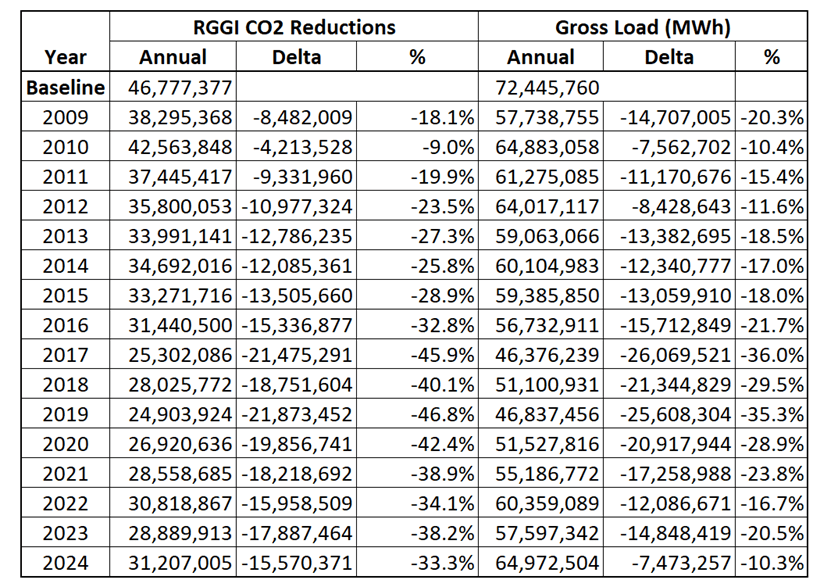
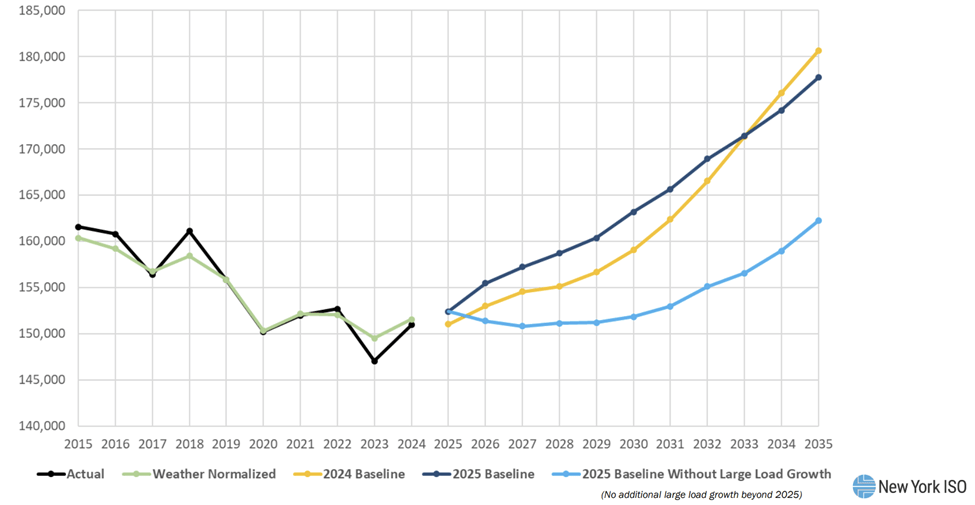
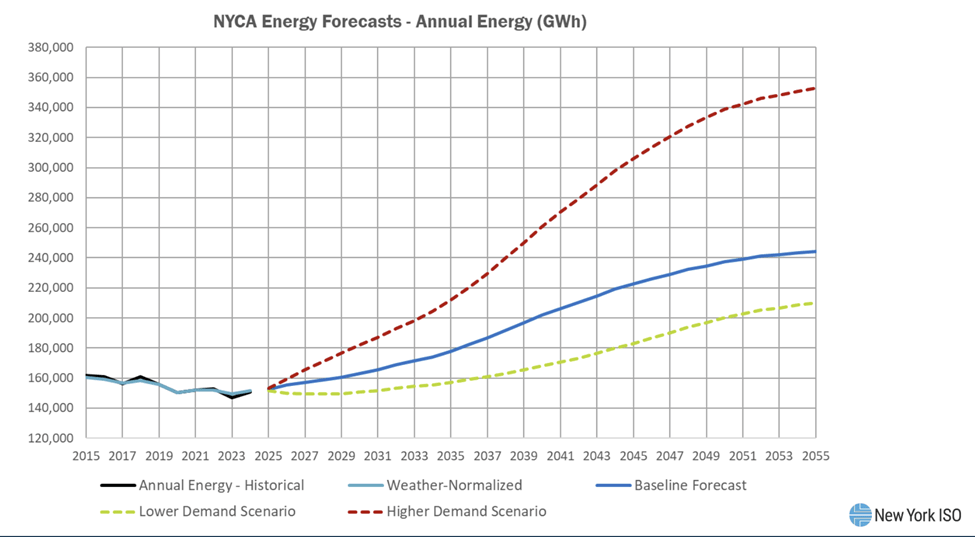

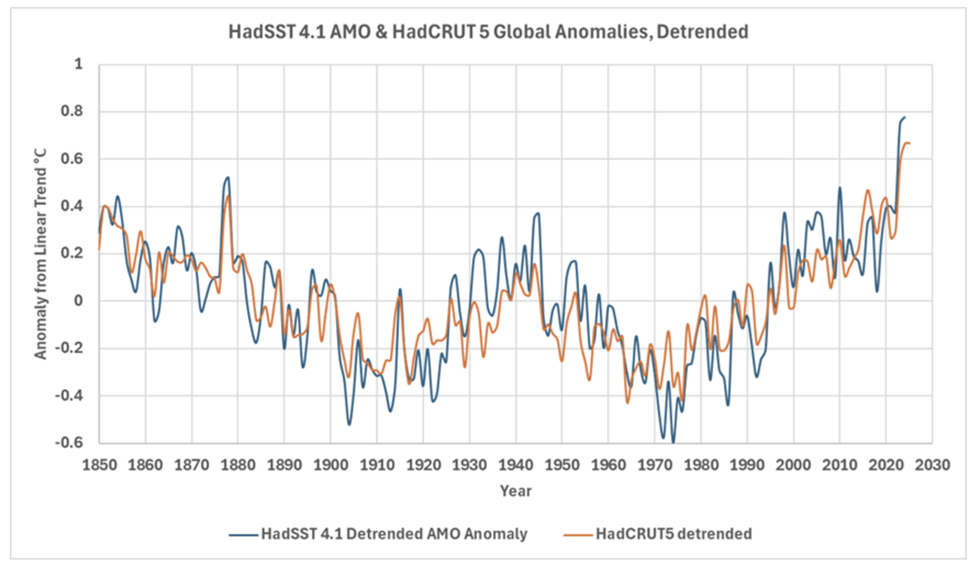
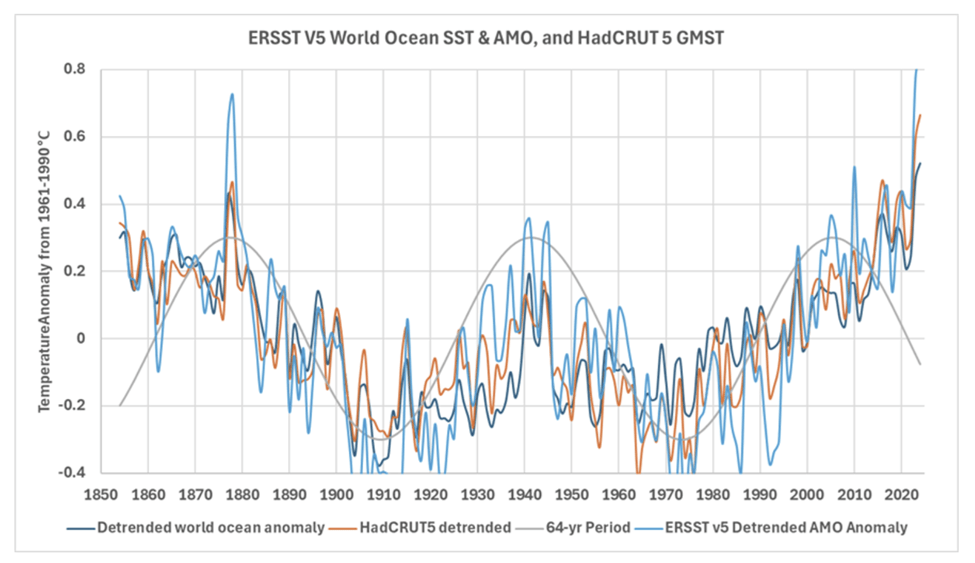

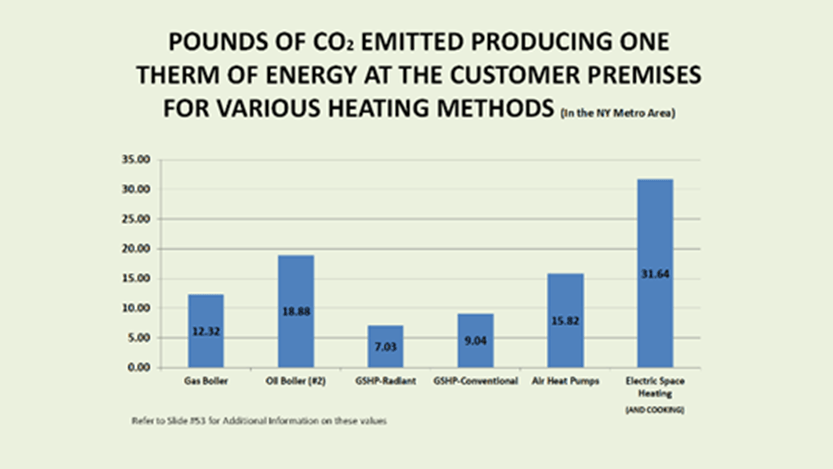
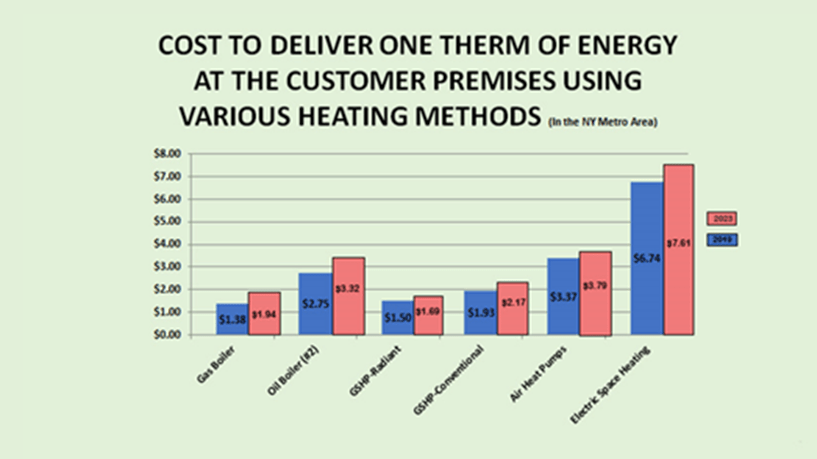

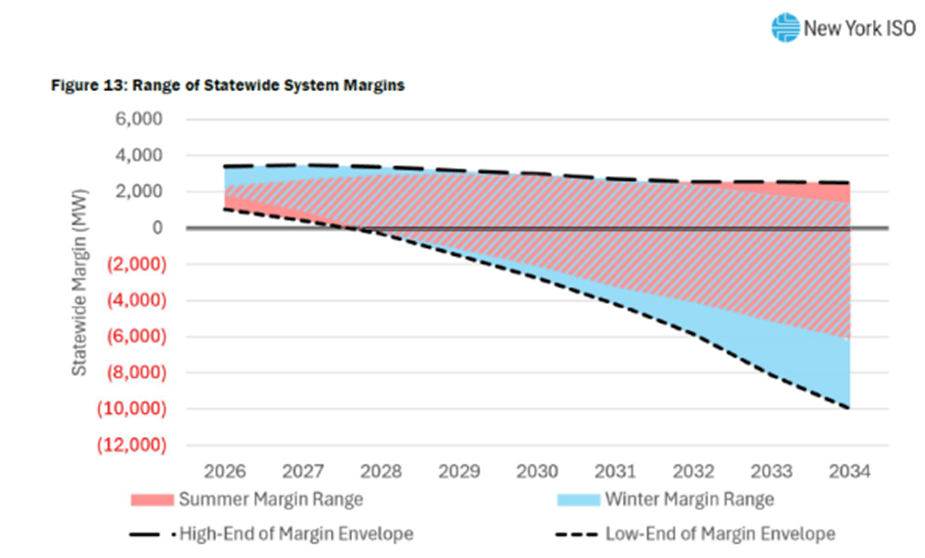

 Pragmatic Environmentalist of New York