People ask me questions about aspects of the articles I write. I recently described the New York Office of Renewable Energy Siting (ORES) approved Hecate Energy’s permit for the 500-megawatt (MW) Cider Solar Farm. The question that came up asked about the business model of the solar developers. I did some digging and found enough information to eviscerate any claims that solar developers do not get subsidies.
New York’s Climate Leadership and Community Protection Act (Climate Act) Act establishes a “Net Zero” target (85% reduction and 15% offset of emissions) by 2050. I have written extensively on implementation of the Climate Act. Everyone wants to do right by the environment to the extent that efforts will make a positive impact at an affordable level. My analysis of the Climate Act shows that the ambitions for a zero-emissions economy outstrip available renewable technology such that the transition to an electric system relying on wind and solar will do more harm than good. The opinions expressed in this post do not reflect the position of any of my previous employers or any other company I have been associated with, these comments are mine alone.
Climate Act Background
The Climate Action Council is responsible for preparing the Draft Scoping Plan that will “achieve the State’s bold clean energy and climate agenda”. The basis of the document is strategies developed in the integration analysis prepared by the New York State Energy Research and Development Authority (NYSERDA) and its consultants. The Draft Scoping Plan projects total solar resource capacity will be between 41,420 and 43,432 MW in 2040. There is a target for 10,000 MW of distributed solar so for an upper bound assume that utility-scale solar resources of at least 31,420 MW will be needed by 2040.
Solar Subsidies
A reader asked about the subsidies available to solar developers. This article will address direct subsidies that are the ones we usually think of and I will also describe a massive indirect subsidy.
Because sunlight, the fuel source for solar energy, is free, solar energy has steady, predictable power production costs. As the price of other power generation grows, solar energy will help to mitigate overall electricity price increases.
In theory because the solar farm doesn’t need to pay for fuel their generation costs are so low that they should be profitable just getting the market price of the power that they produce. However, there are direct subsidies that are available to solar developers.
New York provides so many incentives that companies that provide financial capital for solar development have web pages devoted to New York. For example, SolRiver Capital is “interested in New York because of its strong state programs and incentives for solar, including remote net energy metering and the NY Megawatt (MW) Block program. In addition, the state has a high volume of direct PPA’s and utility PPA’s with high-quality offtakers.”
SolRiver Capital describes the incentives. Remote net energy metering or RNEM “allows a farm or non-residential utility customer to generate energy in one location to apply against their meter in another location. This enables customers to use solar that would otherwise have a site that’s unsuitable or too small for it.” The New York Megawatt Block program “provides regional incentives for commercial and industrial solar projects (>200kW). The incentive comes in the form of a $/kWh rebate based on the expected system production.” In my opinion these subsidies don’t have much of an effect on consumers.
A Utility Purchase Power Agreement (PPA) is an agreement between a utility and a generator, in which the utility buys power from a solar system that’s interconnected to the utility grid. In addition to buying power, it’s common to see a utility purchase renewable energy credits. New York utilities are required to disclose environmental information on “the types of fuels used to generate electricity, air emissions resulting from generating electricity, and a comparison of those emissions to a statewide average.” If they are not already doing so the electric service providers will be required to provide certain percentages of renewable energy to their customers. In order to track those energy attributes, the state has set up the New York Generation Attribute Tracking System (NYGATS) which is used to track renewable energy credits. In order to meet the mandates, the utilities have to buy the renewable energy credits in a purchase power agreement and those costs are passed on to consumers.
A direct power purchase agreement refers to an agreement between a customer and a generator, in which the customer buys power from an on-site solar system. According to SolCapital “This is a plain-vanilla structure and very common for solar projects”. This is another subsidy that I don’t think has much of an impact on consumer costs.
In addition to those subsidies, developers get Investment Tax Credit for solar developments. Commercial and utility-scale projects which have commenced construction before December 31, 2023 may still qualify for the 26 or 22 percent ITC if they are placed in service before January 1, 2026. NYSERDA provides subsidies that vary by location and by each bidding round. There are non-recourse loans for solar project development cost plus exemption from sales and mortgage taxes and fees plus state mandated payment in lieu of taxes agreements imposed on local governments. I have no idea how much those direct subsidies total but those costs are eventually passed on to consumers.
Indirect Renewable Energy Subsidy
In my opinion, the biggest effect on consumer costs are the indirect costs needed to make renewable energy work. Wind and solar resources and intermittent and diffuse. A reliable electric power system is very complex and must operate within narrow parameters while balancing loads and resources. Obviously, the energy generated from solar facilities is zero when the sun is not shining and zero from wind turbines when the wind is not blowing. In order to provide the energy needed at all times someone has to pay for the storage resources needed when wind and solar resources are unavailable. Because those resources are diffuse the transmission system is necessary. It turns out that wind and solar resources do not support the grid. New York’s conventional rotating machinery such as oil, nuclear, and gas plants as well as hydro generation provide a lot of synchronous support to the system. This includes reactive power (vars), inertia, regulation of the system frequency and the capability to ramping up and down as the load varies. Wind and solar resources are asynchronous and cannot provide this necessary grid ancillary support.
Some, but not all of the disadvantages of solar and wind energy in this regard can be mitigated through electronic and mechanical means. When these renewable resources only make up a small percentage of the generation on the system, it is not a big deal. The system is strong enough that letting a small percentage of the resources that don’t provide those services to lean on the system. But as the penetration of solar and wind energy increases the system robustness will degrade and reliability will be compromised without costly improvements. All of these costs are necessary and none of those costs are supported by the wind and solar developers.
In my Draft Scoping Plan comments on the electric system I estimated the costs for the projected generating capacity described in the Draft Scoping Plan Integration Analysis. I estimated that the mitigation scenarios overnight cost just to develop the resource capacity needed to transition to a zero-emissions electric system in 2040 range from $220 billion to $400 billion. I also found that the costs for energy storage and the zero-carbon firm resource necessary to provide power when there is an extended period of little to no wind and solar resources were more than half the total cost. In other words, wind and solar developers are indirectly subsidized because they do not pay for the resources needed to make the electric grid reliable at all times. That cost appears to be on the order of the cost of the development itself.
Conclusion
There is no question that there are massive subsidies for wind and solar development that will affect the energy costs of all New Yorkers. I believe that at the end of the day affordability will become a major issue in New York just like it has in every other jurisdiction that has attempted a net-zero transition.
In my recent post on the Hecate Energy Cider Solar Farm I expressed my disappointment that the State has abrogated its responsibility to protect prime farmland from solar development. Given all these subsidies it is obvious why a solar developer can out-bid a farmer to rent prime farmland. Until there is a state policy that codifies the Department of Ag and Markets prime farmland protection guidance for solar development, out-of-state developers will come in and plop down solar farms wherever they can outbid farmers for land that is easiest and cheapest for them to build.
resource adequacy and transmission planning design rules for planning the system to meet “extreme weather and other extreme system conditions.” This post provides background information on the disconnect between weather and climate prevalent in most of the electrical planning reports, identifies resource adequacy requirements, and describes the identified problems in the whitepaper
Everyone wants to do right by the environment to the extent that efforts will make a positive impact at an affordable level. I have written extensively on implementation of New York’s Climate Leadership and Community Protection Act (Climate Act) because I believe the ambitions for a zero-emissions economy embodied in the Climate Act outstrip available renewable technology such that it will do more harm than good. This post also addresses the mis-conception of many on the Climate Action Council that an electric system with zero-emissions is without risk. The opinions expressed in this post are based on my extensive meteorological education and background and do not reflect the position of any of my previous employers or any other company I have been associated with, these comments are mine alone.
Weather and Climate
The difference between weather and climate is constantly mistaken by politicians, media, and, as far as I can tell, most electric system planners. According to the National Oceanic and Atmospheric Administration’s National Ocean Service “Weather reflects short-term conditions of the atmosphere while climate is the average daily weather for an extended period of time at a certain location.” The referenced article goes on to explain “Climate is what you expect, weather is what you get.” Also keep in mind that the standard climatological average is 30 years. In order to think about a change in today’s climate averages you really should at least compare the current 30 years against the previous 30 years.
In my experience the common perception that there are observable changes in frequency and intensity of extreme weather events does not withstand close scrutiny. Furthermore, Dr. Cliff Mass has coined the golden rule of climate extremes that says “The more extreme a climate or weather record is, the greater the contribution of natural variability”. I believe that any trends in weather events due to climate change are tweaks not wholesale changes. The best way to evaluate weather trend impacts is to use as long a data set as possible. On the face of it that might seem easy but the reality is that the conditions for a representative trend are difficult to achieve. Ideally you need to use the same instruments, the same methodology, and keep the conditions around the observing location the same. That is almost never the case.
One final point. We are just starting to understand natural variability of ocean temperature and circulations. Many people have heard of the El Niño and La Niña weather patterns. El Niño and La Niña are two opposing weather patterns that make up the El Niño-Southern Oscillation (ENSO) cycle. El Niño and La Niña regimes typically last nine to 12 months, but can sometimes last for up to seven years on average. Over longer periods, the Atlantic Multi-decadal Oscillation (AMO) has been “identified as a coherent mode of natural sea surface temperature variability occurring in the North Atlantic Ocean with an estimated period of 60-80 years”. In the Northern Pacific the Pacific Decadal Oscillation (PDO) is a similar sea surface temperature source of decadal natural variability. These patterns and oscillations all affect our weather but it is not clear exactly how, especially when the combined effects are considered. If we cannot explain how these naturally variable systems affect our weather then it is unlikely that the climate change weather event perturbation imposed by the greenhouse effect can be described.
Resource Adequacy Modeling for a High Renewable Future
The National Regulatory Research Institute (NRRI) report “Resource Adequacy Modeling for a High Renewable Future“ gives an excellent overview of electric resource adequacy planning as performed today and describes what they think will be needed in the future. I did a post on this report that can be used to provide more detailed background information on resource planning standards.
In this article I am only going mention the resource adequacy metrics described in the article. The report describes traditional resource adequacy planning:
Electric utilities have used the resource planning process for decades to develop long-term, least-cost generation supply plans to serve expected customer demand. Resource adequacy planning ensures that a system has enough energy generation throughout the year to serve demand with an acceptably low chance of shortfalls. Resource adequacy is measured by the metrics described in Figure 1. Reliability metrics provide an indication of the probability of a shortfall of generation to meet load (LOLP), the frequency of shortfalls (LOLE and LOLH), and the severity of the shortfalls (EUE and MW Short).
The industry has traditionally framed resource adequacy in terms of procuring enough resources (primarily generation) to meet the seasonal peak load forecast, plus some contingency reserves to address generation and transmission failures and/or derates in the system. This approach and the metric used to define it is called the “reserve margin.” Planners establish a reserve margin target based on load forecast uncertainty and the probability of generation outages. Required reserve margins vary by system and jurisdiction, but planners frequently target a reserve margin of 15 percent to 18 percent to maintain resource adequacy.
New York resource planning analyses use the “one day in ten years,” criteria (LOLE), meaning that load does not exceed supply more than 24 hours in a 10-year period, or its equivalent metric of 2.4 hours loss of load hours (LOLH) per year. This analysis is performed at the “balancing authority” (BA) level. In the past New York BAs were vertically integrated utilities with defined service territories. After deregulation this responsibility passed to the state’s independent system operator (ISO). The region covered now includes many utility service territories. More importantly the New York Independent System Operator (NYISO) has to develop market or compliance-based rules to maintain sufficient system capacity which adds another layer of complexity. The NYISO does their resource adequacy planning using resources within its geographic region or have firm transmission deliverability into the New York Control Area (NYCA). There is another complication in the state. New York City has limited transmission connectivity so there are specific reliability requirements for the amount of in-city generation that has to be operating and other rules to prevent blackouts in the City.
The NRRI report concludes:
The electric grid is transitioning quickly from a system of large, dispatchable generators to a system reliant on high levels of variable renewable energy, energy storage, and bi-directional flow. Against this backdrop, analytical tools used for decision making regarding resource adequacy are more important than ever and those tools need to evolve to meet the modern grid challenges outlined in this paper. Models based in realistic weather-driven simulations more accurately capture the risk of load shedding due to inadequate generation. Simulations derived from historical data ensure models include load and generation patterns as well as correlations among resources and the ability to adjust to future climate conditions. Models that do not account for these factors may lead to decisions that underinvest in resources or invest in the wrong resources. Recent events in California and Texas indicate the importance of getting these projections right to keep the grid reliable.
To model resource adequacy in future power systems with high penetration of renewables, we recommend several enhancements in modeling tools and techniques. Modeling tools should simulate key structural variables and allow for validation of the simulations by benchmarking against the historical data used to create the simulations. While maintaining statistical properties derived from historical data, simulations should also include future expectations of load growth along with changes in seasonal and daily load shapes. Generation-forced outage simulations should include the possibility of correlated outages from extreme weather. Finally, climate change will drive more weather events in the power system and this risk should be accounted for in the models, at least in the form of sensitivity cases or stress tests.
New York State Reliability Council
In addition to the NYISO the New York State Reliability Council has reliability planning mandates. According to their webpage:
The New York State Reliability Council, L.L.C. (“NYSRC”) is a not-for-profit entity, organized as a Delaware limited liability company, whose mission is to promote and preserve the reliability of electric service on the New York State Power System by developing, maintaining, and, from time-to-time, updating the Reliability Rules which shall be complied with by the New York Independent System Operator (“NYISO”) and all entities engaging in electric transmission, ancillary services, energy and power transactions on the New York State Power System. The NYSRC shall carry out its mission with no intent to advantage or disadvantage any Market Participant’s commercial interests.
The NYSRC’s mission also includes monitoring compliance with the Reliability Rules by working in consultation with the NYISO to assure compliance, including when necessary, seeking compliance through the dispute resolution procedure contained in the ISO/NYSRC Agreement, and taking such other actions which may be necessary to carry out the purpose of the NYSRC Agreement.
Extreme Conditions Whitepaper
New York’s Climate Act mandates that the state’s electric system is supposed to be 100% zero emissions by 2040. The authors of the Climate Act envisioned that this transition would use new wind and solar resources without any new nuclear generation. The NYSRC Extreme Conditions Whitepaper reflects the need to address the issues raised in the NRRI report:
A NYSRC 2022 goal for the NYSRC Reliability Rules Subcommittee (RRS) to: “identify actions to preserve NYCA reliability for extreme weather events and other extreme system conditions” and its corresponding action plan to: “evaluate the potential need for new resource adequacy and transmission planning design rules for planning the system to meet extreme weather and other extreme system conditions.” Accordingly, this paper presents Extreme Weather Resilience Plan recommendations which are designed to ensure that the NYS electric system continues to deliver reliable performance in the face of a changing climate.
Two extreme system conditions were explicitly considered: extreme weather events and loss of natural gas supply. Extreme weather events are considered low-probability widespread weather events
or climate conditions occurring within a limited period, with the potential of having a very severe impact on the reliability of the bulk power system. The majority of loss of natural gas supply to generating facilitates are due to operational or scheduling or market deficiency issues. Natural gas pipeline failures account for a relatively minor fraction of loss of gas supply events. I am only going to address the extreme weather aspects in this article.
The section on extreme weather events starts:
Climate change has led to an increase in the frequency and intensity of extreme weather events, raising concerns about the resilience of the electric grid and its ability to successfully address such hazards.
As explained above I don’t subscribe to the increase in the frequency and intensity claim. This sentence includes a reference to an Oak Ridge National Laboratory report “Extreme Weather and Climate Vulnerabilities of the Electric Grid: A Summary of Environmental Sensitivity Quantification Methods” that provides more details on the weather events that cause blackouts. It also repeats the claim that extreme weather is changing due to climate change. It is almost as if they think that they don’t need to document the claim because “everybody” knows it is the case.
The Whitepaper goes on to say:
All components of electricity supply and demand are potentially vulnerable to such events, including electric power generation and transmission. Further, the changing resource mix with higher penetrations of solar and wind generation adds to the vulnerability of the system to extreme weather. Extreme weather events, such as prolonged cold and hot weather spells, wind lulls, hurricanes and storms, are considered one of the main causes of wide area electrical disturbances worldwide. In the United States, 96% percent of power outages in 2020 were caused by severe weather or natural disasters.
The whitepaper lists the types of extreme weather that impact the NYCA.
The whitepaper explains an important consideration:
It should be noted that extreme weather events, by their nature, infrequent but have a large impact on system reliability such as widespread blackouts. This is in contrast to normal or design events such as generator or transmission outage events. Normal events are predictable in a probabilistic sense in terms of, for example, expected forced outage rates for generators, and generally do not result in wide-spread blackouts. In terms of a statistical frequency distribution, normal events occur around the mean of the distribution while extreme weather events occur at the tails of the distribution. This means that a different form of analysis, reliability criteria, and system loading condition may be appropriate for extreme weather events when compared to normal events.
The whitepaper concludes its discussion on the need for new planning rules by looking at recent blackouts in California and Texas:
The risk profiles in Table 2 below depict the reliability impacts of recent extreme weather events in California and Texas10. As a way of comparison, unserved energy or EUE resulting from the California event exceeded the average annual expected unserved energy in the NYSRC 2021 and 2022 IRM Study base cases by a factor of 12, while the unserved energy from the Texas event exceeded these IRM study base case EUEs by a factor of 4400!
The report explains that the NYISO has conducted a “wind lull” study as part of its 2021 Reliability Planning Process to determine the effects of an extreme situation of low wind resource availability. The study evaluated several scenarios for which there is no wind generation output for an extended period of time, i.e., one week. According to the report:
Table 3 below shows the results of one of these scenarios.12 In this scenario each base case LOL event resulted in a loss of energy of 857 MWhr compared to 1,276 MWhr for the wind lull scenario. The NYISO study also calculated the compensatory MW (perfect capacity MW available every hour of the study year) required to bring NYCA back to the LOLE criterion for each of 18 scenarios examined. For these scenarios compensatory MW requirements ranged from 0 to 400 MW in Zones J or K.
One important NYISO lull study conclusion was that using compensatory MW to bring the NYCA LOLE back to criterion level increases the Expected Unserved Energy (EUE) metric over the base case level. This is because non-extreme weather events are mitigated by the compensatory MW, but the wind lull events themselves create a larger energy deficit than in the base case during the week of the extreme weather.
Resource Adequacy Modeling for a High Renewable Future
Based on these analyses the report concludes that there are changes to weather impacts that need to be addressed and new reliability rules need to be developed. In my opinion, the most important weather concern is that changing the resource mix to one relying upon weather-dependent wind and solar generation is the critical vulnerability that has to be addressed. As noted above I think that the trend of extreme weather events due to greenhouse gas concentrations in the atmosphere is much smaller than natural variability. Therefore, using a long record of data for evaluation will cover most of the potential variability. Unfortunately, recent major blackouts due to extreme weather in California and Texas suggest that we haven’t even been able to plan for the past. So far, New York has avoided such a blackout either due to more stringent standards and better policy development or luck. When New York’s resource mix changes due to the Climate Act there is a need for new reliability rules to maintain current levels of reliability.
Whitepaper Recommendations
In order to address the future electric grid requirements, the NYSRC Reliability Rules Subcommittee (RRS) recommends that:
Accordingly, RRS recommends that the NYSRC should adopt an “extreme weather resource adequacy criterion” — such as the 1-in-10-year LOLE criterion or a new criterion (One example of a new criterion could be use of a dual LOLE/EUE criterion) – for mitigating loss of load impacts of extreme weather events. Development of an “extreme weather resource adequacy criterion” shall include the use of the results of probabilistic resource adequacy assessments of the reliability impacts of a range of types of extreme weather events, to be conducted by the NYISO staff.
RRS recognizes that the NYISO and ICS will need adequate time to develop more detailed probabilistic models for extreme weather analyses and that the RRS will need sufficient time to develop and adopt an appropriate extreme weather resource adequacy criterion. Included in these modeling efforts the NYISO and ICS should identify the types of extreme weather events to be considered and modeled, including an estimate of the relative likelihood of occurrence. The NYISO staff and ICS should also discuss and coordinate the development of procedures for using appropriate extreme natural event assumptions and data for NYCA resource adequacy and IRM assessments.
Prior to adopting an extreme weather resource adequacy criterion, RRS recommends that initial rules should be adopted requiring the NYISO to periodically conduct probabilistic resource adequacy assessments of the reliability impacts (LOLE, LOLH, and EUE metrics) of a range of types of extreme weather events similar to the “Wind Lull” analysis reported in Appendix E of the NYISO 2021-30 CRP report. In addition, it is recommended that the NYISO develop extreme weather scenarios based on appropriate system conditions as well as analytical methods with which to test system performance under extreme weather events. These initial assessments should utilize existing NYISO extreme weather probabilistic models which should improve over the near term.
Conclusion
I endorse the recommendations for additional extreme weather criteria proposed in the Whitepaper. However, based on my background in meteorology, I believe that natural weather variability is a much bigger driver of the magnitude of extreme weather events than climate change. As a result, the necessary changes to reliability rules should focus on the observed variability of extreme weather more than any projection of future changes due to climate change. To date no one in the state has done a satisfactory job evaluating observed weather event variability using a sufficiently long data record. In my Draft Scoping Plan comments on renewable energy resource availability I explained that there is a viable approach that could robustly quantify the worst-case renewable energy resources and provide the information necessary for adequate planning.
The New York Office of Renewable Energy Siting (ORES) approved Hecate Energy’s permit for the 500-megawatt (MW) Cider Solar Farm on July 25, 2022. Because this is the first permit issued by ORES for a project that’s application was initially filed with the new state office under the Section 94-c rules it is worth a look. If this is any indication of how the State is going to permit all projects going forward I don’t think it will be in the best interests of the State.
New York’s Climate Leadership and Community Protection Act (Climate Act) Act establishes a “Net Zero” target (85% reduction and 15% offset of emissions) by 2050. I have written extensively on implementation of the Climate Act. Everyone wants to do right by the environment to the extent that efforts will make a positive impact at an affordable level. My analysis of the Climate Act shows that the ambitions for a zero-emissions economy outstrip available renewable technology such that the transition to an electric system relying on wind and solar will do more harm than good. The opinions expressed in this post do not reflect the position of any of my previous employers or any other company I have been associated with, these comments are mine alone.
New York Permitting Requirements
New York’s Article Ten process defines the permitting requirements for all large-scale electric generating new construction or expansion. It includes extensive and time-consuming public notification and public participation requirements. The 2011 revisions to the Article Ten law were intended to speed things up but were largely ineffective in that regard. In early April 2020, NYS passed the Accelerated Renewable Energy Growth and Community Benefit Act (AREGCBA) as part of the 2020-21 state budget. The legislation was intended to ensure that renewable generation is sited in a timely and cost-effective manner.
AREGCBA established the Office of Renewable Energy Siting (ORES) which is housed within the Department of State. It will “consolidate the environmental review of major renewable energy facilities and provide a single forum to ensure that siting decisions are predictable, responsible, and delivered in a timely manner along with opportunities for input from local communities”. All large-scale, renewable energy projects 25 megawatts or larger will be required to obtain a siting permit from the Office of Renewable Energy Siting for new construction or expansion. However, during the transition developers can decide to finish their Article Ten permit application rather than convert to the new program. The AREGCBA application requirements are intended to primarily speed the process up but there is a provision that makes the opportunity for input from local communities a sham. In particular, ORES can find any local zoning code to be “unreasonably burdensome in view of CLCPA targets and the environmental benefits of the Facility” and simply over-ride the requirement. The very first permitting decision over-rode a local noise ordinance.
New York Solar Development Background
I became aware of the particular issues of utility-scale solar development on agriculture after I had a couple of people contact my blog describing issues that they had and suggested that I look into the issue. The problems that they raised are real, the solutions are available, but in the rush to develop as many renewable resources as quickly as possible the State of New York has dropped the ball on responsible utility-scale solar development. Given the massive amount of projected utility-scale solar generation capacity required to meet Climate Act goals the rush to develop solar projects could easily lead to the permanent loss of significant amounts of prime farmland that will hurt farming communities and endanger Climate Act strategies to sequester carbon in soil.
In my opinion if you are going to develop solar on the scale necessary, then there should be a plan for responsible siting. There is a policy option roadmap for the proposed 10 GW of distributed solar development. However, there is not an equivalent set of policies for utility-scale solar development. Given the magnitude of the potential impacts to prime farmland I submitted a comment to the Climate Action Council recommending that they impose a moratorium on the development of utility-scale solar projects until permitting requirements have been established for responsible solar siting and protection of prime farmlands. Not surprisingly there has been no response.
I described a workshop “What’s the Deal with Renewable Energy & Agriculture?” co-hosted by New Yorkers for Clean Power (NYCP) and Alliance for Clean Energy NY (ACENY) that discussed the compatibility of solar energy development and agriculture in New York State. In my opinion, all the speakers were advocating responsible solar development that minimizes the use of the best agricultural farmland soils. Whatever your position is with respect to the industrial solar development that to me is a key requirement. If a project meets all the New York State Department of Agriculture and Markets (Ag and Markets) guidelines and the ORES requirements then, given the current state law mandating massive buildouts of solar energy, the application should be approved.
There are Ag and Markets guidelines that have been described in prepared testimony by Michael Saviola from the Department of Agriculture and Markets that I believe represent best practices and should be mandatory going forward. In particular, “The Department’s goal is for projects to limit the conversion of agricultural areas within the Project Areas, to no more than 10% of soils classified by the Department’s NYS Agricultural Land Classification mineral soil groups 1-4, generally Prime Farmland soils, which represent the State’s most productive farmland.” In a post on the Garnet Energy Center, I explained that the permit decision for that facility will be a litmus test to see if the State is going to protect farming communities. The Saviola testimony clearly demonstrates that the proposed project is inappropriate because “the facility will result in or contribute to a significant and adverse disproportionate agricultural impact upon the local farming community”. Unfortunately, a nearby similar solar project was approved despite the fact that the Ag and Markets testimony noted that for the Trelina Solar Project “The Department estimates that greater than 68% of the of the limits of disturbance includes the conversion of farmland classified as Prime Farmland Soil” which clearly exceeds the Department goal.
Solar developers are quick to point out that a landowner gets revenue when a solar project is developed. However, when land is taken out of production it will reduce farm jobs and the economic activity may be improved during construction but once the facility is operational there are very few economic benefits to essential local businesses. Furthermore, taking the land out of production may make other farmers who have been renting that land to make their operations viable will not be able to support the investments they have made in facilities, livestock, or equipment.
Hecate Energy Cider Solar
According to the website summary the Cider Solar Farm will be a 500-megawatt photovoltaic solar facility capable of supplying 920,000 MWh (21% capacity factor). It will use photovoltaic panels on tracking structures that follow the sun throughout the day to optimize power production. It will be located in the towns of Elba and East Oakfield, Genesee County, NY. For those unfamiliar with the area, it is pretty flat, fertile and great for farming. Unfortunately it is also good for cheap solar development.
The Project components will be located on a Project Site of approximately 4,650 acres, comprised of 67 parcels of leased private land owned by 31 land holding entities. The total Project Footprint is approximately 2,452 acres, which includes both temporary and permanent disturbance and comprises the limit of disturbance (LOD).
The proposed Solar Facility will directly contribute significantly to New York State’s Climate Leadership and Community Protection Act (CLCPA) targets by producing up to 500 MW of emissions-free, low-cost, renewable solar energy to New York’s energy market. The Facility will produce enough zero-emissions energy to power more than 125,000 homes in NYS. The Facility will also create job opportunities, support economic growth, and protect the public health, safety and environment by significantly reducing greenhouse gas emissions. Without limitation, the Facility will result in a reduction of over 400,000 tons of greenhouse gas emissions in New York State (DMM Item No. 35, Exhibit 2 Overview and Public Involvement, September 3, 2021, at 2).
It all sounds wonderful but the more you read the more issues come up. The fact is that ORES can just do whatever it wants despite the concerns of the locals:
Executive Law § 94-c(5)(e) provides that a Siting Permit may only be issued if the Office makes a finding that the proposed Facility, together with any applicable Uniform Standards and Conditions, Site Specific Conditions, and compliance filings set forth in the Permit would comply with applicable laws and regulations. In making this determination, the Office may elect not to apply, in whole or in part, any local law or ordinance which would otherwise be applicable if it makes a finding that, as applied to the proposed Facility, it is unreasonably burdensome in view of the CLCPA targets and the environmental benefits of the proposed Facility.
In compliance with Executive Law § 94-c(5)(e), the Office has considered, without limitation, the proposed Facility’s contribution of up to 500 MW toward New York State’s CLCPA targets, and the environmental benefits of producing enough zero-emissions energy to power more than 125,000 homes in New York State and reduce greenhouse gas emissions by at least 400,000 tons in the State.
The Permittee has requested that the Office elect not to apply the following provisions of local law or ordinance. The Office hereby determines not to apply, in whole or in part, the following local law or ordinance provisions, which when applied to the proposed Facility, are unreasonably burdensome in view of the CLCPA targets and the environmental benefits of the proposed Facility. In making the determinations herein, the Office has balanced the proposed Facility’s competing impacts to multiple resources, and considered the Permittee’s proposed measures to avoid, minimize or mitigate those impacts to the maximum extent practicable, while ensuring protection of the environment and consideration pertinent social, economic and environmental factors.
Bottom line is that ORES over-ruled the Towns of Elba and Oakfield zoning ordinances that were“unreasonably burdensome” for the developer. A quick skim through the response to comments reveals a similar attitude to dismiss any local issues and concerns. For example, in response to a question about the impact of the project on property values the response was:
While § 94-c of the Executive Law does not require consideration of impacts on adjacent or nearby property values, it does require the Permittee to identify the relevant area of environmental concern and propose measures to avoid, minimize, or mitigate to the maximum extent practicable, potential significant adverse environmental impacts of the Facility.
Agricultural Resources
Exhibit 15: Agricultural Resources describes the zoning, farmland classifications, and infrastructure in the area, maps of the resources, and plans for agriculture, remediation, and co-utilization. It defines three study areas in the Glossary of Terms. The “Project Area” refers to the Project Site and surrounding/adjacent land totaling approximately 7,518 acres. The “Project Footprint” refers to the limit of temporary and permanent disturbance within the Project Site caused by the construction and operation of all components of the Project totaling approximately 2,452 acres. The “Project Site” refers to those privately owned parcels under option to lease, purchase, easement or other real property interests with the Applicant in which all project components will be sited totaling approximately 4,650 acres.
Exhibit 15 includes an assessment of agricultural land use within five miles of the Project Site. In the discussion of the lands within certified NYS agricultural districts the text states: “The Project Area includes a total of approximately 7,845 acres, while the Project Site includes approximately 4,650 acres, and the Project Footprint is comprised of approximately 2,452 acres.” Note that the Project Area in the Glossary (7,518) and in this paragraph are not the same.
The section in this exhibit titled “Farmland Classification Mapping” lists landcover class data.
According to NLCD data, the dominant landcover class in the Project Site is active agriculture, followed by forestland. Agricultural lands in the Project Site are comprised of active agricultural land (both row crops and mowed/maintained hayfields) and there are numerous family and commercial farms and farm structures in the Project Site. Row crops comprise approximately 68% (3,143 acres) of the Project Site, and less than 1% (23 acres) of the total Project Site is maintained hayfields. Additionally, there is approximately 3.5% (161 acres) of the Project Site where the dominant land cover is grasslands or pasturelands.
Relative to agricultural soils, the Project Site includes approximately 41% (1,912 acres) of land classified as Prime Farmland, 27% (1,252 acres) as Prime Farmland if Drained, 19% (891 acres) as Farmland of Statewide Importance, and 13% (596 acres) as Not Prime Farmland (Natural Cooperative Soil Survey 2020). A map of the existing farmland classifications within the broader Project Area is included as Figure 15-3: Prime Farmlands and Drainage Features. A discussion of how the Project will avoid or minimize impacts to agricultural production areas and the effects the Project has on use of the land for future farming operations is included in Section (b)(3) of this Exhibit.
There is another section “Active Agricultural Businesses and Related Infrastructure” that describes local farming. It notes that the “Project Site is located within Genesee County Agricultural District #2 and includes approximately 3,166 acres (68%) of land designated as actively farmed.” There are 11 farms within the Project Site and six non-participating farms within the Project Area but not within the Project Site.
The “Potential Construction Impacts and Methods to Facilitate Farming During Construction” section gets to the core of my concern:
Potential impacts to agricultural land during construction will occur primarily from equipment movement and the installation of Project components including solar panels, mounting posts, inverters, access roads, buried electrical collection lines, temporary construction laydown areas and the substation. Most of these impacts will displace farming practices on agricultural lands during the operational life of the Project, while some construction activities will only create temporary disturbances to farming activities.
Although the solar panels and maintained areas, i.e., those areas within the fenceline not covered by panels or another project component, will cover approximately 2,178.9 acres total and 2,159 acres of active agricultural land, only 0.9 acres of permanent ground disturbance will occur for the installation of racking systems and associated steel posts. The Project’s racking system will be pile-driven to minimize subsurface ground disturbance. Areas under panel arrays would be taken out of agricultural production during the operational life of the Project, estimated to be a maximum of 30 years. Once Project construction has been completed, a native seed mixture will be used as ground cover to enable soil recovery, replenish soil nutrients and mitigate soil erosion. The Project will avoid using pesticides and herbicides, to the extent practicable,1 and surface grading will be limited to the minimal amount necessary to accommodate panel areas, access road and substation areas. A total of 2,159 acres of land will be removed from agricultural use during the operational life of the project. However, once decommissioned, agricultural land sited within the Project Footprint will be restored and able to return to its prior land use condition.
In my opinion this text removes any doubt that State policy is renewable energy is the priority over agriculture. Recall that the Department of Ag and Markets goal is for projects “to limit the conversion of agricultural areas within the Project Areas, to no more than 10% of soils classified by the Department’s NYS Agricultural Land Classification mineral soil groups 1-4, generally Prime Farmland soils, which represent the State’s most productive farmland.” The text does not present their numbers so that an easy comparison can be made. The 4,650 acre Project Site is 41% Prime Farmland (1,912 acres) and another 27% (1,252 acres) would be Prime Farmland if drained. The Ag and Markets goal is for the Project Area but no soil classification data are presented for that category. The text admits that the solar panels and maintained areas of this project “will cover approximately 2,178.9 acres total and 2,159 acres of active agricultural land”. It stands to reason farmers would actively cultivate Prime Farmland. In that case the project is converting 88% of the Prime Farmland in the Project Site to solar panels and maintained areas. There is no scenario where this project meets the Ag and Markets goal.
Discussion
There is plenty of land that could be used for solar farms that is not actively farmed prime farmland. The New York State Department of Environmental Conservation Forests website states that forests cover 18.6 million acres of the state’s 30.2 million acres. The New York Farm Bureau says that according to the United States Department of Agriculture 2017 Ag Census, there were 33,438 farms in New York State and 6,866,171 acres in production. The following table is a summary of data in the Farmland Class of Soil Map Units in New York.
Obviously, there is a desperate need for a development plan or there will be impacts on the viability of New York’s agriculture industry. The question that the State has to answer is how much farmland can be converted to solar sprawl without impacting the agricultural sector. Exhibit 15 argued that this is not permanent conversion but Department of Ag and Markets testimony has argued, correctly in my opinion, that when the panels reach their end of useful life they will be replaced with a new set of panels. ORES apparently does not consider the Department of Ag and Markets solar siting goal on prime farmland a requirement and recent Article Ten proceedings have also ignored it.
I have been following a number of solar projects and the project areas can be used to derive a first-order approximation of future land area needed as shown in the following table. The project footprint using these numbers is 5.25 acres per MW. At the current rate 67% of those acres are prime farmland.
The cumulative effects are the primary concern. Exhibit 15 includes an assessment of other local renewable projects within five miles of this project:
Based upon a review of the New York State Department of Public Service and ORES websites, as if the time of this Application, there are three proposed renewable energy facilities located in Genesee County and neighboring Orleans County. These include the 280-MW Excelsior Energy Center in the Town of Byron located approximately two (2) miles east; the 200-MW Orleans Solar Project in the towns of Barre and Shelby located approximately three (3) miles northwest; and the 200-MW Heritage Wind Project in the Town of Barre located approximately one and a half (1.5) miles north.
Based on the first order approximations from the previous table another 2,520 acres will be converted to glass, copper and steel solar sprawl and we will lose another 1,680 acres of prime farmland. Eleven farms sold out to Hecate Energy for the Cider Solar project so we can expect to lose another ten for the two other solar projects. How many customers can the local suppliers of farm materials and equipment afford to lose before they go out of business?
The Draft Scoping Plan had three scenarios for future solar resource development. The total solar resources projected were between 41,420 and 43,432 MW in 2040. There is a target for 10,000 MW of distributed solar so for an upper bound assume that utility-scale solar resources of at least 31,420 MW will be needed by 2040. That equates to solar sprawl covering 164,961 acres and the loss of a large number of farmers.
Conclusion
It was difficult for me to write this post because I was so upset at the blatant disregard for agricultural issues evident in the decision to permit this facility. There is plenty of land available that is not on prime farmland that can be used for solar development. Until there is a state policy that codifies the Department of Ag and Markets guidance for solar development, out-of-state developers will come in and plop down these facilities where it is easiest and cheapest for them to build. It would be even better for the State to develop a siting policy that incorporates that guidance and other factors so that development is as effective as possible. I have little faith that the Climate Action Council will address this these needs
There are two glaring deficiencies in the implementation process for New York’s Climate Leadership and Community Protection Act (Climate Act): lack of detail about the costs to implement the transition to net zero and disregarding the experiences of other jurisdictions. This post summarizes the current situation of the European plan to meet the same target as New York. The Global Warming Policy Foundation just released a report entitled Europe’s Green Experiment – A Costly Failure in Unilateral Climate Policy. I believe the Climate Action Council should explain how New York’s plan could possibly avoid the issues identified in this report in their Final Scoping Plan.
Everyone wants to do right by the environment to the extent that efforts will make a positive impact at an affordable level. I have written extensively on implementation of New York’s Climate Act because I believe the ambitions for a zero-emissions economy embodied in the Climate Act outstrip available renewable technology such that it will do more harm than good. The opinions expressed in this post are based on my extensive meteorological education and background and do not reflect the position of any of my previous employers or any other company I have been associated with, these comments are mine alone.
Climate Act Background
The Climate Act establishes a “Net Zero” target (85% reduction and 15% offset of emissions) by 2050. The Climate Action Council is responsible for preparing the Scoping Plan that will “achieve the State’s bold clean energy and climate agenda”. They were assisted by Advisory Panels who developed and presented strategies to the meet the goals to the Council. Those strategies were used to develop the integration analysis prepared by the New York State Energy Research and Development Authority (NYSERDA) and its consultants that quantified the impact of the strategies. That material was used to write Draft Scoping Plan that was released for public comment at the end of 2021. The Climate Action Council will revise the Draft Scoping Plan based on comments and other expert input in 2022 with the goal to finalize the Scoping Plan by the end of the year.
In section 16 of the Climate Act § 75-0103 there is a mandate to consider efforts at other jurisdictions: “The council shall identify existing climate change mitigation and adaptation efforts at the federal, state, and local levels and may make recommendations regarding how such policies may improve the state’s efforts.” There has been very little discussion of efforts at other jurisdictions. The few times other jurisdictions were discussed it was mostly related to calls for greater aspirational goals. The remainder of this article describes why I believe the European experience should be considered by the Climate Action Council.
Europe’s Green Experiment
John Constable wrote the new report describing the economic impact of European green policies. The European Climate Law:
…..raises the EU’s 2030 emissions reduction target to at least 55% from 40% and makes climate neutrality by 2050 legally binding. The Climate Law is part of the European Green Deal, the EU’s roadmap towards climate neutrality. To reach its climate goal, the European Union has come up with an ambitious package of legislation known as “Fit for 55 in 2030. It comprises 13 interlinked revised laws and six proposed laws on climate and energy.
Constable writes:
These policies were built on a long-standing interest in renewable energy flows, stretching back into the 1930s but first prominent in response to the oil shocks of the 1970s. After 1990, this interest crystallised as demanding targets for levels of renewable energy in final energy consumption, starting in earnest in 2009, and the Emissions Trading Scheme, which began in 2005. These policy instruments were supported by a concerted and extensive program of public communications and supplementary environmental regulation, such as the Large Combustion Plant Directive of 2001, and its successor the Industrial Emissions Directive of 2016, both intended to address industrial release of harmful substances.
This general environmental effort has been tremendous, but the results are still poorly understood by the public upon whom the experiment has been performed. A host of pertinent questions hang in the air unanswered:
Have the EU member states reduced their emissions?
Have they reduced them in a cost-effective manner?
Are the policies setting an economically compelling example to other countries?
Has a self-supporting and internationally competitive green economy emerged in Europe?
Is Europe a leading developer of low carbon technologies?
How much has the green experiment cost?
Have there been any unintended consequences?
Can it continue?
What has been learned?
The report contains 14 sections that are all relevant to New York’s plans:
The Emissions Trading Scheme
Growth in renewable energy
Conventional electricity generation
Renewable heat and cooling
Renewable transport fuel
Total renewable energy progress
Costs and benefits
Energy efficiency
Energy prices in the EU
Energy production, consumption and productivity
Emissions in the EU
Green jobs and other jobs
Has the EU learned from its experiment?
The energy transition illusion and the future of European prosperity
I recommend that anyone interested in potential issues with New York’s plans read the report. I am only going to summarize a few of the findings listed in the summary.
The section on the European Union Emissions Trading Scheme is relevant because the Climate Action Council has setup a subgroup to consider a carbon pricing scheme for New York. The report notes that:
The Phase 3 of the European Union Emissions Trading Scheme (EU ETS) ran from 2013–2021 has added €78 billion to consumer costs in the bloc, with the annual cost now amounting to about €17 billion. In 2020, EU member states paid €1.2 billion of ETS revenue to electro-intensive industries to compensate them for cost increases caused by the ETS itself in 2019. This amounts to about 12% of total ETS costs in that year and is clear evidence that the ETS has a detrimental effect on competitiveness. Germany paid €546 million, some 17% of its ETS revenue.
I see no reason to expect that similar costs to consumers will also occur if New York sets up a similar scheme.
The summary description of electricity, gas and transport fuel prices should be a cautionary tale. It is impossible to compare the Draft Scoping Plan cost projections with the results observed because there is insufficient detail in the Draft Scoping Plan. The report compares European Union (EU) energy costs to the world’s largest economies in the G20. It found that in the period 2008 to 2018:
Electricity prices to households in the EU have been 80% above those in the G20. Electricity prices to industries in the EU have been about 30% above those in the G20. Gas prices to households in the EU have been approximately double those in the G20. Gas prices to industries in the EU have been between 20% and 30% above those in the G20. Diesel prices in the EU have been approximately 10% to 40% above those in the G20. Petrol prices in the EU have been approximately 30% to 50% above those in the G20. The EU’s underlying wholesale prices for electricity and gas were similar to those in the G20, and for both petrol and diesel the EU’s wholesale prices were below those in the G20, both indicating that the EU’s higher energy prices are due to policy.
I believe that the results shown for conventional generation capacity and system load factor will be replicated in New York. The summary states:
In the period 1990–2020, total EU electricity generation capacity has nearly doubled due to growth in renewables, while thermal capacity, which remains essential to system stability, has declined sharply due to regulation and lack of investment signals. Electricity industry productivity has fallen because the enlarged generation fleet serves a smaller demand. In 1990 the EU’s generation fleet load factor was approximately 56%, but by 2020 this has fallen to 37%.
In a recent post on the carbon pricing subgroup I noted that New York’s investments in emissions abatement costs have been very high so far. The report notes:
Carbon dioxide abatement costs in the EU are on average several times greater than even high-end estimates of the social cost of carbon ($100/tCO2e), indicating that the economic harm of the EU’s mitigation policies is greater than is the climate change it aims to prevent.
One of the big claims in the Draft Scoping Plan is that the transition plan will provide jobs. However, the results in Europe suggest that may not work out as proposed. The summary of green industrial growth explains that:
Employment in the European wind and solar industries has contracted sharply since 2008, with the Spanish industry falling from over 200,000 jobs in 2008 to under 50,000 in 2021, and the German industry halving from over 60,000 to under 30,000 full-time equivalent jobs. Despite a small absolute increase in employment, the EU’s share of global renewables industry employment has fallen from 20% in 2012 to 13% in 2021, and the bloc has substantial presence only in those areas of low-carbon technology, such as biomass, where there is little international competition. Subsidised deployment in Europe has failed to give European industries a secure position in the world markets for renewable energy equipment. The field is now dominated by China.
Conclusion
Constable concludes: “In spite of the overwhelmingly negative results from Europe’s green experiment 1990 to 2021, the EU Commission appears to have learned nothing; it has announced still more ambitious targets for low-carbon energy, and has even promised to reduce energy consumption still further, in spite of the obvious dangers.” He suggests that “policy correction is inevitable but entails significant reductions in European standards of living”. I agree with him that this will be the case in New York.
The Climate Action Council should explain to the residents of New York why their plan will not result in the problems that have been observed in Europe. If they cannot do that then this ideological experiment should be put on hold until they can prove otherwise.
In the process of preparing an article about the New York State Reliability Council (NYSRC) Executive Committee approval of the Extreme Conditions Whitepaper on July 8, 2022, I found a reference to a very nice report Resource Adequacy Modeling for a High Renewable Future. The report provides important background information necessary to understand the NYSRC whitepaper so my first thought was to include a summary of the report in the NYSRC post. It made the article too long so this post focuses exclusively on the background paper.
Everyone wants to do right by the environment to the extent that efforts will make a positive impact at an affordable level. I have written extensively on implementation of New York’s Climate Leadership and Community Protection Act (Climate Act) because I believe the ambitions for a zero-emissions economy embodied in the Climate Act outstrip available renewable technology such that it will do more harm than good. This post also addresses the mis-conception of many on the Climate Action Council that an electric system with zero-emissions is without risk. The opinions expressed in this post are based on my extensive meteorological education and background and do not reflect the position of any of my previous employers or any other company I have been associated with, these comments are mine alone.
Resource Adequacy Modeling for a High Renewable Future
The National Regulatory Research Institute (NRRI) is the research arm of the National
Association of Regulatory Utility Commissioners (NARUC). NRRI provides research, training, and technical support to State Public Utility Commissions. The June 2022 report “Resource Adequacy Modeling for a High Renewable Future “gives an excellent overview of electric resource adequacy planning as performed today and describes what they think will be needed in the future.
Traditional Resource Adequacy Planning
The report describes traditional resource adequacy planning:
Electric utilities have used the resource planning process for decades to develop long-term, least-cost generation supply plans to serve expected customer demand. Resource adequacy planning ensures that a system has enough energy generation throughout the year to serve demand with an acceptably low chance of shortfalls. Resource adequacy is measured by the metrics described in Figure 1. Reliability metrics provide an indication of the probability of a shortfall of generation to meet load (LOLP), the frequency of shortfalls (LOLE and LOLH), and the severity of the shortfalls (EUE and MW Short).
The industry has traditionally framed resource adequacy in terms of procuring enough resources (primarily generation) to meet the seasonal peak load forecast, plus some contingency reserves to address generation and transmission failures and/or derates in the system. This approach and the metric used to define it is called the “reserve margin.” Planners establish a reserve margin target based on load forecast uncertainty and the probability of generation outages. Required reserve margins vary by system and jurisdiction, but planners frequently target a reserve margin of 15 percent to 18 percent to maintain resource adequacy. Figure 2 shows the standard conceptualization of a load duration curve, rank ordering the level of a power system’s load for each hour of the year from highest to lowest on an average or median basis in a typical weather year. The installed reserve margin is a margin of safety to cover higher than expected load and/or unexpected losses in generation capacity due to outages.
Pechman, C. Whither the FERC, National Regulatory Research Institute. January 2021, available at http://pubs.naruc.org/ pub/46E267C1-155D-0A36-3108-22A019AB30F6.
New York resource planning analyses use the “one day in ten years,” criteria (LOLE), meaning that load does not exceed supply more than 24 hours in a 10-year period, or its equivalent metric of 2.4 hours loss of load hours (LOLH) per year. This analysis is performed at the “balancing authority” (BA) level. In the past New York BAs were vertically integrated utilities with defined service territories. After deregulation this responsibility passed to the state’s independent system operator (ISO). The region covered now includes many utility service territories. More importantly the New York Independent System Operator (NYISO) has to develop market or compliance-based rules to maintain sufficient system capacity which adds another layer of complexity. BA’s typically conduct resource adequacy analysis based on their own load and resources. The NYISO does their resource adequacy planning using resources within its geographic region or have firm transmission deliverability into the New York Control Area (NYCA). There is another complication in the state. New York City has limited transmission connectivity so there are specific reliability requirements for the amount of in-city generation that has to be operating and other rules to prevent blackouts.
The report goes on to note:
The standard metrics shown in Figure 1are generally reported as mean values of simulated power system outcomes over a range of potential future states, but planners also need to understand and plan for the worst-case outcomes and associated probability of such outcomes. Figure 3shows the mean and percentile values for loss of load hours for a power system over a three-year period.
In Figure 3,on average, the power system is resource adequate, remaining below the target of 2.4 hours per year. However, if the power system planner were more risk averse, she might want to bring a higher percentile line under the 2.4-hour target. She would need to add more firm capacity, adding to customer cost. The 95th percentile is the worst-case outcome, providing additional information on the upper bound risk of outages for a given portfolio. Only power systems with no recourse to import energy in a shortage, such as an island, would consider planning to the 95th percentile due to its high cost.
The report’s traditional planning section concludes with this:
Resource adequacy planning is fundamentally concerned with low probability events and planning for average outcomes; although a common practice, this planning is not sufficient and increasingly risky with more uncertain supply, such as renewables. In the past, planners only needed to worry about unusually high loads or high forced outages. Now, they must worry about unusually high loads during periods of unusually low renewable output and limited storage duration. Adding supply uncertainty and, as we discuss later, more extreme weather, compounds risks and thus requires a fundamental rethinking of planning for low probability, high impact tail events.
Problems with Traditional Resource Planning with a High-Renewable System
Despite the fact that the NYISO and the consultants for the Integration Analysis that provides the framework for the Climate Act Draft Scoping Plan have identified a serious resource adequacy problem, there are vocal members of the Climate Action Council who claim there are no reliability concerns for the future 100% zero-emissions New York electric grid. However, analyses have shown otherwise. E3 in their presentation to the Power Generation Advisory Panel on September 16, 2020 noted that firm capacity is needed to meet multi-day periods of low wind and solar output. The NYISO Climate Change Phase II Study also noted that those wind lull period would be problematic in the future.
The NRRI report opens the discussion of the new problems that have to be addressed:
With weather emerging as a fundamental driver of power system conditions, planning for resource adequacy with high renewables and storage becomes an exercise in quantifying and managing increasing uncertainty on both the supply and demand side of the equation. On the load side, building electrification, electric vehicle adoption, and expected growth in customer-sited solar and storage are likely to have pronounced effects on future electric consumption. Uncertain load growth and changing daily consumption patterns increase the challenge of making sure that future resources can serve load around the clock. Simply modeling future load based on past load with added noise does not characterize uncertainty from demand side changes.
The report goes on to explain that supply-side changes create a need for new modeling approaches. In particular, the traditional system consists mostly of dispatchable resources that operators can control as necessary to keep the generation matched with the load. In the future the system will be comprised mostly of resources with limited or no dispatchability. Table 1 compares past approaches with current needs. Note that weather impacts need to be “Incorporated as a structural variable driving system demand, renewable generation, and available thermal capacity”.
There is another fundamental change. In the past the resource adequacy modeling could use average annual generation profiles to meet expected loads. In the future, there will have to be: “multiple renewable generation simulations using historical generation and weather data”. The modeling scenarios will need to meet future expected resource development and maintain the correlation
between renewable availability and load. In particular, the highest and lowest temperatures and thus the expected high loads are typically associated with large high-pressure systems that have low wind speeds and thus low wind resource availability.
The NRRI report shows an approach that addresses these concerns in Figure 5. The report notes:
Weather, primarily in the form of temperature, but potentially including insolation, humidity, wind speed, etc., drives simulations of renewable generation and customer load. Generation outage simulations can be modeled as random (the traditional approach) or as correlated with extreme heat or cold events. Once the simulations are in place, models can compute multiple future paths on an hour-by-hour basis to determine when load cannot be fully served with the available resources. For every hour of the model time horizon, there are independent simulations of load, renewables, and forced outages to determine if load shedding must occur. If a particular model contains 100 simulations and four show a lack of resources to serve load for a particular hour, the hour in question would have a loss of load probability of 0.04 (4/100).
In my opinion, the weather drivers have to be carefully considered. In my Comment on Renewable Energy Resource Availability on the Draft Scoping Plan, I explained why an accurate and detailed evaluation of renewable energy resource availability is crucial to determine the generation and energy storage requirements of the future New York electrical system. I showed that there is a viable approach using over 70 years of data that could robustly quantify the worst-case renewable energy resources and provide the information necessary for adequate planning.
The problem however is what will be the worst case? The NRRI report brings up the issue of energy storage:
Energy storage presents a unique challenge in resource adequacy models. Unlike traditional resources, storage devices such as batteries, compressed air, or pumped-hydro act as both load and generation depending on whether they are charging or discharging. Modern resource adequacy models need to simulate this behavior when determining the capability of energy storage to serve load during periods of resource scarcity. What state of charge should we expect for energy storage at times when the storage is truly needed? Are batteries likely to be fully charged at 6:00 PM on a weekday in August? What about grid charging versus closed systems where batteries must charge from a renewable resource? At the high end of renewable penetration, how much storage would be required to cover Dunkelflaute, the “dark doldrums,” that occur in the winter when wind ceases to blow for several days. Questions surrounding the effective load-carrying capability of energy storage significantly increase the complexity in modeling resource adequacy.
The worst-case meteorology has to consider the energy storage resource. The worst-case may not be the lowest amount of wind and solar resources over a few days. Instead, it could be an extended period of conditions that prevent battery re-charging. I suspect that the long-term historical records will be used to identify potential problems and then a set of scenarios based on different meteorological regimes will be developed that can be used to address the questions raised in the previous paragraph.
The NRRI report explains how this might work:
Figure 6 provides an illustration of modeling the use of batteries in resource adequacy. The figure shows battery storage in blue, load in orange, and the available thermal generation in grey. When load exceeds thermal generation, the system is forced to rely on battery discharge for capacity. If the event lasts long enough to fully discharge the battery, the green line (generation minus load) will turn negative, indicating a load shed event.
The report goes on to explain how the modeling analysis is done. It notes that:
Simulations of random variables fit Monte Carlo methods by creating multiple future time series of the random variables, while maintaining correlation across time within variables (if wind is high in hour 1, it will likely be high in hour 2) and correlations between the variables, such as the strong relationship between temperature and load. If wind tends to be higher in the spring and fall, the simulations will exhibit that trend. Monte Carlo applications differ dramatically between resource adequacy models, with some models using a sequential approach that solves the model in hourly steps whereas others use techniques that solve the models quickly without stepping through each hour. Accurate representation of energy storage in resource adequacy models necessitates sequential solution techniques to account for the time dependencies for storage state of charge inherent in models.
I believe it is necessary to use the worst-case meteorological scenarios as the primary driver of these simulations. In other words, the Monte Carlo weather parameter adjustments should be small increments on top of the observed values. The report is talking primarily about correlations in time but spatial correlations are a critical wind resource availability consideration too.
The NRRI report addresses my concerns.
When using the Monte Carlo approach with weather as a fundamental driver, individual simulations represent independent futures for weather, load, and renewables. Realistic simulations maintain the statistical properties of the underlying resource and correlation between resources and load. For example, if historic data show no correlation between load and wind generation, the simulations should maintain this relationship unless a reasonable expectation exists for correlations to change in the future
However, they use simple examples of the load and resource correlations. There are those that believe that because the wind is always blowing somewhere that transmission upgrades will ensure reliability. However, if during the worst-case conditions New York has to rely on wind resources in Iowa because the high-pressure system is huge, that may not be practical. I cannot over-emphasize the need for an analysis that simulates wind and solar resource availability over wide areas. As the report notes analyses that fail to replicate the proper correlation between wind, solar, and load for the electric grid can underestimate the risk of load shedding.
The report goes on to explain other adjustments to traditional resource planning that will be necessary to address a high renewable future. That discussion is beyond the scope of my concern. The report concludes:
The electric grid is transitioning quickly from a system of large, dispatchable generators to a system reliant on high levels of variable renewable energy, energy storage, and bi-directional flow. Against this backdrop, analytical tools used for decision making regarding resource adequacy are more important than ever and those tools need to evolve to meet the modern grid challenges outlined in this paper. Models based in realistic weather-driven simulations more accurately capture the risk of load shedding due to inadequate generation. Simulations derived from historical data ensure models include load and generation patterns as well as correlations among resources and the ability to adjust to future climate conditions. Models that do not account for these factors may lead to decisions that underinvest in resources or invest in the wrong resources. Recent events in California and Texas indicate the importance of getting these projections right to keep the grid reliable.
To model resource adequacy in future power systems with high penetration of renewables, we recommend several enhancements in modeling tools and techniques. Modeling tools should simulate key structural variables and allow for validation of the simulations by benchmarking against the historical data used to create the simulations. While maintaining statistical properties derived from historical data, simulations should also include future expectations of load growth along with changes in seasonal and daily load shapes. Generation-forced outage simulations should include the possibility of correlated outages from extreme weather. Finally, climate change will drive more weather events in the power system and this risk should be accounted for in the models, at least in the form of sensitivity cases or stress tests.
Conclusion
I found this report to be a very useful description of the particulars of electric grid reliability analysis now and in the future. It is clear that the transition to a high renewable future introduces issues that could cause problems.
Finally, this report and other similar studies always claim that climate change should be considered in future analyses. As I will explain in my future article on the NYSRC Extreme Conditions Whitepaper I believe that the most important future weather concern is that changing the resource mix to one relying upon weather-dependent wind and solar generation is the critical vulnerability that has to be addressed. I think that the trend of extreme weather events due to greenhouse gas concentrations in the atmosphere is much smaller than natural variability. Therefore, using a long record of data for evaluation will cover most of the potential future variability. Unfortunately, recent major blackouts due to extreme weather suggest that we haven’t even been able to plan for the past. So far New York has avoided such a blackout either due to more stringent standards and better policy development or luck.
Just when I think that the climate-related madness cannot get any shoddier something comes up even worse. The American Meteorological Society (AMS) Council adopted a special statement on 8 July 2022 in response to the Supreme Court decision West Virginia vs. EPA that takes the level of climate change hysteria to a whole new level.
New York’s Climate Leadership and Community Protection Act (Climate Act) plans to reach net-zero by 2050 that are outlined in the Draft Scoping Plan fully align with the material in this Statement. I submitted comments on the Plan and have written extensively on implementation of New York’s response to that risk because I don’t agree that the alleged problem can be solved simply and affordably. The opinions expressed in this post do not reflect the position of any of my previous employers or any other company I have been associated with, these comments are mine alone.
The AMS is deeply concerned by the United States’ inadequate response to climate change and the dangers it poses to the nation and all life. This inadequacy is illustrated most recently–but by no means only–through the Supreme Court decision West Virginia v. EPA.
Climate change is a highly solvable problem and the available solutions offer tremendous opportunity for societal advancement and climate protection. We applaud the many people throughout the country who are working constructively to tackle climate change, including many government officials, politicians, members of the public, scientists, and members of the business community.
All people should know that:
1. Climate change is extraordinarily dangerous to humanity and all life
> Climate is a basic life-support system for people and all life.
> Global climate changes occurring now are larger and faster than any humanity is known to have endured since our societal transition to agriculture.
> The physical characteristics of the planet, biological systems and the resources they provide, and social institutions we have created all depend heavily on climate, are central to human well-being, and are sensitive to climate change.
2. People are changing climate
> Multiple independent lines of scientific evidence confirm that people bear responsibility.
> The warming effect of our greenhouse gas emissions is demonstrated through laboratory experiments, evidence from past changes in climate on Earth, and the role of greenhouse gasses on other planets.
> The patterns of climate change occurring now match the characteristics we expect from our greenhouse gasses and not the other potential drivers of change: the sun, volcanoes, aerosols, changes in land-use, or natural variability.
3. The scientific conclusions summarized here result from decades of intensive research and examination
> The scientific evidence has been assessed comprehensively by independent scientific institutions and independent experts that consider all evidence.
> Accuracy is central to credibility for scientific institutions such as the U.S. National Academy of Sciences, the American Meteorological Society, and American Association for the Advancement of Science, all of which have assessed climate science.
> No broadly contradictory assessments from credible scientific organizations exist.
4. Solutions are available and highly promising–a serious reason for optimism.
> Greenhouse gas emissions are an economically harmful market failure. Those who emit pollution to the atmosphere shift the costs of climate damage onto everyone, including future generations. Making emitters pay for all the costs of their use of our atmosphere would help correct this failure and thereby improve economic well-being.
> Regulatory approaches can speed the adoption of best practices, require broadly beneficial technologies, promote public interest, and enhance equity and fairness.
> As a result, reducing greenhouse gas emissions can increase climate security, national security, the well-being of biological systems, and economic vitality.
> Existing and emerging technologies such as roof-top solar, electric vehicles, and electric heat pumps can reduce greenhouse gas emissions, improve air quality in our homes and cities, and often provide superior products or services.
> Building our resilience to climate impacts (adaptation) makes communities stronger and better able to deal with both existing vulnerabilities and emerging threats.
People are changing climate and it poses serious risks to humanity. There are a wide range of response options that are well understood, many of which would be broadly beneficial. We will need to work together to harness human ingenuity to address climate change. Therein lies an even greater opportunity for humanity. If we can address our climate problem, we will have a new template for the wide range of challenges and opportunities facing us at this point in the 21st century.
Discussion
Tony Heller writing at Real Climate Science eviscerated the “Climate change is extraordinarily dangerous to humanity and all life” statement. He showed that natural disasters are decreasing and life expectancy has doubled since fossil fuel use has become widespread across the globe. Willis Elsenbach’s post Where is the Climate Emergency is a more comprehensive rebuttal to this statement. My comments on similar claims in the Draft Scoping Plan also argued that if you actually look at the data that these threats are unsupportable.
I stopped being a member of the AMS in 2012 when the organization ranked advocacy above science. I tried to argue that their approach was wrong but the responses back showed that they were not interested in toning down their advocacy. The arguments supporting the “People are changing climate” statement appear to be talking points for the public. Near the end of the Trump Administration a series of short, easily understandable brochures that support the general view that there is no climate crisis or climate emergency, and pointing out the widespread misinformation being promoted by alarmists through the media were prepared. The following brochures address the other side of these arguments:
The section “The scientific conclusions summarized here result from decades of intensive research and examination” is a direct appeal to authority. The recent Global Warming Golden Goose article summarizes the follow the money trail that suggests that the scientific institutions we are supposed to trust are not necessarily interested in only scientific truth and enlightenment. It amuses me that the first ones to scream that deniers are on the payroll of big oil are most likely to be directly benefiting from big green funding organizations.
The next section “Solutions are available and highly promising” shows an amazing lack of self-awareness. The point of the previous section was that you should trust only the “experts”. Why in the world would anyone expect that the American Meteorological Society has expertise in energy solutions. The vague, content-free arguments are a joke to anyone who has spent any time looking at the tremendous technological difficulties associated with running today’s society using intermittent and diffuse wind and solar or even follows today’s energy issues. Any proposed transition plan that does not list nuclear power at the top of the list is not credible because that is the only source of dispatchable emissions-free electricity that can be scaled up. I also have to wonder whether the authors follow current energy news. My feed of followed websites this weekend had articles on copper shortages that will preclude the net zero by 2050 transition, the amount of solar panels needed for the transition, the German net-zero transition is running out of energy, and the current Texas heat wave is straining power supplies so much that electric car owners are being asked to charge off-peak. My Draft Scoping Plan comments focused on the many instances where New York’s plan to transition to net-zero is anything but easy. All of these issues invalidate the claim that the climate threat is “easily solvable”.
Once upon a time I was proud to be a member of the American Meteorological Society. This policy statement is so embarrassing I don’t want to admit I was associated with a scientific organization that could publish something this far detached from reality. Unfortunately, it will undoubtedly be used by advocates to “prove” that something can be done. In my opinion I have no doubts that the suggested solutions will cause more harm than good.
New York’s Climate Leadership and Community Protection Act (Climate Act) mandates that a scoping plan be developed to guide the next Energy Plan. In order to address particular draft scoping plan issues three subgroups have been setup to address particular issues. This article describes my initial impression of the economywide strategies subgroup. I am not sure why they did not simply refer to these strategies as carbon pricing mechanisms because that is what they are talking about.
Everyone wants to do right by the environment to the extent that they can afford to and not be unduly burdened by the effects of environmental policies. I submitted comments on the Plan and have written extensively on implementation of New York’s response to that risk because I believe the ambitions for a zero-emissions economy embodied in the Climate Act outstrip available renewable technology such that it will adversely affect reliability, impact affordability, risk safety, affect lifestyles, and will have worse impacts on the environment than the purported effects of climate change in New York. New York’s Greenhouse Gas (GHG) emissions are less than one half one percent of global emissions and since 1990 global GHG emissions have increased by more than one half a percent per year. Moreover, the reductions cannot measurably affect global warming when implemented. The opinions expressed in this post do not reflect the position of any of my previous employers or any other company I have been associated with, these comments are mine alone.
Climate Act Background
The Climate Act establishes a “Net Zero” target (85% reduction and 15% offset of emissions) by 2050. The Climate Action Council is responsible for preparing the Scoping Plan that will “achieve the State’s bold clean energy and climate agenda”. They were assisted by Advisory Panels who developed and presented strategies to the meet the goals to the Council. Those strategies were used to develop the integration analysis prepared by the New York State Energy Research and Development Authority (NYSERDA) and its consultants that tried to quantify the impact of the strategies. That material was used to write a Draft Scoping Plan that was released for public comment at the end of 2021. The public comment period on the Draft ended on July 1.
In order to address particular Draft Scoping Plan issues three Climate Action Council subgroups have been setup to address the following issues:
Economywide strategies
Alternative Fuels
Gas System Transition
Each subgroup is supposed to develop a better understanding of their topic, focus on implementation issues, and then provide information to the full Council so that it can be incorporated into the Final Scoping Plan.
Public Comments
The Climate Action Council states that it will revise the Draft Scoping Plan based on comments and other expert input in 2022 with the goal to finalize the Scoping Plan by the end of the year. According to remarks made at the July 11, 2022 Climate Action Council meeting about 35,000 comments were submitted. If the Council were to truly consider public comments, then the comment review process would have been on-going. The State claims that they did not do that so it will be some time before the Council will start getting information from those submitted comments. It is unimaginable that the Council members will be able to review all the comments so it is very likely that they will rely on summaries written by agency staff.
It appears that each subgroup is taking a different approach to considering public comments relative to their topic. The alternative fuels workplan hopes to discuss public comments at their fifth meeting on July 27 and hope to finalize their framework at their eighth meeting in early September. The economywide strategies workplan holds off discussion of public comments until the sixth meeting on August 22. That is one meeting before the final scheduled meeting. The gas system transition workplan does not even mention public comment consideration. In my opinion, the alternative fuels workgroup is at least trying to consider public input. The economywide strategies workgroup is only paying lip service to public input despite the fact that the Draft Scoping Plan posed specific questions about the proposed strategies in the Plan. The alternative fuels workgroup does not apparently even want to consider public input.
Expert Input
The Climate Action Council has stated that it will revise the Draft Scoping Plan based on other expert input in 2022. I think there is a problem with their perception of expert input. The Climate Act itself is based on the opinionated expertise of the authors. Their expertise was over-confident, proscriptive, biased, and naïve. They over confidently presumed that a net-zero transition was simply a matter of political will. The law includes proscriptive mandates for specific amounts of different renewable energy technology. There is a bias against the only scalable, dispatchable, zero-emissions generating resource – nuclear power. The law naïvely assumes that untested technology will be available to meet their arbitrary schedule.
If it was apparent that the Council intended to incorporate unbiased outside expertise then I would not be worried. It is not surprising this is not the case given that some members were actively involved in the development of the language of the law so they apparently think that they don’t need any input from experts that may disagree with their pre-conceived notions. My biggest concerns are reliability and affordability. There is no workgroup addressing reliability and some vocal members have flatly stated that reliability in an electric grid that relies on renewables is not an issue. The deference of the Council leadership to these ideologues who haven’t the background, education or experience to have a worthwhile opinion on that subject is disappointing and the apparent lack of urgency to engage with the experts who do have that expertise is frightening.
I am only going to discuss the economywide strategies subgroup. In my comments on economywide strategies I made the point that that the relevant chapter was written to address specific issues raised by the Climate Action Council. The Draft Scoping Plan only considers three economy-wide approaches and not the possibility that not doing anything like this might be the better choice. As a result, the chapter gets bogged down into details about specific issues raised by council members rather than looking at whether the theory of a price on carbon has worked well in practice.
Economywide Strategies
According to the June 27, 2022 meeting presentation: “This subgroup will provide further evaluation and guidance regarding the three economy-wide approaches identified in the Draft Scoping Plan.”
At their second meeting, the results of a New York State Energy Research & Development Authority and Resources for the Future analysis were presented. Members of the Workgroup should keep in mind that the NYSERDA-RFF Carbon Pricing Project: Lessons Learned from the Literature Review and Policy Design Experience presentation is not a critical review of carbon pricing approaches. Instead, it describes the theory without regard to issues and summarizes three ways to implement a carbon pricing scheme. There are warning signs that should be highlighted and there are some misconceptions included in the presentation.
The first slide in the New York Policy Context section poses the question why jurisdictions pursue carbon pricing. It claims that “Pricing provides an efficient market signal to reduce emissions” and goes on to argue that:
Does not require policy makers to pick technologies and creates incentives for private actors to make clean investments and reduce fossil fuel use
Provides cost-effective implementation by investing in low-cost emissions reductions
Internalizes the environmental cost of emissions in economic decisions
Carbon pricing involves price stability that yields a behavioral response that is three times greater than market-driven price variations of the same magnitude (Andersson 2019).
The presentation claims that jurisdictions pursue carbon pricing because it “does not require policy makers to pick technologies and creates incentives for private actors to make clean investments and reduce fossil fuel use”. However, the later Carbon Fee versus Emissions Cap slide states “Recent emissions cap programs have opted for a cap-and-invest model which directs carbon revenues toward program-related investments to accelerate emissions reductions”. Directing carbon revenues explicitly picks technologies contradicting this “benefit”. In my Draft Scoping Plan comments, I quoted Paul Homewood who made the point that “The only logical reason for a carbon tax is to reduce emissions. Such a tax might help to reduce energy consumption, but only at punitive levels, because energy demand is so inelastic.” Keep in mind that there aren’t any cost-effective retrofit technologies to reduce greenhouse gas emissions so the only way to reduce fossil fuel use is to convert energy consumption to a less emitting resource or reduce use.
The presentation claims that jurisdictions pursue carbon pricing because it “Provides cost-effective implementation by investing in low-cost emissions reductions”. One of the underlying presumptions in any carbon price program is that the funds received will be spent effectively. I have evaluated the results of the investments made by regulatory agencies to date in RGGI measured as the cost per ton reduced. The RGGI states have beeninvesting investments of RGGI proceedssince 2008 but theirinvestments to date are only directly responsible for less than 5% of the total observed reductions. Furthermore, from the start of the program in 2009 through 2017, RGGI has invested $2,527,635,414 and reduced annual CO2 emissions 2,818,775 tons. The resulting cost efficiency, $897 per ton reduced, far exceeds the Social Cost of Carbon (SCC) that represents the value of reducing CO2 today to prevent climate change damages in the future.
Finally, the presentation claims that jurisdictions pursue carbon pricing because it “Internalizes the environmental cost of emissions in economic decisions”. The Draft Scoping Plan avoided societal costs from GHG emissions are the largest benefits claimed. In my comments on the Plan benefits I included a description of the SCC and the caveats associated with the alleged benefits. The methodology calculates the benefits out to 2300 so they will accrue to the next 11 generations. Jurisdictions that cannot afford investment in resilient agriculture, sea-level rise mitigation, and disease prevention have larger impacts so the benefits will accrue to them rather than New York. The bottom line is that the costs are real but the internalized environmental benefits are mostly imaginary and will not accrue to New York in any event.
Misconceptions
There are misconceptions in two claims that carbon pricing has been successful that need to be addressed for a full understanding of economywide strategies.
The first claim states that “Murray and Maniloff (2015) find that RGGI has driven about half of the region’s emission reductions in the power sector since the program’s inception”. I disagree with conclusion. The Murray and Maniloff analysis relied on econometric modeling that assumes that compliance with the program is made more efficient by an allowance acquisition program that resembles commodities markets. In reality, based on my experience in the utility allowance trading business and discussions with my peers, the vast majority of companies treat allowance acquisition as simply a tax. Allowances are purchased in the auctions or on the secondary market based on short-term compliance needs. The over-riding concern is compliance and there is no efficiency gain due to the market.
In my opinion the Murray and Maniloff analysis assumed that companies would do things to reduce their CO2 emissions rather than just buying allowances as a tax. However, the only thing that affected sources could do is to improve combustion efficiency to use less fuel. Fuel costs are the over-riding driver for operating costs so plants have already looked into this and probably made the efficiency changes that they could afford so there were few opportunities left to become more efficient. In addition, EPA’s New Source Review program can penalize old facilities that make efficiency improvements because they are concerned that they those improvements could extend the life of a higher emitting facility. Based on my experience and discussions with colleagues in the industry affected generating units did not do anything to explicitly control emissions for RGGI compliance. More importantly when this analysis observed facilities shutting down, they claimed that was due to RGGI. In fact, all the facilities that I am familiar with would have shut down even if RGGI were not in effect. For all these reasons I do not accept this reference as credible evidence for RGGI success.
There are two ways to determine why the emission reductions occurred using data and observations. The first way to determine why emissions dropped over this period is to evaluate the emissions data. I queried the database at EPA Clean Air Markets Division data and maps and downloaded emissions, load and heat rate data for the nine RGGI states for the years 2000-2018. In order to determine what fuel was used I had to use these data instead of the data in the RGGI system because the EPA data includes fuel type information. This means that there are differences in the annual totals because the EPA data set has more units in it. Prior to the start of RGGI I had to ask for data from “all programs” and for consistency kept that constraint even after the start of RGGI.
The RGGI Nine-State EPA Clean Air Markets Division Annual Emissions Data by Primary Fuel Type table lists load and CO2 mass data from 2006 to 2018. In order to establish a baseline, I used the average of the three years prior to the start of the program. The CO2 mass and load from coal-fired units went down over 80% from the baseline to 2018. The RGGI states have a relatively high concentration of residual oil-fired units and load and CO2 mass went down nearly as much. Diesel and other oil-fired units went down over 50%. On the other hand, natural gas firing loads went up 35% and CO2 mass went up 43%. Because natural gas firing has much lower CO2 per MWhr emission rates the total CO2 mass went down 41% from my baseline to 2018. Because fuel prices are the primary driver of unit operations and because the RGGI allowance price was relatively small in comparison to the fuel price differential of natural gas relative to coal and oil I conclude that the primary driver of RGGI region CO2 emission reductions was fuel switching not RGGI.
The second way to determine the effect of RGGI is to use RGGI’s own information. The Investment of RGGI Proceeds in 2017 report tracks the investment of the RGGI proceeds and the benefits of these investments throughout the region. I recently calculated that the total annual reductions since the start of the program were: 4,014,410 MWh of electricity use avoided, 9,824,199 MMBtu of fossil fuel use avoided, and 2,818,775 short tons of CO2 emissions avoided. The total reduction in load from the baseline until 2018 is 51,098,013 MWh so the direct investments of RGGI auction proceeds were responsible for 7.9% of the observed reduction in load. The total reduction in CO2 from the baseline until 2018 is 52,202,198 tons so the direct investments of RGGI auction proceeds were responsible for only 5.4% of the observed emissions reduction.
The second claims that “Carbon pricing involves price stability that yields a behavioral response that is three times greater than market-driven price variations of the same magnitude (Andersson 2019)”. The abstract states “This quasi-experimental study is the first to find a significant causal effect of carbon taxes on emissions, empirically analyzing the implementation of a carbon tax and a value-added tax on transport fuel in Sweden”. This analysis modeled emission reductions with and without the carbon tax and then had to “disentangle” the carbon tax and the extension of a value-added tax to include gasoline and diesel. Based on my findings for RGGI this kind of modeling is prone to prove the pre-conceived notions of the researcher. He claims that this is the first quasi-experimental study to find a significant causal effect of a carbon tax on emissions. However, he admits and the NYSERDA-RFF presentation neglects to point out that:
This result is in contrast to earlier empirical studies that find no effect from the Swedish carbon tax on domestic transport CO2 emissions (Bohlin 1998, Lin and Li 2011), and the estimated reduction is 40 percent larger than an earlier simulation study finds (Ministry of the Environment and Energy 2009). In fact, my finding differs from all earlier empirical studies of carbon taxes, which find that the taxes have had very small to no effect on CO2 emissions in the countries that implemented them (Bohlin 1998, Bruvoll and Larsen 2004, and Lin and Li 2011).
Discussion
I believe that the answer to the Scoping Plan has always been in the back of the book. There never has been any intention to incorporate comments to revise the Draft Scoping Plan that did not comport with the Hochul Administration’s idea of what their political base wants. The first Climate Action Council meeting of the year was not held until the beginning of March thus wasting two months. There was no plan to process submitted comments on an on-going basis because there was no perceived need to address inconvenient comments. The “plan” to address comments promises to address them all but I predict that many substantive criticisms will essentially be ignored. The comment will be acknowledged but not addressed.
They are going through the motions with respect to the subgroups too. The three subgroups ostensibly will provide the rest of the Council their considered opinions of the issues and, I presume, recommendations on how to proceed. I am a student of market-based air pollution control programs so I am most familiar with the economywide strategies topic. Everybody who volunteered to be on this subgroup has a vested interest in adding carbon pricing to the recommendations for the Final Scoping Plan. They got a briefing from NYSERDA and RFF who both are biased towards the approach. I showed that their briefing presentation was prejudiced. There are unmentioned issues with carbon pricing and at least one of the examples described selectively chose results that supported their pre-conceived conclusions and ignored contrary evidence.
The economywide strategies subgroup workplan does not plan to consider public comments until their sixth meeting despite the fact that there was a specific request for comments on the economywide strategies chapter. The Draft Scoping Plan chapter on the topic was written to cater to Council member comments and suggestions and I showed above that the presentation did not suggest that there might be issues associated with a carbon pricing scheme. As a result, I believe that the final recommendation will reflect the agendas of Council members rather than the best interests of New York. However, I think that their recommendations may not be in the back of the book.
Conclusion
Based on my experience and observations of trading programs the only way for a carbon pricing scheme to actually reduce emissions is to set the price at punitive levels. Consider that in the most recent legislative session the Climate and Community Investment Act intended to provide funding for the Climate Act never made it out of committee. At this time there is $2.3 billion in utility debt statewide and one in six households is more than two months behind on utility bills. When gasoline prices went up this year the Governor suspended motor fuel and diesel motor fuel taxes because:
“Fuel prices have surged in recent months, hurting working families and small businesses the most, and it is crucial that we provide New Yorkers relief,” Governor Hochul said. “By suspending certain fuel taxes for the next seven months, New York is providing some $609 million in direct relief to New Yorkers — a critical lifeline for those who need it most. At a time when families are struggling because of economic headwinds and inflation, we will continue to take bold action to reduce the economic burden on New Yorkers and get money back in their pockets.”
I cannot imagine a scenario in which the proponents of carbon pricing can ever sneak a scheme through that would have a high enough cost to actually reduce carbon emissions without immediate political pushback. The answer in the back of the book for economywide strategies is most likely pay lip service to it but don’t do anything that will give political ammunition to the opposition.
Finally, note that I did submit a letter to subgroup members based largely on this material. I do not expect any response but if I do hear something I will update this post.
Over the past several months I have been preparing comments on the Draft Scoping Plan for the Climate Leadership and Community Protection Act (Climate Act) which is New York’s version of the United Kingdom Net Zero plan. Recently Paul Homewood published Manifesto for a New Prime Minister that offered a plan to address the fact that while polls say the public is in favor of Net Zero, they also show that they don’t want to pay for it. Homewood’s manifesto does not propose to cancel Net Zero. Instead, he proposes recommendations to modify it. I suggest that adapting this manifesto to New York is appropriate now because the impacts seen in Great Britain are inevitable here.
Everyone wants to do right by the environment to the extent that they can afford to and not be unduly burdened by the effects of environmental policies. I submitted comments on the Plan and have written extensively on implementation of New York’s response to that risk because I believe the ambitions for a zero-emissions economy embodied in the Climate Act outstrip available renewable technology such that it will adversely affect reliability, impact affordability, risk safety, affect lifestyles, and will have worse impacts on the environment than the purported effects of climate change in New York. New York’s Greenhouse Gas (GHG) emissions are less than one half one percent of global emissions and since 1990 global GHG emissions have increased by more than one half a percent per year. Moreover, the reductions cannot measurably affect global warming when implemented. The opinions expressed in this post do not reflect the position of any of my previous employers or any other company I have been associated with, these comments are mine alone.
Climate Act Background
The Climate Act establishes a “Net Zero” target (85% reduction and 15% offset of emissions) by 2050. The Climate Action Council is responsible for preparing the Scoping Plan that will “achieve the State’s bold clean energy and climate agenda”. They were assisted by Advisory Panels who developed and presented strategies to the meet the goals to the Council. Those strategies were used to develop the integration analysis prepared by the New York State Energy Research and Development Authority (NYSERDA) and its consultants that tried to quantify the impact of the strategies. That material was used to write a Draft Scoping Plan that was released for public comment at the end of 2021. The Climate Action Council states that it will revise the Draft Scoping Plan based on comments and other expert input in 2022 with the goal to finalize the Scoping Plan by the end of the year.
MANIFESTO FOR 2022
Paul Homewood’s Manifesto for a New Prime Minister lists 16 policy actions that he believes would reverse course from what he describes as a “hard left eco agenda in the British Net Zero plan. I have attached the Manifesto to the end of this post. In the following I offer my annotated comments to the manifesto.
In the Preamble Homewood describes the problem and his recommendations.
It is gradually dawning on the public just how ruinously expensive and suicidal the Net Zero project is going to be. Sadly though, Net Zero is embedded across all the main political parties, throughout the establishment and the media. There is therefore no realistic chance that it will be abandoned anytime soon. However, there are a number of things which could and should be done, that would effectively put the brakes on Net Zero and help to reduce some of the costs already being incurred by the public because of climate policy.
Implementation of the New York Climate Act has just started so the public has not had any direct experience on costs yet. Moreover, the cost information in the Draft Scoping Plan is notably vague and what is provided is misleading. The New York situation is similar inasmuch as the establishment is firmly behind the Climate Act and I fear that if push came to shove that the Republicans would not come out to completely repudiate it. Instead, the ideas embodied in the Manifesto might be acceptable.
Homewood proposes two fundamental principles:
All government actions regarding Net Zero should be consistent with two fundamental principles:
1) Policy should be affordable, both for the public and government finances.
2) Decarbonization in future should not be at a faster rate than the rest of the world.
I wholeheartedly agree with these. Affordability has to be a primary concern. I argued in my comments that the implementation program should be conditional based on a standard of affordability. It is also hard to argue that our action should not be considered in the context of the rest of the world. New York emissions are less than half a percent of global emissions so action on our own will not affect global warming. Therefore, it is only logical that our implementation should be tied somehow to global actions. I believe it would be far better for New York to invest in the development of zero-carbon technology that costs less than to try to use today’s wind, solar, and energy storage technology.
Homewood describes 16 policy actions in his manifesto:
1) All Carbon Budget targets should be suspended.
The Climate Act has similar targets and they should also be suspended or made contingent upon meeting certain standards of affordability, reliability and environment impacts.
2) The proposed ban on gas boilers should be postponed until alternatives are cost competitive
New York has not reached the point where natural gas, fuel oil, and propane fired furnace bans have been enacted. New York should prove its affordability case before passing legislation banning those furnaces.
3) The proposed ban on petrol/diesel cars should also be postponed, until:
a) Alternatives are cost competitive
b) Solutions are found for the millions of drivers without off-street parking
c) A nationwide charging network is established, with sufficient capacity and at no cost to the public purse
d) The electricity grid and distribution network has been upgraded
These are appropriate conditions for electric vehicle implementation in New York.
4) Immediately abolish carbon pricing and the UK Emissions Trading System, which is already driving up power prices.
The Climate Action Council is debating carbon pricing schemes at this time. Carbon pricing legislation was proposed last year but failed to advance to a vote given the opposition. This year New York State suspended the gas tax which is entirely inconsistent with the plan to raise fuel costs.
5) Implement an Intermittency Tax for wind and solar generators, so that they bear the cost of standby and grid balancing, instead of electricity consumers.
The market rules for wind and solar generators are still under development in New York. It is only a matter of time until this becomes an issue. In my opinion, the market price paid to generators should be made a function of dispatchability. Full price should only be paid to those generators that are fully dispatchable.
6) Implement a Windfall Tax on all recipients of Renewable Obligation Certificates, who currently benefit from high wholesale power prices in addition to ROCs, which currently cost consumers £6bn a year. The revenue to be used to offset ROC costs currently added to electricity bills.
7) End all constraint payments to wind farms
I am not conversant whether New York policies are similar and would need to be addressed.
8) Put a stop to all new subsidies for renewable energy
If it is so wonderful and so cheap why would new subsidies be required anyway?
9) Fully commit to a long tern future for North Sea oil and gas, necessary to encourage development. This must include a recognition of the need for substantial amounts of natural gas in the medium term.
10) End the ban on fracking, and lift all unnecessary restrictions which were previously in place.
In the context of the global energy crisis a case can be made that New York’s failure to permit natural gas pipelines to New England is the not in the best interest of national security because New England is dependent upon Russian natural gas due to lack of supply. The Draft Scoping Plan makes references to trying to reduce dependency upon out-of-state fuel supplies but ignores the fact that the ban on fracking precludes New York from developing its own in-state supply.
11) Extend the life of existing coal power plants.
New York has closed its last coal plant and now the energy innumerates are clamoring to shut down all fossil fuel plants. That would be a disastrous policy.
12) Fast track mini nuclear development.
I endorse the recommendations of New York Energy and Climate Advocates who call for including nuclear power in the Draft Scoping Plan recommendations. Personally I think the most promising approach is small modular reactors.
13) Immediately approve the Cumbria coal mine
There is no New York coal mining.
14) Guarantee that no new taxes will be raised, designed to “encourage” consumers away from high carbon consumption. In particular, no new tax on meat or gas.
I agree with this recommendation.
15) Put an immediate stop on plans to force landlords to meet higher energy efficiency and low-carbon standards
There are similar plans in New York that will increase costs to those least able to afford them. I agree with this limitation.
16) Put an end to plans to ban mortgages for homes which don’t meet energy efficiency and low-carbon standards.
There is nothing like this in New York but the state also hasn’t legislated a policy to force homeowners to meet energy efficiency and low-carbon standards yet either.
Homewood concludes with a description of the financial impacts of the recommendations. He claims that his suggestions for carbon pricing, intermittency tax, windfall tax, and constraint payments would provide total savings of £9.9 billion and would reduce average household energy bills by £366 a year. New York has not provided any estimates of average household energy bill impacts. I believe the inevitable costs for the Climate Act would be multiples of that household cost.
Conclusion
I want to re-emphasize the point that polls in the United Kingdom say the public is in favor of Net Zero but they also show that they don’t want to pay for it. I convinced that the majority of New Yorkers are not even aware of the Climate Act. Even if people know about the Climate Act, they cannot find cost information because it is being withheld, obscured, and covered up. As a result, New York is not as far along as Great Britain in facing up to the inevitable problems with affordability that have been observed at every jurisdiction where zero-emission transitions have been attempted.
The Climate Act has a mandate to the Climate Action Council to consider what is happening in other jurisdictions. If the Climate Action Council considers what is happening in the United Kingdom and Germany at this time the necessity for conditional implementation would be obvious. In my opinion, the desirability of these recommendations may not be obvious now but over time it will become clear that this is the way to go.
It is gradually dawning on the public just how ruinously expensive and suicidal the Net Zero project is going to be.
Sadly though, Net Zero is embedded across all the main political parties, throughout the establishment and the media. There is therefore no realistic chance that it will be abandoned anytime soon.
However, there are a number of things which could and should be done, that would effectively put the brakes on Net Zero and help to reduce some of the costs already being incurred by the public because of climate policy.
Fundamental Principles
All government actions regarding Net Zero should be consistent with two fundamental principles:
1) Policy should be affordable, both for the public and government finances.
2) Decarbonization in future should not be at a faster rate than the rest of the world.
Policy Actions
The following actions are therefore proposed:
1) All Carbon Budget targets should be suspended.
2) The proposed ban on gas boilers should be postponed until alternatives are cost competitive
3) The proposed ban on petrol/diesel cars should also be postponed, until:
a) Alternatives are cost competitive
b) Solutions are found for the millions of drivers without off-street parking
c) A nationwide charging network is established, with sufficient capacity and at no cost to the public purse
d) The electricity grid and distribution network has been upgraded
4) Immediately abolish carbon pricing and the UK Emissions Trading System, which is already driving up power prices.
5) Implement an Intermittency Tax for wind and solar generators, so that they bear the cost of standby and grid balancing, instead of electricity consumers.
6) Implement a Windfall Tax on all recipients of Renewable Obligation Certificates, who currently benefit from high wholesale power prices in addition to ROCs, which currently cost consumers £6bn a year. The revenue to be used to offset ROC costs currently added to electricity bills.
7) End all constraint payments to wind farms
8) Put a stop to all new subsidies for renewable energy
9) Fully commit to a long tern future for North Sea oil and gas, necessary to encourage development. This must include a recognition of the need for substantial amounts of natural gas in the medium term.
10) End the ban on fracking, and lift all unnecessary restrictions which were previously in place.
11) Extend the life of existing coal power plants.
12) Fast track mini nuclear development.
13) Immediately approve the Cumbria coal mine
14) Guarantee that no new taxes will be raised, designed to “encourage” consumers away from high carbon consumption. In particular, no new tax on meat or gas.
15) Put an immediate stop on plans to force landlords to meet higher energy efficiency and low-carbon standards
16) Put an end to plans to ban mortgages for homes which don’t meet energy efficiency and low-carbon standards.
Financial Impact
Many of the above actions could be speedily introduced and would have an immediate impact on energy bills.
For instance:
Carbon pricing – £1.4bn
Intermittency tax – £2.0bn
Windfall Tax – £6.4bn
Constraint payments – £0.1bn
A total saving of £9.9 billion would reduce average household energy bills by £366 a year.
The Climate Leadership and Community Protection Act (Climate Act) has a legal mandate for New York State greenhouse gas emissions to meet the ambitious net-zero goal by 2050 and the comment period for the Draft Scoping Plan that outlines how to meet that goal recently ended. Here I describe comments submitted by New York Energy and Climate Advocates.
Everyone wants to do right by the environment to the extent that they can afford to and not be unduly burdened by the effects of environmental policies. I submitted comments on the Plan and have written extensively on implementation of New York’s response to that risk because I believe the ambitions for a zero-emissions economy embodied in the Climate Act outstrip available renewable technology such that it will adversely affect reliability, impact affordability, risk safety, affect lifestyles, and will have worse impacts on the environment than the purported effects of climate change in New York. New York’s Greenhouse Gas (GHG) emissions are less than one half one percent of global emissions and since 1990 global GHG emissions have increased by more than one half a percent per year. Moreover, the reductions cannot measurably affect global warming when implemented. The opinions expressed in this post do not reflect the position of any of my previous employers or any other company I have been associated with, these comments are mine alone.
Climate Act Background
The Climate Act establishes a “Net Zero” target (85% reduction and 15% offset of emissions) by 2050. The Climate Action Council is responsible for preparing the Scoping Plan that will “achieve the State’s bold clean energy and climate agenda”. They were assisted by Advisory Panels who developed and presented strategies to the meet the goals to the Council. Those strategies were used to develop the integration analysis prepared by the New York State Energy Research and Development Authority (NYSERDA) and its consultants that tried to quantify the impact of the strategies. That material was used to write a Draft Scoping Plan that was released for public comment at the end of 2021. The Climate Action Council states that it will revise the Draft Scoping Plan based on comments and other expert input in 2022 with the goal to finalize the Scoping Plan by the end of the year.
New York Energy and Climate Advocates
New York Energy & Climate Advocates (NYECA) is a non-profit, volunteer-based organization of scientists, engineers, environmentalists, business professionals, and advocates for social justice who understand the reality of climate change and the moral imperative for timely action employing effective solutions that work in the real world. Keith Schue, Technical Advisor, MS Electrical Engineering, and Leonard Rodberg, PhD Professor Emeritus of Urban Studies Queens College/CUNY, Co-Director Community Studies of New York, Inc. submitted an impressive set of comments.
The comments are organized into six sections:
An unrealistic approach to a very real problem,
System-level realities of grid decarbonization,
Errors and oversights,
Consequences of failure,
Designing a decarbonization plan that works , and
Recommendations
The cover letter summarizes the comments:
We acknowledge the substantial effort which has gone into adoption of the Climate Leadership and Community Protection Act (CLCPA), analysis that has been performed by NYSERDA, and numerous meetings that have been convened by the Climate Action Council and various working groups. We are also grateful for the public hearing process which has allowed interested parties to provide comment. However, our organization is deeply concerned that the scoping plan drafted by the Council will not meet the CLCPA’s aggressive goals. As we will demonstrate, the unrealistic and technically flawed plan which has been proposed sets New York up for failure with respect to its decarbonization objectives, ultimately perpetuating the state’s reliance on fossil fuels. In doing so, it also threatens to prolong the exposure of environmental justice communities to pollution, unduly burden ratepayers, and hurt the state economically.
Respectfully, our concern stems from the fact that NYSERDA and the Climate Action Council have cast aside important “tools in the toolbox”, thereby turning a difficult task into one that, from a practical standpoint, becomes impossible. No form of energy is without impact and the technical potential of some carbon-free sources are limited. However, addressing the climate crisis requires an unbiased, science-based review of all viable technologies without prejudice. The draft plan fails to do this.
As we discuss, by downplaying the value of New York’s reliable fleet of nuclear plants and ignoring the potential of expanding nuclear power in state (and to a lesser degree hydro), the draft is left contemplating implausible scenarios—constructs which rely on unrealistic amounts of intermittent generation, massive battery storage, and an unbelievable network of hydrogen-based firm backup capacity, comparable to the total capacity of fossil fuel plants in the state today. Further, by relying on substantial amounts of imported electricity, a dubious exchange of energy with other regions to meet real-time demand, and copious amounts of materials produced elsewhere in the world, the draft plan undermines claims that its proposed approach serves as a model of sustainability for the nation or world. Perhaps most concerning is that the draft scoping plan turns a blind eye to clear warnings of how the strategy it has put forth—as seen in both California and Germany—falls apart in practice, and the danger which that failure poses to New York’s environment, its economy, and energy security.
To be clear, we support the state’s goal of carbon-free electricity by 2040. We also believe that it is achievable—but not with the plan which has been proposed.
This article summarizes the sections of NYECA’s comments. The overall theme is that making nuclear power a significant contributor to New York’s total electricity portfolio will be the only credible way forward for decarbonization. The summaries are brief and I recommend checking out the document itself because the presentation was outstanding.
An unrealistic approach to a very real problem
The comments focus on the electric sector because “the burning of fossil fuels for electricity is a major contributor to greenhouse gas emissions, and because—as the Council and NYSERDA admit—successful decarbonization will require the beneficial electrification of other sectors, which in turn requires generating even more electricity.” This section describes the challenge by showing where the current electrical energy comes from and how much is needed. In the future the load is going to grow and all the energy generated using fossil fuels (around 40%) will have to be replaced by zero-emissions generating resources.
I liked the way the Draft Scoping Plan approach was described. They presented the following figure that shows the proposed deployment of generating resources.
As seen above, NYSERDA’s plan relies upon a very rapid and dramatic expansion of generation capacity and storage. Whereas NYSERDA predicts a doubling of demand between 2020 and 2050, the amount of carbon-free capacity to meet that demand—which translates into physical equipment that must be built and deployed—would need to increase nearly nine-fold. The fundamental reason for this is because the Climate Action Council’s draft plan relies overwhelmingly on underperforming resources with low capacity factors. The DC capacity factor of photovoltaic solar panels within upstate New York is only about 14%-16%. Likewise, onshore wind in the state has an average capacity of only 26% based on NYISO data.
Then this section describes the issues associated with the wind and solar resources projections:
NYSERDA’s assumptions about capacity factor and other flaws in the plan are discussed in the next section of these comments. However, even if one ignores those issues, at face value the agency’s own figures reveal that the scale and pace of deployment for solar, wind, and other necessary support infrastructure being contemplated defies reality, exceeding rates anywhere on the globe. Neither NYSERDA nor DEC attempt to quantify the physical impacts of such an endeavor, including the amount of land conversion involved, material requirements, transmission, or the logistics of supply chains and construction. Nevertheless, as discussed below, NYSERDA’s estimates of required capacity are sufficient to gauge whether the proposed plan passes the straight-face test. It does not.
I could not agree more. The rest of this section provides examples of the proposed deployment resources that are worth a look. It concludes: ”By relying overwhelmingly on low-capacity-factor intermittent sources, which in turn require massive amounts of storage, backup generation, and transmission, the proposed plan not only invites failure, but also puts New York’s economy and ratepayers at risk while maximizing harm to the environment.”
System-level realities of grid decarbonization
This section emphasizes the importance of having dispatchable resources available to keep the lights on. I have found it hard to make this complex concept user-friendly and I think the authors did a good job on it.
The section defines the required resource as ““Firm” generation, meaning baseload or dispatchable generation capable of delivering electricity whenever needed, is a primary component of every electric grid on Earth, whether it has a high-carbon, low-carbon, or zero-carbon content.” It goes on to show that the places that have successfully decarbonized have done so using nuclear power or hydropower, both sources of “firm” generation.
The comments then explain that grid instability is an issue with intermittent resources. As the penetration of these resources increases an entire additional layer of facilities and infrastructure to make, store, and transport energy is needed. This is the dispatchable, emissions-free resource (DEFR). The case is persuasively made that nuclear energy reduces costs for deep decarbonization programs.
The comments then use the findings of the New York Independent System Operator (NYISO) Phase II Climate Change Impact and Resilience Study to highlight issues with the Draft Scoping Plan. My comments made the same point that “It is concerning that NYSERDA’s analysis differs so much from that of NYISO, the entity charged with maintaining the state’s electric grid. We believe NYSERDA must reconcile its work with NYISO’s Phase II report and provide a substantive explanation of differences to the Climate Action Council and public.” This section explains that “NYISO leaves no doubt about the difficulties created by relying so heavily upon intermittent sources” using three examples.
Errors and oversights
This section described six issues that describe specific errors, oversights, and omissions which prevent it from serving as dependable framework for the ultimate scoping plan. I hope that the Climate Action Council reads this section because it describes the problems well and they are issues that should be addressed in the revisions for the Final Scoping Plan. I believe that these issues are important and if the Council blows them off that it will prove that the public stakeholder process is no more than a token process to create the appearance of accepting public input pursuant to the Climate Act instead of an earnest attempt to incorporate public stakeholder recommendations.
The six issues described are:
Dubious use of imports/exports
Unrealistic capacity factors
Necessary replacement of renewable infrastructure
Transmission
Curtailment
Inefficient backup generation
The first three all affect the projections of the resources needed. Imports are used as a resource that fills in where needed but the comments explain the weaknesses in their assumptions. The capacity factor is a measure of the availability of a generating resource and the Draft Scoping Plan assumes unrealistically high values. It is assumed that no renewable infrastructure constructed before 2050 needs to be replaced, but that is unrealistic. The end result from these issues is that the Draft Scoping Plan underestimates the resources needed and thus the costs. The comments also point out that wind turbines and solar panels are more susceptible to extreme weather than nuclear power plants so there is a huge risk incurred by depending predominantly upon them.
The comments note that “Other than stating frequently that transmission improvements are needed, the draft scoping plan provides no substantive discussion of how much or what kind of new transmission infrastructure must be built”. The comments go on to note that the documentation for the Draft Scoping Plan “does not address major transmission upgrades and new corridor projects that will be necessary between zones, including long-range transmission to bring electricity downstate from upstate wind and solar projects, or into the state from outside New York”.
The particular curtailment problem described in these comments refers to periods of time when the output from wind and solar resources are greater than the power needed on the grid and has to be cut back to reduce stress on the grid. The comments explain that the NYISO has determined that in order reduce wasting this power more transmission has to be built. The Draft Scoping Plan “essentially ignores the problem and broadly assumes that all ‘excess’ electricity from renewables can be directed to the operation of electrolyzers for hydrogen production.” The problem is that they just assume that can be done and don’t prove it is feasible.
The final issue raised is inefficient backup generation. The comments note:
An issue often overlooked by energy models is the extent to which the inefficient “partnering” of intermittent sources with dispatchable generation affects emissions in a dynamic system. One cannot simply subtract new renewable generation on a watt-hour basis from prior fossil-fuel generation and assume that carbon-emissions decline proportionally.
The comments explain that relying on intermittent renewables may require partnering with simply-cycle generators that respond rapidly but are less efficient than combined-cycle plants, or running gas plants in “hot-standby”. In the real world, these techniques can erode the carbon-reducing benefits of having renewables in a system.
Consequences of failure
The main point of this section is that there is plenty of evidence that “demonstrate that decarbonization plans which are over reliant on intermittent generation are least reliable, least affordable, and most likely to fail.” In my comments I made the point that there is specific language in the Climate Act that requires the Council to consider what is happening at other jurisdictions. This section shows that in California and Germany where renewables have been promoted at the same time nuclear power is being phased out higher costs and lower reliability have resulted.
The comments go on to show that we are already seeing similar issues subsequent to the retirement of 2,100 MW of zero-emissions at Indian Point over the last several years. The following figure shows how the energy produced at Indian Point was mostly replaced with fossil fuels and net imports. The claim that renewable energy and efficiency has made up for the retirement is false.
New York Electricity Generation including Behind-the Meter Solar (TWh)
May 2019 – April 2020 / May 2020 – April 2021 / May 2021 – April 2022
The comments go on to show that emission rates have increased commiserate with the use of more fossil fuels. In addition, costs have gone up too. The conclusion to this section sums it up:
The inconvenient truth is that in the three years since adoption of the CLCPA, New York took an enormous step backwards on fighting climate change and environmental justice. We can expect the same to occur if the licenses of New York’s upstate nuclear plants are not renewed. New York should learn from past mistakes, not repeat them.
Designing a decarbonization plan that works
I agree with these comments that argue that the Draft Scoping Plan as proposed cannot realistically succeed. The NYECA plan emphasizes proven technology so it has a much better chance of success.
The following quote is a good summary:
Solar and wind pose two fundamental problems: (1) low energy density, which affects the sheer volume of materials, land, and infrastructure required to produce electricity; and (2) intermittency, which interferes with the delivery of energy when it is actually needed, making the integration of such sources into the grid increasingly difficult as more are deployed. The greatest mistake that New York can make is to underestimate the difficulty that these two factors present. An effective solution will be one that avoids them.
This section points out that “rather than assembling a multitude of intermittent low-capacity-factor generators plus massive battery storage in an effort to provide most of this aggregate continuous energy, a far more efficient use of generating capacity would be to incorporate a much smaller set of firm generators with high-capacity-factor that are capable of running continuously, or nearly so.” They go on to point out that nuclear and hydropower work well for this purpose.
Instead of relying on firm generation as merely “backup” to intermittent wind and solar, NYECA proposes making advanced nuclear power (in addition to existing nuclear and hydropower) the backbone of a reliable carbon-free electric grid. Wind, solar, and storage would also be part of their strategy, although at more modest, realistically achievable levels.
Their approach has two big advantages over the Draft Scoping Plan:
“It avoids an excessive, unrealistic, and unwelcomed buildout of solar and wind, massive battery plants and imposing new transmission infrastructure—thereby saving farmland and nature”.
“It avoids a tremendous amount of additional dispatchable zero-emission capacity for “backup” generation.”
The remainder of the section fleshes out details of their decarbonization strategy, including an example of how the total amount installed capacity in the future could be significantly reduced by deploying advanced nuclear power starting in the 2030’s instead of industrial-scale solar. Further information about issues associated with trying to use hydrogen, biogas and carbon sequestration are included. Finally, there is a very nice summary of the current state of nuclear technology options available, life-cycle impacts of nuclear compared to other generating technologies, and safety and human health. I think it is a very persuasive argument that not only should existing nuclear be included in the Final Scoping Plan but that it should also include new nuclear.
Recommendations
There are six recommendations in these comments. I will briefly summarize them below but strongly recommend reading the comments themselves.
“Remove prejudicial bias against zero-carbon solutions” explains why it is important to eliminate the bias against nuclear power that is present in the Draft Scoping Plan.
“Consider Alternative Scenarios with greater role for firm carbon-free generation, including the comprehensive analysis of impacts” makes the point that when all the impacts and costs are considered that nuclear deserves a bigger role in the Final Scoping Plan.
“Provide explicit support for sustaining existing firm carbon-free resources, including nuclear power” is a direct response to the irrational demands of some members of the Council to shut down existing nuclear.
“Invest in new technology, including nuclear power” suggests that given the promise of new technology, including nuclear that additional funding is entirely appropriate.
“Establish an effective structure for climate action” recommends that adjustments to the membership of the Council be made because of parochial biases of some of its members preclude a fair treatment of these recommendations. The comments also recommend improvements to the process moving forward
Evaluation of Environmental Impacts and Mitigation recommends a better assessment of cumulative environmental impacts and specific mitigation measures to limit the sprawl of wind and solar projects.
Pragmatic Comment
One of the advantages of these comments is that they are consistent with the zero-emissions mandate of the Climate Act. I personally don’t think that getting to “zero” emissions is a good thing because it adds so much cost, complexity, and risk that the disadvantages outweigh the advantages.
In order to be consistent with the Climate Act insistence on “zero” emissions these comments preclude the use of natural gas. I started working for the Niagara Mohawk Power Corporation in 1981 and I found a spreadsheet that lists the 1984 emissions for the four generating plants at Dunkirk, Buffalo, Oswego, and Albany. In that year the totals from those four plants were: sulfur dioxide emissions totaled 136,684 tons at a rate of 2.0 lb per mmBtu, nitrogen oxide emissions totaled 37,221 tons at a rate of 0.56 lb per mmBtu and carbon dioxide emissions totaled 12,530,220 tons at a rate of 187 lb per mmBtu. In 2021 the statewide total emissions were sulfur dioxide emissions totaled 1,570 tons at a rate of 0.01 lb per mmBtu, nitrogen oxide emissions totaled 8,718 tons at a rate of 0.04 lb per mmBtu and carbon dioxide emissions totaled 28,550,157 tons at a rate of 118 lb per mmBtu. Those reductions occurred because coal and residual oil generation has been replaced by natural gas generation. I submit that those reductions are close enough to zero that all the wind, solar, energy storage, and zero-emissions dispatchable resource infrastructure necessary to go to zero are unwarranted.
If it were up to me, the pragmatic future energy system would go all in for natural gas with one important restriction. Natural gas has so many unique and useful characteristics that make it so valuable that using it for baseload electricity production is inappropriate. Thankfully there are two proven technologies that have zero emissions that can be used for that purpose. Of course, I am talking about nuclear and hydro. I should also point out that until such time that someone can show me the health impacts associated with the observed reductions in emissions and ambient air quality that occurred over my career are proportional to the projected impacts used to demonize natural gas, then I remain unconvinced that eliminating natural gas use is warranted.
Conclusion
NYECA comments make a convincing case that the proposed plans have serious issues. They explain why a system that relies on wind, solar, and energy storage and excludes nuclear as a major component hasn’t worked elsewhere and won’t work here. Fatal flaws in the Draft Scoping Plan recommendations and documentation are described. However, they do present an alternative consistent with the Climate Act targets that addresses many of those problems using proven technology. The NYECA comments conclude: “If New York’s Climate Action Council is serious about decarbonizing the electricity sector in the next seventeen years, it will embrace “firm” carbon-free power, not just as “backup” to a bloated buildout of underperforming intermittent generators, but as a significant contributor of energy to the state’s electric portfolio.” I agree completely with that conclusion.
The Climate Leadership and Community Protection Act (Climate Act) has a legal mandate for New York State greenhouse gas emissions to meet the ambitious net-zero goal by 2050. In response to the request for comments on the Draft Scoping Plan I submitted 26 comments on specific issues primarily related to subjects raised at this blog before the end of the comment period on July 1. This article sums up the comments I submitted related to the electric system.
Everyone wants to do right by the environment to the extent that they can afford to and not be unduly burdened by the effects of environmental policies. I have written extensively on implementation of New York’s response to that risk because I believe the ambitions for a zero-emissions economy embodied in the Climate Act outstrip available renewable technology such that it will adversely affect reliability, impact affordability, risk safety, affect lifestyles, and will have worse impacts on the environment than the purported effects of climate change in New York. New York’s Greenhouse Gas (GHG) emissions are less than one half one percent of global emissions and since 1990 global GHG emissions have increased by more than one half a percent per year. Moreover, the reductions cannot measurably affect global warming when implemented. This page documents all the comments that I submitted as part of the Climate Leadership and Community Protection Act implementation process. The opinions expressed in this post do not reflect the position of any of my previous employers or any other company I have been associated with, these comments are mine alone.
Climate Act Background
The Climate Act establishes a “Net Zero” target (85% reduction and 15% offset of emissions) by 2050. The Climate Action Council is responsible for preparing the Scoping Plan that will “achieve the State’s bold clean energy and climate agenda”. They were assisted by Advisory Panels who developed and presented strategies to the meet the goals to the Council. Those strategies were used to develop the integration analysis prepared by the New York State Energy Research and Development Authority (NYSERDA) and its consultants that quantified the impact of the strategies. That material was used to write Draft Scoping Plan that was released for public comment at the end of 2021. The Climate Action Council will revise the Draft Scoping Plan based on comments and other expert input in 2022 with the goal to finalize the Scoping Plan by the end of the year.
My electric system comments addressed a few Draft Scoping Plan electric system issues. This is one of the topics that I did not address all the things that I thought needed to be raised. I just ran out of time.
I believe that the ultimate problem is that the Climate Act presumed that converting the electric grid from its current reliance on fossil fuels to provide reliable electricity when needed most was just a matter of political will. However, the New York Independent System Operator (NYISO) Power Trends 2022 report notes: “Long-duration, dispatchable, and emission-free resources will be necessary to maintain reliability and meet the objectives of the CLCPA. Resources with this combination of attributes are not commercially available at this time but will be critical to future grid reliability.” The Draft Scoping Plan projects that the long-duration, dispatchable, and emission-free resource capacity requirement is about the same as the current fossil-fired generating capacity. This is an enormous challenge and the cavalier way it is addressed in the Draft does not inspire confidence that the Integration Analysis electric system projections are viable.
Capacity Costs
I estimated the costs for the projected generating capacity described in the Draft Scoping Plan Integration Analysis. I used the following sources of data to calculate the capital costs for the generating capacity (MW) additions projected in the Draft Scoping Plan. The Integration Analysis lists projected installed capacity values for 2020 and for the Reference Case and Scenarios 1-4 for 2040 in the IA-Tech-Supplement-Annex-2-Key-Drivers-Outputs spreadsheet. My primary source for cost information was U.S. Energy Information Administration (EIA) Cost and Performance Characteristics of New Generating Technologies, Annual Energy Outlook 2022. EIA does not provide costs for hydrogen electrolyzers so I used data in the “Hydrogen” tab in the IA-Tech-Supplement-Annex-1-Input-Assumptions spreadsheet for electrolyzers, infrastructure, and transportation. The input data, calculations and results are included in the attached Caiazza Electric System Comment Spreadsheet
Although my estimate of the overnight cost to develop the resources needed to transition to a zero-emissions electric system in 2040 are generally consistent with the Appendix G Figure 48 net present value of system expenditures, there are differences. I estimate that the Reference Case capital costs are only $82.5 billion and that the mitigation scenarios range from $220 billion to $400 billion. That difference is undoubtedly due to what resources are in the Draft Scoping Plan Reference Case that I excluded because they are not business-as-usual.
I compared the capital costs (2020 $/kW) in the IA-Tech-Supplement-Annex-1-Input-Assumptions spreadsheet Resource Costs tabs against the EIA Table 1: Cost of new central station electricity generating technologies. Table A-3 in Addendum 1 shows that with the exception of the capital costs for large hydro and a gas-fired combined cycle unit in Upstate New York all the other technology costs are lower and, in some cases, much lower in the Integration Analysis. Table 1 lists the percentage difference between Integration Analysis (IA) and comparable Energy Information Administration (EIA) estimates for New York City and Long Island (NYCW) and Upstate New York (NYUP). If my comparison interpretation is correct then these differences are outrageous. The capital costs for offshore wind are half of the EIA costs. While there may be some interpretation of the battery energy storage cost that can explain why EIA costs are five times higher, I don’t think there is any interpretation issue with the hydrogen fuel cell technology that is five times higher in New York City and four times higher Upstate. The Climate Action Council must explain why the Draft Scoping Plan numbers are so high for these technologies.
The Draft Scoping Plan does not provide sufficient documentation to reconcile all the differences. My estimates only include the capital costs for the projected generating resources and do not include transmission ancillary services that must be included for a true estimate of the total costs to go to zero-emissions generation. In order to fully predict the costs of the Scoping Plan, the Climate Action Council should insist that the authors of the Integration Analysis provide more detailed explanations.
Reference Case Misdirection
The Integration Analysis that provides the numbers used in the Draft Scoping Plan misleads readers with its definition of the Reference Case. Policy modeling like this compares projections for future mitigation scenarios against a business-as-usual case future projection. The definition used in the Integration Analysis “includes a business-as-usual forecast plus implemented policies”. The Climate Act mandates “9 gigawatts (GW) of offshore wind electric generation by 2035”. I believe it is unacceptable to include those resources in the Reference Case. In my benefits are greater than costs comment I showed that the after correcting for other improperly categorized sectors from this mis-leading approach projects net-zero transition costs are between $295 billion and $316 greater than the benefits but the cost numbers in these comments show that the costs are increased to between $363 and $372 greater than the benefits. The Climate Action Council should insist that the Final Scoping Plan describe all the control measures, provide the assumptions used for the strategies, the expected costs and expected emission reduction for each measure for the Reference Case, the Advisory Panel scenario and the three mitigation scenarios. Then the public would be able to decide for themselves which costs associated with “already implemented” programs are appropriate.
Retirement Sleight of Hand
In a different comment I showed that the Integration Analysis incorrectly assumed that no wind, solar, and energy storage projects would reach their end of useful life and thus not have to be replaced between before 2050. In this comment I quantified costs associated with that approach. I showed that in 2040 incorporating retirements would increase costs by at least 6%. However, costs jump considerably when costs to 2050 are considered. For example, my projected cost for Scenario 4 in 2040 is $399,530 million but the cost to replace all the equipment that ages out between 2020 and 2050 is $304,428 million. I also showed that the biomass and wind capacity factors are biased high. The observed statewide average wind capacity is trending down since 2015 and that effect is not addressed in the Draft Scoping Plan. The Climate Action Council should ensure that the Final Scoping Plan addresses these issues
Conclusion
The ultimate goal of the Scoping Plan is to inform the Energy Plan that is supposed to outline how New York state policy will guide future energy use. Unfortunately, the Scoping Plan is just a list of policies that are projected to reduce emissions consistent with the Climate Act mandates. There is no proof-of-concept feasibility analysis that shows how those policies will work together to provide reliable electricity to power the energy needs of the state. The costs are hidden in a black box that only provides limited information.
It will be fascinating to see how the Council responds to the requests for more information. I hope that the Council will insist that the final iteration of the Integration Analysis will be compatible with the projections and analysis performed by the NYISO and others. Failure to do so will not end well.


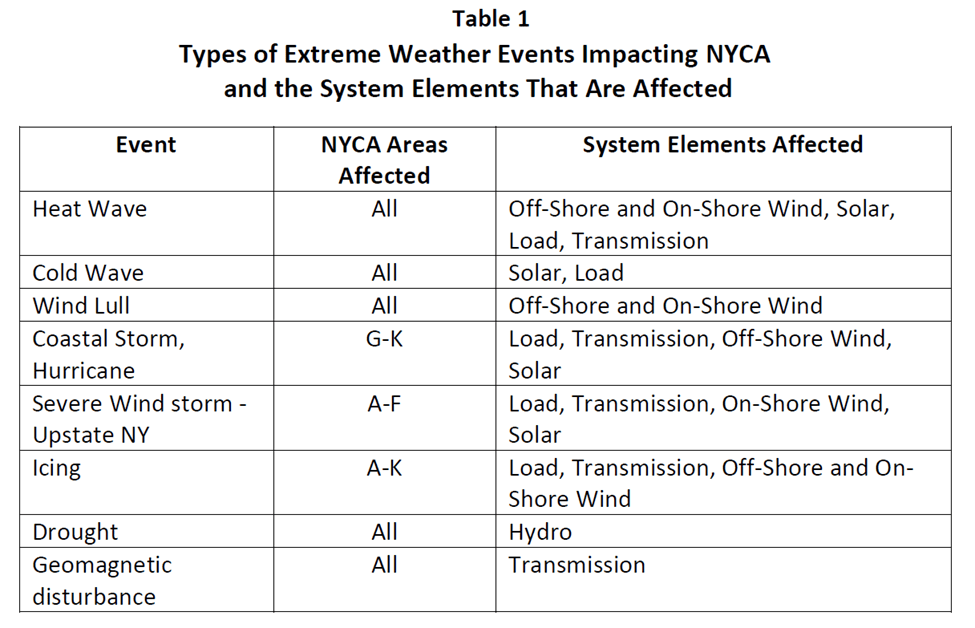
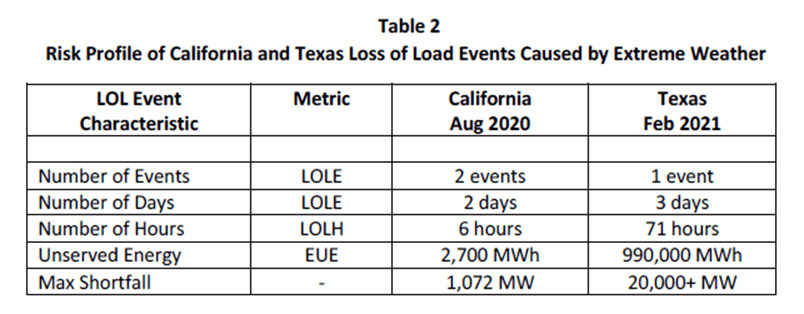
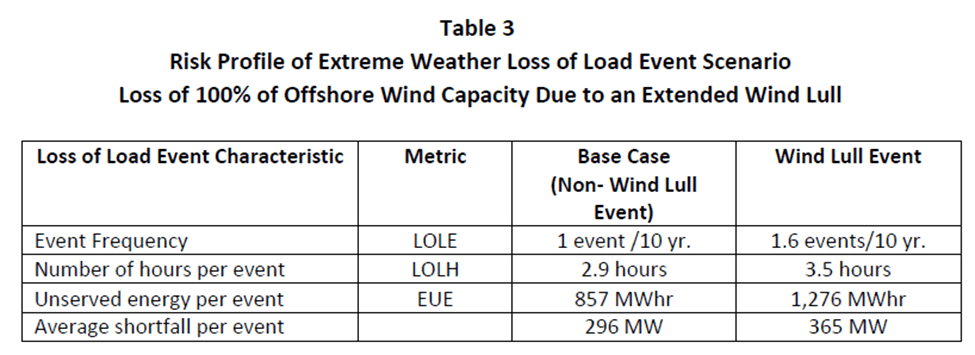

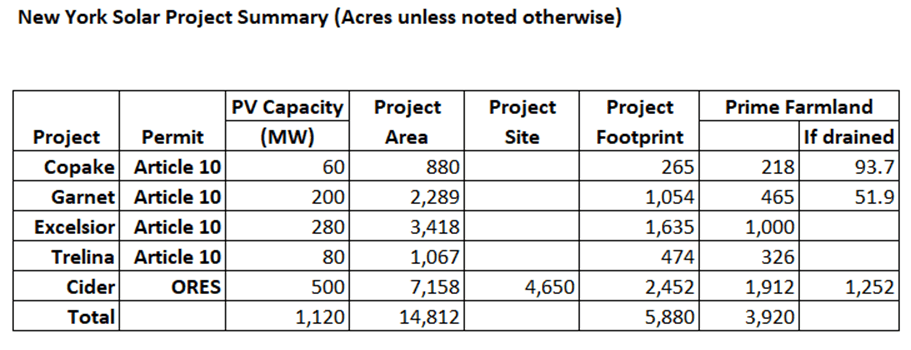


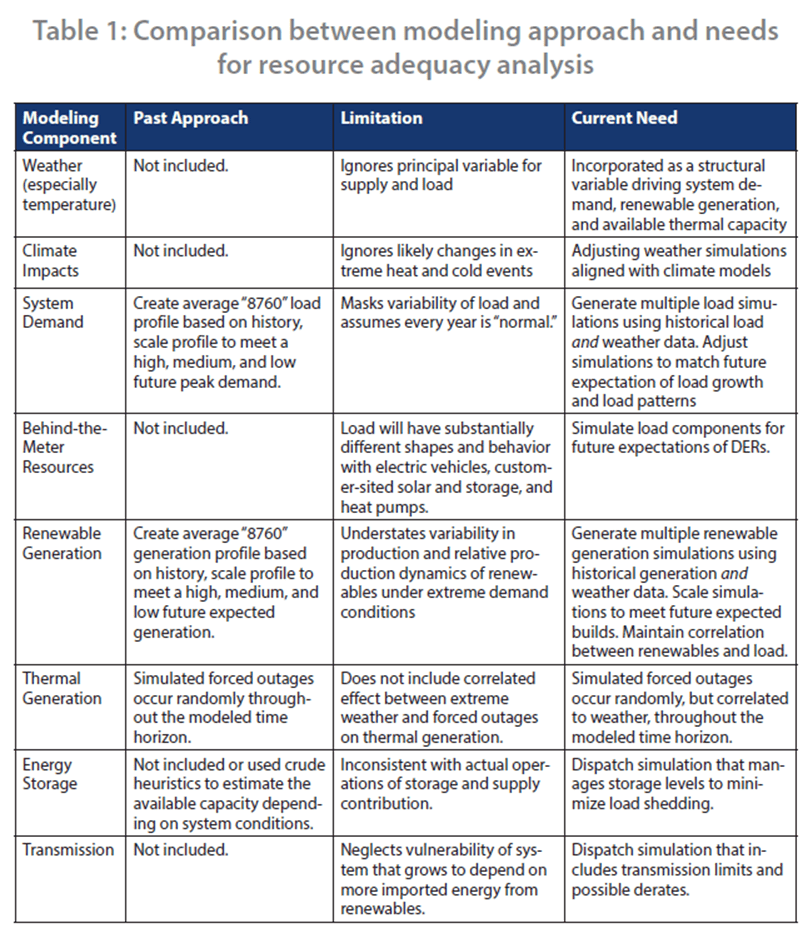

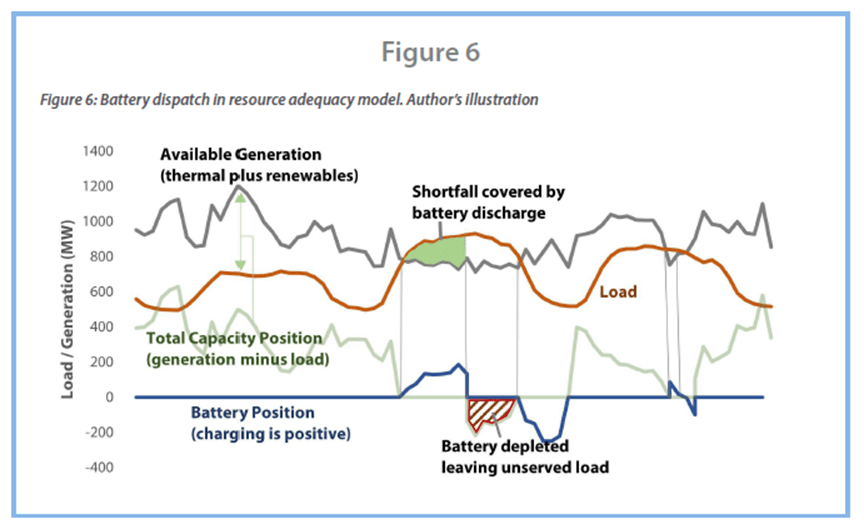


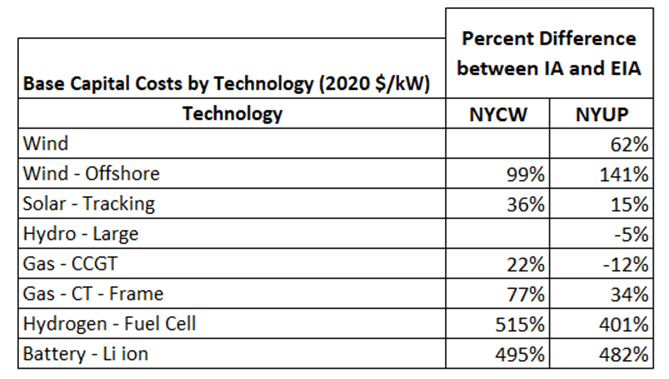
 Pragmatic Environmentalist of New York