On November 18, 2026, the New York Independent System Operator (NYISO) announced that its 2026 Reliability Needs Assessment (RNA) has “identified a first-ever statewide resource deficiency, with electricity supply projected to be insufficient to reliably meet demand”. The RNA finds the statewide deficiency begins at approximately 225 megawatts (MW) in 2033 and grows to more than 1,850 MW by 2036.
Tim Knauss at the Syracuse Post Standard described it in New York State is on track to run short of electricity in six years. I have plans to opine on this myself but have other priorities now. Richard Ellenbogen sent me an email that reacts to the issues raised. The two articles cover many of the points I intended to cover about this important story so I am publishing this post until I can find time for a deeper dive.
Ellenbogen is the President [BIO] of Allied Converters and frequently comments on various issues associated with the New York Climate Leadership and Community Protection Act (Climate Act). He is an electrical engineer who truly cares about the environment but understands the practicality of clean energy solutions based on his experience as an early adopter of renewable technologies at both his home and business two decades ago.
The following is a copy of the Knauss article and Ellenbogen’s email edited for consistency with the format of the blog.
Knauss New York state is on track to run short of electricity in six years
By Tim Knauss (Published at Syracuse.Com on Nov. 18, 2026 at 4:32 PM, updated on Nov. 20, 2026, and published in the Syracuse Post-Standard on November 22, 2026)
For the first time, the operator of New York’s electric grid forecasts that the system will not have a enough power to meet demand within the next 10 years, increasing the probability of blackouts or other problems.
The shortage is expected to develop in 2033 and to get progressively worse by 2036, according to a biennial assessment issued today by the New York Independent System Operator.
The NYISO has been warning for years that the electric grid is in dire need of new generating resources to replace aging power plants as the state prepares for growing demand. But Wednesday’s report is the first time the organization forecasted a statewide shortage within its 10-year planning horizon.
“There is insufficient planned supply in New York State to reliably meet forecasted demand beginning in 2033,’’ the report says.
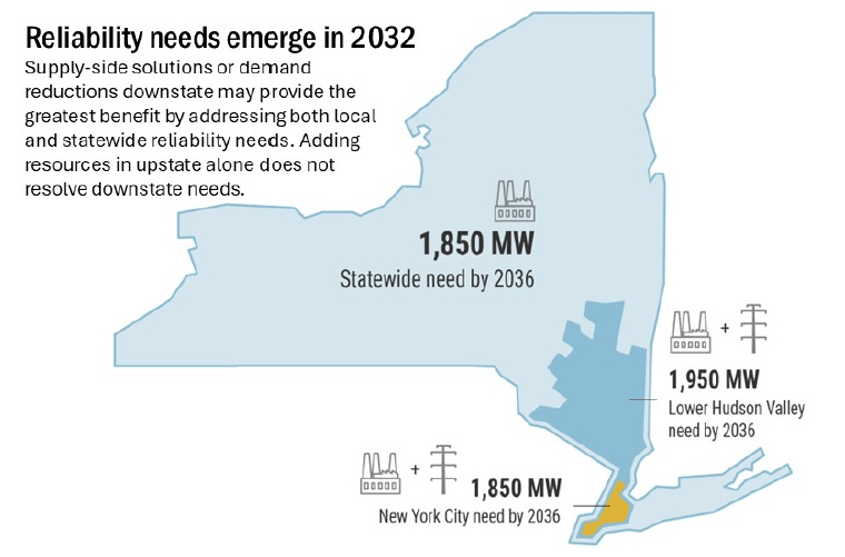
Figure 1: NYISO 2026 Reliability Needs Assessment – Reliability Needs Emerge in 2032
Source: Executive Summary 2026 Reliability Needs Assessment
The New York Independent System Operator forecasts electricity shortages on the statewide grid unless new generation and transmission are developed soon.
The shortfall is expected to be about 225 megawatts in 2033 and to increase rapidly through 2036 to more than 1,800 megawatts, roughly the amount used by 1.8 million households.
The problem calls for the development of 1,850 megawatts of new generating capacity and sufficient transmission lines to get the power where it needs to go, NYISO said.
Because of transmission bottlenecks that sometimes prevent adequate power reaching New York City and the lower Hudson Valley, reliability problems are expected to show up there as early as 2032. Developing new resources in those areas would be especially helpful. On the other hand, adding new generation at the other ends of the state – in far Western New York or Northern New York – would not alleviate the statewide problem.
In any case, building new power plants and transmission lines takes years. The problem “requires immediate attention,’’ the NYISO said.
Without new infrastructure, New York will grow increasingly dependent on electricity imports from outside the state.
The NYISO considers the power supply to be inadequate if it calculates that the system would suffer a “loss of load event” – that is, a blackout – at least once every 10 years. Under current forecasts, that threshold will be reached in 2033 and will increase more than fivefold by 2036.
To develop its forecast, the NYISO evaluated several scenarios to estimate the growth in demand and the potential supply constraints. If data centers or other “large loads’’ pop up faster than anticipated, the electricity shortages arrive sooner and get worse.
The only scenario in which there will not be a shortfall in the foreseeable future is if the state’s economy slows, according to the report.
The NYISO is a federally regulated nonprofit that operates the power grid and runs the wholesale electricity market. The organization does not set state energy policy but offers guidance to state officials. The report issued today, the Reliability Needs Assessment, is produced every two years.
Ellenbogen on the Impending Electricity Shortages
While the state as a whole may run short of electricity in six years, in the downstate region, that time is NOW. NY State is a tale of two grids, an upstate grid fed primarily by hydro and nuclear and a downstate grid that is about 95% fossil fuel powered with some of the oldest generating plants in the US (Figure 2).
Figure 2: Summer Installed Capacity by Fuel Source — Statewide, Upstate, and Downstate New York: 2026
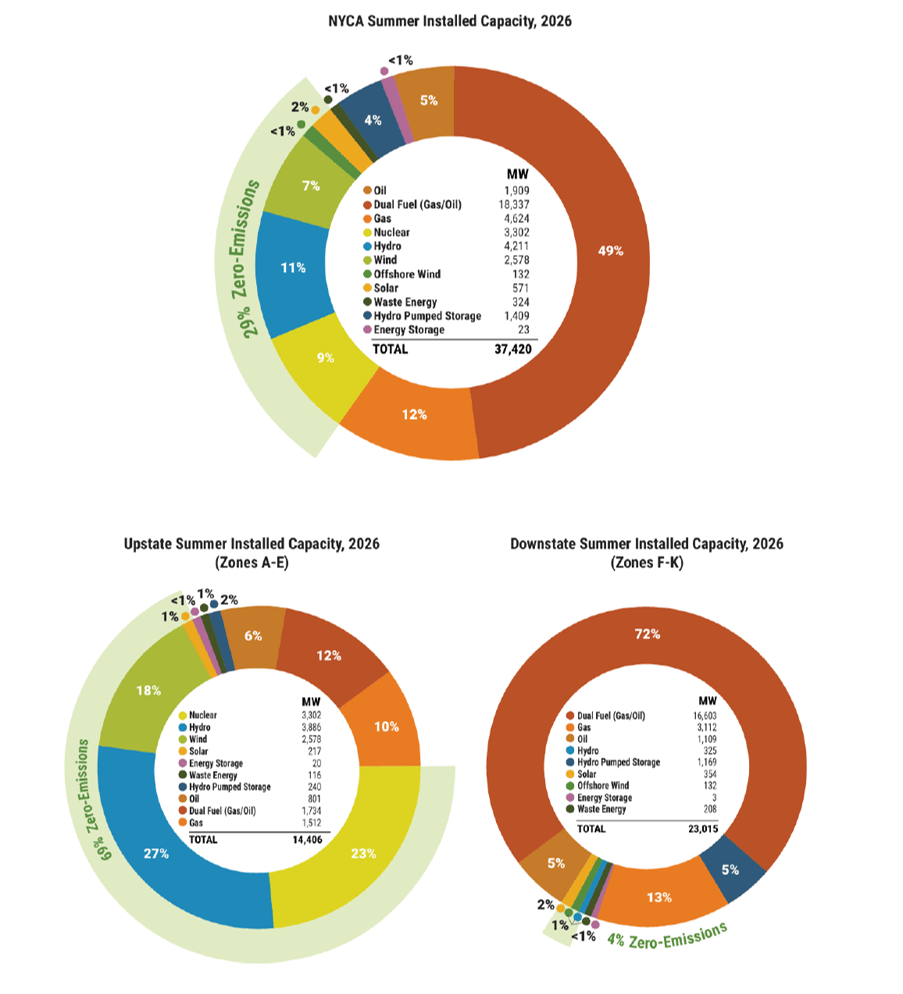
Source: Figure 4 2026 Reliability Needs Assessment
The downstate grid is under attack by state policy makers without having a viable plan to replace the energy those fossil fuel plants are delivering.
Several of us have been telling them for seven years that this would happen but they have been sticking their fingers in their ears and going, “NA NA NA NA NA NA”, as if not hearing the bad news would change it.
This past summer, the downstate system ran short of power for about 72 hours. I prepared a graph that showed the power shortfall (Figure 3). The low voltage on the graph lasted for nearly 3 full days. That is well beyond the capabilities of 8 hour battery storage systems to offset. Nothing short of more firm generation will repair that. That shortfall was accompanied by rolling blackouts in lower Westchester, the Bronx, and Brooklyn that were implemented to keep the entire Con Ed system from collapsing. It caused a 350% increase in elevator failures in NY City and Yonkers on those days and a shutdown of the Yonkers Sewage Treatment plant that caused a 38 million gallon sewage spill in the Hudson River.
Figure 3: Annotated Three-Phase Voltage at Allied Converter Factory, July 2–4, 2026
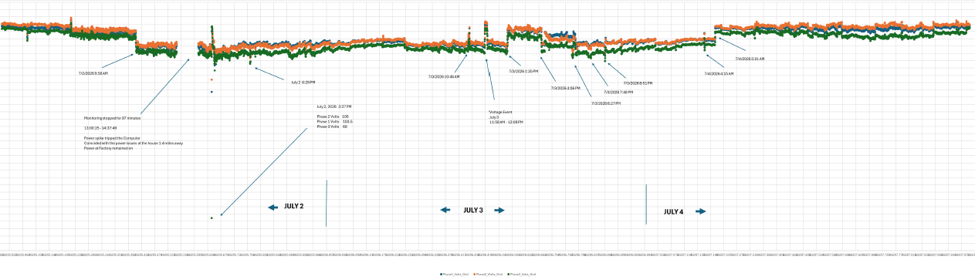
Our solar arrays were shutting down because of frequency issues. Frequency problems on a power system are a prime indicator of insufficient generation.
Again, I am not anti-renewable as I have owned two solar arrays for nearly 20 years. However, as an engineer that must build things that work, I am fundamentally aware of the limitations of renewables from both a performance perspective and a cost perspective in ways that our policy makers obviously are not aware.
These are not opinions, theory, or speculation. They are data driven observations based upon 20 years of measurements. I don’t have investments in fossil fuel companies or any alternative energy companies. I am also currently working with some other engineers on a large renewable project in NY State coupled with pumped storage. However, that project is a unicorn in that it will be efficient and cost effective because of existing infrastructure. Unfortunately, it can’t be easily duplicated elsewhere in the state beyond that single location and it won’t remotely solve the state’s generation shortfall. It will only put a tiny dent in the problem.
The situation is going to get worse as the fossil fuel plants age and electric loads increase with hotter summers on the horizon. Intermittent renewables are not a solution. On June 29, the daily average capacity of the state’s 2600 MW of wind was 3%. Figures 4 and 5 show the wide variation of diurnal solar and wind capacity factors for June and July 2026. During this period the Canadian Hydropower cable, CHPE, decided to take a vacation those days, as well. If the wind isn’t blowing, adding more wind turbines will not increase generation. On a cloudy or rainy, high humidity, hot day, solar panels generate a fraction of their power but air conditioning loads are still as high as ever removing latent humidity.
Figure 4: NYISO June 2026 Net Wind and Solar Performance – Total Daily Production and Capacity Factors
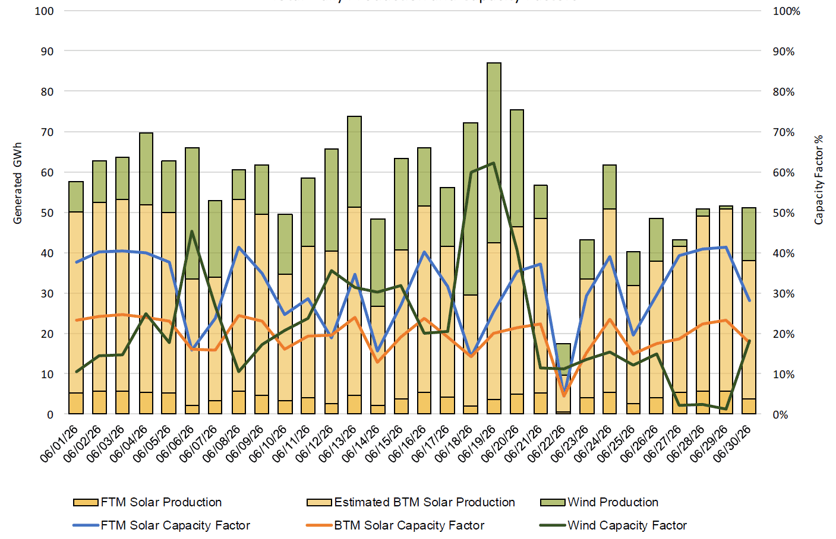
Source: NYISO June 2026 — Operations Performance Metrics Monthly Report
Figure 5: NYISO July 2026 Net Wind and Solar Performance – Total Daily Production and Capacity Factors
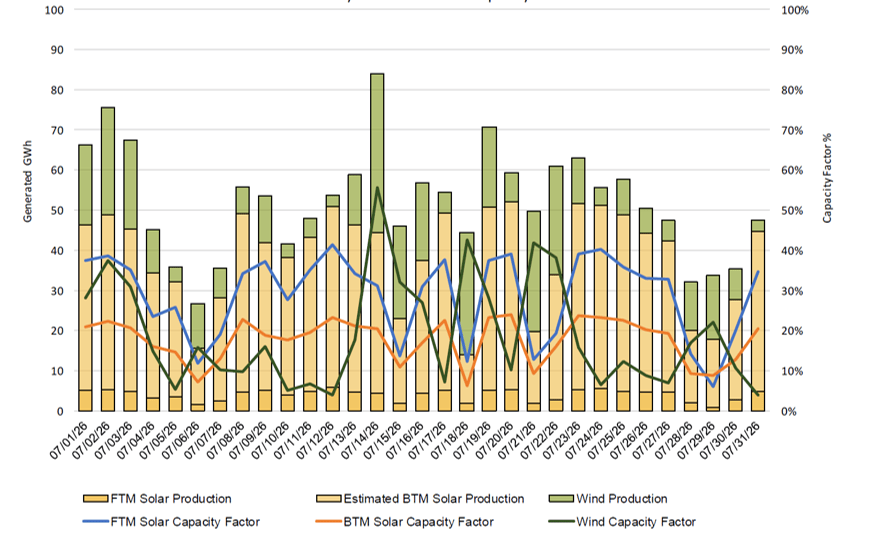
Source: NYISO July 2026 — Operations Performance Metrics Monthly Report
I wrote an article in January 2022 predicting the current debacle. Some of my viewpoints have evolved over the past five years as the exorbitant costs of the current policies and the state’s inability to implement many of them have become more apparent. But the blackout issue was well known as were my reasons for that frame of reference. All are explained in the article.
I am not trying to sell the state anything. I and the others with the same viewpoint are trying to keep the state from buying an energy system that is a lemon.
Hopefully, the policy makers in Albany will take their fingers out of their ears and listen before people start dying because of their actions.


