New Climate Reality is Passing New York By

Note: For quite a while now I have put my Citizens Guide to the Climate Act article as the top post on the website because it summarizes the Climate Leadership & Community Protection Act (Climate Act). This post updates my current thoughts about the Climate Act and will replaces that post at the top of the list of articles on October 2, 2023

There is a new climate reality and it is passing New York by.  New York decision makers are going to have to address the new reality that proves that the Hochul Administration’s Scoping Plan to implement the Climate Act will adversely affect affordability, reliability, and the environment.  This post highlights articles by others that address my concerns.

I have followed the Climate Act since it was first proposed, submitted comments on the Climate Act implementation plan, and have written over 350 articles about New York’s net-zero transition.  I have devoted a lot of time to the Climate Act because I believe the ambitions for a zero-emissions economy embodied in the Climate Act outstrip available renewable technology such that the net-zero transition will do more harm than good by increasing costs unacceptably, threatening electric system reliability, and have major unintended environmental impacts.  The opinions expressed in this post do not reflect the position of any of my previous employers or any other company I have been associated with, these comments are mine alone.

Climate Act Background

The Climate Act established a New York “Net Zero” target (85% reduction and 15% offset of emissions) by 2050.  It includes an interim 2030 reduction target of a 40% reduction by 2030 and a requirement that all electricity generated be “zero-emissions” by 2040. The Climate Action Council is responsible for preparing the Scoping Plan that outlines how to “achieve the State’s bold clean energy and climate agenda.”  In brief, that plan is to electrify everything possible using zero-emissions electricity. The Integration Analysis prepared by the New York State Energy Research and Development Authority (NYSERDA) and its consultants quantifies the impact of the electrification strategies.  That material was used to develop the Draft Scoping Plan.  After a year-long review, the Scoping Plan recommendations were finalized at the end of 2022.  In 2023 the Scoping Plan recommendations are supposed to be implemented through regulation and legislation. 

Climate Science

In the past several weeks there have been multiple articles highlighting issues that call into question the rationale for the Climate Act and Climate Act net-zero transition.   The rationale for the Climate Act is that there is an existential threat due to climate change.  However, the Epoch Times reports that is not a universally held position:

There’s no climate emergency. And the alarmist messaging pushed by global elites is purely political. That’s what 1,609 scientists and informed professionals stated when they signed the Global Climate Intelligence Group’s “World Climate Declaration.”

The article gives a good overview of the World Climate Declaration.  The declaration’s signatories include Nobel laureates, theoretical physicists, meteorologists, professors, and environmental scientists worldwide. The article quotes a few signatories who when asked by The Epoch Times why they signed the declaration stating that the “climate emergency” is a farce, they all stated a variation of “because it’s true.” 

In my case, I signed the Declaration because I do not think we understand natural climate variability well enough to be able to detect the effect of a relatively small change to the atmosphere’s radiative budget caused by mankind’s greenhouse gas (GHG) emissions.  There are so many poorly understood factors at play and the mathematical challenges of simulating the chaotic, non-linear processes are so immense that I think that claiming that Global Climate Models can simulate the atmosphere well enough to make major changes to the energy system of the world is absurd.

There is another important aspect.  One of the key points made in the Declaration is that climate science is overly politicized:

“Climate science should be less political, while climate policies should be more scientific,” the declaration begins. “Scientists should openly address uncertainties and exaggerations in their predictions of global warming, while politicians should dispassionately count the real costs as well as the imagined benefits of their policy measures.”

It seems to me that every day there is another mass media story attributing any extreme weather event to climate change and insinuating that the “science” has unequivocally shown that there is a link to mankind’s GHG emissions has made the weather more extreme.  The fact is that the latest research and the Intergovernmental Panel on Climate Change are finding that as Roger Pielke, Jr. explains the “projected climate futures have become radically less dire”.  He argues that the consensus has accepted a large change in expected warming due to a doubling of GHG emissions — from 4oC to 2.5oC or less.   Pielke notes that he has documented this trend  for years and has “been talking about the incredible shift in expectations for the future” recently.  Unfortunately he also notes: “Despite the growing recognition that our collective views of the future have changed quickly and dramatically, this change in perspective — a positive and encouraging one at that — has yet to feature in policy, media or scientific discussions of climate.”   He concludes “That silence can’t last, as reality is persistent.”

Affordability

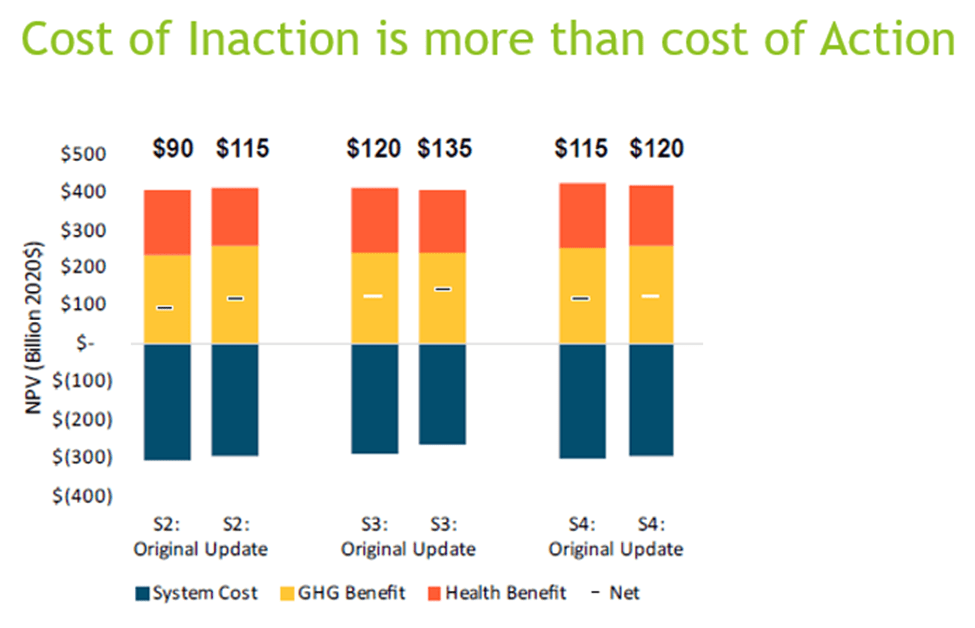
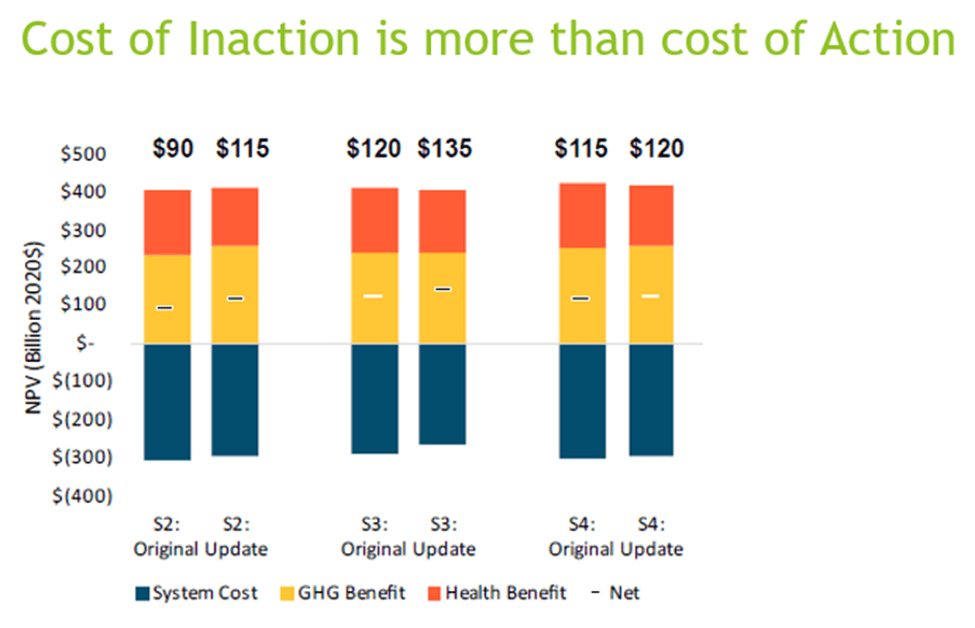
I think this is the one issue that might force political change to the Climate Act net-zero transition.  A coalition of business organizations have called for a “reassessment” of how the Climate Act is being implemented highlighting current policies to determine “what is feasible, what is affordable and what is best for the future of the state.”  In response, Department of Environmental Conservation Commissioner Basil Seggos told Capital Tonight that “the costs of inaction are much higher.”  He goes on: “Listen, we know from two years of very intensive research that the cost of inaction on climate in New York far exceeds the cost of action by the tune of over $100 billion”I disagree.

The Scoping Plan that documents this claim by Seggos has been described as “a true masterpiece in how to hide what is important under an avalanche of words designed to make people never want to read it”.  No where is this more evident than in the tortuous documentation for this cost claim.  I documented the issues with costs and benefits in my  comments (social cost of carbon benefits, Scoping Plan benefits, and electric system costs).  In brief, the Hochul Administration has never provided concise documentation that includes the costs, expected emission reductions and assumptions used for the control strategies included in the Integration Analysis documentation making it impossible to verify their assumptions and cost estimates. 

The claim that the costs of inaction are more than the costs of action compares real costs to New Yorkers relative to societal benefits that can be charitably described as “biased high” or more appropriately “cherry picked” to maximize alleged benefits and, more importantly, do not directly offset consumer costs.  The benefits claimed are also poorly documented, misleading and the largest benefit is dependent upon an incorrect application of the value of carbon.  The plan claims $235 billion societal benefits for avoided greenhouse gas emissions.  I estimate those benefits should only be $60 billion.  The Scoping Plan gets the higher benefit by counting benefits multiple times.  If I lost 10 pounds five years ago, I cannot say I lost 50 pounds but that is what the plan says.  The cost benefit methodology was duplicitous because the cost comparisons were relative only to Climate Act requirements that did not include “already implemented” programs.  For example, this approach excludes the costs to transition to electric vehicles because that was a requirement mandated before the Climate Act.  I maintain that the total costs to transition to net-zero should be provided because that ultimately represents total consumer costs.  

It is also frustrating that the State ignores that other jurisdictions are finding costs are an issue.  In a recent article I noted that the Prime Minister of Great Britain, Rishi Sunak, said he would spare the public the “unacceptable costs” of net zero as he scaled back a string of flagship environmental policies. The fact is that every jurisdiction that has tried to transition away from fossil-fueled energy has seen a significant increase in consumer costs.  For example, Net Zero Watch recently published a report that describes six ways renewables increase electricity bills that makes that inevitable.   The article explains:

In order to reduce bills, a new generator generally has to force an old one to leave the electricity market — otherwise there are two sets of costs to cover. But with wind power, you can’t let anything leave the market, because one day there might be no wind.

The article goes on to explain that as well as adding excess capacity to the grid, renewables also have a series of other effects, each of which will push bills up further:

Renewables need subsidies, they cause inefficiency, they require new grid balancing services that need to be paid for; the list of all the different effects is surprisingly long. There is only one way a windfarm will push your power bills, and that’s upwards.

Reliability

Another flawed aspect of the Climate Act narrative is that a transition to a zero-emissions electric system is straight-forward and there are no significant technological challenges.  Terry Etam summed up the issues evident in the German transition that will also occur in New York.  In an article about the ramifications of the energy requirements for implementing artificial intelligence applications, he argued that the fossil-fired energy growth in the developing nations has been discouraged by the G7 nations.  However, those nations are pushing back on anything that is not in their best interests.  He writes:

The second big tectonic shift was on full display at the recent G20 summit. The African Union was admitted as a member, which was kind of a big deal, particularly for Africa, but also for the world in general. The addition acknowledges that other voices need to be on the world stage, a sense of humility the G7 has long lacked. The final communique issued at the end of the G20 summit included doses of common sense lacking from typical utterances of the G7: “We affirm that no country should have to choose between fighting poverty and fighting for the planet…It is also critical to account for the short-, medium-, and long-term impact of both the physical impact of climate change and transition policies, including on growth, inflation, and unemployment.” 

Contrast that with the west’s bizarre self-lobotomization when it comes to energy, as best personified by the entity furthest along the rapid-transition path, Germany: the dwindling economic powerhouse is chained to a green freight train it insists is under control, has shut down nuclear power plants with no low-emissions baseload to replace it, and in a final stunning swan dive to the pavement, is orchestrating the installation of 500,000 heat pumps per year to the grid, which will be in most demand in cold weather and will perform worst in cold weather, and will add a potential 10 gigawatts of cold-weather demand at the very instant the grid is least able to afford it, and for which there is no supply available anyway. A German energy economic university think tank says the additional cold-weather demand could only be met by new gas-fired power plants, which are not being built. In sum: Germany has shuttered its cleanest, most reliable energy; it has or is trying to banish hydrocarbons and replace them with intermittent power; and finally, is hastening adoption of devices that will function very well in 80 percent of conditions when it doesn’t matter much but will fail in a spectacularly deadly way at the point in time when they are needed the very most, because heat pumps will be turned up to 11 at the very time the grid will be the most taxed. German engineering isn’t what it used to be.

In the last several years I have concluded that intermittency of wind and solar is the fatal flaw for that technology.  The most important consideration is the need for energy storage.  Francis Menton writing at the Manhattan Contrarian summarizes energy storage problems in a recent post on a new British Royal Society report “Large-scale energy storage.”  This report suffers from the same problems afflicting the Climate Act Scoping Plan.  Menton explains:

Having now put some time into studying this Report, I would characterize it as semi-competent. That is an enormous improvement over every other effort on this subject that I have seen from green energy advocates. But despite their promising start, the authors come nowhere near a sufficient showing that wind plus solar plus storage can make a viable and cost-effective electricity system. In the end, their quasi-religious commitment to a fossil-fuel-free future leads them to minimize and divert attention away from critical cost and feasibility issues. As a result, the Report, despite containing much valuable information, is actually useless for any public policy purpose.

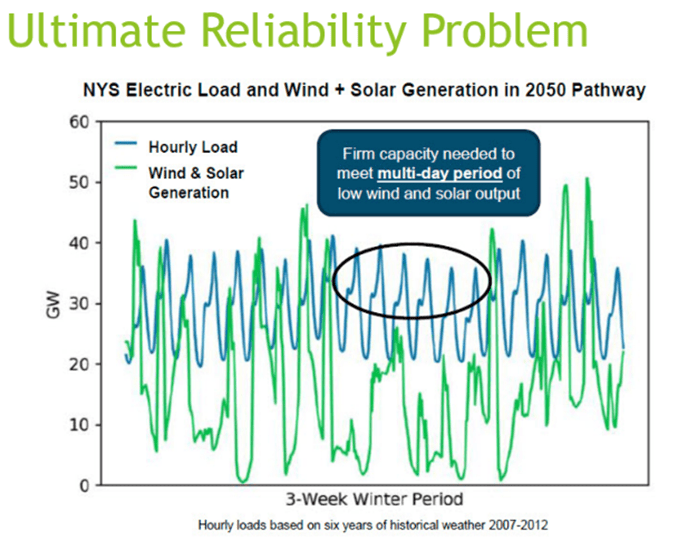
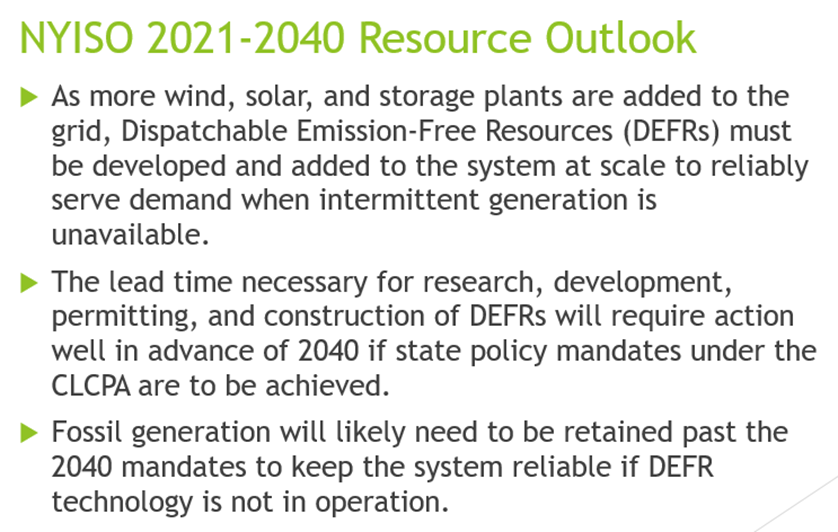
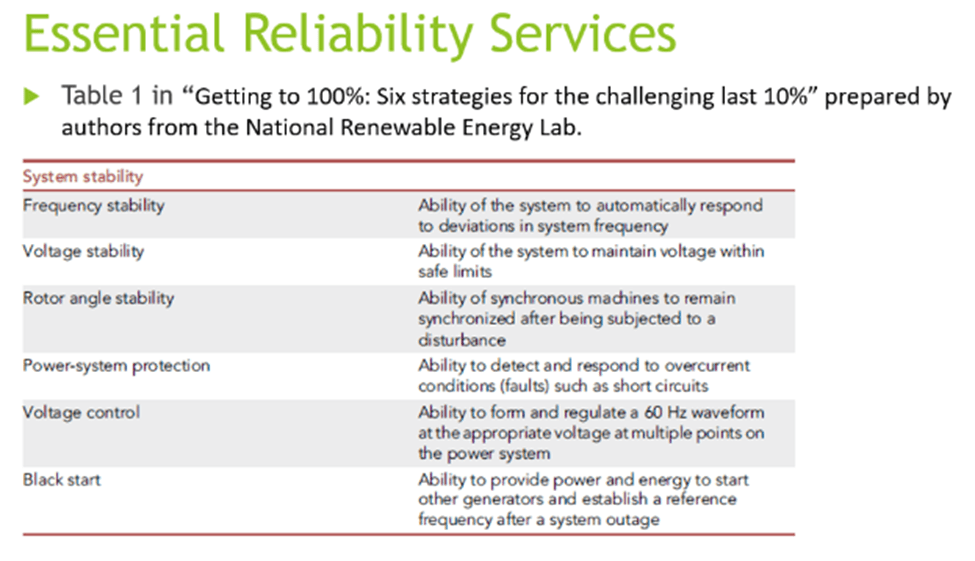
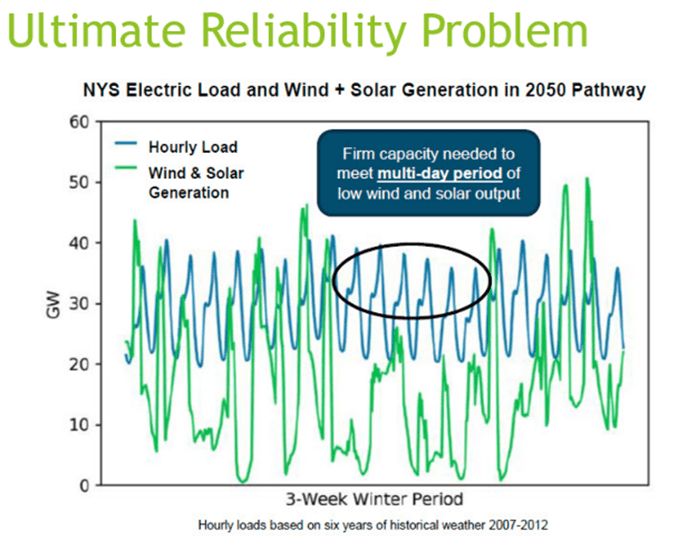
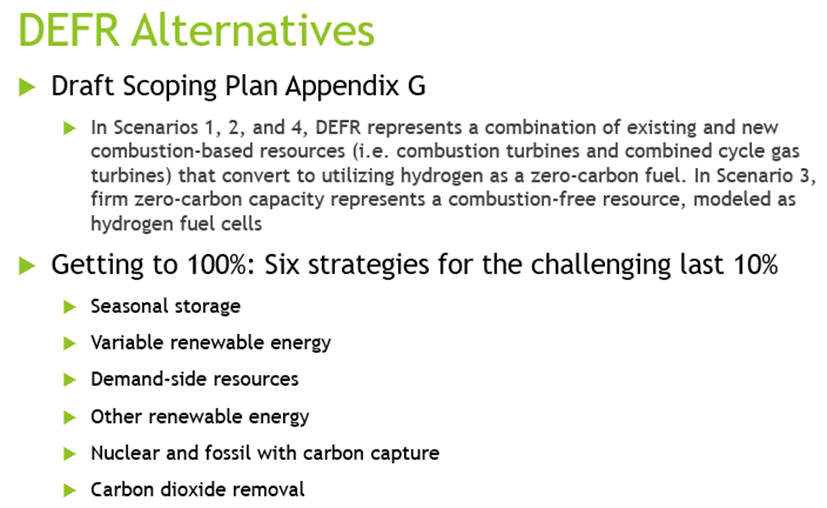
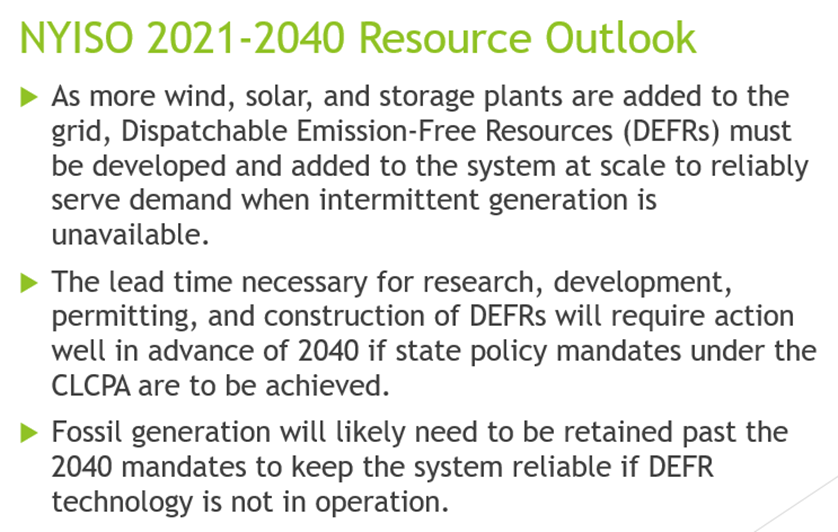
I believe that the insurmountable problem with energy storage backup for wind and solar is worst-case extremes.  The Royal Society report notes that “it would be prudent to add contingency against prolonged periods of very low supply”.  This contingency is the theoretical dispatchable emissions-free resource that the Integration Analysis, New York State Independent System Operator, New York State Reliability Council, and Public Service Commission in the Order Initiating Process Regarding Zero Emissions Target in Case 15-E-0302 all acknowledge is necessary.  Incredibly, the loudest voices on the Climate Action Council clung to the dogmatic position that no new technology like this resource was necessary and excluded any consideration of a backup plan to address the contingency that a not yet commercialized technology might never become commercially viable and affordable.

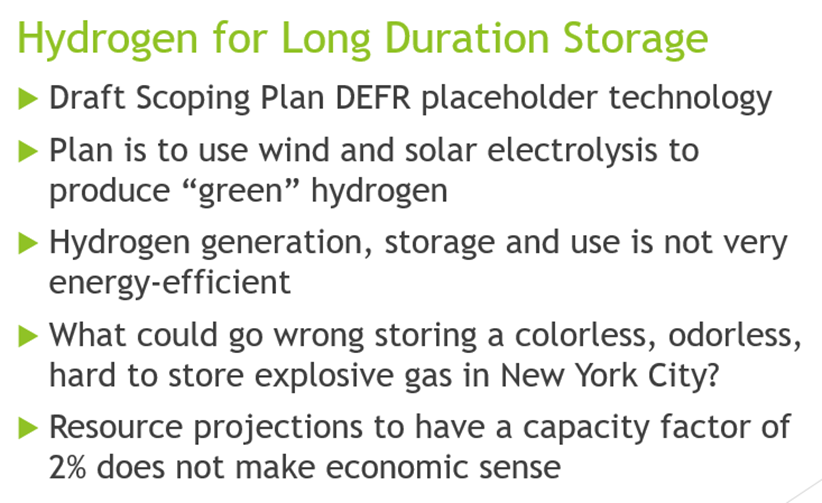
If New York State were to embrace nuclear energy, then there might be a chance to significantly reduce GHG emissions without affecting reliability.  Instead, the Scoping Plan placeholder option for this resource is green hydrogen.  Menton describes the hydrogen option proposal in the Royal Society report:

Since hydrogen is the one and only possible solution to the storage problem, the authors proceed to a lengthy consideration of what the future wind/solar/hydrogen electricity system will look like. There will be massive electrolyzers to get hydrogen from the sea. Salt deposits will be chemically dissolved to create vast underground caverns to store the hydrogen. Hydrogen will be transported to these vast caverns and stored there for years and decades, then transported to power plants to burn when needed. A fleet of power plants will burn the hydrogen when called upon to do so, although admittedly they may be idle most of the time, maybe even 90% of the time; but for a pinch, there must be sufficient thermal hydrogen-burning plants to supply the whole of peak demand when needed.

The Scoping Plan proposal is slightly different.  It envisions that the electrolyzers will be powered by wind and solar to create so-called “green” hydrogen.  Menton and I agree that the biggest unknown is the cost.  He raises the following cost issues:

  • How about the new network of pipelines to transport the hydrogen all over the place?
  • How about the entire new fleet of thermal power plants, capable of burning 100% hydrogen, and sufficient to meet 100% of peak demand when it’s night and the wind isn’t blowing.
  • They use a 5% interest rate for capital costs. That’s too low by at least half — should be 10% or more.
  • And can they really build all the wind turbines and solar panels and electrolyzers they are talking about at the prices they are projecting?

It gets worse in New York.  Ideologues on the Climate Action Council have taken the position that “zero-emissions” means no emissions of any kind.  They propose to use the hydrogen in fuel cells rather than combustion turbines because combustion turbines would emit nitrogen oxides emissions.  This adds another unproven “at the scale necessary” technology making it even less likely to succeed as well as adding another unknown cost.  In addition, it ignores that there are emissions associated with the so-called zero-emissions technologies that they espouse.  All they are advocating is moving the emissions elsewhere.

Environmental Impacts

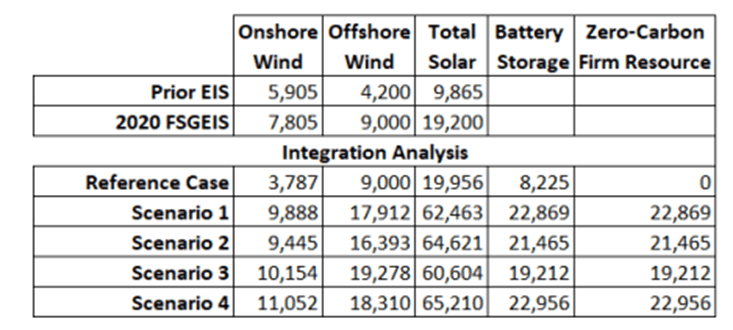
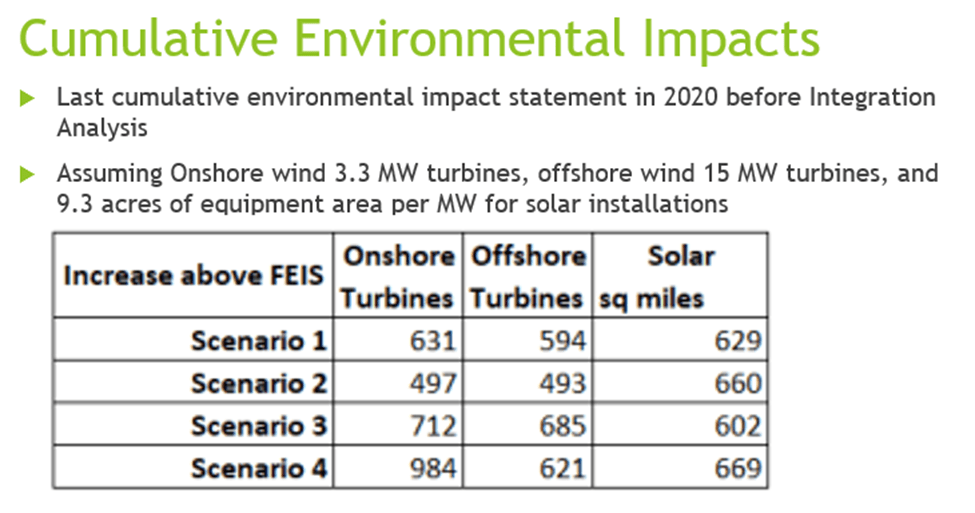
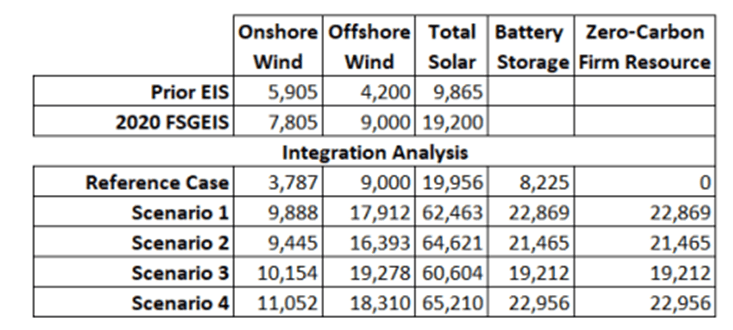
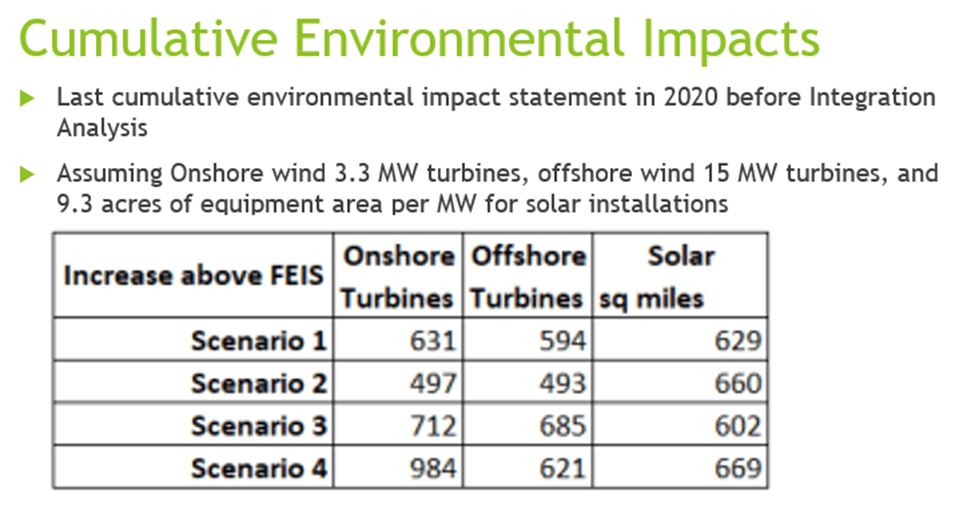
I addressed the implications that the Scoping Plan only considers environmental impacts of fossil fueled energy in my Draft Scoping Plan Comments.  The life-cycle and upstream emissions and impacts are addressed but no impacts of the proposed “zero-emissions” resources or other energy storage technology are considered.  The fact is that there are significant environmental, economic, and social justice impacts associated with the production of those technologies. Furthermore, the most recent cumulative environmental impact analysis only considered a fraction of the total number of wind turbines and area covered by solar PV installations proposed in the Scoping Plan.  As a result, the ecological impacts on the immense area of impacted land and water have not been adequately addressed.

One of the more frustrating aspects of the Hochul Administration’s Climate Act implementation is the lack of a plan.  For example, consider utility-scale solar development.  There are no responsible solar siting requirements in place so solar developers routinely exceed the Department of Agriculture and Markets guidelines for protection of prime farmlands.  My solar development scorecard found that prime farmland comprises 21% of the project area of 18 approved utility-scale solar project permit applications which is double the Ag and Markets guideline. 

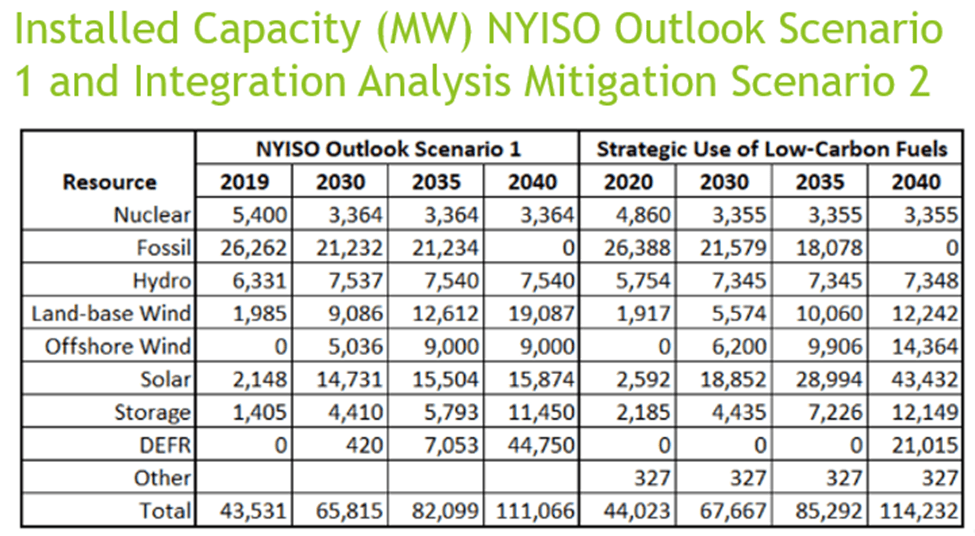
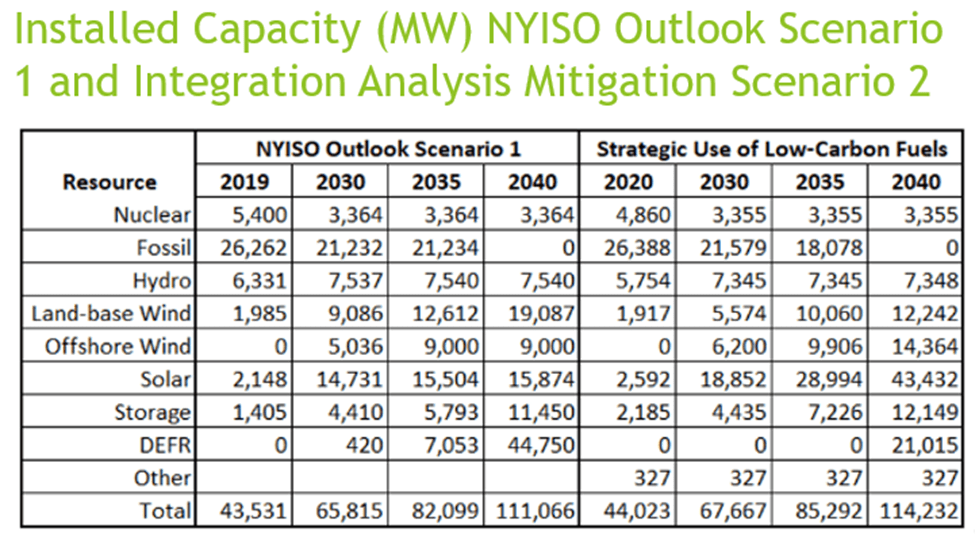
I am particularly concerned about environmental impacts associated with Off Shore Wind (OSW).  This will be a major renewable resource in the proposed Climate Act net-zero electric energy system.  The Climate Act mandates 9,000 MW of Off Shore Wind (OSW) generating capacity by 2035.  The Integration Analysis modeling used to develop the Scoping Plan projects OSW capacity at 6,200 MW by 2030, 9,096 MW by 2035 and reaches 14,364 MW in 2040.  I summarized several OSW issues in a recent article that highlighted an article by Craig Rucker titled Offshore Wind Power Isn’t ‘Clean and Green,’ and It Doesn’t Cut CO2 Emissions.  He explains:

A single 12 MW (megawatts) offshore wind turbine is taller than the Washington Monument, weighs around 4,000 tons, and requires mining and processing millions of tons of iron, copper, aluminum, rare earths and other ores, with much of the work done in Africa and China using fossil fuels and near slave labor.

Relying on wind just to provide electricity to power New York state on a hot summer day would require 30,000 megawatts. That means 2,500 Haliade-X 12 MW offshore turbines and all the materials that go into them. Powering the entire U.S. would require a 100 times more than that. 

These numbers are huge, but the situation is actually much worse.

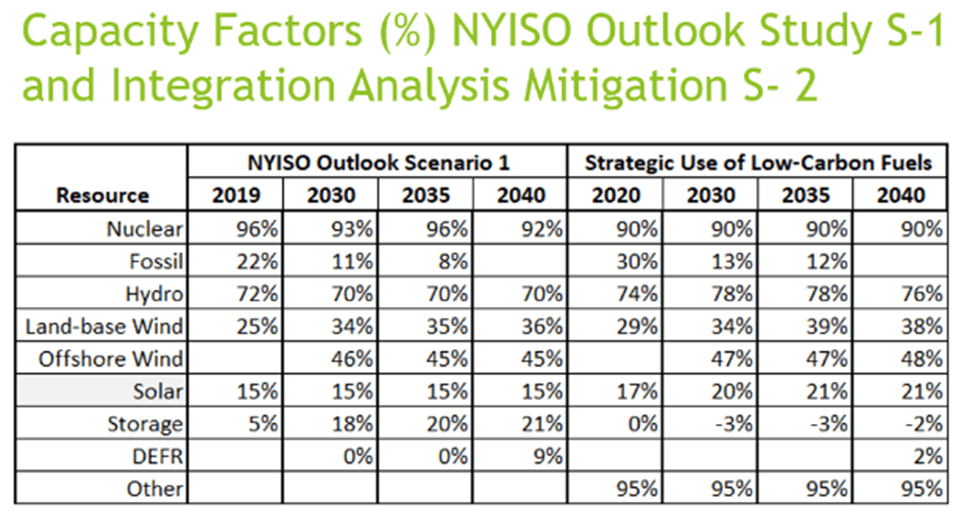
This is because offshore turbines generate less than 40% of their “rated capacity.” Why? Because often there’s no wind at all for hours or days at a time. This requires a lot of extra capacity, which means a lot more windmills will have to be erected to charge millions of huge batteries, to ensure stable, reliable electricity supplies.

Once constructed, those turbines would hardly be earth or human friendly, either. They would severely impact aviation, shipping, fishing, submarines, and whales. They are hardly benign power sources.

The environmental impacts on whales of the OSW resources necessary to meet the net-zero transition are especially alarming.  Earlier this year I described the Citizens Campaign for the Environment virtual forum entitled Whale Tales and Whale Facts.  The sponsors wanted the public to hear the story that there was no evidence that site survey work was the cause of recent whale deaths.  I concluded that the ultimate problem with the forum was that they ignored the fact that construction noises will be substantially different than the ongoing site surveys and will probably be much more extensive when the massive planned construction starts.  The virtual forum noted a lack of funding for continued monitoring necessary to address the many concerns with massive offshore wind development to allay the concerns of the public.   Since then, the Save Right Whales Coalition (SRWC) has found issues with the incidental harassment of whales associated with the noise levels associated sonar surveys done in conjunction with OSW development.  I am very disappointed that the Hochul Administration is not investing in an adequate monitoring program that confirms that whales are not being harmed. 

Conclusion

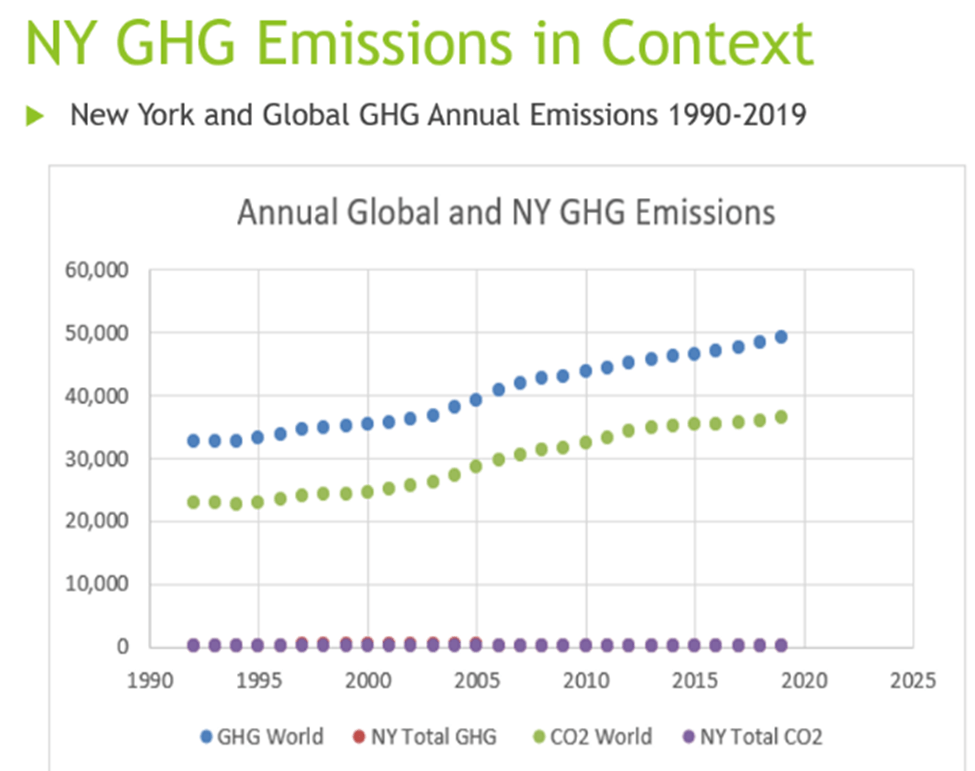
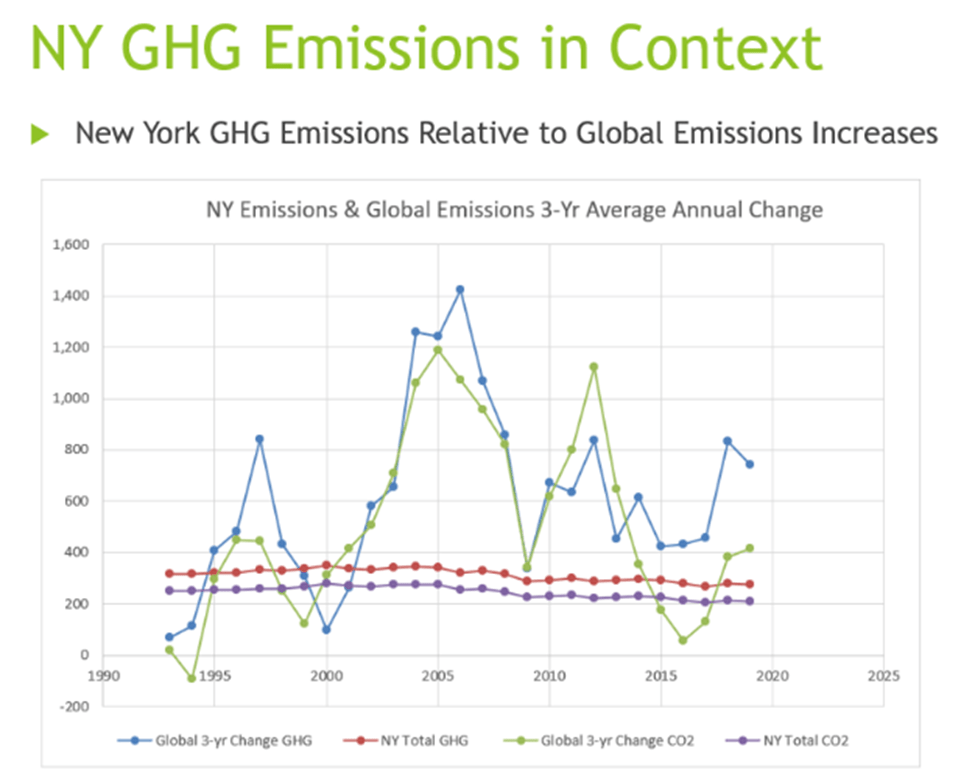
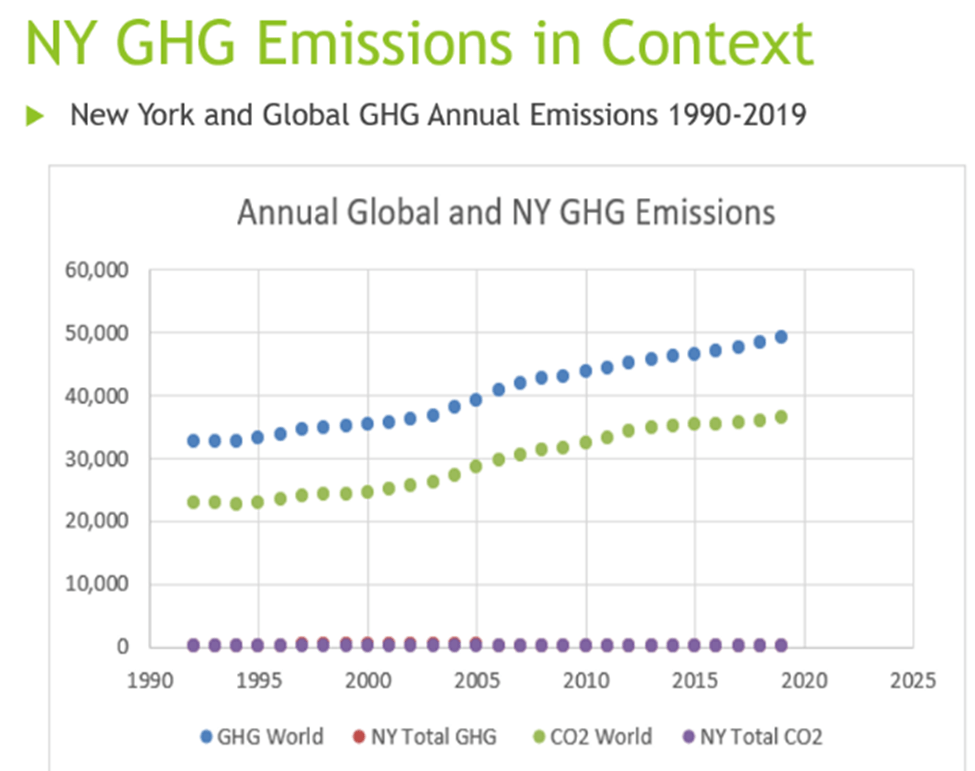
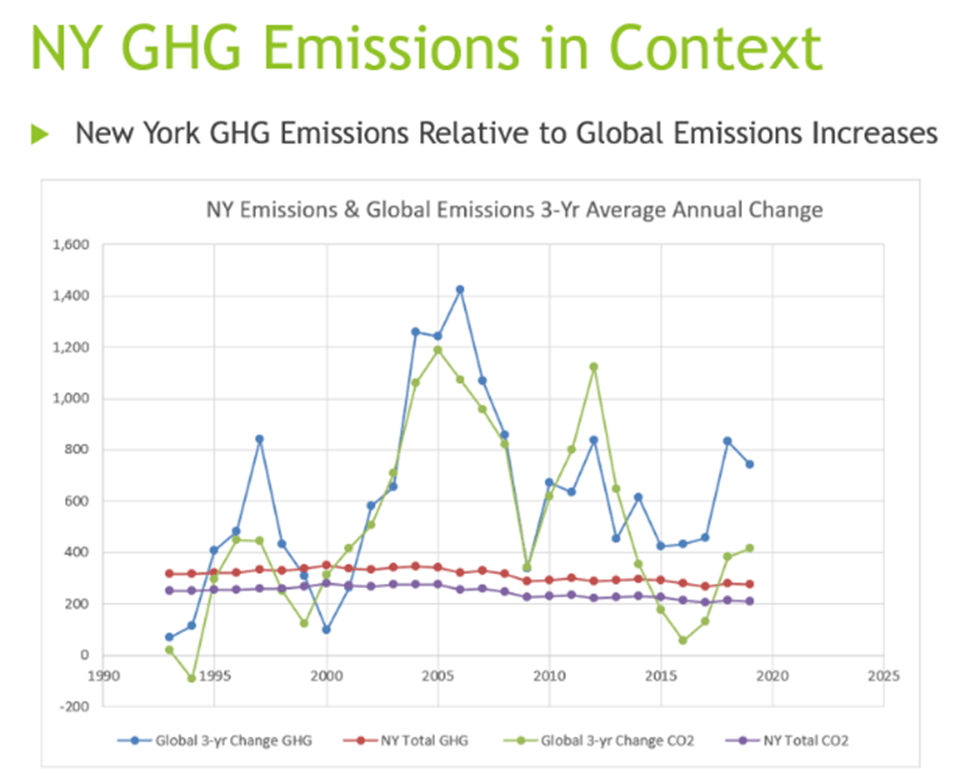
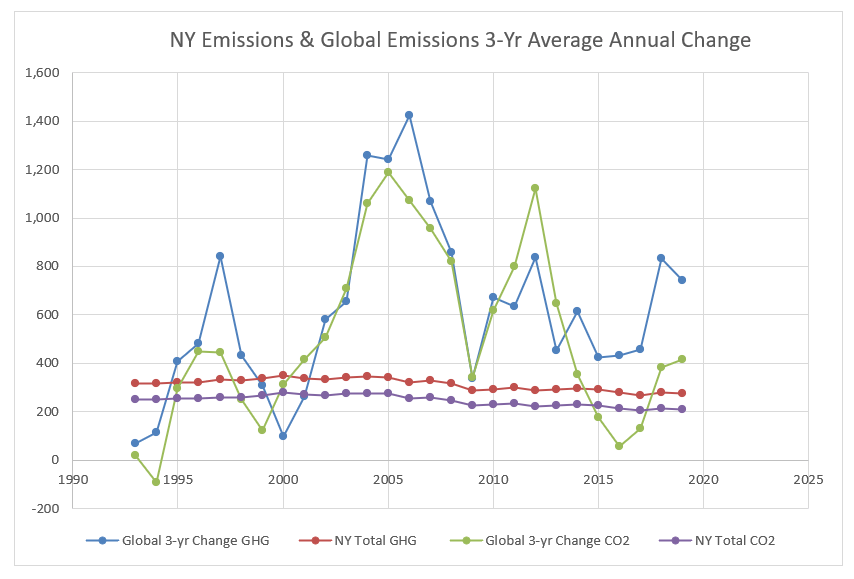
This article was intended to summarize my current concerns about the impacts of the Climate Act transition on affordability, reliability, and the environment.  There is a growing realization that the alleged problem of global warming is not as big a threat as commonly assumed. Combined with the fact that New York GHG emissions are less than one half of one percent of global emissions and global emissions have been increasing on average by more than one half of one percent per year since 1990 the rationale for doing anything is weak.  It may not mean that we should not do something, but clearly we have time to address the affordability, reliability and environmental impact issues.

The Scoping Plan has not provided comprehensive and transparent cost estimates so New Yorkers have no idea what this will cost.  I explained why the Hochul Administration claim that the costs of inaction are more than the costs of action is misleading and inaccurate.  I believe that all New Yorkers should let it be known that they need to know the expected costs so they can determine if they support the transition.

When the energy system becomes all-electric the reliability of the electric system will be even more critical than today.  The State plan is to proceed as if there are no implementation issues.  The rational thing to do would be to develop demonstration projects to prove feasibility and cost of the new technology needed before dismantling the current system.  Francis Menton explains why this is necessary and how it could work.  There is no sign that is being considered.

It is particularly galling that organizations who claim to be in favor of a better environment have failed to support comprehensive cumulative environmental impact assessment and on-going impact monitoring assessment to potential impacts from wind, solar, and energy storage development on the scale necessary for the net-zero transition.  Maybe they don’t want to know that the concerns are real.

Mark Twain said: “It is easier to fool someone than it is to tell them they have been fooled.”    The politicians who support the Climate Act net-zero transition have been fooled into thinking it is affordable, will not affect reliability, and benefits the environment.  Unfortunately, it is very difficult to slow down, much less stop the unfolding train wreck of these policies.  I encourage readers to keep asking for a full cost accounting of all the proposed programs as the most obvious concern.

Finger Lakes Times Alternate Energy Scoping it Out Conclusion

On June 24, 2023 the Finger Lakes Times published a commentary, Alternate Energy: Scoping it out, Part VI: My humble opinion, conclusion by Jim Bobreski, a process control engineer from Penn Yan.  The commentary concludes a series on the Climate Leadership & Community Protection Act (Climate Act) Scoping Plan.  I started this post soon after his article was published but just got around to completing it.  While I admire Bobreski’s efforts to try to decipher the Scoping Plan he makes a couple of mistakes that should be addressed.
I have been following the Climate Act since it was first proposed, submitted comments on the Climate Act implementation plan, and have written over 300 articles about New York’s net-zero transition.  I have devoted a lot of time to the Climate Act because I believe the ambitions for a zero-emissions economy embodied in the Climate Act outstrip available renewable technology such that the net-zero transition will do more harm than good.  The opinions expressed in this post do not reflect the position of any of my previous employers or any other company I have been associated with, these comments are mine alone.

Climate Act Background

The Climate Act established a New York “Net Zero” target (85% reduction and 15% offset of emissions) by 2050 and an interim 2030 target of a 40% reduction by 2030. The Climate Action Council is responsible for preparing the Scoping Plan that outlines how to “achieve the State’s bold clean energy and climate agenda.”  In brief, that plan is to electrify everything possible and power the electric grid with zero-emissions generating resources by 2040.  The Integration Analysis prepared by the New York State Energy Research and Development Authority (NYSERDA) and its consultants quantifies the impact of the electrification strategies.  That material was used to write a Draft Scoping Plan.  After a year-long review the Scoping Plan recommendations were finalized at the end of 2022.  In 2023 the Scoping Plan recommendations are supposed to be implemented through regulation and legislation. 

Author Background

According to the article: Jim Bobreski of Penn Yan is a process control engineer in power production for 43 years. He writes a monthly OpEd on Alternate Energy for the Finger Lakes Times and is the author of “Alternate Energy and Climate Change in the Age of Trump,” available Amazon.com.  The Barnes and Noble overview of the book says:

In the age of Trump, energy, is as big and important an issue as it ever has been. The decisions we make as nations, and as individuals about energy are as important as always to our present, and more so to our future. However, in this age of Trump, there are delusions and confusion that he and his regime has perpetrated. Trump has succeeded in creating so much doubt that the average person thinks that up is down and down is up. He has turned science upside down as well. His interference with science has so obstructed the truth that Scientific American came out to for the first time in its 175 year politically neutral history and endorsed Joe Biden. This book is a collection of articles about the politics, economics, and technology of alternate energy and its importance to the future of civilization.

Commentary

In this section I will critique the commentary.  Renewable energy advocates commonly make similar mistakes relative to the electric system.  Although Bobreski was in power production his expertise in process control is not particularly relevant for electric system resource adequacy issues.  Consequently there are misconceptions similar to those Richard Perez made arguing that New York should embrace a solar energy future.

The commentary is a mixture of good and bad points.  He starts out explaining that technology advances are necessary to make the Climate Act Scoping Plan work.

A call to grandma cost about $5 back in 1970 which is about $38 today. Now the same call is almost nothing. My point: Technology today comes in leaps and bounds and fast. It improves so fast that as soon as you buy some new device, it is obsolete in some way the minute you use it.

My concern is are we becoming dependent upon technology’s rapid evolution to solve our problems? The scoping plan appears to count on this very thing to be successful. Can it happen? I think the answer is yes, but it’s a cautionary yes.

There are limits to this analogy for the electric system.  Wind and solar energy have been subsidized for decades in the hopes that the technology would evolve to the point where it could stand on its own.  However, there is no sign that the need for those subsidies will disappear anytime soon.

Theresa Hansen of “T&D World” magazine says, “Some locations in the US might meet President Biden’s goal of 100% clean energy by 2035, but I don’t see the entire country being fueled by zero carbon sources 12 years from now.”

“T&D World” is a trade publication for the power transmission industry and they ought to know!

It may be true that “some” locations may have 100% clean energy by 2035 but I don’t expect that it will be any large jurisdiction.  I recently described problems with the transition including the European experience showing that wind is not viable, the costs of wind and solar in Germany are untenable, and that a rapid energy transition has many risks but that information is being ignored.  There is a reason trade publications are called trade rags.  They will publish anything to appeal to their readership.

In the past five columns, I have tried to put together some information about the directives of the Scoping Plan for the energy future of NYS. I concentrated on solar, wind, the grid and storage systems.

I would like to call this a story, because the efforts made by the state to go “green” stretch back over 40 years. In 1982 PASNY — now NYSERDA — planned to place a wind turbine on the shore of Lake Ontario. Numerous studies in NY have been performed on wind power over those years. Whatever became of this? I have filed Freedom of Information requests on the wind turbine projects proposed by PASNY, but have had no luck finding this information. I was attempting to garner what was already known then and why it wasn’t implemented at the time.

There is one mistake here.  The state power authority changed its acronym from PASNY to NYPA not NYSERDA.  The New York State Energy Research & Development Authority probably did wind turbine assessments for Lake Ontario but I have never seen them either.

A history of learning from others’ mistakes

Back in the early 1980s Germany embarked on an ambitious plan to go solar and wind. The wind turbines in 2022 provided 17.2% of Germany’s electrical power; solar provided about 8%. The problem that is now realized is the cost of making this decision. It was at a time when nuclear was the “energy cure” for clean and cheap energy, production solar panels were only 10% efficient and were very expensive.

To demonstrate my point, Hoffman Electronics in 1955 offered the first solar cell at 1785/watt at 2% efficiency and at today’s prices a solar cell at 21% efficiency by comparison would cost over $18,000 a watt. Germany proceeded anyway. Today the situation is diametrically reversed. Solar is now the cheapest form of providing electrical power. Nuclear is the most expensive. Although Germany produces about 25% from solar and wind it came at too big a cost.

This argument is based on the presumption that solar is currently the cheapest form of electric power.  However, that is only true if the reference is to power capacity (MW).  Even if solar capacity is half the cost of fossil capacity the cost for delivered energy is much more.  We pay for the kWh electric energy we use each month and we expect it to be available 24-7 throughout the year.  In order to provide usable energy, other things must be considered that destroy the myth that utility-scale solar is cheaper than other types of power plants.  On average a well-designed solar facility can provide (round numbers) 20% of its potential energy possible in New York.  A natural gas fired power plant can operate to produce at least 80% of its potential energy over a year.  In order to produce the same amount of energy, that means that you need four times as much solar capacity.  Even if the solar capacity cost is half the cost for the capacity the energy cost is double simply due to this capacity factor difference. 

But wait, there is more.  In order to make the energy available when needed storage must be added to the cost of the solar capacity.  Also consider that the life expectancy of solar panels is half of the observed life expectancy of fossil-fired power plants.  There are unintended financial consequences that affect the viability of other generators that are needed for reliability that add to ratepayer costs. Because the solar resource is diffuse, it is necessary to support the transmission system to get the energy produced by solar from where space is available to site acres of solar panels to where it is needed.  There are inherent characteristics of conventional generation that contribute to the stability of the transmission system that are not provided by solar or wind generation.  Someone, somewhere must deploy a replacement resource to provide those ancillary transmission services and that cost should be included the cost comparison.  Finally, the Integration Analysis, NYISO, New York State Reliability Council, and the Public Service Commission all agree that another resource that can be dispatched and is emissions-free (DEFR) is needed when the electric grid becomes dependent upon solar and wind resources.  The state’s irrational fear of nuclear generation precludes the only proven resource that meets the necessary criteria so an entirely new resource must be developed, tested, and deployed.  The Integration Analysis and NYISO 2021-2040 System & Resource Outlook both project that the DEFR resource will be comparable in size to existing fossil resources but will operate no more than 9% of the time.  I have yet to see an expected cost for this resource but have no doubts that it will be extraordinarily expensive.  Summing all the costs necessary to make solar power usable for electric energy reliable delivery and there is no doubt that solar is much more expensive.

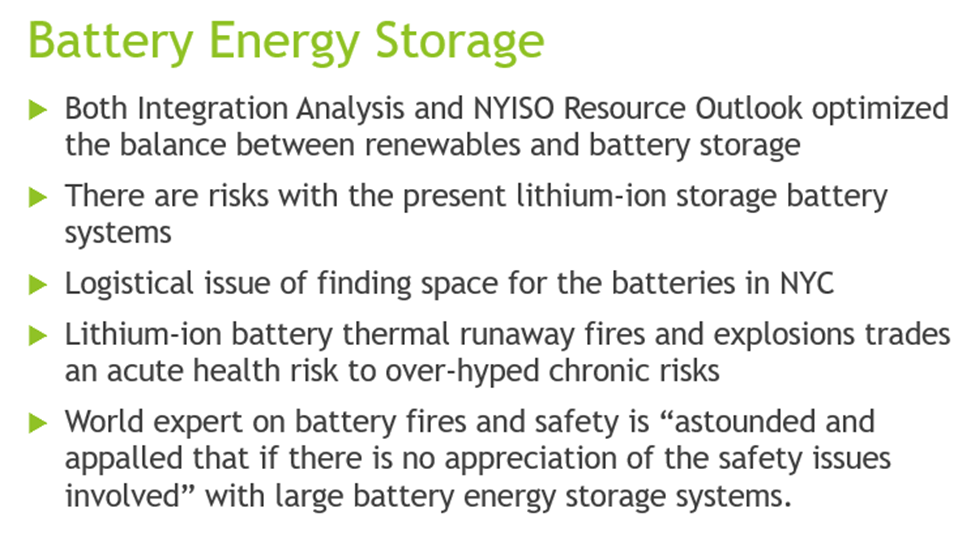
The weak link in NYS’ ambitious clean energy plan is the power storage medium. Choosing the right storage medium is critical and the answer may be to wait until these technologies prove themselves. Right now lithium and fuel cells are the only “off the shelf” storage mediums we have. Both have their issues. Lithium has its safety issues of thermal runaway and current fuel cells are expensive and use platinum, a very limited resource. Lithium too is limited as to availability.

I agree with this paragraph.

It has been said that one form of insanity is repeating a past failed experiment and hoping to obtain different results. The Scoping Plan, to put it mildly, is a highly ambitious plan. It treads in uncharted waters. Its success is hinged upon technologies that are not yet developed or not fully developed. Sure technology has been transformative but is the Scoping Plan actually built around an undetermined future? Will these ambitious plans repeat the mistakes of the past?

These are relevant points and I agree.  Interpretation of the mistakes of the past is a challenge.  For example, I think that the energy transition problems of Germany were due to the inherent challenge of using intermittent and diffuse wind and solar to power modern electricity and not because solar was expensive at the time it was installed.  Overcoming all the reasons why solar produced energy is more expensive than fossil-fired energy is likely an impossible challenge.

Like Germany’s ambitious plan for which the country is now left holding the bag. With NYS’ plan the storage system can be viewed in the same way as the German situation. In my humble opinion, large-scale storage battery technology is the linchpin for the Scoping Plan’s success, a technology essentially at its marketable infancy. You may raise a skeptical eyebrow and note the first accessible battery was invented in 1804! Yes, that is true but there was no practical use for it, ergo no market motivation. Now that also is diametrically reversed. A plethora of battery technologies have come out of the metaphorical woodwork. Improved lithium ion, magnesium, zinc, aluminum, carbon, boron, graphene, iron and who knows what. Each promising their own unique benefit such as size, power density, rechargeability, increased life expectancy.

I agree with this paragraph.  New York GHG emissions are less than one half of one percent of global emissions and global emissions have been increasing on average by more than one half of one percent per year since 1990.  That does not mean we should not do something but it does mean that we have time to address this problem.  If the storage problem cannot be solved then there cannot be a transition so I suggest that New York should focus more on developing technology that will enable the transition than on reducing emissions that cannot have any measurable effect on global warming impacts.

Recently the House Ways and Means proposed the “Limit, Save and Grow Act” (talk about a euphemism!) which has passed Congress. This act will greatly impede the change that we can meet the goals of clean energy. Instead it wants to cripple the Inflation Reduction Act, which provides for the advancement of alternate energy and a clean energy for the future. The GOP- sponsored bill should have been implemented during the 2017-21 era when that president authorized a $2.25 trillion-a-year spending spree that is responsible for the inflation we have today. This careless spending did not improve health care, education, clean energy or our infrastructure. With this act the GOP wants to stop advancement in alternate energy and a clean environment. Let’s hope the Senate feels differently.

I don’t have any comment on this.

In questioning average citizens, they respond with the three main concerns: the plan does not seem feasible in the amount of time, the cost of converting their homes to all electric, and the costs changing the system in New York.

The Scoping Plan is highly dependent upon Biden’s IRA, which as mentioned is under attack by the GOP. The Scoping Plan is also highly dependent upon technologies which have yet to be proven.

This is an excellent synopsis of my concerns.  The Scoping Plan does not include a feasibility analysis relative to existing reliability standards, did not provide cost impacts for the citizens of New York, and failed to provide justification for the ambitious schedule.  It does not matter if the IRA is under attack by Republicans.  The question is whether it can provide sufficient support for Climate Act implementation.

My conclusion

Yes, we have to do something! Continuing to process oil by shale or sand sites and clear cutting to get there is consequentially damaging our forests and fresh water supplies. Not to mention the added expense of cleaning up these sites. Nuclear power is way too expensive. While solar and wind power have their flaws, they are far less than the path of oil and nuclear. Gov. Hochul must make the right decisions. It might be better to wait on the predictable advance of technology than to build a questionable foundation.

Conclusion

My over-riding concern about the Climate Act is that there is insufficient support to prove that the plans will not do more harm than good.  The analyses comparing environmental impacts are biased and incomplete.  At this time the Hochul Administration has not prepared a cumulative environmental impact statement that considers the effects of all the wind and solar generation projected in the Scoping Plan.  Affordability and reliability concerns have been ignored and it is obvious that technological advances are needed if the transition is to be successful.  I agree that the it is better to make implementation contingent upon necessary technology.

Our Chaotic Climate System

The rationale for the Climate Leadership & Community Protection Act (Climate Act) net-zero transition plan is based on model assessments that project an existential threat.  Ron Clutz writing at Science Matters does an excellent job explaining why it is difficult to predict the effects of greenhouse gases on the climate system.  A recent National Review article draws the implications: “The range of predicted future warming is so enormous – apocalyptism is unwarranted”

I have been following the Climate Act since it was first proposed. I submitted comments on the Climate Act implementation plan and have written over 300 articles about New York’s net-zero transition. The opinions expressed in this post do not reflect the position of any of my previous employers or any other company I have been associated with, these comments are mine alone.

Climate Act Background

The Climate Act established a New York “Net Zero” target (85% reduction and 15% offset of emissions) by 2050 and an interim 2030 target of a 40% reduction by 2030. The Climate Action Council is responsible for preparing the Scoping Plan that outlines how to “achieve the State’s bold clean energy and climate agenda.”  In brief, that plan is to electrify everything possible and power the electric gride with zero-emissions generating resources by 2040.  The Integration Analysis prepared by the New York State Energy Research and Development Authority (NYSERDA) and its consultants quantifies the impact of the electrification strategies.  That material was used to write a Draft Scoping Plan.  After a year-long review the Scoping Plan recommendations were finalized at the end of 2022.  In 2023 the Scoping Plan recommendations are supposed to be implemented through regulation and legislation.  I submitted comments on Scoping Plan Section 2.1 Scientific Evidence of Our Changing Climate that refuted many of the apocalyptic claims made in Section 2.1 of the Draft Scoping Plan. 

Chaotic Systems

The first Intergovernmental Panel on Climate Change report stated: “The climate system is a coupled non-linear chaotic system, and therefore the long-term prediction of future climate states is not possible. Rather the focus must be upon the prediction of the probability distribution of the system’s future possible states by the generation of ensembles of model solutions.”  But what does that mean?

Edward Lorenz discovered the underlying mechanism of deterministic chaos.  In brief: “Chaos theory is the study of how systems that follow simple, straightforward, deterministic laws can exhibit very complicated and seemingly random long-term behavior.”  This is the so-called butterfly effect in which a butterfly’s wings can disturb the atmosphere in Brazil such that a tornado eventually results in Texas.

The reason for this post is Ron Clutz’s clear example of how this works in a short article.  I recommend that you read his post to see the animation examples.  He gives examples of simple systems and how the addition of one new variable creates a much more complex system.  In particular, adding a pendulum to the ball of another pendulum creates a complex trajectory that with significant effort “complex equations have been developed that can and do predict the positions of the two balls over time”.  The kicker to this:

If you arrive to observe the double pendulum at an arbitrary time after the motion has started from an unknown condition (unknown height, initial force, etc) you will be very taxed mathematically to predict where in space the pendulum will move to next, on a second to second basis. Indeed it would take considerable time and many iterative calculations (preferably on a super-computer) to be able to perform this feat. And all this on a very basic system of known elementary mechanics

Climate System

Clutz goes on to point out:

This is a simple example of chaotic motion and its unpredictability. How predictable is our climate with so many variables and feedbacks, some known some unknown? Consider that this planet’s weather/climate system is chaotic in nature with many thousands (millions?) of loosely coupled variables and dependencies, and many of these variables have very complex feedback features within them.

The central question underpinning the Climate Act net-zero transition is the effect of GHG emissions on the radiation budget of the world.  He sums up by quoting climate scientist Richard Lindzen’s summary from a presentation:

I haven’t spent much time on the details of the science, but there is one thing that should spark skepticism in any intelligent reader. The system we are looking at consists in two turbulent fluids interacting with each other. They are on a rotating planet that is differentially heated by the sun. A vital constituent of the atmospheric component is water in the liquid, solid and vapor phases, and the changes in phase have vast energetic ramifications. The energy budget of this system involves the absorption and reemission of about 200 watts per square meter. Doubling CO2 involves a 2% perturbation to this budget. So do minor changes in clouds and other features, and such changes are common. In this complex multifactor system, what is the likelihood of the climate (which, itself, consists in many variables and not just globally averaged temperature anomaly) is controlled by this 2% perturbation in a single variable? Believing this is pretty close to believing in magic. Instead, you are told that it is believing in ‘science.’ Such a claim should be a tip-off that something is amiss. After all, science is a mode of inquiry rather than a belief structure.

Conclusion

I cannot improve on Clutz’s summation:

For now, though, navigating the climate debate will require translating the phrase “climate denier” to mean “anyone unsympathetic to the most aggressive activists’ claims.” This apparently includes anyone who acknowledges meaningful uncertainty in climate models, adopts a less-than-catastrophic outlook about the consequences of future warming, or opposes any facet of the activist policy agenda. The activists will be identifiable as the small group continuing to shout “Denier!” The “deniers” will be identifiable as everyone else.

Climate Act Transition Plan Pitfalls – Other Voices

A couple of recent articles caught my attention as very good summaries of the challenges of the Climate Leadership & Community Protection Act (Climate Act) transition plan to achieve net zero by 2050.  I provide summaries with extensive quotes but I recommend readers take the time to go to the original articles and read the whole thing.

I have been following the Climate Act since it was first proposed. I submitted comments on the Climate Act implementation plan and written over 300 articles about New York’s net-zero transition because I believe the ambitions for a zero-emissions economy embodied in the Climate Act outstrip available renewable technology such that the net-zero transition will do more harm than good.  The opinions expressed in this post do not reflect the position of any of my previous employers or any other company I have been associated with, these comments are mine alone.

Climate Act Background

The Climate Act established a New York “Net Zero” target (85% reduction and 15% offset of emissions) by 2050. The Climate Action Council is responsible for preparing the Scoping Plan that outlines how to “achieve the State’s bold clean energy and climate agenda.”  In brief, that plan is to electrify everything possible and power the electric gride with zero-emissions generating resources by 2040.  The Integration Analysis prepared by the New York State Energy Research and Development Authority (NYSERDA) and its consultants quantifies the impact of the electrification strategies.  That material was used to write a Draft Scoping Plan.  After a year-long review the Scoping Plan recommendations were finalized at the end of 2022.  In 2023 the Scoping Plan recommendations are supposed to be implemented through regulation and legislation.

The New York official Climate Act webpage describes the Scoping Plan as the “framework for how New York will reduce greenhouse gas emissions and achieve net-zero emissions, increase renewable energy use, and ensure all communities equitably benefit in the clean energy transition”. It has also been aptly described as “a true masterpiece in how to hide what is important under an avalanche of words designed to make people never want to read it”.  Importantly, the basis of the document, the Integration Analysis, does not provide enough detail to determine if the conglomeration of control strategies that they have cobbled together will actually work together as proposed in general, and, in particular, on the arbitrary schedule mandated by the Climate Act.

New York GHG emissions are less than one half of one percent of global emissions and global emissions have been increasing on average by more than one half of one percent per year since 1990.  This does not mean that New York State should not do something, but it certainly eviscerates any claims that we do not have time to fully evaluate what has been recommended in the Scoping Plan framework.

Francis Menton writing at the Manhattan Contrarian and Arnold Wallenstein writing at Utility Dive both argue that there are fundamental flaws in the transition plan that will add costs and reduce reliability.  However, in the land of Albany politics the disconnect between aspirations and reality is not apparent. 

Samar Khurshid writing at the Gotham Gazette wrote a good overview of the current status of the 2023 implementation push entitled Major Climate and Energy Policies Being Decided in Albany State Budget Negotiations.  He quoted Senator Pete Harckham, a Westchester Democrat who chairs the Senate’s Committee on Environmental Conservation, as saying:

“Consumers are eventually going to be paying less on their utility bills, because energy will be less expensive,” he added. “We’ll lower our health care costs and we’ll be creating 130,000 high-paying union jobs. So there are a lot of upsides to this as we go forward.”

The idea that utility bills will go down is so incredibly out of touch that I can only attribute that belief as religious dogma.  The only way someone can believe that is if they do not understand the difference between power and energy.  In brief, you pay for energy so the comparison metric should be energy produced by wind and solar.  It does not matter if wind and solar provide cheaper power than a fossil plant.   Because those resources are intermittent it is necessary to backup them up when the wind is not blowing and the sun is not shining.  When the costs to provide reliable energy are included New York will find, just like every other jurisdiction that has attempted this transition, that the costs are enormous.  Enough from me the rest of the post summarizes the opinions of two others who share my view.

Menton on the Climate Act Transition Plan

Francis Menton is a retired attorney and author of the Manhattan Contrarian blog where over the he has published well over 1000 articles on issues of public policy.  Close to one-third of the posts at Manhattan Contrarian deal with the subject of climate change broadly defined, including such topics as the application of the formal scientific method to what passes for climate “science” in today’s academia, and evaluation of the potential costs and practical difficulties of attempting to replace our current energy systems with intermittent wind and solar electricity generation.  He is a board member and current President of the American Friends of the Global Warming Policy Foundation. 

In his article, New York Goes Full Central Planning For The Electricity Sector, Menton writes that the only option considered in the Climate Act transition is full speed ahead. There hasn’t been a feasibility study or consideration of a demonstration project so there is no clue whether this will work or not.  In his article he reviews a document that supposedly gives more detail as to how New York is going to accomplish the net zero transition.

In January 2022 electric utility Con Edison issued “An Integrated View of Our Energy System through 2050.”  He writes:

Let me start with a few thoughts on the Con Edison Report. It is lots of verbiage and plenty of charts and graphs. And it is more or less exactly what you would expect if you think for say, one minute, about what position Con Edison might take. As a deeply regulated entity, they are completely required to affirm the directives and applaud the wisdom of their government overlords. But more than that, they are clearly salivating over the prospect of getting to make billions of dollars of new investments, all of which will earn a guaranteed, regulated rate of return for their investors — and if we are really, really lucky, the end result will be that we get the exact same electricity for much higher cost. If we aren’t so lucky, we will get much less reliable electricity for the much higher cost. The cost factor is played down throughout the Report, and we never get any meaningful quantification.

But all the verbiage and charts and graphs mainly have the purpose of obscuring the fact that Con Ed does not take responsibility for making sure that there is enough electricity availability to supply customer demand on the grid. That’s somebody else’s job.

To set the tone, here is a quote from page 1:

[W]e are committed to being the next-generation, clean energy company that our customers deserve and expect. We will play a critical role in delivering on the ambitious climate and clean energy goals set by New York State and New York City, including reaching net-zero greenhouse gas (GHG) emissions by 2050. In addition, the need for safe, reliable, and secure energy infrastructure remains paramount.

OK, where in there did you say that you take responsibility for there being enough electricity to meet demand?

Cost barely gets mentioned in the introductory section. It finally turns up in the last paragraph.

Here’s how they spin it:

We recognize this transition to a net-zero GHG emissions energy system will require significant investment. We seek to make investments that achieve the goals of this transition as cost- effectively as possible, which necessitates growing our electric system while maintaining our gas and steam systems to achieve clean energy goals.

In other words, whoo-boy is there a lot of money for us to make here!

He goes on to discuss that Con Ed does not take responsibility to build the things necessary they only offer support for “interconnection” and “balance.”  Then he addresses energy storage and note that Con Ed does not make the proper delineation between power and energy.

And how about the trillions of dollars worth of energy storage that will be needed when the sun doesn’t shine and the wind doesn’t blow? See if you can decode this word salad:

“We have developed plans to build the necessary electric transmission and distribution infrastructure by 2050 to . . . [d]evelop and facilitate up to 12.6 GW of energy storage through direct utility investments and customer programs at customer and utility scales.”

Where even to start? “12.6 GW” of storage? They don’t even know the correct units to discuss this issue. If these are four-hour duration lithium ion batteries (unspecified, but what else could they be talking about?), that will give you 50.4 GWh of storage — enough to cover New York State for a couple of hours at most of low sun and wind. Competent calculations indicate a storage requirement of more like 20 to 30 days of storage to deal with the seasonality of the sun and wind. So this is at best a small fraction of one percent of what will be needed to back up the solar/wind grid of the future.

But what does Con Ed care? They’re not actually saying here that they are taking responsibility for making the new system work, let alone even providing the batteries themselves. They’re only saying that they have “developed plans” to “facilitate” the storage, which could occur either through “utility investments” or “customer programs.” In other words, I guess, hey sucker, use your electric car battery to power the house when the grid goes down.

Arnold Wallenstein on the Climate Act Transition Plan

Arnold R. Wallenstein is a Boston-based attorney who represents independent power producers in New York and other states and is the principal member of the EnergyLawGroup.org. Wallenstein explains in New York’s plan for transforming its electricity generation will reduce reliability at extreme cost that there are obstacles to meeting the ambitious schedule of the Climate Act net-zero transition.  He explains why he thinks the transition plan is doomed to failure:

The Climate Action Council projects current electric load in New York to triple by 2040 due to the electrification of transportation and 100% building electrification. By 2040, when all electricity generation must be zero emissions, NYISO, the independent New York grid operator, states that at least 95 GW of new generation must be developed to make up for generation plant retirements and increased electrical demand. This goal is unrealistic and unachievable because the state only added 12.9 GW over the last 23 years, and it is highly unlikely that 95 GW of new generation capacity will be added in 17 years due to state permitting and grid interconnection delays.

The Climate Action Council’s final Scoping Plan also reveals that New York will need 15 GW to 45 GW of new “zero emission dispatchable electric generation” by 2040 to meet increased electric demand and maintain electric system reliability. This is emission-free electric generation that can be dispatched, i.e., turned on, by NYISO at night or stormy conditions when there is no solar radiation or during calm wind conditions. But the Scoping Plan also admits that this 15 GW – 45 GW target “cannot be currently met” with existing technologies.

This dire prediction is confirmed by NYISO, which has issued reports stating that the New York grid may experience as much as a 10% deficiency, and possibly more,  in generation capacity by 2040, and will require 32 GW of new zero-emission dispatchable generation by 2040 — which would almost double the current New York grid’s 37 GW generation capacity. NYISO also warns that such zero-emission dispatchable generation technologies “are not commercially available.” Electricity shortages will occur if these new emission-free generation plants do not materialize in time as hoped for by the state. Hope is not an action plan to solve electric reliability deficits. 

Electric power deficiency is already starting to occur. A report just issued on April 14 by NYISO points out that New York City and the Lower Hudson Valley may have electric reliability problems and generation shortages starting in 2025 due to generation plant retirements caused by the New York Department of Environmental Conservation shutdown of NOx producing peaker plants and if there are extreme weather events, worsening through 2032, where there may a 600 MW generation deficiency in New York City and environs.

The Climate Action Council’s climate plan — if fully implemented by the state as is currently being debated in the legislature — risks placing New York in an electricity shortage that could result in blackouts and brownouts. The New York grid operator pointed out that if existing gas-fired electric generation is shut before new resources come on line, there is a risk that NYISO will not be able to provide a reliable electric system. 

NYISO also said fossil fuel generators — natural gas and oil-fired — will be needed to maintain reliability until non-emitting dispatchable resources can effectively replace the fossil-fired generation plants to provide grid reliability as a back up to intermittent, weather-dependent renewable energy resources. NYISO also predicts than in 2040 when fossil-fueled generators are shut down by state’s climate law, zero-emissions dispatchable generation, which doesn’t yet exist, will still be required to supply 10% or more of New York’s electricity, depending on how many megawatts of new renewable and “dispatchable” emission-free generation is actually operational by 2040. 

These warnings of future electric deficiencies are echoed by the New York State Electric Reliability Council and the North American Electric Reliability Corp., the entities tasked with monitoring electric reliability in New York as well as the U.S.

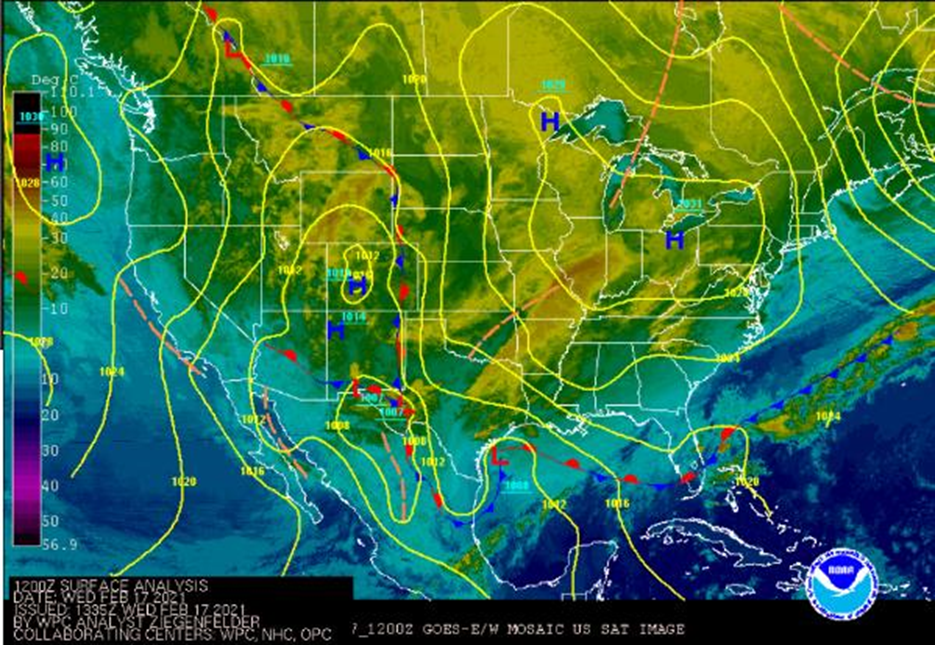
Blackouts during cold winter months can cost lives. When Texas experienced an unprecedented freeze in 2021 between 246 (direct) and 700 (indirect) people died because of power outages. Similarly, many people died in Buffalo’s Christmas 2022 blizzard. That cannot be allowed to happen in New York because of a poorly designed climate plan.

If that wasn’t enough, the cost to implement New York’s climate plan may be stratospheric: authoritative commentators, including the Empire Center for Public Policy, have suggested New York taxpayers and ratepayers will pay $340 billion to $500 billion to transition the New York electric system to primarily relying on solar and wind power supplemented by battery storage.

But no overall cost analysis was provided by the State’s Climate Action Council.

Gavin Donohue, CEO of the Independent Power Producers of New York, refused to vote for the climate plan, and said it would take pure “magic” to make the plan work.

And how much will this costly plan contribute to reduction of greenhouse gases: only 0.4% of global GHG emissions according to recent commentators.

A reliable supply of electricity that can be generated at all times during cold nights and low wind conditions is absolutely essential to our modern economy and our standard of living. The state’s climate plan’s proposed radical changes to the New York electricity generation sector should not be fully implemented by the state until it can guarantee that there will be adequate generation at all times. This means keeping in service some natural gas-fired generation which can quickly ramp up when solar and wind plants are not operating. NYISO warns that with even with increased renewable energy generation by 2040, “at least 17,000 MW of existing fossil generation must be retained to reliably serve forecasted demand.”

Conclusion

The difference between these articles that clearly are based in reality and Harckham’s statement that  “Consumers are eventually going to be paying less on their utility bills, because energy will be less expensive” could not be starker.  The innumeracy of anyone who thinks that intermittent wind and solar power can ever be cheaper is astounding because the numbers are so straight-forward.  It must be that they simply don’t want to hear anything that runs contrary to their cherished narrative.  At what point will they concede the risks of this insane policy.

Both authors echo my concerns about the lack of adequate feasibility planning to maintain current reliability standards and the absence of a complete accounting of the costs.  This blog is dedicated to the idea that environmental regulation should concentrate on tradeoffs and consideration of all the impacts.  Both authors argue that this pragmatic approach is not a characteristic of the Climate Act transition.  I agree with Wallenstein that “the New York Climate Action Council’s climate plan, if carried out as intended, will probably not be able to supply New York state with a reliable supply of electricity. And it will cost New York taxpayers and utility customers (i.e., everyone) hundreds of billions of dollars to create a less reliable electric system than New York now enjoys.”

Skeptical Overview of the Climate Act Presentation 2

This is a summary of the presentation I am giving to the Mohawk Valley Environmental Information Exchange on March 8, 2023 explaining why I believe that the risks, costs, and impacts of the Climate Leadership and Community Protection Act (Climate Act) exceed the protections, savings, and benefits.  It is very similar to a presentation I made last December.

Everyone wants to do right by the environment to the extent that they can afford to and not be unduly burdened by the effects of environmental policies.  I submitted 23 comments on the Climate Act implementation plan and have published over 250 blog posts on  New York’s net-zero transition because I believe the ambitions for a zero-emissions economy embodied in the Climate Act outstrip available renewable technology such that this supposed cure will be worse than the disease.  The opinions expressed in this post do not reflect the position of any of my previous employers or any other company I have been associated with, these comments are mine alone.

Introduction

I explained that given the time constraints it was only possible to give sound bites to describe why I am skeptical of the ultimate impacts of the Climate Act.  This blog post gives an overview of the presentation and, more importantly, a link to detailed information supporting my arguments.  Everything presented draws on my blog posts and Draft Scoping Plan comments.

I discussed three primary concerns: reliability, affordability and environmental impacts.  In every instance, my evaluation of the components of the transition plan has found that issues are more complicated, uncertain, and costly than portrayed by the State.   Moreover, they have not provided a feasibility analysis to document whether their list of control strategies could work.  In addition there is no implementation plan.  The Climate Act is simply too fast and too far.

Overview of the Climate Act

I described the transition plan for New York’s Climate Act “Net Zero” target (85% reduction and 15% offset of emissions) by 2050.  The Climate Action Council developed an outline of plans to implement the Act in 2022.  The 22 members of the Council were chosen for their ideology and not their expertise. As a result of the lack of clear direction by the Hochul Administration their plan misplaced priorities.  Instead of focusing on overarching policy issues there was  inordinate attention to personal concerns of Council members. 

Over the summer of 2021 the New York State Energy Research & Development Authority (NYSERDA) and its consultant Energy + Environmental Economics (E3) prepared an Integration Analysis to “estimate the economy-wide benefits, costs, and GHG emissions reductions associated with pathways that achieve the Climate Act GHG emission limits and carbon neutrality goal”.  Integration Analysis quantitative implementation strategies were incorporated into the Draft Scoping Plan when it was released at the end of 2021.  After an extended comment period and ostensible review of the comments the Council released the Final Scoping Plan at the end of 2022.

I expressed my disappointment with the public stakeholder process associated with the Draft Scoping Plan comments. Seven hundred people spoke at Climate Act Public Hearings and around 35,000 comments were received.  However, on the order of 25,000 comments were “potentially the same or substantially similar”, i.e., form letters.  That still left 10,000 unique comments that the Council promised would be “acknowledged”.  In my opinion, the comment process was treated as an obligation not as an opportunity to improve, correct, or clarify the scoping plan.

Of course it is unreasonable to expect that the Council members could be expected to review all the comments themselves.  Agency staff categorized the comments and then filtered them in presentations to the Climate Action Council that described themes with very little specificity.  I think there was a clear bias in the presentations.  Anything inconsistent with Administration’s narrative was disparaged, downplayed, or ignored.  I was most disappointed that no comments on the fundamental basis of the Draft Scoping Plan, that is to say, the Integration Analysis, were mentioned, much less discussed.

I also addressed the Climate Act mandates for 2023.  The expectation is that the regulations that implement policies that force the transition away from fossil fuels will be implemented by the end of 2023.  However, the Climate Act also mandates a public comment and consultation process before promulgating regulations.  It requires the Department of Environmental Conservation (DEC) to complete a public comment and consultation process before it can promulgate the 2024 Implementing Regulations.  This process includes public workshops and consultation with the Climate Action Council, the Environmental Justice Advisory Group, the Climate Justice Working Group, representatives of regulated entities, community organizations, environmental groups, health professionals, labor unions, municipal corporations, trade associations and other stakeholders. At least two public hearings and a 120-day public comment period must be provided. Only after this extensive stakeholder process concludes is DEC authorized to propose the implementing regulations.  When the regulations are formally proposed the State Administrative Procedures Act requires a 60 day public comment period, public hearings, and that the agency respond to all comments.  I think this is a very ambitious plan.

Electric Grid Risks

Many of the most vocal supporters of the Climate Act believe that existing renewable technology is sufficient to transition the New York electric grid to zero-emissions resources by 2040 and that suggestions that may not be true are misinformation.  In order to address that fallacy my presentation concentrated on my concerns about the reliability risks of an electric grid that is dependent upon intermittent and diffuse renewable resources.  The electric grid is crucial to New York’s energy future because the primary de-carbonization strategy is to electrify everything possible using those resources.  I described the existing grid, generation resource planning, the current New York State system, and the projected New York State system.  Electric grid reliability requires that generation resources match electric load at all times and the challenges associated with wind and solar in this regard are ignored by those who believe that existing technology is sufficient.

I made the point that failure to adequately plan will mean an inevitable catastrophic blackout like the

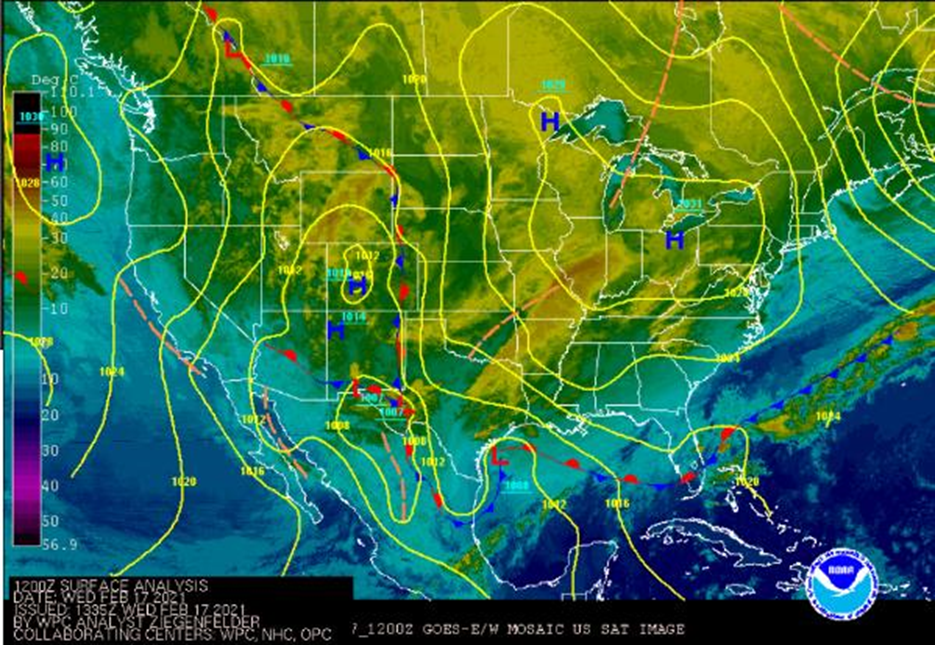
Texas February 2021 blackout.  In short, weather related issues due to freezing rain, snow and then an extended period of cold weather led to periods when the generating resources did not match the load necessary.  The storm was the worst energy infrastructure failure in Texas history.  Over 4.5 million homes and residences were without power, at least 246 people died, and total damages were at least $195 billion. 

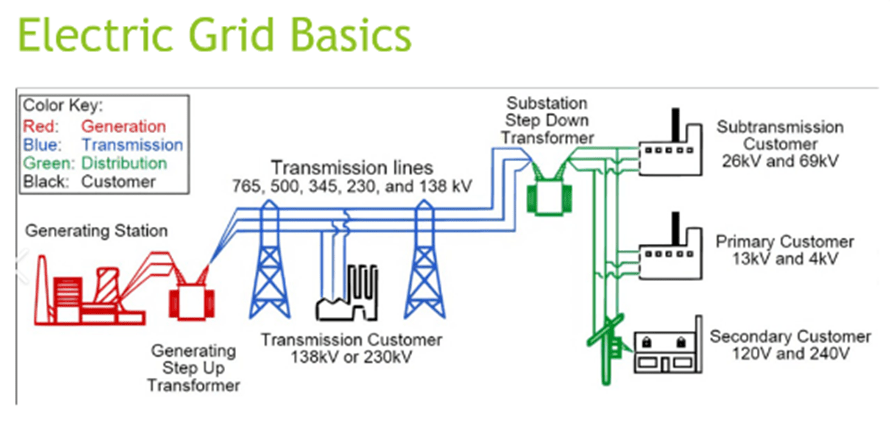
In order to illustrate the basic electric grid I included the following diagram.  It shows that generating station provide power using turbine generators that convert mechanical energy into electric energy using water, steam, or other means to spin the turbines.  I have heard the argument that the grid is inefficient because there are power losses between the generating station and the users but the fact is that New York will always be dependent upon a transmission system because there is insufficient space in New York City for sufficient renewable resources to provide the energy needed to keep the lights on.  Power output from generating plants is stepped up at substation transformers for long distance transmission and then substation transformers step down the power for the distribution system for use by consumers.

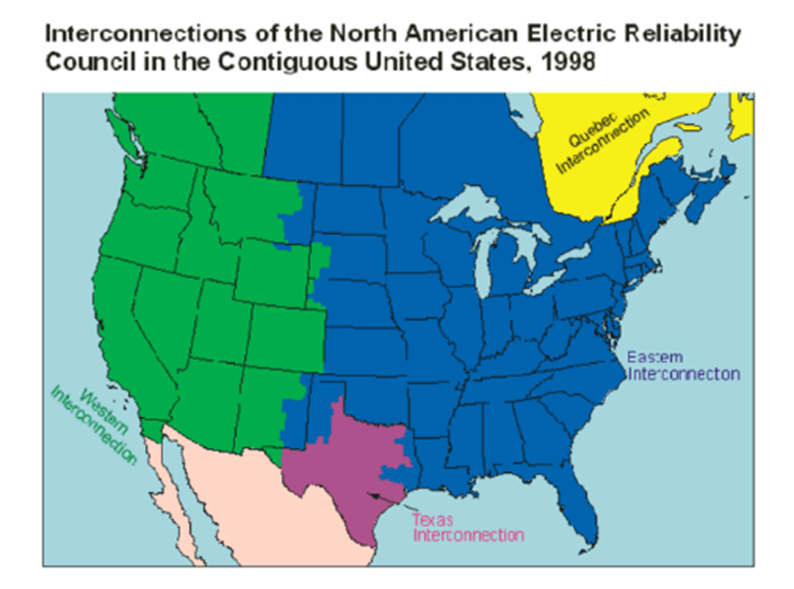
I included the following diagram to make the point that New York is in the Eastern Interconnection which is the largest machine in the world.  Incredibly all the fossil, hydro, and nuclear generating stations in the Eastern Interconnection work together.  In order to provide 60 Hz power the generating turbines are synchronized to run at 3600 revolutions per minute.  Operators keeps the voltages as constant as possible in the entire area but have the advantage that those turbines provide inertia and they can dispatch generating resources as necessary.  Unfortunately, wind and solar resources are inverter based and cannot be dispatched as needed.

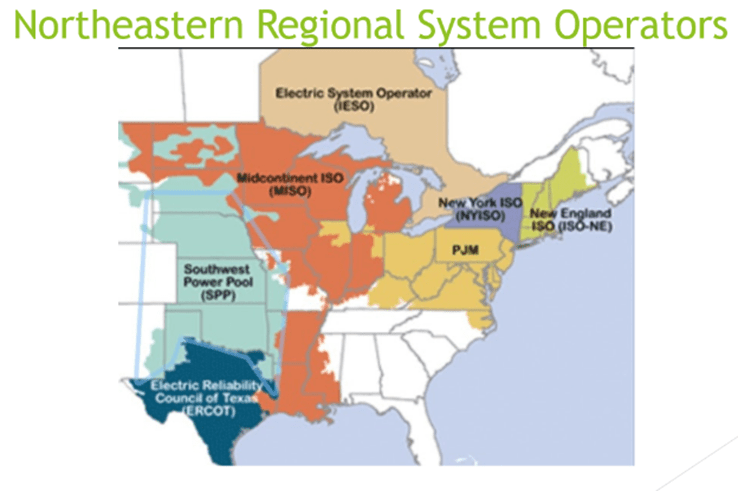
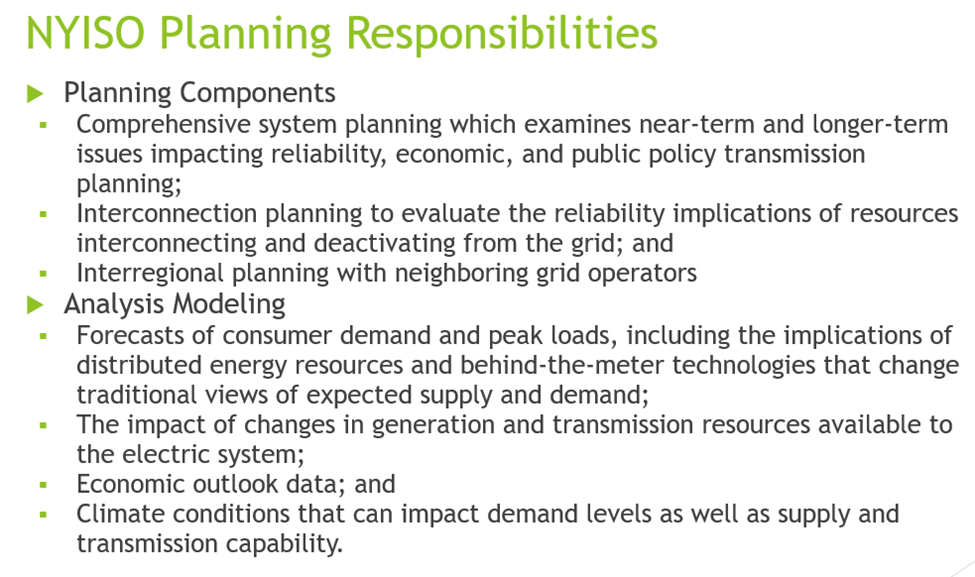
New York State has its own regional operator – the New York Independent System Operator (NYISO).  Within Power the Eastern Interconnection system operators match the load with the generation in smaller regional systems. Regional system operators manage imports and exports between neighboring systems.  New York has unique system constraints related to New York City and Long Island that warrant its own system operator.

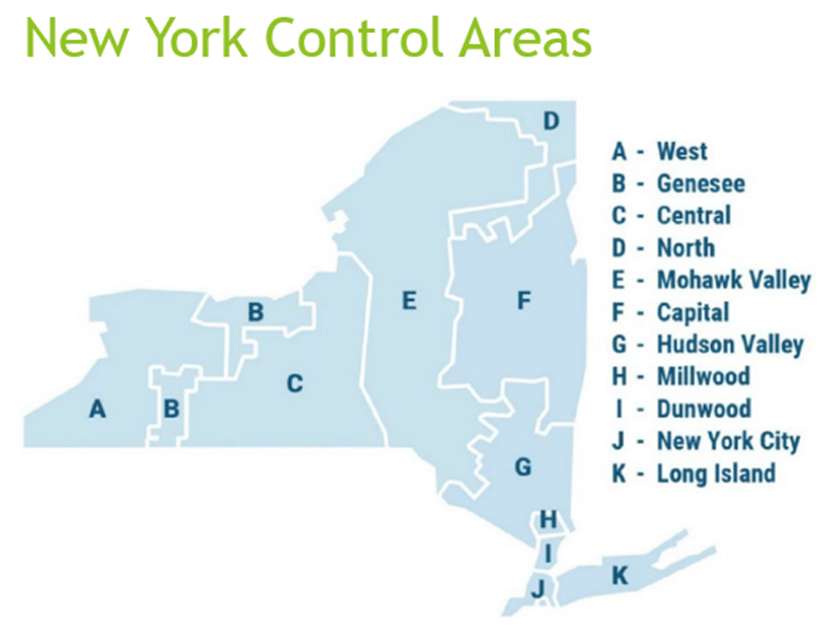
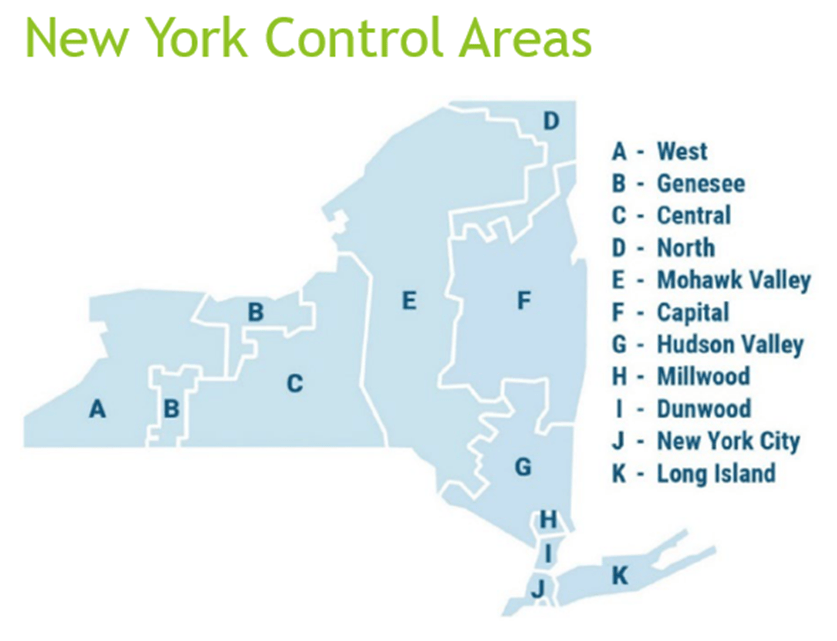
NYISO operates the electric grid for New York State.  There are 11 control areas with specific load, interconnection, and generation characteristics that must be addressed on a six-second basis to keep the lights on.  New York State’s major challenge is that there are limits to transmission to the highly populated New York City and Long Island control areas.  The NYISO has to address different time scales for load management

  • Sub-minute fluctuations are addressed automatically
  • Hourly and daily fluctuations are handled by operators
  • Annual peaks require planning so that operators can respond

New York’s high reliability performance standards are the result of decades of experience working with dispatchable resources and implementation of specific metrics developed after blackouts in 1965 and 1977.

In order to educate those who believe that existing renewable resources are sufficient for maintaining current reliability standards I described generation resource planning.  The following load duration curve is a key concern of load management planning.  There are three general resources.  Baseline resources ideally are dispatched so they can run at a constant rate which enables the resource owners to tune the units to run as efficiently as possible.  Daily load variations require some resources to follow load during the day.   The biggest planning challenge is capacity and energy for peak loads that occur when temperatures are highest or lowest.  Before deregulation, each utility was responsible for meeting all these resource needs.  In New York City the solution for the peak load problem was a fleet of simple-cycle turbines dedicated for use to provide peaking power when and where needed.

The problem with existing renewable resource technology is matching load when the system is dependent upon renewable resources that cannot be dispatched and provide variable energy.  This is a new and difficult challenge.  It is exacerbated by intermittent renewable energy availability associated with peak loads. Load peaks with the coldest and hottest weather but those conditions typically are low wind resource periods.  Wind lulls in the winter when solar is low availability is the critical reliability issue.

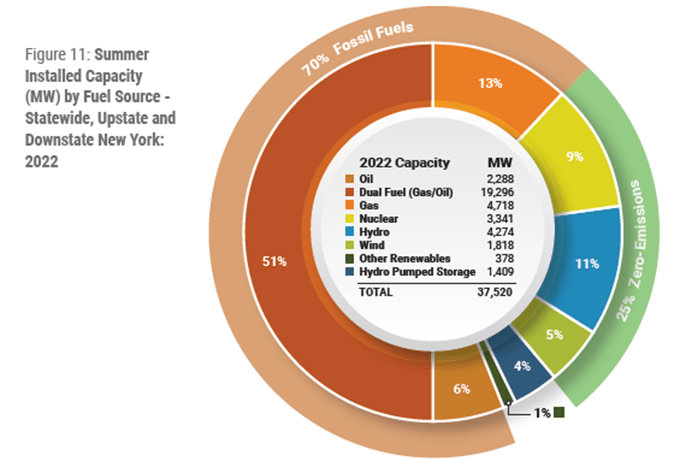
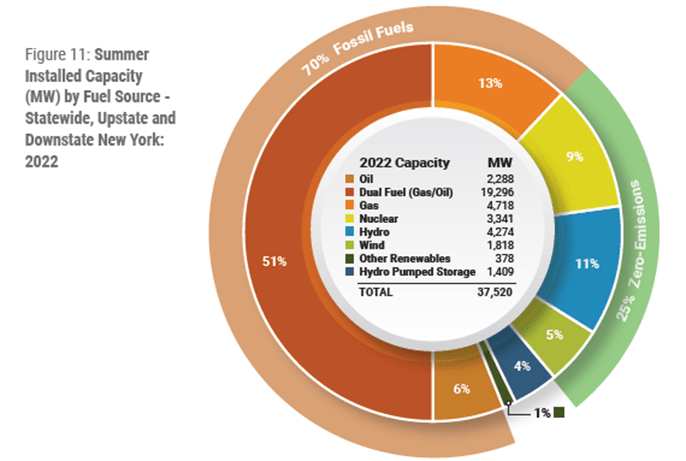
The NYISO 2022 Power Trends Report  includes this description of the capacity (power available in MW) for the existing system.  It shows that 70% of installed capacity is fossil fueled and 25% is zero emissions.

Wind and other renewables (solar energy, energy storage resources, methane, refuse, or wood) account for only 6% of installed capacity.  Note that NYISO does not measure distributed solar directly.  In their accounting it reduces the load so less generation is needed.

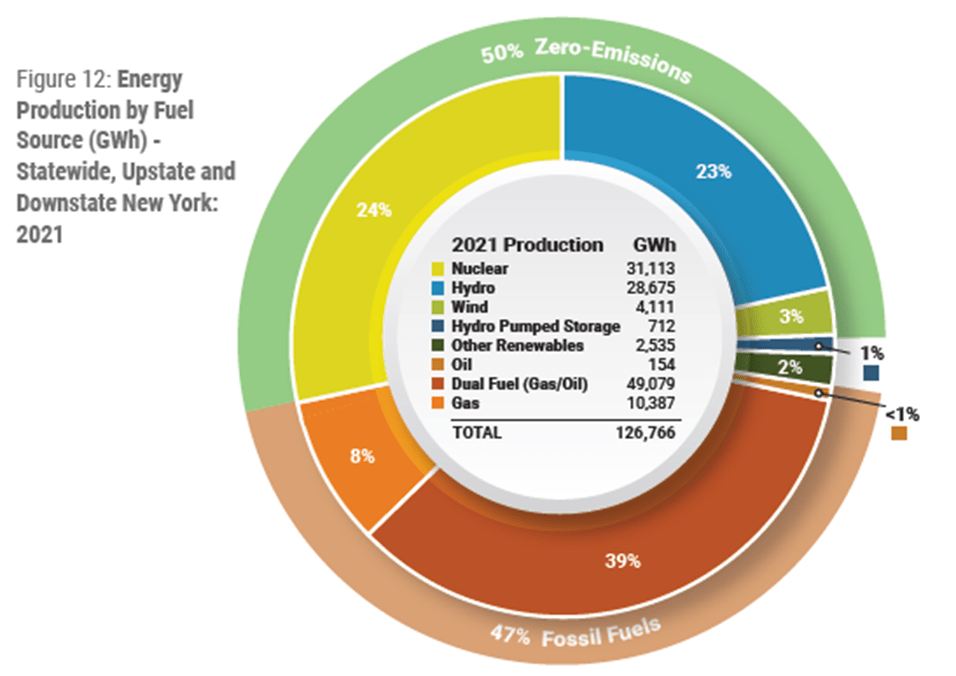
The NYISO 2022 Power Trends Report  includes this description of Energy Production (MWh).  Note that 50% of New York’s generated electricity is zero-emissions.  There is a Climate Act target to “Increase renewable sources to 70 percent by 2030” that does not include zero-emissions nuclear. One reason that I am skeptical of the Climate Act is because 24% of renewable source energy produced is hydro and hydro pumped storage.  Wind and other renewables (solar energy, energy storage resources, methane, refuse, or wood) account for 5% of energy produced.  The 29% of the energy produced  from renewable sources is far less than the 70% by 2030 target. I don’t think that it is feasible to develop over 29GW of renewable resources between now and 2030 with supply chain issues, constraints on permitting, procurement, and construction when development of supporting infrastructure is also needed for off-shore wind development.

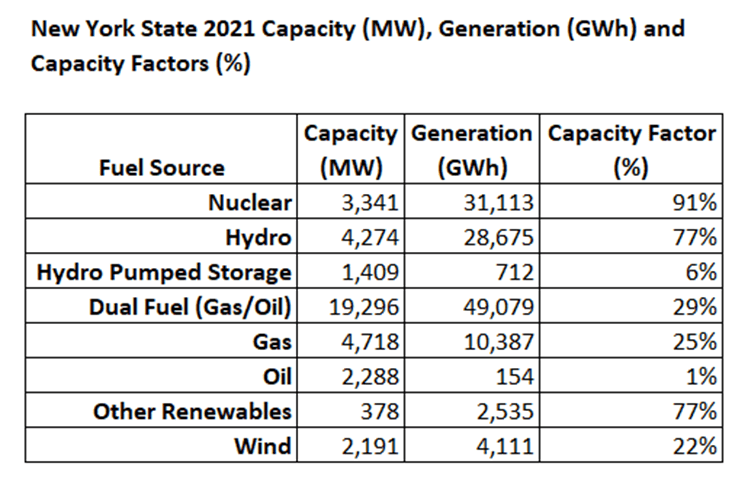
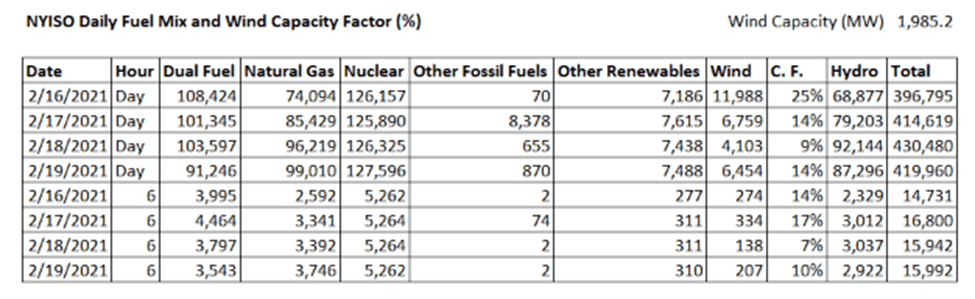
The capacity factor is a useful metric to understand electric generation resources.  The annual capacity factor equals the actual observed generation (MWh) divided by maximum possible generation (capacity (MW) times the 8,760 hours.  In New York nuclear is a key contributor but the Administration recently shut down 2,000 MW at Indian Point.  As a result, CO2 emissions from the electric sector increased by 23% since the phased-in shutdown of Indian Point started.  At this time the simple-cycle peaking turbines are being phased out and peaking power is produced by oil-fired units and spare capacity in the gas and dual fuel units.  Oil burning is a unique New York resource.  Imagine the difficulty replacing that capacity with a resource that would only need to run 1% of the time.  Note that in 2021 New York land-based wind only had a 22% capacity factor.

It is commonly argued that renewables are the cheapest type of new electric generating resources.  For example, that was the claim in a Dave Davies interview on National Public Radio Fresh Air: “A new climate reality is taking shape as renewables become widespread” with New York Times staff writer David Wallace-Wells.  Wallace-Wells said: “In fact, according to one study, 90% of the world now lives in places where building new renewable capacity would be cheaper than building new dirty capacity. And indeed, in a lot of places, it’s already cheaper to build new renewables than even to continue running old fossil fuel plants.” He went on to say “…we should be going all in on renewables here. We shouldn’t be building new coal or new oil or new gas capacity.”

The key to this claim is the reference to capacity.  If that were the only factor involved in getting the electricity when and where it is needed 24-7, 365 days a year without losing load due to extreme (one in ten year) conditions then his argument that we shouldn’t be building new coal, oil, or natural gas capacity” would be valid.  It is not.  Obviously electric users want power even when the wind is not blowing at night.  Electric system innumerates under-estimate the challenge of the energy storage requirements for extreme renewable resource lulls which correlate well with weather events that are safety threats because of extreme cold and heat. 

Given time restraints I could not fully describe all the NYISO’s planning responsibilities.  I did not include the following slide and made the point that their modeling analyses incorporate all of the complexities of the New York electric system.  I did not describe the three primary components of their responsibilities: comprehensive system planning which examines near-term and longer-term issues impacting reliability, economic, and public policy transmission planning; interconnection planning to evaluate the reliability implications of resources interconnecting and deactivating from the grid; and

Inter-regional planning with neighboring grid operators. One of the primary functions of the NYISO is electric system planning.  NYISO modeling incorporates all the complexities of the eleven control areas in the New York energy system.

I included the following summary of the NYISO Comprehensive System Planning Process to show all the components and to highlight the recent addition of a new component.  In order to address the Climate Act NYISO added “Develop the System & Resource Outlook” component that looks at a longer planning horizon that was included previously. 

The first report for the resource outlook component was released a couple of months ago.  The 2021-2040 System & Resource Outlook can be downloaded from NYISO and a datasheet summary of key takeaways of the Outlook report is also available.  The summary describes the four key findings: an unprecedented buildout of new generation is needed, load will increase when we electrify everything, transmission is necessary and must be expended to get diffuse renewables to New York City and a new resource has been identified: Dispatchable Emissions-Free Resource (DEFR).  That resource is essentially a fossil-fueled turbine without any emissions. 

I compared the NYISO Resource Outlook modeling analysis with the Integration Analysis modeling.  The Outlook analysis was based on three scenarios.  In order to evaluate the effects of different policy options, this kind of modeling analysis projects future conditions for a baseline or business-as-usual case.  The evaluation analysis makes projections for different policy options, and then the results are compared relative to the business-as-usual case.  NYISO ran two policy scenarios: one based on their estimates of future demand and one that tried to simulate the Integration Analysis projections.  I compared their scenario 1 to the Integration Analysis in the presentation.

I compared the NYISO Resource Outlook modeling analysis with the Integration Analysis modeling.  The Outlook analysis was based on three scenarios.  In order to evaluate the effects of different policy options, this kind of modeling analysis projects future conditions for a baseline or business-as-usual case.  The evaluation analysis makes projections for different policy options, and then the results are compared relative to the business-as-usual case.  NYISO ran two policy scenarios: one based on their estimates of future demand and one that tried to simulate the Integration Analysis projections.  I compared their scenario 1 to the Integration Analysis in the presentation.

The Integration Analysis modeling was used to develop the Draft Scoping Plan.  It is important to note that contrary to usual practice the Integration Analysis baseline was a reference case that included “already implemented” programs.  In other words there are some programs incorporated into the Reference Case that only exist to reduce GHG emissions.  This definition of the Reference Case instead of a Business-As-Usual case is different practice and motivated to get a specific answer.

The Integration Analysis considered four different policy projections.  The first considered the Advisory Panel recommendations for control measures, but the modeling showed that they did not meet the Climate Act targets.  The Integration Analysis came up with three mitigation scenarios that did meet the targets.  The model used for the analysis is not as sophisticated as the NYISO model.  Modelers plugged in a set of control measures at varying efficiencies until they met the targets.  Note, however, they have not claimed that the scenario measures as scoped out will provide electricity that meets current reliability standards.  In my opinion this approach gave the impression to the Council that meeting the targets would be relatively easy.  Council members requested scenarios that considered a faster implementation schedule and more reductions that the 85% target.   The cost/benefit results claim that those more stringent scenarios provide more benefits primarily because of reduced costs.  I think that is a counter-intuitive result so my comparison was against Scenario 2: Strategic Use of Low-Carbon Fuels.

I compared the installed capacity for the two models in the next table.  As noted by the NYISO, an extraordinary development of renewables by 2030 is required and both models agree on that.  There also are some key differences.  The NYISO modeling projects more onshore wind, less offshore wind, less solar, and more DEFR.  The NYISO model simultaneously optimizes resource capabilities and costs to come up with a least-cost solution. I think the wind differences are due to cost and availability differences.  The two modeling approaches handle distributed solar differently.  NYISO does not measure generation from distributed sources and only considers it as a way to reduce the load needed.  The Integration Analysis explicitly includes distributed solar capacity and generation as an output.  Note that existing storage is pumped hydro but any new storage will be batteries.  Finally, it is notable that both modeling analyses project that 2040 DEFR will be comparable to existing fossil capacity albeit NYISO projects significantly more and Integration Analysis a little less.

I compared the energy produced (GWh) for the two models in the next table.  The largest difference between the models is that NYISO projects that DEFR generates ten times more energy.  It turns out that NYISO has DEFR generating 14% of the total energy in 2040 but Integration Analysis projects only 1%.  NYISO projects more onshore wind than offshore wind and the Integration Analysis projects the opposite.  There is huge difference between solar but I believe that is related to the fact that NYISO does not explicitly include distributed solar.   Clearly the two models handle storage differently.

I noted earlier that I was disappointed that the Hochul Administration ignored my comments on the Integration Analysis.  The capacity factor table shows one of the points I made in my comments.  I pointed out that the Integration Analysis land-based wind capacity factors were unrealistically high.  The model projected the 2020 generation with a capacity factor of 29% but the 2021 observed capacity factor was only 22%.  The model could not even get the starting year correct.  As a result the Integration Analysis projections for the land-based wind needed to meet the load is too low.  For all renewable resources the Integration Analysis capacity factors are higher than the NYISO projections.  I prefer the projections from the organization responsible for New York reliability to those from the unelected bureaucrats who have no such responsibilities. 

There is one other point in this table.  The DEFR capacity factors are different.  To this point the extra capacity needed to keep the lights on during peaking periods was provided by relatively cheap sources of energy.  When new peaking resources were needed, cheap simple-cycle turbines were installed.  Currently peak energy resources are primarily from existing old, amortized facilities.  As we shall see, the new DEFR required to keep the system working will use much more expensive resources.  In our deregulated system the NYISO will have to develop a market payment scheme to cover those increased costs.

As noted earlier, I believe that the NYISO projections based on more sophisticated modeling has a much better chance than the Integration Analysis to describe a mix or resources that will maintain current reliability standards.  Nonetheless, I have reservations about any projections because the future electric grid will depend on unprecedented amounts of renewable energy resources.  The following slide lists six of concerns for an electric system dependent upon renewable resources.  For my presentation I only mentioned the first three.  Because wind and solar are intermittent that means you have to have storage for daily, seasonal, and peak load requirements.  The lack of an implementation plan ignores that wind and solar success is location specific.  New York needs a plan that encourages development where the resource is better during the winter lulls.  Specifically, it is not a good idea to offer the same incentives to utility-scale developments on the Tug Hill plateau where over 200” of snow are common as areas where snowfall amounts are lower.  The third concern is reliability services and they are a reason that wind and solar are far more expensive for deliverable energy than fossil.

I found a good summary of the essential reliability services in a paper by National Renewable Energy Laboratory authors entitled Getting to 100%: Six strategies for the challenging last 10%.   It describes ancillary services that must be provided to keep the transmission system going.    Wind and solar do not provide those services so someone, somewhere else has to provide them at some additional cost.

The ultimate reliability problem is illustrated in the following figure.  This graph illustrates the long-duration wind lull problem from an early presentation to the Climate Action Council.  It explicitly points out that firm capacity (DEFR) is needed to meet multi-day periods of low wind and solar resource availability.  The Council has known about the problem all along but have basically pushed it aside as inconvenient.  The thing to remember is that in order to prevent catastrophic blackouts caused because intermittent wind and solar are unavailable NYISO and the Integration Analysis are both banking on DEFR capacity.  Using wind, solar and storage exclusively makes meeting the worst-case renewable resource gap much more difficult.

There is no doubt that the fate of future reliability is inextricably tied to DEFR success.  The next slide discusses DEFR options.  The Scoping Plan acknowledges the need for DEFR and proposes seasonal hydrogen storage as a placeholder technology.  NYISO, while explaining that the resource is necessary, has offered no recommendations what technology could fill the need.  The NREL authors of Getting to 100%: Six strategies for the challenging last 10% described six DEFR strategies

  • Seasonal storage which could be hydrogen or some other kind of long term storage solution
  • Renewable energy is basically overbuilding with battery energy storage.  I believe this represents the preferred approach of those who claim existing technology is sufficient.
  • Existing technology adherents also claim that demand side resources can flatten the load peaks so much that less DEFR is needed
  • The problem with other renewables (e.g. hydro) in New York is that they cannot be scaled up enough to meet identified needs
  • Nuclear is the only proven and scalable DEFR technology currently available but it is a toxic option for NY politicians
  • Carbon capture is unacceptable to the activists and has technological challenges that make it an unlikely a DEFR option.
  • Because of the challenges of carbon sequestration to net out the 15% net-zero emissions, the Scoping plan mentions the CO2 removal strategy but in my opinion it is unlikely.

There are two approaches advocated by those who believe that existing technology is sufficient to maintain electric system reliability in a zero-emissions electric grid.  Some claim that only minimal storage is needed because renewables are available somewhere else, that is to say, the wind is always blowing somewhere.  Others claim that overbuilding renewables supplemented with battery energy storage systems is a viable solution.

While the concept that the wind is always blowing somewhere else is indisputably true, the issue is that in order to keep the lights on we need power at specific times and places from a dedicated source.  New York City’s peaking turbines were located in specific locations to maintain reliability and they were dedicated to that application.  New York’s reliability standards were developed based on decades of experience that showed that a certain installed reserve margin would guarantee that New York reliability standards could be maintained.   Against that backdrop consider the following weather map on February 17, 2021.  The Texas energy debacle was associated with this intensely cold polar vortex huge high pressure system.  Remember that winds are higher when the isobars are close together.  On this day there are light winds from New York to the southeast, west, and north including the proposed New York offshore wind development area.  There are packed isobars in northeastern New England, in the western Great Plains, and central Gulf Coast.  In order for New York to guarantee wind energy availability from those locations, wind turbines and the transmission lines between New York and those locations would have to be dedicated for our use.  Otherwise I think it is obvious that jurisdictions in between would claim those resources for their own use during these high energy demand days.  It is unreasonable to expect that this could possibly be an economic solution.

Another way of looking at this issue is to consider the NYISO fuel mix data available at the NYISO Real-Time Dashboard.  I downloaded four days of February 2021 data to generate the following table.  It shows that a high pressure system reduces wind resource availability across the state.  The data show that less than a quarter of the daily wind capacity is available for this period. Note that the worst-case hour on 2/18/21 at 7:00 AM wind production was only 138 MW out of a New York total of 1,985 MW for a capacity factor of 7%.  If we were to overbuild wind resources to replace fossil capacity 7,191 MW on that hour you would need 102,729 MW.   

Clearly, overbuilding alone is not a viable solution.  You have to have new energy storage and the currently available technology is battery energy storage systems.  Both the Integration Analysis and NYISO Resource Outlook optimized the balance between renewables and storage but still found that DEFR was needed.  Existing-technology proponents claim that over-building wind, solar, and storage is viable but have not countered the NYISO or Integration Analysis modeling results.  I am concerned about the risks associated with the current preferred technology: lithium-ion storage battery systems.  The first risk is logistical inasmuch as battery storage footprints are larger than the existing peaking turbine sites so finding space for the batteries is an issue.  Worse is the fact that lithium-ion storage batteries have the risk of thermal runaway fires and explosions that trade an acute health risk for chronic, and speculative in my opinion, risks.  Paul Christensen, Professor of Pure and Applied Electrochemistry at Newcastle University in the United Kingdom gave a presentation at PV magazine’s Insight Australia event in 2021 that describes the risks. His videos of thermal runaway tests are terrifying.  He is one of the world’s leading experts on battery fires and safety and said global uptake of lithium-ion battery technology has “outstripped” our knowledge of the risks.  He also stated that he is “astounded and appalled that if there is no appreciation of the safety issues involved” with large battery energy storage systems.  This is another feasibility issue that is unaddressed by the Scoping Plan.

Hydrogen storage is the Scoping Plan DEFR placeholder technology.  The plan is to use wind and solar electrolysis to produce “green” hydrogen from water.  The stored hydrogen would either be combusted to power turbines or used in fuel cells.  There are fundamental issues associated with the use of hydrogen that I detail on my blog.  Hydrogen generation, storage and use loses much more energy than alternatives and may not even have a net energy benefit so it is unlikely to be sustainable.  In order for it to provide the necessary peaking power in New York City a colorless, odorless, hard to store explosive gas will have to be stored and used.  I don’t think that the technology will be embraced in the City.  All the infrastructure necessary to produce, store, and use will have to be built and paid for to meet a projected capacity factor of 2%.  I doubt that makes economic sense.

I concluded my discussion of the risks to electric system reliability by summing up the NYISO Resource Outlook Key Findings Datasheet.  According to the organization that is responsible for keeping the lights on, DEFR is necessary for future reliability.  Because a politically acceptable DEFR that can be scaled up to meet the levels needed for reliability is not currently available, a new technology has to be developed, tested, and put on line well before 2040.  The NYISO makes the point that until you have the necessary DEFR technology on line shutting down existing fossil generation is inappropriate.  I am disappointed that the NYISO Resource Outlook has not mentioned any costs.  This is likely to be a particular issue relative to DEFR.  Clearly conditional implementation dependent upon the availability of DEFR would be a rational approach.

There is no documentation that lists the specific costs of control strategies, the expected benefits, or the expected emission reductions making it impossible to estimate the total costs of the Climate Act.  That information is necessary to determine whether the Integration Analysis projections are feasible. The Scoping Plan claims that the cost of inaction is more than the cost of action but a variation of this graph is the only documentation for that claim.  I directly addressed this misleading and inaccurate statement in my comments at the Syracuse public hearing but there was no response or mention of the issues I raised at any Climate Action Council meeting or in the Final Scoping Plan documentation. 

The statement is misleading because costs are given relative to the Reference Case and not a business-as-usual case as explained earlier.  In other words, the Hochul Administration is not presenting all the costs to make the transition to net-zero by 2050.   The Reference Case described as “Business as usual plus implemented policies” includes the costs of the following policies:

  • Growth in housing units, population, commercial square footage, and GDP
  • Federal appliance standards
  • Economic fuel switching
  • New York State bioheat mandate
  • Estimate of New Efficiency, New York Energy Efficiency achieved by funded programs: HCR+NYPA, DPS (IOUs), LIPA, NYSERDA CEF (assumes market transformation maintains level of efficiency and electrification post-2025)
  • Funded building electrification (4% HP stock share by 2030)
  • Corporate Average Fuel Economy (CAFE) standards
  • Zero-emission vehicle mandate (8% LDV ZEV stock share by 2030)
  • Clean Energy Standard (70×30), including technology carveouts: (6 GW of behind-the-meter solar by 2025, 3 GW of battery storage by 2030, 9 GW of offshore wind by 2035, 1.25 GW of Tier 4 renewables by 2030)

Note that the costs for electric vehicles, charging infrastructure, and distribution system upgrades necessary for electric vehicle charging are excluded from the cost of action.  Correcting that “trick” alone would undoubtedly show the costs of action are more than the costs of inaction. 

There is another egregious cheat that further undermines the claim.  It is inaccurate because the Scoping Plan counts the societal benefits of avoided greenhouse gas emissions multiple times.  My Draft Scoping Plan comments on benefits documents why I believe that their claim for $235 billion in societal benefits should only be $60 billion.  Their approach is equivalent to me saying that because I lost 10 pounds five years ago, I can say that I lost 50 pounds.  Correcting that error would also by itself invalidate their benefits claim.  Bottom line is that I estimate that the real costs are at least $760 billion more than the imaginary claimed benefits.

I wrote a post on this shell game description of costs and benefits.  I concluded that a shell game is defined as “A fraud or deception perpetrated by shifting conspicuous things to hide something else.”  In the Scoping Plan shell game, the authors argue that energy costs in New York are needed to maintain business as usual infrastructure even without decarbonization policies but then include decarbonization costs for “already implemented” programs in the Reference Case baseline contrary to standard operating procedure to use a status quo baseline for this kind of modeling.  The documentation for Reference Case assumptions was missing in the draft documents. Shifting legitimate decarbonization costs to the Reference Case because they are already implemented and hiding the documentation fits the shifting condition of the shell game deception definition perfectly. 

In my opinion one of the biggest environmental success stories in my lifetime is the reintroduction of Bald Eagles to New York State.  When I moved to Syracuse in 1981 it was inconceivable that it would be possible to see a Bald Eagle from my home but I have seen several in the last few years.  One of the missing pieces of the Climate Act implementation plan is an update of the Cumulative Environmental Impact Statement to reflect the latest estimates of the number of wind turbines and areal extent of solar panels. I worry that the combined effect of all that development will threaten Bald Eagles.

The following table was not included in the presentation but shows the capacity of the resources not considered in the cumulative impact statements. Clearly, much more renewable capacity will be required than has been evaluated.

Comparison of Integrated Analysis Projected Capacity and Cumulative Environmental Impact Statements (MW)

The following table used in the presentation shows the number of wind turbines and areal extent considered in the completed cumulative impact statements relative to the projected numbers in the Integration Analysis.  The Scoping Plan calls for at least 497 more onshore wind turbines, 493 more offshore wind turbines and 602 more square miles covered with solar equipment than has been evaluated in cumulative analysis.

I have considered the avian impact of the Bluestone Wind Project in Broome County New York to show impacts for a single facility. It will have up to 33 turbines and have a capability of up to 124 MW covering 5,652 acres. Over the 30-year expected lifetime of the facility the analysis estimates that 85 Bald Eagles and 21 federally protected Eastern Golden Eagles will be killed. A first-order approximation1 is to scale those numbers to the total capacity projected for the Scoping Plan. This back of the envelope approximation suggests that at least 216 Bald Eagles could be killed every year when there are 9,445 MW of on-shore wind. There were 426 occupied bald eagle nest sites in New York in 2017. In my comments on this topic I stated that the Final Scoping Plan must include proposed thresholds for unacceptable environmental impacts like this.  There has been no response whatsoever to my comment.

When New York’s GHG emissions are considered relative to global emissions I conclude that New York only action is pointless.  In the presentation I compared New York emissions to global emissions in two graphs.  I used CO2 and GHG emissions data for the world’s countries and consolidated the data in a spreadsheet.  I used the New York State GHG data set CO2e AR4 100 year global warming potential GHG values for consistency.   Plotted on the same graph New York GHG and CO2 emissions cannot be differentiated from zero.

When the New York emissions are plotted relative to global emission increases the futility of New York affecting global emissions is shown.  The trend results indicate that the year-to-year trend in GHG emissions was positive 21 of 26 years and for CO2 emissions was positive 24 of 30 years.  In order to show this information graphically I calculated the rolling 3-year average change in emissions by year.  New York’s emissions are only 0.45% of global emissions and the average change in three-year rolling average emissions is greater than 1%.  In other words, whatever New York does to reduce emissions will be supplanted by global emissions increases in less than a year.

Climate Act advocates frequently argue that New York needs to take action because our economy is large.  I analyzed that claim recently and summarized the data here.  The 2020 Gross State Product (GSP) ranks ninth if compared to the Gross Domestic Product (GDP) of countries in the world.  However, when New York’s GHG 2016 emissions are compared to emissions from other countries, New York ranks 35th.  More importantly, a country’s emissions divided by its GDP is a measure of GHG emission efficiency.  New York ranks third in this category trailing only Switzerland and Sweden.

Despite the fact that the ostensible rationale for GHG emission reduction policies is to reduce global warming impacts, the Scoping Plan continues an unbroken string of the Administration analyses not reporting the effects of a policy proposal on global warming.   The reason is simple.  The change to global warming from eliminating New York GHG emissions are simply too small to be measured much less have an effect on any of the purported damages of greenhouse gas emissions.  I have calculated the expected impact on global warming as only 0.01°C by the year 2100 if New York’s GHG emissions are eliminated.

Conclusion

My presentation explained why I am skeptical of the value of the Climate Act.  Attempting to get to zero emissions is an extraordinary challenge that is downplayed by the Climate Act, the Council and the Scoping Plan so most people are unaware of the likelihood of success.  The experts say we need DEFR but it has to be developed for New York in less than a decade which I believe is unlikely.  There is no reason to expect that the costs won’t be huge and the Hochul Administration has covered up of costs and benefits.  The cumulative impacts of the required renewable developments have not been evaluated and could be unacceptable. 

The fact that our emissions are less than one half of one percent of global emissions and global emissions have been increasing by more than one half of one percent per year may not mean that we should not do something but it does mean that we have time to make sure we don’t do more harm than good.  Before any implementing legislation or regulations are even considered a feasibility analysis that asks “what if” questions should be completed to prove current standards of reliability and safety can be maintained.  In the meantime the state should develop an implementation plan to make sure that renewable resource development is consistent with the Scoping Plan.

Finally, what is going to happen when we have electrified everything and there is an ice storm?  Extreme weather events can have devastating consequences on a more fragile wind and solar electricity network.  I am particularly worried about ice storms.  On a local level it is not clear how the public will be able to survive a multi-day power outage caused by an ice storm when the Climate Act mandates electric heat and electric vehicles but the bigger reliability concern is that fact that ice storms can take out transmission lines.  The January 1998 North American ice storm struck the St Lawrence valley causing massive damage and required weeks to reconstruct the electric grid.  When everything is electrified how will it be possible to rebuild?

Following the Climate Crisis Money

I have been helping provide research support to readers of my blog when they have questions about the implementation of Climate Leadership and Community Protection Act  (Climate Act).  In this instance a question came up about an organization that is helping the New York Columbia County Climate Smart Task Force.  Every time I look into any aspect of the Climate Act, I find support for my conviction that the primary driver is all about the money.

This is another article about the Climate Act implementation plan that I have written because I believe the ambitions for a zero-emissions economy embodied in the Climate Act outstrip available renewable technology such that the net-zero transition will do more harm than good.  Moreover, the costs will be enormous and hurt those least able to afford increased costs the most.  The opinions expressed in this post do not reflect the position of any of my previous employers or any other company I have been associated with, these comments are mine alone.

The Money

I have been meaning to document the fact that major new organizations are getting funding to provide climate change coverage and this seems to be a good time to explain.  The Associated Press has assigned more than two dozen journalists to cover climate issues paid for through philanthropic grants of $8 million.  Last fall National Public Radio launched a “climate desk”:

NPR’s climate expansion has also been made possible by the Chan Zuckerberg Initiative, whose funding is helping NPR to add a new Climate Solutions reporter, as well as The Rockefeller Foundation, whose support will allow for more local and regional reporting on how climate change affects the most vulnerable populations.

There is no plausible reason to expect that these organizations will not provide coverage that suits their funding sources. If evidence surfaces that contradicts the narrative, how long will they ignore it?

In my post about the New York plans for a gas stove ban I referenced a post by Robert Bryce titled  The billionaires behind the gas bans.  He explained that “despite numerous claims about how nefarious actors are blocking the much-hyped ‘energy transition’” that the non-governmental organization-corporate-industrial-climate complex has far more money than the pro-hydrocarbon and pro-nuclear groups. He showed that the five biggest anti-hydrocarbon NGOs are now collecting about $1.5 billion per year from their donors and that is roughly three times more than the amount being collected by the top five non-profit associations that are either pro-hydrocarbon or pro-nuclear.

It is not just the news organizations and NGOs that plan to cash in on the climate change crisis narrative.  Now the State is lobbying local communities to pledge to fight the battle with the lure of funding for “green and clean” infrastructure.

New York Climate is a Crisis Money

The Climate Act has prompted an enormous private industry to implement the net-zero transition that has a vested interest in spending as much money as possible as soon as possible all in the name of saving the planet.  In addition, local governments are eyeing the gravy train.  As part of the transition, the Climate Act Scoping Plan Chapter 20 strategy for Local Government recommended:

Support capacity-building for local governments and related public entities: The State should provide educational materials and training to local governments and related public entities, so that they understand what resources are available to them and are prepared to receive funding.

The lure of this pot of money has led to a rush for the cash.  For example, on January 30 2023, newly elected Ulster County executive Jen Metzger presented the first executive order of her four-year term.  Metzger’s order aims to bring county operations into alignment with the Climate Act.  According to Hudson Valley One:

All government buildings will be assessed for on-site solar and battery storage, with the goal of fulfilling the electricity needs of the government by 2030. All major renovations of county buildings will require electric-only power sources and be equipped with EV charging as well. All new construction will require solar systems.  “We’re setting a goal,” said Metzger, “of diverting 100 percent countywide organic waste and incinerators by 2030.”

A key part of the executive order are efforts to attract more state and federal assistance and incentives.” Metzger sees “tremendous opportunity coming down the pipe from the Inflation Reduction Act, and she intends that Ulster County will be ready for it.”

There already is a state program in place that addresses the recommended strategy in the Scoping Plan. The Climate Smart Communities (CSC) program helps local governments take action to reduce greenhouse gas emissions and adapt to a changing climate. In fact, Ulster County was the first county in New York to be silver-certified as a climate-smart community.   According to the CSC fact sheet:

Climate Smart Communities (CSC) is a New York State program that supports local governments in leading their communities to reduce greenhouse gas emissions, adapt to the effects of climate change, and thrive in a green economy. The benefits of participating include leadership recognition, free technical assistance, and access to grants. Local governments participate by signing a voluntary pledge and using the CSC framework to guide progress toward creating attractive, healthy, and equitable places to live, work, and play.

The State claims a few CSC Benefits:

  • Receive funding for climate change mitigation and adaption projects via the DEC CSC Grant program.
  • Reduce the cost of clean vehicles and associated charging/fueling stations via the DEC Municipal Zero emission Vehicle Rebate program.
  • Receive free technical assistance for clean energy and climate change initiatives from regional
  • coordinators.
  • Discover online guidance and decision-support tools via webpages.
  • Learn about best practices through CSC webinars.
  • Network with like-minded community leaders at CSC events and workshops.

The fact sheet describes how communities participate:

Columbia County Climate Smart Communities

One of my readers has attended meetings of the Columbia County Climate Smart Communities Task Force.  That organization has a coordinator who organizes the county’s response to the CSC program.  The goal of local communities is to become certified as “climate smart” community. To date five towns have achieved bronze certification in Columbia County.  A friend who is more attuned to this program explained there are climate committees in every village all chasing money for charging stations and many of the same people are pushing back against fossil infrastructure projects.

I was asked to provide some information about an organization that was present at a recent Task Force meeting.  In particular, the question was about the ICLEI. According to their website:

ICLEI is the first and largest global network of local governments devoted to solving the world’s most intractable sustainability challenges. Our standards, tools, and programs credibly, transparently, and robustly reduce greenhouse gas emissions, improve lives and livelihoods and protect natural resources in the communities we serve. 

I spent a long time trying to figure out the acronym but ended using Wikipedia:

ICLEI – Local Governments for Sustainability (or simply ICLEI) is an international non-governmental organization that promotes sustainable development. ICLEI provides technical consulting to local governments to meet sustainability objectives.

Founded in 1990 and formerly known as the International Council for Local Environmental Initiatives, the international association was established when more than 200 local governments from 43 countries convened at its inaugural conference, the World Congress of Local Governments for a Sustainable Future, at the United Nations in New York in September 1990.

As of 2020, more than 1,750 cities, towns, counties, and their associations in 126 countries are a part of the ICLEI network.

As of 2021, ICLEI has more than 20 offices around the world.

ICLEI’s role in the CSC process is support to help communities prepare components of their certification program. I believe but did not confirm that the New York State Energy Research & Development Authority provides funding for communities that need their services.  ICLEI has developed an online program for the GHG inventory, forecasts, climate action plans, and monitoring of communities.  Another aspect of the CSC plan is preparing a contribution plan and ICLEI has a toolkit for that.  They have other tools and resources. 

Discussion

From the top to the bottom of the “climate change is a crisis” NGO-corporate-industrial-climate complex  there is an enormous pot of money available for those who adhere to the party line.  In New York any community willing to adopt the CSC Pledge has access to resources and funding.  The pledge is interesting:

I offer a challenge to the local governments that have made this pledge.  Go for it, but not just this virtue-signaling public relations gesture to get some money.  Francis Menton writing at the Manhattan Contrarian blog wrote that a demonstration project of a mainly renewables-based electrical grid is a common sense prerequisite before there are any more plans or pledges.  Climate Smart Communities of New York should prove their bona fides and develop a demonstration project for their community to address the issues he raised:

Could anybody possibly be stupid enough to believe the line that wind and solar generators can provide reliable electricity to consumers that is cheaper than electricity generated by fossil fuels? It takes hardly any thought about the matter to realize that wind and solar don’t work when it is calm and dark, as it often is, and particularly so in the winter, when it is also generally cold. Thus a wind/solar electricity system needs full backup, or alternatively storage — things that add to and multiply costs. Surely, our political leaders and top energy gurus are fully aware of these things, and would not try to mislead the public about the cost of electricity from a predominantly wind/solar system.

……………..

Nobody would be happier than me to see a demonstration project built that showed that wind and solar could provide reliable electricity at low cost. Unfortunately, I know too much about the subject to think that that is likely, or even remotely possible. But at least the rest of us need to demand a demonstration project from the promoters of these fantasies.

Conclusion

I wanted to make a few points about the climate crisis money trail so this response to one small component of New York’s Climate Act gave me the opportunity.  The world is filled with seemingly authoritative voices asserting with complete confidence that wind and solar generators are the answer to providing consumers with cheaper electricity and solving the climate crisis.  Their arguments are long on emotion and short on facts.  It is particularly troubling to me that major news organizations are funded by organizations that ascribe to that narrative.  No wonder that few if any of the practical considerations are mentioned by those organizations.

Given the constant drumbeat of climate doom and fantastical energy solutions that are clean and cheap, it is no wonder that communities across New York are signing the CSC pledge to reduce GHG emissions.  If I ever run short of topics to address the pledge itself certainly deserves a response.  It is a perfect example of the politically correct narrative that climate change is an existential threat.  Most of the articles posted on this blog address and dispute that story.  I will stand corrected if any jurisdiction develops a system to always provide reliable electricity at low cost that relies on intermittent wind and solar.

In the absence of a demonstration project it is all about the money.  Climate Smart Communities are at the top of the list for electric vehicle chargers that are considered a marketing advantage.  They also get support developing plans that are supposed to attract the clean energy jobs that are a selling point for the Climate Act.  I cannot help but wonder why if all these plans have so many advantages, why they depend upon direct subsidies.

Finally, the answer to the original question.  ICLEI is an organization that provides technical support to local communities who want to “solve” climate change by reducing GHG emissions, in this case, the New York Climate Smart Communities.  It would be a good question to ask County legislators whether the costs for ICLEI are covered by NYSERDA or there is some cost-sharing agreement.  If NYSERDA picks up the entire tab localities that is one thing.  However, if Columbia County does have to contribute funding for ICLEI services I think it is appropriate to ask what benefits accrue to county residents.

Empire Center Ten Reasons Climate Act May Cost More Than It Is Worth

James Hanley from the Empire Center published Ten Reasons the Climate Leadership and Community Protection Act May Cost More than It’s Worth (“Ten Reasons”) that explains why massive political promises like the Climate Leadership & Community Protection Act (Climate Act) often cost more than they’re worth, wasting taxpayers’ money.  While I agree with his ten reasons, this post explains why the costs are even worse than he describes.

I submitted comments on the Climate Act implementation plan and have written over 275 articles about New York’s net-zero transition because I believe the ambitions for a zero-emissions economy embodied in the Climate Act outstrip available renewable technology such that the net-zero transition will do more harm than good.  The opinions expressed in this post do not reflect the position of any of my previous employers or any other company I have been associated with, these comments are mine alone.

Background

The Climate Act established a “Net Zero” target (85% reduction and 15% offset of emissions) by 2050. The Climate Action Council is responsible for the Scoping Plan that outlines how to “achieve the State’s bold clean energy and climate agenda.”  In brief, that plan is to electrify everything possible and power the electric gride with zero-emissions generating resources by 2040.  The Integration Analysis prepared by the New York State Energy Research and Development Authority (NYSERDA) and its consultants quantifies the impact of the electrification strategies.  That material was used to write a Draft Scoping Plan that was revised in 2022 and the Final Scoping Plan  was approved on  December 19, 2022.  In 2023 the plan is to develop regulations and legislation to implement the Scoping Plan recommendations.

In the following section I reproduce Hanley’s post with my bold italicized comments.

Ten Reasons

Over budget, over time, over and over – that’s the iron law of megaprojects.  

Megaprojects are transformational, multi-billion-dollar, multi-year projects involving numerous public and private stakeholders. 90 percent come in over budget, often two, three or even more times over, and they often underdeliver on the promised benefits.  

In short, despite political promises to the contrary, they often cost more than they’re worth, wasting taxpayers’ money. 

Some notable examples of megaproject cost overruns include California’s high speed rail (years behind schedule and at least three times over budget), Boston’s Big Dig (completed five years late and more than five times over budget) and New York’s own Long Island Railroad East Side Access (12 years behind schedule and – with a budget that’s grown from $3.5 billion to between $11 and $15 billion – three to four times over budget). And that’s not New York’s only over-budget transit project

Those are all small potatoes compared to New York’s Climate Leadership and Community Protection Act (CLCPA). The overall benefit-cost analysis for the CLCPA predicts a cost of $280-$340 billion – around 20 times the cost of the East Side Access project – to radically transform New York to a net-zero greenhouse gas emissions economy. The benefit is supposed to be $420-$430 billion, for a net gain of $80-$150 billion.  

The Scoping Plan benefit-cost analysis is a shell game disguising misleading and inaccurate information.  In short, the $280-$340 billion costs only represent the costs of the Climate Act itself and not the total costs to meet the net-zero by 2050 target.  The Scoping Plan costs specifically exclude the costs of “Already Implemented” programs including the following:

  • Growth in housing units, population, commercial square footage, and GDP
  • Federal appliance standards
  • Economic fuel switching
  • New York State bioheat mandate
  • Estimate of New Efficiency, New York Energy Efficiency achieved by funded programs: HCR+NYPA, DPS (IOUs), LIPA, NYSERDA CEF (assumes market transformation maintains level of efficiency and electrification post-2025)
  • Funded building electrification (4% HP stock share by 2030)
  • Corporate Average Fuel Economy (CAFE) standards
  • Zero-emission vehicle mandate (8% LDV ZEV stock share by 2030)
  • Clean Energy Standard (70×30), including technology carveouts: (6 GW of behind-the-meter solar by 2025, 3 GW of battery storage by 2030, 9 GW of offshore wind by 2035, 1.25 GW of Tier 4 renewables by 2030)

The Scoping Plan documentation is not sufficiently detailed to determine the expected costs of these programs or to determine if the benefits calculations included the benefits of the emission reductions from these programs.  I have not doubt, however, that if these costs are included that the total would be greater than the benefits and I suspect very strongly that the benefits from these programs were included even if the costs were not. The shell game definition: “A fraud or deception perpetrated by shifting conspicuous things to hide something else”  is certainly an apt description of the Scoping Plan benefit-cost analysis.

That’s a good deal, if it really works out that way. Unfortunately, based on the history of megaprojects, it’s unlikely to provide so much benefit.  

Based on my evaluation it is not a good deal from the get go.  All of Hanley’s discussion of megaprojects below is in addition to the inaccurate starting point.

If we take the lower end cost estimate and assume the policy only costs half again as much – which would make it a rare megaproject success story – the cost would rise to $420 billion, exactly wiping out the lower end estimate of the gains.  

If it came in at twice the low-end cost estimate – which is common for such big and complex programs – it would cost $560 billion, resulting in a net loss of at least $220 billion. Three times over budget would mean a net loss of at least $410 billion – closing in on half a trillion dollars wasted. 

And if the benefits are less than predicted – which is also common – the outcome gets even worse. 

The issue is not that there aren’t any benefits. At least some of the claimed benefits are real. But just like buying a car or a meal, it’s possible to overpay for what we’re getting.  

Part of the general reason for the predictable cost overruns is that these projects tend to be exceptionally complex and innovative, novel ideas which nobody really knows how to execute well due to lack of experience. New York’s CLCPA-supporting politicians and advocates love to boast about the CLCPA being a nation-leading policy, which is to say it’s something nobody has experience doing. 

Another reason – known both from research and from the mouth of a famous politician – is that advocates sometimes intentionally mislead the public about the costs and benefits of megaprojects. Perhaps no CLCPA supporters are consciously lying about its costs, but it seems evident that it would be uncomfortable for them to dig deeply into the issue of megaproject cost, and whatever doubts they may have they are not voicing them.  

Ultimately the Climate Act is a political initiative designed to appeal to specific constituencies within the state.  In that context the Scoping Plan itself is just a tool to cater to those constituencies.  Authors of the Scoping Plan may not have lied but they did intentionally mislead the public as I have explained in posts and comments.  The response to comments submitted did not address any of the issues I raised.

But we shouldn’t look at the CLCPA as just a single megaproject. It’s actually a large group of them. Among the projects within the CLCPA that are, or may ultimately scale up to the size of, megaprojects are:  

  1. The build-out of electric vehicle charging infrastructure; 
  2. Transitioning the state’s school buses to all electric; 
  3. Transitioning the state’s public transit buses to all-electric; 
  4. Promotion of smart-growth for mobility-oriented (biking and walking) development. 
  5. Electrifying 85 percent of residential/commercial space by 2050; 
  6. Achieving 70 percent renewable electricity by 2030; 
  7. Developing 6 megawatts of battery storage; 
  8. Building 9,000–18,000 megawatts of offshore wind; 
  9. Building the grid for renewable energy transmission; 
  10. The overall agricultural and forestry portion of the CLCPA Scoping Plan
  11. Achieving dramatic reductions in the amount of solid waste being produced and disposed of; 
  12. Decarbonizing the statewide natural gas distribution system. 


That comes to at least 12 distinct policy areas within the CLCPA that are each likely to be multi-billion dollar projects on their own. Depending on how one analyzes the Act and its Scoping Plan, this may be an incomplete list. 

Keep in mind the “already implemented program” costs in the $280-$340 billion costs of the Scoping Plan.  Those programs at least include: The build-out of electric vehicle charging infrastructure; transitioning the state’s school buses to all electric; transitioning the state’s public transit buses to all-electric; developing 3 MW of the 6MW of battery storage; and building 9,000 MW of the 18,000 MW of offshore wind.

This means at least 12 opportunities for mega-failure in the CLCPA. And with 90 percent of megaprojects coming in over budget, we should expect at least 10 or 11 of these to experience substantial cost overruns. 

But saying that megaprojects tend to come in over budget and short on benefits is not enough. It’s fair to ask why this particular set of megaprojects that collectively make up the CLCPA are likely to do so. So, in addition to the sheer innovative complexity of the CLCPA’s bid to transition New York to a net zero economy, here are 10 reasons why the Climate Act’s costs may be understated, and its benefits overstated. 

  1. Inflation Bites   
    Projects that take multiple years to complete face the risk of inflation. When the CLCPA’s benefit-cost analysis was conducted, the analysts could not have anticipated that inflation would surge, pushing up the cost of materials and labor. Particularly hard hit so far have been offshore wind projects. 

    Inflation has moderated somewhat lately, but on-going large federal deficits could cause it to remain at higher levels than anticipated.
  1. Cap-and-Invest May Cause Business Flight
    Policies that cap emissions of particular chemicals, then reduce those caps over time and allow trading of emissions allowances, can be the most cost-effective way of reducing emissions when done at the national or multi-national level. Even if businesses move their operations to another country, a tariff on their emissions can be levied to either make businesses pay for those emissions or incentivize firms to reduce them.

    But cap-and-invest is ill-suited to the state level. First, it is easier for businesses to move out of state – or refuse to move into the state – than to move out of country. It is likely that other states competing for business investment will use the Empire State’s emissions cap as a way to leverage firms to look to their states for investment rather than to New York.

    This means a state-level cap-and-invest scheme is likely to diminish business investment, reducing the state’s economic growth and therefore tax revenues.

    Second, a state cannot enact an emissions tariff because it would violate the U.S. Constitution’s interstate commerce clause, so there is no cudgel to force emissions reductions on businesses that move operations out of state.  This means less overall reduction in greenhouse gas emissions because those emissions just occur elsewhere.

    This emissions “leakage,” and loss of tax revenue, can also occur if GHG-emitting in-state businesses become less competitive due to compliance costs and lose market share to out-of-state competitors.

    This kind of leakage has long plagued California’s cap-and-trade program. In New York’s case, because a majority of the CLCPA’s claimed benefits come from greenhouse gas reductions, it means a potentially very large reduction in the benefits of the policy.

    To minimize business flight and emissions leakage, the Climate Action Council proposes giving away emissions allowances to emissions-intensive and trade-exposed businesses – those that are most likely to find it more cost-effective to leave than to buy emissions allowances. But this may only be a temporary reprieve for these industries, as the number of emissions allowances is required to decline over time, and some businesses may never find it more cost-effective to reduce their emissions than to move operations out of state.

    Giving away emissions allowances also means the state will take in less revenue from auctions of emissions permits, having given away many for free, and so will have less money to invest in CLCPA policies, further reducing the law’s benefits.
  1. Union Job Requirements Drive Up Costs
    The Climate Action Council’s Scoping Plan – the roadmap for Climate Act implementation – calls for the use of union labor and project-labor agreements. But jobs go on the cost side of the ledger rather than the benefits side, so anything that increases the cost of labor increases the overall cost of the policy.

    How much this will drive up the total cost of the Climate Act has not been analyzed, but past reporting by the Empire Center shows that prevailing wage requirements can add 13 to 25 percent to project costs. And it’s not as though there aren’t New Yorkers willing to give the public a better deal – around two-thirds of workers in New York’s construction sector are non-unionized, but they will be locked out of CLCPA projects.
  2. Overbuilding of Renewable Energy and Building Energy Backup Is Costly
    The most undeniable truth about wind and solar power is that they are unreliable – the wind can fail, the sky can become clouded or night can fall, just when you need the electricity most. According to the New York Independent System Operator, New York must develop 15-45 GW of dispatchable zero-emission electricity generation resources. That’s in comparison to a total of roughly 40 gigawatts of total installed capacity today, and it must be in addition to any new wind and solar power developments.

    At a minimum, this means we have to overbuild solar and wind resources in the hopes that somewhere in the state the wind will be blowing and the sun shining. But because New York is too geographically small to ensure that the wind is always blowing, or the sun always shining, somewhere in the state, New York will also need to build backup energy sources.

    What these greenhouse gas emission-free resources will be – and how much they will cost – is currently unknown, because none are yet commercially available or competitively priced. Hydrogen is a possibility, but the cost will have to fall dramatically and quickly to keep backup power affordable.

    Batteries are also intended to be part of the backup system, although they are only good for meeting peak demand for a few hours. They are currently very expensive, even though – like all technologies – the learning curve continues to push down their price. However, materials costs for batteries may remain high for years, because demand is growing rapidly while supply chains are hindered both by political opposition to minerals mining and geopolitical constraints on mining and refining.
  3. The Cost of Redeveloping the Grid Is Unpredictable
    New York currently has, in effect, two largely – although not completely – separate power grids. One is upstate and draws heavily on hydroelectric and nuclear power. The other is mostly downstate and based on natural gas and dual-fuel power plants. Both are based on controllable and dispatchable forms of electricity production.

    To eliminate fossil fuel electricity generation and rely much more heavily on variable, uncontrollable, sources like wind and solar, New York must expand its transmission grid to move electricity from where it will be produced – primarily upstate and off-shore – to where it is needed. But this grid will have to be built so that energy can be delivered from whichever sources happen to be producing at a given time, which means more miles of high voltage transmission lines than ever before.

    Experts can make a first-pass estimate of the cost of building out all this new transmission, but the complexity of working through multiple political jurisdictions and satisfying numerous stakeholders is one of the leading causes of megaproject cost overruns. Few people want high-voltage transmission lines near their homes, and merely fighting the political battles to site these lines across numerous municipalities and counties could drive up the end cost significantly.

There is another aspect of the transmission system that the Scoping Plan glossed over.  Because wind and solar resources are inverter-based they do not provide ancillary services necessary to keep the transmission system stable.  As far as I can tell this issue was not addressed by the Scoping Plan and that means there are unaddressed technological and cost issues.

  1. The Jones Act Increases Offshore Windpower Costs
    The Jones Act is a law requiring ships moving cargo between U.S. ports to be U.S. built, owned, crewed, and flagged. There are no Jones Act compliant off-shore wind turbine building vessels in the U.S., although at least one is under construction (at an inflated cost because it has to be U.S. built). Because of the Jones Act, the available ships have to operate out of Canada or rely on the more expensive and dangerous process of having Jones Act compliant “feeder barges” bring materials out to the work site.
  2. The True Social Cost of Carbon Is Unknown
    Most of the benefit of the Climate Act doesn’t go to New Yorkers but is a world-wide benefit from the reduction of CO2 emissions. To estimate this benefit, a social cost per ton of CO2 has to be estimated. New York’s Department of Environmental Conservation (DEC) set the cost at $124 per ton for 2022, rising each year.

    But nobody truly knows the social cost of CO2. The number varies wildly between different models used to estimate it. The Biden administration has tentatively set the social cost of CO2 at $51 per ton, while it works to develop a new official estimate. Even if their estimate comes in higher than the tentative setting, it may be considerably lower than what the DEC estimates.

    Even the DEC’s own estimates diverge dependent on the discount rate used, and they chose to use only low discount rates that mathematically increase the social cost of CO2 emissions. There is no expert agreement on what discount rate should be used, and if a higher discount rate was used the social cost of CO2 would be much lower, and therefore the benefit from eliminating it would be much lower.

    While it’s not impossible that the DEC has underestimated the social cost of carbon – which would make the benefits of the CLCPA even larger than estimated – it’s at least as, if not more, likely that they’ve overestimated the social cost for political reasons, meaning the benefits could be far lower than predicted.

The primary driver of the benefits is the social cost of carbon and Hanley’s description of these issues is spot on.  There are other issues associated with social cost of carbon that I discussed in my Draft Scoping Plan comments.  The biggest inaccuracy is that it is inappropriate to claim social cost of carbon benefits of an annual reduction of a ton of greenhouse gas over any lifetime or to compare it with avoided emissions. The Value of Carbon guidance incorrectly calculates benefits by applying the value of an emission reduction multiple times.  Using that trick and the other manipulations results in New York societal benefits more than 21 times higher than benefits using everybody else’s methodology. When just the over-counting error is corrected, the total societal benefits range between negative $74.5 billion and negative $49.5 billion. 

  1. Some Alleged Benefits Are Dubious
    Not all of the claimed benefits in the benefit-cost analysis pass the sniff test. The most dubious of these is the assumption that indoor trip-and-fall hazards will be mitigated while weatherizing homes, producing almost $2 billion in health improvements. But there is no inherent connection between weatherization – replacing old windows adding insulation, sealing drafts – and removing interior trip hazards. It could happen, but to say it will is purely speculative.

    Another dubious assumption is that people will walk and bike significantly more, creating a claimed $40 billion health benefit – nearly 10 percent of all estimated benefits. But this requires major reconstruction of cities and reduced suburbanization, all in less than three decades. If that doesn’t happen and people fail to change their behavior, this benefit will be drastically reduced at best, and quite possibly come in at close to zero.

My comments on Scoping Plan benefit claims agreed with these dubious claims and also noted that the if the claims related to air quality improvements were accurate then we should be able to observe improvements due to the sixteen times greater observed air quality improvements than the projected improvements due to the Climate Act.  Until their projections are verified, I do not accept their projections.

  1. Subsidies Will Need to Increase, Creating Deadweight Economic Losses
    The Scoping Plan proposes transitioning most homes to heat pumps. Currently the only subsidies are $5,000 for geothermal systems, which is too small an amount to enable moderate- to low-income homeowners to afford them. To accomplish this goal, subsidies will have to increase substantially. Most likely this subsidy will be paid for by increases in utility rates, a de facto tax increase on ratepayers.

    But both taxes and subsidies create deadweight economic losses, increasing the cost of the policy in ways that were probably not accounted for in the benefit-cost model.

    The loss caused by the subsidy will be at least partially offset by the positive externality of reduced carbon emissions, but how much so is challenging to determine (in part because we don’t know the social cost of CO2). Ultimately, the size of these deadweight costs is unknown – and may remain so – but they are real and potentially significant.
  2. There Is No Focused Benefit-Cost Analysis of Individual Projects
    The benefit-cost analysis is a global analysis of the whole Climate Act, produced before the consultants even knew what specific policies would be proposed. None of the individual policies proposed have received a focused benefit-cost analysis.

    Even getting those right might be challenging, given that so many of these individual projects are megaprojects all on their own. But by focusing on specific policies, there is at least a better chance of achieving accuracy.

    An example of a missed opportunity is the requirement that all school districts shift to electric school buses. This will cost at least $8 – $15 billion – a broad estimate that needs to be narrowed down – but the value of the benefits is unknown. While benefits such as reductions in air pollution and improvements in student health are real, we have no dollar amount estimate of them.

    We do know that much of the benefit could be gained less expensively by shifting to clean fuel vehicles or buying newer – cleaner burning – diesel buses. Which of these approaches would provide the best benefit to cost ratio, making for the best use of taxpayer dollars? We don’t know because no analysis was conducted before creating the policy. 

Conclusion  

Perhaps not all these problems will come to pass. Inflation could moderate and remain low. Business flight and avoidance of New York due to cap-and-invest might be reduced if other states join a regional plan. Supply chain challenges for battery materials might be overcome. But others are sure to play a role, such as unionization of green jobs, the effect of the Jones Act, and the deadweight economic loss from subsidies and taxation. In addition, there could be other issues not addressed here that could cause CLCPA costs to increase. This is not intended to be a complete list.  

For these reasons, as well as the dismal history of such gigantic public ventures, it’s virtually certain that at least some, if not most, of the individual megaprojects within the CLCPA will be over budget. By how much is anyone’s guess, but it takes an unwarranted leap of faith to be confident that this time will be different. And as noted above, all it would take is for the cumulative effect of budget overruns to push the CLCPA’s cost up by half – a far better performance than most megaprojects – to completely wipe out any gains.

When the fact that the Scoping Plan costs do not include the “already implemented” programs are considered this analysis is overly optimistic.  Even without considering all the problems described in this analysis the total costs of all the programs necessart to meet the net-zero by 2050 target are greater than the alleged and impossibly optimistic benefits cited in the Scoping Plan.  Any claims that the costs of inaction are greater than the costs of inaction by proponents of the Climate Act are simply wrong.

Climate Leadership and Community Protection Act Zero Risk Motivations

The last several years I have spent an inordinate amount of time evaluating the Climate Leadership and Community Protection Act (Climate Act) and its legal mandate for New York State greenhouse gas emissions to meet the ambitious net-zero goal by 2050.  As the implementation outline for the transition to a net-zero evolves I have been struck by the number of people involved with the transition that insist on reducing their perceived priority risks to zero.  That is the antithesis of a pragmatic approach and I have tried to understand where those folks are coming from.  This post describes some recent articles at the Risk Monger blog that address the motivations of those who want zero risks.

Everyone wants to do right by the environment to the extent that they can afford to and not be unduly burdened by the effects of environmental policies.  I submitted comments on the Climate Act implementation plan and have written over 250 articles about New York’s net-zero transition because I believe the ambitions for a zero-emissions economy embodied in the Climate Act outstrip available renewable technology such that the net-zero transition will do more harm than good.  The opinions expressed in this post do not reflect the position of any of my previous employers or any other company I have been associated with, these comments are mine alone.

Climate Act Background and Risk Management

The Climate Act establishes a “Net Zero” target (85% reduction and 15% offset of emissions) by 2050. The Climate Action Council is responsible for preparing the Scoping Plan that will “achieve the State’s bold clean energy and climate agenda”.  The Integration Analysis prepared by the New York State Energy Research and Development Authority (NYSERDA) and its consultants quantifies the impact of the strategies.  That material was used to write a Draft Scoping Plan that was released for public comment at the end of 2021. The Climate Action Council states that it will finalize the Scoping Plan by the end of the year.  Climate Action Council meetings have included discussions about revisions to the Draft Scoping Plan that emphasize the need for zero risk that is the opposite of a pragmatic approach to the risks of climate change.

I addressed risk management for the Climate Act in August 2020.  That article and this one relies on work done the Risk Monger, a blog “meant to challenge simplistic solutions to hard problems on environmental-health risks”. The author of the blog, David Zaruk, is an EU risk and science communications specialist since 2000, active in European Union (EU) policy events and science in society questions of the use of the Precautionary Principle. He is a professor at Odisee University College where he lectures on Communications, Marketing, EU Lobbying and Public Relations. In my opinion, he clearly explains the complexities of risk management and I recommend his work highly. 

Zero Risk Motivations

Zaruk has argued that the Precautionary Principle, a strategy to cope with possible risks where scientific understanding is incomplete, has led many to rely on the idea that to be safe we have to eliminate all risks as a precaution.  Zaruk explains that the problem is that policy-makers and politicians have confused this uncertainty management tool with risk management.  In the August 2020 article I described his analysis and conclusion of the failures of risk management of the COVID-19 response.  While fascinating on its own, it also provides a cautionary tale relative to New York’s energy policy and implementation of the Climate Act. 

This article describes some of his recent work and its relevance to the Climate Act implementation process.  Over the last couple of months, he has published four relevant articles that I will summarize below:

THE Science, THE Environment, THE Climate… Abusing the “The” in Risk Issues

This article makes the point that the definite article has been “abused by activists needing definite truths to win policy debates on complex problems.” When someone describes, for example, “The” science they are claiming certainty on issues that are anything but certain. Zaruck writes:

Improperly using “the” in front of an abstract noun is part of a game to claim authority, isolate dissenters, simplify an issue and close dialogue. In declaring: “This is the science on XYZ” an activist is attempting to own the issue and shut down any discussion or analysis. In a policy framework where there may be uncertainty or grey areas, imposing a “the” provides a wedge between others’ false opinions and “the” truth. It is staking a claim to colonise a debate. Interestingly, it cannot be applied to issues that don’t allow for simplification or are too broad and complex. We do not speak of “the” food or “the” health without qualifications.

In reality, science is a continuous process where hypotheses are constantly challenged and confirmed.  Zaruk notes that it refers to “a process – a method – not some body of truth”.  When Climate Act proponents invoke “the” science, they are referring to is a consensus view.  Zaruk notes that arguing consensus is “a politicized pronouncement of the state of scientific research” and points out that “A consensus abhors sceptics (ostracizing them as deniers)”.  In reality a scientist must always be skeptical.

Zaruk addresses the definite article related to the environment:

When it is used with a definite article, it implies that the environment is a place … perhaps where biodiversity is being “stored”.  Is it in some location, outside of urban areas, in “nature”? But nature is a proper noun (personified in Mother Nature). As a construct, “the” environment appears to be in peril since we are being told how we can save it by polluting less, using natural products, having fewer children… Saving “the” environment means we all get to go to some Shangri-La, living longer and more harmoniously with nature. With simple views comes simplistic polarisation: natural = good (part of “the” environment); synthetic = bad (part of man).

Oversimplifying humankind in the world relative to nature turns issues into a simple dichotomy. Good vs. bad. safe or unsafe, or us-vs-them. He notes that: “For them, industry, corporations, conventional farmers… are against the environment and they are for it.”  In reality, however the environment is everywhere and affects everything in a complex, unpredictable manner. He explains that activists are playing a divide and conquer approach for their own interests.  He notes that:

Worse, hard-core activists have separated the environment from humanity and potentially beneficial technological solutions. In other words, the only way to “save” the environment is to keep humans away from “it”, to stop doing what we have been doing and let it heal itself (see Charles Mann’s The Wizard and the Prophet). These misanthropes welcome any environmental events as fuel for their hatred but their anti-technology solutions are simply “failure by design”.

He also addresses the climate consensus:

But what is a consensus and what does it mean? Formally, a consensus is anything above 50% but that lacks political impact. 100% agreement is impossible but as close to 100% is desirable. Certain scientific facts are rarely disputed and widely accepted (Newton’s laws are not considered theories, certain human limitations are self-evident…) but it is not so much whether a position has been tested and retested, but that the scientific method is a mindset: Always be prepared to question and re-evaluate. By arguing for a consensus – “the” science – the scientific method is being suppressed by some political interest.

If we spoke outside of the definite article – not of “the” science, “the” environment or “the” climate but of scientific issues on environmental concerns and climate evolutions, such transcendence would not be possible. Our discourse would shift from the dogmatic beliefs to pragmatic solutions and ridiculous conclusions would be rightfully challenged. This is not something that activists would want and we have not taken much notice of their linguistic deception.

Zaruk concludes:

I suppose what gets to me the most about these manipulative ideologues making claims on behalf of “the” truth (on subject matters which most science-minded people are struggling to find pragmatic solutions to complex problems) is their sanctimonious moral elitism. That their righteous condemnations were built on an illegitimate consensus, arbitrary divisions, linguistic deceptions and simplification just adds to their hypocrisy. They are pompous zealots cloaked and choked in their own false piety and any respect or trust they will have manufactured from their manipulative wordplay will be short-lived.

The Industry Complex (Part 1): The Tobacconisation of Industry

This essay is the first chapter of his analysis of the vilification of industry by activists that don’t want to weigh the benefits, risks, and costs of alternatives.  He notes that in Europe industry lobbyists are just going through the motions and have given up on the policy process.  This is also evident in New York.  All of the electric generating companies and delivery companies know that there are major challenges associated with the net-zero transition but have not stood up and publicly rebuked the current plans.  The New York Independent System Operator and the New York State Reliability Council have carefully fashioned their comments and reports to not offend the Hochul Administration’s pursuit of what the experts know very likely won’t work on the schedule proposed. 

Zaruk explains that the tactic of not strongly engaging in the policy process will only work for so long before it is too late to salvage their business.  The electric utility companies are going along with all the risks hoping someone will speak up and demand accountability.  For their part they continue their public sustainability campaigns supporting doing something about climate change and keep their concerns about the transition buried in industry comments that no one reads and the Climate Action Council ignores.  The ultimate question is will be anyone be willing to be the bad guy?

This essay explains how the policy process that has been corrupted by activists demonizing industry will eventually cause problems. Zaruk notes that corporations “do not consider the ramifications – that the constant media assault, reputation, and trust destruction and political denormalization of industry are an existential threat.”  In New York the utility companies publicize their sustainability programs and their own net-zero plans and seem to think that the public will embrace their actions and not treat them like Big Tobacco pariahs.  Unfortunately, Zaruk argues that is not the case.

In Europe Zaruk points that that:

The last decade has seen a rather audacious move by activist NGOs (and some policymakers particularly in Brussels) to ostracise most industries from the public policy dialogue process, create public revulsion and denormalise companies as stakeholders and social actors. This proved to be a successful strategy during the war on tobacco and many of their campaign tools are now simply being copy-pasted to other industries. Some, particularly in the financial industry, have bought into the activist campaigns and are courting public favour by considering a degrowth strategy or a capitalism reset. But can such a beast seriously hide its stripes?

This is exactly what has happened with the Climate Action Council.  Of the 22 members on the Council only two represent industry interests and their input is constantly disparaged.  More importantly, the Hochul Administration has ignored industry expert concerns about all the technical challenges of the net-zero transition.  The Scoping Plan drafts may refer to reliability a lot but there hasn’t been any suggestion that reliability concerns might slow the schedule.

Zaruk describes the concept of industry vilification:

I came across the word “tobacconisation” while reading an American activist conference report, Establishing Accountability for Climate Change Damages: Lessons from Tobacco Control, masterminded by Naomi Oreskes, the Union for Concerned Scientists and the Climate Accountability Institute in 2012 in La Jolla, California. This meeting of lawyers, activists and scientists argued that the tobacco industry lobby did not capitulate in the Tobacco Master Settlement Agreement because of the science, regulatory restrictions or public outrage. They gave in because of the insurmountable financial costs of endless waves of tort litigation that threatened to wipe out the industry. So the La Jolla Plaintiff Playbook was to take that same strategy and apply it to the petroleum industry – to destroy public trust and then litigate the hell out of oil companies for damages due to climate change until they either go bankrupt or change their business model.

Zaruk describes three key activist tobacconisation strategies being applied against most industries.  The first is adversarial regulation.  This is a strategy where regulatory scientists effect change not through the democratic policy process but through the courts. With respect to the Climate Act at least the legislation was passed by the state legislature, albeit it was written by activists and I doubt that very few supporters understood the risks, costs, and challenges. 

The second strategy is to limit communications and ban advertising.  Activists have a key role in this playbook to raise public outrage against targeted companies.  With respect to the Climate Act, they are aided by a compliant media that parrots the main talking points without any challenges.  If anyone dares to suggest anything that does not hew to the narrative then the activists demean those remarks and smear the speaker.  Zaruk explains that “they need to ostracise the company or industry and exclude them from any role as a societal actor.”

The final strategy is public outrage trumps bad science.  Zaruk describes it as follows:

Public outrage against Big Tobacco meant that poor science (on the health risks of second-hand smoke or vaping) could be glanced over with little scrutiny in the policy process. People were fed up with the industry and just wanted to believe the research claims were accurate.

Opportunistic public officials wanting to play to the loud activist mobs need simply reach for the precautionary safety pin to gain favour without any risk of data or evidence interfering with this strategy. For policymakers, it is a no-brainer to play the precaution card (demanding that the substance is proven with certainty to be 100% safe prior to acting) rather than lock horns with angry activist groups with friends in the media.

Zaruk describes three approaches to fight the zero-risk mentality.  He suggests: “demand a White Paper articulating a rational strategy on the use of the precautionary principle within a clear risk management process.”  His primary concern is the EU policies but New York is following the same approach.  He states that “the hazard-based policy approach has to branded for what it is: irrational.”

His second approach is to call out the non-governmental organizations (NGOs) that drive much of this policy.  They “break rules, act without respect for moral principles (unlike industry, very few NGOs have an ethical code of conduct that guides their behaviour) and ignore evidence and data in their campaigns.”  This is problematic with respect to the Climate Act because there are members of the Climate Action Council and the advisory panels who are from prominent climate activist NGOs.

Finally, he points out that the rules of engagement need to apply to all. There is evidence that the NGOs actively supporting the Climate Act have had access to material not available to all.  In no small part that is probably because some Council members are from these NGOs.  The end result is that the regulatory process has become biased.

The Industry Complex (Part 2): The Hate Industry

Zaruk’s second essay on the industry complex describes the business of demonizing industry.  He says:

The last two decades of relentless anti-industry attacks in the media, cinema and policy arenas have taught industry actors to be quiet in public, but they should not be ashamed of what their innovations and technologies have brought to humanity. We are living longer with a better quality of life, direct access to better food while feeding a growing global population, enjoying amazing personal communications devices, travelling faster and safer and accessing information in seconds. But all we hear about industry in the public sphere is resentment and animosity. This is the “Industry Complex.”

Zaruk describes one of the ironies of the professional hatred of industry.  He notes that:

Most of the people throwing brown beans at artwork or spray painting corporate offices are from a privileged class that have never experienced want. The tragic consequence of such “altruistic” zealot demonstrations is that the victims from the policy decisions they are forcing through are the most vulnerable in society, and will never be heard.

In New York primary funding for the ideological war on natural gas comes from trust funds controlled by the ultra-rich who have never experienced work.  I think one of the problems with the privileged and ultra-rich classes is that they have very little experience dealing with real-world problems associated with making things work.  For example, people who have not done much gardening may want to ban pesticides but they haven’t had a bug infestation wipe out a crop.  They have no experience with the fact that reality bats last.

Zaruk points out that the definition of industry has expanded beyond manufacturing.  In particular:

 “Industry” is now an umbrella term referring to any capitalist venture that may involve risk, inequity, and unequal access to markets. This definition makes targets because of shared social justice tenets of anyone associated taking risks. All perceived problems are blamed on “industry” all the while ignoring all the benefits derived from their activities.  The vilification of fossil fuels is a perfect example.  Despite the fact that all metrics show improvements in all quality-of-life metrics with increased use of fossil fuels, their continued use is attacked.

Zaruk gives an example of violence in France related to farming practices and states:

We can’t simply brush these people off as confused and frightened Luddites. Opportunistic activists have twisted reality, converting fear and uncertainty into a dangerously powerful political force. As one commentator on BFM decried: “This is the collapse of rationality “. Not only do they believe their hateful bullshit, they are relentlessly spreading it with a missionary zeal via an unaccountable social media propaganda tool (while the rest of us remain tolerant or uninformed).

This is entirely apropos of the ideologues pushing the net-zero transition in New York.  They can say just about anything and get away with it.  Activist organizations claim that the public is in favor of net-zero but the question is whether that support is limited to a loud minority of activist ideologues? Will the majority be heard when they lose their jobs while their energy and food costs go through the roof?  I have always thought that would be inevitable conclusion but as long as people only listen to what they want to, then they will likely not speak up or place blame incorrectly.

Zaruk explains that many irrational policy decisions are justified by activist anti-industry objectives.  For example, consider the European decisions to shut nuclear reactors even though there is an energy crisis looming.  Zaruk notes that:

In the face of an energy crisis, ecologists are holding firm in Germany and Belgium against keeping some nuclear reactors from being decommissioned arguing that such a move would be supporting big business. Greenpeace claimed shutting down these reactors would give energy production back to the people. Renewables like wind and solar have the image of small, locally produced energy (from nature), enjoying a virtuous halo that belies the big companies making these technologies or managing the big wind parks and solar farms.

I believe that Zaruk’s conclusions of the European solution is consistent with what is happening in New York relative to the net-zero transition.  He notes:

These decisions are not based on issues of cost, efficiency, and benefits, but only on an ideology built on the hatred of industry. Thus, the pro-renewables and pro-organic policies dominating the European Commission Green Deal strategy are not based on facts or research but ideology. They are, in a word, irrational.

The Industry Complex (Part 3): A Return to Realpolitik

In this essay Zaruk argues that it is time for regulators to “start doing their job: making the hard decisions and managing risks rather than promising a world of zero risk to a public that has come to expect simple solutions to complex problems.”  He argues that it is time for a return to Realpolitik: “making the best choices from a finite list of options and circumstances rather than continuing the current approach of false promises that someone else will have to pay for”.

Zaruk explains the concept of Realpolitik:

It is not a new concept. The term “Realpolitik” was in use several decades before Bismarck (commonly referred to as the father of Realpolitik). It was developed by Ludwig von Rochau who tried to introduce Enlightened, liberal ideas, post 1848, into a political world that was embedded in less rational cultural, nationalistic and religious power dynamics (much like the green dogma pushing many Western political spheres today). Realpolitik is often best understood by what it is not: it refers to decisions not made solely on issues of ideology and morality. In other words, Realpolitik refers to pragmatic decisions based on best possible outcomes and compromises (something done when leaders have to face unpleasant realities). Ideologues can easily ignore scientific facts when imposing their power but Realpolitikers will follow the best available science while appealing to reason.

He explains that in Europe as in New York, politicians shutdown nuclear facilities to placate the loud, activist minority but did not consider “pragmatic alternatives or a rational transition plan.” He said “a Realpolitiker would not have shut down the nuclear power stations until the energy transition was safely achieved.”  It gets worse in New York because the Department of Environmental Conservation is proposing regulations that require existing fossil-fired generating plants to consider compliance with the Climate Act as part of their operating permit extensions.  It is possible that they could shut down those facilities before alternatives consistent with the Climate Act are operating.

Zaruk argues that “we should aim for safer rather than safe.”  He points out:

Safer is something risk managers in industry measure and continually strive for while safe is an emotional ideal that cannot be measured or, for that matter, reached. We will never have safe, but we can always strive for safer. This is where a more pragmatic, Realpolitik approach would be more successful than any arbitrary risk aversion.

Realpolitik accepts that a perfect world is a pipe dream. Freed from the shackles of seeking the totally safe, they get to work on risk management, reducing exposures to as low as reasonably possible (achievable) and making the world (products, substances, systems…) better – safer. They seek a world with lower risks for more people, not zero risks for all people. We need to turn away from the fundamentalist activist mindset and adopt a more industrial, scientific approach (as seen in product stewardship): of continuous improvement, constant iteration, and technological refinement.

Conclusion

Zaruk provided a good summary of his work and if you replace Brussels with Albany, it is apropos to New York:

It is patently clear industry actors in Brussels cannot continue to do what they have been doing. Brussels has far too many activists with special interests solely dedicated to seeing industry and capitalism fail. They have money, passion and limited ethical constraints as they execute their objectives with missionary zeal. This series on the Industry Complex has tried to show how anti-industry militants have worked to destroy trust in all industries (excluding them from the policy process and equating the word “industry” with some immoral interpretation of lobbying) and using the same tactics that worked with the decline of the tobacco industry. Using the emerging communications tools to create an atmosphere of fear and hate, these activists have successfully generated a narrative that the only solution to our problems is to remove industry, their innovations and their technologies. And their solutions are getting even more extreme (with, for example, 6000 environmental militants recently attacking an irrigation pond project on a farm in France for being too “industrial”). Policymakers, perceiving these loud voices as representative, have adopted the path of virtue politics rather than Realpolitik (of policy by aspiration and ideology rather than practical solutions relying on the best available evidence).

The Climate Act and the transition plan embodied in the Draft Scoping Plan is full of examples where the perceived risks of fossil fuels are comprehensively addressed but none of the risks of the proposed alternatives are addressed.  The most glaring Climate Act example is the requirement that the full life cycle and upstream emissions associated with fossil fuels must be considered to eliminate those risks.  Those considerations are not applied to wind, solar, and battery technologies.  The benefits of the current energy system are ignored and the risks of the net-zero future system minimized.  This approach will not work out in the best interests of New York.

Skeptical Overview of the Climate Act Presentation

This is a summary of the presentation I gave to the Central New York Chapter Air & Waste Management Association on November 29, 2022 explaining why I believe that the risks, costs, and impacts of the Climate Leadership and Community Protection Act (Climate Act) exceed the protections, savings, and benefits.

Everyone wants to do right by the environment to the extent that they can afford to and not be unduly burdened by the effects of environmental policies.  I submitted 23 comments on the Climate Act implementation plan and have published over 250 blog posts on  New York’s net-zero transition because I believe the ambitions for a zero-emissions economy embodied in the Climate Act outstrip available renewable technology such that this supposed cure will be worse than the disease.  The opinions expressed in this post do not reflect the position of any of my previous employers or any other company I have been associated with, these comments are mine alone.

Introduction

I explained that given the time constraints it was only possible to give sound bites to describe why I am skeptical of the ultimate impacts of the Climate Act.  This blog post gives an overview of the presentation and, more importantly, a link to detailed information supporting my arguments.  Everything presented draws on my blog posts and Draft Scoping Plan comments.

I discussed three primary concerns: reliability, affordability and environmental impacts.  In every instance, my evaluation of the components of the transition plan has found that issues are more complicated, uncertain, and costly than portrayed by the State.   Moreover, they have not provided a feasibility analysis to document whether their list of control strategies could work.  In addition there is no implementation plan.  The Climate Act is simply too fast and too far.

Overview of the Climate Act

I described the transition plan for New York’s Climate Act “Net Zero” target (85% reduction and 15% offset of emissions) by 2050.  The Climate Action Council has been working to develop plans to implement the Act.  The 22 members of the Council were chosen for their ideology and not their expertise and the lack of clear direction by the Hochul Administration led to misplaced priorities.  Instead of focusing on overarching policy issues there has been inordinate attention to personal concerns of Council members. 

Over the summer of 2021 the New York State Energy Research & Development Authority (NYSERDA) and its consultant Energy + Environmental Economics (E3) prepared an Integration Analysis to “estimate the economy-wide benefits, costs, and GHG emissions reductions associated with pathways that achieve the Climate Act GHG emission limits and carbon neutrality goal”.  Integration Analysis quantitative implementation strategies were incorporated into the Draft Scoping Plan when it was released at the end of 2021.  Since the end of the public comment period in early July 2022 the Climate Action Council has been addressing the comments received as part of the development of the Final Scoping Plan.  Most recently they have been revising the Scoping Plan to come up with a final document.  The intention is to release the Final Scoping Plan by the end of the year.

I expressed my disappointment with the public stakeholder process associated with the Draft Scoping Plan comments. Seven hundred people spoke at Climate Act Public Hearings and around 35,000 comments were received.  However, on the order of 25,000 comments were “potentially the same or substantially similar”, i.e., form letters.  That still left 10,000 unique comments that the Council promised would be “acknowledged”.  In my opinion, the comment process was treated as an obligation not as an opportunity to improve, correct, or clarify the scoping plan.

Of course it is unreasonable to expect that the Council members could be expected to review all the comments themselves.  Agency staff categorized the comments and then filtered them in presentations to the Climate Action Council that described themes with very little specificity.  I think there was a clear bias in the presentations.  Anything inconsistent with Administration’s narrative was disparaged, downplayed, or ignored.  I was most disappointed that no comments on the fundamental basis of the Draft Scoping Plan, that is to say the Integration Analysis, were mentioned, much less discussed.

I also addressed the Climate Act mandates for 2023.  The expectation is that the regulations that implement policies that force the transition away from fossil fuels will be implemented by the end of 2023.  However, the Climate Act also mandates a public comment and consultation process before promulgating regulations.  It requires the Department of Environmental Conservation (DEC) to complete a public comment and consultation process before it can promulgate the 2024 Implementing Regulations.  This process includes public workshops and consultation with the Climate Action Council, the Environmental Justice Advisory Group, the Climate Justice Working Group, representatives of regulated entities, community organizations, environmental groups, health professionals, labor unions, municipal corporations, trade associations and other stakeholders. At least two public hearings and a 120-day public comment period must be provided. Only after this extensive stakeholder process concludes is DEC authorized to propose the implementing regulations.  When the regulations are formally proposed the State Administrative Procedures Act requires a 60 day public comment period, public hearings, and that the agency respond to all comments.  I think this is a very ambitious plan.

Electric Grid Risks

Many of the most vocal supporters of the Climate Act believe that existing renewable technology is sufficient to transition the New York electric grid to zero-emissions resources by 2040 and that suggestions that may not be true are misinformation.  In order to address that fallacy my presentation concentrated on my concerns about the reliability risks of an electric grid that is dependent upon intermittent and diffuse renewable resources.  The electric grid is crucial to New York’s energy future because the primary de-carbonization strategy is to electrify everything possible using those resources.  I described the existing grid, generation resource planning, the current New York State system, and the projected New York State system.  Electric grid reliability requires that generation resources match electric load at all times and the challenges associated with wind and solar in this regard are ignored by those who believe that existing technology is sufficient.

I made the point that failure to adequately plan will mean an inevitable catastrophic blackout like the Texas February 2021 blackout.  In short, weather related issues due to freezing rain, snow and then an extended period of cold weather led to periods when the generating resources did not match the load necessary.  The storm was the worst energy infrastructure failure in Texas history.  Over 4.5 million homes and residences were without power, at least 246 people died, and total damages were at least $195 billion. 

In order to illustrate the basic electric grid I included the following diagram.  It shows that generating station provide power using turbine generators that convert mechanical energy into electric energy using water, steam, or other means to spin the turbines.  I have heard the argument that the grid is inefficient because there are power losses between the generating station and the users but the fact is that New York will always be dependent upon a transmission system because there is insufficient space in New York City for sufficient renewable resources to provide the energy needed to keep the lights on.  Power output from generating plants is stepped up at substation transformers for long distance transmission and then substation transformers step down the power for the distribution system for use by consumers.

I included the following diagram to make the point that New York is in the Eastern Interconnection which is the largest machine in the world.  Incredibly all the fossil, hydro, and nuclear generating stations in the Eastern Interconnection work together.  In order to provide 60 Hz power the generating turbines are synchronized to run at 3600 revolutions per minute.  Operators keeps the voltages as constant as possible in the entire area but have the advantage that those turbines provide inertia and they can dispatch generating resources as necessary.  Unfortunately, wind and solar resources are inverter based and cannot be dispatched as needed.

New York State has its own regional operator – the New York Independent System Operator (NYISO).  Within Power the Eastern Interconnection system operators match the load with the generation in smaller regional systems. Regional system operators manage imports and exports between neighboring systems.  New York has unique system constraints related to New York City and Long Island that warrant its own system operator.

NYISO operates the electric grid for New York State.  There are 11 control areas with specific load, interconnection, and generation characteristics that must be addressed on a six-second basis to keep the lights on.  New York State’s major challenge is that there are limits to transmission to the highly populated New York City and Long Island control areas.  The NYISO has to address different time scales for load management:

  • Sub-minute fluctuations are addressed automatically
  • Hourly and daily fluctuations are handled by operators
  • Annual peaks require planning so that operators can respond

New York’s high reliability performance standards are the result of decades of experience working with dispatchable resources and implementation of specific metrics developed after blackouts in 1965 and 1977.

In order to educate those who believe that existing renewable resources are sufficient for maintaining current reliability standards I described generation resource planning.  The following load duration curve is a key concern of load management planning.  There are three general resources.  Baseline resources ideally are dispatched so they can run at a constant rate which enables the resource owners to tune the units to run as efficiently as possible.  Daily load variations require some resources to follow load during the day.   The biggest planning challenge is capacity and energy for peak loads that occur when temperatures are highest or lowest.  Before deregulation, each utility was responsible for meeting all these resource needs.  In New York City the solution for the peak load problem was a fleet of simple-cycle turbines dedicated for use to provide peaking power when and where needed.

The problem with existing renewable resource technology is matching load when the system is dependent upon renewable resources that cannot be dispatched and provide variable energy.  This is a new and difficult challenge.  It is exacerbated by intermittent renewable energy availability associated with peak loads. Load peaks with the coldest and hottest weather but those conditions typically are low wind resource periods.  Wind lulls in the winter when solar is low availability is the critical reliability issue.

The NYISO 2022 Power Trends Report  includes this description of the capacity (power available in MW) for the existing system.  It shows that 70% of installed capacity is fossil fueled and 25% is zero emissions. Wind and other renewables (solar energy, energy storage resources, methane, refuse, or wood) account for only 6% of installed capacity.  Note that NYISO does not measure distributed solar directly.  In their accounting it reduces the load so less generation is needed.

The NYISO 2022 Power Trends Report  includes this description of Energy Production (MWh).  Note that 50% of New York’s generated electricity is zero-emissions.  There is a Climate Act target to “Increase renewable sources to 70 percent by 2030” that does not include zero-emissions nuclear. One reason that I am skeptical of the Climate Act is because 24% of renewable source energy produced is hydro and hydro pumped storage.  Wind and other renewables (solar energy, energy storage resources, methane, refuse, or wood) account for 5% of energy produced.  The 29% of the energy produced  from renewable sources is far less than the 70% by 2030 target. I don’t think that it is feasible to develop over 29GW of renewable resources between now and 2030 with supply chain issues, constraints on permitting, procurement, and construction when development of supporting infrastructure is also needed for off-shore wind development.

The capacity factor is a useful metric to understand electric generation resources.  The annual capacity factor equals the actual observed generation (MWh) divided by maximum possible generation (capacity (MW) times the 8,760 hours.  In New York nuclear is a key contributor but the Administration recently shut down 2,000 MW at Indian Point.  At this time the simple-cycle peaking turbines are being phased out and peaking power is produced by oil-fired units and spare capacity in the gas and dual fuel units.  Note that oil is a unique New York resource.  Imagine the difficulty replacing that capacity with a resource that would only need to run 1% of the time.  Note that in 2021 New York land-based wind only had a 22% capacity factor.

It is commonly argued that renewables are the cheapest type of new electric generating resources.  For example, that was the claim in a Dave Davies interview on National Public Radio Fresh Air: “A new climate reality is taking shape as renewables become widespread” with New York Times staff writer David Wallace-Wells.  Wallace-Wells said: “In fact, according to one study, 90% of the world now lives in places where building new renewable capacity would be cheaper than building new dirty capacity. And indeed, in a lot of places, it’s already cheaper to build new renewables than even to continue running old fossil fuel plants.” He went on to say “…we should be going all in on renewables here. We shouldn’t be building new coal or new oil or new gas capacity.”

The key to this claim is the reference to capacity.  If that were the only factor involved in getting the electricity when and where it is needed 24-7, 365 days a year without losing load due to extreme (one in ten year) conditions then his argument that we shouldn’t be building new coal, oil, or natural gas capacity” would be valid.  It is not.  Obviously electric users want power even when the wind is not blowing at night.  Electric system innumerates under-estimate the challenge of the energy storage requirements for extreme renewable resource lulls which correlate well with weather events that are safety threats because of extreme cold and heat. 

Given time restraints I could not fully describe all the NYISO’s planning responsibilities.  I did not include the following slide but made the point that their modeling analyses incorporate all of the complexities of the New York electric system.  I did not describe the three primary components of their responsibilities: comprehensive system planning which examines near-term and longer-term issues impacting reliability, economic, and public policy transmission planning; interconnection planning to evaluate the reliability implications of resources interconnecting and deactivating from the grid; and inter-regional planning with neighboring grid operators. One of the primary functions of the NYISO is electric system planning.  NYISO modeling incorporates all the complexities of the eleven control areas in the New York energy system.

I included the following summary of the NYISO Comprehensive System Planning Process to show all the components and to highlight the recent addition of a new component.  In order to address the Climate Act NYISO added “Develop the System & Resource Outlook” component that looks at a longer planning horizon that was included previously. 

The first report for the resource outlook component was released a couple of months ago.  The 2021-2040 System & Resource Outlook can be downloaded from NYISO and a datasheet summary of key takeaways of the Outlook report is also available.  The summary describes the four key findings: an unprecedented buildout of new generation is needed, load will increase when we electrify everything, transmission is necessary and must be expended to get diffuse renewables to New York City and a new resource has been identified: Dispatchable Emissions-Free Resource (DEFR).  That resource is essentially a fossil-fueled turbine without any emissions. 

I compared the NYISO Resource Outlook modeling analysis with the Integration Analysis modeling.  The Outlook analysis was based on three scenarios.  In order to evaluate the effects of different policy options, this kind of modeling analysis projects future conditions for a baseline or business-as-usual case.  The evaluation analysis makes projections for different policy options, and then the results are compared relative to the business-as-usual case.  NYISO ran two policy scenarios: one based on their estimates of future demand and one that tried to simulate the Integration Analysis projections.  I compared their scenario 1 to the Integration Analysis in the presentation.

The Integration Analysis modeling was used to develop the Draft Scoping Plan.  It is important to note that contrary to usual practice the Integration Analysis baseline was a reference case that included “already implemented” programs.  In other words there are some programs incorporated into the Reference Case that only exist to reduce GHG emissions.  This definition of the Reference Case instead of a Business-As-Usual case is different practice and motivated to get a specific answer. The Integration Analysis considered four different policy projections.  The first considered the Advisory Panel recommendations for control measures, but the modeling showed that they did not meet the Climate Act targets.  The Integration Analysis came up with three mitigation scenarios that did meet the targets.  The model used for the analysis is not as sophisticated as the NYISO model.  Modelers plugged in a set of control measures at varying efficiencies until they met the targets.  Note, however, they have not claimed that the scenario measures as scoped out will provide electricity that meets current reliability standards.  In my opinion this approach gave the impression to the Council that meeting the targets would be relatively easy.  Council members requested scenarios that considered a faster implementation schedule and more reductions that the 85% target.   The cost/benefit results claim that those more stringent scenarios provide more benefits primarily because of reduced costs.  I think that is a counter-intuitive result so my comparison was against Scenario 2: Strategic Use of Low-Carbon Fuels.

I compare the installed capacity for the two models in the next table.  As noted by the NYISO, an extraordinary development of renewables by 2030 is required and both models agree on that.  There also are some key differences.  The NYISO modeling projects more onshore wind, less offshore wind, less solar, and more DEFR.  The NYISO model simultaneously optimizes resource capabilities and costs to come up with a least-cost solution. I think the wind differences are due to cost and availability differences.  The two modeling approaches handle distributed solar differently.  NYISO does not measure generation from distributed sources and only considers it as a way to reduce the load needed.  The Integration Analysis explicitly includes distributed solar capacity and generation as an output.  Note that existing storage is pumped hydro but any new storage will be batteries.  Finally, it is notable that both modeling analyses project that 2040 DEFR will be comparable to existing fossil capacity albeit NYISO projects significantly more and Integration Analysis a little less.

I compare the energy produced (GWh) for the two models in the next table.  The largest difference between the models is that NYISO projects that DEFR generates ten times more energy.  It turns out that NYISO has DEFR generating 14% of the total energy in 2040 but Integration Analysis projects only 1%.  NYISO projects more onshore wind than offshore wind and the Integration Analysis projects the opposite.  There is huge difference between solar but I believe that is related to the fact that NYISO does not explicitly include distributed solar.   Clearly the two models handle storage differently.

I noted earlier that I was disappointed that the Hochul Administration ignored my comments on the Integration Analysis.  The capacity factor table shows one of the points I made in my comments.  I pointed out that the Integration Analysis land-based wind capacity factors were unrealistically high.  The model projected the 2020 generation with a capacity factor of 29% but the 2021 observed capacity factor was only 22%.  As a result the Integration Analysis projections for the land-based wind needed to meet the load is too low.  For all renewable resources the Integration Analysis capacity factors are higher than the NYISO projections.  I prefer the projections from the organization responsible for New York reliability to those from the unelected bureaucrats who have no such responsibilities. 

There is one other point in this table.  The DEFR capacity factors are different.  To this point the extra capacity needed to keep the lights on during peaking periods was provided by relatively cheap sources of energy.  When new peaking resources were needed, cheap simple-cycle turbines were installed.  Currently peak energy resources are primarily from existing old, amortized facilities.  As we shall see, the new DEFR required to keep the system working will use much more expensive resources.  In our deregulated system the NYISO will have to develop a market payment scheme to cover those increased costs.

As noted earlier, I believe that the NYISO projections based on more sophisticated modeling has a much better chance than the Integration Analysis to describe a mix or resources that will maintain current reliability standards.  Nonetheless, I have reservations about any projections because the future electric grid will depend on unprecedented amounts of renewable energy resources.  The following slide lists six of concerns for an electric system dependent upon renewable resources.  For my presentation I only mentioned the first three.  Because wind and solar are intermittent that means you have to have storage for daily, seasonal, and peak load requirements.  The lack of an implementation plan ignores that wind and solar success is location specific.  New York needs a plan that encourages development where the resource is better during the winter lulls.  Specifically, it is not a good idea to offer the same incentives to utility-scale developments on the Tug Hill plateau where over 200” of snow are common as areas where snowfall amounts are lower.  The third concern is reliability services and they are a reason that wind and solar are far more expensive for deliverable energy than fossil.

I found a good summary of the essential reliability services in a paper by National Renewable Energy Laboratory authors entitled Getting to 100%: Six strategies for the challenging last 10%.   It describes ancillary services that must be provided to keep the transmission system going.    Wind and solar do not provide those services so someone, somewhere else has to provide them at some additional cost.

The ultimate reliability problem is illustrated in the following figure.  This graph illustrates the long-duration wind lull problem from an early presentation to the Climate Action Council.  It explicitly points out that firm capacity (DEFR) is needed to meet multi-day periods of low wind and solar resource availability.  The Council has known about the problem all along but have basically pushed it aside as inconvenient.  The thing to remember is that in order to prevent catastrophic blackouts caused because intermittent wind and solar are unavailable, NYISO and the Integration Analysis are both banking on DEFR capacity.  Using wind, solar and storage exclusively makes meeting the worst-case renewable resource gap much more difficult.

There is no doubt that the fate of future reliability is inextricably tied to DEFR success.  The next slide discusses DEFR options.  The Draft Scoping Plan acknowledges the need for DEFR and proposes seasonal hydrogen storage as a placeholder technology.  NYISO, while explaining that the resource is necessary, has offered no recommendations what technology could fill the need.  The NREL authors of Getting to 100%: Six strategies for the challenging last 10% described six DEFR strategies

  • Seasonal storage which could be hydrogen or some other kind of long term storage solution
  • Renewable energy is basically overbuilding with battery energy storage.  I believe this represents the preferred approach of those who claim existing technology is sufficient.
  • Existing technology adherents also claim that demand side resources can flatten the load peaks so much that less DEFR is needed
  • The problem with other renewables (e.g. hydro) in New York is that they cannot be scaled up enough to meet identified needs
  • Nuclear is the only proven and scalable DEFR technology currently available but it is a toxic option for NY politicians
  • Carbon capture is unacceptable to the activists and has technological challenges that make it an unlikely a DEFR option.
  • Because of the challenges of carbon sequestration to net out the 15% net-zero emissions, the Draft Scoping plan mentions the CO2 removal strategy but in my opinion it is unlikely.

There are two approaches advocated by those who believe that existing technology is sufficient to maintain electric system reliability in a zero-emissions electric grid.  Some claim that only minimal storage is needed because renewables are available somewhere else, that is to say, the wind is always blowing somewhere.  Others claim that overbuilding renewables supplemented with battery energy storage systems is a viable solution.

While the concept that the wind is always blowing somewhere else is indisputably true the issue is that in order to keep the lights on we need power at specific times and places from a dedicated source.  New York City’s peaking turbines were located in specific locations to maintain reliability and they were dedicated to that application.  New York’s reliability standards were developed based on decades of experience that showed that a certain installed reserve margin would guarantee that New York reliability standards could be maintained.   Against that backdrop consider the following weather map on February 17, 2021.  The Texas energy debacle was associated with this intensely cold polar vortex huge high pressure system.  Remember that winds are higher when the isobars are close together.  On this day there are light winds from New York to the southeast, west, and north including the proposed New York offshore wind development area.  There are packed isobars in northeastern New England, in the western Great Plains, and central Gulf Coast.  In order for New York to guarantee wind energy availability from those locations, wind turbines and the transmission lines between New York and those locations would have to be dedicated for our use.  Otherwise I think it is obvious that jurisdictions in between would claim those resources for their own use during these high energy demand days.  It is unreasonable to expect that building those resources for a once in a few years situation could possibly be an economic solution.

Another way of looking at this issue is to consider the NYISO fuel mix data available at the NYISO Real-Time Dashboard.  I downloaded four days of February 2021 data to generate the following table.  It shows that a high pressure system reduces wind resource availability across the state.  The data show that less than a quarter of the daily wind capacity is available for this period. Note that the worst-case hour on 2/18/21 at 7:00 AM wind production was only 138 MW out of a New York total of 1,985 MW for a capacity factor of 7%.  If we were to overbuild wind resources to replace the fossil capacity of 7,191 MW on that hour you would need 102,729 MW of wind resources.

Clearly, overbuilding alone is not a viable solution.  You have to have new energy storage and the currently available technology is battery energy storage systems.  Both the Integration Analysis and NYISO Resource Outlook optimized the balance between renewables and storage but still found that DEFR was needed.  Existing technology proponents claim that over-building wind, solar, and storage is viable but have not countered the NYISO or Integration Analysis modeling results.  I am concerned about the risks associated with the current preferred technology: lithium-ion storage battery systems.  The first risk is logistical inasmuch as battery storage footprints are larger than the existing peaking turbine sites so finding space for the batteries is an issue.  Worse is the fact that lithium-ion storage batteries have the risk of thermal runaway fires and explosions that trade an acute health risk for chronic, and speculative, in my opinion, risks.  Paul Christensen, Professor of Pure and Applied Electrochemistry at Newcastle University in the United Kingdom gave a presentation at PV magazine’s Insight Australia event in 2021 that describes the risks. His videos of thermal runaway tests are terrifying.  He is one of the world’s leading experts on battery fires and safety and said global uptake of lithium-ion battery technology has “outstripped” our knowledge of the risks.  He also stated that he is “astounded and appalled that if there is no appreciation of the safety issues involved” with large battery energy storage systems.  This is another feasibility issue that is unaddressed by the Draft Scoping Plan.

Hydrogen storage is the Draft Scoping Plan DEFR placeholder technology.  The plan is to use wind and solar electrolysis to produce “green” hydrogen from water.  The stored hydrogen would either be combusted to power turbines or used in fuel cells.  There are fundamental issues associated with the use of hydrogen that I detail on my blog.  Hydrogen generation, storage and use loses much more energy than alternatives and may not even have a net energy benefit so it is unlikely to be sustainable.  In order for it to provide the necessary peaking power in New York City a colorless, odorless, hard to store explosive gas will have to be stored and used.  I don’t think that the technology will be embraced in the City.  All the infrastructure necessary to produce, store, and use will have to be built and paid for to meet a projected capacity factor of 2%.  I doubt that makes economic sense.

I concluded my discussion of the risks to electric system reliability by summing up the NYISO Resource Outlook Key Findings Datasheet.  According to the organization that is responsible for keeping the lights on, DEFR is necessary for future reliability.  Because a politically acceptable DEFR that can be scaled up to meet the levels needed for reliability is not currently available, a new technology has to be developed, tested, and put on line well before 2040.  The NYISO makes the point that until you have the necessary DEFR technology on line shutting down existing fossil generation is inappropriate.  I am disappointed that the NYISO Resource Outlook has not mentioned any costs.  This is likely to be a particular issue relative to DEFR.  Clearly conditional implementation dependent upon the availability of DEFR would be a rational approach.

There is no documentation that lists the specific costs of control strategies, the expected benefits, or the expected emission reductions making it impossible to estimate the total costs of the Climate Act.  That information is necessary to determine whether the Integration Analysis projections are feasible. The Draft Scoping Plan claims that the cost of inaction is more than the cost of action but a variation of this graph is the only documentation for that claim.  I directly addressed this misleading and inaccurate statement in my comments at the Syracuse public hearing but there has been no response or mention of the issues I raised at any Climate Action Council meeting.  The statement is misleading because costs are given relative to the Reference Case and not a business-as-usual case as explained earlier.  I believe that the Reference Case includes at least the cost of the “already implemented” electric vehicle mandate.  That means that all of the costs for electric vehicles, charging infrastructure, and distribution system upgrades necessary for electric vehicle charging are excluded from the cost of action.  Correcting that “trick” would mean the costs of action are more than the costs of inaction. 

There is another egregious cheat that further undermines the claim.  It is inaccurate because the Draft Scoping Plan counts the societal benefits of avoided greenhouse gas emissions multiple times.  My Draft Scoping Plan comments on benefits documents why I believe that their claim for $235 billion in societal benefits should only be $60 billion.  Their approach is equivalent to me saying that because I lost 10 pounds five years ago, I can say that I lost 50 pounds.  Correcting that error would also by itself invalidate their benefits claim.  Bottom line is that I estimate that the real costs are at least $760 billion more than the imaginary claimed benefits.

In my opinion one of the biggest environmental success stories in my lifetime is the reintroduction of Bald Eagles.  When I moved to Syracuse in 1981 it was inconceivable that it would be possible to see a Bald Eagle from my home but I have seen several in the last few years.  One of the missing pieces of the Climate Act implementation plan is an update of the Cumulative Environmental Impact Statement to reflect the latest estimates of the number of wind turbines and areal extent of solar panels. I worry that the combined effect of all that development will threaten Bald Eagles.

The following table was not included in the presentation but shows the capacity of the resources not considered in the cumulative impact statements. Clearly, much more renewable capacity will be required than has been evaluated.

Comparison of Integrated Analysis Projected Capacity and Cumulative Environmental Impact Statements (MW)

The following table used in the presentation shows the number of wind turbines and areal extent considered in the completed cumulative impact statements relative to the projected numbers in the Integration Analysis.  The Draft Scoping Plan calls for at least 497 more onshore wind turbines, 493 more offshore wind turbines and 602 more square miles covered with solar equipment than has been evaluated in cumulative analysis.

I have considered the avian impact of the Bluestone Wind Project in Broome County New York to show impacts for a single facility. It will have up to 33 turbines and have a capability of up to 124 MW covering 5,652 acres. Over the 30-year expected lifetime of the facility the analysis estimates that 85 Bald Eagles and 21 federally protected Eastern Golden Eagles will be killed. A first-order approximation1 is to scale those numbers to the total capacity projected for the Draft Scoping Plan. This back of the envelope approximation suggests that at least 216 Bald Eagles could be killed every year when there are 9,445 MW of on-shore wind. There were 426 occupied bald eagle nest sites in New York in 2017. In my comments on this topic I stated that the Final Scoping Plan must include proposed thresholds for unacceptable environmental impacts like this.  There has been no response whatsoever to my comment.

When New York’s GHG emissions are considered relative to global emissions I conclude that New York only action is pointless.  In the presentation I compared New York emissions to global emissions in two graphs.  I used CO2 and GHG emissions data for the world’s countries and consolidated the data in a spreadsheet.  I used the New York State GHG data set CO2e AR4 100 year global warming potential GHG values for consistency.   Plotted on the same graph New York GHG and CO2 emissions cannot be differentiated from zero.

When the New York emissions are plotted relative to global emission increases the futility of New York affecting global emissions is shown.  The trend results indicate that the year-to-year trend in GHG emissions was positive 21 of 26 years and for CO2 emissions was positive 24 of 30 years.  In order to show this information graphically I calculated the rolling 3-year average change in emissions by year.  New York’s emissions are only 0.45% of global emissions and the average change in three-year rolling average emissions is greater than 1%.  In other words, whatever New York does to reduce emissions will be supplanted by global emissions increases in less than a year.

Climate Act advocates frequently argue that New York needs to take action because our economy is large.  I analyzed that claim recently and summarized the data here.  The 2020 Gross State Product (GSP) ranks ninth if compared to the Gross Domestic Product (GDP) of countries in the world.  However, when New York’s GHG 2016 emissions are compared to emissions from other countries, New York ranks 35th.  More importantly, a country’s emissions divided by its GDP is a measure of GHG emission efficiency.  New York ranks third in this category trailing only Switzerland and Sweden.

Despite the fact that the ostensible rationale for GHG emission reduction policies is to reduce global warming impacts, the Draft Scoping Plan continues an unbroken string of the Administration not reporting the effects of a policy proposal on global warming.   The reason is simple.  The change to global warming from eliminating New York GHG emissions are simply too small to be measured much less have an effect on any of the purported damages of greenhouse gas emissions.  I have calculated the expected impact on global warming as only 0.01°C by the year 2100 if New York’s GHG emissions are eliminated.

Conclusion

My presentation explained why I am skeptical of the value of the Climate Act.  Attempting to get to zero emissions is an extraordinary challenge that is downplayed by the Climate Act, the Council and the Draft Scoping Plan so most people are unaware of the likelihood of success.  The experts say we need DEFR but it has to be developed for New York in less than a decade which I believe is unlikely.  There is no reason to expect that the costs won’t be huge despite the Hochul Administration’s cover up of costs and benefits.  The cumulative impacts of the required renewable developments have not been evaluated and could be unacceptable.  There is no plan for implementation so there are going to be problems. Finally, what is going to happen when we have electrified everything and there is an ice storm?  Extreme weather events can have devastating consequences on a more fragile wind and solar electricity network.  I am particularly worried about ice storms.  On a local level it is not clear how the public will be able to survive a multi-day power outage caused by an ice storm when the Climate Act mandates electric heat and electric vehicles but the bigger reliability concern is that fact that ice storms can take out transmission lines.  The January 1998 North American ice storm struck the St Lawrence valley causing massive damage and required weeks to reconstruct the electric grid.  When everything is electrified how will it be possible to rebuild?

Climate Act Emissions in Graphical Context

This post was updated on 10/24/22 to replace the second graph included and include data to 2019

The Climate Leadership and Community Protection Act (Climate Act) establishes a “Net Zero” target by 2050. The Draft Scoping Plan defines how to “achieve the State’s bold clean energy and climate agenda” and claims that there are significant direct and indirect benefits if New York’s greenhouse gas emissions (GHG) are reduced to net-zero but there is no mention of New York’s emissions relative to the rest of the world.  I explained that any claim of benefits is illusory because in the context of global impacts New York’s contribution is miniscule.  This short post puts the numbers into a couple of graphs.

Everyone wants to do right by the environment to the extent that they can afford to and not be unduly burdened by the effects of environmental policies.  I submitted comments on the Climate Act implementation plan and have written extensively on New York’s net-zero transition because I believe the ambitions for a zero-emissions economy embodied in the Climate Act outstrip available renewable technology such that this supposed cure will be worse than the disease.  The opinions expressed in this post do not reflect the position of any of my previous employers or any other company I have been associated with, these comments are mine alone.

New York and Global GHG Emissions

The purpose of this post is to illustrate how New York GHG relate to global emission increases.  I found CO2 and GHG emissions data for the world’s countries and consolidated the data in a spreadsheet earlier this year.  I downloaded the data again for this post and found data out to 2019.  The following graph shows global and CO2 emissions for the world and New York plotted on the same graph.  New York emissions are essentially zero.

The trend results indicate that the year-to-year trend in GHG emissions was positive 21 of 26 years and for CO2 emissions was positive 24 of 30 years.  In order to show this information graphically I calculated the rolling 3-year average change in emissions by year.  The following graph shows that rate of change in emissions has been consistently higher than New York emissions since 1990.

Conclusion

By any measure New York’s complete elimination of GHG emissions is so small that there will not be any effect on the state’s climate and global climate change impacts to New York.  I previously showed that although New York’s economy would be ranked ninth relative to other countries, New York’s emissions are only 0.45% of global emissions which ranks 35th.  This post graphically shows New York emissions are negligible compared to global emissions.  The change to global warming from eliminating New York GHG emissions is only 0.01°C by the year 2100 which is too small to be measured much less have an effect on any of the purported damages of greenhouse gas emissions.  Finally, this post shows global emissions have increased more than New York’s total share of global emissions consistently since 1990.  In other words, whatever New York does to reduce emissions will be supplanted by global emissions increases in a year.

The only possible conclusion is that the Climate Act emissions reduction program is nothing more than virtue-signaling.  Given the likely significant costs, risks to reliability, and other impacts to New York society, I think that the schedule and ambition of the Climate Act targets needs to be re-assessed for such an empty gesture.