The New York State Energy Research & Development Authority (NYSERDA) has an important role in the Climate Leadership & Community Protection Act (Climate Act) implementation. They facilitate the implementation plans for the Climate Act and publish “featured stories” that “take you inside the work to build a clean energy future in New York.” In a recent article they bragged that a record number of battery electric vehicles were sold in 2024 but did not put the numbers in context.
I am convinced that implementation of the New York Climate Act net-zero mandates will do more harm than good if the future electric system relies only on wind, solar, and energy storage because of reliability and affordability risks. I have followed the Climate Act since it was first proposed, submitted comments on the Climate Act implementation plan, and have written over 500 articles about New York’s net-zero transition. The opinions expressed in this article do not reflect the position of any of my previous employers or any other organization I have been associated with, these comments are mine alone.
Overview
New York’s Climate Act established a New York “Net Zero” target (85% reduction in GHG emissions and 15% offset of emissions) by 2050. It includes two 2030 targets: an interim emissions reduction target of a 40% GHG reduction by 2030 and a mandate that 70% of the electricity must come from renewable energy by 2030. The Climate Action Council (CAC) was responsible for preparing the Scoping Plan that outlined how to “achieve the State’s bold clean energy and climate agenda.” After a year-long review, the Scoping Plan was finalized at the end of 2022. Since then, the State has been trying to implement the Scoping Plan recommendations through regulations, proceedings, and legislation.
NYSERDA publishes “featured stories” that “take you inside the work to build a clean energy future in New York.” Last March NYSERDA requested proposals to hire a public relations outfit, using $500,000 per year of public money, to “maintain a positive narrative” and “respond to negative viewpoints” about the Climate Act. Ken Girardin evaluated the proposal request and noted that:
NYSERDA is especially concerned about certain areas of the climate program, noting they should be able to “immediately address emerging unforeseen events that draw media scrutiny” in areas including:
“Concerns related to transitioning cars, trucks, and SUVs sold in New York to zero emissions, and requiring all school buses in operation in the state to be zero-emission by 2035;” (This last policy, required by a separate state law, has given school districts sticker-shock, both with the cost premium of electric models and the unexpected cost of electricity infrastructure upgrades).
I assume (without any evidence that I could find at the NYSERDA website) that the February 11, 2025 Clean Energy Growth story “EVs hit record numbers in NY and the US” is part of that program. My problem is that I believe that the concerns related to the zero emissions vehicles are real. As a result, the only way NYSERDA can convince incredulous people to change their minds is to provide biased and misleading information. In other words, all they have left is propaganda to promote their agenda. This article compares the numbers in the “EVs hit record numbers in NY and the US” story and the numbers in the Scoping Plan to see if the story is propaganda.
In 2024, New York saw 90,221 new EV registrations, bringing the total number of EV drivers to more than 271,000 at the start of 2025. EV registration in 2023 totaled 78,950, meaning that 2024 saw a 14.3% jump in electric vehicle adoption across New York State.
Of the new EVs registered in New York State, 54,664 were battery-electric models and 35,557 were plug-in hybrid electric vehicles[2]. Battery-electric EVs run completely on electricity, whereas plug-in hybrids have an all-electric range of around 20 to 50 miles and an internal combustion engine fueled by gasoline that kicks in once the battery power is exhausted.
Scoping Plan EV Numbers
The Scoping Plan is New York’s blueprint for meeting the Climate Act mandates. NYSERDA hired a contractor who developed a list of control strategies, estimated costs and emission reductions, turned a crank and conjured up three decarbonizing scenario “plans” for New York to meet the aspirational Climate Act schedule. Feasibility, accountability, and transparency are not valid descriptors of the results produced.
After no little effort I found the projected EV data. Table 1 lists the projected 2024 EV sales for the three scenarios compared to the observed sales. Scenario 1 (Strategic Use of Low-Carbon Fuels) was the most realistic projection, the other two (Accelerated Transition Away from Combustion and Beyond 85% Reductions) were based on fantasies from the beginning. For our purposes, note that battery electric vehicle sales were 10% lower than projected and plug in hybrid vehicle sales were 34% lower than Scenario 1 projections last year.
Table 1: 2024 NY EV Sales Comparison Scoping Plan Scenarios vs. Observed Sales
Comparing the Strategic Use of Low-Carbon Fuels scenario projections over time shows that 2023 was te only year when the observed Battery Electric sales exceeded the projections. The Plugin Hybrid vehicle sales exceeded projections only in the first year.
Table 2: EV Sales Comparison Strategic Use of Low-Carbon Fuels Projection vs. Observed Sales
The trends are shown in Figure 1. The Scoping Plan modeling projects that Battery Electric sales will increase sharply in the future. The modeling also projects that Plugin Hybrid sales will peak in 2026 and then tail off.
Figure 1: EV Sales Comparison Strategic Use of Low-Carbon Fuels Projection vs. Observed Sales
Discussion
Trying to estimate how every sector will be affected by changes in energy use and fuels in the NYSERDA sponsored modeling for the Climate Act implementation is a massive effort. The additional effort required to completely document the reduction strategies, emissions changes expected, and costs for each strategy undoubtedly led to the decision to not provide sufficient information for meaningful stakeholder review. Conveniently, the lack of transparency means that stakeholders have difficulty asking embarrassing questions. However, New York State is proposing a complete transformation of all facets of the energy system of the state at a likely cost of over a trillion dollars so in my opinion, the lack of comprehensive documentation is unacceptable.
Attempting to verify the Scoping Plan projections to observations is difficult. Given these results, the obfuscation is likely deliberate. In 2024 the Battery Electric vehicle sales were 10% less than projected. This is not a good result given that the projection was made three years ago suggesting no confidence in 2040 predictions. The model projects that sales will rapidly increase in 2026 and beyond. Note that Plugin Hybrids are not good enough for New York’s zero-emissions aspiration so the modeling projects that sales will peak and tail off.
My problem with the modeling results is that they are too convenient. I am convinced that the projections just interpolated between the Climate Act goals and current conditions to quantify vehicle sales. The rationale driving the sales is not documented. Why does the state expect that electric vehicle sales will increase as projected?
Up until Trump paused the program there was a Federal mandate that said all vehicles sold at a certain date will be electric. All the mandates and incentives for the manufacturers are fruitless if the public says no thanks. In this case there is no evidence that there is pent up demand for electric vehicles as shown by the result that Ford lost $5.1 billion in 2024 and $4.7 billion in its electric vehicle business. Common sense says the projected sales trajectory is wishful thinking.
Conclusion
New York electric vehicle sales are not meeting the projections necessary to meet the Climate Act mandates. NYSERDA’s reports describing “record sales” don’t bother to mention that fact. That is misleading and biased so it looks like propaganda to me.
There is another consideration. The lack of evidence that the electric vehicle transportation sector emission reduction plan will work is one more reason that New York State needs to pause the process and determine if the plans are feasible before more money is squandered. I suspect that this is a universal problem for all similar initiatives. No number of cheerful claims of record sales will be able to hide the facts much longer.
In my post about the implications of the Moss Landing Battery Plant fire I discussed the implications of the fire on the proposal by the PEAK Coalition to the shutdown of New York City peaking power plants. I also quoted comments made at their webinar entitled “Replacing NYC’s Peaker Plants with Clean Alternatives: Progress, Barriers, and Pathways Forward”. The subject of this post is one of the comments made at the webinar that illustrates the gulf between the emotion-driven ideologues who make are responsible for these proposals and reality.
I am convinced that implementation of the New York Climate Act net-zero mandates will do more harm than good if the future electric system relies only on wind, solar, and energy storage because of reliability and affordability risks. I have followed the Climate Act since it was first proposed, submitted comments on the Climate Act implementation plan, and have written over 490 articles about New York’s net-zero transition. The opinions expressed in this article do not reflect the position of any of my previous employers or any other organization I have been associated with, these comments are mine alone.
Overview
The PEAK coalition has stated that “Fossil peaker plants in New York City are perhaps the most egregious energy-related example of what environmental injustice means today.” The influence of this position on current New York State environmental policy has led to this issue finding its way into multiple environmental initiatives. I have prepared a summary of this issue that explains why the presumption of egregious harm is based on selective choice of metrics, poor understanding of air quality health impacts, and ignorance of air quality trends. The page documents my concerns based on my background in air pollution control theory, implementation, and evaluation over my 45+ year career as an air pollution meteorologist and extensive personal experience with peaking power plants and their role during high energy demand days.
When we talk about reliability concerns, we also have to remember that our current grid is not reliable. Having over 70% of our downstate energy generated by fossil fuels that we’re buying on a volatile global market that’s subject to price spikes is not actually reliable. When we’re talking about uncertain economics, the cost of peak electricity in New York City is 1300% higher than the average cost of other electricity in the state. Those are not reasonable economics. That means there are over 600,000 New Yorkers paying over 6% of their annual income in energy payments. That is untenable. Most importantly as Sebastian and Victor already touched on, it is unacceptable because it requires that some of our communities are sacrificed and regularly exposed to harmful air quality which has devastating health effects.
Her interpretation of reliability is absurd. It is what you would expect from an environmental justice lawyer who received her master’s degree in childhood education from Canisius College, and her B.A. from Kenyon College. There certainly is a link between keeping the lights on and being able to afford to turn on the lights. However, connecting fuel costs to reliability shows just how weak advocate arguments concerning reliability really are.
Wind, solar, and energy storage advocates like the New Yorkers for Clean Power who want to “rapidly shift to an equitable clean energy economy” acknowledge that reliability is a real issue. At a webinar titled “Get Charged Up for the New York Energy Plan” Janet Joseph is a former employee at the New York State Energy Research & Development Authority (NYSERDA) who managed work associated with the Climate Act Scoping Plan. She correctly recognized that reliability and affordability are real issues for the proposed wind and solar reliant electric grid and must be addressed. She said that “the advocacy community must be armed to fight that battle and address the impact on reliability and affordability as best you can.”
Reliability Reality
The Peak Coalition does not acknowledge the reliability challenges of the electric grid, which I think is because they do not understand the system. More importantly they dismiss the enormous reliability risks of an electric grid relying on weather-dependent generators backed up by energy storage resources. I talked about my fears of such a system in this post and later I refined my concerns noting that it boils down to “correlated intermittency”.
Wind and solar are inherently intermittent – the sun does not shine at night and the wind does not always blow. That intermittency is correlated. All the solar in New York is unavailable at night. It turns out that wind resources across New York also are usually high or low at the same time. There are exceptions but there is a high incidence of similar behavior. That matters for electric resource planning. Today electric resource planning relies on decades of performance experience with hydro, nuclear, and fossil plants that do not correlate, there is no reason to expect that all the nuclear plants will be offline at the same time.
The variation in weather that affects wind and solar resource availability will require changes to electric resource planning. It will be necessary to develop weather dependent probabilistic energy production estimates. The unresolved problem is what return period probability is acceptable. If the resource planning process does not provide sufficient backup resources to provide capacity for a future peak load period that occurs when wind and solar resources are low, then blackouts are inevitable. Two factors exacerbate the challenge of this problem:
The periods of highest load are associated with the hottest and coldest times of the year and frequently correspond to the periods of lowest wind resource availability.
The decarbonization strategy is to electrify everything possible so peak loads will be larger and the impacts of a peak load blackout during the coldest and hottest periods will be greater.
The New York Independent System Operator 2024 Reliability Needs Assessment identified reliability risks. Risks have also been identified by the North American Electric Reliability Corporation. Both have expressed concerns that extreme weather events, rapid demand growth, and systemic vulnerabilities pose risks for supply shortfalls and grid reliability. In a rational world these reliability issues would be at the forefront of New York energy policy and a complete feasibility analysis would be completed before the state proceeds with a wind, solar, and energy storage grid. Sadly, New York is not rational.
Advocacy Reliability
In the absence of anything rational to address the impact on reliability and affordability the supporters of the Climate Act are left with argument that volatile global markets affect fossil fuel prices so much that it is not affordable. I see no way that has anything to do with reliability.
The volatile fuel prices affecting electric affordability argument came up at last month’s New York Assembly Committee on Energy hearing addressing NYSERDA’s revenues and expenditures effectiveness. Jessica Waldorf, Chief of Staff & Director of Policy Implementation, New York State Department of Public Service said that there are reasons “to build renewable energy resources in New York that are not just related to emissions.” She gave two reasons: energy security and price volatility. Waldorf’s explanation of energy security mentioned “localizing energy production here”. She went on to state:
The other thing I would say about energy security is price volatility. Customers are beholden to the winds of the fossil fuel industry and the up and down markets that we see from fossil fuels. Localizing our energy production and renewables allows us for price stability. That is definitely a benefit of building resources here.
In a post describing this testimony I noted that at first glance, the price volatility argument is persuasive because we have all experienced the impact of increased fuel costs in recent memory. However, in the last two months the European electric market has shown what happens when an electric system becomes overly dependent upon wind and solar:
From November 2 to November 8 and from December 10 to December 13, Germany’s electricity supply from renewable energies collapsed as a typical winter weather situation with a lull in the wind and minimal solar irradiation led to supply shortages, high electricity imports and skyrocketing electricity prices.
The electric transmission connections to other countries raised prices elsewhere when German wind and solar failed to provide sufficient energy. Prof. Fritz Vahrenholt says they went up so much in Norway that the energy minister “wants to cut the power cable to Denmark and renegotiate the electricity contracts with Germany”. Swedish Energy Minister Ebba Busch stated: “It is difficult for an industrial economy to rely on the benevolence of the weather gods for its prosperity.” He went on to respond directly to Habeck’s green policy: “No political will is strong enough to override the laws of physics – not even Mr. Habeck’s.”
There is no question that the same thing will happen in New York. Note that the technologies proposed as backup for extended periods of low wind and solar resource availability are expected to operate even less than the peaking power plants have operated historically. Those resources will have to be paid very high rates during those hours to be economically viable. High spot prices is one of the problems identified by the Peak Coalition to vilify peaking power plants. The price volatility argument that Megan Carr claims causes reliability issues will be a more pronounced feature of the system she advocates.
It is also notable that responsible New York agencies all agree that new Dispatchable Emissions-Free Resource technologies are needed to make a solar and wind-reliant electric energy system work reliably during extended periods of low wind and solar resource availability. No one knows what those technologies are. At the New York State Energy Research & Development Authority (NYSERDA) Regional Greenhouse Gas Initiative Operating Plan Advisory Stakeholder meeting held on December 5, 2024 NYSERDA Staff mentioned that they were working with the Department of Public Service to start a five-year plan to address DEFR. The NYSERDA projections for renewable energy and the New York Independent System Operator (NYISO) projections do not anticipate deployment of DEFR starting before 2035. However, those analyses also assume that existing generators in New York City do not retire as the Peak Coalition recommends.
Comments submitted by NYISO on the DPS zero emissions proceeding warned:
Electric system reliability margins are already close to minimum reliability requirements in certain areas across New York and are tightening. If these margins are totally depleted, the reliability of the grid would be at an unacceptable risk and power outages could disrupt normal life or negatively impact public health, welfare, and safety.
I believe that the most likely reason that New York City reliability will degrade would be implementation of Peak Coalition recommendations.
Conclusion
I have never been impressed with the technical background and experience of the ideologues who represent the Peak Coalition. This is exemplified by baseless claims that “We also have to remember that our current grid is not reliable” and “Having over 70% of our downstate energy generated by fossil fuels that we’re buying on a volatile global market that’s subject to price spikes is not actually reliable.” If the system was not reliable then blackouts would be common. They are not. Fuel prices affect affordability but there is no link to reliability. That biased organizations like this catch the attention of politicians and affect New York policy is a sad commentary on New York energy policy.
The articles on this blog reflect my background as an environmental and energy analyst in the electric utility business. Writing on behalf of industry requires documentation and backup for anything submitted as part of a regulatory proceeding. Articles here provide that information so that readers have enough information to decide whether what I say is and is not true. . However, it also means the posts can be dense, long, and include technical jargon.
If you are interested in the material but do not want to wade everything in the posts, there is an alternative. I prepare a fortnightly summary of posts that describes my recent posts with minimal technical jargon and includes links if you want to read the entire post.
If that is of interest there are two options. For an email edition you can sign up by contacting me via the contact link at the top of this page or by sending an email to NYpragmaticenvironmentalist@gmail.com . The other option is to subscribe to my Substack where I publish a copy of the summary. Click on this summary and there is an option to subscribe to future summaries.
This post was originally posted at Watts Up With That. Special thanks to Charles Rotter for using AI to create this fantastic cover picture used at WUWT.
This is another article about New York’s climate “leadership” that I fear will trickle down to a state near you. Ken Girardin from the Empire Center breaks the story of New York’s latest attempt to shore up public support for the Climate Leadership & Community Protection Act (Climate Act). This article explains that the State “is especially concerned about certain areas of the climate program, noting they should be able to “immediately address emerging unforeseen events that draw media scrutiny”.
I have followed the Climate Act since it was first proposed, submitted comments on the Climate Act implementation plan, and have written over 400 articles about New York’s net-zero transition. The opinions expressed in this post do not reflect the position of any of my previous employers or any other organization I have been associated with, these comments are mine alone.
The Climate Act established a New York “Net Zero” target (85% reduction in GHG emissions and 15% offset of emissions) by 2050. Despite the enormous impacts to energy affordability, threats to electric system reliability, and mandates affecting personal energy choices I believe many New Yorkers are unaware of the law. In 2023 transition recommendations were supposed to be implemented through regulation, Public Service Commission orders, and legislation. Not surprisingly, the aspirational schedule of the Climate Act has proven to be more difficult to implement than planned.
NYS Seeks Spin Doctor To Fight Climate Law Critics
Girardin discovered that the New York State Energy Research and Development Agency (NYSERDA) are hiring a public relations outfit, using $500,000 per year of public money, to “maintain a positive narrative” and “respond to negative viewpoints” about the state’s Climate Act.
NYSERDA has been charged with supporting the technical analyses that are supporting the development and deployment of the Scoping Plan that outlines how to “achieve the State’s bold clean energy and climate agenda.” In brief, that plan is to electrify everything possible using zero-emissions electricity. Many aspects of the transition are falling behind, and the magnitude of the required actions is coming into focus. As a result, enough questions are being asked that the State has decided it needs to respond.
public relations professionals or public relations firms interested in providing public relations/communications services to advance the goals of NYSERDA and the Climate Leadership Community and Protection Act (Climate Act) by building awareness of and support for the Climate Act and assisting in developing a narrative around New York State’s clean energy and climate priorities and providing rapid response communications services, if necessary.
He describes the genesis of the problem and current situation:
The law was passed without anything close to a cost estimate or feasibility study, and five years into its implementation, the Climate Act has created headaches for state officials. Among other things, the state Department of Environmental Conservation has blown off a statutory deadline to implement related regulations that would, among other things, ban replacement gas appliances and fossil-fuel furnaces and impose an economywide tax-like charge on businesses responsible for greenhouse gas emissions.
None of the reports or analyses have provided a transparent full disclosure of the assumptions, expected emission reductions, and costs for the implementation of control strategies. What is clear however is that NYSERDA has glommed on to the Climate Act funding as much as possible. NYSERDA’s payroll has doubled in the past decade. It already gets funding from a range of grants, taxes and energy-related charges, and Girardin notes that it’s not clear which would be used to fund this contract.
NYSERDA already has a sizable communications and marketing operation so this push to bring in outside help is remarkable. Girardin suggests that this proposal is tasked to what the State policy makers must think is a real problem:
The RFP doesn’t just want someone to promote the Climate Act. It specifically seeks someone who can “rapidly respond to negative viewpoints and perceptions about the State’s climate and clean energy goals under the Climate Act, the costs associated with the Climate Act, and challenges to particular policies and programs.”
Clearly, you can only hide the impacts to the state of a complete transformation of the energy system in the state for so long. Girardin points out that NYSERDA posted the RFP two weeks after a report from the Empire Center showed “how state officials had violated the law, misrepresented Climate Act costs and made fanciful assumptions about how the electric grid would function in 2030.“ I am not the only one who has been making similar arguments for many months so it is not surprising that these issues are getting traction despite the efforts of NYSERDA to date.
I thought Girardin laid out a strategy to raise issues when he described the primary concerns of the request for proposal (RFP). If these are their issues of concern then pragmatists like me should be strengthening our arguments about these topics.
The RFP suggests NYSERDA is especially concerned about certain areas of the climate program, noting they should be able to “immediately address emerging unforeseen events that draw media scrutiny” in areas including:
“Questions and concerns on affordability for New Yorkers and direct costs to ratepayers as a result of the State’s clean energy and climate transition” including the cost of the planned “cap-and-invest” system.
“Concerns related to the cost and practicality of supporting building decarbonization, the implementation of codes for same and a phase out of fossil fuels in new construction;”
“Concerns related to transitioning cars, trucks, and SUVs sold in New York to zero emissions, and requiring all school buses in operation in the state to be zero-emission by 2035;” (This last policy, required by a separate state law, has given school districts sticker-shock, both with the cost premium of electric models and the unexpected cost of electricity infrastructure upgrades).
“Challenges with the lithium-ion batteries and the scale up of stationary battery storage systems, as well as related fires, safety issues, and the work of the associated working groups.”
Girardin lays out an argument why this RFP is troubling at a higher level that I think is irrefutable.
Encouraging people to use less energy or to participate in state programs can serve the public interest by lowering costs for everyone or improving grid reliability. And educating them about a law’s existence to increase compliance is one thing, but spending public funds to “build support” and challenge accurate criticism sounds more like political speech that taxpayers should not be compelled to fund. If not unconstitutional, it certainly is illiberal.
What would the response have been if Governor George Pataki had used funds seized from low-level drug offenders to hire flacks to “maintain a positive narrative” that the Rockefeller drug laws were good and shouldn’t be changed? Or if an upstate county had used sales tax revenue to buy billboards to reduce support for the Climate Act, perhaps by telling residents how Climate Act programs to benefit New York City will soon be funded with hidden charges on their electricity bills?
It’s easy to imagine the—justifiably—breathless tantrums that would have ensued if a different administration had used NYSERDA funds to pressure lawmakers to repeal the state’s ban on natural gas fracking or obstacles to new nuclear power plants.
One of my biggest problems with the state’s implementation plan is the failure to acknowledge the misleading cost-benefit descriptions. Girardin shares my concern:
NYSERDA deserves extra skepticism because the state has gone to great lengths to keep people in the dark about the Climate Act. Legally required cost estimates for Climate Act programs were never released and the revised State Energy Plan, which would show where costs are headed, is several years overdue. NYSERDA spent a year in court fighting to block the release of a Cuomo-era study which appeared to raise doubts about the costs and feasibility of the state’s climate agenda.
He concludes that reality will eventually win out:
Ultimately it matters little what people are told about the Climate Act, by NYSERDA or otherwise. New Yorkers will in short order face higher fuel costs, higher property taxes, higher compliance costs and higher electricity rates, interspersed with news about businesses either leaving or cancelling investments because of energy concerns.
The Climate Act, on its own, will tell people exactly how it works. And that might be what NYSERDA fears most.
Conclusion
As a New Yorker this is yet another embarrassment. The State’s narrative is that everyone is on board with this fantastic plan that will “encourage other jurisdictions to implement complementary greenhouse gas reduction strategies and provide an example of how such strategies can be implemented”. It is not clear whether a plan that requires a spin doctor can serve as an example to others.
Despite the embarrassment it is encouraging that the State is scared enough that they have to go this route. The folks who have ignored this law are starting to wake up as the implementation plans roll out. Hopefully this is a sign that the inevitable pushback is starting.
I have been so busy lately with net-zero transition implementation issues that I have not had time to put together an article about every relevant topic I have discovered. This is a summary of articles that I think would be of interest to my readers.
I have been following the Climate Leadership & Community Protection Act (Climate Act) since it was first proposed and most of the articles described below are related to the net-zero transition. I have devoted a lot of time to the Climate Act because I believe the ambitions for a zero-emissions economy embodied in the Climate Act outstrip available renewable technology such that the net-zero transition will do more harm than good. The opinions expressed in this article do not reflect the position of any of my previous employers or any other company I have been associated with, these comments are mine alone.
Video
In a new short film written for Net Zero Watch, Dr John Constable reminds us that human wealth in the broadest sense, from the smallest gadget to a tolerant and diverse society, is an improbable state of physics that results from work done by energy.
Video description of a new motion picture entitled Climate: The Movie funded by the CO2 Coalition, Heartland Institute, and CFACT.
Let’s Discuss the Facts Now About New York’s Energy Future
I highly recommend this description of the New York Jobs new social media campaign, “Energy Red Flag for NY” intended to raise public awareness of the opportunities, challenges and costs of implementing New York’s ambitious efforts to decarbonize the state’s economy. Working closely with The Business Council of New York State, New York Jobs Now’s goal is to provide data and analysis to help educate the public on the impact of these ambitious climate goals. Our reasoning is very clear and we write this op-ed with an eye towards clearly stating our goals and reasoning behind this campaign.
The summary concludes:
Responding to climate change, and implementing New York’s CLCPA, can provide immediate and long-term benefits for New Yorkers, but will also be complex, expensive and disruptive. The implementation decisions we make will determine how well we balance costs and benefits. New Yorkers should be demanding more complete, more accessible information on major state climate change programs – how much they cost, how they are being paid for, what they are achieving, and how New Yorkers are benefiting.
Hatred of Fossil Fuels
Francis Menton asks “What is it about fossil fuels and the people who produce them that brings forth such uncontrolled hatred, anger, and vengefulness in a very large segment of the population?” After pointing all the value of concentrated and affordable energy he points out that those who advocate to ban fossil fuels continue to use them. He suggests:
Here’s my proposal for the next phase of this game. The fossil fuel producers, either individually or through trade associations, should pick a state, logically a relatively small one (Vermont might be a good place to start), and go to the legislature with this proposition: Ban us! Make the sale or use of fossil fuels in your state illegal, starting at some early date, like for example tomorrow. We will then withdraw. And your citizens will then find out whether they prefer life with fossil fuels, or without them.
In other words, stop being such pansies. It’s time to call their bluff.
My only disagreement with his proposal is that I would start smaller with a virtue-signaling college town. My candidate for calling the bluff is Ithaca, NY.
On the other hand, Maine was considering legislation that would prohibit natural gas companies from charging ratepayers for the construction and expansion of gas service mains and gas service lines beginning Feb. 1, 2025 (see Maine Debates Democrat Bill to Limit New Natural Gas Customers). Jim Willis notes that the language of the bill has been modified to account for reality.
Note that the usual suspects are clamoring for similar natural gas limitations in New York. They hope to sneak it through as part of the budget because if it was considered openly the public would catch on and demand a reality slap.
A state Senate committee on Monday advanced a bill that would authorize a public referendum on amending the state’s Constitution to ban construction of new power plants that burn natural gas or other fossil fuels. But the measure was changed to allow the construction of such plants if they are to be primarily used as emergency backup power sources. This addresses the fact that wind and solar resources have their lowest availabilities when needed most.
Offshore Wind
I have been meaning to do a post on offshore wind issues. David Wojick has done some good work lately.
Proposal to Use Different Foundations One of my concerns is that the monopiles proposed for the monster turbines require disruptive pile driving that I think will adversely affect fisheries. Wojick describes a less disruptive method.
One of the “features” of the wind and solar deployment is the use of “community benefit agreements” aka bribes. Robert Bradley notes that Ocean City, MD refused offshore wind developer payola.
A contact of mine here in Ontario had recently informed me he had a heat pump installed to replace his furnace and told me his electricity usage had quadrupled* since having the heat pump installed! Quiring him about the total costs of installation and the potential rebate he informed me the total, including conversion of his service from 100 amp to 200 amp as well as a new hydro line cost almost $21K and his grant rebate will be $7,100 so his net costs will be almost $14K!** At a current approximate cost of 18 cents/kWh we should suspect that will add somewhere between $1,200 to $2,000 per year to his electricity bill or perhaps about what he was previously paying for a natural gas supply!
Blair King writing at the A Chemist in Langley blog has been a continuing inspiration to me because of his pragmatic approach. In this post he addresses claims by the Canadian Association of Physicians for the Environment that air pollution from fossil fuels has severe health impacts. They claim that “air pollution from the burning of fossil fuels is one of the leading causes of premature mortality in Canada” but King shows “the citation used does not support that claim.” The second claim to be examined is “the suggestion that fossil fuel pollution is responsible for one in seven premature deaths in Canada”. He demonstrates that the claim is “so obviously wrong as to be incredibly puzzling and clearly represents a failure in the peer review process”.
A slightly different version of this article also was published at Watts Up With That.
An article about response plans for pandemics by Joe Nocera writing at the Free Press described the plans by the scientist credited for eradicating smallpox for combatting an epidemic. I was struck by the parallels between the differences between his recommendations and the lockdown plan response to Covid and the Climate Leadership & Community Protection Act (Climate Act plans to transition the electric system to net-zero greenhouse gas emissions.
I have followed the Climate Act since it was first proposed, submitted comments on the Climate Act implementation plan, and have written over 400 articles about New York’s net-zero transition. The opinions expressed in this post do not reflect the position of any of my previous employers or any other organization I have been associated with, these comments are mine alone.
Overview
The Climate Act established a New York “Net Zero” target (85% reduction in GHG emissions and 15% offset of emissions) by 2050. It includes an interim 2030 reduction target of a 40% reduction by 2030 and a requirement that all electricity generated be “zero-emissions” by 2040. The Climate Action Council (CAC) is responsible for preparing the Scoping Plan that outlines how to “achieve the State’s bold clean energy and climate agenda.” In brief, that plan is to electrify everything possible using zero-emissions electricity. The Integration Analysis prepared by the New York State Energy Research and Development Authority (NYSERDA) and its consultants quantifies the impact of the electrification strategies. That material was used to develop the Draft Scoping Plan outline of strategies. After a year-long review, the Scoping Plan was finalized at the end of 2022. In 2023 the Scoping Plan recommendations were supposed to be implemented through regulation, PSC orders, and legislation. Not surprisingly, the aspirational schedule of the Climate Act proved to so difficult that many of the goals for 2023 were not achieved. Many aspects of the transition are falling behind, and the magnitude of the necessary costs is coming into focus.
D. A. Henderson
The Free Press has a weekly series of articles, The Prophets, about “fascinating people from the past who predicted our current moment and make our world more understandable today.” Joe Nocera’s article “spotlights D.A. Henderson, the epidemiologist who warned that pandemic lockdowns won’t stop a disease but could instead lead to a public health disaster.” It is a very interesting article and I recommend it highly. He writes:
In 2006, ten years before his death at the age of 87, the legendary epidemiologist D.A. Henderson laid out a plan for how public health officials should respond to a major influenza pandemic. It was published in a small journal that focused mainly on bioterrorism—and was quickly forgotten.
As it turns out, that paper, titled “Disease Mitigation Measures in the Control of Pandemic Influenza,” was Henderson’s prescient bequest to the future. If we had followed his advice, our country—indeed, our world—could have avoided its disastrous response to Covid.
Nocera describes Henderson’s background. After graduation from medical school, he took a job at the U.S. Communicable Disease Center—the original name for the Centers for Disease Control and Prevention, or CDC. In 1960 as the head of the CDC’s new disease surveillance department smallpox was “high on his list of concerns—and for good reason. Ancient, airborne, and highly contagious, smallpox was estimated to have caused around 300 million deaths in the twentieth century alone.” At that time smallpox was under control in the United States but he was worried about the possibility that an infected person could come and start an outbreak. “When the World Health Organization announced a program aimed at eradicating smallpox, Henderson’s superiors at the CDC transferred him to the WHO in 1966 to take charge of what many scientists believed was a futile mission.”
There was an effective vaccine for smallpox but many thought that it wasn’t possible to vaccinate enough people to eradicate the disease. Henderson’s plan was to place doctors and volunteers in all the places where the disease was still rampant and respond to breakouts as quickly as possible. Quarantines and better vaccination technology enabled people to rapidly vaccinate everyone associated with a local breakout of the disease. Henderson was the driving force to implement the plan across the world. Nocera states:
In 1980, after two years without a single recorded case of smallpox, the World Health Organization declared it eradicated. Science writer Richard Preston, who wrote the introduction to Henderson’s book on the effort, described this feat as “arguably the greatest lifesaving achievement in the history of medicine.”
Pandemic Response
During G. W. Bush’s Administration, a program to develop a plan for a pandemic was put in place:
This was prompted by the book he brought on vacation in 2005, The Great Influenza, a terrifying account of the 1918 flu pandemic estimated to have killed 50 million people worldwide. Bush had already been caught flat-footed on 9/11. He did not want the government to be unprepared in the case of a killer virus. So he ordered that a plan be devised for responding to such a deadly microbe. “Look,” the president said, “this happens every hundred years. We need a national strategy.”
Nocera explains the response developed:
When a team of government scientists completed the plan two years later, among its central tenets was that schools and other institutions should be closed, and that there should be “reduced contact among adults in the community and the workplace.” This meant lockdowns. This was exactly the opposite of the wisdom about pandemics Henderson had acquired during his long career. He tried to tell them that, but his words fell on deaf ears.
The lockdown plan was based on a computer model advocated by Robert Glass, a senior scientist at Sandia National Laboratories in New Mexico:
Robert Glass found that when he entered different variables on how to stop a respiratory virus from spreading, the most effective way was to close schools—along with other parts of society as necessary. Glass managed to get this model to the two government scientists leading the team developing Bush’s pandemic plan, Dr. Carter Mecher and Dr. Richard Hatchett, who quickly embraced it.
Though none of them were epidemiologists, Mecher, Hatchett, and Glass were convinced that computer modeling would transform epidemiology. In The Premonition, Glass reflected on old-school scientists like Henderson with a kind of pity. “I asked myself, ‘Why didn’t these epidemiologists figure it out?’ ” he told Lewis. “They didn’t figure it out because they didn’t have the tools.” Tools like computer models.
At this point I was struck by the similarity between these modelers and the academic energy system modelers. In particular, the arrogance that their models are the be all and end all tool to address the problem at hand and the condescension towards experts in the field.
Nocera notes that Henderson tried to respond:
Henderson, on the other hand, believed that basing pandemic mitigation strategies on hypothetical models—models that themselves were based on hypothetical assumptions—could lead policymakers deeply astray. He said that people behaved in unpredictable ways that models could not capture.
Before the plan was finalized Henderson and other epidemiologists met with the modeling team. The meeting did not go well with the epidemiologists all “berating the Bush team for failing to back up their draconian shutdown proposals with real-world evidence”.
But Mecher and Hatchett stuck by their model, and that was reflected in the pandemic plan, which was published in 2007. Henderson never stopped believing that the path the Bush administration chose was potentially disastrous.
The paper Henderson and his three younger colleagues wrote in 2006, after Henderson’s meeting with Bush’s team, was their last-ditch effort to stop the lockdown plans of the modelers. In retrospect, it was more than a mere journal article. It was a warning about what public health should and shouldn’t do during an outbreak of a highly contagious respiratory illness. It was also a manifesto about the purposes, and limits, of public health.
As he and his co-authors wrote in the 2006 paper:
What computer models cannot incorporate is the effects that various mitigation strategies might have on the behavior of the population and the consequent course of the epidemic. There is simply too little experience to predict how a 21st century population would respond, for example, to the closure of all schools for periods of many weeks to months.
We now know exactly how school closures affected the nation. The answer is very badly.
Nocera describes the negative consequences. For example, the performance of students during the lockdown was disastrous and will have long-term effects. If the lockdown had been effective at stopping the spread of the virus there would at least be a mitigating factor. Nocera quotes Michael Osterholm, the prominent University of Minnesota epidemiologist, , “Look at what happened in China. They locked down for years, and when they finally relaxed that effort, they had a million deaths in two weeks.”
Parallels to the Net-Zero Energy System Transition
D. A. Henderson was a hands-on epidemiologist. His mentor taught him the value of “shoe-leather epidemiology” which is shorthand “for the activities of an epidemiologist who left his office to personally investigate epidemics—collecting data and interviewing patients and officials”. He also demonstrated hands on leadership in the fight to eradicate smallpox. My point his position was developed based on personal experience.
My primary concern is the New York Climate Leadership & Community Protection Act net-zero transition. As part of that transition the Climate Action Council (CAC) is responsible for preparing the Scoping Plan that outlines how to “achieve the State’s bold clean energy and climate agenda.” Throughout the CAC deliberations of the draft scoping plan the State never refuted the claims by academic energy modelers that no new technologies would be needed for the transition and that there were no reliability issues. There have been two modeling approaches for the transition plan. The entities responsible for electric system reliability rely on bottom-up models based on decades of experience with the all the components of the electric system. On the other hand, the basis of the Scoping Plan is modeling by academics that is a top-down approach. I am convinced that the top-down modeling to date overlooks too many critical aspects of the electric system to be credible. That the state has not reconciled the differences between the New York Independent System Operator electric system projections and the analyses performed by the New York State Energy Research & Development Authority is a prescription for the same disastrous outcome as the pandemic response.
Conclusion
I have enough modeling experience to opine on their use. Observations always trump model projections. The reliance on models like the Global Climate Models used to claim that there is an existential threat from climate change can never be properly verified by comparison to observations. That must always be kept in mind but it has been totally ignore in the New York process. In addition, the future energy system has to be modeled. The net-zero transition energy modeling is in two camps. The academic top-down approach can be verified but the results are unimpressive. Even the bottom-up models used by the entities responsible for electric system reliability have issues but there is a constant improvement based on refinements to address observations.
This article clearly shows that the Covid response should have relied on the epidemiologists whose observations suggested a different approach more akin to what Sweden did. “Sweden’s death rate wound up being one of the lowest in the world—4 percent during 2020 and 2021. The U.S. excess death rate in the same period was 19 percent.” I fear that ignoring the experience of responsible energy experts and relying on theoretical energy system modeling will have similarly disastrous impacts.
Finally, note that the United States plan for the next pandemic has to be changed. I can only hope that the advice of D. A. Henderson will be heeded this time.
For the first two months of the year the New York State Department of Environmental Conservation (DEC) and the New York Energy Research & Development Authority (NYSERDA) have been working on the New York Cap-and-Invest (NYCI) Program stakeholder engagement process. Although I have not posted on this process since I discussed the cost projections, I have been evaluating the pre-proposal outline of issues. This post summarizes the comments I submitted.
I have followed the Climate Leadership & Community Protection Act (Climate Act) since it was first proposed, submitted comments on the Climate Act implementation plan, and have written over 400 articles about New York’s net-zero transition. The opinions expressed in this post do not reflect the position of any of my previous employers or any other organization I have been associated with, these comments are mine alone.
Overview
The Climate Act established a New York “Net Zero” target (85% reduction in GHG emissions and 15% offset of emissions) by 2050. It includes an interim 2030 reduction target of a 40% reduction by 2030 and a requirement that all electricity generated be “zero-emissions” by 2040. The Climate Action Council (CAC) is responsible for preparing the Scoping Plan that outlines how to “achieve the State’s bold clean energy and climate agenda.” In brief, that plan is to electrify everything possible using zero-emissions electricity. The Integration Analysis prepared by the New York State Energy Research and Development Authority (NYSERDA) and its consultants quantifies the impact of the electrification strategies. That material was used to develop the Draft Scoping Plan outline of strategies. After a year-long review, the Scoping Plan was finalized at the end of 2022. In 2023 the Scoping Plan recommendations were supposed to be implemented through regulation, PSC orders, and legislation. Not surprisingly, the aspirational schedule of the Climate Act has proven to be more difficult to implement than planned. Many aspects of the transition are falling behind, and the magnitude of the necessary costs is coming into focus.
Cap-and-Invest
The Climate Action Council’s Scoping Plan recommended a market-based economywide cap-and-invest program. The program works by setting an annual cap on the amount of greenhouse gas pollution that is permitted to be emitted in New York: “The declining cap ensures annual emissions are reduced, setting the state on a trajectory to meet our greenhouse gas emission reduction requirements of 40% by 2030, and at least 85% from 1990 levels by 2050, as mandated by the Climate Leadership & Community Protection Act (Climate Act).” In addition to the declining cap, it is supposed to limit potential costs to New Yorkers, invest proceeds in programs that drive emission reductions in an equitable manner, and maintain the competitiveness of New York businesses and industries. The stakeholder engagement process is supposed to refine the proposal over the next several months, DEC will and NYSERDA will propose regulations by summer, and the final rules are supposed to be in place by the end of the year.
Late last year DEC and NYSERDA released the pre-proposal outline of issues that included a long list of topics. The Agencies said that they are “seeking and appreciate any feedback provided on these pre-proposal program leanings to inform final decisions in the State’s stakeholder-driven process to develop these programs.” The Pre-Proposal Outline topic list follows:
The Mandatory Greenhouse Gas Reporting Program (forthcoming 6 NYCRR Part 253)
Types of GHG Emission Sources
Minor Modifications
Major Modifications
Threshold Categories
Data Collection
Verification
The Cap-and-lnvest Program
Obligated Sectors and Entities
Demonstrating Compliance
Compliance Periods
Allowance Retirement Obligations
Establishing a GHG Emissions Cap and Allowance Budget
Setting the 2025 GHG Emissions Cap
GHG Emissions Cap Trajectory
Establishing Annual Allowance Budgets
Implementation of Non-Obligated Adjustment
Banking Adjustments
Emissions-lntensive and Trade-Exposed Industries
Identification of EITEs
Emissions Intensity
Trade Exposure
Threshold for EITE Designation
EITE Emissions Allowances
Application and Annual Reporting
Consignment of EITE Allowances
Increasing Affordability via Potential Electric Utility Consignment
Program Stability Measures and Cost Containment
Price Floor
Cost Containment Reserve (CCR)
Emissions Containment Reserve (ECR)
Price Ceiling
Allowance Banking
NYCI Program Considerations to Ensure No Disproportionate Impacts in Disadvantaged Communities
No Offsets in NYCI
Other Potential Regulatory Mechanisms
Complementary Programs and Requirements
Auction Logistics and Mechanics
Implementation of Auctions
Registration Requirements
Auction Format
Simplified Bidding Option
Publication of Results
Initial Auction Period
Market Integrity and Market Manipulation Prevention
Prohibition of Collusion
Auction Purchase Limits
Holding Limits
Minimum Hold Times
Associations
Market Monitoring
Responding to each of these items is an enormous effort and the agencies requested comments by March 1. Providing substantive comments is very difficult because of a lack of documentation. There were three second-stage engagement webinars in late January and the session recording and a slide deck is available for each which is the primary source of information. The agencies promised to provide more documentation but a spreadsheet with some of the data used in the presentations was not available in a usable format until February 29. The documentation provided does not include narrative descriptions of the analyses.
This perfunctory stakeholder process is consistent with all previous Climate Act stakeholder processes. The Climate Action Council’s Scoping Plan has been described as a “true masterpiece in how to hide what is important under an avalanche of words designed to make people never want to read it.” Similarly, the modeling analyses for the NYCI proposal use an avalanche of technical jargon and impressive sounding phrases to suggest credibility and discourage questions. They do not provide adequate information for detailed review.
One of the key questions to be addressed is the limits on emissions set by the allowance auctions. The modeling analysis must determine the expected emissions starting in 2025 to set the auction limits. As far as I can tell the analyses used for NYCI projections are updates of the Integration Analysis for the Scoping Plan completed in early 2022. A lot has changed since that time as inflation, supply chain, and other issues have increased prices and delayed implementation, but it is not clear if those problems were used to modify the analysis. The Integration Analysis projections have never been reconciled with electric system projections by the New York Independent System Operator. There has been no acknowledgement of the comments made on the Integration Analysis much less any attempt to incorporate issues raised. My point is that I do not believe that there is any reason to bother providing detailed comments because past history indicates they will not be considered.
Core Principles of Cap-and-Invest Program
Instead of wasting my timeaddressing specific technical issues, the comments I submitted only addressed general issues. I focused my comments on the NYCI principles. According to the NYCI website, Governor Hochul laid out five core principles for the Cap-and-Invest Program:
Affordability – Governor Hochul’s Consumer Climate Action Account will deliver at least 30 percent in future Cap-and-Invest proceeds to New Yorkers every year to mitigate consumer costs.
Funding a sustainable future – the Climate Investment Account established in the FY24 Budget will direct two-thirds of future Cap-and-Invest proceeds to support the transition to a less carbon-intensive economy.
Climate leadership – The program will be designed with the capacity to link with other current or future programs to further catalyze a nationwide movement towards carbon pricing, which can lower the price of the transition overall.
Creating jobs and preserving competitiveness – The program will launch new investment in industries that will create tens of thousands of good paying, family sustaining jobs of the future that can lift up entire communities.
Investing in disadvantaged communities – Cap-and-Invest will prioritize the frontline disadvantaged communities in our state that for far too long have suffered from pollution and environmental injustice.
The remainder of this article describes my comments on these principles and one overarching concern.
New York Auction Proceed Investment Effectiveness
There is an overarching issue with NYCI planning. I believe that supporting ambitious clean energy investments is more difficult than acknowledged. In my comments on the 2024 New York State Energy Research & Development Authority (NYSERDA) Regional Greenhouse Gas Initiative (RGGI) Operating Plan Amendment I explained that I had reviewed the historical investment results of RGGI auction proceeds and found that RGGI has not been very effective at making emission reductions. This is the template for NYCI, and the results are not encouraging. According to Table 2 in Semi-Annual Status Report through December 31, 2022, the cumulative annual net greenhouse gas emission committed savings are 1,725,544 tons through the end of 2022. That is 9.5% of the observed reduction of 16,196,531 tons since the three-year baseline before the start of RGGI in 2009. I conclude that the primary reason for the observed electric sector emission reductions in New York was due to fuel switching due to low natural gas prices and not RGGI investments.
These observations are relevant for the future of electric sector emission reductions required for NYCI. In the electric sector, fuel switching is no longer an option in New York. Coal is no longer used and oil emissions from NYCI affected sources are as low as they are going to get without retirement of oil-fired sources. The average CO2 emissions reduction per year from RGGI investments has been 95,716 tons since 2013. New York Part 242 CO2 Budget Trading Program specifies an annual reduction of RGGI allowances of 880,493 per year starting in 2022 and continuing to 2030. That reduction is nearly ten times more than the reductions from RGGI auction proceed investments. The Climate Act is going to require even more emission reductions. Electric generating unit owners and operators have no options available for additional emission reductions other than reducing their operating times. It is incumbent upon NYCI to invest auction revenues to effectively incentivize and subsidize carbon-free generation and reduce energy use so that the affected sources can reduce operations and not jeopardize system reliability. The same issues are present for all other energy sectors. There are no low-hanging options for emission reductions in New York. If the sources are unable to reduce operations safely, then the Climate Act targets will be jeopardized.
My RGGI Operating Plan Amendment comments determined the cost effectiveness of RGGI investments for reducing emissions. I found that the cumulative annual net greenhouse gas emission committed savings are 1,923.951 tons and that cumulative total investments are $945,900,000. That equates to $492 per ton removed. The 2023 Update to the NYS Value of Carbon Guidance lists the social cost of carbon dioxide, at a 2% discount rate, as $120 per short ton and $391 at a 1% discount rate. This indicates that the investments are not producing emission reductions at a rate that is less than the societal benefits which suggests a fundamental problem with the NYSERDA investment strategies. It also indicates that providing sufficient funds for NYCI emission reductions will be a challenge.
In my comments related to this issue I compared the allowance trajectory needed to meet the Climate Act mandates with the proposed allowance prices. I found that the proposed allowance prices and allowance reduction trajectories are incompatible with the observed RGGI investment results such that the mandates will not be met
Affordability
The Hochul Administration has never clearly admitted the expected costs of the Climate Act net-zero transition. I believe this is deliberate because the costs are politically toxic. The first principle “Craft a program to deliver money back to New Yorkers to ensure energy affordability” is an attempt to claim the costs are under control.
My comments raised the point that there is an important tradeoff ignored in this principle. A fundamental component of a greenhouse gas emissions market control program is raising energy prices to incentivize the adoption of zero-emissions technologies. If costs do not increase, then the public does not have any reason to invest in the more expensive zero-emissions technologies necessary to reduce emissions.
Another issue with any carbon cost scheme is that it is regressive affecting those least able to afford to pay more for energy the most. I commented that delivering money back to New Yorkers should prioritize low- and middle-income consumers least able to afford regressive energy price increases with investments in programs that reduce their energy use. This should cut their energy costs and will reduce emissions.
Funding a Sustainable Future
Another bit of missing documentation concerns the funding necessary to make the emission reductions necessary to meet the Climate Act mandates. The primary Climate Act emission reduction strategy is to displace fossil fuel energy use by building wind and solar while electrifying buildings and transportation. This principle acknowledges that this needs to be addressed: “Support ambitious clean energy investment”.
My comments emphasized the need for investment in zero-emissions technologies that can displace greenhouse gas emitting technologies. NYCI allowance allocations must be consistent with Climate Act mandates. No documentation of a feasibility analysis of the costs and deployment schedule for the proposed control strategies has been mentioned, much less provided. Ideally, the Integration Analysis projections should be compared to the observed results so that the analysis can be updated. In my Scoping Plan comments I evaluated bits and pieces but could only nibble around the edges. Importantly I found issues even at that level that were never acknowledged,
Climate Leadership
The political slogan to “Catalyze other states to join New York and allows linkage to other jurisdictions” has little value. I do not believe that it is possible to link to other jurisdictions as long as New York GHG emission accounting is different. Incompatible features with the states of California and Washington and the Province of Quebec include the use of Global Warming Potential based on a 20-year period, the inclusion of upstream and downstream emissions, and the use of offsets. My comments said that the State must make its accounting compatible or abandon this principle.
Creating Jobs and Preserving Competitiveness
One of the favored Hochul constituencies is labor so the “Protect existing jobs and support new and existing industries in New York” principles was included. My comments argued that results in Europe suggest that the idea that transitioning away from fossil fuels and maintaining existing Emissions-Intensive and Trade-Exposedindustries is impossible. Robert Bryce explains:
The headline on a February 9 Bloomberg article concisely sums up Europe’s unfolding disaster: “Germany’s days as an industrial superpower are coming to an end.” The article says, “Manufacturing output in Europe’s biggest economy has been trending downward since 2017, and the decline is accelerating as competitiveness erodes.” All across Europe, industrial capacity is shrinking. Last month, Tata Steel announced it would close its last two blast furnaces in Britain by the end of this year, a move that will result “in the loss of up to 2,800 jobs at its Port Talbot steelworks in Wales.”
These slides and the ongoing destruction of European heavy industry bring to mind the trenchant lines that John Constable of Britain’s Renewable Energy Foundation delivers in our new five-part docuseries, Juice: Power, Politics & The Grid.Constable, who is also the energy editor at the Global Warming Policy Foundation, delivers a stark warning., he says, “I tell decision-makers in the United States to study the European example very, very carefully. I mean, you have no excuse for not looking at Europe and learning. We’ve tested this for you.”
I do not believe it is possible to create more jobs than lost due to the increased costs inherent in a net-zero transition. My comments stated that this principle cannot be achieved unless there are triggers to pause implementation when established differences in energy costs are exceeded.
Investing in Disadvantaged Communities
I do not think that the general public understands that the Climate Act includes a strong emphasis on climate justice “to ensure that frontline and otherwise underserved communities benefit from the state’s historic transition to cleaner, greener sources of energy, reduced pollution and cleaner air, and economic opportunities”. The relevant principle “Ensure 35%+ of investments benefit Disadvantaged Communities” is a direct response the Climate Act requirement to “invest or direct resources in a manner designed to ensure that disadvantaged communities receive at least 35 percent, with the goal of at least 40 percent, of overall benefits of spending.”
New York’s climate justice community organizers have the misplaced belief that peaking power plants in New York City are “perhaps the most egregious energy-related example of what environmental injustice means today” and are demanding that they be shut down as soon as possible. However, in the “Role of Cap-and-Invest” webinar the following slide describes the sources that create inhalable air pollution burdens in New York. It points out that:
Individually controlled (permitted) stationary sources yield a minority of the air pollution emissions in New York.
In 2020, electric generation units represented 8.5% of non-wood fuel combustion PM25 emissions in NY, and other permitted sources represented approximately 3.5%.
Area and mobile sources dominate, which means that individual stationary source-focused policy is important but doesn’t address the bulk of sources.
My comments noted that NYCI should focus on Disadvantaged Community investments that address the emissions from the buildings and transportation sectors that the NYCI analysis shows are the primary contributors to air quality impacts in those communities.
The same activists have also latched on to outlier analyses that claim that market-based programs lead to disproportionate impacts in disadvantaged communities and are lobbying for market restrictions. Emission trading programs are an effective solution for emissions like greenhouse gases that have regional or global impacts but are not designed to address local impacts of specific sources. The Pre-Proposal Outline described the regulatory programs that address local issues. My comments argued that those programs should be used to address local issues and NYCI should not be modified to try to address co-pollutant emissions with local impacts.
Discussion
One of the characteristics of the proposed net-zero Climate Act transition is over-reliance on the presumption that control strategies that have worked elsewhere will work in this application. NYCI is a prime example. However, past performance does not guarantee future success. This is especially true if fundamental design components change. Previous successful Environmental Protection Agency allowance caps have been based on feasibility whereas the Climate Act caps are aspirational political limits that have not been tested for practicability. Options of limits on trading and banking allowances have been proposed that are incompatible to any emissions trading program. An overarching issue is that control options for SO2 and NOx control are different than for GHG which has unacknowledged implications.
My submittal included comments on the proposed additional limits on the distribution of allowances intended to address real and imagined issues with past programs. I did not describe them here because there are too technical. My comments noted that all these patches overly complicate the program and may or may not have the desired effect while risking unintended consequences.
Conclusion
Hochul’s NYCI principles are political slogans destined to fail. Claiming affordability is possible is unlikely because NYCI is going to markedly increase prices. Politicians have glommed on to the auction proceeds and dictated how they should be distributed without consideration of the need to fund effective GHG emission reduction programs. The goal to link with other current or future programs to further catalyze a nationwide movement towards carbon pricing is impossible with New York’s current GHG emission accounting requirements. Creating jobs and preserving competitiveness ignores the observed effects of net-zero in Europe. It is appropriate to invest in disadvantaged communities, but no proof has been offered that those least able to afford increased energy prices will not be adversely impacted even with this principle.
I believe that the political calculus driving NYCI implementation is perverting the effectiveness of this market-based program to the point that it will not work. I do not think that New York’s leadership understands how best to make climate policy work. Last year I described the book Making Climate Policy Work. The authors recommend clear thinking and strategy as opposed to “Efforts spent tilting at ephemeral, magical policy solutions waste scarce resources that should instead be invested in things that work.” The goal of their book is to explain how market-oriented climate policies have fallen far short and how they might be modified so that they work. NYCI is just such a magical policy solution that has been modified so it will not work. I believe NYCI will flounder on the shoals of reality.
I recently had a letter to the editor of the Albany Times Union published asking readers how much they would be willing to pay for the New York Cap-and-Invest (NYCI) Program. There is a word limit on submittals so this post provides supporting information for that letter.
I have followed the Climate Leadership & Community Protection Act (Climate Act) since it was first proposed, submitted comments on the Climate Act implementation plan, and have written over 380 articles about New York’s net-zero transition. The opinions expressed in this post do not reflect the position of any of my previous employers or any other organization I have been associated with, these comments are mine alone.
Overview
The Climate Act established a New York “Net Zero” target (85% reduction in GHG emissions and 15% offset of emissions) by 2050. It includes an interim 2030 reduction target of a 40% reduction by 2030 and a requirement that all electricity generated be “zero-emissions” by 2040. The Climate Action Council (CAC) is responsible for preparing the Scoping Plan that outlines how to “achieve the State’s bold clean energy and climate agenda.” In brief, that plan is to electrify everything possible using zero-emissions electricity. The Integration Analysis prepared by the New York State Energy Research and Development Authority (NYSERDA) and its consultants quantifies the impact of the electrification strategies. That material was used to develop the Draft Scoping Plan outline of strategies. After a year-long review, the Scoping Plan was finalized at the end of 2022. In 2023 the Scoping Plan recommendations were supposed to be implemented through regulation, PSC orders, and legislation. Not surprisingly, the aspirational schedule of the Climate Act has proven to be more difficult to implement than planned and many aspects of the transition are falling behind. When political fantasies meet reality, reality always wins.
Published Letter to the Editor
I could not find a link to the letter available to non-subscribers but did get this assortment of opinion pieces from a friend. The letter is in there somewhere. The following is the text:
The article “State’s Cap and Invest program unveiled,” Dec. 22, explained that it is intended to fund the transition to zero-emissions energy alternatives. The Hochul administration claims that the costs of inaction are more than the costs of action, but this is just a soundbite slogan. Most benefits are to society, so they do not directly offset the costs of electrification for consumers.
The question New Yorkers want to know is: How much will this cost me? Wind and solar costs increased sharply in 2023 due to changes in commercial conditions driven by inflation, interest rates and supply chain disruptions. Cap-and-invest will add even more costs. Last year, Washington state started a similar program. At the beginning of 2023, gasoline prices in Washington were 72 cents higher than the national average. By October, prices were $1.25 higher. The cost differential relative to the national average increased 88 percent because of the cost of their cap- and-invest program. A similar spike in gas prices will occur here. New York’s program covers all energy sectors, so all energy costs will necessarily increase.
New York greenhouse gas emissions are less than one-half of one percent of global emissions, and global emissions have been increasing by more than one-half of one percent per year since 1990. Therefore, anything New York does will be supplanted by emissions elsewhere in less than a year. That doesn’t mean we should not do something, but it does mean the state should document expected future costs to consumers.
Questions
Before the letter was published, I was asked to respond to questions. The first requested confirmation of the numbers included. The second asked about my claim that New York emissions are less than half a percent of global emissions. This section responds to those questions.
My first claim was that “The cost differential relative to the national average increased 88% because of the cost of their cap-and-invest program.” I responded:
The Gas Buddy website includes a historical gas price graph that I used to estimate the effect on gasoline prices there. In the following graph I plotted the average gas price in Washington in blue, USA average in red, and the Albany, NY average in green. The blue arrow points to January 2023 when the Washington cap-and-invest program started and gasoline prices in the state increased relative to the national average. At the beginning of 2023 gasoline prices in Washington were $0.76 higher than the national average. By October prices peaked $1.38 higher. The cost differential relative to the national average increased 83% because of the cost of their cap-and-invest program.
My second claim was that “New York greenhouse gas emissions are less than one half of one percent of global emissions, and global emissions have been increasing by more than one half of one percent per year since 1990.” I responded:
I used information from my post Climate Act Emission Reductions in Context dated January 20, 2022 that documented how New York GHG relate to global emission increases. In response to your questions I updated the analysis. I found CO2 and GHG emissions data for the world’s countries and consolidated the data in the attached spreadsheet. There is interannual variation, but the five-year annual average has always been greater than 0.79% until the COVID year of 2020. The Statewide GHG emissions inventory came out in December but the comparable GWP-100 data that I used from Open Data NY through 2021 are not available. The analysis relies on last year’s data. New York’s share of global GHG emissions is 0.42% in 2019 so this means that global annual increases in GHG emissions are greater than New York’s total contribution to global emissions.
Additional information was provided in my post Washington State Gasoline Prices Are a Precursor to New York’s Future. That post showed that there is an obvious link between Washington’s new cap and trade program and gasoline prices. I found that the cost of Washington gasoline has risen more relative to the price increases elsewhere so that now Washington has the highest prices in the nation. The first two auctions for the Washington cap-and-invest program sold 14,770,222 allowances and raised $780,829,117 averaging $52.87 per allowance. According to the US Energy Information Administration 17.86 lbs of CO2 are emitted per gallon of finished motor gasoline which means that 112 gallons burned equals one ton. That works out to $0.47 a gallon needed to cover the cost of allowances necessary to purchase the allowances and that is a unique Washington cost adder.
Discussion
The Energy Policy Institute at the University of Chicago did a poll in early 2023 poll with “the Associated Press–NORC Center for Public Affairs Research” explored Americans’ attitudes on climate change, their views on key climate and energy policies, and how they feel about electric vehicles and the policies to encourage them. The following chart from that report shows that 38% would be willing to pay an additional $1 a month for a fee to combat change and only 21% would be willing to pay $100 a month. Based on my analyses I think the total all-in cost for a household to comply with proposed carbon fee is going to be a lot closer to $100 than $1 a month.
Conclusion
My next post is going to describe a recent webinar, “Preliminary Scenario Analyses” (slides and recording) that is part of this year’s New York Cap-and-Invest (NYCI) Program stakeholder engagement process. The webinar offered the first glimpse of potential costs for NYCI and I will compare some of the expected costs with the poll results described above.
There is no question in my mind that most New Yorkers have no clue how much this will cost. I also believe that the Hochul Administration is keeping the costs hidden as much as possible because they know that support for the program would evaporate. I appreciate the Albany Times-Union publishing my letter as part of my quixotic quest to stop implementation before it is too late.
On January 23, 2024 the New York State Department of Environmental Conservation (DEC) and the New York Energy Research & Development Authority (NYSERDA) hosted the first webinar of this year’s New York Cap-and-Invest (NYCI) Program stakeholder engagement process. This post presents my initial impressions of the first webinar in a series of three.
I have followed the Climate Act since it was first proposed, submitted comments on the Climate Act implementation plan, and have written over 380 articles about New York’s net-zero transition. The opinions expressed in this post do not reflect the position of any of my previous employers or any other organization I have been associated with, these comments are mine alone.
Overview
The Climate Act established a New York “Net Zero” target (85% reduction in GHG emissions and 15% offset of emissions) by 2050. It includes an interim 2030 reduction target of a 40% reduction by 2030 and a requirement that all electricity generated be “zero-emissions” by 2040. The Climate Action Council (CAC) is responsible for preparing the Scoping Plan that outlines how to “achieve the State’s bold clean energy and climate agenda.” In brief, that plan is to electrify everything possible using zero-emissions electricity. The Integration Analysis prepared by the New York State Energy Research and Development Authority (NYSERDA) and its consultants quantifies the impact of the electrification strategies. That material was used to develop the Draft Scoping Plan outline of strategies. After a year-long review, the Scoping Plan was finalized at the end of 2022. In 2023 the Scoping Plan recommendations were supposed to be implemented through regulation, PSC orders, and legislation. Not surprisingly, the aspirational schedule of the Climate Act has proven to be more difficult to implement than planned. Many aspects of the transition are falling behind and the magnitude of the necessary costs is coming into focus. When political fantasies meet reality, reality always wins.
Cap-and-Invest
The Climate Action Council’s Scoping Plan recommended a market-based economywide Cap-and-Invest Program. It is supposed to establish a declining cap on greenhouse gas emissions, limit potential costs to New Yorkers, invest proceeds in programs that drive emission reductions in an equitable manner, and maintain the competitiveness of New York businesses and industries. Cap-and-Invest will ensure the state meets the greenhouse gas emission reduction requirements set forth in the Climate Leadership & Community Protection Act (Climate Act).
The reality is different particularly because environmental activists want to remove certain components that have made similar programs work in the past. Further background information is available at my carbon pricing initiative page.
NYCI Implementation
The NYCI website describes the implementation plan:
This process will solicit crucial feedback from individuals and stakeholder groups to build out an equitable program that balances interests while ensuring the State meets its greenhouse gas emission reduction objectives. New York’s Cap-and-Invest Program will draw from the experience of similar and successful programs across the country and the world that have yielded sizeable emissions reductions while catalyzing the clean energy economy.
In the First Stage of Pre-Proposal Outreach DEC, and NYSERDA hosted a series of webinars in June 2023. DEC and NYSERDA have now entered into the Second Stage of Pre-Proposal Outreach and will continue to host workshops to gather feedback on the program as we develop regulations to implement the Cap-and-Invest Program. See the Events page for more information on upcoming webinars and recordings of past webinars.
In this stage of the pre-proposal outreach DEC and NYSERDA are seeking feedback on a outline of questions and descriptions for NYCI implementation. They want feedback by March 1 and plan to have the regulation in place by the end of 2024. The first webinar described the role of NYCI. Subsequent webinars will review the pre-proposal outline and describe an analysis of expectations for allowance prices and emissions trajectories. I will address those webinars here as well.
Webinar Overview
The entire webinar was scripted. Each presenter read their remarks and it even appeared that the responses to questions were vetted. For example, in the overview Doreen Harris, President of NYSERDA read the Guiding Principles for NYCI. The narrative is that under Governor Hochul’s direction, New York’s cap & invest program will incorporate these guiding principles:
Affordability. Craft a program to deliver money back to New Yorkers to ensure energy affordability
Climate Leadership: Catalyze other states to join New York, and allows linkage to other jurisdictions
Creating Jobs and Preserving Competitiveness: Protect existing jobs and support new and existing industries in New York
Investing in Disadvantaged Communities: Ensure 35%+ of investments benefit Disadvantaged Communities
Funding a Sustainable Future: Support ambitious clean energy investment
She mentioned that two thirds of the revenues collected will be used to support the transition but that they would be looking for suggestions for investments.
Jonathan Binder from DEC gave a high-level overview of NYCI. He explained that the “Climate Action Council’s final Scoping Plan recommends – and Governor Hochul’s 2023 State of the State Address and the FY 2024 State Budget advanced – an economywide Cap-and-lnvest Program.” He noted that DEC and NYSERDA have been developing the plan to implement NYCI.
The following slide describes the emission reduction requirements. Note that between 2021 and 2030 NYS GHG emissions will have to decrease from 368 million metric tonnes (MMT) to somewhere under 246 MMT. This represents a reduction of 33% but there was no mention of feasibility. It was mentioned that the plan is to get on the trajectory to meet the 2030 target.
Ona Papageorgiou continued the overview description. The following slide shows how NYCI is supposed to fit in with other programs, investments, and regulations. She also described the role of NYCI following the narrative script. First, there was the obligatory comment that “New Yorkers are feeling the effects of climate change.” In yet another misunderstanding between weather and climate the script said “In 2023 alone we experienced air choked with wildfire smoke, flooding in NYC and the Hudson Valley, extreme snowstorms in Buffalo, and more.” No mention was made how NYCI could possibly affect those weather events given that New York’s emissions are less than half a percent of global emissions.
The script made the point that “Cap-and-invest and similar programs are internationally accepted as a core component of a credible decarbonization strategy.” I agree that this approach is widely used. The script went on to state that the Climate Action Council’s Scoping Plan recommended cap-and-invest as the most cost-effective means of achieving decarbonization. For the record, that was taken as an article of faith and not proven.
The following two statements in the script hint at the ramifications of the plan. It claims that “Cap-and-invest ensures New York will minimize costs by reducing emissions first in sectors where it is cheapest to do so.” That is the theory so I will not disagree. The second statement includes my highlights:
NYCI pairs a disincentive for continued use of fossil fuels with robust funding to support the energy transition. It is an essential complement to existing investments and regulations intended to reduce emissions and drive a clean energy transition.
Therein lies the ramification for New Yorkers. The disincentive for continued use of fossil fuels is to make it expensive enough that users will switch to other technologies or use less. For anyone who does not have the option for another technology or who cannot meaningfully use less fossil fuel the NYCI result is a regressive tax on energy use.
The narrative script claimed that “cap-and-invest and similar pricing mechanisms are a well-tested mechanism for addressing climate change.” New York has been a big proponent of the Regional Greenhouse Gas Initiative (RGGI) and the script claims that RGGI achieved 50% reduction in CO2 emissions. That statement is simply wrong. I blog about the details of the RGGI program. I have found that although CO2 emissions in the RGGI region are down around 50% since the start of the program, RGGI funded control programs have only been responsible for 6.7% of the observed reductions. When the sum of the RGGI investments is divided by the sum of the annual emission reductions the CO2 emission reduction efficiency is $927 per ton of CO2 reduced. Both of these findings should be of concern, but they are not even acknowledged.
Vlad Gutman-Britten (NYSERDA) read the script for the “Cap-and-Invest Program: How it Works” section of the webinar. He explained:
Large-scale GHG emitters and distributors of heating and transportation fuels will be required to purchase allowances for the emissions associated with their activities.
NYCI will incentivize businesses and other entities to transition to lower- carbon alternatives.
Proceeds will support:
Consumer Climate Action Account that will deliver at least 30 percent in future Cap-and-Invest proceeds to New Yorkers every year to mitigate consumer costs.
Industrial Small Business Climate Action Account that will deliver up percent in proceeds to support energy affordability for small businesses.
Climate Investment Account that will direct two-thirds of future Cap-and-Invest proceeds to support the transition to a less carbon-intensive economy.
A series of slides were presented that described how cap-and-invest programs are supposed to work. The first slide showed example marginal abatement costs across a curve. In this slide it shows that there are choices that will result in lower emissions (green wedge). Those choices are made “based on upfront costs, costs over time to operate, and other factors.” Example: an LED lightbulb costs more up front but reduces electricity costs over time. Even though this an illustrative example there is no expectation that there are enough of these options to get to the Climate Act target limits.
A cap-and-invest program is supposed to modify the costs of control strategies. The following slide explains the general approach. Note that it explicitly says these programs include trading and banking. There is a vocal minority of ideologues who think that trading and banking is inappropriate. For example, Assemblywoman Kelles has introduced A08469 that “establishes an economy-wide cap and invest program to support greenhouse gas emissions reductions in the state “ that includes the requirement that it “must be implemented with input from impacted communities to avoid the harms we have seen from other pollution pricing mechanisms that have relied on ‘trading’ the right to pollute disadvantaged communities”. It is encouraging that the webinar confronted this mis-conception head on.
The next slide in this series explained that when a cap-and-invest program is implemented investment decisions change. The added cost of the allowances makes “Investment in pollution reductions become cost effective because it’s cheaper to cut those emissions than purchase allowances (yellow wedge)”. In my opinion, however, the incremental costs of the allowance price necessary to make those investments cost-effective is higher than what is politically acceptable. I guessed that that in order to make the emission reductions needed investments between $15.5 and $46.4 billion per year will be required. I don’t think that range is politically palatable. The slide also pointed out that proceed investments can be used to reduce emissions so that decision-makers will have “even more of an incentive to choose to invest in decarbonization (orange wedge).”
The next slide addressed flexibility mechanisms that are included to address unforeseen circumstances. They are proposing to include price stability features included in RGGI: a price floor, emissions containment reserve, and a cost containment reserve. They explain that they are:
“intended to make the system resilient to unexpected changes—sharp and unanticipated emission reductions (e.g., the transition away from coal) or energy shocks (e.g., as witnessed during COVID-19).” The slide emphasizes the price ceiling explaining that “If clean energy technology faces substantial barriers (supply chain issues, inadequate workforce, unavailable mitigation options, etc.)” that without some restrictions that costs could explode. The proposed solution is “a price ceiling where unlimited compliance instruments are issued at a predetermined price.” This limits emission reductions temporarily until the market catches up. These allowance are explicitly created just for this compliance requirement. That ensures that facilities will not shut down because they don’t have sufficient allowances. Among the many unresolved issues is what that means to the Climate Act targets. If they have exceed the limit but kept the lights on and did not induce an artificial energy shortage that is a good thing. But the climate activists will have a fit.
The next slide addresses a fundamental issue of a single jurisdiction GHG emissions reduction program intended to address a global problem. When New York acts alone its programs can cause “leakage” i.e., “shifting activity out of New York and to other locations with higher emissions.” New York industry is already among the most efficient in the country which makes further improvements more costly and reduces the potential total reductions. The NYCI pre-proposal recommends “providing no-cost allowances to industry at risk of leakage in amounts that decline every year”. This sounds fine in theory but in practice I suspect it will not be very effective.
Hillel Hammer (NYSERDA) read the script for the “Current Emissions” section of the webinar. This session set the stage for the Preliminary Analysis Overview webinar later in the week. That analysis is supposed to cover emissions and costs. Environmental Justice advocates have created a story that peaking power plants in New York City are “perhaps the most egregious energy-related example of what environmental injustice means today” and are demanding that they be shut down as soon as possible, The single-minded focus on the evils of these facilities extends to demands that NYCI not increase emissions within disadvantaged communities (DACs) near the power plants. According to the script inhalable particulate (PM2.5) emissions are primarily from other sources. The following slide shows that “Individually controlled (permitted) stationary sources, including electric generation units, large industrial sources, and large commercial and institutional sources represented approximately 4% of the total.”
The next slide describes the sources that create inhalable air pollution burdens in New York. It points out that:
Individually controlled (permitted) stationary sources yield a minority of the air pollution emissions in New York.
In 2020, electric generation units represented 8.5% of non-wood fuel combustion PM25 emissions in NY, and other permitted sources represented approximately 3.5%.
Area and mobile sources dominate, which means that individual stationary source-focused policy is important but doesn’t address the bulk of sources.
The message is that addressing permitted stationary sources does not address the bulk of the problem in DACs.
The next slide addressed electricity sector emissions. It states that:
Existing policies will go a long way to addressing sources of emissions in the electric sector.
RGGI, the Clean Energy Standard, and other programs will substantially reduce the use of fossil fuels for our electricity needs.
The Peaker Rule will ultimately retire the most polluting plants in New York. 35 peaking units representing 955 MW have already retired and an additional 265 MW are expected to retire in 2025.
NYCI cannot be designed to compel the closure of individual generators, and pricing may not reduce the use of peaking facilities.
The final item bluntly points out that NYCI is the wrong tool to use to try to shut down the peaking power plants. During the presentations and in the pre-proposal outline the DEC has suggested that their preferred approach is to limit emissions from sources in DACs using permit conditions in other programs. I agree with DEC on this line of reasoning. Trying to control a local air quality problem with a GHG emissions program designed to address global impacts is absurd. However, logic and reason are not the primary drivers of the environmental justice advocates. They rely on emotion. It will be interesting to see if they accept these arguments or demand something different.
The next slide addressed transportation emissions:
• Advanced Clean Cars II and Advanced Clean Trucks will drive substantial uptake of zero emission vehicles across all classes.
• Commitments to all-electric school buses will support change for those vehicles that directly burden children.
• Investments like the Clean Transportation Prizes target market transformation in the most impactful geographies.
• NYCI would provide essential revenue and price signal to ensure achievement of existing policies in addition to advancing greater ambition.
In this slide and the previous one, the transformation claims in the bar charts are based on the Integration Analysis. Based on my evaluation of the draft Scoping Plan analyses that used the Integration Analysis I am skeptical of the emission reductions expected.
The final slide associated with the emission reduction policies claims that “NYCI will accelerate New York’s emission reduction policies and programs that advance building decarbonization”. This is where the claims deserve more attention. It says that “NYCI will put electricity on a more level playing field with fossil fuels, helping support building efficiency and electrification”. That occurs when the cost of carbon added by NYCI makes fossil fuels more expensive and reduces the present cost advantage of fossil fuels relative to electricity. It claims that “In particular, NYCI will support adoption of heat pumps, especially replacing heating oil.” However, everything I have seen suggests that heat pumps are already cost competitive with heating oil furnaces but that they are nowhere close for natural gas furnaces. The final bullet point says that “NYCI will create a new investment mechanism for building transition.” Presumably that means that revenues from the auction will subsidize building electrification.
The other section of this slide states that “NYCI will also help deploy zero emission vehicles faster than with current policies alone”:
This is especially the case for medium and heavy-duty vehicles and non-road engines, where existing regulations are less stringent than for light duty. Diesel engines are also especially impactful in many Disadvantaged Communities.
NYCI will even the playing field for clean transportation, and the revenue will create financial support also for hard-to-electrify vehicles, supporting not only focused investment in electrifying these impactful sources, but also growth of hydrogen fuel cell vehicles used in long- haul heavy-duty and non-road applications.
While the theory suggests, and the results may show some benefits, I do not think there will be meaningful impacts. This is another situation where the demand is inelastic, and the alternatives have so many downsides that it would take an enormously expensive carbon cost to justify meaningful conversions.
There was a session on “Delivering Equitable Benefits” but I am not going to discuss them much here. One point made does deserve mention “The Climate Act requires that DEC’s NYCI regulation not result in net increases in co-pollutant emissions or disproportionately burden disadvantaged communities”. The DEC and NYSDERDA analysis need to prove that is the case.
Conclusion
I was worried because environmental activists want to remove certain components that have made similar trading programs work in the past. The DEC and NYSERDA proposal confronts that line of reasoning in order to preserve the expectations that NYCI will work the same as other programs.
There is an enormous effort necessary to get this program in place and operational by the end of the year. I don’t think it is possible and I suspect that there are insufficient resources at the state agencies to make it even close. Unfortunately, the likely outcome is a poorly designed and implemented program. Worse it could end up causing more problems and adding costs. Stay tuned.
Sometimes I just don’t have time to put together an article about specific posts I have read about the net-zero transition and climate change that I think are relevant. This is a summary of posts that I think would be of interest to my readers.
I have been following the Climate Leadership & Community Protection Act (Climate Act) since it was first proposed and most of the articles described are related to it. I have devoted a lot of time to the Climate Act because I believe the ambitions for a zero-emissions economy embodied in the Climate Act outstrip available renewable technology such that the net-zero transition will do more harm than good. The opinions expressed in this article do not reflect the position of any of my previous employers or any other company I have been associated with, these comments are mine alone.
New Year’s Prediction
I predict the following definition of unexpectedly will be used to describe a spike in the cost of energy prices in New York. Unexpectedly: adv. Frequently used by people who don’t know what they are doing, to describe unpleasant events or situations they have created.
An article at the Institute for Energy Research titled “Spain Increases its Renewable Share but Soon May Need to Replace its Windmills” highlights the aggressive renewable energy transition for Spain. Their plan has aggressive plans to implement wind and solar, includes manufacturing for almost the entire supply chain for wind turbines, and has a “green” hydrogen goal. Some noteworthy takeaways:
“Spain’s new government goal to double wind capacity means it would need to almost triple wind installations from current annual rates.? At the same time, “over one third of the existing turbines must be replace within five years.” In my opinion, the goal is unlikely.
“The wind industry in Europe, including Spain, is facing billion-euro losses, mainly due to competition from China, which has been developing its clean energy resources for decades and offers lower prices due to cheap coal power and government subsidization.” New York renewable manufacturing cannot escape the same competition problem.
The draft climate strategy sets a 2030 target of 11 gigawatts for electrolyzers, which would be used to make green hydrogen, up from 4 gigawatts. I would like to find a place where I could bet that will never happen.
Francis Menton and I both have wondered which jurisdiction’s net-zero transition plan will implode first. Based on this article, I would say Spain is coming up fast to the leaders.
A company in Australia uses dogs to count the victims of wind turbines in southern Australia.
The numbers are troubling. Each turbine yields four to six bird carcasses per year, part of an overall death toll from wind turbines that likely tops 10,000 annually for the whole of Australia (not including carcasses carried away by scavengers). Such deaths are in the hundreds of thousands in North America. Far worse are the numbers of dead bats: The dogs find between six and 20 of these per turbine annually, with tens of thousands believed to die each year in Australia. In North America, the number is close to a million.
It is interesting that “Ecologists have noticed that small bat species in particular are most likely to get struck by the blades when wind speeds are relatively low, around 4.5 to 11 miles per hour.” This means that the impacts to bats could be reduced by reducing operations during light winds when bats are present. Because they hibernate the turbines would still be available during those periods in the winter and in the summer the days are shorter so most of the time the turbines could be operating. I have not heard anyone suggest this commonsense mitigation technique or any other one in New York.
Roger Pielke Jr. notes that NOAA’s “billion dollar disasters” report this week:
On Tuesday, the U.S. National Oceanic and Atmospheric Administration (NOAA) will release with great fanfare the year-end update of its “billion dollar disaster” tally. If past is prologue, NOAA will vigorously promote the dataset in collaboration with environmental NGOs, reporters on the climate beat will uncritically parrot and amplify NOAA’s claims, and before long, the dataset will find itself cited in the peer-reviewed literature, identified by the U.S. government as a key indicator of human-caused climate change, and perhaps even cited by the U.S. president in support of the claim that all U.S. disaster costs are attributable to climate change.
In his post he shares a new preprint of a paper that he submitted to the new Nature journal, npj Natural Hazards. My paper, which was invited by the journal’s editors, is titled, Scientific Integrity and U.S. “Billion Dollar Disasters.” Pielke is not impressed with the disasters data set:
The NOAA billion dollar disaster dataset comprehensively falls short of NOAA’s guidelines for scientific integrity. The shortfalls documented here are neither small nor subtle. They represent a significant departure from NOAA’s long-term history of scientific integrity and excellence, which has saved countless lives and facilitated the nation’s economy. A course correction is in order.
He concludes that despite all the problems, it will eventually get sorted out because “science and policy are both self-correcting”. I do not disagree that the absurdity of the “existential threat of climate change that we are seeing before our eyes” narrative will ultimately fall apart. The question is whether it will fall apart before we go so far down the road of a disastrous energy policy that people freeze to death in the dark.
Empire Wind is being developed through a 50-50 joint venture between Equinor and bp. Empire Wind 1 and 2, have a potential capacity of more than 2 GW (816 + 1,260 MW). However, the developers announced on January 3 that they were going to terminate the Offshore Wind Renewable Energy Certificate (OREC) Agreement for the Empire Wind 2 project.
This agreement reflects changed economic circumstances on an industry-wide scale and repositions an already mature project to continue development in anticipation of new offtake opportunities. The decision recognizes commercial conditions driven by inflation, interest rates and supply chain disruptions that prevented Empire Wind 2’s existing OREC agreement from being viable.
Equinor and bp believe offshore wind can be an important part of the energy mix and are committed to maintaining substantial contributions to the state and local economy.
“Commercial viability is fundamental for ambitious projects of this size and scale. The Empire Wind 2 decision provides the opportunity to reset and develop a stronger and more robust project going forward,” said Molly Morris, president of Equinor Renewables Americas. “We will continue to closely engage our many community partners across the state. As evidenced by the progress at the South Brooklyn Marine Terminal, our offshore wind activity is ready to generate union jobs and significant economic activity in New York.”
Long story short, they saw an opportunity to get more money from New Yorkers and leapt at the chance. Now the question is whether the Hochul Administration’s will reassess the cost impacts to New Yorkers. Sorry, I had a memory lapse – they have never provided consumer cost estimates so why would they start now.


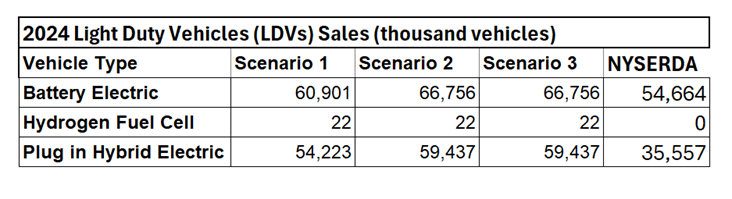

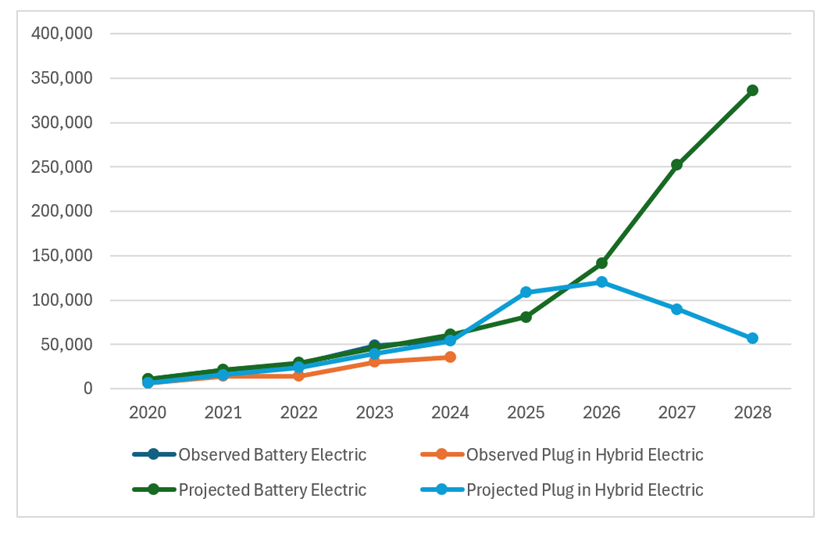


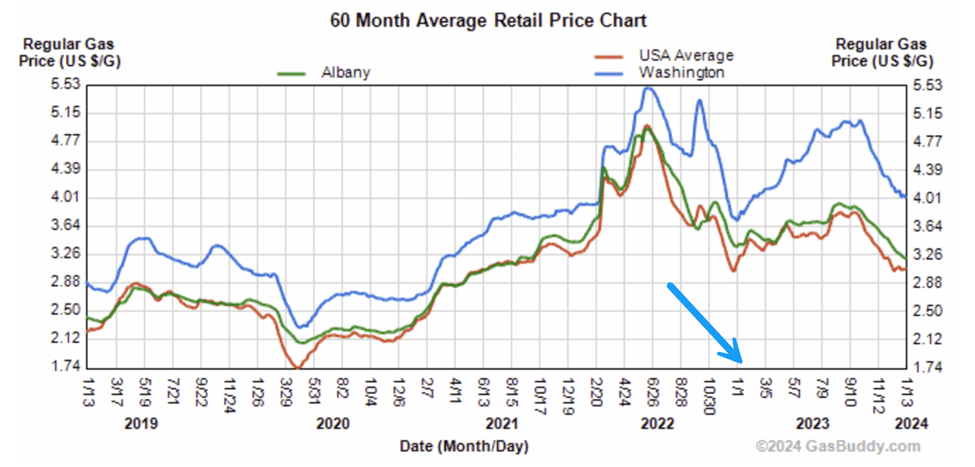

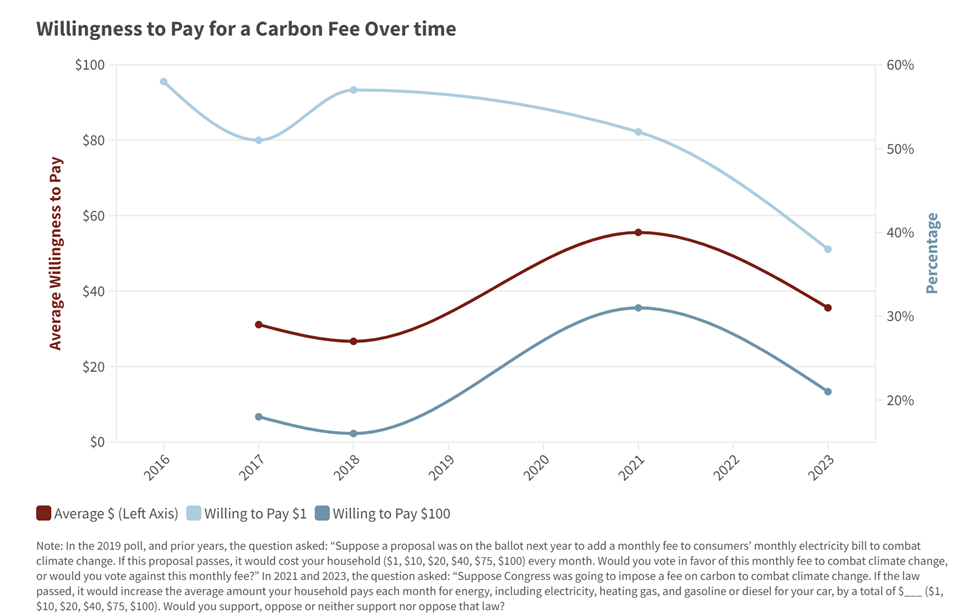


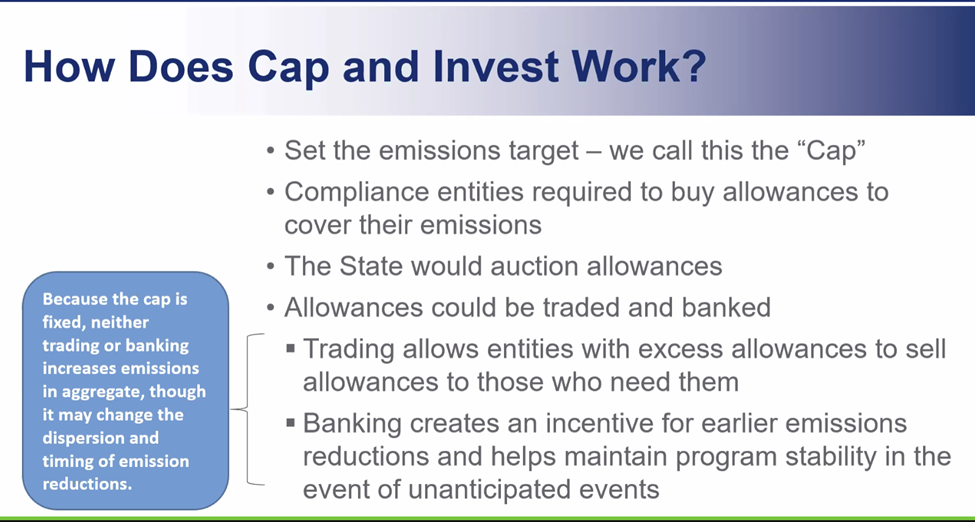
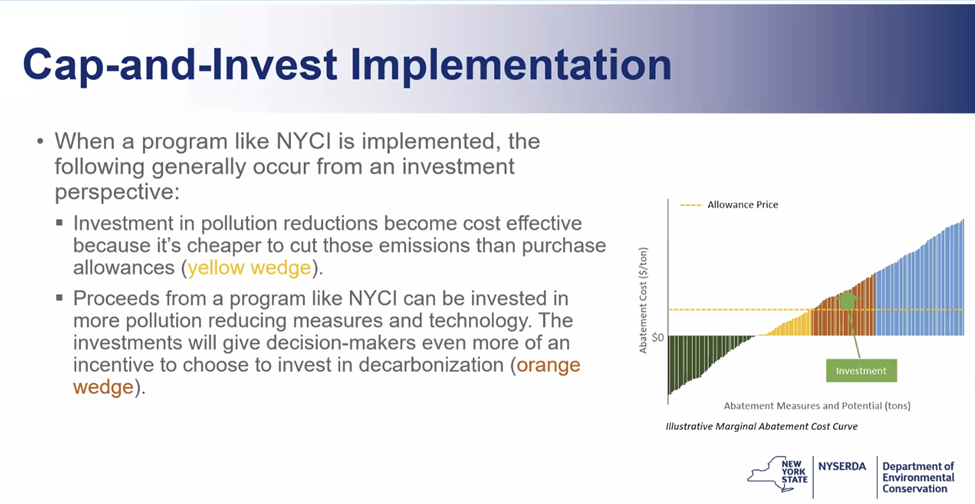
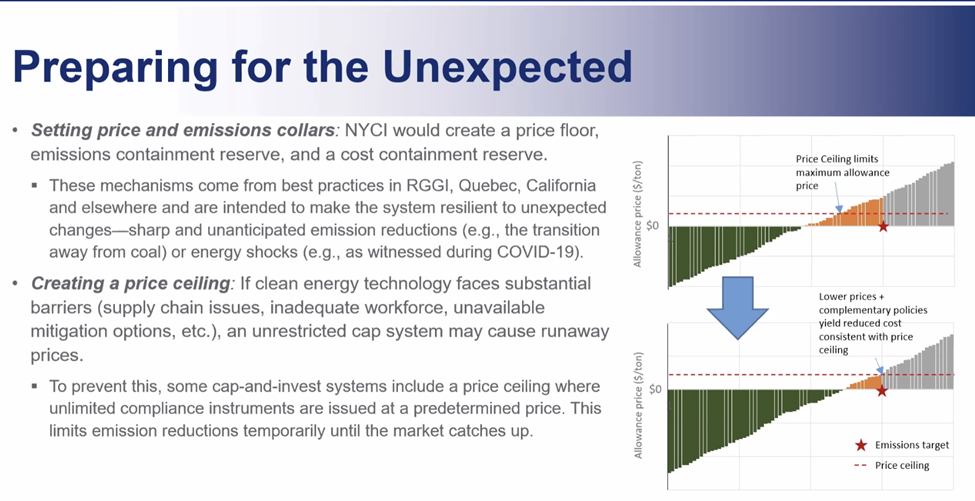
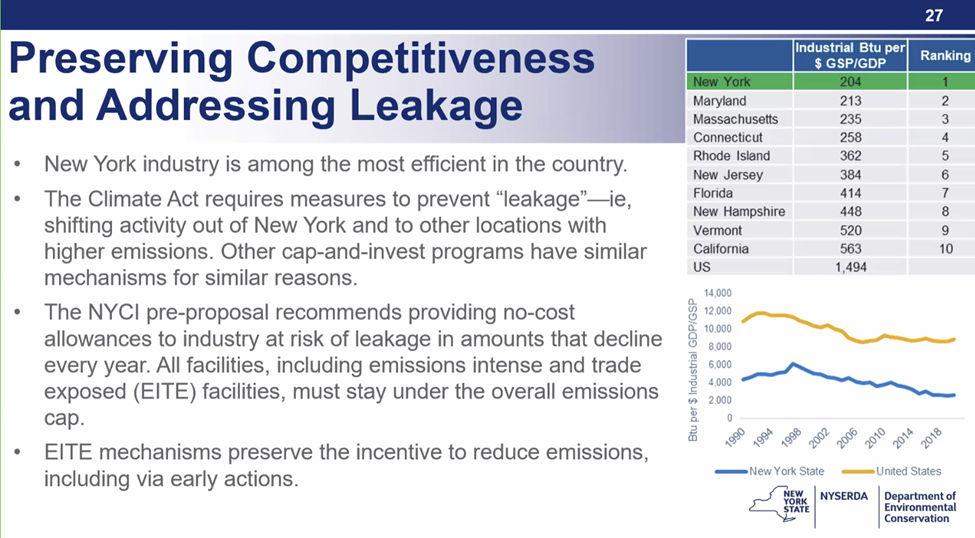
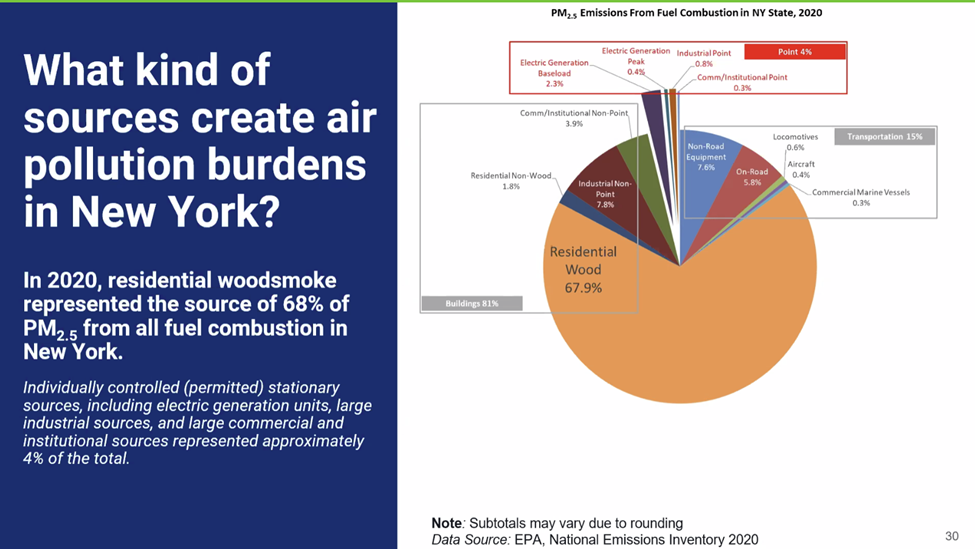


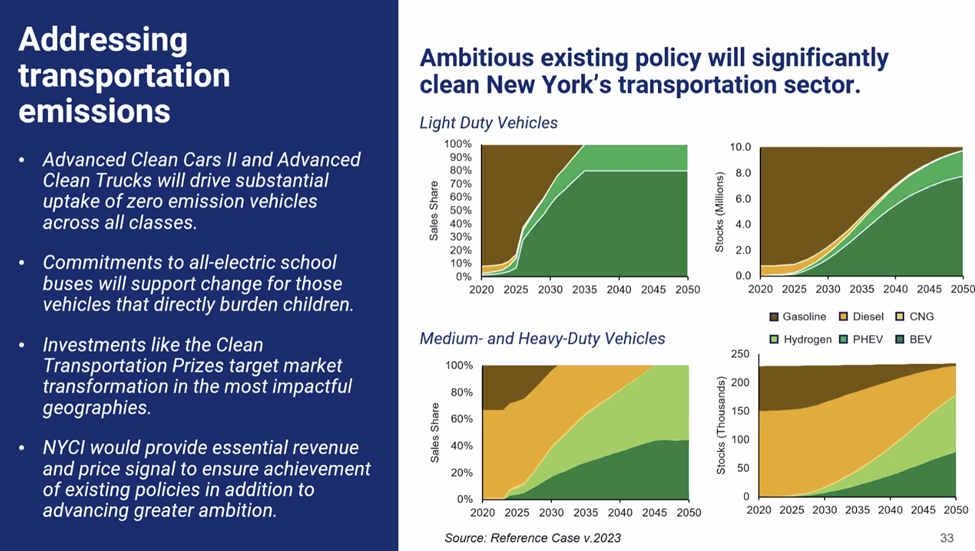

 Pragmatic Environmentalist of New York