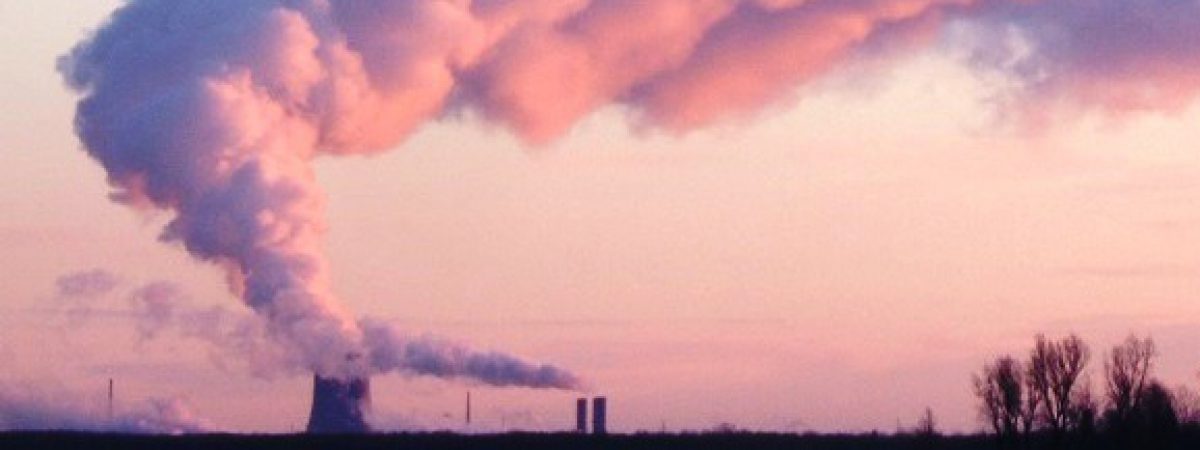
Richard Ellenbogen sends detailed analyses to an extensive distribution list on an irregular basis and his recent description of Battery Energy Storage Systems (BESS) as a science project was on my list to convert to a guest post. On 9/18/26 there was another fire at the Moss Landing 300 Megawatt – 1200 Megawatt-Hour Vistra BESS facility touted as the world’s biggest battery storage project in August 2023 and that prompted me to publish this article.
Ellenbogen is the President [BIO] of Allied Converters and frequently comments on various issues associated with the New York Climate Leadership and Community Protection Act (Climate Act). I have published other articles by Ellenbogen including a description of his keynote address to the Business Council of New York 2023 Renewable Energy Conference Energy titled: “Energy on Demand as the Life Blood of Business and Entrepreneurship in the State -video here: Why NY State Must Rethink Its Energy Plan and Ten Suggestions to Help Fix the Problems”. He is an engineer who truly cares about the environment but understands the practicality of clean energy solutions based on his experience as an early adopter of renewable technologies at both his home and business two decades ago.
Utility Scale Lithium-Based Energy Storage System Issues
In January 2026 I published an article describing his white-paper The Intrinsic Danger of Siting Utility Scale Lithium Based Energy Storage Systems In Densely Populated Areas. He addressed local public-safety and environmental-siting concerns. It was prepared in response to concerns about a proposed BESS in Hauppauge, NY and focuses particularly on the combination of a densely populated area, a nearby elementary school, streams, porous soils, and a shallow aquifer. The Fire Department’s website notes that the Suffolk Water Authority is suing over alleged ground water contamination after the East Hampton lithium Battery Energy Storage Fire.
Ellenbogen’s argument has three linked elements:
- Thermal runaway and firefighting difficulty. He describes lithium-ion systems as vulnerable to overheating and thermal runaway, with fires that can be extremely hot, difficult to extinguish, and capable of releasing toxic gases. He argues that water may be necessary to cool adjacent equipment and prevent fire spread, while also creating contaminated runoff concerns.
- Environmental consequences after a fire. The post uses the January 2025 Moss Landing fire as its principal case study. It cites research summarized in the post as finding deposition of nickel, manganese, and cobalt in surrounding coastal wetlands, with concern that tidal action and rainfall could mobilize contaminants more broadly through the ecosystem.
- Long Island-specific vulnerability. Rather than treating all BESS sites as interchangeable, the paper stresses Long Island’s glacial geology, highly permeable soils, surface-water proximity, and dependence on shallow groundwater. Ellenbogen argues that these conditions would magnify the consequences of toxic-metal deposition or fire-related runoff.
His policy conclusion is a restrictive siting standard: utility-scale lithium-ion facilities should be confined to locations with few nearby people and without vulnerable surface-water or groundwater receptors. He frames this as a precautionary response to potentially severe but difficult-to-remediate contamination, rather than a blanket rejection of all BESS.
BESS is Currently a Science Project
The following is a lightly edited copy of his email with this subject line.
The battery technology may have advanced but it is still a science project that will not work on the downstate NY grid or the Con Ed System. All high energy systems are prone to fires. The problem with Lithium batteries is that there is no viable way to extinguish the fires. The newer systems are better than the older ones, but they are not foolproof. The Town of Islip and most of Suffolk County have now banned Lithium based BESS because a fire in 2023 contaminated their aquifer. The Suffolk County Water Department is suing the battery system owners. With all these BESS systems, there will eventually be a fire. That’s not an “If” but a “When”. I have worked with high energy electrical systems for 50 years and I have never seen one that was 100% fireproof. My first job was overseeing the project that analyzed and tested the energy systems for AT&T/Bell Laboratories, which at the time was the world’s largest utility and operated 90% of the phones in the US.
I would never install a system that had no viable way to extinguish the conflagration and to do so is evidence of an unconscionable level of hubris.
There was a house fire on Pelhamdale Avenue in Pelham about a year ago. Engine companies from Mt. Vernon, New Rochelle, and Pelham answered the fire. Simultaneously, there was a fire alarm at the NY Athletic Club, and it took 45 minutes for first responders to arrive. Fortunately, it was a false alarm, but what will happen if there are multiple fire crews battling a 24 hour BESS fire because that is a minimum of how long they take to extinguish? Who will answer any other emergency events during that time?
I wrote a white paper for the Hauppauge Fire Department about a BESS System that a company wanted to install there that documents the dangers of installing these systems in populated areas. A visit to the fire department web site will provide additional information, as well as information about the water contamination. The paper is on the Public Service Commissions website. Prior to the Suffolk County Water Department discovering the contamination at their wells, the paper documented the exact method of contamination.
Further, the same issues that caused the Yonkers Sewage Treatment plant to discharge 39 million gallons of raw sewage into the Hudson River during the early July heat wave will make battery storage on the Con Ed System nonfunctional when it is most needed. BESS is needed but unfortunately, the lack of sufficient generation on the downstate system will cause a shutdown of the battery system inverters just as it shut down the Sewage Treatment Plant motor VFD’s.
The July 1 – 4 event had low voltages on the Con Ed system for over 48 hours so after the first discharge, the 8 hour batteries would be unable to recharge. I own multiple grid connected inverters, the same technology that converts the DC in the batteries to AC for the utility system. Everyone shut down during that prolonged outage.
I can provide detailed technical data and measurements that were collected at both my home and my factory. The inverters that I own were providing frequency warnings throughout that four-day time period and shut down repeatedly.
NY State has to fix the downstate generation problems before any energy storage solution will add to utility system security/reliability and unfortunately, that is years away. Without that, adding BESS Systems endangers the public and provides no added reliability benefit when it is needed most.
The post written by Roger Caiazza based upon data that I collected in New Rochelle and Pelham and shows the futility of using BESS Systems in the downstate region.
The US utility system has a frequency of 60 hertz (hz or cycles per second). Under normal conditions, that frequency will vary between 59.95 hz to 60.05 hz. During the July 1 – 4 period, the variation was ten times that. When the frequency gets too far out of range, inverters shut down to protect themselves and the system. When the system doesn’t have enough generation, the utility has difficulty in regulating it and that is what happened in early July, although no one seems to want to say that.
For an example of what an inverter-based system does when there are frequency aberrations on the system, we need look no further than what happened on the Iberian Peninsula in April, 2025 when 9 Gigawatts of inverters turned off in a span of 5 minutes and the entirety of Spain and Portugal went dark. They couldn’t even restart their own utility system and had to rely on French Nuclear reactors to provide the required grid inertia needed for a “Black” start. The Wikipedia link documents the blackout. For political reasons, no one wants to say exactly what happened because it will document their misallocation of utility resources. However, I have seen the frequency graphs of the Iberian system just prior to the grid going dark and there was a major frequency issue. That also occurred on the Con Ed system during the power problems in early July. A paper that I wrote in 2008 for the NY State Public Service Commission after I installed my solar arrays predicted just such an issue. It addressed local issues because in 2008, I never would have believed that someone would try to run the entire system with inverter based generation. It’s a disaster waiting to happen.
On the downstate system that is over 90% powered by fossil fuel generation, storing that generation in batteries does not make the energy cleaner. It actually increases the carbon footprint by 15% – 20% because of charging and discharging losses. The renewable generation was cost prohibitive, even prior to the current administration’s policies implemented after January, 2025. In 2023, the offshore wind was 2 – 3 times the cost of the current wholesale cost and CleanPath, the large renewable cable across the Catskills to NY City had cost issues in 2024 that led to its failure. Federal policies have not helped that but with few exceptions, the renewable generation systems in NY State, other than rooftop solar, are not cost effective. That is why NY State is years behind on its energy goals and systems that would have greatly reduced carbon footprints while providing sufficient generation have been blocked by state policy. Expecting a large influx of renewable generation to solve the downstate generation issue has worse odds of success than buying a Powerball ticket at 380 million to 1 and expecting to win the jackpot. They are cost prohibitive in NY State and as we have seen recently, utility costs are a huge issue.
The people proposing these systems don’t fully understand the technologies that they are working with and how they will interact with the utility system. They are just trying to make money at great public expense, even though their lack of knowledge of their own systems probably makes them ignorant of that fact.
Sodium based battery systems would be less fire prone however they will still not work well without sufficient generation available and that is a minimum of seven years away for combined cycle gas turbines and fifteen years for nuclear generation. Solar and Wind systems will have the same inverter issues that Spain and Portugal had.
State energy policy has left the system in a mess and BESS Band-Aids will not fix the problem.
They can install these systems which will raise utility costs, endanger the public, and simultaneously provide no benefits in terms of utility system reliability. If you approve them, the issues will become clear over time just as they did on Long island.
They certainly will not yield clean, affordable, or reliable generation on Con Ed’s system.
Caiazza Closing Remarks
Ellenbogen and I collaborated on an article describing the implications of the January 2025 Moss Landing battery plant fire. We explained that the fire was a practical stress test of proposals to replace New York City peaking generation with large urban battery-storage projects—especially the proposed Ravenswood installation in Queens. The core conclusion was that a Moss Landing–scale BESS fire in the Ravenswood location could create an evacuation, emergency-response, transportation, hospital-access, and contamination problem vastly more consequential than the risks attributed to the peaking plants targeted for retirement. The recent fire reinforces the potential for those impacts and supports Ellenbogen’s conclusions.


Great information. Who says lighting can’t strike the same place three times?
LikeLiked by 1 person